Navagraha Vedic Mantras
आ कृष्णेन रजसा वर्तमानो निवेशयन्नमृतं मर्त्यं च । हिरण्ययेन सविता रथेना देवो याति भुवनानि पश्यन् ॥Also known as Navagraha Japa Mantras
In Devanagari, Tamil, Telugu, Kannada, Malayalam and English — with the meaning of every word, and the one syllable most people pronounce wrongly.
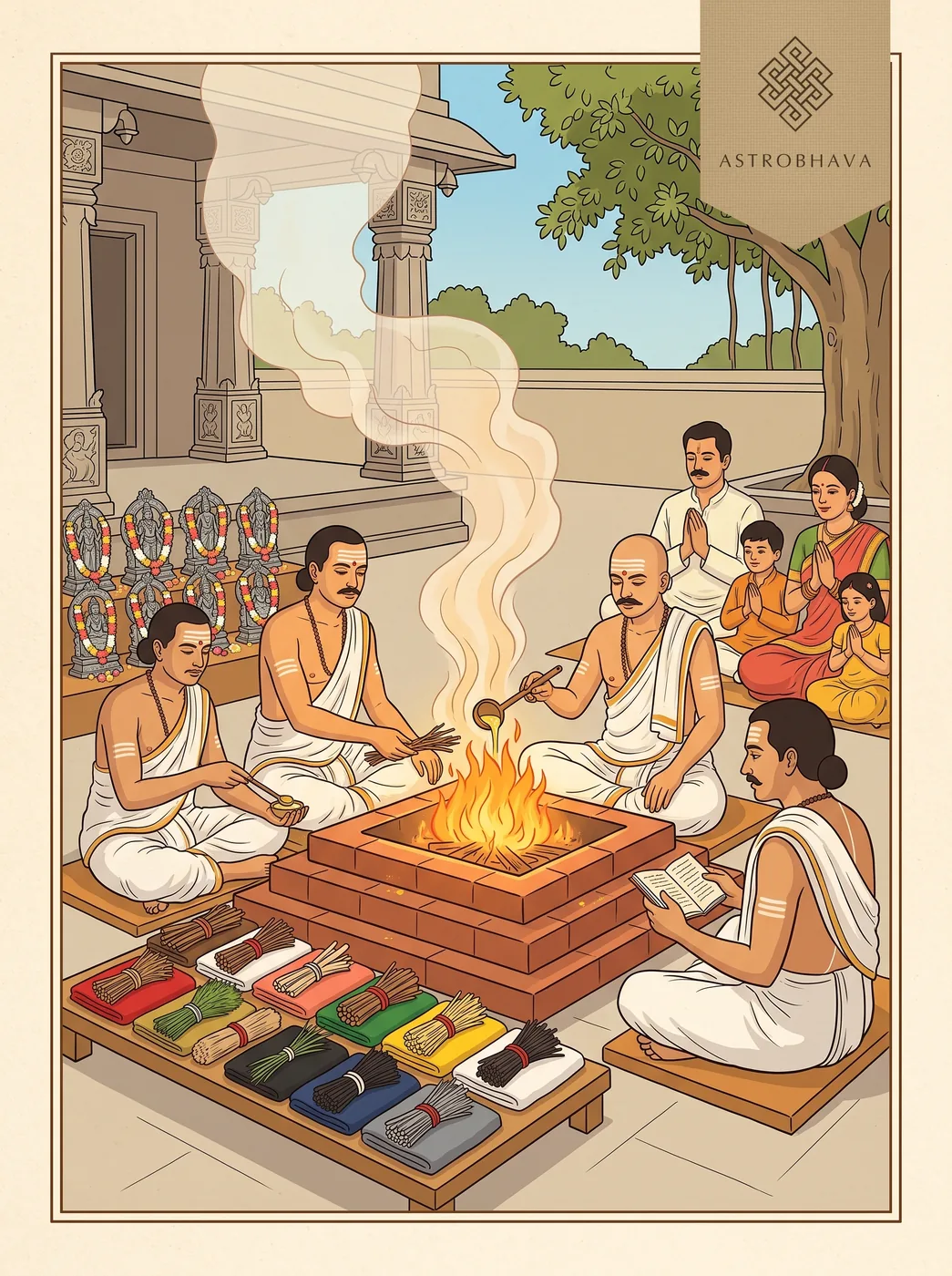
 The Navagraha Homam, performed for youBook →
What the Navagraha Vedic Mantras is
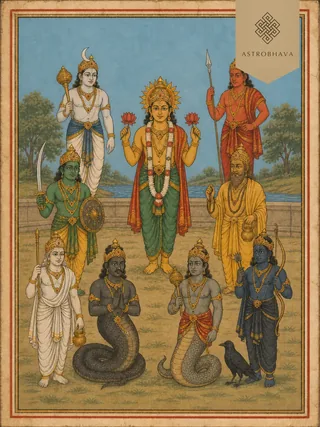
The Navagraha Vedic Mantras are nine verses of the Shukla Yajurveda (Vajasaneyi Madhyandina Samhita), one assigned to each graha from Surya to Ketu; six of them also stand in the Rigveda. None was composed for the planets. Surya receives Savitr crossing the dark sky on a golden chariot (VS 33.43, RV 1.35.2); Chandra, a royal consecration formula ending with Soma as king (VS 9.40); Mangala, Agni as the head of heaven (VS 3.12); Budha, a call for the fire to wake, udbudhyasva (VS 15.54); Guru, a prayer to Brihaspati himself (VS 26.3). Shukra takes a sautramani verse naming the bright essence, shukram (VS 19.75); Shani, the blessing of the Waters, sham no (VS 36.12); Rahu, Vamadeva's question to Indra (VS 27.39); Ketu, Madhucchandas' line on making light where there was none (VS 29.37). The page prints them without accent marks; chanting with the svaras is learned from a teacher.
How a Smriti Matched Verse to Graha
The pairing of these verses with the planets is not made in the Veda itself. It comes from the Yajnavalkya Smriti, whose first book, the Acharadhyaya, closes with a section on graha shanti. There the nine are first named in a fixed order: Surya, Soma, the son of the Earth, the son of Soma, Brihaspati, Shukra, Shanaishchara, Rahu and Ketu. The text says the graha yajna is undertaken by one who seeks prosperity or peace, rain, long life or nourishment. Verses 1.300 and 1.301 then list nine riks by their opening words and state that they belong to the grahas in that same order, and the verse after gives each graha its own fuel stick: arka, palasha, khadira, apamarga, pippala, udumbara, shami, durva and kusha. Often the link is a single word. Brihaspati is named outright, Soma closes the Chandra verse, Ketu's verse opens with ketum and Shukra's holds shukram. The Brihat Parashara Hora Shastra repeats the list in its chapter on graha shanti (84.17-18) with one change. Where the smriti and its Mitakshara commentary give Rahu the verse beginning kandat kandat prarohanti, Parashara's text gives kaya nashchitra, and present-day japa books follow it. South Indian Krishna Yajurveda practice differs again for Surya, Chandra and Shukra.
The mantra, in six scripts
- आ
- ā — hither, near
- कृष्णेन
- kṛṣṇena — through the dark
- रजसा
- rajasā — region of space
- वर्तमानो
- vartamāno — moving
- निवेशयन्नमृतं
- niveśayannamṛtaṃ — settling the immortal
- मर्त्यं
- martyaṃ — the mortal
- च
- ca — and
- हिरण्ययेन
- hiraṇyayena — golden
- सविता
- savitā — Savitr, the impeller
- रथेना
- rathenā — by chariot
- देवो
- devo — the god
- याति
- yāti — comes
- भुवनानि
- bhuvanāni — the worlds
- पश्यन्
- paśyan — beholding
Navagraha Vedic Mantras lyrics in full
Nine Vedic verses, one for each graha from Surya to Ketu, printed without accent marks.
All 9 verses, in Sanskrit, Tamil, Telugu, Kannada, Malayalam and English, each with its meaning. Choose a script:
Download the Navagraha Vedic Mantras PDFAll 9 verses with their meanings, in Sanskrit. Free to print and keep.
आ कृष्णेन रजसा वर्तमानो निवेशयन्नमृतं मर्त्यं च ।
हिरण्ययेन सविता रथेना देवो याति भुवनानि पश्यन् ॥
ஆ க்ருஷ்ணேந ரஜஸா வர்தமாநோ நிவேஶயந்நம்ருதம் மர்த்யம் ச ।
ஹிரண்யயேந ஸவிதா ரதேநா தேவோ யாதி புவநாநி பஶ்யந் ॥
ఆ కృష్ణేన రజసా వర్తమానో నివేశయన్నమృతం మర్త్యం చ ।
హిరణ్యయేన సవితా రథేనా దేవో యాతి భువనాని పశ్యన్ ॥
ಆ ಕೃಷ್ಣೇನ ರಜಸಾ ವರ್ತಮಾನೋ ನಿವೇಶಯನ್ನಮೃತಂ ಮರ್ತ್ಯಂ ಚ ।
ಹಿರಣ್ಯಯೇನ ಸವಿತಾ ರಥೇನಾ ದೇವೋ ಯಾತಿ ಭುವನಾನಿ ಪಶ್ಯನ್ ॥
ആ കൃഷ്ണേന രജസാ വര്തമാനോ നിവേശയന്നമൃതം മര്ത്യം ച ।
ഹിരണ്യയേന സവിതാ രഥേനാ ദേവോ യാതി ഭുവനാനി പശ്യന് ॥
ā kṛṣṇena rajasā vartamāno niveśayannamṛtaṃ martyaṃ ca |
hiraṇyayena savitā rathenā devo yāti bhuvanāni paśyan ||
For Surya: Moving through the dark region of space, settling both the immortal and the mortal in their places, Savitr the god comes on his golden chariot, looking upon all the worlds.
इमं देवा असपत्नं सुवध्वं महते क्षत्राय महते ज्यैष्ठ्याय महते जानराज्यायेन्द्रस्येन्द्रियाय ।
इमममुष्य पुत्रममुष्यै पुत्रमस्यै विश एष वोऽमी राजा सोमोऽस्माकं ब्राह्मणानां राजा ॥
இமம் தேவா அஸபத்நம் ஸுவத்வம் மஹதே க்ஷத்ராய மஹதே ஜ்யைஷ்ட்யாய மஹதே ஜாநராஜ்யாயேந்த்ரஸ்யேந்த்ரியாய ।
இமமமுஷ்ய புத்ரமமுஷ்யை புத்ரமஸ்யை விஶ ஏஷ வோமீ ராஜா ஸோமோஸ்மாகம் ப்ராஹ்மணாநாம் ராஜா ॥
ఇమం దేవా అసపత్నం సువధ్వం మహతే క్షత్రాయ మహతే జ్యైష్ఠ్యాయ మహతే జానరాజ్యాయేన్ద్రస్యేన్ద్రియాయ ।
ఇమమముష్య పుత్రమముష్యై పుత్రమస్యై విశ ఏష వోఽమీ రాజా సోమోఽస్మాకం బ్రాహ్మణానాం రాజా ॥
ಇಮಂ ದೇವಾ ಅಸಪತ್ನಂ ಸುವಧ್ವಂ ಮಹತೇ ಕ್ಷತ್ರಾಯ ಮಹತೇ ಜ್ಯೈಷ್ಠ್ಯಾಯ ಮಹತೇ ಜಾನರಾಜ್ಯಾಯೇನ್ದ್ರಸ್ಯೇನ್ದ್ರಿಯಾಯ ।
ಇಮಮಮುಷ್ಯ ಪುತ್ರಮಮುಷ್ಯೈ ಪುತ್ರಮಸ್ಯೈ ವಿಶ ಏಷ ವೋಽಮೀ ರಾಜಾ ಸೋಮೋಽಸ್ಮಾಕಂ ಬ್ರಾಹ್ಮಣಾನಾಂ ರಾಜಾ ॥
ഇമം ദേവാ അസപത്നം സുവധ്വം മഹതേ ക്ഷത്രായ മഹതേ ജ്യൈഷ്ഠ്യായ മഹതേ ജാനരാജ്യായേന്ദ്രസ്യേന്ദ്രിയായ ।
ഇമമമുഷ്യ പുത്രമമുഷ്യൈ പുത്രമസ്യൈ വിശ ഏഷ വോഽമീ രാജാ സോമോഽസ്മാകം ബ്രാഹ്മണാനാം രാജാ ॥
imaṃ devā asapatnaṃ suvadhvaṃ mahate kṣatrāya mahate jyaiṣṭhyāya mahate jānarājyāyendrasyendriyāya |
imamamuṣya putramamuṣyai putramasyai viśa eṣa vo'mī rājā somo'smākaṃ brāhmaṇānāṃ rājā ||
For Chandra: O gods, raise this one up free of rivals, for great rule, for great seniority, for great lordship over the people, and for the strength of Indra. This son of such a father and such a mother is your king, O people; Soma is the king of us Brahmins.
अग्निर्मूर्धा दिवः ककुत्पतिः पृथिव्या अयम् ।
अपां रेतांसि जिन्वति ॥
அக்நிர்மூர்தா திவஃ ககுத்பதிஃ ப்ருதிவ்யா அயம் ।
அபாம் ரேதாம்ஸி ஜிந்வதி ॥
అగ్నిర్మూర్ధా దివః కకుత్పతిః పృథివ్యా అయమ్ ।
అపాం రేతాంసి జిన్వతి ॥
ಅಗ್ನಿರ್ಮೂರ್ಧಾ ದಿವಃ ಕಕುತ್ಪತಿಃ ಪೃಥಿವ್ಯಾ ಅಯಮ್ ।
ಅಪಾಂ ರೇತಾಂಸಿ ಜಿನ್ವತಿ ॥
അഗ്നിര്മൂര്ധാ ദിവഃ കകുത്പതിഃ പൃഥിവ്യാ അയമ് ।
അപാം രേതാംസി ജിന്വതി ॥
agnirmūrdhā divaḥ kakutpatiḥ pṛthivyā ayam |
apāṃ retāṃsi jinvati ||
For Mangala: Agni is the head of heaven, its summit; he is the lord of the earth. He quickens the seeds of the waters.
उद्बुध्यस्वाग्ने प्रति जागृहि त्वमिष्टापूर्ते सं सृजेथामयं च ।
अस्मिन्त्सधस्थे अध्युत्तरस्मिन् विश्वे देवा यजमानश्च सीदत ॥
உத்புத்யஸ்வாக்நே ப்ரதி ஜாக்ருஹி த்வமிஷ்டாபூர்தே ஸம் ஸ்ருஜேதாமயம் ச ।
அஸ்மிந்த்ஸதஸ்தே அத்யுத்தரஸ்மிந் விஶ்வே தேவா யஜமாநஶ்ச ஸீதத ॥
ఉద్బుధ్యస్వాగ్నే ప్రతి జాగృహి త్వమిష్టాపూర్తే సం సృజేథామయం చ ।
అస్మిన్త్సధస్థే అధ్యుత్తరస్మిన్ విశ్వే దేవా యజమానశ్చ సీదత ॥
ಉದ್ಬುಧ್ಯಸ್ವಾಗ್ನೇ ಪ್ರತಿ ಜಾಗೃಹಿ ತ್ವಮಿಷ್ಟಾಪೂರ್ತೇ ಸಂ ಸೃಜೇಥಾಮಯಂ ಚ ।
ಅಸ್ಮಿನ್ತ್ಸಧಸ್ಥೇ ಅಧ್ಯುತ್ತರಸ್ಮಿನ್ ವಿಶ್ವೇ ದೇವಾ ಯಜಮಾನಶ್ಚ ಸೀದತ ॥
ഉദ്ബുധ്യസ്വാഗ്നേ പ്രതി ജാഗൃഹി ത്വമിഷ്ടാപൂര്തേ സം സൃജേഥാമയം ച ।
അസ്മിന്ത്സധസ്ഥേ അധ്യുത്തരസ്മിന് വിശ്വേ ദേവാ യജമാനശ്ച സീദത ॥
udbudhyasvāgne prati jāgṛhi tvamiṣṭāpūrte saṃ sṛjethāmayaṃ ca |
asmintsadhasthe adhyuttarasmin viśve devā yajamānaśca sīdata ||
For Budha: Awake, O Agni, and keep watch; may you and this worshipper be joined with the merit of sacrifice and good works. In this dwelling and in the higher one, may all the gods and the worshipper take their seat.
बृहस्पते अति यदर्यो अर्हाद्द्युमद्विभाति क्रतुमज्जनेषु ।
यद्दीदयच्छवस ऋतप्रजात तदस्मासु द्रविणं धेहि चित्रम् ॥
ப்ருஹஸ்பதே அதி யதர்யோ அர்ஹாத்த்யுமத்விபாதி க்ரதுமஜ்ஜநேஷு ।
யத்தீதயச்சவஸ ருதப்ரஜாத ததஸ்மாஸு த்ரவிணம் தேஹி சித்ரம் ॥
బృహస్పతే అతి యదర్యో అర్హాద్ద్యుమద్విభాతి క్రతుమజ్జనేషు ।
యద్దీదయచ్ఛవస ఋతప్రజాత తదస్మాసు ద్రవిణం ధేహి చిత్రమ్ ॥
ಬೃಹಸ್ಪತೇ ಅತಿ ಯದರ್ಯೋ ಅರ್ಹಾದ್ದ್ಯುಮದ್ವಿಭಾತಿ ಕ್ರತುಮಜ್ಜನೇಷು ।
ಯದ್ದೀದಯಚ್ಛವಸ ಋತಪ್ರಜಾತ ತದಸ್ಮಾಸು ದ್ರವಿಣಂ ಧೇಹಿ ಚಿತ್ರಮ್ ॥
ബൃഹസ്പതേ അതി യദര്യോ അര്ഹാദ്ദ്യുമദ്വിഭാതി ക്രതുമജ്ജനേഷു ।
യദ്ദീദയച്ഛവസ ഋതപ്രജാത തദസ്മാസു ദ്രവിണം ധേഹി ചിത്രമ് ॥
bṛhaspate ati yadaryo arhāddyumadvibhāti kratumajjaneṣu |
yaddīdayacchavasa ṛtaprajāta tadasmāsu draviṇaṃ dhehi citram ||
For Guru: O Brihaspati, born of truth, that wealth which the noble deserve, which shines brightly and with wisdom among people, which glows with strength, that varied wealth place in us.
अन्नात्परिस्रुतो रसं ब्रह्मणा व्यपिबत्क्षत्रं पयः सोमं प्रजापतिः ।
ऋतेन सत्यमिन्द्रियं विपानं शुक्रमन्धस इन्द्रस्येन्द्रियमिदं पयोऽमृतं मधु ॥
அந்நாத்பரிஸ்ருதோ ரஸம் ப்ரஹ்மணா வ்யபிபத்க்ஷத்ரம் பயஃ ஸோமம் ப்ரஜாபதிஃ ।
ருதேந ஸத்யமிந்த்ரியம் விபாநம் ஶுக்ரமந்தஸ இந்த்ரஸ்யேந்த்ரியமிதம் பயோம்ருதம் மது ॥
అన్నాత్పరిస్రుతో రసం బ్రహ్మణా వ్యపిబత్క్షత్రం పయః సోమం ప్రజాపతిః ।
ఋతేన సత్యమిన్ద్రియం విపానం శుక్రమన్ధస ఇన్ద్రస్యేన్ద్రియమిదం పయోఽమృతం మధు ॥
ಅನ್ನಾತ್ಪರಿಸ್ರುತೋ ರಸಂ ಬ್ರಹ್ಮಣಾ ವ್ಯಪಿಬತ್ಕ್ಷತ್ರಂ ಪಯಃ ಸೋಮಂ ಪ್ರಜಾಪತಿಃ ।
ಋತೇನ ಸತ್ಯಮಿನ್ದ್ರಿಯಂ ವಿಪಾನಂ ಶುಕ್ರಮನ್ಧಸ ಇನ್ದ್ರಸ್ಯೇನ್ದ್ರಿಯಮಿದಂ ಪಯೋಽಮೃತಂ ಮಧು ॥
അന്നാത്പരിസ്രുതോ രസം ബ്രഹ്മണാ വ്യപിബത്ക്ഷത്രം പയഃ സോമം പ്രജാപതിഃ ।
ഋതേന സത്യമിന്ദ്രിയം വിപാനം ശുക്രമന്ധസ ഇന്ദ്രസ്യേന്ദ്രിയമിദം പയോഽമൃതം മധു ॥
annātparisruto rasaṃ brahmaṇā vyapibatkṣatraṃ payaḥ somaṃ prajāpatiḥ |
ṛtena satyamindriyaṃ vipānaṃ śukramandhasa indrasyendriyamidaṃ payo'mṛtaṃ madhu ||
For Shukra: Prajapati, by the power of sacred speech, drank the essence pressed out from the food, the ruling strength, the milk and the Soma. By right order truth became strength: the pure drink, the bright essence of the juice, the vigour of Indra; this milk is nectar and honey.
शं नो देवीरभिष्टय आपो भवन्तु पीतये ।
शं योरभि स्रवन्तु नः ॥
ஶம் நோ தேவீரபிஷ்டய ஆபோ பவந்து பீதயே ।
ஶம் யோரபி ஸ்ரவந்து நஃ ॥
శం నో దేవీరభిష్టయ ఆపో భవన్తు పీతయే ।
శం యోరభి స్రవన్తు నః ॥
ಶಂ ನೋ ದೇವೀರಭಿಷ್ಟಯ ಆಪೋ ಭವನ್ತು ಪೀತಯೇ ।
ಶಂ ಯೋರಭಿ ಸ್ರವನ್ತು ನಃ ॥
ശം നോ ദേവീരഭിഷ്ടയ ആപോ ഭവന്തു പീതയേ ।
ശം യോരഭി സ്രവന്തു നഃ ॥
śaṃ no devīrabhiṣṭaya āpo bhavantu pītaye |
śaṃ yorabhi sravantu naḥ ||
For Shani: May the divine Waters be a blessing to us, for our help and for our drinking. May they flow toward us with health and well-being.
कया नश्चित्र आ भुवदूती सदावृधः सखा ।
कया शचिष्ठया वृता ॥
கயா நஶ்சித்ர ஆ புவதூதீ ஸதாவ்ருதஃ ஸகா ।
கயா ஶசிஷ்டயா வ்ருதா ॥
కయా నశ్చిత్ర ఆ భువదూతీ సదావృధః సఖా ।
కయా శచిష్ఠయా వృతా ॥
ಕಯಾ ನಶ್ಚಿತ್ರ ಆ ಭುವದೂತೀ ಸದಾವೃಧಃ ಸಖಾ ।
ಕಯಾ ಶಚಿಷ್ಠಯಾ ವೃತಾ ॥
കയാ നശ്ചിത്ര ആ ഭുവദൂതീ സദാവൃധഃ സഖാ ।
കയാ ശചിഷ്ഠയാ വൃതാ ॥
kayā naścitra ā bhuvadūtī sadāvṛdhaḥ sakhā |
kayā śaciṣṭhayā vṛtā ||
For Rahu: With what help will the wondrous one, our ever-prospering friend, come to us? With what most powerful company?
केतुं कृण्वन्नकेतवे पेशो मर्या अपेशसे ।
समुषद्भिरजायथाः ॥
கேதும் க்ருண்வந்நகேதவே பேஶோ மர்யா அபேஶஸே ।
ஸமுஷத்பிரஜாயதாஃ ॥
కేతుం కృణ్వన్నకేతవే పేశో మర్యా అపేశసే ।
సముషద్భిరజాయథాః ॥
ಕೇತುಂ ಕೃಣ್ವನ್ನಕೇತವೇ ಪೇಶೋ ಮರ್ಯಾ ಅಪೇಶಸೇ ।
ಸಮುಷದ್ಭಿರಜಾಯಥಾಃ ॥
കേതും കൃണ്വന്നകേതവേ പേശോ മര്യാ അപേശസേ ।
സമുഷദ്ഭിരജായഥാഃ ॥
ketuṃ kṛṇvannaketave peśo maryā apeśase |
samuṣadbhirajāyathāḥ ||
For Ketu: O mortals, making light where there was no light and form where there was no form, he was born together with the dawns.
The syllable people get wrong
In Mantra 2 the word jyaiṣṭhyāya ('for seniority') is often said 'jyeshthyaya'. The samhita and both of its classical commentaries read the diphthong ai, so say jyaish-thyaa-ya, with ai as in 'aisle', a retroflex ṣṭh and a long final aa before ya.
Questions
Have your chart read before you decide
Chanting is yours to do, and free. But which deity your situation calls for — and whether a mantra alone is the right response — depends on your chart. Sometimes it is; sometimes it is not.
- Over 30 years in the Guru–Sishya Parampara, from the age of five
- He reads every chart himself — 60 minutes, one to one, never delegated
- Charts are read only between sunrise and sunset, following tradition
