Nirvana Shatakam
मनोबुद्ध्यहङ्कारचित्तानि नाहं न च श्रोत्रजिह्वे न च घ्राणनेत्रे । न च व्योम भूमिर्न तेजो न वायुश्चिदानन्दरूपः शिवोऽहं शिवोऽहम् ॥Also known as Atma Shatakam
In Devanagari, Tamil, Telugu, Kannada, Malayalam and English — with the meaning of every word, and the one syllable most people pronounce wrongly.
What the Nirvana Shatakam is
The Nirvana Shatakam, also called the Atma Shatakam, is not addressed to a deity at all. Its speaker is the Atman, the true Self, and every 'I' in the six verses refers to it. Advaita tradition attributes the text to Adi Shankaracharya. It is written in the Bhujangaprayata metre and has no meditation verse and no closing verse of benefits. The verses work by elimination: the Self is not the mind, intellect, ego or memory, nor the senses or the elements (verse 1); not the breath, the five vital airs, the seven bodily tissues, the five sheaths or the organs of action (2); not attraction, aversion, greed, pride or envy, nor any of the four aims of life, liberation included (3); not merit, sin, mantra, pilgrimage, Veda or sacrifice, nor eater, food or eating (4); not death, caste, parents, kin, teacher or disciple (5). Only verse 6 says what it is: formless, free of mental constructs, present everywhere. Each verse ends 'chidananda-rupah shivoham shivoham'.
A boy's answer on the Narmada
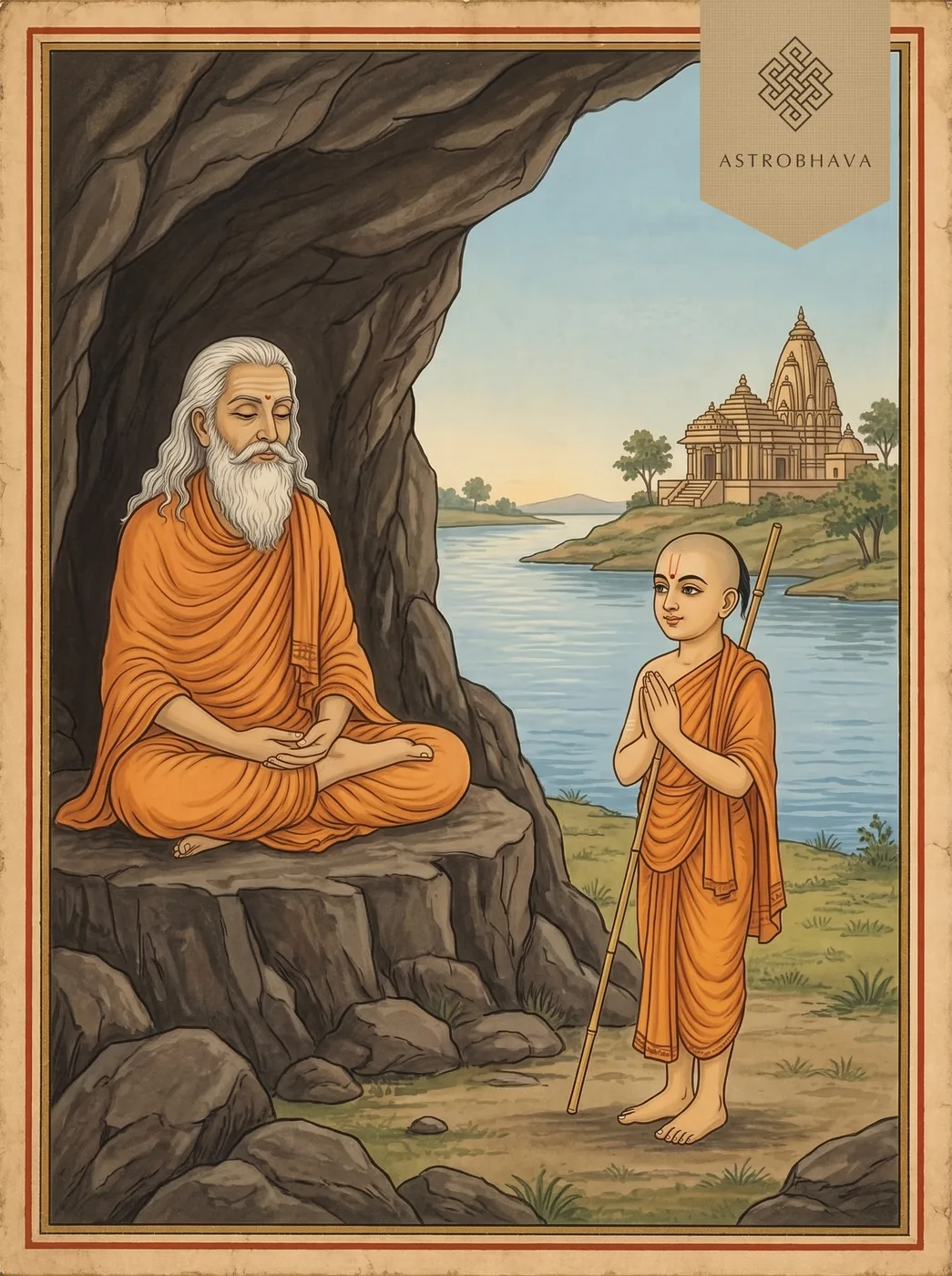
The hymn's setting comes from the Shankara hagiographies, which are dated to the 15th to 17th centuries, several hundred years after Shankara himself. According to that tradition, Shankara left Kerala as a boy in search of a teacher and walked north to the Narmada. At Omkareshwar, on the island of Mandhata, the sage Govinda Bhagavatpada, a disciple of Gaudapada, was sitting in samadhi in a cave. When Govinda asked the boy who he was, Shankara is said to have replied on the spot with these six verses, answering the question by listing everything he was not. Govinda accepted him as a disciple and initiated him into sannyasa. The Madhaviya Shankaravijaya adds an episode from the same stay: the Narmada rose in flood toward the cave, and Shankara held it back by setting his water pot in its path so that his teacher's meditation was not broken. The accounts are not unanimous about which text was the reply. Some scholars hold that it was the Dashashloki, a ten-verse work on the same theme whose verses end 'Shiva kevalo'ham'. The cave below the Omkareshwar temple, known as Govindeshwar Gufa, is still kept and holds a murti of Shankara. Since September 2023 a 108-foot metal statue of Shankara, the Statue of Oneness, has stood on Mandhata hill above the river.
The mantra, in six scripts
- मनोबुद्ध्यहङ्कारचित्तानि
- manobuddhyahaṅkāracittāni — mind, intellect, ego and memory
- नाहं
- nāhaṃ — I am not
- न
- na — not
- च
- ca — and
- श्रोत्रजिह्वे
- śrotrajihve — the ears and tongue
- न
- na — not
- च
- ca — and
- घ्राणनेत्रे
- ghrāṇanetre — the nose and eyes
Nirvana Shatakam lyrics in full
All 6 verses, in Sanskrit, Tamil, Telugu, Kannada, Malayalam and English, each with its meaning. Choose a script:
Download the Nirvana Shatakam PDFAll 6 verses with their meanings, in Sanskrit. Free to print and keep.
मनोबुद्ध्यहङ्कारचित्तानि नाहं न च श्रोत्रजिह्वे न च घ्राणनेत्रे ।
न च व्योम भूमिर्न तेजो न वायुश्चिदानन्दरूपः शिवोऽहं शिवोऽहम् ॥
மநோபுத்த்யஹங்காரசித்தாநி நாஹம் ந ச ஶ்ரோத்ரஜிஹ்வே ந ச க்ராணநேத்ரே ।
ந ச வ்யோம பூமிர்ந தேஜோ ந வாயுஶ்சிதாநந்தரூபஃ ஶிவோஹம் ஶிவோஹம் ॥
మనోబుద్ధ్యహఙ్కారచిత్తాని నాహం న చ శ్రోత్రజిహ్వే న చ ఘ్రాణనేత్రే ।
న చ వ్యోమ భూమిర్న తేజో న వాయుశ్చిదానన్దరూపః శివోఽహం శివోఽహమ్ ॥
ಮನೋಬುದ್ಧ್ಯಹಙ್ಕಾರಚಿತ್ತಾನಿ ನಾಹಂ ನ ಚ ಶ್ರೋತ್ರಜಿಹ್ವೇ ನ ಚ ಘ್ರಾಣನೇತ್ರೇ ।
ನ ಚ ವ್ಯೋಮ ಭೂಮಿರ್ನ ತೇಜೋ ನ ವಾಯುಶ್ಚಿದಾನನ್ದರೂಪಃ ಶಿವೋಽಹಂ ಶಿವೋಽಹಮ್ ॥
മനോബുദ്ധ്യഹങ്കാരചിത്താനി നാഹം ന ച ശ്രോത്രജിഹ്വേ ന ച ഘ്രാണനേത്രേ ।
ന ച വ്യോമ ഭൂമിര്ന തേജോ ന വായുശ്ചിദാനന്ദരൂപഃ ശിവോഽഹം ശിവോഽഹമ് ॥
manobuddhyahaṅkāracittāni nāhaṃ na ca śrotrajihve na ca ghrāṇanetre |
na ca vyoma bhūmirna tejo na vāyuścidānandarūpaḥ śivo'haṃ śivo'ham ||
I am not the mind, the intellect, the ego or the memory; I am not the ears or the tongue, nor the nose or the eyes. I am not space, earth, fire or air. I am Shiva, whose form is consciousness and bliss; I am Shiva.
न च प्राणसंज्ञो न वै पञ्चवायुर्न वा सप्तधातुर्न वा पञ्चकोशः ।
न वाक्पाणिपादौ न चोपस्थपायू चिदानन्दरूपः शिवोऽहं शिवोऽहम् ॥
ந ச ப்ராணஸம்ஜ்ஞோ ந வை பஞ்சவாயுர்ந வா ஸப்ததாதுர்ந வா பஞ்சகோஶஃ ।
ந வாக்பாணிபாதௌ ந சோபஸ்தபாயூ சிதாநந்தரூபஃ ஶிவோஹம் ஶிவோஹம் ॥
న చ ప్రాణసంజ్ఞో న వై పఞ్చవాయుర్న వా సప్తధాతుర్న వా పఞ్చకోశః ।
న వాక్పాణిపాదౌ న చోపస్థపాయూ చిదానన్దరూపః శివోఽహం శివోఽహమ్ ॥
ನ ಚ ಪ್ರಾಣಸಂಜ್ಞೋ ನ ವೈ ಪಞ್ಚವಾಯುರ್ನ ವಾ ಸಪ್ತಧಾತುರ್ನ ವಾ ಪಞ್ಚಕೋಶಃ ।
ನ ವಾಕ್ಪಾಣಿಪಾದೌ ನ ಚೋಪಸ್ಥಪಾಯೂ ಚಿದಾನನ್ದರೂಪಃ ಶಿವೋಽಹಂ ಶಿವೋಽಹಮ್ ॥
ന ച പ്രാണസംജ്ഞോ ന വൈ പഞ്ചവായുര്ന വാ സപ്തധാതുര്ന വാ പഞ്ചകോശഃ ।
ന വാക്പാണിപാദൌ ന ചോപസ്ഥപായൂ ചിദാനന്ദരൂപഃ ശിവോഽഹം ശിവോഽഹമ് ॥
na ca prāṇasaṃjño na vai pañcavāyurna vā saptadhāturna vā pañcakośaḥ |
na vākpāṇipādau na copasthapāyū cidānandarūpaḥ śivo'haṃ śivo'ham ||
I am not the life-breath, nor the five vital airs; not the seven bodily tissues, nor the five sheaths. I am not speech, hands or feet, nor the organs of generation and excretion. I am Shiva, whose form is consciousness and bliss; I am Shiva.
न मे द्वेषरागौ न मे लोभमोहौ मदो नैव मे नैव मात्सर्यभावः ।
न धर्मो न चार्थो न कामो न मोक्षश्चिदानन्दरूपः शिवोऽहं शिवोऽहम् ॥
ந மே த்வேஷராகௌ ந மே லோபமோஹௌ மதோ நைவ மே நைவ மாத்ஸர்யபாவஃ ।
ந தர்மோ ந சார்தோ ந காமோ ந மோக்ஷஶ்சிதாநந்தரூபஃ ஶிவோஹம் ஶிவோஹம் ॥
న మే ద్వేషరాగౌ న మే లోభమోహౌ మదో నైవ మే నైవ మాత్సర్యభావః ।
న ధర్మో న చార్థో న కామో న మోక్షశ్చిదానన్దరూపః శివోఽహం శివోఽహమ్ ॥
ನ ಮೇ ದ್ವೇಷರಾಗೌ ನ ಮೇ ಲೋಭಮೋಹೌ ಮದೋ ನೈವ ಮೇ ನೈವ ಮಾತ್ಸರ್ಯಭಾವಃ ।
ನ ಧರ್ಮೋ ನ ಚಾರ್ಥೋ ನ ಕಾಮೋ ನ ಮೋಕ್ಷಶ್ಚಿದಾನನ್ದರೂಪಃ ಶಿವೋಽಹಂ ಶಿವೋಽಹಮ್ ॥
ന മേ ദ്വേഷരാഗൌ ന മേ ലോഭമോഹൌ മദോ നൈവ മേ നൈവ മാത്സര്യഭാവഃ ।
ന ധര്മോ ന ചാര്ഥോ ന കാമോ ന മോക്ഷശ്ചിദാനന്ദരൂപഃ ശിവോഽഹം ശിവോഽഹമ് ॥
na me dveṣarāgau na me lobhamohau mado naiva me naiva mātsaryabhāvaḥ |
na dharmo na cārtho na kāmo na mokṣaścidānandarūpaḥ śivo'haṃ śivo'ham ||
I have no hatred or attachment, no greed or delusion; I have no pride and no feeling of envy. I have no duty, wealth, desire or liberation to pursue. I am Shiva, whose form is consciousness and bliss; I am Shiva.
न पुण्यं न पापं न सौख्यं न दुःखं न मन्त्रो न तीर्थं न वेदा न यज्ञाः ।
अहं भोजनं नैव भोज्यं न भोक्ता चिदानन्दरूपः शिवोऽहं शिवोऽहम् ॥
ந புண்யம் ந பாபம் ந ஸௌக்யம் ந துஃகம் ந மந்த்ரோ ந தீர்தம் ந வேதா ந யஜ்ஞாஃ ।
அஹம் போஜநம் நைவ போஜ்யம் ந போக்தா சிதாநந்தரூபஃ ஶிவோஹம் ஶிவோஹம் ॥
న పుణ్యం న పాపం న సౌఖ్యం న దుఃఖం న మన్త్రో న తీర్థం న వేదా న యజ్ఞాః ।
అహం భోజనం నైవ భోజ్యం న భోక్తా చిదానన్దరూపః శివోఽహం శివోఽహమ్ ॥
ನ ಪುಣ್ಯಂ ನ ಪಾಪಂ ನ ಸೌಖ್ಯಂ ನ ದುಃಖಂ ನ ಮನ್ತ್ರೋ ನ ತೀರ್ಥಂ ನ ವೇದಾ ನ ಯಜ್ಞಾಃ ।
ಅಹಂ ಭೋಜನಂ ನೈವ ಭೋಜ್ಯಂ ನ ಭೋಕ್ತಾ ಚಿದಾನನ್ದರೂಪಃ ಶಿವೋಽಹಂ ಶಿವೋಽಹಮ್ ॥
ന പുണ്യം ന പാപം ന സൌഖ്യം ന ദുഃഖം ന മന്ത്രോ ന തീര്ഥം ന വേദാ ന യജ്ഞാഃ ।
അഹം ഭോജനം നൈവ ഭോജ്യം ന ഭോക്താ ചിദാനന്ദരൂപഃ ശിവോഽഹം ശിവോഽഹമ് ॥
na puṇyaṃ na pāpaṃ na saukhyaṃ na duḥkhaṃ na mantro na tīrthaṃ na vedā na yajñāḥ |
ahaṃ bhojanaṃ naiva bhojyaṃ na bhoktā cidānandarūpaḥ śivo'haṃ śivo'ham ||
I am not merit or sin, pleasure or pain; I am not a mantra, a pilgrimage place, the Vedas or a sacrifice. I am not the act of eating, nor the food, nor the one who eats. I am Shiva, whose form is consciousness and bliss; I am Shiva.
न मृत्युर्न शङ्का न मे जातिभेदः पिता नैव मे नैव माता न जन्म ।
न बन्धुर्न मित्रं गुरुर्नैव शिष्यश्चिदानन्दरूपः शिवोऽहं शिवोऽहम् ॥
ந ம்ருத்யுர்ந ஶங்கா ந மே ஜாதிபேதஃ பிதா நைவ மே நைவ மாதா ந ஜந்ம ।
ந பந்துர்ந மித்ரம் குருர்நைவ ஶிஷ்யஶ்சிதாநந்தரூபஃ ஶிவோஹம் ஶிவோஹம் ॥
న మృత్యుర్న శఙ్కా న మే జాతిభేదః పితా నైవ మే నైవ మాతా న జన్మ ।
న బన్ధుర్న మిత్రం గురుర్నైవ శిష్యశ్చిదానన్దరూపః శివోఽహం శివోఽహమ్ ॥
ನ ಮೃತ್ಯುರ್ನ ಶಙ್ಕಾ ನ ಮೇ ಜಾತಿಭೇದಃ ಪಿತಾ ನೈವ ಮೇ ನೈವ ಮಾತಾ ನ ಜನ್ಮ ।
ನ ಬನ್ಧುರ್ನ ಮಿತ್ರಂ ಗುರುರ್ನೈವ ಶಿಷ್ಯಶ್ಚಿದಾನನ್ದರೂಪಃ ಶಿವೋಽಹಂ ಶಿವೋಽಹಮ್ ॥
ന മൃത്യുര്ന ശങ്കാ ന മേ ജാതിഭേദഃ പിതാ നൈവ മേ നൈവ മാതാ ന ജന്മ ।
ന ബന്ധുര്ന മിത്രം ഗുരുര്നൈവ ശിഷ്യശ്ചിദാനന്ദരൂപഃ ശിവോഽഹം ശിവോഽഹമ് ॥
na mṛtyurna śaṅkā na me jātibhedaḥ pitā naiva me naiva mātā na janma |
na bandhurna mitraṃ gururnaiva śiṣyaścidānandarūpaḥ śivo'haṃ śivo'ham ||
I have no death and no fear, no distinction of caste; I have no father, no mother, and no birth. I have no relative or friend, no teacher and no disciple. I am Shiva, whose form is consciousness and bliss; I am Shiva.
अहं निर्विकल्पो निराकाररूपो विभुत्वाच्च सर्वत्र सर्वेन्द्रियाणाम् ।
न चासङ्गतं नैव मुक्तिर्न मेयश्चिदानन्दरूपः शिवोऽहं शिवोऽहम् ॥
அஹம் நிர்விகல்போ நிராகாரரூபோ விபுத்வாச்ச ஸர்வத்ர ஸர்வேந்த்ரியாணாம் ।
ந சாஸங்கதம் நைவ முக்திர்ந மேயஶ்சிதாநந்தரூபஃ ஶிவோஹம் ஶிவோஹம் ॥
అహం నిర్వికల్పో నిరాకారరూపో విభుత్వాచ్చ సర్వత్ర సర్వేన్ద్రియాణామ్ ।
న చాసఙ్గతం నైవ ముక్తిర్న మేయశ్చిదానన్దరూపః శివోఽహం శివోఽహమ్ ॥
ಅಹಂ ನಿರ್ವಿಕಲ್ಪೋ ನಿರಾಕಾರರೂಪೋ ವಿಭುತ್ವಾಚ್ಚ ಸರ್ವತ್ರ ಸರ್ವೇನ್ದ್ರಿಯಾಣಾಮ್ ।
ನ ಚಾಸಙ್ಗತಂ ನೈವ ಮುಕ್ತಿರ್ನ ಮೇಯಶ್ಚಿದಾನನ್ದರೂಪಃ ಶಿವೋಽಹಂ ಶಿವೋಽಹಮ್ ॥
അഹം നിര്വികല്പോ നിരാകാരരൂപോ വിഭുത്വാച്ച സര്വത്ര സര്വേന്ദ്രിയാണാമ് ।
ന ചാസങ്ഗതം നൈവ മുക്തിര്ന മേയശ്ചിദാനന്ദരൂപഃ ശിവോഽഹം ശിവോഽഹമ് ॥
ahaṃ nirvikalpo nirākārarūpo vibhutvācca sarvatra sarvendriyāṇām |
na cāsaṅgataṃ naiva muktirna meyaścidānandarūpaḥ śivo'haṃ śivo'ham ||
I am free of all doubt and false imagining, and without any form; being all-pervading, I am everywhere, underlying all the senses. I am never attached, there is no liberation for me, and I am not something that can be measured or known. I am Shiva, whose form is consciousness and bliss; I am Shiva.
The syllable people get wrong
In verse 1, ghrāṇanetre ('nose and eyes') begins with an aspirated gh and a retroflex ṇ: say GHRAA-na-NET-ray, with a breath after the g, a long aa, and the tongue curled back for the n; 'grana-netre' with a plain g and dental n loses both sounds.
When the Nirvana Shatakam is chanted
Weekday. Monday
Festival. Shankara Jayanti (Vaishakha Shukla Panchami)
Questions
Have your chart read before you decide
Chanting is yours to do, and free. But which deity your situation calls for — and whether a mantra alone is the right response — depends on your chart. Sometimes it is; sometimes it is not.
- Over 30 years in the Guru–Sishya Parampara, from the age of five
- He reads every chart himself — 60 minutes, one to one, never delegated
- Charts are read only between sunrise and sunset, following tradition