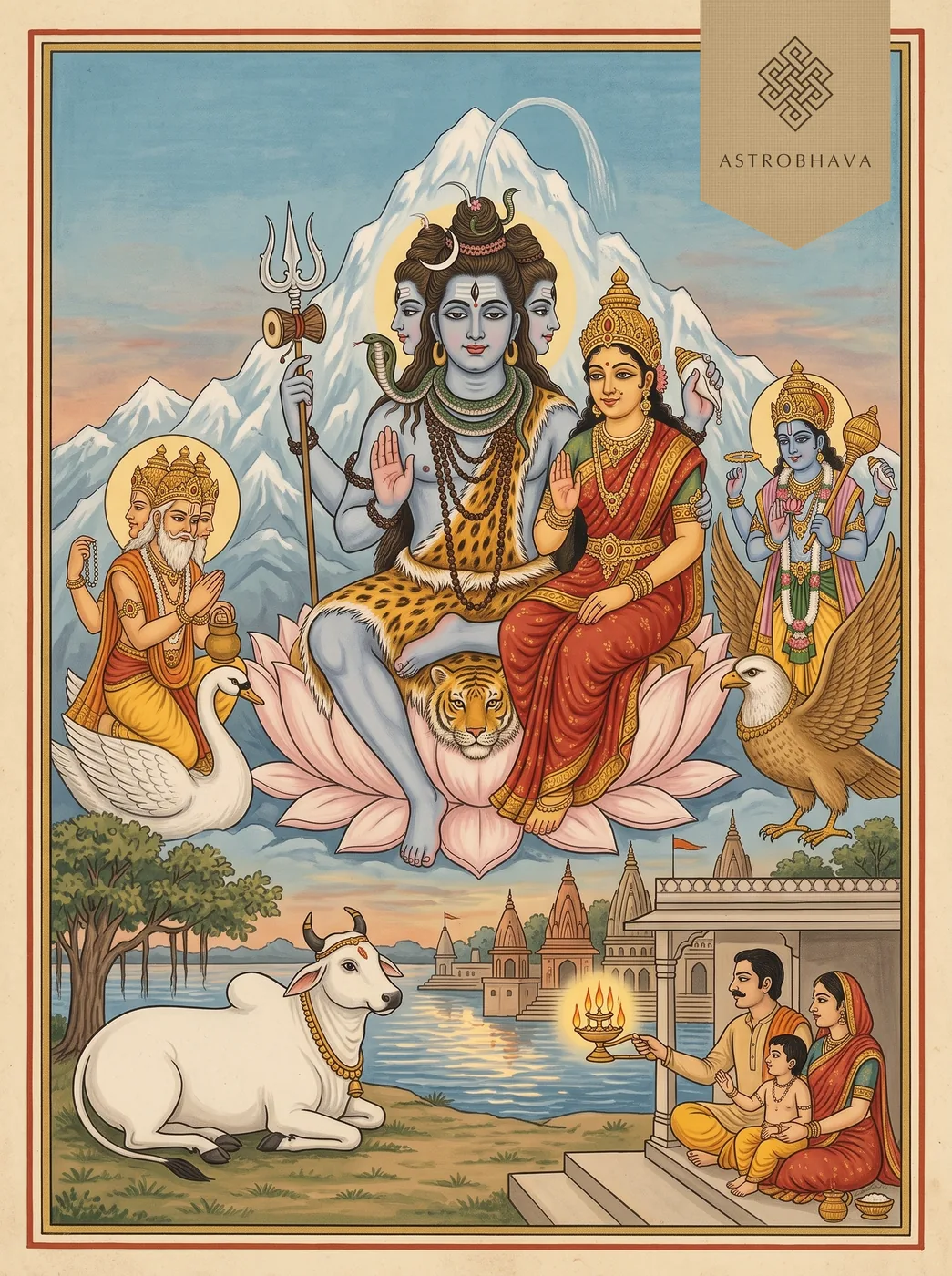
Om Jai Shiv Omkara Aarti
ॐ जय शिव ओंकारा, स्वामी जय शिव ओंकारा । ब्रह्मा विष्णु सदाशिव अर्द्धांगी धारा ॥Also known as Shiv Ji Ki Aarti
In Devanagari, Tamil, Telugu, Kannada, Malayalam and English — with the meaning of every word, and the one syllable most people pronounce wrongly.
What the Om Jai Shiv Omkara Aarti is
Om Jai Shiv Omkara is the Hindi aarti widely sung as the lamp is waved before Shiva, and it is popularly called Shiv ji ki aarti. Its refrain hails Shiva as Omkara, the syllable Om itself, and names Brahma, Vishnu and Sadashiva together in him, the god who carries his consort as half his body. Stanzas 1 to 5 then work in threes: one face, four faces and five faces; the swan, Garuda and the bull; the rosary, the forest garland and the garland of skulls; the water pot, the discus and the trident. Each set joins an emblem of Brahma, one of Vishnu and one of Shiva, so the singer is shown three gods in one body before stanza 6 states the point outright. Stanzas 7 to 10 turn to Shiva's own world, from Kailasa and the Ganga in his locks to Kashi, and stanza 11 carries the signature of Shivanand Swami.
A signed aarti that kept growing
Nothing is recorded about when or where this aarti was composed. Its only author's name is the one it gives itself: the closing stanza says 'kahat Shivanand Swami', the signature line by which a Hindi devotional poet places a name in the last verse. No dated life of a Shivanand Swami has been tied to the text, and the attribution rests on that line alone. What can be traced is how the aarti has grown in print. Older bazaar aarti books and vrat booklets give seven stanzas: the six built on the threefold emblems, and the signature. A second group adds an eighth, on Vishvanatha enthroned in Kashi with Nandi beside him. The form sung today, already printed in Delhi aarti books by 1987, carries four stanzas the shorter books lack: Lakshmi, Savitri and Parvati together; Parvati on the mountain and Shankara on Kailasa, with bhang and datura for food and ash for a dwelling; the Ganga in the matted locks with Shesha coiled about him; and the Kashi stanza. These anonymous folk additions move the hymn from doctrine to picture. Wording also travels between aartis: some printings replace the sixth stanza with the Madhu-Kaitabha line of the Durga aarti Jai Ambe Gauri, a line that praises the Goddess rather than Shiva.
The mantra, in six scripts
- ॐ
- oṃ — Om
- जय
- jaya — victory
- शिव
- śiva — to Shiva
- ओंकारा
- oṃkārā — the syllable Om
- स्वामी
- svāmī — O Lord
- जय
- jaya — victory
- शिव
- śiva — to Shiva
- ओंकारा
- oṃkārā — the syllable Om
- ब्रह्मा
- brahmā — Brahma
- विष्णु
- viṣṇu — Vishnu
- सदाशिव
- sadāśiva — Sadashiva
- अर्द्धांगी
- arddhāṃgī — consort as half the body
- धारा
- dhārā — bearing
Om Jai Shiv Omkara lyrics in full
A refrain and eleven stanzas in Hindi, in the form widely sung today. The refrain returns after every stanza.
All 12 verses, in Hindi, Tamil, Telugu, Kannada, Malayalam and English, each with its meaning. Choose a script:
Download the Om Jai Shiv Omkara PDFAll 12 verses with their meanings, in Hindi. Free to print and keep.
ॐ जय शिव ओंकारा, स्वामी जय शिव ओंकारा ।
ब्रह्मा विष्णु सदाशिव अर्द्धांगी धारा ॥
ௐ ஜய ஶிவ ஓம்காரா, ஸ்வாமீ ஜய ஶிவ ஓம்காரா ।
ப்ரஹ்மா விஷ்ணு ஸதாஶிவ அர்த்தாம்கீ தாரா ॥
ఓం జయ శివ ఓంకారా, స్వామీ జయ శివ ఓంకారా ।
బ్రహ్మా విష్ణు సదాశివ అర్ద్ధాంగీ ధారా ॥
ಓಂ ಜಯ ಶಿವ ಓಂಕಾರಾ, ಸ್ವಾಮೀ ಜಯ ಶಿವ ಓಂಕಾರಾ ।
ಬ್ರಹ್ಮಾ ವಿಷ್ಣು ಸದಾಶಿವ ಅರ್ದ್ಧಾಂಗೀ ಧಾರಾ ॥
ഓം ജയ ശിവ ഓംകാരാ, സ്വാമീ ജയ ശിവ ഓംകാരാ ।
ബ്രഹ്മാ വിഷ്ണു സദാശിവ അര്ദ്ധാംഗീ ധാരാ ॥
oṃ jaya śiva oṃkārā, svāmī jaya śiva oṃkārā |
brahmā viṣṇu sadāśiva arddhāṃgī dhārā ||
Om, victory to Shiva, the Omkara; victory, Lord, to Shiva, the sacred syllable Om. Brahma, Vishnu and Sadashiva are all in you, and you bear your consort as half of your own body.
एकानन चतुरानन पञ्चानन राजे ।
हंसासन गरुड़ासन वृषवाहन साजे ॥
ஏகாநந சதுராநந பஞ்சாநந ராஜே ।
ஹம்ஸாஸந கருடாஸந வ்ருஷவாஹந ஸாஜே ॥
ఏకానన చతురానన పఞ్చానన రాజే ।
హంసాసన గరుడాసన వృషవాహన సాజే ॥
ಏಕಾನನ ಚತುರಾನನ ಪಞ್ಚಾನನ ರಾಜೇ ।
ಹಂಸಾಸನ ಗರುಡಾಸನ ವೃಷವಾಹನ ಸಾಜೇ ॥
ഏകാനന ചതുരാനന പഞ്ചാനന രാജേ ।
ഹംസാസന ഗരുഡാസന വൃഷവാഹന സാജേ ॥
ekānana caturānana pañcānana rāje |
haṃsāsana garuṛāsana vṛṣavāhana sāje ||
You shine as the one-faced, the four-faced and the five-faced. You appear seated on the swan, on Garuda, and riding the bull.
दो भुज चार चतुर्भुज दसभुज अति सोहे ।
त्रिगुण रूप निरखते त्रिभुवन जन मोहे ॥
தோ புஜ சார சதுர்புஜ தஸபுஜ அதி ஸோஹே ।
த்ரிகுண ரூப நிரகதே த்ரிபுவந ஜந மோஹே ॥
దో భుజ చార చతుర్భుజ దసభుజ అతి సోహే ।
త్రిగుణ రూప నిరఖతే త్రిభువన జన మోహే ॥
ದೋ ಭುಜ ಚಾರ ಚತುರ್ಭುಜ ದಸಭುಜ ಅತಿ ಸೋಹೇ ।
ತ್ರಿಗುಣ ರೂಪ ನಿರಖತೇ ತ್ರಿಭುವನ ಜನ ಮೋಹೇ ॥
ദോ ഭുജ ചാര ചതുര്ഭുജ ദസഭുജ അതി സോഹേ ।
ത്രിഗുണ രൂപ നിരഖതേ ത്രിഭുവന ജന മോഹേ ॥
do bhuja cāra caturbhuja dasabhuja ati sohe |
triguṇa rūpa nirakhate tribhuvana jana mohe ||
With two arms, with four arms and with ten arms you look most splendid. Beholding your form of the three gunas, the people of the three worlds are enchanted.
अक्षमाला वनमाला मुण्डमाला धारी ।
त्रिपुरारी कंसारी कर माला धारी ॥
அக்ஷமாலா வநமாலா முண்டமாலா தாரீ ।
த்ரிபுராரீ கம்ஸாரீ கர மாலா தாரீ ॥
అక్షమాలా వనమాలా ముణ్డమాలా ధారీ ।
త్రిపురారీ కంసారీ కర మాలా ధారీ ॥
ಅಕ್ಷಮಾಲಾ ವನಮಾಲಾ ಮುಣ್ಡಮಾಲಾ ಧಾರೀ ।
ತ್ರಿಪುರಾರೀ ಕಂಸಾರೀ ಕರ ಮಾಲಾ ಧಾರೀ ॥
അക്ഷമാലാ വനമാലാ മുണ്ഡമാലാ ധാരീ ।
ത്രിപുരാരീ കംസാരീ കര മാലാ ധാരീ ॥
akṣamālā vanamālā muṇḍamālā dhārī |
tripurārī kaṃsārī kara mālā dhārī ||
You wear the rosary of beads, the garland of forest flowers and the garland of skulls. You are the foe of Tripura and the foe of Kamsa, holding a rosary in your hand.
श्वेताम्बर पीताम्बर बाघम्बर अंगे ।
सनकादिक गरुणादिक भूतादिक संगे ॥
ஶ்வேதாம்பர பீதாம்பர பாகம்பர அம்கே ।
ஸநகாதிக கருணாதிக பூதாதிக ஸம்கே ॥
శ్వేతామ్బర పీతామ్బర బాఘమ్బర అంగే ।
సనకాదిక గరుణాదిక భూతాదిక సంగే ॥
ಶ್ವೇತಾಮ್ಬರ ಪೀತಾಮ್ಬರ ಬಾಘಮ್ಬರ ಅಂಗೇ ।
ಸನಕಾದಿಕ ಗರುಣಾದಿಕ ಭೂತಾದಿಕ ಸಂಗೇ ॥
ശ്വേതാമ്ബര പീതാമ്ബര ബാഘമ്ബര അംഗേ ।
സനകാദിക ഗരുണാദിക ഭൂതാദിക സംഗേ ॥
śvetāmbara pītāmbara bāghambara aṃge |
sanakādika garuṇādika bhūtādika saṃge ||
White cloth, yellow cloth and the tiger skin adorn your body. Sanaka and the other sages, Garuda and the others, and the hosts of spirits are in your company.
कर के मध्य कमण्डलु चक्र त्रिशूलधारी ।
सुखकारी दुखहारी जगपालन कारी ॥
கர கே மத்ய கமண்டலு சக்ர த்ரிஶூலதாரீ ।
ஸுககாரீ துகஹாரீ ஜகபாலந காரீ ॥
కర కే మధ్య కమణ్డలు చక్ర త్రిశూలధారీ ।
సుఖకారీ దుఖహారీ జగపాలన కారీ ॥
ಕರ ಕೇ ಮಧ್ಯ ಕಮಣ್ಡಲು ಚಕ್ರ ತ್ರಿಶೂಲಧಾರೀ ।
ಸುಖಕಾರೀ ದುಖಹಾರೀ ಜಗಪಾಲನ ಕಾರೀ ॥
കര കേ മധ്യ കമണ്ഡലു ചക്ര ത്രിശൂലധാരീ ।
സുഖകാരീ ദുഖഹാരീ ജഗപാലന കാരീ ॥
kara ke madhya kamaṇḍalu cakra triśūladhārī |
sukhakārī dukhahārī jagapālana kārī ||
In your hands you hold the water pot, the discus and the trident. You give happiness, take away sorrow and sustain the world.
ब्रह्मा विष्णु सदाशिव जानत अविवेका ।
प्रणवाक्षर मध्ये ये तीनों एका ॥
ப்ரஹ்மா விஷ்ணு ஸதாஶிவ ஜாநத அவிவேகா ।
ப்ரணவாக்ஷர மத்யே யே தீநோம் ஏகா ॥
బ్రహ్మా విష్ణు సదాశివ జానత అవివేకా ।
ప్రణవాక్షర మధ్యే యే తీనోం ఏకా ॥
ಬ್ರಹ್ಮಾ ವಿಷ್ಣು ಸದಾಶಿವ ಜಾನತ ಅವಿವೇಕಾ ।
ಪ್ರಣವಾಕ್ಷರ ಮಧ್ಯೇ ಯೇ ತೀನೋಂ ಏಕಾ ॥
ബ്രഹ്മാ വിഷ്ണു സദാശിവ ജാനത അവിവേകാ ।
പ്രണവാക്ഷര മധ്യേ യേ തീനോം ഏകാ ॥
brahmā viṣṇu sadāśiva jānata avivekā |
praṇavākṣara madhye ye tīnoṃ ekā ||
The undiscerning take Brahma, Vishnu and Sadashiva to be separate. Within the syllable Om these three are one.
लक्ष्मी व सावित्री पार्वती संगा ।
पार्वती अर्द्धांगी, शिवलहरी गंगा ॥
லக்ஷ்மீ வ ஸாவித்ரீ பார்வதீ ஸம்கா ।
பார்வதீ அர்த்தாம்கீ, ஶிவலஹரீ கம்கா ॥
లక్ష్మీ వ సావిత్రీ పార్వతీ సంగా ।
పార్వతీ అర్ద్ధాంగీ, శివలహరీ గంగా ॥
ಲಕ್ಷ್ಮೀ ವ ಸಾವಿತ್ರೀ ಪಾರ್ವತೀ ಸಂಗಾ ।
ಪಾರ್ವತೀ ಅರ್ದ್ಧಾಂಗೀ, ಶಿವಲಹರೀ ಗಂಗಾ ॥
ലക്ഷ്മീ വ സാവിത്രീ പാര്വതീ സംഗാ ।
പാര്വതീ അര്ദ്ധാംഗീ, ശിവലഹരീ ഗംഗാ ॥
lakṣmī va sāvitrī pārvatī saṃgā |
pārvatī arddhāṃgī, śivalaharī gaṃgā ||
Lakshmi, Savitri and Parvati are together with the three. Parvati is Shiva's other half, and the Ganga flows as Shiva's own wave.
पर्वत सोहैं पार्वती, शंकर कैलासा ।
भांग धतूर का भोजन, भस्मी में वासा ॥
பர்வத ஸோஹைம் பார்வதீ, ஶம்கர கைலாஸா ।
பாம்க ததூர கா போஜந, பஸ்மீ மேம் வாஸா ॥
పర్వత సోహైం పార్వతీ, శంకర కైలాసా ।
భాంగ ధతూర కా భోజన, భస్మీ మేం వాసా ॥
ಪರ್ವತ ಸೋಹೈಂ ಪಾರ್ವತೀ, ಶಂಕರ ಕೈಲಾಸಾ ।
ಭಾಂಗ ಧತೂರ ಕಾ ಭೋಜನ, ಭಸ್ಮೀ ಮೇಂ ವಾಸಾ ॥
പര്വത സോഹൈം പാര്വതീ, ശംകര കൈലാസാ ।
ഭാംഗ ധതൂര കാ ഭോജന, ഭസ്മീ മേം വാസാ ॥
parvata sohaiṃ pārvatī, śaṃkara kailāsā |
bhāṃga dhatūra kā bhojana, bhasmī meṃ vāsā ||
Parvati graces the mountain, and Shankara dwells on Kailasa. Bhang and datura are his food, and he lives amid sacred ash.
जटा में गंगा बहत है, गल मुण्डन माला ।
शेष नाग लिपटावत, ओढ़त मृगछाला ॥
ஜடா மேம் கம்கா பஹத ஹை, கல முண்டந மாலா ।
ஶேஷ நாக லிபடாவத, ஓடத ம்ருகசாலா ॥
జటా మేం గంగా బహత హై, గల ముణ్డన మాలా ।
శేష నాగ లిపటావత, ఓఢత మృగఛాలా ॥
ಜಟಾ ಮೇಂ ಗಂಗಾ ಬಹತ ಹೈ, ಗಲ ಮುಣ್ಡನ ಮಾಲಾ ।
ಶೇಷ ನಾಗ ಲಿಪಟಾವತ, ಓಢತ ಮೃಗಛಾಲಾ ॥
ജടാ മേം ഗംഗാ ബഹത ഹൈ, ഗല മുണ്ഡന മാലാ ।
ശേഷ നാഗ ലിപടാവത, ഓഢത മൃഗഛാലാ ॥
jaṭā meṃ gaṃgā bahata hai, gala muṇḍana mālā |
śeṣa nāga lipaṭāvata, oṛhata mṛgachālā ||
The Ganga flows in his matted locks, and a garland of skulls hangs at his throat. The serpent Shesha coils around him, and he wraps himself in a deer skin.
काशी में विराजे विश्वनाथ, नन्दी ब्रह्मचारी ।
नित उठ दर्शन पावत, महिमा अति भारी ॥
காஶீ மேம் விராஜே விஶ்வநாத, நந்தீ ப்ரஹ்மசாரீ ।
நித உட தர்ஶந பாவத, மஹிமா அதி பாரீ ॥
కాశీ మేం విరాజే విశ్వనాథ, నన్దీ బ్రహ్మచారీ ।
నిత ఉఠ దర్శన పావత, మహిమా అతి భారీ ॥
ಕಾಶೀ ಮೇಂ ವಿರಾಜೇ ವಿಶ್ವನಾಥ, ನನ್ದೀ ಬ್ರಹ್ಮಚಾರೀ ।
ನಿತ ಉಠ ದರ್ಶನ ಪಾವತ, ಮಹಿಮಾ ಅತಿ ಭಾರೀ ॥
കാശീ മേം വിരാജേ വിശ്വനാഥ, നന്ദീ ബ്രഹ്മചാരീ ।
നിത ഉഠ ദര്ശന പാവത, മഹിമാ അതി ഭാരീ ॥
kāśī meṃ virāje viśvanātha, nandī brahmacārī |
nita uṭha darśana pāvata, mahimā ati bhārī ||
In Kashi he is enthroned as Vishvanatha, with Nandi the celibate attendant. Devotees rise each day to have his darshan; his glory is very great.
त्रिगुणस्वामी जी की आरती जो कोइ नर गावे ।
कहत शिवानन्द स्वामी, मनवान्छित फल पावे ॥
த்ரிகுணஸ்வாமீ ஜீ கீ ஆரதீ ஜோ கோஇ நர காவே ।
கஹத ஶிவாநந்த ஸ்வாமீ, மநவாந்சித பல பாவே ॥
త్రిగుణస్వామీ జీ కీ ఆరతీ జో కోఇ నర గావే ।
కహత శివానన్ద స్వామీ, మనవాన్ఛిత ఫల పావే ॥
ತ್ರಿಗುಣಸ್ವಾಮೀ ಜೀ ಕೀ ಆರತೀ ಜೋ ಕೋಇ ನರ ಗಾವೇ ।
ಕಹತ ಶಿವಾನನ್ದ ಸ್ವಾಮೀ, ಮನವಾನ್ಛಿತ ಫಲ ಪಾವೇ ॥
ത്രിഗുണസ്വാമീ ജീ കീ ആരതീ ജോ കോഇ നര ഗാവേ ।
കഹത ശിവാനന്ദ സ്വാമീ, മനവാന്ഛിത ഫല പാവേ ॥
triguṇasvāmī jī kī āratī jo koi nara gāve |
kahata śivānanda svāmī, manavānchita phala pāve ||
Whoever sings this aarti of the Lord of the three gunas, says Shivanand Swami - the verse says that person obtains the fruit the heart desires.
The syllable people get wrong
In stanza 6, praṇavākṣara (प्रणवाक्षर), 'the syllable Om', is one word joined from praṇava and akṣara: the ṇ is retroflex, the vā is long, and kṣ is said as 'ksh', so pra-na-VAAK-sha-ra. Breaking it into 'pranav akshar' with a short a hides the long vowel the joining creates.
When the Om Jai Shiv Omkara Aarti is chanted
Weekday. Monday
Festival. Maha Shivaratri and the Mondays of Shravan
Questions
Have your chart read before you decide
Chanting is yours to do, and free. But which deity your situation calls for — and whether a mantra alone is the right response — depends on your chart. Sometimes it is; sometimes it is not.
- Over 30 years in the Guru–Sishya Parampara, from the age of five
- He reads every chart himself — 60 minutes, one to one, never delegated
- Charts are read only between sunrise and sunset, following tradition