Shiv Chalisa
जय गणेश गिरिजा सुवन मंगल मूल सुजान । कहत अयोध्यादास तुम देहु अभय वरदान ॥Also known as Shiva Chalisa
In Devanagari, Tamil, Telugu, Kannada, Malayalam and English — with the meaning of every word, and the one syllable most people pronounce wrongly.
What the Shiv Chalisa is
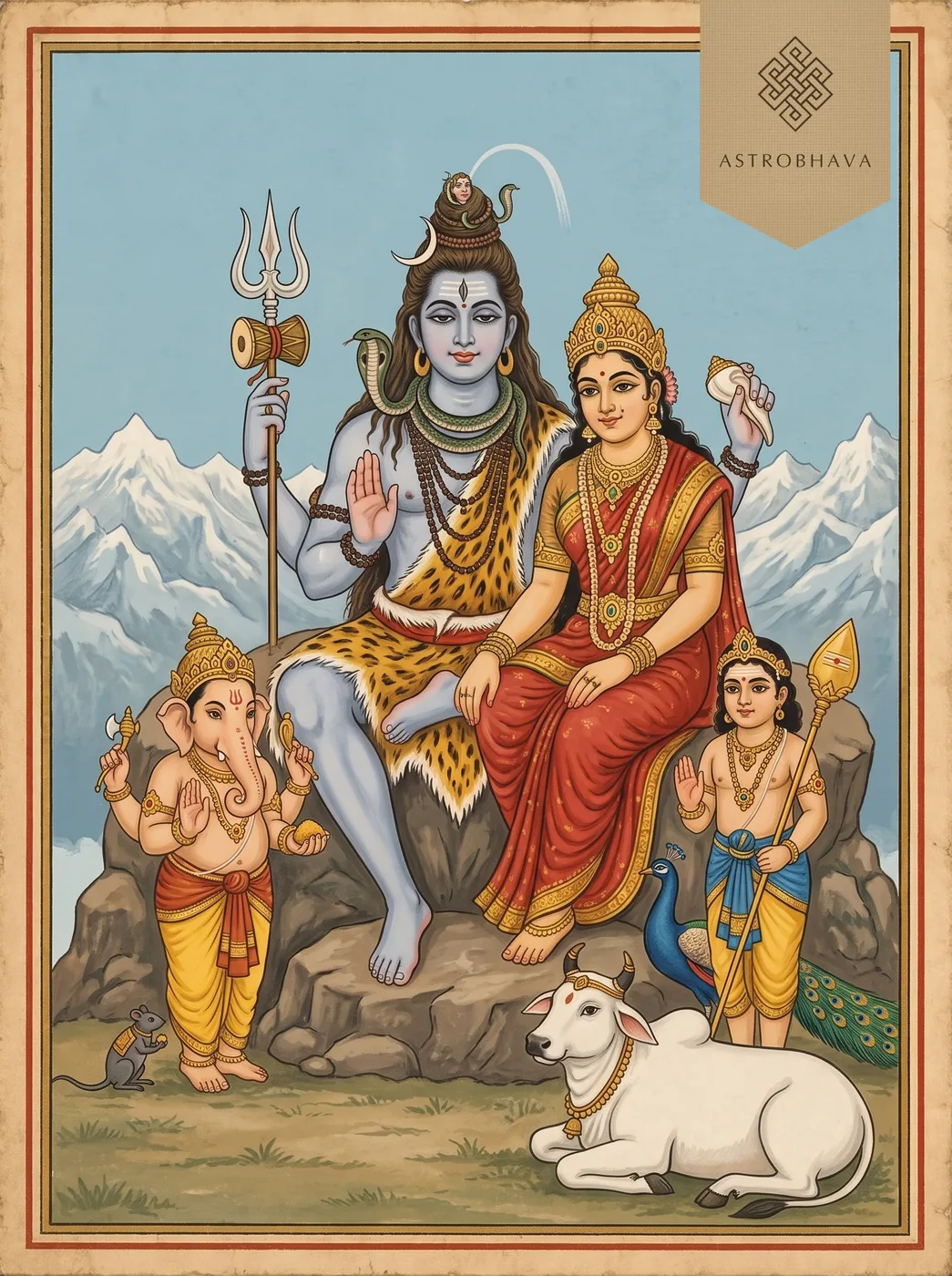
The Shiv Chalisa is a Hindi devotional poem to Shiva in the chalisa form: rhyming chaupai couplets framed by dohas, named after the forty (chalis) chaupais at its core. Its poet signs as Ayodhyadas twice, in the opening doha and in the last chaupai. Unusually, that opening doha is addressed to Ganesha, son of Girija, asking him for the boon of fearlessness before the poem turns to his father. Chaupais 1 to 8 paint Shiva with his household: the moon on the forehead, Ganga flowing from the head, Parvati at his left, Nandi, Ganesha and Kartikeya around him. Chaupais 9 to 22 recount his deeds, from sending six-faced Kartikeya against Taraka to drinking the poison of the churned ocean. Chaupais 23 to 33 become a personal cry against enemies and abandonment. Chaupais 34 to 40 state what recitation brings, and two closing dohas follow, the last a dating colophon.
A poet's signature and a date without a century
Almost nothing is known of Ayodhyadas beyond what the poem says about itself. The poet's name appears in the first doha and again in the forty-first chaupai, and the final doha records when the work was finished: the sixth day of Magasir (Margashirsha), in the Hemanta season, in Samvat chausath, 'year sixty-four'. No century is given. Some devotional sources read this as Vikram Samvat 1664, around 1607 CE, and others as 1964, around 1907 CE, but no published study of the poet or the text supports either reading. The earliest printed copies on record are recent: a 2004 anthology of fifty-one chalisas from Randhir Prakashan in Haridwar, and a 2007 booklet issued by the Shri Sangameshwar Mahadev temple at Pehowa near Kurukshetra, which prints the chalisa with a list of Shiva's names and an aarti under Ayodhyadas's name. The poem is usually described as drawn from the Shiva Purana, and its episodes, Jalandhara, Tripura, Taraka and the blue throat, do come from that body of story. The text circulates in two families of wording that differ in a dozen small readings; this page follows one family throughout and does not mix the two.
The mantra, in six scripts
- जय
- jaya — victory
- गणेश
- gaṇeśa — to Ganesha
- गिरिजा
- girijā — of Girija (Parvati)
- सुवन
- suvana — son
- मंगल
- maṃgala — of auspiciousness
- मूल
- mūla — root
- सुजान
- sujāna — all-wise
- कहत
- kahata — says
- अयोध्यादास
- ayodhyādāsa — Ayodhyadas
- तुम
- tuma — you
- देहु
- dehu — grant
- अभय
- abhaya — fearlessness
- वरदान
- varadāna — the boon
Shiv Chalisa lyrics in full
All 44 verses, in Hindi, Tamil, Telugu, Kannada, Malayalam and English, each with its meaning. Choose a script:
Download the Shiv Chalisa PDFAll 44 verses with their meanings, in Hindi. Free to print and keep.
जय गणेश गिरिजा सुवन मंगल मूल सुजान ।
कहत अयोध्यादास तुम देहु अभय वरदान ॥
ஜய கணேஶ கிரிஜா ஸுவந மம்கல மூல ஸுஜாந ।
கஹத அயோத்யாதாஸ தும தேஹு அபய வரதாந ॥
జయ గణేశ గిరిజా సువన మంగల మూల సుజాన ।
కహత అయోధ్యాదాస తుమ దేహు అభయ వరదాన ॥
ಜಯ ಗಣೇಶ ಗಿರಿಜಾ ಸುವನ ಮಂಗಲ ಮೂಲ ಸುಜಾನ ।
ಕಹತ ಅಯೋಧ್ಯಾದಾಸ ತುಮ ದೇಹು ಅಭಯ ವರದಾನ ॥
ജയ ഗണേശ ഗിരിജാ സുവന മംഗല മൂല സുജാന ।
കഹത അയോധ്യാദാസ തുമ ദേഹു അഭയ വരദാന ॥
jaya gaṇeśa girijā suvana maṃgala mūla sujāna |
kahata ayodhyādāsa tuma dehu abhaya varadāna ||
Victory to Ganesha, son of Girija, the root of all auspiciousness and the all-wise. Ayodhyadas says: grant me the boon of fearlessness.
जय गिरिजा पति दीन दयाला ।
सदा करत सन्तन प्रतिपाला ॥
ஜய கிரிஜா பதி தீந தயாலா ।
ஸதா கரத ஸந்தந ப்ரதிபாலா ॥
జయ గిరిజా పతి దీన దయాలా ।
సదా కరత సన్తన ప్రతిపాలా ॥
ಜಯ ಗಿರಿಜಾ ಪತಿ ದೀನ ದಯಾಲಾ ।
ಸದಾ ಕರತ ಸನ್ತನ ಪ್ರತಿಪಾಲಾ ॥
ജയ ഗിരിജാ പതി ദീന ദയാലാ ।
സദാ കരത സന്തന പ്രതിപാലാ ॥
jaya girijā pati dīna dayālā |
sadā karata santana pratipālā ||
Victory to the lord of Girija, kind to the humble, who always protects the saints.
भाल चन्द्रमा सोहत नीके ।
कानन कुण्डल नागफनी के ॥
பால சந்த்ரமா ஸோஹத நீகே ।
காநந குண்டல நாகபநீ கே ॥
భాల చన్ద్రమా సోహత నీకే ।
కానన కుణ్డల నాగఫనీ కే ॥
ಭಾಲ ಚನ್ದ್ರಮಾ ಸೋಹತ ನೀಕೇ ।
ಕಾನನ ಕುಣ್ಡಲ ನಾಗಫನೀ ಕೇ ॥
ഭാല ചന്ദ്രമാ സോഹത നീകേ ।
കാനന കുണ്ഡല നാഗഫനീ കേ ॥
bhāla candramā sohata nīke |
kānana kuṇḍala nāgaphanī ke ||
The moon shines beautifully on his forehead, and cobra hoods are the rings in his ears.
अंग गौर शिर गंग बहाये ।
मुण्डमाल तन क्षार लगाए ॥
அம்க கௌர ஶிர கம்க பஹாயே ।
முண்டமால தந க்ஷார லகாஏ ॥
అంగ గౌర శిర గంగ బహాయే ।
ముణ్డమాల తన క్షార లగాఏ ॥
ಅಂಗ ಗೌರ ಶಿರ ಗಂಗ ಬಹಾಯೇ ।
ಮುಣ್ಡಮಾಲ ತನ ಕ್ಷಾರ ಲಗಾಏ ॥
അംഗ ഗൌര ശിര ഗംഗ ബഹായേ ।
മുണ്ഡമാല തന ക്ഷാര ലഗാഏ ॥
aṃga gaura śira gaṃga bahāye |
muṇḍamāla tana kṣāra lagāe ||
His body is fair, the Ganga flows from his head, he wears a garland of skulls and his body is smeared with ash.
वस्त्र खाल बाघम्बर सोहे ।
छवि को देखि नाग मन मोहे ॥
வஸ்த்ர கால பாகம்பர ஸோஹே ।
சவி கோ தேகி நாக மந மோஹே ॥
వస్త్ర ఖాల బాఘమ్బర సోహే ।
ఛవి కో దేఖి నాగ మన మోహే ॥
ವಸ್ತ್ರ ಖಾಲ ಬಾಘಮ್ಬರ ಸೋಹೇ ।
ಛವಿ ಕೋ ದೇಖಿ ನಾಗ ಮನ ಮೋಹೇ ॥
വസ്ത്ര ഖാല ബാഘമ്ബര സോഹേ ।
ഛവി കോ ദേഖി നാഗ മന മോഹേ ॥
vastra khāla bāghambara sohe |
chavi ko dekhi nāga mana mohe ||
A tiger skin is his garment; seeing his form, even the serpents are enchanted.
मैना मातु की हवे दुलारी ।
बाम अंग सोहत छवि न्यारी ॥
மைநா மாது கீ ஹவே துலாரீ ।
பாம அம்க ஸோஹத சவி ந்யாரீ ॥
మైనా మాతు కీ హవే దులారీ ।
బామ అంగ సోహత ఛవి న్యారీ ॥
ಮೈನಾ ಮಾತು ಕೀ ಹವೇ ದುಲಾರೀ ।
ಬಾಮ ಅಂಗ ಸೋಹತ ಛವಿ ನ್ಯಾರೀ ॥
മൈനാ മാതു കീ ഹവേ ദുലാരീ ।
ബാമ അംഗ സോഹത ഛവി ന്യാരീ ॥
mainā mātu kī have dulārī |
bāma aṃga sohata chavi nyārī ||
The beloved daughter of mother Maina (Parvati) shines at his left side, a matchless sight.
कर त्रिशूल सोहत छवि भारी ।
करत सदा शत्रुन क्षयकारी ॥
கர த்ரிஶூல ஸோஹத சவி பாரீ ।
கரத ஸதா ஶத்ருந க்ஷயகாரீ ॥
కర త్రిశూల సోహత ఛవి భారీ ।
కరత సదా శత్రున క్షయకారీ ॥
ಕರ ತ್ರಿಶೂಲ ಸೋಹತ ಛವಿ ಭಾರೀ ।
ಕರತ ಸದಾ ಶತ್ರುನ ಕ್ಷಯಕಾರೀ ॥
കര ത്രിശൂല സോഹത ഛവി ഭാരീ ।
കരത സദാ ശത്രുന ക്ഷയകാരീ ॥
kara triśūla sohata chavi bhārī |
karata sadā śatruna kṣayakārī ||
The trident shines in his hand, a mighty sight, always destroying enemies.
नन्दि गणेश सोहै तहँ कैसे ।
सागर मध्य कमल हैं जैसे ॥
நந்தி கணேஶ ஸோஹை தஹம் கைஸே ।
ஸாகர மத்ய கமல ஹைம் ஜைஸே ॥
నన్ది గణేశ సోహై తహఁ కైసే ।
సాగర మధ్య కమల హైం జైసే ॥
ನನ್ದಿ ಗಣೇಶ ಸೋಹೈ ತಹಁ ಕೈಸೇ ।
ಸಾಗರ ಮಧ್ಯ ಕಮಲ ಹೈಂ ಜೈಸೇ ॥
നന്ദി ഗണേശ സോഹൈ തഹഁ കൈസേ ।
സാഗര മധ്യ കമല ഹൈം ജൈസേ ॥
nandi gaṇeśa sohai tahaṃ kaise |
sāgara madhya kamala haiṃ jaise ||
Nandi and Ganesha look beside him like lotuses in the middle of the ocean.
कार्तिक श्याम और गणराऊ ।
या छवि को कहि जात न काऊ ॥
கார்திக ஶ்யாம ஔர கணராஊ ।
யா சவி கோ கஹி ஜாத ந காஊ ॥
కార్తిక శ్యామ ఔర గణరాఊ ।
యా ఛవి కో కహి జాత న కాఊ ॥
ಕಾರ್ತಿಕ ಶ್ಯಾಮ ಔರ ಗಣರಾಊ ।
ಯಾ ಛವಿ ಕೋ ಕಹಿ ಜಾತ ನ ಕಾಊ ॥
കാര്തിക ശ്യാമ ഔര ഗണരാഊ ।
യാ ഛവി കോ കഹി ജാത ന കാഊ ॥
kārtika śyāma aura gaṇarāū |
yā chavi ko kahi jāta na kāū ||
With Kartikeya, the dark-hued attendants and the lord of the ganas, this sight cannot be described by anyone.
देवन जबहीं जाय पुकारा ।
तब ही दुख प्रभु आप निवारा ॥
தேவந ஜபஹீம் ஜாய புகாரா ।
தப ஹீ துக ப்ரபு ஆப நிவாரா ॥
దేవన జబహీం జాయ పుకారా ।
తబ హీ దుఖ ప్రభు ఆప నివారా ॥
ದೇವನ ಜಬಹೀಂ ಜಾಯ ಪುಕಾರಾ ।
ತಬ ಹೀ ದುಖ ಪ್ರಭು ಆಪ ನಿವಾರಾ ॥
ദേവന ജബഹീം ജായ പുകാരാ ।
തബ ഹീ ദുഖ പ്രഭു ആപ നിവാരാ ॥
devana jabahīṃ jāya pukārā |
taba hī dukha prabhu āpa nivārā ||
Whenever the gods came and called to you, Lord, you yourself removed their sorrow at once.
किया उपद्रव तारक भारी ।
देवन सब मिलि तुमहिं जुहारी ॥
கியா உபத்ரவ தாரக பாரீ ।
தேவந ஸப மிலி துமஹிம் ஜுஹாரீ ॥
కియా ఉపద్రవ తారక భారీ ।
దేవన సబ మిలి తుమహిం జుహారీ ॥
ಕಿಯಾ ಉಪದ್ರವ ತಾರಕ ಭಾರೀ ।
ದೇವನ ಸಬ ಮಿಲಿ ತುಮಹಿಂ ಜುಹಾರೀ ॥
കിയാ ഉപദ്രവ താരക ഭാരീ ।
ദേവന സബ മിലി തുമഹിം ജുഹാരീ ॥
kiyā upadrava tāraka bhārī |
devana saba mili tumahiṃ juhārī ||
When the demon Taraka caused great havoc, all the gods together bowed to you for help.
तुरत षडानन आप पठायउ ।
लवनिमेष महँ मारि गिरायउ ॥
துரத ஷடாநந ஆப படாயஉ ।
லவநிமேஷ மஹம் மாரி கிராயஉ ॥
తురత షడానన ఆప పఠాయఉ ।
లవనిమేష మహఁ మారి గిరాయఉ ॥
ತುರತ ಷಡಾನನ ಆಪ ಪಠಾಯಉ ।
ಲವನಿಮೇಷ ಮಹಁ ಮಾರಿ ಗಿರಾಯಉ ॥
തുരത ഷഡാനന ആപ പഠായഉ ।
ലവനിമേഷ മഹഁ മാരി ഗിരായഉ ॥
turata ṣaḍānana āpa paṭhāyau |
lavanimeṣa mahaṃ māri girāyau ||
At once you sent the six-faced Kartikeya, who struck him down in the blink of an eye.
आप जलंधर असुर संहारा ।
सुयश तुम्हार विदित संसारा ॥
ஆப ஜலம்தர அஸுர ஸம்ஹாரா ।
ஸுயஶ தும்ஹார விதித ஸம்ஸாரா ॥
ఆప జలంధర అసుర సంహారా ।
సుయశ తుమ్హార విదిత సంసారా ॥
ಆಪ ಜಲಂಧರ ಅಸುರ ಸಂಹಾರಾ ।
ಸುಯಶ ತುಮ್ಹಾರ ವಿದಿತ ಸಂಸಾರಾ ॥
ആപ ജലംധര അസുര സംഹാരാ ।
സുയശ തുമ്ഹാര വിദിത സംസാരാ ॥
āpa jalaṃdhara asura saṃhārā |
suyaśa tumhāra vidita saṃsārā ||
You yourself slew the demon Jalandhara; your fame is known throughout the world.
त्रिपुरासुर सन युद्ध मचाई ।
सबहिं कृपा कर लीन बचाई ॥
த்ரிபுராஸுர ஸந யுத்த மசாஈ ।
ஸபஹிம் க்ருபா கர லீந பசாஈ ॥
త్రిపురాసుర సన యుద్ధ మచాఈ ।
సబహిం కృపా కర లీన బచాఈ ॥
ತ್ರಿಪುರಾಸುರ ಸನ ಯುದ್ಧ ಮಚಾಈ ।
ಸಬಹಿಂ ಕೃಪಾ ಕರ ಲೀನ ಬಚಾಈ ॥
ത്രിപുരാസുര സന യുദ്ധ മചാഈ ।
സബഹിം കൃപാ കര ലീന ബചാഈ ॥
tripurāsura sana yuddha macāī |
sabahiṃ kṛpā kara līna bacāī ||
You waged war against the demon Tripura and in your grace saved everyone.
किया तपहिं भागीरथ भारी ।
पुरब प्रतिज्ञा तासु पुरारी ॥
கியா தபஹிம் பாகீரத பாரீ ।
புரப ப்ரதிஜ்ஞா தாஸு புராரீ ॥
కియా తపహిం భాగీరథ భారీ ।
పురబ ప్రతిజ్ఞా తాసు పురారీ ॥
ಕಿಯಾ ತಪಹಿಂ ಭಾಗೀರಥ ಭಾರೀ ।
ಪುರಬ ಪ್ರತಿಜ್ಞಾ ತಾಸು ಪುರಾರೀ ॥
കിയാ തപഹിം ഭാഗീരഥ ഭാരീ ।
പുരബ പ്രതിജ്ഞാ താസു പുരാരീ ॥
kiyā tapahiṃ bhāgīratha bhārī |
puraba pratijñā tāsu purārī ||
Bhagiratha performed great austerity, and you, slayer of Tripura, fulfilled his vow.
दानिन महँ तुम सम कोउ नाहीं ।
सेवक स्तुति करत सदाहीं ॥
தாநிந மஹம் தும ஸம கோஉ நாஹீம் ।
ஸேவக ஸ்துதி கரத ஸதாஹீம் ॥
దానిన మహఁ తుమ సమ కోఉ నాహీం ।
సేవక స్తుతి కరత సదాహీం ॥
ದಾನಿನ ಮಹಁ ತುಮ ಸಮ ಕೋಉ ನಾಹೀಂ ।
ಸೇವಕ ಸ್ತುತಿ ಕರತ ಸದಾಹೀಂ ॥
ദാനിന മഹഁ തുമ സമ കോഉ നാഹീം ।
സേവക സ്തുതി കരത സദാഹീം ॥
dānina mahaṃ tuma sama kou nāhīṃ |
sevaka stuti karata sadāhīṃ ||
Among givers there is none equal to you; your servants always sing your praise.
वेद माहि महिमा तुम गाई ।
अकथ अनादि भेद नहिं पाई ॥
வேத மாஹி மஹிமா தும காஈ ।
அகத அநாதி பேத நஹிம் பாஈ ॥
వేద మాహి మహిమా తుమ గాఈ ।
అకథ అనాది భేద నహిం పాఈ ॥
ವೇದ ಮಾಹಿ ಮಹಿಮಾ ತುಮ ಗಾಈ ।
ಅಕಥ ಅನಾದಿ ಭೇದ ನಹಿಂ ಪಾಈ ॥
വേദ മാഹി മഹിമാ തുമ ഗാഈ ।
അകഥ അനാദി ഭേദ നഹിം പാഈ ॥
veda māhi mahimā tuma gāī |
akatha anādi bheda nahiṃ pāī ||
The Vedas have sung your glory, yet could not find the secret of you, the indescribable and beginningless.
प्रकटी उदधि मंथन में ज्वाला ।
जरत सुरासुर भए विहाला ॥
ப்ரகடீ உததி மம்தந மேம் ஜ்வாலா ।
ஜரத ஸுராஸுர பஏ விஹாலா ॥
ప్రకటీ ఉదధి మంథన మేం జ్వాలా ।
జరత సురాసుర భఏ విహాలా ॥
ಪ್ರಕಟೀ ಉದಧಿ ಮಂಥನ ಮೇಂ ಜ್ವಾಲಾ ।
ಜರತ ಸುರಾಸುರ ಭಏ ವಿಹಾಲಾ ॥
പ്രകടീ ഉദധി മംഥന മേം ജ്വാലാ ।
ജരത സുരാസുര ഭഏ വിഹാലാ ॥
prakaṭī udadhi maṃthana meṃ jvālā |
jarata surāsura bhae vihālā ||
When fire (poison) rose from the churning of the ocean, the gods and demons were scorched and distraught.
कीन्ही दया तहं करी सहाई ।
नीलकण्ठ तब नाम कहाई ॥
கீந்ஹீ தயா தஹம் கரீ ஸஹாஈ ।
நீலகண்ட தப நாம கஹாஈ ॥
కీన్హీ దయా తహం కరీ సహాఈ ।
నీలకణ్ఠ తబ నామ కహాఈ ॥
ಕೀನ್ಹೀ ದಯಾ ತಹಂ ಕರೀ ಸಹಾಈ ।
ನೀಲಕಣ್ಠ ತಬ ನಾಮ ಕಹಾಈ ॥
കീന്ഹീ ദയാ തഹം കരീ സഹാഈ ।
നീലകണ്ഠ തബ നാമ കഹാഈ ॥
kīnhī dayā tahaṃ karī sahāī |
nīlakaṇṭha taba nāma kahāī ||
You showed compassion and helped them there, and from then you were called Nilakantha, the blue-throated.
पूजन रामचन्द्र जब कीन्हा ।
जीत के लंक विभीषण दीन्हा ॥
பூஜந ராமசந்த்ர ஜப கீந்ஹா ।
ஜீத கே லம்க விபீஷண தீந்ஹா ॥
పూజన రామచన్ద్ర జబ కీన్హా ।
జీత కే లంక విభీషణ దీన్హా ॥
ಪೂಜನ ರಾಮಚನ್ದ್ರ ಜಬ ಕೀನ್ಹಾ ।
ಜೀತ ಕೇ ಲಂಕ ವಿಭೀಷಣ ದೀನ್ಹಾ ॥
പൂജന രാമചന്ദ്ര ജബ കീന്ഹാ ।
ജീത കേ ലംക വിഭീഷണ ദീന്ഹാ ॥
pūjana rāmacandra jaba kīnhā |
jīta ke laṃka vibhīṣaṇa dīnhā ||
When Ramachandra worshipped you, he conquered Lanka and gave it to Vibhishana.
सहस कमल में हो रहे धारी ।
कीन्ह परीक्षा तबहिं पुरारी ॥
ஸஹஸ கமல மேம் ஹோ ரஹே தாரீ ।
கீந்ஹ பரீக்ஷா தபஹிம் புராரீ ॥
సహస కమల మేం హో రహే ధారీ ।
కీన్హ పరీక్షా తబహిం పురారీ ॥
ಸಹಸ ಕಮಲ ಮೇಂ ಹೋ ರಹೇ ಧಾರೀ ।
ಕೀನ್ಹ ಪರೀಕ್ಷಾ ತಬಹಿಂ ಪುರಾರೀ ॥
സഹസ കമല മേം ഹോ രഹേ ധാരീ ।
കീന്ഹ പരീക്ഷാ തബഹിം പുരാരീ ॥
sahasa kamala meṃ ho rahe dhārī |
kīnha parīkṣā tabahiṃ purārī ||
He was offering a thousand lotuses, and then you, slayer of Tripura, put him to the test.
एक कमल प्रभु राखेउ जोई ।
कमल नयन पूजन चहं सोई ॥
ஏக கமல ப்ரபு ராகேஉ ஜோஈ ।
கமல நயந பூஜந சஹம் ஸோஈ ॥
ఏక కమల ప్రభు రాఖేఉ జోఈ ।
కమల నయన పూజన చహం సోఈ ॥
ಏಕ ಕಮಲ ಪ್ರಭು ರಾಖೇಉ ಜೋಈ ।
ಕಮಲ ನಯನ ಪೂಜನ ಚಹಂ ಸೋಈ ॥
ഏക കമല പ്രഭു രാഖേഉ ജോഈ ।
കമല നയന പൂജന ചഹം സോഈ ॥
eka kamala prabhu rākheu joī |
kamala nayana pūjana cahaṃ soī ||
You hid one lotus, Lord, and the lotus-eyed one then wished to complete the worship with his own eye.
कठिन भक्ति देखी प्रभु शंकर ।
भए प्रसन्न दिए इच्छित वर ॥
கடிந பக்தி தேகீ ப்ரபு ஶம்கர ।
பஏ ப்ரஸந்ந திஏ இச்சித வர ॥
కఠిన భక్తి దేఖీ ప్రభు శంకర ।
భఏ ప్రసన్న దిఏ ఇచ్ఛిత వర ॥
ಕಠಿನ ಭಕ್ತಿ ದೇಖೀ ಪ್ರಭು ಶಂಕರ ।
ಭಏ ಪ್ರಸನ್ನ ದಿಏ ಇಚ್ಛಿತ ವರ ॥
കഠിന ഭക്തി ദേഖീ പ്രഭു ശംകര ।
ഭഏ പ്രസന്ന ദിഏ ഇച്ഛിത വര ॥
kaṭhina bhakti dekhī prabhu śaṃkara |
bhae prasanna die icchita vara ||
Seeing such hard devotion, Lord Shankara was pleased and granted the boon he desired.
जय जय जय अनन्त अविनाशी ।
करत कृपा सब के घटवासी ॥
ஜய ஜய ஜய அநந்த அவிநாஶீ ।
கரத க்ருபா ஸப கே கடவாஸீ ॥
జయ జయ జయ అనన్త అవినాశీ ।
కరత కృపా సబ కే ఘటవాసీ ॥
ಜಯ ಜಯ ಜಯ ಅನನ್ತ ಅವಿನಾಶೀ ।
ಕರತ ಕೃಪಾ ಸಬ ಕೇ ಘಟವಾಸೀ ॥
ജയ ജയ ജയ അനന്ത അവിനാശീ ।
കരത കൃപാ സബ കേ ഘടവാസീ ॥
jaya jaya jaya ananta avināśī |
karata kṛpā saba ke ghaṭavāsī ||
Victory, victory, victory to the endless and imperishable one, who dwells in every heart and shows grace to all.
दुष्ट सकल नित मोहि सतावै ।
भ्रमत रहौं मोहि चैन न आवै ॥
துஷ்ட ஸகல நித மோஹி ஸதாவை ।
ப்ரமத ரஹௌம் மோஹி சைந ந ஆவை ॥
దుష్ట సకల నిత మోహి సతావై ।
భ్రమత రహౌం మోహి చైన న ఆవై ॥
ದುಷ್ಟ ಸಕಲ ನಿತ ಮೋಹಿ ಸತಾವೈ ।
ಭ್ರಮತ ರಹೌಂ ಮೋಹಿ ಚೈನ ನ ಆವೈ ॥
ദുഷ്ട സകല നിത മോഹി സതാവൈ ।
ഭ്രമത രഹൌം മോഹി ചൈന ന ആവൈ ॥
duṣṭa sakala nita mohi satāvai |
bhramata rahauṃ mohi caina na āvai ||
All the wicked torment me daily; I wander about and find no peace.
त्राहि त्राहि मैं नाथ पुकारो ।
येहि अवसर मोहि आन उबारो ॥
த்ராஹி த்ராஹி மைம் நாத புகாரோ ।
யேஹி அவஸர மோஹி ஆந உபாரோ ॥
త్రాహి త్రాహి మైం నాథ పుకారో ।
యేహి అవసర మోహి ఆన ఉబారో ॥
ತ್ರಾಹಿ ತ್ರಾಹಿ ಮೈಂ ನಾಥ ಪುಕಾರೋ ।
ಯೇಹಿ ಅವಸರ ಮೋಹಿ ಆನ ಉಬಾರೋ ॥
ത്രാഹി ത്രാഹി മൈം നാഥ പുകാരോ ।
യേഹി അവസര മോഹി ആന ഉബാരോ ॥
trāhi trāhi maiṃ nātha pukāro |
yehi avasara mohi āna ubāro ||
Save me, save me, Lord, I cry out; come at this moment and rescue me.
लै त्रिशूल शत्रुन को मारो ।
संकट ते मोहि आन उबारो ॥
லை த்ரிஶூல ஶத்ருந கோ மாரோ ।
ஸம்கட தே மோஹி ஆந உபாரோ ॥
లై త్రిశూల శత్రున కో మారో ।
సంకట తే మోహి ఆన ఉబారో ॥
ಲೈ ತ್ರಿಶೂಲ ಶತ್ರುನ ಕೋ ಮಾರೋ ।
ಸಂಕಟ ತೇ ಮೋಹಿ ಆನ ಉಬಾರೋ ॥
ലൈ ത്രിശൂല ശത്രുന കോ മാരോ ।
സംകട തേ മോഹി ആന ഉബാരോ ॥
lai triśūla śatruna ko māro |
saṃkaṭa te mohi āna ubāro ||
Take up the trident and strike down my enemies; come and rescue me from distress.
मात-पिता भ्राता सब होई ।
संकट में पूछत नहिं कोई ॥
மாத-பிதா ப்ராதா ஸப ஹோஈ ।
ஸம்கட மேம் பூசத நஹிம் கோஈ ॥
మాత-పితా భ్రాతా సబ హోఈ ।
సంకట మేం పూఛత నహిం కోఈ ॥
ಮಾತ-ಪಿತಾ ಭ್ರಾತಾ ಸಬ ಹೋಈ ।
ಸಂಕಟ ಮೇಂ ಪೂಛತ ನಹಿಂ ಕೋಈ ॥
മാത-പിതാ ഭ്രാതാ സബ ഹോഈ ।
സംകട മേം പൂഛത നഹിം കോഈ ॥
māta-pitā bhrātā saba hoī |
saṃkaṭa meṃ pūchata nahiṃ koī ||
Mother, father, brothers, all are there, yet in trouble no one asks after me.
स्वामी एक है आस तुम्हारी ।
आय हरहु मम संकट भारी ॥
ஸ்வாமீ ஏக ஹை ஆஸ தும்ஹாரீ ।
ஆய ஹரஹு மம ஸம்கட பாரீ ॥
స్వామీ ఏక హై ఆస తుమ్హారీ ।
ఆయ హరహు మమ సంకట భారీ ॥
ಸ್ವಾಮೀ ಏಕ ಹೈ ಆಸ ತುಮ್ಹಾರೀ ।
ಆಯ ಹರಹು ಮಮ ಸಂಕಟ ಭಾರೀ ॥
സ്വാമീ ഏക ഹൈ ആസ തുമ്ഹാരീ ।
ആയ ഹരഹു മമ സംകട ഭാരീ ॥
svāmī eka hai āsa tumhārī |
āya harahu mama saṃkaṭa bhārī ||
Master, you are my only hope; come and take away my heavy troubles.
धन निर्धन को देत सदा हीं ।
जो कोई जांचे सो फल पाहीं ॥
தந நிர்தந கோ தேத ஸதா ஹீம் ।
ஜோ கோஈ ஜாம்சே ஸோ பல பாஹீம் ॥
ధన నిర్ధన కో దేత సదా హీం ।
జో కోఈ జాంచే సో ఫల పాహీం ॥
ಧನ ನಿರ್ಧನ ಕೋ ದೇತ ಸದಾ ಹೀಂ ।
ಜೋ ಕೋಈ ಜಾಂಚೇ ಸೋ ಫಲ ಪಾಹೀಂ ॥
ധന നിര്ധന കോ ദേത സദാ ഹീം ।
ജോ കോഈ ജാംചേ സോ ഫല പാഹീം ॥
dhana nirdhana ko deta sadā hīṃ |
jo koī jāṃce so phala pāhīṃ ||
You always give wealth to the poor; whoever asks of you receives the fruit.
अस्तुति केहि विधि करैं तुम्हारी ।
क्षमहु नाथ अब चूक हमारी ॥
அஸ்துதி கேஹி விதி கரைம் தும்ஹாரீ ।
க்ஷமஹு நாத அப சூக ஹமாரீ ॥
అస్తుతి కేహి విధి కరైం తుమ్హారీ ।
క్షమహు నాథ అబ చూక హమారీ ॥
ಅಸ್ತುತಿ ಕೇಹಿ ವಿಧಿ ಕರೈಂ ತುಮ್ಹಾರೀ ।
ಕ್ಷಮಹು ನಾಥ ಅಬ ಚೂಕ ಹಮಾರೀ ॥
അസ്തുതി കേഹി വിധി കരൈം തുമ്ഹാരീ ।
ക്ഷമഹു നാഥ അബ ചൂക ഹമാരീ ॥
astuti kehi vidhi karaiṃ tumhārī |
kṣamahu nātha aba cūka hamārī ||
In what way can we praise you? Forgive our faults now, Lord.
शंकर हो संकट के नाशन ।
मंगल कारण विघ्न विनाशन ॥
ஶம்கர ஹோ ஸம்கட கே நாஶந ।
மம்கல காரண விக்ந விநாஶந ॥
శంకర హో సంకట కే నాశన ।
మంగల కారణ విఘ్న వినాశన ॥
ಶಂಕರ ಹೋ ಸಂಕಟ ಕೇ ನಾಶನ ।
ಮಂಗಲ ಕಾರಣ ವಿಘ್ನ ವಿನಾಶನ ॥
ശംകര ഹോ സംകട കേ നാശന ।
മംഗല കാരണ വിഘ്ന വിനാശന ॥
śaṃkara ho saṃkaṭa ke nāśana |
maṃgala kāraṇa vighna vināśana ||
Shankara, you are the destroyer of distress, the cause of good and the remover of obstacles.
योगी यति मुनि ध्यान लगावैं ।
शारद नारद शीश नवावैं ॥
யோகீ யதி முநி த்யாந லகாவைம் ।
ஶாரத நாரத ஶீஶ நவாவைம் ॥
యోగీ యతి ముని ధ్యాన లగావైం ।
శారద నారద శీశ నవావైం ॥
ಯೋಗೀ ಯತಿ ಮುನಿ ಧ್ಯಾನ ಲಗಾವೈಂ ।
ಶಾರದ ನಾರದ ಶೀಶ ನವಾವೈಂ ॥
യോഗീ യതി മുനി ധ്യാന ലഗാവൈം ।
ശാരദ നാരദ ശീശ നവാവൈം ॥
yogī yati muni dhyāna lagāvaiṃ |
śārada nārada śīśa navāvaiṃ ||
Yogis, ascetics and sages meditate on you; Sharada and Narada bow their heads to you.
नमो नमो जय नमः शिवाय ।
सुर ब्रह्मादिक पार न पाय ॥
நமோ நமோ ஜய நமஃ ஶிவாய ।
ஸுர ப்ரஹ்மாதிக பார ந பாய ॥
నమో నమో జయ నమః శివాయ ।
సుర బ్రహ్మాదిక పార న పాయ ॥
ನಮೋ ನಮೋ ಜಯ ನಮಃ ಶಿವಾಯ ।
ಸುರ ಬ್ರಹ್ಮಾದಿಕ ಪಾರ ನ ಪಾಯ ॥
നമോ നമോ ജയ നമഃ ശിവായ ।
സുര ബ്രഹ്മാദിക പാര ന പായ ॥
namo namo jaya namaḥ śivāya |
sura brahmādika pāra na pāya ||
Salutations, salutations, victory, salutations to Shiva; even the gods led by Brahma cannot reach your limit.
जो यह पाठ करे मन लाई ।
ता पर होत है शम्भु सहाई ॥
ஜோ யஹ பாட கரே மந லாஈ ।
தா பர ஹோத ஹை ஶம்பு ஸஹாஈ ॥
జో యహ పాఠ కరే మన లాఈ ।
తా పర హోత హై శమ్భు సహాఈ ॥
ಜೋ ಯಹ ಪಾಠ ಕರೇ ಮನ ಲಾಈ ।
ತಾ ಪರ ಹೋತ ಹೈ ಶಮ್ಭು ಸಹಾಈ ॥
ജോ യഹ പാഠ കരേ മന ലാഈ ।
താ പര ഹോത ഹൈ ശമ്ഭു സഹാഈ ॥
jo yaha pāṭha kare mana lāī |
tā para hota hai śambhu sahāī ||
The verse says that whoever recites this with a devoted mind is helped by Shambhu.
ऋनियां जो कोई हो अधिकारी ।
पाठ करे सो पावन हारी ॥
ருநியாம் ஜோ கோஈ ஹோ அதிகாரீ ।
பாட கரே ஸோ பாவந ஹாரீ ॥
ఋనియాం జో కోఈ హో అధికారీ ।
పాఠ కరే సో పావన హారీ ॥
ಋನಿಯಾಂ ಜೋ ಕೋಈ ಹೋ ಅಧಿಕಾರೀ ।
ಪಾಠ ಕರೇ ಸೋ ಪಾವನ ಹಾರೀ ॥
ഋനിയാം ജോ കോഈ ഹോ അധികാരീ ।
പാഠ കരേ സോ പാവന ഹാരീ ॥
ṛniyāṃ jo koī ho adhikārī |
pāṭha kare so pāvana hārī ||
The verse says that anyone burdened with debt who recites it is purified and set free.
पुत्र होन कर इच्छा जोई ।
निश्चय शिव प्रसाद तेहि होई ॥
புத்ர ஹோந கர இச்சா ஜோஈ ।
நிஶ்சய ஶிவ ப்ரஸாத தேஹி ஹோஈ ॥
పుత్ర హోన కర ఇచ్ఛా జోఈ ।
నిశ్చయ శివ ప్రసాద తేహి హోఈ ॥
ಪುತ್ರ ಹೋನ ಕರ ಇಚ್ಛಾ ಜೋಈ ।
ನಿಶ್ಚಯ ಶಿವ ಪ್ರಸಾದ ತೇಹಿ ಹೋಈ ॥
പുത്ര ഹോന കര ഇച്ഛാ ജോഈ ।
നിശ്ചയ ശിവ പ്രസാദ തേഹി ഹോഈ ॥
putra hona kara icchā joī |
niścaya śiva prasāda tehi hoī ||
The verse says that whoever wishes for a son to be born surely receives it by Shiva's grace.
पण्डित त्रयोदशी को लावे ।
ध्यान पूर्वक होम करावे ॥
பண்டித த்ரயோதஶீ கோ லாவே ।
த்யாந பூர்வக ஹோம கராவே ॥
పణ్డిత త్రయోదశీ కో లావే ।
ధ్యాన పూర్వక హోమ కరావే ॥
ಪಣ್ಡಿತ ತ್ರಯೋದಶೀ ಕೋ ಲಾವೇ ।
ಧ್ಯಾನ ಪೂರ್ವಕ ಹೋಮ ಕರಾವೇ ॥
പണ്ഡിത ത്രയോദശീ കോ ലാവേ ।
ധ്യാന പൂര്വക ഹോമ കരാവേ ॥
paṇḍita trayodaśī ko lāve |
dhyāna pūrvaka homa karāve ||
On Trayodashi one should bring a learned priest and have a homa performed with attention.
त्रयोदशी व्रत करै हमेशा ।
ताके तन नहीं रहै कलेशा ॥
த்ரயோதஶீ வ்ரத கரை ஹமேஶா ।
தாகே தந நஹீம் ரஹை கலேஶா ॥
త్రయోదశీ వ్రత కరై హమేశా ।
తాకే తన నహీం రహై కలేశా ॥
ತ್ರಯೋದಶೀ ವ್ರತ ಕರೈ ಹಮೇಶಾ ।
ತಾಕೇ ತನ ನಹೀಂ ರಹೈ ಕಲೇಶಾ ॥
ത്രയോദശീ വ്രത കരൈ ഹമേശാ ।
താകേ തന നഹീം രഹൈ കലേശാ ॥
trayodaśī vrata karai hameśā |
tāke tana nahīṃ rahai kaleśā ||
The verse says that whoever always keeps the Trayodashi fast has no affliction left in the body.
धूप दीप नैवेद्य चढ़ावे ।
शंकर सम्मुख पाठ सुनावे ॥
தூப தீப நைவேத்ய சடாவே ।
ஶம்கர ஸம்முக பாட ஸுநாவே ॥
ధూప దీప నైవేద్య చఢావే ।
శంకర సమ్ముఖ పాఠ సునావే ॥
ಧೂಪ ದೀಪ ನೈವೇದ್ಯ ಚಢಾವೇ ।
ಶಂಕರ ಸಮ್ಮುಖ ಪಾಠ ಸುನಾವೇ ॥
ധൂപ ദീപ നൈവേദ്യ ചഢാവേ ।
ശംകര സമ്മുഖ പാഠ സുനാവേ ॥
dhūpa dīpa naivedya caṛhāve |
śaṃkara sammukha pāṭha sunāve ||
Offering incense, lamp and food, one should recite this before Shankara.
जन्म जन्म के पाप नसावे ।
अन्त धाम शिवपुर में पावे ॥
ஜந்ம ஜந்ம கே பாப நஸாவே ।
அந்த தாம ஶிவபுர மேம் பாவே ॥
జన్మ జన్మ కే పాప నసావే ।
అన్త ధామ శివపుర మేం పావే ॥
ಜನ್ಮ ಜನ್ಮ ಕೇ ಪಾಪ ನಸಾವೇ ।
ಅನ್ತ ಧಾಮ ಶಿವಪುರ ಮೇಂ ಪಾವೇ ॥
ജന്മ ജന്മ കേ പാപ നസാവേ ।
അന്ത ധാമ ശിവപുര മേം പാവേ ॥
janma janma ke pāpa nasāve |
anta dhāma śivapura meṃ pāve ||
The verse says this destroys the sins of many births and at the end one reaches the abode of Shiva.
कहैं अयोध्यादास आस तुम्हारी ।
जानि सकल दुःख हरहु हमारी ॥
கஹைம் அயோத்யாதாஸ ஆஸ தும்ஹாரீ ।
ஜாநி ஸகல துஃக ஹரஹு ஹமாரீ ॥
కహైం అయోధ్యాదాస ఆస తుమ్హారీ ।
జాని సకల దుఃఖ హరహు హమారీ ॥
ಕಹೈಂ ಅಯೋಧ್ಯಾದಾಸ ಆಸ ತುಮ್ಹಾರೀ ।
ಜಾನಿ ಸಕಲ ದುಃಖ ಹರಹು ಹಮಾರೀ ॥
കഹൈം അയോധ്യാദാസ ആസ തുമ്ഹാരീ ।
ജാനി സകല ദുഃഖ ഹരഹു ഹമാരീ ॥
kahaiṃ ayodhyādāsa āsa tumhārī |
jāni sakala duḥkha harahu hamārī ||
Ayodhyadas says: you are my hope; knowing this, take away all our sorrows.
नित्त नेम उठि प्रातः ही पाठ करो चालीसा ।
तुम मेरी मनोकामना पूर्ण करो जगदीश ॥
நித்த நேம உடி ப்ராதஃ ஹீ பாட கரோ சாலீஸா ।
தும மேரீ மநோகாமநா பூர்ண கரோ ஜகதீஶ ॥
నిత్త నేమ ఉఠి ప్రాతః హీ పాఠ కరో చాలీసా ।
తుమ మేరీ మనోకామనా పూర్ణ కరో జగదీశ ॥
ನಿತ್ತ ನೇಮ ಉಠಿ ಪ್ರಾತಃ ಹೀ ಪಾಠ ಕರೋ ಚಾಲೀಸಾ ।
ತುಮ ಮೇರೀ ಮನೋಕಾಮನಾ ಪೂರ್ಣ ಕರೋ ಜಗದೀಶ ॥
നിത്ത നേമ ഉഠി പ്രാതഃ ഹീ പാഠ കരോ ചാലീസാ ।
തുമ മേരീ മനോകാമനാ പൂര്ണ കരോ ജഗദീശ ॥
nitta nema uṭhi prātaḥ hī pāṭha karo cālīsā |
tuma merī manokāmanā pūrṇa karo jagadīśa ||
Rise early each morning as a daily rule and recite the Chalisa. Lord of the world, fulfil my heart's wish.
मगसिर छठि हेमन्त ऋतु संवत चौसठ जान ।
स्तुति चालीसा शिवहि पूर्ण कीन कल्याण ॥
மகஸிர சடி ஹேமந்த ருது ஸம்வத சௌஸட ஜாந ।
ஸ்துதி சாலீஸா ஶிவஹி பூர்ண கீந கல்யாண ॥
మగసిర ఛఠి హేమన్త ఋతు సంవత చౌసఠ జాన ।
స్తుతి చాలీసా శివహి పూర్ణ కీన కల్యాణ ॥
ಮಗಸಿರ ಛಠಿ ಹೇಮನ್ತ ಋತು ಸಂವತ ಚೌಸಠ ಜಾನ ।
ಸ್ತುತಿ ಚಾಲೀಸಾ ಶಿವಹಿ ಪೂರ್ಣ ಕೀನ ಕಲ್ಯಾಣ ॥
മഗസിര ഛഠി ഹേമന്ത ഋതു സംവത ചൌസഠ ജാന ।
സ്തുതി ചാലീസാ ശിവഹി പൂര്ണ കീന കല്യാണ ॥
magasira chaṭhi hemanta ṛtu saṃvata causaṭha jāna |
stuti cālīsā śivahi pūrṇa kīna kalyāṇa ||
Know that on the sixth day of Magasir (Margashirsha), in the Hemanta season, in Samvat (year) sixty-four, this Chalisa in praise of Shiva was completed, for the good of all.
The syllable people get wrong
In chaupai 11 the six-faced Kartikeya is ṣaḍānana, 'six faces': the first consonant is the retroflex ṣ and the ḍ is retroflex too, so it is said sha-DAA-na-na with the tongue curled back. Reading it as 'sad-aanan' with a dental d and an English 's' loses the word ṣaṭ, six, that the name is built on.
When the Shiv Chalisa is chanted
Weekday. Monday
Festival. Pradosha (Trayodashi), which chaupais 37 and 38 name, and Maha Shivaratri
Questions
Have your chart read before you decide
Chanting is yours to do, and free. But which deity your situation calls for — and whether a mantra alone is the right response — depends on your chart. Sometimes it is; sometimes it is not.
- Over 30 years in the Guru–Sishya Parampara, from the age of five
- He reads every chart himself — 60 minutes, one to one, never delegated
- Charts are read only between sunrise and sunset, following tradition