Om Shanno Mitrah
ॐ शं नो मित्रः शं वरुणः । शं नो भवत्वर्यमा । शं न इन्द्रो बृहस्पतिः । शं नो विष्णुरुरुक्रमः । नमो ब्रह्मणे । नमस्ते वायो । त्वमेव प्रत्यक्षं ब्रह्मासि । त्वामेव प्रत्यक्षं ब्रह्म वदिष्यामि । ऋतं वदिष्यामि । सत्यं वदिष्यामि । तन्मामवतु । तद्वक्तारमवतु । अवतु माम् । अवतु वक्तारम् । ॐ शान्तिः शान्तिः शान्तिः ॥Also known as Sham No Mitrah Sham Varunah
In Devanagari, Tamil, Telugu, Kannada, Malayalam and English — with the meaning of every word, and the one syllable most people pronounce wrongly.
 The Shanthi Homam, performed for youBook →
What the Om Shanno Mitrah is
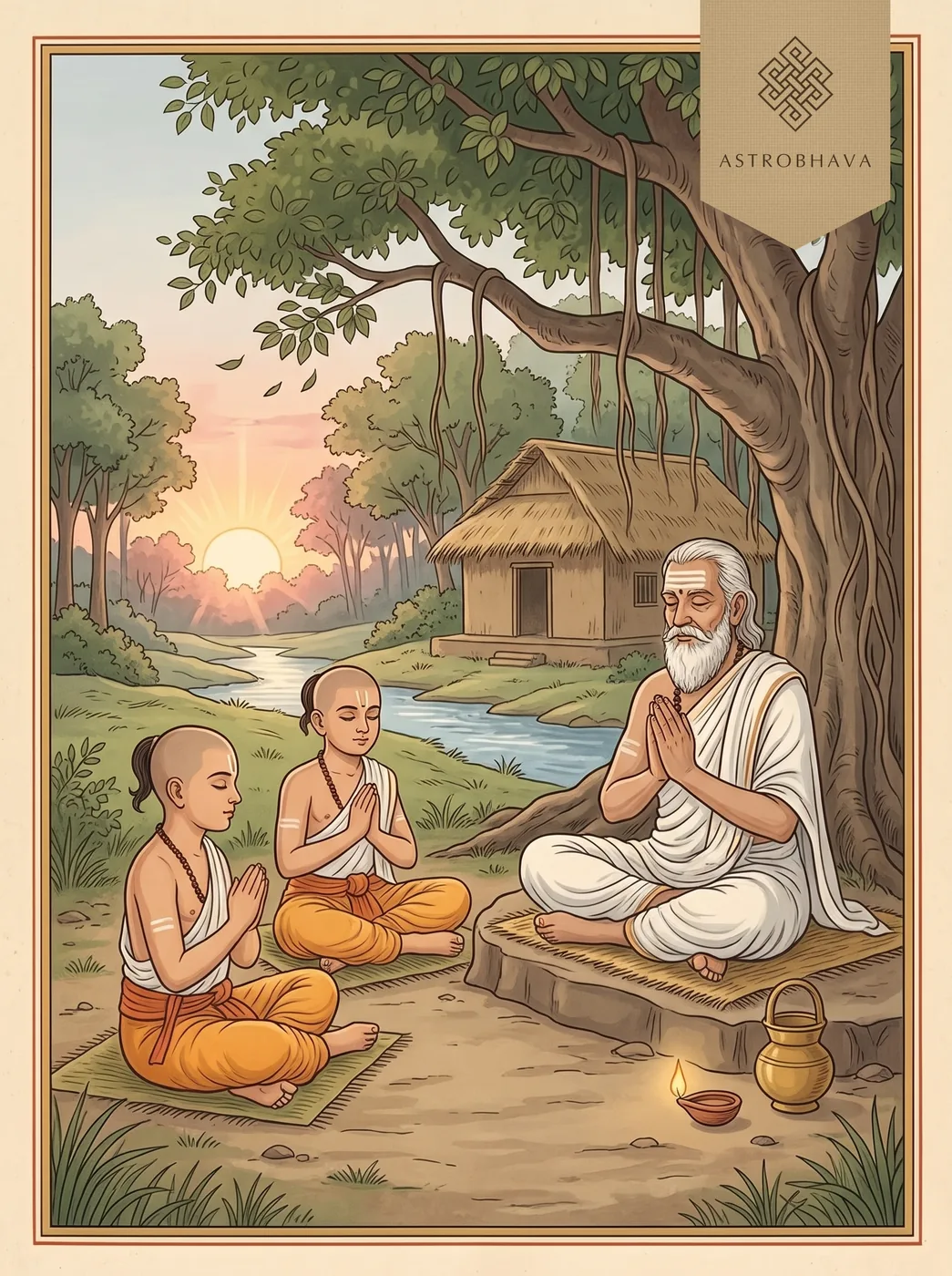
Om Shanno Mitra, in full Om Shanno Mitrah Sham Varunah, is the peace chant that opens and closes the Shiksha Valli, the first of the three sections of the Taittiriya Upanishad of the Krishna Yajurveda. Mantra 1 is anuvaka 1 (1.1.1). Its first four lines ask six gods to be kind: Mitra, Varuna, Aryaman, Indra, Brihaspati and Vishnu of the wide strides. The speaker then bows to Brahman, greets Vayu, the wind, as Brahman in visible form, and promises to speak what is right and what is true, asking that this protect both the student and the teacher. Mantra 2 is anuvaka 12 (1.12.1), the last lesson of the section: the same words return in the past tense, so that 'I shall declare' becomes 'I have declared' and 'may it protect' becomes 'it has protected'. Om stands at the head of Mantra 1 only, as the text prints it. Both mantras are printed here without the Vedic accent marks; chanting with the svaras is learned from a teacher.
A Promise Made First, Then Kept
The Shiksha Valli lays the groundwork for the Upanishad's deeper teaching. Right after this chant, anuvaka 2 announces the lesson on phonetics and names its parts: letter, accent, length, effort, evenness and the joining of sounds. Adi Shankaracharya's commentary reads the opening chant as a guard against anything that might stop the student from hearing, holding and using what is taught. In his reading each god presides over a power of the person: Mitra over the outgoing breath and the day, Varuna over the downward breath and the night, Aryaman over the eye and the sun, Indra over strength, Brihaspati over speech and understanding, and Vishnu of the wide strides over the feet. Vayu is called Brahman made visible because, of all that the senses reach, the air is nearest and needs no go-between. 'Ritam' is a meaning settled firmly in the mind as scripture teaches; 'satyam' is that same meaning carried out in speech and in action. He explains the doubled 'avatu mam, avatu vaktaram' as said twice out of reverence, and the three 'shantih' as quieting the three kinds of hindrance: from one's own body and mind, from other beings, and from unseen powers. Eleven lessons later the chant returns in the past tense, recited, the commentary says, to settle any hindrance to the learning already received: the promise made at the start is reported as kept.
The mantra, in six scripts
- ॐ
- oṃ — the sacred syllable Om
- शं
- śaṃ — kind, a blessing
- नो
- no — to us
- मित्रः
- mitraḥ — Mitra
- शं
- śaṃ — kind
- वरुणः
- varuṇaḥ — Varuna
- शं
- śaṃ — kind
- नो
- no — to us
- भवत्वर्यमा
- bhavatvaryamā — may Aryaman be
- शं
- śaṃ — kind
- न
- na — to us
- इन्द्रो
- indro — Indra
- बृहस्पतिः
- bṛhaspatiḥ — Brihaspati
- शं
- śaṃ — kind
- नो
- no — to us
- विष्णुरुरुक्रमः
- viṣṇururukramaḥ — Vishnu of the wide strides
- नमो
- namo — salutation
- ब्रह्मणे
- brahmaṇe — to Brahman
- नमस्ते
- namaste — salutation to you
- वायो
- vāyo — O Vayu
- त्वमेव
- tvameva — you alone
- प्रत्यक्षं
- pratyakṣaṃ — visible, before the eyes
- ब्रह्मासि
- brahmāsi — are Brahman
- त्वामेव
- tvāmeva — you alone
- प्रत्यक्षं
- pratyakṣaṃ — visible
- ब्रह्म
- brahma — Brahman
- वदिष्यामि
- vadiṣyāmi — I shall declare
- ऋतं
- ṛtaṃ — the right
- वदिष्यामि
- vadiṣyāmi — I shall speak
- सत्यं
- satyaṃ — the true
- वदिष्यामि
- vadiṣyāmi — I shall speak
- तन्मामवतु
- tanmāmavatu — may that protect me
- तद्वक्तारमवतु
- tadvaktāramavatu — may that protect the teacher
- अवतु
- avatu — may it protect
- माम्
- mām — me
- अवतु
- avatu — may it protect
- वक्तारम्
- vaktāram — the teacher
- ॐ
- oṃ — Om
- शान्तिः
- śāntiḥ — peace
- शान्तिः
- śāntiḥ — peace
- शान्तिः
- śāntiḥ — peace
Om Shanno Mitrah lyrics in full
Both forms are given: the chant that opens the Shiksha Valli, and the same chant in the past tense that closes it.
All 2 verses, in Sanskrit, Tamil, Telugu, Kannada, Malayalam and English, each with its meaning. Choose a script:
Download the Om Shanno Mitrah PDFAll 2 verses with their meanings, in Sanskrit. Free to print and keep.
ॐ शं नो मित्रः शं वरुणः ।
शं नो भवत्वर्यमा ।
शं न इन्द्रो बृहस्पतिः ।
शं नो विष्णुरुरुक्रमः ।
नमो ब्रह्मणे ।
नमस्ते वायो ।
त्वमेव प्रत्यक्षं ब्रह्मासि ।
त्वामेव प्रत्यक्षं ब्रह्म वदिष्यामि ।
ऋतं वदिष्यामि ।
सत्यं वदिष्यामि ।
तन्मामवतु ।
तद्वक्तारमवतु ।
अवतु माम् ।
अवतु वक्तारम् ।
ॐ शान्तिः शान्तिः शान्तिः ॥
ௐ ஶம் நோ மித்ரஃ ஶம் வருணஃ ।
ஶம் நோ பவத்வர்யமா ।
ஶம் ந இந்த்ரோ ப்ருஹஸ்பதிஃ ।
ஶம் நோ விஷ்ணுருருக்ரமஃ ।
நமோ ப்ரஹ்மணே ।
நமஸ்தே வாயோ ।
த்வமேவ ப்ரத்யக்ஷம் ப்ரஹ்மாஸி ।
த்வாமேவ ப்ரத்யக்ஷம் ப்ரஹ்ம வதிஷ்யாமி ।
ருதம் வதிஷ்யாமி ।
ஸத்யம் வதிஷ்யாமி ।
தந்மாமவது ।
தத்வக்தாரமவது ।
அவது மாம் ।
அவது வக்தாரம் ।
ௐ ஶாந்திஃ ஶாந்திஃ ஶாந்திஃ ॥
ఓం శం నో మిత్రః శం వరుణః ।
శం నో భవత్వర్యమా ।
శం న ఇన్ద్రో బృహస్పతిః ।
శం నో విష్ణురురుక్రమః ।
నమో బ్రహ్మణే ।
నమస్తే వాయో ।
త్వమేవ ప్రత్యక్షం బ్రహ్మాసి ।
త్వామేవ ప్రత్యక్షం బ్రహ్మ వదిష్యామి ।
ఋతం వదిష్యామి ।
సత్యం వదిష్యామి ।
తన్మామవతు ।
తద్వక్తారమవతు ।
అవతు మామ్ ।
అవతు వక్తారమ్ ।
ఓం శాన్తిః శాన్తిః శాన్తిః ॥
ಓಂ ಶಂ ನೋ ಮಿತ್ರಃ ಶಂ ವರುಣಃ ।
ಶಂ ನೋ ಭವತ್ವರ್ಯಮಾ ।
ಶಂ ನ ಇನ್ದ್ರೋ ಬೃಹಸ್ಪತಿಃ ।
ಶಂ ನೋ ವಿಷ್ಣುರುರುಕ್ರಮಃ ।
ನಮೋ ಬ್ರಹ್ಮಣೇ ।
ನಮಸ್ತೇ ವಾಯೋ ।
ತ್ವಮೇವ ಪ್ರತ್ಯಕ್ಷಂ ಬ್ರಹ್ಮಾಸಿ ।
ತ್ವಾಮೇವ ಪ್ರತ್ಯಕ್ಷಂ ಬ್ರಹ್ಮ ವದಿಷ್ಯಾಮಿ ।
ಋತಂ ವದಿಷ್ಯಾಮಿ ।
ಸತ್ಯಂ ವದಿಷ್ಯಾಮಿ ।
ತನ್ಮಾಮವತು ।
ತದ್ವಕ್ತಾರಮವತು ।
ಅವತು ಮಾಮ್ ।
ಅವತು ವಕ್ತಾರಮ್ ।
ಓಂ ಶಾನ್ತಿಃ ಶಾನ್ತಿಃ ಶಾನ್ತಿಃ ॥
ഓം ശം നോ മിത്രഃ ശം വരുണഃ ।
ശം നോ ഭവത്വര്യമാ ।
ശം ന ഇന്ദ്രോ ബൃഹസ്പതിഃ ।
ശം നോ വിഷ്ണുരുരുക്രമഃ ।
നമോ ബ്രഹ്മണേ ।
നമസ്തേ വായോ ।
ത്വമേവ പ്രത്യക്ഷം ബ്രഹ്മാസി ।
ത്വാമേവ പ്രത്യക്ഷം ബ്രഹ്മ വദിഷ്യാമി ।
ഋതം വദിഷ്യാമി ।
സത്യം വദിഷ്യാമി ।
തന്മാമവതു ।
തദ്വക്താരമവതു ।
അവതു മാമ് ।
അവതു വക്താരമ് ।
ഓം ശാന്തിഃ ശാന്തിഃ ശാന്തിഃ ॥
oṃ śaṃ no mitraḥ śaṃ varuṇaḥ |
śaṃ no bhavatvaryamā |
śaṃ na indro bṛhaspatiḥ |
śaṃ no viṣṇururukramaḥ |
namo brahmaṇe |
namaste vāyo |
tvameva pratyakṣaṃ brahmāsi |
tvāmeva pratyakṣaṃ brahma vadiṣyāmi |
ṛtaṃ vadiṣyāmi |
satyaṃ vadiṣyāmi |
tanmāmavatu |
tadvaktāramavatu |
avatu mām |
avatu vaktāram |
oṃ śāntiḥ śāntiḥ śāntiḥ ||
May Mitra be kind to us, and Varuna; may Aryaman be kind to us; may Indra and Brihaspati, and Vishnu of the wide strides, be kind to us. Salutation to Brahman; salutation to you, Vayu: you are Brahman made visible, and so I shall name you, and I shall speak what is right and what is true. May that protect me and protect the teacher, may it protect me, may it protect the teacher; Om, peace, peace, peace.
शं नो मित्रः शं वरुणः ।
शं नो भवत्वर्यमा ।
शं न इन्द्रो बृहस्पतिः ।
शं नो विष्णुरुरुक्रमः ।
नमो ब्रह्मणे ।
नमस्ते वायो ।
त्वमेव प्रत्यक्षं ब्रह्मासि ।
त्वामेव प्रत्यक्षं ब्रह्मावादिषम् ।
ऋतमवादिषम् ।
सत्यमवादिषम् ।
तन्मामावीत् ।
तद्वक्तारमावीत् ।
आवीन्माम् ।
आवीद्वक्तारम् ।
ॐ शान्तिः शान्तिः शान्तिः ॥
ஶம் நோ மித்ரஃ ஶம் வருணஃ ।
ஶம் நோ பவத்வர்யமா ।
ஶம் ந இந்த்ரோ ப்ருஹஸ்பதிஃ ।
ஶம் நோ விஷ்ணுருருக்ரமஃ ।
நமோ ப்ரஹ்மணே ।
நமஸ்தே வாயோ ।
த்வமேவ ப்ரத்யக்ஷம் ப்ரஹ்மாஸி ।
த்வாமேவ ப்ரத்யக்ஷம் ப்ரஹ்மாவாதிஷம் ।
ருதமவாதிஷம் ।
ஸத்யமவாதிஷம் ।
தந்மாமாவீத் ।
தத்வக்தாரமாவீத் ।
ஆவீந்மாம் ।
ஆவீத்வக்தாரம் ।
ௐ ஶாந்திஃ ஶாந்திஃ ஶாந்திஃ ॥
శం నో మిత్రః శం వరుణః ।
శం నో భవత్వర్యమా ।
శం న ఇన్ద్రో బృహస్పతిః ।
శం నో విష్ణురురుక్రమః ।
నమో బ్రహ్మణే ।
నమస్తే వాయో ।
త్వమేవ ప్రత్యక్షం బ్రహ్మాసి ।
త్వామేవ ప్రత్యక్షం బ్రహ్మావాదిషమ్ ।
ఋతమవాదిషమ్ ।
సత్యమవాదిషమ్ ।
తన్మామావీత్ ।
తద్వక్తారమావీత్ ।
ఆవీన్మామ్ ।
ఆవీద్వక్తారమ్ ।
ఓం శాన్తిః శాన్తిః శాన్తిః ॥
ಶಂ ನೋ ಮಿತ್ರಃ ಶಂ ವರುಣಃ ।
ಶಂ ನೋ ಭವತ್ವರ್ಯಮಾ ।
ಶಂ ನ ಇನ್ದ್ರೋ ಬೃಹಸ್ಪತಿಃ ।
ಶಂ ನೋ ವಿಷ್ಣುರುರುಕ್ರಮಃ ।
ನಮೋ ಬ್ರಹ್ಮಣೇ ।
ನಮಸ್ತೇ ವಾಯೋ ।
ತ್ವಮೇವ ಪ್ರತ್ಯಕ್ಷಂ ಬ್ರಹ್ಮಾಸಿ ।
ತ್ವಾಮೇವ ಪ್ರತ್ಯಕ್ಷಂ ಬ್ರಹ್ಮಾವಾದಿಷಮ್ ।
ಋತಮವಾದಿಷಮ್ ।
ಸತ್ಯಮವಾದಿಷಮ್ ।
ತನ್ಮಾಮಾವೀತ್ ।
ತದ್ವಕ್ತಾರಮಾವೀತ್ ।
ಆವೀನ್ಮಾಮ್ ।
ಆವೀದ್ವಕ್ತಾರಮ್ ।
ಓಂ ಶಾನ್ತಿಃ ಶಾನ್ತಿಃ ಶಾನ್ತಿಃ ॥
ശം നോ മിത്രഃ ശം വരുണഃ ।
ശം നോ ഭവത്വര്യമാ ।
ശം ന ഇന്ദ്രോ ബൃഹസ്പതിഃ ।
ശം നോ വിഷ്ണുരുരുക്രമഃ ।
നമോ ബ്രഹ്മണേ ।
നമസ്തേ വായോ ।
ത്വമേവ പ്രത്യക്ഷം ബ്രഹ്മാസി ।
ത്വാമേവ പ്രത്യക്ഷം ബ്രഹ്മാവാദിഷമ് ।
ഋതമവാദിഷമ് ।
സത്യമവാദിഷമ് ।
തന്മാമാവീത് ।
തദ്വക്താരമാവീത് ।
ആവീന്മാമ് ।
ആവീദ്വക്താരമ് ।
ഓം ശാന്തിഃ ശാന്തിഃ ശാന്തിഃ ॥
śaṃ no mitraḥ śaṃ varuṇaḥ |
śaṃ no bhavatvaryamā |
śaṃ na indro bṛhaspatiḥ |
śaṃ no viṣṇururukramaḥ |
namo brahmaṇe |
namaste vāyo |
tvameva pratyakṣaṃ brahmāsi |
tvāmeva pratyakṣaṃ brahmāvādiṣam |
ṛtamavādiṣam |
satyamavādiṣam |
tanmāmāvīt |
tadvaktāramāvīt |
āvīnmām |
āvīdvaktāram |
oṃ śāntiḥ śāntiḥ śāntiḥ ||
May Mitra, Varuna, Aryaman, Indra, Brihaspati and Vishnu of the wide strides be kind to us. Salutation to Brahman; salutation to you, Vayu: you are Brahman made visible, and I have named you so, and I have spoken what is right and what is true. That has protected me and has protected the teacher, it has protected me, it has protected the teacher; Om, peace, peace, peace.
The syllable people get wrong
The opening word śaṃ is said with a short a, as in 'shut', not 'shaam'; before the n of no its nasal turns into an n, which is why the chant is heard and written as 'shanno' rather than 'sham no'.
Questions
Have your chart read before you decide
Chanting is yours to do, and free. But which deity your situation calls for — and whether a mantra alone is the right response — depends on your chart. Sometimes it is; sometimes it is not.
- Over 30 years in the Guru–Sishya Parampara, from the age of five
- He reads every chart himself — 60 minutes, one to one, never delegated
- Charts are read only between sunrise and sunset, following tradition
