Pandurangashtakam
महायोगपीठे तटे भीमरथ्या वरं पुण्डरीकाय दातुं मुनीन्द्रैः । समागत्य तिष्ठन्तमानंदकंदं परब्रह्मलिङ्गं भजे पाण्डुरङ्गम् ॥Also known as Panduranga Ashtakam
In Devanagari, Tamil, Telugu, Kannada, Malayalam and English — with the meaning of every word, and the one syllable most people pronounce wrongly.
 The Lakshmi Narayana Homam, performed for youBook →
What the Pandurangashtakam is
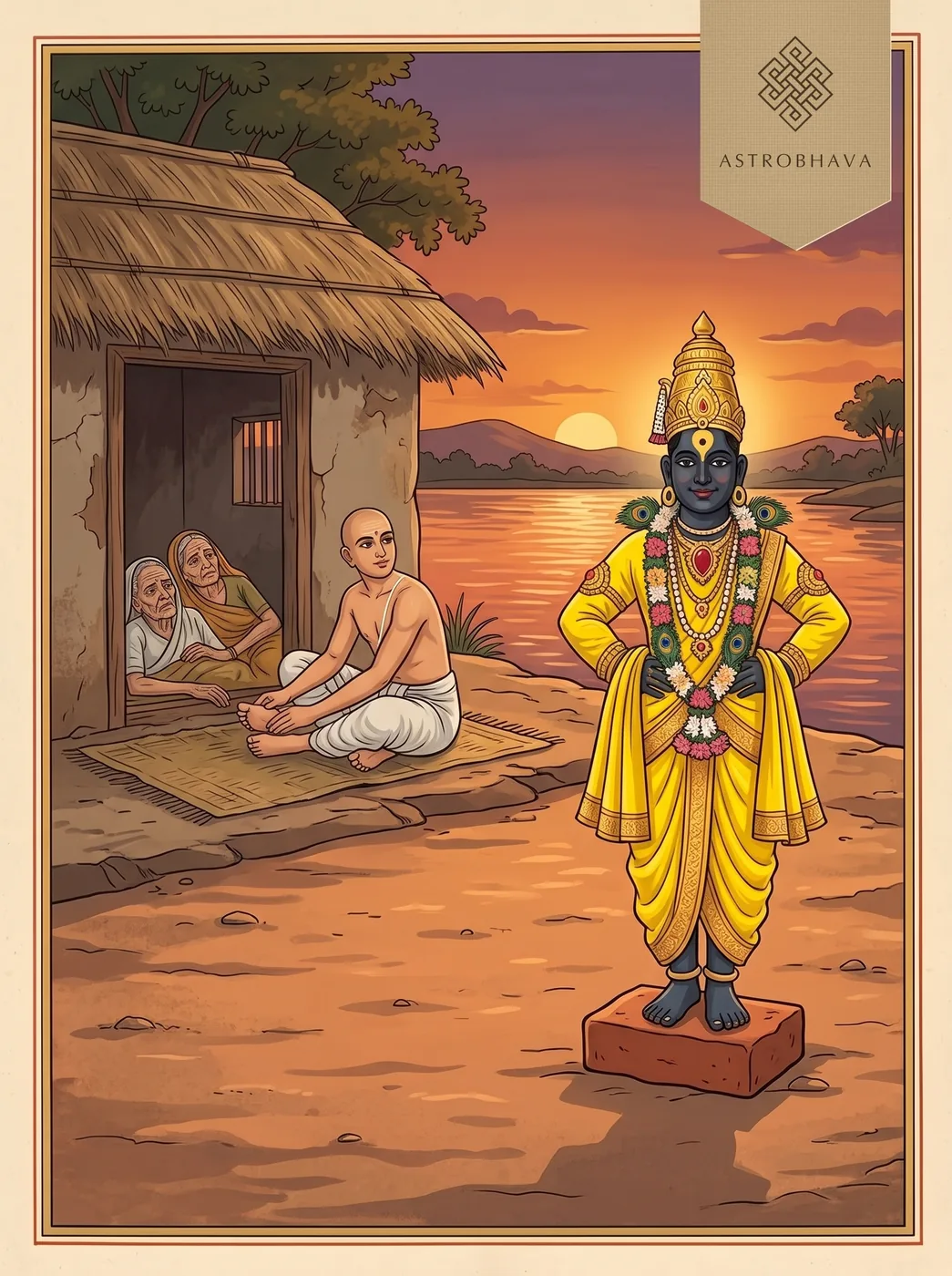
The Pandurangashtakam, also written Pandurangashtakam, is a Sanskrit hymn to Vitthala of Pandharpur in Maharashtra, the standing form of Krishna known in Marathi devotion as Vithoba. Its closing colophon names Adi Shankaracharya as the author, an attribution tradition accepts and some historians question. Eight verses share one refrain, "parabrahmalingam bhaje pandurangam", and a ninth states the fruit of reciting it. The sequence reads like a slow look at the image in the shrine. Verse 1 fixes the place, the bank of the Bhimarathi, and the reason he came. Verse 2 sets his feet on the brick, and verse 3 explains his hands at his hips. Verses 4 to 6 move from the Kaustubha gem at his throat to the earrings, the lips and the crown. Verse 7 recalls the flute and the cowherd's dress. Verse 8 leaves the image behind and names him the unborn one, the fourth state and liberation itself, who restores the life of Rukmini.
Pundarika, the brick and the waiting god
Verse 1 says he came to the Bhimarathi with the great sages to grant a boon to Pundarika, and the hymn leaves the rest to what its hearers already know. The river is the Bhima, called the Chandrabhaga at Pandharpur. The tale survives in several tellings. In one Skanda Purana version, Pundarika is a devotee of Vishnu who serves his parents, and Gopala-Krishna arrives from Govardhana as a cowherd with his cows, wearing a peacock-feather headdress. Pundarika asks him to stay on the riverbank. That cowherd is close to the figure of verses 6 and 7. The telling with the brick comes from a Padma Purana variant and the Marathi poet Sridhara. Here Pundalik begins as a son who neglects his aged parents, until a meeting with the sage Kukkuta turns him to their care. Krishna, seeking Rukmini who has left him in anger, reaches the Dandivana forest, makes peace with her and calls at Pundalik's house. Pundalik will not break off attending his parents, so he throws out a brick for the visitor to stand on. According to tradition Krishna waits on it, arms akimbo, and when offered a boon Pundalik asks him to remain there with Rukmini. Scholars differ on whether Pundalik was a historical person, though a record of 1189 already notes a small Vithoba shrine at the site.
The mantra, in six scripts
- महायोगपीठे
- mahāyogapīṭhe — at the great seat of yoga
- तटे
- taṭe — on the bank
- भीमरथ्या
- bhīmarathyā — of the Bhimarathi river
- वरं
- varaṃ — a boon
- पुण्डरीकाय
- puṇḍarīkāya — to Pundarika
- दातुं
- dātuṃ — to grant
- मुनीन्द्रैः
- munīndraiḥ — with the great sages
- समागत्य
- samāgatya — having come
- तिष्ठन्तमानंदकंदं
- tiṣṭhantamānaṃdakaṃdaṃ — standing, the root of bliss
- परब्रह्मलिङ्गं
- parabrahmaliṅgaṃ — emblem of the supreme Brahman
- भजे
- bhaje — I worship
- पाण्डुरङ्गम्
- pāṇḍuraṅgam — Panduranga
Pandurangashtakam lyrics in full
Eight verses with the phala shruti that follows them, usually numbered as verse 9. The printed closing line is given at the end.
All 10 verses, in Sanskrit, Tamil, Telugu, Kannada, Malayalam and English, each with its meaning. Choose a script:
Download the Pandurangashtakam PDFAll 10 verses with their meanings, in Sanskrit. Free to print and keep.
महायोगपीठे तटे भीमरथ्या वरं पुण्डरीकाय दातुं मुनीन्द्रैः ।
समागत्य तिष्ठन्तमानंदकंदं परब्रह्मलिङ्गं भजे पाण्डुरङ्गम् ॥
மஹாயோகபீடே தடே பீமரத்யா வரம் புண்டரீகாய தாதும் முநீந்த்ரைஃ ।
ஸமாகத்ய திஷ்டந்தமாநம்தகம்தம் பரப்ரஹ்மலிங்கம் பஜே பாண்டுரங்கம் ॥
మహాయోగపీఠే తటే భీమరథ్యా వరం పుణ్డరీకాయ దాతుం మునీన్ద్రైః ।
సమాగత్య తిష్ఠన్తమానందకందం పరబ్రహ్మలిఙ్గం భజే పాణ్డురఙ్గమ్ ॥
ಮಹಾಯೋಗಪೀಠೇ ತಟೇ ಭೀಮರಥ್ಯಾ ವರಂ ಪುಣ್ಡರೀಕಾಯ ದಾತುಂ ಮುನೀನ್ದ್ರೈಃ ।
ಸಮಾಗತ್ಯ ತಿಷ್ಠನ್ತಮಾನಂದಕಂದಂ ಪರಬ್ರಹ್ಮಲಿಙ್ಗಂ ಭಜೇ ಪಾಣ್ಡುರಙ್ಗಮ್ ॥
മഹായോഗപീഠേ തടേ ഭീമരഥ്യാ വരം പുണ്ഡരീകായ ദാതും മുനീന്ദ്രൈഃ ।
സമാഗത്യ തിഷ്ഠന്തമാനംദകംദം പരബ്രഹ്മലിങ്ഗം ഭജേ പാണ്ഡുരങ്ഗമ് ॥
mahāyogapīṭhe taṭe bhīmarathyā varaṃ puṇḍarīkāya dātuṃ munīndraiḥ |
samāgatya tiṣṭhantamānaṃdakaṃdaṃ parabrahmaliṅgaṃ bhaje pāṇḍuraṅgam ||
At the great seat of yoga on the bank of the Bhimarathi, he came with the great sages to grant a boon to Pundarika and stands there, the root of bliss. I worship Panduranga, the very emblem of the supreme Brahman.
तटिद्वाससं नीलमेघावभासं रमामंदिरं सुंदरं चित्प्रकाशम् ।
वरं त्विष्टकायां समन्यस्तपादं परब्रह्मलिङ्गं भजे पाण्डुरङ्गम् ॥
தடித்வாஸஸம் நீலமேகாவபாஸம் ரமாமம்திரம் ஸும்தரம் சித்ப்ரகாஶம் ।
வரம் த்விஷ்டகாயாம் ஸமந்யஸ்தபாதம் பரப்ரஹ்மலிங்கம் பஜே பாண்டுரங்கம் ॥
తటిద్వాససం నీలమేఘావభాసం రమామందిరం సుందరం చిత్ప్రకాశమ్ ।
వరం త్విష్టకాయాం సమన్యస్తపాదం పరబ్రహ్మలిఙ్గం భజే పాణ్డురఙ్గమ్ ॥
ತಟಿದ್ವಾಸಸಂ ನೀಲಮೇಘಾವಭಾಸಂ ರಮಾಮಂದಿರಂ ಸುಂದರಂ ಚಿತ್ಪ್ರಕಾಶಮ್ ।
ವರಂ ತ್ವಿಷ್ಟಕಾಯಾಂ ಸಮನ್ಯಸ್ತಪಾದಂ ಪರಬ್ರಹ್ಮಲಿಙ್ಗಂ ಭಜೇ ಪಾಣ್ಡುರಙ್ಗಮ್ ॥
തടിദ്വാസസം നീലമേഘാവഭാസം രമാമംദിരം സുംദരം ചിത്പ്രകാശമ് ।
വരം ത്വിഷ്ടകായാം സമന്യസ്തപാദം പരബ്രഹ്മലിങ്ഗം ഭജേ പാണ്ഡുരങ്ഗമ് ॥
taṭidvāsasaṃ nīlameghāvabhāsaṃ ramāmaṃdiraṃ suṃdaraṃ citprakāśam |
varaṃ tviṣṭakāyāṃ samanyastapādaṃ parabrahmaliṅgaṃ bhaje pāṇḍuraṅgam ||
Clothed in garments bright as lightning and shining like a dark rain cloud, he is the home of Lakshmi, beautiful, the light of consciousness. He stands, supreme, with his feet set firmly on a brick. I worship Panduranga, the very emblem of the supreme Brahman.
प्रमाणं भवाब्धेरिदं मामकानां नितम्बः कराभ्यां धृतो येन तस्मात् ।
विधातुर्वसत्यै धृतो नाभिकोशः परब्रह्मलिङ्गं भजे पाण्डुरङ्गम् ॥
ப்ரமாணம் பவாப்தேரிதம் மாமகாநாம் நிதம்பஃ கராப்யாம் த்ருதோ யேந தஸ்மாத் ।
விதாதுர்வஸத்யை த்ருதோ நாபிகோஶஃ பரப்ரஹ்மலிங்கம் பஜே பாண்டுரங்கம் ॥
ప్రమాణం భవాబ్ధేరిదం మామకానాం నితమ్బః కరాభ్యాం ధృతో యేన తస్మాత్ ।
విధాతుర్వసత్యై ధృతో నాభికోశః పరబ్రహ్మలిఙ్గం భజే పాణ్డురఙ్గమ్ ॥
ಪ್ರಮಾಣಂ ಭವಾಬ್ಧೇರಿದಂ ಮಾಮಕಾನಾಂ ನಿತಮ್ಬಃ ಕರಾಭ್ಯಾಂ ಧೃತೋ ಯೇನ ತಸ್ಮಾತ್ ।
ವಿಧಾತುರ್ವಸತ್ಯೈ ಧೃತೋ ನಾಭಿಕೋಶಃ ಪರಬ್ರಹ್ಮಲಿಙ್ಗಂ ಭಜೇ ಪಾಣ್ಡುರಙ್ಗಮ್ ॥
പ്രമാണം ഭവാബ്ധേരിദം മാമകാനാം നിതമ്ബഃ കരാഭ്യാം ധൃതോ യേന തസ്മാത് ।
വിധാതുര്വസത്യൈ ധൃതോ നാഭികോശഃ പരബ്രഹ്മലിങ്ഗം ഭജേ പാണ്ഡുരങ്ഗമ് ॥
pramāṇaṃ bhavābdheridaṃ māmakānāṃ nitambaḥ karābhyāṃ dhṛto yena tasmāt |
vidhāturvasatyai dhṛto nābhikośaḥ parabrahmaliṅgaṃ bhaje pāṇḍuraṅgam ||
'For those who are mine, this is the depth of the ocean of worldly life': for this reason he holds his hips with his hands. He bears the lotus of his navel as a dwelling for Brahma the Creator. I worship Panduranga, the very emblem of the supreme Brahman.
स्फुरत्कौस्तुभालङ्कृतं कण्ठदेशे श्रिया जुष्टकेयूरकं श्रीनिवासम् ।
शिवं शांतमीड्यं वरं लोकपालं परब्रह्मलिङ्गं भजे पाण्डुरङ्गम् ॥
ஸ்புரத்கௌஸ்துபாலங்க்ருதம் கண்டதேஶே ஶ்ரியா ஜுஷ்டகேயூரகம் ஶ்ரீநிவாஸம் ।
ஶிவம் ஶாம்தமீட்யம் வரம் லோகபாலம் பரப்ரஹ்மலிங்கம் பஜே பாண்டுரங்கம் ॥
స్ఫురత్కౌస్తుభాలఙ్కృతం కణ్ఠదేశే శ్రియా జుష్టకేయూరకం శ్రీనివాసమ్ ।
శివం శాంతమీడ్యం వరం లోకపాలం పరబ్రహ్మలిఙ్గం భజే పాణ్డురఙ్గమ్ ॥
ಸ್ಫುರತ್ಕೌಸ್ತುಭಾಲಙ್ಕೃತಂ ಕಣ್ಠದೇಶೇ ಶ್ರಿಯಾ ಜುಷ್ಟಕೇಯೂರಕಂ ಶ್ರೀನಿವಾಸಮ್ ।
ಶಿವಂ ಶಾಂತಮೀಡ್ಯಂ ವರಂ ಲೋಕಪಾಲಂ ಪರಬ್ರಹ್ಮಲಿಙ್ಗಂ ಭಜೇ ಪಾಣ್ಡುರಙ್ಗಮ್ ॥
സ്ഫുരത്കൌസ്തുഭാലങ്കൃതം കണ്ഠദേശേ ശ്രിയാ ജുഷ്ടകേയൂരകം ശ്രീനിവാസമ് ।
ശിവം ശാംതമീഡ്യം വരം ലോകപാലം പരബ്രഹ്മലിങ്ഗം ഭജേ പാണ്ഡുരങ്ഗമ് ॥
sphuratkaustubhālaṅkṛtaṃ kaṇṭhadeśe śriyā juṣṭakeyūrakaṃ śrīnivāsam |
śivaṃ śāṃtamīḍyaṃ varaṃ lokapālaṃ parabrahmaliṅgaṃ bhaje pāṇḍuraṅgam ||
His throat is adorned with the shining Kaustubha gem, his armlets are graced by Lakshmi, and he is the abode of Lakshmi. He is auspicious, peaceful, worthy of praise, excellent, the guardian of the worlds. I worship Panduranga, the very emblem of the supreme Brahman.
शरच्चंद्रबिंबाननं चारुहासं लसत्कुण्डलाक्रांतगण्डस्थलांतम् ।
जपारागबिंबाधरं कञ्जनेत्रं परब्रह्मलिङ्गं भजे पाण्डुरङ्गम् ॥
ஶரச்சம்த்ரபிம்பாநநம் சாருஹாஸம் லஸத்குண்டலாக்ராம்தகண்டஸ்தலாம்தம் ।
ஜபாராகபிம்பாதரம் கஞ்ஜநேத்ரம் பரப்ரஹ்மலிங்கம் பஜே பாண்டுரங்கம் ॥
శరచ్చంద్రబింబాననం చారుహాసం లసత్కుణ్డలాక్రాంతగణ్డస్థలాంతమ్ ।
జపారాగబింబాధరం కఞ్జనేత్రం పరబ్రహ్మలిఙ్గం భజే పాణ్డురఙ్గమ్ ॥
ಶರಚ್ಚಂದ್ರಬಿಂಬಾನನಂ ಚಾರುಹಾಸಂ ಲಸತ್ಕುಣ್ಡಲಾಕ್ರಾಂತಗಣ್ಡಸ್ಥಲಾಂತಮ್ ।
ಜಪಾರಾಗಬಿಂಬಾಧರಂ ಕಞ್ಜನೇತ್ರಂ ಪರಬ್ರಹ್ಮಲಿಙ್ಗಂ ಭಜೇ ಪಾಣ್ಡುರಙ್ಗಮ್ ॥
ശരച്ചംദ്രബിംബാനനം ചാരുഹാസം ലസത്കുണ്ഡലാക്രാംതഗണ്ഡസ്ഥലാംതമ് ।
ജപാരാഗബിംബാധരം കഞ്ജനേത്രം പരബ്രഹ്മലിങ്ഗം ഭജേ പാണ്ഡുരങ്ഗമ് ॥
śaraccaṃdrabiṃbānanaṃ cāruhāsaṃ lasatkuṇḍalākrāṃtagaṇḍasthalāṃtam |
japārāgabiṃbādharaṃ kañjanetraṃ parabrahmaliṅgaṃ bhaje pāṇḍuraṅgam ||
His face is the disc of the autumn moon, his smile lovely, and the sparkling earrings reach down over his cheeks. His lips are red as the hibiscus and the bimba fruit, and his eyes are lotuses. I worship Panduranga, the very emblem of the supreme Brahman.
किरीटोज्ज्वलत्सर्वदिक्प्रांतभागं सुरैरर्चितं दिव्यरत्नैरनर्घैः ।
त्रिभङ्गाकृतिं बर्हमाल्यावतंसं परब्रह्मलिङ्गं भजे पाण्डुरङ्गम् ॥
கிரீடோஜ்ஜ்வலத்ஸர்வதிக்ப்ராம்தபாகம் ஸுரைரர்சிதம் திவ்யரத்நைரநர்கைஃ ।
த்ரிபங்காக்ருதிம் பர்ஹமால்யாவதம்ஸம் பரப்ரஹ்மலிங்கம் பஜே பாண்டுரங்கம் ॥
కిరీటోజ్జ్వలత్సర్వదిక్ప్రాంతభాగం సురైరర్చితం దివ్యరత్నైరనర్ఘైః ।
త్రిభఙ్గాకృతిం బర్హమాల్యావతంసం పరబ్రహ్మలిఙ్గం భజే పాణ్డురఙ్గమ్ ॥
ಕಿರೀಟೋಜ್ಜ್ವಲತ್ಸರ್ವದಿಕ್ಪ್ರಾಂತಭಾಗಂ ಸುರೈರರ್ಚಿತಂ ದಿವ್ಯರತ್ನೈರನರ್ಘೈಃ ।
ತ್ರಿಭಙ್ಗಾಕೃತಿಂ ಬರ್ಹಮಾಲ್ಯಾವತಂಸಂ ಪರಬ್ರಹ್ಮಲಿಙ್ಗಂ ಭಜೇ ಪಾಣ್ಡುರಙ್ಗಮ್ ॥
കിരീടോജ്ജ്വലത്സര്വദിക്പ്രാംതഭാഗം സുരൈരര്ചിതം ദിവ്യരത്നൈരനര്ഘൈഃ ।
ത്രിഭങ്ഗാകൃതിം ബര്ഹമാല്യാവതംസം പരബ്രഹ്മലിങ്ഗം ഭജേ പാണ്ഡുരങ്ഗമ് ॥
kirīṭojjvalatsarvadikprāṃtabhāgaṃ surairarcitaṃ divyaratnairanarghaiḥ |
tribhaṅgākṛtiṃ barhamālyāvataṃsaṃ parabrahmaliṅgaṃ bhaje pāṇḍuraṅgam ||
His shining crown lights up every quarter of the sky, and the gods worship him with priceless divine gems. His form bends in three places, and he wears a garland and ornament of peacock feathers. I worship Panduranga, the very emblem of the supreme Brahman.
विभुं वेणुनादं चरंतं दुरंतं स्वयं लीलया गोपवेषं दधानम् ।
गवां वृन्दकानन्ददं चारुहासं परब्रह्मलिङ्गं भजे पाण्डुरङ्गम् ॥
விபும் வேணுநாதம் சரம்தம் துரம்தம் ஸ்வயம் லீலயா கோபவேஷம் ததாநம் ।
கவாம் வ்ருந்தகாநந்ததம் சாருஹாஸம் பரப்ரஹ்மலிங்கம் பஜே பாண்டுரங்கம் ॥
విభుం వేణునాదం చరంతం దురంతం స్వయం లీలయా గోపవేషం దధానమ్ ।
గవాం వృన్దకానన్దదం చారుహాసం పరబ్రహ్మలిఙ్గం భజే పాణ్డురఙ్గమ్ ॥
ವಿಭುಂ ವೇಣುನಾದಂ ಚರಂತಂ ದುರಂತಂ ಸ್ವಯಂ ಲೀಲಯಾ ಗೋಪವೇಷಂ ದಧಾನಮ್ ।
ಗವಾಂ ವೃನ್ದಕಾನನ್ದದಂ ಚಾರುಹಾಸಂ ಪರಬ್ರಹ್ಮಲಿಙ್ಗಂ ಭಜೇ ಪಾಣ್ಡುರಙ್ಗಮ್ ॥
വിഭും വേണുനാദം ചരംതം ദുരംതം സ്വയം ലീലയാ ഗോപവേഷം ദധാനമ് ।
ഗവാം വൃന്ദകാനന്ദദം ചാരുഹാസം പരബ്രഹ്മലിങ്ഗം ഭജേ പാണ്ഡുരങ്ഗമ് ॥
vibhuṃ veṇunādaṃ caraṃtaṃ duraṃtaṃ svayaṃ līlayā gopaveṣaṃ dadhānam |
gavāṃ vṛndakānandadaṃ cāruhāsaṃ parabrahmaliṅgaṃ bhaje pāṇḍuraṅgam ||
The all-pervading one, who plays the flute and roams about, whose limit is hard to reach, took on the dress of a cowherd by his own play. He gives joy to the herds of cattle, and his smile is lovely. I worship Panduranga, the very emblem of the supreme Brahman.
अजं रुक्मिणीप्राणसञ्जीवनं तं परं धाम कैवल्यमेकं तुरीयम् ।
प्रसन्नं प्रपन्नार्तिहं देवदेवं परब्रह्मलिङ्गं भजे पाण्डुरङ्गम् ॥
அஜம் ருக்மிணீப்ராணஸஞ்ஜீவநம் தம் பரம் தாம கைவல்யமேகம் துரீயம் ।
ப்ரஸந்நம் ப்ரபந்நார்திஹம் தேவதேவம் பரப்ரஹ்மலிங்கம் பஜே பாண்டுரங்கம் ॥
అజం రుక్మిణీప్రాణసఞ్జీవనం తం పరం ధామ కైవల్యమేకం తురీయమ్ ।
ప్రసన్నం ప్రపన్నార్తిహం దేవదేవం పరబ్రహ్మలిఙ్గం భజే పాణ్డురఙ్గమ్ ॥
ಅಜಂ ರುಕ್ಮಿಣೀಪ್ರಾಣಸಞ್ಜೀವನಂ ತಂ ಪರಂ ಧಾಮ ಕೈವಲ್ಯಮೇಕಂ ತುರೀಯಮ್ ।
ಪ್ರಸನ್ನಂ ಪ್ರಪನ್ನಾರ್ತಿಹಂ ದೇವದೇವಂ ಪರಬ್ರಹ್ಮಲಿಙ್ಗಂ ಭಜೇ ಪಾಣ್ಡುರಙ್ಗಮ್ ॥
അജം രുക്മിണീപ്രാണസഞ്ജീവനം തം പരം ധാമ കൈവല്യമേകം തുരീയമ് ।
പ്രസന്നം പ്രപന്നാര്തിഹം ദേവദേവം പരബ്രഹ്മലിങ്ഗം ഭജേ പാണ്ഡുരങ്ഗമ് ॥
ajaṃ rukmiṇīprāṇasañjīvanaṃ taṃ paraṃ dhāma kaivalyamekaṃ turīyam |
prasannaṃ prapannārtihaṃ devadevaṃ parabrahmaliṅgaṃ bhaje pāṇḍuraṅgam ||
He is the unborn one, who restores the very life of Rukmini; the supreme abode, liberation itself, the one, the fourth state beyond waking, dream and sleep. He is gracious, the remover of the pain of those who take refuge in him, the god of gods. I worship Panduranga, the very emblem of the supreme Brahman.
स्तवं पाण्डुरंगस्य वै पुण्यदं ये पठन्त्येकचित्तेन भक्त्या च नित्यम् ।
भवांभोनिधिं ते वितीर्त्वान्तकाले हरेरालयं शाश्वतं प्राप्नुवन्ति ॥
ஸ்தவம் பாண்டுரம்கஸ்ய வை புண்யதம் யே படந்த்யேகசித்தேந பக்த்யா ச நித்யம் ।
பவாம்போநிதிம் தே விதீர்த்வாந்தகாலே ஹரேராலயம் ஶாஶ்வதம் ப்ராப்நுவந்தி ॥
స్తవం పాణ్డురంగస్య వై పుణ్యదం యే పఠన్త్యేకచిత్తేన భక్త్యా చ నిత్యమ్ ।
భవాంభోనిధిం తే వితీర్త్వాన్తకాలే హరేరాలయం శాశ్వతం ప్రాప్నువన్తి ॥
ಸ್ತವಂ ಪಾಣ್ಡುರಂಗಸ್ಯ ವೈ ಪುಣ್ಯದಂ ಯೇ ಪಠನ್ತ್ಯೇಕಚಿತ್ತೇನ ಭಕ್ತ್ಯಾ ಚ ನಿತ್ಯಮ್ ।
ಭವಾಂಭೋನಿಧಿಂ ತೇ ವಿತೀರ್ತ್ವಾನ್ತಕಾಲೇ ಹರೇರಾಲಯಂ ಶಾಶ್ವತಂ ಪ್ರಾಪ್ನುವನ್ತಿ ॥
സ്തവം പാണ്ഡുരംഗസ്യ വൈ പുണ്യദം യേ പഠന്ത്യേകചിത്തേന ഭക്ത്യാ ച നിത്യമ് ।
ഭവാംഭോനിധിം തേ വിതീര്ത്വാന്തകാലേ ഹരേരാലയം ശാശ്വതം പ്രാപ്നുവന്തി ॥
stavaṃ pāṇḍuraṃgasya vai puṇyadaṃ ye paṭhantyekacittena bhaktyā ca nityam |
bhavāṃbhonidhiṃ te vitīrtvāntakāle harerālayaṃ śāśvataṃ prāpnuvanti ||
The verse says that those who recite this merit-giving hymn to Panduranga every day, with one-pointed mind and devotion, cross the ocean of worldly life and at the end of their lives reach the eternal abode of Hari.
॥ इति श्रीमत्परमहंसपरिव्राजकाचार्यस्य श्रीगोविन्दभगवत्पूज्यपादशिष्यस्य श्रीमच्छङ्करभगवतः कृतौ पाण्डुरङ्गाष्टकं सम्पूर्णम् ॥
॥ இதி ஶ்ரீமத்பரமஹம்ஸபரிவ்ராஜகாசார்யஸ்ய ஶ்ரீகோவிந்தபகவத்பூஜ்யபாதஶிஷ்யஸ்ய ஶ்ரீமச்சங்கரபகவதஃ க்ருதௌ பாண்டுரங்காஷ்டகம் ஸம்பூர்ணம் ॥
॥ ఇతి శ్రీమత్పరమహంసపరివ్రాజకాచార్యస్య శ్రీగోవిన్దభగవత్పూజ్యపాదశిష్యస్య శ్రీమచ్ఛఙ్కరభగవతః కృతౌ పాణ్డురఙ్గాష్టకం సమ్పూర్ణమ్ ॥
॥ ಇತಿ ಶ್ರೀಮತ್ಪರಮಹಂಸಪರಿವ್ರಾಜಕಾಚಾರ್ಯಸ್ಯ ಶ್ರೀಗೋವಿನ್ದಭಗವತ್ಪೂಜ್ಯಪಾದಶಿಷ್ಯಸ್ಯ ಶ್ರೀಮಚ್ಛಙ್ಕರಭಗವತಃ ಕೃತೌ ಪಾಣ್ಡುರಙ್ಗಾಷ್ಟಕಂ ಸಮ್ಪೂರ್ಣಮ್ ॥
॥ ഇതി ശ്രീമത്പരമഹംസപരിവ്രാജകാചാര്യസ്യ ശ്രീഗോവിന്ദഭഗവത്പൂജ്യപാദശിഷ്യസ്യ ശ്രീമച്ഛങ്കരഭഗവതഃ കൃതൌ പാണ്ഡുരങ്ഗാഷ്ടകം സമ്പൂര്ണമ് ॥
|| iti śrīmatparamahaṃsaparivrājakācāryasya śrīgovindabhagavatpūjyapādaśiṣyasya śrīmacchaṅkarabhagavataḥ kṛtau pāṇḍuraṅgāṣṭakaṃ sampūrṇam ||
Thus ends the Panduranga Ashtakam, a work of the revered Shankara Bhagavan, the teacher of the highest order of renunciates and disciple of the revered Govinda Bhagavatpada.
The syllable people get wrong
The word tviṣṭakāyāṃ in verse 2 is two words joined, tu + iṣṭakāyām, "on a brick", and the initial tv is one quick cluster: say tvish-ta-KAA-yaam, with a retroflex ṣṭ made with the tongue curled back.
When the Pandurangashtakam is chanted
Weekday. Thursday
Festival. Ashadhi and Kartiki Ekadashi at Pandharpur
Questions
Have your chart read before you decide
Chanting is yours to do, and free. But which deity your situation calls for — and whether a mantra alone is the right response — depends on your chart. Sometimes it is; sometimes it is not.
- Over 30 years in the Guru–Sishya Parampara, from the age of five
- He reads every chart himself — 60 minutes, one to one, never delegated
- Charts are read only between sunrise and sunset, following tradition
