Pranamya Shirasa Devam
प्रणम्य शिरसा देवं गौरीपुत्रं विनायकम् । भक्तावासं स्मरेन्नित्यमायुःकामार्थसिद्धये ॥Also known as Sankatanashana Ganesha Stotram
In Devanagari, Tamil, Telugu, Kannada, Malayalam and English — with the meaning of every word, and the one syllable most people pronounce wrongly.
 The Sankata Hara Ganesha Homam, performed for youBook →
What the Pranamya Shirasa Devam is
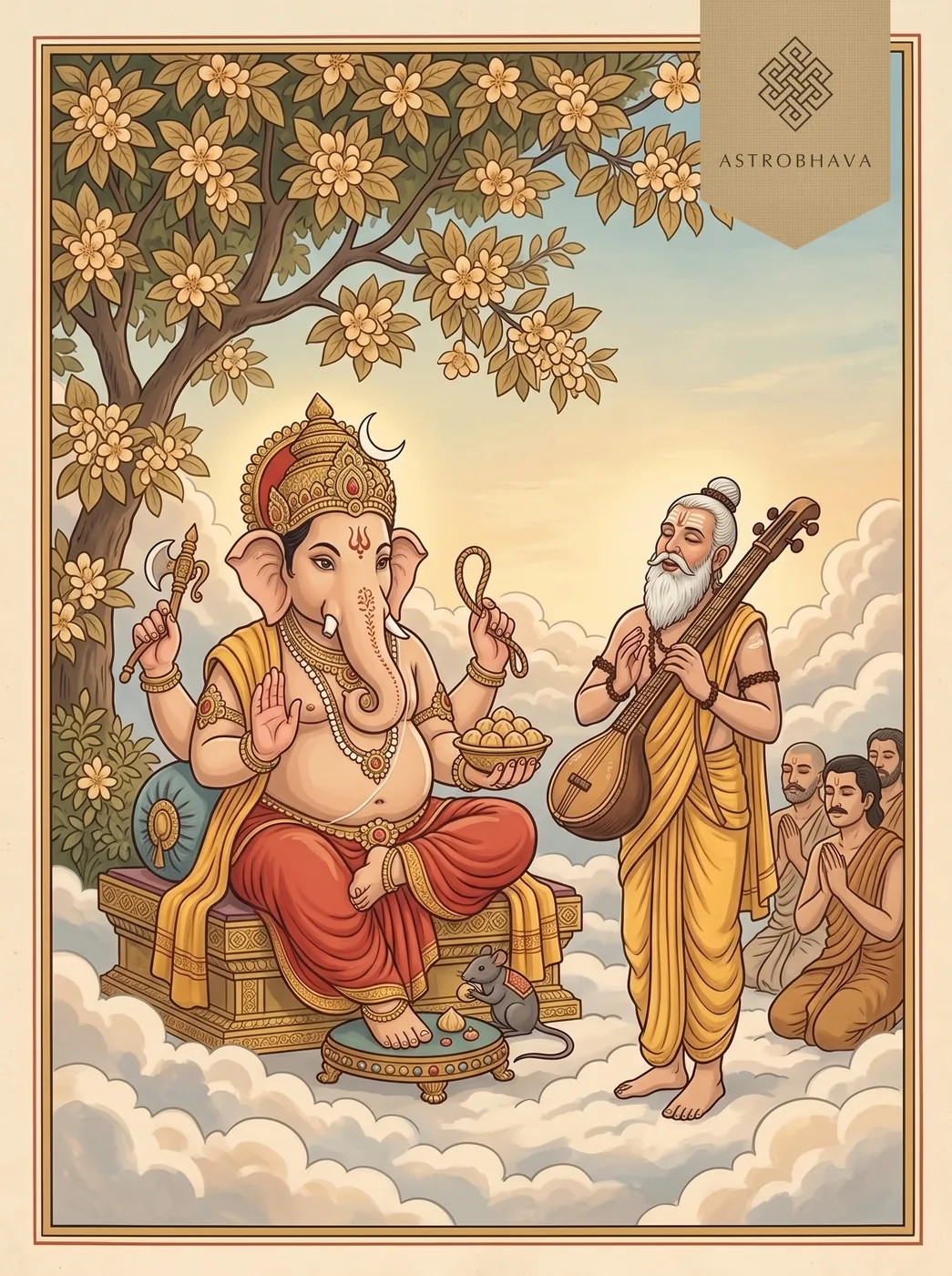
Pranamya Shirasa Devam, the Sankatanashana Ganesha Stotram (also printed Sankashta Nashana Ganesha Stotram), is a short Sanskrit hymn in which the sage Narada teaches twelve names of Ganesha, the son of Gauri. Its closing line places it in the Narada Purana. The hymn has eight verses in the anushtubh metre and falls into two equal halves. Verse 1 tells the listener to bow the head and keep Vinayaka in mind, the one in whom devotees take shelter. Verses 2 to 4 then count the names off by number, first to twelfth: Vakratunda, Ekadanta, Krishnapingaksha, Gajavaktra, Lambodara, Vikata, Vighnaraja, Dhumravarna, Bhalachandra, Vinayaka, Ganapati and Gajanana. Each name is a single picture of him: the curved trunk, the one tusk, the smoke-grey colour, the moon on the brow. Verses 5 to 8 are the phala shruti. They say what tradition holds the names give, and they close by asking that the hymn be written out and given to eight Brahmins.
Narada's Names and Their Purana
The hymn has no tale of composition. Its whole setting is one line, 'Narada said', and its colophon names it a hymn of the Narada Purana. Narada is the wandering sage of the Puranas who carries teachings between gods and people, so a list of names handed on in his voice fits his usual part. The attribution is traditional. The hymn is not readily found in the printed Narada Purana, however, and it has come down instead through the old stotra anthologies of the nineteenth and early twentieth centuries, where it sits among the Ganesha hymns. Even the title varies between printings: Sankata, a difficulty, in some, and Sankashta, distress, in others. Many of the names carry pictures and stories of their own. Vakratunda is the curved trunk, Ekadanta the single tusk, Dhumravarna the smoke-grey colour. Bhalachandra, the ninth name, is Ganesha with the moon on his forehead. The moon matters on Sankashti Chaturthi, the fourth day of the waning fortnight, when those keeping the fast wait for moonrise before they break it. Tradition commonly recites this hymn of twelve names on that night.
The mantra, in six scripts
- प्रणम्य
- praṇamya — having bowed
- शिरसा
- śirasā — with the head
- देवं
- devaṃ — to the god
- गौरीपुत्रं
- gaurīputraṃ — son of Gauri
- विनायकम्
- vināyakam — Vinayaka, the leader
- भक्तावासं
- bhaktāvāsaṃ — dwelling place of devotees
- स्मरेन्नित्यमायुःकामार्थसिद्धये
- smarennityamāyuḥkāmārthasiddhaye — one should remember daily, for long life, desires and wealth
Pranamya Shirasa Devam lyrics in full
Eight verses: the opening verse, three verses of the twelve names, and four verses of phala shruti.
All 9 verses, in Sanskrit, Tamil, Telugu, Kannada, Malayalam and English, each with its meaning. Choose a script:
Download the Pranamya Shirasa Devam PDFAll 9 verses with their meanings, in Sanskrit. Free to print and keep.
प्रणम्य शिरसा देवं गौरीपुत्रं विनायकम् ।
भक्तावासं स्मरेन्नित्यमायुःकामार्थसिद्धये ॥
ப்ரணம்ய ஶிரஸா தேவம் கௌரீபுத்ரம் விநாயகம் ।
பக்தாவாஸம் ஸ்மரேந்நித்யமாயுஃகாமார்தஸித்தயே ॥
ప్రణమ్య శిరసా దేవం గౌరీపుత్రం వినాయకమ్ ।
భక్తావాసం స్మరేన్నిత్యమాయుఃకామార్థసిద్ధయే ॥
ಪ್ರಣಮ್ಯ ಶಿರಸಾ ದೇವಂ ಗೌರೀಪುತ್ರಂ ವಿನಾಯಕಮ್ ।
ಭಕ್ತಾವಾಸಂ ಸ್ಮರೇನ್ನಿತ್ಯಮಾಯುಃಕಾಮಾರ್ಥಸಿದ್ಧಯೇ ॥
പ്രണമ്യ ശിരസാ ദേവം ഗൌരീപുത്രം വിനായകമ് ।
ഭക്താവാസം സ്മരേന്നിത്യമായുഃകാമാര്ഥസിദ്ധയേ ॥
praṇamya śirasā devaṃ gaurīputraṃ vināyakam |
bhaktāvāsaṃ smarennityamāyuḥkāmārthasiddhaye ||
Narada said: Bowing the head to the god Vinayaka, son of Gauri, one should remember him daily, the dwelling place of his devotees, for the fulfilment of long life, desires and wealth.
प्रथमं वक्रतुण्डं च एकदन्तं द्वितीयकम् ।
तृतीयं कृष्णपिङ्गाक्षं गजवक्त्रं चतुर्थकम् ॥
ப்ரதமம் வக்ரதுண்டம் ச ஏகதந்தம் த்விதீயகம் ।
த்ருதீயம் க்ருஷ்ணபிங்காக்ஷம் கஜவக்த்ரம் சதுர்தகம் ॥
ప్రథమం వక్రతుణ్డం చ ఏకదన్తం ద్వితీయకమ్ ।
తృతీయం కృష్ణపిఙ్గాక్షం గజవక్త్రం చతుర్థకమ్ ॥
ಪ್ರಥಮಂ ವಕ್ರತುಣ್ಡಂ ಚ ಏಕದನ್ತಂ ದ್ವಿತೀಯಕಮ್ ।
ತೃತೀಯಂ ಕೃಷ್ಣಪಿಙ್ಗಾಕ್ಷಂ ಗಜವಕ್ತ್ರಂ ಚತುರ್ಥಕಮ್ ॥
പ്രഥമം വക്രതുണ്ഡം ച ഏകദന്തം ദ്വിതീയകമ് ।
തൃതീയം കൃഷ്ണപിങ്ഗാക്ഷം ഗജവക്ത്രം ചതുര്ഥകമ് ॥
prathamaṃ vakratuṇḍaṃ ca ekadantaṃ dvitīyakam |
tṛtīyaṃ kṛṣṇapiṅgākṣaṃ gajavaktraṃ caturthakam ||
First, Vakratunda, the one with the curved trunk; second, Ekadanta, the one with a single tusk; third, Krishnapingaksha, the one with dark and tawny eyes; fourth, Gajavaktra, the elephant-mouthed one.
लम्बोदरं पञ्चमं च षष्ठं विकटमेव च ।
सप्तमं विघ्नराजं च धूम्रवर्णं तथाष्टमम् ॥
லம்போதரம் பஞ்சமம் ச ஷஷ்டம் விகடமேவ ச ।
ஸப்தமம் விக்நராஜம் ச தூம்ரவர்ணம் ததாஷ்டமம் ॥
లమ్బోదరం పఞ్చమం చ షష్ఠం వికటమేవ చ ।
సప్తమం విఘ్నరాజం చ ధూమ్రవర్ణం తథాష్టమమ్ ॥
ಲಮ್ಬೋದರಂ ಪಞ್ಚಮಂ ಚ ಷಷ್ಠಂ ವಿಕಟಮೇವ ಚ ।
ಸಪ್ತಮಂ ವಿಘ್ನರಾಜಂ ಚ ಧೂಮ್ರವರ್ಣಂ ತಥಾಷ್ಟಮಮ್ ॥
ലമ്ബോദരം പഞ്ചമം ച ഷഷ്ഠം വികടമേവ ച ।
സപ്തമം വിഘ്നരാജം ച ധൂമ്രവര്ണം തഥാഷ്ടമമ് ॥
lambodaraṃ pañcamaṃ ca ṣaṣṭhaṃ vikaṭameva ca |
saptamaṃ vighnarājaṃ ca dhūmravarṇaṃ tathāṣṭamam ||
Fifth, Lambodara, the one with the large belly; sixth, Vikata, the formidable one; seventh, Vighnaraja, the king who rules over obstacles; and eighth, Dhumravarna, the smoke-coloured one.
नवमं भालचन्द्रं च दशमं तु विनायकम् ।
एकादशं गणपतिं द्वादशं तु गजाननम् ॥
நவமம் பாலசந்த்ரம் ச தஶமம் து விநாயகம் ।
ஏகாதஶம் கணபதிம் த்வாதஶம் து கஜாநநம் ॥
నవమం భాలచన్ద్రం చ దశమం తు వినాయకమ్ ।
ఏకాదశం గణపతిం ద్వాదశం తు గజాననమ్ ॥
ನವಮಂ ಭಾಲಚನ್ದ್ರಂ ಚ ದಶಮಂ ತು ವಿನಾಯಕಮ್ ।
ಏಕಾದಶಂ ಗಣಪತಿಂ ದ್ವಾದಶಂ ತು ಗಜಾನನಮ್ ॥
നവമം ഭാലചന്ദ്രം ച ദശമം തു വിനായകമ് ।
ഏകാദശം ഗണപതിം ദ്വാദശം തു ഗജാനനമ് ॥
navamaṃ bhālacandraṃ ca daśamaṃ tu vināyakam |
ekādaśaṃ gaṇapatiṃ dvādaśaṃ tu gajānanam ||
Ninth, Bhalachandra, who bears the moon on his forehead; tenth, Vinayaka, the supreme leader; eleventh, Ganapati, lord of the ganas; and twelfth, Gajanana, the elephant-faced one.
द्वादशैतानि नामानि त्रिसन्ध्यं यः पठेन्नरः ।
न च विघ्नभयं तस्य सर्वसिद्धिकरं प्रभो ॥
த்வாதஶைதாநி நாமாநி த்ரிஸந்த்யம் யஃ படேந்நரஃ ।
ந ச விக்நபயம் தஸ்ய ஸர்வஸித்திகரம் ப்ரபோ ॥
ద్వాదశైతాని నామాని త్రిసన్ధ్యం యః పఠేన్నరః ।
న చ విఘ్నభయం తస్య సర్వసిద్ధికరం ప్రభో ॥
ದ್ವಾದಶೈತಾನಿ ನಾಮಾನಿ ತ್ರಿಸನ್ಧ್ಯಂ ಯಃ ಪಠೇನ್ನರಃ ।
ನ ಚ ವಿಘ್ನಭಯಂ ತಸ್ಯ ಸರ್ವಸಿದ್ಧಿಕರಂ ಪ್ರಭೋ ॥
ദ്വാദശൈതാനി നാമാനി ത്രിസന്ധ്യം യഃ പഠേന്നരഃ ।
ന ച വിഘ്നഭയം തസ്യ സര്വസിദ്ധികരം പ്രഭോ ॥
dvādaśaitāni nāmāni trisandhyaṃ yaḥ paṭhennaraḥ |
na ca vighnabhayaṃ tasya sarvasiddhikaraṃ prabho ||
O Lord, the verse says that a person who recites these twelve names at the three junctions of the day - dawn, noon and dusk - has no fear of obstacles, and that this recitation brings every kind of accomplishment.
विद्यार्थी लभते विद्यां धनार्थी लभते धनम् ।
पुत्रार्थी लभते पुत्रान्मोक्षार्थी लभते गतिम् ॥
வித்யார்தீ லபதே வித்யாம் தநார்தீ லபதே தநம் ।
புத்ரார்தீ லபதே புத்ராந்மோக்ஷார்தீ லபதே கதிம் ॥
విద్యార్థీ లభతే విద్యాం ధనార్థీ లభతే ధనమ్ ।
పుత్రార్థీ లభతే పుత్రాన్మోక్షార్థీ లభతే గతిమ్ ॥
ವಿದ್ಯಾರ್ಥೀ ಲಭತೇ ವಿದ್ಯಾಂ ಧನಾರ್ಥೀ ಲಭತೇ ಧನಮ್ ।
ಪುತ್ರಾರ್ಥೀ ಲಭತೇ ಪುತ್ರಾನ್ಮೋಕ್ಷಾರ್ಥೀ ಲಭತೇ ಗತಿಮ್ ॥
വിദ്യാര്ഥീ ലഭതേ വിദ്യാം ധനാര്ഥീ ലഭതേ ധനമ് ।
പുത്രാര്ഥീ ലഭതേ പുത്രാന്മോക്ഷാര്ഥീ ലഭതേ ഗതിമ് ॥
vidyārthī labhate vidyāṃ dhanārthī labhate dhanam |
putrārthī labhate putrānmokṣārthī labhate gatim ||
The verse says that one who seeks learning gains learning, one who seeks wealth gains wealth, one who seeks children gains children, and one who seeks liberation reaches the final goal.
जपेद्गणपतिस्तोत्रं षड्भिर्मासैः फलं लभेत् ।
संवत्सरेण सिद्धिं च लभते नात्र संशयः ॥
ஜபேத்கணபதிஸ்தோத்ரம் ஷட்பிர்மாஸைஃ பலம் லபேத் ।
ஸம்வத்ஸரேண ஸித்திம் ச லபதே நாத்ர ஸம்ஶயஃ ॥
జపేద్గణపతిస్తోత్రం షడ్భిర్మాసైః ఫలం లభేత్ ।
సంవత్సరేణ సిద్ధిం చ లభతే నాత్ర సంశయః ॥
ಜಪೇದ್ಗಣಪತಿಸ್ತೋತ್ರಂ ಷಡ್ಭಿರ್ಮಾಸೈಃ ಫಲಂ ಲಭೇತ್ ।
ಸಂವತ್ಸರೇಣ ಸಿದ್ಧಿಂ ಚ ಲಭತೇ ನಾತ್ರ ಸಂಶಯಃ ॥
ജപേദ്ഗണപതിസ്തോത്രം ഷഡ്ഭിര്മാസൈഃ ഫലം ലഭേത് ।
സംവത്സരേണ സിദ്ധിം ച ലഭതേ നാത്ര സംശയഃ ॥
japedgaṇapatistotraṃ ṣaḍbhirmāsaiḥ phalaṃ labhet |
saṃvatsareṇa siddhiṃ ca labhate nātra saṃśayaḥ ||
One should chant this hymn to Ganapati; the verse says the fruit is gained within six months, and fulfilment within a year, and that there is no doubt about this.
अष्टभ्यो ब्राह्मणेभ्यश्च लिखित्वा यः समर्पयेत् ।
तस्य विद्या भवेत्सर्वा गणेशस्य प्रसादतः ॥
அஷ்டப்யோ ப்ராஹ்மணேப்யஶ்ச லிகித்வா யஃ ஸமர்பயேத் ।
தஸ்ய வித்யா பவேத்ஸர்வா கணேஶஸ்ய ப்ரஸாததஃ ॥
అష్టభ్యో బ్రాహ్మణేభ్యశ్చ లిఖిత్వా యః సమర్పయేత్ ।
తస్య విద్యా భవేత్సర్వా గణేశస్య ప్రసాదతః ॥
ಅಷ್ಟಭ್ಯೋ ಬ್ರಾಹ್ಮಣೇಭ್ಯಶ್ಚ ಲಿಖಿತ್ವಾ ಯಃ ಸಮರ್ಪಯೇತ್ ।
ತಸ್ಯ ವಿದ್ಯಾ ಭವೇತ್ಸರ್ವಾ ಗಣೇಶಸ್ಯ ಪ್ರಸಾದತಃ ॥
അഷ്ടഭ്യോ ബ്രാഹ്മണേഭ്യശ്ച ലിഖിത്വാ യഃ സമര്പയേത് ।
തസ്യ വിദ്യാ ഭവേത്സര്വാ ഗണേശസ്യ പ്രസാദതഃ ॥
aṣṭabhyo brāhmaṇebhyaśca likhitvā yaḥ samarpayet |
tasya vidyā bhavetsarvā gaṇeśasya prasādataḥ ||
The verse says that whoever writes out this hymn and offers it to eight Brahmins gains all learning by the grace of Ganesha.
इति श्रीनारदपुराणे सङ्कटनाशनं गणेशस्तोत्रं सम्पूर्णम् ॥
இதி ஶ்ரீநாரதபுராணே ஸங்கடநாஶநம் கணேஶஸ்தோத்ரம் ஸம்பூர்ணம் ॥
ఇతి శ్రీనారదపురాణే సఙ్కటనాశనం గణేశస్తోత్రం సమ్పూర్ణమ్ ॥
ಇತಿ ಶ್ರೀನಾರದಪುರಾಣೇ ಸಙ್ಕಟನಾಶನಂ ಗಣೇಶಸ್ತೋತ್ರಂ ಸಮ್ಪೂರ್ಣಮ್ ॥
ഇതി ശ്രീനാരദപുരാണേ സങ്കടനാശനം ഗണേശസ്തോത്രം സമ്പൂര്ണമ് ॥
iti śrīnāradapurāṇe saṅkaṭanāśanaṃ gaṇeśastotraṃ sampūrṇam ||
Thus ends the Sankata Nashana Ganesha Stotram from the Narada Purana.
The syllable people get wrong
The third name, kṛṣṇapiṅgākṣaṃ (verse 2), is often flattened to 'krishna-pinga-ksham'. Say kri-shna-ping-GAAK-sham: ṛ is a short vowel like the ri in 'rib', ṣ is a retroflex sh, ṅg is the ng of 'finger', and the long ā carries the stress before the kṣ cluster.
When the Pranamya Shirasa Devam is chanted
Weekday. Tuesday
Festival. Sankashti Chaturthi
Questions
Have your chart read before you decide
Chanting is yours to do, and free. But which deity your situation calls for — and whether a mantra alone is the right response — depends on your chart. Sometimes it is; sometimes it is not.
- Over 30 years in the Guru–Sishya Parampara, from the age of five
- He reads every chart himself — 60 minutes, one to one, never delegated
- Charts are read only between sunrise and sunset, following tradition
