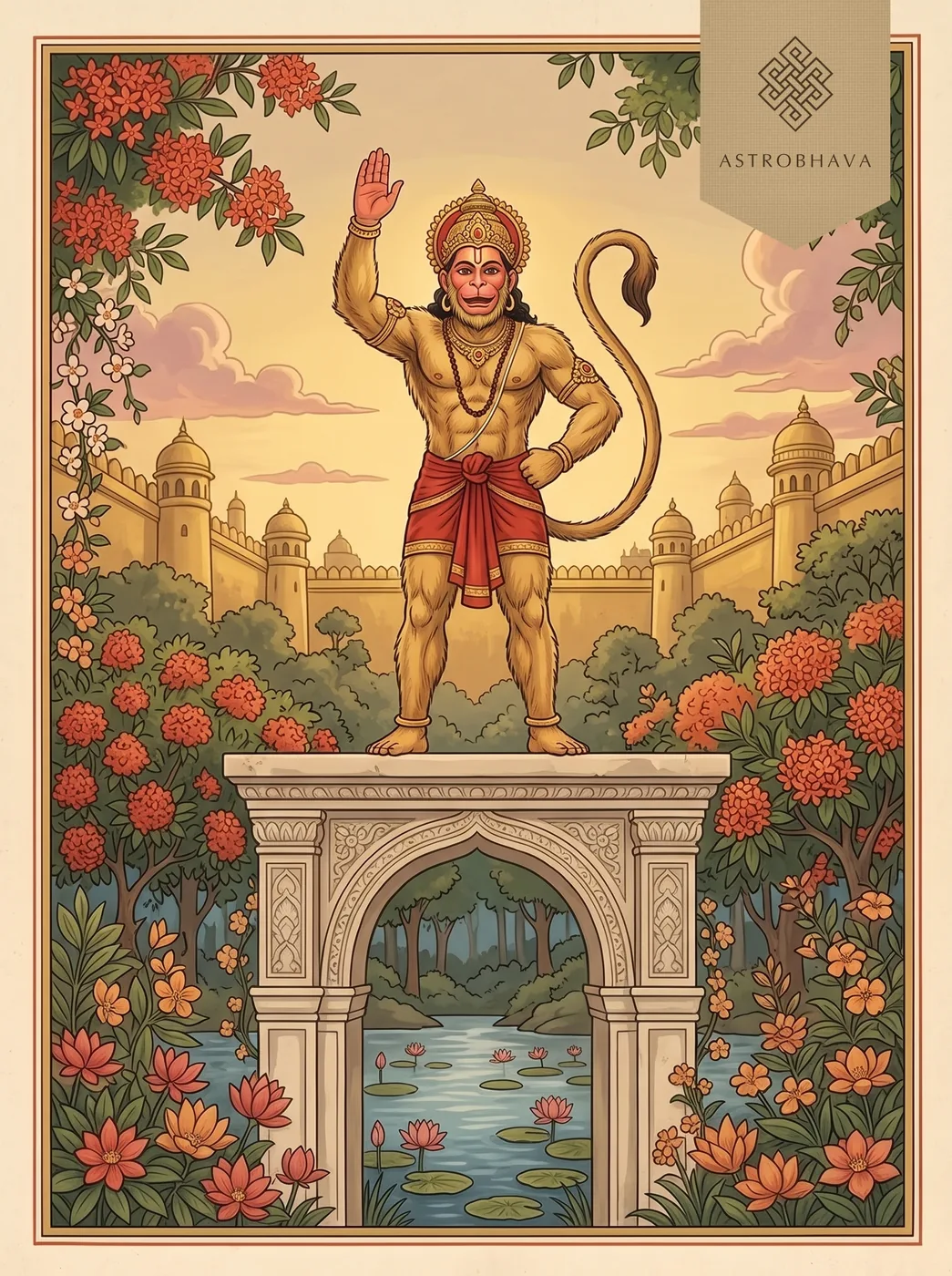
Ramayana Jaya Mantram
जयत्यतिबलो रामो लक्ष्मणश्च महाबलः । राजा जयति सुग्रीवो राघवेणाभिपालितः ॥Also known as Jayatyatibalo Ramo
In Devanagari, Tamil, Telugu, Kannada, Malayalam and English — with the meaning of every word, and the one syllable most people pronounce wrongly.
 The Hanuman Homam, performed for youBook →
Who Ramayana Jaya Mantram is
The Ramayana Jaya Mantram, also called the Jaya Mantra of the Sundara Kanda, is the name devotees give to four verses of the Valmiki Ramayana, Sundara Kanda, sarga 42, verses 33-36, opening 'Jayatyatibalo Ramo'. They were not composed as a hymn: they are words Hanuman shouts in the middle of the story, in the same shloka metre as the narrative around them. The first verse calls out victory three times, to Rama of surpassing strength, to Lakshmana of great might, and to King Sugriva, whom Rama protects. In the second Hanuman names himself: servant of Rama, king of Kosala, son of the Wind and destroyer of enemy armies. The third is a statement of strength, that a thousand Ravanas could not match him while he fights with rocks and trees. The fourth gives his plan: to crush Lanka, bow to Sita and go back with his task done while every demon looks on. The sequence runs from his master's victory to his own name, strength and purpose.
The Cry at the Ashoka Grove Gate
The Sundara Kanda sets these verses just after Hanuman has found Sita in the Ashoka grove. Before leaving Lanka he wrecks the grove, sparing only the spot where she sits and the shimshapa tree that shelters her. The demon women who guard her wake to the damage, question Sita, who says she knows nothing of the stranger, and run to Ravana. Ravana, his eyes burning with anger, sends the Kinkaras, demons he counts as his equals in valour; the sarga puts their number at eighty thousand. They find Hanuman standing at the arched gateway of the grove and close in with maces, iron bars, spears and arrows. Hanuman swells to a huge size, lashes his tail on the ground and slaps his arms with a sound that, the text says, brings birds down from the sky. Then he shouts the four verses. The next verse tells how the demons, shaken by the cry, see him tower like a cloud at dusk. He seizes the iron bar of the gateway, kills the Kinkaras and takes his stand at the gate again, and the sarga closes with Ravana sending Jambumali, son of Prahasta. In the following sarga Hanuman leaps onto the tall shrine-palace of the demons and repeats the same cry almost word for word.
The mantra, in six scripts
- जयत्यतिबलो
- jayatyatibalo — is victorious, the one of surpassing strength
- रामो
- rāmo — Rama
- लक्ष्मणश्च
- lakṣmaṇaśca — and Lakshmana
- महाबलः
- mahābalaḥ — of great might
- राजा
- rājā — the king
- जयति
- jayati — is victorious
- सुग्रीवो
- sugrīvo — Sugriva
- राघवेणाभिपालितः
- rāghaveṇābhipālitaḥ — protected by Raghava (Rama)
Ramayana Jaya Mantram lyrics in full
The four verses of Hanuman's cry, Sundara Kanda 42.33-36, in the order of the sarga, without the narrative verses on either side.
All 4 verses, in Sanskrit, Tamil, Telugu, Kannada, Malayalam and English, each with its meaning. Choose a script:
Download the Ramayana Jaya Mantram PDFAll 4 verses with their meanings, in Sanskrit. Free to print and keep.
जयत्यतिबलो रामो लक्ष्मणश्च महाबलः ।
राजा जयति सुग्रीवो राघवेणाभिपालितः ॥
ஜயத்யதிபலோ ராமோ லக்ஷ்மணஶ்ச மஹாபலஃ ।
ராஜா ஜயதி ஸுக்ரீவோ ராகவேணாபிபாலிதஃ ॥
జయత్యతిబలో రామో లక్ష్మణశ్చ మహాబలః ।
రాజా జయతి సుగ్రీవో రాఘవేణాభిపాలితః ॥
ಜಯತ್ಯತಿಬಲೋ ರಾಮೋ ಲಕ್ಷ್ಮಣಶ್ಚ ಮಹಾಬಲಃ ।
ರಾಜಾ ಜಯತಿ ಸುಗ್ರೀವೋ ರಾಘವೇಣಾಭಿಪಾಲಿತಃ ॥
ജയത്യതിബലോ രാമോ ലക്ഷ്മണശ്ച മഹാബലഃ ।
രാജാ ജയതി സുഗ്രീവോ രാഘവേണാഭിപാലിതഃ ॥
jayatyatibalo rāmo lakṣmaṇaśca mahābalaḥ |
rājā jayati sugrīvo rāghaveṇābhipālitaḥ ||
Victory to Rama of surpassing strength, and to Lakshmana of great might! Victory to King Sugriva, who is protected by Rama, the descendant of Raghu!
दासोऽहं कोसलेन्द्रस्य रामस्याक्लिष्टकर्मणः ।
हनुमान् शत्रुसैन्यानां निहन्ता मारुतात्मजः ॥
தாஸோஹம் கோஸலேந்த்ரஸ்ய ராமஸ்யாக்லிஷ்டகர்மணஃ ।
ஹநுமாந் ஶத்ருஸைந்யாநாம் நிஹந்தா மாருதாத்மஜஃ ॥
దాసోఽహం కోసలేన్ద్రస్య రామస్యాక్లిష్టకర్మణః ।
హనుమాన్ శత్రుసైన్యానాం నిహన్తా మారుతాత్మజః ॥
ದಾಸೋಽಹಂ ಕೋಸಲೇನ್ದ್ರಸ್ಯ ರಾಮಸ್ಯಾಕ್ಲಿಷ್ಟಕರ್ಮಣಃ ।
ಹನುಮಾನ್ ಶತ್ರುಸೈನ್ಯಾನಾಂ ನಿಹನ್ತಾ ಮಾರುತಾತ್ಮಜಃ ॥
ദാസോഽഹം കോസലേന്ദ്രസ്യ രാമസ്യാക്ലിഷ്ടകര്മണഃ ।
ഹനുമാന് ശത്രുസൈന്യാനാം നിഹന്താ മാരുതാത്മജഃ ॥
dāso'haṃ kosalendrasya rāmasyākliṣṭakarmaṇaḥ |
hanumān śatrusainyānāṃ nihantā mārutātmajaḥ ||
I am the servant of Rama, king of Kosala, whose deeds are done without weariness. I am Hanuman, son of the Wind, the destroyer of enemy armies.
न रावणसहस्रं मे युद्धे प्रतिबलं भवेत् ।
शिलाभिस्तु प्रहरतः पादपैश्च सहस्रशः ॥
ந ராவணஸஹஸ்ரம் மே யுத்தே ப்ரதிபலம் பவேத் ।
ஶிலாபிஸ்து ப்ரஹரதஃ பாதபைஶ்ச ஸஹஸ்ரஶஃ ॥
న రావణసహస్రం మే యుద్ధే ప్రతిబలం భవేత్ ।
శిలాభిస్తు ప్రహరతః పాదపైశ్చ సహస్రశః ॥
ನ ರಾವಣಸಹಸ್ರಂ ಮೇ ಯುದ್ಧೇ ಪ್ರತಿಬಲಂ ಭವೇತ್ ।
ಶಿಲಾಭಿಸ್ತು ಪ್ರಹರತಃ ಪಾದಪೈಶ್ಚ ಸಹಸ್ರಶಃ ॥
ന രാവണസഹസ്രം മേ യുദ്ധേ പ്രതിബലം ഭവേത് ।
ശിലാഭിസ്തു പ്രഹരതഃ പാദപൈശ്ച സഹസ്രശഃ ॥
na rāvaṇasahasraṃ me yuddhe pratibalaṃ bhavet |
śilābhistu praharataḥ pādapaiśca sahasraśaḥ ||
Not even a thousand Ravanas could match me in battle, as I strike with rocks and trees by the thousand.
अर्दयित्वा पुरीं लङ्कामभिवाद्य च मैथिलीम् ।
समृद्धार्थो गमिष्यामि मिषतां सर्वरक्षसाम् ॥
அர்தயித்வா புரீம் லங்காமபிவாத்ய ச மைதிலீம் ।
ஸம்ருத்தார்தோ கமிஷ்யாமி மிஷதாம் ஸர்வரக்ஷஸாம் ॥
అర్దయిత్వా పురీం లఙ్కామభివాద్య చ మైథిలీమ్ ।
సమృద్ధార్థో గమిష్యామి మిషతాం సర్వరక్షసామ్ ॥
ಅರ್ದಯಿತ್ವಾ ಪುರೀಂ ಲಙ್ಕಾಮಭಿವಾದ್ಯ ಚ ಮೈಥಿಲೀಮ್ ।
ಸಮೃದ್ಧಾರ್ಥೋ ಗಮಿಷ್ಯಾಮಿ ಮಿಷತಾಂ ಸರ್ವರಕ್ಷಸಾಮ್ ॥
അര്ദയിത്വാ പുരീം ലങ്കാമഭിവാദ്യ ച മൈഥിലീമ് ।
സമൃദ്ധാര്ഥോ ഗമിഷ്യാമി മിഷതാം സര്വരക്ഷസാമ് ॥
ardayitvā purīṃ laṅkāmabhivādya ca maithilīm |
samṛddhārtho gamiṣyāmi miṣatāṃ sarvarakṣasām ||
Having crushed the city of Lanka and bowed in greeting to Sita, the princess of Mithila, I shall go back with my purpose fulfilled, while all the demons look on.
The syllable people get wrong
The opening word jayatyatibalo joins jayati and atibalo, so the final i of jayati turns into y: say ja-yat-ya-ti-ba-lo in one flow, not 'jayati atibalo' with a break or 'jaya-tya' with the t dropped.
When Ramayana Jaya Mantram is chanted
Weekday. Tuesday
Festival. Sundara Kanda parayana
Questions
Have your chart read before you decide
Chanting is yours to do, and free. But which deity your situation calls for — and whether a mantra alone is the right response — depends on your chart. Sometimes it is; sometimes it is not.
- Over 30 years in the Guru–Sishya Parampara, from the age of five
- He reads every chart himself — 60 minutes, one to one, never delegated
- Charts are read only between sunrise and sunset, following tradition
