Ranganatha Ashtakam
आनन्दरूपे निजबोधरूपे ब्रह्मस्वरूपे श्रुतिमूर्तिरूपे । शशाङ्करूपे रमणीयरूपे श्रीरङ्गरूपे रमतां मनो मे ॥Also known as Ananda Rupe Nija Bodha Rupe
In Devanagari, Tamil, Telugu, Kannada, Malayalam and English — with the meaning of every word, and the one syllable most people pronounce wrongly.
 The Lakshmi Narayana Homam, performed for youBook →
What the Ranganatha Ashtakam is
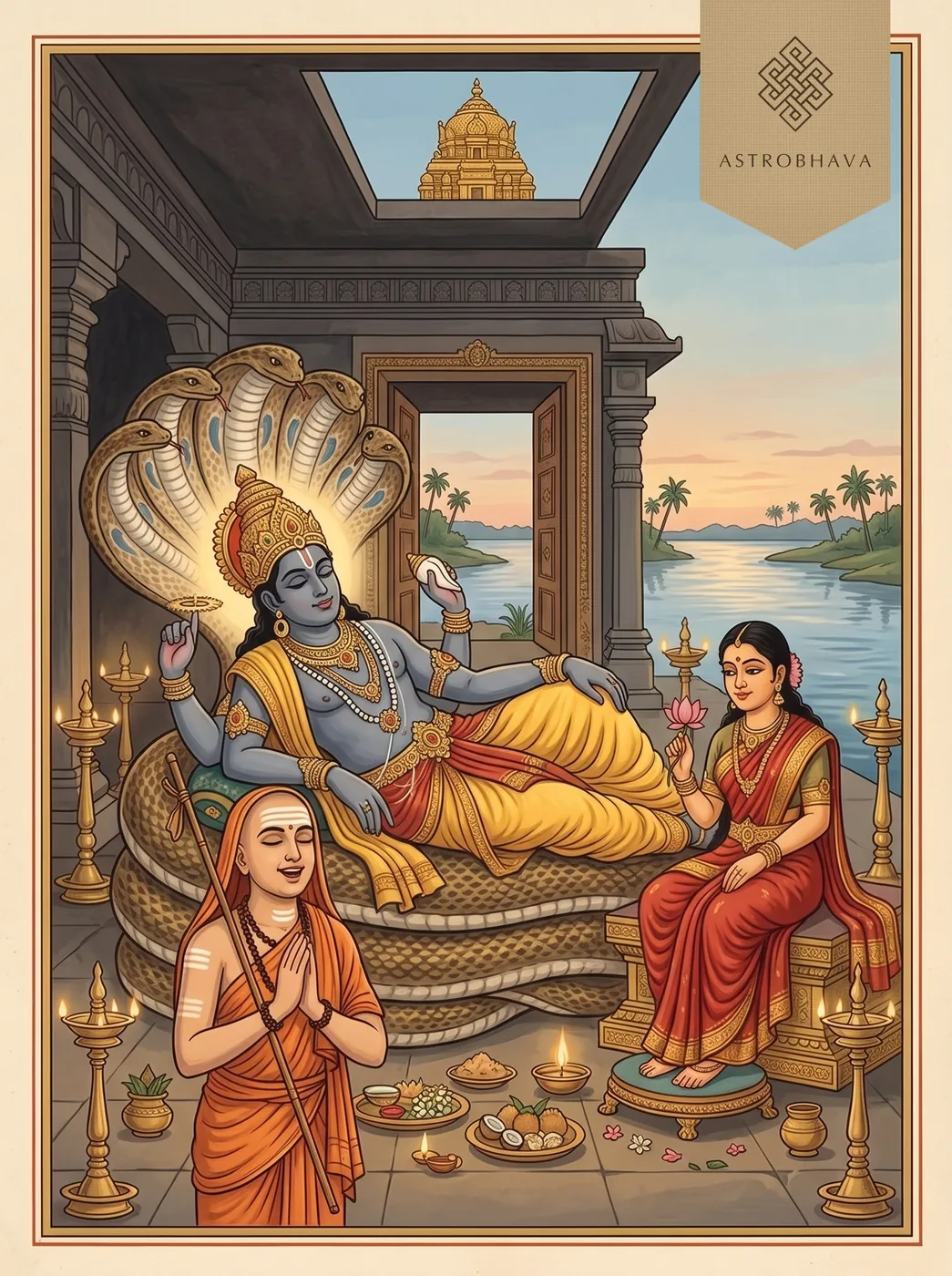
The Ranganatha Ashtakam, also printed as the Sri Ranganathashtakam, is a Sanskrit octet attributed to Adi Shankaracharya and addressed to Ranganatha, the form of Vishnu who reclines on the serpent Adishesha at Srirangam. Each of the first seven verses strings together epithets that end on one shared word, then closes with the refrain 'ramatam mano me', may my mind delight in Ranga. The shared word moves through the hymn in a deliberate order: rupa, form; lila, play; vasa, dwelling; vandya, the one worshipped; raja, king; nidra, sleep; and shayi, the one who reclines. So the verses travel from what the Lord is, to where he lives, to who bows before him, to how he rests. Verse 8 breaks the pattern and builds a chain of rhymes on anga, body. One verse of merit follows, and the printed text ends with a closing line naming Shankaracharya as its composer.
Shankara before the Lord of the island
According to tradition, Adi Shankaracharya composed these eight verses when he came to Srirangam, the island town near Tiruchirappalli that lies between the Kaveri and its northern branch, the Kollidam. The closing line of the printed text names him as the author, and the verses carry the place inside them: verse 2 sets the Lord on the bank of the Kaveri, and every refrain names Sri Ranga. The temple's own legend explains how the Lord came to lie there. Rama is said to have given the image and its shrine to Vibhishana after the war in Lanka, on the condition that it should not be set down on the journey home. Vibhishana set it down on the island, and it could not be moved again; it was left facing south, toward Lanka, so that his kingdom would stay in the Lord's sight. Srirangam is counted first among the 108 Divya Desams, the shrines praised in the Tamil hymns of the Alvars, and it is the only one that all of the Alvars sang. Seven concentric enclosures surround the sanctum where Ranganatha lies on Adishesha. Verse 7 of the octet reads like a roll of such resting places: the serpent king, the lap of Nanda, the lap of Lakshmi, the ocean of milk, a banyan leaf, and last of all Sri Ranga itself.
The mantra, in six scripts
- आनन्दरूपे
- ānandarūpe — in Him whose form is bliss
- निजबोधरूपे
- nijabodharūpe — whose form is knowledge of the Self
- ब्रह्मस्वरूपे
- brahmasvarūpe — who is Brahman itself
- श्रुतिमूर्तिरूपे
- śrutimūrtirūpe — whose form is the Veda embodied
- शशाङ्करूपे
- śaśāṅkarūpe — whose form is the moon
- रमणीयरूपे
- ramaṇīyarūpe — whose form is lovely
- श्रीरङ्गरूपे
- śrīraṅgarūpe — whose form is Sri Ranga
- रमतां
- ramatāṃ — may it delight
- मनो
- mano — mind
- मे
- me — my
Ranganatha Ashtakam lyrics in full
Eight verses and a verse of merit to Ranganatha of Srirangam. The printed closing line is given at the end.
All 10 verses, in Sanskrit, Tamil, Telugu, Kannada, Malayalam and English, each with its meaning. Choose a script:
Download the Ranganatha Ashtakam PDFAll 10 verses with their meanings, in Sanskrit. Free to print and keep.
आनन्दरूपे निजबोधरूपे ब्रह्मस्वरूपे श्रुतिमूर्तिरूपे ।
शशाङ्करूपे रमणीयरूपे श्रीरङ्गरूपे रमतां मनो मे ॥
ஆநந்தரூபே நிஜபோதரூபே ப்ரஹ்மஸ்வரூபே ஶ்ருதிமூர்திரூபே ।
ஶஶாங்கரூபே ரமணீயரூபே ஶ்ரீரங்கரூபே ரமதாம் மநோ மே ॥
ఆనన్దరూపే నిజబోధరూపే బ్రహ్మస్వరూపే శ్రుతిమూర్తిరూపే ।
శశాఙ్కరూపే రమణీయరూపే శ్రీరఙ్గరూపే రమతాం మనో మే ॥
ಆನನ್ದರೂಪೇ ನಿಜಬೋಧರೂಪೇ ಬ್ರಹ್ಮಸ್ವರೂಪೇ ಶ್ರುತಿಮೂರ್ತಿರೂಪೇ ।
ಶಶಾಙ್ಕರೂಪೇ ರಮಣೀಯರೂಪೇ ಶ್ರೀರಙ್ಗರೂಪೇ ರಮತಾಂ ಮನೋ ಮೇ ॥
ആനന്ദരൂപേ നിജബോധരൂപേ ബ്രഹ്മസ്വരൂപേ ശ്രുതിമൂര്തിരൂപേ ।
ശശാങ്കരൂപേ രമണീയരൂപേ ശ്രീരങ്ഗരൂപേ രമതാം മനോ മേ ॥
ānandarūpe nijabodharūpe brahmasvarūpe śrutimūrtirūpe |
śaśāṅkarūpe ramaṇīyarūpe śrīraṅgarūpe ramatāṃ mano me ||
Whose form is bliss, whose form is knowledge of the Self, who is Brahman itself, whose form is the Veda made visible, whose form is like the moon and full of charm: may my mind delight in Him whose form is Sri Ranga.
कावेरितीरे करुणाविलोले मन्दारमूले धृतचारुचेले ।
दैत्यान्तकालेऽखिललोकलीले श्रीरङ्गलीले रमतां मनो मे ॥
காவேரிதீரே கருணாவிலோலே மந்தாரமூலே த்ருதசாருசேலே ।
தைத்யாந்தகாலேகிலலோகலீலே ஶ்ரீரங்கலீலே ரமதாம் மநோ மே ॥
కావేరితీరే కరుణావిలోలే మన్దారమూలే ధృతచారుచేలే ।
దైత్యాన్తకాలేఽఖిలలోకలీలే శ్రీరఙ్గలీలే రమతాం మనో మే ॥
ಕಾವೇರಿತೀರೇ ಕರುಣಾವಿಲೋಲೇ ಮನ್ದಾರಮೂಲೇ ಧೃತಚಾರುಚೇಲೇ ।
ದೈತ್ಯಾನ್ತಕಾಲೇಽಖಿಲಲೋಕಲೀಲೇ ಶ್ರೀರಙ್ಗಲೀಲೇ ರಮತಾಂ ಮನೋ ಮೇ ॥
കാവേരിതീരേ കരുണാവിലോലേ മന്ദാരമൂലേ ധൃതചാരുചേലേ ।
ദൈത്യാന്തകാലേഽഖിലലോകലീലേ ശ്രീരങ്ഗലീലേ രമതാം മനോ മേ ॥
kāveritīre karuṇāvilole mandāramūle dhṛtacārucele |
daityāntakāle'khilalokalīle śrīraṅgalīle ramatāṃ mano me ||
On the bank of the Kaveri, stirred by compassion, at the foot of the mandara tree, wearing beautiful garments, who makes the whole world his play when he ends the demons: may my mind delight in Him who plays at Sri Ranga.
लक्ष्मीनिवासे जगतां निवासे हृत्पद्मवासे रविबिम्बवासे ।
कृपानिवासे गुणवृन्दवासे श्रीरङ्गवासे रमतां मनो मे ॥
லக்ஷ்மீநிவாஸே ஜகதாம் நிவாஸே ஹ்ருத்பத்மவாஸே ரவிபிம்பவாஸே ।
க்ருபாநிவாஸே குணவ்ருந்தவாஸே ஶ்ரீரங்கவாஸே ரமதாம் மநோ மே ॥
లక్ష్మీనివాసే జగతాం నివాసే హృత్పద్మవాసే రవిబిమ్బవాసే ।
కృపానివాసే గుణవృన్దవాసే శ్రీరఙ్గవాసే రమతాం మనో మే ॥
ಲಕ್ಷ್ಮೀನಿವಾಸೇ ಜಗತಾಂ ನಿವಾಸೇ ಹೃತ್ಪದ್ಮವಾಸೇ ರವಿಬಿಮ್ಬವಾಸೇ ।
ಕೃಪಾನಿವಾಸೇ ಗುಣವೃನ್ದವಾಸೇ ಶ್ರೀರಙ್ಗವಾಸೇ ರಮತಾಂ ಮನೋ ಮೇ ॥
ലക്ഷ്മീനിവാസേ ജഗതാം നിവാസേ ഹൃത്പദ്മവാസേ രവിബിമ്ബവാസേ ।
കൃപാനിവാസേ ഗുണവൃന്ദവാസേ ശ്രീരങ്ഗവാസേ രമതാം മനോ മേ ॥
lakṣmīnivāse jagatāṃ nivāse hṛtpadmavāse ravibimbavāse |
kṛpānivāse guṇavṛndavāse śrīraṅgavāse ramatāṃ mano me ||
The home of Lakshmi, the dwelling of all the worlds, who dwells in the lotus of the heart and in the orb of the sun, the abode of mercy, the home of every virtue: may my mind delight in Him who dwells at Sri Ranga.
ब्रह्मादिवन्द्ये जगदेकवन्द्ये मुकुन्दवन्द्ये सुरनाथवन्द्ये ।
व्यासादिवन्द्ये सनकादिवन्द्ये श्रीरङ्गवन्द्ये रमतां मनो मे ॥
ப்ரஹ்மாதிவந்த்யே ஜகதேகவந்த்யே முகுந்தவந்த்யே ஸுரநாதவந்த்யே ।
வ்யாஸாதிவந்த்யே ஸநகாதிவந்த்யே ஶ்ரீரங்கவந்த்யே ரமதாம் மநோ மே ॥
బ్రహ్మాదివన్ద్యే జగదేకవన్ద్యే ముకున్దవన్ద్యే సురనాథవన్ద్యే ।
వ్యాసాదివన్ద్యే సనకాదివన్ద్యే శ్రీరఙ్గవన్ద్యే రమతాం మనో మే ॥
ಬ್ರಹ್ಮಾದಿವನ್ದ್ಯೇ ಜಗದೇಕವನ್ದ್ಯೇ ಮುಕುನ್ದವನ್ದ್ಯೇ ಸುರನಾಥವನ್ದ್ಯೇ ।
ವ್ಯಾಸಾದಿವನ್ದ್ಯೇ ಸನಕಾದಿವನ್ದ್ಯೇ ಶ್ರೀರಙ್ಗವನ್ದ್ಯೇ ರಮತಾಂ ಮನೋ ಮೇ ॥
ബ്രഹ്മാദിവന്ദ്യേ ജഗദേകവന്ദ്യേ മുകുന്ദവന്ദ്യേ സുരനാഥവന്ദ്യേ ।
വ്യാസാദിവന്ദ്യേ സനകാദിവന്ദ്യേ ശ്രീരങ്ഗവന്ദ്യേ രമതാം മനോ മേ ॥
brahmādivandye jagadekavandye mukundavandye suranāthavandye |
vyāsādivandye sanakādivandye śrīraṅgavandye ramatāṃ mano me ||
Worshipped by Brahma and the other gods, the one Lord the whole world worships, worshipped as Mukunda, worshipped by Indra the lord of the gods, by Vyasa and the sages, by Sanaka and his brothers: may my mind delight in Him who is worshipped at Sri Ranga.
ब्रह्माधिराजे गरुडाधिराजे वैकुण्ठराजे सुरराजराजे ।
त्रैलोक्यराजेऽखिललोकराजे श्रीरङ्गराजे रमतां मनो मे ॥
ப்ரஹ்மாதிராஜே கருடாதிராஜே வைகுண்டராஜே ஸுரராஜராஜே ।
த்ரைலோக்யராஜேகிலலோகராஜே ஶ்ரீரங்கராஜே ரமதாம் மநோ மே ॥
బ్రహ్మాధిరాజే గరుడాధిరాజే వైకుణ్ఠరాజే సురరాజరాజే ।
త్రైలోక్యరాజేఽఖిలలోకరాజే శ్రీరఙ్గరాజే రమతాం మనో మే ॥
ಬ್ರಹ್ಮಾಧಿರಾಜೇ ಗರುಡಾಧಿರಾಜೇ ವೈಕುಣ್ಠರಾಜೇ ಸುರರಾಜರಾಜೇ ।
ತ್ರೈಲೋಕ್ಯರಾಜೇಽಖಿಲಲೋಕರಾಜೇ ಶ್ರೀರಙ್ಗರಾಜೇ ರಮತಾಂ ಮನೋ ಮೇ ॥
ബ്രഹ്മാധിരാജേ ഗരുഡാധിരാജേ വൈകുണ്ഠരാജേ സുരരാജരാജേ ।
ത്രൈലോക്യരാജേഽഖിലലോകരാജേ ശ്രീരങ്ഗരാജേ രമതാം മനോ മേ ॥
brahmādhirāje garuḍādhirāje vaikuṇṭharāje surarājarāje |
trailokyarāje'khilalokarāje śrīraṅgarāje ramatāṃ mano me ||
Sovereign over Brahma, sovereign over Garuda, king of Vaikuntha, king over the king of the gods, king of the three worlds and of all the worlds: may my mind delight in Him, the king of Sri Ranga.
अमोघमुद्रे परिपूर्णनिद्रे श्रीयोगनिद्रे ससमुद्रनिद्रे ।
श्रितैकभद्रे जगदेकनिद्रे श्रीरङ्गभद्रे रमतां मनो मे ॥
அமோகமுத்ரே பரிபூர்ணநித்ரே ஶ்ரீயோகநித்ரே ஸஸமுத்ரநித்ரே ।
ஶ்ரிதைகபத்ரே ஜகதேகநித்ரே ஶ்ரீரங்கபத்ரே ரமதாம் மநோ மே ॥
అమోఘముద్రే పరిపూర్ణనిద్రే శ్రీయోగనిద్రే ససముద్రనిద్రే ।
శ్రితైకభద్రే జగదేకనిద్రే శ్రీరఙ్గభద్రే రమతాం మనో మే ॥
ಅಮೋಘಮುದ್ರೇ ಪರಿಪೂರ್ಣನಿದ್ರೇ ಶ್ರೀಯೋಗನಿದ್ರೇ ಸಸಮುದ್ರನಿದ್ರೇ ।
ಶ್ರಿತೈಕಭದ್ರೇ ಜಗದೇಕನಿದ್ರೇ ಶ್ರೀರಙ್ಗಭದ್ರೇ ರಮತಾಂ ಮನೋ ಮೇ ॥
അമോഘമുദ്രേ പരിപൂര്ണനിദ്രേ ശ്രീയോഗനിദ്രേ സസമുദ്രനിദ്രേ ।
ശ്രിതൈകഭദ്രേ ജഗദേകനിദ്രേ ശ്രീരങ്ഗഭദ്രേ രമതാം മനോ മേ ॥
amoghamudre paripūrṇanidre śrīyoganidre sasamudranidre |
śritaikabhadre jagadekanidre śrīraṅgabhadre ramatāṃ mano me ||
Whose sign of grace never fails, whose sleep is perfect, who rests in sacred yogic sleep upon the ocean, the one blessing of all who take refuge in him, in whose sleep the whole world rests: may my mind delight in Him, the auspicious one of Sri Ranga.
स चित्रशायी भुजगेन्द्रशायी नन्दाङ्कशायी कमलाङ्कशायी ।
क्षीराब्धिशायी वटपत्रशायी श्रीरङ्गशायी रमतां मनो मे ॥
ஸ சித்ரஶாயீ புஜகேந்த்ரஶாயீ நந்தாங்கஶாயீ கமலாங்கஶாயீ ।
க்ஷீராப்திஶாயீ வடபத்ரஶாயீ ஶ்ரீரங்கஶாயீ ரமதாம் மநோ மே ॥
స చిత్రశాయీ భుజగేన్ద్రశాయీ నన్దాఙ్కశాయీ కమలాఙ్కశాయీ ।
క్షీరాబ్ధిశాయీ వటపత్రశాయీ శ్రీరఙ్గశాయీ రమతాం మనో మే ॥
ಸ ಚಿತ್ರಶಾಯೀ ಭುಜಗೇನ್ದ್ರಶಾಯೀ ನನ್ದಾಙ್ಕಶಾಯೀ ಕಮಲಾಙ್ಕಶಾಯೀ ।
ಕ್ಷೀರಾಬ್ಧಿಶಾಯೀ ವಟಪತ್ರಶಾಯೀ ಶ್ರೀರಙ್ಗಶಾಯೀ ರಮತಾಂ ಮನೋ ಮೇ ॥
സ ചിത്രശായീ ഭുജഗേന്ദ്രശായീ നന്ദാങ്കശായീ കമലാങ്കശായീ ।
ക്ഷീരാബ്ധിശായീ വടപത്രശായീ ശ്രീരങ്ഗശായീ രമതാം മനോ മേ ॥
sa citraśāyī bhujagendraśāyī nandāṅkaśāyī kamalāṅkaśāyī |
kṣīrābdhiśāyī vaṭapatraśāyī śrīraṅgaśāyī ramatāṃ mano me ||
He who reclines in wondrous ways: on the king of serpents, on the lap of Nanda, on the lap of Lakshmi, on the ocean of milk and on a banyan leaf: may my mind delight in Him who reclines at Sri Ranga.
इदं हि रङ्गं त्यजतामिहाङ्गम् पुनर्न चाङ्गं यदि चाङ्गमेति ।
पाणौ रथाङ्गं चरणेऽम्बु गाङ्गम् याने विहङ्गं शयने भुजङ्गम् ॥
இதம் ஹி ரங்கம் த்யஜதாமிஹாங்கம் புநர்ந சாங்கம் யதி சாங்கமேதி ।
பாணௌ ரதாங்கம் சரணேம்பு காங்கம் யாநே விஹங்கம் ஶயநே புஜங்கம் ॥
ఇదం హి రఙ్గం త్యజతామిహాఙ్గమ్ పునర్న చాఙ్గం యది చాఙ్గమేతి ।
పాణౌ రథాఙ్గం చరణేఽమ్బు గాఙ్గమ్ యానే విహఙ్గం శయనే భుజఙ్గమ్ ॥
ಇದಂ ಹಿ ರಙ್ಗಂ ತ್ಯಜತಾಮಿಹಾಙ್ಗಮ್ ಪುನರ್ನ ಚಾಙ್ಗಂ ಯದಿ ಚಾಙ್ಗಮೇತಿ ।
ಪಾಣೌ ರಥಾಙ್ಗಂ ಚರಣೇಽಮ್ಬು ಗಾಙ್ಗಮ್ ಯಾನೇ ವಿಹಙ್ಗಂ ಶಯನೇ ಭುಜಙ್ಗಮ್ ॥
ഇദം ഹി രങ്ഗം ത്യജതാമിഹാങ്ഗമ് പുനര്ന ചാങ്ഗം യദി ചാങ്ഗമേതി ।
പാണൌ രഥാങ്ഗം ചരണേഽമ്ബു ഗാങ്ഗമ് യാനേ വിഹങ്ഗം ശയനേ ഭുജങ്ഗമ് ॥
idaṃ hi raṅgaṃ tyajatāmihāṅgam punarna cāṅgaṃ yadi cāṅgameti |
pāṇau rathāṅgaṃ caraṇe'mbu gāṅgam yāne vihaṅgaṃ śayane bhujaṅgam ||
This indeed is Ranga. The verse says that those who give up the body here do not take a body again, and if a body does come, it is like the Lord's own: the discus in the hand, the water of the Ganga at the feet, the bird Garuda as the vehicle and the serpent as the bed.
रङ्गनाथाष्टकं पुण्यम् प्रातरुत्थाय यः पठेत् ।
सर्वान् कामानवाप्नोति रङ्गिसायुज्यमाप्नुयात् ॥
ரங்கநாதாஷ்டகம் புண்யம் ப்ராதருத்தாய யஃ படேத் ।
ஸர்வாந் காமாநவாப்நோதி ரங்கிஸாயுஜ்யமாப்நுயாத் ॥
రఙ్గనాథాష్టకం పుణ్యమ్ ప్రాతరుత్థాయ యః పఠేత్ ।
సర్వాన్ కామానవాప్నోతి రఙ్గిసాయుజ్యమాప్నుయాత్ ॥
ರಙ್ಗನಾಥಾಷ್ಟಕಂ ಪುಣ್ಯಮ್ ಪ್ರಾತರುತ್ಥಾಯ ಯಃ ಪಠೇತ್ ।
ಸರ್ವಾನ್ ಕಾಮಾನವಾಪ್ನೋತಿ ರಙ್ಗಿಸಾಯುಜ್ಯಮಾಪ್ನುಯಾತ್ ॥
രങ്ഗനാഥാഷ്ടകം പുണ്യമ് പ്രാതരുത്ഥായ യഃ പഠേത് ।
സര്വാന് കാമാനവാപ്നോതി രങ്ഗിസായുജ്യമാപ്നുയാത് ॥
raṅganāthāṣṭakaṃ puṇyam prātarutthāya yaḥ paṭhet |
sarvān kāmānavāpnoti raṅgisāyujyamāpnuyāt ||
The verse says that whoever rises at dawn and reads this sacred Ranganatha Ashtakam gains all wishes and attains union with the Lord of Ranga.
इति श्रीमच्छङ्कराचार्यविरचितं श्रीरङ्गनाथाष्टकं सम्पूर्णम् ॥
இதி ஶ்ரீமச்சங்கராசார்யவிரசிதம் ஶ்ரீரங்கநாதாஷ்டகம் ஸம்பூர்ணம் ॥
ఇతి శ్రీమచ్ఛఙ్కరాచార్యవిరచితం శ్రీరఙ్గనాథాష్టకం సమ్పూర్ణమ్ ॥
ಇತಿ ಶ್ರೀಮಚ್ಛಙ್ಕರಾಚಾರ್ಯವಿರಚಿತಂ ಶ್ರೀರಙ್ಗನಾಥಾಷ್ಟಕಂ ಸಮ್ಪೂರ್ಣಮ್ ॥
ഇതി ശ്രീമച്ഛങ്കരാചാര്യവിരചിതം ശ്രീരങ്ഗനാഥാഷ്ടകം സമ്പൂര്ണമ് ॥
iti śrīmacchaṅkarācāryaviracitaṃ śrīraṅganāthāṣṭakaṃ sampūrṇam ||
Thus ends the Sri Ranganatha Ashtakam composed by Sri Shankaracharya.
The syllable people get wrong
The refrain word ramatāṃ has three full syllables, ra-ma-taam, with a long final a closed by a nasal before mano; it is often clipped to 'ram-tam' or sung as 'ramata', which loses both the long vowel and the m.
When the Ranganatha Ashtakam is chanted
Weekday. Thursday
Festival. Vaikuntha Ekadashi
Questions
Have your chart read before you decide
Chanting is yours to do, and free. But which deity your situation calls for — and whether a mantra alone is the right response — depends on your chart. Sometimes it is; sometimes it is not.
- Over 30 years in the Guru–Sishya Parampara, from the age of five
- He reads every chart himself — 60 minutes, one to one, never delegated
- Charts are read only between sunrise and sunset, following tradition
