Saraswati Chalisa
जनक जननि पद्मरज, निज मस्तक पर धारि । बन्दौं मातु सरस्वती, बुद्धि बल दे दातारि ॥Also known as Jai Shri Sakal Buddhi Balrasi
In Devanagari, Tamil, Telugu, Kannada, Malayalam and English — with the meaning of every word, and the one syllable most people pronounce wrongly.
What the Saraswati Chalisa is
The Saraswati Chalisa, printed in Hindi booklets as Shri Saraswati Chalisa or Sharada Chalisa, is a devotional hymn to Saraswati signed by a poet who calls himself Ramsagar. Two opening dohas ask her for intellect and strength, and Chaupai 1 begins 'jaya shri sakala buddhi balarasi', hailing her as a treasury of both. Chaupais 2 to 5 picture her with the vina, riding the swan, four-armed, and taking form whenever dharma grows dim. Chaupais 6 to 10 name the poets she is said to have made: Valmiki, Kalidasa, Tulsi and Sur. After a son's plea to his mother (11 to 14), Chaupais 15 to 29 credit her with the Devi's victories over Madhu and Kaitabha, Chanda and Munda, Raktabija and Shumbha, and with Rama's exile. Chaupais 30 to 38 list the dangers and the rewards the verse speaks of, and the poet signs his name in Chaupai 39 and in the last doha.
Valmiki, Kalidasa and the borrowed voice
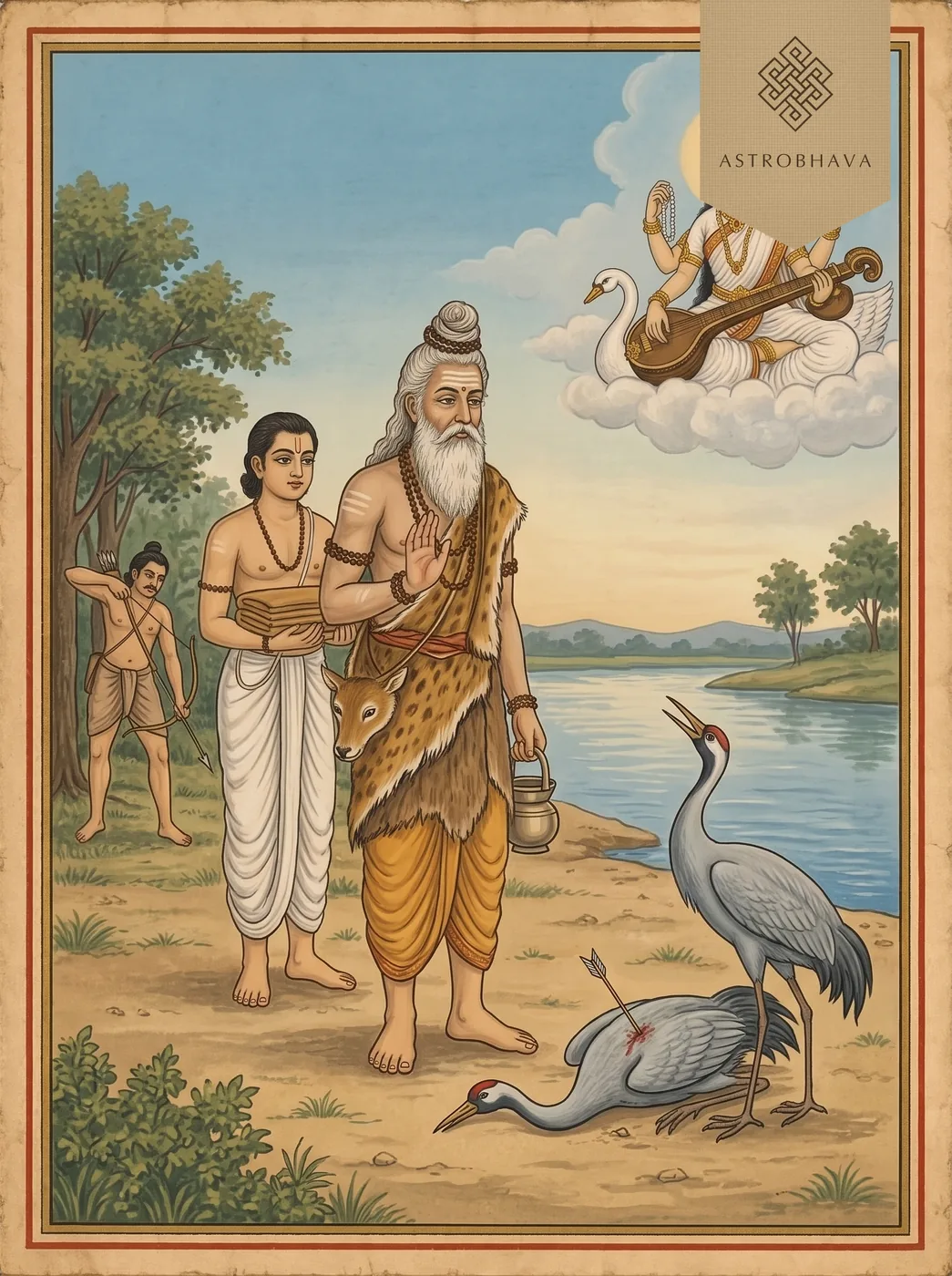
Nothing is recorded of Ramsagar beyond his name, which he sets into the second doha, the last chaupai and the closing doha, and the hymn offers no scene of its own composition. Its centre of gravity is a roll call of poets in Chaupais 6 to 10, each of whom, it says, had no support but her grace. The first is Valmiki. In the second sarga of the Bala Kanda, a verse of grief breaks from him unbidden when he sees a hunter kill one of a pair of cranes, and he is troubled that such measured speech came out of him. Brahma then appears and tells him that this speech, the word used is sarasvati, came forth by Brahma's own will, and bids him tell the whole story of Rama. The chalisa reads that moment as Saraswati's gift, and adds that Valmiki earned the title adi kavi, the first poet. Kalidasa follows. Popular legend makes him an unlettered young man married to a learned princess, Vidyottama, who was ashamed of his ignorance; he turned to the goddess in despair, and the poet of Shakuntala emerged. Most tellings name Kali as the goddess who blessed him, which the chalisa does not contradict, since its middle verses treat Saraswati as the one Devi. Tulsidas and Surdas close the list, the two great Hindi poets of Rama and Krishna.
The mantra, in six scripts
- जनक
- janaka — father
- जननि
- janani — mother
- पद्मरज
- padmaraja — dust of the lotus feet
- निज
- nija — my own
- मस्तक
- mastaka — head
- पर
- para — upon
- धारि
- dhāri — placing
- बन्दौं
- bandauṃ — I bow to
- मातु
- mātu — Mother
- सरस्वती
- sarasvatī — Saraswati
- बुद्धि
- buddhi — intellect
- बल
- bala — strength
- दे
- de — giving
- दातारि
- dātāri — giver
Saraswati Chalisa lyrics in full
Two opening dohas, 39 chaupais and two closing dohas, in the wording that carries the poet Ramsagar's name.
All 43 verses, in Hindi, Tamil, Telugu, Kannada, Malayalam and English, each with its meaning. Choose a script:
Download the Saraswati Chalisa PDFAll 43 verses with their meanings, in Hindi. Free to print and keep.
जनक जननि पद्मरज, निज मस्तक पर धारि ।
बन्दौं मातु सरस्वती, बुद्धि बल दे दातारि ॥
ஜநக ஜநநி பத்மரஜ, நிஜ மஸ்தக பர தாரி ।
பந்தௌம் மாது ஸரஸ்வதீ, புத்தி பல தே தாதாரி ॥
జనక జనని పద్మరజ, నిజ మస్తక పర ధారి ।
బన్దౌం మాతు సరస్వతీ, బుద్ధి బల దే దాతారి ॥
ಜನಕ ಜನನಿ ಪದ್ಮರಜ, ನಿಜ ಮಸ್ತಕ ಪರ ಧಾರಿ ।
ಬನ್ದೌಂ ಮಾತು ಸರಸ್ವತೀ, ಬುದ್ಧಿ ಬಲ ದೇ ದಾತಾರಿ ॥
ജനക ജനനി പദ്മരജ, നിജ മസ്തക പര ധാരി ।
ബന്ദൌം മാതു സരസ്വതീ, ബുദ്ധി ബല ദേ ദാതാരി ॥
janaka janani padmaraja, nija mastaka para dhāri |
bandauṃ mātu sarasvatī, buddhi bala de dātāri ||
Placing on my head the dust of the lotus feet of my father and mother, I bow to Mother Saraswati, the giver of intellect and strength.
पूर्ण जगत में व्याप्त तव, महिमा अमित अनंतु ।
रामसागर के पाप को, मातु तुही अब हन्तु ॥
பூர்ண ஜகத மேம் வ்யாப்த தவ, மஹிமா அமித அநம்து ।
ராமஸாகர கே பாப கோ, மாது துஹீ அப ஹந்து ॥
పూర్ణ జగత మేం వ్యాప్త తవ, మహిమా అమిత అనంతు ।
రామసాగర కే పాప కో, మాతు తుహీ అబ హన్తు ॥
ಪೂರ್ಣ ಜಗತ ಮೇಂ ವ್ಯಾಪ್ತ ತವ, ಮಹಿಮಾ ಅಮಿತ ಅನಂತು ।
ರಾಮಸಾಗರ ಕೇ ಪಾಪ ಕೋ, ಮಾತು ತುಹೀ ಅಬ ಹನ್ತು ॥
പൂര്ണ ജഗത മേം വ്യാപ്ത തവ, മഹിമാ അമിത അനംതു ।
രാമസാഗര കേ പാപ കോ, മാതു തുഹീ അബ ഹന്തു ॥
pūrṇa jagata meṃ vyāpta tava, mahimā amita anaṃtu |
rāmasāgara ke pāpa ko, mātu tuhī aba hantu ||
Your glory fills the whole world, measureless and without end. Mother, you alone now destroy the sins of Ramsagar (the poet).
जय श्रीसकल बुद्धि बलरासी ।
जय सर्वज्ञ अमर अविनाशी ॥
ஜய ஶ்ரீஸகல புத்தி பலராஸீ ।
ஜய ஸர்வஜ்ஞ அமர அவிநாஶீ ॥
జయ శ్రీసకల బుద్ధి బలరాసీ ।
జయ సర్వజ్ఞ అమర అవినాశీ ॥
ಜಯ ಶ್ರೀಸಕಲ ಬುದ್ಧಿ ಬಲರಾಸೀ ।
ಜಯ ಸರ್ವಜ್ಞ ಅಮರ ಅವಿನಾಶೀ ॥
ജയ ശ്രീസകല ബുദ്ധി ബലരാസീ ।
ജയ സര്വജ്ഞ അമര അവിനാശീ ॥
jaya śrīsakala buddhi balarāsī |
jaya sarvajña amara avināśī ||
Victory to you, treasury of all intellect and strength; victory to the all-knowing, deathless, imperishable one.
जय जय जय वीणाकर धारी ।
करती सदा सुहंस सवारी ॥
ஜய ஜய ஜய வீணாகர தாரீ ।
கரதீ ஸதா ஸுஹம்ஸ ஸவாரீ ॥
జయ జయ జయ వీణాకర ధారీ ।
కరతీ సదా సుహంస సవారీ ॥
ಜಯ ಜಯ ಜಯ ವೀಣಾಕರ ಧಾರೀ ।
ಕರತೀ ಸದಾ ಸುಹಂಸ ಸವಾರೀ ॥
ജയ ജയ ജയ വീണാകര ധാരീ ।
കരതീ സദാ സുഹംസ സവാരീ ॥
jaya jaya jaya vīṇākara dhārī |
karatī sadā suhaṃsa savārī ||
Victory, victory, victory to her who holds the vina in her hand, who always rides the beautiful swan.
रूप चतुर्भुज धारी माता ।
सकल विश्व अन्दर विख्याता ॥
ரூப சதுர்புஜ தாரீ மாதா ।
ஸகல விஶ்வ அந்தர விக்யாதா ॥
రూప చతుర్భుజ ధారీ మాతా ।
సకల విశ్వ అన్దర విఖ్యాతా ॥
ರೂಪ ಚತುರ್ಭುಜ ಧಾರೀ ಮಾತಾ ।
ಸಕಲ ವಿಶ್ವ ಅನ್ದರ ವಿಖ್ಯಾತಾ ॥
രൂപ ചതുര്ഭുജ ധാരീ മാതാ ।
സകല വിശ്വ അന്ദര വിഖ്യാതാ ॥
rūpa caturbhuja dhārī mātā |
sakala viśva andara vikhyātā ||
Mother, you bear a four-armed form and are renowned throughout the whole universe.
जग में पाप बुद्धि जब होती ।
तबही धर्म की फीकी ज्योति ॥
ஜக மேம் பாப புத்தி ஜப ஹோதீ ।
தபஹீ தர்ம கீ பீகீ ஜ்யோதி ॥
జగ మేం పాప బుద్ధి జబ హోతీ ।
తబహీ ధర్మ కీ ఫీకీ జ్యోతి ॥
ಜಗ ಮೇಂ ಪಾಪ ಬುದ್ಧಿ ಜಬ ಹೋತೀ ।
ತಬಹೀ ಧರ್ಮ ಕೀ ಫೀಕೀ ಜ್ಯೋತಿ ॥
ജഗ മേം പാപ ബുദ്ധി ജബ ഹോതീ ।
തബഹീ ധര്മ കീ ഫീകീ ജ്യോതി ॥
jaga meṃ pāpa buddhi jaba hotī |
tabahī dharma kī phīkī jyoti ||
Whenever sinful thinking arises in the world, the light of dharma grows dim.
तबहि मातु का निज अवतारा ।
पाप हीन करती महि तारा ॥
தபஹி மாது கா நிஜ அவதாரா ।
பாப ஹீந கரதீ மஹி தாரா ॥
తబహి మాతు కా నిజ అవతారా ।
పాప హీన కరతీ మహి తారా ॥
ತಬಹಿ ಮಾತು ಕಾ ನಿಜ ಅವತಾರಾ ।
ಪಾಪ ಹೀನ ಕರತೀ ಮಹಿ ತಾರಾ ॥
തബഹി മാതു കാ നിജ അവതാരാ ।
പാപ ഹീന കരതീ മഹി താരാ ॥
tabahi mātu kā nija avatārā |
pāpa hīna karatī mahi tārā ||
Then the Mother takes form herself, frees the earth of sin and carries it across.
बाल्मीकिजी जो थे ज्ञानी ।
तव प्रसाद महिमा जन जानी ॥
பால்மீகிஜீ ஜோ தே ஜ்ஞாநீ ।
தவ ப்ரஸாத மஹிமா ஜந ஜாநீ ॥
బాల్మీకిజీ జో థే జ్ఞానీ ।
తవ ప్రసాద మహిమా జన జానీ ॥
ಬಾಲ್ಮೀಕಿಜೀ ಜೋ ಥೇ ಜ್ಞಾನೀ ।
ತವ ಪ್ರಸಾದ ಮಹಿಮಾ ಜನ ಜಾನೀ ॥
ബാല്മീകിജീ ജോ ഥേ ജ്ഞാനീ ।
തവ പ്രസാദ മഹിമാ ജന ജാനീ ॥
bālmīkijī jo the jñānī |
tava prasāda mahimā jana jānī ||
Valmiki, who was wise, came to know your glory through your grace.
रामायण जो रचे बनाई ।
आदि कवि पदवी को पाई ॥
ராமாயண ஜோ ரசே பநாஈ ।
ஆதி கவி பதவீ கோ பாஈ ॥
రామాయణ జో రచే బనాఈ ।
ఆది కవి పదవీ కో పాఈ ॥
ರಾಮಾಯಣ ಜೋ ರಚೇ ಬನಾಈ ।
ಆದಿ ಕವಿ ಪದವೀ ಕೋ ಪಾಈ ॥
രാമായണ ജോ രചേ ബനാഈ ।
ആദി കവി പദവീ കോ പാഈ ॥
rāmāyaṇa jo race banāī |
ādi kavi padavī ko pāī ||
He who composed the Ramayana gained the title of the first poet.
कालिदास जो भये विख्याता ।
तेरी कृपा दृष्टि से माता ॥
காலிதாஸ ஜோ பயே விக்யாதா ।
தேரீ க்ருபா த்ருஷ்டி ஸே மாதா ॥
కాలిదాస జో భయే విఖ్యాతా ।
తేరీ కృపా దృష్టి సే మాతా ॥
ಕಾಲಿದಾಸ ಜೋ ಭಯೇ ವಿಖ್ಯಾತಾ ।
ತೇರೀ ಕೃಪಾ ದೃಷ್ಟಿ ಸೇ ಮಾತಾ ॥
കാലിദാസ ജോ ഭയേ വിഖ്യാതാ ।
തേരീ കൃപാ ദൃഷ്ടി സേ മാതാ ॥
kālidāsa jo bhaye vikhyātā |
terī kṛpā dṛṣṭi se mātā ||
Kalidasa, who became famous, did so through your kind glance, Mother.
तुलसी सूर आदि विद्वाना ।
भये और जो ज्ञानी नाना ॥
துலஸீ ஸூர ஆதி வித்வாநா ।
பயே ஔர ஜோ ஜ்ஞாநீ நாநா ॥
తులసీ సూర ఆది విద్వానా ।
భయే ఔర జో జ్ఞానీ నానా ॥
ತುಲಸೀ ಸೂರ ಆದಿ ವಿದ್ವಾನಾ ।
ಭಯೇ ಔರ ಜೋ ಜ್ಞಾನೀ ನಾನಾ ॥
തുലസീ സൂര ആദി വിദ്വാനാ ।
ഭയേ ഔര ജോ ജ്ഞാനീ നാനാ ॥
tulasī sūra ādi vidvānā |
bhaye aura jo jñānī nānā ||
Tulsi, Sur and other learned poets, and the many others who became wise -
तिन्ह न और रहेउ अवलम्बा ।
केवल कृपा आपकी अम्बा ॥
திந்ஹ ந ஔர ரஹேஉ அவலம்பா ।
கேவல க்ருபா ஆபகீ அம்பா ॥
తిన్హ న ఔర రహేఉ అవలమ్బా ।
కేవల కృపా ఆపకీ అమ్బా ॥
ತಿನ್ಹ ನ ಔರ ರಹೇಉ ಅವಲಮ್ಬಾ ।
ಕೇವಲ ಕೃಪಾ ಆಪಕೀ ಅಮ್ಬಾ ॥
തിന്ഹ ന ഔര രഹേഉ അവലമ്ബാ ।
കേവല കൃപാ ആപകീ അമ്ബാ ॥
tinha na aura raheu avalambā |
kevala kṛpā āpakī ambā ||
- they had no other support; only your grace, Mother.
करहु कृपा सोई मातु भवानी ।
दुखित दीन निज दासहि जानी ॥
கரஹு க்ருபா ஸோஈ மாது பவாநீ ।
துகித தீந நிஜ தாஸஹி ஜாநீ ॥
కరహు కృపా సోఈ మాతు భవానీ ।
దుఖిత దీన నిజ దాసహి జానీ ॥
ಕರಹು ಕೃಪಾ ಸೋಈ ಮಾತು ಭವಾನೀ ।
ದುಖಿತ ದೀನ ನಿಜ ದಾಸಹಿ ಜಾನೀ ॥
കരഹു കൃപാ സോഈ മാതു ഭവാനീ ।
ദുഖിത ദീന നിജ ദാസഹി ജാനീ ॥
karahu kṛpā soī mātu bhavānī |
dukhita dīna nija dāsahi jānī ||
Mother Bhavani, show me that same grace, knowing me as your own suffering and humble servant.
पुत्र करई अपराध बहूता ।
तेहि न धरइ चित सुन्दर माता ॥
புத்ர கரஈ அபராத பஹூதா ।
தேஹி ந தரஇ சித ஸுந்தர மாதா ॥
పుత్ర కరఈ అపరాధ బహూతా ।
తేహి న ధరఇ చిత సున్దర మాతా ॥
ಪುತ್ರ ಕರಈ ಅಪರಾಧ ಬಹೂತಾ ।
ತೇಹಿ ನ ಧರಇ ಚಿತ ಸುನ್ದರ ಮಾತಾ ॥
പുത്ര കരഈ അപരാധ ബഹൂതാ ।
തേഹി ന ധരഇ ചിത സുന്ദര മാതാ ॥
putra karaī aparādha bahūtā |
tehi na dharai cita sundara mātā ||
A son commits many faults, but a good mother does not keep them in her mind.
राखु लाज जननि अब मेरी ।
विनय करुँ भाँति बहुतेरी ॥
ராகு லாஜ ஜநநி அப மேரீ ।
விநய கரும் பாம்தி பஹுதேரீ ॥
రాఖు లాజ జనని అబ మేరీ ।
వినయ కరుఁ భాఁతి బహుతేరీ ॥
ರಾಖು ಲಾಜ ಜನನಿ ಅಬ ಮೇರೀ ।
ವಿನಯ ಕರುಁ ಭಾಁತಿ ಬಹುತೇರೀ ॥
രാഖു ലാജ ജനനി അബ മേരീ ।
വിനയ കരുഁ ഭാഁതി ബഹുതേരീ ॥
rākhu lāja janani aba merī |
vinaya karuṃ bhāṃti bahuterī ||
Mother, protect my honour now; I entreat you in many ways.
मैं अनाथ तेरी अवलंबा ।
कृपा करऊ जय जय जगदंबा ॥
மைம் அநாத தேரீ அவலம்பா ।
க்ருபா கரஊ ஜய ஜய ஜகதம்பா ॥
మైం అనాథ తేరీ అవలంబా ।
కృపా కరఊ జయ జయ జగదంబా ॥
ಮೈಂ ಅನಾಥ ತೇರೀ ಅವಲಂಬಾ ।
ಕೃಪಾ ಕರಊ ಜಯ ಜಯ ಜಗದಂಬಾ ॥
മൈം അനാഥ തേരീ അവലംബാ ।
കൃപാ കരഊ ജയ ജയ ജഗദംബാ ॥
maiṃ anātha terī avalaṃbā |
kṛpā karaū jaya jaya jagadaṃbā ||
I am without a protector and you are my support; show mercy, victory, victory to the Mother of the world.
मधु कैटभ जो अति बलवाना ।
बाहुयुद्ध विष्णु से ठाना ॥
மது கைடப ஜோ அதி பலவாநா ।
பாஹுயுத்த விஷ்ணு ஸே டாநா ॥
మధు కైటభ జో అతి బలవానా ।
బాహుయుద్ధ విష్ణు సే ఠానా ॥
ಮಧು ಕೈಟಭ ಜೋ ಅತಿ ಬಲವಾನಾ ।
ಬಾಹುಯುದ್ಧ ವಿಷ್ಣು ಸೇ ಠಾನಾ ॥
മധു കൈടഭ ജോ അതി ബലവാനാ ।
ബാഹുയുദ്ധ വിഷ്ണു സേ ഠാനാ ॥
madhu kaiṭabha jo ati balavānā |
bāhuyuddha viṣṇu se ṭhānā ||
Madhu and Kaitabha, who were very mighty, took up hand-to-hand combat with Vishnu.
समर हजार पांच में घोरा ।
फिर भी मुख उनसे नहीं मोरा ॥
ஸமர ஹஜார பாம்ச மேம் கோரா ।
பிர பீ முக உநஸே நஹீம் மோரா ॥
సమర హజార పాంచ మేం ఘోరా ।
ఫిర భీ ముఖ ఉనసే నహీం మోరా ॥
ಸಮರ ಹಜಾರ ಪಾಂಚ ಮೇಂ ಘೋರಾ ।
ಫಿರ ಭೀ ಮುಖ ಉನಸೇ ನಹೀಂ ಮೋರಾ ॥
സമര ഹജാര പാംച മേം ഘോരാ ।
ഫിര ഭീ മുഖ ഉനസേ നഹീം മോരാ ॥
samara hajāra pāṃca meṃ ghorā |
phira bhī mukha unase nahīṃ morā ||
Through a terrible battle of five thousand years, still they did not turn their faces away.
मातु सहाय कीन्ह तेहि काला ।
बुद्धि विपरीत भई खलहाला ॥
மாது ஸஹாய கீந்ஹ தேஹி காலா ।
புத்தி விபரீத பஈ கலஹாலா ॥
మాతు సహాయ కీన్హ తేహి కాలా ।
బుద్ధి విపరీత భఈ ఖలహాలా ॥
ಮಾತು ಸಹಾಯ ಕೀನ್ಹ ತೇಹಿ ಕಾಲಾ ।
ಬುದ್ಧಿ ವಿಪರೀತ ಭಈ ಖಲಹಾಲಾ ॥
മാതു സഹായ കീന്ഹ തേഹി കാലാ ।
ബുദ്ധി വിപരീത ഭഈ ഖലഹാലാ ॥
mātu sahāya kīnha tehi kālā |
buddhi viparīta bhaī khalahālā ||
Mother, you gave help at that time, and the minds of the wicked pair were turned against themselves.
तेहि ते मृत्यु भई खल केरी ।
पुरवहु मातु मनोरथ मेरी ॥
தேஹி தே ம்ருத்யு பஈ கல கேரீ ।
புரவஹு மாது மநோரத மேரீ ॥
తేహి తే మృత్యు భఈ ఖల కేరీ ।
పురవహు మాతు మనోరథ మేరీ ॥
ತೇಹಿ ತೇ ಮೃತ್ಯು ಭಈ ಖಲ ಕೇರೀ ।
ಪುರವಹು ಮಾತು ಮನೋರಥ ಮೇರೀ ॥
തേഹി തേ മൃത്യു ഭഈ ഖല കേരീ ।
പുരവഹു മാതു മനോരഥ മേരീ ॥
tehi te mṛtyu bhaī khala kerī |
puravahu mātu manoratha merī ||
From that came the death of the wicked ones. Mother, fulfil my wishes too.
चण्ड मुण्ड जो थे विख्याता ।
छण महु संहारेउ तेहि माता ॥
சண்ட முண்ட ஜோ தே விக்யாதா ।
சண மஹு ஸம்ஹாரேஉ தேஹி மாதா ॥
చణ్డ ముణ్డ జో థే విఖ్యాతా ।
ఛణ మహు సంహారేఉ తేహి మాతా ॥
ಚಣ್ಡ ಮುಣ್ಡ ಜೋ ಥೇ ವಿಖ್ಯಾತಾ ।
ಛಣ ಮಹು ಸಂಹಾರೇಉ ತೇಹಿ ಮಾತಾ ॥
ചണ്ഡ മുണ്ഡ ജോ ഥേ വിഖ്യാതാ ।
ഛണ മഹു സംഹാരേഉ തേഹി മാതാ ॥
caṇḍa muṇḍa jo the vikhyātā |
chaṇa mahu saṃhāreu tehi mātā ||
Chanda and Munda, who were renowned, you destroyed in a moment, Mother.
रक्तबीज से समरथ पापी ।
सुरमुनि हृदय धरा सब काँपी ॥
ரக்தபீஜ ஸே ஸமரத பாபீ ।
ஸுரமுநி ஹ்ருதய தரா ஸப காம்பீ ॥
రక్తబీజ సే సమరథ పాపీ ।
సురముని హృదయ ధరా సబ కాఁపీ ॥
ರಕ್ತಬೀಜ ಸೇ ಸಮರಥ ಪಾಪೀ ।
ಸುರಮುನಿ ಹೃದಯ ಧರಾ ಸಬ ಕಾಁಪೀ ॥
രക്തബീജ സേ സമരഥ പാപീ ।
സുരമുനി ഹൃദയ ധരാ സബ കാഁപീ ॥
raktabīja se samaratha pāpī |
suramuni hṛdaya dharā saba kāṃpī ||
Before a mighty sinner like Raktabija the gods, the sages and the whole earth trembled.
काटेउ सिर जिम कदली खम्बा ।
बार बार बिनऊँ जगदंबा ॥
காடேஉ ஸிர ஜிம கதலீ கம்பா ।
பார பார பிநஊம் ஜகதம்பா ॥
కాటేఉ సిర జిమ కదలీ ఖమ్బా ।
బార బార బినఊఁ జగదంబా ॥
ಕಾಟೇಉ ಸಿರ ಜಿಮ ಕದಲೀ ಖಮ್ಬಾ ।
ಬಾರ ಬಾರ ಬಿನಊಁ ಜಗದಂಬಾ ॥
കാടേഉ സിര ജിമ കദലീ ഖമ്ബാ ।
ബാര ബാര ബിനഊഁ ജഗദംബാ ॥
kāṭeu sira jima kadalī khambā |
bāra bāra binaūṃ jagadaṃbā ||
You cut off his head like a banana stem. Again and again I pray to you, Mother of the world.
जगप्रसिद्ध जो शुंभ निशुंभा ।
छण में वधे ताहि तू अम्बा ॥
ஜகப்ரஸித்த ஜோ ஶும்ப நிஶும்பா ।
சண மேம் வதே தாஹி தூ அம்பா ॥
జగప్రసిద్ధ జో శుంభ నిశుంభా ।
ఛణ మేం వధే తాహి తూ అమ్బా ॥
ಜಗಪ್ರಸಿದ್ಧ ಜೋ ಶುಂಭ ನಿಶುಂಭಾ ।
ಛಣ ಮೇಂ ವಧೇ ತಾಹಿ ತೂ ಅಮ್ಬಾ ॥
ജഗപ്രസിദ്ധ ജോ ശുംഭ നിശുംഭാ ।
ഛണ മേം വധേ താഹി തൂ അമ്ബാ ॥
jagaprasiddha jo śuṃbha niśuṃbhā |
chaṇa meṃ vadhe tāhi tū ambā ||
The world-famous Shumbha and Nishumbha - you slew them in a moment, Mother.
भरत-मातु बुद्धि फेरेऊ जाई ।
रामचन्द्र बनवास कराई ॥
பரத-மாது புத்தி பேரேஊ ஜாஈ ।
ராமசந்த்ர பநவாஸ கராஈ ॥
భరత-మాతు బుద్ధి ఫేరేఊ జాఈ ।
రామచన్ద్ర బనవాస కరాఈ ॥
ಭರತ-ಮಾತು ಬುದ್ಧಿ ಫೇರೇಊ ಜಾಈ ।
ರಾಮಚನ್ದ್ರ ಬನವಾಸ ಕರಾಈ ॥
ഭരത-മാതു ബുദ്ധി ഫേരേഊ ജാഈ ।
രാമചന്ദ്ര ബനവാസ കരാഈ ॥
bharata-mātu buddhi phereū jāī |
rāmacandra banavāsa karāī ||
You went and turned the mind of Bharata's mother, and so brought about Ramachandra's exile to the forest.
एहिविधि रावन वध तू कीन्हा ।
सुर नर मुनि सबको सुख दीन्हा ॥
ஏஹிவிதி ராவந வத தூ கீந்ஹா ।
ஸுர நர முநி ஸபகோ ஸுக தீந்ஹா ॥
ఏహివిధి రావన వధ తూ కీన్హా ।
సుర నర ముని సబకో సుఖ దీన్హా ॥
ಏಹಿವಿಧಿ ರಾವನ ವಧ ತೂ ಕೀನ್ಹಾ ।
ಸುರ ನರ ಮುನಿ ಸಬಕೋ ಸುಖ ದೀನ್ಹಾ ॥
ഏഹിവിധി രാവന വധ തൂ കീന്ഹാ ।
സുര നര മുനി സബകോ സുഖ ദീന്ഹാ ॥
ehividhi rāvana vadha tū kīnhā |
sura nara muni sabako sukha dīnhā ||
In this way you brought about the slaying of Ravana and gave happiness to gods, men and sages alike.
को समरथ तव यश गुन गाना ।
निगम अनादि अनंत बखाना ॥
கோ ஸமரத தவ யஶ குந காநா ।
நிகம அநாதி அநம்த பகாநா ॥
కో సమరథ తవ యశ గున గానా ।
నిగమ అనాది అనంత బఖానా ॥
ಕೋ ಸಮರಥ ತವ ಯಶ ಗುನ ಗಾನಾ ।
ನಿಗಮ ಅನಾದಿ ಅನಂತ ಬಖಾನಾ ॥
കോ സമരഥ തവ യശ ഗുന ഗാനാ ।
നിഗമ അനാദി അനംത ബഖാനാ ॥
ko samaratha tava yaśa guna gānā |
nigama anādi anaṃta bakhānā ||
Who is able to sing your fame and virtues? The Vedas describe you as without beginning and without end.
विष्णु रुद्र अज सकहिं न मारी ।
जिनकी हो तुम रक्षाकारी ॥
விஷ்ணு ருத்ர அஜ ஸகஹிம் ந மாரீ ।
ஜிநகீ ஹோ தும ரக்ஷாகாரீ ॥
విష్ణు రుద్ర అజ సకహిం న మారీ ।
జినకీ హో తుమ రక్షాకారీ ॥
ವಿಷ್ಣು ರುದ್ರ ಅಜ ಸಕಹಿಂ ನ ಮಾರೀ ।
ಜಿನಕೀ ಹೋ ತುಮ ರಕ್ಷಾಕಾರೀ ॥
വിഷ്ണു രുദ്ര അജ സകഹിം ന മാരീ ।
ജിനകീ ഹോ തുമ രക്ഷാകാരീ ॥
viṣṇu rudra aja sakahiṃ na mārī |
jinakī ho tuma rakṣākārī ||
Those whom you protect cannot be slain even by Vishnu, Rudra or Brahma.
रक्त दन्तिका और शताक्षी ।
नाम अपार है दानव भक्षी ॥
ரக்த தந்திகா ஔர ஶதாக்ஷீ ।
நாம அபார ஹை தாநவ பக்ஷீ ॥
రక్త దన్తికా ఔర శతాక్షీ ।
నామ అపార హై దానవ భక్షీ ॥
ರಕ್ತ ದನ್ತಿಕಾ ಔರ ಶತಾಕ್ಷೀ ।
ನಾಮ ಅಪಾರ ಹೈ ದಾನವ ಭಕ್ಷೀ ॥
രക്ത ദന്തികാ ഔര ശതാക്ഷീ ।
നാമ അപാര ഹൈ ദാനവ ഭക്ഷീ ॥
rakta dantikā aura śatākṣī |
nāma apāra hai dānava bhakṣī ||
Raktadantika and Shatakshi - your names are countless, O devourer of demons.
दुर्गम काज धरा पर कीन्हा ।
दुर्गा नाम सकल जग लीन्हा ॥
துர்கம காஜ தரா பர கீந்ஹா ।
துர்கா நாம ஸகல ஜக லீந்ஹா ॥
దుర్గమ కాజ ధరా పర కీన్హా ।
దుర్గా నామ సకల జగ లీన్హా ॥
ದುರ್ಗಮ ಕಾಜ ಧರಾ ಪರ ಕೀನ್ಹಾ ।
ದುರ್ಗಾ ನಾಮ ಸಕಲ ಜಗ ಲೀನ್ಹಾ ॥
ദുര്ഗമ കാജ ധരാ പര കീന്ഹാ ।
ദുര്ഗാ നാമ സകല ജഗ ലീന്ഹാ ॥
durgama kāja dharā para kīnhā |
durgā nāma sakala jaga līnhā ||
You did a hard deed on earth, and so the whole world took up your name Durga.
दुर्ग आदि हरनी तू माता ।
कृपा करहु जब जब सुखदाता ॥
துர்க ஆதி ஹரநீ தூ மாதா ।
க்ருபா கரஹு ஜப ஜப ஸுகதாதா ॥
దుర్గ ఆది హరనీ తూ మాతా ।
కృపా కరహు జబ జబ సుఖదాతా ॥
ದುರ್ಗ ಆದಿ ಹರನೀ ತೂ ಮಾತಾ ।
ಕೃಪಾ ಕರಹು ಜಬ ಜಬ ಸುಖದಾತಾ ॥
ദുര്ഗ ആദി ഹരനീ തൂ മാതാ ।
കൃപാ കരഹു ജബ ജബ സുഖദാതാ ॥
durga ādi haranī tū mātā |
kṛpā karahu jaba jaba sukhadātā ||
Mother, you remove hardship and every other trouble; giver of happiness, show your grace each time we call.
नृप कोपित को मारन चाहै ।
कानन में घेरे मृग नाहै ॥
ந்ருப கோபித கோ மாரந சாஹை ।
காநந மேம் கேரே ம்ருக நாஹை ॥
నృప కోపిత కో మారన చాహై ।
కానన మేం ఘేరే మృగ నాహై ॥
ನೃಪ ಕೋಪಿತ ಕೋ ಮಾರನ ಚಾಹೈ ।
ಕಾನನ ಮೇಂ ಘೇರೇ ಮೃಗ ನಾಹೈ ॥
നൃപ കോപിത കോ മാരന ചാഹൈ ।
കാനന മേം ഘേരേ മൃഗ നാഹൈ ॥
nṛpa kopita ko mārana cāhai |
kānana meṃ ghere mṛga nāhai ||
If an angry king seeks to kill someone, or lions surround him in the forest,
सागर मध्य पोत के भंजे ।
अति तूफान नहिं कोऊ संगे ॥
ஸாகர மத்ய போத கே பம்ஜே ।
அதி தூபாந நஹிம் கோஊ ஸம்கே ॥
సాగర మధ్య పోత కే భంజే ।
అతి తూఫాన నహిం కోఊ సంగే ॥
ಸಾಗರ ಮಧ್ಯ ಪೋತ ಕೇ ಭಂಜೇ ।
ಅತಿ ತೂಫಾನ ನಹಿಂ ಕೋಊ ಸಂಗೇ ॥
സാഗര മധ്യ പോത കേ ഭംജേ ।
അതി തൂഫാന നഹിം കോഊ സംഗേ ॥
sāgara madhya pota ke bhaṃje |
ati tūphāna nahiṃ koū saṃge ||
if his ship breaks up in mid-ocean in a great storm with no one beside him,
भूत प्रेत बाधा या दुःख में ।
हो दरिद्र अथवा संकट में ॥
பூத ப்ரேத பாதா யா துஃக மேம் ।
ஹோ தரித்ர அதவா ஸம்கட மேம் ॥
భూత ప్రేత బాధా యా దుఃఖ మేం ।
హో దరిద్ర అథవా సంకట మేం ॥
ಭೂತ ಪ್ರೇತ ಬಾಧಾ ಯಾ ದುಃಖ ಮೇಂ ।
ಹೋ ದರಿದ್ರ ಅಥವಾ ಸಂಕಟ ಮೇಂ ॥
ഭൂത പ്രേത ബാധാ യാ ദുഃഖ മേം ।
ഹോ ദരിദ്ര അഥവാ സംകട മേം ॥
bhūta preta bādhā yā duḥkha meṃ |
ho daridra athavā saṃkaṭa meṃ ||
if he is troubled by ghosts and spirits or by sorrow, or is in poverty or in danger -
नाम जपे मंगल सब होई ।
संशय इसमें करइ न कोई ॥
நாம ஜபே மம்கல ஸப ஹோஈ ।
ஸம்ஶய இஸமேம் கரஇ ந கோஈ ॥
నామ జపే మంగల సబ హోఈ ।
సంశయ ఇసమేం కరఇ న కోఈ ॥
ನಾಮ ಜಪೇ ಮಂಗಲ ಸಬ ಹೋಈ ।
ಸಂಶಯ ಇಸಮೇಂ ಕರಇ ನ ಕೋಈ ॥
നാമ ജപേ മംഗല സബ ഹോഈ ।
സംശയ ഇസമേം കരഇ ന കോഈ ॥
nāma jape maṃgala saba hoī |
saṃśaya isameṃ karai na koī ||
The verse says that by repeating her name all becomes well; let no one doubt this.
पुत्रहीन जो आतुर भाई ।
सबै छाँडि पूजें एहि माई ॥
புத்ரஹீந ஜோ ஆதுர பாஈ ।
ஸபை சாம்டி பூஜேம் ஏஹி மாஈ ॥
పుత్రహీన జో ఆతుర భాఈ ।
సబై ఛాఁడి పూజేం ఏహి మాఈ ॥
ಪುತ್ರಹೀನ ಜೋ ಆತುರ ಭಾಈ ।
ಸಬೈ ಛಾಁಡಿ ಪೂಜೇಂ ಏಹಿ ಮಾಈ ॥
പുത്രഹീന ജോ ആതുര ഭാഈ ।
സബൈ ഛാഁഡി പൂജേം ഏഹി മാഈ ॥
putrahīna jo ātura bhāī |
sabai chāṃḍi pūjeṃ ehi māī ||
Brother, one who longs for a son and has none should set all else aside and worship this Mother.
करै पाठ नित यह चालीसा ।
होय पुत्र सुन्दर गुण ईशा ॥
கரை பாட நித யஹ சாலீஸா ।
ஹோய புத்ர ஸுந்தர குண ஈஶா ॥
కరై పాఠ నిత యహ చాలీసా ।
హోయ పుత్ర సున్దర గుణ ఈశా ॥
ಕರೈ ಪಾಠ ನಿತ ಯಹ ಚಾಲೀಸಾ ।
ಹೋಯ ಪುತ್ರ ಸುನ್ದರ ಗುಣ ಈಶಾ ॥
കരൈ പാഠ നിത യഹ ചാലീസാ ।
ഹോയ പുത്ര സുന്ദര ഗുണ ഈശാ ॥
karai pāṭha nita yaha cālīsā |
hoya putra sundara guṇa īśā ||
The verse says that whoever recites this Chalisa daily will have a handsome son, rich in virtues.
धूपादिक नैवेद्य चढ़ावै ।
संकट रहित अवश्य हो जावै ॥
தூபாதிக நைவேத்ய சடாவை ।
ஸம்கட ரஹித அவஶ்ய ஹோ ஜாவை ॥
ధూపాదిక నైవేద్య చఢావై ।
సంకట రహిత అవశ్య హో జావై ॥
ಧೂಪಾದಿಕ ನೈವೇದ್ಯ ಚಢಾವೈ ।
ಸಂಕಟ ರಹಿತ ಅವಶ್ಯ ಹೋ ಜಾವೈ ॥
ധൂപാദിക നൈവേദ്യ ചഢാവൈ ।
സംകട രഹിത അവശ്യ ഹോ ജാവൈ ॥
dhūpādika naivedya caṛhāvai |
saṃkaṭa rahita avaśya ho jāvai ||
The verse says that one who offers incense, food and the like will surely be freed from distress.
भक्ति मातु की करैं हमेशा ।
निकट न आवै ताहि कलेशा ॥
பக்தி மாது கீ கரைம் ஹமேஶா ।
நிகட ந ஆவை தாஹி கலேஶா ॥
భక్తి మాతు కీ కరైం హమేశా ।
నికట న ఆవై తాహి కలేశా ॥
ಭಕ್ತಿ ಮಾತು ಕೀ ಕರೈಂ ಹಮೇಶಾ ।
ನಿಕಟ ನ ಆವೈ ತಾಹಿ ಕಲೇಶಾ ॥
ഭക്തി മാതു കീ കരൈം ഹമേശാ ।
നികട ന ആവൈ താഹി കലേശാ ॥
bhakti mātu kī karaiṃ hameśā |
nikaṭa na āvai tāhi kaleśā ||
The verse says that suffering does not come near those who always worship the Mother with devotion.
बंदी पाठ करे सत बारा ।
बंदी पाश दूर हो सारा ॥
பம்தீ பாட கரே ஸத பாரா ।
பம்தீ பாஶ தூர ஹோ ஸாரா ॥
బందీ పాఠ కరే సత బారా ।
బందీ పాశ దూర హో సారా ॥
ಬಂದೀ ಪಾಠ ಕರೇ ಸತ ಬಾರಾ ।
ಬಂದೀ ಪಾಶ ದೂರ ಹೋ ಸಾರಾ ॥
ബംദീ പാഠ കരേ സത ബാരാ ।
ബംദീ പാശ ദൂര ഹോ സാരാ ॥
baṃdī pāṭha kare sata bārā |
baṃdī pāśa dūra ho sārā ||
The verse says that if a prisoner recites it a hundred times, all the bonds of his captivity are removed.
रामसागर बाधि हेतु भवानी ।
कीजै कृपा दास निज जानी ॥
ராமஸாகர பாதி ஹேது பவாநீ ।
கீஜை க்ருபா தாஸ நிஜ ஜாநீ ॥
రామసాగర బాధి హేతు భవానీ ।
కీజై కృపా దాస నిజ జానీ ॥
ರಾಮಸಾಗರ ಬಾಧಿ ಹೇತು ಭವಾನೀ ।
ಕೀಜೈ ಕೃಪಾ ದಾಸ ನಿಜ ಜಾನೀ ॥
രാമസാഗര ബാധി ഹേതു ഭവാനീ ।
കീജൈ കൃപാ ദാസ നിജ ജാനീ ॥
rāmasāgara bādhi hetu bhavānī |
kījai kṛpā dāsa nija jānī ||
Bhavani, Ramsagar has composed this for you; show him grace, knowing him as your own servant.
मातु सूर्य कान्ति तव, अन्धकार मम रूप ।
डूबन से रक्षा करहु, परूँ न मैं भव कूप ॥
மாது ஸூர்ய காந்தி தவ, அந்தகார மம ரூப ।
டூபந ஸே ரக்ஷா கரஹு, பரூம் ந மைம் பவ கூப ॥
మాతు సూర్య కాన్తి తవ, అన్ధకార మమ రూప ।
డూబన సే రక్షా కరహు, పరూఁ న మైం భవ కూప ॥
ಮಾತು ಸೂರ್ಯ ಕಾನ್ತಿ ತವ, ಅನ್ಧಕಾರ ಮಮ ರೂಪ ।
ಡೂಬನ ಸೇ ರಕ್ಷಾ ಕರಹು, ಪರೂಁ ನ ಮೈಂ ಭವ ಕೂಪ ॥
മാതു സൂര്യ കാന്തി തവ, അന്ധകാര മമ രൂപ ।
ഡൂബന സേ രക്ഷാ കരഹു, പരൂഁ ന മൈം ഭവ കൂപ ॥
mātu sūrya kānti tava, andhakāra mama rūpa |
ḍūbana se rakṣā karahu, parūṃ na maiṃ bhava kūpa ||
Mother, your radiance is like the sun, and my form is darkness. Save me from drowning, so that I do not fall into the well of worldly existence.
बल बुद्धि विद्या देहु मोहि, सुनहु सरस्वती मातु ।
राम सागर अधम को आश्रय तू ही ददातु ॥
பல புத்தி வித்யா தேஹு மோஹி, ஸுநஹு ஸரஸ்வதீ மாது ।
ராம ஸாகர அதம கோ ஆஶ்ரய தூ ஹீ ததாது ॥
బల బుద్ధి విద్యా దేహు మోహి, సునహు సరస్వతీ మాతు ।
రామ సాగర అధమ కో ఆశ్రయ తూ హీ దదాతు ॥
ಬಲ ಬುದ್ಧಿ ವಿದ್ಯಾ ದೇಹು ಮೋಹಿ, ಸುನಹು ಸರಸ್ವತೀ ಮಾತು ।
ರಾಮ ಸಾಗರ ಅಧಮ ಕೋ ಆಶ್ರಯ ತೂ ಹೀ ದದಾತು ॥
ബല ബുദ്ധി വിദ്യാ ദേഹു മോഹി, സുനഹു സരസ്വതീ മാതു ।
രാമ സാഗര അധമ കോ ആശ്രയ തൂ ഹീ ദദാതു ॥
bala buddhi vidyā dehu mohi, sunahu sarasvatī mātu |
rāma sāgara adhama ko āśraya tū hī dadātu ||
Give me strength, intellect and learning; hear me, Mother Saraswati. May you alone give refuge to the lowly Ramsagar.
The syllable people get wrong
In Chaupai 27, śatākṣī, the hundred-eyed goddess, joins śata, 'hundred', and akṣi, 'eye', so the vowel at the join is long and the kṣ is a single 'ksh' cluster: say 'sha-TAAK-shee', not 'SHA-ta-kshi'.
When the Saraswati Chalisa is chanted
Weekday. Friday
Festival. Vasant Panchami
Questions
Have your chart read before you decide
Chanting is yours to do, and free. But which deity your situation calls for — and whether a mantra alone is the right response — depends on your chart. Sometimes it is; sometimes it is not.
- Over 30 years in the Guru–Sishya Parampara, from the age of five
- He reads every chart himself — 60 minutes, one to one, never delegated
- Charts are read only between sunrise and sunset, following tradition