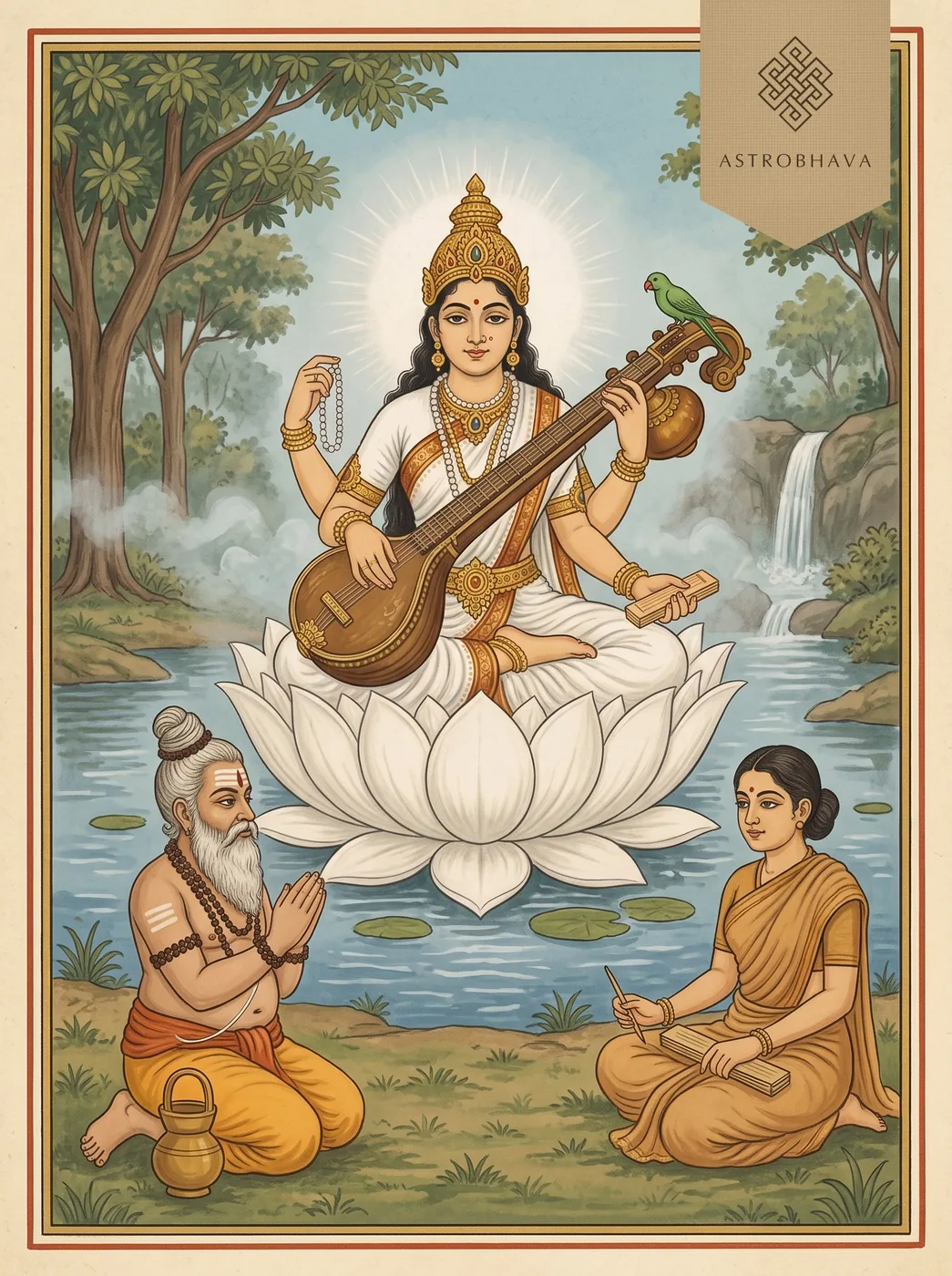
Saraswati Stotram
या कुन्देन्दु तुषारहारधवला या शुभ्रवस्त्रावृता या वीणावरदण्डमण्डितकरा या श्वेतपद्मासना । या ब्रह्माच्युतशङ्करप्रभृतिभिर्देवैः सदा पूजिता सा मां पातु सरस्वती भगवती निःशेषजाड्यापहा ॥Also known as Ya Kundendu
In Devanagari, Tamil, Telugu, Kannada, Malayalam and English — with the meaning of every word, and the one syllable most people pronounce wrongly.
What the Saraswati Stotram is
The Saraswati Stotram attributed to the sage Agastya, often called the Agastya Saraswati Stotram, is the hymn that begins 'ya kundendu tushara hara dhavala'. It runs to twenty-one Sanskrit verses, and only the last of them names its author, calling the whole 'the Saraswati hymn spoken by the sage Agastya'. The first four verses are ornate word-pictures in long classical metres: Saraswati white as jasmine and frost, holding the vina, a crystal rosary, a lotus, a parrot and a book, and asked to dance in the speaker's words. Verse 5 is the short prayer said before a student begins to study. Verses 6 to 19 change pace into a litany of two-line salutations, each closing on namo namah, which widen her from the goddess of learning into the whole Goddess: Uma, three-eyed, crowned with the crescent moon, Mahakali and Mahalakshmi. Two closing verses of phala shruti report what reading it is said to bring.
A Vedic seer's hymn to the goddess of speech
No Purana sets this hymn inside a scene, and the Sanskrit gives no occasion for it. What ties it to Agastya is its last verse, which calls the text agastya-muni-vacakam, 'spoken by the sage Agastya'. Most printed collections head it the same way. Other accounts treat the famous first verse as an anonymous dhyana verse of unknown date; no manuscript evidence settles the question. The attribution places it among a family of hymns credited to the same seer. In the Rig Veda, Agastya is the poet of a long run of hymns in the first book, one of them a dialogue with his wife Lopamudra about the pull between austerity and household life. Tradition also credits him with the Aditya Hridayam, which the Ramayana has him teach Rama before the final battle, and Tamil tradition remembers him as the sage who gave that language its first grammar, the Agattiyam, after the Skanda Purana sends him south from the Himalaya to balance the earth. A sage remembered for founding a grammar is a fitting voice for verse 3, which asks Saraswati to dance in the speaker's speech. The hymn names no shrine. In Tamil Nadu, where Agastya's memory runs deepest, Saraswati's own temple stands at Koothanur in Tiruvarur district, one of the very few where she is the presiding deity, and its great day is Vijayadashami.
The mantra, in six scripts
- या
- yā — she who
- कुन्देन्दु
- kundendu — jasmine and moon
- तुषारहारधवला
- tuṣārahāradhavalā — white as frost and a pearl string
- या
- yā — she who
- शुभ्रवस्त्रावृता
- śubhravastrāvṛtā — wrapped in spotless white
- या
- yā — she who
- वीणावरदण्डमण्डितकरा
- vīṇāvaradaṇḍamaṇḍitakarā — hands graced by the vina's fine neck
- या
- yā — she who
- श्वेतपद्मासना
- śvetapadmāsanā — throned on a white lotus
- या
- yā — she who
- ब्रह्माच्युतशङ्करप्रभृतिभिर्देवैः
- brahmācyutaśaṅkaraprabhṛtibhirdevaiḥ — by the gods led by Brahma, Vishnu and Shiva
- सदा
- sadā — at all times
- पूजिता
- pūjitā — honoured in worship
- सा
- sā — may she
- मां
- māṃ — me
- पातु
- pātu — guard
- सरस्वती
- sarasvatī — Saraswati
- भगवती
- bhagavatī — the revered goddess
- निःशेषजाड्यापहा
- niḥśeṣajāḍyāpahā — who clears away every trace of dullness
Saraswati Stotram lyrics in full
All twenty-one verses: nineteen of praise, followed by the two verses of phala shruti that name the sage Agastya.
All 21 verses, in Sanskrit, Tamil, Telugu, Kannada, Malayalam and English, each with its meaning. Choose a script:
Download the Saraswati Stotram PDFAll 21 verses with their meanings, in Sanskrit. Free to print and keep.
या कुन्देन्दु तुषारहारधवला या शुभ्रवस्त्रावृता या वीणावरदण्डमण्डितकरा या श्वेतपद्मासना ।
या ब्रह्माच्युतशङ्करप्रभृतिभिर्देवैः सदा पूजिता सा मां पातु सरस्वती भगवती निःशेषजाड्यापहा ॥
யா குந்தேந்து துஷாரஹாரதவலா யா ஶுப்ரவஸ்த்ராவ்ருதா யா வீணாவரதண்டமண்டிதகரா யா ஶ்வேதபத்மாஸநா ।
யா ப்ரஹ்மாச்யுதஶங்கரப்ரப்ருதிபிர்தேவைஃ ஸதா பூஜிதா ஸா மாம் பாது ஸரஸ்வதீ பகவதீ நிஃஶேஷஜாட்யாபஹா ॥
యా కున్దేన్దు తుషారహారధవలా యా శుభ్రవస్త్రావృతా యా వీణావరదణ్డమణ్డితకరా యా శ్వేతపద్మాసనా ।
యా బ్రహ్మాచ్యుతశఙ్కరప్రభృతిభిర్దేవైః సదా పూజితా సా మాం పాతు సరస్వతీ భగవతీ నిఃశేషజాడ్యాపహా ॥
ಯಾ ಕುನ್ದೇನ್ದು ತುಷಾರಹಾರಧವಲಾ ಯಾ ಶುಭ್ರವಸ್ತ್ರಾವೃತಾ ಯಾ ವೀಣಾವರದಣ್ಡಮಣ್ಡಿತಕರಾ ಯಾ ಶ್ವೇತಪದ್ಮಾಸನಾ ।
ಯಾ ಬ್ರಹ್ಮಾಚ್ಯುತಶಙ್ಕರಪ್ರಭೃತಿಭಿರ್ದೇವೈಃ ಸದಾ ಪೂಜಿತಾ ಸಾ ಮಾಂ ಪಾತು ಸರಸ್ವತೀ ಭಗವತೀ ನಿಃಶೇಷಜಾಡ್ಯಾಪಹಾ ॥
യാ കുന്ദേന്ദു തുഷാരഹാരധവലാ യാ ശുഭ്രവസ്ത്രാവൃതാ യാ വീണാവരദണ്ഡമണ്ഡിതകരാ യാ ശ്വേതപദ്മാസനാ ।
യാ ബ്രഹ്മാച്യുതശങ്കരപ്രഭൃതിഭിര്ദേവൈഃ സദാ പൂജിതാ സാ മാം പാതു സരസ്വതീ ഭഗവതീ നിഃശേഷജാഡ്യാപഹാ ॥
yā kundendu tuṣārahāradhavalā yā śubhravastrāvṛtā yā vīṇāvaradaṇḍamaṇḍitakarā yā śvetapadmāsanā |
yā brahmācyutaśaṅkaraprabhṛtibhirdevaiḥ sadā pūjitā sā māṃ pātu sarasvatī bhagavatī niḥśeṣajāḍyāpahā ||
She who is white as the jasmine, the moon, frost and a pearl necklace, who is clothed in pure white, whose hands are graced by the excellent staff of the vina, and who is seated on a white lotus; she who is ever worshipped by Brahma, Vishnu, Shiva and the other gods - may that divine Saraswati, who removes all dullness of mind, protect me.
दोर्भिर्युक्ता चतुर्भिः स्फटिकमणिनिभैरक्षमालान्दधाना हस्तेनैकेन पद्मं सितमपि च शुकं पुस्तकं चापरेण ।
भासा कुन्देन्दुशङ्खस्फटिकमणिनिभा भासमानाऽसमाना सा मे वाग्देवतेयं निवसतु वदने सर्वदा सुप्रसन्ना ॥
தோர்பிர்யுக்தா சதுர்பிஃ ஸ்படிகமணிநிபைரக்ஷமாலாந்ததாநா ஹஸ்தேநைகேந பத்மம் ஸிதமபி ச ஶுகம் புஸ்தகம் சாபரேண ।
பாஸா குந்தேந்துஶங்கஸ்படிகமணிநிபா பாஸமாநாஸமாநா ஸா மே வாக்தேவதேயம் நிவஸது வதநே ஸர்வதா ஸுப்ரஸந்நா ॥
దోర్భిర్యుక్తా చతుర్భిః స్ఫటికమణినిభైరక్షమాలాన్దధానా హస్తేనైకేన పద్మం సితమపి చ శుకం పుస్తకం చాపరేణ ।
భాసా కున్దేన్దుశఙ్ఖస్ఫటికమణినిభా భాసమానాఽసమానా సా మే వాగ్దేవతేయం నివసతు వదనే సర్వదా సుప్రసన్నా ॥
ದೋರ್ಭಿರ್ಯುಕ್ತಾ ಚತುರ್ಭಿಃ ಸ್ಫಟಿಕಮಣಿನಿಭೈರಕ್ಷಮಾಲಾನ್ದಧಾನಾ ಹಸ್ತೇನೈಕೇನ ಪದ್ಮಂ ಸಿತಮಪಿ ಚ ಶುಕಂ ಪುಸ್ತಕಂ ಚಾಪರೇಣ ।
ಭಾಸಾ ಕುನ್ದೇನ್ದುಶಙ್ಖಸ್ಫಟಿಕಮಣಿನಿಭಾ ಭಾಸಮಾನಾಽಸಮಾನಾ ಸಾ ಮೇ ವಾಗ್ದೇವತೇಯಂ ನಿವಸತು ವದನೇ ಸರ್ವದಾ ಸುಪ್ರಸನ್ನಾ ॥
ദോര്ഭിര്യുക്താ ചതുര്ഭിഃ സ്ഫടികമണിനിഭൈരക്ഷമാലാന്ദധാനാ ഹസ്തേനൈകേന പദ്മം സിതമപി ച ശുകം പുസ്തകം ചാപരേണ ।
ഭാസാ കുന്ദേന്ദുശങ്ഖസ്ഫടികമണിനിഭാ ഭാസമാനാഽസമാനാ സാ മേ വാഗ്ദേവതേയം നിവസതു വദനേ സര്വദാ സുപ്രസന്നാ ॥
dorbhiryuktā caturbhiḥ sphaṭikamaṇinibhairakṣamālāndadhānā hastenaikena padmaṃ sitamapi ca śukaṃ pustakaṃ cāpareṇa |
bhāsā kundenduśaṅkhasphaṭikamaṇinibhā bhāsamānā'samānā sā me vāgdevateyaṃ nivasatu vadane sarvadā suprasannā ||
She has four arms: with them she holds a rosary of beads like crystal, in one hand a white lotus and a parrot, and in another a book. Shining with a radiance like jasmine, the moon, the conch and crystal, she is beyond compare. May this goddess of speech dwell always in my mouth, ever gracious.
सुरासुरैः सेवितपादपङ्कजा करे विराजत् कमनीयपुस्तका ।
विरिञ्चिपत्नी कमलासनस्थिता सरस्वती नृत्यतु वाचि मे सदा ॥
ஸுராஸுரைஃ ஸேவிதபாதபங்கஜா கரே விராஜத் கமநீயபுஸ்தகா ।
விரிஞ்சிபத்நீ கமலாஸநஸ்திதா ஸரஸ்வதீ ந்ருத்யது வாசி மே ஸதா ॥
సురాసురైః సేవితపాదపఙ్కజా కరే విరాజత్ కమనీయపుస్తకా ।
విరిఞ్చిపత్నీ కమలాసనస్థితా సరస్వతీ నృత్యతు వాచి మే సదా ॥
ಸುರಾಸುರೈಃ ಸೇವಿತಪಾದಪಙ್ಕಜಾ ಕರೇ ವಿರಾಜತ್ ಕಮನೀಯಪುಸ್ತಕಾ ।
ವಿರಿಞ್ಚಿಪತ್ನೀ ಕಮಲಾಸನಸ್ಥಿತಾ ಸರಸ್ವತೀ ನೃತ್ಯತು ವಾಚಿ ಮೇ ಸದಾ ॥
സുരാസുരൈഃ സേവിതപാദപങ്കജാ കരേ വിരാജത് കമനീയപുസ്തകാ ।
വിരിഞ്ചിപത്നീ കമലാസനസ്ഥിതാ സരസ്വതീ നൃത്യതു വാചി മേ സദാ ॥
surāsuraiḥ sevitapādapaṅkajā kare virājat kamanīyapustakā |
viriñcipatnī kamalāsanasthitā sarasvatī nṛtyatu vāci me sadā ||
Her lotus feet are served by gods and demons alike, and a lovely book shines in her hand. May Saraswati, the consort of Brahma, seated on a lotus, dance always in my speech.
सरस्वती सरसिजकेसरप्रभा तपस्विनी सितकमलासनप्रिया ।
घनस्तनी कमलविलोललोचना मनस्विनी भवतु वरप्रसादिनी ॥
ஸரஸ்வதீ ஸரஸிஜகேஸரப்ரபா தபஸ்விநீ ஸிதகமலாஸநப்ரியா ।
கநஸ்தநீ கமலவிலோலலோசநா மநஸ்விநீ பவது வரப்ரஸாதிநீ ॥
సరస్వతీ సరసిజకేసరప్రభా తపస్వినీ సితకమలాసనప్రియా ।
ఘనస్తనీ కమలవిలోలలోచనా మనస్వినీ భవతు వరప్రసాదినీ ॥
ಸರಸ್ವತೀ ಸರಸಿಜಕೇಸರಪ್ರಭಾ ತಪಸ್ವಿನೀ ಸಿತಕಮಲಾಸನಪ್ರಿಯಾ ।
ಘನಸ್ತನೀ ಕಮಲವಿಲೋಲಲೋಚನಾ ಮನಸ್ವಿನೀ ಭವತು ವರಪ್ರಸಾದಿನೀ ॥
സരസ്വതീ സരസിജകേസരപ്രഭാ തപസ്വിനീ സിതകമലാസനപ്രിയാ ।
ഘനസ്തനീ കമലവിലോലലോചനാ മനസ്വിനീ ഭവതു വരപ്രസാദിനീ ॥
sarasvatī sarasijakesaraprabhā tapasvinī sitakamalāsanapriyā |
ghanastanī kamalavilolalocanā manasvinī bhavatu varaprasādinī ||
Saraswati glows like the filaments of a lotus; she is devoted to austerity and loves her seat on the white lotus. May she, full-bosomed, with restless lotus eyes and a noble mind, become the giver of boons to me.
सरस्वति नमस्तुभ्यं वरदे कामरूपिणि ।
विद्यारम्भं करिष्यामि सिद्धिर्भवतु मे सदा ॥
ஸரஸ்வதி நமஸ்துப்யம் வரதே காமரூபிணி ।
வித்யாரம்பம் கரிஷ்யாமி ஸித்திர்பவது மே ஸதா ॥
సరస్వతి నమస్తుభ్యం వరదే కామరూపిణి ।
విద్యారమ్భం కరిష్యామి సిద్ధిర్భవతు మే సదా ॥
ಸರಸ್ವತಿ ನಮಸ್ತುಭ್ಯಂ ವರದೇ ಕಾಮರೂಪಿಣಿ ।
ವಿದ್ಯಾರಮ್ಭಂ ಕರಿಷ್ಯಾಮಿ ಸಿದ್ಧಿರ್ಭವತು ಮೇ ಸದಾ ॥
സരസ്വതി നമസ്തുഭ്യം വരദേ കാമരൂപിണി ।
വിദ്യാരമ്ഭം കരിഷ്യാമി സിദ്ധിര്ഭവതു മേ സദാ ॥
sarasvati namastubhyaṃ varade kāmarūpiṇi |
vidyārambhaṃ kariṣyāmi siddhirbhavatu me sadā ||
Salutations to you, Saraswati, giver of boons, who takes any form at will. I am about to begin my studies; may there always be success for me.
सरस्वति नमस्तुभ्यं सर्वदेवि नमो नमः ।
शान्तरूपे शशिधरे सर्वयोगे नमो नमः ॥
ஸரஸ்வதி நமஸ்துப்யம் ஸர்வதேவி நமோ நமஃ ।
ஶாந்தரூபே ஶஶிதரே ஸர்வயோகே நமோ நமஃ ॥
సరస్వతి నమస్తుభ్యం సర్వదేవి నమో నమః ।
శాన్తరూపే శశిధరే సర్వయోగే నమో నమః ॥
ಸರಸ್ವತಿ ನಮಸ್ತುಭ್ಯಂ ಸರ್ವದೇವಿ ನಮೋ ನಮಃ ।
ಶಾನ್ತರೂಪೇ ಶಶಿಧರೇ ಸರ್ವಯೋಗೇ ನಮೋ ನಮಃ ॥
സരസ്വതി നമസ്തുഭ്യം സര്വദേവി നമോ നമഃ ।
ശാന്തരൂപേ ശശിധരേ സര്വയോഗേ നമോ നമഃ ॥
sarasvati namastubhyaṃ sarvadevi namo namaḥ |
śāntarūpe śaśidhare sarvayoge namo namaḥ ||
Salutations to you, Saraswati; salutations again and again to the goddess of all. Salutations again and again to her whose form is peace, who bears the moon, and who is present in every discipline of yoga.
नित्यानन्दे निराधारे निष्कलायै नमो नमः ।
विद्याधरे विशालाक्षि शुद्धज्ञाने नमो नमः ॥
நித்யாநந்தே நிராதாரே நிஷ்கலாயை நமோ நமஃ ।
வித்யாதரே விஶாலாக்ஷி ஶுத்தஜ்ஞாநே நமோ நமஃ ॥
నిత్యానన్దే నిరాధారే నిష్కలాయై నమో నమః ।
విద్యాధరే విశాలాక్షి శుద్ధజ్ఞానే నమో నమః ॥
ನಿತ್ಯಾನನ್ದೇ ನಿರಾಧಾರೇ ನಿಷ್ಕಲಾಯೈ ನಮೋ ನಮಃ ।
ವಿದ್ಯಾಧರೇ ವಿಶಾಲಾಕ್ಷಿ ಶುದ್ಧಜ್ಞಾನೇ ನಮೋ ನಮಃ ॥
നിത്യാനന്ദേ നിരാധാരേ നിഷ്കലായൈ നമോ നമഃ ।
വിദ്യാധരേ വിശാലാക്ഷി ശുദ്ധജ്ഞാനേ നമോ നമഃ ॥
nityānande nirādhāre niṣkalāyai namo namaḥ |
vidyādhare viśālākṣi śuddhajñāne namo namaḥ ||
Salutations again and again to her who is eternal bliss, who rests on no support, and who is without parts. Salutations again and again to the holder of learning, the wide-eyed one, whose knowledge is pure.
शुद्धस्फटिकरूपायै सूक्ष्मरूपे नमो नमः ।
शब्दब्रह्मि चतुर्हस्ते सर्वसिद्ध्यै नमो नमः ॥
ஶுத்தஸ்படிகரூபாயை ஸூக்ஷ்மரூபே நமோ நமஃ ।
ஶப்தப்ரஹ்மி சதுர்ஹஸ்தே ஸர்வஸித்த்யை நமோ நமஃ ॥
శుద్ధస్ఫటికరూపాయై సూక్ష్మరూపే నమో నమః ।
శబ్దబ్రహ్మి చతుర్హస్తే సర్వసిద్ధ్యై నమో నమః ॥
ಶುದ್ಧಸ್ಫಟಿಕರೂಪಾಯೈ ಸೂಕ್ಷ್ಮರೂಪೇ ನಮೋ ನಮಃ ।
ಶಬ್ದಬ್ರಹ್ಮಿ ಚತುರ್ಹಸ್ತೇ ಸರ್ವಸಿದ್ಧ್ಯೈ ನಮೋ ನಮಃ ॥
ശുദ്ധസ്ഫടികരൂപായൈ സൂക്ഷ്മരൂപേ നമോ നമഃ ।
ശബ്ദബ്രഹ്മി ചതുര്ഹസ്തേ സര്വസിദ്ധ്യൈ നമോ നമഃ ॥
śuddhasphaṭikarūpāyai sūkṣmarūpe namo namaḥ |
śabdabrahmi caturhaste sarvasiddhyai namo namaḥ ||
Salutations again and again to her whose form is like pure crystal and who is subtle in form. Salutations again and again to her who is the Absolute as sound, the four-handed one, who is every accomplishment.
मुक्तालङ्कृतसर्वाङ्ग्यै मूलाधारे नमो नमः ।
मूलमन्त्रस्वरूपायै मूलशक्त्यै नमो नमः ॥
முக்தாலங்க்ருதஸர்வாங்க்யை மூலாதாரே நமோ நமஃ ।
மூலமந்த்ரஸ்வரூபாயை மூலஶக்த்யை நமோ நமஃ ॥
ముక్తాలఙ్కృతసర్వాఙ్గ్యై మూలాధారే నమో నమః ।
మూలమన్త్రస్వరూపాయై మూలశక్త్యై నమో నమః ॥
ಮುಕ್ತಾಲಙ್ಕೃತಸರ್ವಾಙ್ಗ್ಯೈ ಮೂಲಾಧಾರೇ ನಮೋ ನಮಃ ।
ಮೂಲಮನ್ತ್ರಸ್ವರೂಪಾಯೈ ಮೂಲಶಕ್ತ್ಯೈ ನಮೋ ನಮಃ ॥
മുക്താലങ്കൃതസര്വാങ്ഗ്യൈ മൂലാധാരേ നമോ നമഃ ।
മൂലമന്ത്രസ്വരൂപായൈ മൂലശക്ത്യൈ നമോ നമഃ ॥
muktālaṅkṛtasarvāṅgyai mūlādhāre namo namaḥ |
mūlamantrasvarūpāyai mūlaśaktyai namo namaḥ ||
Salutations again and again to her whose whole body is adorned with pearls, who is the root support. Salutations again and again to her whose form is the root mantra and who is the root power.
मनोन्मनि महायोगे वागीश्वरि नमो नमः ।
वाग्म्यै वरदहस्तायै वरदायै नमो नमः ॥
மநோந்மநி மஹாயோகே வாகீஶ்வரி நமோ நமஃ ।
வாக்ம்யை வரதஹஸ்தாயை வரதாயை நமோ நமஃ ॥
మనోన్మని మహాయోగే వాగీశ్వరి నమో నమః ।
వాగ్మ్యై వరదహస్తాయై వరదాయై నమో నమః ॥
ಮನೋನ್ಮನಿ ಮಹಾಯೋಗೇ ವಾಗೀಶ್ವರಿ ನಮೋ ನಮಃ ।
ವಾಗ್ಮ್ಯೈ ವರದಹಸ್ತಾಯೈ ವರದಾಯೈ ನಮೋ ನಮಃ ॥
മനോന്മനി മഹായോഗേ വാഗീശ്വരി നമോ നമഃ ।
വാഗ്മ്യൈ വരദഹസ്തായൈ വരദായൈ നമോ നമഃ ॥
manonmani mahāyoge vāgīśvari namo namaḥ |
vāgmyai varadahastāyai varadāyai namo namaḥ ||
Salutations again and again to her who is the state beyond mind, the great yoga, the sovereign of speech. Salutations again and again to the eloquent one, whose hand grants boons, the giver of boons.
वेदायै वेदरूपायै वेदान्तायै नमो नमः ।
गुणदोषविवर्जिन्यै गुणदीप्त्यै नमो नमः ॥
வேதாயை வேதரூபாயை வேதாந்தாயை நமோ நமஃ ।
குணதோஷவிவர்ஜிந்யை குணதீப்த்யை நமோ நமஃ ॥
వేదాయై వేదరూపాయై వేదాన్తాయై నమో నమః ।
గుణదోషవివర్జిన్యై గుణదీప్త్యై నమో నమః ॥
ವೇದಾಯೈ ವೇದರೂಪಾಯೈ ವೇದಾನ್ತಾಯೈ ನಮೋ ನಮಃ ।
ಗುಣದೋಷವಿವರ್ಜಿನ್ಯೈ ಗುಣದೀಪ್ತ್ಯೈ ನಮೋ ನಮಃ ॥
വേദായൈ വേദരൂപായൈ വേദാന്തായൈ നമോ നമഃ ।
ഗുണദോഷവിവര്ജിന്യൈ ഗുണദീപ്ത്യൈ നമോ നമഃ ॥
vedāyai vedarūpāyai vedāntāyai namo namaḥ |
guṇadoṣavivarjinyai guṇadīptyai namo namaḥ ||
Salutations again and again to her who is the Veda, whose form is the Veda, and who is the culmination of the Veda. Salutations again and again to her who is free of qualities and faults, and who shines with every virtue.
सर्वज्ञाने सदानन्दे सर्वरूपे नमो नमः ।
सम्पन्नायै कुमार्यै च सर्वज्ञे ते नमो नमः ॥
ஸர்வஜ்ஞாநே ஸதாநந்தே ஸர்வரூபே நமோ நமஃ ।
ஸம்பந்நாயை குமார்யை ச ஸர்வஜ்ஞே தே நமோ நமஃ ॥
సర్వజ్ఞానే సదానన్దే సర్వరూపే నమో నమః ।
సమ్పన్నాయై కుమార్యై చ సర్వజ్ఞే తే నమో నమః ॥
ಸರ್ವಜ್ಞಾನೇ ಸದಾನನ್ದೇ ಸರ್ವರೂಪೇ ನಮೋ ನಮಃ ।
ಸಮ್ಪನ್ನಾಯೈ ಕುಮಾರ್ಯೈ ಚ ಸರ್ವಜ್ಞೇ ತೇ ನಮೋ ನಮಃ ॥
സര്വജ്ഞാനേ സദാനന്ദേ സര്വരൂപേ നമോ നമഃ ।
സമ്പന്നായൈ കുമാര്യൈ ച സര്വജ്ഞേ തേ നമോ നമഃ ॥
sarvajñāne sadānande sarvarūpe namo namaḥ |
sampannāyai kumāryai ca sarvajñe te namo namaḥ ||
Salutations again and again to her who is all knowledge, ever blissful, and of every form. To you, the perfect one, the maiden, the all-knowing, salutations again and again.
योगानार्य उमादेव्यै योगानन्दे नमो नमः ।
दिव्यज्ञान त्रिनेत्रायै दिव्यमूर्त्यै नमो नमः ॥
யோகாநார்ய உமாதேவ்யை யோகாநந்தே நமோ நமஃ ।
திவ்யஜ்ஞாந த்ரிநேத்ராயை திவ்யமூர்த்யை நமோ நமஃ ॥
యోగానార్య ఉమాదేవ్యై యోగానన్దే నమో నమః ।
దివ్యజ్ఞాన త్రినేత్రాయై దివ్యమూర్త్యై నమో నమః ॥
ಯೋಗಾನಾರ್ಯ ಉಮಾದೇವ್ಯೈ ಯೋಗಾನನ್ದೇ ನಮೋ ನಮಃ ।
ದಿವ್ಯಜ್ಞಾನ ತ್ರಿನೇತ್ರಾಯೈ ದಿವ್ಯಮೂರ್ತ್ಯೈ ನಮೋ ನಮಃ ॥
യോഗാനാര്യ ഉമാദേവ്യൈ യോഗാനന്ദേ നമോ നമഃ ।
ദിവ്യജ്ഞാന ത്രിനേത്രായൈ ദിവ്യമൂര്ത്യൈ നമോ നമഃ ॥
yogānārya umādevyai yogānande namo namaḥ |
divyajñāna trinetrāyai divyamūrtyai namo namaḥ ||
Salutations again and again to the noble lady of yoga, to the goddess Uma, to her who is the bliss of yoga. Salutations again and again to her of divine knowledge, the three-eyed one, whose form is divine.
अर्धचन्द्रजटाधारि चन्द्रबिम्बे नमो नमः ।
चन्द्रादित्यजटाधारि चन्द्रबिम्बे नमो नमः ॥
அர்தசந்த்ரஜடாதாரி சந்த்ரபிம்பே நமோ நமஃ ।
சந்த்ராதித்யஜடாதாரி சந்த்ரபிம்பே நமோ நமஃ ॥
అర్ధచన్ద్రజటాధారి చన్ద్రబిమ్బే నమో నమః ।
చన్ద్రాదిత్యజటాధారి చన్ద్రబిమ్బే నమో నమః ॥
ಅರ್ಧಚನ್ದ್ರಜಟಾಧಾರಿ ಚನ್ದ್ರಬಿಮ್ಬೇ ನಮೋ ನಮಃ ।
ಚನ್ದ್ರಾದಿತ್ಯಜಟಾಧಾರಿ ಚನ್ದ್ರಬಿಮ್ಬೇ ನಮೋ ನಮಃ ॥
അര്ധചന്ദ്രജടാധാരി ചന്ദ്രബിമ്ബേ നമോ നമഃ ।
ചന്ദ്രാദിത്യജടാധാരി ചന്ദ്രബിമ്ബേ നമോ നമഃ ॥
ardhacandrajaṭādhāri candrabimbe namo namaḥ |
candrādityajaṭādhāri candrabimbe namo namaḥ ||
Salutations again and again to her who wears the half-moon in her matted hair, who is like the orb of the moon. Salutations again and again to her who bears the moon and sun in her hair, who is like the orb of the moon.
अणुरूपे महारूपे विश्वरूपे नमो नमः ।
अणिमाद्यष्टसिद्धायै आनन्दायै नमो नमः ॥
அணுரூபே மஹாரூபே விஶ்வரூபே நமோ நமஃ ।
அணிமாத்யஷ்டஸித்தாயை ஆநந்தாயை நமோ நமஃ ॥
అణురూపే మహారూపే విశ్వరూపే నమో నమః ।
అణిమాద్యష్టసిద్ధాయై ఆనన్దాయై నమో నమః ॥
ಅಣುರೂಪೇ ಮಹಾರೂಪೇ ವಿಶ್ವರೂಪೇ ನಮೋ ನಮಃ ।
ಅಣಿಮಾದ್ಯಷ್ಟಸಿದ್ಧಾಯೈ ಆನನ್ದಾಯೈ ನಮೋ ನಮಃ ॥
അണുരൂപേ മഹാരൂപേ വിശ്വരൂപേ നമോ നമഃ ।
അണിമാദ്യഷ്ടസിദ്ധായൈ ആനന്ദായൈ നമോ നമഃ ॥
aṇurūpe mahārūpe viśvarūpe namo namaḥ |
aṇimādyaṣṭasiddhāyai ānandāyai namo namaḥ ||
Salutations again and again to her who is as small as an atom, vast in form, and whose form is the universe. Salutations again and again to her who holds the eight powers beginning with becoming minute, and who is bliss.
ज्ञानविज्ञानरूपायै ज्ञानमूर्ते नमो नमः ।
नानाशास्त्रस्वरूपायै नानारूपे नमो नमः ॥
ஜ்ஞாநவிஜ்ஞாநரூபாயை ஜ்ஞாநமூர்தே நமோ நமஃ ।
நாநாஶாஸ்த்ரஸ்வரூபாயை நாநாரூபே நமோ நமஃ ॥
జ్ఞానవిజ్ఞానరూపాయై జ్ఞానమూర్తే నమో నమః ।
నానాశాస్త్రస్వరూపాయై నానారూపే నమో నమః ॥
ಜ್ಞಾನವಿಜ್ಞಾನರೂಪಾಯೈ ಜ್ಞಾನಮೂರ್ತೇ ನಮೋ ನಮಃ ।
ನಾನಾಶಾಸ್ತ್ರಸ್ವರೂಪಾಯೈ ನಾನಾರೂಪೇ ನಮೋ ನಮಃ ॥
ജ്ഞാനവിജ്ഞാനരൂപായൈ ജ്ഞാനമൂര്തേ നമോ നമഃ ।
നാനാശാസ്ത്രസ്വരൂപായൈ നാനാരൂപേ നമോ നമഃ ॥
jñānavijñānarūpāyai jñānamūrte namo namaḥ |
nānāśāstrasvarūpāyai nānārūpe namo namaḥ ||
Salutations again and again to her whose form is knowledge and realised wisdom, the embodiment of knowledge. Salutations again and again to her whose form is the many sciences and who has many forms.
पद्मदा पद्मवंशा च पद्मरूपे नमो नमः ।
परमेष्ठ्यै परामूर्त्यै नमस्ते पापनाशिनि ॥
பத்மதா பத்மவம்ஶா ச பத்மரூபே நமோ நமஃ ।
பரமேஷ்ட்யை பராமூர்த்யை நமஸ்தே பாபநாஶிநி ॥
పద్మదా పద్మవంశా చ పద్మరూపే నమో నమః ।
పరమేష్ఠ్యై పరామూర్త్యై నమస్తే పాపనాశిని ॥
ಪದ್ಮದಾ ಪದ್ಮವಂಶಾ ಚ ಪದ್ಮರೂಪೇ ನಮೋ ನಮಃ ।
ಪರಮೇಷ್ಠ್ಯೈ ಪರಾಮೂರ್ತ್ಯೈ ನಮಸ್ತೇ ಪಾಪನಾಶಿನಿ ॥
പദ്മദാ പദ്മവംശാ ച പദ്മരൂപേ നമോ നമഃ ।
പരമേഷ്ഠ്യൈ പരാമൂര്ത്യൈ നമസ്തേ പാപനാശിനി ॥
padmadā padmavaṃśā ca padmarūpe namo namaḥ |
parameṣṭhyai parāmūrtyai namaste pāpanāśini ||
Salutations again and again to her who bestows the lotus, who is of the lotus lineage, whose form is the lotus. To the supreme one, of highest form, salutations to you, destroyer of sin.
महादेव्यै महाकाल्यै महालक्ष्म्यै नमो नमः ।
ब्रह्मविष्णुशिवायै च ब्रह्मनार्यै नमो नमः ॥
மஹாதேவ்யை மஹாகால்யை மஹாலக்ஷ்ம்யை நமோ நமஃ ।
ப்ரஹ்மவிஷ்ணுஶிவாயை ச ப்ரஹ்மநார்யை நமோ நமஃ ॥
మహాదేవ్యై మహాకాల్యై మహాలక్ష్మ్యై నమో నమః ।
బ్రహ్మవిష్ణుశివాయై చ బ్రహ్మనార్యై నమో నమః ॥
ಮಹಾದೇವ್ಯೈ ಮಹಾಕಾಲ್ಯೈ ಮಹಾಲಕ್ಷ್ಮ್ಯೈ ನಮೋ ನಮಃ ।
ಬ್ರಹ್ಮವಿಷ್ಣುಶಿವಾಯೈ ಚ ಬ್ರಹ್ಮನಾರ್ಯೈ ನಮೋ ನಮಃ ॥
മഹാദേവ്യൈ മഹാകാല്യൈ മഹാലക്ഷ്മ്യൈ നമോ നമഃ ।
ബ്രഹ്മവിഷ്ണുശിവായൈ ച ബ്രഹ്മനാര്യൈ നമോ നമഃ ॥
mahādevyai mahākālyai mahālakṣmyai namo namaḥ |
brahmaviṣṇuśivāyai ca brahmanāryai namo namaḥ ||
Salutations again and again to the great goddess, to Mahakali and to Mahalakshmi. Salutations again and again to her who is Brahma, Vishnu and Shiva, and who is the consort of Brahma.
कमलाकरपुष्पा च कामरूपे नमो नमः ।
कपालिकर्मदीप्तायै कर्मदायै नमो नमः ॥
கமலாகரபுஷ்பா ச காமரூபே நமோ நமஃ ।
கபாலிகர்மதீப்தாயை கர்மதாயை நமோ நமஃ ॥
కమలాకరపుష్పా చ కామరూపే నమో నమః ।
కపాలికర్మదీప్తాయై కర్మదాయై నమో నమః ॥
ಕಮಲಾಕರಪುಷ್ಪಾ ಚ ಕಾಮರೂಪೇ ನಮೋ ನಮಃ ।
ಕಪಾಲಿಕರ್ಮದೀಪ್ತಾಯೈ ಕರ್ಮದಾಯೈ ನಮೋ ನಮಃ ॥
കമലാകരപുഷ്പാ ച കാമരൂപേ നമോ നമഃ ।
കപാലികര്മദീപ്തായൈ കര്മദായൈ നമോ നമഃ ॥
kamalākarapuṣpā ca kāmarūpe namo namaḥ |
kapālikarmadīptāyai karmadāyai namo namaḥ ||
Salutations again and again to her who is the flower of the lotus pond, who takes any form at will. Salutations again and again to her who shines in the work of Shiva the skull-bearer, and who grants the fruit of action.
सायं प्रातः पठेन्नित्यं षण्मासात् सिद्धिरुच्यते ।
चोरव्याघ्रभयं नास्ति पठतां शृण्वतामपि ॥
ஸாயம் ப்ராதஃ படேந்நித்யம் ஷண்மாஸாத் ஸித்திருச்யதே ।
சோரவ்யாக்ரபயம் நாஸ்தி படதாம் ஶ்ருண்வதாமபி ॥
సాయం ప్రాతః పఠేన్నిత్యం షణ్మాసాత్ సిద్ధిరుచ్యతే ।
చోరవ్యాఘ్రభయం నాస్తి పఠతాం శృణ్వతామపి ॥
ಸಾಯಂ ಪ್ರಾತಃ ಪಠೇನ್ನಿತ್ಯಂ ಷಣ್ಮಾಸಾತ್ ಸಿದ್ಧಿರುಚ್ಯತೇ ।
ಚೋರವ್ಯಾಘ್ರಭಯಂ ನಾಸ್ತಿ ಪಠತಾಂ ಶೃಣ್ವತಾಮಪಿ ॥
സായം പ്രാതഃ പഠേന്നിത്യം ഷണ്മാസാത് സിദ്ധിരുച്യതേ ।
ചോരവ്യാഘ്രഭയം നാസ്തി പഠതാം ശൃണ്വതാമപി ॥
sāyaṃ prātaḥ paṭhennityaṃ ṣaṇmāsāt siddhirucyate |
coravyāghrabhayaṃ nāsti paṭhatāṃ śṛṇvatāmapi ||
One should recite this every day, evening and morning; the verse says success comes within six months. It also says that those who recite it, or even listen to it, have no fear of thieves or tigers.
इत्थं सरस्वतीस्तोत्रमगस्त्यमुनिवाचकम् ।
सर्वसिद्धिकरं नॄणां सर्वपापप्रणाशनम् ॥
இத்தம் ஸரஸ்வதீஸ்தோத்ரமகஸ்த்யமுநிவாசகம் ।
ஸர்வஸித்திகரம் ந்ரூணாம் ஸர்வபாபப்ரணாஶநம் ॥
ఇత్థం సరస్వతీస్తోత్రమగస్త్యమునివాచకమ్ ।
సర్వసిద్ధికరం నౄణాం సర్వపాపప్రణాశనమ్ ॥
ಇತ್ಥಂ ಸರಸ್ವತೀಸ್ತೋತ್ರಮಗಸ್ತ್ಯಮುನಿವಾಚಕಮ್ ।
ಸರ್ವಸಿದ್ಧಿಕರಂ ನೄಣಾಂ ಸರ್ವಪಾಪಪ್ರಣಾಶನಮ್ ॥
ഇത്ഥം സരസ്വതീസ്തോത്രമഗസ്ത്യമുനിവാചകമ് ।
സര്വസിദ്ധികരം നൄണാം സര്വപാപപ്രണാശനമ് ॥
itthaṃ sarasvatīstotramagastyamunivācakam |
sarvasiddhikaraṃ nṝṇāṃ sarvapāpapraṇāśanam ||
Thus is the hymn to Saraswati spoken by the sage Agastya. The verse says it brings every success to people and destroys all sins.
The syllable people get wrong
The last word of verse 1, niḥśeṣajāḍyāpahā, hides jāḍya, 'dullness', spelt with a retroflex ḍ: curl the tongue tip back for it rather than saying a soft English d. Break the compound as niḥ-śeṣa-jāḍya-apahā, so it sounds 'nih-SHAY-sha-JAAD-yaa-pa-haa', keeping every ā long.
When the Saraswati Stotram is chanted
Weekday. Friday
Festival. Vasant Panchami
Questions
Have your chart read before you decide
Chanting is yours to do, and free. But which deity your situation calls for — and whether a mantra alone is the right response — depends on your chart. Sometimes it is; sometimes it is not.
- Over 30 years in the Guru–Sishya Parampara, from the age of five
- He reads every chart himself — 60 minutes, one to one, never delegated
- Charts are read only between sunrise and sunset, following tradition