Shakambhari Mantra
भूयश्च शतवार्षिक्यामनावृष्ट्यामनम्भसि । मुनिभिः संस्तुता भूमौ संभविष्याम्ययोनिजा ॥Also known as Bhuyashcha Shatavarshikyam
In Devanagari, Tamil, Telugu, Kannada, Malayalam and English — with the meaning of every word, and the one syllable most people pronounce wrongly.
 The Chandi Homam, performed for youBook →
What the Shakambhari Mantra is
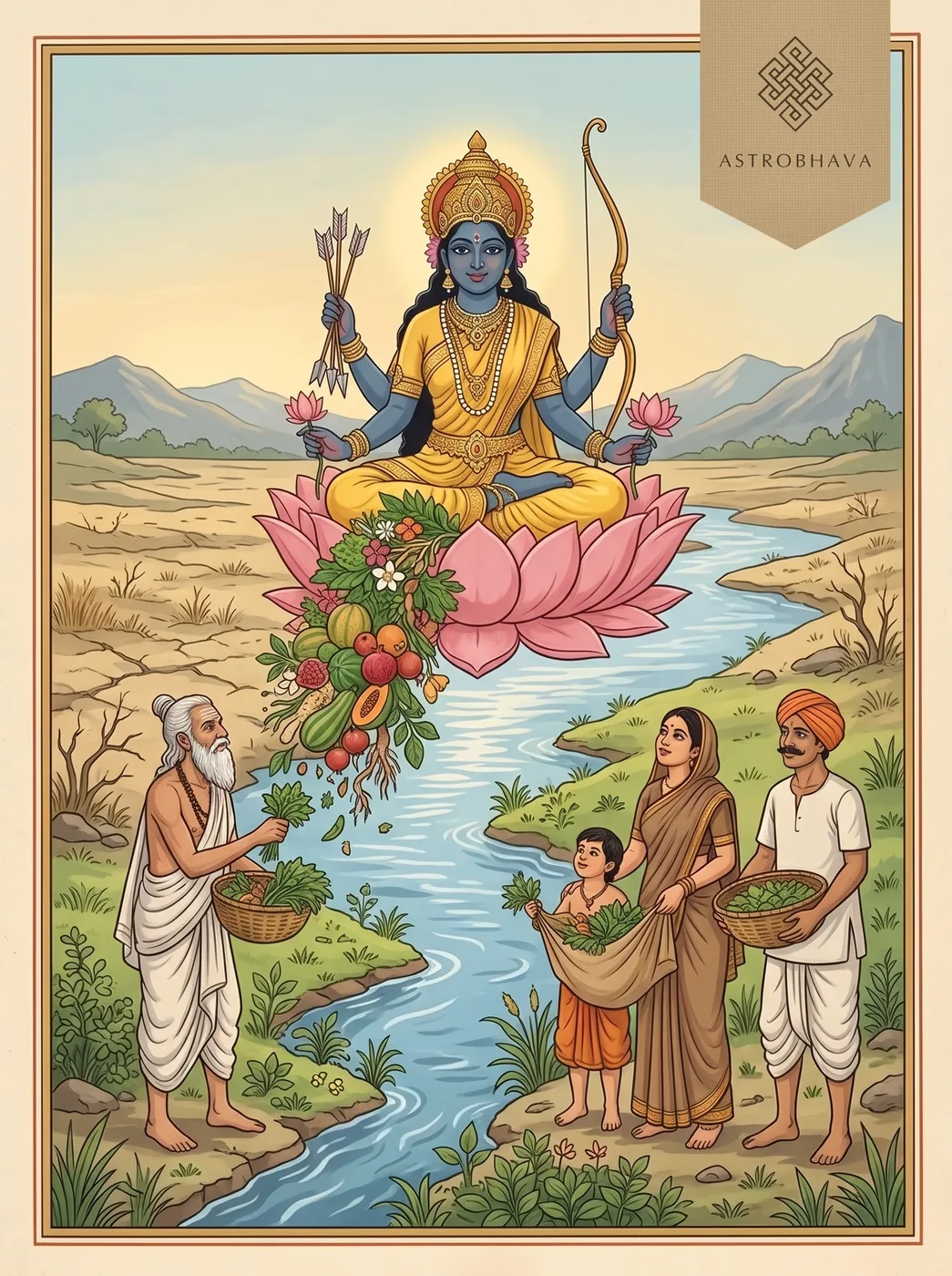
The Shakambhari Mantra printed here is not one short formula but two scriptural passages to Shakambhari Devi, the Goddess who bears the shaka, the greens and vegetables on which life depends. The first is Devi Mahatmya chapter 11, verses 46 to 49, in which the Goddess speaks of a future age of drought: born from no womb, she will gaze on the sages with a hundred eyes and so be called Shatakshi, will nourish the world from her own body and so be called Shakambhari, and will kill the asura Durgama. The second is the Shakambhari section of the Murti Rahasya, one of the three secret appendices read after the Durga Saptashati, where a sage explains her forms to a king. Its five meditation verses show her dark blue, holding a lotus, arrows, a bright bow and a load of flowers, shoots, roots and fruits; the fifth names her Uma, Gauri, Sati, Chandi, Kalika and Parvati. One phala verse ends the passage.
Durgama, the stolen Vedas and nine nights of tears
The Devi Mahatmya gives the prophecy in four lines; the Devi Bhagavata Purana, in the seventh book, chapter 28, tells the event itself. Durgama, a danava of Hiranyaksha's line and the son of Ruru, went to the Himalaya and worshipped Brahma for a thousand years, living on air. As his boon he asked for the Vedas and their mantras, together with strength enough to defeat the gods. Once Brahma granted it, the brahmins forgot the Vedas. Sandhya, sacrifice, shraddha and the daily Homam fell silent, and because no offerings rose, no rain fell for a hundred years. Famine spread across the earth. When the brahmins turned to her in prayer, the Goddess appeared covered with countless eyes and, according to the Purana, wept from them for nine nights, until her tears filled the rivers again. From her hands she gave out vegetables, fruits, flowers and roots, and for that she was called Shakambhari. Durgama then marched against her with a vast army. From her body came Shaktis such as Kalika, Tarini, Bagala, Matangi and Tripura Sundari, who fought for ten days; on the eleventh she brought Durgama down with fifteen arrows. She returned the Vedas to the brahmins, and from the slain Durgama she took the name Durga.
The mantra, in six scripts
- भूयश्च
- bhūyaśca — and again
- शतवार्षिक्यामनावृष्ट्यामनम्भसि
- śatavārṣikyām anāvṛṣṭyām anambhasi — in a hundred-year drought, when there is no water
- मुनिभिः
- munibhiḥ — by the sages
- संस्तुता
- saṃstutā — praised
- भूमौ
- bhūmau — on earth
- संभविष्याम्ययोनिजा
- saṃbhaviṣyāmi ayonijā — I shall appear, born from no womb
Shakambhari Mantra lyrics in full
Four verses of the Goddess's prophecy from Devi Mahatmya chapter 11, followed by the five meditation verses and the phala verse of the Shakambhari section of the Murti Rahasya.
All 10 verses, in Sanskrit, Tamil, Telugu, Kannada, Malayalam and English, each with its meaning. Choose a script:
Download the Shakambhari Mantra PDFAll 10 verses with their meanings, in Sanskrit. Free to print and keep.
भूयश्च शतवार्षिक्यामनावृष्ट्यामनम्भसि ।
मुनिभिः संस्तुता भूमौ संभविष्याम्ययोनिजा ॥
பூயஶ்ச ஶதவார்ஷிக்யாமநாவ்ருஷ்ட்யாமநம்பஸி ।
முநிபிஃ ஸம்ஸ்துதா பூமௌ ஸம்பவிஷ்யாம்யயோநிஜா ॥
భూయశ్చ శతవార్షిక్యామనావృష్ట్యామనమ్భసి ।
మునిభిః సంస్తుతా భూమౌ సంభవిష్యామ్యయోనిజా ॥
ಭೂಯಶ್ಚ ಶತವಾರ್ಷಿಕ್ಯಾಮನಾವೃಷ್ಟ್ಯಾಮನಮ್ಭಸಿ ।
ಮುನಿಭಿಃ ಸಂಸ್ತುತಾ ಭೂಮೌ ಸಂಭವಿಷ್ಯಾಮ್ಯಯೋನಿಜಾ ॥
ഭൂയശ്ച ശതവാര്ഷിക്യാമനാവൃഷ്ട്യാമനമ്ഭസി ।
മുനിഭിഃ സംസ്തുതാ ഭൂമൌ സംഭവിഷ്യാമ്യയോനിജാ ॥
bhūyaśca śatavārṣikyāmanāvṛṣṭyāmanambhasi |
munibhiḥ saṃstutā bhūmau saṃbhaviṣyāmyayonijā ||
The Goddess says: Again, when rain fails for a hundred years and the earth is without water, praised by the sages I shall appear on earth, born from no womb.
ततः शतेन नेत्राणां निरीक्षिष्यामि यन्मुनीन् ।
कीर्तयिष्यन्ति मनुजाः शताक्षीमिति मां ततः ॥
ததஃ ஶதேந நேத்ராணாம் நிரீக்ஷிஷ்யாமி யந்முநீந் ।
கீர்தயிஷ்யந்தி மநுஜாஃ ஶதாக்ஷீமிதி மாம் ததஃ ॥
తతః శతేన నేత్రాణాం నిరీక్షిష్యామి యన్మునీన్ ।
కీర్తయిష్యన్తి మనుజాః శతాక్షీమితి మాం తతః ॥
ತತಃ ಶತೇನ ನೇತ್ರಾಣಾಂ ನಿರೀಕ್ಷಿಷ್ಯಾಮಿ ಯನ್ಮುನೀನ್ ।
ಕೀರ್ತಯಿಷ್ಯನ್ತಿ ಮನುಜಾಃ ಶತಾಕ್ಷೀಮಿತಿ ಮಾಂ ತತಃ ॥
തതഃ ശതേന നേത്രാണാം നിരീക്ഷിഷ്യാമി യന്മുനീന് ।
കീര്തയിഷ്യന്തി മനുജാഃ ശതാക്ഷീമിതി മാം തതഃ ॥
tataḥ śatena netrāṇāṃ nirīkṣiṣyāmi yanmunīn |
kīrtayiṣyanti manujāḥ śatākṣīmiti māṃ tataḥ ||
Because I shall then look upon the sages with a hundred eyes, people will praise me by the name Shatakshi, the hundred-eyed one.
ततोऽहमखिलं लोकमात्मदेहसमुद्भवैः ।
भरिष्यामि सुराः शाकैरावृष्टेः प्राणधारकैः ॥
ததோஹமகிலம் லோகமாத்மதேஹஸமுத்பவைஃ ।
பரிஷ்யாமி ஸுராஃ ஶாகைராவ்ருஷ்டேஃ ப்ராணதாரகைஃ ॥
తతోఽహమఖిలం లోకమాత్మదేహసముద్భవైః ।
భరిష్యామి సురాః శాకైరావృష్టేః ప్రాణధారకైః ॥
ತತೋಽಹಮಖಿಲಂ ಲೋಕಮಾತ್ಮದೇಹಸಮುದ್ಭವೈಃ ।
ಭರಿಷ್ಯಾಮಿ ಸುರಾಃ ಶಾಕೈರಾವೃಷ್ಟೇಃ ಪ್ರಾಣಧಾರಕೈಃ ॥
തതോഽഹമഖിലം ലോകമാത്മദേഹസമുദ്ഭവൈഃ ।
ഭരിഷ്യാമി സുരാഃ ശാകൈരാവൃഷ്ടേഃ പ്രാണധാരകൈഃ ॥
tato'hamakhilaṃ lokamātmadehasamudbhavaiḥ |
bhariṣyāmi surāḥ śākairāvṛṣṭeḥ prāṇadhārakaiḥ ||
Then, O gods, until the rains return, I shall feed the whole world with life-sustaining vegetables grown from my own body.
शाकम्भरीति विख्यातिं तदा यास्याम्यहं भुवि ।
तत्रैव च वधिष्यामि दुर्गमाख्यं महासुरम् ॥
ஶாகம்பரீதி விக்யாதிம் ததா யாஸ்யாம்யஹம் புவி ।
தத்ரைவ ச வதிஷ்யாமி துர்கமாக்யம் மஹாஸுரம் ॥
శాకమ్భరీతి విఖ్యాతిం తదా యాస్యామ్యహం భువి ।
తత్రైవ చ వధిష్యామి దుర్గమాఖ్యం మహాసురమ్ ॥
ಶಾಕಮ್ಭರೀತಿ ವಿಖ್ಯಾತಿಂ ತದಾ ಯಾಸ್ಯಾಮ್ಯಹಂ ಭುವಿ ।
ತತ್ರೈವ ಚ ವಧಿಷ್ಯಾಮಿ ದುರ್ಗಮಾಖ್ಯಂ ಮಹಾಸುರಮ್ ॥
ശാകമ്ഭരീതി വിഖ്യാതിം തദാ യാസ്യാമ്യഹം ഭുവി ।
തത്രൈവ ച വധിഷ്യാമി ദുര്ഗമാഖ്യം മഹാസുരമ് ॥
śākambharīti vikhyātiṃ tadā yāsyāmyahaṃ bhuvi |
tatraiva ca vadhiṣyāmi durgamākhyaṃ mahāsuram ||
Then I shall become renowned on earth as Shakambhari, the bearer of vegetables. In that same age I shall slay the great demon named Durgama.
शाकम्भरी नीलवर्णा नीलोत्पलविलोचना ।
गम्भीरनाभिस्त्रिवलीविभूषिततनूदरी ॥
ஶாகம்பரீ நீலவர்ணா நீலோத்பலவிலோசநா ।
கம்பீரநாபிஸ்த்ரிவலீவிபூஷிததநூதரீ ॥
శాకమ్భరీ నీలవర్ణా నీలోత్పలవిలోచనా ।
గమ్భీరనాభిస్త్రివలీవిభూషితతనూదరీ ॥
ಶಾಕಮ್ಭರೀ ನೀಲವರ್ಣಾ ನೀಲೋತ್ಪಲವಿಲೋಚನಾ ।
ಗಮ್ಭೀರನಾಭಿಸ್ತ್ರಿವಲೀವಿಭೂಷಿತತನೂದರೀ ॥
ശാകമ്ഭരീ നീലവര്ണാ നീലോത്പലവിലോചനാ ।
ഗമ്ഭീരനാഭിസ്ത്രിവലീവിഭൂഷിതതനൂദരീ ॥
śākambharī nīlavarṇā nīlotpalavilocanā |
gambhīranābhistrivalīvibhūṣitatanūdarī ||
Shakambhari is dark blue in colour, with eyes like blue lotuses. Her navel is deep and her slender waist is graced with three folds.
सुकर्कशसमोत्तुङ्गवृत्तपीनघनस्तनी ।
मुष्टिं शिलीमुखापूर्णं कमलं कमलालया ॥
ஸுகர்கஶஸமோத்துங்கவ்ருத்தபீநகநஸ்தநீ ।
முஷ்டிம் ஶிலீமுகாபூர்ணம் கமலம் கமலாலயா ॥
సుకర్కశసమోత్తుఙ్గవృత్తపీనఘనస్తనీ ।
ముష్టిం శిలీముఖాపూర్ణం కమలం కమలాలయా ॥
ಸುಕರ್ಕಶಸಮೋತ್ತುಙ್ಗವೃತ್ತಪೀನಘನಸ್ತನೀ ।
ಮುಷ್ಟಿಂ ಶಿಲೀಮುಖಾಪೂರ್ಣಂ ಕಮಲಂ ಕಮಲಾಲಯಾ ॥
സുകര്കശസമോത്തുങ്ഗവൃത്തപീനഘനസ്തനീ ।
മുഷ്ടിം ശിലീമുഖാപൂര്ണം കമലം കമലാലയാ ॥
sukarkaśasamottuṅgavṛttapīnaghanastanī |
muṣṭiṃ śilīmukhāpūrṇaṃ kamalaṃ kamalālayā ||
Her bosom is full, firm and high, the bosom of the mother of the world. Dwelling in the lotus, she holds a lotus and a handful of arrows.
पुष्पपल्लवमूलादिफलाढ्यं शाकसञ्चयम् ।
काम्यानन्तरसैर्युक्तं क्षुत्तृण्मृत्युभयापहम् ॥
புஷ்பபல்லவமூலாதிபலாட்யம் ஶாகஸஞ்சயம் ।
காம்யாநந்தரஸைர்யுக்தம் க்ஷுத்த்ருண்ம்ருத்யுபயாபஹம் ॥
పుష్పపల్లవమూలాదిఫలాఢ్యం శాకసఞ్చయమ్ ।
కామ్యానన్తరసైర్యుక్తం క్షుత్తృణ్మృత్యుభయాపహమ్ ॥
ಪುಷ್ಪಪಲ್ಲವಮೂಲಾದಿಫಲಾಢ್ಯಂ ಶಾಕಸಞ್ಚಯಮ್ ।
ಕಾಮ್ಯಾನನ್ತರಸೈರ್ಯುಕ್ತಂ ಕ್ಷುತ್ತೃಣ್ಮೃತ್ಯುಭಯಾಪಹಮ್ ॥
പുഷ്പപല്ലവമൂലാദിഫലാഢ്യം ശാകസഞ്ചയമ് ।
കാമ്യാനന്തരസൈര്യുക്തം ക്ഷുത്തൃണ്മൃത്യുഭയാപഹമ് ॥
puṣpapallavamūlādiphalāḍhyaṃ śākasañcayam |
kāmyānantarasairyuktaṃ kṣuttṛṇmṛtyubhayāpaham ||
She carries a heap of greens rich with flowers, shoots, roots and fruits, full of endless pleasing flavours, which takes away hunger, thirst and the fear of death.
कार्मुकं च स्फुरत्कान्ति बिभ्रती परमेश्वरी ।
शाकम्भरी शताक्षी सा सैव दुर्गा प्रकीर्तिता ॥
கார்முகம் ச ஸ்புரத்காந்தி பிப்ரதீ பரமேஶ்வரீ ।
ஶாகம்பரீ ஶதாக்ஷீ ஸா ஸைவ துர்கா ப்ரகீர்திதா ॥
కార్ముకం చ స్ఫురత్కాన్తి బిభ్రతీ పరమేశ్వరీ ।
శాకమ్భరీ శతాక్షీ సా సైవ దుర్గా ప్రకీర్తితా ॥
ಕಾರ್ಮುಕಂ ಚ ಸ್ಫುರತ್ಕಾನ್ತಿ ಬಿಭ್ರತೀ ಪರಮೇಶ್ವರೀ ।
ಶಾಕಮ್ಭರೀ ಶತಾಕ್ಷೀ ಸಾ ಸೈವ ದುರ್ಗಾ ಪ್ರಕೀರ್ತಿತಾ ॥
കാര്മുകം ച സ്ഫുരത്കാന്തി ബിഭ്രതീ പരമേശ്വരീ ।
ശാകമ്ഭരീ ശതാക്ഷീ സാ സൈവ ദുര്ഗാ പ്രകീര്തിതാ ॥
kārmukaṃ ca sphuratkānti bibhratī parameśvarī |
śākambharī śatākṣī sā saiva durgā prakīrtitā ||
The Supreme Goddess also holds a gleaming bow. She is Shakambhari and Shatakshi, and she herself is praised as Durga.
विशोका दुष्टदमनी शमनी दुरितापदाम् ।
उमा गौरी सती चण्डी कालिका सा च पार्वती ॥
விஶோகா துஷ்டதமநீ ஶமநீ துரிதாபதாம் ।
உமா கௌரீ ஸதீ சண்டீ காலிகா ஸா ச பார்வதீ ॥
విశోకా దుష్టదమనీ శమనీ దురితాపదామ్ ।
ఉమా గౌరీ సతీ చణ్డీ కాలికా సా చ పార్వతీ ॥
ವಿಶೋಕಾ ದುಷ್ಟದಮನೀ ಶಮನೀ ದುರಿತಾಪದಾಮ್ ।
ಉಮಾ ಗೌರೀ ಸತೀ ಚಣ್ಡೀ ಕಾಲಿಕಾ ಸಾ ಚ ಪಾರ್ವತೀ ॥
വിശോകാ ദുഷ്ടദമനീ ശമനീ ദുരിതാപദാമ് ।
ഉമാ ഗൌരീ സതീ ചണ്ഡീ കാലികാ സാ ച പാര്വതീ ॥
viśokā duṣṭadamanī śamanī duritāpadām |
umā gaurī satī caṇḍī kālikā sā ca pārvatī ||
She is free of sorrow, the subduer of the wicked and the one who calms sins and calamities. She is Uma, Gauri, Sati, Chandi, Kalika and Parvati.
शाकम्भरीं स्तुवन् ध्यायञ्जपन् सम्पूजयन्नमन् ।
अक्षय्यमश्नुते शीघ्रमन्नपानामृतं फलम् ॥
ஶாகம்பரீம் ஸ்துவந் த்யாயஞ்ஜபந் ஸம்பூஜயந்நமந் ।
அக்ஷய்யமஶ்நுதே ஶீக்ரமந்நபாநாம்ருதம் பலம் ॥
శాకమ్భరీం స్తువన్ ధ్యాయఞ్జపన్ సమ్పూజయన్నమన్ ।
అక్షయ్యమశ్నుతే శీఘ్రమన్నపానామృతం ఫలమ్ ॥
ಶಾಕಮ್ಭರೀಂ ಸ್ತುವನ್ ಧ್ಯಾಯಞ್ಜಪನ್ ಸಮ್ಪೂಜಯನ್ನಮನ್ ।
ಅಕ್ಷಯ್ಯಮಶ್ನುತೇ ಶೀಘ್ರಮನ್ನಪಾನಾಮೃತಂ ಫಲಮ್ ॥
ശാകമ്ഭരീം സ്തുവന് ധ്യായഞ്ജപന് സമ്പൂജയന്നമന് ।
അക്ഷയ്യമശ്നുതേ ശീഘ്രമന്നപാനാമൃതം ഫലമ് ॥
śākambharīṃ stuvan dhyāyañjapan sampūjayannaman |
akṣayyamaśnute śīghramannapānāmṛtaṃ phalam ||
The verse says that one who praises Shakambhari, meditates on her, repeats her name, worships her and bows to her soon gains an unfailing reward of food, drink and nectar.
The syllable people get wrong
In Śākambharī the first vowel is long and the bh is aspirated: say SHAA-kum-bhuh-ree, with a puff of breath after the b, not 'Shakambari' with a plain b.
When the Shakambhari Mantra is chanted
Weekday. Friday
Festival. Shakambhari Navaratri, ending on Pausha Purnima
Questions
Have your chart read before you decide
Chanting is yours to do, and free. But which deity your situation calls for — and whether a mantra alone is the right response — depends on your chart. Sometimes it is; sometimes it is not.
- Over 30 years in the Guru–Sishya Parampara, from the age of five
- He reads every chart himself — 60 minutes, one to one, never delegated
- Charts are read only between sunrise and sunset, following tradition
