Sharabeshwara Mantra
चन्द्रार्कौ वह्निदृष्टिः कुलिशवरनखश्चञ्चलात्युग्रजिह्वः काली दुर्गा च पक्षौ हृदयजठरगो भैरवो वाडवाग्निः । ऊरूस्थौ व्याधिमृत्यू शरभवरखगश्चण्डवातातिवेगः संहर्ता सर्वशत्रून्स जयति शरभः सालुवः पक्षिराजः ॥Also known as Sharabhesha Ashtakam
In Devanagari, Tamil, Telugu, Kannada, Malayalam and English — with the meaning of every word, and the one syllable most people pronounce wrongly.
 The Rudra Homam, performed for youBook →
What the Sharabeshwara Mantra is
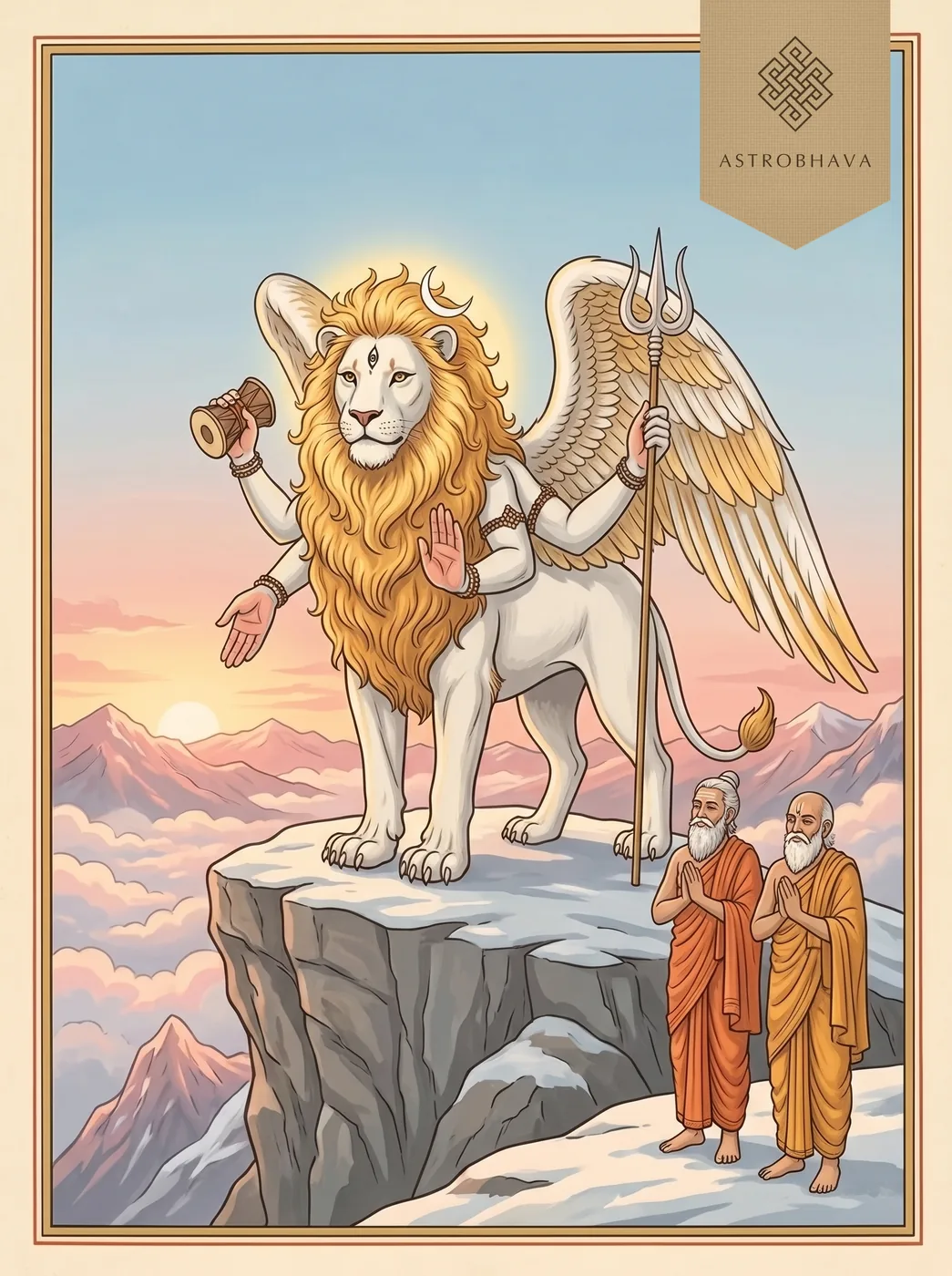
The Sharabeshwara mantra, as people search for it, is gathered on this page as the Sharabhesha Ashtakam with its two meditation verses, addressed to Shiva as Sharabha, the winged being also called Saluva and Pakshiraja, king of birds. Dhyanam 1 is the dhyana printed before the Sharabha Sahasranama; it maps the gods onto Sharabha's body, with Kali and Durga as the two wings, Bhairava and the undersea fire within, and disease and death held on the thighs. Dhyanam 2 is the Ashtakam's own meditation verse. The eight verses that follow, which the printed colophon assigns to the Akasha Bhairava Kalpa, a dialogue between Uma and Maheshvara, each end on 'namo'stu tubhyam sharabheshvaraya'. They move from Shiva's names to his emblems, then to the virtues and limbs of yoga he grants, and close on the five faces and the five-syllable mantra. One phala verse follows. Other Sharabha mantras belong to a Tantric line that tradition learns from a teacher; they are not printed here.
Sharabha and the fury of Narasimha
Two Puranas tell why Shiva took this form: the Shiva Purana, in the Sharabha chapters of its Shatarudra Samhita, and the Linga Purana, in chapters 95 and 96 of its first part. In their telling, Narasimha's fury did not settle after Hiranyakashipu was gone, and its heat unsettled the worlds, so the gods went to Shiva for help. Shiva first sent Virabhadra, his fierce attendant, with orders to speak gently. In the Linga Purana, Virabhadra recalls the earlier descents as fish, tortoise and boar, and asks Narasimha to set the form aside now that its task is done. When words did not calm him, Shiva appeared as Sharabha, part beast and part bird, winged and many-armed, with a voice like thunder at the close of an age. Sharabha held Narasimha fast and lifted him into the sky until the fury was spent. Narasimha then praised Shiva with a hymn of one hundred and eight names and asked that Shiva alone remove any pride that might arise in his mind. The Shiva Purana closes gently: Shiva answers that Vishnu is merged in him as water in water, names him his foremost devotee and a giver of boons, and the Sharabha form vanishes. Vaishnava tradition tells the episode differently and does not accept this account.
The mantra, in six scripts
- चन्द्रार्कौ
- candrārkau — the moon and sun (his eyes)
- वह्निदृष्टिः
- vahnidṛṣṭiḥ — fire his sight
- कुलिशवरनखश्चञ्चलात्युग्रजिह्वः
- kuliśavaranakhaścañcalātyugrajihvaḥ — claws like the best of thunderbolts, his darting, fierce tongue
- काली
- kālī — Kali
- दुर्गा
- durgā — Durga
- च
- ca — and
- पक्षौ
- pakṣau — his two wings
- हृदयजठरगो
- hṛdayajaṭharago — dwelling in heart and belly
- भैरवो
- bhairavo — Bhairava
- वाडवाग्निः
- vāḍavāgniḥ — the undersea fire
Sharabeshwara Mantra lyrics in full
Two meditation verses, the eight verses of the Sharabhesha Ashtakam and its one phala verse.
All 11 verses, in Sanskrit, Tamil, Telugu, Kannada, Malayalam and English, each with its meaning. Choose a script:
Download the Sharabeshwara Mantra PDFAll 11 verses with their meanings, in Sanskrit. Free to print and keep.
चन्द्रार्कौ वह्निदृष्टिः कुलिशवरनखश्चञ्चलात्युग्रजिह्वः काली दुर्गा च पक्षौ हृदयजठरगो भैरवो वाडवाग्निः ।
ऊरूस्थौ व्याधिमृत्यू शरभवरखगश्चण्डवातातिवेगः संहर्ता सर्वशत्रून्स जयति शरभः सालुवः पक्षिराजः ॥
சந்த்ரார்கௌ வஹ்நித்ருஷ்டிஃ குலிஶவரநகஶ்சஞ்சலாத்யுக்ரஜிஹ்வஃ காலீ துர்கா ச பக்ஷௌ ஹ்ருதயஜடரகோ பைரவோ வாடவாக்நிஃ ।
ஊரூஸ்தௌ வ்யாதிம்ருத்யூ ஶரபவரககஶ்சண்டவாதாதிவேகஃ ஸம்ஹர்தா ஸர்வஶத்ரூந்ஸ ஜயதி ஶரபஃ ஸாலுவஃ பக்ஷிராஜஃ ॥
చన్ద్రార్కౌ వహ్నిదృష్టిః కులిశవరనఖశ్చఞ్చలాత్యుగ్రజిహ్వః కాలీ దుర్గా చ పక్షౌ హృదయజఠరగో భైరవో వాడవాగ్నిః ।
ఊరూస్థౌ వ్యాధిమృత్యూ శరభవరఖగశ్చణ్డవాతాతివేగః సంహర్తా సర్వశత్రూన్స జయతి శరభః సాలువః పక్షిరాజః ॥
ಚನ್ದ್ರಾರ್ಕೌ ವಹ್ನಿದೃಷ್ಟಿಃ ಕುಲಿಶವರನಖಶ್ಚಞ್ಚಲಾತ್ಯುಗ್ರಜಿಹ್ವಃ ಕಾಲೀ ದುರ್ಗಾ ಚ ಪಕ್ಷೌ ಹೃದಯಜಠರಗೋ ಭೈರವೋ ವಾಡವಾಗ್ನಿಃ ।
ಊರೂಸ್ಥೌ ವ್ಯಾಧಿಮೃತ್ಯೂ ಶರಭವರಖಗಶ್ಚಣ್ಡವಾತಾತಿವೇಗಃ ಸಂಹರ್ತಾ ಸರ್ವಶತ್ರೂನ್ಸ ಜಯತಿ ಶರಭಃ ಸಾಲುವಃ ಪಕ್ಷಿರಾಜಃ ॥
ചന്ദ്രാര്കൌ വഹ്നിദൃഷ്ടിഃ കുലിശവരനഖശ്ചഞ്ചലാത്യുഗ്രജിഹ്വഃ കാലീ ദുര്ഗാ ച പക്ഷൌ ഹൃദയജഠരഗോ ഭൈരവോ വാഡവാഗ്നിഃ ।
ഊരൂസ്ഥൌ വ്യാധിമൃത്യൂ ശരഭവരഖഗശ്ചണ്ഡവാതാതിവേഗഃ സംഹര്താ സര്വശത്രൂന്സ ജയതി ശരഭഃ സാലുവഃ പക്ഷിരാജഃ ॥
candrārkau vahnidṛṣṭiḥ kuliśavaranakhaścañcalātyugrajihvaḥ kālī durgā ca pakṣau hṛdayajaṭharago bhairavo vāḍavāgniḥ |
ūrūsthau vyādhimṛtyū śarabhavarakhagaścaṇḍavātātivegaḥ saṃhartā sarvaśatrūnsa jayati śarabhaḥ sāluvaḥ pakṣirājaḥ ||
The moon and sun are his eyes and fire is his third sight; his claws are like the thunderbolt and his darting tongue is terrible; Kali and Durga are his two wings, and Bhairava and the undersea fire dwell in his heart and belly. Disease and death sit on his thighs; he is the best of winged beings, swifter than a raging gale, the destroyer of all enemies: victory to Sharabha, Saluva, king of birds.
ज्वलनकुटिलकेशं सूर्यचन्द्राग्निनेत्रं निशिततरनखाग्रोद्धूतहेमाभदेहम् ।
शरभमथ मुनीन्द्रैः सेव्यमानं सिताङ्गं प्रणतभयविनाशं भावयेत्पक्षिराजम् ॥
ஜ்வலநகுடிலகேஶம் ஸூர்யசந்த்ராக்நிநேத்ரம் நிஶிததரநகாக்ரோத்தூதஹேமாபதேஹம் ।
ஶரபமத முநீந்த்ரைஃ ஸேவ்யமாநம் ஸிதாங்கம் ப்ரணதபயவிநாஶம் பாவயேத்பக்ஷிராஜம் ॥
జ్వలనకుటిలకేశం సూర్యచన్ద్రాగ్నినేత్రం నిశితతరనఖాగ్రోద్ధూతహేమాభదేహమ్ ।
శరభమథ మునీన్ద్రైః సేవ్యమానం సితాఙ్గం ప్రణతభయవినాశం భావయేత్పక్షిరాజమ్ ॥
ಜ್ವಲನಕುಟಿಲಕೇಶಂ ಸೂರ್ಯಚನ್ದ್ರಾಗ್ನಿನೇತ್ರಂ ನಿಶಿತತರನಖಾಗ್ರೋದ್ಧೂತಹೇಮಾಭದೇಹಮ್ ।
ಶರಭಮಥ ಮುನೀನ್ದ್ರೈಃ ಸೇವ್ಯಮಾನಂ ಸಿತಾಙ್ಗಂ ಪ್ರಣತಭಯವಿನಾಶಂ ಭಾವಯೇತ್ಪಕ್ಷಿರಾಜಮ್ ॥
ജ്വലനകുടിലകേശം സൂര്യചന്ദ്രാഗ്നിനേത്രം നിശിതതരനഖാഗ്രോദ്ധൂതഹേമാഭദേഹമ് ।
ശരഭമഥ മുനീന്ദ്രൈഃ സേവ്യമാനം സിതാങ്ഗം പ്രണതഭയവിനാശം ഭാവയേത്പക്ഷിരാജമ് ॥
jvalanakuṭilakeśaṃ sūryacandrāgninetraṃ niśitataranakhāgroddhūtahemābhadeham |
śarabhamatha munīndraiḥ sevyamānaṃ sitāṅgaṃ praṇatabhayavināśaṃ bhāvayetpakṣirājam ||
One should meditate on Sharabha, the king of birds, whose curling hair blazes like fire, whose eyes are the sun, moon and fire, and whose gold-bright body bristles with razor-sharp claws. He is white of limb, attended by the foremost sages, and he destroys the fear of all who bow to him.
देवादिदेवाय जगन्मयाय शिवाय नालीकनिभाननाय ।
शर्वाय भीमाय शराधिपाय नमोऽस्तु तुभ्यं शरभेश्वराय ॥
தேவாதிதேவாய ஜகந்மயாய ஶிவாய நாலீகநிபாநநாய ।
ஶர்வாய பீமாய ஶராதிபாய நமோஸ்து துப்யம் ஶரபேஶ்வராய ॥
దేవాదిదేవాయ జగన్మయాయ శివాయ నాలీకనిభాననాయ ।
శర్వాయ భీమాయ శరాధిపాయ నమోఽస్తు తుభ్యం శరభేశ్వరాయ ॥
ದೇವಾದಿದೇವಾಯ ಜಗನ್ಮಯಾಯ ಶಿವಾಯ ನಾಲೀಕನಿಭಾನನಾಯ ।
ಶರ್ವಾಯ ಭೀಮಾಯ ಶರಾಧಿಪಾಯ ನಮೋಽಸ್ತು ತುಭ್ಯಂ ಶರಭೇಶ್ವರಾಯ ॥
ദേവാദിദേവായ ജഗന്മയായ ശിവായ നാലീകനിഭാനനായ ।
ശര്വായ ഭീമായ ശരാധിപായ നമോഽസ്തു തുഭ്യം ശരഭേശ്വരായ ॥
devādidevāya jaganmayāya śivāya nālīkanibhānanāya |
śarvāya bhīmāya śarādhipāya namo'stu tubhyaṃ śarabheśvarāya ||
To the god of gods, who pervades the whole world, to Shiva whose face is like a lotus; to Sharva, the terrible one, lord of arrows: salutation to you, Lord Sharabheshvara.
हराय भीमाय हरिप्रियाय भवाय शान्ताय परात्पराय ।
मृडाय रुद्राय विलोचनाय नमोऽस्तु तुभ्यं शरभेश्वराय ॥
ஹராய பீமாய ஹரிப்ரியாய பவாய ஶாந்தாய பராத்பராய ।
ம்ருடாய ருத்ராய விலோசநாய நமோஸ்து துப்யம் ஶரபேஶ்வராய ॥
హరాయ భీమాయ హరిప్రియాయ భవాయ శాన్తాయ పరాత్పరాయ ।
మృడాయ రుద్రాయ విలోచనాయ నమోఽస్తు తుభ్యం శరభేశ్వరాయ ॥
ಹರಾಯ ಭೀಮಾಯ ಹರಿಪ್ರಿಯಾಯ ಭವಾಯ ಶಾನ್ತಾಯ ಪರಾತ್ಪರಾಯ ।
ಮೃಡಾಯ ರುದ್ರಾಯ ವಿಲೋಚನಾಯ ನಮೋಽಸ್ತು ತುಭ್ಯಂ ಶರಭೇಶ್ವರಾಯ ॥
ഹരായ ഭീമായ ഹരിപ്രിയായ ഭവായ ശാന്തായ പരാത്പരായ ।
മൃഡായ രുദ്രായ വിലോചനായ നമോഽസ്തു തുഭ്യം ശരഭേശ്വരായ ॥
harāya bhīmāya haripriyāya bhavāya śāntāya parātparāya |
mṛḍāya rudrāya vilocanāya namo'stu tubhyaṃ śarabheśvarāya ||
To Hara, the terrible one, dear to Vishnu; to Bhava, the peaceful one, higher than the highest; to Mrida the gracious, to Rudra, the one with the third eye: salutation to you, Lord Sharabheshvara.
शीतांशुचूडाय दिगम्बराय सृष्टिस्थितिध्वंसनकारणाय ।
जटाकलापाय जितेन्द्रियाय नमोऽस्तु तुभ्यं शरभेश्वराय ॥
ஶீதாம்ஶுசூடாய திகம்பராய ஸ்ருஷ்டிஸ்திதித்வம்ஸநகாரணாய ।
ஜடாகலாபாய ஜிதேந்த்ரியாய நமோஸ்து துப்யம் ஶரபேஶ்வராய ॥
శీతాంశుచూడాయ దిగమ్బరాయ సృష్టిస్థితిధ్వంసనకారణాయ ।
జటాకలాపాయ జితేన్ద్రియాయ నమోఽస్తు తుభ్యం శరభేశ్వరాయ ॥
ಶೀತಾಂಶುಚೂಡಾಯ ದಿಗಮ್ಬರಾಯ ಸೃಷ್ಟಿಸ್ಥಿತಿಧ್ವಂಸನಕಾರಣಾಯ ।
ಜಟಾಕಲಾಪಾಯ ಜಿತೇನ್ದ್ರಿಯಾಯ ನಮೋಽಸ್ತು ತುಭ್ಯಂ ಶರಭೇಶ್ವರಾಯ ॥
ശീതാംശുചൂഡായ ദിഗമ്ബരായ സൃഷ്ടിസ്ഥിതിധ്വംസനകാരണായ ।
ജടാകലാപായ ജിതേന്ദ്രിയായ നമോഽസ്തു തുഭ്യം ശരഭേശ്വരായ ॥
śītāṃśucūḍāya digambarāya sṛṣṭisthitidhvaṃsanakāraṇāya |
jaṭākalāpāya jitendriyāya namo'stu tubhyaṃ śarabheśvarāya ||
To him who wears the cool moon on his crest and the sky as his garment, the cause of creation, preservation and dissolution; to him with a mass of matted locks, master of the senses: salutation to you, Lord Sharabheshvara.
कलङ्ककण्ठाय भवान्तकाय कपालशूलात्तकराम्बुजाय ।
भुजङ्गभूषाय पुरान्तकाय नमोऽस्तु तुभ्यं शरभेश्वराय ॥
கலங்ககண்டாய பவாந்தகாய கபாலஶூலாத்தகராம்புஜாய ।
புஜங்கபூஷாய புராந்தகாய நமோஸ்து துப்யம் ஶரபேஶ்வராய ॥
కలఙ్కకణ్ఠాయ భవాన్తకాయ కపాలశూలాత్తకరామ్బుజాయ ।
భుజఙ్గభూషాయ పురాన్తకాయ నమోఽస్తు తుభ్యం శరభేశ్వరాయ ॥
ಕಲಙ್ಕಕಣ್ಠಾಯ ಭವಾನ್ತಕಾಯ ಕಪಾಲಶೂಲಾತ್ತಕರಾಮ್ಬುಜಾಯ ।
ಭುಜಙ್ಗಭೂಷಾಯ ಪುರಾನ್ತಕಾಯ ನಮೋಽಸ್ತು ತುಭ್ಯಂ ಶರಭೇಶ್ವರಾಯ ॥
കലങ്കകണ്ഠായ ഭവാന്തകായ കപാലശൂലാത്തകരാമ്ബുജായ ।
ഭുജങ്ഗഭൂഷായ പുരാന്തകായ നമോഽസ്തു തുഭ്യം ശരഭേശ്വരായ ॥
kalaṅkakaṇṭhāya bhavāntakāya kapālaśūlāttakarāmbujāya |
bhujaṅgabhūṣāya purāntakāya namo'stu tubhyaṃ śarabheśvarāya ||
To him whose throat bears the dark mark, who ends the round of worldly birth, whose lotus hands hold a skull and a trident; to him adorned with serpents, destroyer of the three cities: salutation to you, Lord Sharabheshvara.
शमादिषट्काय यमान्तकाय यमादियोगाष्टकसिद्धिदाय ।
उमाधिनाथाय पुरातनाय नमोऽस्तु तुभ्यं शरभेश्वराय ॥
ஶமாதிஷட்காய யமாந்தகாய யமாதியோகாஷ்டகஸித்திதாய ।
உமாதிநாதாய புராதநாய நமோஸ்து துப்யம் ஶரபேஶ்வராய ॥
శమాదిషట్కాయ యమాన్తకాయ యమాదియోగాష్టకసిద్ధిదాయ ।
ఉమాధినాథాయ పురాతనాయ నమోఽస్తు తుభ్యం శరభేశ్వరాయ ॥
ಶಮಾದಿಷಟ್ಕಾಯ ಯಮಾನ್ತಕಾಯ ಯಮಾದಿಯೋಗಾಷ್ಟಕಸಿದ್ಧಿದಾಯ ।
ಉಮಾಧಿನಾಥಾಯ ಪುರಾತನಾಯ ನಮೋಽಸ್ತು ತುಭ್ಯಂ ಶರಭೇಶ್ವರಾಯ ॥
ശമാദിഷട്കായ യമാന്തകായ യമാദിയോഗാഷ്ടകസിദ്ധിദായ ।
ഉമാധിനാഥായ പുരാതനായ നമോഽസ്തു തുഭ്യം ശരഭേശ്വരായ ॥
śamādiṣaṭkāya yamāntakāya yamādiyogāṣṭakasiddhidāya |
umādhināthāya purātanāya namo'stu tubhyaṃ śarabheśvarāya ||
To him who is the six virtues beginning with inner calm, the ender of Yama, who grants success in the eight limbs of yoga beginning with restraint; to the lord of Uma, the ancient one: salutation to you, Lord Sharabheshvara.
घृणादिपाशाष्टकवर्जिताय खिलीकृतास्मत्पथि पूर्वगाय ।
गुणादिहीनाय गुणत्रयाय नमोऽस्तु तुभ्यं शरभेश्वराय ॥
க்ருணாதிபாஶாஷ்டகவர்ஜிதாய கிலீக்ருதாஸ்மத்பதி பூர்வகாய ।
குணாதிஹீநாய குணத்ரயாய நமோஸ்து துப்யம் ஶரபேஶ்வராய ॥
ఘృణాదిపాశాష్టకవర్జితాయ ఖిలీకృతాస్మత్పథి పూర్వగాయ ।
గుణాదిహీనాయ గుణత్రయాయ నమోఽస్తు తుభ్యం శరభేశ్వరాయ ॥
ಘೃಣಾದಿಪಾಶಾಷ್ಟಕವರ್ಜಿತಾಯ ಖಿಲೀಕೃತಾಸ್ಮತ್ಪಥಿ ಪೂರ್ವಗಾಯ ।
ಗುಣಾದಿಹೀನಾಯ ಗುಣತ್ರಯಾಯ ನಮೋಽಸ್ತು ತುಭ್ಯಂ ಶರಭೇಶ್ವರಾಯ ॥
ഘൃണാദിപാശാഷ്ടകവര്ജിതായ ഖിലീകൃതാസ്മത്പഥി പൂര്വഗായ ।
ഗുണാദിഹീനായ ഗുണത്രയായ നമോഽസ്തു തുഭ്യം ശരഭേശ്വരായ ॥
ghṛṇādipāśāṣṭakavarjitāya khilīkṛtāsmatpathi pūrvagāya |
guṇādihīnāya guṇatrayāya namo'stu tubhyaṃ śarabheśvarāya ||
To him free of the eight bonds beginning with disgust, who goes before us on the path that had become overgrown; to him beyond all qualities, yet who is the three gunas: salutation to you, Lord Sharabheshvara.
कालाय वेदामृतकन्दलाय कल्याणकौतूहलकारणाय ।
स्थूलाय सूक्ष्माय स्वरूपगाय नमोऽस्तु तुभ्यं शरभेश्वराय ॥
காலாய வேதாம்ருதகந்தலாய கல்யாணகௌதூஹலகாரணாய ।
ஸ்தூலாய ஸூக்ஷ்மாய ஸ்வரூபகாய நமோஸ்து துப்யம் ஶரபேஶ்வராய ॥
కాలాయ వేదామృతకన్దలాయ కల్యాణకౌతూహలకారణాయ ।
స్థూలాయ సూక్ష్మాయ స్వరూపగాయ నమోఽస్తు తుభ్యం శరభేశ్వరాయ ॥
ಕಾಲಾಯ ವೇದಾಮೃತಕನ್ದಲಾಯ ಕಲ್ಯಾಣಕೌತೂಹಲಕಾರಣಾಯ ।
ಸ್ಥೂಲಾಯ ಸೂಕ್ಷ್ಮಾಯ ಸ್ವರೂಪಗಾಯ ನಮೋಽಸ್ತು ತುಭ್ಯಂ ಶರಭೇಶ್ವರಾಯ ॥
കാലായ വേദാമൃതകന്ദലായ കല്യാണകൌതൂഹലകാരണായ ।
സ്ഥൂലായ സൂക്ഷ്മായ സ്വരൂപഗായ നമോഽസ്തു തുഭ്യം ശരഭേശ്വരായ ॥
kālāya vedāmṛtakandalāya kalyāṇakautūhalakāraṇāya |
sthūlāya sūkṣmāya svarūpagāya namo'stu tubhyaṃ śarabheśvarāya ||
To him who is Time, the fresh shoot of the nectar of the Vedas, the cause of auspicious joy; to him who is gross and subtle and abides in his own true nature: salutation to you, Lord Sharabheshvara.
पञ्चाननायानिलभास्कराय पञ्चाशदर्णाद्यपराक्षयाय ।
पञ्चाक्षरेशाय जगद्धिताय नमोऽस्तु तुभ्यं शरभेश्वराय ॥
பஞ்சாநநாயாநிலபாஸ்கராய பஞ்சாஶதர்ணாத்யபராக்ஷயாய ।
பஞ்சாக்ஷரேஶாய ஜகத்திதாய நமோஸ்து துப்யம் ஶரபேஶ்வராய ॥
పఞ్చాననాయానిలభాస్కరాయ పఞ్చాశదర్ణాద్యపరాక్షయాయ ।
పఞ్చాక్షరేశాయ జగద్ధితాయ నమోఽస్తు తుభ్యం శరభేశ్వరాయ ॥
ಪಞ್ಚಾನನಾಯಾನಿಲಭಾಸ್ಕರಾಯ ಪಞ್ಚಾಶದರ್ಣಾದ್ಯಪರಾಕ್ಷಯಾಯ ।
ಪಞ್ಚಾಕ್ಷರೇಶಾಯ ಜಗದ್ಧಿತಾಯ ನಮೋಽಸ್ತು ತುಭ್ಯಂ ಶರಭೇಶ್ವರಾಯ ॥
പഞ്ചാനനായാനിലഭാസ്കരായ പഞ്ചാശദര്ണാദ്യപരാക്ഷയായ ।
പഞ്ചാക്ഷരേശായ ജഗദ്ധിതായ നമോഽസ്തു തുഭ്യം ശരഭേശ്വരായ ॥
pañcānanāyānilabhāskarāya pañcāśadarṇādyaparākṣayāya |
pañcākṣareśāya jagaddhitāya namo'stu tubhyaṃ śarabheśvarāya ||
To the five-faced one, who is wind and sun, the imperishable one beyond the fifty letters and all that begins with them; to the lord of the five-syllable mantra, who works for the good of the world: salutation to you, Lord Sharabheshvara.
इमं स्तवं जपेद्यस्तु शरभेशाष्टकं नरः ।
तस्य नश्यन्ति पापानि रिपवश्च सुरोत्तमाः ॥
இமம் ஸ்தவம் ஜபேத்யஸ்து ஶரபேஶாஷ்டகம் நரஃ ।
தஸ்ய நஶ்யந்தி பாபாநி ரிபவஶ்ச ஸுரோத்தமாஃ ॥
ఇమం స్తవం జపేద్యస్తు శరభేశాష్టకం నరః ।
తస్య నశ్యన్తి పాపాని రిపవశ్చ సురోత్తమాః ॥
ಇಮಂ ಸ್ತವಂ ಜಪೇದ್ಯಸ್ತು ಶರಭೇಶಾಷ್ಟಕಂ ನರಃ ।
ತಸ್ಯ ನಶ್ಯನ್ತಿ ಪಾಪಾನಿ ರಿಪವಶ್ಚ ಸುರೋತ್ತಮಾಃ ॥
ഇമം സ്തവം ജപേദ്യസ്തു ശരഭേശാഷ്ടകം നരഃ ।
തസ്യ നശ്യന്തി പാപാനി രിപവശ്ച സുരോത്തമാഃ ॥
imaṃ stavaṃ japedyastu śarabheśāṣṭakaṃ naraḥ |
tasya naśyanti pāpāni ripavaśca surottamāḥ ||
O best of gods, the verse says that for the person who recites this hymn, the Sharabhesha Ashtakam, both sins and enemies are destroyed.
The syllable people get wrong
In śarabheśvarāya the third syllable is bhe, with a breathy bh, and the second is a full short ra: sha-ra-bhe-shva-raa-ya. The search spelling 'Sharabeshwara' drops the h, and 'Sharbeshwar' drops the ra; the śv is one cluster, as in 'Ishvara'.
When the Sharabeshwara Mantra is chanted
Weekday. Monday
Questions
Have your chart read before you decide
Chanting is yours to do, and free. But which deity your situation calls for — and whether a mantra alone is the right response — depends on your chart. Sometimes it is; sometimes it is not.
- Over 30 years in the Guru–Sishya Parampara, from the age of five
- He reads every chart himself — 60 minutes, one to one, never delegated
- Charts are read only between sunrise and sunset, following tradition
