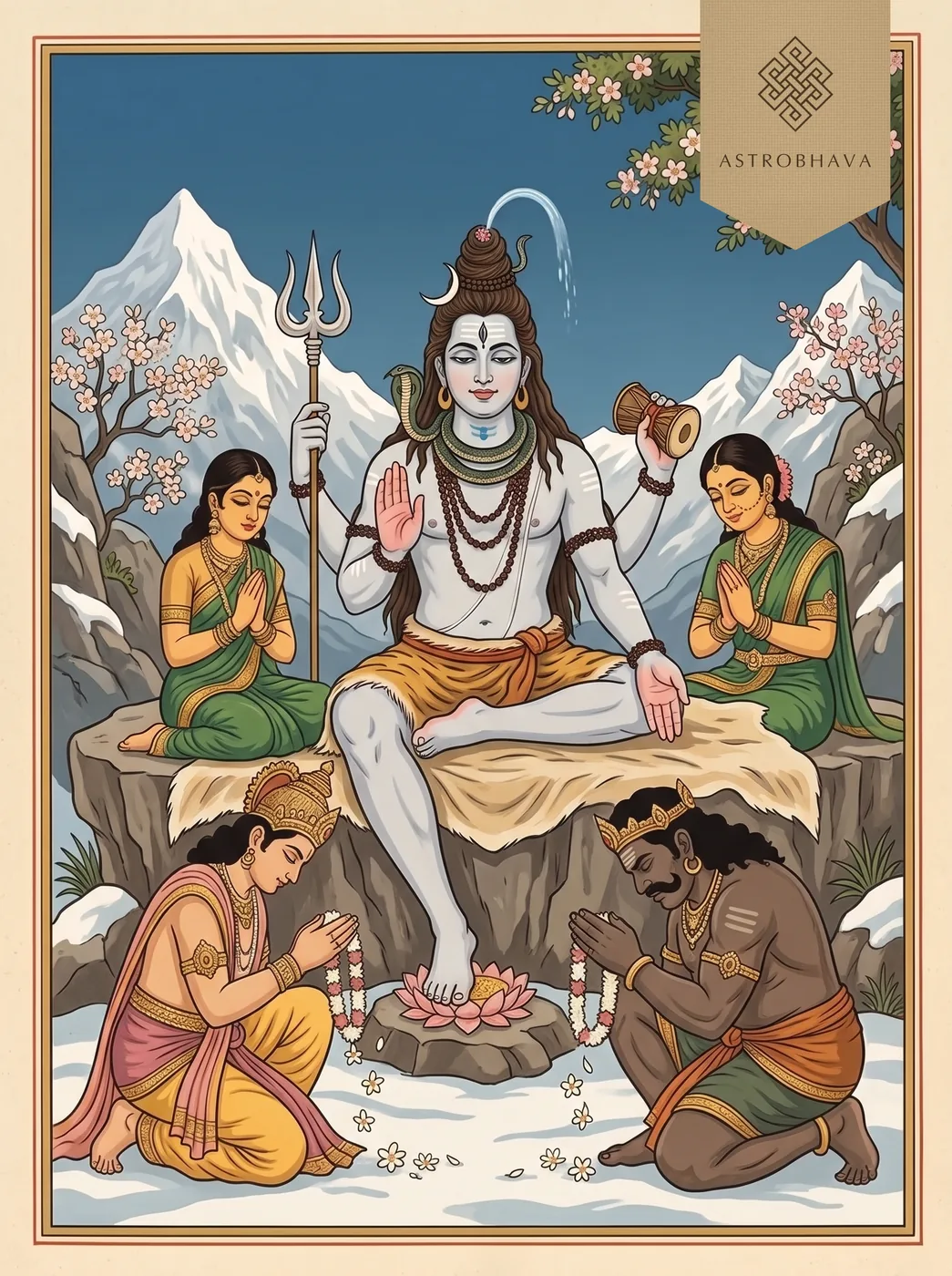
Shiva Bhujangam
गलद्दानगण्डं मिलद्भृङ्गषण्डं चलच्चारुशुण्डं जगत्त्राणशौण्डम् । कनद्दन्तकाण्डं विपद्भङ्गचण्डं शिवप्रेमपिण्डं भजे वक्रतुण्डम् ॥Also known as Shiva Bhujanga Stotram
In Devanagari, Tamil, Telugu, Kannada, Malayalam and English — with the meaning of every word, and the one syllable most people pronounce wrongly.
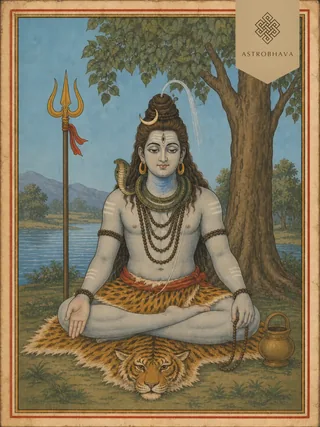 The Mrityunjaya Homam, performed for youBook →
What the Shiva Bhujangam is
The Shiva Bhujangam, also printed as the Shiva Bhujanga Stotram, is a Sanskrit hymn of forty verses to Shiva that tradition ascribes to Adi Shankaracharya. Its name comes from its metre, bhujangaprayata, the 'serpent's gait', and verse 40 plays on it, calling Shambhu fond of serpent ornaments while saying the hymn is shaped in that same metre. Verse 1 salutes Ganesha. Verses 2 to 5 describe Shiva as the fourth state beyond waking, dream and sleep, as five-faced, and as one body half coral-red and half sapphire-dark. Verses 6 to 19 ask for refuge, with a list of ailments in verse 15 and paired bows to Bhavani and Bhava in verse 18. Verses 20 to 31 are the hymn's distinctive core: a deathbed seen from inside, with the bell of Yama's buffalo, weeping relatives and a road without shade. Verse 32 turns to Namah Shivaya and verse 33 to the Mother, verses 36 and 37 close on 'I am Shiva', and verses 39 and 40 are the phala shruti.
A deathbed at Kaladi, and a debated date
According to the Shankara Digvijaya ascribed to Madhava, Shankara sensed that his mother Aryamba was near her end and hurried home to Kaladi. She could not take in his teaching on the formless Brahman, so he sang a hymn to Shiva, and Shiva's emissaries came bearing tridents. Their appearance frightened her, and he turned instead to a hymn to Vishnu, after which she died with her mind fixed on that form. The poem does not quote the Shiva hymn, but later retellings identify it as this one, which fits the many verses here that picture a dying person's last hours. The attribution has a history of its own. Bhaskararaya, the eighteenth-century commentator on the Lalita Sahasranama, quotes the line in verse 3 that bows to the five-faced companion of Parashakti and treats it as Shankara's usage, so the hymn was accepted as his by then. Verse 13, however, says Shiva was pleased with those who wronged a wife, a son or a father, and many read these as Nayanar saints of the Tamil country, among them Iyarpagai, who gave away his wife, and Siruthondar, who offered his son. Since Siruthondar is placed in the seventh century, Chandrasekharendra Saraswati suggested in a discourse that a later bearer of the name Shankara may have composed it, adding that one reference should not decide Shankara's date.
The mantra, in six scripts
- गलद्दानगण्डं
- galaddānagaṇḍaṃ — whose cheeks flow with temple-fluid
- मिलद्भृङ्गषण्डं
- miladbhṛṅgaṣaṇḍaṃ — where swarms of bees gather
- चलच्चारुशुण्डं
- calaccāruśuṇḍaṃ — whose graceful trunk sways
- जगत्त्राणशौण्डम्
- jagattrāṇaśauṇḍam — mighty in protecting the world
- कनद्दन्तकाण्डं
- kanaddantakāṇḍaṃ — whose tusk gleams
- विपद्भङ्गचण्डं
- vipadbhaṅgacaṇḍaṃ — fierce in breaking misfortune
- शिवप्रेमपिण्डं
- śivapremapiṇḍaṃ — embodiment of Shiva's love
- भजे
- bhaje — I worship
- वक्रतुण्डम्
- vakratuṇḍam — the one of the curved trunk (Ganesha)
Shiva Bhujangam lyrics in full
Forty verses in the bhujangaprayata metre, opening with a verse to Ganesha and closing with two phala verses. The printed closing line is given at the end.
All 41 verses, in Sanskrit, Tamil, Telugu, Kannada, Malayalam and English, each with its meaning. Choose a script:
Download the Shiva Bhujangam PDFAll 41 verses with their meanings, in Sanskrit. Free to print and keep.
गलद्दानगण्डं मिलद्भृङ्गषण्डं चलच्चारुशुण्डं जगत्त्राणशौण्डम् ।
कनद्दन्तकाण्डं विपद्भङ्गचण्डं शिवप्रेमपिण्डं भजे वक्रतुण्डम् ॥
கலத்தாநகண்டம் மிலத்ப்ருங்கஷண்டம் சலச்சாருஶுண்டம் ஜகத்த்ராணஶௌண்டம் ।
கநத்தந்தகாண்டம் விபத்பங்கசண்டம் ஶிவப்ரேமபிண்டம் பஜே வக்ரதுண்டம் ॥
గలద్దానగణ్డం మిలద్భృఙ్గషణ్డం చలచ్చారుశుణ్డం జగత్త్రాణశౌణ్డమ్ ।
కనద్దన్తకాణ్డం విపద్భఙ్గచణ్డం శివప్రేమపిణ్డం భజే వక్రతుణ్డమ్ ॥
ಗಲದ್ದಾನಗಣ್ಡಂ ಮಿಲದ್ಭೃಙ್ಗಷಣ್ಡಂ ಚಲಚ್ಚಾರುಶುಣ್ಡಂ ಜಗತ್ತ್ರಾಣಶೌಣ್ಡಮ್ ।
ಕನದ್ದನ್ತಕಾಣ್ಡಂ ವಿಪದ್ಭಙ್ಗಚಣ್ಡಂ ಶಿವಪ್ರೇಮಪಿಣ್ಡಂ ಭಜೇ ವಕ್ರತುಣ್ಡಮ್ ॥
ഗലദ്ദാനഗണ്ഡം മിലദ്ഭൃങ്ഗഷണ്ഡം ചലച്ചാരുശുണ്ഡം ജഗത്ത്രാണശൌണ്ഡമ് ।
കനദ്ദന്തകാണ്ഡം വിപദ്ഭങ്ഗചണ്ഡം ശിവപ്രേമപിണ്ഡം ഭജേ വക്രതുണ്ഡമ് ॥
galaddānagaṇḍaṃ miladbhṛṅgaṣaṇḍaṃ calaccāruśuṇḍaṃ jagattrāṇaśauṇḍam |
kanaddantakāṇḍaṃ vipadbhaṅgacaṇḍaṃ śivapremapiṇḍaṃ bhaje vakratuṇḍam ||
I worship Ganesha of the curved trunk, whose cheeks flow with temple-fluid where swarms of bees gather, whose graceful trunk sways, who is mighty in protecting the world. His tusk gleams, he is fierce in breaking misfortune, and he is the very embodiment of Shiva's love.
अनाद्यन्तमाद्यं परं तत्त्वमर्थं चिदाकारमेकं तुरीयं त्वमेयम् ।
हरिब्रह्ममृग्यं परब्रह्मरूपं मनोवागतीतं महःशैवमीडे ॥
அநாத்யந்தமாத்யம் பரம் தத்த்வமர்தம் சிதாகாரமேகம் துரீயம் த்வமேயம் ।
ஹரிப்ரஹ்மம்ருக்யம் பரப்ரஹ்மரூபம் மநோவாகதீதம் மஹஃஶைவமீடே ॥
అనాద్యన్తమాద్యం పరం తత్త్వమర్థం చిదాకారమేకం తురీయం త్వమేయమ్ ।
హరిబ్రహ్మమృగ్యం పరబ్రహ్మరూపం మనోవాగతీతం మహఃశైవమీడే ॥
ಅನಾದ್ಯನ್ತಮಾದ್ಯಂ ಪರಂ ತತ್ತ್ವಮರ್ಥಂ ಚಿದಾಕಾರಮೇಕಂ ತುರೀಯಂ ತ್ವಮೇಯಮ್ ।
ಹರಿಬ್ರಹ್ಮಮೃಗ್ಯಂ ಪರಬ್ರಹ್ಮರೂಪಂ ಮನೋವಾಗತೀತಂ ಮಹಃಶೈವಮೀಡೇ ॥
അനാദ്യന്തമാദ്യം പരം തത്ത്വമര്ഥം ചിദാകാരമേകം തുരീയം ത്വമേയമ് ।
ഹരിബ്രഹ്മമൃഗ്യം പരബ്രഹ്മരൂപം മനോവാഗതീതം മഹഃശൈവമീഡേ ॥
anādyantamādyaṃ paraṃ tattvamarthaṃ cidākāramekaṃ turīyaṃ tvameyam |
haribrahmamṛgyaṃ parabrahmarūpaṃ manovāgatītaṃ mahaḥśaivamīḍe ||
I praise the radiance that is Shiva: without beginning or end yet the first of all, the supreme reality and the goal, pure consciousness, one, the fourth state beyond waking, dream and sleep, and beyond measure. Vishnu and Brahma searched for him; he is the supreme Brahman, beyond mind and speech.
स्वशक्त्यादिशक्त्यन्तसिंहासनस्थं मनोहारिसर्वाङ्गरत्नोरुभूषम् ।
जटाहीन्दुगङ्गास्थिशम्याकमौलिं पराशक्तिमित्रं नुमः पञ्चवक्त्रम् ॥
ஸ்வஶக்த்யாதிஶக்த்யந்தஸிம்ஹாஸநஸ்தம் மநோஹாரிஸர்வாங்கரத்நோருபூஷம் ।
ஜடாஹீந்துகங்காஸ்திஶம்யாகமௌலிம் பராஶக்திமித்ரம் நுமஃ பஞ்சவக்த்ரம் ॥
స్వశక్త్యాదిశక్త్యన్తసింహాసనస్థం మనోహారిసర్వాఙ్గరత్నోరుభూషమ్ ।
జటాహీన్దుగఙ్గాస్థిశమ్యాకమౌలిం పరాశక్తిమిత్రం నుమః పఞ్చవక్త్రమ్ ॥
ಸ್ವಶಕ್ತ್ಯಾದಿಶಕ್ತ್ಯನ್ತಸಿಂಹಾಸನಸ್ಥಂ ಮನೋಹಾರಿಸರ್ವಾಙ್ಗರತ್ನೋರುಭೂಷಮ್ ।
ಜಟಾಹೀನ್ದುಗಙ್ಗಾಸ್ಥಿಶಮ್ಯಾಕಮೌಲಿಂ ಪರಾಶಕ್ತಿಮಿತ್ರಂ ನುಮಃ ಪಞ್ಚವಕ್ತ್ರಮ್ ॥
സ്വശക്ത്യാദിശക്ത്യന്തസിംഹാസനസ്ഥം മനോഹാരിസര്വാങ്ഗരത്നോരുഭൂഷമ് ।
ജടാഹീന്ദുഗങ്ഗാസ്ഥിശമ്യാകമൌലിം പരാശക്തിമിത്രം നുമഃ പഞ്ചവക്ത്രമ് ॥
svaśaktyādiśaktyantasiṃhāsanasthaṃ manohārisarvāṅgaratnorubhūṣam |
jaṭāhīndugaṅgāsthiśamyākamauliṃ parāśaktimitraṃ numaḥ pañcavaktram ||
We bow to the five-faced Lord, seated on a throne formed of all his powers from the first to the last, whose every limb is beautiful and decked with great jewels. His crown holds matted locks, serpents, the moon, the Ganga, bones and shami leaves, and he is the companion of the Supreme Shakti.
शिवेशानतत्पूरुषाघोरवामा-दिभिः पञ्चभिर्हृन्मुखैः षड्भिरङ्गैः ।
अनौपम्य षट्त्रिंशतं तत्त्वविद्या-मतीतं परं त्वां कथं वेत्ति को वा ॥
ஶிவேஶாநதத்பூருஷாகோரவாமா-திபிஃ பஞ்சபிர்ஹ்ருந்முகைஃ ஷட்பிரங்கைஃ ।
அநௌபம்ய ஷட்த்ரிம்ஶதம் தத்த்வவித்யா-மதீதம் பரம் த்வாம் கதம் வேத்தி கோ வா ॥
శివేశానతత్పూరుషాఘోరవామా-దిభిః పఞ్చభిర్హృన్ముఖైః షడ్భిరఙ్గైః ।
అనౌపమ్య షట్త్రింశతం తత్త్వవిద్యా-మతీతం పరం త్వాం కథం వేత్తి కో వా ॥
ಶಿವೇಶಾನತತ್ಪೂರುಷಾಘೋರವಾಮಾ-ದಿಭಿಃ ಪಞ್ಚಭಿರ್ಹೃನ್ಮುಖೈಃ ಷಡ್ಭಿರಙ್ಗೈಃ ।
ಅನೌಪಮ್ಯ ಷಟ್ತ್ರಿಂಶತಂ ತತ್ತ್ವವಿದ್ಯಾ-ಮತೀತಂ ಪರಂ ತ್ವಾಂ ಕಥಂ ವೇತ್ತಿ ಕೋ ವಾ ॥
ശിവേശാനതത്പൂരുഷാഘോരവാമാ-ദിഭിഃ പഞ്ചഭിര്ഹൃന്മുഖൈഃ ഷഡ്ഭിരങ്ഗൈഃ ।
അനൌപമ്യ ഷട്ത്രിംശതം തത്ത്വവിദ്യാ-മതീതം പരം ത്വാം കഥം വേത്തി കോ വാ ॥
śiveśānatatpūruṣāghoravāmā-dibhiḥ pañcabhirhṛnmukhaiḥ ṣaḍbhiraṅgaiḥ |
anaupamya ṣaṭtriṃśataṃ tattvavidyā-matītaṃ paraṃ tvāṃ kathaṃ vetti ko vā ||
You are known through the five heart-faces, Ishana, Tatpurusha, Aghora, Vamadeva and the rest, and through six limbs, yet you are beyond compare and beyond the knowledge of the thirty-six principles. Who could truly know you, the Supreme?
प्रवालप्रवाहप्रभाशोणमर्धं मरुत्वन्मणिश्रीमहःश्याममर्धम् ।
गुणस्यूतमेतद्वपुः शैवमन्तः स्मरामि स्मरापत्तिसम्पत्तिहेतोः ॥
ப்ரவாலப்ரவாஹப்ரபாஶோணமர்தம் மருத்வந்மணிஶ்ரீமஹஃஶ்யாமமர்தம் ।
குணஸ்யூதமேதத்வபுஃ ஶைவமந்தஃ ஸ்மராமி ஸ்மராபத்திஸம்பத்திஹேதோஃ ॥
ప్రవాలప్రవాహప్రభాశోణమర్ధం మరుత్వన్మణిశ్రీమహఃశ్యామమర్ధమ్ ।
గుణస్యూతమేతద్వపుః శైవమన్తః స్మరామి స్మరాపత్తిసమ్పత్తిహేతోః ॥
ಪ್ರವಾಲಪ್ರವಾಹಪ್ರಭಾಶೋಣಮರ್ಧಂ ಮರುತ್ವನ್ಮಣಿಶ್ರೀಮಹಃಶ್ಯಾಮಮರ್ಧಮ್ ।
ಗುಣಸ್ಯೂತಮೇತದ್ವಪುಃ ಶೈವಮನ್ತಃ ಸ್ಮರಾಮಿ ಸ್ಮರಾಪತ್ತಿಸಮ್ಪತ್ತಿಹೇತೋಃ ॥
പ്രവാലപ്രവാഹപ്രഭാശോണമര്ധം മരുത്വന്മണിശ്രീമഹഃശ്യാമമര്ധമ് ।
ഗുണസ്യൂതമേതദ്വപുഃ ശൈവമന്തഃ സ്മരാമി സ്മരാപത്തിസമ്പത്തിഹേതോഃ ॥
pravālapravāhaprabhāśoṇamardhaṃ marutvanmaṇiśrīmahaḥśyāmamardham |
guṇasyūtametadvapuḥ śaivamantaḥ smarāmi smarāpattisampattihetoḥ ||
I meditate within on this form of Shiva, one half red like a stream of coral light, the other half dark like the glow of sapphire, woven together by the qualities. I remember it for the sake of the wealth that comes from overcoming desire.
स्वसेवासमायातदेवासुरेन्द्रा-नमन्मौलिमन्दारमालाभिषिक्तम् ।
नमस्यामि शम्भो पदाम्भोरुहं ते भवाम्भोधिपोतं भवानीविभाव्यम् ॥
ஸ்வஸேவாஸமாயாததேவாஸுரேந்த்ரா-நமந்மௌலிமந்தாரமாலாபிஷிக்தம் ।
நமஸ்யாமி ஶம்போ பதாம்போருஹம் தே பவாம்போதிபோதம் பவாநீவிபாவ்யம் ॥
స్వసేవాసమాయాతదేవాసురేన్ద్రా-నమన్మౌలిమన్దారమాలాభిషిక్తమ్ ।
నమస్యామి శమ్భో పదామ్భోరుహం తే భవామ్భోధిపోతం భవానీవిభావ్యమ్ ॥
ಸ್ವಸೇವಾಸಮಾಯಾತದೇವಾಸುರೇನ್ದ್ರಾ-ನಮನ್ಮೌಲಿಮನ್ದಾರಮಾಲಾಭಿಷಿಕ್ತಮ್ ।
ನಮಸ್ಯಾಮಿ ಶಮ್ಭೋ ಪದಾಮ್ಭೋರುಹಂ ತೇ ಭವಾಮ್ಭೋಧಿಪೋತಂ ಭವಾನೀವಿಭಾವ್ಯಮ್ ॥
സ്വസേവാസമായാതദേവാസുരേന്ദ്രാ-നമന്മൌലിമന്ദാരമാലാഭിഷിക്തമ് ।
നമസ്യാമി ശമ്ഭോ പദാമ്ഭോരുഹം തേ ഭവാമ്ഭോധിപോതം ഭവാനീവിഭാവ്യമ് ॥
svasevāsamāyātadevāsurendrā-namanmaulimandāramālābhiṣiktam |
namasyāmi śambho padāmbhoruhaṃ te bhavāmbhodhipotaṃ bhavānīvibhāvyam ||
O Shambhu, I bow to your lotus feet, which are bathed by the mandara garlands on the bowed heads of the gods and demon kings who come to serve you. Your feet are the boat across the ocean of worldly life, and Bhavani meditates on them.
जगन्नाथ मन्नाथ गौरीसनाथ प्रपन्नानुकम्पिन्विपन्नार्तिहारिन् ।
महःस्तोममूर्ते समस्तैकबन्धो नमस्ते नमस्ते पुनस्ते नमोऽस्तु ॥
ஜகந்நாத மந்நாத கௌரீஸநாத ப்ரபந்நாநுகம்பிந்விபந்நார்திஹாரிந் ।
மஹஃஸ்தோமமூர்தே ஸமஸ்தைகபந்தோ நமஸ்தே நமஸ்தே புநஸ்தே நமோஸ்து ॥
జగన్నాథ మన్నాథ గౌరీసనాథ ప్రపన్నానుకమ్పిన్విపన్నార్తిహారిన్ ।
మహఃస్తోమమూర్తే సమస్తైకబన్ధో నమస్తే నమస్తే పునస్తే నమోఽస్తు ॥
ಜಗನ್ನಾಥ ಮನ್ನಾಥ ಗೌರೀಸನಾಥ ಪ್ರಪನ್ನಾನುಕಮ್ಪಿನ್ವಿಪನ್ನಾರ್ತಿಹಾರಿನ್ ।
ಮಹಃಸ್ತೋಮಮೂರ್ತೇ ಸಮಸ್ತೈಕಬನ್ಧೋ ನಮಸ್ತೇ ನಮಸ್ತೇ ಪುನಸ್ತೇ ನಮೋಽಸ್ತು ॥
ജഗന്നാഥ മന്നാഥ ഗൌരീസനാഥ പ്രപന്നാനുകമ്പിന്വിപന്നാര്തിഹാരിന് ।
മഹഃസ്തോമമൂര്തേ സമസ്തൈകബന്ധോ നമസ്തേ നമസ്തേ പുനസ്തേ നമോഽസ്തു ॥
jagannātha mannātha gaurīsanātha prapannānukampinvipannārtihārin |
mahaḥstomamūrte samastaikabandho namaste namaste punaste namo'stu ||
Lord of the world, my Lord, husband of Gauri, compassionate to those who take refuge, remover of the pain of the afflicted, form made of a mass of light, the one kinsman of all: salutations to you, salutations to you, again and again salutations.
विरूपाक्ष विश्वेश विश्वादिदेव त्रयीमूल शम्भो शिव त्र्यम्बक त्वम् ।
प्रसीद स्मर त्राहि पश्यावमुक्त्यै क्षमां प्राप्नुहि त्र्यक्ष मां रक्ष मोदात् ॥
விரூபாக்ஷ விஶ்வேஶ விஶ்வாதிதேவ த்ரயீமூல ஶம்போ ஶிவ த்ர்யம்பக த்வம் ।
ப்ரஸீத ஸ்மர த்ராஹி பஶ்யாவமுக்த்யை க்ஷமாம் ப்ராப்நுஹி த்ர்யக்ஷ மாம் ரக்ஷ மோதாத் ॥
విరూపాక్ష విశ్వేశ విశ్వాదిదేవ త్రయీమూల శమ్భో శివ త్ర్యమ్బక త్వమ్ ।
ప్రసీద స్మర త్రాహి పశ్యావముక్త్యై క్షమాం ప్రాప్నుహి త్ర్యక్ష మాం రక్ష మోదాత్ ॥
ವಿರೂಪಾಕ್ಷ ವಿಶ್ವೇಶ ವಿಶ್ವಾದಿದೇವ ತ್ರಯೀಮೂಲ ಶಮ್ಭೋ ಶಿವ ತ್ರ್ಯಮ್ಬಕ ತ್ವಮ್ ।
ಪ್ರಸೀದ ಸ್ಮರ ತ್ರಾಹಿ ಪಶ್ಯಾವಮುಕ್ತ್ಯೈ ಕ್ಷಮಾಂ ಪ್ರಾಪ್ನುಹಿ ತ್ರ್ಯಕ್ಷ ಮಾಂ ರಕ್ಷ ಮೋದಾತ್ ॥
വിരൂപാക്ഷ വിശ്വേശ വിശ്വാദിദേവ ത്രയീമൂല ശമ്ഭോ ശിവ ത്ര്യമ്ബക ത്വമ് ।
പ്രസീദ സ്മര ത്രാഹി പശ്യാവമുക്ത്യൈ ക്ഷമാം പ്രാപ്നുഹി ത്ര്യക്ഷ മാം രക്ഷ മോദാത് ॥
virūpākṣa viśveśa viśvādideva trayīmūla śambho śiva tryambaka tvam |
prasīda smara trāhi paśyāvamuktyai kṣamāṃ prāpnuhi tryakṣa māṃ rakṣa modāt ||
O three-eyed Lord of the universe, first God of all, root of the three Vedas, Shambhu, Shiva, Tryambaka, be gracious. Remember me, protect me, look upon me for my release; grant me forbearance and guard me gladly.
महादेव देवेश देवादिदेव स्मरारे पुरारे यमारे हरेति ।
ब्रुवाणः स्मरिष्यामि भक्त्या भवन्तं ततो मे दयाशील देव प्रसीद ॥
மஹாதேவ தேவேஶ தேவாதிதேவ ஸ்மராரே புராரே யமாரே ஹரேதி ।
ப்ருவாணஃ ஸ்மரிஷ்யாமி பக்த்யா பவந்தம் ததோ மே தயாஶீல தேவ ப்ரஸீத ॥
మహాదేవ దేవేశ దేవాదిదేవ స్మరారే పురారే యమారే హరేతి ।
బ్రువాణః స్మరిష్యామి భక్త్యా భవన్తం తతో మే దయాశీల దేవ ప్రసీద ॥
ಮಹಾದೇವ ದೇವೇಶ ದೇವಾದಿದೇವ ಸ್ಮರಾರೇ ಪುರಾರೇ ಯಮಾರೇ ಹರೇತಿ ।
ಬ್ರುವಾಣಃ ಸ್ಮರಿಷ್ಯಾಮಿ ಭಕ್ತ್ಯಾ ಭವನ್ತಂ ತತೋ ಮೇ ದಯಾಶೀಲ ದೇವ ಪ್ರಸೀದ ॥
മഹാദേവ ദേവേശ ദേവാദിദേവ സ്മരാരേ പുരാരേ യമാരേ ഹരേതി ।
ബ്രുവാണഃ സ്മരിഷ്യാമി ഭക്ത്യാ ഭവന്തം തതോ മേ ദയാശീല ദേവ പ്രസീദ ॥
mahādeva deveśa devādideva smarāre purāre yamāre hareti |
bruvāṇaḥ smariṣyāmi bhaktyā bhavantaṃ tato me dayāśīla deva prasīda ||
Saying 'Mahadeva, Lord of gods, first among the gods, enemy of Kama, destroyer of the three cities, conqueror of Yama, Hara', I will remember you with devotion. Therefore, O God whose nature is kindness, be gracious to me.
त्वदन्यः शरण्यः प्रपन्नस्य नेति प्रसीद स्मरन्नेव हन्यास्तु दैन्यम् ।
न चेत्ते भवेद्भक्तवात्सल्यहानि-स्ततो मे दयालो सदा संनिधेहि ॥
த்வதந்யஃ ஶரண்யஃ ப்ரபந்நஸ்ய நேதி ப்ரஸீத ஸ்மரந்நேவ ஹந்யாஸ்து தைந்யம் ।
ந சேத்தே பவேத்பக்தவாத்ஸல்யஹாநி-ஸ்ததோ மே தயாலோ ஸதா ஸம்நிதேஹி ॥
త్వదన్యః శరణ్యః ప్రపన్నస్య నేతి ప్రసీద స్మరన్నేవ హన్యాస్తు దైన్యమ్ ।
న చేత్తే భవేద్భక్తవాత్సల్యహాని-స్తతో మే దయాలో సదా సంనిధేహి ॥
ತ್ವದನ್ಯಃ ಶರಣ್ಯಃ ಪ್ರಪನ್ನಸ್ಯ ನೇತಿ ಪ್ರಸೀದ ಸ್ಮರನ್ನೇವ ಹನ್ಯಾಸ್ತು ದೈನ್ಯಮ್ ।
ನ ಚೇತ್ತೇ ಭವೇದ್ಭಕ್ತವಾತ್ಸಲ್ಯಹಾನಿ-ಸ್ತತೋ ಮೇ ದಯಾಲೋ ಸದಾ ಸಂನಿಧೇಹಿ ॥
ത്വദന്യഃ ശരണ്യഃ പ്രപന്നസ്യ നേതി പ്രസീദ സ്മരന്നേവ ഹന്യാസ്തു ദൈന്യമ് ।
ന ചേത്തേ ഭവേദ്ഭക്തവാത്സല്യഹാനി-സ്തതോ മേ ദയാലോ സദാ സംനിധേഹി ॥
tvadanyaḥ śaraṇyaḥ prapannasya neti prasīda smaranneva hanyāstu dainyam |
na cette bhavedbhaktavātsalyahāni-stato me dayālo sadā saṃnidhehi ||
For one who has taken refuge there is no shelter other than you; be gracious, and by merely remembering me, destroy my misery. If not, your love for your devotees would be diminished; so, O kind one, stay always near me.
अयं दानकालस्त्वहं दानपात्रं भवानेव दाता त्वदन्यं न याचे ।
भवद्भक्तिमेव स्थिरां देहि मह्यं कृपाशील शम्भो कृतार्थोऽस्मि तस्मात् ॥
அயம் தாநகாலஸ்த்வஹம் தாநபாத்ரம் பவாநேவ தாதா த்வதந்யம் ந யாசே ।
பவத்பக்திமேவ ஸ்திராம் தேஹி மஹ்யம் க்ருபாஶீல ஶம்போ க்ருதார்தோஸ்மி தஸ்மாத் ॥
అయం దానకాలస్త్వహం దానపాత్రం భవానేవ దాతా త్వదన్యం న యాచే ।
భవద్భక్తిమేవ స్థిరాం దేహి మహ్యం కృపాశీల శమ్భో కృతార్థోఽస్మి తస్మాత్ ॥
ಅಯಂ ದಾನಕಾಲಸ್ತ್ವಹಂ ದಾನಪಾತ್ರಂ ಭವಾನೇವ ದಾತಾ ತ್ವದನ್ಯಂ ನ ಯಾಚೇ ।
ಭವದ್ಭಕ್ತಿಮೇವ ಸ್ಥಿರಾಂ ದೇಹಿ ಮಹ್ಯಂ ಕೃಪಾಶೀಲ ಶಮ್ಭೋ ಕೃತಾರ್ಥೋಽಸ್ಮಿ ತಸ್ಮಾತ್ ॥
അയം ദാനകാലസ്ത്വഹം ദാനപാത്രം ഭവാനേവ ദാതാ ത്വദന്യം ന യാചേ ।
ഭവദ്ഭക്തിമേവ സ്ഥിരാം ദേഹി മഹ്യം കൃപാശീല ശമ്ഭോ കൃതാര്ഥോഽസ്മി തസ്മാത് ॥
ayaṃ dānakālastvahaṃ dānapātraṃ bhavāneva dātā tvadanyaṃ na yāce |
bhavadbhaktimeva sthirāṃ dehi mahyaṃ kṛpāśīla śambho kṛtārtho'smi tasmāt ||
This is the time for giving, I am the one fit to receive, and you alone are the giver; I ask no one but you. Grant me steady devotion to you, O compassionate Shambhu, and with that I am fulfilled.
पशुं वेत्सि चेन्मां तमेवाधिरूढः कलङ्कीति वा मूर्ध्नि धत्से तमेव ।
द्विजिह्वः पुनः सोऽपि ते कण्ठभूषा त्वदङ्गीकृताः शर्व सर्वेऽपि धन्याः ॥
பஶும் வேத்ஸி சேந்மாம் தமேவாதிரூடஃ கலங்கீதி வா மூர்த்நி தத்ஸே தமேவ ।
த்விஜிஹ்வஃ புநஃ ஸோபி தே கண்டபூஷா த்வதங்கீக்ருதாஃ ஶர்வ ஸர்வேபி தந்யாஃ ॥
పశుం వేత్సి చేన్మాం తమేవాధిరూఢః కలఙ్కీతి వా మూర్ధ్ని ధత్సే తమేవ ।
ద్విజిహ్వః పునః సోఽపి తే కణ్ఠభూషా త్వదఙ్గీకృతాః శర్వ సర్వేఽపి ధన్యాః ॥
ಪಶುಂ ವೇತ್ಸಿ ಚೇನ್ಮಾಂ ತಮೇವಾಧಿರೂಢಃ ಕಲಙ್ಕೀತಿ ವಾ ಮೂರ್ಧ್ನಿ ಧತ್ಸೇ ತಮೇವ ।
ದ್ವಿಜಿಹ್ವಃ ಪುನಃ ಸೋಽಪಿ ತೇ ಕಣ್ಠಭೂಷಾ ತ್ವದಙ್ಗೀಕೃತಾಃ ಶರ್ವ ಸರ್ವೇಽಪಿ ಧನ್ಯಾಃ ॥
പശും വേത്സി ചേന്മാം തമേവാധിരൂഢഃ കലങ്കീതി വാ മൂര്ധ്നി ധത്സേ തമേവ ।
ദ്വിജിഹ്വഃ പുനഃ സോഽപി തേ കണ്ഠഭൂഷാ ത്വദങ്ഗീകൃതാഃ ശര്വ സര്വേഽപി ധന്യാഃ ॥
paśuṃ vetsi cenmāṃ tamevādhirūḍhaḥ kalaṅkīti vā mūrdhni dhatse tameva |
dvijihvaḥ punaḥ so'pi te kaṇṭhabhūṣā tvadaṅgīkṛtāḥ śarva sarve'pi dhanyāḥ ||
If you see me as a beast, you already ride on one; if you think me flawed, you wear the flawed moon on your head; and the two-tongued serpent is your neck ornament. O Sharva, all whom you accept become blessed.
न शक्नोमि कर्तुं परद्रोहलेशं कथं प्रीयसे त्वं न जाने गिरीश ।
तथाहि प्रसन्नोऽसि कस्यापि कान्ता-सुतद्रोहिणो वा पितृद्रोहिणो वा ॥
ந ஶக்நோமி கர்தும் பரத்ரோஹலேஶம் கதம் ப்ரீயஸே த்வம் ந ஜாநே கிரீஶ ।
ததாஹி ப்ரஸந்நோஸி கஸ்யாபி காந்தா-ஸுதத்ரோஹிணோ வா பித்ருத்ரோஹிணோ வா ॥
న శక్నోమి కర్తుం పరద్రోహలేశం కథం ప్రీయసే త్వం న జానే గిరీశ ।
తథాహి ప్రసన్నోఽసి కస్యాపి కాన్తా-సుతద్రోహిణో వా పితృద్రోహిణో వా ॥
ನ ಶಕ್ನೋಮಿ ಕರ್ತುಂ ಪರದ್ರೋಹಲೇಶಂ ಕಥಂ ಪ್ರೀಯಸೇ ತ್ವಂ ನ ಜಾನೇ ಗಿರೀಶ ।
ತಥಾಹಿ ಪ್ರಸನ್ನೋಽಸಿ ಕಸ್ಯಾಪಿ ಕಾನ್ತಾ-ಸುತದ್ರೋಹಿಣೋ ವಾ ಪಿತೃದ್ರೋಹಿಣೋ ವಾ ॥
ന ശക്നോമി കര്തും പരദ്രോഹലേശം കഥം പ്രീയസേ ത്വം ന ജാനേ ഗിരീശ ।
തഥാഹി പ്രസന്നോഽസി കസ്യാപി കാന്താ-സുതദ്രോഹിണോ വാ പിതൃദ്രോഹിണോ വാ ॥
na śaknomi kartuṃ paradrohaleśaṃ kathaṃ prīyase tvaṃ na jāne girīśa |
tathāhi prasanno'si kasyāpi kāntā-sutadrohiṇo vā pitṛdrohiṇo vā ||
I cannot do even the slightest harm to another, so I do not know how to please you, O Lord of the mountain; for indeed you were pleased with one who harmed a wife or son, or one who harmed a father.
स्तुतिं ध्यानमर्चां यथावद्विधातुं भजन्नप्यजानन्महेशावलम्बे ।
त्रसन्तं सुतं त्रातुमग्रे मृकण्डो-र्यमप्राणनिर्वापणं त्वत्पदाब्जम् ॥
ஸ்துதிம் த்யாநமர்சாம் யதாவத்விதாதும் பஜந்நப்யஜாநந்மஹேஶாவலம்பே ।
த்ரஸந்தம் ஸுதம் த்ராதுமக்ரே ம்ருகண்டோ-ர்யமப்ராணநிர்வாபணம் த்வத்பதாப்ஜம் ॥
స్తుతిం ధ్యానమర్చాం యథావద్విధాతుం భజన్నప్యజానన్మహేశావలమ్బే ।
త్రసన్తం సుతం త్రాతుమగ్రే మృకణ్డో-ర్యమప్రాణనిర్వాపణం త్వత్పదాబ్జమ్ ॥
ಸ್ತುತಿಂ ಧ್ಯಾನಮರ್ಚಾಂ ಯಥಾವದ್ವಿಧಾತುಂ ಭಜನ್ನಪ್ಯಜಾನನ್ಮಹೇಶಾವಲಮ್ಬೇ ।
ತ್ರಸನ್ತಂ ಸುತಂ ತ್ರಾತುಮಗ್ರೇ ಮೃಕಣ್ಡೋ-ರ್ಯಮಪ್ರಾಣನಿರ್ವಾಪಣಂ ತ್ವತ್ಪದಾಬ್ಜಮ್ ॥
സ്തുതിം ധ്യാനമര്ചാം യഥാവദ്വിധാതും ഭജന്നപ്യജാനന്മഹേശാവലമ്ബേ ।
ത്രസന്തം സുതം ത്രാതുമഗ്രേ മൃകണ്ഡോ-ര്യമപ്രാണനിര്വാപണം ത്വത്പദാബ്ജമ് ॥
stutiṃ dhyānamarcāṃ yathāvadvidhātuṃ bhajannapyajānanmaheśāvalambe |
trasantaṃ sutaṃ trātumagre mṛkaṇḍo-ryamaprāṇanirvāpaṇaṃ tvatpadābjam ||
Though I worship, I do not know how to perform praise, meditation and ritual properly, so I lean on you, O Mahesha, on your lotus feet, which once ended Yama's power when they came forward to save the frightened son of Mrikandu.
शिरोदृष्टिहृद्रोगशूलप्रमेह-ज्वरार्शोजरायक्ष्महिक्काविषार्तान् ।
त्वमाद्यो भिषग्भेषजं भस्म शम्भो त्वमुल्लाघयास्मान्वपुर्लाघवाय ॥
ஶிரோத்ருஷ்டிஹ்ருத்ரோகஶூலப்ரமேஹ-ஜ்வரார்ஶோஜராயக்ஷ்மஹிக்காவிஷார்தாந் ।
த்வமாத்யோ பிஷக்பேஷஜம் பஸ்ம ஶம்போ த்வமுல்லாகயாஸ்மாந்வபுர்லாகவாய ॥
శిరోదృష్టిహృద్రోగశూలప్రమేహ-జ్వరార్శోజరాయక్ష్మహిక్కావిషార్తాన్ ।
త్వమాద్యో భిషగ్భేషజం భస్మ శమ్భో త్వముల్లాఘయాస్మాన్వపుర్లాఘవాయ ॥
ಶಿರೋದೃಷ್ಟಿಹೃದ್ರೋಗಶೂಲಪ್ರಮೇಹ-ಜ್ವರಾರ್ಶೋಜರಾಯಕ್ಷ್ಮಹಿಕ್ಕಾವಿಷಾರ್ತಾನ್ ।
ತ್ವಮಾದ್ಯೋ ಭಿಷಗ್ಭೇಷಜಂ ಭಸ್ಮ ಶಮ್ಭೋ ತ್ವಮುಲ್ಲಾಘಯಾಸ್ಮಾನ್ವಪುರ್ಲಾಘವಾಯ ॥
ശിരോദൃഷ്ടിഹൃദ്രോഗശൂലപ്രമേഹ-ജ്വരാര്ശോജരായക്ഷ്മഹിക്കാവിഷാര്താന് ।
ത്വമാദ്യോ ഭിഷഗ്ഭേഷജം ഭസ്മ ശമ്ഭോ ത്വമുല്ലാഘയാസ്മാന്വപുര്ലാഘവായ ॥
śirodṛṣṭihṛdrogaśūlaprameha-jvarārśojarāyakṣmahikkāviṣārtān |
tvamādyo bhiṣagbheṣajaṃ bhasma śambho tvamullāghayāsmānvapurlāghavāya ||
We are afflicted by ailments of the head, eyes and heart, by colic, diabetes, fever, piles, old age, consumption, hiccups and poison. You, O Shambhu, are the first physician and your sacred ash is the medicine; heal us and make our bodies light.
दरिद्रोऽस्म्यभद्रोऽस्मि भग्नोऽस्मि दूये विषण्णोऽस्मि सन्नोऽस्मि खिन्नोऽस्मि चाहम् ।
भवान्प्राणिनामन्तरात्मासि शम्भो ममाधिं न वेत्सि प्रभो रक्ष मां त्वम् ॥
தரித்ரோஸ்ம்யபத்ரோஸ்மி பக்நோஸ்மி தூயே விஷண்ணோஸ்மி ஸந்நோஸ்மி கிந்நோஸ்மி சாஹம் ।
பவாந்ப்ராணிநாமந்தராத்மாஸி ஶம்போ மமாதிம் ந வேத்ஸி ப்ரபோ ரக்ஷ மாம் த்வம் ॥
దరిద్రోఽస్మ్యభద్రోఽస్మి భగ్నోఽస్మి దూయే విషణ్ణోఽస్మి సన్నోఽస్మి ఖిన్నోఽస్మి చాహమ్ ।
భవాన్ప్రాణినామన్తరాత్మాసి శమ్భో మమాధిం న వేత్సి ప్రభో రక్ష మాం త్వమ్ ॥
ದರಿದ್ರೋಽಸ್ಮ್ಯಭದ್ರೋಽಸ್ಮಿ ಭಗ್ನೋಽಸ್ಮಿ ದೂಯೇ ವಿಷಣ್ಣೋಽಸ್ಮಿ ಸನ್ನೋಽಸ್ಮಿ ಖಿನ್ನೋಽಸ್ಮಿ ಚಾಹಮ್ ।
ಭವಾನ್ಪ್ರಾಣಿನಾಮನ್ತರಾತ್ಮಾಸಿ ಶಮ್ಭೋ ಮಮಾಧಿಂ ನ ವೇತ್ಸಿ ಪ್ರಭೋ ರಕ್ಷ ಮಾಂ ತ್ವಮ್ ॥
ദരിദ്രോഽസ്മ്യഭദ്രോഽസ്മി ഭഗ്നോഽസ്മി ദൂയേ വിഷണ്ണോഽസ്മി സന്നോഽസ്മി ഖിന്നോഽസ്മി ചാഹമ് ।
ഭവാന്പ്രാണിനാമന്തരാത്മാസി ശമ്ഭോ മമാധിം ന വേത്സി പ്രഭോ രക്ഷ മാം ത്വമ് ॥
daridro'smyabhadro'smi bhagno'smi dūye viṣaṇṇo'smi sanno'smi khinno'smi cāham |
bhavānprāṇināmantarātmāsi śambho mamādhiṃ na vetsi prabho rakṣa māṃ tvam ||
I am poor, unfortunate, broken and in pain; I am dejected, weary and downcast. You, O Shambhu, are the inner Self of all beings; do you not know my anguish? O Lord, protect me.
त्वदक्ष्णोः कटाक्षः पतेत्त्र्यक्ष यत्र क्षणं क्ष्मा च लक्ष्मीः स्वयं तं वृणाते ।
किरीटस्फुरच्चामरच्छत्रमाला-कलाचीगजक्षौमभूषाविशेषैः ॥
த்வதக்ஷ்ணோஃ கடாக்ஷஃ பதேத்த்ர்யக்ஷ யத்ர க்ஷணம் க்ஷ்மா ச லக்ஷ்மீஃ ஸ்வயம் தம் வ்ருணாதே ।
கிரீடஸ்புரச்சாமரச்சத்ரமாலா-கலாசீகஜக்ஷௌமபூஷாவிஶேஷைஃ ॥
త్వదక్ష్ణోః కటాక్షః పతేత్త్ర్యక్ష యత్ర క్షణం క్ష్మా చ లక్ష్మీః స్వయం తం వృణాతే ।
కిరీటస్ఫురచ్చామరచ్ఛత్రమాలా-కలాచీగజక్షౌమభూషావిశేషైః ॥
ತ್ವದಕ್ಷ್ಣೋಃ ಕಟಾಕ್ಷಃ ಪತೇತ್ತ್ರ್ಯಕ್ಷ ಯತ್ರ ಕ್ಷಣಂ ಕ್ಷ್ಮಾ ಚ ಲಕ್ಷ್ಮೀಃ ಸ್ವಯಂ ತಂ ವೃಣಾತೇ ।
ಕಿರೀಟಸ್ಫುರಚ್ಚಾಮರಚ್ಛತ್ರಮಾಲಾ-ಕಲಾಚೀಗಜಕ್ಷೌಮಭೂಷಾವಿಶೇಷೈಃ ॥
ത്വദക്ഷ്ണോഃ കടാക്ഷഃ പതേത്ത്ര്യക്ഷ യത്ര ക്ഷണം ക്ഷ്മാ ച ലക്ഷ്മീഃ സ്വയം തം വൃണാതേ ।
കിരീടസ്ഫുരച്ചാമരച്ഛത്രമാലാ-കലാചീഗജക്ഷൌമഭൂഷാവിശേഷൈഃ ॥
tvadakṣṇoḥ kaṭākṣaḥ patettryakṣa yatra kṣaṇaṃ kṣmā ca lakṣmīḥ svayaṃ taṃ vṛṇāte |
kirīṭasphuraccāmaracchatramālā-kalācīgajakṣaumabhūṣāviśeṣaiḥ ||
O three-eyed one, wherever the side-glance of your eyes falls even for a moment, the earth and Lakshmi herself choose that person, bringing crowns, gleaming fly-whisks, parasols, garlands, girdles, elephants, silk and fine ornaments.
भवान्यै भवायापि मात्रे च पित्रे मृडान्यै मृडायाप्यघघ्न्यै मखघ्ने ।
शिवाङ्ग्यै शिवाङ्गाय कुर्मः शिवायै शिवायाम्बिकायै नमस्त्र्यम्बकाय ॥
பவாந்யை பவாயாபி மாத்ரே ச பித்ரே ம்ருடாந்யை ம்ருடாயாப்யகக்ந்யை மகக்நே ।
ஶிவாங்க்யை ஶிவாங்காய குர்மஃ ஶிவாயை ஶிவாயாம்பிகாயை நமஸ்த்ர்யம்பகாய ॥
భవాన్యై భవాయాపి మాత్రే చ పిత్రే మృడాన్యై మృడాయాప్యఘఘ్న్యై మఖఘ్నే ।
శివాఙ్గ్యై శివాఙ్గాయ కుర్మః శివాయై శివాయామ్బికాయై నమస్త్ర్యమ్బకాయ ॥
ಭವಾನ್ಯೈ ಭವಾಯಾಪಿ ಮಾತ್ರೇ ಚ ಪಿತ್ರೇ ಮೃಡಾನ್ಯೈ ಮೃಡಾಯಾಪ್ಯಘಘ್ನ್ಯೈ ಮಖಘ್ನೇ ।
ಶಿವಾಙ್ಗ್ಯೈ ಶಿವಾಙ್ಗಾಯ ಕುರ್ಮಃ ಶಿವಾಯೈ ಶಿವಾಯಾಮ್ಬಿಕಾಯೈ ನಮಸ್ತ್ರ್ಯಮ್ಬಕಾಯ ॥
ഭവാന്യൈ ഭവായാപി മാത്രേ ച പിത്രേ മൃഡാന്യൈ മൃഡായാപ്യഘഘ്ന്യൈ മഖഘ്നേ ।
ശിവാങ്ഗ്യൈ ശിവാങ്ഗായ കുര്മഃ ശിവായൈ ശിവായാമ്ബികായൈ നമസ്ത്ര്യമ്ബകായ ॥
bhavānyai bhavāyāpi mātre ca pitre mṛḍānyai mṛḍāyāpyaghaghnyai makhaghne |
śivāṅgyai śivāṅgāya kurmaḥ śivāyai śivāyāmbikāyai namastryambakāya ||
We bow to Bhavani and to Bhava, to the Mother and the Father, to Mridani and Mrida, to her who destroys sin and him who destroyed the sacrifice, to her who is Shiva's body and him who is Shivaa's body, to Shivaa and Shiva, to Ambika and to Tryambaka.
भवद्गौरवं मल्लघुत्वं विदित्वा प्रभो रक्ष कारुण्यदृष्ट्यानुगं माम् ।
शिवात्मानुभावस्तुतावक्षमोऽहं स्वशक्त्या कृतं मेऽपराधं क्षमस्व ॥
பவத்கௌரவம் மல்லகுத்வம் விதித்வா ப்ரபோ ரக்ஷ காருண்யத்ருஷ்ட்யாநுகம் மாம் ।
ஶிவாத்மாநுபாவஸ்துதாவக்ஷமோஹம் ஸ்வஶக்த்யா க்ருதம் மேபராதம் க்ஷமஸ்வ ॥
భవద్గౌరవం మల్లఘుత్వం విదిత్వా ప్రభో రక్ష కారుణ్యదృష్ట్యానుగం మామ్ ।
శివాత్మానుభావస్తుతావక్షమోఽహం స్వశక్త్యా కృతం మేఽపరాధం క్షమస్వ ॥
ಭವದ್ಗೌರವಂ ಮಲ್ಲಘುತ್ವಂ ವಿದಿತ್ವಾ ಪ್ರಭೋ ರಕ್ಷ ಕಾರುಣ್ಯದೃಷ್ಟ್ಯಾನುಗಂ ಮಾಮ್ ।
ಶಿವಾತ್ಮಾನುಭಾವಸ್ತುತಾವಕ್ಷಮೋಽಹಂ ಸ್ವಶಕ್ತ್ಯಾ ಕೃತಂ ಮೇಽಪರಾಧಂ ಕ್ಷಮಸ್ವ ॥
ഭവദ്ഗൌരവം മല്ലഘുത്വം വിദിത്വാ പ്രഭോ രക്ഷ കാരുണ്യദൃഷ്ട്യാനുഗം മാമ് ।
ശിവാത്മാനുഭാവസ്തുതാവക്ഷമോഽഹം സ്വശക്ത്യാ കൃതം മേഽപരാധം ക്ഷമസ്വ ॥
bhavadgauravaṃ mallaghutvaṃ viditvā prabho rakṣa kāruṇyadṛṣṭyānugaṃ mām |
śivātmānubhāvastutāvakṣamo'haṃ svaśaktyā kṛtaṃ me'parādhaṃ kṣamasva ||
Knowing your greatness and my smallness, O Lord, protect me, your follower, with a look of compassion. I am unable to praise the glory of Shiva who is the Self; forgive the faults I have committed through my own limited strength.
यदा कर्णरन्ध्रं व्रजेत्कालवाह-द्विषत्कण्ठघण्टाघणात्कारनादः ।
वृषाधीशमारुह्य देवौपवाह्यं तदा वत्स मा भीरिति प्रीणय त्वम् ॥
யதா கர்ணரந்த்ரம் வ்ரஜேத்காலவாஹ-த்விஷத்கண்டகண்டாகணாத்காரநாதஃ ।
வ்ருஷாதீஶமாருஹ்ய தேவௌபவாஹ்யம் ததா வத்ஸ மா பீரிதி ப்ரீணய த்வம் ॥
యదా కర్ణరన్ధ్రం వ్రజేత్కాలవాహ-ద్విషత్కణ్ఠఘణ్టాఘణాత్కారనాదః ।
వృషాధీశమారుహ్య దేవౌపవాహ్యం తదా వత్స మా భీరితి ప్రీణయ త్వమ్ ॥
ಯದಾ ಕರ್ಣರನ್ಧ್ರಂ ವ್ರಜೇತ್ಕಾಲವಾಹ-ದ್ವಿಷತ್ಕಣ್ಠಘಣ್ಟಾಘಣಾತ್ಕಾರನಾದಃ ।
ವೃಷಾಧೀಶಮಾರುಹ್ಯ ದೇವೌಪವಾಹ್ಯಂ ತದಾ ವತ್ಸ ಮಾ ಭೀರಿತಿ ಪ್ರೀಣಯ ತ್ವಮ್ ॥
യദാ കര്ണരന്ധ്രം വ്രജേത്കാലവാഹ-ദ്വിഷത്കണ്ഠഘണ്ടാഘണാത്കാരനാദഃ ।
വൃഷാധീശമാരുഹ്യ ദേവൌപവാഹ്യം തദാ വത്സ മാ ഭീരിതി പ്രീണയ ത്വമ് ॥
yadā karṇarandhraṃ vrajetkālavāha-dviṣatkaṇṭhaghaṇṭāghaṇātkāranādaḥ |
vṛṣādhīśamāruhya devaupavāhyaṃ tadā vatsa mā bhīriti prīṇaya tvam ||
When the sound of the bell clanging on the neck of the buffalo of Yama, carrier of death, reaches my ears, then come mounted on the king of bulls, the vehicle fit for gods, and gladden me saying, 'Child, do not fear.'
यदा दारुणाभाषणा भीषणा मे भविष्यन्त्युपान्ते कृतान्तस्य दूताः ।
तदा मन्मनस्त्वत्पदाम्भोरुहस्थं कथं निश्चलं स्यान्नमस्तेऽस्तु शम्भो ॥
யதா தாருணாபாஷணா பீஷணா மே பவிஷ்யந்த்யுபாந்தே க்ருதாந்தஸ்ய தூதாஃ ।
ததா மந்மநஸ்த்வத்பதாம்போருஹஸ்தம் கதம் நிஶ்சலம் ஸ்யாந்நமஸ்தேஸ்து ஶம்போ ॥
యదా దారుణాభాషణా భీషణా మే భవిష్యన్త్యుపాన్తే కృతాన్తస్య దూతాః ।
తదా మన్మనస్త్వత్పదామ్భోరుహస్థం కథం నిశ్చలం స్యాన్నమస్తేఽస్తు శమ్భో ॥
ಯದಾ ದಾರುಣಾಭಾಷಣಾ ಭೀಷಣಾ ಮೇ ಭವಿಷ್ಯನ್ತ್ಯುಪಾನ್ತೇ ಕೃತಾನ್ತಸ್ಯ ದೂತಾಃ ।
ತದಾ ಮನ್ಮನಸ್ತ್ವತ್ಪದಾಮ್ಭೋರುಹಸ್ಥಂ ಕಥಂ ನಿಶ್ಚಲಂ ಸ್ಯಾನ್ನಮಸ್ತೇಽಸ್ತು ಶಮ್ಭೋ ॥
യദാ ദാരുണാഭാഷണാ ഭീഷണാ മേ ഭവിഷ്യന്ത്യുപാന്തേ കൃതാന്തസ്യ ദൂതാഃ ।
തദാ മന്മനസ്ത്വത്പദാമ്ഭോരുഹസ്ഥം കഥം നിശ്ചലം സ്യാന്നമസ്തേഽസ്തു ശമ്ഭോ ॥
yadā dāruṇābhāṣaṇā bhīṣaṇā me bhaviṣyantyupānte kṛtāntasya dūtāḥ |
tadā manmanastvatpadāmbhoruhasthaṃ kathaṃ niścalaṃ syānnamaste'stu śambho ||
When the terrible messengers of death, harsh and fearful in speech, stand beside me at the end, how can my mind stay steady on your lotus feet? Salutations to you, O Shambhu.
यदा दुर्निवारव्यथोऽहं शयानो लुठन्निःश्वसन्निःसृताव्यक्तवाणिः ।
तदा जह्नुकन्याजलालङ्कृतं ते जटामण्डलं मन्मनोमन्दिरं स्यात् ॥
யதா துர்நிவாரவ்யதோஹம் ஶயாநோ லுடந்நிஃஶ்வஸந்நிஃஸ்ருதாவ்யக்தவாணிஃ ।
ததா ஜஹ்நுகந்யாஜலாலங்க்ருதம் தே ஜடாமண்டலம் மந்மநோமந்திரம் ஸ்யாத் ॥
యదా దుర్నివారవ్యథోఽహం శయానో లుఠన్నిఃశ్వసన్నిఃసృతావ్యక్తవాణిః ।
తదా జహ్నుకన్యాజలాలఙ్కృతం తే జటామణ్డలం మన్మనోమన్దిరం స్యాత్ ॥
ಯದಾ ದುರ್ನಿವಾರವ್ಯಥೋಽಹಂ ಶಯಾನೋ ಲುಠನ್ನಿಃಶ್ವಸನ್ನಿಃಸೃತಾವ್ಯಕ್ತವಾಣಿಃ ।
ತದಾ ಜಹ್ನುಕನ್ಯಾಜಲಾಲಙ್ಕೃತಂ ತೇ ಜಟಾಮಣ್ಡಲಂ ಮನ್ಮನೋಮನ್ದಿರಂ ಸ್ಯಾತ್ ॥
യദാ ദുര്നിവാരവ്യഥോഽഹം ശയാനോ ലുഠന്നിഃശ്വസന്നിഃസൃതാവ്യക്തവാണിഃ ।
തദാ ജഹ്നുകന്യാജലാലങ്കൃതം തേ ജടാമണ്ഡലം മന്മനോമന്ദിരം സ്യാത് ॥
yadā durnivāravyatho'haṃ śayāno luṭhanniḥśvasanniḥsṛtāvyaktavāṇiḥ |
tadā jahnukanyājalālaṅkṛtaṃ te jaṭāmaṇḍalaṃ manmanomandiraṃ syāt ||
When I lie in unbearable pain, tossing about, breathing hard, my words coming out unclear, then may your circle of matted locks, adorned with the waters of the Ganga, be the temple of my mind.
यदा पुत्रमित्रादयो मत्सकाशे रुदन्त्यस्य हा कीदृशीयं दशेति ।
तदा देवदेवेश गौरीश शम्भो नमस्ते शिवायेत्यजस्रं ब्रवाणि ॥
யதா புத்ரமித்ராதயோ மத்ஸகாஶே ருதந்த்யஸ்ய ஹா கீத்ருஶீயம் தஶேதி ।
ததா தேவதேவேஶ கௌரீஶ ஶம்போ நமஸ்தே ஶிவாயேத்யஜஸ்ரம் ப்ரவாணி ॥
యదా పుత్రమిత్రాదయో మత్సకాశే రుదన్త్యస్య హా కీదృశీయం దశేతి ।
తదా దేవదేవేశ గౌరీశ శమ్భో నమస్తే శివాయేత్యజస్రం బ్రవాణి ॥
ಯದಾ ಪುತ್ರಮಿತ್ರಾದಯೋ ಮತ್ಸಕಾಶೇ ರುದನ್ತ್ಯಸ್ಯ ಹಾ ಕೀದೃಶೀಯಂ ದಶೇತಿ ।
ತದಾ ದೇವದೇವೇಶ ಗೌರೀಶ ಶಮ್ಭೋ ನಮಸ್ತೇ ಶಿವಾಯೇತ್ಯಜಸ್ರಂ ಬ್ರವಾಣಿ ॥
യദാ പുത്രമിത്രാദയോ മത്സകാശേ രുദന്ത്യസ്യ ഹാ കീദൃശീയം ദശേതി ।
തദാ ദേവദേവേശ ഗൌരീശ ശമ്ഭോ നമസ്തേ ശിവായേത്യജസ്രം ബ്രവാണി ॥
yadā putramitrādayo matsakāśe rudantyasya hā kīdṛśīyaṃ daśeti |
tadā devadeveśa gaurīśa śambho namaste śivāyetyajasraṃ bravāṇi ||
When my sons, friends and others weep near me saying, 'Alas, what a state he is in', then, O Lord of the god of gods, husband of Gauri, Shambhu, may I constantly say, 'Salutations to you, Shiva.'
यदा पश्यतां मामसौ वेत्ति नास्मा-नयं श्वास एवेति वाचो भवेयुः ।
तदा भूतिभूषं भुजङ्गावनद्धं पुरारे भवन्तं स्फुटं भावयेयम् ॥
யதா பஶ்யதாம் மாமஸௌ வேத்தி நாஸ்மா-நயம் ஶ்வாஸ ஏவேதி வாசோ பவேயுஃ ।
ததா பூதிபூஷம் புஜங்காவநத்தம் புராரே பவந்தம் ஸ்புடம் பாவயேயம் ॥
యదా పశ్యతాం మామసౌ వేత్తి నాస్మా-నయం శ్వాస ఏవేతి వాచో భవేయుః ।
తదా భూతిభూషం భుజఙ్గావనద్ధం పురారే భవన్తం స్ఫుటం భావయేయమ్ ॥
ಯದಾ ಪಶ್ಯತಾಂ ಮಾಮಸೌ ವೇತ್ತಿ ನಾಸ್ಮಾ-ನಯಂ ಶ್ವಾಸ ಏವೇತಿ ವಾಚೋ ಭವೇಯುಃ ।
ತದಾ ಭೂತಿಭೂಷಂ ಭುಜಙ್ಗಾವನದ್ಧಂ ಪುರಾರೇ ಭವನ್ತಂ ಸ್ಫುಟಂ ಭಾವಯೇಯಮ್ ॥
യദാ പശ്യതാം മാമസൌ വേത്തി നാസ്മാ-നയം ശ്വാസ ഏവേതി വാചോ ഭവേയുഃ ।
തദാ ഭൂതിഭൂഷം ഭുജങ്ഗാവനദ്ധം പുരാരേ ഭവന്തം സ്ഫുടം ഭാവയേയമ് ॥
yadā paśyatāṃ māmasau vetti nāsmā-nayaṃ śvāsa eveti vāco bhaveyuḥ |
tadā bhūtibhūṣaṃ bhujaṅgāvanaddhaṃ purāre bhavantaṃ sphuṭaṃ bhāvayeyam ||
When people looking at me say, 'He no longer knows us; this is only breath now', then, O destroyer of the three cities, may I clearly meditate on you, adorned with ash and bound with serpents.
यदा यातनादेहसन्देहवाही भवेदात्मदेहे न मोहो महान्मे ।
तदा काशशीतांशुसङ्काशमीश स्मरारे वपुस्ते नमस्ते स्मराणि ॥
யதா யாதநாதேஹஸந்தேஹவாஹீ பவேதாத்மதேஹே ந மோஹோ மஹாந்மே ।
ததா காஶஶீதாம்ஶுஸங்காஶமீஶ ஸ்மராரே வபுஸ்தே நமஸ்தே ஸ்மராணி ॥
యదా యాతనాదేహసన్దేహవాహీ భవేదాత్మదేహే న మోహో మహాన్మే ।
తదా కాశశీతాంశుసఙ్కాశమీశ స్మరారే వపుస్తే నమస్తే స్మరాణి ॥
ಯದಾ ಯಾತನಾದೇಹಸನ್ದೇಹವಾಹೀ ಭವೇದಾತ್ಮದೇಹೇ ನ ಮೋಹೋ ಮಹಾನ್ಮೇ ।
ತದಾ ಕಾಶಶೀತಾಂಶುಸಙ್ಕಾಶಮೀಶ ಸ್ಮರಾರೇ ವಪುಸ್ತೇ ನಮಸ್ತೇ ಸ್ಮರಾಣಿ ॥
യദാ യാതനാദേഹസന്ദേഹവാഹീ ഭവേദാത്മദേഹേ ന മോഹോ മഹാന്മേ ।
തദാ കാശശീതാംശുസങ്കാശമീശ സ്മരാരേ വപുസ്തേ നമസ്തേ സ്മരാണി ॥
yadā yātanādehasandehavāhī bhavedātmadehe na moho mahānme |
tadā kāśaśītāṃśusaṅkāśamīśa smarāre vapuste namaste smarāṇi ||
When I come to carry the dread of a body made for torment, may I have no great delusion about my own body; then, O Lord, enemy of Kama, may I remember your form, bright like the clear autumn moon, and say, 'Salutations to you.'
यदापारमच्छायमस्थानमद्भि-र्जनैर्वा विहीनं गमिष्यामि मार्गम् ।
तदा तं निरुन्धन्कृतान्तस्य मार्गं महादेव मह्यं मनोज्ञं प्रयच्छ ॥
யதாபாரமச்சாயமஸ்தாநமத்பி-ர்ஜநைர்வா விஹீநம் கமிஷ்யாமி மார்கம் ।
ததா தம் நிருந்தந்க்ருதாந்தஸ்ய மார்கம் மஹாதேவ மஹ்யம் மநோஜ்ஞம் ப்ரயச்ச ॥
యదాపారమచ్ఛాయమస్థానమద్భి-ర్జనైర్వా విహీనం గమిష్యామి మార్గమ్ ।
తదా తం నిరున్ధన్కృతాన్తస్య మార్గం మహాదేవ మహ్యం మనోజ్ఞం ప్రయచ్ఛ ॥
ಯದಾಪಾರಮಚ್ಛಾಯಮಸ್ಥಾನಮದ್ಭಿ-ರ್ಜನೈರ್ವಾ ವಿಹೀನಂ ಗಮಿಷ್ಯಾಮಿ ಮಾರ್ಗಮ್ ।
ತದಾ ತಂ ನಿರುನ್ಧನ್ಕೃತಾನ್ತಸ್ಯ ಮಾರ್ಗಂ ಮಹಾದೇವ ಮಹ್ಯಂ ಮನೋಜ್ಞಂ ಪ್ರಯಚ್ಛ ॥
യദാപാരമച്ഛായമസ്ഥാനമദ്ഭി-ര്ജനൈര്വാ വിഹീനം ഗമിഷ്യാമി മാര്ഗമ് ।
തദാ തം നിരുന്ധന്കൃതാന്തസ്യ മാര്ഗം മഹാദേവ മഹ്യം മനോജ്ഞം പ്രയച്ഛ ॥
yadāpāramacchāyamasthānamadbhi-rjanairvā vihīnaṃ gamiṣyāmi mārgam |
tadā taṃ nirundhankṛtāntasya mārgaṃ mahādeva mahyaṃ manojñaṃ prayaccha ||
When I must go along the boundless path that has no shade, no resting place, no water and no people, then, O Mahadeva, block that path of Yama and grant me a pleasing one.
यदा रौरवादि स्मरन्नेव भीत्या व्रजाम्यत्र मोहं महादेव घोरम् ।
तदा मामहो नाथ कस्तारयिष्य-त्यनाथं पराधीनमर्धेन्दुमौले ॥
யதா ரௌரவாதி ஸ்மரந்நேவ பீத்யா வ்ரஜாம்யத்ர மோஹம் மஹாதேவ கோரம் ।
ததா மாமஹோ நாத கஸ்தாரயிஷ்ய-த்யநாதம் பராதீநமர்தேந்துமௌலே ॥
యదా రౌరవాది స్మరన్నేవ భీత్యా వ్రజామ్యత్ర మోహం మహాదేవ ఘోరమ్ ।
తదా మామహో నాథ కస్తారయిష్య-త్యనాథం పరాధీనమర్ధేన్దుమౌలే ॥
ಯದಾ ರೌರವಾದಿ ಸ್ಮರನ್ನೇವ ಭೀತ್ಯಾ ವ್ರಜಾಮ್ಯತ್ರ ಮೋಹಂ ಮಹಾದೇವ ಘೋರಮ್ ।
ತದಾ ಮಾಮಹೋ ನಾಥ ಕಸ್ತಾರಯಿಷ್ಯ-ತ್ಯನಾಥಂ ಪರಾಧೀನಮರ್ಧೇನ್ದುಮೌಲೇ ॥
യദാ രൌരവാദി സ്മരന്നേവ ഭീത്യാ വ്രജാമ്യത്ര മോഹം മഹാദേവ ഘോരമ് ।
തദാ മാമഹോ നാഥ കസ്താരയിഷ്യ-ത്യനാഥം പരാധീനമര്ധേന്ദുമൌലേ ॥
yadā rauravādi smaranneva bhītyā vrajāmyatra mohaṃ mahādeva ghoram |
tadā māmaho nātha kastārayiṣya-tyanāthaṃ parādhīnamardhendumaule ||
When, merely remembering the Raurava hell and the rest, I fall into terrible delusion out of fear, O Mahadeva, then who but you, O Lord wearing the half-moon, will carry me across, helpless and in another's power?
यदा श्वेतपत्रायतालङ्घ्यशक्तेः कृतान्ताद्भयं भक्तवात्सल्यभावात् ।
तदा पाहि मां पार्वतीवल्लभान्यं न पश्यामि पातारमेतादृशं मे ॥
யதா ஶ்வேதபத்ராயதாலங்க்யஶக்தேஃ க்ருதாந்தாத்பயம் பக்தவாத்ஸல்யபாவாத் ।
ததா பாஹி மாம் பார்வதீவல்லபாந்யம் ந பஶ்யாமி பாதாரமேதாத்ருஶம் மே ॥
యదా శ్వేతపత్రాయతాలఙ్ఘ్యశక్తేః కృతాన్తాద్భయం భక్తవాత్సల్యభావాత్ ।
తదా పాహి మాం పార్వతీవల్లభాన్యం న పశ్యామి పాతారమేతాదృశం మే ॥
ಯದಾ ಶ್ವೇತಪತ್ರಾಯತಾಲಙ್ಘ್ಯಶಕ್ತೇಃ ಕೃತಾನ್ತಾದ್ಭಯಂ ಭಕ್ತವಾತ್ಸಲ್ಯಭಾವಾತ್ ।
ತದಾ ಪಾಹಿ ಮಾಂ ಪಾರ್ವತೀವಲ್ಲಭಾನ್ಯಂ ನ ಪಶ್ಯಾಮಿ ಪಾತಾರಮೇತಾದೃಶಂ ಮೇ ॥
യദാ ശ്വേതപത്രായതാലങ്ഘ്യശക്തേഃ കൃതാന്താദ്ഭയം ഭക്തവാത്സല്യഭാവാത് ।
തദാ പാഹി മാം പാര്വതീവല്ലഭാന്യം ന പശ്യാമി പാതാരമേതാദൃശം മേ ॥
yadā śvetapatrāyatālaṅghyaśakteḥ kṛtāntādbhayaṃ bhaktavātsalyabhāvāt |
tadā pāhi māṃ pārvatīvallabhānyaṃ na paśyāmi pātārametādṛśaṃ me ||
When fear arises from Yama, whose power cannot be overcome, then out of your love for devotees protect me, O beloved of Parvati; I see no other protector like you for me.
इदानीमिदानीं मृतिर्मे भवित्री-त्यहो सन्ततं चिन्तया पीडितोऽस्मि ।
कथं नाम मा भून्मृतौ भीतिरेषा नमस्ते गतीनां गते नीलकण्ठ ॥
இதாநீமிதாநீம் ம்ருதிர்மே பவித்ரீ-த்யஹோ ஸந்ததம் சிந்தயா பீடிதோஸ்மி ।
கதம் நாம மா பூந்ம்ருதௌ பீதிரேஷா நமஸ்தே கதீநாம் கதே நீலகண்ட ॥
ఇదానీమిదానీం మృతిర్మే భవిత్రీ-త్యహో సన్తతం చిన్తయా పీడితోఽస్మి ।
కథం నామ మా భూన్మృతౌ భీతిరేషా నమస్తే గతీనాం గతే నీలకణ్ఠ ॥
ಇದಾನೀಮಿದಾನೀಂ ಮೃತಿರ್ಮೇ ಭವಿತ್ರೀ-ತ್ಯಹೋ ಸನ್ತತಂ ಚಿನ್ತಯಾ ಪೀಡಿತೋಽಸ್ಮಿ ।
ಕಥಂ ನಾಮ ಮಾ ಭೂನ್ಮೃತೌ ಭೀತಿರೇಷಾ ನಮಸ್ತೇ ಗತೀನಾಂ ಗತೇ ನೀಲಕಣ್ಠ ॥
ഇദാനീമിദാനീം മൃതിര്മേ ഭവിത്രീ-ത്യഹോ സന്തതം ചിന്തയാ പീഡിതോഽസ്മി ।
കഥം നാമ മാ ഭൂന്മൃതൌ ഭീതിരേഷാ നമസ്തേ ഗതീനാം ഗതേ നീലകണ്ഠ ॥
idānīmidānīṃ mṛtirme bhavitrī-tyaho santataṃ cintayā pīḍito'smi |
kathaṃ nāma mā bhūnmṛtau bhītireṣā namaste gatīnāṃ gate nīlakaṇṭha ||
Thinking 'Death will come to me now, right now', I am tormented without pause. How may this fear of death not arise in me? Salutations to you, O Nilakantha, goal of all who seek a goal.
अमर्यादमेवाहमाबालवृद्धं हरन्तं कृतान्तं समीक्ष्यास्मि भीतः ।
मृतौ तावकाङ्घ्र्यब्जदिव्यप्रसादा-द्भवानीपते निर्भयोऽहं भवानि ॥
அமர்யாதமேவாஹமாபாலவ்ருத்தம் ஹரந்தம் க்ருதாந்தம் ஸமீக்ஷ்யாஸ்மி பீதஃ ।
ம்ருதௌ தாவகாங்க்ர்யப்ஜதிவ்யப்ரஸாதா-த்பவாநீபதே நிர்பயோஹம் பவாநி ॥
అమర్యాదమేవాహమాబాలవృద్ధం హరన్తం కృతాన్తం సమీక్ష్యాస్మి భీతః ।
మృతౌ తావకాఙ్ఘ్ర్యబ్జదివ్యప్రసాదా-ద్భవానీపతే నిర్భయోఽహం భవాని ॥
ಅಮರ್ಯಾದಮೇವಾಹಮಾಬಾಲವೃದ್ಧಂ ಹರನ್ತಂ ಕೃತಾನ್ತಂ ಸಮೀಕ್ಷ್ಯಾಸ್ಮಿ ಭೀತಃ ।
ಮೃತೌ ತಾವಕಾಙ್ಘ್ರ್ಯಬ್ಜದಿವ್ಯಪ್ರಸಾದಾ-ದ್ಭವಾನೀಪತೇ ನಿರ್ಭಯೋಽಹಂ ಭವಾನಿ ॥
അമര്യാദമേവാഹമാബാലവൃദ്ധം ഹരന്തം കൃതാന്തം സമീക്ഷ്യാസ്മി ഭീതഃ ।
മൃതൌ താവകാങ്ഘ്ര്യബ്ജദിവ്യപ്രസാദാ-ദ്ഭവാനീപതേ നിര്ഭയോഽഹം ഭവാനി ॥
amaryādamevāhamābālavṛddhaṃ harantaṃ kṛtāntaṃ samīkṣyāsmi bhītaḥ |
mṛtau tāvakāṅghryabjadivyaprasādā-dbhavānīpate nirbhayo'haṃ bhavāni ||
Seeing Yama carry off everyone without limit, from child to old man, I am afraid. O Lord of Bhavani, by the divine grace of your lotus feet, may I be fearless at death.
जराजन्मगर्भाधिवासादिदुःखा-न्यसह्यानि जह्यां जगन्नाथ देव ।
भवन्तं विना मे गतिर्नैव शम्भो दयालो न जागर्ति किं वा दया ते ॥
ஜராஜந்மகர்பாதிவாஸாதிதுஃகா-ந்யஸஹ்யாநி ஜஹ்யாம் ஜகந்நாத தேவ ।
பவந்தம் விநா மே கதிர்நைவ ஶம்போ தயாலோ ந ஜாகர்தி கிம் வா தயா தே ॥
జరాజన్మగర్భాధివాసాదిదుఃఖా-న్యసహ్యాని జహ్యాం జగన్నాథ దేవ ।
భవన్తం వినా మే గతిర్నైవ శమ్భో దయాలో న జాగర్తి కిం వా దయా తే ॥
ಜರಾಜನ್ಮಗರ್ಭಾಧಿವಾಸಾದಿದುಃಖಾ-ನ್ಯಸಹ್ಯಾನಿ ಜಹ್ಯಾಂ ಜಗನ್ನಾಥ ದೇವ ।
ಭವನ್ತಂ ವಿನಾ ಮೇ ಗತಿರ್ನೈವ ಶಮ್ಭೋ ದಯಾಲೋ ನ ಜಾಗರ್ತಿ ಕಿಂ ವಾ ದಯಾ ತೇ ॥
ജരാജന്മഗര്ഭാധിവാസാദിദുഃഖാ-ന്യസഹ്യാനി ജഹ്യാം ജഗന്നാഥ ദേവ ।
ഭവന്തം വിനാ മേ ഗതിര്നൈവ ശമ്ഭോ ദയാലോ ന ജാഗര്തി കിം വാ ദയാ തേ ॥
jarājanmagarbhādhivāsādiduḥkhā-nyasahyāni jahyāṃ jagannātha deva |
bhavantaṃ vinā me gatirnaiva śambho dayālo na jāgarti kiṃ vā dayā te ||
O God, Lord of the world, may I be rid of the unbearable sufferings of old age, birth, dwelling in the womb and the rest. Without you I have no refuge, O Shambhu; O kind one, does your compassion not awaken?
शिवायेति शब्दो नमःपूर्व एष स्मरन्मुक्तिकृन्मृत्युहा तत्त्ववाची ।
महेशान मा गान्मनस्तो वचस्तः सदा मह्यमेतत्प्रदानं प्रयच्छ ॥
ஶிவாயேதி ஶப்தோ நமஃபூர்வ ஏஷ ஸ்மரந்முக்திக்ருந்ம்ருத்யுஹா தத்த்வவாசீ ।
மஹேஶாந மா காந்மநஸ்தோ வசஸ்தஃ ஸதா மஹ்யமேதத்ப்ரதாநம் ப்ரயச்ச ॥
శివాయేతి శబ్దో నమఃపూర్వ ఏష స్మరన్ముక్తికృన్మృత్యుహా తత్త్వవాచీ ।
మహేశాన మా గాన్మనస్తో వచస్తః సదా మహ్యమేతత్ప్రదానం ప్రయచ్ఛ ॥
ಶಿವಾಯೇತಿ ಶಬ್ದೋ ನಮಃಪೂರ್ವ ಏಷ ಸ್ಮರನ್ಮುಕ್ತಿಕೃನ್ಮೃತ್ಯುಹಾ ತತ್ತ್ವವಾಚೀ ।
ಮಹೇಶಾನ ಮಾ ಗಾನ್ಮನಸ್ತೋ ವಚಸ್ತಃ ಸದಾ ಮಹ್ಯಮೇತತ್ಪ್ರದಾನಂ ಪ್ರಯಚ್ಛ ॥
ശിവായേതി ശബ്ദോ നമഃപൂര്വ ഏഷ സ്മരന്മുക്തികൃന്മൃത്യുഹാ തത്ത്വവാചീ ।
മഹേശാന മാ ഗാന്മനസ്തോ വചസ്തഃ സദാ മഹ്യമേതത്പ്രദാനം പ്രയച്ഛ ॥
śivāyeti śabdo namaḥpūrva eṣa smaranmuktikṛnmṛtyuhā tattvavācī |
maheśāna mā gānmanasto vacastaḥ sadā mahyametatpradānaṃ prayaccha ||
The word 'Shivaya' preceded by 'Namah' gives liberation when remembered, destroys death and speaks the highest truth. O Maheshana, may it never leave my mind or my speech; grant me this gift always.
त्वमप्यम्ब मां पश्य शीतांशुमौलि-प्रिये भेषजं त्वं भवव्याधिशान्तौ ।
बहुक्लेशभाजं पदाम्भोजपोते भवाब्धौ निमग्नं नयस्वाद्य पारम् ॥
த்வமப்யம்ப மாம் பஶ்ய ஶீதாம்ஶுமௌலி-ப்ரியே பேஷஜம் த்வம் பவவ்யாதிஶாந்தௌ ।
பஹுக்லேஶபாஜம் பதாம்போஜபோதே பவாப்தௌ நிமக்நம் நயஸ்வாத்ய பாரம் ॥
త్వమప్యమ్బ మాం పశ్య శీతాంశుమౌలి-ప్రియే భేషజం త్వం భవవ్యాధిశాన్తౌ ।
బహుక్లేశభాజం పదామ్భోజపోతే భవాబ్ధౌ నిమగ్నం నయస్వాద్య పారమ్ ॥
ತ್ವಮಪ್ಯಮ್ಬ ಮಾಂ ಪಶ್ಯ ಶೀತಾಂಶುಮೌಲಿ-ಪ್ರಿಯೇ ಭೇಷಜಂ ತ್ವಂ ಭವವ್ಯಾಧಿಶಾನ್ತೌ ।
ಬಹುಕ್ಲೇಶಭಾಜಂ ಪದಾಮ್ಭೋಜಪೋತೇ ಭವಾಬ್ಧೌ ನಿಮಗ್ನಂ ನಯಸ್ವಾದ್ಯ ಪಾರಮ್ ॥
ത്വമപ്യമ്ബ മാം പശ്യ ശീതാംശുമൌലി-പ്രിയേ ഭേഷജം ത്വം ഭവവ്യാധിശാന്തൌ ।
ബഹുക്ലേശഭാജം പദാമ്ഭോജപോതേ ഭവാബ്ധൌ നിമഗ്നം നയസ്വാദ്യ പാരമ് ॥
tvamapyamba māṃ paśya śītāṃśumauli-priye bheṣajaṃ tvaṃ bhavavyādhiśāntau |
bahukleśabhājaṃ padāmbhojapote bhavābdhau nimagnaṃ nayasvādya pāram ||
O Mother, beloved of the moon-crowned Lord, look upon me too; you are the medicine that heals the disease of worldly life. With the boat of your lotus feet, carry me today across the ocean of existence, where I am sunk and full of suffering.
अनुद्यल्ललाटाक्षिवह्निप्ररोहै-रवामस्फुरच्चारुवामोरुशोभैः ।
अनङ्गभ्रमद्भोगिभूषाविशेषै-रचन्द्रार्धचूडैरलं दैवतैर्नः ॥
அநுத்யல்லலாடாக்ஷிவஹ்நிப்ரரோஹை-ரவாமஸ்புரச்சாருவாமோருஶோபைஃ ।
அநங்கப்ரமத்போகிபூஷாவிஶேஷை-ரசந்த்ரார்தசூடைரலம் தைவதைர்நஃ ॥
అనుద్యల్లలాటాక్షివహ్నిప్రరోహై-రవామస్ఫురచ్చారువామోరుశోభైః ।
అనఙ్గభ్రమద్భోగిభూషావిశేషై-రచన్ద్రార్ధచూడైరలం దైవతైర్నః ॥
ಅನುದ್ಯಲ್ಲಲಾಟಾಕ್ಷಿವಹ್ನಿಪ್ರರೋಹೈ-ರವಾಮಸ್ಫುರಚ್ಚಾರುವಾಮೋರುಶೋಭೈಃ ।
ಅನಙ್ಗಭ್ರಮದ್ಭೋಗಿಭೂಷಾವಿಶೇಷೈ-ರಚನ್ದ್ರಾರ್ಧಚೂಡೈರಲಂ ದೈವತೈರ್ನಃ ॥
അനുദ്യല്ലലാടാക്ഷിവഹ്നിപ്രരോഹൈ-രവാമസ്ഫുരച്ചാരുവാമോരുശോഭൈഃ ।
അനങ്ഗഭ്രമദ്ഭോഗിഭൂഷാവിശേഷൈ-രചന്ദ്രാര്ധചൂഡൈരലം ദൈവതൈര്നഃ ॥
anudyallalāṭākṣivahniprarohai-ravāmasphuraccāruvāmoruśobhaiḥ |
anaṅgabhramadbhogibhūṣāviśeṣai-racandrārdhacūḍairalaṃ daivatairnaḥ ||
We have no use for gods who lack the fire sprouting from an eye on the forehead, who lack the beauty of a radiant consort on the left side, who lack ornaments of serpents and who do not wear the half-moon.
अकण्ठेकलङ्कादनङ्गेभुजङ्गा-दपाणौकपालादफालेनलाक्षात् ।
अमौळौशशाङ्कादवामेकलत्रा-दहं देवमन्यं न मन्ये न मन्ये ॥
அகண்டேகலங்காதநங்கேபுஜங்கா-தபாணௌகபாலாதபாலேநலாக்ஷாத் ।
அமௌளௌஶஶாங்காதவாமேகலத்ரா-தஹம் தேவமந்யம் ந மந்யே ந மந்யே ॥
అకణ్ఠేకలఙ్కాదనఙ్గేభుజఙ్గా-దపాణౌకపాలాదఫాలేనలాక్షాత్ ।
అమౌళౌశశాఙ్కాదవామేకలత్రా-దహం దేవమన్యం న మన్యే న మన్యే ॥
ಅಕಣ್ಠೇಕಲಙ್ಕಾದನಙ್ಗೇಭುಜಙ್ಗಾ-ದಪಾಣೌಕಪಾಲಾದಫಾಲೇನಲಾಕ್ಷಾತ್ ।
ಅಮೌಳೌಶಶಾಙ್ಕಾದವಾಮೇಕಲತ್ರಾ-ದಹಂ ದೇವಮನ್ಯಂ ನ ಮನ್ಯೇ ನ ಮನ್ಯೇ ॥
അകണ്ഠേകലങ്കാദനങ്ഗേഭുജങ്ഗാ-ദപാണൌകപാലാദഫാലേനലാക്ഷാത് ।
അമൌളൌശശാങ്കാദവാമേകലത്രാ-ദഹം ദേവമന്യം ന മന്യേ ന മന്യേ ॥
akaṇṭhekalaṅkādanaṅgebhujaṅgā-dapāṇaukapālādaphālenalākṣāt |
amauḷauśaśāṅkādavāmekalatrā-dahaṃ devamanyaṃ na manye na manye ||
Apart from the God with the dark mark on his throat, serpents on his body, a skull in his hand, a fiery eye on his forehead, the moon on his head and his consort on his left side, I do not consider any other god, I do not.
महादेव शम्भो गिरीश त्रिशूलिं-स्त्वयीदं समस्तं विभातीति यस्मात् ।
शिवादन्यथा दैवतं नाभिजाने शिवोऽहं शिवोऽहं शिवोऽहं शिवोऽहम् ॥
மஹாதேவ ஶம்போ கிரீஶ த்ரிஶூலிம்-ஸ்த்வயீதம் ஸமஸ்தம் விபாதீதி யஸ்மாத் ।
ஶிவாதந்யதா தைவதம் நாபிஜாநே ஶிவோஹம் ஶிவோஹம் ஶிவோஹம் ஶிவோஹம் ॥
మహాదేవ శమ్భో గిరీశ త్రిశూలిం-స్త్వయీదం సమస్తం విభాతీతి యస్మాత్ ।
శివాదన్యథా దైవతం నాభిజానే శివోఽహం శివోఽహం శివోఽహం శివోఽహమ్ ॥
ಮಹಾದೇವ ಶಮ್ಭೋ ಗಿರೀಶ ತ್ರಿಶೂಲಿಂ-ಸ್ತ್ವಯೀದಂ ಸಮಸ್ತಂ ವಿಭಾತೀತಿ ಯಸ್ಮಾತ್ ।
ಶಿವಾದನ್ಯಥಾ ದೈವತಂ ನಾಭಿಜಾನೇ ಶಿವೋಽಹಂ ಶಿವೋಽಹಂ ಶಿವೋಽಹಂ ಶಿವೋಽಹಮ್ ॥
മഹാദേവ ശമ്ഭോ ഗിരീശ ത്രിശൂലിം-സ്ത്വയീദം സമസ്തം വിഭാതീതി യസ്മാത് ।
ശിവാദന്യഥാ ദൈവതം നാഭിജാനേ ശിവോഽഹം ശിവോഽഹം ശിവോഽഹം ശിവോഽഹമ് ॥
mahādeva śambho girīśa triśūliṃ-stvayīdaṃ samastaṃ vibhātīti yasmāt |
śivādanyathā daivataṃ nābhijāne śivo'haṃ śivo'haṃ śivo'haṃ śivo'ham ||
O Mahadeva, Shambhu, Lord of the mountain, holder of the trident, since all this shines in you, I know no deity other than Shiva. I am Shiva, I am Shiva, I am Shiva, I am Shiva.
यतोऽजायतेदं प्रपञ्चं विचित्रं स्थितिं याति यस्मिन्यदेकान्तमन्ते ।
स कर्मादिहीनः स्वयञ्ज्योतिरात्मा शिवोऽहं शिवोऽहं शिवोऽहं शिवोऽहम् ॥
யதோஜாயதேதம் ப்ரபஞ்சம் விசித்ரம் ஸ்திதிம் யாதி யஸ்மிந்யதேகாந்தமந்தே ।
ஸ கர்மாதிஹீநஃ ஸ்வயஞ்ஜ்யோதிராத்மா ஶிவோஹம் ஶிவோஹம் ஶிவோஹம் ஶிவோஹம் ॥
యతోఽజాయతేదం ప్రపఞ్చం విచిత్రం స్థితిం యాతి యస్మిన్యదేకాన్తమన్తే ।
స కర్మాదిహీనః స్వయఞ్జ్యోతిరాత్మా శివోఽహం శివోఽహం శివోఽహం శివోఽహమ్ ॥
ಯತೋಽಜಾಯತೇದಂ ಪ್ರಪಞ್ಚಂ ವಿಚಿತ್ರಂ ಸ್ಥಿತಿಂ ಯಾತಿ ಯಸ್ಮಿನ್ಯದೇಕಾನ್ತಮನ್ತೇ ।
ಸ ಕರ್ಮಾದಿಹೀನಃ ಸ್ವಯಞ್ಜ್ಯೋತಿರಾತ್ಮಾ ಶಿವೋಽಹಂ ಶಿವೋಽಹಂ ಶಿವೋಽಹಂ ಶಿವೋಽಹಮ್ ॥
യതോഽജായതേദം പ്രപഞ്ചം വിചിത്രം സ്ഥിതിം യാതി യസ്മിന്യദേകാന്തമന്തേ ।
സ കര്മാദിഹീനഃ സ്വയഞ്ജ്യോതിരാത്മാ ശിവോഽഹം ശിവോഽഹം ശിവോഽഹം ശിവോഽഹമ് ॥
yato'jāyatedaṃ prapañcaṃ vicitraṃ sthitiṃ yāti yasminyadekāntamante |
sa karmādihīnaḥ svayañjyotirātmā śivo'haṃ śivo'haṃ śivo'haṃ śivo'ham ||
That from which this varied universe was born, in which it abides, and into which alone it finally goes, that which is free of action and the like, the self-luminous Self: I am Shiva, I am Shiva, I am Shiva, I am Shiva.
किरीटे निशेशो ललाटे हुताशो भुजे भोगिराजो गले कालिमा च ।
तनौ कामिनी यस्य तत्तुल्यदेवं न जाने न जाने न जाने न जाने ॥
கிரீடே நிஶேஶோ லலாடே ஹுதாஶோ புஜே போகிராஜோ கலே காலிமா ச ।
தநௌ காமிநீ யஸ்ய தத்துல்யதேவம் ந ஜாநே ந ஜாநே ந ஜாநே ந ஜாநே ॥
కిరీటే నిశేశో లలాటే హుతాశో భుజే భోగిరాజో గలే కాలిమా చ ।
తనౌ కామినీ యస్య తత్తుల్యదేవం న జానే న జానే న జానే న జానే ॥
ಕಿರೀಟೇ ನಿಶೇಶೋ ಲಲಾಟೇ ಹುತಾಶೋ ಭುಜೇ ಭೋಗಿರಾಜೋ ಗಲೇ ಕಾಲಿಮಾ ಚ ।
ತನೌ ಕಾಮಿನೀ ಯಸ್ಯ ತತ್ತುಲ್ಯದೇವಂ ನ ಜಾನೇ ನ ಜಾನೇ ನ ಜಾನೇ ನ ಜಾನೇ ॥
കിരീടേ നിശേശോ ലലാടേ ഹുതാശോ ഭുജേ ഭോഗിരാജോ ഗലേ കാലിമാ ച ।
തനൌ കാമിനീ യസ്യ തത്തുല്യദേവം ന ജാനേ ന ജാനേ ന ജാനേ ന ജാനേ ॥
kirīṭe niśeśo lalāṭe hutāśo bhuje bhogirājo gale kālimā ca |
tanau kāminī yasya tattulyadevaṃ na jāne na jāne na jāne na jāne ||
He who has the moon on his crown, fire on his forehead, the king of serpents on his arm, a dark stain on his throat and his beloved as part of his body: a god equal to him I do not know, I do not know, I do not know, I do not know.
अनेन स्तवेनादरादम्बिकेशं परां भक्तिमासाद्य यं ये नमन्ति ।
मृतौ निर्भयास्ते जनास्तं भजन्ते हृदम्भोजमध्ये सदासीनमीशम् ॥
அநேந ஸ்தவேநாதராதம்பிகேஶம் பராம் பக்திமாஸாத்ய யம் யே நமந்தி ।
ம்ருதௌ நிர்பயாஸ்தே ஜநாஸ்தம் பஜந்தே ஹ்ருதம்போஜமத்யே ஸதாஸீநமீஶம் ॥
అనేన స్తవేనాదరాదమ్బికేశం పరాం భక్తిమాసాద్య యం యే నమన్తి ।
మృతౌ నిర్భయాస్తే జనాస్తం భజన్తే హృదమ్భోజమధ్యే సదాసీనమీశమ్ ॥
ಅನೇನ ಸ್ತವೇನಾದರಾದಮ್ಬಿಕೇಶಂ ಪರಾಂ ಭಕ್ತಿಮಾಸಾದ್ಯ ಯಂ ಯೇ ನಮನ್ತಿ ।
ಮೃತೌ ನಿರ್ಭಯಾಸ್ತೇ ಜನಾಸ್ತಂ ಭಜನ್ತೇ ಹೃದಮ್ಭೋಜಮಧ್ಯೇ ಸದಾಸೀನಮೀಶಮ್ ॥
അനേന സ്തവേനാദരാദമ്ബികേശം പരാം ഭക്തിമാസാദ്യ യം യേ നമന്തി ।
മൃതൌ നിര്ഭയാസ്തേ ജനാസ്തം ഭജന്തേ ഹൃദമ്ഭോജമധ്യേ സദാസീനമീശമ് ॥
anena stavenādarādambikeśaṃ parāṃ bhaktimāsādya yaṃ ye namanti |
mṛtau nirbhayāste janāstaṃ bhajante hṛdambhojamadhye sadāsīnamīśam ||
Those who, through this hymn, reverently bow to the Lord of Ambika with supreme devotion, the verse says, become fearless at death and worship the Lord who is ever seated in the lotus of the heart.
भुजङ्गप्रियाकल्प शम्भो मयैवं भुजङ्गप्रयातेन वृत्तेन क्लृप्तम् ।
नरः स्तोत्रमेतत्पठित्वोरुभक्त्या सुपुत्रायुरारोग्यमैश्वर्यमेति ॥
புஜங்கப்ரியாகல்ப ஶம்போ மயைவம் புஜங்கப்ரயாதேந வ்ருத்தேந க்ல்ருப்தம் ।
நரஃ ஸ்தோத்ரமேதத்படித்வோருபக்த்யா ஸுபுத்ராயுராரோக்யமைஶ்வர்யமேதி ॥
భుజఙ్గప్రియాకల్ప శమ్భో మయైవం భుజఙ్గప్రయాతేన వృత్తేన క్లృప్తమ్ ।
నరః స్తోత్రమేతత్పఠిత్వోరుభక్త్యా సుపుత్రాయురారోగ్యమైశ్వర్యమేతి ॥
ಭುಜಙ್ಗಪ್ರಿಯಾಕಲ್ಪ ಶಮ್ಭೋ ಮಯೈವಂ ಭುಜಙ್ಗಪ್ರಯಾತೇನ ವೃತ್ತೇನ ಕ್ಲೃಪ್ತಮ್ ।
ನರಃ ಸ್ತೋತ್ರಮೇತತ್ಪಠಿತ್ವೋರುಭಕ್ತ್ಯಾ ಸುಪುತ್ರಾಯುರಾರೋಗ್ಯಮೈಶ್ವರ್ಯಮೇತಿ ॥
ഭുജങ്ഗപ്രിയാകല്പ ശമ്ഭോ മയൈവം ഭുജങ്ഗപ്രയാതേന വൃത്തേന ക്ലൃപ്തമ് ।
നരഃ സ്തോത്രമേതത്പഠിത്വോരുഭക്ത്യാ സുപുത്രായുരാരോഗ്യമൈശ്വര്യമേതി ॥
bhujaṅgapriyākalpa śambho mayaivaṃ bhujaṅgaprayātena vṛttena klṛptam |
naraḥ stotrametatpaṭhitvorubhaktyā suputrāyurārogyamaiśvaryameti ||
O Shambhu, adorned with serpents you love, I have composed this in the bhujangaprayata metre. The verse says that a person who recites this hymn with great devotion gains good children, long life, health and prosperity.
इति श्रीमत्परमहंसपरिव्राजकाचार्यस्य श्रीगोविन्दभगवत्पूज्यपादशिष्यस्य श्रीमच्छङ्करभगवतः कृतौ शिवभुजङ्गं सम्पूर्णम् ॥
இதி ஶ்ரீமத்பரமஹம்ஸபரிவ்ராஜகாசார்யஸ்ய ஶ்ரீகோவிந்தபகவத்பூஜ்யபாதஶிஷ்யஸ்ய ஶ்ரீமச்சங்கரபகவதஃ க்ருதௌ ஶிவபுஜங்கம் ஸம்பூர்ணம் ॥
ఇతి శ్రీమత్పరమహంసపరివ్రాజకాచార్యస్య శ్రీగోవిన్దభగవత్పూజ్యపాదశిష్యస్య శ్రీమచ్ఛఙ్కరభగవతః కృతౌ శివభుజఙ్గం సమ్పూర్ణమ్ ॥
ಇತಿ ಶ್ರೀಮತ್ಪರಮಹಂಸಪರಿವ್ರಾಜಕಾಚಾರ್ಯಸ್ಯ ಶ್ರೀಗೋವಿನ್ದಭಗವತ್ಪೂಜ್ಯಪಾದಶಿಷ್ಯಸ್ಯ ಶ್ರೀಮಚ್ಛಙ್ಕರಭಗವತಃ ಕೃತೌ ಶಿವಭುಜಙ್ಗಂ ಸಮ್ಪೂರ್ಣಮ್ ॥
ഇതി ശ്രീമത്പരമഹംസപരിവ്രാജകാചാര്യസ്യ ശ്രീഗോവിന്ദഭഗവത്പൂജ്യപാദശിഷ്യസ്യ ശ്രീമച്ഛങ്കരഭഗവതഃ കൃതൌ ശിവഭുജങ്ഗം സമ്പൂര്ണമ് ॥
iti śrīmatparamahaṃsaparivrājakācāryasya śrīgovindabhagavatpūjyapādaśiṣyasya śrīmacchaṅkarabhagavataḥ kṛtau śivabhujaṅgaṃ sampūrṇam ||
Thus ends the Shiva Bhujangam, composed by Shankara Bhagavatpada, the paramahamsa parivrajaka acharya and disciple of the revered Govinda Bhagavatpada.
The syllable people get wrong
In verse 40 the word klṛptam ('composed', 'shaped') has the vowel ṛ straight after l, with no vowel between k and l. Say it as one cluster, roughly 'klrip-tam' with a short 'ri', not 'ka-lup-tam' or 'klup-tam'.
When the Shiva Bhujangam is chanted
Weekday. Monday
Questions
Have your chart read before you decide
Chanting is yours to do, and free. But which deity your situation calls for — and whether a mantra alone is the right response — depends on your chart. Sometimes it is; sometimes it is not.
- Over 30 years in the Guru–Sishya Parampara, from the age of five
- He reads every chart himself — 60 minutes, one to one, never delegated
- Charts are read only between sunrise and sunset, following tradition
