Shiva Manasa Puja
रत्नैः कल्पितमासनं हिमजलैः स्नानं च दिव्याम्बरं नानारत्नविभूषितं मृगमदामोदाङ्कितं चन्दनम् । जातीचम्पकबिल्वपत्ररचितं पुष्पं च धूपं तथा दीपं देव दयानिधे पशुपते हृत्कल्पितं गृह्यताम् ॥Also known as Ratnaih Kalpitam Asanam
In Devanagari, Tamil, Telugu, Kannada, Malayalam and English — with the meaning of every word, and the one syllable most people pronounce wrongly.
 The Rudra Homa, performed for youBook →
What the Shiva Manasa Puja is
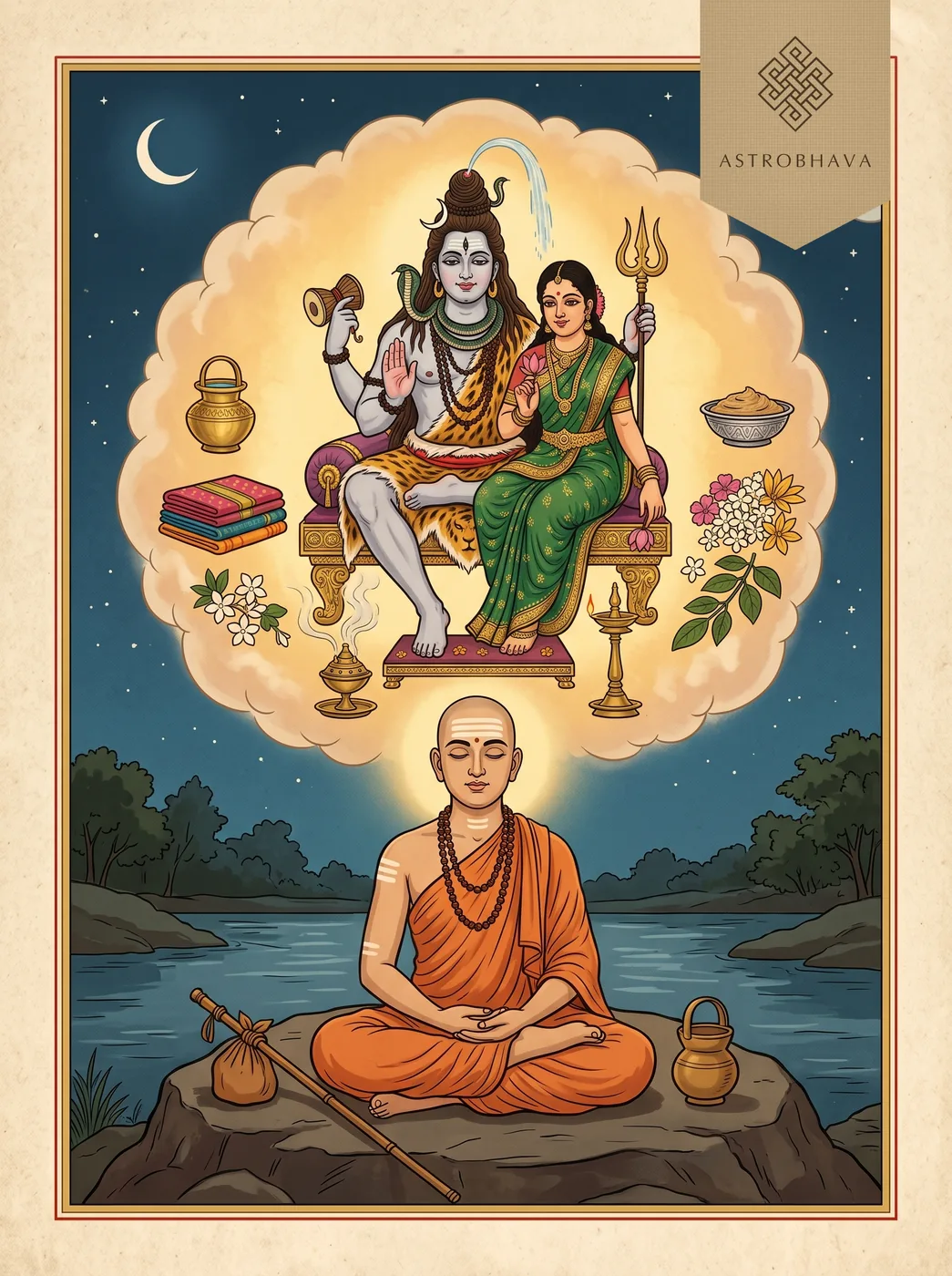
The Shiva Manasa Puja, the 'worship of Shiva in the mind', is a five-verse Sanskrit hymn ascribed to Adi Shankaracharya by the colophon at its close. Its speaker performs a complete shrine worship with nothing in hand: every object is imagined, then offered. Verse 1 gives the first services, a seat of jewels, a bath in snow-cool water, a jewelled garment, sandal paste scented with musk, jasmine, champaka and bilva, incense and a lamp. Verse 2 is the meal, from sweet rice in a gold vessel set with the nine gems to water brightened with camphor and a betel leaf to close. Verse 3 adds the honours paid to a king, parasol, chowries, fan and mirror, then music, dance, prostration and praise. Verse 4 turns the method inward: the worshipper's own self, mind, breath and body become Shiva, Girija, attendants and shrine. The first four verses are in the long Shardulavikridita metre; verse 5, the Karacharanakritam prayer for pardon, shifts to the shorter Malini.
A renunciant's puja with empty hands
No life of Shankara records when or where this hymn was composed. The attribution rests on the last line of the printed text, and like many short stotras gathered under his name it is accepted by tradition rather than proved. The usual reading of its form is an interpretation, not a recorded event: a sannyasi owns no gold vessel, no silk and no lamp, so the whole rite is furnished from the mind, where nothing is lacking. Seen that way, the lavishness of the first three verses is deliberate. The bath water is cooled with snow, the vessel is gold inlaid with nine gems, the camphor is broken into pieces bright enough to perfume drinking water. The sequence follows the services of an ordinary shrine: seat and bath, then dress, sandal, flowers, incense and lamp, then food and betel, then royal honours and music. Verse 4 then removes the need for any of it, since breathing, walking, speaking and even sleep are named as worship. The fifth verse has a life of its own and is often said by itself at the close of a puja, asking pardon for faults of hand, eye and mind. In the 1960s Swami Muktananda placed the hymn in the daily schedule of his ashrams, where verses 4 and 5 are still recited before seva begins.
The mantra, in six scripts
- रत्नैः
- ratnaiḥ — with jewels
- कल्पितमासनं
- kalpitamāsanaṃ — a seat fashioned
- हिमजलैः
- himajalaiḥ — with snow-cool water
- स्नानं
- snānaṃ — a bath
- च
- ca — and
- दिव्याम्बरं
- divyāmbaraṃ — a divine garment
- नानारत्नविभूषितं
- nānāratnavibhūṣitaṃ — adorned with many jewels
- मृगमदामोदाङ्कितं
- mṛgamadāmodāṅkitaṃ — scented with musk
- चन्दनम्
- candanam — sandal paste
Shiva Manasa Puja lyrics in full
The five verses as most printed editions give them: four of mental offering and the closing prayer for forgiveness.
All 5 verses, in Sanskrit, Tamil, Telugu, Kannada, Malayalam and English, each with its meaning. Choose a script:
Download the Shiva Manasa Puja PDFAll 5 verses with their meanings, in Sanskrit. Free to print and keep.
रत्नैः कल्पितमासनं हिमजलैः स्नानं च दिव्याम्बरं नानारत्नविभूषितं मृगमदामोदाङ्कितं चन्दनम् ।
जातीचम्पकबिल्वपत्ररचितं पुष्पं च धूपं तथा दीपं देव दयानिधे पशुपते हृत्कल्पितं गृह्यताम् ॥
ரத்நைஃ கல்பிதமாஸநம் ஹிமஜலைஃ ஸ்நாநம் ச திவ்யாம்பரம் நாநாரத்நவிபூஷிதம் ம்ருகமதாமோதாங்கிதம் சந்தநம் ।
ஜாதீசம்பகபில்வபத்ரரசிதம் புஷ்பம் ச தூபம் ததா தீபம் தேவ தயாநிதே பஶுபதே ஹ்ருத்கல்பிதம் க்ருஹ்யதாம் ॥
రత్నైః కల్పితమాసనం హిమజలైః స్నానం చ దివ్యామ్బరం నానారత్నవిభూషితం మృగమదామోదాఙ్కితం చన్దనమ్ ।
జాతీచమ్పకబిల్వపత్రరచితం పుష్పం చ ధూపం తథా దీపం దేవ దయానిధే పశుపతే హృత్కల్పితం గృహ్యతామ్ ॥
ರತ್ನೈಃ ಕಲ್ಪಿತಮಾಸನಂ ಹಿಮಜಲೈಃ ಸ್ನಾನಂ ಚ ದಿವ್ಯಾಮ್ಬರಂ ನಾನಾರತ್ನವಿಭೂಷಿತಂ ಮೃಗಮದಾಮೋದಾಙ್ಕಿತಂ ಚನ್ದನಮ್ ।
ಜಾತೀಚಮ್ಪಕಬಿಲ್ವಪತ್ರರಚಿತಂ ಪುಷ್ಪಂ ಚ ಧೂಪಂ ತಥಾ ದೀಪಂ ದೇವ ದಯಾನಿಧೇ ಪಶುಪತೇ ಹೃತ್ಕಲ್ಪಿತಂ ಗೃಹ್ಯತಾಮ್ ॥
രത്നൈഃ കല്പിതമാസനം ഹിമജലൈഃ സ്നാനം ച ദിവ്യാമ്ബരം നാനാരത്നവിഭൂഷിതം മൃഗമദാമോദാങ്കിതം ചന്ദനമ് ।
ജാതീചമ്പകബില്വപത്രരചിതം പുഷ്പം ച ധൂപം തഥാ ദീപം ദേവ ദയാനിധേ പശുപതേ ഹൃത്കല്പിതം ഗൃഹ്യതാമ് ॥
ratnaiḥ kalpitamāsanaṃ himajalaiḥ snānaṃ ca divyāmbaraṃ nānāratnavibhūṣitaṃ mṛgamadāmodāṅkitaṃ candanam |
jātīcampakabilvapatraracitaṃ puṣpaṃ ca dhūpaṃ tathā dīpaṃ deva dayānidhe paśupate hṛtkalpitaṃ gṛhyatām ||
O Pashupati, God and treasure-house of compassion: a seat fashioned of jewels, a bath in snow-cool water, a divine garment adorned with many jewels, sandal paste scented with musk, flowers of jasmine and champaka with bilva leaves, incense and a lamp - accept these, which I have fashioned in my heart.
सौवर्णे नवरत्नखण्डरचिते पात्रे घृतं पायसं भक्ष्यं पञ्चविधं पयोदधियुतं रम्भाफलं पानकम् ।
शाकानामयुतं जलं रुचिकरं कर्पूरखण्डोज्ज्वलं ताम्बूलं मनसा मया विरचितं भक्त्या प्रभो स्वीकुरु ॥
ஸௌவர்ணே நவரத்நகண்டரசிதே பாத்ரே க்ருதம் பாயஸம் பக்ஷ்யம் பஞ்சவிதம் பயோததியுதம் ரம்பாபலம் பாநகம் ।
ஶாகாநாமயுதம் ஜலம் ருசிகரம் கர்பூரகண்டோஜ்ஜ்வலம் தாம்பூலம் மநஸா மயா விரசிதம் பக்த்யா ப்ரபோ ஸ்வீகுரு ॥
సౌవర్ణే నవరత్నఖణ్డరచితే పాత్రే ఘృతం పాయసం భక్ష్యం పఞ్చవిధం పయోదధియుతం రమ్భాఫలం పానకమ్ ।
శాకానామయుతం జలం రుచికరం కర్పూరఖణ్డోజ్జ్వలం తామ్బూలం మనసా మయా విరచితం భక్త్యా ప్రభో స్వీకురు ॥
ಸೌವರ್ಣೇ ನವರತ್ನಖಣ್ಡರಚಿತೇ ಪಾತ್ರೇ ಘೃತಂ ಪಾಯಸಂ ಭಕ್ಷ್ಯಂ ಪಞ್ಚವಿಧಂ ಪಯೋದಧಿಯುತಂ ರಮ್ಭಾಫಲಂ ಪಾನಕಮ್ ।
ಶಾಕಾನಾಮಯುತಂ ಜಲಂ ರುಚಿಕರಂ ಕರ್ಪೂರಖಣ್ಡೋಜ್ಜ್ವಲಂ ತಾಮ್ಬೂಲಂ ಮನಸಾ ಮಯಾ ವಿರಚಿತಂ ಭಕ್ತ್ಯಾ ಪ್ರಭೋ ಸ್ವೀಕುರು ॥
സൌവര്ണേ നവരത്നഖണ്ഡരചിതേ പാത്രേ ഘൃതം പായസം ഭക്ഷ്യം പഞ്ചവിധം പയോദധിയുതം രമ്ഭാഫലം പാനകമ് ।
ശാകാനാമയുതം ജലം രുചികരം കര്പൂരഖണ്ഡോജ്ജ്വലം താമ്ബൂലം മനസാ മയാ വിരചിതം ഭക്ത്യാ പ്രഭോ സ്വീകുരു ॥
sauvarṇe navaratnakhaṇḍaracite pātre ghṛtaṃ pāyasaṃ bhakṣyaṃ pañcavidhaṃ payodadhiyutaṃ rambhāphalaṃ pānakam |
śākānāmayutaṃ jalaṃ rucikaraṃ karpūrakhaṇḍojjvalaṃ tāmbūlaṃ manasā mayā viracitaṃ bhaktyā prabho svīkuru ||
Ghee and sweet rice pudding in a golden vessel set with the nine gems, five kinds of food, dishes with milk and curd, bananas, a sweet drink, many vegetables, pleasant water bright with pieces of camphor, and betel leaf - all this I have prepared in my mind with devotion; O Lord, accept it.
छत्रं चामरयोर्युगं व्यजनकं चादर्शकं निर्मलं वीणाभेरिमृदङ्गकाहलकला गीतं च नृत्यं तथा ।
साष्टाङ्गं प्रणतिः स्तुतिर्बहुविधा ह्येतत्समस्तं मया सङ्कल्पेन समर्पितं तव विभो पूजां गृहाण प्रभो ॥
சத்ரம் சாமரயோர்யுகம் வ்யஜநகம் சாதர்ஶகம் நிர்மலம் வீணாபேரிம்ருதங்ககாஹலகலா கீதம் ச ந்ருத்யம் ததா ।
ஸாஷ்டாங்கம் ப்ரணதிஃ ஸ்துதிர்பஹுவிதா ஹ்யேதத்ஸமஸ்தம் மயா ஸங்கல்பேந ஸமர்பிதம் தவ விபோ பூஜாம் க்ருஹாண ப்ரபோ ॥
ఛత్రం చామరయోర్యుగం వ్యజనకం చాదర్శకం నిర్మలం వీణాభేరిమృదఙ్గకాహలకలా గీతం చ నృత్యం తథా ।
సాష్టాఙ్గం ప్రణతిః స్తుతిర్బహువిధా హ్యేతత్సమస్తం మయా సఙ్కల్పేన సమర్పితం తవ విభో పూజాం గృహాణ ప్రభో ॥
ಛತ್ರಂ ಚಾಮರಯೋರ್ಯುಗಂ ವ್ಯಜನಕಂ ಚಾದರ್ಶಕಂ ನಿರ್ಮಲಂ ವೀಣಾಭೇರಿಮೃದಙ್ಗಕಾಹಲಕಲಾ ಗೀತಂ ಚ ನೃತ್ಯಂ ತಥಾ ।
ಸಾಷ್ಟಾಙ್ಗಂ ಪ್ರಣತಿಃ ಸ್ತುತಿರ್ಬಹುವಿಧಾ ಹ್ಯೇತತ್ಸಮಸ್ತಂ ಮಯಾ ಸಙ್ಕಲ್ಪೇನ ಸಮರ್ಪಿತಂ ತವ ವಿಭೋ ಪೂಜಾಂ ಗೃಹಾಣ ಪ್ರಭೋ ॥
ഛത്രം ചാമരയോര്യുഗം വ്യജനകം ചാദര്ശകം നിര്മലം വീണാഭേരിമൃദങ്ഗകാഹലകലാ ഗീതം ച നൃത്യം തഥാ ।
സാഷ്ടാങ്ഗം പ്രണതിഃ സ്തുതിര്ബഹുവിധാ ഹ്യേതത്സമസ്തം മയാ സങ്കല്പേന സമര്പിതം തവ വിഭോ പൂജാം ഗൃഹാണ പ്രഭോ ॥
chatraṃ cāmarayoryugaṃ vyajanakaṃ cādarśakaṃ nirmalaṃ vīṇābherimṛdaṅgakāhalakalā gītaṃ ca nṛtyaṃ tathā |
sāṣṭāṅgaṃ praṇatiḥ stutirbahuvidhā hyetatsamastaṃ mayā saṅkalpena samarpitaṃ tava vibho pūjāṃ gṛhāṇa prabho ||
A parasol, a pair of chowries, a fan and a spotless mirror, the music of the vina, kettledrum, mridanga and horn, song and dance, full prostration and praises of many kinds - all this I offer to you by intention alone, O all-pervading one; O Lord, accept my worship.
आत्मा त्वं गिरिजा मतिः सहचराः प्राणाः शरीरं गृहं पूजा ते विषयोपभोगरचना निद्रा समाधिस्थितिः ।
सञ्चारः पदयोः प्रदक्षिणविधिः स्तोत्राणि सर्वा गिरो यद्यत्कर्म करोमि तत्तदखिलं शम्भो तवाराधनम् ॥
ஆத்மா த்வம் கிரிஜா மதிஃ ஸஹசராஃ ப்ராணாஃ ஶரீரம் க்ருஹம் பூஜா தே விஷயோபபோகரசநா நித்ரா ஸமாதிஸ்திதிஃ ।
ஸஞ்சாரஃ பதயோஃ ப்ரதக்ஷிணவிதிஃ ஸ்தோத்ராணி ஸர்வா கிரோ யத்யத்கர்ம கரோமி தத்ததகிலம் ஶம்போ தவாராதநம் ॥
ఆత్మా త్వం గిరిజా మతిః సహచరాః ప్రాణాః శరీరం గృహం పూజా తే విషయోపభోగరచనా నిద్రా సమాధిస్థితిః ।
సఞ్చారః పదయోః ప్రదక్షిణవిధిః స్తోత్రాణి సర్వా గిరో యద్యత్కర్మ కరోమి తత్తదఖిలం శమ్భో తవారాధనమ్ ॥
ಆತ್ಮಾ ತ್ವಂ ಗಿರಿಜಾ ಮತಿಃ ಸಹಚರಾಃ ಪ್ರಾಣಾಃ ಶರೀರಂ ಗೃಹಂ ಪೂಜಾ ತೇ ವಿಷಯೋಪಭೋಗರಚನಾ ನಿದ್ರಾ ಸಮಾಧಿಸ್ಥಿತಿಃ ।
ಸಞ್ಚಾರಃ ಪದಯೋಃ ಪ್ರದಕ್ಷಿಣವಿಧಿಃ ಸ್ತೋತ್ರಾಣಿ ಸರ್ವಾ ಗಿರೋ ಯದ್ಯತ್ಕರ್ಮ ಕರೋಮಿ ತತ್ತದಖಿಲಂ ಶಮ್ಭೋ ತವಾರಾಧನಮ್ ॥
ആത്മാ ത്വം ഗിരിജാ മതിഃ സഹചരാഃ പ്രാണാഃ ശരീരം ഗൃഹം പൂജാ തേ വിഷയോപഭോഗരചനാ നിദ്രാ സമാധിസ്ഥിതിഃ ।
സഞ്ചാരഃ പദയോഃ പ്രദക്ഷിണവിധിഃ സ്തോത്രാണി സര്വാ ഗിരോ യദ്യത്കര്മ കരോമി തത്തദഖിലം ശമ്ഭോ തവാരാധനമ് ॥
ātmā tvaṃ girijā matiḥ sahacarāḥ prāṇāḥ śarīraṃ gṛhaṃ pūjā te viṣayopabhogaracanā nidrā samādhisthitiḥ |
sañcāraḥ padayoḥ pradakṣiṇavidhiḥ stotrāṇi sarvā giro yadyatkarma karomi tattadakhilaṃ śambho tavārādhanam ||
You are my self, Girija (Parvati) is my mind, my life-breaths are your attendants, my body is your house; the enjoyment of the senses is your worship and sleep is the state of samadhi. My walking about is circumambulation of you, all my words are hymns to you; whatever act I do, O Shambhu, all of it is your worship.
करचरणकृतं वाक्कायजं कर्मजं वा श्रवणनयनजं वा मानसं वापराधम् ।
विहितमविहितं वा सर्वमेतत्क्षमस्व जय जय करुणाब्धे श्रीमहादेवशम्भो ॥
கரசரணக்ருதம் வாக்காயஜம் கர்மஜம் வா ஶ்ரவணநயநஜம் வா மாநஸம் வாபராதம் ।
விஹிதமவிஹிதம் வா ஸர்வமேதத்க்ஷமஸ்வ ஜய ஜய கருணாப்தே ஶ்ரீமஹாதேவஶம்போ ॥
కరచరణకృతం వాక్కాయజం కర్మజం వా శ్రవణనయనజం వా మానసం వాపరాధమ్ ।
విహితమవిహితం వా సర్వమేతత్క్షమస్వ జయ జయ కరుణాబ్ధే శ్రీమహాదేవశమ్భో ॥
ಕರಚರಣಕೃತಂ ವಾಕ್ಕಾಯಜಂ ಕರ್ಮಜಂ ವಾ ಶ್ರವಣನಯನಜಂ ವಾ ಮಾನಸಂ ವಾಪರಾಧಮ್ ।
ವಿಹಿತಮವಿಹಿತಂ ವಾ ಸರ್ವಮೇತತ್ಕ್ಷಮಸ್ವ ಜಯ ಜಯ ಕರುಣಾಬ್ಧೇ ಶ್ರೀಮಹಾದೇವಶಮ್ಭೋ ॥
കരചരണകൃതം വാക്കായജം കര്മജം വാ ശ്രവണനയനജം വാ മാനസം വാപരാധമ് ।
വിഹിതമവിഹിതം വാ സര്വമേതത്ക്ഷമസ്വ ജയ ജയ കരുണാബ്ധേ ശ്രീമഹാദേവശമ്ഭോ ॥
karacaraṇakṛtaṃ vākkāyajaṃ karmajaṃ vā śravaṇanayanajaṃ vā mānasaṃ vāparādham |
vihitamavihitaṃ vā sarvametatkṣamasva jaya jaya karuṇābdhe śrīmahādevaśambho ||
Whatever wrong I have done with hands or feet, born of speech or body or action, through ears or eyes, or in the mind, whether prescribed or forbidden - forgive all of it. Victory, victory to you, ocean of compassion, glorious Mahadeva, Shambhu.
The syllable people get wrong
In the last verse, kṣamasva ('forgive') opens with the cluster kṣ, which is one sound, k sliding straight into sh: say 'kshuh-muhs-vuh'. It is often flattened to 'chamasva' or 'kamasva', which loses the word.
When the Shiva Manasa Puja is chanted
Weekday. Monday
Questions
Have your chart read before you decide
Chanting is yours to do, and free. But which deity your situation calls for — and whether a mantra alone is the right response — depends on your chart. Sometimes it is; sometimes it is not.
- Over 30 years in the Guru–Sishya Parampara, from the age of five
- He reads every chart himself — 60 minutes, one to one, never delegated
- Charts are read only between sunrise and sunset, following tradition
