Shiva Mangalashtakam
भवाय चन्द्रचूडाय निर्गुणाय गुणात्मने । कालकालाय रुद्राय नीलग्रीवाय मङ्गलम् ॥Also known as Bhavaya Chandrachudaya
In Devanagari, Tamil, Telugu, Kannada, Malayalam and English — with the meaning of every word, and the one syllable most people pronounce wrongly.
 The Rudra Homam, performed for youBook →
What the Shiva Mangalashtakam is
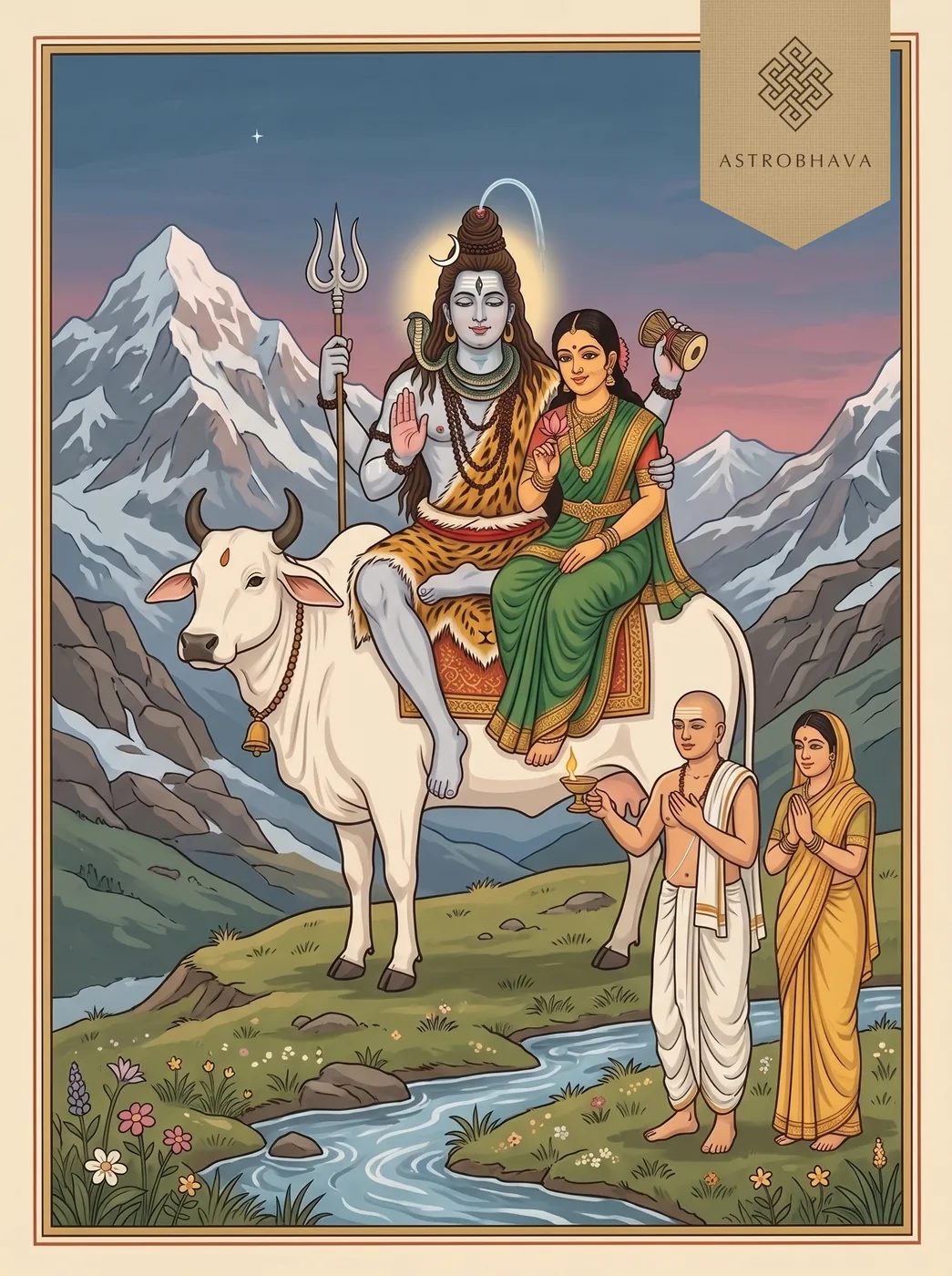
The Shiva Mangalashtakam, the Sanskrit hymn that opens bhavaya chandrachudaya, wishes mangalam, auspiciousness, to Shiva in eight short verses and closes with a ninth that tells how it came to be written. Each verse is a run of titles in the dative case, 'to Bhava, to the moon-crested one', and the single word mangalam falls at the end of every one, so the hymn works as a blessing offered back to the god rather than a request. Verses 1 to 3 draw the familiar figure: the moon on the crest, the blue throat, the bull, the tiger skin, the ash, the serpent worn as a sacred thread, the rudraksha beads. Verses 4 and 5 widen the view to eyes that are the sun, moon and fire, to the conqueror of death and the cause of creation, preservation and dissolution. Verses 6 to 8 name the five faces of Shiva and end on Mahadeva. No printing names an author.
Eight old names and five faces
The hymn tells nothing of its own making beyond its last verse, which says only that it was composed at the prompting of Sri Chamunda; it names no poet, place or date. What the verses hold instead is older material, set out with care. The Brahmanda and Markandeya Puranas tell of a god who appeared weeping before Brahma. Brahma named him Rudra, from rud, 'to cry', and told him not to weep, but he cried seven times more and received seven more names: Bhava, Sharva, Ishana, Pashupati, Bhima, Ugra and Mahadeva. The Brahmanda Purana gives each name one of Shiva's eight bodies, among them the sun, water, earth, wind, fire, space and the moon. All eight names are scattered through this Mangalashtakam: Bhava and Rudra in verse 1, Bhima and pashunam pati, master of bound souls, in verse 2, Ugra in verse 6, Sharva and Ishana in verse 7, and Mahadeva as the last name before the closing verse. Over them lie the five faces of the Pancha Brahma mantras of the Taittiriya Aranyaka, though not in Vedic order. Verse 6 names Vamadeva, verse 7 adds Sadyojata and Ishana and calls Shiva five-faced, and verse 8 completes the set with Tatpurusha and Aghora, the gentle one who is also the terrible one.
The mantra, in six scripts
- भवाय
- bhavāya — to Bhava, the source of being
- चन्द्रचूडाय
- candracūḍāya — to the one with the moon on his crest
- निर्गुणाय
- nirguṇāya — to the one beyond qualities
- गुणात्मने
- guṇātmane — to the self of all qualities
- कालकालाय
- kālakālāya — to the Death of Death
- रुद्राय
- rudrāya — to Rudra
- नीलग्रीवाय
- nīlagrīvāya — to the blue-throated one
- मङ्गलम्
- maṅgalam — auspiciousness
Shiva Mangalashtakam lyrics in full
Eight verses on the mangalam refrain and a closing verse on how the hymn came to be written. The printed closing line is given at the end.
All 10 verses, in Sanskrit, Tamil, Telugu, Kannada, Malayalam and English, each with its meaning. Choose a script:
Download the Shiva Mangalashtakam PDFAll 10 verses with their meanings, in Sanskrit. Free to print and keep.
भवाय चन्द्रचूडाय निर्गुणाय गुणात्मने ।
कालकालाय रुद्राय नीलग्रीवाय मङ्गलम् ॥
பவாய சந்த்ரசூடாய நிர்குணாய குணாத்மநே ।
காலகாலாய ருத்ராய நீலக்ரீவாய மங்கலம் ॥
భవాయ చన్ద్రచూడాయ నిర్గుణాయ గుణాత్మనే ।
కాలకాలాయ రుద్రాయ నీలగ్రీవాయ మఙ్గలమ్ ॥
ಭವಾಯ ಚನ್ದ್ರಚೂಡಾಯ ನಿರ್ಗುಣಾಯ ಗುಣಾತ್ಮನೇ ।
ಕಾಲಕಾಲಾಯ ರುದ್ರಾಯ ನೀಲಗ್ರೀವಾಯ ಮಙ್ಗಲಮ್ ॥
ഭവായ ചന്ദ്രചൂഡായ നിര്ഗുണായ ഗുണാത്മനേ ।
കാലകാലായ രുദ്രായ നീലഗ്രീവായ മങ്ഗലമ് ॥
bhavāya candracūḍāya nirguṇāya guṇātmane |
kālakālāya rudrāya nīlagrīvāya maṅgalam ||
Auspiciousness to Bhava, who wears the moon on his crest, who is beyond all qualities and yet the self of all qualities; to the Death of Death, to Rudra, to the blue-throated one.
वृषारूढाय भीमाय व्याघ्रचर्माम्बराय च ।
पशूनां पतये तुभ्यं गौरीकान्ताय मङ्गलम् ॥
வ்ருஷாரூடாய பீமாய வ்யாக்ரசர்மாம்பராய ச ।
பஶூநாம் பதயே துப்யம் கௌரீகாந்தாய மங்கலம் ॥
వృషారూఢాయ భీమాయ వ్యాఘ్రచర్మామ్బరాయ చ ।
పశూనాం పతయే తుభ్యం గౌరీకాన్తాయ మఙ్గలమ్ ॥
ವೃಷಾರೂಢಾಯ ಭೀಮಾಯ ವ್ಯಾಘ್ರಚರ್ಮಾಮ್ಬರಾಯ ಚ ।
ಪಶೂನಾಂ ಪತಯೇ ತುಭ್ಯಂ ಗೌರೀಕಾನ್ತಾಯ ಮಙ್ಗಲಮ್ ॥
വൃഷാരൂഢായ ഭീമായ വ്യാഘ്രചര്മാമ്ബരായ ച ।
പശൂനാം പതയേ തുഭ്യം ഗൌരീകാന്തായ മങ്ഗലമ് ॥
vṛṣārūḍhāya bhīmāya vyāghracarmāmbarāya ca |
paśūnāṃ pataye tubhyaṃ gaurīkāntāya maṅgalam ||
Auspiciousness to you who ride the bull, the awesome one clothed in a tiger's skin; to you, Lord of all bound souls, the beloved of Gauri.
भस्मोद्धूलितदेहाय व्यालयज्ञोपवीतिने ।
रुद्राक्षमालाभूषाय व्योमकेशाय मङ्गलम् ॥
பஸ்மோத்தூலிததேஹாய வ்யாலயஜ்ஞோபவீதிநே ।
ருத்ராக்ஷமாலாபூஷாய வ்யோமகேஶாய மங்கலம் ॥
భస్మోద్ధూలితదేహాయ వ్యాలయజ్ఞోపవీతినే ।
రుద్రాక్షమాలాభూషాయ వ్యోమకేశాయ మఙ్గలమ్ ॥
ಭಸ್ಮೋದ್ಧೂಲಿತದೇಹಾಯ ವ್ಯಾಲಯಜ್ಞೋಪವೀತಿನೇ ।
ರುದ್ರಾಕ್ಷಮಾಲಾಭೂಷಾಯ ವ್ಯೋಮಕೇಶಾಯ ಮಙ್ಗಲಮ್ ॥
ഭസ്മോദ്ധൂലിതദേഹായ വ്യാലയജ്ഞോപവീതിനേ ।
രുദ്രാക്ഷമാലാഭൂഷായ വ്യോമകേശായ മങ്ഗലമ് ॥
bhasmoddhūlitadehāya vyālayajñopavītine |
rudrākṣamālābhūṣāya vyomakeśāya maṅgalam ||
Auspiciousness to him whose body is smeared with sacred ash, who wears a serpent as his sacred thread, who is adorned with a rudraksha garland, and whose hair is the sky.
सूर्यचन्द्राग्निनेत्राय नमः कैलासवासिने ।
सच्चिदानन्दरूपाय प्रमथेशाय मङ्गलम् ॥
ஸூர்யசந்த்ராக்நிநேத்ராய நமஃ கைலாஸவாஸிநே ।
ஸச்சிதாநந்தரூபாய ப்ரமதேஶாய மங்கலம் ॥
సూర్యచన్ద్రాగ్నినేత్రాయ నమః కైలాసవాసినే ।
సచ్చిదానన్దరూపాయ ప్రమథేశాయ మఙ్గలమ్ ॥
ಸೂರ್ಯಚನ್ದ್ರಾಗ್ನಿನೇತ್ರಾಯ ನಮಃ ಕೈಲಾಸವಾಸಿನೇ ।
ಸಚ್ಚಿದಾನನ್ದರೂಪಾಯ ಪ್ರಮಥೇಶಾಯ ಮಙ್ಗಲಮ್ ॥
സൂര്യചന്ദ്രാഗ്നിനേത്രായ നമഃ കൈലാസവാസിനേ ।
സച്ചിദാനന്ദരൂപായ പ്രമഥേശായ മങ്ഗലമ് ॥
sūryacandrāgninetrāya namaḥ kailāsavāsine |
saccidānandarūpāya pramatheśāya maṅgalam ||
Salutation to him whose eyes are the sun, the moon and fire, who dwells on Kailasa; auspiciousness to the Lord of the Pramathas, whose form is being, awareness and bliss.
मृत्युञ्जयाय साम्बाय सृष्टिस्थित्यन्तकारिणे ।
त्र्यम्बकाय सुशान्ताय त्रिलोकेशाय मङ्गलम् ॥
ம்ருத்யுஞ்ஜயாய ஸாம்பாய ஸ்ருஷ்டிஸ்தித்யந்தகாரிணே ।
த்ர்யம்பகாய ஸுஶாந்தாய த்ரிலோகேஶாய மங்கலம் ॥
మృత్యుఞ్జయాయ సామ్బాయ సృష్టిస్థిత్యన్తకారిణే ।
త్ర్యమ్బకాయ సుశాన్తాయ త్రిలోకేశాయ మఙ్గలమ్ ॥
ಮೃತ್ಯುಞ್ಜಯಾಯ ಸಾಮ್ಬಾಯ ಸೃಷ್ಟಿಸ್ಥಿತ್ಯನ್ತಕಾರಿಣೇ ।
ತ್ರ್ಯಮ್ಬಕಾಯ ಸುಶಾನ್ತಾಯ ತ್ರಿಲೋಕೇಶಾಯ ಮಙ್ಗಲಮ್ ॥
മൃത്യുഞ്ജയായ സാമ്ബായ സൃഷ്ടിസ്ഥിത്യന്തകാരിണേ ।
ത്ര്യമ്ബകായ സുശാന്തായ ത്രിലോകേശായ മങ്ഗലമ് ॥
mṛtyuñjayāya sāmbāya sṛṣṭisthityantakāriṇe |
tryambakāya suśāntāya trilokeśāya maṅgalam ||
Auspiciousness to the conqueror of death, who is ever with Amba, who brings about creation, preservation and dissolution; to the three-eyed one, the deeply peaceful Lord of the three worlds.
गङ्गाधराय सोमाय नमो हरिहरात्मने ।
उग्राय त्रिपुरघ्नाय वामदेवाय मङ्गलम् ॥
கங்காதராய ஸோமாய நமோ ஹரிஹராத்மநே ।
உக்ராய த்ரிபுரக்நாய வாமதேவாய மங்கலம் ॥
గఙ్గాధరాయ సోమాయ నమో హరిహరాత్మనే ।
ఉగ్రాయ త్రిపురఘ్నాయ వామదేవాయ మఙ్గలమ్ ॥
ಗಙ್ಗಾಧರಾಯ ಸೋಮಾಯ ನಮೋ ಹರಿಹರಾತ್ಮನೇ ।
ಉಗ್ರಾಯ ತ್ರಿಪುರಘ್ನಾಯ ವಾಮದೇವಾಯ ಮಙ್ಗಲಮ್ ॥
ഗങ്ഗാധരായ സോമായ നമോ ഹരിഹരാത്മനേ ।
ഉഗ്രായ ത്രിപുരഘ്നായ വാമദേവായ മങ്ഗലമ് ॥
gaṅgādharāya somāya namo hariharātmane |
ugrāya tripuraghnāya vāmadevāya maṅgalam ||
Salutation to the bearer of the Ganga, to him who is with Uma, whose self is both Hari and Hara; auspiciousness to the fierce one, the destroyer of the three cities, to Vamadeva.
सद्योजाताय शर्वाय भव्यज्ञानप्रदायिने ।
ईशानाय नमस्तुभ्यं पञ्चवक्त्राय मङ्गलम् ॥
ஸத்யோஜாதாய ஶர்வாய பவ்யஜ்ஞாநப்ரதாயிநே ।
ஈஶாநாய நமஸ்துப்யம் பஞ்சவக்த்ராய மங்கலம் ॥
సద్యోజాతాయ శర్వాయ భవ్యజ్ఞానప్రదాయినే ।
ఈశానాయ నమస్తుభ్యం పఞ్చవక్త్రాయ మఙ్గలమ్ ॥
ಸದ್ಯೋಜಾತಾಯ ಶರ್ವಾಯ ಭವ್ಯಜ್ಞಾನಪ್ರದಾಯಿನೇ ।
ಈಶಾನಾಯ ನಮಸ್ತುಭ್ಯಂ ಪಞ್ಚವಕ್ತ್ರಾಯ ಮಙ್ಗಲಮ್ ॥
സദ്യോജാതായ ശര്വായ ഭവ്യജ്ഞാനപ്രദായിനേ ।
ഈശാനായ നമസ്തുഭ്യം പഞ്ചവക്ത്രായ മങ്ഗലമ് ॥
sadyojātāya śarvāya bhavyajñānapradāyine |
īśānāya namastubhyaṃ pañcavaktrāya maṅgalam ||
To Sadyojata, to Sharva, the giver of noble knowledge; salutation to you, Ishana, and auspiciousness to the five-faced one.
सदाशिवस्वरूपाय नमस्तत्पुरुषाय च ।
अघोराय च घोराय महादेवाय मङ्गलम् ॥
ஸதாஶிவஸ்வரூபாய நமஸ்தத்புருஷாய ச ।
அகோராய ச கோராய மஹாதேவாய மங்கலம் ॥
సదాశివస్వరూపాయ నమస్తత్పురుషాయ చ ।
అఘోరాయ చ ఘోరాయ మహాదేవాయ మఙ్గలమ్ ॥
ಸದಾಶಿವಸ್ವರೂಪಾಯ ನಮಸ್ತತ್ಪುರುಷಾಯ ಚ ।
ಅಘೋರಾಯ ಚ ಘೋರಾಯ ಮಹಾದೇವಾಯ ಮಙ್ಗಲಮ್ ॥
സദാശിവസ്വരൂപായ നമസ്തത്പുരുഷായ ച ।
അഘോരായ ച ഘോരായ മഹാദേവായ മങ്ഗലമ് ॥
sadāśivasvarūpāya namastatpuruṣāya ca |
aghorāya ca ghorāya mahādevāya maṅgalam ||
Salutation to him whose very form is Sadashiva, and to Tatpurusha; auspiciousness to Aghora, the gentle one who is also the terrible one, to Mahadeva.
श्रीचामुण्डाप्रेरितेन रचितं मङ्गलास्पदम् ।
तस्याभीष्टप्रदं शम्भोः यः पठेन्मङ्गलाष्टकम् ॥
ஶ்ரீசாமுண்டாப்ரேரிதேந ரசிதம் மங்கலாஸ்பதம் ।
தஸ்யாபீஷ்டப்ரதம் ஶம்போஃ யஃ படேந்மங்கலாஷ்டகம் ॥
శ్రీచాముణ్డాప్రేరితేన రచితం మఙ్గలాస్పదమ్ ।
తస్యాభీష్టప్రదం శమ్భోః యః పఠేన్మఙ్గలాష్టకమ్ ॥
ಶ್ರೀಚಾಮುಣ್ಡಾಪ್ರೇರಿತೇನ ರಚಿತಂ ಮಙ್ಗಲಾಸ್ಪದಮ್ ।
ತಸ್ಯಾಭೀಷ್ಟಪ್ರದಂ ಶಮ್ಭೋಃ ಯಃ ಪಠೇನ್ಮಙ್ಗಲಾಷ್ಟಕಮ್ ॥
ശ്രീചാമുണ്ഡാപ്രേരിതേന രചിതം മങ്ഗലാസ്പദമ് ।
തസ്യാഭീഷ്ടപ്രദം ശമ്ഭോഃ യഃ പഠേന്മങ്ഗലാഷ്ടകമ് ॥
śrīcāmuṇḍāpreritena racitaṃ maṅgalāspadam |
tasyābhīṣṭapradaṃ śambhoḥ yaḥ paṭhenmaṅgalāṣṭakam ||
This home of auspiciousness was composed at the prompting of Sri Chamunda. The verse says that whoever recites this Mangalashtaka of Shambhu is granted what he wishes for.
इति श्रीशिवमङ्गलाष्टकम् ॥
இதி ஶ்ரீஶிவமங்கலாஷ்டகம் ॥
ఇతి శ్రీశివమఙ్గలాష్టకమ్ ॥
ಇತಿ ಶ್ರೀಶಿವಮಙ್ಗಲಾಷ್ಟಕಮ್ ॥
ഇതി ശ്രീശിവമങ്ഗലാഷ്ടകമ് ॥
iti śrīśivamaṅgalāṣṭakam ||
Thus ends the Sri Shiva Mangalashtakam.
The syllable people get wrong
In verse 5, tryambakāya ('to the three-eyed one') opens with the cluster try, which is one syllable: say tryam-ba-KAA-ya, not tri-yam-ba-ka-ya, and keep the long ā before the final ya.
When the Shiva Mangalashtakam is chanted
Weekday. Monday
Festival. Monday and Pradosha worship of Shiva
Questions
Have your chart read before you decide
Chanting is yours to do, and free. But which deity your situation calls for — and whether a mantra alone is the right response — depends on your chart. Sometimes it is; sometimes it is not.
- Over 30 years in the Guru–Sishya Parampara, from the age of five
- He reads every chart himself — 60 minutes, one to one, never delegated
- Charts are read only between sunrise and sunset, following tradition
