Shivashtakam
प्रभुं प्राणनाथं विभुं विश्वनाथं जगन्नाथनाथं सदानन्दभाजाम् । भवद्भव्यभूतेश्वरं भूतनाथं शिवं शङ्करं शम्भुमीशानमीडे ॥Also known as Prabhum Prananatham
In Devanagari, Tamil, Telugu, Kannada, Malayalam and English — with the meaning of every word, and the one syllable most people pronounce wrongly.
What the Shivashtakam is
The Shivashtakam, the Sanskrit hymn to Shiva that opens with the words prabhum prananatham, is eight verses of praise followed by one verse on the fruit of reading it. It runs in bhujangaprayata, the metre of four short-long-long beats to the line, and every verse ends on the same refrain: shivam shankaram shambhum ishanam ide, 'I praise Shiva, Shankara, Shambhu, Ishana'. That closing verb is the only one in each verse, so everything before it is a string of titles waiting for 'I praise'. Verse 1 names Shiva lord of the life-breath, of the universe and of past, present and future. Verses 2 to 4 draw the ascetic: skulls at the throat, serpents on the body, the Ganga in his hair, ash, booming laughter. Verse 5 gives half his body to Parvati, verse 6 places skull-bowl and trident in his hands, verse 7 makes him Kubera's friend, and verse 8 sets him in the cremation ground.
A courtship hidden in verses 5, 7 and 8
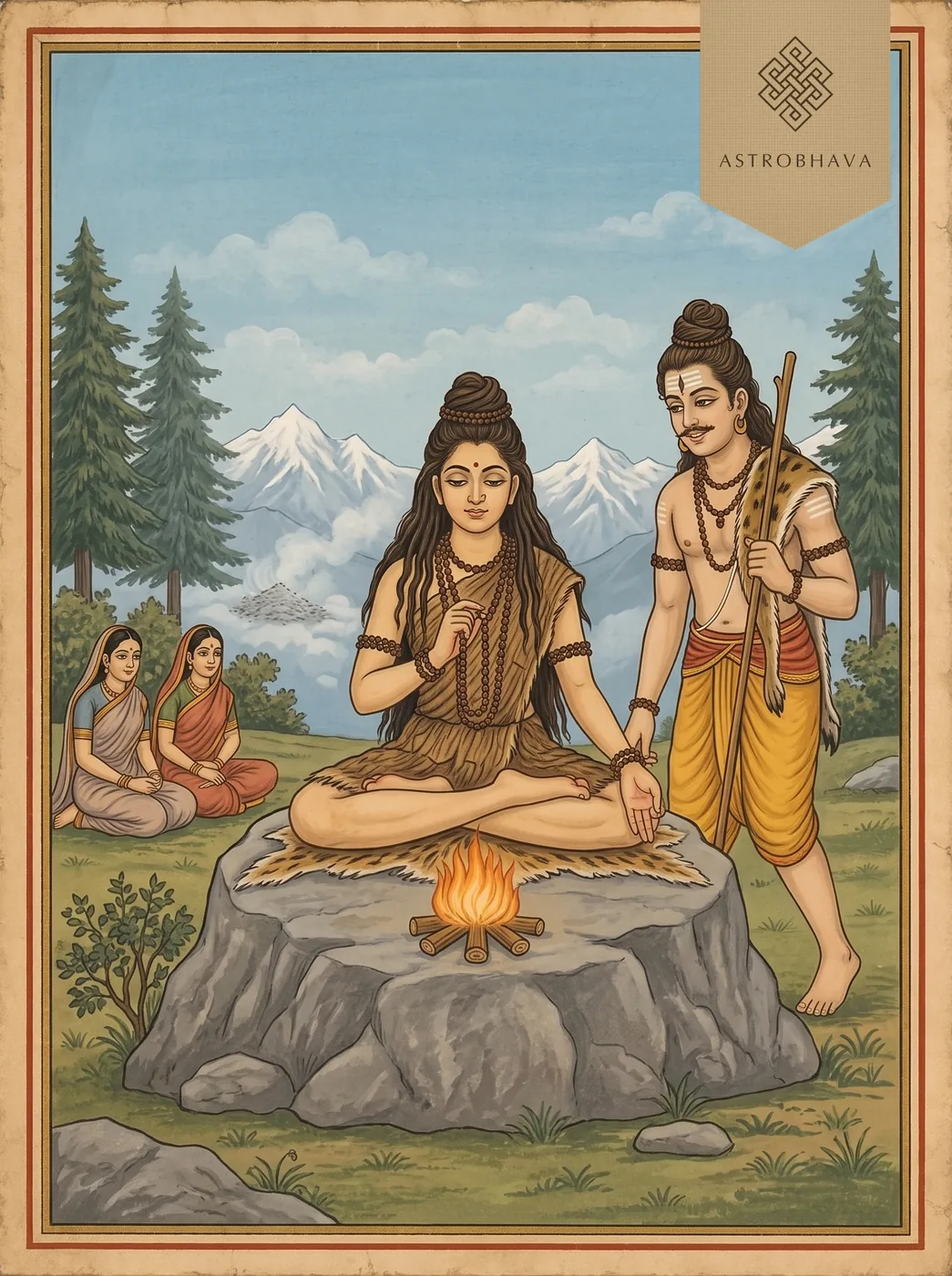
The hymn carries no account of its own making. The old Bombay printing of the Brihat Stotra Ratnakar simply sets it among the Shiva hymns, straight after the Kalabhairavashtakam, with no author's line of its own. What its last verses do hold, scattered and out of order, is the story of how Parvati won Shiva. Read from the end backwards, verse 8 calls him the one who burned manoja, 'the mind-born', a name of Kama. In Kalidasa's Kumarasambhava the god of love is sent to break Shiva's meditation so that he will turn to Parvati, and Shiva's third eye reduces him to ash. Parvati then takes up austerity on a Himalayan peak. Kalidasa says she first lived on leaves that fell by themselves and at last refused even those, and so the learned called her Aparna, 'without a leaf'. That is the name verse 7 uses for Shiva's wife. In the same canto Shiva comes to her as a young ascetic and mocks the god she wants for his skulls, snakes and cremation grounds, the very marks this hymn praises in verses 2 and 8. Verse 5 gives the ending: the daughter of the king of mountains holds half his body, the form known as Ardhanarishvara. The Skanda and Kalika Puranas each tell their own version of how she came to share it.
The mantra, in six scripts
- प्रभुं
- prabhuṃ — the Master
- प्राणनाथं
- prāṇanāthaṃ — lord of the life-breath
- विभुं
- vibhuṃ — all-pervading
- विश्वनाथं
- viśvanāthaṃ — lord of the universe
- जगन्नाथनाथं
- jagannāthanāthaṃ — lord of Vishnu, lord of the world
- सदानन्दभाजाम्
- sadānandabhājām — of those who share lasting bliss
- भवद्भव्यभूतेश्वरं
- bhavadbhavyabhūteśvaraṃ — ruler of present, future and past
- भूतनाथं
- bhūtanāthaṃ — lord of all beings
- शिवं
- śivaṃ — Shiva, the auspicious
- शङ्करं
- śaṅkaraṃ — Shankara, bringer of well-being
- शम्भुमीशानमीडे
- śambhumīśānamīḍe — Shambhu, Ishana, I praise
Shivashtakam lyrics in full
Eight verses and the closing verse on the fruit of reading it, as printed in the old stotra collections.
All 9 verses, in Sanskrit, Tamil, Telugu, Kannada, Malayalam and English, each with its meaning. Choose a script:
Download the Shivashtakam PDFAll 9 verses with their meanings, in Sanskrit. Free to print and keep.
प्रभुं प्राणनाथं विभुं विश्वनाथं जगन्नाथनाथं सदानन्दभाजाम् ।
भवद्भव्यभूतेश्वरं भूतनाथं शिवं शङ्करं शम्भुमीशानमीडे ॥
ப்ரபும் ப்ராணநாதம் விபும் விஶ்வநாதம் ஜகந்நாதநாதம் ஸதாநந்தபாஜாம் ।
பவத்பவ்யபூதேஶ்வரம் பூதநாதம் ஶிவம் ஶங்கரம் ஶம்புமீஶாநமீடே ॥
ప్రభుం ప్రాణనాథం విభుం విశ్వనాథం జగన్నాథనాథం సదానన్దభాజామ్ ।
భవద్భవ్యభూతేశ్వరం భూతనాథం శివం శఙ్కరం శమ్భుమీశానమీడే ॥
ಪ್ರಭುಂ ಪ್ರಾಣನಾಥಂ ವಿಭುಂ ವಿಶ್ವನಾಥಂ ಜಗನ್ನಾಥನಾಥಂ ಸದಾನನ್ದಭಾಜಾಮ್ ।
ಭವದ್ಭವ್ಯಭೂತೇಶ್ವರಂ ಭೂತನಾಥಂ ಶಿವಂ ಶಙ್ಕರಂ ಶಮ್ಭುಮೀಶಾನಮೀಡೇ ॥
പ്രഭും പ്രാണനാഥം വിഭും വിശ്വനാഥം ജഗന്നാഥനാഥം സദാനന്ദഭാജാമ് ।
ഭവദ്ഭവ്യഭൂതേശ്വരം ഭൂതനാഥം ശിവം ശങ്കരം ശമ്ഭുമീശാനമീഡേ ॥
prabhuṃ prāṇanāthaṃ vibhuṃ viśvanāthaṃ jagannāthanāthaṃ sadānandabhājām |
bhavadbhavyabhūteśvaraṃ bhūtanāthaṃ śivaṃ śaṅkaraṃ śambhumīśānamīḍe ||
I praise Shiva, Shankara, Shambhu, Ishana: the Master, lord of the life-breath, the all-pervading one, lord of the universe, lord of Vishnu the lord of the world and of all who share in lasting bliss. He is ruler of what has been, what is and what will be, and lord of all beings.
गले रुण्डमालं तनौ सर्पजालं महाकालकालं गणेशाधिपालम् ।
जटाजूटगङ्गोत्तरङ्गैर्विशालं शिवं शङ्करं शम्भुमीशानमीडे ॥
கலே ருண்டமாலம் தநௌ ஸர்பஜாலம் மஹாகாலகாலம் கணேஶாதிபாலம் ।
ஜடாஜூடகங்கோத்தரங்கைர்விஶாலம் ஶிவம் ஶங்கரம் ஶம்புமீஶாநமீடே ॥
గలే రుణ్డమాలం తనౌ సర్పజాలం మహాకాలకాలం గణేశాధిపాలమ్ ।
జటాజూటగఙ్గోత్తరఙ్గైర్విశాలం శివం శఙ్కరం శమ్భుమీశానమీడే ॥
ಗಲೇ ರುಣ್ಡಮಾಲಂ ತನೌ ಸರ್ಪಜಾಲಂ ಮಹಾಕಾಲಕಾಲಂ ಗಣೇಶಾಧಿಪಾಲಮ್ ।
ಜಟಾಜೂಟಗಙ್ಗೋತ್ತರಙ್ಗೈರ್ವಿಶಾಲಂ ಶಿವಂ ಶಙ್ಕರಂ ಶಮ್ಭುಮೀಶಾನಮೀಡೇ ॥
ഗലേ രുണ്ഡമാലം തനൌ സര്പജാലം മഹാകാലകാലം ഗണേശാധിപാലമ് ।
ജടാജൂടഗങ്ഗോത്തരങ്ഗൈര്വിശാലം ശിവം ശങ്കരം ശമ്ഭുമീശാനമീഡേ ॥
gale ruṇḍamālaṃ tanau sarpajālaṃ mahākālakālaṃ gaṇeśādhipālam |
jaṭājūṭagaṅgottaraṅgairviśālaṃ śivaṃ śaṅkaraṃ śambhumīśānamīḍe ||
I praise Shiva, Shankara, Shambhu, Ishana, who wears a garland of skulls at his throat and a web of serpents on his body. He is death even to great Time, the guardian and master of Ganesha and the ganas, and his piled matted locks spread wide with the rising waves of the Ganga.
मुदामाकरं मण्डनं मण्डयन्तं महामण्डलं भस्मभूषाधरं तम् ।
अनादिं ह्यपारं महामोहमारं शिवं शङ्करं शम्भुमीशानमीडे ॥
முதாமாகரம் மண்டநம் மண்டயந்தம் மஹாமண்டலம் பஸ்மபூஷாதரம் தம் ।
அநாதிம் ஹ்யபாரம் மஹாமோஹமாரம் ஶிவம் ஶங்கரம் ஶம்புமீஶாநமீடே ॥
ముదామాకరం మణ్డనం మణ్డయన్తం మహామణ్డలం భస్మభూషాధరం తమ్ ।
అనాదిం హ్యపారం మహామోహమారం శివం శఙ్కరం శమ్భుమీశానమీడే ॥
ಮುದಾಮಾಕರಂ ಮಣ್ಡನಂ ಮಣ್ಡಯನ್ತಂ ಮಹಾಮಣ್ಡಲಂ ಭಸ್ಮಭೂಷಾಧರಂ ತಮ್ ।
ಅನಾದಿಂ ಹ್ಯಪಾರಂ ಮಹಾಮೋಹಮಾರಂ ಶಿವಂ ಶಙ್ಕರಂ ಶಮ್ಭುಮೀಶಾನಮೀಡೇ ॥
മുദാമാകരം മണ്ഡനം മണ്ഡയന്തം മഹാമണ്ഡലം ഭസ്മഭൂഷാധരം തമ് ।
അനാദിം ഹ്യപാരം മഹാമോഹമാരം ശിവം ശങ്കരം ശമ്ഭുമീശാനമീഡേ ॥
mudāmākaraṃ maṇḍanaṃ maṇḍayantaṃ mahāmaṇḍalaṃ bhasmabhūṣādharaṃ tam |
anādiṃ hyapāraṃ mahāmohamāraṃ śivaṃ śaṅkaraṃ śambhumīśānamīḍe ||
I praise him, Shiva, Shankara, Shambhu, Ishana: the mine of all joy, the ornament who adorns everything, the great circle of the cosmos, who wears sacred ash as his decoration. He is without beginning and without end, the slayer of great delusion.
तटाधोनिवासं महाट्टाट्टहासं महापापनाशं सदा सुप्रकाशम् ।
गिरीशं गणेशं सुरेशं महेशं शिवं शङ्करं शम्भुमीशानमीडे ॥
தடாதோநிவாஸம் மஹாட்டாட்டஹாஸம் மஹாபாபநாஶம் ஸதா ஸுப்ரகாஶம் ।
கிரீஶம் கணேஶம் ஸுரேஶம் மஹேஶம் ஶிவம் ஶங்கரம் ஶம்புமீஶாநமீடே ॥
తటాధోనివాసం మహాట్టాట్టహాసం మహాపాపనాశం సదా సుప్రకాశమ్ ।
గిరీశం గణేశం సురేశం మహేశం శివం శఙ్కరం శమ్భుమీశానమీడే ॥
ತಟಾಧೋನಿವಾಸಂ ಮಹಾಟ್ಟಾಟ್ಟಹಾಸಂ ಮಹಾಪಾಪನಾಶಂ ಸದಾ ಸುಪ್ರಕಾಶಮ್ ।
ಗಿರೀಶಂ ಗಣೇಶಂ ಸುರೇಶಂ ಮಹೇಶಂ ಶಿವಂ ಶಙ್ಕರಂ ಶಮ್ಭುಮೀಶಾನಮೀಡೇ ॥
തടാധോനിവാസം മഹാട്ടാട്ടഹാസം മഹാപാപനാശം സദാ സുപ്രകാശമ് ।
ഗിരീശം ഗണേശം സുരേശം മഹേശം ശിവം ശങ്കരം ശമ്ഭുമീശാനമീഡേ ॥
taṭādhonivāsaṃ mahāṭṭāṭṭahāsaṃ mahāpāpanāśaṃ sadā suprakāśam |
girīśaṃ gaṇeśaṃ sureśaṃ maheśaṃ śivaṃ śaṅkaraṃ śambhumīśānamīḍe ||
I praise Shiva, Shankara, Shambhu, Ishana, who dwells below the slope of the mountain, whose great laughter booms out, who destroys great sins and is ever radiant. He is lord of the mountain, lord of the ganas, lord of the gods, the great lord.
गिरीन्द्रात्मजासंगृहीतार्धदेहं गिरौ संस्थितं सर्वदासन्नगेहम् ।
परब्रह्मब्रह्मादिभिर्वन्द्यमानं शिवं शङ्करं शम्भुमीशानमीडे ॥
கிரீந்த்ராத்மஜாஸம்க்ருஹீதார்ததேஹம் கிரௌ ஸம்ஸ்திதம் ஸர்வதாஸந்நகேஹம் ।
பரப்ரஹ்மப்ரஹ்மாதிபிர்வந்த்யமாநம் ஶிவம் ஶங்கரம் ஶம்புமீஶாநமீடே ॥
గిరీన్ద్రాత్మజాసంగృహీతార్ధదేహం గిరౌ సంస్థితం సర్వదాసన్నగేహమ్ ।
పరబ్రహ్మబ్రహ్మాదిభిర్వన్ద్యమానం శివం శఙ్కరం శమ్భుమీశానమీడే ॥
ಗಿರೀನ್ದ್ರಾತ್ಮಜಾಸಂಗೃಹೀತಾರ್ಧದೇಹಂ ಗಿರೌ ಸಂಸ್ಥಿತಂ ಸರ್ವದಾಸನ್ನಗೇಹಮ್ ।
ಪರಬ್ರಹ್ಮಬ್ರಹ್ಮಾದಿಭಿರ್ವನ್ದ್ಯಮಾನಂ ಶಿವಂ ಶಙ್ಕರಂ ಶಮ್ಭುಮೀಶಾನಮೀಡೇ ॥
ഗിരീന്ദ്രാത്മജാസംഗൃഹീതാര്ധദേഹം ഗിരൌ സംസ്ഥിതം സര്വദാസന്നഗേഹമ് ।
പരബ്രഹ്മബ്രഹ്മാദിഭിര്വന്ദ്യമാനം ശിവം ശങ്കരം ശമ്ഭുമീശാനമീഡേ ॥
girīndrātmajāsaṃgṛhītārdhadehaṃ girau saṃsthitaṃ sarvadāsannageham |
parabrahmabrahmādibhirvandyamānaṃ śivaṃ śaṅkaraṃ śambhumīśānamīḍe ||
I praise Shiva, Shankara, Shambhu, Ishana, half of whose body is held by the daughter of the king of mountains. He abides on the mountain and is at all times a home for the downcast; he is the supreme Brahman, worshipped by Brahma and the other gods.
कपालं त्रिशूलं कराभ्यां दधानं पदाम्भोजनम्राय कामं ददानम् ।
बलीवर्दयानं सुराणां प्रधानं शिवं शङ्करं शम्भुमीशानमीडे ॥
கபாலம் த்ரிஶூலம் கராப்யாம் ததாநம் பதாம்போஜநம்ராய காமம் ததாநம் ।
பலீவர்தயாநம் ஸுராணாம் ப்ரதாநம் ஶிவம் ஶங்கரம் ஶம்புமீஶாநமீடே ॥
కపాలం త్రిశూలం కరాభ్యాం దధానం పదామ్భోజనమ్రాయ కామం దదానమ్ ।
బలీవర్దయానం సురాణాం ప్రధానం శివం శఙ్కరం శమ్భుమీశానమీడే ॥
ಕಪಾಲಂ ತ್ರಿಶೂಲಂ ಕರಾಭ್ಯಾಂ ದಧಾನಂ ಪದಾಮ್ಭೋಜನಮ್ರಾಯ ಕಾಮಂ ದದಾನಮ್ ।
ಬಲೀವರ್ದಯಾನಂ ಸುರಾಣಾಂ ಪ್ರಧಾನಂ ಶಿವಂ ಶಙ್ಕರಂ ಶಮ್ಭುಮೀಶಾನಮೀಡೇ ॥
കപാലം ത്രിശൂലം കരാഭ്യാം ദധാനം പദാമ്ഭോജനമ്രായ കാമം ദദാനമ് ।
ബലീവര്ദയാനം സുരാണാം പ്രധാനം ശിവം ശങ്കരം ശമ്ഭുമീശാനമീഡേ ॥
kapālaṃ triśūlaṃ karābhyāṃ dadhānaṃ padāmbhojanamrāya kāmaṃ dadānam |
balīvardayānaṃ surāṇāṃ pradhānaṃ śivaṃ śaṅkaraṃ śambhumīśānamīḍe ||
I praise Shiva, Shankara, Shambhu, Ishana, who holds a skull-bowl and a trident in his two hands and grants their wish to whoever bows at his lotus feet. He rides the bull and is the foremost of the gods.
शरच्चन्द्रगात्रं गुणानन्दपात्रं त्रिनेत्रं पवित्रं धनेशस्य मित्रम् ।
अपर्णाकलत्रं चरित्रं विचित्रं शिवं शङ्करं शम्भुमीशानमीडे ॥
ஶரச்சந்த்ரகாத்ரம் குணாநந்தபாத்ரம் த்ரிநேத்ரம் பவித்ரம் தநேஶஸ்ய மித்ரம் ।
அபர்ணாகலத்ரம் சரித்ரம் விசித்ரம் ஶிவம் ஶங்கரம் ஶம்புமீஶாநமீடே ॥
శరచ్చన్ద్రగాత్రం గుణానన్దపాత్రం త్రినేత్రం పవిత్రం ధనేశస్య మిత్రమ్ ।
అపర్ణాకలత్రం చరిత్రం విచిత్రం శివం శఙ్కరం శమ్భుమీశానమీడే ॥
ಶರಚ್ಚನ್ದ್ರಗಾತ್ರಂ ಗುಣಾನನ್ದಪಾತ್ರಂ ತ್ರಿನೇತ್ರಂ ಪವಿತ್ರಂ ಧನೇಶಸ್ಯ ಮಿತ್ರಮ್ ।
ಅಪರ್ಣಾಕಲತ್ರಂ ಚರಿತ್ರಂ ವಿಚಿತ್ರಂ ಶಿವಂ ಶಙ್ಕರಂ ಶಮ್ಭುಮೀಶಾನಮೀಡೇ ॥
ശരച്ചന്ദ്രഗാത്രം ഗുണാനന്ദപാത്രം ത്രിനേത്രം പവിത്രം ധനേശസ്യ മിത്രമ് ।
അപര്ണാകലത്രം ചരിത്രം വിചിത്രം ശിവം ശങ്കരം ശമ്ഭുമീശാനമീഡേ ॥
śaraccandragātraṃ guṇānandapātraṃ trinetraṃ pavitraṃ dhaneśasya mitram |
aparṇākalatraṃ caritraṃ vicitraṃ śivaṃ śaṅkaraṃ śambhumīśānamīḍe ||
I praise Shiva, Shankara, Shambhu, Ishana, whose body is bright as the autumn moon, the vessel of virtue and bliss, three-eyed, pure, the friend of Kubera the lord of wealth. Aparna (Parvati) is his consort, and his deeds are wondrous.
हरं सर्पहारं चिताभूविहारं भवं वेदसारं सदा निर्विकारम् ।
श्मशाने वसन्तं मनोजं दहन्तं शिवं शङ्करं शम्भुमीशानमीडे ॥
ஹரம் ஸர்பஹாரம் சிதாபூவிஹாரம் பவம் வேதஸாரம் ஸதா நிர்விகாரம் ।
ஶ்மஶாநே வஸந்தம் மநோஜம் தஹந்தம் ஶிவம் ஶங்கரம் ஶம்புமீஶாநமீடே ॥
హరం సర్పహారం చితాభూవిహారం భవం వేదసారం సదా నిర్వికారమ్ ।
శ్మశానే వసన్తం మనోజం దహన్తం శివం శఙ్కరం శమ్భుమీశానమీడే ॥
ಹರಂ ಸರ್ಪಹಾರಂ ಚಿತಾಭೂವಿಹಾರಂ ಭವಂ ವೇದಸಾರಂ ಸದಾ ನಿರ್ವಿಕಾರಮ್ ।
ಶ್ಮಶಾನೇ ವಸನ್ತಂ ಮನೋಜಂ ದಹನ್ತಂ ಶಿವಂ ಶಙ್ಕರಂ ಶಮ್ಭುಮೀಶಾನಮೀಡೇ ॥
ഹരം സര്പഹാരം ചിതാഭൂവിഹാരം ഭവം വേദസാരം സദാ നിര്വികാരമ് ।
ശ്മശാനേ വസന്തം മനോജം ദഹന്തം ശിവം ശങ്കരം ശമ്ഭുമീശാനമീഡേ ॥
haraṃ sarpahāraṃ citābhūvihāraṃ bhavaṃ vedasāraṃ sadā nirvikāram |
śmaśāne vasantaṃ manojaṃ dahantaṃ śivaṃ śaṅkaraṃ śambhumīśānamīḍe ||
I praise Shiva, Shankara, Shambhu, Ishana: Hara, who wears serpents as his necklace and roams the ground of the funeral pyres; Bhava, the essence of the Vedas, forever unchanging. He dwells in the cremation ground and burned up Kama, the mind-born god of desire.
स्तवं यः प्रभाते नरः शूलपाणेः पठेत्सर्वदा भर्गभावानुरक्तः ।
स पुत्रं धनं धान्यमित्रं कलत्रं विचित्रः समासाद्य मोक्षं प्रयाति ॥
ஸ்தவம் யஃ ப்ரபாதே நரஃ ஶூலபாணேஃ படேத்ஸர்வதா பர்கபாவாநுரக்தஃ ।
ஸ புத்ரம் தநம் தாந்யமித்ரம் கலத்ரம் விசித்ரஃ ஸமாஸாத்ய மோக்ஷம் ப்ரயாதி ॥
స్తవం యః ప్రభాతే నరః శూలపాణేః పఠేత్సర్వదా భర్గభావానురక్తః ।
స పుత్రం ధనం ధాన్యమిత్రం కలత్రం విచిత్రః సమాసాద్య మోక్షం ప్రయాతి ॥
ಸ್ತವಂ ಯಃ ಪ್ರಭಾತೇ ನರಃ ಶೂಲಪಾಣೇಃ ಪಠೇತ್ಸರ್ವದಾ ಭರ್ಗಭಾವಾನುರಕ್ತಃ ।
ಸ ಪುತ್ರಂ ಧನಂ ಧಾನ್ಯಮಿತ್ರಂ ಕಲತ್ರಂ ವಿಚಿತ್ರಃ ಸಮಾಸಾದ್ಯ ಮೋಕ್ಷಂ ಪ್ರಯಾತಿ ॥
സ്തവം യഃ പ്രഭാതേ നരഃ ശൂലപാണേഃ പഠേത്സര്വദാ ഭര്ഗഭാവാനുരക്തഃ ।
സ പുത്രം ധനം ധാന്യമിത്രം കലത്രം വിചിത്രഃ സമാസാദ്യ മോക്ഷം പ്രയാതി ॥
stavaṃ yaḥ prabhāte naraḥ śūlapāṇeḥ paṭhetsarvadā bhargabhāvānuraktaḥ |
sa putraṃ dhanaṃ dhānyamitraṃ kalatraṃ vicitraḥ samāsādya mokṣaṃ prayāti ||
The verse says that a person who always recites this hymn to the trident-bearer at dawn, with a heart devoted to Bharga (Shiva), gains a son, wealth, grain, friends and a spouse, becomes distinguished, and at last attains liberation.
The syllable people get wrong
The refrain's last word is īḍe, 'I praise', with a retroflex ḍ made with the tongue tip curled back, the same verb that opens the Rigveda as agnim īḷe. Keep it apart from the m before it, śambhum-īśānam-īḍe, and say ee-DAY rather than 'meedy' with a soft English d.
When the Shivashtakam is chanted
Weekday. Monday
Festival. Shravan Mondays and Maha Shivaratri
Questions
Have your chart read before you decide
Chanting is yours to do, and free. But which deity your situation calls for — and whether a mantra alone is the right response — depends on your chart. Sometimes it is; sometimes it is not.
- Over 30 years in the Guru–Sishya Parampara, from the age of five
- He reads every chart himself — 60 minutes, one to one, never delegated
- Charts are read only between sunrise and sunset, following tradition