Sunday Mantra
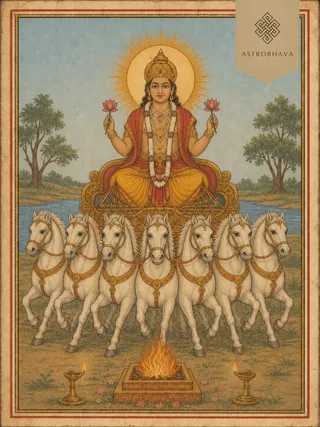
तेजोरूपं सहस्रांशुं सप्ताश्वरथगं वरम् । द्विभुजं वरदं पद्मलांछनं सर्वकामदम् ॥Also known as Ravivara Surya Vrata Puja
In Devanagari, Tamil, Telugu, Kannada, Malayalam and English — with the meaning of every word, and the one syllable most people pronounce wrongly.
 The Surya Homam, performed for youBook →
What the Sunday Mantra is
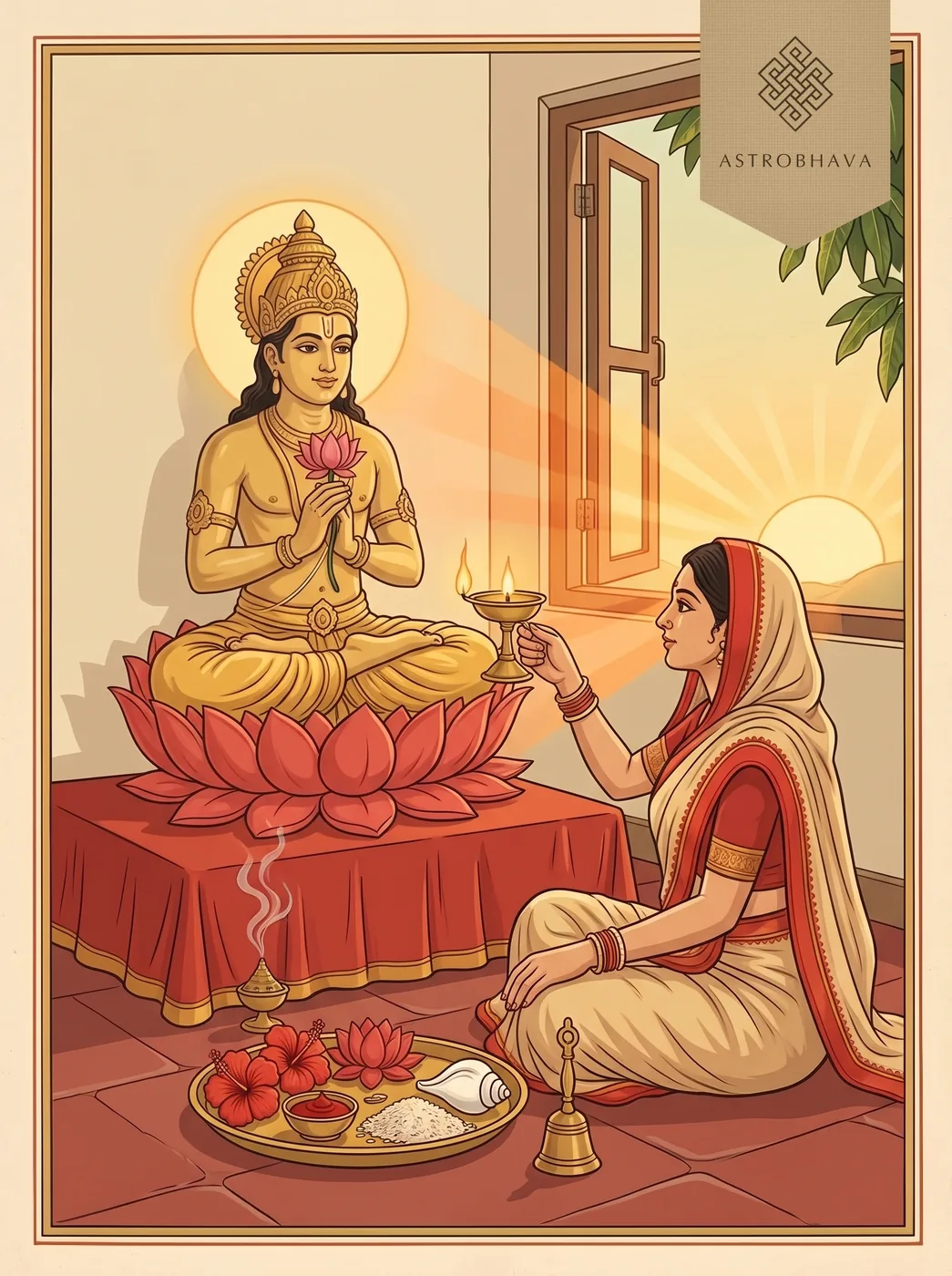
The Sunday mantra, as the vrata digests give it, is not one shloka but the whole puja of the Sunday vow to Surya, the graha who rules Ravivara, the Sun's day. The Vratraja, an eighteenth-century digest of vows compiled by Vishvanatha, opens its chapter on the weekday vows with this Surya-vrata and takes the puja from an older digest. The page prints that puja in the digest's own order. Dhyanam 1 holds Surya in mind as a body of light with a thousand rays, two-armed, granting boons, the lotus his emblem. Twenty-four short verses follow, one for each thing offered, from the invitation into a drawn circle (Avahanam 1) to the bow (Namaskara 1). Most of them call him by a solar name as the gift is set down: Divakara, maker of the day; Prabhakara, maker of light; Bhaskara, the shining one. Prarthana 1, 'yasyodaye', closes the worship with a prayer to the Sun at whose rising the world wakes.
Mandhata's question and the year of Sundays
The digest frames the puja with a narrative it prints straight after the closing prayer. According to that account, King Mandhata asks the sage Vasishtha for a vow that removes wrongdoing and fulfils every wish, and Vasishtha answers with the vow of the Sun's day. The rite he describes begins on a Sunday of Margashirsha and runs for a year. The worshipper takes the vow with the words 'suryavratam karishyami', 'I shall keep the Surya vow', bathes in a river at dawn, and on a cleaned spot draws a twelve-petalled lotus in red sandal water on a copper plate, where the Sun is worshipped. Each month the Sun receives a different name and a different food offering: Mitra in Margashirsha, Vishnu in Pausha, Varuna in Magha, and so on through Surya, Bhanu, Tapana, Indra, Ravi, Gabhasti and Yama, to Hiranyareta in Ashvina and Divakara in Kartika. At the year's end comes the closing rite, the udyapana: a small gold image of the Sun on a silver chariot is set over a lotus of rice grains and a water pot, and worshipped under all twelve names. The verses printed on this page are the part of the vow said every Sunday of that year; the narrative itself, with its own arghya verse, is left to the digest.
The mantra, in six scripts
- तेजोरूपं
- tejorūpaṃ — whose form is radiance
- सहस्रांशुं
- sahasrāṃśuṃ — of a thousand rays
- सप्ताश्वरथगं
- saptāśvarathagaṃ — riding the seven-horse chariot
- वरम्
- varam — the excellent one
- द्विभुजं
- dvibhujaṃ — two-armed
- वरदं
- varadaṃ — giver of boons
- पद्मलांछनं
- padmalāṃchanaṃ — bearing the lotus as emblem
- सर्वकामदम्
- sarvakāmadam — granting every wish
Sunday Mantra lyrics in full
Twenty-six verses in the order of the Sunday puja: the meditation, one verse for each offering, and the closing prayer.
All 26 verses, in Sanskrit, Tamil, Telugu, Kannada, Malayalam and English, each with its meaning. Choose a script:
Download the Sunday Mantra PDFAll 26 verses with their meanings, in Sanskrit. Free to print and keep.
तेजोरूपं सहस्रांशुं सप्ताश्वरथगं वरम् ।
द्विभुजं वरदं पद्मलांछनं सर्वकामदम् ॥
தேஜோரூபம் ஸஹஸ்ராம்ஶும் ஸப்தாஶ்வரதகம் வரம் ।
த்விபுஜம் வரதம் பத்மலாம்சநம் ஸர்வகாமதம் ॥
తేజోరూపం సహస్రాంశుం సప్తాశ్వరథగం వరమ్ ।
ద్విభుజం వరదం పద్మలాంఛనం సర్వకామదమ్ ॥
ತೇಜೋರೂಪಂ ಸಹಸ್ರಾಂಶುಂ ಸಪ್ತಾಶ್ವರಥಗಂ ವರಮ್ ।
ದ್ವಿಭುಜಂ ವರದಂ ಪದ್ಮಲಾಂಛನಂ ಸರ್ವಕಾಮದಮ್ ॥
തേജോരൂപം സഹസ്രാംശും സപ്താശ്വരഥഗം വരമ് ।
ദ്വിഭുജം വരദം പദ്മലാംഛനം സര്വകാമദമ് ॥
tejorūpaṃ sahasrāṃśuṃ saptāśvarathagaṃ varam |
dvibhujaṃ varadaṃ padmalāṃchanaṃ sarvakāmadam ||
I meditate on Surya, whose form is radiance, who has a thousand rays and rides the chariot of seven horses, the excellent one. He has two arms, grants boons, bears the lotus as his emblem and gives every wish.
आगच्छ भगवन्सूर्य मंडले च स्थिरो भव ।
यावत्पूजा समाप्येत तावत्त्वं सन्निधौ भव ॥
ஆகச்ச பகவந்ஸூர்ய மம்டலே ச ஸ்திரோ பவ ।
யாவத்பூஜா ஸமாப்யேத தாவத்த்வம் ஸந்நிதௌ பவ ॥
ఆగచ్ఛ భగవన్సూర్య మండలే చ స్థిరో భవ ।
యావత్పూజా సమాప్యేత తావత్త్వం సన్నిధౌ భవ ॥
ಆಗಚ್ಛ ಭಗವನ್ಸೂರ್ಯ ಮಂಡಲೇ ಚ ಸ್ಥಿರೋ ಭವ ।
ಯಾವತ್ಪೂಜಾ ಸಮಾಪ್ಯೇತ ತಾವತ್ತ್ವಂ ಸನ್ನಿಧೌ ಭವ ॥
ആഗച്ഛ ഭഗവന്സൂര്യ മംഡലേ ച സ്ഥിരോ ഭവ ।
യാവത്പൂജാ സമാപ്യേത താവത്ത്വം സന്നിധൌ ഭവ ॥
āgaccha bhagavansūrya maṃḍale ca sthiro bhava |
yāvatpūjā samāpyeta tāvattvaṃ sannidhau bhava ||
Come, blessed Surya, and stay steady in this drawn circle. Remain present here until the worship is complete.
हेमासनं महादिव्यं नानारत्नविभूषितम् ।
दत्तं मे गृह्यतां देव दिवाकर नमोऽस्तु ते ॥
ஹேமாஸநம் மஹாதிவ்யம் நாநாரத்நவிபூஷிதம் ।
தத்தம் மே க்ருஹ்யதாம் தேவ திவாகர நமோஸ்து தே ॥
హేమాసనం మహాదివ్యం నానారత్నవిభూషితమ్ ।
దత్తం మే గృహ్యతాం దేవ దివాకర నమోఽస్తు తే ॥
ಹೇಮಾಸನಂ ಮಹಾದಿವ್ಯಂ ನಾನಾರತ್ನವಿಭೂಷಿತಮ್ ।
ದತ್ತಂ ಮೇ ಗೃಹ್ಯತಾಂ ದೇವ ದಿವಾಕರ ನಮೋಽಸ್ತು ತೇ ॥
ഹേമാസനം മഹാദിവ്യം നാനാരത്നവിഭൂഷിതമ് ।
ദത്തം മേ ഗൃഹ്യതാം ദേവ ദിവാകര നമോഽസ്തു തേ ॥
hemāsanaṃ mahādivyaṃ nānāratnavibhūṣitam |
dattaṃ me gṛhyatāṃ deva divākara namo'stu te ||
This golden seat, most divine and set with many gems, I give you; accept it, O god. Salutations to you, Divakara, maker of the day.
गंगाजलं समानीतं परमं पावनं महत् ।
पाद्यं गृहाण देवेश धामरूप नमोऽस्तु ते ॥
கம்காஜலம் ஸமாநீதம் பரமம் பாவநம் மஹத் ।
பாத்யம் க்ருஹாண தேவேஶ தாமரூப நமோஸ்து தே ॥
గంగాజలం సమానీతం పరమం పావనం మహత్ ।
పాద్యం గృహాణ దేవేశ ధామరూప నమోఽస్తు తే ॥
ಗಂಗಾಜಲಂ ಸಮಾನೀತಂ ಪರಮಂ ಪಾವನಂ ಮಹತ್ ।
ಪಾದ್ಯಂ ಗೃಹಾಣ ದೇವೇಶ ಧಾಮರೂಪ ನಮೋಽಸ್ತು ತೇ ॥
ഗംഗാജലം സമാനീതം പരമം പാവനം മഹത് ।
പാദ്യം ഗൃഹാണ ദേവേശ ധാമരൂപ നമോഽസ്തു തേ ॥
gaṃgājalaṃ samānītaṃ paramaṃ pāvanaṃ mahat |
pādyaṃ gṛhāṇa deveśa dhāmarūpa namo'stu te ||
Water of the Ganga, supremely purifying and great, has been brought. Accept it to wash your feet, god of gods, whose form is light; salutations to you.
भो भोः सूर्य महाभूत ब्रह्मविष्णुस्वरूपिणे ।
अर्घ्यमंजलिना दत्तं गृहाण परमेश्वर ॥
போ போஃ ஸூர்ய மஹாபூத ப்ரஹ்மவிஷ்ணுஸ்வரூபிணே ।
அர்க்யமம்ஜலிநா தத்தம் க்ருஹாண பரமேஶ்வர ॥
భో భోః సూర్య మహాభూత బ్రహ్మవిష్ణుస్వరూపిణే ।
అర్ఘ్యమంజలినా దత్తం గృహాణ పరమేశ్వర ॥
ಭೋ ಭೋಃ ಸೂರ್ಯ ಮಹಾಭೂತ ಬ್ರಹ್ಮವಿಷ್ಣುಸ್ವರೂಪಿಣೇ ।
ಅರ್ಘ್ಯಮಂಜಲಿನಾ ದತ್ತಂ ಗೃಹಾಣ ಪರಮೇಶ್ವರ ॥
ഭോ ഭോഃ സൂര്യ മഹാഭൂത ബ്രഹ്മവിഷ്ണുസ്വരൂപിണേ ।
അര്ഘ്യമംജലിനാ ദത്തം ഗൃഹാണ പരമേശ്വര ॥
bho bhoḥ sūrya mahābhūta brahmaviṣṇusvarūpiṇe |
arghyamaṃjalinā dattaṃ gṛhāṇa parameśvara ||
O Surya, great being, you whose form is Brahma and Vishnu: accept this arghya offered with joined palms, Supreme One.
गंगादितीर्थजं तोयं जातीपुष्पैश्च वासितम् ।
ताम्रपात्रे स्थितं दिव्यं गृहाणाचमनीयकम् ॥
கம்காதிதீர்தஜம் தோயம் ஜாதீபுஷ்பைஶ்ச வாஸிதம் ।
தாம்ரபாத்ரே ஸ்திதம் திவ்யம் க்ருஹாணாசமநீயகம் ॥
గంగాదితీర్థజం తోయం జాతీపుష్పైశ్చ వాసితమ్ ।
తామ్రపాత్రే స్థితం దివ్యం గృహాణాచమనీయకమ్ ॥
ಗಂಗಾದಿತೀರ್ಥಜಂ ತೋಯಂ ಜಾತೀಪುಷ್ಪೈಶ್ಚ ವಾಸಿತಮ್ ।
ತಾಮ್ರಪಾತ್ರೇ ಸ್ಥಿತಂ ದಿವ್ಯಂ ಗೃಹಾಣಾಚಮನೀಯಕಮ್ ॥
ഗംഗാദിതീര്ഥജം തോയം ജാതീപുഷ്പൈശ്ച വാസിതമ് ।
താമ്രപാത്രേ സ്ഥിതം ദിവ്യം ഗൃഹാണാചമനീയകമ് ॥
gaṃgāditīrthajaṃ toyaṃ jātīpuṣpaiśca vāsitam |
tāmrapātre sthitaṃ divyaṃ gṛhāṇācamanīyakam ||
Water from the Ganga and other holy fords, scented with jasmine flowers and held in a copper vessel: accept this divine water for sipping.
जाह्नवीजलमत्यंतं पवित्रकरणं परम् ।
स्नानार्थं च मयानीतं स्नानं कुरु जगत्पते ॥
ஜாஹ்நவீஜலமத்யம்தம் பவித்ரகரணம் பரம் ।
ஸ்நாநார்தம் ச மயாநீதம் ஸ்நாநம் குரு ஜகத்பதே ॥
జాహ్నవీజలమత్యంతం పవిత్రకరణం పరమ్ ।
స్నానార్థం చ మయానీతం స్నానం కురు జగత్పతే ॥
ಜಾಹ್ನವೀಜಲಮತ್ಯಂತಂ ಪವಿತ್ರಕರಣಂ ಪರಮ್ ।
ಸ್ನಾನಾರ್ಥಂ ಚ ಮಯಾನೀತಂ ಸ್ನಾನಂ ಕುರು ಜಗತ್ಪತೇ ॥
ജാഹ്നവീജലമത്യംതം പവിത്രകരണം പരമ് ।
സ്നാനാര്ഥം ച മയാനീതം സ്നാനം കുരു ജഗത്പതേ ॥
jāhnavījalamatyaṃtaṃ pavitrakaraṇaṃ param |
snānārthaṃ ca mayānītaṃ snānaṃ kuru jagatpate ||
Water of the Jahnavi (Ganga), supremely purifying, I have brought for your bath. Bathe, ruler of the world.
पयोदधिघृतैश्चैव शर्करामधुसंयुतैः ।
कृतं मया च स्नपनं प्रीयतां परमेश्वरः ॥
பயோததிக்ருதைஶ்சைவ ஶர்கராமதுஸம்யுதைஃ ।
க்ருதம் மயா ச ஸ்நபநம் ப்ரீயதாம் பரமேஶ்வரஃ ॥
పయోదధిఘృతైశ్చైవ శర్కరామధుసంయుతైః ।
కృతం మయా చ స్నపనం ప్రీయతాం పరమేశ్వరః ॥
ಪಯೋದಧಿಘೃತೈಶ್ಚೈವ ಶರ್ಕರಾಮಧುಸಂಯುತೈಃ ।
ಕೃತಂ ಮಯಾ ಚ ಸ್ನಪನಂ ಪ್ರೀಯತಾಂ ಪರಮೇಶ್ವರಃ ॥
പയോദധിഘൃതൈശ്ചൈവ ശര്കരാമധുസംയുതൈഃ ।
കൃതം മയാ ച സ്നപനം പ്രീയതാം പരമേശ്വരഃ ॥
payodadhighṛtaiścaiva śarkarāmadhusaṃyutaiḥ |
kṛtaṃ mayā ca snapanaṃ prīyatāṃ parameśvaraḥ ||
I have bathed you with milk, curd and ghee, together with sugar and honey. May the Supreme One be pleased.
गंगा गोदावरी चैव यमुना च सरस्वती ।
नर्मदा सिंधुकावेर्यौ ताभ्यः स्नानार्थमाहृतम् ॥
கம்கா கோதாவரீ சைவ யமுநா ச ஸரஸ்வதீ ।
நர்மதா ஸிம்துகாவேர்யௌ தாப்யஃ ஸ்நாநார்தமாஹ்ருதம் ॥
గంగా గోదావరీ చైవ యమునా చ సరస్వతీ ।
నర్మదా సింధుకావేర్యౌ తాభ్యః స్నానార్థమాహృతమ్ ॥
ಗಂಗಾ ಗೋದಾವರೀ ಚೈವ ಯಮುನಾ ಚ ಸರಸ್ವತೀ ।
ನರ್ಮದಾ ಸಿಂಧುಕಾವೇರ್ಯೌ ತಾಭ್ಯಃ ಸ್ನಾನಾರ್ಥಮಾಹೃತಮ್ ॥
ഗംഗാ ഗോദാവരീ ചൈവ യമുനാ ച സരസ്വതീ ।
നര്മദാ സിംധുകാവേര്യൌ താഭ്യഃ സ്നാനാര്ഥമാഹൃതമ് ॥
gaṃgā godāvarī caiva yamunā ca sarasvatī |
narmadā siṃdhukāveryau tābhyaḥ snānārthamāhṛtam ||
Ganga, Godavari, Yamuna and Sarasvati, Narmada, Sindhu and Kaveri: from these rivers water has been brought for your bath.
रक्तपट्टयुगं देव सूक्ष्मतंतुविनिर्मितम् ।
शुद्धं चैव मया दत्तं गृहाण कमलाकर ॥
ரக்தபட்டயுகம் தேவ ஸூக்ஷ்மதம்துவிநிர்மிதம் ।
ஶுத்தம் சைவ மயா தத்தம் க்ருஹாண கமலாகர ॥
రక్తపట్టయుగం దేవ సూక్ష్మతంతువినిర్మితమ్ ।
శుద్ధం చైవ మయా దత్తం గృహాణ కమలాకర ॥
ರಕ್ತಪಟ್ಟಯುಗಂ ದೇವ ಸೂಕ್ಷ್ಮತಂತುವಿನಿರ್ಮಿತಮ್ ।
ಶುದ್ಧಂ ಚೈವ ಮಯಾ ದತ್ತಂ ಗೃಹಾಣ ಕಮಲಾಕರ ॥
രക്തപട്ടയുഗം ദേവ സൂക്ഷ്മതംതുവിനിര്മിതമ് ।
ശുദ്ധം ചൈവ മയാ ദത്തം ഗൃഹാണ കമലാകര ॥
raktapaṭṭayugaṃ deva sūkṣmataṃtuvinirmitam |
śuddhaṃ caiva mayā dattaṃ gṛhāṇa kamalākara ||
A pair of red silk cloths, woven of fine thread and clean, I offer you, O god. Accept them, you who make the lotuses bloom.
नमः कमलहस्ताय विश्वरूपाय ते नमः ।
उपवीतं मया दत्तं तद्गृहाण दिवाकर ॥
நமஃ கமலஹஸ்தாய விஶ்வரூபாய தே நமஃ ।
உபவீதம் மயா தத்தம் தத்க்ருஹாண திவாகர ॥
నమః కమలహస్తాయ విశ్వరూపాయ తే నమః ।
ఉపవీతం మయా దత్తం తద్గృహాణ దివాకర ॥
ನಮಃ ಕಮಲಹಸ್ತಾಯ ವಿಶ್ವರೂಪಾಯ ತೇ ನಮಃ ।
ಉಪವೀತಂ ಮಯಾ ದತ್ತಂ ತದ್ಗೃಹಾಣ ದಿವಾಕರ ॥
നമഃ കമലഹസ്തായ വിശ്വരൂപായ തേ നമഃ ।
ഉപവീതം മയാ ദത്തം തദ്ഗൃഹാണ ദിവാകര ॥
namaḥ kamalahastāya viśvarūpāya te namaḥ |
upavītaṃ mayā dattaṃ tadgṛhāṇa divākara ||
Salutations to you who hold the lotus in your hand, salutations to you whose form is the universe. I offer the sacred thread; accept it, Divakara.
कुंकुमागुरुकस्तूरीसुगंधैश्चंदनादिभिः ।
रक्तचंदनयुक्तं तु गंधं गृह्ण प्रभाकर ॥
கும்குமாகுருகஸ்தூரீஸுகம்தைஶ்சம்தநாதிபிஃ ।
ரக்தசம்தநயுக்தம் து கம்தம் க்ருஹ்ண ப்ரபாகர ॥
కుంకుమాగురుకస్తూరీసుగంధైశ్చందనాదిభిః ।
రక్తచందనయుక్తం తు గంధం గృహ్ణ ప్రభాకర ॥
ಕುಂಕುಮಾಗುರುಕಸ್ತೂರೀಸುಗಂಧೈಶ್ಚಂದನಾದಿಭಿಃ ।
ರಕ್ತಚಂದನಯುಕ್ತಂ ತು ಗಂಧಂ ಗೃಹ್ಣ ಪ್ರಭಾಕರ ॥
കുംകുമാഗുരുകസ്തൂരീസുഗംധൈശ്ചംദനാദിഭിഃ ।
രക്തചംദനയുക്തം തു ഗംധം ഗൃഹ്ണ പ്രഭാകര ॥
kuṃkumāgurukastūrīsugaṃdhaiścaṃdanādibhiḥ |
raktacaṃdanayuktaṃ tu gaṃdhaṃ gṛhṇa prabhākara ||
Fragrant paste made with kumkum, agaru, musk, sandal and other scents, mixed with red sandal: accept it, Prabhakara, maker of light.
जपाकदंबकुसुमरक्तोत्पलयुतानि च ।
पुष्पाणि गृह्यतां देव सर्वकामप्रदो भव ॥
ஜபாகதம்பகுஸுமரக்தோத்பலயுதாநி ச ।
புஷ்பாணி க்ருஹ்யதாம் தேவ ஸர்வகாமப்ரதோ பவ ॥
జపాకదంబకుసుమరక్తోత్పలయుతాని చ ।
పుష్పాణి గృహ్యతాం దేవ సర్వకామప్రదో భవ ॥
ಜಪಾಕದಂಬಕುಸುಮರಕ್ತೋತ್ಪಲಯುತಾನಿ ಚ ।
ಪುಷ್ಪಾಣಿ ಗೃಹ್ಯತಾಂ ದೇವ ಸರ್ವಕಾಮಪ್ರದೋ ಭವ ॥
ജപാകദംബകുസുമരക്തോത്പലയുതാനി ച ।
പുഷ്പാണി ഗൃഹ്യതാം ദേവ സര്വകാമപ്രദോ ഭവ ॥
japākadaṃbakusumaraktotpalayutāni ca |
puṣpāṇi gṛhyatāṃ deva sarvakāmaprado bhava ||
Flowers of hibiscus and kadamba, with red lotuses: accept these flowers, O god, and be the giver of every wish.
रक्तचंदनसंमिश्रा अक्षताश्च सुशोभनाः ।
मया दत्ता गृहाण त्वं वरदो भव भास्कर ॥
ரக்தசம்தநஸம்மிஶ்ரா அக்ஷதாஶ்ச ஸுஶோபநாஃ ।
மயா தத்தா க்ருஹாண த்வம் வரதோ பவ பாஸ்கர ॥
రక్తచందనసంమిశ్రా అక్షతాశ్చ సుశోభనాః ।
మయా దత్తా గృహాణ త్వం వరదో భవ భాస్కర ॥
ರಕ್ತಚಂದನಸಂಮಿಶ್ರಾ ಅಕ್ಷತಾಶ್ಚ ಸುಶೋಭನಾಃ ।
ಮಯಾ ದತ್ತಾ ಗೃಹಾಣ ತ್ವಂ ವರದೋ ಭವ ಭಾಸ್ಕರ ॥
രക്തചംദനസംമിശ്രാ അക്ഷതാശ്ച സുശോഭനാഃ ।
മയാ ദത്താ ഗൃഹാണ ത്വം വരദോ ഭവ ഭാസ്കര ॥
raktacaṃdanasaṃmiśrā akṣatāśca suśobhanāḥ |
mayā dattā gṛhāṇa tvaṃ varado bhava bhāskara ||
Beautiful unbroken rice grains mixed with red sandal I offer you. Accept them and grant boons, Bhaskara.
दशांगो गुग्गुलोद्भूतः कालागुरुसमन्वितः ।
आघ्रेयः सर्वदेवानां धूपोऽयं प्रतिगृह्यताम् ॥
தஶாம்கோ குக்குலோத்பூதஃ காலாகுருஸமந்விதஃ ।
ஆக்ரேயஃ ஸர்வதேவாநாம் தூபோயம் ப்ரதிக்ருஹ்யதாம் ॥
దశాంగో గుగ్గులోద్భూతః కాలాగురుసమన్వితః ।
ఆఘ్రేయః సర్వదేవానాం ధూపోఽయం ప్రతిగృహ్యతామ్ ॥
ದಶಾಂಗೋ ಗುಗ್ಗುಲೋದ್ಭೂತಃ ಕಾಲಾಗುರುಸಮನ್ವಿತಃ ।
ಆಘ್ರೇಯಃ ಸರ್ವದೇವಾನಾಂ ಧೂಪೋಽಯಂ ಪ್ರತಿಗೃಹ್ಯತಾಮ್ ॥
ദശാംഗോ ഗുഗ്ഗുലോദ്ഭൂതഃ കാലാഗുരുസമന്വിതഃ ।
ആഘ്രേയഃ സര്വദേവാനാം ധൂപോഽയം പ്രതിഗൃഹ്യതാമ് ॥
daśāṃgo guggulodbhūtaḥ kālāgurusamanvitaḥ |
āghreyaḥ sarvadevānāṃ dhūpo'yaṃ pratigṛhyatām ||
This incense of ten ingredients, made from guggulu and black agaru, fit to be smelled by all the gods: may it be accepted.
कार्पासवर्तिकायुक्तं गोघृतेन समन्वितम् ।
दीपं गृहाण देवेश त्रैलोक्यतिमिरापह ॥
கார்பாஸவர்திகாயுக்தம் கோக்ருதேந ஸமந்விதம் ।
தீபம் க்ருஹாண தேவேஶ த்ரைலோக்யதிமிராபஹ ॥
కార్పాసవర్తికాయుక్తం గోఘృతేన సమన్వితమ్ ।
దీపం గృహాణ దేవేశ త్రైలోక్యతిమిరాపహ ॥
ಕಾರ್ಪಾಸವರ್ತಿಕಾಯುಕ್ತಂ ಗೋಘೃತೇನ ಸಮನ್ವಿತಮ್ ।
ದೀಪಂ ಗೃಹಾಣ ದೇವೇಶ ತ್ರೈಲೋಕ್ಯತಿಮಿರಾಪಹ ॥
കാര്പാസവര്തികായുക്തം ഗോഘൃതേന സമന്വിതമ് ।
ദീപം ഗൃഹാണ ദേവേശ ത്രൈലോക്യതിമിരാപഹ ॥
kārpāsavartikāyuktaṃ goghṛtena samanvitam |
dīpaṃ gṛhāṇa deveśa trailokyatimirāpaha ||
A lamp with a cotton wick, filled with cow's ghee: accept it, god of gods, remover of the darkness of the three worlds.
पायसं घृतसंयुक्तं नानापक्वान्नसंयुतम् ।
नैवेद्यं च मया दत्तं शांतिं कुरु जगत्पते ॥
பாயஸம் க்ருதஸம்யுக்தம் நாநாபக்வாந்நஸம்யுதம் ।
நைவேத்யம் ச மயா தத்தம் ஶாம்திம் குரு ஜகத்பதே ॥
పాయసం ఘృతసంయుక్తం నానాపక్వాన్నసంయుతమ్ ।
నైవేద్యం చ మయా దత్తం శాంతిం కురు జగత్పతే ॥
ಪಾಯಸಂ ಘೃತಸಂಯುಕ್ತಂ ನಾನಾಪಕ್ವಾನ್ನಸಂಯುತಮ್ ।
ನೈವೇದ್ಯಂ ಚ ಮಯಾ ದತ್ತಂ ಶಾಂತಿಂ ಕುರು ಜಗತ್ಪತೇ ॥
പായസം ഘൃതസംയുക്തം നാനാപക്വാന്നസംയുതമ് ।
നൈവേദ്യം ച മയാ ദത്തം ശാംതിം കുരു ജഗത്പതേ ॥
pāyasaṃ ghṛtasaṃyuktaṃ nānāpakvānnasaṃyutam |
naivedyaṃ ca mayā dattaṃ śāṃtiṃ kuru jagatpate ||
Sweet milk-rice with ghee, along with many cooked dishes, I offer as food. Grant peace, ruler of the world.
कर्पूरवासितं तोयं मंदाकिन्याः समाहृतम् ।
आचम्यतां जगन्नाथ मया दत्तं हि भक्तितः ॥
கர்பூரவாஸிதம் தோயம் மம்தாகிந்யாஃ ஸமாஹ்ருதம் ।
ஆசம்யதாம் ஜகந்நாத மயா தத்தம் ஹி பக்திதஃ ॥
కర్పూరవాసితం తోయం మందాకిన్యాః సమాహృతమ్ ।
ఆచమ్యతాం జగన్నాథ మయా దత్తం హి భక్తితః ॥
ಕರ್ಪೂರವಾಸಿತಂ ತೋಯಂ ಮಂದಾಕಿನ್ಯಾಃ ಸಮಾಹೃತಮ್ ।
ಆಚಮ್ಯತಾಂ ಜಗನ್ನಾಥ ಮಯಾ ದತ್ತಂ ಹಿ ಭಕ್ತಿತಃ ॥
കര്പൂരവാസിതം തോയം മംദാകിന്യാഃ സമാഹൃതമ് ।
ആചമ്യതാം ജഗന്നാഥ മയാ ദത്തം ഹി ഭക്തിതഃ ॥
karpūravāsitaṃ toyaṃ maṃdākinyāḥ samāhṛtam |
ācamyatāṃ jagannātha mayā dattaṃ hi bhaktitaḥ ||
Water drawn from the Mandakini and scented with camphor I give with devotion. Sip it, ruler of the world.
मलयाचलसंभूतं कर्पूरेण समन्वितम् ।
करोद्वर्तनकं चारु गृह्यतां जगतः पते ॥
மலயாசலஸம்பூதம் கர்பூரேண ஸமந்விதம் ।
கரோத்வர்தநகம் சாரு க்ருஹ்யதாம் ஜகதஃ பதே ॥
మలయాచలసంభూతం కర్పూరేణ సమన్వితమ్ ।
కరోద్వర్తనకం చారు గృహ్యతాం జగతః పతే ॥
ಮಲಯಾಚಲಸಂಭೂತಂ ಕರ್ಪೂರೇಣ ಸಮನ್ವಿತಮ್ ।
ಕರೋದ್ವರ್ತನಕಂ ಚಾರು ಗೃಹ್ಯತಾಂ ಜಗತಃ ಪತೇ ॥
മലയാചലസംഭൂതം കര്പൂരേണ സമന്വിതമ് ।
കരോദ്വര്തനകം ചാരു ഗൃഹ്യതാം ജഗതഃ പതേ ॥
malayācalasaṃbhūtaṃ karpūreṇa samanvitam |
karodvartanakaṃ cāru gṛhyatāṃ jagataḥ pate ||
A fine hand-rub of sandal from the Malaya mountain, mixed with camphor: accept it, ruler of the world.
इदं फलं मया देव स्थापितं पुरतस्तव ।
तेन मे सफलावाप्तिर्भवेज्जन्मनि जन्मनि ॥
இதம் பலம் மயா தேவ ஸ்தாபிதம் புரதஸ்தவ ।
தேந மே ஸபலாவாப்திர்பவேஜ்ஜந்மநி ஜந்மநி ॥
ఇదం ఫలం మయా దేవ స్థాపితం పురతస్తవ ।
తేన మే సఫలావాప్తిర్భవేజ్జన్మని జన్మని ॥
ಇದಂ ಫಲಂ ಮಯಾ ದೇವ ಸ್ಥಾಪಿತಂ ಪುರತಸ್ತವ ।
ತೇನ ಮೇ ಸಫಲಾವಾಪ್ತಿರ್ಭವೇಜ್ಜನ್ಮನಿ ಜನ್ಮನಿ ॥
ഇദം ഫലം മയാ ദേവ സ്ഥാപിതം പുരതസ്തവ ।
തേന മേ സഫലാവാപ്തിര്ഭവേജ്ജന്മനി ജന്മനി ॥
idaṃ phalaṃ mayā deva sthāpitaṃ puratastava |
tena me saphalāvāptirbhavejjanmani janmani ||
This fruit, O god, I have placed before you. The verse says that through it my efforts will bear fruit in birth after birth.
एलालवंगकर्पूरखदिरैश्च सपूगकैः ।
नागवल्लीदलैर्युक्तं तांबूलं प्रतिगृह्यताम् ॥
ஏலாலவம்ககர்பூரகதிரைஶ்ச ஸபூககைஃ ।
நாகவல்லீதலைர்யுக்தம் தாம்பூலம் ப்ரதிக்ருஹ்யதாம் ॥
ఏలాలవంగకర్పూరఖదిరైశ్చ సపూగకైః ।
నాగవల్లీదలైర్యుక్తం తాంబూలం ప్రతిగృహ్యతామ్ ॥
ಏಲಾಲವಂಗಕರ್ಪೂರಖದಿರೈಶ್ಚ ಸಪೂಗಕೈಃ ।
ನಾಗವಲ್ಲೀದಲೈರ್ಯುಕ್ತಂ ತಾಂಬೂಲಂ ಪ್ರತಿಗೃಹ್ಯತಾಮ್ ॥
ഏലാലവംഗകര്പൂരഖദിരൈശ്ച സപൂഗകൈഃ ।
നാഗവല്ലീദലൈര്യുക്തം താംബൂലം പ്രതിഗൃഹ്യതാമ് ॥
elālavaṃgakarpūrakhadiraiśca sapūgakaiḥ |
nāgavallīdalairyuktaṃ tāṃbūlaṃ pratigṛhyatām ||
Betel prepared with cardamom, clove, camphor and catechu, with areca nut and betel leaves: may it be accepted.
दक्षिणां कांचनीं देव स्थापितां च तवाग्रतः ।
गृहाण सुमुखो भूत्वा प्रभाकर नमोऽस्तु ते ॥
தக்ஷிணாம் காம்சநீம் தேவ ஸ்தாபிதாம் ச தவாக்ரதஃ ।
க்ருஹாண ஸுமுகோ பூத்வா ப்ரபாகர நமோஸ்து தே ॥
దక్షిణాం కాంచనీం దేవ స్థాపితాం చ తవాగ్రతః ।
గృహాణ సుముఖో భూత్వా ప్రభాకర నమోఽస్తు తే ॥
ದಕ್ಷಿಣಾಂ ಕಾಂಚನೀಂ ದೇವ ಸ್ಥಾಪಿತಾಂ ಚ ತವಾಗ್ರತಃ ।
ಗೃಹಾಣ ಸುಮುಖೋ ಭೂತ್ವಾ ಪ್ರಭಾಕರ ನಮೋಽಸ್ತು ತೇ ॥
ദക്ഷിണാം കാംചനീം ദേവ സ്ഥാപിതാം ച തവാഗ്രതഃ ।
ഗൃഹാണ സുമുഖോ ഭൂത്വാ പ്രഭാകര നമോഽസ്തു തേ ॥
dakṣiṇāṃ kāṃcanīṃ deva sthāpitāṃ ca tavāgrataḥ |
gṛhāṇa sumukho bhūtvā prabhākara namo'stu te ||
This offering of gold, O god, is placed before you. Accept it with a kind face, Prabhakara; salutations to you.
पंचवर्तिसमायुक्तं सर्वमंगलदायकम् ।
नीराजनं गृहाणेदं सर्वसौख्यकरो भव ॥
பம்சவர்திஸமாயுக்தம் ஸர்வமம்கலதாயகம் ।
நீராஜநம் க்ருஹாணேதம் ஸர்வஸௌக்யகரோ பவ ॥
పంచవర్తిసమాయుక్తం సర్వమంగలదాయకమ్ ।
నీరాజనం గృహాణేదం సర్వసౌఖ్యకరో భవ ॥
ಪಂಚವರ್ತಿಸಮಾಯುಕ್ತಂ ಸರ್ವಮಂಗಲದಾಯಕಮ್ ।
ನೀರಾಜನಂ ಗೃಹಾಣೇದಂ ಸರ್ವಸೌಖ್ಯಕರೋ ಭವ ॥
പംചവര്തിസമായുക്തം സര്വമംഗലദായകമ് ।
നീരാജനം ഗൃഹാണേദം സര്വസൌഖ്യകരോ ഭവ ॥
paṃcavartisamāyuktaṃ sarvamaṃgaladāyakam |
nīrājanaṃ gṛhāṇedaṃ sarvasaukhyakaro bhava ||
This lamp-waving with five wicks, which gives every auspicious thing: accept it, and be the maker of all happiness.
यानि कानि च पापानि जन्मांतरकृतानि च ।
विलयं यांति तानीह प्रदक्षिणपदे पदे ॥
யாநி காநி ச பாபாநி ஜந்மாம்தரக்ருதாநி ச ।
விலயம் யாம்தி தாநீஹ ப்ரதக்ஷிணபதே பதே ॥
యాని కాని చ పాపాని జన్మాంతరకృతాని చ ।
విలయం యాంతి తానీహ ప్రదక్షిణపదే పదే ॥
ಯಾನಿ ಕಾನಿ ಚ ಪಾಪಾನಿ ಜನ್ಮಾಂತರಕೃತಾನಿ ಚ ।
ವಿಲಯಂ ಯಾಂತಿ ತಾನೀಹ ಪ್ರದಕ್ಷಿಣಪದೇ ಪದೇ ॥
യാനി കാനി ച പാപാനി ജന്മാംതരകൃതാനി ച ।
വിലയം യാംതി താനീഹ പ്രദക്ഷിണപദേ പദേ ॥
yāni kāni ca pāpāni janmāṃtarakṛtāni ca |
vilayaṃ yāṃti tānīha pradakṣiṇapade pade ||
Whatever sins there are, even those done in other births, the verse says they dissolve here with every step of this walk around you.
नमः पंकजहस्ताय नमः पंकजमालिने ।
नमः पंकजनेत्राय भास्कराय नमो नमः ॥
நமஃ பம்கஜஹஸ்தாய நமஃ பம்கஜமாலிநே ।
நமஃ பம்கஜநேத்ராய பாஸ்கராய நமோ நமஃ ॥
నమః పంకజహస్తాయ నమః పంకజమాలినే ।
నమః పంకజనేత్రాయ భాస్కరాయ నమో నమః ॥
ನಮಃ ಪಂಕಜಹಸ್ತಾಯ ನಮಃ ಪಂಕಜಮಾಲಿನೇ ।
ನಮಃ ಪಂಕಜನೇತ್ರಾಯ ಭಾಸ್ಕರಾಯ ನಮೋ ನಮಃ ॥
നമഃ പംകജഹസ്തായ നമഃ പംകജമാലിനേ ।
നമഃ പംകജനേത്രായ ഭാസ്കരായ നമോ നമഃ ॥
namaḥ paṃkajahastāya namaḥ paṃkajamāline |
namaḥ paṃkajanetrāya bhāskarāya namo namaḥ ||
Salutations to him who holds a lotus, salutations to him who wears a garland of lotuses. Salutations to the lotus-eyed Bhaskara, salutations again and again.
यस्योदये स्याज्जगतः प्रबोधो यः कर्मसाक्षी भुवनस्य गोप्ता ।
कुष्ठादिकव्याधिविनाशको यः स भास्करो मे दुरितं निहन्यात् ॥
யஸ்யோதயே ஸ்யாஜ்ஜகதஃ ப்ரபோதோ யஃ கர்மஸாக்ஷீ புவநஸ்ய கோப்தா ।
குஷ்டாதிகவ்யாதிவிநாஶகோ யஃ ஸ பாஸ்கரோ மே துரிதம் நிஹந்யாத் ॥
యస్యోదయే స్యాజ్జగతః ప్రబోధో యః కర్మసాక్షీ భువనస్య గోప్తా ।
కుష్ఠాదికవ్యాధివినాశకో యః స భాస్కరో మే దురితం నిహన్యాత్ ॥
ಯಸ್ಯೋದಯೇ ಸ್ಯಾಜ್ಜಗತಃ ಪ್ರಬೋಧೋ ಯಃ ಕರ್ಮಸಾಕ್ಷೀ ಭುವನಸ್ಯ ಗೋಪ್ತಾ ।
ಕುಷ್ಠಾದಿಕವ್ಯಾಧಿವಿನಾಶಕೋ ಯಃ ಸ ಭಾಸ್ಕರೋ ಮೇ ದುರಿತಂ ನಿಹನ್ಯಾತ್ ॥
യസ്യോദയേ സ്യാജ്ജഗതഃ പ്രബോധോ യഃ കര്മസാക്ഷീ ഭുവനസ്യ ഗോപ്താ ।
കുഷ്ഠാദികവ്യാധിവിനാശകോ യഃ സ ഭാസ്കരോ മേ ദുരിതം നിഹന്യാത് ॥
yasyodaye syājjagataḥ prabodho yaḥ karmasākṣī bhuvanasya goptā |
kuṣṭhādikavyādhivināśako yaḥ sa bhāskaro me duritaṃ nihanyāt ||
At whose rising the world wakes, who witnesses all deeds and guards the world, and who, the verse says, destroys leprosy and other diseases: may that Bhaskara destroy my wrongdoing.
The syllable people get wrong
In Snanam 1, jāhnavī (the Ganga as daughter of the sage Jahnu) is often said 'jaan-ha-vi'; the h comes before the n, so say 'jaah-na-vee', closing the long first syllable with a soft breath before the n.
When the Sunday Mantra is chanted
Festival. Sundays (Ravivara), the Sun's day
Questions
Have your chart read before you decide
Chanting is yours to do, and free. But which deity your situation calls for — and whether a mantra alone is the right response — depends on your chart. Sometimes it is; sometimes it is not.
- Over 30 years in the Guru–Sishya Parampara, from the age of five
- He reads every chart himself — 60 minutes, one to one, never delegated
- Charts are read only between sunrise and sunset, following tradition