Thaipusam Mantra
சீர்வளர் பசுந்தோகை மயிலான் வள்ளி செவ்விதழ் அலாதினிய தெள்ளமுதும் அயிலான்Also known as Kavadi Chindu: Seervalar Pasunthogai
In Tamil and English — with the meaning of every word, and the one sound most people pronounce wrongly.
 The Subramanya Homam, performed for youBook →
What the Thaipusam Mantra is
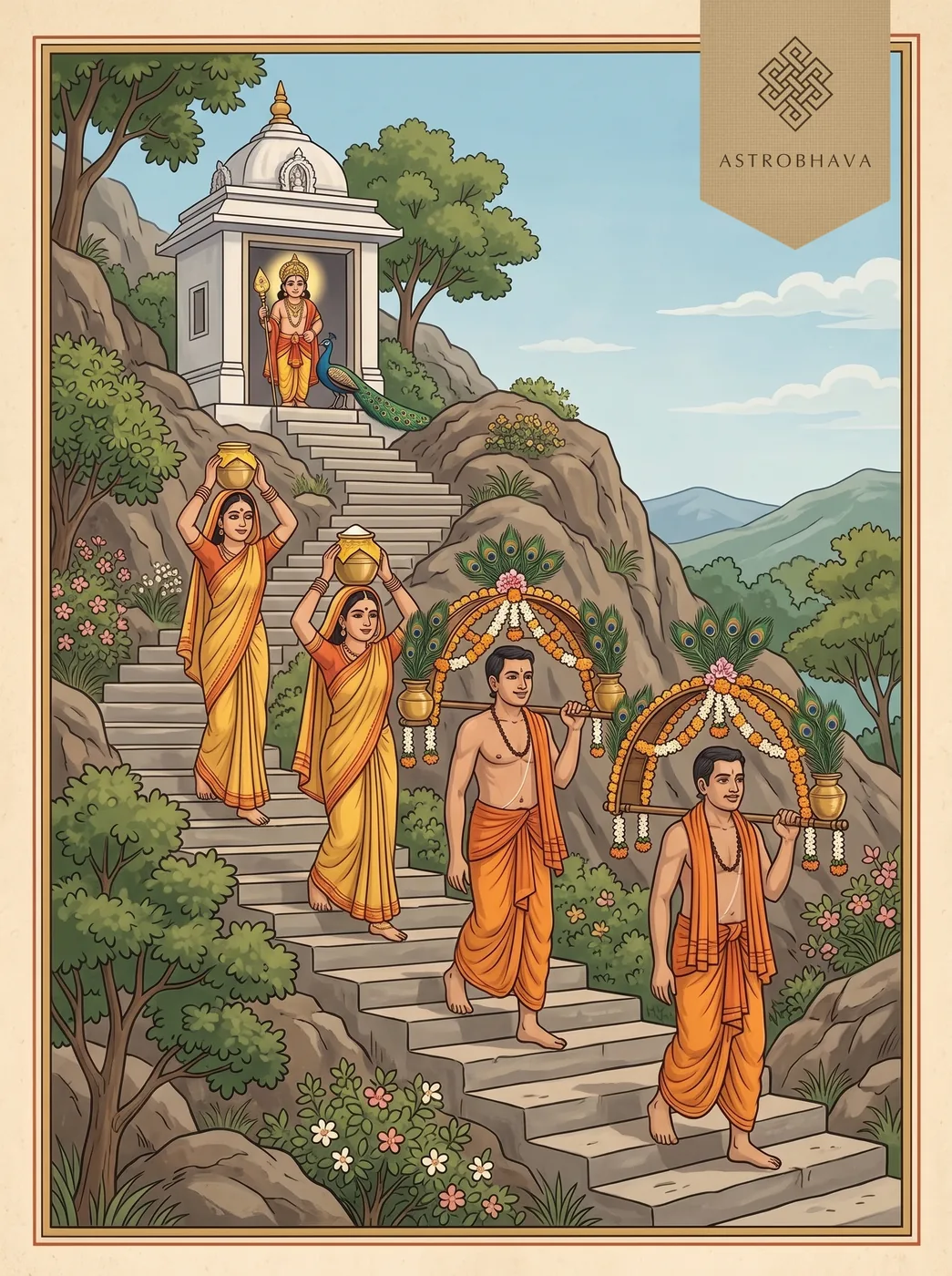
The Thaipusam mantra given here is a Tamil song of the kavadi: the praise of Murugan that opens the Kavadi Chindu of Annamalai Reddiyar (1865-1891), a poet of Chennikulam in the Tirunelveli country. Kavadi Chindu is the song form he began for devotees who carry the kavadi, the arched and decorated pole borne on the shoulders, on foot to a Murugan hill shrine. After a first song to Ganesha comes this second song of four stanzas. Stanza 1 pictures Murugan on his green-plumed peacock with the spear in his hand and turns the singers to his golden feet. Stanza 2 speaks of his consorts and of the child of the Saravana pool. Stanza 3 recalls the war that sent the demons fleeing and asks for a servant's place and the silence of wisdom. Stanza 4 hails him as younger brother of the elephant-faced Ganesha. The poem never names Thaipusam; it stands here because it is the song of the kavadi, the offering that marks the day.
Songs made on the road to Kalugumalai
Annamalai Reddiyar was born in 1865 at Chennikulam, near Sankarankovil, and learned Tamil grammar and the classics from village and court teachers before the zamindar of Ootrumalai took him in as court poet. His songs belong to Kalugumalai, a town in present-day Thoothukudi district where Murugan is worshipped in a cave shrine cut into a rock hill. The image there is seated with six hands and the spear, and, unusually, the peacock stands on his left. According to the accounts of his life, the poet composed while walking with pilgrims, and on one journey to Kalugumalai, carrying a kavadi himself, he sang without stopping while the people around him answered with the cry of Muruga. He shaped the songs on chindu, a folk rhythm made for dancing; a full chindu has a pallavi, an anupallavi and stanzas, but his kavadi songs keep only the stanzas, so that the bearers can move to them on the road. Many of the songs were made on the spot and lost. The zamindar gathered the twenty-four that survived complete and had them printed and given away free, and the poet answered with verses of thanks. He died in 1891, still in his twenties. Later Tamil poets took up the chindu form, and Kalugumalai still keeps a ten-day Thaipusam festival in the month of Thai.
The opening lines, in Tamil and English
- சீர்வளர்
- cīrvaḷar — fine, flourishing
- பசுந்தோகை
- pacuntōkai — green plumes
- மயிலான்
- mayilāṉ — he of the peacock
- வள்ளி
- vaḷḷi — Valli's
- செவ்விதழ்
- cevvitaḻ — red lips
- அலாதினிய
- alātiṉiya — nothing sweeter than
- தெள்ளமுதும்
- teḷḷamutum — the clear nectar
- அயிலான்
- ayilāṉ — he who tastes
- போர்வளர்
- pōrvaḷar — made strong in battle
- தடங்கையுறும்
- taṭaṅkaiyuṟum — resting in the broad hand
- அயிலான்
- ayilāṉ — he of the spear
- விமல
- vimala — of the pure one
- பொன்னடியை
- poṉṉaṭiyai — the golden feet
- இன்னலற
- iṉṉalaṟa — so that sorrow ends
- உன்னுதல்செய்
- uṉṉutalcey — think upon
- வாமே
- vāmē — let us
Thaipusam Mantra lyrics in full
The four stanzas of the Murugan praise, the second song of the Kavadi Chindu, in the wording of the early printings. Some printings end the stanzas in -vome for -vame, with the same sense, 'let us'.
All 16 lines, in Tamil and English, each with its meaning. Choose a script:
Download the Thaipusam Mantra PDFAll 16 lines with their meanings, in Tamil. Free to print and keep.
சீர்வளர் பசுந்தோகை மயிலான் வள்ளி
செவ்விதழ் அலாதினிய தெள்ளமுதும் அயிலான்
போர்வளர் தடங்கையுறும் அயிலான் விமல
பொன்னடியை இன்னலற உன்னுதல்செய் வாமே
cīrvaḷar pacuntōkai mayilāṉ vaḷḷi
cevvitaḻ alātiṉiya teḷḷamutum ayilāṉ
pōrvaḷar taṭaṅkaiyuṟum ayilāṉ vimala
poṉṉaṭiyai iṉṉalaṟa uṉṉutalcey vāmē
He rides the fine peacock with green plumes; he finds nothing sweeter than the nectar of Valli's red lips; he holds the spear in his broad hand made strong in battle. Let us think on the golden feet of this pure one so that our sorrows end.
குஞ்சர வணங்காவல் வீடா தபடி
கொஞ்சிமரு வுஞ்சரச ரஞ்சிதவி சேடா
பைஞ்சர வணங்காவல் வீடா வளரும்
பாலன்என மாலையொடு காலைநினை வாமே
kuñcara vaṇaṅkāval vīṭā tapaṭi
koñcimaru vuñcaraca rañcitavi cēṭā
paiñcara vaṇaṅkāval vīṭā vaḷarum
pālaṉeṉa mālaiyoṭu kālainiṉai vāmē
O charming and gracious one, who stays lovingly with the maiden raised by the elephant so that her longing never fades! He is the child who grew in the green Saravana pool and never leaves his watch; let us think of him evening and morning.
வல்லவுணர் வழியாதும் விட்டு வெருள
வன்சமர்செய் கந்தனிடம் வழியடிமை பட்டு
நல்ல உணர் வழியாது மட்டு மிஞ்சு
ஞான பரமானந்த மோனம் அடைவாமே
vallavuṇar vaḻiyātum viṭṭu veruḷa
vaṉcamarcey kantaṉiṭam vaḻiyaṭimai paṭṭu
nalla uṇar vaḻiyātu maṭṭu miñcu
ñāṉa paramāṉanta mōṉam aṭaivāmē
Kanda fought a fierce war until the mighty demons fled in fear by every road. Let us become his servants for generations, and with a good understanding that never fades, let us reach the silence of wisdom and supreme bliss that is beyond all measure.
ஒரு தந்த மாதங்கமுகத்தான் மகிழ
உத்தம கனிட்டனென உற்றிடு மகத்தான்
வருதந்த மாதங்க முகத்தான் எவரும்
வாழ்த்துகுக நாயகனை ஏத்துதல் செய்வாமே
oru tanta mātaṅkamukattāṉ makiḻa
uttama kaṉiṭṭaṉeṉa uṟṟiṭu makattāṉ
varutanta mātaṅka mukattāṉ evarum
vāḻttukuka nāyakaṉai ēttutal ceyvāmē
He is the great one who came as the noble younger brother, to the joy of the single-tusked, elephant-faced Ganesha; his face shines like fine gold. Let us praise Guha, the leader whom all people hail.
The syllable people get wrong
In vaḻiyātum (வழியாதும்) the ழ is the Tamil retroflex approximant: curl the tongue tip back towards the roof of the mouth and let the sound glide, somewhere between an r and an l. It is not a plain l, and not the 'z' that the common English spelling 'zh' suggests.
When the Thaipusam Mantra is chanted
Weekday. Tuesday
Festival. Thaipusam (Pusam star in the Tamil month of Thai)
Questions
Have your chart read before you decide
Chanting is yours to do, and free. But which deity your situation calls for — and whether a mantra alone is the right response — depends on your chart. Sometimes it is; sometimes it is not.
- Over 30 years in the Guru–Sishya Parampara, from the age of five
- He reads every chart himself — 60 minutes, one to one, never delegated
- Charts are read only between sunrise and sunset, following tradition