Tulsi Aarti
जय जय तुलसी माता । सब जग की सुख दाता, वर दाता ॥Also known as Jai Jai Tulsi Mata
In Devanagari, Tamil, Telugu, Kannada, Malayalam and English — with the meaning of every word, and the one syllable most people pronounce wrongly.
 The Lakshmi Narayana Homam, performed for youBook →
What the Tulsi Aarti is
The Tulsi Aarti, sung from its opening words as Jai Jai Tulsi Mata, is a Hindi lamp-waving song to Tulsi, the holy basil honoured as a goddess and as the one Vishnu holds dear. It is a folk aarti: it carries no poet's signature, and it runs in the same metre as the family of aartis led by Om Jai Jagdish Hare. The form printed here is a refrain and five stanzas, and the refrain is sung after every stanza. The refrain hails her as the giver of happiness to the whole world and the granter of boons. Stanza 1 sets her above every yoga and every disease, a guard against sickness who also carries the singer across worldly life. Stanza 2 calls her by names: Shyama, the divine creeper, the plant of the village home, Vishnu's beloved. Stanza 3 places her on Hari's head, Stanza 4 traces her from the wilderness into the divine abode, and Stanza 5 turns to the wonder of Hari's love for her.
A song for the basil altar
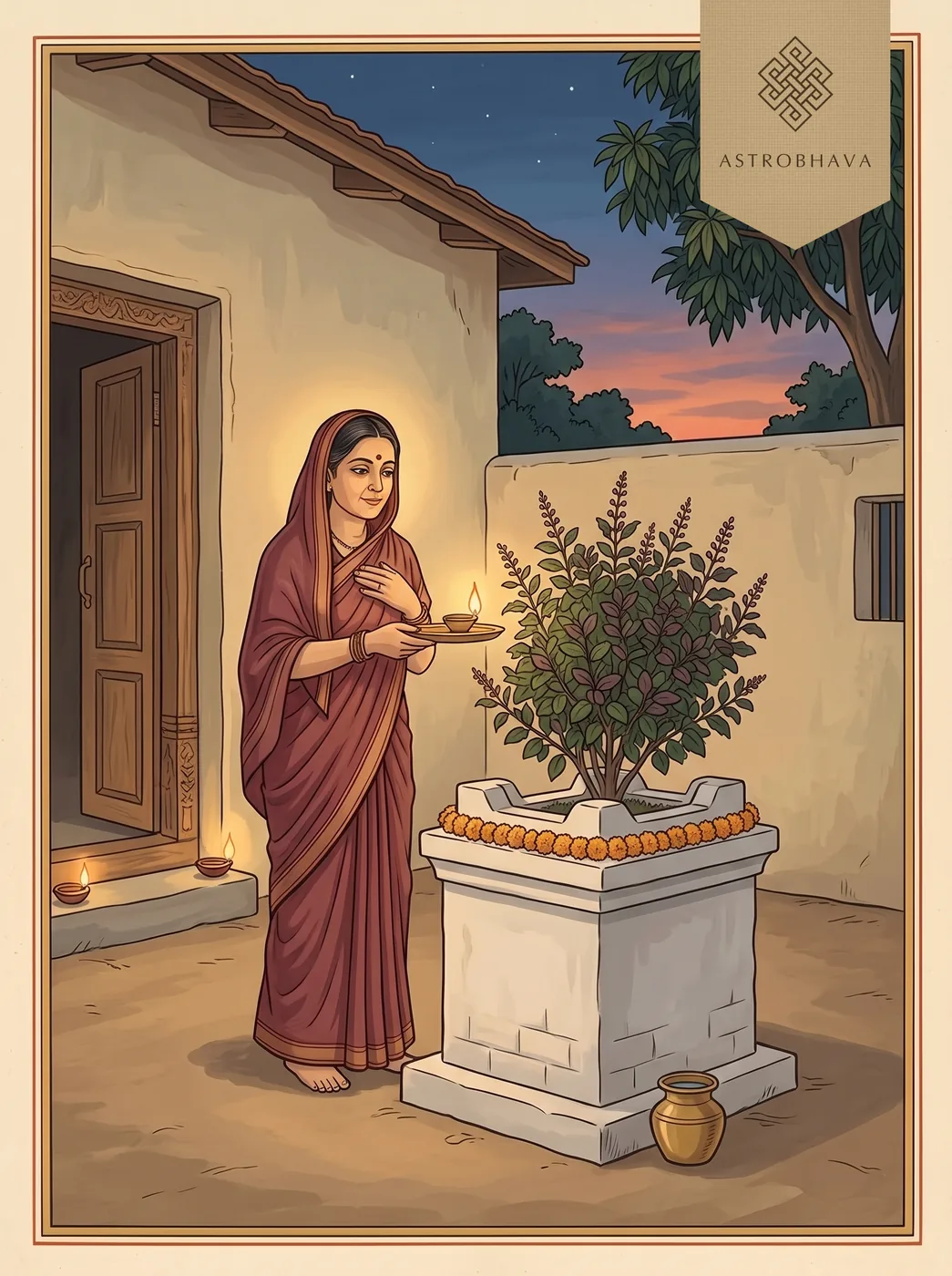
No legend of composition is attached to this aarti, and no early dated printing of it is known. It has travelled instead through the small booklets of aartis and vrat kathas sold for Ekadashi and other observances, where publisher after publisher prints it without a name. One Hindi work on medicinal plants quotes its refrain and first stanza as the vandana people sing to the plant, fitting for a song that sets Tulsi above every disease. Its setting is the tulasi vrindavana, the small raised altar that holds the plant in the courtyard or before the door of a traditional house, often facing east. Care of the plant and worship at the altar have traditionally fallen to the women of the household, who water it, clean the ground around it and walk around it in pradakshina. In the month of Kartika the evening lamps of the house include the worship of Tulsi, and popular custom keeps her aarti morning and evening through that month. The stanzas speak to that plant directly. Stanza 2 calls her gramya, belonging to the village home, and Stanza 4 says she was born in a lonely wilderness before coming into the divine abode. The name Shyama, the dark one, is also given to the purplish-leaved variety known as Shyama or Krishna tulsi, though the aarti does not say which plant it has in mind.
The mantra, in six scripts
- जय
- jaya — victory
- जय
- jaya — victory
- तुलसी
- tulasī — Tulsi
- माता
- mātā — mother
- सब
- saba — all, whole
- जग
- jaga — world
- की
- kī — of
- सुख
- sukha — happiness
- दाता
- dātā — giver
- वर
- vara — boon
- दाता
- dātā — giver
Tulsi Aarti lyrics in full
The refrain and five stanzas; the refrain is printed once at the top and is sung again after each stanza.
All 6 verses, in Hindi, Tamil, Telugu, Kannada, Malayalam and English, each with its meaning. Choose a script:
Download the Tulsi Aarti PDFAll 6 verses with their meanings, in Hindi. Free to print and keep.
जय जय तुलसी माता ।
सब जग की सुख दाता, वर दाता ॥
ஜய ஜய துலஸீ மாதா ।
ஸப ஜக கீ ஸுக தாதா, வர தாதா ॥
జయ జయ తులసీ మాతా ।
సబ జగ కీ సుఖ దాతా, వర దాతా ॥
ಜಯ ಜಯ ತುಲಸೀ ಮಾತಾ ।
ಸಬ ಜಗ ಕೀ ಸುಖ ದಾತಾ, ವರ ದಾತಾ ॥
ജയ ജയ തുലസീ മാതാ ।
സബ ജഗ കീ സുഖ ദാതാ, വര ദാതാ ॥
jaya jaya tulasī mātā |
saba jaga kī sukha dātā, vara dātā ||
Victory, victory to Mother Tulsi, who gives happiness to the whole world and grants boons. (Sung after every stanza.)
सब योगों के ऊपर, सब रोगों के ऊपर ।
रुज से रक्षा करके भव त्राता ॥
ஸப யோகோம் கே ஊபர, ஸப ரோகோம் கே ஊபர ।
ருஜ ஸே ரக்ஷா கரகே பவ த்ராதா ॥
సబ యోగోం కే ఊపర, సబ రోగోం కే ఊపర ।
రుజ సే రక్షా కరకే భవ త్రాతా ॥
ಸಬ ಯೋಗೋಂ ಕೇ ಊಪರ, ಸಬ ರೋಗೋಂ ಕೇ ಊಪರ ।
ರುಜ ಸೇ ರಕ್ಷಾ ಕರಕೇ ಭವ ತ್ರಾತಾ ॥
സബ യോഗോം കേ ഊപര, സബ രോഗോം കേ ഊപര ।
രുജ സേ രക്ഷാ കരകേ ഭവ ത്രാതാ ॥
saba yogoṃ ke ūpara, saba rogoṃ ke ūpara |
ruja se rakṣā karake bhava trātā ||
You stand above every yoga and above every disease. Guarding us from sickness, you are the one who carries us across worldly existence.
बटु पुत्री हे श्यामा, सुर बल्ली हे ग्राम्या ।
विष्णु प्रिये जो तुमको सेवे, सो नर तर जाता ॥
படு புத்ரீ ஹே ஶ்யாமா, ஸுர பல்லீ ஹே க்ராம்யா ।
விஷ்ணு ப்ரியே ஜோ துமகோ ஸேவே, ஸோ நர தர ஜாதா ॥
బటు పుత్రీ హే శ్యామా, సుర బల్లీ హే గ్రామ్యా ।
విష్ణు ప్రియే జో తుమకో సేవే, సో నర తర జాతా ॥
ಬಟು ಪುತ್ರೀ ಹೇ ಶ್ಯಾಮಾ, ಸುರ ಬಲ್ಲೀ ಹೇ ಗ್ರಾಮ್ಯಾ ।
ವಿಷ್ಣು ಪ್ರಿಯೇ ಜೋ ತುಮಕೋ ಸೇವೇ, ಸೋ ನರ ತರ ಜಾತಾ ॥
ബടു പുത്രീ ഹേ ശ്യാമാ, സുര ബല്ലീ ഹേ ഗ്രാമ്യാ ।
വിഷ്ണു പ്രിയേ ജോ തുമകോ സേവേ, സോ നര തര ജാതാ ॥
baṭu putrī he śyāmā, sura ballī he grāmyā |
viṣṇu priye jo tumako seve, so nara tara jātā ||
O dark Shyama, young daughter; O divine creeper who grows in the village home. O beloved of Vishnu, the verse says that whoever serves you is carried across to freedom.
हरि के शीश विराजत त्रिभुवन से हो वन्दित ।
पतित जनों की तारिणी, तुम हो विख्याता ॥
ஹரி கே ஶீஶ விராஜத த்ரிபுவந ஸே ஹோ வந்தித ।
பதித ஜநோம் கீ தாரிணீ, தும ஹோ விக்யாதா ॥
హరి కే శీశ విరాజత త్రిభువన సే హో వన్దిత ।
పతిత జనోం కీ తారిణీ, తుమ హో విఖ్యాతా ॥
ಹರಿ ಕೇ ಶೀಶ ವಿರಾಜತ ತ್ರಿಭುವನ ಸೇ ಹೋ ವನ್ದಿತ ।
ಪತಿತ ಜನೋಂ ಕೀ ತಾರಿಣೀ, ತುಮ ಹೋ ವಿಖ್ಯಾತಾ ॥
ഹരി കേ ശീശ വിരാജത ത്രിഭുവന സേ ഹോ വന്ദിത ।
പതിത ജനോം കീ താരിണീ, തുമ ഹോ വിഖ്യാതാ ॥
hari ke śīśa virājata tribhuvana se ho vandita |
patita janoṃ kī tāriṇī, tuma ho vikhyātā ||
You rest upon the head of Hari and are honoured by the three worlds. You are renowned as the one who lifts up the fallen.
लेकर जन्म विजन में आई दिव्य भवन में ।
मानव लोक तुम्हीं से सुख संपति पाता ॥
லேகர ஜந்ம விஜந மேம் ஆஈ திவ்ய பவந மேம் ।
மாநவ லோக தும்ஹீம் ஸே ஸுக ஸம்பதி பாதா ॥
లేకర జన్మ విజన మేం ఆఈ దివ్య భవన మేం ।
మానవ లోక తుమ్హీం సే సుఖ సంపతి పాతా ॥
ಲೇಕರ ಜನ್ಮ ವಿಜನ ಮೇಂ ಆಈ ದಿವ್ಯ ಭವನ ಮೇಂ ।
ಮಾನವ ಲೋಕ ತುಮ್ಹೀಂ ಸೇ ಸುಖ ಸಂಪತಿ ಪಾತಾ ॥
ലേകര ജന്മ വിജന മേം ആഈ ദിവ്യ ഭവന മേം ।
മാനവ ലോക തുമ്ഹീം സേ സുഖ സംപതി പാതാ ॥
lekara janma vijana meṃ āī divya bhavana meṃ |
mānava loka tumhīṃ se sukha saṃpati pātā ||
Born in a lonely wilderness, you came into the divine abode. From you alone the world of men receives happiness and prosperity.
हरि को तुम अति प्यारी श्याम वर्ण सुकुमारी ।
प्रेम अजब है उनका तुमसे कैसा नाता ॥
ஹரி கோ தும அதி ப்யாரீ ஶ்யாம வர்ண ஸுகுமாரீ ।
ப்ரேம அஜப ஹை உநகா துமஸே கைஸா நாதா ॥
హరి కో తుమ అతి ప్యారీ శ్యామ వర్ణ సుకుమారీ ।
ప్రేమ అజబ హై ఉనకా తుమసే కైసా నాతా ॥
ಹರಿ ಕೋ ತುಮ ಅತಿ ಪ್ಯಾರೀ ಶ್ಯಾಮ ವರ್ಣ ಸುಕುಮಾರೀ ।
ಪ್ರೇಮ ಅಜಬ ಹೈ ಉನಕಾ ತುಮಸೇ ಕೈಸಾ ನಾತಾ ॥
ഹരി കോ തുമ അതി പ്യാരീ ശ്യാമ വര്ണ സുകുമാരീ ।
പ്രേമ അജബ ഹൈ ഉനകാ തുമസേ കൈസാ നാതാ ॥
hari ko tuma ati pyārī śyāma varṇa sukumārī |
prema ajaba hai unakā tumase kaisā nātā ||
You are very dear to Hari, O tender maiden of dark hue. Wondrous is His love; what a bond He shares with you.
The syllable people get wrong
In Stanza 1, रुज (ruja, 'sickness') has a short u and a short final a: ROO-juh said quickly, rhyming with neither 'raj' nor 'rouge'. Singers who say raj turn the word into रज (raja, 'dust'), a reading some printings carry, and lose the link with the disease named just before it.
When the Tulsi Aarti is chanted
Weekday. Friday
Festival. Kartika month, closing with Tulsi Vivah
Questions
Have your chart read before you decide
Chanting is yours to do, and free. But which deity your situation calls for — and whether a mantra alone is the right response — depends on your chart. Sometimes it is; sometimes it is not.
- Over 30 years in the Guru–Sishya Parampara, from the age of five
- He reads every chart himself — 60 minutes, one to one, never delegated
- Charts are read only between sunrise and sunset, following tradition
