Tulsi Vivah Mantra
महाप्रसाद जननी सर्व सौभाग्यवर्धिनी । आधि व्याधि हरा नित्यं तुलसी त्वं नमोस्तुते ॥Also known as Mahaprasada Janani
In Devanagari, Tamil, Telugu, Kannada, Malayalam and English — with the meaning of every word, and the one syllable most people pronounce wrongly.
 The Lakshmi Narayana Homam, performed for youBook →
What the Tulsi Vivah Mantra is
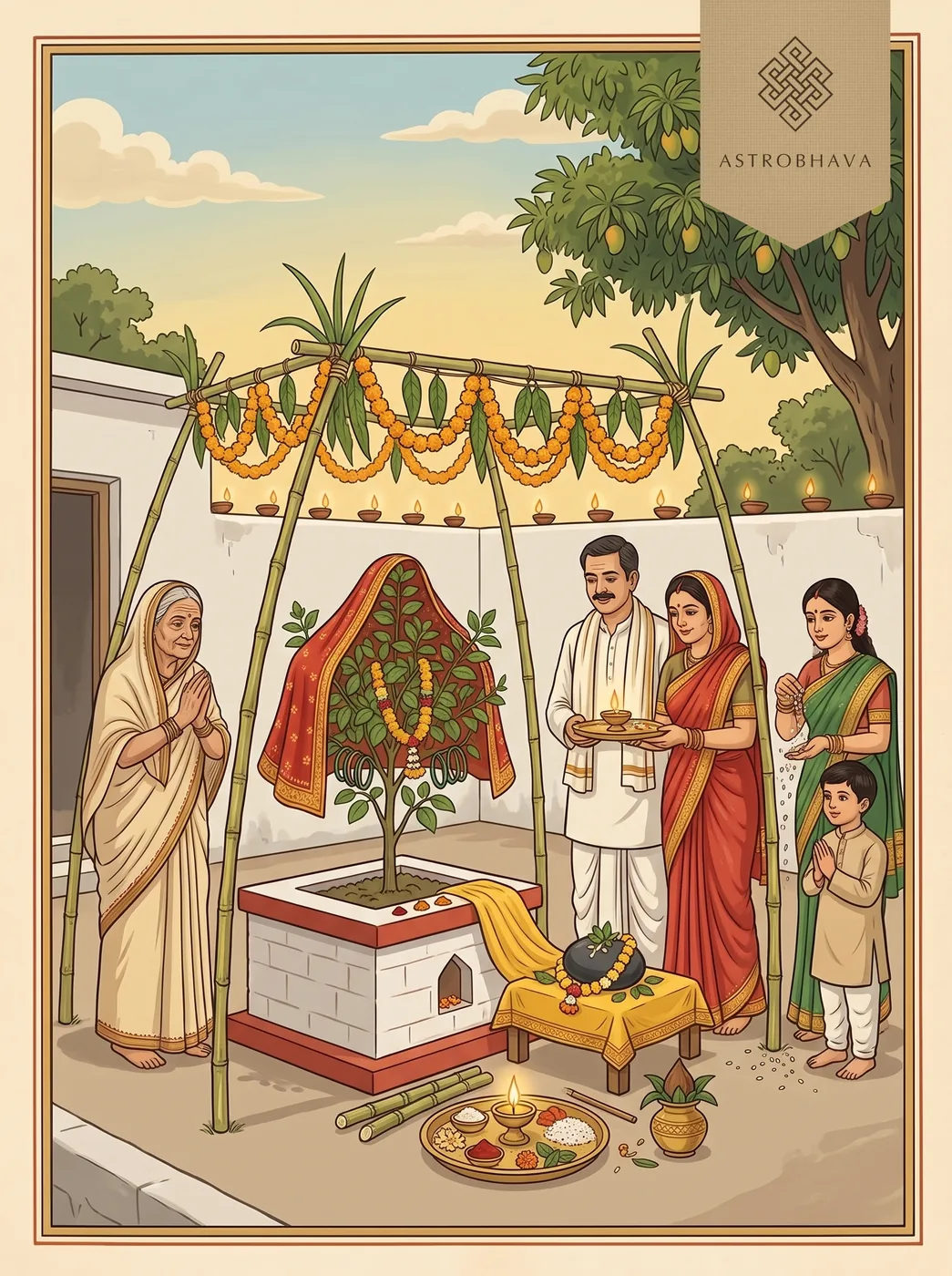
The Tulsi Vivah mantra is the verse Mahaprasada Janani, said to Tulasi at Tulsi Vivah, the wedding of the holy basil to Vishnu in the form of the Shaligrama stone; this page prints it with four other Sanskrit verses the rite draws on. Mantra 1 greets Tulasi as the mother of great grace who makes good fortune grow and removes troubles of mind and body. It rests on the puja manuals, which give it no scriptural home. Mantra 2 is the Tulasi Namashtaka, her eight names in one couplet, from the Devi Bhagavata Purana (9.25.32), with a parallel couplet in the Prakriti Khanda of the Brahmavaivarta Purana. The phala shruti is the next verse of the same chapter. Prarthana 1 comes from the Kartika Mahatmya of the Padma Purana (Uttara Khanda 93.29) and asks Tulasi, brought forth by the gods, to take away sin. Prarthana 2, a traditional verse, places the holy places at her root, the gods in her middle and the Vedas at her tip.
Vrinda, Jalandhara and the stone bridegroom
The Shiva Purana, with parallel tellings in the Padma and Skanda Puranas, gives the story behind the wedding. Jalandhara was born when the fire of Shiva's third eye was cast into the ocean, and he grew into an emperor of the asuras. His wife Vrinda, daughter of Kalanemi, was so faithful that her virtue kept him unconquerable. Jalandhara made war on the gods and, taking Shiva's form, tried to deceive Parvati. Vishnu answered in kind: he came to Vrinda in her husband's form, and her protection failed. When she saw through the disguise she cursed Vishnu to suffer separation from his own wife, a curse tradition sees fulfilled when Ravana carries Sita away, and she gave herself to the fire. Shiva then slew Jalandhara. The Skanda telling adds that Vishnu grieved at her pyre until the goddess Prakriti gave the gods seeds that grew into Dhatri, Malati and Tulasi. According to popular tradition Vrinda was reborn as the tulasi plant, and Vishnu, as the Shaligrama, weds her on Prabodhini Ekadashi to keep his promise. The Devi Bhagavata tells a different life for her, as Tulasi, daughter of King Dharmadhvaja and wife of Shankhachuda, whose body Vishnu turns into the Gandaki river and whose hair becomes the plant.
The mantra, in six scripts
- महाप्रसाद
- mahāprasāda — great grace
- जननी
- jananī — mother, giver
- सर्व
- sarva — all, every
- सौभाग्यवर्धिनी
- saubhāgyavardhinī — who makes good fortune grow
- आधि
- ādhi — troubles of the mind
- व्याधि
- vyādhi — illnesses of the body
- हरा
- harā — removing
- नित्यं
- nityaṃ — always
- तुलसी
- tulasī — Tulasi
- त्वं
- tvaṃ — you
- नमोस्तुते
- namostute — salutations to you
Tulsi Vivah Mantra lyrics in full
Five verses: the Vivah mantra, the eight names of Tulasi with their phala shruti, and two salutations to her.
All 5 verses, in Sanskrit, Tamil, Telugu, Kannada, Malayalam and English, each with its meaning. Choose a script:
Download the Tulsi Vivah Mantra PDFAll 5 verses with their meanings, in Sanskrit. Free to print and keep.
महाप्रसाद जननी सर्व सौभाग्यवर्धिनी ।
आधि व्याधि हरा नित्यं तुलसी त्वं नमोस्तुते ॥
மஹாப்ரஸாத ஜநநீ ஸர்வ ஸௌபாக்யவர்திநீ ।
ஆதி வ்யாதி ஹரா நித்யம் துலஸீ த்வம் நமோஸ்துதே ॥
మహాప్రసాద జననీ సర్వ సౌభాగ్యవర్ధినీ ।
ఆధి వ్యాధి హరా నిత్యం తులసీ త్వం నమోస్తుతే ॥
ಮಹಾಪ್ರಸಾದ ಜನನೀ ಸರ್ವ ಸೌಭಾಗ್ಯವರ್ಧಿನೀ ।
ಆಧಿ ವ್ಯಾಧಿ ಹರಾ ನಿತ್ಯಂ ತುಲಸೀ ತ್ವಂ ನಮೋಸ್ತುತೇ ॥
മഹാപ്രസാദ ജനനീ സര്വ സൌഭാഗ്യവര്ധിനീ ।
ആധി വ്യാധി ഹരാ നിത്യം തുലസീ ത്വം നമോസ്തുതേ ॥
mahāprasāda jananī sarva saubhāgyavardhinī |
ādhi vyādhi harā nityaṃ tulasī tvaṃ namostute ||
Mother who brings great grace, you make every good fortune grow and always take away troubles of the mind and illnesses of the body: Tulasi, salutations to you. (Printed as the Tulsi Vivah mantra; traditional, no single source)
वृन्दा वृन्दावनी विश्वपूजिता विश्वपावनी ।
पुष्पसारा नन्दिनी च तुलसी कृष्णजीवनी ॥
வ்ருந்தா வ்ருந்தாவநீ விஶ்வபூஜிதா விஶ்வபாவநீ ।
புஷ்பஸாரா நந்திநீ ச துலஸீ க்ருஷ்ணஜீவநீ ॥
వృన్దా వృన్దావనీ విశ్వపూజితా విశ్వపావనీ ।
పుష్పసారా నన్దినీ చ తులసీ కృష్ణజీవనీ ॥
ವೃನ್ದಾ ವೃನ್ದಾವನೀ ವಿಶ್ವಪೂಜಿತಾ ವಿಶ್ವಪಾವನೀ ।
ಪುಷ್ಪಸಾರಾ ನನ್ದಿನೀ ಚ ತುಲಸೀ ಕೃಷ್ಣಜೀವನೀ ॥
വൃന്ദാ വൃന്ദാവനീ വിശ്വപൂജിതാ വിശ്വപാവനീ ।
പുഷ്പസാരാ നന്ദിനീ ച തുലസീ കൃഷ്ണജീവനീ ॥
vṛndā vṛndāvanī viśvapūjitā viśvapāvanī |
puṣpasārā nandinī ca tulasī kṛṣṇajīvanī ||
Vrinda, Vrindavani, Vishvapujita, Vishvapavani, Pushpasara, Nandini, Tulasi and Krishnajivani: these are the eight names of Tulasi, the Tulasi Namashtaka. They name her the gathering of plants, the one who first appeared in the Vrindavana forest, worshipped in all worlds, purifier of all worlds, essence of flowers, giver of joy, the one without equal, and the life of Krishna. (Devi Bhagavata Purana 9.25.32; Brahmavaivarta Purana, Prakriti Khanda 22.32)
एतन्नामाष्टकञ्चैव स्तोत्रं नामार्थसंयुतम् ।
यः पठेत्तां च संपूज्य सोऽश्वमेधफलं लभेत् ॥
ஏதந்நாமாஷ்டகஞ்சைவ ஸ்தோத்ரம் நாமார்தஸம்யுதம் ।
யஃ படேத்தாம் ச ஸம்பூஜ்ய ஸோஶ்வமேதபலம் லபேத் ॥
ఏతన్నామాష్టకఞ్చైవ స్తోత్రం నామార్థసంయుతమ్ ।
యః పఠేత్తాం చ సంపూజ్య సోఽశ్వమేధఫలం లభేత్ ॥
ಏತನ್ನಾಮಾಷ್ಟಕಞ್ಚೈವ ಸ್ತೋತ್ರಂ ನಾಮಾರ್ಥಸಂಯುತಮ್ ।
ಯಃ ಪಠೇತ್ತಾಂ ಚ ಸಂಪೂಜ್ಯ ಸೋಽಶ್ವಮೇಧಫಲಂ ಲಭೇತ್ ॥
ഏതന്നാമാഷ്ടകഞ്ചൈവ സ്തോത്രം നാമാര്ഥസംയുതമ് ।
യഃ പഠേത്താം ച സംപൂജ്യ സോഽശ്വമേധഫലം ലഭേത് ॥
etannāmāṣṭakañcaiva stotraṃ nāmārthasaṃyutam |
yaḥ paṭhettāṃ ca saṃpūjya so'śvamedhaphalaṃ labhet ||
The verse says that whoever worships Tulasi and recites this hymn of eight names, with the meaning of each name, gains the merit of an Ashvamedha sacrifice. (Devi Bhagavata Purana 9.25.33; Brahmavaivarta Purana, Prakriti Khanda 22.33)
देवैस्त्वं निर्मिता पूर्वमर्चितासि मुनीश्वरैः ।
नमो नमस्ते तुलसि पापं हर हरिप्रिये ॥
தேவைஸ்த்வம் நிர்மிதா பூர்வமர்சிதாஸி முநீஶ்வரைஃ ।
நமோ நமஸ்தே துலஸி பாபம் ஹர ஹரிப்ரியே ॥
దేవైస్త్వం నిర్మితా పూర్వమర్చితాసి మునీశ్వరైః ।
నమో నమస్తే తులసి పాపం హర హరిప్రియే ॥
ದೇವೈಸ್ತ್ವಂ ನಿರ್ಮಿತಾ ಪೂರ್ವಮರ್ಚಿತಾಸಿ ಮುನೀಶ್ವರೈಃ ।
ನಮೋ ನಮಸ್ತೇ ತುಲಸಿ ಪಾಪಂ ಹರ ಹರಿಪ್ರಿಯೇ ॥
ദേവൈസ്ത്വം നിര്മിതാ പൂര്വമര്ചിതാസി മുനീശ്വരൈഃ ।
നമോ നമസ്തേ തുലസി പാപം ഹര ഹരിപ്രിയേ ॥
devaistvaṃ nirmitā pūrvamarcitāsi munīśvaraiḥ |
namo namaste tulasi pāpaṃ hara haripriye ||
Long ago you were brought forth by the gods and worshipped by the great sages. Salutations again and again to you, Tulasi, beloved of Hari: take away my sin. (Padma Purana, Uttara Khanda 93.29, Kartika Mahatmya, said after circling and bowing to Tulasi)
यन्मूले सर्वतीर्थानि यन्मध्ये सर्वदेवताः ।
यदग्रे सर्ववेदाश्च तुलसि त्वां नमाम्यहम् ॥
யந்மூலே ஸர்வதீர்தாநி யந்மத்யே ஸர்வதேவதாஃ ।
யதக்ரே ஸர்வவேதாஶ்ச துலஸி த்வாம் நமாம்யஹம் ॥
యన్మూలే సర్వతీర్థాని యన్మధ్యే సర్వదేవతాః ।
యదగ్రే సర్వవేదాశ్చ తులసి త్వాం నమామ్యహమ్ ॥
ಯನ್ಮೂಲೇ ಸರ್ವತೀರ್ಥಾನಿ ಯನ್ಮಧ್ಯೇ ಸರ್ವದೇವತಾಃ ।
ಯದಗ್ರೇ ಸರ್ವವೇದಾಶ್ಚ ತುಲಸಿ ತ್ವಾಂ ನಮಾಮ್ಯಹಮ್ ॥
യന്മൂലേ സര്വതീര്ഥാനി യന്മധ്യേ സര്വദേവതാഃ ।
യദഗ്രേ സര്വവേദാശ്ച തുലസി ത്വാം നമാമ്യഹമ് ॥
yanmūle sarvatīrthāni yanmadhye sarvadevatāḥ |
yadagre sarvavedāśca tulasi tvāṃ namāmyaham ||
All the holy places are at your root, all the gods in your middle and all the Vedas at your tip: Tulasi, I bow to you. (Traditional prayer, no single source)
The syllable people get wrong
In Mantra 1, आधि (ādhi, 'trouble of the mind') has an aspirated dh: AA-dhee, with a breath after the d. Said as ādi it becomes 'beginning', and the pair ādhi vyādhi, sorrows of the mind and illnesses of the body, loses its sense.
When the Tulsi Vivah Mantra is chanted
Weekday. Friday
Festival. Tulsi Vivah, Kartika Shukla Ekadashi (Prabodhini) or Dwadashi
Questions
Have your chart read before you decide
Chanting is yours to do, and free. But which deity your situation calls for — and whether a mantra alone is the right response — depends on your chart. Sometimes it is; sometimes it is not.
- Over 30 years in the Guru–Sishya Parampara, from the age of five
- He reads every chart himself — 60 minutes, one to one, never delegated
- Charts are read only between sunrise and sunset, following tradition
