Vaidyanatha Ashtakam
श्रीरामसौमित्रिजटायुवेद षडाननादित्यकुजार्चिताय । श्रीनीलकण्ठाय दयामयाय श्रीवैद्यनाथाय नमः शिवाय ॥Also known as Sri Vaidyanathashtakam
In Devanagari, Tamil, Telugu, Kannada, Malayalam and English — with the meaning of every word, and the one syllable most people pronounce wrongly.
 The Vaidyanatha Ashtakam Homa, performed for youBook →
What the Vaidyanatha Ashtakam is
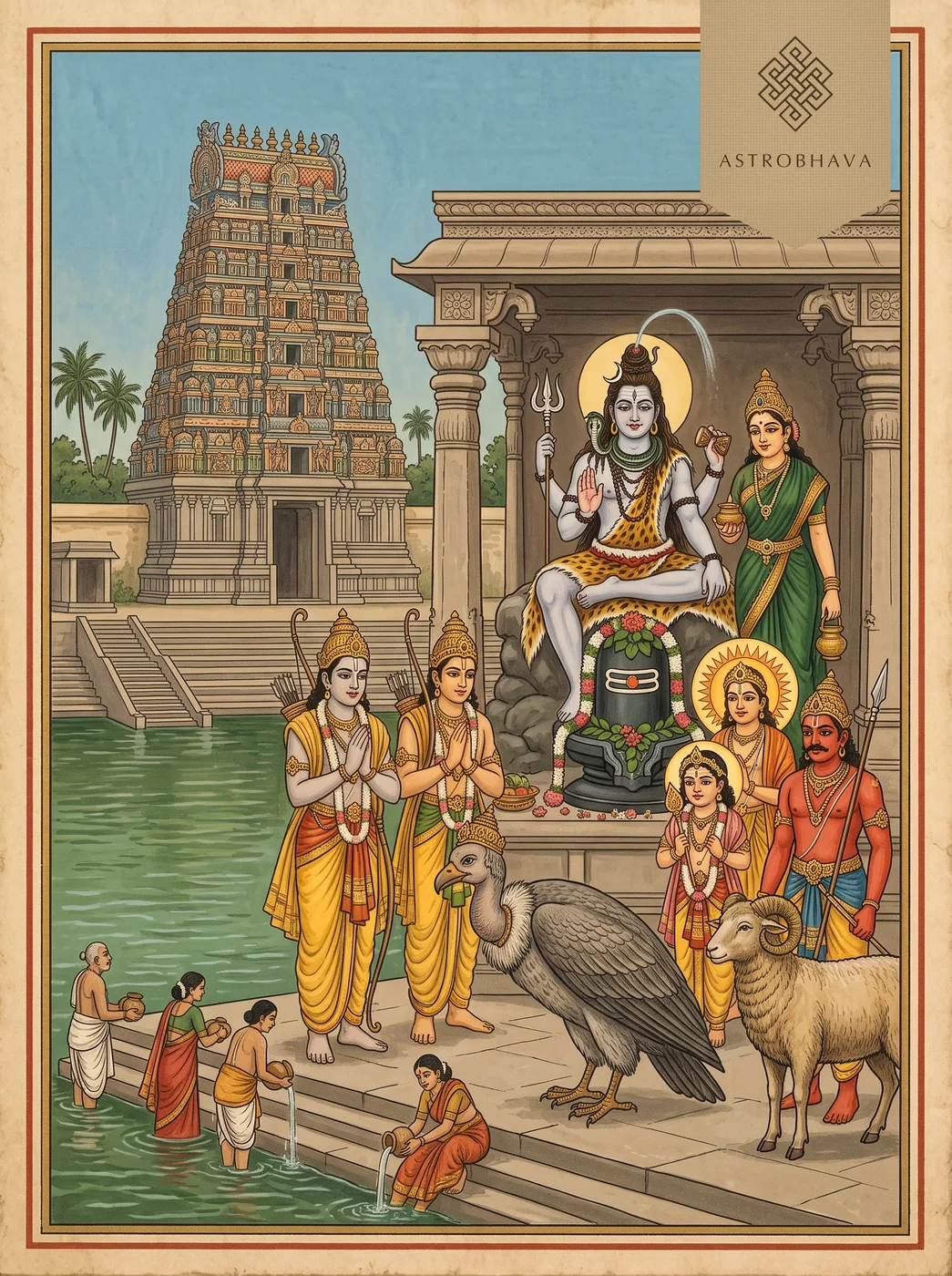
The Vaidyanatha Ashtakam, also printed as Sri Vaidyanathashtakam, is an eight-verse Sanskrit hymn to Shiva as Vaidyanatha, lord of physicians, enshrined at Vaitheeswaran Koil near Sirkazhi in Tamil Nadu. It is commonly ascribed to Adi Shankaracharya, but no early source confirms this, and most printed editions treat it as traditional. The same eight verses appear in the Sanskrit Vaidyanatha Sthala Mahatmya, the temple's own chronicle, published by the Thanjavur Sarasvati Mahal Library as no. 386 of its series. Every verse closes on the line 'Shri Vaidyanathaya namah Shivaya'. The sequence opens with the temple's worshippers, from Rama to the planet Mars, moves through Shiva's familiar marks, the Ganga, the moon, the third eye and the Pinaka bow, and then turns to healing: disorders of vata, lost speech and sight, leprosy, and affliction by spirits. A ninth verse gives three names to repeat: Lord of Balambika, Lord of physicians, and Remover of the disease of worldly existence.
Four worshippers hidden in a village name
Vaitheeswaran Koil stands about seven kilometres from Sirkazhi in Mayiladuthurai district, and its older name, Pullirukkuvelur, is read by local tradition as a list of devotees: pul, the bird Jatayu; Irukku, the Rig Veda; vel, the spear of Murugan; and ur, the place where they worshipped. The first verse of the Ashtakam names almost exactly this company: Rama and Lakshmana, Jatayu, the Veda, six-faced Skanda, the Sun and Kuja, the planet Mars. According to temple tradition, Rama and Lakshmana cremated Jatayu here after Ravana struck him down, and a pool called Jatayu Kundam marks the spot. Mars is said to have been cured of leprosy by Vaidyanatha, which is why the shrine is counted as the Navagraha temple of Angaraka. Murugan, worshipped here as Selva Muthukumaraswamy, is said to have sought Shiva's help when his army was wounded in the war against the asuras; tellings differ on whether the foe was Surapadman or Tarakasura. Verse 7 also points to the temple, speaking of devotees who carry on their bodies the earth of his own tank and his ash. At the shrine of the goddess Thaiyal Nayaki, called Balambika in Sanskrit, a prasadam of sacred soil mixed with ash, Thiruchandu Urundai, is still given out. Appar and Sambandar sang of the temple in the Tevaram in the seventh century.
The mantra, in six scripts
- श्रीरामसौमित्रिजटायुवेद
- śrīrāmasaumitrijaṭāyuveda — by Sri Rama, Lakshmana, Jatayu, the Veda
- षडाननादित्यकुजार्चिताय
- ṣaḍānanādityakujārcitāya — Skanda, the Sun and Mars, worshipped
- श्रीनीलकण्ठाय
- śrīnīlakaṇṭhāya — to the blue-throated one
- दयामयाय
- dayāmayāya — to the compassionate one
- श्रीवैद्यनाथाय
- śrīvaidyanāthāya — to Sri Vaidyanatha, lord of physicians
- नमः
- namaḥ — salutations
- शिवाय
- śivāya — to Shiva
Vaidyanatha Ashtakam lyrics in full
Eight verses and the closing verse of three names. When the hymn is sung, 'Shambho Mahadeva' is usually repeated after each verse; it is not part of the printed text.
All 9 verses, in Sanskrit, Tamil, Telugu, Kannada, Malayalam and English, each with its meaning. Choose a script:
Download the Vaidyanatha Ashtakam PDFAll 9 verses with their meanings, in Sanskrit. Free to print and keep.
श्रीरामसौमित्रिजटायुवेद षडाननादित्यकुजार्चिताय ।
श्रीनीलकण्ठाय दयामयाय श्रीवैद्यनाथाय नमः शिवाय ॥
ஶ்ரீராமஸௌமித்ரிஜடாயுவேத ஷடாநநாதித்யகுஜார்சிதாய ।
ஶ்ரீநீலகண்டாய தயாமயாய ஶ்ரீவைத்யநாதாய நமஃ ஶிவாய ॥
శ్రీరామసౌమిత్రిజటాయువేద షడాననాదిత్యకుజార్చితాయ ।
శ్రీనీలకణ్ఠాయ దయామయాయ శ్రీవైద్యనాథాయ నమః శివాయ ॥
ಶ್ರೀರಾಮಸೌಮಿತ್ರಿಜಟಾಯುವೇದ ಷಡಾನನಾದಿತ್ಯಕುಜಾರ್ಚಿತಾಯ ।
ಶ್ರೀನೀಲಕಣ್ಠಾಯ ದಯಾಮಯಾಯ ಶ್ರೀವೈದ್ಯನಾಥಾಯ ನಮಃ ಶಿವಾಯ ॥
ശ്രീരാമസൌമിത്രിജടായുവേദ ഷഡാനനാദിത്യകുജാര്ചിതായ ।
ശ്രീനീലകണ്ഠായ ദയാമയായ ശ്രീവൈദ്യനാഥായ നമഃ ശിവായ ॥
śrīrāmasaumitrijaṭāyuveda ṣaḍānanādityakujārcitāya |
śrīnīlakaṇṭhāya dayāmayāya śrīvaidyanāthāya namaḥ śivāya ||
Salutations to Shiva, Sri Vaidyanatha, the compassionate blue-throated Lord, who was worshipped by Rama, Lakshmana (son of Sumitra), Jatayu, the Vedas, six-faced Skanda, the Sun and Mars.
गङ्गाप्रवाहेन्दुजटाधराय त्रिलोचनाय स्मरकालहन्त्रे ।
समस्तदेवैरपि पूजिताय श्रीवैद्यनाथाय नमः शिवाय ॥
கங்காப்ரவாஹேந்துஜடாதராய த்ரிலோசநாய ஸ்மரகாலஹந்த்ரே ।
ஸமஸ்ததேவைரபி பூஜிதாய ஶ்ரீவைத்யநாதாய நமஃ ஶிவாய ॥
గఙ్గాప్రవాహేన్దుజటాధరాయ త్రిలోచనాయ స్మరకాలహన్త్రే ।
సమస్తదేవైరపి పూజితాయ శ్రీవైద్యనాథాయ నమః శివాయ ॥
ಗಙ್ಗಾಪ್ರವಾಹೇನ್ದುಜಟಾಧರಾಯ ತ್ರಿಲೋಚನಾಯ ಸ್ಮರಕಾಲಹನ್ತ್ರೇ ।
ಸಮಸ್ತದೇವೈರಪಿ ಪೂಜಿತಾಯ ಶ್ರೀವೈದ್ಯನಾಥಾಯ ನಮಃ ಶಿವಾಯ ॥
ഗങ്ഗാപ്രവാഹേന്ദുജടാധരായ ത്രിലോചനായ സ്മരകാലഹന്ത്രേ ।
സമസ്തദേവൈരപി പൂജിതായ ശ്രീവൈദ്യനാഥായ നമഃ ശിവായ ॥
gaṅgāpravāhendujaṭādharāya trilocanāya smarakālahantre |
samastadevairapi pūjitāya śrīvaidyanāthāya namaḥ śivāya ||
Salutations to Shiva, Sri Vaidyanatha, who bears the flowing Ganga and the moon in his matted hair, the three-eyed one who destroyed Kama and Death, and who is worshipped even by all the gods.
भक्तप्रियाय त्रिपुरान्तकाय पिनाकिने दुष्टहराय नित्यम् ।
प्रत्यक्षलीलाय मनुष्यलोके श्रीवैद्यनाथाय नमः शिवाय ॥
பக்தப்ரியாய த்ரிபுராந்தகாய பிநாகிநே துஷ்டஹராய நித்யம் ।
ப்ரத்யக்ஷலீலாய மநுஷ்யலோகே ஶ்ரீவைத்யநாதாய நமஃ ஶிவாய ॥
భక్తప్రియాయ త్రిపురాన్తకాయ పినాకినే దుష్టహరాయ నిత్యమ్ ।
ప్రత్యక్షలీలాయ మనుష్యలోకే శ్రీవైద్యనాథాయ నమః శివాయ ॥
ಭಕ್ತಪ್ರಿಯಾಯ ತ್ರಿಪುರಾನ್ತಕಾಯ ಪಿನಾಕಿನೇ ದುಷ್ಟಹರಾಯ ನಿತ್ಯಮ್ ।
ಪ್ರತ್ಯಕ್ಷಲೀಲಾಯ ಮನುಷ್ಯಲೋಕೇ ಶ್ರೀವೈದ್ಯನಾಥಾಯ ನಮಃ ಶಿವಾಯ ॥
ഭക്തപ്രിയായ ത്രിപുരാന്തകായ പിനാകിനേ ദുഷ്ടഹരായ നിത്യമ് ।
പ്രത്യക്ഷലീലായ മനുഷ്യലോകേ ശ്രീവൈദ്യനാഥായ നമഃ ശിവായ ॥
bhaktapriyāya tripurāntakāya pinākine duṣṭaharāya nityam |
pratyakṣalīlāya manuṣyaloke śrīvaidyanāthāya namaḥ śivāya ||
Salutations to Shiva, Sri Vaidyanatha, dear to his devotees, destroyer of the three cities, bearer of the Pinaka bow, ever the remover of the wicked, whose divine play is seen openly in the world of men.
प्रभूतवातादिसमस्तरोगप्रणाशकर्त्रे मुनिवन्दिताय ।
प्रभाकरेन्द्वग्निविलोचनाय श्रीवैद्यनाथाय नमः शिवाय ॥
ப்ரபூதவாதாதிஸமஸ்தரோகப்ரணாஶகர்த்ரே முநிவந்திதாய ।
ப்ரபாகரேந்த்வக்நிவிலோசநாய ஶ்ரீவைத்யநாதாய நமஃ ஶிவாய ॥
ప్రభూతవాతాదిసమస్తరోగప్రణాశకర్త్రే మునివన్దితాయ ।
ప్రభాకరేన్ద్వగ్నివిలోచనాయ శ్రీవైద్యనాథాయ నమః శివాయ ॥
ಪ್ರಭೂತವಾತಾದಿಸಮಸ್ತರೋಗಪ್ರಣಾಶಕರ್ತ್ರೇ ಮುನಿವನ್ದಿತಾಯ ।
ಪ್ರಭಾಕರೇನ್ದ್ವಗ್ನಿವಿಲೋಚನಾಯ ಶ್ರೀವೈದ್ಯನಾಥಾಯ ನಮಃ ಶಿವಾಯ ॥
പ്രഭൂതവാതാദിസമസ്തരോഗപ്രണാശകര്ത്രേ മുനിവന്ദിതായ ।
പ്രഭാകരേന്ദ്വഗ്നിവിലോചനായ ശ്രീവൈദ്യനാഥായ നമഃ ശിവായ ॥
prabhūtavātādisamastarogapraṇāśakartre munivanditāya |
prabhākarendvagnivilocanāya śrīvaidyanāthāya namaḥ śivāya ||
Salutations to Shiva, Sri Vaidyanatha, who destroys all diseases, beginning with severe disorders of vata, who is honoured by sages, and whose eyes are the sun, the moon and fire.
वाक्श्रोत्रनेत्राङ्घ्रिविहीनजन्तोः वाक्श्रोत्रनेत्राङ्घ्रिमुखप्रदाय ।
कुष्ठादिसर्वोन्नतरोगहन्त्रे श्रीवैद्यनाथाय नमः शिवाय ॥
வாக்ஶ்ரோத்ரநேத்ராங்க்ரிவிஹீநஜந்தோஃ வாக்ஶ்ரோத்ரநேத்ராங்க்ரிமுகப்ரதாய ।
குஷ்டாதிஸர்வோந்நதரோகஹந்த்ரே ஶ்ரீவைத்யநாதாய நமஃ ஶிவாய ॥
వాక్శ్రోత్రనేత్రాఙ్ఘ్రివిహీనజన్తోః వాక్శ్రోత్రనేత్రాఙ్ఘ్రిముఖప్రదాయ ।
కుష్ఠాదిసర్వోన్నతరోగహన్త్రే శ్రీవైద్యనాథాయ నమః శివాయ ॥
ವಾಕ್ಶ್ರೋತ್ರನೇತ್ರಾಙ್ಘ್ರಿವಿಹೀನಜನ್ತೋಃ ವಾಕ್ಶ್ರೋತ್ರನೇತ್ರಾಙ್ಘ್ರಿಮುಖಪ್ರದಾಯ ।
ಕುಷ್ಠಾದಿಸರ್ವೋನ್ನತರೋಗಹನ್ತ್ರೇ ಶ್ರೀವೈದ್ಯನಾಥಾಯ ನಮಃ ಶಿವಾಯ ॥
വാക്ശ്രോത്രനേത്രാങ്ഘ്രിവിഹീനജന്തോഃ വാക്ശ്രോത്രനേത്രാങ്ഘ്രിമുഖപ്രദായ ।
കുഷ്ഠാദിസര്വോന്നതരോഗഹന്ത്രേ ശ്രീവൈദ്യനാഥായ നമഃ ശിവായ ॥
vākśrotranetrāṅghrivihīnajantoḥ vākśrotranetrāṅghrimukhapradāya |
kuṣṭhādisarvonnatarogahantre śrīvaidyanāthāya namaḥ śivāya ||
Salutations to Shiva, Sri Vaidyanatha, who grants speech, hearing, sight, feet and the rest to a creature lacking them, and who destroys all grave diseases such as leprosy.
वेदान्तवेद्याय जगन्मयाय योगीश्वरध्येयपदाम्बुजाय ।
त्रिमूर्तिरूपाय सहस्रनाम्ने श्रीवैद्यनाथाय नमः शिवाय ॥
வேதாந்தவேத்யாய ஜகந்மயாய யோகீஶ்வரத்யேயபதாம்புஜாய ।
த்ரிமூர்திரூபாய ஸஹஸ்ரநாம்நே ஶ்ரீவைத்யநாதாய நமஃ ஶிவாய ॥
వేదాన్తవేద్యాయ జగన్మయాయ యోగీశ్వరధ్యేయపదామ్బుజాయ ।
త్రిమూర్తిరూపాయ సహస్రనామ్నే శ్రీవైద్యనాథాయ నమః శివాయ ॥
ವೇದಾನ್ತವೇದ್ಯಾಯ ಜಗನ್ಮಯಾಯ ಯೋಗೀಶ್ವರಧ್ಯೇಯಪದಾಮ್ಬುಜಾಯ ।
ತ್ರಿಮೂರ್ತಿರೂಪಾಯ ಸಹಸ್ರನಾಮ್ನೇ ಶ್ರೀವೈದ್ಯನಾಥಾಯ ನಮಃ ಶಿವಾಯ ॥
വേദാന്തവേദ്യായ ജഗന്മയായ യോഗീശ്വരധ്യേയപദാമ്ബുജായ ।
ത്രിമൂര്തിരൂപായ സഹസ്രനാമ്നേ ശ്രീവൈദ്യനാഥായ നമഃ ശിവായ ॥
vedāntavedyāya jaganmayāya yogīśvaradhyeyapadāmbujāya |
trimūrtirūpāya sahasranāmne śrīvaidyanāthāya namaḥ śivāya ||
Salutations to Shiva, Sri Vaidyanatha, who is known through Vedanta, who pervades the universe, whose lotus feet the masters of yoga meditate on, who takes the form of the three deities and has a thousand names.
स्वतीर्थमृद्भस्मभृदङ्गभाजां पिशाचदुःखार्तिभयापहाय ।
आत्मस्वरूपाय शरीरभाजां श्रीवैद्यनाथाय नमः शिवाय ॥
ஸ்வதீர்தம்ருத்பஸ்மப்ருதங்கபாஜாம் பிஶாசதுஃகார்திபயாபஹாய ।
ஆத்மஸ்வரூபாய ஶரீரபாஜாம் ஶ்ரீவைத்யநாதாய நமஃ ஶிவாய ॥
స్వతీర్థమృద్భస్మభృదఙ్గభాజాం పిశాచదుఃఖార్తిభయాపహాయ ।
ఆత్మస్వరూపాయ శరీరభాజాం శ్రీవైద్యనాథాయ నమః శివాయ ॥
ಸ್ವತೀರ್ಥಮೃದ್ಭಸ್ಮಭೃದಙ್ಗಭಾಜಾಂ ಪಿಶಾಚದುಃಖಾರ್ತಿಭಯಾಪಹಾಯ ।
ಆತ್ಮಸ್ವರೂಪಾಯ ಶರೀರಭಾಜಾಂ ಶ್ರೀವೈದ್ಯನಾಥಾಯ ನಮಃ ಶಿವಾಯ ॥
സ്വതീര്ഥമൃദ്ഭസ്മഭൃദങ്ഗഭാജാം പിശാചദുഃഖാര്തിഭയാപഹായ ।
ആത്മസ്വരൂപായ ശരീരഭാജാം ശ്രീവൈദ്യനാഥായ നമഃ ശിവായ ॥
svatīrthamṛdbhasmabhṛdaṅgabhājāṃ piśācaduḥkhārtibhayāpahāya |
ātmasvarūpāya śarīrabhājāṃ śrīvaidyanāthāya namaḥ śivāya ||
Salutations to Shiva, Sri Vaidyanatha, who removes the torment, pain and fear caused by evil spirits for those whose bodies bear the earth of his sacred tank and his holy ash, and who is the very Self of all embodied beings.
श्रीनीलकण्ठाय वृषध्वजाय स्रग्गन्धभस्माद्यभिशोभिताय ।
सुपुत्रदारादिसुभाग्यदाय श्रीवैद्यनाथाय नमः शिवाय ॥
ஶ்ரீநீலகண்டாய வ்ருஷத்வஜாய ஸ்ரக்கந்தபஸ்மாத்யபிஶோபிதாய ।
ஸுபுத்ரதாராதிஸுபாக்யதாய ஶ்ரீவைத்யநாதாய நமஃ ஶிவாய ॥
శ్రీనీలకణ్ఠాయ వృషధ్వజాయ స్రగ్గన్ధభస్మాద్యభిశోభితాయ ।
సుపుత్రదారాదిసుభాగ్యదాయ శ్రీవైద్యనాథాయ నమః శివాయ ॥
ಶ್ರೀನೀಲಕಣ್ಠಾಯ ವೃಷಧ್ವಜಾಯ ಸ್ರಗ್ಗನ್ಧಭಸ್ಮಾದ್ಯಭಿಶೋಭಿತಾಯ ।
ಸುಪುತ್ರದಾರಾದಿಸುಭಾಗ್ಯದಾಯ ಶ್ರೀವೈದ್ಯನಾಥಾಯ ನಮಃ ಶಿವಾಯ ॥
ശ്രീനീലകണ്ഠായ വൃഷധ്വജായ സ്രഗ്ഗന്ധഭസ്മാദ്യഭിശോഭിതായ ।
സുപുത്രദാരാദിസുഭാഗ്യദായ ശ്രീവൈദ്യനാഥായ നമഃ ശിവായ ॥
śrīnīlakaṇṭhāya vṛṣadhvajāya sraggandhabhasmādyabhiśobhitāya |
suputradārādisubhāgyadāya śrīvaidyanāthāya namaḥ śivāya ||
Salutations to Shiva, Sri Vaidyanatha, the blue-throated one whose banner bears the bull, adorned with garlands, sandal paste, holy ash and the like, who grants good fortune such as worthy sons and a good spouse.
बालाम्बिकेश वैद्येश भवरोगहरेति च ।
जपेन्नामत्रयं नित्यं महारोगनिवारणम् ॥
பாலாம்பிகேஶ வைத்யேஶ பவரோகஹரேதி ச ।
ஜபேந்நாமத்ரயம் நித்யம் மஹாரோகநிவாரணம் ॥
బాలామ్బికేశ వైద్యేశ భవరోగహరేతి చ ।
జపేన్నామత్రయం నిత్యం మహారోగనివారణమ్ ॥
ಬಾಲಾಮ್ಬಿಕೇಶ ವೈದ್ಯೇಶ ಭವರೋಗಹರೇತಿ ಚ ।
ಜಪೇನ್ನಾಮತ್ರಯಂ ನಿತ್ಯಂ ಮಹಾರೋಗನಿವಾರಣಮ್ ॥
ബാലാമ്ബികേശ വൈദ്യേശ ഭവരോഗഹരേതി ച ।
ജപേന്നാമത്രയം നിത്യം മഹാരോഗനിവാരണമ് ॥
bālāmbikeśa vaidyeśa bhavarogahareti ca |
japennāmatrayaṃ nityaṃ mahāroganivāraṇam ||
One should repeat daily the three names 'Lord of Balambika', 'Lord of physicians' and 'Remover of the disease of worldly existence'. The verse says this keeps away great diseases.
The syllable people get wrong
In vaidyanāthāya (वैद्यनाथाय) the dy is a plain, unbreathed d running straight into y, 'vaid-ya', not the 'vaidh' or the Tamil-style 'vaith' heard in Vaitheeswaran; the breath belongs instead to the th of nātha, a soft dental t followed by a puff of air, 'naa-tha'.
When the Vaidyanatha Ashtakam is chanted
Weekday. Monday
Festival. Brahmotsavam at Vaitheeswaran Koil
Questions
Have your chart read before you decide
Chanting is yours to do, and free. But which deity your situation calls for — and whether a mantra alone is the right response — depends on your chart. Sometimes it is; sometimes it is not.
- Over 30 years in the Guru–Sishya Parampara, from the age of five
- He reads every chart himself — 60 minutes, one to one, never delegated
- Charts are read only between sunrise and sunset, following tradition
