Varuna Mantra
ॐ जल बिम्बाय विद्महे नील पुरुषाय धीमहि । तन्नो वरुणः प्रचोदयात् ॥Also known as Varuna Gayatri
In Devanagari, Tamil, Telugu, Kannada, Malayalam and English — with the meaning of every word, and the one syllable most people pronounce wrongly.
 The Navagraha Homam, performed for youBook →
What the Varuna Mantra is
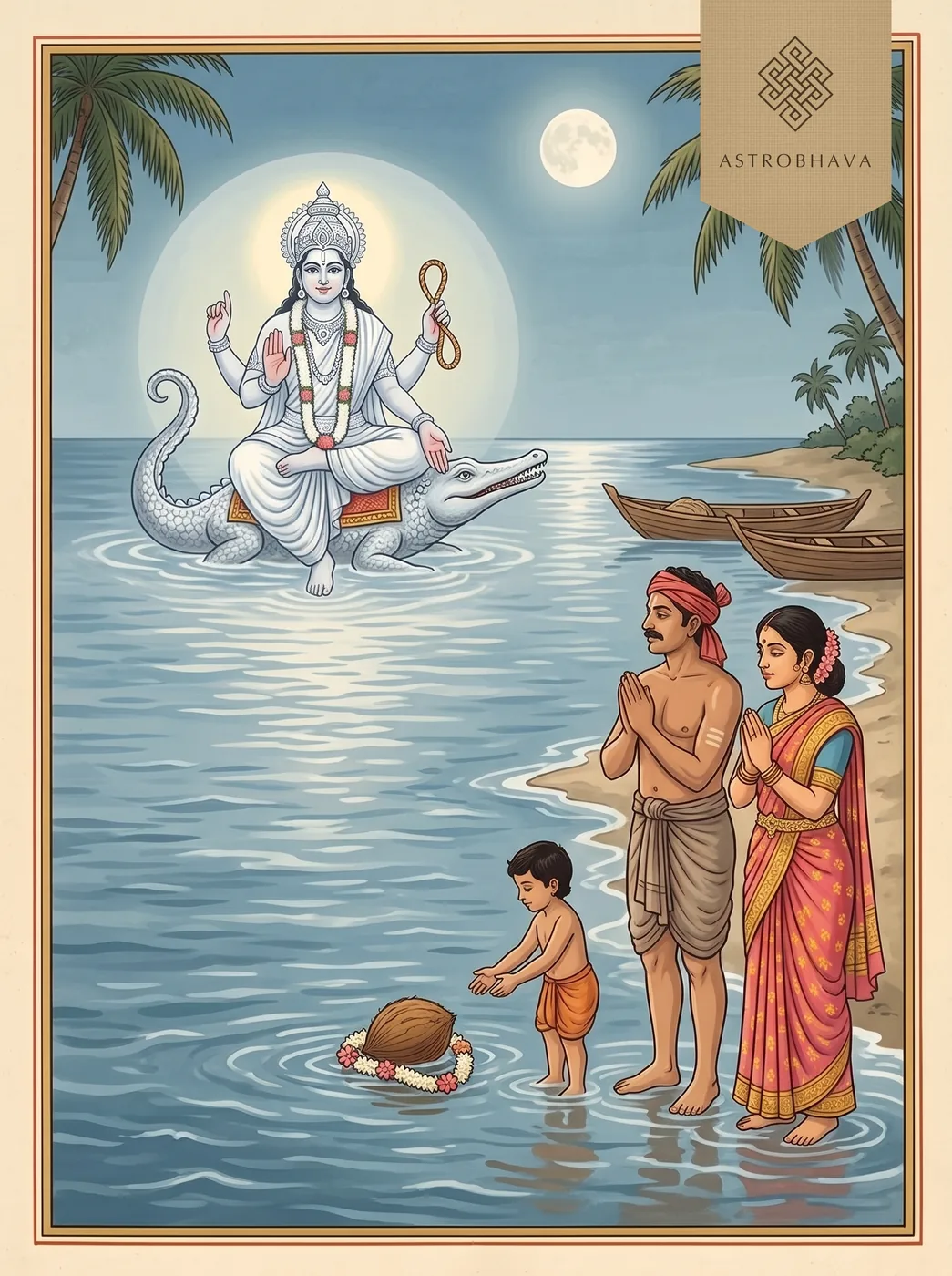
The Varuna Mantra is not one text but a set of five short items addressed to Varuna, the Vedic ruler of cosmic order who later became guardian of the west and of the waters. Mantra 1 is the Varuna Gayatri, built on the deity-Gayatri pattern of vidmahe, dhimahi and prachodayat; it is printed in traditional Gayatri collections and has no located scriptural home. Mantra 2, Om Varunaya Namah, is the salutation said with each offering in the Kalash Sthapana puja. Mantras 3 and 4 are far older: Rigveda 1.24.11, Tat Tva Yami, which the Shukla Yajurveda repeats at 18.49, and Rigveda 1.25.19, Imam Me Varuna, both credited to the seer Shunahshepa. Verse 1 is the prayer of the kalasha puja manuals, picturing Varuna bright as crystal, with a white garland and a noose, seated on a sea creature. The Rigvedic lines are printed without accent marks; chanting them with the svaras is learned from a teacher.
Shunahshepa bound at the sacrificial post
Both Rigvedic verses here belong to the hymns of Shunahshepa, and the Aitareya Brahmana tells how his plea came to be spoken. King Harishchandra, childless, promised Varuna that a son born to him would be given back in sacrifice. Rohita was born, the king kept postponing the debt, and when Rohita fled to the forest Varuna afflicted the king with a stomach illness. In his wanderings Rohita paid a hundred cows to the poor brahmin Ajigarta for a substitute, the middle son, Shunahshepa. The priests refused to kill the boy, so Ajigarta accepted another hundred cows to do it himself. Tied to the post, Shunahshepa did not know whom to call. The commentator Sayana, citing the Brahmana, says Prajapati sent him to Agni, Agni to Savitri and Savitri to Varuna; verses 6 to 15 of Rigveda 1.24 are addressed to Varuna. Verses 12 and 13 name him as seized and bound at three posts, and verse 15 asks Varuna to loosen the noose, upper, middle and lower. According to the Brahmana his bonds fell away and the king recovered, and Vishvamitra adopted him under the name Devarata. The Ramayana tells the episode differently, with King Ambarisha in place of Harishchandra.
The mantra, in six scripts
- ॐ
- oṃ — the sacred syllable Om
- जल
- jala — of the waters
- बिम्बाय
- bimbāya — to the orb, the form
- विद्महे
- vidmahe — may we know
- नील
- nīla — blue-hued
- पुरुषाय
- puruṣāya — on the Person
- धीमहि
- dhīmahi — we meditate
- तन्नो
- tanno — that one, us
- वरुणः
- varuṇaḥ — Varuna
- प्रचोदयात्
- pracodayāt — may inspire
Varuna Mantra lyrics in full
Four short mantras and one prayer verse to Varuna, each given on its own. The two Rigveda verses appear without accent marks.
All 5 verses, in Sanskrit, Tamil, Telugu, Kannada, Malayalam and English, each with its meaning. Choose a script:
Download the Varuna Mantra PDFAll 5 verses with their meanings, in Sanskrit. Free to print and keep.
ॐ जल बिम्बाय विद्महे नील पुरुषाय धीमहि ।
तन्नो वरुणः प्रचोदयात् ॥
ௐ ஜல பிம்பாய வித்மஹே நீல புருஷாய தீமஹி ।
தந்நோ வருணஃ ப்ரசோதயாத் ॥
ఓం జల బిమ్బాయ విద్మహే నీల పురుషాయ ధీమహి ।
తన్నో వరుణః ప్రచోదయాత్ ॥
ಓಂ ಜಲ ಬಿಮ್ಬಾಯ ವಿದ್ಮಹೇ ನೀಲ ಪುರುಷಾಯ ಧೀಮಹಿ ।
ತನ್ನೋ ವರುಣಃ ಪ್ರಚೋದಯಾತ್ ॥
ഓം ജല ബിമ്ബായ വിദ്മഹേ നീല പുരുഷായ ധീമഹി ।
തന്നോ വരുണഃ പ്രചോദയാത് ॥
oṃ jala bimbāya vidmahe nīla puruṣāya dhīmahi |
tanno varuṇaḥ pracodayāt ||
Om. May we know him whose form is the orb of the waters; we meditate on the blue-hued Person. May Varuna inspire us.
ॐ वरुणाय नमः ॥
ௐ வருணாய நமஃ ॥
ఓం వరుణాయ నమః ॥
ಓಂ ವರುಣಾಯ ನಮಃ ॥
ഓം വരുണായ നമഃ ॥
oṃ varuṇāya namaḥ ||
Om. Salutation to Varuna.
तत्त्वा यामि ब्रह्मणा वन्दमानस्तदा शास्ते यजमानो हविर्भिः ।
अहेळमानो वरुणेह बोध्युरुशंस मा न आयुः प्र मोषीः ॥
தத்த்வா யாமி ப்ரஹ்மணா வந்தமாநஸ்ததா ஶாஸ்தே யஜமாநோ ஹவிர்பிஃ ।
அஹேளமாநோ வருணேஹ போத்யுருஶம்ஸ மா ந ஆயுஃ ப்ர மோஷீஃ ॥
తత్త్వా యామి బ్రహ్మణా వన్దమానస్తదా శాస్తే యజమానో హవిర్భిః ।
అహేళమానో వరుణేహ బోధ్యురుశంస మా న ఆయుః ప్ర మోషీః ॥
ತತ್ತ್ವಾ ಯಾಮಿ ಬ್ರಹ್ಮಣಾ ವನ್ದಮಾನಸ್ತದಾ ಶಾಸ್ತೇ ಯಜಮಾನೋ ಹವಿರ್ಭಿಃ ।
ಅಹೇಳಮಾನೋ ವರುಣೇಹ ಬೋಧ್ಯುರುಶಂಸ ಮಾ ನ ಆಯುಃ ಪ್ರ ಮೋಷೀಃ ॥
തത്ത്വാ യാമി ബ്രഹ്മണാ വന്ദമാനസ്തദാ ശാസ്തേ യജമാനോ ഹവിര്ഭിഃ ।
അഹേളമാനോ വരുണേഹ ബോധ്യുരുശംസ മാ ന ആയുഃ പ്ര മോഷീഃ ॥
tattvā yāmi brahmaṇā vandamānastadā śāste yajamāno havirbhiḥ |
aheḷamāno varuṇeha bodhyuruśaṃsa mā na āyuḥ pra moṣīḥ ||
Praising you with sacred words, I come to you to ask for this; the worshipper seeks the same with his offerings. Without anger, Varuna, take heed of us here. O widely praised one, do not steal away our life.
इमं मे वरुण श्रुधी हवमद्या च मृळय ।
त्वामवस्युरा चके ॥
இமம் மே வருண ஶ்ருதீ ஹவமத்யா ச ம்ருளய ।
த்வாமவஸ்யுரா சகே ॥
ఇమం మే వరుణ శ్రుధీ హవమద్యా చ మృళయ ।
త్వామవస్యురా చకే ॥
ಇಮಂ ಮೇ ವರುಣ ಶ್ರುಧೀ ಹವಮದ್ಯಾ ಚ ಮೃಳಯ ।
ತ್ವಾಮವಸ್ಯುರಾ ಚಕೇ ॥
ഇമം മേ വരുണ ശ്രുധീ ഹവമദ്യാ ച മൃളയ ।
ത്വാമവസ്യുരാ ചകേ ॥
imaṃ me varuṇa śrudhī havamadyā ca mṛḷaya |
tvāmavasyurā cake ||
Hear this call of mine, Varuna, and be gracious to us today. Seeking your protection, I long for you.
नमो नमस्ते स्फटिकप्रभाय सुश्वेतहाराय सुमङ्गलाय ।
सुपाशहस्ताय झषासनाय जलाधिनाथाय नमो नमस्ते ॥
நமோ நமஸ்தே ஸ்படிகப்ரபாய ஸுஶ்வேதஹாராய ஸுமங்கலாய ।
ஸுபாஶஹஸ்தாய சஷாஸநாய ஜலாதிநாதாய நமோ நமஸ்தே ॥
నమో నమస్తే స్ఫటికప్రభాయ సుశ్వేతహారాయ సుమఙ్గలాయ ।
సుపాశహస్తాయ ఝషాసనాయ జలాధినాథాయ నమో నమస్తే ॥
ನಮೋ ನಮಸ್ತೇ ಸ್ಫಟಿಕಪ್ರಭಾಯ ಸುಶ್ವೇತಹಾರಾಯ ಸುಮಙ್ಗಲಾಯ ।
ಸುಪಾಶಹಸ್ತಾಯ ಝಷಾಸನಾಯ ಜಲಾಧಿನಾಥಾಯ ನಮೋ ನಮಸ್ತೇ ॥
നമോ നമസ്തേ സ്ഫടികപ്രഭായ സുശ്വേതഹാരായ സുമങ്ഗലായ ।
സുപാശഹസ്തായ ഝഷാസനായ ജലാധിനാഥായ നമോ നമസ്തേ ॥
namo namaste sphaṭikaprabhāya suśvetahārāya sumaṅgalāya |
supāśahastāya jhaṣāsanāya jalādhināthāya namo namaste ||
Salutations again and again to you, who shine like crystal, who wear a pure white garland, who are most auspicious. Salutations again and again to the lord of the waters, who holds the noose in his hand and is seated on the sea creature.
The syllable people get wrong
In Mantra 3, aheḷamāno ('without anger') carries the retroflex ḷ, said with the tongue curled back: a-hay-la-MAA-no, not a plain l. The Yajurveda and the puja manuals spell the same word aheḍamāno with a retroflex d, so both sounds are heard, each correct in its own recension.
When the Varuna Mantra is chanted
Festival. Kalash Sthapana; Narali Purnima
Questions
Have your chart read before you decide
Chanting is yours to do, and free. But which deity your situation calls for — and whether a mantra alone is the right response — depends on your chart. Sometimes it is; sometimes it is not.
- Over 30 years in the Guru–Sishya Parampara, from the age of five
- He reads every chart himself — 60 minutes, one to one, never delegated
- Charts are read only between sunrise and sunset, following tradition
