Vel Maaral
திருத்தணியில் உதித்(து)அருளும் ஒருத்தன்மலை விருத்தன்என(து) உளத்தில்உறைAlso known as Vel Maaral Maha Mantiram
In Tamil and English — with the meaning of every word, and the one sound most people pronounce wrongly.
 The Subramanya Homa, performed for youBook →
What the Vel Maaral is
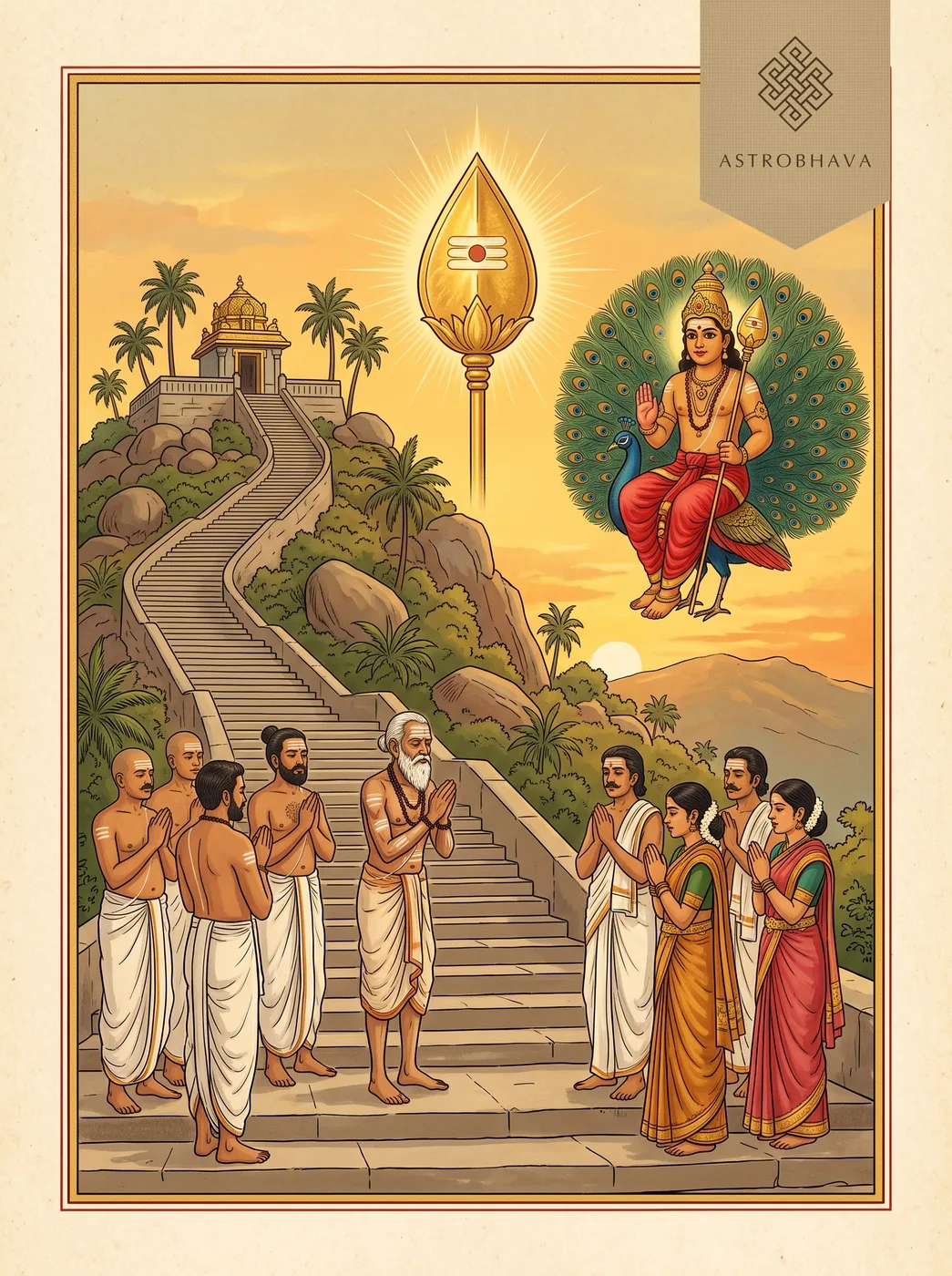
The Vel Maaral, also printed as the Vel Maaral Maha Mantiram, is a Tamil recitation addressed not to Murugan himself but to his Vel, the lance in his hand. Every word in it comes from the Vel Vaguppu, a sixteen-line poem by the fifteenth-century saint Arunagirinathar, the poet of the Tiruppugazh. In the twentieth century Vallimalai Satchidananda Swamigal set those sixteen lines out four times over in a fixed, shifting order, giving sixty-four lines in all. Each line sets the Vel beside a single image: the eyes of the huntress Valli, the feet of Shiva when Yama comes, the file that cut the fetters on Indra's feet, a companion at the left and the right on a lonely road. The Tiruttani line, naming Guha who appeared at Tiruttani, rides the peacock and dwells in the heart, opens the recitation, returns after every line and closes it. The source poem begins on the syllable pa and ends on le, so commentators call it the pale vaguppu.
A Vallimalai sage reorders sixteen lines
Vallimalai Satchidananda Swamigal was born Ardhanari in 1870 at Poonachi Pudur in Coimbatore district. According to the accounts of his life, a song heard at the Palani temple turned him toward Arunagirinathar's Tiruppugazh, which he learned within a month. At Skandasramam in Tiruvannamalai, Ramana Maharshi is said to have explained to him the inner sense of the songs, and Seshadri Swamigal sent him on to Vallimalai, the hill near Walaja that tradition names as the birthplace of Valli. He lived there in a cave for some three decades, and in 1917-18 he began the step festival at Tiruttani, held as the year turns on 31 December, when devotees climb the hill step by step. He attained samadhi at Vallimalai on 22 November 1950. Swamigal grouped three of Arunagirinathar's vaguppu poems as gem, mantra and medicine: the Seerpada Vaguppu, the Devendra Sanga Vaguppu and, in the last class, the Vel Vaguppu. From that poem he built the Vel Maaral, taking its sixteen lines up and down in alternating order, a pattern his followers liken to a yantra laid out in sound. The word maaral, a turning about or exchange, refers to that ordering.
The opening lines, in Tamil and English
- பருத்தமுலை
- paruttamulai — full-breasted
- சிறுத்தஇடை
- ciṟuttaiṭai — slender-waisted
- வெளுத்தநகை
- veḷuttanakai — white-smiling
- கறுத்தகுழல்
- kaṟuttakuḻal — dark-haired
- சிவத்தஇதழ்
- civattaitaḻ — red-lipped
- மறச்சிறுமி
- maṟacciṟumi — young huntress (Valli)
- விழிக்குநிகர்
- viḻikkunikar — equal to the eyes
- ஆகும்
- ākum — it is
Vel Maaral lyrics in full
Sixty-four lines in Vallimalai Swamigal's order, with the Tiruttani refrain set at the head; letters in brackets mark the joins of the sung form.
All 195 lines, in Tamil and English, each with its meaning. Choose a script:
Download the Vel Maaral PDFAll 195 lines with their meanings, in Tamil. Free to print and keep.
திருத்தணியில் உதித்(து)அருளும் ஒருத்தன்மலை
விருத்தன்என(து) உளத்தில்உறை
கருத்தன்மயில் நடத்துகுகன் வேலே
tiruttaṇiyil utit(tu)aruḷum oruttaṉmalai
viruttaṉeṉa(tu) uḷattiluṟai
karuttaṉmayil naṭattukukaṉ vēlē
This is the Vel of Guha, the One who appeared at Tiruttani, the ancient Lord of the hills, who dwells in my heart and rides the peacock. It is chanted 12 times at the start, after every line, and 12 times at the close.
பருத்தமுலை சிறுத்தஇடை வெளுத்தநகை
கறுத்தகுழல் சிவத்தஇதழ் மறச்சிறுமி
விழிக்குநிகர் ஆகும்
paruttamulai ciṟuttaiṭai veḷuttanakai
kaṟuttakuḻal civattaitaḻ maṟacciṟumi
viḻikkunikar ākum
The Vel is equal to the eyes of the young huntress Valli, with her full breasts, slender waist, white smile, dark hair and red lips.
திருத்தணியில் உதித்(து)அருளும் ஒருத்தன்மலை
விருத்தன்என(து) உளத்தில்உறை
கருத்தன்மயில் நடத்துகுகன் வேலே
tiruttaṇiyil utit(tu)aruḷum oruttaṉmalai
viruttaṉeṉa(tu) uḷattiluṟai
karuttaṉmayil naṭattukukaṉ vēlē
This is the Vel of Guha, the One who appeared at Tiruttani, the ancient Lord of the hills, who dwells in my heart and rides the peacock.
சொலற்(கு)அரிய திருப்புகழை உரைத்தவரை
அடுத்தபகை அறுத்(து)எறிய
உறுக்கிஎழும் அறத்தைநிலை காணும்
colaṟ(ku)ariya tiruppukaḻai uraittavarai
aṭuttapakai aṟut(tu)eṟiya
uṟukkieḻum aṟattainilai kāṇum
When enemies come against those who recite the Tiruppugazh, whose glory is beyond words, the Vel rises in fury to cut them down and makes dharma stand firm.
தருக்கிநமன் முருக்கவரின் எருக்குமதி
தரித்தமுடி படைத்தவிறல் படைத்தஇறை
கழற்குநிகர் ஆகும்
tarukkinamaṉ murukkavariṉ erukkumati
tarittamuṭi paṭaittaviṟal paṭaittaiṟai
kaḻaṟkunikar ākum
When Yama comes in his pride to strike, the Vel is equal to the feet of the mighty Lord Shiva, whose crown bears the erukku flower and the crescent moon.
பனைக்கைமுக படக்கரட மதத்தவள
கசக்கடவுள் பதத்(து)இடு(ம்)நி
களத்துமுளை தெறிக்கவரம் ஆகும்
paṉaikkaimuka paṭakkaraṭa matattavaḷa
kacakkaṭavuḷ patat(tu)iṭu(m)ni
kaḷattumuḷai teṟikkavaram ākum
The Vel is the file that snapped the bolt of the fetters placed on the feet of Indra, lord of the white elephant with a trunk like a palm, an ornamented face cloth and flowing must.
சினத்(து)அவுணர் எதிர்த்தரண களத்தில்வெகு
குறைத்தலைகள் சிரித்(து)எயிறு
கடித்துவிழி விழித்(து)அலற மோதும்
ciṉat(tu)avuṇar etirttaraṇa kaḷattilveku
kuṟaittalaikaḷ cirit(tu)eyiṟu
kaṭittuviḻi viḻit(tu)alaṟa mōtum
On the battlefield where the angry asuras opposed it, the Vel strikes so that countless severed heads laugh, bite their teeth, glare and cry out.
துதிக்கும்அடி யவர்க்(கு)ஒருவர் கெடுக்கஇடர்
நினைக்கின்அவர் குலத்தைமுதல் அறக்களையும்
எனக்(கு)ஓர் துணை ஆகும்
tutikkumaṭi yavark(ku)oruvar keṭukkaiṭar
niṉaikkiṉavar kulattaimutal aṟakkaḷaiyum
eṉak(ku)ōr tuṇai ākum
If anyone even thinks of harming the devotees who praise it, the Vel uproots that person's whole line; it is my one companion.
தலத்தில்உள கணத்தொகுதி களிப்பின்உண
வழைப்ப(து) என மலர்க்கமல கரத்தின்முனை
விதிர்க்கவளை(வு) ஆகும்
talattiluḷa kaṇattokuti kaḷippiṉuṇa
vaḻaippa(tu) eṉa malarkkamala karattiṉmuṉai
vitirkkavaḷai(vu) ākum
When the Lord moves the tip of His lotus hand, the Vel bends as if inviting all the hosts of the world to come and eat with joy.
பழுத்தமுது தமிழ்ப்பலகை இருக்கும்ஒரு
கவிப்புலவன் இசைக்(கு)உருகி
வரைக்குகையை இடித்துவழி காணும்
paḻuttamutu tamiḻppalakai irukkumoru
kavippulavaṉ icaik(ku)uruki
varaikkukaiyai iṭittuvaḻi kāṇum
Melted by the song of the peerless poet of the ancient Tamil Sangam board, the Vel broke open the mountain cave and made a way out for him.
திசைக்கிரியை முதற்குலிசன் அறுத்தசிறை
முளைத்த(து)என முகட்டின்இடை
பறக்கஅற விசைத்(து) அதிர ஓடும்
ticaikkiriyai mutaṟkulicaṉ aṟuttaciṟai
muḷaitta(tu)eṉa mukaṭṭiṉiṭai
paṟakkaaṟa vicait(tu) atira ōṭum
The Vel flies across the vault of the sky with such force that the world shakes, as if the wings Indra once cut from the mountains of the directions had grown again.
சுடர்ப்பரிதி ஒளிப்பநில(வு) ஒழுக்கு(ம்)மதி
ஒளிப்பஅலை அடக்குதழல் ஒளிப்பஒளிர்
ஒளிப்பிரபை வீசும்
cuṭarppariti oḷippanila(vu) oḻukku(m)mati
oḷippaalai aṭakkutaḻal oḷippaoḷir
oḷippirapai vīcum
The Vel sends out a radiance that makes the blazing sun, the moon that pours cool light and the fire that holds back the sea all hide in shame.
தனித்துவழி நடக்கும்என(து) இடத்தும்ஒரு
வலத்தும்இரு புறத்தும்அரு(கு)
அடுத்(து)இரவு பகற்றுணைய(து) ஆகும்
taṉittuvaḻi naṭakkumeṉa(tu) iṭattumoru
valattumiru puṟattumaru(ku)
aṭut(tu)iravu pakaṟṟuṇaiya(tu) ākum
When I walk alone on the road, the Vel stays at my left, my right and on both sides, close beside me, my companion by night and by day.
பசித்(து)அலகை முசித்(து)அழுது முறைப்படுதல்
ஒழித்(து)அவுணர் உரத்(து)உதிர
நிணத்தசைகள் புசிக்கஅருள் நேரும்
pacit(tu)alakai mucit(tu)aḻutu muṟaippaṭutal
oḻit(tu)avuṇar urat(tu)utira
niṇattacaikaḷ pucikkaaruḷ nērum
The Vel ends the wailing of the starving ghouls who weep and complain, and graciously lets them feed on the blood, fat and flesh of the asuras.
திரைக்கடலை உடைத்துநிறை புனற்கடிது
குடித்(து)உடையும் உடைப்(பு) அடைய
அடைத்(து)உதிரம் நிறைத்துவிளை யாடும்
tiraikkaṭalai uṭaittuniṟai puṉaṟkaṭitu
kuṭit(tu)uṭaiyum uṭaip(pu) aṭaiya
aṭait(tu)utiram niṟaittuviḷai yāṭum
The Vel breaks the wave-tossed sea, swiftly drinks its water, closes the breach and plays after filling it with blood.
சுரர்க்கு(ம்)முநி வரர்க்கு(ம்)மக பதிக்கும்விதி
தனக்கும்அரி தனக்கும்நரர் தமக்கும்உறும்
இடுக்கண்வினை சாடும்
curarkku(m)muni vararkku(m)maka patikkumviti
taṉakkumari taṉakkumnarar tamakkumuṟum
iṭukkaṇviṉai cāṭum
The Vel strikes down the troubles and karma that befall the gods, the sages, Indra, Brahma, Vishnu and human beings.
சலத்துவரும் அரக்கர்உடல் கொழுத்துவளர்
பெருத்தகுடர் சிவத்ததொடை
எனச்சிகையில் விருப்பமொடு சூடும்
calattuvarum arakkaruṭal koḻuttuvaḷar
peruttakuṭar civattatoṭai
eṉaccikaiyil viruppamoṭu cūṭum
The Vel gladly wears on its crest, like a red garland, the great entrails of the asuras who came in anger with fattened bodies.
சுரர்க்கு(ம்)முநி வரர்க்கு(ம்)மக பதிக்கும்விதி
தனக்கும்அரி தனக்கும்நரர் தமக்கும்உறும்
இடுக்கண்வினை சாடும்
curarkku(m)muni vararkku(m)maka patikkumviti
taṉakkumari taṉakkumnarar tamakkumuṟum
iṭukkaṇviṉai cāṭum
The Vel strikes down the troubles and karma that befall the gods, the sages, Indra, Brahma, Vishnu and human beings.
சலத்துவரும் அரக்கர்உடல் கொழுத்துவளர்
பெருத்தகுடர் சிவத்ததொடை
எனச்சிகையில் விருப்பமொடு சூடும்
calattuvarum arakkaruṭal koḻuttuvaḷar
peruttakuṭar civattatoṭai
eṉaccikaiyil viruppamoṭu cūṭum
The Vel gladly wears on its crest, like a red garland, the great entrails of the asuras who came in anger with fattened bodies.
பசித்(து)அலகை முசித்(து)அழுது முறைப்படுதல்
ஒழித்(து)அவுணர் உரத்(து)உதிர
நிணத்தசைகள் புசிக்கஅருள் நேரும்
pacit(tu)alakai mucit(tu)aḻutu muṟaippaṭutal
oḻit(tu)avuṇar urat(tu)utira
niṇattacaikaḷ pucikkaaruḷ nērum
The Vel ends the wailing of the starving ghouls who weep and complain, and graciously lets them feed on the blood, fat and flesh of the asuras.
திரைக்கடலை உடைத்துநிறை புனற்கடிது
குடித்(து)உடையும் உடைப்(பு) அடைய
அடைத்(து)உதிரம் நிறைத்துவிளை யாடும்
tiraikkaṭalai uṭaittuniṟai puṉaṟkaṭitu
kuṭit(tu)uṭaiyum uṭaip(pu) aṭaiya
aṭait(tu)utiram niṟaittuviḷai yāṭum
The Vel breaks the wave-tossed sea, swiftly drinks its water, closes the breach and plays after filling it with blood.
சுடர்ப்பரிதி ஒளிப்பநில(வு) ஒழுக்கு(ம்)மதி
ஒளிப்பஅலை அடக்குதழல் ஒளிப்பஒளிர்
ஒளிப்பிரபை வீசும்
cuṭarppariti oḷippanila(vu) oḻukku(m)mati
oḷippaalai aṭakkutaḻal oḷippaoḷir
oḷippirapai vīcum
The Vel sends out a radiance that makes the blazing sun, the moon that pours cool light and the fire that holds back the sea all hide in shame.
தனித்துவழி நடக்கும்என(து) இடத்தும்ஒரு
வலத்தும்இரு புறத்தும்அரு(கு)
அடுத்(து)இரவு பகற்றுணைய(து) ஆகும்
taṉittuvaḻi naṭakkumeṉa(tu) iṭattumoru
valattumiru puṟattumaru(ku)
aṭut(tu)iravu pakaṟṟuṇaiya(tu) ākum
When I walk alone on the road, the Vel stays at my left, my right and on both sides, close beside me, my companion by night and by day.
பழுத்தமுது தமிழ்ப்பலகை இருக்கும்ஒரு
கவிப்புலவன் இசைக்(கு)உருகி
வரைக்குகையை இடித்துவழி காணும்
paḻuttamutu tamiḻppalakai irukkumoru
kavippulavaṉ icaik(ku)uruki
varaikkukaiyai iṭittuvaḻi kāṇum
Melted by the song of the peerless poet of the ancient Tamil Sangam board, the Vel broke open the mountain cave and made a way out for him.
திசைக்கிரியை முதற்குலிசன் அறுத்தசிறை
முளைத்த(து)என முகட்டின்இடை
பறக்கஅற விசைத்(து) அதிர ஓடும்
ticaikkiriyai mutaṟkulicaṉ aṟuttaciṟai
muḷaitta(tu)eṉa mukaṭṭiṉiṭai
paṟakkaaṟa vicait(tu) atira ōṭum
The Vel flies across the vault of the sky with such force that the world shakes, as if the wings Indra once cut from the mountains of the directions had grown again.
துதிக்கும்அடி யவர்க்(கு)ஒருவர் கெடுக்கஇடர்
நினைக்கின்அவர் குலத்தைமுதல் அறக்களையும்
எனக்(கு)ஓர் துணை ஆகும்
tutikkumaṭi yavark(ku)oruvar keṭukkaiṭar
niṉaikkiṉavar kulattaimutal aṟakkaḷaiyum
eṉak(ku)ōr tuṇai ākum
If anyone even thinks of harming the devotees who praise it, the Vel uproots that person's whole line; it is my one companion.
தலத்தில்உள கணத்தொகுதி களிப்பின்உண
வழைப்ப(து) என மலர்க்கமல கரத்தின்முனை
விதிர்க்கவளை(வு) ஆகும்
talattiluḷa kaṇattokuti kaḷippiṉuṇa
vaḻaippa(tu) eṉa malarkkamala karattiṉmuṉai
vitirkkavaḷai(vu) ākum
When the Lord moves the tip of His lotus hand, the Vel bends as if inviting all the hosts of the world to come and eat with joy.
பனைக்கைமுக படக்கரட மதத்தவள
கசக்கடவுள் பதத்(து)இடு(ம்)நி
களத்துமுளை தெறிக்கவரம் ஆகும்
paṉaikkaimuka paṭakkaraṭa matattavaḷa
kacakkaṭavuḷ patat(tu)iṭu(m)ni
kaḷattumuḷai teṟikkavaram ākum
The Vel is the file that snapped the bolt of the fetters placed on the feet of Indra, lord of the white elephant with a trunk like a palm, an ornamented face cloth and flowing must.
சினத்(து)அவுணர் எதிர்த்தரண களத்தில்வெகு
குறைத்தலைகள் சிரித்(து)எயிறு
கடித்துவிழி விழித்(து)அலற மோதும்
ciṉat(tu)avuṇar etirttaraṇa kaḷattilveku
kuṟaittalaikaḷ cirit(tu)eyiṟu
kaṭittuviḻi viḻit(tu)alaṟa mōtum
On the battlefield where the angry asuras opposed it, the Vel strikes so that countless severed heads laugh, bite their teeth, glare and cry out.
சொலற்(கு)அரிய திருப்புகழை உரைத்தவரை
அடுத்தபகை அறுத்(து)எறிய
உறுக்கிஎழும் அறத்தைநிலை காணும்
colaṟ(ku)ariya tiruppukaḻai uraittavarai
aṭuttapakai aṟut(tu)eṟiya
uṟukkieḻum aṟattainilai kāṇum
When enemies come against those who recite the Tiruppugazh, whose glory is beyond words, the Vel rises in fury to cut them down and makes dharma stand firm.
தருக்கிநமன் முருக்கவரின் எருக்குமதி
தரித்தமுடி படைத்தவிறல் படைத்தஇறை
கழற்குநிகர் ஆகும்
tarukkinamaṉ murukkavariṉ erukkumati
tarittamuṭi paṭaittaviṟal paṭaittaiṟai
kaḻaṟkunikar ākum
When Yama comes in his pride to strike, the Vel is equal to the feet of the mighty Lord Shiva, whose crown bears the erukku flower and the crescent moon.
பருத்தமுலை சிறுத்தஇடை வெளுத்தநகை
கறுத்தகுழல் சிவத்தஇதழ் மறச்சிறுமி
விழிக்குநிகர் ஆகும்
paruttamulai ciṟuttaiṭai veḷuttanakai
kaṟuttakuḻal civattaitaḻ maṟacciṟumi
viḻikkunikar ākum
The Vel is equal to the eyes of the young huntress Valli, with her full breasts, slender waist, white smile, dark hair and red lips.
திருத்தணியில் உதித்(து)அருளும் ஒருத்தன்மலை
விருத்தன்என(து) உளத்தில்உறை
கருத்தன்மயில் நடத்துகுகன் வேலே
tiruttaṇiyil utit(tu)aruḷum oruttaṉmalai
viruttaṉeṉa(tu) uḷattiluṟai
karuttaṉmayil naṭattukukaṉ vēlē
This is the Vel of Guha, the One who appeared at Tiruttani, the ancient Lord of the hills, who dwells in my heart and rides the peacock.
தருக்கிநமன் முருக்கவரின் எருக்குமதி
தரித்தமுடி படைத்தவிறல் படைத்தஇறை
கழற்குநிகர் ஆகும்
tarukkinamaṉ murukkavariṉ erukkumati
tarittamuṭi paṭaittaviṟal paṭaittaiṟai
kaḻaṟkunikar ākum
When Yama comes in his pride to strike, the Vel is equal to the feet of the mighty Lord Shiva, whose crown bears the erukku flower and the crescent moon.
சொலற்(கு)அரிய திருப்புகழை உரைத்தவரை
அடுத்தபகை அறுத்(து)எறிய
உறுக்கிஎழும் அறத்தைநிலை காணும்
colaṟ(ku)ariya tiruppukaḻai uraittavarai
aṭuttapakai aṟut(tu)eṟiya
uṟukkieḻum aṟattainilai kāṇum
When enemies come against those who recite the Tiruppugazh, whose glory is beyond words, the Vel rises in fury to cut them down and makes dharma stand firm.
திருத்தணியில் உதித்(து)அருளும் ஒருத்தன்மலை
விருத்தன்என(து) உளத்தில்உறை
கருத்தன்மயில் நடத்துகுகன் வேலே
tiruttaṇiyil utit(tu)aruḷum oruttaṉmalai
viruttaṉeṉa(tu) uḷattiluṟai
karuttaṉmayil naṭattukukaṉ vēlē
This is the Vel of Guha, the One who appeared at Tiruttani, the ancient Lord of the hills, who dwells in my heart and rides the peacock.
பருத்தமுலை சிறுத்தஇடை வெளுத்தநகை
கறுத்தகுழல் சிவத்தஇதழ் மறச்சிறுமி
விழிக்குநிகர் ஆகும்
paruttamulai ciṟuttaiṭai veḷuttanakai
kaṟuttakuḻal civattaitaḻ maṟacciṟumi
viḻikkunikar ākum
The Vel is equal to the eyes of the young huntress Valli, with her full breasts, slender waist, white smile, dark hair and red lips.
தலத்தில்உள கணத்தொகுதி களிப்பின்உண
வழைப்ப(து) என மலர்க்கமல கரத்தின்முனை
விதிர்க்கவளை(வு) ஆகும்
talattiluḷa kaṇattokuti kaḷippiṉuṇa
vaḻaippa(tu) eṉa malarkkamala karattiṉmuṉai
vitirkkavaḷai(vu) ākum
When the Lord moves the tip of His lotus hand, the Vel bends as if inviting all the hosts of the world to come and eat with joy.
துதிக்கும்அடி யவர்க்(கு)ஒருவர் கெடுக்கஇடர்
நினைக்கின்அவர் குலத்தைமுதல் அறக்களையும்
எனக்(கு)ஓர் துணை ஆகும்
tutikkumaṭi yavark(ku)oruvar keṭukkaiṭar
niṉaikkiṉavar kulattaimutal aṟakkaḷaiyum
eṉak(ku)ōr tuṇai ākum
If anyone even thinks of harming the devotees who praise it, the Vel uproots that person's whole line; it is my one companion.
சினத்(து)அவுணர் எதிர்த்தரண களத்தில்வெகு
குறைத்தலைகள் சிரித்(து)எயிறு
கடித்துவிழி விழித்(து)அலற மோதும்
ciṉat(tu)avuṇar etirttaraṇa kaḷattilveku
kuṟaittalaikaḷ cirit(tu)eyiṟu
kaṭittuviḻi viḻit(tu)alaṟa mōtum
On the battlefield where the angry asuras opposed it, the Vel strikes so that countless severed heads laugh, bite their teeth, glare and cry out.
பனைக்கைமுக படக்கரட மதத்தவள
கசக்கடவுள் பதத்(து)இடு(ம்)நி
களத்துமுளை தெறிக்கவரம் ஆகும்
paṉaikkaimuka paṭakkaraṭa matattavaḷa
kacakkaṭavuḷ patat(tu)iṭu(m)ni
kaḷattumuḷai teṟikkavaram ākum
The Vel is the file that snapped the bolt of the fetters placed on the feet of Indra, lord of the white elephant with a trunk like a palm, an ornamented face cloth and flowing must.
தனித்துவழி நடக்கும்என(து) இடத்தும்ஒரு
வலத்தும்இரு புறத்தும்அரு(கு)
அடுத்(து)இரவு பகற்றுணைய(து) ஆகும்
taṉittuvaḻi naṭakkumeṉa(tu) iṭattumoru
valattumiru puṟattumaru(ku)
aṭut(tu)iravu pakaṟṟuṇaiya(tu) ākum
When I walk alone on the road, the Vel stays at my left, my right and on both sides, close beside me, my companion by night and by day.
சுடர்ப்பரிதி ஒளிப்பநில(வு) ஒழுக்கு(ம்)மதி
ஒளிப்பஅலை அடக்குதழல் ஒளிப்பஒளிர்
ஒளிப்பிரபை வீசும்
cuṭarppariti oḷippanila(vu) oḻukku(m)mati
oḷippaalai aṭakkutaḻal oḷippaoḷir
oḷippirapai vīcum
The Vel sends out a radiance that makes the blazing sun, the moon that pours cool light and the fire that holds back the sea all hide in shame.
திசைக்கிரியை முதற்குலிசன் அறுத்தசிறை
முளைத்த(து)என முகட்டின்இடை
பறக்கஅற விசைத்(து) அதிர ஓடும்
ticaikkiriyai mutaṟkulicaṉ aṟuttaciṟai
muḷaitta(tu)eṉa mukaṭṭiṉiṭai
paṟakkaaṟa vicait(tu) atira ōṭum
The Vel flies across the vault of the sky with such force that the world shakes, as if the wings Indra once cut from the mountains of the directions had grown again.
பழுத்தமுது தமிழ்ப்பலகை இருக்கும்ஒரு
கவிப்புலவன் இசைக்(கு)உருகி
வரைக்குகையை இடித்துவழி காணும்
paḻuttamutu tamiḻppalakai irukkumoru
kavippulavaṉ icaik(ku)uruki
varaikkukaiyai iṭittuvaḻi kāṇum
Melted by the song of the peerless poet of the ancient Tamil Sangam board, the Vel broke open the mountain cave and made a way out for him.
சலத்துவரும் அரக்கர்உடல் கொழுத்துவளர்
பெருத்தகுடர் சிவத்ததொடை
எனச்சிகையில் விருப்பமொடு சூடும்
calattuvarum arakkaruṭal koḻuttuvaḷar
peruttakuṭar civattatoṭai
eṉaccikaiyil viruppamoṭu cūṭum
The Vel gladly wears on its crest, like a red garland, the great entrails of the asuras who came in anger with fattened bodies.
சுரர்க்கு(ம்)முநி வரர்க்கு(ம்)மக பதிக்கும்விதி
தனக்கும்அரி தனக்கும்நரர் தமக்கும்உறும்
இடுக்கண்வினை சாடும்
curarkku(m)muni vararkku(m)maka patikkumviti
taṉakkumari taṉakkumnarar tamakkumuṟum
iṭukkaṇviṉai cāṭum
The Vel strikes down the troubles and karma that befall the gods, the sages, Indra, Brahma, Vishnu and human beings.
திரைக்கடலை உடைத்துநிறை புனற்கடிது
குடித்(து)உடையும் உடைப்(பு) அடைய
அடைத்(து)உதிரம் நிறைத்துவிளை யாடும்
tiraikkaṭalai uṭaittuniṟai puṉaṟkaṭitu
kuṭit(tu)uṭaiyum uṭaip(pu) aṭaiya
aṭait(tu)utiram niṟaittuviḷai yāṭum
The Vel breaks the wave-tossed sea, swiftly drinks its water, closes the breach and plays after filling it with blood.
பசித்(து)அலகை முசித்(து)அழுது முறைப்படுதல்
ஒழித்(து)அவுணர் உரத்(து)உதிர
நிணத்தசைகள் புசிக்கஅருள் நேரும்
pacit(tu)alakai mucit(tu)aḻutu muṟaippaṭutal
oḻit(tu)avuṇar urat(tu)utira
niṇattacaikaḷ pucikkaaruḷ nērum
The Vel ends the wailing of the starving ghouls who weep and complain, and graciously lets them feed on the blood, fat and flesh of the asuras.
திரைக்கடலை உடைத்துநிறை புனற்கடிது
குடித்(து)உடையும் உடைப்(பு) அடைய
அடைத்(து)உதிரம் நிறைத்துவிளை யாடும்
tiraikkaṭalai uṭaittuniṟai puṉaṟkaṭitu
kuṭit(tu)uṭaiyum uṭaip(pu) aṭaiya
aṭait(tu)utiram niṟaittuviḷai yāṭum
The Vel breaks the wave-tossed sea, swiftly drinks its water, closes the breach and plays after filling it with blood.
பசித்(து)அலகை முசித்(து)அழுது முறைப்படுதல்
ஒழித்(து)அவுணர் உரத்(து)உதிர
நிணத்தசைகள் புசிக்கஅருள் நேரும்
pacit(tu)alakai mucit(tu)aḻutu muṟaippaṭutal
oḻit(tu)avuṇar urat(tu)utira
niṇattacaikaḷ pucikkaaruḷ nērum
The Vel ends the wailing of the starving ghouls who weep and complain, and graciously lets them feed on the blood, fat and flesh of the asuras.
சலத்துவரும் அரக்கர்உடல் கொழுத்துவளர்
பெருத்தகுடர் சிவத்ததொடை
எனச்சிகையில் விருப்பமொடு சூடும்
calattuvarum arakkaruṭal koḻuttuvaḷar
peruttakuṭar civattatoṭai
eṉaccikaiyil viruppamoṭu cūṭum
The Vel gladly wears on its crest, like a red garland, the great entrails of the asuras who came in anger with fattened bodies.
சுரர்க்கு(ம்)முநி வரர்க்கு(ம்)மக பதிக்கும்விதி
தனக்கும்அரி தனக்கும்நரர் தமக்கும்உறும்
இடுக்கண்வினை சாடும்
curarkku(m)muni vararkku(m)maka patikkumviti
taṉakkumari taṉakkumnarar tamakkumuṟum
iṭukkaṇviṉai cāṭum
The Vel strikes down the troubles and karma that befall the gods, the sages, Indra, Brahma, Vishnu and human beings.
திசைக்கிரியை முதற்குலிசன் அறுத்தசிறை
முளைத்த(து)என முகட்டின்இடை
பறக்கஅற விசைத்(து) அதிர ஓடும்
ticaikkiriyai mutaṟkulicaṉ aṟuttaciṟai
muḷaitta(tu)eṉa mukaṭṭiṉiṭai
paṟakkaaṟa vicait(tu) atira ōṭum
The Vel flies across the vault of the sky with such force that the world shakes, as if the wings Indra once cut from the mountains of the directions had grown again.
பழுத்தமுது தமிழ்ப்பலகை இருக்கும்ஒரு
கவிப்புலவன் இசைக்(கு)உருகி
வரைக்குகையை இடித்துவழி காணும்
paḻuttamutu tamiḻppalakai irukkumoru
kavippulavaṉ icaik(ku)uruki
varaikkukaiyai iṭittuvaḻi kāṇum
Melted by the song of the peerless poet of the ancient Tamil Sangam board, the Vel broke open the mountain cave and made a way out for him.
தனித்துவழி நடக்கும்என(து) இடத்தும்ஒரு
வலத்தும்இரு புறத்தும்அரு(கு)
அடுத்(து)இரவு பகற்றுணைய(து) ஆகும்
taṉittuvaḻi naṭakkumeṉa(tu) iṭattumoru
valattumiru puṟattumaru(ku)
aṭut(tu)iravu pakaṟṟuṇaiya(tu) ākum
When I walk alone on the road, the Vel stays at my left, my right and on both sides, close beside me, my companion by night and by day.
சுடர்ப்பரிதி ஒளிப்பநில(வு) ஒழுக்கு(ம்)மதி
ஒளிப்பஅலை அடக்குதழல் ஒளிப்பஒளிர்
ஒளிப்பிரபை வீசும்
cuṭarppariti oḷippanila(vu) oḻukku(m)mati
oḷippaalai aṭakkutaḻal oḷippaoḷir
oḷippirapai vīcum
The Vel sends out a radiance that makes the blazing sun, the moon that pours cool light and the fire that holds back the sea all hide in shame.
சினத்(து)அவுணர் எதிர்த்தரண களத்தில்வெகு
குறைத்தலைகள் சிரித்(து)எயிறு
கடித்துவிழி விழித்(து)அலற மோதும்
ciṉat(tu)avuṇar etirttaraṇa kaḷattilveku
kuṟaittalaikaḷ cirit(tu)eyiṟu
kaṭittuviḻi viḻit(tu)alaṟa mōtum
On the battlefield where the angry asuras opposed it, the Vel strikes so that countless severed heads laugh, bite their teeth, glare and cry out.
பனைக்கைமுக படக்கரட மதத்தவள
கசக்கடவுள் பதத்(து)இடு(ம்)நி
களத்துமுளை தெறிக்கவரம் ஆகும்
paṉaikkaimuka paṭakkaraṭa matattavaḷa
kacakkaṭavuḷ patat(tu)iṭu(m)ni
kaḷattumuḷai teṟikkavaram ākum
The Vel is the file that snapped the bolt of the fetters placed on the feet of Indra, lord of the white elephant with a trunk like a palm, an ornamented face cloth and flowing must.
தலத்தில்உள கணத்தொகுதி களிப்பின்உண
வழைப்ப(து) என மலர்க்கமல கரத்தின்முனை
விதிர்க்கவளை(வு) ஆகும்
talattiluḷa kaṇattokuti kaḷippiṉuṇa
vaḻaippa(tu) eṉa malarkkamala karattiṉmuṉai
vitirkkavaḷai(vu) ākum
When the Lord moves the tip of His lotus hand, the Vel bends as if inviting all the hosts of the world to come and eat with joy.
துதிக்கும்அடி யவர்க்(கு)ஒருவர் கெடுக்கஇடர்
நினைக்கின்அவர் குலத்தைமுதல் அறக்களையும்
எனக்(கு)ஓர் துணை ஆகும்
tutikkumaṭi yavark(ku)oruvar keṭukkaiṭar
niṉaikkiṉavar kulattaimutal aṟakkaḷaiyum
eṉak(ku)ōr tuṇai ākum
If anyone even thinks of harming the devotees who praise it, the Vel uproots that person's whole line; it is my one companion.
திருத்தணியில் உதித்(து)அருளும் ஒருத்தன்மலை
விருத்தன்என(து) உளத்தில்உறை
கருத்தன்மயில் நடத்துகுகன் வேலே
tiruttaṇiyil utit(tu)aruḷum oruttaṉmalai
viruttaṉeṉa(tu) uḷattiluṟai
karuttaṉmayil naṭattukukaṉ vēlē
This is the Vel of Guha, the One who appeared at Tiruttani, the ancient Lord of the hills, who dwells in my heart and rides the peacock.
பருத்தமுலை சிறுத்தஇடை வெளுத்தநகை
கறுத்தகுழல் சிவத்தஇதழ் மறச்சிறுமி
விழிக்குநிகர் ஆகும்
paruttamulai ciṟuttaiṭai veḷuttanakai
kaṟuttakuḻal civattaitaḻ maṟacciṟumi
viḻikkunikar ākum
The Vel is equal to the eyes of the young huntress Valli, with her full breasts, slender waist, white smile, dark hair and red lips.
தருக்கிநமன் முருக்கவரின் எருக்குமதி
தரித்தமுடி படைத்தவிறல் படைத்தஇறை
கழற்குநிகர் ஆகும்
tarukkinamaṉ murukkavariṉ erukkumati
tarittamuṭi paṭaittaviṟal paṭaittaiṟai
kaḻaṟkunikar ākum
When Yama comes in his pride to strike, the Vel is equal to the feet of the mighty Lord Shiva, whose crown bears the erukku flower and the crescent moon.
சொலற்(கு)அரிய திருப்புகழை உரைத்தவரை
அடுத்தபகை அறுத்(து)எறிய
உறுக்கிஎழும் அறத்தைநிலை காணும்
colaṟ(ku)ariya tiruppukaḻai uraittavarai
aṭuttapakai aṟut(tu)eṟiya
uṟukkieḻum aṟattainilai kāṇum
When enemies come against those who recite the Tiruppugazh, whose glory is beyond words, the Vel rises in fury to cut them down and makes dharma stand firm.
The syllable people get wrong
In the refrain's நடத்துகுகன் (naṭattukukaṉ) the name is spelt with the letter k, but Tamil softens a k that falls between vowels, so it is said close to 'nadattu-guhan', the Sanskrit Guha, never 'kukan'. The final ன் (ṉ) is a light n made with the tongue just behind the teeth ridge.
When the Vel Maaral is chanted
Weekday. Tuesday
Festival. Sashti, Krittika and Vishakha days
Questions
Have your chart read before you decide
Chanting is yours to do, and free. But which deity your situation calls for — and whether a mantra alone is the right response — depends on your chart. Sometimes it is; sometimes it is not.
- Over 30 years in the Guru–Sishya Parampara, from the age of five
- He reads every chart himself — 60 minutes, one to one, never delegated
- Charts are read only between sunrise and sunset, following tradition
