Vishwanath Ashtakam
गङ्गातरंगरमणीयजटाकलापं गौरीनिरन्तरविभूषितवामभागम् । नारायणप्रियमनंगमदापहारं वाराणसीपुरपतिं भज विश्वनाथम् ॥Also known as Kashi Vishwanathashtakam
In Devanagari, Tamil, Telugu, Kannada, Malayalam and English — with the meaning of every word, and the one syllable most people pronounce wrongly.
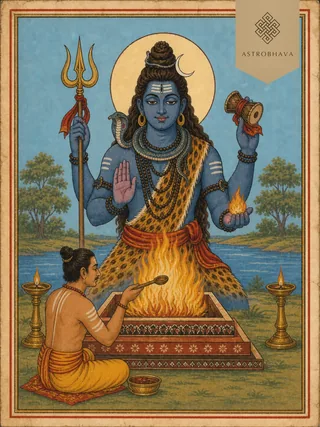 The Rudra Homam, performed for youBook →
What the Vishwanath Ashtakam is
The Vishwanath Ashtakam, printed in full as the Kashi Vishwanathashtakam, is a Sanskrit hymn of eight verses to Shiva as Vishvanatha, 'Lord of the universe', the deity of the Jyotirlinga temple at Varanasi. Its printed closing line credits the sage Vyasa; no older source for the verses is known, and their date is uncertain. Each verse runs in the fourteen-syllable vasantatilaka metre and ends on the same command, varanasipurapatim bhaja vishvanatham, 'worship Vishvanatha, Lord of the city of Varanasi'. The verses build a portrait before they give advice. Verse 1 sets the Ganga in his matted hair and Gauri at his left side; verses 3 and 4 add the serpents, the tiger skin, the third eye, the crescent moon and the burning of Kama. Verse 5 offers three images of rescue, and verse 6 states doctrine, calling him both with and beyond attributes. Verse 8 tells the reciter what to give up first. Two closing verses describe the fruit of reading the hymn.
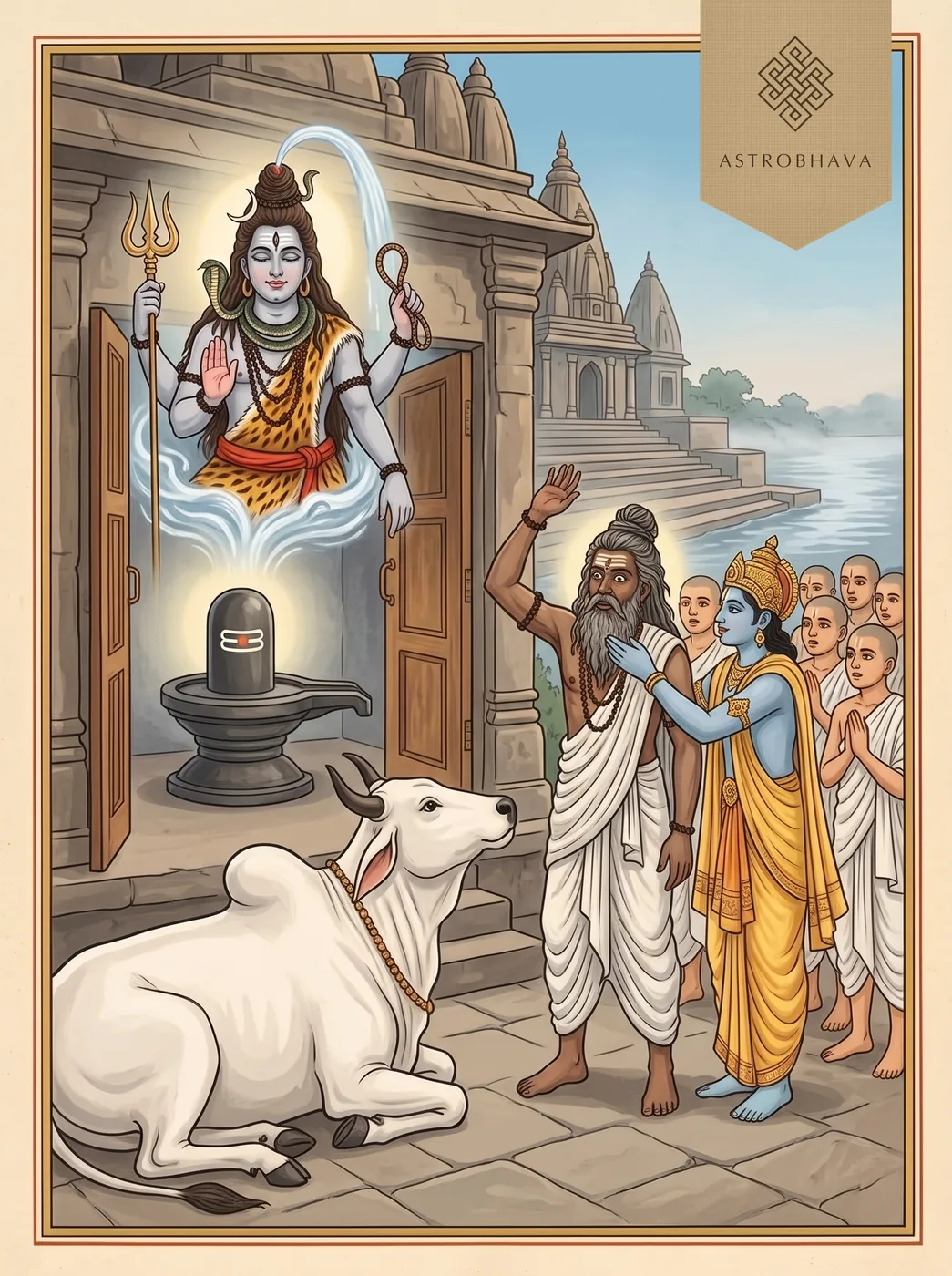
Vyasa's raised arm in Kashi
The hymn says nothing of how it came to be written, but the name in its closing line ties it to a well-known episode of the Kashi Khanda of the Skanda Purana. According to that tradition, Vyasa, the compiler of the Puranas, had argued with other sages that Vishnu alone was supreme, and came to Kashi with ten thousand disciples to prove it. He bathed at the Panchaganga, worshipped Bindu Madhava, and then, before Vishveshvara himself, raised one arm and proclaimed Vishnu the highest. Nandi froze the raised arm where it stood and took away the sage's speech. Vishnu then appeared and told Vyasa that he was mistaken, since Vishnu's own powers were given by Shiva. At a touch on the throat Vyasa's voice came back, and his first words were in praise of Shiva. The Kashi Khanda records that praise, in its ninety-fifth chapter, as an ashtakam of its own, a different set of verses from the one printed here. Local tradition adds that Vyasa then installed a linga named Vyaseshvara beside the Karnaghanta tank and stayed on in Kashi. Read against that story, the phrase narayanapriyam, 'dear to Narayana', in verse 1 of this hymn sounds like the dispute settled: the two gods are not rivals here, and the hymn honours both at once.
The mantra, in six scripts
- गङ्गातरंगरमणीयजटाकलापं
- gaṅgātaraṃgaramaṇīyajaṭākalāpaṃ — whose mass of matted locks is lovely with the Ganga's waves
- गौरीनिरन्तरविभूषितवामभागम्
- gaurīnirantaravibhūṣitavāmabhāgam — whose left side Gauri ever adorns
- नारायणप्रियमनंगमदापहारं
- nārāyaṇapriyamanaṃgamadāpahāraṃ — dear to Narayana, who took away the pride of bodiless Kama
- वाराणसीपुरपतिं
- vārāṇasīpurapatiṃ — Lord of the city of Varanasi
- भज
- bhaja — worship
- विश्वनाथम्
- viśvanātham — Vishvanatha, Lord of the universe
Vishwanath Ashtakam lyrics in full
Eight verses followed by two verses on the fruit of reciting them. The printed closing line is given at the end.
All 11 verses, in Sanskrit, Tamil, Telugu, Kannada, Malayalam and English, each with its meaning. Choose a script:
Download the Vishwanath Ashtakam PDFAll 11 verses with their meanings, in Sanskrit. Free to print and keep.
गङ्गातरंगरमणीयजटाकलापं गौरीनिरन्तरविभूषितवामभागम् ।
नारायणप्रियमनंगमदापहारं वाराणसीपुरपतिं भज विश्वनाथम् ॥
கங்காதரம்கரமணீயஜடாகலாபம் கௌரீநிரந்தரவிபூஷிதவாமபாகம் ।
நாராயணப்ரியமநம்கமதாபஹாரம் வாராணஸீபுரபதிம் பஜ விஶ்வநாதம் ॥
గఙ్గాతరంగరమణీయజటాకలాపం గౌరీనిరన్తరవిభూషితవామభాగమ్ ।
నారాయణప్రియమనంగమదాపహారం వారాణసీపురపతిం భజ విశ్వనాథమ్ ॥
ಗಙ್ಗಾತರಂಗರಮಣೀಯಜಟಾಕಲಾಪಂ ಗೌರೀನಿರನ್ತರವಿಭೂಷಿತವಾಮಭಾಗಮ್ ।
ನಾರಾಯಣಪ್ರಿಯಮನಂಗಮದಾಪಹಾರಂ ವಾರಾಣಸೀಪುರಪತಿಂ ಭಜ ವಿಶ್ವನಾಥಮ್ ॥
ഗങ്ഗാതരംഗരമണീയജടാകലാപം ഗൌരീനിരന്തരവിഭൂഷിതവാമഭാഗമ് ।
നാരായണപ്രിയമനംഗമദാപഹാരം വാരാണസീപുരപതിം ഭജ വിശ്വനാഥമ് ॥
gaṅgātaraṃgaramaṇīyajaṭākalāpaṃ gaurīnirantaravibhūṣitavāmabhāgam |
nārāyaṇapriyamanaṃgamadāpahāraṃ vārāṇasīpurapatiṃ bhaja viśvanātham ||
Worship Vishvanatha, Lord of the city of Varanasi, whose cluster of matted locks is made lovely by the waves of the Ganga, whose left side is ever adorned by Gauri, who is dear to Narayana and who destroyed the pride of Kama, the bodiless god of love.
वाचामगोचरमनेकगुणस्वरूपं वागीशविष्णुसुरसेवितपादपीठम् ।
वामेनविग्रहवरेणकलत्रवन्तं वाराणसीपुरपतिं भज विश्वनाथम् ॥
வாசாமகோசரமநேககுணஸ்வரூபம் வாகீஶவிஷ்ணுஸுரஸேவிதபாதபீடம் ।
வாமேநவிக்ரஹவரேணகலத்ரவந்தம் வாராணஸீபுரபதிம் பஜ விஶ்வநாதம் ॥
వాచామగోచరమనేకగుణస్వరూపం వాగీశవిష్ణుసురసేవితపాదపీఠమ్ ।
వామేనవిగ్రహవరేణకలత్రవన్తం వారాణసీపురపతిం భజ విశ్వనాథమ్ ॥
ವಾಚಾಮಗೋಚರಮನೇಕಗುಣಸ್ವರೂಪಂ ವಾಗೀಶವಿಷ್ಣುಸುರಸೇವಿತಪಾದಪೀಠಮ್ ।
ವಾಮೇನವಿಗ್ರಹವರೇಣಕಲತ್ರವನ್ತಂ ವಾರಾಣಸೀಪುರಪತಿಂ ಭಜ ವಿಶ್ವನಾಥಮ್ ॥
വാചാമഗോചരമനേകഗുണസ്വരൂപം വാഗീശവിഷ്ണുസുരസേവിതപാദപീഠമ് ।
വാമേനവിഗ്രഹവരേണകലത്രവന്തം വാരാണസീപുരപതിം ഭജ വിശ്വനാഥമ് ॥
vācāmagocaramanekaguṇasvarūpaṃ vāgīśaviṣṇusurasevitapādapīṭham |
vāmenavigrahavareṇakalatravantaṃ vārāṇasīpurapatiṃ bhaja viśvanātham ||
Worship Vishvanatha, Lord of Varanasi, who is beyond the reach of words and whose nature holds countless qualities, whose footstool is served by Brahma the lord of speech, by Vishnu and by the gods, and who has his consort in the beautiful form of his own left half.
भूताधिपं भुजगभूषणभूषितांगं व्याघ्राजिनांबरधरं जटिलं त्रिनेत्रम् ।
पाशांकुशाभयवरप्रदशूलपाणिं वाराणसीपुरपतिं भज विश्वनाथम् ॥
பூதாதிபம் புஜகபூஷணபூஷிதாம்கம் வ்யாக்ராஜிநாம்பரதரம் ஜடிலம் த்ரிநேத்ரம் ।
பாஶாம்குஶாபயவரப்ரதஶூலபாணிம் வாராணஸீபுரபதிம் பஜ விஶ்வநாதம் ॥
భూతాధిపం భుజగభూషణభూషితాంగం వ్యాఘ్రాజినాంబరధరం జటిలం త్రినేత్రమ్ ।
పాశాంకుశాభయవరప్రదశూలపాణిం వారాణసీపురపతిం భజ విశ్వనాథమ్ ॥
ಭೂತಾಧಿಪಂ ಭುಜಗಭೂಷಣಭೂಷಿತಾಂಗಂ ವ್ಯಾಘ್ರಾಜಿನಾಂಬರಧರಂ ಜಟಿಲಂ ತ್ರಿನೇತ್ರಮ್ ।
ಪಾಶಾಂಕುಶಾಭಯವರಪ್ರದಶೂಲಪಾಣಿಂ ವಾರಾಣಸೀಪುರಪತಿಂ ಭಜ ವಿಶ್ವನಾಥಮ್ ॥
ഭൂതാധിപം ഭുജഗഭൂഷണഭൂഷിതാംഗം വ്യാഘ്രാജിനാംബരധരം ജടിലം ത്രിനേത്രമ് ।
പാശാംകുശാഭയവരപ്രദശൂലപാണിം വാരാണസീപുരപതിം ഭജ വിശ്വനാഥമ് ॥
bhūtādhipaṃ bhujagabhūṣaṇabhūṣitāṃgaṃ vyāghrājināṃbaradharaṃ jaṭilaṃ trinetram |
pāśāṃkuśābhayavarapradaśūlapāṇiṃ vārāṇasīpurapatiṃ bhaja viśvanātham ||
Worship Vishvanatha, Lord of Varanasi, the master of all beings, whose limbs are decked with serpents as ornaments, who wears a tiger skin as his garment, who has matted hair and three eyes, and who holds the noose, the goad and the trident while showing the gestures of fearlessness and boon-giving.
शीतांशुशोभितकिरीटविराजमानं भालेक्षणानलविशोषितपंचबाणम् ।
नागाधिपारचितभासुरकर्णपूरं वाराणसीपुरपतिं भज विश्वनाथम् ॥
ஶீதாம்ஶுஶோபிதகிரீடவிராஜமாநம் பாலேக்ஷணாநலவிஶோஷிதபம்சபாணம் ।
நாகாதிபாரசிதபாஸுரகர்ணபூரம் வாராணஸீபுரபதிம் பஜ விஶ்வநாதம் ॥
శీతాంశుశోభితకిరీటవిరాజమానం భాలేక్షణానలవిశోషితపంచబాణమ్ ।
నాగాధిపారచితభాసురకర్ణపూరం వారాణసీపురపతిం భజ విశ్వనాథమ్ ॥
ಶೀತಾಂಶುಶೋಭಿತಕಿರೀಟವಿರಾಜಮಾನಂ ಭಾಲೇಕ್ಷಣಾನಲವಿಶೋಷಿತಪಂಚಬಾಣಮ್ ।
ನಾಗಾಧಿಪಾರಚಿತಭಾಸುರಕರ್ಣಪೂರಂ ವಾರಾಣಸೀಪುರಪತಿಂ ಭಜ ವಿಶ್ವನಾಥಮ್ ॥
ശീതാംശുശോഭിതകിരീടവിരാജമാനം ഭാലേക്ഷണാനലവിശോഷിതപംചബാണമ് ।
നാഗാധിപാരചിതഭാസുരകര്ണപൂരം വാരാണസീപുരപതിം ഭജ വിശ്വനാഥമ് ॥
śītāṃśuśobhitakirīṭavirājamānaṃ bhālekṣaṇānalaviśoṣitapaṃcabāṇam |
nāgādhipāracitabhāsurakarṇapūraṃ vārāṇasīpurapatiṃ bhaja viśvanātham ||
Worship Vishvanatha, Lord of Varanasi, who shines with a crown lit by the cool-rayed moon, who burnt up Kama of the five arrows with the fire of the eye on his forehead, and whose glowing ear ornaments are fashioned from the king of serpents.
पंचाननं दुरितमत्तमतङ्गजानां नागान्तकं दनुजपुंगवपन्नगानाम् ।
दावानलं मरणशोकजराटवीनां वाराणसीपुरपतिं भज विश्वनाथम् ॥
பம்சாநநம் துரிதமத்தமதங்கஜாநாம் நாகாந்தகம் தநுஜபும்கவபந்நகாநாம் ।
தாவாநலம் மரணஶோகஜராடவீநாம் வாராணஸீபுரபதிம் பஜ விஶ்வநாதம் ॥
పంచాననం దురితమత్తమతఙ్గజానాం నాగాన్తకం దనుజపుంగవపన్నగానామ్ ।
దావానలం మరణశోకజరాటవీనాం వారాణసీపురపతిం భజ విశ్వనాథమ్ ॥
ಪಂಚಾನನಂ ದುರಿತಮತ್ತಮತಙ್ಗಜಾನಾಂ ನಾಗಾನ್ತಕಂ ದನುಜಪುಂಗವಪನ್ನಗಾನಾಮ್ ।
ದಾವಾನಲಂ ಮರಣಶೋಕಜರಾಟವೀನಾಂ ವಾರಾಣಸೀಪುರಪತಿಂ ಭಜ ವಿಶ್ವನಾಥಮ್ ॥
പംചാനനം ദുരിതമത്തമതങ്ഗജാനാം നാഗാന്തകം ദനുജപുംഗവപന്നഗാനാമ് ।
ദാവാനലം മരണശോകജരാടവീനാം വാരാണസീപുരപതിം ഭജ വിശ്വനാഥമ് ॥
paṃcānanaṃ duritamattamataṅgajānāṃ nāgāntakaṃ danujapuṃgavapannagānām |
dāvānalaṃ maraṇaśokajarāṭavīnāṃ vārāṇasīpurapatiṃ bhaja viśvanātham ||
Worship Vishvanatha, Lord of Varanasi, who is a lion to the maddened elephants of sin, a Garuda to the serpents that are the mightiest demons, and a forest fire to the jungle of death, grief and old age.
तेजोमयं सगुणनिर्गुणमद्वितीयं आनन्दकन्दमपराजितमप्रमेयम् ।
नागात्मकं सकलनिष्कलमात्मरूपं वाराणसीपुरपतिं भज विश्वनाथम् ॥
தேஜோமயம் ஸகுணநிர்குணமத்விதீயம் ஆநந்தகந்தமபராஜிதமப்ரமேயம் ।
நாகாத்மகம் ஸகலநிஷ்கலமாத்மரூபம் வாராணஸீபுரபதிம் பஜ விஶ்வநாதம் ॥
తేజోమయం సగుణనిర్గుణమద్వితీయం ఆనన్దకన్దమపరాజితమప్రమేయమ్ ।
నాగాత్మకం సకలనిష్కలమాత్మరూపం వారాణసీపురపతిం భజ విశ్వనాథమ్ ॥
ತೇಜೋಮಯಂ ಸಗುಣನಿರ್ಗುಣಮದ್ವಿತೀಯಂ ಆನನ್ದಕನ್ದಮಪರಾಜಿತಮಪ್ರಮೇಯಮ್ ।
ನಾಗಾತ್ಮಕಂ ಸಕಲನಿಷ್ಕಲಮಾತ್ಮರೂಪಂ ವಾರಾಣಸೀಪುರಪತಿಂ ಭಜ ವಿಶ್ವನಾಥಮ್ ॥
തേജോമയം സഗുണനിര്ഗുണമദ്വിതീയം ആനന്ദകന്ദമപരാജിതമപ്രമേയമ് ।
നാഗാത്മകം സകലനിഷ്കലമാത്മരൂപം വാരാണസീപുരപതിം ഭജ വിശ്വനാഥമ് ॥
tejomayaṃ saguṇanirguṇamadvitīyaṃ ānandakandamaparājitamaprameyam |
nāgātmakaṃ sakalaniṣkalamātmarūpaṃ vārāṇasīpurapatiṃ bhaja viśvanātham ||
Worship Vishvanatha, Lord of Varanasi, who is full of radiance, with attributes and beyond attributes, one without a second, the root of bliss, unconquered and immeasurable, who wears serpents, who is both with parts and partless, and whose form is the Self.
रागादिदोषरहितं स्वजनानुरागं वैराग्यशान्तिनिलयं गिरिजासहायम् ।
माधुर्यधैर्यसुभगं गरलाभिरामं वाराणसीपुरपतिं भज विश्वनाथम् ॥
ராகாதிதோஷரஹிதம் ஸ்வஜநாநுராகம் வைராக்யஶாந்திநிலயம் கிரிஜாஸஹாயம் ।
மாதுர்யதைர்யஸுபகம் கரலாபிராமம் வாராணஸீபுரபதிம் பஜ விஶ்வநாதம் ॥
రాగాదిదోషరహితం స్వజనానురాగం వైరాగ్యశాన్తినిలయం గిరిజాసహాయమ్ ।
మాధుర్యధైర్యసుభగం గరలాభిరామం వారాణసీపురపతిం భజ విశ్వనాథమ్ ॥
ರಾಗಾದಿದೋಷರಹಿತಂ ಸ್ವಜನಾನುರಾಗಂ ವೈರಾಗ್ಯಶಾನ್ತಿನಿಲಯಂ ಗಿರಿಜಾಸಹಾಯಮ್ ।
ಮಾಧುರ್ಯಧೈರ್ಯಸುಭಗಂ ಗರಲಾಭಿರಾಮಂ ವಾರಾಣಸೀಪುರಪತಿಂ ಭಜ ವಿಶ್ವನಾಥಮ್ ॥
രാഗാദിദോഷരഹിതം സ്വജനാനുരാഗം വൈരാഗ്യശാന്തിനിലയം ഗിരിജാസഹായമ് ।
മാധുര്യധൈര്യസുഭഗം ഗരലാഭിരാമം വാരാണസീപുരപതിം ഭജ വിശ്വനാഥമ് ॥
rāgādidoṣarahitaṃ svajanānurāgaṃ vairāgyaśāntinilayaṃ girijāsahāyam |
mādhuryadhairyasubhagaṃ garalābhirāmaṃ vārāṇasīpurapatiṃ bhaja viśvanātham ||
Worship Vishvanatha, Lord of Varanasi, who is free from passion and every other fault, who loves his own devotees, who is the abode of dispassion and peace, whose companion is Girija (Parvati), who is graceful in sweetness and steadiness, and who is made beautiful by the poison he holds in his throat.
आशां विहाय परिहृत्य परस्य निन्दां पापे रतिं च सुनिवार्य मनः समाधौ ।
आदाय हृत्कमलमध्यगतं परेशं वाराणसीपुरपतिं भज विश्वनाथम् ॥
ஆஶாம் விஹாய பரிஹ்ருத்ய பரஸ்ய நிந்தாம் பாபே ரதிம் ச ஸுநிவார்ய மநஃ ஸமாதௌ ।
ஆதாய ஹ்ருத்கமலமத்யகதம் பரேஶம் வாராணஸீபுரபதிம் பஜ விஶ்வநாதம் ॥
ఆశాం విహాయ పరిహృత్య పరస్య నిన్దాం పాపే రతిం చ సునివార్య మనః సమాధౌ ।
ఆదాయ హృత్కమలమధ్యగతం పరేశం వారాణసీపురపతిం భజ విశ్వనాథమ్ ॥
ಆಶಾಂ ವಿಹಾಯ ಪರಿಹೃತ್ಯ ಪರಸ್ಯ ನಿನ್ದಾಂ ಪಾಪೇ ರತಿಂ ಚ ಸುನಿವಾರ್ಯ ಮನಃ ಸಮಾಧೌ ।
ಆದಾಯ ಹೃತ್ಕಮಲಮಧ್ಯಗತಂ ಪರೇಶಂ ವಾರಾಣಸೀಪುರಪತಿಂ ಭಜ ವಿಶ್ವನಾಥಮ್ ॥
ആശാം വിഹായ പരിഹൃത്യ പരസ്യ നിന്ദാം പാപേ രതിം ച സുനിവാര്യ മനഃ സമാധൌ ।
ആദായ ഹൃത്കമലമധ്യഗതം പരേശം വാരാണസീപുരപതിം ഭജ വിശ്വനാഥമ് ॥
āśāṃ vihāya parihṛtya parasya nindāṃ pāpe ratiṃ ca sunivārya manaḥ samādhau |
ādāya hṛtkamalamadhyagataṃ pareśaṃ vārāṇasīpurapatiṃ bhaja viśvanātham ||
Giving up desire, leaving off the criticism of others, turning away from delight in sin and settling the mind in deep meditation, take hold of the supreme Lord dwelling in the lotus of the heart and worship Vishvanatha, Lord of Varanasi.
वाराणसीपुरपतेः स्तवनं शिवस्य व्याख्यातमष्टकमिदं पठते मनुष्यः ।
विद्यां श्रियं विपुलसौख्यमनन्तकीर्तिं सम्प्राप्य देहविलये लभते च मोक्षम् ॥
வாராணஸீபுரபதேஃ ஸ்தவநம் ஶிவஸ்ய வ்யாக்யாதமஷ்டகமிதம் படதே மநுஷ்யஃ ।
வித்யாம் ஶ்ரியம் விபுலஸௌக்யமநந்தகீர்திம் ஸம்ப்ராப்ய தேஹவிலயே லபதே ச மோக்ஷம் ॥
వారాణసీపురపతేః స్తవనం శివస్య వ్యాఖ్యాతమష్టకమిదం పఠతే మనుష్యః ।
విద్యాం శ్రియం విపులసౌఖ్యమనన్తకీర్తిం సమ్ప్రాప్య దేహవిలయే లభతే చ మోక్షమ్ ॥
ವಾರಾಣಸೀಪುರಪತೇಃ ಸ್ತವನಂ ಶಿವಸ್ಯ ವ್ಯಾಖ್ಯಾತಮಷ್ಟಕಮಿದಂ ಪಠತೇ ಮನುಷ್ಯಃ ।
ವಿದ್ಯಾಂ ಶ್ರಿಯಂ ವಿಪುಲಸೌಖ್ಯಮನನ್ತಕೀರ್ತಿಂ ಸಮ್ಪ್ರಾಪ್ಯ ದೇಹವಿಲಯೇ ಲಭತೇ ಚ ಮೋಕ್ಷಮ್ ॥
വാരാണസീപുരപതേഃ സ്തവനം ശിവസ്യ വ്യാഖ്യാതമഷ്ടകമിദം പഠതേ മനുഷ്യഃ ।
വിദ്യാം ശ്രിയം വിപുലസൌഖ്യമനന്തകീര്തിം സമ്പ്രാപ്യ ദേഹവിലയേ ലഭതേ ച മോക്ഷമ് ॥
vārāṇasīpurapateḥ stavanaṃ śivasya vyākhyātamaṣṭakamidaṃ paṭhate manuṣyaḥ |
vidyāṃ śriyaṃ vipulasaukhyamanantakīrtiṃ samprāpya dehavilaye labhate ca mokṣam ||
This eight-verse hymn to Shiva, Lord of the city of Varanasi, has been set out here. The verse says that the person who recites it gains learning, prosperity, great happiness and endless fame, and at the end of the body attains liberation.
विश्वनाथाष्टकमिदं यः पठेच्छिवसन्निधौ ।
शिवलोकमवाप्नोति शिवेन सह मोदते ॥
விஶ்வநாதாஷ்டகமிதம் யஃ படேச்சிவஸந்நிதௌ ।
ஶிவலோகமவாப்நோதி ஶிவேந ஸஹ மோததே ॥
విశ్వనాథాష్టకమిదం యః పఠేచ్ఛివసన్నిధౌ ।
శివలోకమవాప్నోతి శివేన సహ మోదతే ॥
ವಿಶ್ವನಾಥಾಷ್ಟಕಮಿದಂ ಯಃ ಪಠೇಚ್ಛಿವಸನ್ನಿಧೌ ।
ಶಿವಲೋಕಮವಾಪ್ನೋತಿ ಶಿವೇನ ಸಹ ಮೋದತೇ ॥
വിശ്വനാഥാഷ്ടകമിദം യഃ പഠേച്ഛിവസന്നിധൌ ।
ശിവലോകമവാപ്നോതി ശിവേന സഹ മോദതേ ॥
viśvanāthāṣṭakamidaṃ yaḥ paṭhecchivasannidhau |
śivalokamavāpnoti śivena saha modate ||
The verse says that whoever recites this Vishvanatha Ashtakam in the presence of Shiva reaches the world of Shiva and rejoices together with Shiva.
॥ इति श्रीमहर्षिव्यासप्रणीतं श्रीविश्वनाथाष्टकं सम्पूर्णम् ॥
॥ இதி ஶ்ரீமஹர்ஷிவ்யாஸப்ரணீதம் ஶ்ரீவிஶ்வநாதாஷ்டகம் ஸம்பூர்ணம் ॥
॥ ఇతి శ్రీమహర్షివ్యాసప్రణీతం శ్రీవిశ్వనాథాష్టకం సమ్పూర్ణమ్ ॥
॥ ಇತಿ ಶ್ರೀಮಹರ್ಷಿವ್ಯಾಸಪ್ರಣೀತಂ ಶ್ರೀವಿಶ್ವನಾಥಾಷ್ಟಕಂ ಸಮ್ಪೂರ್ಣಮ್ ॥
॥ ഇതി ശ്രീമഹര്ഷിവ്യാസപ്രണീതം ശ്രീവിശ്വനാഥാഷ്ടകം സമ്പൂര്ണമ് ॥
|| iti śrīmaharṣivyāsapraṇītaṃ śrīviśvanāthāṣṭakaṃ sampūrṇam ||
Thus ends the Sri Vishvanatha Ashtakam composed by the great sage Vyasa.
The syllable people get wrong
In the refrain's last word, viśvanātham, the th is an aspirated dental t, a t followed by a puff of breath as in 'hot-house', never the English th of 'thank'. The ś is a soft sh and the ā is long, so say vish-va-NAA-t-ham.
When the Vishwanath Ashtakam is chanted
Weekday. Monday
Festival. Maha Shivaratri
Questions
Have your chart read before you decide
Chanting is yours to do, and free. But which deity your situation calls for — and whether a mantra alone is the right response — depends on your chart. Sometimes it is; sometimes it is not.
- Over 30 years in the Guru–Sishya Parampara, from the age of five
- He reads every chart himself — 60 minutes, one to one, never delegated
- Charts are read only between sunrise and sunset, following tradition
