Ya Devi Sarvabhuteshu
नमो देव्यै महादेव्यै शिवायै सततं नमः । नमः प्रकृत्यै भद्रायै नियताः प्रणताः स्म ताम् ॥Also known as Aparajita Stuti
In Devanagari, Tamil, Telugu, Kannada, Malayalam and English — with the meaning of every word, and the one syllable most people pronounce wrongly.
What the Ya Devi Sarvabhuteshu is
Ya Devi Sarvabhuteshu, also written Ya Devi Sarva Bhuteshu, is the name given to the hymn the gods sing in chapter 5 of the Devi Mahatmya, the Durga Saptashati of the Markandeya Purana; the narrative calls it the Aparajita Stuti, praise of the unconquered one, and printed editions also carry it as the Tantrokta Devi Suktam. It runs from verse 5.9 to 5.82. Five opening verses salute her with names set in pairs of opposites: fierce and eternal, moonlight and smoke-dark, most gentle and most fierce. Then come twenty-one stanzas, each opening 'ya devi sarvabhuteshu' and ending on the refrain 'namastasyai namastasyai namastasyai namo namah'. The first two call her Vishnumaya and consciousness; the other nineteen change a single word before '-rupena samsthita', 'abiding in the form of', moving from intellect, sleep and hunger through modesty, faith and memory to mother and, last, delusion. Two verses on the all-pervading Goddess and on pure consciousness follow, and two longer verses close the hymn by asking her to strike down misfortune.
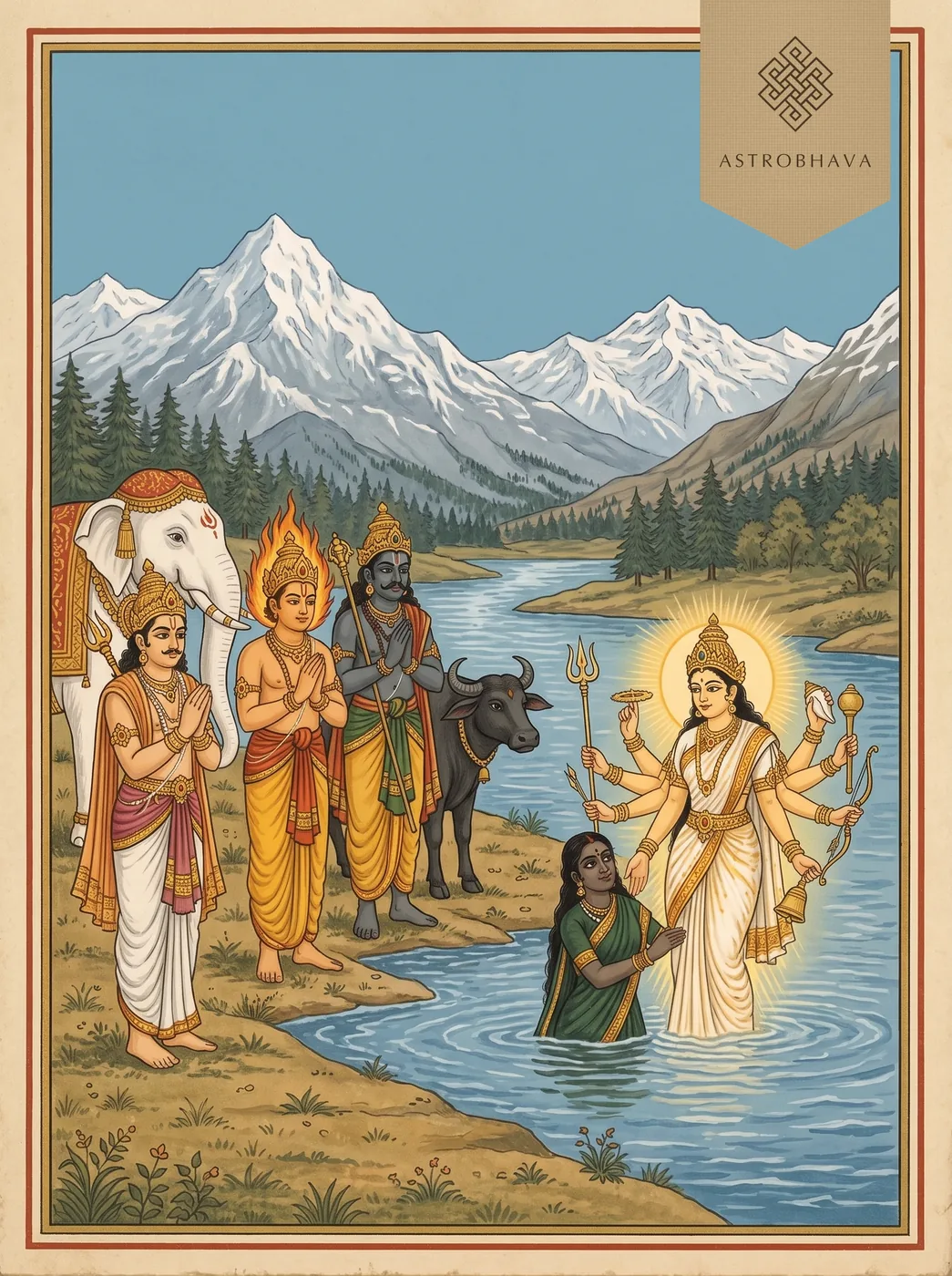
Gods without their offices on the Himalaya
The Devi Mahatmya sets the hymn at the start of its third and longest episode. The demon brothers Shumbha and Nishumbha had taken from Indra the three worlds and his share of the sacrifices, and had seized the offices of the sun and the moon, of Kubera, Yama and Varuna, of the wind and of Agni. The displaced gods recalled a promise given to them at the end of chapter 4, after Mahishasura's fall: whenever they remembered her in distress, she would end their calamities at once. They went to the Himalaya, lord of mountains, and praised Vishnumaya there, and the hymn's last verse hands that promise back to her, saying she destroys every misfortune the moment she is remembered. While they were singing, the text says, Parvati came to bathe in the waters of the Ganga and asked whom they were praising. Before they could answer, an auspicious form came out of her own body and replied that the hymn was hers, offered by gods whom Shumbha had set at nought and Nishumbha had routed in battle. Because she issued from the sheath, kosha, of Parvati's body, she is sung in every world as Kaushiki; Parvati, left dark, became known as Kalika and made the Himalaya her home. Kaushiki is the heroine of the battles that fill the rest of the book.
The mantra, in six scripts
- नमो
- namo — salutation
- देव्यै
- devyai — to the Goddess
- महादेव्यै
- mahādevyai — to the Great Goddess
- शिवायै
- śivāyai — to the auspicious one
- सततं
- satataṃ — always
- नमः
- namaḥ — salutation
- नमः
- namaḥ — salutation
- प्रकृत्यै
- prakṛtyai — to primal nature
- भद्रायै
- bhadrāyai — to the gracious one
- नियताः
- niyatāḥ — self-controlled
- प्रणताः
- praṇatāḥ — bowed down
- स्म
- sma — (we) have
- ताम्
- tām — to her
Ya Devi Sarvabhuteshu lyrics in full
The gods' hymn of chapter 5, verses 9 to 82, with the twenty-one 'ya devi' stanzas as recited in the Durga Saptashati.
All 30 verses, in Sanskrit, Tamil, Telugu, Kannada, Malayalam and English, each with its meaning. Choose a script:
Download the Ya Devi Sarvabhuteshu PDFAll 30 verses with their meanings, in Sanskrit. Free to print and keep.
नमो देव्यै महादेव्यै शिवायै सततं नमः ।
नमः प्रकृत्यै भद्रायै नियताः प्रणताः स्म ताम् ॥
நமோ தேவ்யை மஹாதேவ்யை ஶிவாயை ஸததம் நமஃ ।
நமஃ ப்ரக்ருத்யை பத்ராயை நியதாஃ ப்ரணதாஃ ஸ்ம தாம் ॥
నమో దేవ్యై మహాదేవ్యై శివాయై సతతం నమః ।
నమః ప్రకృత్యై భద్రాయై నియతాః ప్రణతాః స్మ తామ్ ॥
ನಮೋ ದೇವ್ಯೈ ಮಹಾದೇವ್ಯೈ ಶಿವಾಯೈ ಸತತಂ ನಮಃ ।
ನಮಃ ಪ್ರಕೃತ್ಯೈ ಭದ್ರಾಯೈ ನಿಯತಾಃ ಪ್ರಣತಾಃ ಸ್ಮ ತಾಮ್ ॥
നമോ ദേവ്യൈ മഹാദേവ്യൈ ശിവായൈ സതതം നമഃ ।
നമഃ പ്രകൃത്യൈ ഭദ്രായൈ നിയതാഃ പ്രണതാഃ സ്മ താമ് ॥
namo devyai mahādevyai śivāyai satataṃ namaḥ |
namaḥ prakṛtyai bhadrāyai niyatāḥ praṇatāḥ sma tām ||
Salutation to the Goddess, to the Great Goddess; to the auspicious one, salutation always. Salutation to Prakriti, primal nature, to the gracious one; with minds controlled we bow to her.
रौद्रायै नमो नित्यायै गौर्यै धात्र्यै नमो नमः ।
ज्योत्स्नायै चेन्दुरूपिण्यै सुखायै सततं नमः ॥
ரௌத்ராயை நமோ நித்யாயை கௌர்யை தாத்ர்யை நமோ நமஃ ।
ஜ்யோத்ஸ்நாயை சேந்துரூபிண்யை ஸுகாயை ஸததம் நமஃ ॥
రౌద్రాయై నమో నిత్యాయై గౌర్యై ధాత్ర్యై నమో నమః ।
జ్యోత్స్నాయై చేన్దురూపిణ్యై సుఖాయై సతతం నమః ॥
ರೌದ್ರಾಯೈ ನಮೋ ನಿತ್ಯಾಯೈ ಗೌರ್ಯೈ ಧಾತ್ರ್ಯೈ ನಮೋ ನಮಃ ।
ಜ್ಯೋತ್ಸ್ನಾಯೈ ಚೇನ್ದುರೂಪಿಣ್ಯೈ ಸುಖಾಯೈ ಸತತಂ ನಮಃ ॥
രൌദ്രായൈ നമോ നിത്യായൈ ഗൌര്യൈ ധാത്ര്യൈ നമോ നമഃ ।
ജ്യോത്സ്നായൈ ചേന്ദുരൂപിണ്യൈ സുഖായൈ സതതം നമഃ ॥
raudrāyai namo nityāyai gauryai dhātryai namo namaḥ |
jyotsnāyai cendurūpiṇyai sukhāyai satataṃ namaḥ ||
Salutation to the fierce one, to the eternal one; to Gauri, the radiant, and to the sustainer, salutation again and again. To her who is moonlight, who has the form of the moon, who is happiness itself, salutation always.
कल्याण्यै प्रणतां वृद्ध्यै सिद्ध्यै कुर्मो नमो नमः ।
नैर्ऋत्यै भूभृतां लक्ष्म्यै शर्वाण्यै ते नमो नमः ॥
கல்யாண்யை ப்ரணதாம் வ்ருத்த்யை ஸித்த்யை குர்மோ நமோ நமஃ ।
நைர்ருத்யை பூப்ருதாம் லக்ஷ்ம்யை ஶர்வாண்யை தே நமோ நமஃ ॥
కల్యాణ్యై ప్రణతాం వృద్ధ్యై సిద్ధ్యై కుర్మో నమో నమః ।
నైర్ఋత్యై భూభృతాం లక్ష్మ్యై శర్వాణ్యై తే నమో నమః ॥
ಕಲ್ಯಾಣ್ಯೈ ಪ್ರಣತಾಂ ವೃದ್ಧ್ಯೈ ಸಿದ್ಧ್ಯೈ ಕುರ್ಮೋ ನಮೋ ನಮಃ ।
ನೈರ್ಋತ್ಯೈ ಭೂಭೃತಾಂ ಲಕ್ಷ್ಮ್ಯೈ ಶರ್ವಾಣ್ಯೈ ತೇ ನಮೋ ನಮಃ ॥
കല്യാണ്യൈ പ്രണതാം വൃദ്ധ്യൈ സിദ്ധ്യൈ കുര്മോ നമോ നമഃ ।
നൈര്ഋത്യൈ ഭൂഭൃതാം ലക്ഷ്മ്യൈ ശര്വാണ്യൈ തേ നമോ നമഃ ॥
kalyāṇyai praṇatāṃ vṛddhyai siddhyai kurmo namo namaḥ |
nairṛtyai bhūbhṛtāṃ lakṣmyai śarvāṇyai te namo namaḥ ||
We bow again and again to the auspicious one, who is growth and fulfilment for those who bow to her. Salutation again and again to you, who are Nairriti (the power of decline), the fortune of kings, and Sharvani, consort of Shiva.
दुर्गायै दुर्गपारायै सारायै सर्वकारिण्यै ।
ख्यात्यै तथैव कृष्णायै धूम्रायै सततं नमः ॥
துர்காயை துர்கபாராயை ஸாராயை ஸர்வகாரிண்யை ।
க்யாத்யை ததைவ க்ருஷ்ணாயை தூம்ராயை ஸததம் நமஃ ॥
దుర్గాయై దుర్గపారాయై సారాయై సర్వకారిణ్యై ।
ఖ్యాత్యై తథైవ కృష్ణాయై ధూమ్రాయై సతతం నమః ॥
ದುರ್ಗಾಯೈ ದುರ್ಗಪಾರಾಯೈ ಸಾರಾಯೈ ಸರ್ವಕಾರಿಣ್ಯೈ ।
ಖ್ಯಾತ್ಯೈ ತಥೈವ ಕೃಷ್ಣಾಯೈ ಧೂಮ್ರಾಯೈ ಸತತಂ ನಮಃ ॥
ദുര്ഗായൈ ദുര്ഗപാരായൈ സാരായൈ സര്വകാരിണ്യൈ ।
ഖ്യാത്യൈ തഥൈവ കൃഷ്ണായൈ ധൂമ്രായൈ സതതം നമഃ ॥
durgāyai durgapārāyai sārāyai sarvakāriṇyai |
khyātyai tathaiva kṛṣṇāyai dhūmrāyai satataṃ namaḥ ||
To Durga, who carries us across what is hard to cross, who is the essence and the cause of all; to her who is fame, and likewise to the dark one and the smoke-coloured one, salutation always.
अतिसौम्यातिरौद्रायै नतास्तस्यै नमो नमः ।
नमो जगत्प्रतिष्ठायै देव्यै कृत्यै नमो नमः ॥
அதிஸௌம்யாதிரௌத்ராயை நதாஸ்தஸ்யை நமோ நமஃ ।
நமோ ஜகத்ப்ரதிஷ்டாயை தேவ்யை க்ருத்யை நமோ நமஃ ॥
అతిసౌమ్యాతిరౌద్రాయై నతాస్తస్యై నమో నమః ।
నమో జగత్ప్రతిష్ఠాయై దేవ్యై కృత్యై నమో నమః ॥
ಅತಿಸೌಮ್ಯಾತಿರೌದ್ರಾಯೈ ನತಾಸ್ತಸ್ಯೈ ನಮೋ ನಮಃ ।
ನಮೋ ಜಗತ್ಪ್ರತಿಷ್ಠಾಯೈ ದೇವ್ಯೈ ಕೃತ್ಯೈ ನಮೋ ನಮಃ ॥
അതിസൌമ്യാതിരൌദ്രായൈ നതാസ്തസ്യൈ നമോ നമഃ ।
നമോ ജഗത്പ്രതിഷ്ഠായൈ ദേവ്യൈ കൃത്യൈ നമോ നമഃ ॥
atisaumyātiraudrāyai natāstasyai namo namaḥ |
namo jagatpratiṣṭhāyai devyai kṛtyai namo namaḥ ||
We bow to her who is at once most gentle and most fierce; salutation to her again and again. Salutation to the Goddess who is the foundation of the world, to her who is action itself, salutation again and again.
या देवी सर्वभूतेषु विष्णुमायेति शब्दिता ।
नमस्तस्यै नमस्तस्यै नमस्तस्यै नमो नमः ॥
யா தேவீ ஸர்வபூதேஷு விஷ்ணுமாயேதி ஶப்திதா ।
நமஸ்தஸ்யை நமஸ்தஸ்யை நமஸ்தஸ்யை நமோ நமஃ ॥
యా దేవీ సర్వభూతేషు విష్ణుమాయేతి శబ్దితా ।
నమస్తస్యై నమస్తస్యై నమస్తస్యై నమో నమః ॥
ಯಾ ದೇವೀ ಸರ್ವಭೂತೇಷು ವಿಷ್ಣುಮಾಯೇತಿ ಶಬ್ದಿತಾ ।
ನಮಸ್ತಸ್ಯೈ ನಮಸ್ತಸ್ಯೈ ನಮಸ್ತಸ್ಯೈ ನಮೋ ನಮಃ ॥
യാ ദേവീ സര്വഭൂതേഷു വിഷ്ണുമായേതി ശബ്ദിതാ ।
നമസ്തസ്യൈ നമസ്തസ്യൈ നമസ്തസ്യൈ നമോ നമഃ ॥
yā devī sarvabhūteṣu viṣṇumāyeti śabditā |
namastasyai namastasyai namastasyai namo namaḥ ||
To the Goddess who in all beings is named Vishnumaya, the creative and veiling power of Vishnu: salutation to her, salutation to her, salutation to her, salutation again and again.
या देवी सर्वभूतेषु चेतनेत्यभिधीयते ।
नमस्तस्यै नमस्तस्यै नमस्तस्यै नमो नमः ॥
யா தேவீ ஸர்வபூதேஷு சேதநேத்யபிதீயதே ।
நமஸ்தஸ்யை நமஸ்தஸ்யை நமஸ்தஸ்யை நமோ நமஃ ॥
యా దేవీ సర్వభూతేషు చేతనేత్యభిధీయతే ।
నమస్తస్యై నమస్తస్యై నమస్తస్యై నమో నమః ॥
ಯಾ ದೇವೀ ಸರ್ವಭೂತೇಷು ಚೇತನೇತ್ಯಭಿಧೀಯತೇ ।
ನಮಸ್ತಸ್ಯೈ ನಮಸ್ತಸ್ಯೈ ನಮಸ್ತಸ್ಯೈ ನಮೋ ನಮಃ ॥
യാ ദേവീ സര്വഭൂതേഷു ചേതനേത്യഭിധീയതേ ।
നമസ്തസ്യൈ നമസ്തസ്യൈ നമസ്തസ്യൈ നമോ നമഃ ॥
yā devī sarvabhūteṣu cetanetyabhidhīyate |
namastasyai namastasyai namastasyai namo namaḥ ||
To the Goddess who in all beings is called consciousness: salutation to her, salutation to her, salutation to her, salutation again and again.
या देवी सर्वभूतेषु बुद्धिरूपेण संस्थिता ।
नमस्तस्यै नमस्तस्यै नमस्तस्यै नमो नमः ॥
யா தேவீ ஸர்வபூதேஷு புத்திரூபேண ஸம்ஸ்திதா ।
நமஸ்தஸ்யை நமஸ்தஸ்யை நமஸ்தஸ்யை நமோ நமஃ ॥
యా దేవీ సర్వభూతేషు బుద్ధిరూపేణ సంస్థితా ।
నమస్తస్యై నమస్తస్యై నమస్తస్యై నమో నమః ॥
ಯಾ ದೇವೀ ಸರ್ವಭೂತೇಷು ಬುದ್ಧಿರೂಪೇಣ ಸಂಸ್ಥಿತಾ ।
ನಮಸ್ತಸ್ಯೈ ನಮಸ್ತಸ್ಯೈ ನಮಸ್ತಸ್ಯೈ ನಮೋ ನಮಃ ॥
യാ ദേവീ സര്വഭൂതേഷു ബുദ്ധിരൂപേണ സംസ്ഥിതാ ।
നമസ്തസ്യൈ നമസ്തസ്യൈ നമസ്തസ്യൈ നമോ നമഃ ॥
yā devī sarvabhūteṣu buddhirūpeṇa saṃsthitā |
namastasyai namastasyai namastasyai namo namaḥ ||
To the Goddess who dwells in all beings in the form of intelligence: salutation to her, salutation to her, salutation to her, salutation again and again.
या देवी सर्वभूतेषु निद्रारूपेण संस्थिता ।
नमस्तस्यै नमस्तस्यै नमस्तस्यै नमो नमः ॥
யா தேவீ ஸர்வபூதேஷு நித்ராரூபேண ஸம்ஸ்திதா ।
நமஸ்தஸ்யை நமஸ்தஸ்யை நமஸ்தஸ்யை நமோ நமஃ ॥
యా దేవీ సర్వభూతేషు నిద్రారూపేణ సంస్థితా ।
నమస్తస్యై నమస్తస్యై నమస్తస్యై నమో నమః ॥
ಯಾ ದೇವೀ ಸರ್ವಭೂತೇಷು ನಿದ್ರಾರೂಪೇಣ ಸಂಸ್ಥಿತಾ ।
ನಮಸ್ತಸ್ಯೈ ನಮಸ್ತಸ್ಯೈ ನಮಸ್ತಸ್ಯೈ ನಮೋ ನಮಃ ॥
യാ ദേവീ സര്വഭൂതേഷു നിദ്രാരൂപേണ സംസ്ഥിതാ ।
നമസ്തസ്യൈ നമസ്തസ്യൈ നമസ്തസ്യൈ നമോ നമഃ ॥
yā devī sarvabhūteṣu nidrārūpeṇa saṃsthitā |
namastasyai namastasyai namastasyai namo namaḥ ||
To the Goddess who dwells in all beings in the form of sleep: salutation to her, salutation to her, salutation to her, salutation again and again.
या देवी सर्वभूतेषु क्षुधारूपेण संस्थिता ।
नमस्तस्यै नमस्तस्यै नमस्तस्यै नमो नमः ॥
யா தேவீ ஸர்வபூதேஷு க்ஷுதாரூபேண ஸம்ஸ்திதா ।
நமஸ்தஸ்யை நமஸ்தஸ்யை நமஸ்தஸ்யை நமோ நமஃ ॥
యా దేవీ సర్వభూతేషు క్షుధారూపేణ సంస్థితా ।
నమస్తస్యై నమస్తస్యై నమస్తస్యై నమో నమః ॥
ಯಾ ದೇವೀ ಸರ್ವಭೂತೇಷು ಕ್ಷುಧಾರೂಪೇಣ ಸಂಸ್ಥಿತಾ ।
ನಮಸ್ತಸ್ಯೈ ನಮಸ್ತಸ್ಯೈ ನಮಸ್ತಸ್ಯೈ ನಮೋ ನಮಃ ॥
യാ ദേവീ സര്വഭൂതേഷു ക്ഷുധാരൂപേണ സംസ്ഥിതാ ।
നമസ്തസ്യൈ നമസ്തസ്യൈ നമസ്തസ്യൈ നമോ നമഃ ॥
yā devī sarvabhūteṣu kṣudhārūpeṇa saṃsthitā |
namastasyai namastasyai namastasyai namo namaḥ ||
To the Goddess who dwells in all beings in the form of hunger: salutation to her, salutation to her, salutation to her, salutation again and again.
या देवी सर्वभूतेषुच्छायारूपेण संस्थिता ।
नमस्तस्यै नमस्तस्यै नमस्तस्यै नमो नमः ॥
யா தேவீ ஸர்வபூதேஷுச்சாயாரூபேண ஸம்ஸ்திதா ।
நமஸ்தஸ்யை நமஸ்தஸ்யை நமஸ்தஸ்யை நமோ நமஃ ॥
యా దేవీ సర్వభూతేషుచ్ఛాయారూపేణ సంస్థితా ।
నమస్తస్యై నమస్తస్యై నమస్తస్యై నమో నమః ॥
ಯಾ ದೇವೀ ಸರ್ವಭೂತೇಷುಚ್ಛಾಯಾರೂಪೇಣ ಸಂಸ್ಥಿತಾ ।
ನಮಸ್ತಸ್ಯೈ ನಮಸ್ತಸ್ಯೈ ನಮಸ್ತಸ್ಯೈ ನಮೋ ನಮಃ ॥
യാ ദേവീ സര്വഭൂതേഷുച്ഛായാരൂപേണ സംസ്ഥിതാ ।
നമസ്തസ്യൈ നമസ്തസ്യൈ നമസ്തസ്യൈ നമോ നമഃ ॥
yā devī sarvabhūteṣucchāyārūpeṇa saṃsthitā |
namastasyai namastasyai namastasyai namo namaḥ ||
To the Goddess who dwells in all beings in the form of shadow (reflection): salutation to her, salutation to her, salutation to her, salutation again and again.
या देवी सर्वभूतेषु शक्तिरूपेण संस्थिता ।
नमस्तस्यै नमस्तस्यै नमस्तस्यै नमो नमः ॥
யா தேவீ ஸர்வபூதேஷு ஶக்திரூபேண ஸம்ஸ்திதா ।
நமஸ்தஸ்யை நமஸ்தஸ்யை நமஸ்தஸ்யை நமோ நமஃ ॥
యా దేవీ సర్వభూతేషు శక్తిరూపేణ సంస్థితా ।
నమస్తస్యై నమస్తస్యై నమస్తస్యై నమో నమః ॥
ಯಾ ದೇವೀ ಸರ್ವಭೂತೇಷು ಶಕ್ತಿರೂಪೇಣ ಸಂಸ್ಥಿತಾ ।
ನಮಸ್ತಸ್ಯೈ ನಮಸ್ತಸ್ಯೈ ನಮಸ್ತಸ್ಯೈ ನಮೋ ನಮಃ ॥
യാ ദേവീ സര്വഭൂതേഷു ശക്തിരൂപേണ സംസ്ഥിതാ ।
നമസ്തസ്യൈ നമസ്തസ്യൈ നമസ്തസ്യൈ നമോ നമഃ ॥
yā devī sarvabhūteṣu śaktirūpeṇa saṃsthitā |
namastasyai namastasyai namastasyai namo namaḥ ||
To the Goddess who dwells in all beings in the form of power: salutation to her, salutation to her, salutation to her, salutation again and again.
या देवी सर्वभूतेषु तृष्णारूपेण संस्थिता ।
नमस्तस्यै नमस्तस्यै नमस्तस्यै नमो नमः ॥
யா தேவீ ஸர்வபூதேஷு த்ருஷ்ணாரூபேண ஸம்ஸ்திதா ।
நமஸ்தஸ்யை நமஸ்தஸ்யை நமஸ்தஸ்யை நமோ நமஃ ॥
యా దేవీ సర్వభూతేషు తృష్ణారూపేణ సంస్థితా ।
నమస్తస్యై నమస్తస్యై నమస్తస్యై నమో నమః ॥
ಯಾ ದೇವೀ ಸರ್ವಭೂತೇಷು ತೃಷ್ಣಾರೂಪೇಣ ಸಂಸ್ಥಿತಾ ।
ನಮಸ್ತಸ್ಯೈ ನಮಸ್ತಸ್ಯೈ ನಮಸ್ತಸ್ಯೈ ನಮೋ ನಮಃ ॥
യാ ദേവീ സര്വഭൂതേഷു തൃഷ്ണാരൂപേണ സംസ്ഥിതാ ।
നമസ്തസ്യൈ നമസ്തസ്യൈ നമസ്തസ്യൈ നമോ നമഃ ॥
yā devī sarvabhūteṣu tṛṣṇārūpeṇa saṃsthitā |
namastasyai namastasyai namastasyai namo namaḥ ||
To the Goddess who dwells in all beings in the form of thirst and craving: salutation to her, salutation to her, salutation to her, salutation again and again.
या देवी सर्वभूतेषु क्षान्तिरूपेण संस्थिता ।
नमस्तस्यै नमस्तस्यै नमस्तस्यै नमो नमः ॥
யா தேவீ ஸர்வபூதேஷு க்ஷாந்திரூபேண ஸம்ஸ்திதா ।
நமஸ்தஸ்யை நமஸ்தஸ்யை நமஸ்தஸ்யை நமோ நமஃ ॥
యా దేవీ సర్వభూతేషు క్షాన్తిరూపేణ సంస్థితా ।
నమస్తస్యై నమస్తస్యై నమస్తస్యై నమో నమః ॥
ಯಾ ದೇವೀ ಸರ್ವಭೂತೇಷು ಕ್ಷಾನ್ತಿರೂಪೇಣ ಸಂಸ್ಥಿತಾ ।
ನಮಸ್ತಸ್ಯೈ ನಮಸ್ತಸ್ಯೈ ನಮಸ್ತಸ್ಯೈ ನಮೋ ನಮಃ ॥
യാ ദേവീ സര്വഭൂതേഷു ക്ഷാന്തിരൂപേണ സംസ്ഥിതാ ।
നമസ്തസ്യൈ നമസ്തസ്യൈ നമസ്തസ്യൈ നമോ നമഃ ॥
yā devī sarvabhūteṣu kṣāntirūpeṇa saṃsthitā |
namastasyai namastasyai namastasyai namo namaḥ ||
To the Goddess who dwells in all beings in the form of forbearance: salutation to her, salutation to her, salutation to her, salutation again and again.
या देवी सर्वभूतेषु जातिरूपेण संस्थिता ।
नमस्तस्यै नमस्तस्यै नमस्तस्यै नमो नमः ॥
யா தேவீ ஸர்வபூதேஷு ஜாதிரூபேண ஸம்ஸ்திதா ।
நமஸ்தஸ்யை நமஸ்தஸ்யை நமஸ்தஸ்யை நமோ நமஃ ॥
యా దేవీ సర్వభూతేషు జాతిరూపేణ సంస్థితా ।
నమస్తస్యై నమస్తస్యై నమస్తస్యై నమో నమః ॥
ಯಾ ದೇವೀ ಸರ್ವಭೂತೇಷು ಜಾತಿರೂಪೇಣ ಸಂಸ್ಥಿತಾ ।
ನಮಸ್ತಸ್ಯೈ ನಮಸ್ತಸ್ಯೈ ನಮಸ್ತಸ್ಯೈ ನಮೋ ನಮಃ ॥
യാ ദേവീ സര്വഭൂതേഷു ജാതിരൂപേണ സംസ്ഥിതാ ।
നമസ്തസ്യൈ നമസ്തസ്യൈ നമസ്തസ്യൈ നമോ നമഃ ॥
yā devī sarvabhūteṣu jātirūpeṇa saṃsthitā |
namastasyai namastasyai namastasyai namo namaḥ ||
To the Goddess who dwells in all beings in the form of birth and kind (the class each being belongs to): salutation to her, salutation to her, salutation to her, salutation again and again.
या देवी सर्वभूतेषु लज्जारूपेण संस्थिता ।
नमस्तस्यै नमस्तस्यै नमस्तस्यै नमो नमः ॥
யா தேவீ ஸர்வபூதேஷு லஜ்ஜாரூபேண ஸம்ஸ்திதா ।
நமஸ்தஸ்யை நமஸ்தஸ்யை நமஸ்தஸ்யை நமோ நமஃ ॥
యా దేవీ సర్వభూతేషు లజ్జారూపేణ సంస్థితా ।
నమస్తస్యై నమస్తస్యై నమస్తస్యై నమో నమః ॥
ಯಾ ದೇವೀ ಸರ್ವಭೂತೇಷು ಲಜ್ಜಾರೂಪೇಣ ಸಂಸ್ಥಿತಾ ।
ನಮಸ್ತಸ್ಯೈ ನಮಸ್ತಸ್ಯೈ ನಮಸ್ತಸ್ಯೈ ನಮೋ ನಮಃ ॥
യാ ദേവീ സര്വഭൂതേഷു ലജ്ജാരൂപേണ സംസ്ഥിതാ ।
നമസ്തസ്യൈ നമസ്തസ്യൈ നമസ്തസ്യൈ നമോ നമഃ ॥
yā devī sarvabhūteṣu lajjārūpeṇa saṃsthitā |
namastasyai namastasyai namastasyai namo namaḥ ||
To the Goddess who dwells in all beings in the form of modesty: salutation to her, salutation to her, salutation to her, salutation again and again.
या देवी सर्वभूतेषु शान्तिरूपेण संस्थिता ।
नमस्तस्यै नमस्तस्यै नमस्तस्यै नमो नमः ॥
யா தேவீ ஸர்வபூதேஷு ஶாந்திரூபேண ஸம்ஸ்திதா ।
நமஸ்தஸ்யை நமஸ்தஸ்யை நமஸ்தஸ்யை நமோ நமஃ ॥
యా దేవీ సర్వభూతేషు శాన్తిరూపేణ సంస్థితా ।
నమస్తస్యై నమస్తస్యై నమస్తస్యై నమో నమః ॥
ಯಾ ದೇವೀ ಸರ್ವಭೂತೇಷು ಶಾನ್ತಿರೂಪೇಣ ಸಂಸ್ಥಿತಾ ।
ನಮಸ್ತಸ್ಯೈ ನಮಸ್ತಸ್ಯೈ ನಮಸ್ತಸ್ಯೈ ನಮೋ ನಮಃ ॥
യാ ദേവീ സര്വഭൂതേഷു ശാന്തിരൂപേണ സംസ്ഥിതാ ।
നമസ്തസ്യൈ നമസ്തസ്യൈ നമസ്തസ്യൈ നമോ നമഃ ॥
yā devī sarvabhūteṣu śāntirūpeṇa saṃsthitā |
namastasyai namastasyai namastasyai namo namaḥ ||
To the Goddess who dwells in all beings in the form of peace: salutation to her, salutation to her, salutation to her, salutation again and again.
या देवी सर्वभूतेषु श्रद्धारूपेण संस्थिता ।
नमस्तस्यै नमस्तस्यै नमस्तस्यै नमो नमः ॥
யா தேவீ ஸர்வபூதேஷு ஶ்ரத்தாரூபேண ஸம்ஸ்திதா ।
நமஸ்தஸ்யை நமஸ்தஸ்யை நமஸ்தஸ்யை நமோ நமஃ ॥
యా దేవీ సర్వభూతేషు శ్రద్ధారూపేణ సంస్థితా ।
నమస్తస్యై నమస్తస్యై నమస్తస్యై నమో నమః ॥
ಯಾ ದೇವೀ ಸರ್ವಭೂತೇಷು ಶ್ರದ್ಧಾರೂಪೇಣ ಸಂಸ್ಥಿತಾ ।
ನಮಸ್ತಸ್ಯೈ ನಮಸ್ತಸ್ಯೈ ನಮಸ್ತಸ್ಯೈ ನಮೋ ನಮಃ ॥
യാ ദേവീ സര്വഭൂതേഷു ശ്രദ്ധാരൂപേണ സംസ്ഥിതാ ।
നമസ്തസ്യൈ നമസ്തസ്യൈ നമസ്തസ്യൈ നമോ നമഃ ॥
yā devī sarvabhūteṣu śraddhārūpeṇa saṃsthitā |
namastasyai namastasyai namastasyai namo namaḥ ||
To the Goddess who dwells in all beings in the form of faith: salutation to her, salutation to her, salutation to her, salutation again and again.
या देवी सर्वभूतेषु कान्तिरूपेण संस्थिता ।
नमस्तस्यै नमस्तस्यै नमस्तस्यै नमो नमः ॥
யா தேவீ ஸர்வபூதேஷு காந்திரூபேண ஸம்ஸ்திதா ।
நமஸ்தஸ்யை நமஸ்தஸ்யை நமஸ்தஸ்யை நமோ நமஃ ॥
యా దేవీ సర్వభూతేషు కాన్తిరూపేణ సంస్థితా ।
నమస్తస్యై నమస్తస్యై నమస్తస్యై నమో నమః ॥
ಯಾ ದೇವೀ ಸರ್ವಭೂತೇಷು ಕಾನ್ತಿರೂಪೇಣ ಸಂಸ್ಥಿತಾ ।
ನಮಸ್ತಸ್ಯೈ ನಮಸ್ತಸ್ಯೈ ನಮಸ್ತಸ್ಯೈ ನಮೋ ನಮಃ ॥
യാ ദേവീ സര്വഭൂതേഷു കാന്തിരൂപേണ സംസ്ഥിതാ ।
നമസ്തസ്യൈ നമസ്തസ്യൈ നമസ്തസ്യൈ നമോ നമഃ ॥
yā devī sarvabhūteṣu kāntirūpeṇa saṃsthitā |
namastasyai namastasyai namastasyai namo namaḥ ||
To the Goddess who dwells in all beings in the form of radiance and beauty: salutation to her, salutation to her, salutation to her, salutation again and again.
या देवी सर्वभूतेषु लक्ष्मीरूपेण संस्थिता ।
नमस्तस्यै नमस्तस्यै नमस्तस्यै नमो नमः ॥
யா தேவீ ஸர்வபூதேஷு லக்ஷ்மீரூபேண ஸம்ஸ்திதா ।
நமஸ்தஸ்யை நமஸ்தஸ்யை நமஸ்தஸ்யை நமோ நமஃ ॥
యా దేవీ సర్వభూతేషు లక్ష్మీరూపేణ సంస్థితా ।
నమస్తస్యై నమస్తస్యై నమస్తస్యై నమో నమః ॥
ಯಾ ದೇವೀ ಸರ್ವಭೂತೇಷು ಲಕ್ಷ್ಮೀರೂಪೇಣ ಸಂಸ್ಥಿತಾ ।
ನಮಸ್ತಸ್ಯೈ ನಮಸ್ತಸ್ಯೈ ನಮಸ್ತಸ್ಯೈ ನಮೋ ನಮಃ ॥
യാ ദേവീ സര്വഭൂതേഷു ലക്ഷ്മീരൂപേണ സംസ്ഥിതാ ।
നമസ്തസ്യൈ നമസ്തസ്യൈ നമസ്തസ്യൈ നമോ നമഃ ॥
yā devī sarvabhūteṣu lakṣmīrūpeṇa saṃsthitā |
namastasyai namastasyai namastasyai namo namaḥ ||
To the Goddess who dwells in all beings in the form of fortune and prosperity (Lakshmi): salutation to her, salutation to her, salutation to her, salutation again and again.
या देवी सर्वभूतेषु वृत्तिरूपेण संस्थिता ।
नमस्तस्यै नमस्तस्यै नमस्तस्यै नमो नमः ॥
யா தேவீ ஸர்வபூதேஷு வ்ருத்திரூபேண ஸம்ஸ்திதா ।
நமஸ்தஸ்யை நமஸ்தஸ்யை நமஸ்தஸ்யை நமோ நமஃ ॥
యా దేవీ సర్వభూతేషు వృత్తిరూపేణ సంస్థితా ।
నమస్తస్యై నమస్తస్యై నమస్తస్యై నమో నమః ॥
ಯಾ ದೇವೀ ಸರ್ವಭೂತೇಷು ವೃತ್ತಿರೂಪೇಣ ಸಂಸ್ಥಿತಾ ।
ನಮಸ್ತಸ್ಯೈ ನಮಸ್ತಸ್ಯೈ ನಮಸ್ತಸ್ಯೈ ನಮೋ ನಮಃ ॥
യാ ദേവീ സര്വഭൂതേഷു വൃത്തിരൂപേണ സംസ്ഥിതാ ।
നമസ്തസ്യൈ നമസ്തസ്യൈ നമസ്തസ്യൈ നമോ നമഃ ॥
yā devī sarvabhūteṣu vṛttirūpeṇa saṃsthitā |
namastasyai namastasyai namastasyai namo namaḥ ||
To the Goddess who dwells in all beings in the form of livelihood and activity: salutation to her, salutation to her, salutation to her, salutation again and again.
या देवी सर्वभूतेषु स्मृतिरूपेण संस्थिता ।
नमस्तस्यै नमस्तस्यै नमस्तस्यै नमो नमः ॥
யா தேவீ ஸர்வபூதேஷு ஸ்ம்ருதிரூபேண ஸம்ஸ்திதா ।
நமஸ்தஸ்யை நமஸ்தஸ்யை நமஸ்தஸ்யை நமோ நமஃ ॥
యా దేవీ సర్వభూతేషు స్మృతిరూపేణ సంస్థితా ।
నమస్తస్యై నమస్తస్యై నమస్తస్యై నమో నమః ॥
ಯಾ ದೇವೀ ಸರ್ವಭೂತೇಷು ಸ್ಮೃತಿರೂಪೇಣ ಸಂಸ್ಥಿತಾ ।
ನಮಸ್ತಸ್ಯೈ ನಮಸ್ತಸ್ಯೈ ನಮಸ್ತಸ್ಯೈ ನಮೋ ನಮಃ ॥
യാ ദേവീ സര്വഭൂതേഷു സ്മൃതിരൂപേണ സംസ്ഥിതാ ।
നമസ്തസ്യൈ നമസ്തസ്യൈ നമസ്തസ്യൈ നമോ നമഃ ॥
yā devī sarvabhūteṣu smṛtirūpeṇa saṃsthitā |
namastasyai namastasyai namastasyai namo namaḥ ||
To the Goddess who dwells in all beings in the form of memory: salutation to her, salutation to her, salutation to her, salutation again and again.
या देवी सर्वभूतेषु दयारूपेण संस्थिता ।
नमस्तस्यै नमस्तस्यै नमस्तस्यै नमो नमः ॥
யா தேவீ ஸர்வபூதேஷு தயாரூபேண ஸம்ஸ்திதா ।
நமஸ்தஸ்யை நமஸ்தஸ்யை நமஸ்தஸ்யை நமோ நமஃ ॥
యా దేవీ సర్వభూతేషు దయారూపేణ సంస్థితా ।
నమస్తస్యై నమస్తస్యై నమస్తస్యై నమో నమః ॥
ಯಾ ದೇವೀ ಸರ್ವಭೂತೇಷು ದಯಾರೂಪೇಣ ಸಂಸ್ಥಿತಾ ।
ನಮಸ್ತಸ್ಯೈ ನಮಸ್ತಸ್ಯೈ ನಮಸ್ತಸ್ಯೈ ನಮೋ ನಮಃ ॥
യാ ദേവീ സര്വഭൂതേഷു ദയാരൂപേണ സംസ്ഥിതാ ।
നമസ്തസ്യൈ നമസ്തസ്യൈ നമസ്തസ്യൈ നമോ നമഃ ॥
yā devī sarvabhūteṣu dayārūpeṇa saṃsthitā |
namastasyai namastasyai namastasyai namo namaḥ ||
To the Goddess who dwells in all beings in the form of compassion: salutation to her, salutation to her, salutation to her, salutation again and again.
या देवी सर्वभूतेषु तुष्टिरूपेण संस्थिता ।
नमस्तस्यै नमस्तस्यै नमस्तस्यै नमो नमः ॥
யா தேவீ ஸர்வபூதேஷு துஷ்டிரூபேண ஸம்ஸ்திதா ।
நமஸ்தஸ்யை நமஸ்தஸ்யை நமஸ்தஸ்யை நமோ நமஃ ॥
యా దేవీ సర్వభూతేషు తుష్టిరూపేణ సంస్థితా ।
నమస్తస్యై నమస్తస్యై నమస్తస్యై నమో నమః ॥
ಯಾ ದೇವೀ ಸರ್ವಭೂತೇಷು ತುಷ್ಟಿರೂಪೇಣ ಸಂಸ್ಥಿತಾ ।
ನಮಸ್ತಸ್ಯೈ ನಮಸ್ತಸ್ಯೈ ನಮಸ್ತಸ್ಯೈ ನಮೋ ನಮಃ ॥
യാ ദേവീ സര്വഭൂതേഷു തുഷ്ടിരൂപേണ സംസ്ഥിതാ ।
നമസ്തസ്യൈ നമസ്തസ്യൈ നമസ്തസ്യൈ നമോ നമഃ ॥
yā devī sarvabhūteṣu tuṣṭirūpeṇa saṃsthitā |
namastasyai namastasyai namastasyai namo namaḥ ||
To the Goddess who dwells in all beings in the form of contentment: salutation to her, salutation to her, salutation to her, salutation again and again.
या देवी सर्वभूतेषु मातृरूपेण संस्थिता ।
नमस्तस्यै नमस्तस्यै नमस्तस्यै नमो नमः ॥
யா தேவீ ஸர்வபூதேஷு மாத்ருரூபேண ஸம்ஸ்திதா ।
நமஸ்தஸ்யை நமஸ்தஸ்யை நமஸ்தஸ்யை நமோ நமஃ ॥
యా దేవీ సర్వభూతేషు మాతృరూపేణ సంస్థితా ।
నమస్తస్యై నమస్తస్యై నమస్తస్యై నమో నమః ॥
ಯಾ ದೇವೀ ಸರ್ವಭೂತೇಷು ಮಾತೃರೂಪೇಣ ಸಂಸ್ಥಿತಾ ।
ನಮಸ್ತಸ್ಯೈ ನಮಸ್ತಸ್ಯೈ ನಮಸ್ತಸ್ಯೈ ನಮೋ ನಮಃ ॥
യാ ദേവീ സര്വഭൂതേഷു മാതൃരൂപേണ സംസ്ഥിതാ ।
നമസ്തസ്യൈ നമസ്തസ്യൈ നമസ്തസ്യൈ നമോ നമഃ ॥
yā devī sarvabhūteṣu mātṛrūpeṇa saṃsthitā |
namastasyai namastasyai namastasyai namo namaḥ ||
To the Goddess who dwells in all beings in the form of the mother: salutation to her, salutation to her, salutation to her, salutation again and again.
या देवी सर्वभूतेषु भ्रान्तिरूपेण संस्थिता ।
नमस्तस्यै नमस्तस्यै नमस्तस्यै नमो नमः ॥
யா தேவீ ஸர்வபூதேஷு ப்ராந்திரூபேண ஸம்ஸ்திதா ।
நமஸ்தஸ்யை நமஸ்தஸ்யை நமஸ்தஸ்யை நமோ நமஃ ॥
యా దేవీ సర్వభూతేషు భ్రాన్తిరూపేణ సంస్థితా ।
నమస్తస్యై నమస్తస్యై నమస్తస్యై నమో నమః ॥
ಯಾ ದೇವೀ ಸರ್ವಭೂತೇಷು ಭ್ರಾನ್ತಿರೂಪೇಣ ಸಂಸ್ಥಿತಾ ।
ನಮಸ್ತಸ್ಯೈ ನಮಸ್ತಸ್ಯೈ ನಮಸ್ತಸ್ಯೈ ನಮೋ ನಮಃ ॥
യാ ദേവീ സര്വഭൂതേഷു ഭ്രാന്തിരൂപേണ സംസ്ഥിതാ ।
നമസ്തസ്യൈ നമസ്തസ്യൈ നമസ്തസ്യൈ നമോ നമഃ ॥
yā devī sarvabhūteṣu bhrāntirūpeṇa saṃsthitā |
namastasyai namastasyai namastasyai namo namaḥ ||
To the Goddess who dwells in all beings in the form of delusion (error): salutation to her, salutation to her, salutation to her, salutation again and again.
इन्द्रियाणामधिष्ठात्री भूतानां चाखिलेषु या ।
भूतेषु सततं तस्यै व्याप्तिदेव्यै नमो नमः ॥
இந்த்ரியாணாமதிஷ்டாத்ரீ பூதாநாம் சாகிலேஷு யா ।
பூதேஷு ஸததம் தஸ்யை வ்யாப்திதேவ்யை நமோ நமஃ ॥
ఇన్ద్రియాణామధిష్ఠాత్రీ భూతానాం చాఖిలేషు యా ।
భూతేషు సతతం తస్యై వ్యాప్తిదేవ్యై నమో నమః ॥
ಇನ್ದ್ರಿಯಾಣಾಮಧಿಷ್ಠಾತ್ರೀ ಭೂತಾನಾಂ ಚಾಖಿಲೇಷು ಯಾ ।
ಭೂತೇಷು ಸತತಂ ತಸ್ಯೈ ವ್ಯಾಪ್ತಿದೇವ್ಯೈ ನಮೋ ನಮಃ ॥
ഇന്ദ്രിയാണാമധിഷ്ഠാത്രീ ഭൂതാനാം ചാഖിലേഷു യാ ।
ഭൂതേഷു സതതം തസ്യൈ വ്യാപ്തിദേവ്യൈ നമോ നമഃ ॥
indriyāṇāmadhiṣṭhātrī bhūtānāṃ cākhileṣu yā |
bhūteṣu satataṃ tasyai vyāptidevyai namo namaḥ ||
She presides over the senses of all beings and is ever present in all the elements and creatures; to her, the all-pervading Goddess, salutation again and again.
चितिरूपेण या कृत्स्नमेतद् व्याप्य स्थिता जगत् ।
नमस्तस्यै नमस्तस्यै नमस्तस्यै नमो नमः ॥
சிதிரூபேண யா க்ருத்ஸ்நமேதத் வ்யாப்ய ஸ்திதா ஜகத் ।
நமஸ்தஸ்யை நமஸ்தஸ்யை நமஸ்தஸ்யை நமோ நமஃ ॥
చితిరూపేణ యా కృత్స్నమేతద్ వ్యాప్య స్థితా జగత్ ।
నమస్తస్యై నమస్తస్యై నమస్తస్యై నమో నమః ॥
ಚಿತಿರೂಪೇಣ ಯಾ ಕೃತ್ಸ್ನಮೇತದ್ ವ್ಯಾಪ್ಯ ಸ್ಥಿತಾ ಜಗತ್ ।
ನಮಸ್ತಸ್ಯೈ ನಮಸ್ತಸ್ಯೈ ನಮಸ್ತಸ್ಯೈ ನಮೋ ನಮಃ ॥
ചിതിരൂപേണ യാ കൃത്സ്നമേതദ് വ്യാപ്യ സ്ഥിതാ ജഗത് ।
നമസ്തസ്യൈ നമസ്തസ്യൈ നമസ്തസ്യൈ നമോ നമഃ ॥
citirūpeṇa yā kṛtsnametad vyāpya sthitā jagat |
namastasyai namastasyai namastasyai namo namaḥ ||
To her who, as pure consciousness, pervades this entire world and abides in it: salutation to her, salutation to her, salutation to her, salutation again and again.
स्तुता सुरैः पूर्वमभीष्टसंश्रयात्तथा सुरेन्द्रेण दिनेषु सेविता ।
करोतु सा नः शुभहेतुरीश्वरी शुभानि भद्राण्यभिहन्तु चापदः ॥
ஸ்துதா ஸுரைஃ பூர்வமபீஷ்டஸம்ஶ்ரயாத்ததா ஸுரேந்த்ரேண திநேஷு ஸேவிதா ।
கரோது ஸா நஃ ஶுபஹேதுரீஶ்வரீ ஶுபாநி பத்ராண்யபிஹந்து சாபதஃ ॥
స్తుతా సురైః పూర్వమభీష్టసంశ్రయాత్తథా సురేన్ద్రేణ దినేషు సేవితా ।
కరోతు సా నః శుభహేతురీశ్వరీ శుభాని భద్రాణ్యభిహన్తు చాపదః ॥
ಸ್ತುತಾ ಸುರೈಃ ಪೂರ್ವಮಭೀಷ್ಟಸಂಶ್ರಯಾತ್ತಥಾ ಸುರೇನ್ದ್ರೇಣ ದಿನೇಷು ಸೇವಿತಾ ।
ಕರೋತು ಸಾ ನಃ ಶುಭಹೇತುರೀಶ್ವರೀ ಶುಭಾನಿ ಭದ್ರಾಣ್ಯಭಿಹನ್ತು ಚಾಪದಃ ॥
സ്തുതാ സുരൈഃ പൂര്വമഭീഷ്ടസംശ്രയാത്തഥാ സുരേന്ദ്രേണ ദിനേഷു സേവിതാ ।
കരോതു സാ നഃ ശുഭഹേതുരീശ്വരീ ശുഭാനി ഭദ്രാണ്യഭിഹന്തു ചാപദഃ ॥
stutā suraiḥ pūrvamabhīṣṭasaṃśrayāttathā surendreṇa dineṣu sevitā |
karotu sā naḥ śubhaheturīśvarī śubhāni bhadrāṇyabhihantu cāpadaḥ ||
Praised of old by the gods for the fulfilment of their wishes, and worshipped day after day by Indra, lord of the gods: may that sovereign Goddess, the source of all good, bring us what is good and auspicious and destroy our misfortunes.
या साम्प्रतं चोद्धतदैत्यतापितैरस्माभिरीशा च सुरैर्नमस्यते ।
या च स्मृता तत्क्षणमेव हन्ति नः सर्वापदो भक्तिविनम्रमूर्तिभिः ॥
யா ஸாம்ப்ரதம் சோத்தததைத்யதாபிதைரஸ்மாபிரீஶா ச ஸுரைர்நமஸ்யதே ।
யா ச ஸ்ம்ருதா தத்க்ஷணமேவ ஹந்தி நஃ ஸர்வாபதோ பக்திவிநம்ரமூர்திபிஃ ॥
యా సామ్ప్రతం చోద్ధతదైత్యతాపితైరస్మాభిరీశా చ సురైర్నమస్యతే ।
యా చ స్మృతా తత్క్షణమేవ హన్తి నః సర్వాపదో భక్తివినమ్రమూర్తిభిః ॥
ಯಾ ಸಾಮ್ಪ್ರತಂ ಚೋದ್ಧತದೈತ್ಯತಾಪಿತೈರಸ್ಮಾಭಿರೀಶಾ ಚ ಸುರೈರ್ನಮಸ್ಯತೇ ।
ಯಾ ಚ ಸ್ಮೃತಾ ತತ್ಕ್ಷಣಮೇವ ಹನ್ತಿ ನಃ ಸರ್ವಾಪದೋ ಭಕ್ತಿವಿನಮ್ರಮೂರ್ತಿಭಿಃ ॥
യാ സാമ്പ്രതം ചോദ്ധതദൈത്യതാപിതൈരസ്മാഭിരീശാ ച സുരൈര്നമസ്യതേ ।
യാ ച സ്മൃതാ തത്ക്ഷണമേവ ഹന്തി നഃ സര്വാപദോ ഭക്തിവിനമ്രമൂര്തിഭിഃ ॥
yā sāmprataṃ coddhatadaityatāpitairasmābhirīśā ca surairnamasyate |
yā ca smṛtā tatkṣaṇameva hanti naḥ sarvāpado bhaktivinamramūrtibhiḥ ||
She, the sovereign one, is now being saluted by us gods, tormented by the arrogant demons; and the verse says that when remembered by us, bowed in devotion, she destroys all our misfortunes that very instant.
The syllable people get wrong
In the refrain, namastasyai is often sung as 'namas-tas-yay' or clipped to 'namastase'; tasyai is the feminine 'to her', and its final ai is a single diphthong, as in 'aisle'. Say na-mas-tas-yai, carrying the s of namas straight into tasyai without a break.
When the Ya Devi Sarvabhuteshu is chanted
Weekday. Friday
Festival. Sharad Navaratri
Questions
Have your chart read before you decide
Chanting is yours to do, and free. But which deity your situation calls for — and whether a mantra alone is the right response — depends on your chart. Sometimes it is; sometimes it is not.
- Over 30 years in the Guru–Sishya Parampara, from the age of five
- He reads every chart himself — 60 minutes, one to one, never delegated
- Charts are read only between sunrise and sunset, following tradition