Dhana Lakshmi Mantra
ॐ धनलक्ष्म्यै नमः ।Also known as Dhanalakshmi Stotram
In Devanagari, Tamil, Telugu, Kannada, Malayalam and English — with the meaning of every word, and the one syllable most people pronounce wrongly.
 The Dhana Lakshmi Homam, performed for youBook →
What the Dhana Lakshmi Mantra is
The Dhana Lakshmi mantra most often given is the name salutation om dhanalakshmyai namah, 'Om, salutation to Dhanalakshmi', the form of Lakshmi who presides over wealth, and this page prints it with the Sri Dhanalakshmi Stotram, the longer hymn that carries her name. The salutation is the Dhanalakshmi line of the eight-name worship of the Ashtalakshmi, Lakshmi's eight forms, and it recurs in Lakshmi name lists. The stotram, called Dhaneshvari in some printings, is anonymous, and no printing ties it to a Purana or Tantra. It runs to twenty-one verses in the shloka metre. Verses 1 to 6 are a frame: a narrator headed Dhanada reports Parvati's question to Shiva and his reply. Verses 7 to 19 are the hymn proper, a chain of addresses to the goddess as giver of dharma and wealth, as the earth and as the wish-giving cow, with petitions for righteous wealth for the worshipper. Verses 20 and 21 are the phala shruti, and the last line salutes Kubera.
Parvati asks on behalf of the poor
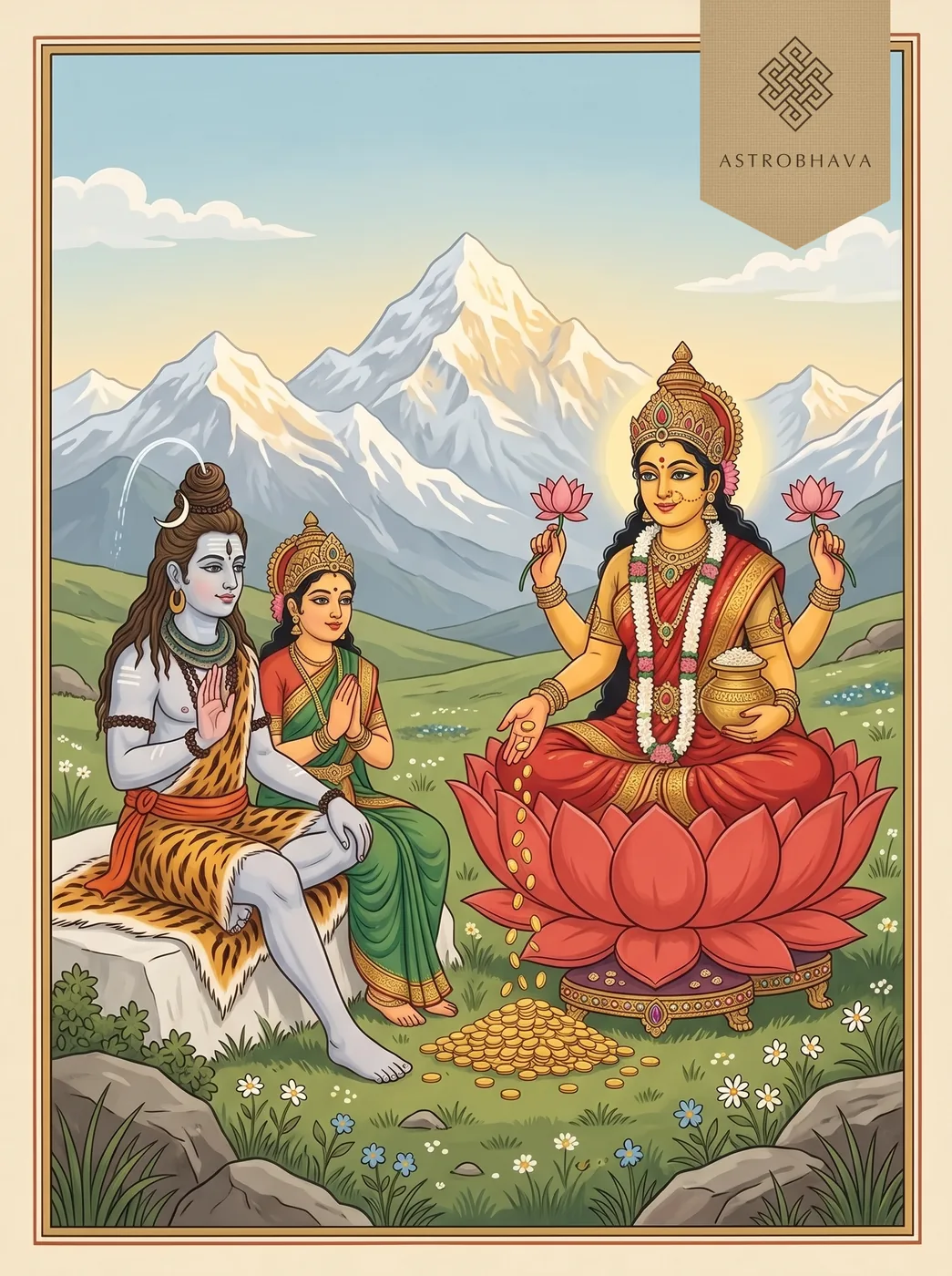
The hymn carries its own setting. Its first heading names the narrator Dhanada, 'the giver of wealth', who describes Parvati going to Shiva, the blue-throated god, and speaking out of compassion. Her request is exact: a ready means that breaks poverty, for three kinds of people, the good, the poor and those who keep a household. Shiva honours the question before he answers it, telling her it suits her to ask, since she is the mother of the world and asks out of pity for all beings. Then, before giving the hymn, he bows to Rama together with Sita, Rama's brothers and Hanuman, so the teaching opens with Shiva as a worshipper of Rama. He vouches for what follows twice in one line, saying his word is truth itself, and names yogakshema, gaining what one lacks and keeping what one has, as what it secures. The goddess he then praises is described in verse 7 as born of a portion of the earth, and in verse 17 as Vasudha, the earth itself, honoured by the Vasus and by Indra; in verse 9 Kubera worships her. The closing verses say the hymn was spoken by a servant of the ruler of the gods, through Shiva's grace. Its final line turns to Kubera, keeper of the Padma treasure, asking that wealth and grain come by his favour.
The mantra, in six scripts
- ॐ
- oṃ — Om, the sacred syllable
- धनलक्ष्म्यै
- dhanalakṣmyai — to Dhanalakshmi, Lakshmi of wealth
- नमः
- namaḥ — salutation
Dhana Lakshmi Mantra lyrics in full
The name salutation comes first, then the twenty-one verses of the stotram, the last of them three lines long. The printed closing line is given at the end.
All 23 verses, in Sanskrit, Tamil, Telugu, Kannada, Malayalam and English, each with its meaning. Choose a script:
Download the Dhana Lakshmi Mantra PDFAll 23 verses with their meanings, in Sanskrit. Free to print and keep.
ॐ धनलक्ष्म्यै नमः ।
ௐ தநலக்ஷ்ம்யை நமஃ ।
ఓం ధనలక్ష్మ్యై నమః ।
ಓಂ ಧನಲಕ್ಷ್ಮ್ಯೈ ನಮಃ ।
ഓം ധനലക്ഷ്മ്യൈ നമഃ ।
oṃ dhanalakṣmyai namaḥ |
Om, salutation to Dhanalakshmi, Lakshmi as the goddess of wealth.
देवी देवमुपागम्य नीलकण्ठं मम प्रियम् ।
कृपया पार्वती प्राह शङ्करं करुणाकरम् ॥
தேவீ தேவமுபாகம்ய நீலகண்டம் மம ப்ரியம் ।
க்ருபயா பார்வதீ ப்ராஹ ஶங்கரம் கருணாகரம் ॥
దేవీ దేవముపాగమ్య నీలకణ్ఠం మమ ప్రియమ్ ।
కృపయా పార్వతీ ప్రాహ శఙ్కరం కరుణాకరమ్ ॥
ದೇವೀ ದೇವಮುಪಾಗಮ್ಯ ನೀಲಕಣ್ಠಂ ಮಮ ಪ್ರಿಯಮ್ ।
ಕೃಪಯಾ ಪಾರ್ವತೀ ಪ್ರಾಹ ಶಙ್ಕರಂ ಕರುಣಾಕರಮ್ ॥
ദേവീ ദേവമുപാഗമ്യ നീലകണ്ഠം മമ പ്രിയമ് ।
കൃപയാ പാര്വതീ പ്രാഹ ശങ്കരം കരുണാകരമ് ॥
devī devamupāgamya nīlakaṇṭhaṃ mama priyam |
kṛpayā pārvatī prāha śaṅkaraṃ karuṇākaram ||
Dhanada says: The goddess Parvati went up to the blue-throated god who is dear to me, and out of compassion spoke to Shankara, the source of mercy.
ब्रूहि वल्लभ साधूनां दरिद्राणां कुटुम्बिनाम् ।
दरिद्रदलनोपायमञ्जसैव धनप्रदम् ॥
ப்ரூஹி வல்லப ஸாதூநாம் தரித்ராணாம் குடும்பிநாம் ।
தரித்ரதலநோபாயமஞ்ஜஸைவ தநப்ரதம் ॥
బ్రూహి వల్లభ సాధూనాం దరిద్రాణాం కుటుమ్బినామ్ ।
దరిద్రదలనోపాయమఞ్జసైవ ధనప్రదమ్ ॥
ಬ್ರೂಹಿ ವಲ್ಲಭ ಸಾಧೂನಾಂ ದರಿದ್ರಾಣಾಂ ಕುಟುಮ್ಬಿನಾಮ್ ।
ದರಿದ್ರದಲನೋಪಾಯಮಞ್ಜಸೈವ ಧನಪ್ರದಮ್ ॥
ബ്രൂഹി വല്ലഭ സാധൂനാം ദരിദ്രാണാം കുടുമ്ബിനാമ് ।
ദരിദ്രദലനോപായമഞ്ജസൈവ ധനപ്രദമ് ॥
brūhi vallabha sādhūnāṃ daridrāṇāṃ kuṭumbinām |
daridradalanopāyamañjasaiva dhanapradam ||
The goddess says: Beloved, tell me a ready means that breaks poverty and gives wealth, for good people, for the poor and for those who keep a household.
पूजयन् पार्वतीवाक्यमिदमाह महेश्वरः ।
उचितं जगदम्बासि तव भूतानुकम्पया ॥
பூஜயந் பார்வதீவாக்யமிதமாஹ மஹேஶ்வரஃ ।
உசிதம் ஜகதம்பாஸி தவ பூதாநுகம்பயா ॥
పూజయన్ పార్వతీవాక్యమిదమాహ మహేశ్వరః ।
ఉచితం జగదమ్బాసి తవ భూతానుకమ్పయా ॥
ಪೂಜಯನ್ ಪಾರ್ವತೀವಾಕ್ಯಮಿದಮಾಹ ಮಹೇಶ್ವರಃ ।
ಉಚಿತಂ ಜಗದಮ್ಬಾಸಿ ತವ ಭೂತಾನುಕಮ್ಪಯಾ ॥
പൂജയന് പാര്വതീവാക്യമിദമാഹ മഹേശ്വരഃ ।
ഉചിതം ജഗദമ്ബാസി തവ ഭൂതാനുകമ്പയാ ॥
pūjayan pārvatīvākyamidamāha maheśvaraḥ |
ucitaṃ jagadambāsi tava bhūtānukampayā ||
Shiva says: Honouring Parvati's words, Maheshvara said this: It is fitting, for you are the mother of the world, and you ask out of pity for all beings.
ससीतं सानुजं रामं साञ्जनेयं सहानुगम् ।
प्रणम्य परमानन्दं वक्ष्येऽहं स्तोत्रमुत्तमम् ॥
ஸஸீதம் ஸாநுஜம் ராமம் ஸாஞ்ஜநேயம் ஸஹாநுகம் ।
ப்ரணம்ய பரமாநந்தம் வக்ஷ்யேஹம் ஸ்தோத்ரமுத்தமம் ॥
ససీతం సానుజం రామం సాఞ్జనేయం సహానుగమ్ ।
ప్రణమ్య పరమానన్దం వక్ష్యేఽహం స్తోత్రముత్తమమ్ ॥
ಸಸೀತಂ ಸಾನುಜಂ ರಾಮಂ ಸಾಞ್ಜನೇಯಂ ಸಹಾನುಗಮ್ ।
ಪ್ರಣಮ್ಯ ಪರಮಾನನ್ದಂ ವಕ್ಷ್ಯೇಽಹಂ ಸ್ತೋತ್ರಮುತ್ತಮಮ್ ॥
സസീതം സാനുജം രാമം സാഞ്ജനേയം സഹാനുഗമ് ।
പ്രണമ്യ പരമാനന്ദം വക്ഷ്യേഽഹം സ്തോത്രമുത്തമമ് ॥
sasītaṃ sānujaṃ rāmaṃ sāñjaneyaṃ sahānugam |
praṇamya paramānandaṃ vakṣye'haṃ stotramuttamam ||
Bowing to Rama, the highest bliss, with Sita, his brothers, Hanuman and his followers, I shall tell you an excellent hymn.
धनदं श्रद्दधानानां सद्यः सुलभकारकम् ।
योगक्षेमकरं सत्यं सत्यमेव वचो मम ॥
தநதம் ஶ்ரத்ததாநாநாம் ஸத்யஃ ஸுலபகாரகம் ।
யோகக்ஷேமகரம் ஸத்யம் ஸத்யமேவ வசோ மம ॥
ధనదం శ్రద్దధానానాం సద్యః సులభకారకమ్ ।
యోగక్షేమకరం సత్యం సత్యమేవ వచో మమ ॥
ಧನದಂ ಶ್ರದ್ದಧಾನಾನಾಂ ಸದ್ಯಃ ಸುಲಭಕಾರಕಮ್ ।
ಯೋಗಕ್ಷೇಮಕರಂ ಸತ್ಯಂ ಸತ್ಯಮೇವ ವಚೋ ಮಮ ॥
ധനദം ശ്രദ്ദധാനാനാം സദ്യഃ സുലഭകാരകമ് ।
യോഗക്ഷേമകരം സത്യം സത്യമേവ വചോ മമ ॥
dhanadaṃ śraddadhānānāṃ sadyaḥ sulabhakārakam |
yogakṣemakaraṃ satyaṃ satyameva vaco mama ||
It gives wealth to those who have faith, makes things quickly within reach, and secures what one gains and keeps it safe. This is true; my word is truth itself.
पठन्तः पाठयन्तोऽपि ब्राह्मणैरास्तिकोत्तमैः ।
धनलाभो भवेदाशु नाशमेति दरिद्रता ॥
படந்தஃ பாடயந்தோபி ப்ராஹ்மணைராஸ்திகோத்தமைஃ ।
தநலாபோ பவேதாஶு நாஶமேதி தரித்ரதா ॥
పఠన్తః పాఠయన్తోఽపి బ్రాహ్మణైరాస్తికోత్తమైః ।
ధనలాభో భవేదాశు నాశమేతి దరిద్రతా ॥
ಪಠನ್ತಃ ಪಾಠಯನ್ತೋಽಪಿ ಬ್ರಾಹ್ಮಣೈರಾಸ್ತಿಕೋತ್ತಮೈಃ ।
ಧನಲಾಭೋ ಭವೇದಾಶು ನಾಶಮೇತಿ ದರಿದ್ರತಾ ॥
പഠന്തഃ പാഠയന്തോഽപി ബ്രാഹ്മണൈരാസ്തികോത്തമൈഃ ।
ധനലാഭോ ഭവേദാശു നാശമേതി ദരിദ്രതാ ॥
paṭhantaḥ pāṭhayanto'pi brāhmaṇairāstikottamaiḥ |
dhanalābho bhavedāśu nāśameti daridratā ||
The verse says that for those who recite it, or have it recited by devout Brahmins of firm faith, wealth comes quickly and poverty is destroyed.
भूभवांशभवां भूत्यै भक्तिकल्पलतां शुभाम् ।
प्रार्थयेत्तां यथाकामं कामधेनुस्वरूपिणीम् ॥
பூபவாம்ஶபவாம் பூத்யை பக்திகல்பலதாம் ஶுபாம் ।
ப்ரார்தயேத்தாம் யதாகாமம் காமதேநுஸ்வரூபிணீம் ॥
భూభవాంశభవాం భూత్యై భక్తికల్పలతాం శుభామ్ ।
ప్రార్థయేత్తాం యథాకామం కామధేనుస్వరూపిణీమ్ ॥
ಭೂಭವಾಂಶಭವಾಂ ಭೂತ್ಯೈ ಭಕ್ತಿಕಲ್ಪಲತಾಂ ಶುಭಾಮ್ ।
ಪ್ರಾರ್ಥಯೇತ್ತಾಂ ಯಥಾಕಾಮಂ ಕಾಮಧೇನುಸ್ವರೂಪಿಣೀಮ್ ॥
ഭൂഭവാംശഭവാം ഭൂത്യൈ ഭക്തികല്പലതാം ശുഭാമ് ।
പ്രാര്ഥയേത്താം യഥാകാമം കാമധേനുസ്വരൂപിണീമ് ॥
bhūbhavāṃśabhavāṃ bhūtyai bhaktikalpalatāṃ śubhām |
prārthayettāṃ yathākāmaṃ kāmadhenusvarūpiṇīm ||
For prosperity one should pray, as one wishes, to her who is born as a portion of the earth's being, the auspicious wish-granting creeper for devotees, whose very form is the wish-giving cow.
धर्मदे धनदे देवि दानशीले दयाकरे ।
त्वं प्रसीद महेशानि यदर्थं प्रार्थयाम्यहम् ॥
தர்மதே தநதே தேவி தாநஶீலே தயாகரே ।
த்வம் ப்ரஸீத மஹேஶாநி யதர்தம் ப்ரார்தயாம்யஹம் ॥
ధర్మదే ధనదే దేవి దానశీలే దయాకరే ।
త్వం ప్రసీద మహేశాని యదర్థం ప్రార్థయామ్యహమ్ ॥
ಧರ್ಮದೇ ಧನದೇ ದೇವಿ ದಾನಶೀಲೇ ದಯಾಕರೇ ।
ತ್ವಂ ಪ್ರಸೀದ ಮಹೇಶಾನಿ ಯದರ್ಥಂ ಪ್ರಾರ್ಥಯಾಮ್ಯಹಮ್ ॥
ധര്മദേ ധനദേ ദേവി ദാനശീലേ ദയാകരേ ।
ത്വം പ്രസീദ മഹേശാനി യദര്ഥം പ്രാര്ഥയാമ്യഹമ് ॥
dharmade dhanade devi dānaśīle dayākare |
tvaṃ prasīda maheśāni yadarthaṃ prārthayāmyaham ||
O goddess who gives dharma and wealth, generous by nature and full of kindness, O great queen, be gracious for the purpose for which I pray to you.
धरामरप्रिये पुण्ये धन्ये धनदपूजिते ।
सुधनं धार्मिकं देहि यजमानाय सत्वरम् ॥
தராமரப்ரியே புண்யே தந்யே தநதபூஜிதே ।
ஸுதநம் தார்மிகம் தேஹி யஜமாநாய ஸத்வரம் ॥
ధరామరప్రియే పుణ్యే ధన్యే ధనదపూజితే ।
సుధనం ధార్మికం దేహి యజమానాయ సత్వరమ్ ॥
ಧರಾಮರಪ್ರಿಯೇ ಪುಣ್ಯೇ ಧನ್ಯೇ ಧನದಪೂಜಿತೇ ।
ಸುಧನಂ ಧಾರ್ಮಿಕಂ ದೇಹಿ ಯಜಮಾನಾಯ ಸತ್ವರಮ್ ॥
ധരാമരപ്രിയേ പുണ്യേ ധന്യേ ധനദപൂജിതേ ।
സുധനം ധാര്മികം ദേഹി യജമാനായ സത്വരമ് ॥
dharāmarapriye puṇye dhanye dhanadapūjite |
sudhanaṃ dhārmikaṃ dehi yajamānāya satvaram ||
O holy and blessed one, dear to the sages of the earth, worshipped by Kubera, quickly give good and righteous wealth to the worshipper.
रम्ये रुद्रप्रिये रूपे रामरूपे रतिप्रिये ।
शिखीसखमनोमूर्त्ते प्रसीद प्रणते मयि ॥
ரம்யே ருத்ரப்ரியே ரூபே ராமரூபே ரதிப்ரியே ।
ஶிகீஸகமநோமூர்த்தே ப்ரஸீத ப்ரணதே மயி ॥
రమ్యే రుద్రప్రియే రూపే రామరూపే రతిప్రియే ।
శిఖీసఖమనోమూర్త్తే ప్రసీద ప్రణతే మయి ॥
ರಮ್ಯೇ ರುದ್ರಪ್ರಿಯೇ ರೂಪೇ ರಾಮರೂಪೇ ರತಿಪ್ರಿಯೇ ।
ಶಿಖೀಸಖಮನೋಮೂರ್ತ್ತೇ ಪ್ರಸೀದ ಪ್ರಣತೇ ಮಯಿ ॥
രമ്യേ രുദ്രപ്രിയേ രൂപേ രാമരൂപേ രതിപ്രിയേ ।
ശിഖീസഖമനോമൂര്ത്തേ പ്രസീദ പ്രണതേ മയി ॥
ramye rudrapriye rūpe rāmarūpe ratipriye |
śikhīsakhamanomūrtte prasīda praṇate mayi ||
O lovely one, dear to Rudra, beautiful of form, dear to Rati, whose form lives in the mind of the peacock's friend, be gracious to me as I bow to you.
आरक्तचरणाम्भोजे सिद्धिसर्वार्थदायिके ।
दिव्याम्बरधरे दिव्ये दिव्यमाल्योपशोभिते ॥
ஆரக்தசரணாம்போஜே ஸித்திஸர்வார்ததாயிகே ।
திவ்யாம்பரதரே திவ்யே திவ்யமால்யோபஶோபிதே ॥
ఆరక్తచరణామ్భోజే సిద్ధిసర్వార్థదాయికే ।
దివ్యామ్బరధరే దివ్యే దివ్యమాల్యోపశోభితే ॥
ಆರಕ್ತಚರಣಾಮ್ಭೋಜೇ ಸಿದ್ಧಿಸರ್ವಾರ್ಥದಾಯಿಕೇ ।
ದಿವ್ಯಾಮ್ಬರಧರೇ ದಿವ್ಯೇ ದಿವ್ಯಮಾಲ್ಯೋಪಶೋಭಿತೇ ॥
ആരക്തചരണാമ്ഭോജേ സിദ്ധിസര്വാര്ഥദായികേ ।
ദിവ്യാമ്ബരധരേ ദിവ്യേ ദിവ്യമാല്യോപശോഭിതേ ॥
āraktacaraṇāmbhoje siddhisarvārthadāyike |
divyāmbaradhare divye divyamālyopaśobhite ||
O goddess with reddish lotus feet, giver of success and of every aim, divine one in divine clothes, adorned with divine garlands.
समस्तगुणसम्पन्ने सर्वलक्षणलक्षिते ।
शरच्चन्द्रमुखे नीले नीलनीरजलोचने ॥
ஸமஸ்தகுணஸம்பந்நே ஸர்வலக்ஷணலக்ஷிதே ।
ஶரச்சந்த்ரமுகே நீலே நீலநீரஜலோசநே ॥
సమస్తగుణసమ్పన్నే సర్వలక్షణలక్షితే ।
శరచ్చన్ద్రముఖే నీలే నీలనీరజలోచనే ॥
ಸಮಸ್ತಗುಣಸಮ್ಪನ್ನೇ ಸರ್ವಲಕ್ಷಣಲಕ್ಷಿತೇ ।
ಶರಚ್ಚನ್ದ್ರಮುಖೇ ನೀಲೇ ನೀಲನೀರಜಲೋಚನೇ ॥
സമസ്തഗുണസമ്പന്നേ സര്വലക്ഷണലക്ഷിതേ ।
ശരച്ചന്ദ്രമുഖേ നീലേ നീലനീരജലോചനേ ॥
samastaguṇasampanne sarvalakṣaṇalakṣite |
śaraccandramukhe nīle nīlanīrajalocane ||
O goddess rich in every virtue, marked with every auspicious sign, with a face like the autumn moon, dark one with eyes like blue lotuses.
चञ्चरीकचमूचारुश्रीहारकुटिलालके ।
मत्ते भगवति मातः कलकण्ठरवामृते ॥
சஞ்சரீகசமூசாருஶ்ரீஹாரகுடிலாலகே ।
மத்தே பகவதி மாதஃ கலகண்டரவாம்ருதே ॥
చఞ్చరీకచమూచారుశ్రీహారకుటిలాలకే ।
మత్తే భగవతి మాతః కలకణ్ఠరవామృతే ॥
ಚಞ್ಚರೀಕಚಮೂಚಾರುಶ್ರೀಹಾರಕುಟಿಲಾಲಕೇ ।
ಮತ್ತೇ ಭಗವತಿ ಮಾತಃ ಕಲಕಣ್ಠರವಾಮೃತೇ ॥
ചഞ്ചരീകചമൂചാരുശ്രീഹാരകുടിലാലകേ ।
മത്തേ ഭഗവതി മാതഃ കലകണ്ഠരവാമൃതേ ॥
cañcarīkacamūcāruśrīhārakuṭilālake |
matte bhagavati mātaḥ kalakaṇṭharavāmṛte ||
O goddess whose curling locks, lovely as a swarm of bees, are set with a fine garland; O joyful, blessed mother, whose voice is sweet as nectar, like the cuckoo's song.
हासावलोकनैर्दिव्यैर्भक्तचिन्तापहारिके ।
रूपलावण्यतारूण्यकारुण्यगुणभाजने ॥
ஹாஸாவலோகநைர்திவ்யைர்பக்தசிந்தாபஹாரிகே ।
ரூபலாவண்யதாரூண்யகாருண்யகுணபாஜநே ॥
హాసావలోకనైర్దివ్యైర్భక్తచిన్తాపహారికే ।
రూపలావణ్యతారూణ్యకారుణ్యగుణభాజనే ॥
ಹಾಸಾವಲೋಕನೈರ್ದಿವ್ಯೈರ್ಭಕ್ತಚಿನ್ತಾಪಹಾರಿಕೇ ।
ರೂಪಲಾವಣ್ಯತಾರೂಣ್ಯಕಾರುಣ್ಯಗುಣಭಾಜನೇ ॥
ഹാസാവലോകനൈര്ദിവ്യൈര്ഭക്തചിന്താപഹാരികേ ।
രൂപലാവണ്യതാരൂണ്യകാരുണ്യഗുണഭാജനേ ॥
hāsāvalokanairdivyairbhaktacintāpahārike |
rūpalāvaṇyatārūṇyakāruṇyaguṇabhājane ||
O goddess who removes the worries of devotees with your divine smiling glances, vessel of beauty, grace, youth and compassion.
क्वणत्कङ्कणमञ्जीरे लसल्लीलाकराम्बुजे ।
रुद्रप्रकाशिते तत्त्वे धर्माधारे धरालये ॥
க்வணத்கங்கணமஞ்ஜீரே லஸல்லீலாகராம்புஜே ।
ருத்ரப்ரகாஶிதே தத்த்வே தர்மாதாரே தராலயே ॥
క్వణత్కఙ్కణమఞ్జీరే లసల్లీలాకరామ్బుజే ।
రుద్రప్రకాశితే తత్త్వే ధర్మాధారే ధరాలయే ॥
ಕ್ವಣತ್ಕಙ್ಕಣಮಞ್ಜೀರೇ ಲಸಲ್ಲೀಲಾಕರಾಮ್ಬುಜೇ ।
ರುದ್ರಪ್ರಕಾಶಿತೇ ತತ್ತ್ವೇ ಧರ್ಮಾಧಾರೇ ಧರಾಲಯೇ ॥
ക്വണത്കങ്കണമഞ്ജീരേ ലസല്ലീലാകരാമ്ബുജേ ।
രുദ്രപ്രകാശിതേ തത്ത്വേ ധര്മാധാരേ ധരാലയേ ॥
kvaṇatkaṅkaṇamañjīre lasallīlākarāmbuje |
rudraprakāśite tattve dharmādhāre dharālaye ||
O goddess of jingling bracelets and anklets, with lotus hands shining in play, the truth revealed by Rudra, the support of dharma, who dwells on the earth.
प्रयच्छ यजमानाय धनं धर्मैकसाधनम् ।
मातस्त्वं मेऽविलम्बेन दिशस्व जगदम्बिके ॥
ப்ரயச்ச யஜமாநாய தநம் தர்மைகஸாதநம் ।
மாதஸ்த்வம் மேவிலம்பேந திஶஸ்வ ஜகதம்பிகே ॥
ప్రయచ్ఛ యజమానాయ ధనం ధర్మైకసాధనమ్ ।
మాతస్త్వం మేఽవిలమ్బేన దిశస్వ జగదమ్బికే ॥
ಪ್ರಯಚ್ಛ ಯಜಮಾನಾಯ ಧನಂ ಧರ್ಮೈಕಸಾಧನಮ್ ।
ಮಾತಸ್ತ್ವಂ ಮೇಽವಿಲಮ್ಬೇನ ದಿಶಸ್ವ ಜಗದಮ್ಬಿಕೇ ॥
പ്രയച്ഛ യജമാനായ ധനം ധര്മൈകസാധനമ് ।
മാതസ്ത്വം മേഽവിലമ്ബേന ദിശസ്വ ജഗദമ്ബികേ ॥
prayaccha yajamānāya dhanaṃ dharmaikasādhanam |
mātastvaṃ me'vilambena diśasva jagadambike ||
Give the worshipper wealth, the one means of doing dharma. Mother of the world, grant it to me without delay.
कृपया करुणागारे प्रार्थितं कुरु मे शुभे ।
वसुधे वसुधारूपे वसुवासववन्दिते ॥
க்ருபயா கருணாகாரே ப்ரார்திதம் குரு மே ஶுபே ।
வஸுதே வஸுதாரூபே வஸுவாஸவவந்திதே ॥
కృపయా కరుణాగారే ప్రార్థితం కురు మే శుభే ।
వసుధే వసుధారూపే వసువాసవవన్దితే ॥
ಕೃಪಯಾ ಕರುಣಾಗಾರೇ ಪ್ರಾರ್ಥಿತಂ ಕುರು ಮೇ ಶುಭೇ ।
ವಸುಧೇ ವಸುಧಾರೂಪೇ ವಸುವಾಸವವನ್ದಿತೇ ॥
കൃപയാ കരുണാഗാരേ പ്രാര്ഥിതം കുരു മേ ശുഭേ ।
വസുധേ വസുധാരൂപേ വസുവാസവവന്ദിതേ ॥
kṛpayā karuṇāgāre prārthitaṃ kuru me śubhe |
vasudhe vasudhārūpe vasuvāsavavandite ||
O house of compassion, auspicious one, in your kindness fulfil my prayer; O giver of riches, whose form is the earth, honoured by the Vasus and by Indra.
धनदे यजमानाय वरदे वरदा भव ।
ब्रह्मण्यैर्ब्राह्मणैः पूज्ये पार्वतीशिवशङ्करे ॥
தநதே யஜமாநாய வரதே வரதா பவ ।
ப்ரஹ்மண்யைர்ப்ராஹ்மணைஃ பூஜ்யே பார்வதீஶிவஶங்கரே ॥
ధనదే యజమానాయ వరదే వరదా భవ ।
బ్రహ్మణ్యైర్బ్రాహ్మణైః పూజ్యే పార్వతీశివశఙ్కరే ॥
ಧನದೇ ಯಜಮಾನಾಯ ವರದೇ ವರದಾ ಭವ ।
ಬ್ರಹ್ಮಣ್ಯೈರ್ಬ್ರಾಹ್ಮಣೈಃ ಪೂಜ್ಯೇ ಪಾರ್ವತೀಶಿವಶಙ್ಕರೇ ॥
ധനദേ യജമാനായ വരദേ വരദാ ഭവ ।
ബ്രഹ്മണ്യൈര്ബ്രാഹ്മണൈഃ പൂജ്യേ പാര്വതീശിവശങ്കരേ ॥
dhanade yajamānāya varade varadā bhava |
brahmaṇyairbrāhmaṇaiḥ pūjye pārvatīśivaśaṅkare ||
O giver of wealth and of boons, be a giver of boons to the worshipper; you who are worshipped by devout Brahmins, who are Parvati, auspicious and the bringer of good.
स्तोत्रं दरिद्रताव्याधिशमनं सुधनप्रदम् ।
श्रीकरे शङ्करे श्रीदे प्रसीद मयि किङ्करे ॥
ஸ்தோத்ரம் தரித்ரதாவ்யாதிஶமநம் ஸுதநப்ரதம் ।
ஶ்ரீகரே ஶங்கரே ஶ்ரீதே ப்ரஸீத மயி கிங்கரே ॥
స్తోత్రం దరిద్రతావ్యాధిశమనం సుధనప్రదమ్ ।
శ్రీకరే శఙ్కరే శ్రీదే ప్రసీద మయి కిఙ్కరే ॥
ಸ್ತೋತ್ರಂ ದರಿದ್ರತಾವ್ಯಾಧಿಶಮನಂ ಸುಧನಪ್ರದಮ್ ।
ಶ್ರೀಕರೇ ಶಙ್ಕರೇ ಶ್ರೀದೇ ಪ್ರಸೀದ ಮಯಿ ಕಿಙ್ಕರೇ ॥
സ്തോത്രം ദരിദ്രതാവ്യാധിശമനം സുധനപ്രദമ് ।
ശ്രീകരേ ശങ്കരേ ശ്രീദേ പ്രസീദ മയി കിങ്കരേ ॥
stotraṃ daridratāvyādhiśamanaṃ sudhanapradam |
śrīkare śaṅkare śrīde prasīda mayi kiṅkare ||
This hymn is said to quiet the sickness of poverty and to give good wealth. O maker of fortune, bringer of good, giver of prosperity, be gracious to me, your servant.
पार्वतीशप्रसादेन सुरेशकिङ्करेरितम् ।
श्रद्धया ये पठिष्यन्ति पाठयिष्यन्ति भक्तितः ॥
பார்வதீஶப்ரஸாதேந ஸுரேஶகிங்கரேரிதம் ।
ஶ்ரத்தயா யே படிஷ்யந்தி பாடயிஷ்யந்தி பக்திதஃ ॥
పార్వతీశప్రసాదేన సురేశకిఙ్కరేరితమ్ ।
శ్రద్ధయా యే పఠిష్యన్తి పాఠయిష్యన్తి భక్తితః ॥
ಪಾರ್ವತೀಶಪ್ರಸಾದೇನ ಸುರೇಶಕಿಙ್ಕರೇರಿತಮ್ ।
ಶ್ರದ್ಧಯಾ ಯೇ ಪಠಿಷ್ಯನ್ತಿ ಪಾಠಯಿಷ್ಯನ್ತಿ ಭಕ್ತಿತಃ ॥
പാര്വതീശപ്രസാദേന സുരേശകിങ്കരേരിതമ് ।
ശ്രദ്ധയാ യേ പഠിഷ്യന്തി പാഠയിഷ്യന്തി ഭക്തിതഃ ॥
pārvatīśaprasādena sureśakiṅkareritam |
śraddhayā ye paṭhiṣyanti pāṭhayiṣyanti bhaktitaḥ ||
Spoken by the servant of the lord of the gods through the grace of Parvati's lord: those who recite it with faith, or have it recited with devotion...
सहस्रमयुतं लक्षं धनलाभो भवेद् ध्रुवम् ।
धनदाय नमस्तुभ्यं निधिपद्माधिपाय च ।
भवन्तु त्वत्प्रसादान्मे धनधान्यादिसम्पदः ॥
ஸஹஸ்ரமயுதம் லக்ஷம் தநலாபோ பவேத் த்ருவம் ।
தநதாய நமஸ்துப்யம் நிதிபத்மாதிபாய ச ।
பவந்து த்வத்ப்ரஸாதாந்மே தநதாந்யாதிஸம்பதஃ ॥
సహస్రమయుతం లక్షం ధనలాభో భవేద్ ధ్రువమ్ ।
ధనదాయ నమస్తుభ్యం నిధిపద్మాధిపాయ చ ।
భవన్తు త్వత్ప్రసాదాన్మే ధనధాన్యాదిసమ్పదః ॥
ಸಹಸ್ರಮಯುತಂ ಲಕ್ಷಂ ಧನಲಾಭೋ ಭವೇದ್ ಧ್ರುವಮ್ ।
ಧನದಾಯ ನಮಸ್ತುಭ್ಯಂ ನಿಧಿಪದ್ಮಾಧಿಪಾಯ ಚ ।
ಭವನ್ತು ತ್ವತ್ಪ್ರಸಾದಾನ್ಮೇ ಧನಧಾನ್ಯಾದಿಸಮ್ಪದಃ ॥
സഹസ്രമയുതം ലക്ഷം ധനലാഭോ ഭവേദ് ധ്രുവമ് ।
ധനദായ നമസ്തുഭ്യം നിധിപദ്മാധിപായ ച ।
ഭവന്തു ത്വത്പ്രസാദാന്മേ ധനധാന്യാദിസമ്പദഃ ॥
sahasramayutaṃ lakṣaṃ dhanalābho bhaved dhruvam |
dhanadāya namastubhyaṃ nidhipadmādhipāya ca |
bhavantu tvatprasādānme dhanadhānyādisampadaḥ ||
...the verse says, will surely gain wealth by thousands, tens of thousands and hundreds of thousands. Salutation to you, Kubera, giver of wealth and lord of the Padma treasure; by your grace may riches of wealth, grain and more be mine.
॥ इति श्री धनलक्ष्मी स्तोत्रं संपूर्णम् ॥
॥ இதி ஶ்ரீ தநலக்ஷ்மீ ஸ்தோத்ரம் ஸம்பூர்ணம் ॥
॥ ఇతి శ్రీ ధనలక్ష్మీ స్తోత్రం సంపూర్ణమ్ ॥
॥ ಇತಿ ಶ್ರೀ ಧನಲಕ್ಷ್ಮೀ ಸ್ತೋತ್ರಂ ಸಂಪೂರ್ಣಮ್ ॥
॥ ഇതി ശ്രീ ധനലക്ഷ്മീ സ്തോത്രം സംപൂര്ണമ് ॥
|| iti śrī dhanalakṣmī stotraṃ saṃpūrṇam ||
Thus ends the Sri Dhanalakshmi Stotram.
The syllable people get wrong
In verse 5, śraddadhānānām ('of those who have faith') is often clipped to 'shraddhanaam'. Say all five syllables, shrad-da-DHAA-naa-naam: a doubled d, then an aspirated dh, with the long a's held.
When the Dhana Lakshmi Mantra is chanted
Weekday. Friday
Festival. Dhanteras, and Friday worship of Lakshmi
Questions
Have your chart read before you decide
Chanting is yours to do, and free. But which deity your situation calls for — and whether a mantra alone is the right response — depends on your chart. Sometimes it is; sometimes it is not.
- Over 30 years in the Guru–Sishya Parampara, from the age of five
- He reads every chart himself — 60 minutes, one to one, never delegated
- Charts are read only between sunrise and sunset, following tradition
