Durga Saptashati Chapter 13
एतत्ते कथितं भूप देवीमाहात्म्यमुत्तमम् । एवंप्रभावा सा देवी ययेदं धार्यते जगत् ॥In Devanagari, Tamil, Telugu, Kannada, Malayalam and English — with the meaning of every word, and the one syllable most people pronounce wrongly.
 The Chandi Homa, performed for youBook →
What the Durga Saptashati Chapter 13 is
Durga Saptashati Chapter 13, called Suratha-Vaishya Varapradana in its closing colophon, the granting of boons to Suratha and the merchant, is the last chapter of the Devi Mahatmya and the close of the third episode, of Mahasaraswati. The meditation verse printed before it pictures the Goddess as Shiva, the auspicious one: four-armed and three-eyed, glowing like the disc of the rising sun, holding a noose and a goad and showing the gestures of giving and of fearlessness. Verses 2 to 5 are the sage Medhas's last words to the king. Verse 3 says that knowledge, too, is the work of Vishnu's Maya, the same power chapter 1 called the delusion of the wise (verse 55) and the cause of liberation (verse 57). Verse 4 puts delusion in three tenses, and verse 5 names her three gifts to those who worship her: enjoyment, heaven and final release. From verse 7 Markandeya takes over the telling: the two men's worship (verses 7 to 13), the Goddess's offer (verse 15), their choices (verses 17 and 18), her answers (verses 20 to 25) and her vanishing (verses 27 to 29). The colophon places the whole text within the account of the Savarnika age of Manu, so the last line lands where chapter 1 began.
A river bank, an earthen image, two boons
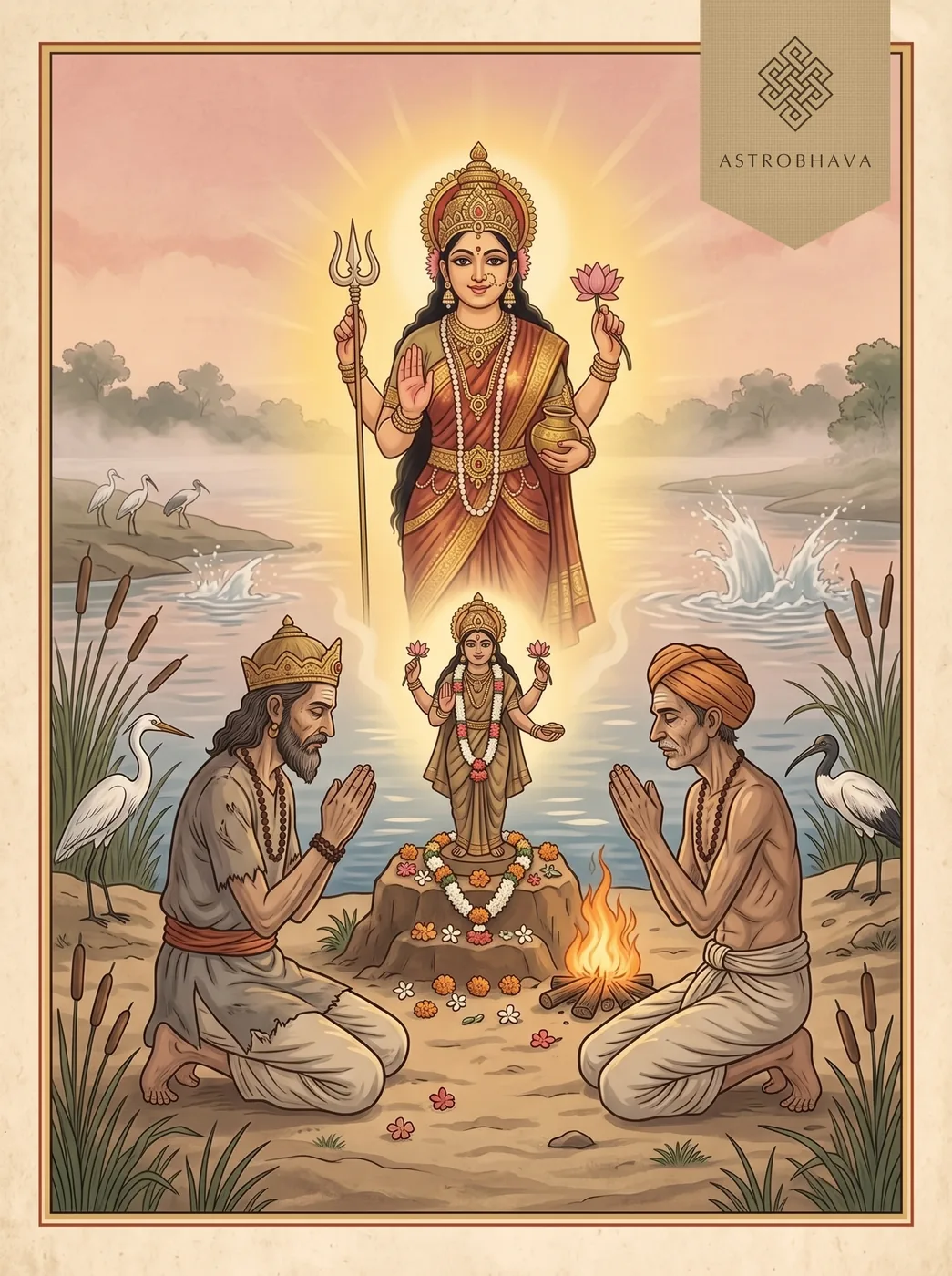
The setting of the whole text is told on the main Durga Saptashati page; this chapter is its ending. Hearing Medhas out, Suratha bows to him, worn down by his own clinging and by the loss of his kingdom, and goes at once with the merchant to practise austerity. Markandeya, telling the story to his pupil Kraushtuki, calls him 'great sage' in verse 9, so that address is not to Medhas. The two settle on the sandy bank of a river with one purpose, to see the Mother face to face. The merchant recites the Devi Sukta as he goes. They shape her image from the earth of the bank and worship it with flowers, incense, fire offerings and libations. Their food dwindles to nothing; verse 12 adds that their offerings were sprinkled with blood from their own bodies. After three years Chandika appears before them in person and offers both men whatever they ask. The king asks twice over: a kingdom in his next life that can never be lost, and his own kingdom back in this one, its enemies broken by force. The merchant, whom this chapter never calls Samadhi, asks for the knowledge that loosens the hold of 'mine' and 'I'. She answers the nearer wish first. Within a few days the king will win back his throne and keep it; after death he will be born of Vivasvan, the Sun, as the Manu Savarnika. To the merchant she grants knowledge, for his final attainment. Praised by both, she vanishes. Set beside verse 5, the two choices divide her gifts between them: the king takes enjoyment, in this life and the next, and the merchant takes release.
The mantra, in six scripts
- एतत्ते
- etatte — this, to you
- कथितं
- kathitaṃ — has been told
- भूप
- bhūpa — O king
- देवीमाहात्म्यमुत्तमम्
- devīmāhātmyamuttamam — the supreme greatness of the Goddess
- एवंप्रभावा
- evaṃprabhāvā — of such power
- सा
- sā — that
- देवी
- devī — Goddess
- ययेदं
- yayedaṃ — by whom this
- धार्यते
- dhāryate — is upheld
- जगत्
- jagat — world
Durga Saptashati Chapter 13 lyrics in full
The meditation verse on the four-armed Goddess the colour of the rising sun, and all 29 numbered lines of the chapter in the standard numbering; the speaker of each passage is named above it.
All 29 numbered lines, in Sanskrit, Tamil, Telugu, Kannada, Malayalam and English, each with its meaning. Choose a script:
Download the Durga Saptashati Chapter 13 PDFAll 29 numbered lines with their meanings, in Sanskrit. Free to print and keep.
ॐ बालार्कमण्डलाभासां चतुर्बाहुं त्रिलोचनाम् ।
पाशाङ्कुशवराभीतीर्धारयन्तीं शिवां भजे ॥
ௐ பாலார்கமண்டலாபாஸாம் சதுர்பாஹும் த்ரிலோசநாம் ।
பாஶாங்குஶவராபீதீர்தாரயந்தீம் ஶிவாம் பஜே ॥
ఓం బాలార్కమణ్డలాభాసాం చతుర్బాహుం త్రిలోచనామ్ ।
పాశాఙ్కుశవరాభీతీర్ధారయన్తీం శివాం భజే ॥
ಓಂ ಬಾಲಾರ್ಕಮಣ್ಡಲಾಭಾಸಾಂ ಚತುರ್ಬಾಹುಂ ತ್ರಿಲೋಚನಾಮ್ ।
ಪಾಶಾಙ್ಕುಶವರಾಭೀತೀರ್ಧಾರಯನ್ತೀಂ ಶಿವಾಂ ಭಜೇ ॥
ഓം ബാലാര്കമണ്ഡലാഭാസാം ചതുര്ബാഹും ത്രിലോചനാമ് ।
പാശാങ്കുശവരാഭീതീര്ധാരയന്തീം ശിവാം ഭജേ ॥
oṃ bālārkamaṇḍalābhāsāṃ caturbāhuṃ trilocanām |
pāśāṅkuśavarābhītīrdhārayantīṃ śivāṃ bhaje ||
Om. I worship Shiva, the auspicious Goddess, who glows like the disc of the rising sun, who has four arms and three eyes, and who holds the noose and the goad and shows the gestures of granting boons and of fearlessness.
ऋषिरुवाच
एतत्ते कथितं भूप देवीमाहात्म्यमुत्तमम् । एवंप्रभावा सा देवी ययेदं धार्यते जगत् ॥
ருஷிருவாச
ஏதத்தே கதிதம் பூப தேவீமாஹாத்ம்யமுத்தமம் । ஏவம்ப்ரபாவா ஸா தேவீ யயேதம் தார்யதே ஜகத் ॥
ఋషిరువాచ
ఏతత్తే కథితం భూప దేవీమాహాత్మ్యముత్తమమ్ । ఏవంప్రభావా సా దేవీ యయేదం ధార్యతే జగత్ ॥
ಋಷಿರುವಾಚ
ಏತತ್ತೇ ಕಥಿತಂ ಭೂಪ ದೇವೀಮಾಹಾತ್ಮ್ಯಮುತ್ತಮಮ್ । ಏವಂಪ್ರಭಾವಾ ಸಾ ದೇವೀ ಯಯೇದಂ ಧಾರ್ಯತೇ ಜಗತ್ ॥
ഋഷിരുവാച
ഏതത്തേ കഥിതം ഭൂപ ദേവീമാഹാത്മ്യമുത്തമമ് । ഏവംപ്രഭാവാ സാ ദേവീ യയേദം ധാര്യതേ ജഗത് ॥
ṛṣiruvāca
etatte kathitaṃ bhūpa devīmāhātmyamuttamam | evaṃprabhāvā sā devī yayedaṃ dhāryate jagat ||
The sage said: O king, I have told you this supreme greatness of the Goddess. Such is the power of that Goddess by whom this world is upheld.
विद्या तथैव क्रियते भगवद्विष्णुमायया ।
तया त्वमेष वैश्यश्च तथैवान्ये विवेकिनः ॥
வித்யா ததைவ க்ரியதே பகவத்விஷ்ணுமாயயா ।
தயா த்வமேஷ வைஶ்யஶ்ச ததைவாந்யே விவேகிநஃ ॥
విద్యా తథైవ క్రియతే భగవద్విష్ణుమాయయా ।
తయా త్వమేష వైశ్యశ్చ తథైవాన్యే వివేకినః ॥
ವಿದ್ಯಾ ತಥೈವ ಕ್ರಿಯತೇ ಭಗವದ್ವಿಷ್ಣುಮಾಯಯಾ ।
ತಯಾ ತ್ವಮೇಷ ವೈಶ್ಯಶ್ಚ ತಥೈವಾನ್ಯೇ ವಿವೇಕಿನಃ ॥
വിദ്യാ തഥൈവ ക്രിയതേ ഭഗവദ്വിഷ്ണുമായയാ ।
തയാ ത്വമേഷ വൈശ്യശ്ച തഥൈവാന്യേ വിവേകിനഃ ॥
vidyā tathaiva kriyate bhagavadviṣṇumāyayā |
tayā tvameṣa vaiśyaśca tathaivānye vivekinaḥ ||
Knowledge, too, is brought about by her, the Maya of the Lord Vishnu. By her you, this merchant, and other discerning people as well
मोह्यन्ते मोहिताश्चैव मोहमेष्यन्ति चापरे ।
तामुपैहि महाराज शरणं परमेश्वरीम् ॥
மோஹ்யந்தே மோஹிதாஶ்சைவ மோஹமேஷ்யந்தி சாபரே ।
தாமுபைஹி மஹாராஜ ஶரணம் பரமேஶ்வரீம் ॥
మోహ్యన్తే మోహితాశ్చైవ మోహమేష్యన్తి చాపరే ।
తాముపైహి మహారాజ శరణం పరమేశ్వరీమ్ ॥
ಮೋಹ್ಯನ್ತೇ ಮೋಹಿತಾಶ್ಚೈವ ಮೋಹಮೇಷ್ಯನ್ತಿ ಚಾಪರೇ ।
ತಾಮುಪೈಹಿ ಮಹಾರಾಜ ಶರಣಂ ಪರಮೇಶ್ವರೀಮ್ ॥
മോഹ്യന്തേ മോഹിതാശ്ചൈവ മോഹമേഷ്യന്തി ചാപരേ ।
താമുപൈഹി മഹാരാജ ശരണം പരമേശ്വരീമ് ॥
mohyante mohitāścaiva mohameṣyanti cāpare |
tāmupaihi mahārāja śaraṇaṃ parameśvarīm ||
are deluded, have been deluded, and others will yet fall into delusion. Great king, go to her, the supreme Goddess, for refuge.
आराधिता सैव नृणां भोगस्वर्गापवर्गदा ॥
ஆராதிதா ஸைவ ந்ருணாம் போகஸ்வர்காபவர்கதா ॥
ఆరాధితా సైవ నృణాం భోగస్వర్గాపవర్గదా ॥
ಆರಾಧಿತಾ ಸೈವ ನೃಣಾಂ ಭೋಗಸ್ವರ್ಗಾಪವರ್ಗದಾ ॥
ആരാധിതാ സൈവ നൃണാം ഭോഗസ്വര്ഗാപവര്ഗദാ ॥
ārādhitā saiva nṛṇāṃ bhogasvargāpavargadā ||
When she is worshipped, she alone gives people enjoyment, heaven and final liberation.
मार्कण्डेय उवाच
इति तस्य वचः श्रुत्वा सुरथः स नराधिपः ॥
மார்கண்டேய உவாச
இதி தஸ்ய வசஃ ஶ்ருத்வா ஸுரதஃ ஸ நராதிபஃ ॥
మార్కణ్డేయ ఉవాచ
ఇతి తస్య వచః శ్రుత్వా సురథః స నరాధిపః ॥
ಮಾರ್ಕಣ್ಡೇಯ ಉವಾಚ
ಇತಿ ತಸ್ಯ ವಚಃ ಶ್ರುತ್ವಾ ಸುರಥಃ ಸ ನರಾಧಿಪಃ ॥
മാര്കണ്ഡേയ ഉവാച
ഇതി തസ്യ വചഃ ശ്രുത്വാ സുരഥഃ സ നരാധിപഃ ॥
mārkaṇḍeya uvāca
iti tasya vacaḥ śrutvā surathaḥ sa narādhipaḥ ||
Markandeya said: Hearing these words of the sage, King Suratha
प्रणिपत्य महाभागं तमृषिं शंसितव्रतम् ।
निर्विण्णोऽतिममत्वेन राज्यापहरणेन च ॥
ப்ரணிபத்ய மஹாபாகம் தம்ருஷிம் ஶம்ஸிதவ்ரதம் ।
நிர்விண்ணோதிமமத்வேந ராஜ்யாபஹரணேந ச ॥
ప్రణిపత్య మహాభాగం తమృషిం శంసితవ్రతమ్ ।
నిర్విణ్ణోఽతిమమత్వేన రాజ్యాపహరణేన చ ॥
ಪ್ರಣಿಪತ್ಯ ಮಹಾಭಾಗಂ ತಮೃಷಿಂ ಶಂಸಿತವ್ರತಮ್ ।
ನಿರ್ವಿಣ್ಣೋಽತಿಮಮತ್ವೇನ ರಾಜ್ಯಾಪಹರಣೇನ ಚ ॥
പ്രണിപത്യ മഹാഭാഗം തമൃഷിം ശംസിതവ്രതമ് ।
നിര്വിണ്ണോഽതിമമത്വേന രാജ്യാപഹരണേന ച ॥
praṇipatya mahābhāgaṃ tamṛṣiṃ śaṃsitavratam |
nirviṇṇo'timamatvena rājyāpaharaṇena ca ||
bowed down to that great and praiseworthy sage, firm in his vows. He was weary of the world, worn down by his deep attachment and by the loss of his kingdom.
जगाम सद्यस्तपसे स च वैश्यो महामुने ।
संदर्शनार्थमम्बाया नदीपुलिनसंस्थितः ॥
ஜகாம ஸத்யஸ்தபஸே ஸ ச வைஶ்யோ மஹாமுநே ।
ஸம்தர்ஶநார்தமம்பாயா நதீபுலிநஸம்ஸ்திதஃ ॥
జగామ సద్యస్తపసే స చ వైశ్యో మహామునే ।
సందర్శనార్థమమ్బాయా నదీపులినసంస్థితః ॥
ಜಗಾಮ ಸದ್ಯಸ್ತಪಸೇ ಸ ಚ ವೈಶ್ಯೋ ಮಹಾಮುನೇ ।
ಸಂದರ್ಶನಾರ್ಥಮಮ್ಬಾಯಾ ನದೀಪುಲಿನಸಂಸ್ಥಿತಃ ॥
ജഗാമ സദ്യസ്തപസേ സ ച വൈശ്യോ മഹാമുനേ ।
സംദര്ശനാര്ഥമമ്ബായാ നദീപുലിനസംസ്ഥിതഃ ॥
jagāma sadyastapase sa ca vaiśyo mahāmune |
saṃdarśanārthamambāyā nadīpulinasaṃsthitaḥ ||
O great sage, he and the merchant went at once to practise austerity, staying on the sandy bank of a river in order to have a vision of the Mother.
स च वैश्यस्तपस्तेपे देवीसूक्तं परं जपन् ।
तौ तस्मिन् पुलिने देव्याः कृत्वा मूर्तिं महीमयीम् ॥
ஸ ச வைஶ்யஸ்தபஸ்தேபே தேவீஸூக்தம் பரம் ஜபந் ।
தௌ தஸ்மிந் புலிநே தேவ்யாஃ க்ருத்வா மூர்திம் மஹீமயீம் ॥
స చ వైశ్యస్తపస్తేపే దేవీసూక్తం పరం జపన్ ।
తౌ తస్మిన్ పులినే దేవ్యాః కృత్వా మూర్తిం మహీమయీమ్ ॥
ಸ ಚ ವೈಶ್ಯಸ್ತಪಸ್ತೇಪೇ ದೇವೀಸೂಕ್ತಂ ಪರಂ ಜಪನ್ ।
ತೌ ತಸ್ಮಿನ್ ಪುಲಿನೇ ದೇವ್ಯಾಃ ಕೃತ್ವಾ ಮೂರ್ತಿಂ ಮಹೀಮಯೀಮ್ ॥
സ ച വൈശ്യസ്തപസ്തേപേ ദേവീസൂക്തം പരം ജപന് ।
തൌ തസ്മിന് പുലിനേ ദേവ്യാഃ കൃത്വാ മൂര്തിം മഹീമയീമ് ॥
sa ca vaiśyastapastepe devīsūktaṃ paraṃ japan |
tau tasmin puline devyāḥ kṛtvā mūrtiṃ mahīmayīm ||
The merchant too practised austerity, reciting the supreme hymn to the Goddess. On that river bank the two of them made an image of the Goddess out of earth
अर्हणां चक्रतुस्तस्याः पुष्पधूपाग्नितर्पणैः ।
निराहारौ यताहारौ तन्मनस्कौ समाहितौ ॥
அர்ஹணாம் சக்ரதுஸ்தஸ்யாஃ புஷ்பதூபாக்நிதர்பணைஃ ।
நிராஹாரௌ யதாஹாரௌ தந்மநஸ்கௌ ஸமாஹிதௌ ॥
అర్హణాం చక్రతుస్తస్యాః పుష్పధూపాగ్నితర్పణైః ।
నిరాహారౌ యతాహారౌ తన్మనస్కౌ సమాహితౌ ॥
ಅರ್ಹಣಾಂ ಚಕ್ರತುಸ್ತಸ್ಯಾಃ ಪುಷ್ಪಧೂಪಾಗ್ನಿತರ್ಪಣೈಃ ।
ನಿರಾಹಾರೌ ಯತಾಹಾರೌ ತನ್ಮನಸ್ಕೌ ಸಮಾಹಿತೌ ॥
അര്ഹണാം ചക്രതുസ്തസ്യാഃ പുഷ്പധൂപാഗ്നിതര്പണൈഃ ।
നിരാഹാരൌ യതാഹാരൌ തന്മനസ്കൌ സമാഹിതൌ ॥
arhaṇāṃ cakratustasyāḥ puṣpadhūpāgnitarpaṇaiḥ |
nirāhārau yatāhārau tanmanaskau samāhitau ||
and worshipped her with flowers, incense, fire offerings and libations. First eating little and then nothing at all, they kept their minds fixed on her, fully collected.
ददतुस्तौ बलिं चैव निजगात्रासृगुक्षितम् ।
एवं समाराधयतोस्त्रिभिर्वर्षैर्यतात्मनोः ॥
தததுஸ்தௌ பலிம் சைவ நிஜகாத்ராஸ்ருகுக்ஷிதம் ।
ஏவம் ஸமாராதயதோஸ்த்ரிபிர்வர்ஷைர்யதாத்மநோஃ ॥
దదతుస్తౌ బలిం చైవ నిజగాత్రాసృగుక్షితమ్ ।
ఏవం సమారాధయతోస్త్రిభిర్వర్షైర్యతాత్మనోః ॥
ದದತುಸ್ತೌ ಬಲಿಂ ಚೈವ ನಿಜಗಾತ್ರಾಸೃಗುಕ್ಷಿತಮ್ ।
ಏವಂ ಸಮಾರಾಧಯತೋಸ್ತ್ರಿಭಿರ್ವರ್ಷೈರ್ಯತಾತ್ಮನೋಃ ॥
ദദതുസ്തൌ ബലിം ചൈവ നിജഗാത്രാസൃഗുക്ഷിതമ് ।
ഏവം സമാരാധയതോസ്ത്രിഭിര്വര്ഷൈര്യതാത്മനോഃ ॥
dadatustau baliṃ caiva nijagātrāsṛgukṣitam |
evaṃ samārādhayatostribhirvarṣairyatātmanoḥ ||
They also gave offerings sprinkled with blood from their own bodies. When the two of them, self-controlled, had worshipped her in this way for three years,
परितुष्टा जगद्धात्री प्रत्यक्षं प्राह चण्डिका ॥
பரிதுஷ்டா ஜகத்தாத்ரீ ப்ரத்யக்ஷம் ப்ராஹ சண்டிகா ॥
పరితుష్టా జగద్ధాత్రీ ప్రత్యక్షం ప్రాహ చణ్డికా ॥
ಪರಿತುಷ್ಟಾ ಜಗದ್ಧಾತ್ರೀ ಪ್ರತ್ಯಕ್ಷಂ ಪ್ರಾಹ ಚಣ್ಡಿಕಾ ॥
പരിതുഷ്ടാ ജഗദ്ധാത്രീ പ്രത്യക്ഷം പ്രാഹ ചണ്ഡികാ ॥
parituṣṭā jagaddhātrī pratyakṣaṃ prāha caṇḍikā ||
Chandika, the sustainer of the world, was well pleased and appeared before them and spoke.
देव्युवाच
यत्प्रार्थ्यते त्वया भूप त्वया च कुलनन्दन । मत्तस्तत्प्राप्यतां सर्वं परितुष्टा ददामि तत् ॥
தேவ்யுவாச
யத்ப்ரார்த்யதே த்வயா பூப த்வயா ச குலநந்தந । மத்தஸ்தத்ப்ராப்யதாம் ஸர்வம் பரிதுஷ்டா ததாமி தத் ॥
దేవ్యువాచ
యత్ప్రార్థ్యతే త్వయా భూప త్వయా చ కులనన్దన । మత్తస్తత్ప్రాప్యతాం సర్వం పరితుష్టా దదామి తత్ ॥
ದೇವ್ಯುವಾಚ
ಯತ್ಪ್ರಾರ್ಥ್ಯತೇ ತ್ವಯಾ ಭೂಪ ತ್ವಯಾ ಚ ಕುಲನನ್ದನ । ಮತ್ತಸ್ತತ್ಪ್ರಾಪ್ಯತಾಂ ಸರ್ವಂ ಪರಿತುಷ್ಟಾ ದದಾಮಿ ತತ್ ॥
ദേവ്യുവാച
യത്പ്രാര്ഥ്യതേ ത്വയാ ഭൂപ ത്വയാ ച കുലനന്ദന । മത്തസ്തത്പ്രാപ്യതാം സര്വം പരിതുഷ്ടാ ദദാമി തത് ॥
devyuvāca
yatprārthyate tvayā bhūpa tvayā ca kulanandana | mattastatprāpyatāṃ sarvaṃ parituṣṭā dadāmi tat ||
The Goddess said: Whatever you ask for, O king, and you, O joy of your family, receive all of it from me. I am well pleased and I give it.
मार्कण्डेय उवाच
ततो वव्रे नृपो राज्यमविभ्रंश्यन्यजन्मनि । अत्रैव च निजं राज्यं हतशत्रुबलं बलात् ॥
மார்கண்டேய உவாச
ததோ வவ்ரே ந்ருபோ ராஜ்யமவிப்ரம்ஶ்யந்யஜந்மநி । அத்ரைவ ச நிஜம் ராஜ்யம் ஹதஶத்ருபலம் பலாத் ॥
మార్కణ్డేయ ఉవాచ
తతో వవ్రే నృపో రాజ్యమవిభ్రంశ్యన్యజన్మని । అత్రైవ చ నిజం రాజ్యం హతశత్రుబలం బలాత్ ॥
ಮಾರ್ಕಣ್ಡೇಯ ಉವಾಚ
ತತೋ ವವ್ರೇ ನೃಪೋ ರಾಜ್ಯಮವಿಭ್ರಂಶ್ಯನ್ಯಜನ್ಮನಿ । ಅತ್ರೈವ ಚ ನಿಜಂ ರಾಜ್ಯಂ ಹತಶತ್ರುಬಲಂ ಬಲಾತ್ ॥
മാര്കണ്ഡേയ ഉവാച
തതോ വവ്രേ നൃപോ രാജ്യമവിഭ്രംശ്യന്യജന്മനി । അത്രൈവ ച നിജം രാജ്യം ഹതശത്രുബലം ബലാത് ॥
mārkaṇḍeya uvāca
tato vavre nṛpo rājyamavibhraṃśyanyajanmani | atraiva ca nijaṃ rājyaṃ hataśatrubalaṃ balāt ||
Markandeya said: Then the king chose a kingdom that would not be lost in another life, and in this very life his own kingdom back, with the power of his enemies destroyed by force.
सोऽपि वैश्यस्ततो ज्ञानं वव्रे निर्विण्णमानसः ।
ममेत्यहमिति प्राज्ञः सङ्गविच्युतिकारकम् ॥
ஸோபி வைஶ்யஸ்ததோ ஜ்ஞாநம் வவ்ரே நிர்விண்ணமாநஸஃ ।
மமேத்யஹமிதி ப்ராஜ்ஞஃ ஸங்கவிச்யுதிகாரகம் ॥
సోఽపి వైశ్యస్తతో జ్ఞానం వవ్రే నిర్విణ్ణమానసః ।
మమేత్యహమితి ప్రాజ్ఞః సఙ్గవిచ్యుతికారకమ్ ॥
ಸೋಽಪಿ ವೈಶ್ಯಸ್ತತೋ ಜ್ಞಾನಂ ವವ್ರೇ ನಿರ್ವಿಣ್ಣಮಾನಸಃ ।
ಮಮೇತ್ಯಹಮಿತಿ ಪ್ರಾಜ್ಞಃ ಸಙ್ಗವಿಚ್ಯುತಿಕಾರಕಮ್ ॥
സോഽപി വൈശ്യസ്തതോ ജ്ഞാനം വവ്രേ നിര്വിണ്ണമാനസഃ ।
മമേത്യഹമിതി പ്രാജ്ഞഃ സങ്ഗവിച്യുതികാരകമ് ॥
so'pi vaiśyastato jñānaṃ vavre nirviṇṇamānasaḥ |
mametyahamiti prājñaḥ saṅgavicyutikārakam ||
The wise merchant, whose mind had turned away from the world, chose knowledge, the knowledge that removes attachment in the form of 'mine' and 'I'.
देव्युवाच
स्वल्पैरहोभिर्नृपते स्वं राज्यं प्राप्स्यते भवान् ॥
தேவ்யுவாச
ஸ்வல்பைரஹோபிர்ந்ருபதே ஸ்வம் ராஜ்யம் ப்ராப்ஸ்யதே பவாந் ॥
దేవ్యువాచ
స్వల్పైరహోభిర్నృపతే స్వం రాజ్యం ప్రాప్స్యతే భవాన్ ॥
ದೇವ್ಯುವಾಚ
ಸ್ವಲ್ಪೈರಹೋಭಿರ್ನೃಪತೇ ಸ್ವಂ ರಾಜ್ಯಂ ಪ್ರಾಪ್ಸ್ಯತೇ ಭವಾನ್ ॥
ദേവ്യുവാച
സ്വല്പൈരഹോഭിര്നൃപതേ സ്വം രാജ്യം പ്രാപ്സ്യതേ ഭവാന് ॥
devyuvāca
svalpairahobhirnṛpate svaṃ rājyaṃ prāpsyate bhavān ||
The Goddess said: O king, within a few days you will regain your own kingdom.
हत्वा रिपूनस्खलितं तव तत्र भविष्यति ॥
ஹத்வா ரிபூநஸ்கலிதம் தவ தத்ர பவிஷ்யதி ॥
హత్వా రిపూనస్ఖలితం తవ తత్ర భవిష్యతి ॥
ಹತ್ವಾ ರಿಪೂನಸ್ಖಲಿತಂ ತವ ತತ್ರ ಭವಿಷ್ಯತಿ ॥
ഹത്വാ രിപൂനസ്ഖലിതം തവ തത്ര ഭവിഷ്യതി ॥
hatvā ripūnaskhalitaṃ tava tatra bhaviṣyati ||
Having slain your enemies, your rule there will stand unshaken.
मृतश्च भूयः सम्प्राप्य जन्म देवाद्विवस्वतः ॥
ம்ருதஶ்ச பூயஃ ஸம்ப்ராப்ய ஜந்ம தேவாத்விவஸ்வதஃ ॥
మృతశ్చ భూయః సమ్ప్రాప్య జన్మ దేవాద్వివస్వతః ॥
ಮೃತಶ್ಚ ಭೂಯಃ ಸಮ್ಪ್ರಾಪ್ಯ ಜನ್ಮ ದೇವಾದ್ವಿವಸ್ವತಃ ॥
മൃതശ്ച ഭൂയഃ സമ്പ്രാപ്യ ജന്മ ദേവാദ്വിവസ്വതഃ ॥
mṛtaśca bhūyaḥ samprāpya janma devādvivasvataḥ ||
And after death, taking birth again from the god Vivasvan, the Sun,
सावर्णिको नाम मनुर्भवान् भुवि भविष्यति ॥
ஸாவர்ணிகோ நாம மநுர்பவாந் புவி பவிஷ்யதி ॥
సావర్ణికో నామ మనుర్భవాన్ భువి భవిష్యతి ॥
ಸಾವರ್ಣಿಕೋ ನಾಮ ಮನುರ್ಭವಾನ್ ಭುವಿ ಭವಿಷ್ಯತಿ ॥
സാവര്ണികോ നാമ മനുര്ഭവാന് ഭുവി ഭവിഷ്യതി ॥
sāvarṇiko nāma manurbhavān bhuvi bhaviṣyati ||
you will be the Manu named Savarnika on earth.
वैश्यवर्य त्वया यश्च वरोऽस्मत्तोऽभिवाञ्छितः ॥
வைஶ்யவர்ய த்வயா யஶ்ச வரோஸ்மத்தோபிவாஞ்சிதஃ ॥
వైశ్యవర్య త్వయా యశ్చ వరోఽస్మత్తోఽభివాఞ్ఛితః ॥
ವೈಶ್ಯವರ್ಯ ತ್ವಯಾ ಯಶ್ಚ ವರೋಽಸ್ಮತ್ತೋಽಭಿವಾಞ್ಛಿತಃ ॥
വൈശ്യവര്യ ത്വയാ യശ്ച വരോഽസ്മത്തോഽഭിവാഞ്ഛിതഃ ॥
vaiśyavarya tvayā yaśca varo'smatto'bhivāñchitaḥ ||
Best of merchants, the boon you have desired from me,
तं प्रयच्छामि संसिद्ध्यै तव ज्ञानं भविष्यति ॥
தம் ப்ரயச்சாமி ஸம்ஸித்த்யை தவ ஜ்ஞாநம் பவிஷ்யதி ॥
తం ప్రయచ్ఛామి సంసిద్ధ్యై తవ జ్ఞానం భవిష్యతి ॥
ತಂ ಪ್ರಯಚ್ಛಾಮಿ ಸಂಸಿದ್ಧ್ಯೈ ತವ ಜ್ಞಾನಂ ಭವಿಷ್ಯತಿ ॥
തം പ്രയച്ഛാമി സംസിദ്ധ്യൈ തവ ജ്ഞാനം ഭവിഷ്യതി ॥
taṃ prayacchāmi saṃsiddhyai tava jñānaṃ bhaviṣyati ||
I grant it: knowledge will be yours, for your final attainment.
मार्कण्डेय उवाच
इति दत्त्वा तयोर्देवी यथाभिलषितं वरम् ॥
மார்கண்டேய உவாச
இதி தத்த்வா தயோர்தேவீ யதாபிலஷிதம் வரம் ॥
మార్కణ్డేయ ఉవాచ
ఇతి దత్త్వా తయోర్దేవీ యథాభిలషితం వరమ్ ॥
ಮಾರ್ಕಣ್ಡೇಯ ಉವಾಚ
ಇತಿ ದತ್ತ್ವಾ ತಯೋರ್ದೇವೀ ಯಥಾಭಿಲಷಿತಂ ವರಮ್ ॥
മാര്കണ്ഡേയ ഉവാച
ഇതി ദത്ത്വാ തയോര്ദേവീ യഥാഭിലഷിതം വരമ് ॥
mārkaṇḍeya uvāca
iti dattvā tayordevī yathābhilaṣitaṃ varam ||
Markandeya said: Having given the two of them the boons each had wished for,
बभूवान्तर्हिता सद्यो भक्त्या ताभ्यामभिष्टुता ।
एवं देव्या वरं लब्ध्वा सुरथः क्षत्रियर्षभः ॥
பபூவாந்தர்ஹிதா ஸத்யோ பக்த்யா தாப்யாமபிஷ்டுதா ।
ஏவம் தேவ்யா வரம் லப்த்வா ஸுரதஃ க்ஷத்ரியர்ஷபஃ ॥
బభూవాన్తర్హితా సద్యో భక్త్యా తాభ్యామభిష్టుతా ।
ఏవం దేవ్యా వరం లబ్ధ్వా సురథః క్షత్రియర్షభః ॥
ಬಭೂವಾನ್ತರ್ಹಿತಾ ಸದ್ಯೋ ಭಕ್ತ್ಯಾ ತಾಭ್ಯಾಮಭಿಷ್ಟುತಾ ।
ಏವಂ ದೇವ್ಯಾ ವರಂ ಲಬ್ಧ್ವಾ ಸುರಥಃ ಕ್ಷತ್ರಿಯರ್ಷಭಃ ॥
ബഭൂവാന്തര്ഹിതാ സദ്യോ ഭക്ത്യാ താഭ്യാമഭിഷ്ടുതാ ।
ഏവം ദേവ്യാ വരം ലബ്ധ്വാ സുരഥഃ ക്ഷത്രിയര്ഷഭഃ ॥
babhūvāntarhitā sadyo bhaktyā tābhyāmabhiṣṭutā |
evaṃ devyā varaṃ labdhvā surathaḥ kṣatriyarṣabhaḥ ||
the Goddess, praised by them with devotion, vanished at once. Having thus received a boon from the Goddess, Suratha, the foremost of warriors,
सूर्याज्जन्म समासाद्य सावर्णिर्भविता मनुः ॥
ஸூர்யாஜ்ஜந்ம ஸமாஸாத்ய ஸாவர்ணிர்பவிதா மநுஃ ॥
సూర్యాజ్జన్మ సమాసాద్య సావర్ణిర్భవితా మనుః ॥
ಸೂರ್ಯಾಜ್ಜನ್ಮ ಸಮಾಸಾದ್ಯ ಸಾವರ್ಣಿರ್ಭವಿತಾ ಮನುಃ ॥
സൂര്യാജ്ജന്മ സമാസാദ്യ സാവര്ണിര്ഭവിതാ മനുഃ ॥
sūryājjanma samāsādya sāvarṇirbhavitā manuḥ ||
will be born of the Sun and become Savarni, the Manu.
The syllable people get wrong
In verse 28, kṣatriyarṣabhaḥ (क्षत्रियर्षभः), 'bull among warriors', joins kṣatriya and ṛṣabha, and the final a of the first word merges with the vowel ṛ into ar. Say kshat-ri-yar-sha-bhah, with the ṣ as a retroflex 'sh', not 'kshatriya rishabha'.
When the Durga Saptashati Chapter 13 is chanted
Weekday. Friday
Festival. Navaratri, as the closing reading, with chapter 12 on the seventh day
Questions
Have your chart read before you decide
Chanting is yours to do, and free. But which deity your situation calls for — and whether a mantra alone is the right response — depends on your chart. Sometimes it is; sometimes it is not.
- Over 30 years in the Guru–Sishya Parampara, from the age of five
- He reads every chart himself — 60 minutes, one to one, never delegated
- Charts are read only between sunrise and sunset, following tradition
