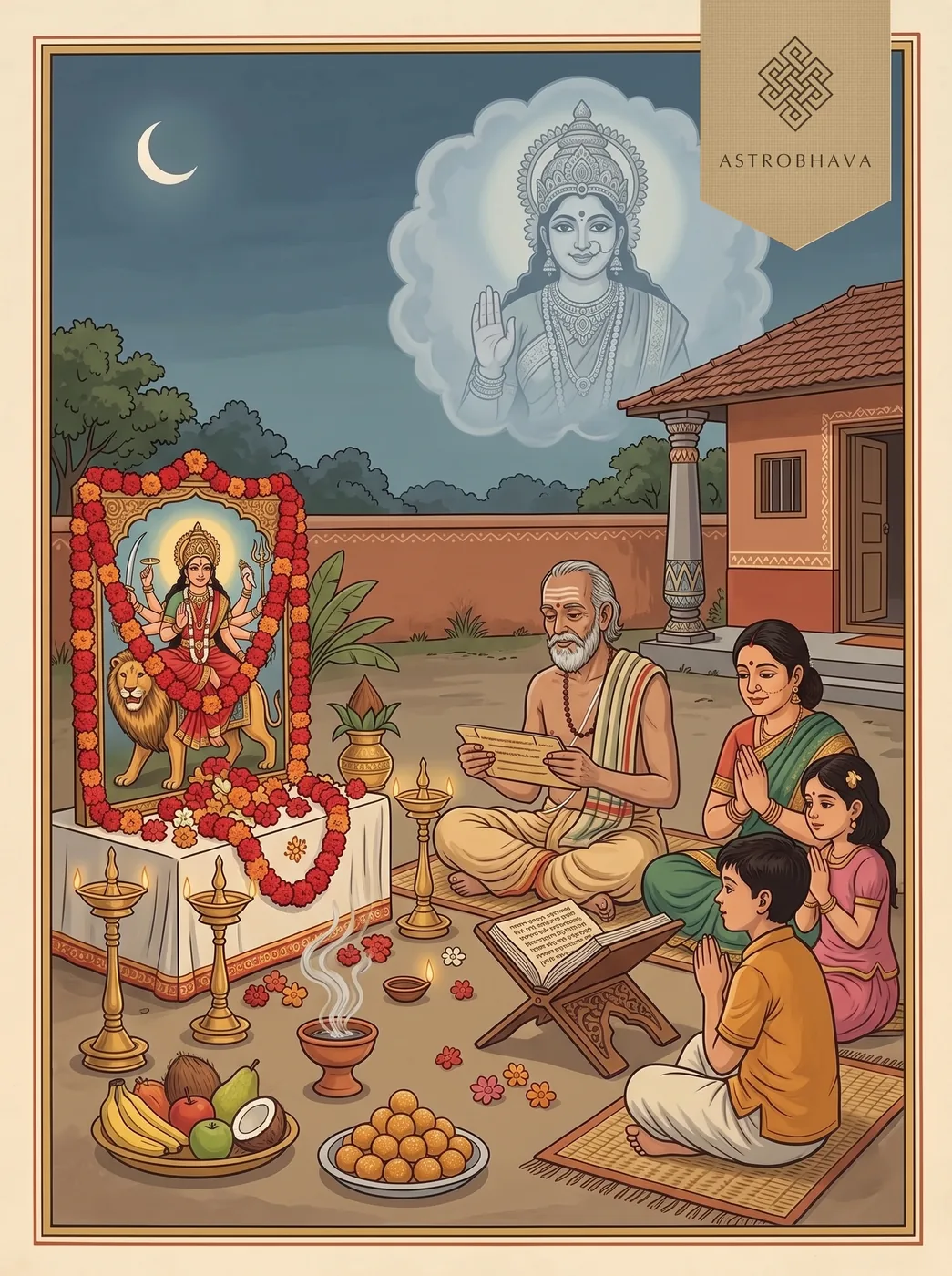
Durga Saptashati Chapter 12
एभिः स्तवैश्च मां नित्यं स्तोष्यते यः समाहितः । तस्याहं सकलां बाधां नाशयिष्याम्यसंशयम् ॥In Devanagari, Tamil, Telugu, Kannada, Malayalam and English — with the meaning of every word, and the one syllable most people pronounce wrongly.
 The Chandi Homa, performed for youBook →
What the Durga Saptashati Chapter 12 is
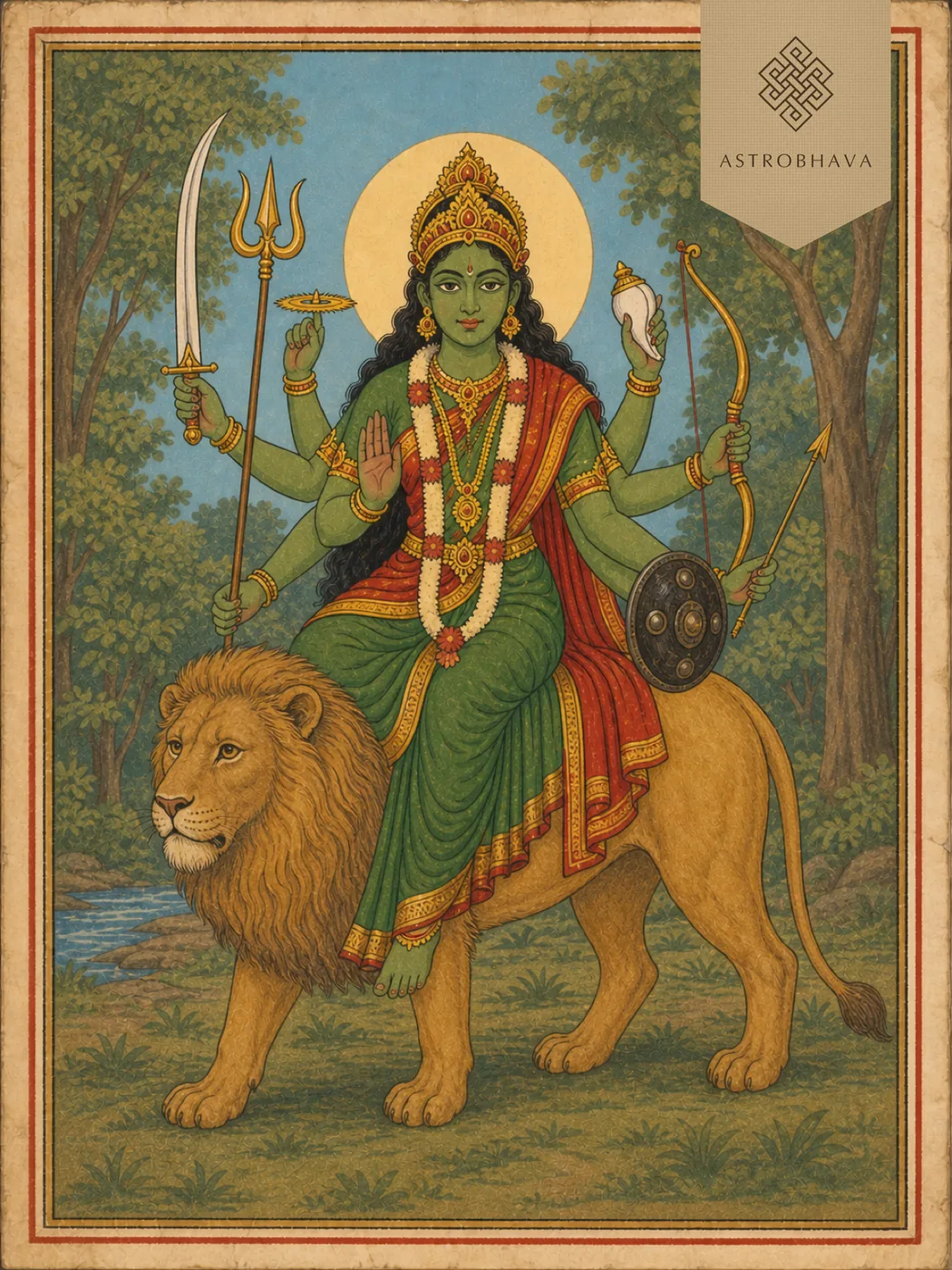
Durga Saptashati Chapter 12, which the colophon of the standard printed edition calls Phalastuti, the praise of the fruit, is the one chapter of the Devi Mahatmya spoken almost entirely by the Goddess herself. It belongs to the last episode, and the dhyana that heads it in the standard printed edition contemplates Durga: three-eyed, bright as a garland of lightning, seated on the lion's shoulder, attended by maidens carrying swords and shields, holding discus, mace, sword, shield, arrows and bow, her nature fire and the moon on her head. In verses 2 to 30 she answers the gods whose hymn closed chapter 11, saying what follows for those who praise her with these hymns and who recite or hear the three stories she names in verse 3: Madhu and Kaitabha, Mahishasura, and Shumbha and Nishumbha. Her list runs from the household to the battlefield: wrongdoing, poverty and separation from those one loves (verse 5), enemies, robbers, fire and flood (verse 6), epidemics and portents (verse 8), bad dreams and planetary afflictions (verses 16 and 17), and a long run of dangers in verses 25 to 29. From verse 32 the sage Medhas takes over again: she vanishes, the gods go back to their offices, and the demons who survived withdraw. Verses 36 to 41 are his summing-up to the king, a short statement of who she is that leads into the boons of chapter 13.
What the Goddess promised before she vanished
The chapter opens where chapter 11 leaves off. The gods have praised the Goddess after Shumbha's fall, and she has foretold the forms she will take in later ages. Now, in verse 2, she says that whoever praises her daily with these hymns, with a collected mind, will have every trouble removed. The text she means is the one the reader is holding: in verse 3 she names its three episodes, and in verse 4 the lunar days for hearing it. Verse 9 makes a claim about a place rather than a person: she will never leave a shrine where the text is properly recited each day. Verses 10 and 11 tie the recitation to offerings, worship, fire rites and festivals, and add that she accepts worship and fire offerings whether the one offering knows the rule or not. Verses 20 to 22 weigh a single hearing of her story against a whole year of offerings, feeding of brahmins, fire rites and gifts, and say it pleases her as much. Verses 25 to 29 build one long sentence of danger: lost in a forest, ringed by a forest fire, cornered by robbers, held by enemies, chased by lions, tigers or wild elephants, sentenced by an angry king, tossed on a boat at sea, under falling weapons, or racked by pain. A person who remembers this story, the text says, is freed from it. Then Medhas resumes in verse 32. Chandika, fierce in valour, vanishes while the gods are still looking at her. They take back their shares of the sacrifice, and the demons left after the deaths of Shumbha and Nishumbha go down to Patala, the netherworld (verses 34 and 35).
The mantra, in six scripts
- एभिः
- ebhiḥ — with these
- स्तवैश्च
- stavaiśca — hymns, and
- मां
- māṃ — me
- नित्यं
- nityaṃ — daily
- स्तोष्यते
- stoṣyate — will praise
- यः
- yaḥ — whoever
- समाहितः
- samāhitaḥ — with a collected mind
- तस्याहं
- tasyāhaṃ — his, I
- सकलां
- sakalāṃ — all
- बाधां
- bādhāṃ — trouble
- नाशयिष्याम्यसंशयम्
- nāśayiṣyāmyasaṃśayam — will destroy, without doubt
Durga Saptashati Chapter 12 lyrics in full
The Durga meditation verse and all 41 numbered lines of the chapter in the standard numbering, where lines 1 and 31 only name the speaker, first the Goddess and then the sage.
All 41 numbered lines, in Sanskrit, Tamil, Telugu, Kannada, Malayalam and English, each with its meaning. Choose a script:
Download the Durga Saptashati Chapter 12 PDFAll 41 numbered lines with their meanings, in Sanskrit. Free to print and keep.
ॐ विद्युद्दामसमप्रभां मृगपतिस्कन्धस्थितां भीषणां कन्याभिः करवालखेटविलसद्धस्ताभिरासेविताम् ।
हस्तैश्चक्रगदासिखेटविशिखांश्चापं गुणं तर्जनीं बिभ्राणामनलात्मिकां शशिधरां दुर्गां त्रिनेत्रां भजे ॥
ௐ வித்யுத்தாமஸமப்ரபாம் ம்ருகபதிஸ்கந்தஸ்திதாம் பீஷணாம் கந்யாபிஃ கரவாலகேடவிலஸத்தஸ்தாபிராஸேவிதாம் ।
ஹஸ்தைஶ்சக்ரகதாஸிகேடவிஶிகாம்ஶ்சாபம் குணம் தர்ஜநீம் பிப்ராணாமநலாத்மிகாம் ஶஶிதராம் துர்காம் த்ரிநேத்ராம் பஜே ॥
ఓం విద్యుద్దామసమప్రభాం మృగపతిస్కన్ధస్థితాం భీషణాం కన్యాభిః కరవాలఖేటవిలసద్ధస్తాభిరాసేవితామ్ ।
హస్తైశ్చక్రగదాసిఖేటవిశిఖాంశ్చాపం గుణం తర్జనీం బిభ్రాణామనలాత్మికాం శశిధరాం దుర్గాం త్రినేత్రాం భజే ॥
ಓಂ ವಿದ್ಯುದ್ದಾಮಸಮಪ್ರಭಾಂ ಮೃಗಪತಿಸ್ಕನ್ಧಸ್ಥಿತಾಂ ಭೀಷಣಾಂ ಕನ್ಯಾಭಿಃ ಕರವಾಲಖೇಟವಿಲಸದ್ಧಸ್ತಾಭಿರಾಸೇವಿತಾಮ್ ।
ಹಸ್ತೈಶ್ಚಕ್ರಗದಾಸಿಖೇಟವಿಶಿಖಾಂಶ್ಚಾಪಂ ಗುಣಂ ತರ್ಜನೀಂ ಬಿಭ್ರಾಣಾಮನಲಾತ್ಮಿಕಾಂ ಶಶಿಧರಾಂ ದುರ್ಗಾಂ ತ್ರಿನೇತ್ರಾಂ ಭಜೇ ॥
ഓം വിദ്യുദ്ദാമസമപ്രഭാം മൃഗപതിസ്കന്ധസ്ഥിതാം ഭീഷണാം കന്യാഭിഃ കരവാലഖേടവിലസദ്ധസ്താഭിരാസേവിതാമ് ।
ഹസ്തൈശ്ചക്രഗദാസിഖേടവിശിഖാംശ്ചാപം ഗുണം തര്ജനീം ബിഭ്രാണാമനലാത്മികാം ശശിധരാം ദുര്ഗാം ത്രിനേത്രാം ഭജേ ॥
oṃ vidyuddāmasamaprabhāṃ mṛgapatiskandhasthitāṃ bhīṣaṇāṃ kanyābhiḥ karavālakheṭavilasaddhastābhirāsevitām |
hastaiścakragadāsikheṭaviśikhāṃścāpaṃ guṇaṃ tarjanīṃ bibhrāṇāmanalātmikāṃ śaśidharāṃ durgāṃ trinetrāṃ bhaje ||
Om. I worship the three-eyed Durga, who shines like a garland of lightning and sits, fearsome, on the shoulder of the lion. Maidens with swords and shields in their hands attend her; in her own hands she holds the discus, mace, sword, shield, arrows, bow, noose and the threatening gesture. Her nature is fire, and she wears the moon on her head.
देव्युवाच
एभिः स्तवैश्च मां नित्यं स्तोष्यते यः समाहितः । तस्याहं सकलां बाधां नाशयिष्याम्यसंशयम् ॥
தேவ்யுவாச
ஏபிஃ ஸ்தவைஶ்ச மாம் நித்யம் ஸ்தோஷ்யதே யஃ ஸமாஹிதஃ । தஸ்யாஹம் ஸகலாம் பாதாம் நாஶயிஷ்யாம்யஸம்ஶயம் ॥
దేవ్యువాచ
ఏభిః స్తవైశ్చ మాం నిత్యం స్తోష్యతే యః సమాహితః । తస్యాహం సకలాం బాధాం నాశయిష్యామ్యసంశయమ్ ॥
ದೇವ್ಯುವಾಚ
ಏಭಿಃ ಸ್ತವೈಶ್ಚ ಮಾಂ ನಿತ್ಯಂ ಸ್ತೋಷ್ಯತೇ ಯಃ ಸಮಾಹಿತಃ । ತಸ್ಯಾಹಂ ಸಕಲಾಂ ಬಾಧಾಂ ನಾಶಯಿಷ್ಯಾಮ್ಯಸಂಶಯಮ್ ॥
ദേവ്യുവാച
ഏഭിഃ സ്തവൈശ്ച മാം നിത്യം സ്തോഷ്യതേ യഃ സമാഹിതഃ । തസ്യാഹം സകലാം ബാധാം നാശയിഷ്യാമ്യസംശയമ് ॥
devyuvāca
ebhiḥ stavaiśca māṃ nityaṃ stoṣyate yaḥ samāhitaḥ | tasyāhaṃ sakalāṃ bādhāṃ nāśayiṣyāmyasaṃśayam ||
The Goddess said: Whoever, with a collected mind, praises me every day with these hymns, all his troubles I will without doubt destroy.
मधुकैटभनाशं च महिषासुरघातनम् ।
कीर्तयिष्यन्ति ये तद्वद् वधं शुम्भनिशुम्भयोः ॥
மதுகைடபநாஶம் ச மஹிஷாஸுரகாதநம் ।
கீர்தயிஷ்யந்தி யே தத்வத் வதம் ஶும்பநிஶும்பயோஃ ॥
మధుకైటభనాశం చ మహిషాసురఘాతనమ్ ।
కీర్తయిష్యన్తి యే తద్వద్ వధం శుమ్భనిశుమ్భయోః ॥
ಮಧುಕೈಟಭನಾಶಂ ಚ ಮಹಿಷಾಸುರಘಾತನಮ್ ।
ಕೀರ್ತಯಿಷ್ಯನ್ತಿ ಯೇ ತದ್ವದ್ ವಧಂ ಶುಮ್ಭನಿಶುಮ್ಭಯೋಃ ॥
മധുകൈടഭനാശം ച മഹിഷാസുരഘാതനമ് ।
കീര്തയിഷ്യന്തി യേ തദ്വദ് വധം ശുമ്ഭനിശുമ്ഭയോഃ ॥
madhukaiṭabhanāśaṃ ca mahiṣāsuraghātanam |
kīrtayiṣyanti ye tadvad vadhaṃ śumbhaniśumbhayoḥ ||
Those who will recite the destruction of Madhu and Kaitabha, the slaying of Mahishasura, and likewise the killing of Shumbha and Nishumbha,
अष्टम्यां च चतुर्दश्यां नवम्यां चैकचेतसः ।
श्रोष्यन्ति चैव ये भक्त्या मम माहात्म्यमुत्तमम् ॥
அஷ்டம்யாம் ச சதுர்தஶ்யாம் நவம்யாம் சைகசேதஸஃ ।
ஶ்ரோஷ்யந்தி சைவ யே பக்த்யா மம மாஹாத்ம்யமுத்தமம் ॥
అష్టమ్యాం చ చతుర్దశ్యాం నవమ్యాం చైకచేతసః ।
శ్రోష్యన్తి చైవ యే భక్త్యా మమ మాహాత్మ్యముత్తమమ్ ॥
ಅಷ್ಟಮ್ಯಾಂ ಚ ಚತುರ್ದಶ್ಯಾಂ ನವಮ್ಯಾಂ ಚೈಕಚೇತಸಃ ।
ಶ್ರೋಷ್ಯನ್ತಿ ಚೈವ ಯೇ ಭಕ್ತ್ಯಾ ಮಮ ಮಾಹಾತ್ಮ್ಯಮುತ್ತಮಮ್ ॥
അഷ്ടമ്യാം ച ചതുര്ദശ്യാം നവമ്യാം ചൈകചേതസഃ ।
ശ്രോഷ്യന്തി ചൈവ യേ ഭക്ത്യാ മമ മാഹാത്മ്യമുത്തമമ് ॥
aṣṭamyāṃ ca caturdaśyāṃ navamyāṃ caikacetasaḥ |
śroṣyanti caiva ye bhaktyā mama māhātmyamuttamam ||
and those who, with one-pointed mind, will listen with devotion to this supreme account of my greatness on the eighth, the fourteenth and the ninth lunar days,
न तेषां दुष्कृतं किञ्चिद् दुष्कृतोत्था न चापदः ।
भविष्यति न दारिद्र्यं न चैवेष्टवियोजनम् ॥
ந தேஷாம் துஷ்க்ருதம் கிஞ்சித் துஷ்க்ருதோத்தா ந சாபதஃ ।
பவிஷ்யதி ந தாரித்ர்யம் ந சைவேஷ்டவியோஜநம் ॥
న తేషాం దుష్కృతం కిఞ్చిద్ దుష్కృతోత్థా న చాపదః ।
భవిష్యతి న దారిద్ర్యం న చైవేష్టవియోజనమ్ ॥
ನ ತೇಷಾಂ ದುಷ್ಕೃತಂ ಕಿಞ್ಚಿದ್ ದುಷ್ಕೃತೋತ್ಥಾ ನ ಚಾಪದಃ ।
ಭವಿಷ್ಯತಿ ನ ದಾರಿದ್ರ್ಯಂ ನ ಚೈವೇಷ್ಟವಿಯೋಜನಮ್ ॥
ന തേഷാം ദുഷ്കൃതം കിഞ്ചിദ് ദുഷ്കൃതോത്ഥാ ന ചാപദഃ ।
ഭവിഷ്യതി ന ദാരിദ്ര്യം ന ചൈവേഷ്ടവിയോജനമ് ॥
na teṣāṃ duṣkṛtaṃ kiñcid duṣkṛtotthā na cāpadaḥ |
bhaviṣyati na dāridryaṃ na caiveṣṭaviyojanam ||
for them there will be no wrongdoing at all, and no misfortunes born of wrongdoing; there will be no poverty, and no separation from those they love.
शत्रुतो न भयं तस्य दस्युतो वा न राजतः ।
न शस्त्रानलतोयौघात्कदाचित्सम्भविष्यति ॥
ஶத்ருதோ ந பயம் தஸ்ய தஸ்யுதோ வா ந ராஜதஃ ।
ந ஶஸ்த்ராநலதோயௌகாத்கதாசித்ஸம்பவிஷ்யதி ॥
శత్రుతో న భయం తస్య దస్యుతో వా న రాజతః ।
న శస్త్రానలతోయౌఘాత్కదాచిత్సమ్భవిష్యతి ॥
ಶತ್ರುತೋ ನ ಭಯಂ ತಸ್ಯ ದಸ್ಯುತೋ ವಾ ನ ರಾಜತಃ ।
ನ ಶಸ್ತ್ರಾನಲತೋಯೌಘಾತ್ಕದಾಚಿತ್ಸಮ್ಭವಿಷ್ಯತಿ ॥
ശത്രുതോ ന ഭയം തസ്യ ദസ്യുതോ വാ ന രാജതഃ ।
ന ശസ്ത്രാനലതോയൌഘാത്കദാചിത്സമ്ഭവിഷ്യതി ॥
śatruto na bhayaṃ tasya dasyuto vā na rājataḥ |
na śastrānalatoyaughātkadācitsambhaviṣyati ||
Such a person will never have fear from an enemy, from robbers or from the king, nor from weapons, fire or floods of water.
तस्मान्ममैतन्माहात्म्यं पठितव्यं समाहितैः ।
श्रोतव्यं च सदा भक्त्या परं स्वस्त्ययनं हि तत् ॥
தஸ்மாந்மமைதந்மாஹாத்ம்யம் படிதவ்யம் ஸமாஹிதைஃ ।
ஶ்ரோதவ்யம் ச ஸதா பக்த்யா பரம் ஸ்வஸ்த்யயநம் ஹி தத் ॥
తస్మాన్మమైతన్మాహాత్మ్యం పఠితవ్యం సమాహితైః ।
శ్రోతవ్యం చ సదా భక్త్యా పరం స్వస్త్యయనం హి తత్ ॥
ತಸ್ಮಾನ್ಮಮೈತನ್ಮಾಹಾತ್ಮ್ಯಂ ಪಠಿತವ್ಯಂ ಸಮಾಹಿತೈಃ ।
ಶ್ರೋತವ್ಯಂ ಚ ಸದಾ ಭಕ್ತ್ಯಾ ಪರಂ ಸ್ವಸ್ತ್ಯಯನಂ ಹಿ ತತ್ ॥
തസ്മാന്മമൈതന്മാഹാത്മ്യം പഠിതവ്യം സമാഹിതൈഃ ।
ശ്രോതവ്യം ച സദാ ഭക്ത്യാ പരം സ്വസ്ത്യയനം ഹി തത് ॥
tasmānmamaitanmāhātmyaṃ paṭhitavyaṃ samāhitaiḥ |
śrotavyaṃ ca sadā bhaktyā paraṃ svastyayanaṃ hi tat ||
Therefore this account of my greatness should be read by those with collected minds, and always listened to with devotion, for it is the highest means of well-being.
उपसर्गानशेषांस्तु महामारीसमुद्भवान् ।
तथा त्रिविधमुत्पातं माहात्म्यं शमयेन्मम ॥
உபஸர்காநஶேஷாம்ஸ்து மஹாமாரீஸமுத்பவாந் ।
ததா த்ரிவிதமுத்பாதம் மாஹாத்ம்யம் ஶமயேந்மம ॥
ఉపసర్గానశేషాంస్తు మహామారీసముద్భవాన్ ।
తథా త్రివిధముత్పాతం మాహాత్మ్యం శమయేన్మమ ॥
ಉಪಸರ್ಗಾನಶೇಷಾಂಸ್ತು ಮಹಾಮಾರೀಸಮುದ್ಭವಾನ್ ।
ತಥಾ ತ್ರಿವಿಧಮುತ್ಪಾತಂ ಮಾಹಾತ್ಮ್ಯಂ ಶಮಯೇನ್ಮಮ ॥
ഉപസര്ഗാനശേഷാംസ്തു മഹാമാരീസമുദ്ഭവാന് ।
തഥാ ത്രിവിധമുത്പാതം മാഹാത്മ്യം ശമയേന്മമ ॥
upasargānaśeṣāṃstu mahāmārīsamudbhavān |
tathā trividhamutpātaṃ māhātmyaṃ śamayenmama ||
This account of my greatness calms all the calamities that arise from great epidemics, and also the three kinds of portents.
यत्रैतत्पठ्यते सम्यङ्नित्यमायतने मम ।
सदा न तद्विमोक्ष्यामि सांनिध्यं तत्र मे स्थितम् ॥
யத்ரைதத்பட்யதே ஸம்யங்நித்யமாயதநே மம ।
ஸதா ந தத்விமோக்ஷ்யாமி ஸாம்நித்யம் தத்ர மே ஸ்திதம் ॥
యత్రైతత్పఠ్యతే సమ్యఙ్నిత్యమాయతనే మమ ।
సదా న తద్విమోక్ష్యామి సాంనిధ్యం తత్ర మే స్థితమ్ ॥
ಯತ್ರೈತತ್ಪಠ್ಯತೇ ಸಮ್ಯಙ್ನಿತ್ಯಮಾಯತನೇ ಮಮ ।
ಸದಾ ನ ತದ್ವಿಮೋಕ್ಷ್ಯಾಮಿ ಸಾಂನಿಧ್ಯಂ ತತ್ರ ಮೇ ಸ್ಥಿತಮ್ ॥
യത്രൈതത്പഠ്യതേ സമ്യങ്നിത്യമായതനേ മമ ।
സദാ ന തദ്വിമോക്ഷ്യാമി സാംനിധ്യം തത്ര മേ സ്ഥിതമ് ॥
yatraitatpaṭhyate samyaṅnityamāyatane mama |
sadā na tadvimokṣyāmi sāṃnidhyaṃ tatra me sthitam ||
The shrine of mine where this is properly recited every day I will never leave; my presence remains fixed there.
बलिप्रदाने पूजायामग्निकार्ये महोत्सवे ।
सर्वं ममैतच्चरितमुच्चार्यं श्राव्यमेव च ॥
பலிப்ரதாநே பூஜாயாமக்நிகார்யே மஹோத்ஸவே ।
ஸர்வம் மமைதச்சரிதமுச்சார்யம் ஶ்ராவ்யமேவ ச ॥
బలిప్రదానే పూజాయామగ్నికార్యే మహోత్సవే ।
సర్వం మమైతచ్చరితముచ్చార్యం శ్రావ్యమేవ చ ॥
ಬಲಿಪ್ರದಾನೇ ಪೂಜಾಯಾಮಗ್ನಿಕಾರ್ಯೇ ಮಹೋತ್ಸವೇ ।
ಸರ್ವಂ ಮಮೈತಚ್ಚರಿತಮುಚ್ಚಾರ್ಯಂ ಶ್ರಾವ್ಯಮೇವ ಚ ॥
ബലിപ്രദാനേ പൂജായാമഗ്നികാര്യേ മഹോത്സവേ ।
സര്വം മമൈതച്ചരിതമുച്ചാര്യം ശ്രാവ്യമേവ ച ॥
balipradāne pūjāyāmagnikārye mahotsave |
sarvaṃ mamaitaccaritamuccāryaṃ śrāvyameva ca ||
At the giving of offerings, in worship, in fire rites and at great festivals, this whole story of mine should be recited and made to be heard.
जानताऽजानता वापि बलिपूजां तथा कृताम् ।
प्रतीच्छिष्याम्यहं प्रीत्या वह्निहोमं तथा कृतम् ॥
ஜாநதாஜாநதா வாபி பலிபூஜாம் ததா க்ருதாம் ।
ப்ரதீச்சிஷ்யாம்யஹம் ப்ரீத்யா வஹ்நிஹோமம் ததா க்ருதம் ॥
జానతాఽజానతా వాపి బలిపూజాం తథా కృతామ్ ।
ప్రతీచ్ఛిష్యామ్యహం ప్రీత్యా వహ్నిహోమం తథా కృతమ్ ॥
ಜಾನತಾಽಜಾನತಾ ವಾಪಿ ಬಲಿಪೂಜಾಂ ತಥಾ ಕೃತಾಮ್ ।
ಪ್ರತೀಚ್ಛಿಷ್ಯಾಮ್ಯಹಂ ಪ್ರೀತ್ಯಾ ವಹ್ನಿಹೋಮಂ ತಥಾ ಕೃತಮ್ ॥
ജാനതാഽജാനതാ വാപി ബലിപൂജാം തഥാ കൃതാമ് ।
പ്രതീച്ഛിഷ്യാമ്യഹം പ്രീത്യാ വഹ്നിഹോമം തഥാ കൃതമ് ॥
jānatā'jānatā vāpi balipūjāṃ tathā kṛtām |
pratīcchiṣyāmyahaṃ prītyā vahnihomaṃ tathā kṛtam ||
Whether the offering and worship are done knowing the rule or not knowing it, I will accept them with love, and the fire offering made in the same way.
शरत्काले महापूजा क्रियते या च वार्षिकी ।
तस्यां ममैतन्माहात्म्यं श्रुत्वा भक्तिसमन्वितः ॥
ஶரத்காலே மஹாபூஜா க்ரியதே யா ச வார்ஷிகீ ।
தஸ்யாம் மமைதந்மாஹாத்ம்யம் ஶ்ருத்வா பக்திஸமந்விதஃ ॥
శరత్కాలే మహాపూజా క్రియతే యా చ వార్షికీ ।
తస్యాం మమైతన్మాహాత్మ్యం శ్రుత్వా భక్తిసమన్వితః ॥
ಶರತ್ಕಾಲೇ ಮಹಾಪೂಜಾ ಕ್ರಿಯತೇ ಯಾ ಚ ವಾರ್ಷಿಕೀ ।
ತಸ್ಯಾಂ ಮಮೈತನ್ಮಾಹಾತ್ಮ್ಯಂ ಶ್ರುತ್ವಾ ಭಕ್ತಿಸಮನ್ವಿತಃ ॥
ശരത്കാലേ മഹാപൂജാ ക്രിയതേ യാ ച വാര്ഷികീ ।
തസ്യാം മമൈതന്മാഹാത്മ്യം ശ്രുത്വാ ഭക്തിസമന്വിതഃ ॥
śaratkāle mahāpūjā kriyate yā ca vārṣikī |
tasyāṃ mamaitanmāhātmyaṃ śrutvā bhaktisamanvitaḥ ||
At the great annual worship performed in the autumn season, whoever hears this account of my greatness with devotion
सर्वाबाधाविनिर्मुक्तो धनधान्यसुतान्वितः ।
मनुष्यो मत्प्रसादेन भविष्यति न संशयः ॥
ஸர்வாபாதாவிநிர்முக்தோ தநதாந்யஸுதாந்விதஃ ।
மநுஷ்யோ மத்ப்ரஸாதேந பவிஷ்யதி ந ஸம்ஶயஃ ॥
సర్వాబాధావినిర్ముక్తో ధనధాన్యసుతాన్వితః ।
మనుష్యో మత్ప్రసాదేన భవిష్యతి న సంశయః ॥
ಸರ್ವಾಬಾಧಾವಿನಿರ್ಮುಕ್ತೋ ಧನಧಾನ್ಯಸುತಾನ್ವಿತಃ ।
ಮನುಷ್ಯೋ ಮತ್ಪ್ರಸಾದೇನ ಭವಿಷ್ಯತಿ ನ ಸಂಶಯಃ ॥
സര്വാബാധാവിനിര്മുക്തോ ധനധാന്യസുതാന്വിതഃ ।
മനുഷ്യോ മത്പ്രസാദേന ഭവിഷ്യതി ന സംശയഃ ॥
sarvābādhāvinirmukto dhanadhānyasutānvitaḥ |
manuṣyo matprasādena bhaviṣyati na saṃśayaḥ ||
will, by my grace, be freed from all troubles and blessed with wealth, grain and children; of this there is no doubt.
श्रुत्वा ममैतन्माहात्म्यं तथा चोत्पत्तयः शुभाः ।
पराक्रमं च युद्धेषु जायते निर्भयः पुमान् ॥
ஶ்ருத்வா மமைதந்மாஹாத்ம்யம் ததா சோத்பத்தயஃ ஶுபாஃ ।
பராக்ரமம் ச யுத்தேஷு ஜாயதே நிர்பயஃ புமாந் ॥
శ్రుత్వా మమైతన్మాహాత్మ్యం తథా చోత్పత్తయః శుభాః ।
పరాక్రమం చ యుద్ధేషు జాయతే నిర్భయః పుమాన్ ॥
ಶ್ರುತ್ವಾ ಮಮೈತನ್ಮಾಹಾತ್ಮ್ಯಂ ತಥಾ ಚೋತ್ಪತ್ತಯಃ ಶುಭಾಃ ।
ಪರಾಕ್ರಮಂ ಚ ಯುದ್ಧೇಷು ಜಾಯತೇ ನಿರ್ಭಯಃ ಪುಮಾನ್ ॥
ശ്രുത്വാ മമൈതന്മാഹാത്മ്യം തഥാ ചോത്പത്തയഃ ശുഭാഃ ।
പരാക്രമം ച യുദ്ധേഷു ജായതേ നിര്ഭയഃ പുമാന് ॥
śrutvā mamaitanmāhātmyaṃ tathā cotpattayaḥ śubhāḥ |
parākramaṃ ca yuddheṣu jāyate nirbhayaḥ pumān ||
Hearing this account of my greatness, the auspicious stories of my appearances, and my valour in battles, a man becomes fearless.
रिपवः संक्षयं यान्ति कल्याणं चोपपद्यते ।
नन्दते च कुलं पुंसां माहात्म्यं मम शृण्वताम् ॥
ரிபவஃ ஸம்க்ஷயம் யாந்தி கல்யாணம் சோபபத்யதே ।
நந்ததே ச குலம் பும்ஸாம் மாஹாத்ம்யம் மம ஶ்ருண்வதாம் ॥
రిపవః సంక్షయం యాన్తి కల్యాణం చోపపద్యతే ।
నన్దతే చ కులం పుంసాం మాహాత్మ్యం మమ శృణ్వతామ్ ॥
ರಿಪವಃ ಸಂಕ್ಷಯಂ ಯಾನ್ತಿ ಕಲ್ಯಾಣಂ ಚೋಪಪದ್ಯತೇ ।
ನನ್ದತೇ ಚ ಕುಲಂ ಪುಂಸಾಂ ಮಾಹಾತ್ಮ್ಯಂ ಮಮ ಶೃಣ್ವತಾಮ್ ॥
രിപവഃ സംക്ഷയം യാന്തി കല്യാണം ചോപപദ്യതേ ।
നന്ദതേ ച കുലം പുംസാം മാഹാത്മ്യം മമ ശൃണ്വതാമ് ॥
ripavaḥ saṃkṣayaṃ yānti kalyāṇaṃ copapadyate |
nandate ca kulaṃ puṃsāṃ māhātmyaṃ mama śṛṇvatām ||
For those who listen to my greatness, enemies perish, good fortune comes, and their family rejoices.
शान्तिकर्मणि सर्वत्र तथा दुःस्वप्नदर्शने ।
ग्रहपीडासु चोग्रासु माहात्म्यं शृणुयान्मम ॥
ஶாந்திகர்மணி ஸர்வத்ர ததா துஃஸ்வப்நதர்ஶநே ।
க்ரஹபீடாஸு சோக்ராஸு மாஹாத்ம்யம் ஶ்ருணுயாந்மம ॥
శాన్తికర్మణి సర్వత్ర తథా దుఃస్వప్నదర్శనే ।
గ్రహపీడాసు చోగ్రాసు మాహాత్మ్యం శృణుయాన్మమ ॥
ಶಾನ್ತಿಕರ್ಮಣಿ ಸರ್ವತ್ರ ತಥಾ ದುಃಸ್ವಪ್ನದರ್ಶನೇ ।
ಗ್ರಹಪೀಡಾಸು ಚೋಗ್ರಾಸು ಮಾಹಾತ್ಮ್ಯಂ ಶೃಣುಯಾನ್ಮಮ ॥
ശാന്തികര്മണി സര്വത്ര തഥാ ദുഃസ്വപ്നദര്ശനേ ।
ഗ്രഹപീഡാസു ചോഗ്രാസു മാഹാത്മ്യം ശൃണുയാന്മമ ॥
śāntikarmaṇi sarvatra tathā duḥsvapnadarśane |
grahapīḍāsu cogrāsu māhātmyaṃ śṛṇuyānmama ||
In every rite for peace, after seeing a bad dream, and in severe afflictions from the planets, one should listen to my greatness.
उपसर्गाः शमं यान्ति ग्रहपीडाश्च दारुणाः ।
दुःस्वप्नं च नृभिर्दृष्टं सुस्वप्नमुपजायते ॥
உபஸர்காஃ ஶமம் யாந்தி க்ரஹபீடாஶ்ச தாருணாஃ ।
துஃஸ்வப்நம் ச ந்ருபிர்த்ருஷ்டம் ஸுஸ்வப்நமுபஜாயதே ॥
ఉపసర్గాః శమం యాన్తి గ్రహపీడాశ్చ దారుణాః ।
దుఃస్వప్నం చ నృభిర్దృష్టం సుస్వప్నముపజాయతే ॥
ಉಪಸರ್ಗಾಃ ಶಮಂ ಯಾನ್ತಿ ಗ್ರಹಪೀಡಾಶ್ಚ ದಾರುಣಾಃ ।
ದುಃಸ್ವಪ್ನಂ ಚ ನೃಭಿರ್ದೃಷ್ಟಂ ಸುಸ್ವಪ್ನಮುಪಜಾಯತೇ ॥
ഉപസര്ഗാഃ ശമം യാന്തി ഗ്രഹപീഡാശ്ച ദാരുണാഃ ।
ദുഃസ്വപ്നം ച നൃഭിര്ദൃഷ്ടം സുസ്വപ്നമുപജായതേ ॥
upasargāḥ śamaṃ yānti grahapīḍāśca dāruṇāḥ |
duḥsvapnaṃ ca nṛbhirdṛṣṭaṃ susvapnamupajāyate ||
The verse says that calamities and harsh planetary afflictions subside, and a bad dream that people have seen turns into a good dream.
बालग्रहाभिभूतानां बालानां शान्तिकारकम् ।
संघातभेदे च नृणां मैत्रीकरणमुत्तमम् ॥
பாலக்ரஹாபிபூதாநாம் பாலாநாம் ஶாந்திகாரகம் ।
ஸம்காதபேதே ச ந்ருணாம் மைத்ரீகரணமுத்தமம் ॥
బాలగ్రహాభిభూతానాం బాలానాం శాన్తికారకమ్ ।
సంఘాతభేదే చ నృణాం మైత్రీకరణముత్తమమ్ ॥
ಬಾಲಗ್ರಹಾಭಿಭೂತಾನಾಂ ಬಾಲಾನಾಂ ಶಾನ್ತಿಕಾರಕಮ್ ।
ಸಂಘಾತಭೇದೇ ಚ ನೃಣಾಂ ಮೈತ್ರೀಕರಣಮುತ್ತಮಮ್ ॥
ബാലഗ്രഹാഭിഭൂതാനാം ബാലാനാം ശാന്തികാരകമ് ।
സംഘാതഭേദേ ച നൃണാം മൈത്രീകരണമുത്തമമ് ॥
bālagrahābhibhūtānāṃ bālānāṃ śāntikārakam |
saṃghātabhede ca nṛṇāṃ maitrīkaraṇamuttamam ||
It brings peace to children seized by the spirits that afflict children, and when people's unity is broken it is the best means of restoring friendship.
दुर्वृत्तानामशेषाणां बलहानिकरं परम् ।
रक्षोभूतपिशाचानां पठनादेव नाशनम् ॥
துர்வ்ருத்தாநாமஶேஷாணாம் பலஹாநிகரம் பரம் ।
ரக்ஷோபூதபிஶாசாநாம் படநாதேவ நாஶநம் ॥
దుర్వృత్తానామశేషాణాం బలహానికరం పరమ్ ।
రక్షోభూతపిశాచానాం పఠనాదేవ నాశనమ్ ॥
ದುರ್ವೃತ್ತಾನಾಮಶೇಷಾಣಾಂ ಬಲಹಾನಿಕರಂ ಪರಮ್ ।
ರಕ್ಷೋಭೂತಪಿಶಾಚಾನಾಂ ಪಠನಾದೇವ ನಾಶನಮ್ ॥
ദുര്വൃത്താനാമശേഷാണാം ബലഹാനികരം പരമ് ।
രക്ഷോഭൂതപിശാചാനാം പഠനാദേവ നാശനമ് ॥
durvṛttānāmaśeṣāṇāṃ balahānikaraṃ param |
rakṣobhūtapiśācānāṃ paṭhanādeva nāśanam ||
It is the supreme means of taking away the strength of all the wicked; by its mere recitation demons, ghosts and goblins are destroyed.
सर्वं ममैतन्माहात्म्यं मम सन्निधिकारकम् ।
पशुपुष्पार्घ्यधूपैश्च गन्धदीपैस्तथोत्तमैः ॥
ஸர்வம் மமைதந்மாஹாத்ம்யம் மம ஸந்நிதிகாரகம் ।
பஶுபுஷ்பார்க்யதூபைஶ்ச கந்ததீபைஸ்ததோத்தமைஃ ॥
సర్వం మమైతన్మాహాత్మ్యం మమ సన్నిధికారకమ్ ।
పశుపుష్పార్ఘ్యధూపైశ్చ గన్ధదీపైస్తథోత్తమైః ॥
ಸರ್ವಂ ಮಮೈತನ್ಮಾಹಾತ್ಮ್ಯಂ ಮಮ ಸನ್ನಿಧಿಕಾರಕಮ್ ।
ಪಶುಪುಷ್ಪಾರ್ಘ್ಯಧೂಪೈಶ್ಚ ಗನ್ಧದೀಪೈಸ್ತಥೋತ್ತಮೈಃ ॥
സര്വം മമൈതന്മാഹാത്മ്യം മമ സന്നിധികാരകമ് ।
പശുപുഷ്പാര്ഘ്യധൂപൈശ്ച ഗന്ധദീപൈസ്തഥോത്തമൈഃ ॥
sarvaṃ mamaitanmāhātmyaṃ mama sannidhikārakam |
paśupuṣpārghyadhūpaiśca gandhadīpaistathottamaiḥ ||
This whole account of my greatness brings my presence near. With animal offerings, flowers, water offerings and incense, with fine perfumes and lamps,
विप्राणां भोजनैर्होमैः प्रोक्षणीयैरहर्निशम् ।
अन्यैश्च विविधैर्भोगैः प्रदानैर्वत्सरेण या ॥
விப்ராணாம் போஜநைர்ஹோமைஃ ப்ரோக்ஷணீயைரஹர்நிஶம் ।
அந்யைஶ்ச விவிதைர்போகைஃ ப்ரதாநைர்வத்ஸரேண யா ॥
విప్రాణాం భోజనైర్హోమైః ప్రోక్షణీయైరహర్నిశమ్ ।
అన్యైశ్చ వివిధైర్భోగైః ప్రదానైర్వత్సరేణ యా ॥
ವಿಪ್ರಾಣಾಂ ಭೋಜನೈರ್ಹೋಮೈಃ ಪ್ರೋಕ್ಷಣೀಯೈರಹರ್ನಿಶಮ್ ।
ಅನ್ಯೈಶ್ಚ ವಿವಿಧೈರ್ಭೋಗೈಃ ಪ್ರದಾನೈರ್ವತ್ಸರೇಣ ಯಾ ॥
വിപ്രാണാം ഭോജനൈര്ഹോമൈഃ പ്രോക്ഷണീയൈരഹര്നിശമ് ।
അന്യൈശ്ച വിവിധൈര്ഭോഗൈഃ പ്രദാനൈര്വത്സരേണ യാ ॥
viprāṇāṃ bhojanairhomaiḥ prokṣaṇīyairaharniśam |
anyaiśca vividhairbhogaiḥ pradānairvatsareṇa yā ||
by feeding brahmins, by fire offerings, by sprinkling rites day and night, by various other enjoyments offered and by gifts for a whole year, the pleasure
प्रीतिर्मे क्रियते सास्मिन् सकृत्सुचरिते श्रुते ।
श्रुतं हरति पापानि तथाऽऽरोग्यं प्रयच्छति ॥
ப்ரீதிர்மே க்ரியதே ஸாஸ்மிந் ஸக்ருத்ஸுசரிதே ஶ்ருதே ।
ஶ்ருதம் ஹரதி பாபாநி ததாரோக்யம் ப்ரயச்சதி ॥
ప్రీతిర్మే క్రియతే సాస్మిన్ సకృత్సుచరితే శ్రుతే ।
శ్రుతం హరతి పాపాని తథాఽఽరోగ్యం ప్రయచ్ఛతి ॥
ಪ್ರೀತಿರ್ಮೇ ಕ್ರಿಯತೇ ಸಾಸ್ಮಿನ್ ಸಕೃತ್ಸುಚರಿತೇ ಶ್ರುತೇ ।
ಶ್ರುತಂ ಹರತಿ ಪಾಪಾನಿ ತಥಾಽಽರೋಗ್ಯಂ ಪ್ರಯಚ್ಛತಿ ॥
പ്രീതിര്മേ ക്രിയതേ സാസ്മിന് സകൃത്സുചരിതേ ശ്രുതേ ।
ശ്രുതം ഹരതി പാപാനി തഥാഽഽരോഗ്യം പ്രയച്ഛതി ॥
prītirme kriyate sāsmin sakṛtsucarite śrute |
śrutaṃ harati pāpāni tathā'rogyaṃ prayacchati ||
that is given to me is given when this excellent story is heard just once. When heard, it takes away sins and grants good health.
रक्षां करोति भूतेभ्यो जन्मनां कीर्तनं मम ।
युद्धेषु चरितं यन्मे दुष्टदैत्यनिबर्हणम् ॥
ரக்ஷாம் கரோதி பூதேப்யோ ஜந்மநாம் கீர்தநம் மம ।
யுத்தேஷு சரிதம் யந்மே துஷ்டதைத்யநிபர்ஹணம் ॥
రక్షాం కరోతి భూతేభ్యో జన్మనాం కీర్తనం మమ ।
యుద్ధేషు చరితం యన్మే దుష్టదైత్యనిబర్హణమ్ ॥
ರಕ್ಷಾಂ ಕರೋತಿ ಭೂತೇಭ್ಯೋ ಜನ್ಮನಾಂ ಕೀರ್ತನಂ ಮಮ ।
ಯುದ್ಧೇಷು ಚರಿತಂ ಯನ್ಮೇ ದುಷ್ಟದೈತ್ಯನಿಬರ್ಹಣಮ್ ॥
രക്ഷാം കരോതി ഭൂതേഭ്യോ ജന്മനാം കീര്തനം മമ ।
യുദ്ധേഷു ചരിതം യന്മേ ദുഷ്ടദൈത്യനിബര്ഹണമ് ॥
rakṣāṃ karoti bhūtebhyo janmanāṃ kīrtanaṃ mama |
yuddheṣu caritaṃ yanme duṣṭadaityanibarhaṇam ||
The telling of my births gives protection from evil beings. My deeds in battle, the slaying of the wicked demons,
तस्मिञ्छ्रुते वैरिकृतं भयं पुंसां न जायते ।
युष्माभिः स्तुतयो याश्च याश्च ब्रह्मर्षिभिः कृताः ॥
தஸ்மிஞ்ச்ருதே வைரிக்ருதம் பயம் பும்ஸாம் ந ஜாயதே ।
யுஷ்மாபிஃ ஸ்துதயோ யாஶ்ச யாஶ்ச ப்ரஹ்மர்ஷிபிஃ க்ருதாஃ ॥
తస్మిఞ్ఛ్రుతే వైరికృతం భయం పుంసాం న జాయతే ।
యుష్మాభిః స్తుతయో యాశ్చ యాశ్చ బ్రహ్మర్షిభిః కృతాః ॥
ತಸ್ಮಿಞ್ಛ್ರುತೇ ವೈರಿಕೃತಂ ಭಯಂ ಪುಂಸಾಂ ನ ಜಾಯತೇ ।
ಯುಷ್ಮಾಭಿಃ ಸ್ತುತಯೋ ಯಾಶ್ಚ ಯಾಶ್ಚ ಬ್ರಹ್ಮರ್ಷಿಭಿಃ ಕೃತಾಃ ॥
തസ്മിഞ്ഛ്രുതേ വൈരികൃതം ഭയം പുംസാം ന ജായതേ ।
യുഷ്മാഭിഃ സ്തുതയോ യാശ്ച യാശ്ച ബ്രഹ്മര്ഷിഭിഃ കൃതാഃ ॥
tasmiñchrute vairikṛtaṃ bhayaṃ puṃsāṃ na jāyate |
yuṣmābhiḥ stutayo yāśca yāśca brahmarṣibhiḥ kṛtāḥ ||
when heard, keep fear caused by enemies from arising in people. The hymns that you gods have made, and those made by the Brahmin sages
ब्रह्मणा च कृतास्तास्तु प्रयच्छन्ति शुभां मतिम् ।
अरण्ये प्रान्तरे वापि दावाग्निपरिवारितः ॥
ப்ரஹ்மணா ச க்ருதாஸ்தாஸ்து ப்ரயச்சந்தி ஶுபாம் மதிம் ।
அரண்யே ப்ராந்தரே வாபி தாவாக்நிபரிவாரிதஃ ॥
బ్రహ్మణా చ కృతాస్తాస్తు ప్రయచ్ఛన్తి శుభాం మతిమ్ ।
అరణ్యే ప్రాన్తరే వాపి దావాగ్నిపరివారితః ॥
ಬ್ರಹ್ಮಣಾ ಚ ಕೃತಾಸ್ತಾಸ್ತು ಪ್ರಯಚ್ಛನ್ತಿ ಶುಭಾಂ ಮತಿಮ್ ।
ಅರಣ್ಯೇ ಪ್ರಾನ್ತರೇ ವಾಪಿ ದಾವಾಗ್ನಿಪರಿವಾರಿತಃ ॥
ബ്രഹ്മണാ ച കൃതാസ്താസ്തു പ്രയച്ഛന്തി ശുഭാം മതിമ് ।
അരണ്യേ പ്രാന്തരേ വാപി ദാവാഗ്നിപരിവാരിതഃ ॥
brahmaṇā ca kṛtāstāstu prayacchanti śubhāṃ matim |
araṇye prāntare vāpi dāvāgniparivāritaḥ ||
and by Brahma, grant an auspicious mind. In a forest, or on a lonely road, or when surrounded by a forest fire,
दस्युभिर्वा वृतः शून्ये गृहीतो वापि शत्रुभिः ।
सिंहव्याघ्रानुयातो वा वने वा वनहस्तिभिः ॥
தஸ்யுபிர்வா வ்ருதஃ ஶூந்யே க்ருஹீதோ வாபி ஶத்ருபிஃ ।
ஸிம்ஹவ்யாக்ராநுயாதோ வா வநே வா வநஹஸ்திபிஃ ॥
దస్యుభిర్వా వృతః శూన్యే గృహీతో వాపి శత్రుభిః ।
సింహవ్యాఘ్రానుయాతో వా వనే వా వనహస్తిభిః ॥
ದಸ್ಯುಭಿರ್ವಾ ವೃತಃ ಶೂನ್ಯೇ ಗೃಹೀತೋ ವಾಪಿ ಶತ್ರುಭಿಃ ।
ಸಿಂಹವ್ಯಾಘ್ರಾನುಯಾತೋ ವಾ ವನೇ ವಾ ವನಹಸ್ತಿಭಿಃ ॥
ദസ്യുഭിര്വാ വൃതഃ ശൂന്യേ ഗൃഹീതോ വാപി ശത്രുഭിഃ ।
സിംഹവ്യാഘ്രാനുയാതോ വാ വനേ വാ വനഹസ്തിഭിഃ ॥
dasyubhirvā vṛtaḥ śūnye gṛhīto vāpi śatrubhiḥ |
siṃhavyāghrānuyāto vā vane vā vanahastibhiḥ ||
or surrounded by robbers in a deserted place, or captured by enemies, or pursued in the forest by lions, tigers or wild elephants,
राज्ञा क्रुद्धेन चाज्ञप्तो वध्यो बन्धगतोऽपि वा ।
आघूर्णितो वा वातेन स्थितः पोते महार्णवे ॥
ராஜ்ஞா க்ருத்தேந சாஜ்ஞப்தோ வத்யோ பந்தகதோபி வா ।
ஆகூர்ணிதோ வா வாதேந ஸ்திதஃ போதே மஹார்ணவே ॥
రాజ్ఞా క్రుద్ధేన చాజ్ఞప్తో వధ్యో బన్ధగతోఽపి వా ।
ఆఘూర్ణితో వా వాతేన స్థితః పోతే మహార్ణవే ॥
ರಾಜ್ಞಾ ಕ್ರುದ್ಧೇನ ಚಾಜ್ಞಪ್ತೋ ವಧ್ಯೋ ಬನ್ಧಗತೋಽಪಿ ವಾ ।
ಆಘೂರ್ಣಿತೋ ವಾ ವಾತೇನ ಸ್ಥಿತಃ ಪೋತೇ ಮಹಾರ್ಣವೇ ॥
രാജ്ഞാ ക്രുദ്ധേന ചാജ്ഞപ്തോ വധ്യോ ബന്ധഗതോഽപി വാ ।
ആഘൂര്ണിതോ വാ വാതേന സ്ഥിതഃ പോതേ മഹാര്ണവേ ॥
rājñā kruddhena cājñapto vadhyo bandhagato'pi vā |
āghūrṇito vā vātena sthitaḥ pote mahārṇave ||
or ordered by an angry king to be killed or imprisoned, or tossed by the wind while on a boat on the great ocean,
पतत्सु चापि शस्त्रेषु संग्रामे भृशदारुणे ।
सर्वाबाधासु घोरासु वेदनाभ्यर्दितोऽपि वा ॥
பதத்ஸு சாபி ஶஸ்த்ரேஷு ஸம்க்ராமே ப்ருஶதாருணே ।
ஸர்வாபாதாஸு கோராஸு வேதநாப்யர்திதோபி வா ॥
పతత్సు చాపి శస్త్రేషు సంగ్రామే భృశదారుణే ।
సర్వాబాధాసు ఘోరాసు వేదనాభ్యర్దితోఽపి వా ॥
ಪತತ್ಸು ಚಾಪಿ ಶಸ್ತ್ರೇಷು ಸಂಗ್ರಾಮೇ ಭೃಶದಾರುಣೇ ।
ಸರ್ವಾಬಾಧಾಸು ಘೋರಾಸು ವೇದನಾಭ್ಯರ್ದಿತೋಽಪಿ ವಾ ॥
പതത്സു ചാപി ശസ്ത്രേഷു സംഗ്രാമേ ഭൃശദാരുണേ ।
സര്വാബാധാസു ഘോരാസു വേദനാഭ്യര്ദിതോഽപി വാ ॥
patatsu cāpi śastreṣu saṃgrāme bhṛśadāruṇe |
sarvābādhāsu ghorāsu vedanābhyardito'pi vā ||
or when weapons are falling in a very fierce battle, or in any terrible trouble, or when tormented by pain,
स्मरन्ममैतच्चरितं नरो मुच्येत सङ्कटात् ।
मम प्रभावात्सिंहाद्या दस्यवो वैरिणस्तथा ॥
ஸ்மரந்மமைதச்சரிதம் நரோ முச்யேத ஸங்கடாத் ।
மம ப்ரபாவாத்ஸிம்ஹாத்யா தஸ்யவோ வைரிணஸ்ததா ॥
స్మరన్మమైతచ్చరితం నరో ముచ్యేత సఙ్కటాత్ ।
మమ ప్రభావాత్సింహాద్యా దస్యవో వైరిణస్తథా ॥
ಸ್ಮರನ್ಮಮೈತಚ್ಚರಿತಂ ನರೋ ಮುಚ್ಯೇತ ಸಙ್ಕಟಾತ್ ।
ಮಮ ಪ್ರಭಾವಾತ್ಸಿಂಹಾದ್ಯಾ ದಸ್ಯವೋ ವೈರಿಣಸ್ತಥಾ ॥
സ്മരന്മമൈതച്ചരിതം നരോ മുച്യേത സങ്കടാത് ।
മമ പ്രഭാവാത്സിംഹാദ്യാ ദസ്യവോ വൈരിണസ്തഥാ ॥
smaranmamaitaccaritaṃ naro mucyeta saṅkaṭāt |
mama prabhāvātsiṃhādyā dasyavo vairiṇastathā ||
the verse says a person who remembers this story of mine is freed from danger. By my power, lions and other beasts, robbers and enemies
दूरादेव पलायन्ते स्मरतश्चरितं मम ॥
தூராதேவ பலாயந்தே ஸ்மரதஶ்சரிதம் மம ॥
దూరాదేవ పలాయన్తే స్మరతశ్చరితం మమ ॥
ದೂರಾದೇವ ಪಲಾಯನ್ತೇ ಸ್ಮರತಶ್ಚರಿತಂ ಮಮ ॥
ദൂരാദേവ പലായന്തേ സ്മരതശ്ചരിതം മമ ॥
dūrādeva palāyante smarataścaritaṃ mama ||
flee far away from the one who remembers my story.
ऋषिरुवाच
इत्युक्त्वा सा भगवती चण्डिका चण्डविक्रमा ॥
ருஷிருவாச
இத்யுக்த்வா ஸா பகவதீ சண்டிகா சண்டவிக்ரமா ॥
ఋషిరువాచ
ఇత్యుక్త్వా సా భగవతీ చణ్డికా చణ్డవిక్రమా ॥
ಋಷಿರುವಾಚ
ಇತ್ಯುಕ್ತ್ವಾ ಸಾ ಭಗವತೀ ಚಣ್ಡಿಕಾ ಚಣ್ಡವಿಕ್ರಮಾ ॥
ഋഷിരുവാച
ഇത്യുക്ത്വാ സാ ഭഗവതീ ചണ്ഡികാ ചണ്ഡവിക്രമാ ॥
ṛṣiruvāca
ityuktvā sā bhagavatī caṇḍikā caṇḍavikramā ||
The sage said: Having spoken thus, the blessed Chandika, fierce in valour,
पश्यतामेव देवानां तत्रैवान्तरधीयत ।
तेऽपि देवा निरातङ्काः स्वाधिकारान् यथा पुरा ॥
பஶ்யதாமேவ தேவாநாம் தத்ரைவாந்தரதீயத ।
தேபி தேவா நிராதங்காஃ ஸ்வாதிகாராந் யதா புரா ॥
పశ్యతామేవ దేవానాం తత్రైవాన్తరధీయత ।
తేఽపి దేవా నిరాతఙ్కాః స్వాధికారాన్ యథా పురా ॥
ಪಶ್ಯತಾಮೇವ ದೇವಾನಾಂ ತತ್ರೈವಾನ್ತರಧೀಯತ ।
ತೇಽಪಿ ದೇವಾ ನಿರಾತಙ್ಕಾಃ ಸ್ವಾಧಿಕಾರಾನ್ ಯಥಾ ಪುರಾ ॥
പശ്യതാമേവ ദേവാനാം തത്രൈവാന്തരധീയത ।
തേഽപി ദേവാ നിരാതങ്കാഃ സ്വാധികാരാന് യഥാ പുരാ ॥
paśyatāmeva devānāṃ tatraivāntaradhīyata |
te'pi devā nirātaṅkāḥ svādhikārān yathā purā ||
vanished right there while the gods looked on. The gods too, free from fear, took back their own offices as before,
यज्ञभागभुजः सर्वे चक्रुर्विनिहतारयः ।
दैत्याश्च देव्या निहते शुम्भे देवरिपौ युधि ॥
யஜ்ஞபாகபுஜஃ ஸர்வே சக்ருர்விநிஹதாரயஃ ।
தைத்யாஶ்ச தேவ்யா நிஹதே ஶும்பே தேவரிபௌ யுதி ॥
యజ్ఞభాగభుజః సర్వే చక్రుర్వినిహతారయః ।
దైత్యాశ్చ దేవ్యా నిహతే శుమ్భే దేవరిపౌ యుధి ॥
ಯಜ್ಞಭಾಗಭುಜಃ ಸರ್ವೇ ಚಕ್ರುರ್ವಿನಿಹತಾರಯಃ ।
ದೈತ್ಯಾಶ್ಚ ದೇವ್ಯಾ ನಿಹತೇ ಶುಮ್ಭೇ ದೇವರಿಪೌ ಯುಧಿ ॥
യജ്ഞഭാഗഭുജഃ സര്വേ ചക്രുര്വിനിഹതാരയഃ ।
ദൈത്യാശ്ച ദേവ്യാ നിഹതേ ശുമ്ഭേ ദേവരിപൌ യുധി ॥
yajñabhāgabhujaḥ sarve cakrurvinihatārayaḥ |
daityāśca devyā nihate śumbhe devaripau yudhi ||
all of them enjoying their shares of the sacrifices, their enemies slain. And when Shumbha, enemy of the gods, had been killed by the Goddess in battle,
जगद्विध्वंसिनि तस्मिन् महोग्रेऽतुलविक्रमे ।
निशुम्भे च महावीर्ये शेषाः पातालमाययुः ॥
ஜகத்வித்வம்ஸிநி தஸ்மிந் மஹோக்ரேதுலவிக்ரமே ।
நிஶும்பே ச மஹாவீர்யே ஶேஷாஃ பாதாலமாயயுஃ ॥
జగద్విధ్వంసిని తస్మిన్ మహోగ్రేఽతులవిక్రమే ।
నిశుమ్భే చ మహావీర్యే శేషాః పాతాలమాయయుః ॥
ಜಗದ್ವಿಧ್ವಂಸಿನಿ ತಸ್ಮಿನ್ ಮಹೋಗ್ರೇಽತುಲವಿಕ್ರಮೇ ।
ನಿಶುಮ್ಭೇ ಚ ಮಹಾವೀರ್ಯೇ ಶೇಷಾಃ ಪಾತಾಲಮಾಯಯುಃ ॥
ജഗദ്വിധ്വംസിനി തസ്മിന് മഹോഗ്രേഽതുലവിക്രമേ ।
നിശുമ്ഭേ ച മഹാവീര്യേ ശേഷാഃ പാതാലമായയുഃ ॥
jagadvidhvaṃsini tasmin mahogre'tulavikrame |
niśumbhe ca mahāvīrye śeṣāḥ pātālamāyayuḥ ||
that destroyer of the world, terrible and of matchless valour, and the mighty Nishumbha too, the demons who were left went down to the netherworld.
एवं भगवती देवी सा नित्यापि पुनः पुनः ।
सम्भूय कुरुते भूप जगतः परिपालनम् ॥
ஏவம் பகவதீ தேவீ ஸா நித்யாபி புநஃ புநஃ ।
ஸம்பூய குருதே பூப ஜகதஃ பரிபாலநம் ॥
ఏవం భగవతీ దేవీ సా నిత్యాపి పునః పునః ।
సమ్భూయ కురుతే భూప జగతః పరిపాలనమ్ ॥
ಏವಂ ಭಗವತೀ ದೇವೀ ಸಾ ನಿತ್ಯಾಪಿ ಪುನಃ ಪುನಃ ।
ಸಮ್ಭೂಯ ಕುರುತೇ ಭೂಪ ಜಗತಃ ಪರಿಪಾಲನಮ್ ॥
ഏവം ഭഗവതീ ദേവീ സാ നിത്യാപി പുനഃ പുനഃ ।
സമ്ഭൂയ കുരുതേ ഭൂപ ജഗതഃ പരിപാലനമ് ॥
evaṃ bhagavatī devī sā nityāpi punaḥ punaḥ |
sambhūya kurute bhūpa jagataḥ paripālanam ||
In this way, O king, the blessed Goddess, though eternal, appears again and again and protects the world.
तयैतन्मोह्यते विश्वं सैव विश्वं प्रसूयते ।
सा याचिता च विज्ञानं तुष्टा ऋद्धिं प्रयच्छति ॥
தயைதந்மோஹ்யதே விஶ்வம் ஸைவ விஶ்வம் ப்ரஸூயதே ।
ஸா யாசிதா ச விஜ்ஞாநம் துஷ்டா ருத்திம் ப்ரயச்சதி ॥
తయైతన్మోహ్యతే విశ్వం సైవ విశ్వం ప్రసూయతే ।
సా యాచితా చ విజ్ఞానం తుష్టా ఋద్ధిం ప్రయచ్ఛతి ॥
ತಯೈತನ್ಮೋಹ್ಯತೇ ವಿಶ್ವಂ ಸೈವ ವಿಶ್ವಂ ಪ್ರಸೂಯತೇ ।
ಸಾ ಯಾಚಿತಾ ಚ ವಿಜ್ಞಾನಂ ತುಷ್ಟಾ ಋದ್ಧಿಂ ಪ್ರಯಚ್ಛತಿ ॥
തയൈതന്മോഹ്യതേ വിശ്വം സൈവ വിശ്വം പ്രസൂയതേ ।
സാ യാചിതാ ച വിജ്ഞാനം തുഷ്ടാ ഋദ്ധിം പ്രയച്ഛതി ॥
tayaitanmohyate viśvaṃ saiva viśvaṃ prasūyate |
sā yācitā ca vijñānaṃ tuṣṭā ṛddhiṃ prayacchati ||
By her this universe is deluded; she alone gives birth to the universe. When asked, she grants knowledge, and when pleased she grants prosperity.
व्याप्तं तयैतत्सकलं ब्रह्माण्डं मनुजेश्वर ।
महाकाल्या महाकाले महामारीस्वरूपया ॥
வ்யாப்தம் தயைதத்ஸகலம் ப்ரஹ்மாண்டம் மநுஜேஶ்வர ।
மஹாகால்யா மஹாகாலே மஹாமாரீஸ்வரூபயா ॥
వ్యాప్తం తయైతత్సకలం బ్రహ్మాణ్డం మనుజేశ్వర ।
మహాకాల్యా మహాకాలే మహామారీస్వరూపయా ॥
ವ್ಯಾಪ್ತಂ ತಯೈತತ್ಸಕಲಂ ಬ್ರಹ್ಮಾಣ್ಡಂ ಮನುಜೇಶ್ವರ ।
ಮಹಾಕಾಲ್ಯಾ ಮಹಾಕಾಲೇ ಮಹಾಮಾರೀಸ್ವರೂಪಯಾ ॥
വ്യാപ്തം തയൈതത്സകലം ബ്രഹ്മാണ്ഡം മനുജേശ്വര ।
മഹാകാല്യാ മഹാകാലേ മഹാമാരീസ്വരൂപയാ ॥
vyāptaṃ tayaitatsakalaṃ brahmāṇḍaṃ manujeśvara |
mahākālyā mahākāle mahāmārīsvarūpayā ||
O lord of men, this whole cosmos is pervaded by her, by Mahakali, who at the time of the great dissolution takes the form of the great destroyer.
सैव काले महामारी सैव सृष्टिर्भवत्यजा ।
स्थितिं करोति भूतानां सैव काले सनातनी ॥
ஸைவ காலே மஹாமாரீ ஸைவ ஸ்ருஷ்டிர்பவத்யஜா ।
ஸ்திதிம் கரோதி பூதாநாம் ஸைவ காலே ஸநாதநீ ॥
సైవ కాలే మహామారీ సైవ సృష్టిర్భవత్యజా ।
స్థితిం కరోతి భూతానాం సైవ కాలే సనాతనీ ॥
ಸೈವ ಕಾಲೇ ಮಹಾಮಾರೀ ಸೈವ ಸೃಷ್ಟಿರ್ಭವತ್ಯಜಾ ।
ಸ್ಥಿತಿಂ ಕರೋತಿ ಭೂತಾನಾಂ ಸೈವ ಕಾಲೇ ಸನಾತನೀ ॥
സൈവ കാലേ മഹാമാരീ സൈവ സൃഷ്ടിര്ഭവത്യജാ ।
സ്ഥിതിം കരോതി ഭൂതാനാം സൈവ കാലേ സനാതനീ ॥
saiva kāle mahāmārī saiva sṛṣṭirbhavatyajā |
sthitiṃ karoti bhūtānāṃ saiva kāle sanātanī ||
At her time she herself is the great destruction; she, the unborn, becomes creation; and she, the eternal one, in her time sustains all beings.
भवकाले नृणां सैव लक्ष्मीर्वृद्धिप्रदा गृहे ।
सैवाभावे तथालक्ष्मीर्विनाशायोपजायते ॥
பவகாலே ந்ருணாம் ஸைவ லக்ஷ்மீர்வ்ருத்திப்ரதா க்ருஹே ।
ஸைவாபாவே ததாலக்ஷ்மீர்விநாஶாயோபஜாயதே ॥
భవకాలే నృణాం సైవ లక్ష్మీర్వృద్ధిప్రదా గృహే ।
సైవాభావే తథాలక్ష్మీర్వినాశాయోపజాయతే ॥
ಭವಕಾಲೇ ನೃಣಾಂ ಸೈವ ಲಕ್ಷ್ಮೀರ್ವೃದ್ಧಿಪ್ರದಾ ಗೃಹೇ ।
ಸೈವಾಭಾವೇ ತಥಾಲಕ್ಷ್ಮೀರ್ವಿನಾಶಾಯೋಪಜಾಯತೇ ॥
ഭവകാലേ നൃണാം സൈവ ലക്ഷ്മീര്വൃദ്ധിപ്രദാ ഗൃഹേ ।
സൈവാഭാവേ തഥാലക്ഷ്മീര്വിനാശായോപജായതേ ॥
bhavakāle nṛṇāṃ saiva lakṣmīrvṛddhipradā gṛhe |
saivābhāve tathālakṣmīrvināśāyopajāyate ||
In times of prosperity she herself is Lakshmi in people's homes, giving increase; and in times of want she becomes misfortune, bringing ruin.
स्तुता सम्पूजिता पुष्पैर्धूपगन्धादिभिस्तथा ।
ददाति वित्तं पुत्रांश्च मतिं धर्मे गतिं शुभाम् ॥
ஸ்துதா ஸம்பூஜிதா புஷ்பைர்தூபகந்தாதிபிஸ்ததா ।
ததாதி வித்தம் புத்ராம்ஶ்ச மதிம் தர்மே கதிம் ஶுபாம் ॥
స్తుతా సమ్పూజితా పుష్పైర్ధూపగన్ధాదిభిస్తథా ।
దదాతి విత్తం పుత్రాంశ్చ మతిం ధర్మే గతిం శుభామ్ ॥
ಸ್ತುತಾ ಸಮ್ಪೂಜಿತಾ ಪುಷ್ಪೈರ್ಧೂಪಗನ್ಧಾದಿಭಿಸ್ತಥಾ ।
ದದಾತಿ ವಿತ್ತಂ ಪುತ್ರಾಂಶ್ಚ ಮತಿಂ ಧರ್ಮೇ ಗತಿಂ ಶುಭಾಮ್ ॥
സ്തുതാ സമ്പൂജിതാ പുഷ്പൈര്ധൂപഗന്ധാദിഭിസ്തഥാ ।
ദദാതി വിത്തം പുത്രാംശ്ച മതിം ധര്മേ ഗതിം ശുഭാമ് ॥
stutā sampūjitā puṣpairdhūpagandhādibhistathā |
dadāti vittaṃ putrāṃśca matiṃ dharme gatiṃ śubhām ||
When praised and worshipped with flowers, incense, perfumes and the like, the verse says she grants wealth, children, a mind set on dharma, and an auspicious path.
The syllable people get wrong
In verse 7, svastyayanaṃ (स्वस्त्ययनं), 'means of well-being', is svasti and ayana run together, so the ty is followed by two short a's. Say svas-tya-ya-nam, five beats, not 'swas-tee-nam' or 'swast-yan'.
When the Durga Saptashati Chapter 12 is chanted
Weekday. Friday
Festival. Sharad Navaratri, the autumn worship named in verse 12
Questions
Have your chart read before you decide
Chanting is yours to do, and free. But which deity your situation calls for — and whether a mantra alone is the right response — depends on your chart. Sometimes it is; sometimes it is not.
- Over 30 years in the Guru–Sishya Parampara, from the age of five
- He reads every chart himself — 60 minutes, one to one, never delegated
- Charts are read only between sunrise and sunset, following tradition
