Durga Saptashati Chapter 11
देव्या हते तत्र महासुरेन्द्रे सेन्द्राः सुरा वह्निपुरोगमास्ताम् । कात्यायनीं तुष्टुवुरिष्टलाभाद् विकाशिवक्त्राब्जविकाशिताशाः ॥In Devanagari, Tamil, Telugu, Kannada, Malayalam and English — with the meaning of every word, and the one syllable most people pronounce wrongly.
 The Chandi Homa, performed for youBook →
What the Durga Saptashati Chapter 11 is
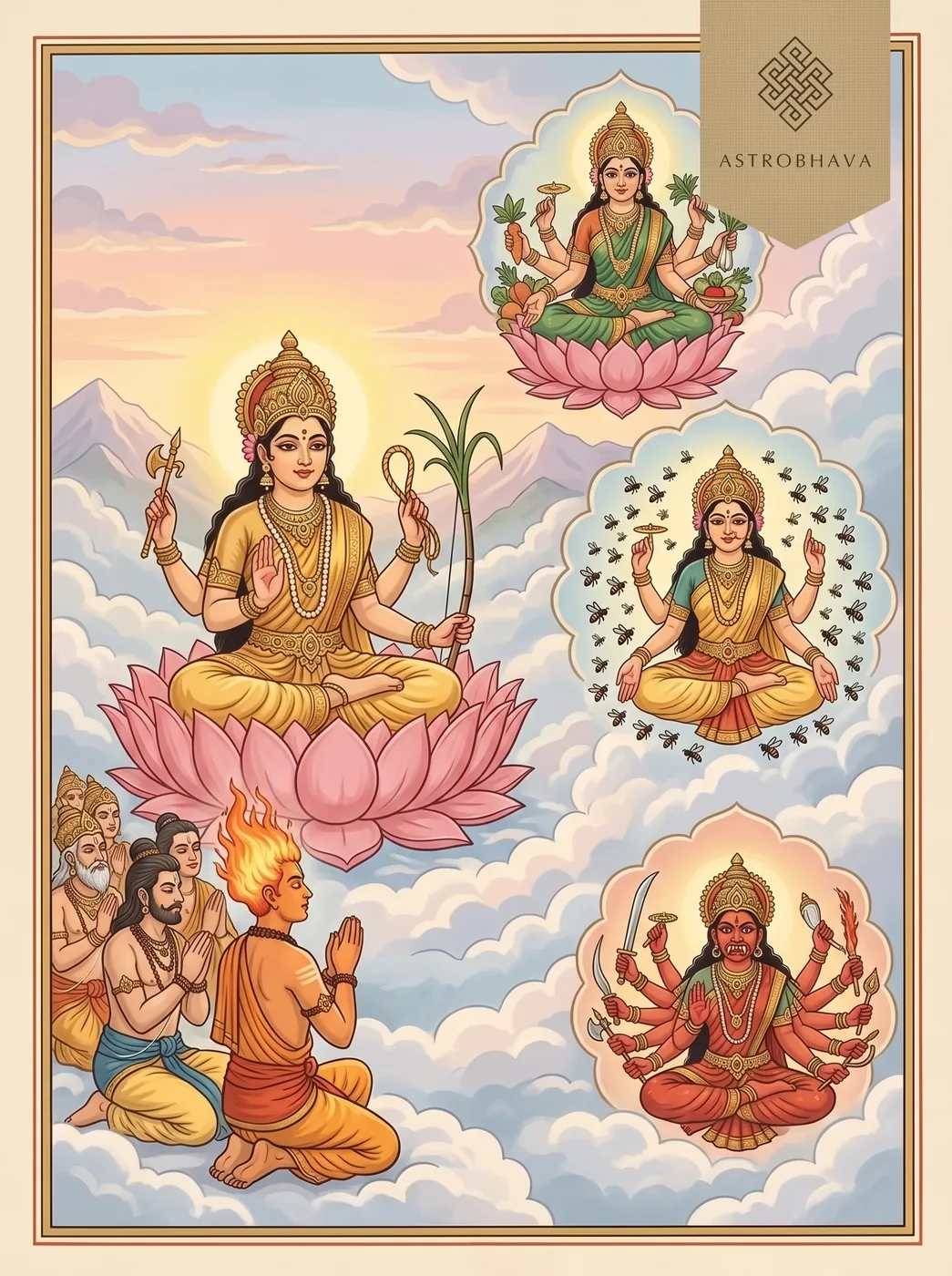
Durga Saptashati Chapter 11, which the colophon of the standard printed edition calls Devi Stuti, the praise of the Goddess, is the chapter of the Narayani Stuti, the hymn the gods sing once Shumbha lies dead at the end of chapter 10. It belongs to the third episode, whose deity is Mahasaraswati, but its dhyana addresses Bhuvaneshvari: bright as the rising sun, the moon for a crown, three eyes, a smiling face, and in her hands the sign of granting boons, the goad, the noose and the sign that removes fear. In verse 2 the gods, with Indra among them and Agni at their head, praise her as Katyayani. Verses 3 to 7 call her the earth that holds up the world, the waters that feed it, the power of Vishnu and the supreme Maya. From verse 8 to verse 23 every couplet closes on the same refrain, 'Narayani namo'stu te', salutation to you, O Narayani; verse 10 is the line 'sarva mangala mangalye'. Verses 24 to 28 ask her face, trident, bell and sword to guard the gods, and verses 29 to 35 praise what she has just done. The gods ask one boon in verse 39, and in verses 41 to 55 the Goddess foretells her later births. The standard printed edition numbers 55 lines: speaker lines at 1, 36, 38 and 40, fifty full verses, and a half-verse at 55 that finishes the sentence begun in verse 54.
The gods' hymn, one boon and her later forms
Medhas sets the hymn at the moment of victory: the lord of the asuras has fallen, the gods have what they wanted, and their faces open like lotuses and light up the four quarters (verse 2). Their praise moves from the cosmic to the familiar. From verse 13 they greet, one by one, the Mothers who fought beside her against Raktabija in chapter 8, and in verse 21 Chamunda, named for crushing Munda. Verses 22 and 23 then string single names together: Lakshmi, Modesty, Faith, Svadha, the great Night, Sarasvati. In verse 29 the gods say that when she is pleased she takes away every illness and when angered every cherished wish, and that those who rely on her become a refuge for others. Verse 30 asks who else could have split herself into so many forms to make this slaughter. Pleased, she offers a boon (verse 37). The gods ask nothing new for themselves, only that she go on calming the troubles of the three worlds and destroying their enemies in the same way (verse 39). Her reply looks ahead to the twenty-eighth cycle of ages under Manu Vaivasvata, when Shumbha and Nishumbha will be born again, and names the forms she will take. The last is Bhramari: in verse 53 she becomes a swarm of 'six-footed' creatures, the Sanskrit word for bees, to kill the asura Aruna. The Devi Bhagavata Purana tells this at length, explaining that Aruna's boon guarded him from every creature with two or four feet. Verses 54 and 55 close her answer with a promise: whenever trouble rises from the danavas, she will come down and destroy the enemies.
The mantra, in six scripts
- देव्या
- devyā — by the Goddess
- हते
- hate — when slain
- तत्र
- tatra — there
- महासुरेन्द्रे
- mahāsurendre — the great lord of the asuras
- सेन्द्राः
- sendrāḥ — with Indra
- सुरा
- surā — the gods
- वह्निपुरोगमास्ताम्
- vahnipurogamāstām — led by Agni, her
- कात्यायनीं
- kātyāyanīṃ — Katyayani
- तुष्टुवुरिष्टलाभाद्
- tuṣṭuvuriṣṭalābhād — praised, their wish attained
- विकाशिवक्त्राब्जविकाशिताशाः
- vikāśivaktrābjavikāśitāśāḥ — their opened lotus faces lighting the quarters
Durga Saptashati Chapter 11 lyrics in full
The Bhuvaneshvari meditation verse and all 55 numbered lines of the chapter in the standard numbering; the speaker of each passage is named above it.
All 55 numbered lines, in Sanskrit, Tamil, Telugu, Kannada, Malayalam and English, each with its meaning. Choose a script:
Download the Durga Saptashati Chapter 11 PDFAll 55 numbered lines with their meanings, in Sanskrit. Free to print and keep.
ॐ बालरविद्युतिमिन्दुकिरीटां तुङ्गकुचां नयनत्रययुक्ताम् ।
स्मेरमुखीं वरदाङ्कुशपाशाभीतिकरां प्रभजे भुवनेशीम् ॥
ௐ பாலரவித்யுதிமிந்துகிரீடாம் துங்ககுசாம் நயநத்ரயயுக்தாம் ।
ஸ்மேரமுகீம் வரதாங்குஶபாஶாபீதிகராம் ப்ரபஜே புவநேஶீம் ॥
ఓం బాలరవిద్యుతిమిన్దుకిరీటాం తుఙ్గకుచాం నయనత్రయయుక్తామ్ ।
స్మేరముఖీం వరదాఙ్కుశపాశాభీతికరాం ప్రభజే భువనేశీమ్ ॥
ಓಂ ಬಾಲರವಿದ್ಯುತಿಮಿನ್ದುಕಿರೀಟಾಂ ತುಙ್ಗಕುಚಾಂ ನಯನತ್ರಯಯುಕ್ತಾಮ್ ।
ಸ್ಮೇರಮುಖೀಂ ವರದಾಙ್ಕುಶಪಾಶಾಭೀತಿಕರಾಂ ಪ್ರಭಜೇ ಭುವನೇಶೀಮ್ ॥
ഓം ബാലരവിദ്യുതിമിന്ദുകിരീടാം തുങ്ഗകുചാം നയനത്രയയുക്താമ് ।
സ്മേരമുഖീം വരദാങ്കുശപാശാഭീതികരാം പ്രഭജേ ഭുവനേശീമ് ॥
oṃ bālaravidyutimindukirīṭāṃ tuṅgakucāṃ nayanatrayayuktām |
smeramukhīṃ varadāṅkuśapāśābhītikarāṃ prabhaje bhuvaneśīm ||
Om. I worship Bhuvaneshvari, who shines like the rising sun, wears the moon as her crown, has full breasts and three eyes, a smiling face, and hands that show the boon-giving gesture, the goad, the noose and the gesture of fearlessness.
ऋषिरुवाच
देव्या हते तत्र महासुरेन्द्रे सेन्द्राः सुरा वह्निपुरोगमास्ताम् । कात्यायनीं तुष्टुवुरिष्टलाभाद् विकाशिवक्त्राब्जविकाशिताशाः ॥
ருஷிருவாச
தேவ்யா ஹதே தத்ர மஹாஸுரேந்த்ரே ஸேந்த்ராஃ ஸுரா வஹ்நிபுரோகமாஸ்தாம் । காத்யாயநீம் துஷ்டுவுரிஷ்டலாபாத் விகாஶிவக்த்ராப்ஜவிகாஶிதாஶாஃ ॥
ఋషిరువాచ
దేవ్యా హతే తత్ర మహాసురేన్ద్రే సేన్ద్రాః సురా వహ్నిపురోగమాస్తామ్ । కాత్యాయనీం తుష్టువురిష్టలాభాద్ వికాశివక్త్రాబ్జవికాశితాశాః ॥
ಋಷಿರುವಾಚ
ದೇವ್ಯಾ ಹತೇ ತತ್ರ ಮಹಾಸುರೇನ್ದ್ರೇ ಸೇನ್ದ್ರಾಃ ಸುರಾ ವಹ್ನಿಪುರೋಗಮಾಸ್ತಾಮ್ । ಕಾತ್ಯಾಯನೀಂ ತುಷ್ಟುವುರಿಷ್ಟಲಾಭಾದ್ ವಿಕಾಶಿವಕ್ತ್ರಾಬ್ಜವಿಕಾಶಿತಾಶಾಃ ॥
ഋഷിരുവാച
ദേവ്യാ ഹതേ തത്ര മഹാസുരേന്ദ്രേ സേന്ദ്രാഃ സുരാ വഹ്നിപുരോഗമാസ്താമ് । കാത്യായനീം തുഷ്ടുവുരിഷ്ടലാഭാദ് വികാശിവക്ത്രാബ്ജവികാശിതാശാഃ ॥
ṛṣiruvāca
devyā hate tatra mahāsurendre sendrāḥ surā vahnipurogamāstām | kātyāyanīṃ tuṣṭuvuriṣṭalābhād vikāśivaktrābjavikāśitāśāḥ ||
The sage said: When the great lord of the asuras had been slain there by the Goddess, the gods with Indra, led by Agni, praised Katyayani. Their wish fulfilled, their lotus faces bloomed and lit up the quarters.
देवि प्रपन्नार्तिहरे प्रसीद प्रसीद मातर्जगतोऽखिलस्य ।
प्रसीद विश्वेश्वरि पाहि विश्वं त्वमीश्वरी देवि चराचरस्य ॥
தேவி ப்ரபந்நார்திஹரே ப்ரஸீத ப்ரஸீத மாதர்ஜகதோகிலஸ்ய ।
ப்ரஸீத விஶ்வேஶ்வரி பாஹி விஶ்வம் த்வமீஶ்வரீ தேவி சராசரஸ்ய ॥
దేవి ప్రపన్నార్తిహరే ప్రసీద ప్రసీద మాతర్జగతోఽఖిలస్య ।
ప్రసీద విశ్వేశ్వరి పాహి విశ్వం త్వమీశ్వరీ దేవి చరాచరస్య ॥
ದೇವಿ ಪ್ರಪನ್ನಾರ್ತಿಹರೇ ಪ್ರಸೀದ ಪ್ರಸೀದ ಮಾತರ್ಜಗತೋಽಖಿಲಸ್ಯ ।
ಪ್ರಸೀದ ವಿಶ್ವೇಶ್ವರಿ ಪಾಹಿ ವಿಶ್ವಂ ತ್ವಮೀಶ್ವರೀ ದೇವಿ ಚರಾಚರಸ್ಯ ॥
ദേവി പ്രപന്നാര്തിഹരേ പ്രസീദ പ്രസീദ മാതര്ജഗതോഽഖിലസ്യ ।
പ്രസീദ വിശ്വേശ്വരി പാഹി വിശ്വം ത്വമീശ്വരീ ദേവി ചരാചരസ്യ ॥
devi prapannārtihare prasīda prasīda mātarjagato'khilasya |
prasīda viśveśvari pāhi viśvaṃ tvamīśvarī devi carācarasya ||
O Goddess who removes the suffering of those who take refuge in you, be gracious. Be gracious, Mother of the whole world. Be gracious, Queen of the universe, and protect the universe; you, O Goddess, are the ruler of all that moves and does not move.
आधारभूता जगतस्त्वमेका महीस्वरूपेण यतः स्थितासि ।
अपां स्वरूपस्थितया त्वयैतदाप्यायते कृत्स्नमलङ्घ्यवीर्ये ॥
ஆதாரபூதா ஜகதஸ்த்வமேகா மஹீஸ்வரூபேண யதஃ ஸ்திதாஸி ।
அபாம் ஸ்வரூபஸ்திதயா த்வயைததாப்யாயதே க்ருத்ஸ்நமலங்க்யவீர்யே ॥
ఆధారభూతా జగతస్త్వమేకా మహీస్వరూపేణ యతః స్థితాసి ।
అపాం స్వరూపస్థితయా త్వయైతదాప్యాయతే కృత్స్నమలఙ్ఘ్యవీర్యే ॥
ಆಧಾರಭೂತಾ ಜಗತಸ್ತ್ವಮೇಕಾ ಮಹೀಸ್ವರೂಪೇಣ ಯತಃ ಸ್ಥಿತಾಸಿ ।
ಅಪಾಂ ಸ್ವರೂಪಸ್ಥಿತಯಾ ತ್ವಯೈತದಾಪ್ಯಾಯತೇ ಕೃತ್ಸ್ನಮಲಙ್ಘ್ಯವೀರ್ಯೇ ॥
ആധാരഭൂതാ ജഗതസ്ത്വമേകാ മഹീസ്വരൂപേണ യതഃ സ്ഥിതാസി ।
അപാം സ്വരൂപസ്ഥിതയാ ത്വയൈതദാപ്യായതേ കൃത്സ്നമലങ്ഘ്യവീര്യേ ॥
ādhārabhūtā jagatastvamekā mahīsvarūpeṇa yataḥ sthitāsi |
apāṃ svarūpasthitayā tvayaitadāpyāyate kṛtsnamalaṅghyavīrye ||
You alone are the support of the world, since you abide in the form of the earth. O you of unsurpassable power, abiding in the form of the waters, you nourish this whole world.
त्वं वैष्णवी शक्तिरनन्तवीर्या विश्वस्य बीजं परमासि माया ।
सम्मोहितं देवि समस्तमेतत् त्वं वै प्रसन्ना भुवि मुक्तिहेतुः ॥
த்வம் வைஷ்ணவீ ஶக்திரநந்தவீர்யா விஶ்வஸ்ய பீஜம் பரமாஸி மாயா ।
ஸம்மோஹிதம் தேவி ஸமஸ்தமேதத் த்வம் வை ப்ரஸந்நா புவி முக்திஹேதுஃ ॥
త్వం వైష్ణవీ శక్తిరనన్తవీర్యా విశ్వస్య బీజం పరమాసి మాయా ।
సమ్మోహితం దేవి సమస్తమేతత్ త్వం వై ప్రసన్నా భువి ముక్తిహేతుః ॥
ತ್ವಂ ವೈಷ್ಣವೀ ಶಕ್ತಿರನನ್ತವೀರ್ಯಾ ವಿಶ್ವಸ್ಯ ಬೀಜಂ ಪರಮಾಸಿ ಮಾಯಾ ।
ಸಮ್ಮೋಹಿತಂ ದೇವಿ ಸಮಸ್ತಮೇತತ್ ತ್ವಂ ವೈ ಪ್ರಸನ್ನಾ ಭುವಿ ಮುಕ್ತಿಹೇತುಃ ॥
ത്വം വൈഷ്ണവീ ശക്തിരനന്തവീര്യാ വിശ്വസ്യ ബീജം പരമാസി മായാ ।
സമ്മോഹിതം ദേവി സമസ്തമേതത് ത്വം വൈ പ്രസന്നാ ഭുവി മുക്തിഹേതുഃ ॥
tvaṃ vaiṣṇavī śaktiranantavīryā viśvasya bījaṃ paramāsi māyā |
sammohitaṃ devi samastametat tvaṃ vai prasannā bhuvi muktihetuḥ ||
You are the power of Vishnu, of endless strength, the seed of the universe, the supreme Maya. O Goddess, you have enchanted this whole world; when you are pleased, you are the cause of liberation on earth.
विद्या समस्तास्तव देवि भेदाः स्त्रियः समस्ताः सकला जगत्सु ।
त्वयैकया पूरितमम्बयैतत् का ते स्तुतिः स्तव्यपरा परोक्तिः ॥
வித்யா ஸமஸ்தாஸ்தவ தேவி பேதாஃ ஸ்த்ரியஃ ஸமஸ்தாஃ ஸகலா ஜகத்ஸு ।
த்வயைகயா பூரிதமம்பயைதத் கா தே ஸ்துதிஃ ஸ்தவ்யபரா பரோக்திஃ ॥
విద్యా సమస్తాస్తవ దేవి భేదాః స్త్రియః సమస్తాః సకలా జగత్సు ।
త్వయైకయా పూరితమమ్బయైతత్ కా తే స్తుతిః స్తవ్యపరా పరోక్తిః ॥
ವಿದ್ಯಾ ಸಮಸ್ತಾಸ್ತವ ದೇವಿ ಭೇದಾಃ ಸ್ತ್ರಿಯಃ ಸಮಸ್ತಾಃ ಸಕಲಾ ಜಗತ್ಸು ।
ತ್ವಯೈಕಯಾ ಪೂರಿತಮಮ್ಬಯೈತತ್ ಕಾ ತೇ ಸ್ತುತಿಃ ಸ್ತವ್ಯಪರಾ ಪರೋಕ್ತಿಃ ॥
വിദ്യാ സമസ്താസ്തവ ദേവി ഭേദാഃ സ്ത്രിയഃ സമസ്താഃ സകലാ ജഗത്സു ।
ത്വയൈകയാ പൂരിതമമ്ബയൈതത് കാ തേ സ്തുതിഃ സ്തവ്യപരാ പരോക്തിഃ ॥
vidyā samastāstava devi bhedāḥ striyaḥ samastāḥ sakalā jagatsu |
tvayaikayā pūritamambayaitat kā te stutiḥ stavyaparā paroktiḥ ||
O Goddess, all forms of knowledge are aspects of you, and so are all women in the worlds. By you alone, the Mother, this world is filled. What praise can there be for you, who are beyond all that can be praised, the supreme word?
सर्वभूता यदा देवी स्वर्गमुक्तिप्रदायिनी ।
त्वं स्तुता स्तुतये का वा भवन्तु परमोक्तयः ॥
ஸர்வபூதா யதா தேவீ ஸ்வர்கமுக்திப்ரதாயிநீ ।
த்வம் ஸ்துதா ஸ்துதயே கா வா பவந்து பரமோக்தயஃ ॥
సర్వభూతా యదా దేవీ స్వర్గముక్తిప్రదాయినీ ।
త్వం స్తుతా స్తుతయే కా వా భవన్తు పరమోక్తయః ॥
ಸರ್ವಭೂತಾ ಯದಾ ದೇವೀ ಸ್ವರ್ಗಮುಕ್ತಿಪ್ರದಾಯಿನೀ ।
ತ್ವಂ ಸ್ತುತಾ ಸ್ತುತಯೇ ಕಾ ವಾ ಭವನ್ತು ಪರಮೋಕ್ತಯಃ ॥
സര്വഭൂതാ യദാ ദേവീ സ്വര്ഗമുക്തിപ്രദായിനീ ।
ത്വം സ്തുതാ സ്തുതയേ കാ വാ ഭവന്തു പരമോക്തയഃ ॥
sarvabhūtā yadā devī svargamuktipradāyinī |
tvaṃ stutā stutaye kā vā bhavantu paramoktayaḥ ||
When you are praised as the Goddess who is all beings and who grants heaven and liberation, what finer words could there be to praise you?
सर्वस्य बुद्धिरूपेण जनस्य हृदि संस्थिते ।
स्वर्गापवर्गदे देवि नारायणि नमोऽस्तु ते ॥
ஸர்வஸ்ய புத்திரூபேண ஜநஸ்ய ஹ்ருதி ஸம்ஸ்திதே ।
ஸ்வர்காபவர்கதே தேவி நாராயணி நமோஸ்து தே ॥
సర్వస్య బుద్ధిరూపేణ జనస్య హృది సంస్థితే ।
స్వర్గాపవర్గదే దేవి నారాయణి నమోఽస్తు తే ॥
ಸರ್ವಸ್ಯ ಬುದ್ಧಿರೂಪೇಣ ಜನಸ್ಯ ಹೃದಿ ಸಂಸ್ಥಿತೇ ।
ಸ್ವರ್ಗಾಪವರ್ಗದೇ ದೇವಿ ನಾರಾಯಣಿ ನಮೋಽಸ್ತು ತೇ ॥
സര്വസ്യ ബുദ്ധിരൂപേണ ജനസ്യ ഹൃദി സംസ്ഥിതേ ।
സ്വര്ഗാപവര്ഗദേ ദേവി നാരായണി നമോഽസ്തു തേ ॥
sarvasya buddhirūpeṇa janasya hṛdi saṃsthite |
svargāpavargade devi nārāyaṇi namo'stu te ||
O Goddess who dwells in the heart of every person as intelligence, who grants heaven and final release, O Narayani, salutation to you.
कलाकाष्ठादिरूपेण परिणामप्रदायिनि ।
विश्वस्योपरतौ शक्ते नारायणि नमोऽस्तु ते ॥
கலாகாஷ்டாதிரூபேண பரிணாமப்ரதாயிநி ।
விஶ்வஸ்யோபரதௌ ஶக்தே நாராயணி நமோஸ்து தே ॥
కలాకాష్ఠాదిరూపేణ పరిణామప్రదాయిని ।
విశ్వస్యోపరతౌ శక్తే నారాయణి నమోఽస్తు తే ॥
ಕಲಾಕಾಷ್ಠಾದಿರೂಪೇಣ ಪರಿಣಾಮಪ್ರದಾಯಿನಿ ।
ವಿಶ್ವಸ್ಯೋಪರತೌ ಶಕ್ತೇ ನಾರಾಯಣಿ ನಮೋಽಸ್ತು ತೇ ॥
കലാകാഷ്ഠാദിരൂപേണ പരിണാമപ്രദായിനി ।
വിശ്വസ്യോപരതൌ ശക്തേ നാരായണി നമോഽസ്തു തേ ॥
kalākāṣṭhādirūpeṇa pariṇāmapradāyini |
viśvasyoparatau śakte nārāyaṇi namo'stu te ||
O you who bring about change in the form of moments, instants and the other units of time, and who have the power to bring the universe to its end, O Narayani, salutation to you.
सर्वमङ्गलमाङ्गल्ये शिवे सर्वार्थसाधिके ।
शरण्ये त्र्यम्बके गौरि नारायणि नमोऽस्तु ते ॥
ஸர்வமங்கலமாங்கல்யே ஶிவே ஸர்வார்தஸாதிகே ।
ஶரண்யே த்ர்யம்பகே கௌரி நாராயணி நமோஸ்து தே ॥
సర్వమఙ్గలమాఙ్గల్యే శివే సర్వార్థసాధికే ।
శరణ్యే త్ర్యమ్బకే గౌరి నారాయణి నమోఽస్తు తే ॥
ಸರ್ವಮಙ್ಗಲಮಾಙ್ಗಲ್ಯೇ ಶಿವೇ ಸರ್ವಾರ್ಥಸಾಧಿಕೇ ।
ಶರಣ್ಯೇ ತ್ರ್ಯಮ್ಬಕೇ ಗೌರಿ ನಾರಾಯಣಿ ನಮೋಽಸ್ತು ತೇ ॥
സര്വമങ്ഗലമാങ്ഗല്യേ ശിവേ സര്വാര്ഥസാധികേ ।
ശരണ്യേ ത്ര്യമ്ബകേ ഗൌരി നാരായണി നമോഽസ്തു തേ ॥
sarvamaṅgalamāṅgalye śive sarvārthasādhike |
śaraṇye tryambake gauri nārāyaṇi namo'stu te ||
O auspiciousness of all that is auspicious, O kind one who accomplishes every aim, O refuge, three-eyed Gauri, O Narayani, salutation to you.
सृष्टिस्थितिविनाशानां शक्तिभूते सनातनि ।
गुणाश्रये गुणमये नारायणि नमोऽस्तु ते ॥
ஸ்ருஷ்டிஸ்திதிவிநாஶாநாம் ஶக்திபூதே ஸநாதநி ।
குணாஶ்ரயே குணமயே நாராயணி நமோஸ்து தே ॥
సృష్టిస్థితివినాశానాం శక్తిభూతే సనాతని ।
గుణాశ్రయే గుణమయే నారాయణి నమోఽస్తు తే ॥
ಸೃಷ್ಟಿಸ್ಥಿತಿವಿನಾಶಾನಾಂ ಶಕ್ತಿಭೂತೇ ಸನಾತನಿ ।
ಗುಣಾಶ್ರಯೇ ಗುಣಮಯೇ ನಾರಾಯಣಿ ನಮೋಽಸ್ತು ತೇ ॥
സൃഷ്ടിസ്ഥിതിവിനാശാനാം ശക്തിഭൂതേ സനാതനി ।
ഗുണാശ്രയേ ഗുണമയേ നാരായണി നമോഽസ്തു തേ ॥
sṛṣṭisthitivināśānāṃ śaktibhūte sanātani |
guṇāśraye guṇamaye nārāyaṇi namo'stu te ||
O eternal one, the power behind creation, preservation and destruction, the support of the gunas and made of the gunas, O Narayani, salutation to you.
शरणागतदीनार्तपरित्राणपरायणे ।
सर्वस्यार्त्तिहरे देवि नारायणि नमोऽस्तु ते ॥
ஶரணாகததீநார்தபரித்ராணபராயணே ।
ஸர்வஸ்யார்த்திஹரே தேவி நாராயணி நமோஸ்து தே ॥
శరణాగతదీనార్తపరిత్రాణపరాయణే ।
సర్వస్యార్త్తిహరే దేవి నారాయణి నమోఽస్తు తే ॥
ಶರಣಾಗತದೀನಾರ್ತಪರಿತ್ರಾಣಪರಾಯಣೇ ।
ಸರ್ವಸ್ಯಾರ್ತ್ತಿಹರೇ ದೇವಿ ನಾರಾಯಣಿ ನಮೋಽಸ್ತು ತೇ ॥
ശരണാഗതദീനാര്തപരിത്രാണപരായണേ ।
സര്വസ്യാര്ത്തിഹരേ ദേവി നാരായണി നമോഽസ്തു തേ ॥
śaraṇāgatadīnārtaparitrāṇaparāyaṇe |
sarvasyārttihare devi nārāyaṇi namo'stu te ||
O you who are devoted to rescuing the lowly and the afflicted who come to you for refuge, O Goddess who removes the suffering of all, O Narayani, salutation to you.
हंसयुक्तविमानस्थे ब्रह्माणीरूपधारिणि ।
कौशाम्भःक्षरिके देवि नारायणि नमोऽस्तु ते ॥
ஹம்ஸயுக்தவிமாநஸ்தே ப்ரஹ்மாணீரூபதாரிணி ।
கௌஶாம்பஃக்ஷரிகே தேவி நாராயணி நமோஸ்து தே ॥
హంసయుక్తవిమానస్థే బ్రహ్మాణీరూపధారిణి ।
కౌశామ్భఃక్షరికే దేవి నారాయణి నమోఽస్తు తే ॥
ಹಂಸಯುಕ್ತವಿಮಾನಸ್ಥೇ ಬ್ರಹ್ಮಾಣೀರೂಪಧಾರಿಣಿ ।
ಕೌಶಾಮ್ಭಃಕ್ಷರಿಕೇ ದೇವಿ ನಾರಾಯಣಿ ನಮೋಽಸ್ತು ತೇ ॥
ഹംസയുക്തവിമാനസ്ഥേ ബ്രഹ്മാണീരൂപധാരിണി ।
കൌശാമ്ഭഃക്ഷരികേ ദേവി നാരായണി നമോഽസ്തു തേ ॥
haṃsayuktavimānasthe brahmāṇīrūpadhāriṇi |
kauśāmbhaḥkṣarike devi nārāyaṇi namo'stu te ||
O you who ride the swan-drawn chariot in the form of Brahmani, O Goddess who sprinkles water with kusha grass, O Narayani, salutation to you.
त्रिशूलचन्द्राहिधरे महावृषभवाहिनि ।
माहेश्वरीस्वरूपेण नारायणि नमोऽस्तु ते ॥
த்ரிஶூலசந்த்ராஹிதரே மஹாவ்ருஷபவாஹிநி ।
மாஹேஶ்வரீஸ்வரூபேண நாராயணி நமோஸ்து தே ॥
త్రిశూలచన్ద్రాహిధరే మహావృషభవాహిని ।
మాహేశ్వరీస్వరూపేణ నారాయణి నమోఽస్తు తే ॥
ತ್ರಿಶೂಲಚನ್ದ್ರಾಹಿಧರೇ ಮಹಾವೃಷಭವಾಹಿನಿ ।
ಮಾಹೇಶ್ವರೀಸ್ವರೂಪೇಣ ನಾರಾಯಣಿ ನಮೋಽಸ್ತು ತೇ ॥
ത്രിശൂലചന്ദ്രാഹിധരേ മഹാവൃഷഭവാഹിനി ।
മാഹേശ്വരീസ്വരൂപേണ നാരായണി നമോഽസ്തു തേ ॥
triśūlacandrāhidhare mahāvṛṣabhavāhini |
māheśvarīsvarūpeṇa nārāyaṇi namo'stu te ||
O you who, in the form of Maheshvari, hold the trident, the moon and the serpent and ride the great bull, O Narayani, salutation to you.
मयूरकुक्कुटवृते महाशक्तिधरेऽनघे ।
कौमारीरूपसंस्थाने नारायणि नमोऽस्तु ते ॥
மயூரகுக்குடவ்ருதே மஹாஶக்திதரேநகே ।
கௌமாரீரூபஸம்ஸ்தாநே நாராயணி நமோஸ்து தே ॥
మయూరకుక్కుటవృతే మహాశక్తిధరేఽనఘే ।
కౌమారీరూపసంస్థానే నారాయణి నమోఽస్తు తే ॥
ಮಯೂರಕುಕ್ಕುಟವೃತೇ ಮಹಾಶಕ್ತಿಧರೇಽನಘೇ ।
ಕೌಮಾರೀರೂಪಸಂಸ್ಥಾನೇ ನಾರಾಯಣಿ ನಮೋಽಸ್ತು ತೇ ॥
മയൂരകുക്കുടവൃതേ മഹാശക്തിധരേഽനഘേ ।
കൌമാരീരൂപസംസ്ഥാനേ നാരായണി നമോഽസ്തു തേ ॥
mayūrakukkuṭavṛte mahāśaktidhare'naghe |
kaumārīrūpasaṃsthāne nārāyaṇi namo'stu te ||
O sinless one, surrounded by peacocks and cocks and holding the great spear, appearing in the form of Kaumari, O Narayani, salutation to you.
शङ्खचक्रगदाशार्ङ्गगृहीतपरमायुधे ।
प्रसीद वैष्णवीरूपे नारायणि नमोऽस्तु ते ॥
ஶங்கசக்ரகதாஶார்ங்கக்ருஹீதபரமாயுதே ।
ப்ரஸீத வைஷ்ணவீரூபே நாராயணி நமோஸ்து தே ॥
శఙ్ఖచక్రగదాశార్ఙ్గగృహీతపరమాయుధే ।
ప్రసీద వైష్ణవీరూపే నారాయణి నమోఽస్తు తే ॥
ಶಙ್ಖಚಕ್ರಗದಾಶಾರ್ಙ್ಗಗೃಹೀತಪರಮಾಯುಧೇ ।
ಪ್ರಸೀದ ವೈಷ್ಣವೀರೂಪೇ ನಾರಾಯಣಿ ನಮೋಽಸ್ತು ತೇ ॥
ശങ്ഖചക്രഗദാശാര്ങ്ഗഗൃഹീതപരമായുധേ ।
പ്രസീദ വൈഷ്ണവീരൂപേ നാരായണി നമോഽസ്തു തേ ॥
śaṅkhacakragadāśārṅgagṛhītaparamāyudhe |
prasīda vaiṣṇavīrūpe nārāyaṇi namo'stu te ||
O you who hold the supreme weapons, the conch, discus, mace and the bow Sharnga, be gracious, you who have the form of Vaishnavi. O Narayani, salutation to you.
गृहीतोग्रमहाचक्रे दंष्ट्रोद्धृतवसुन्धरे ।
वराहरूपिणि शिवे नारायणि नमोऽस्तु ते ॥
க்ருஹீதோக்ரமஹாசக்ரே தம்ஷ்ட்ரோத்த்ருதவஸுந்தரே ।
வராஹரூபிணி ஶிவே நாராயணி நமோஸ்து தே ॥
గృహీతోగ్రమహాచక్రే దంష్ట్రోద్ధృతవసున్ధరే ।
వరాహరూపిణి శివే నారాయణి నమోఽస్తు తే ॥
ಗೃಹೀತೋಗ್ರಮಹಾಚಕ್ರೇ ದಂಷ್ಟ್ರೋದ್ಧೃತವಸುನ್ಧರೇ ।
ವರಾಹರೂಪಿಣಿ ಶಿವೇ ನಾರಾಯಣಿ ನಮೋಽಸ್ತು ತೇ ॥
ഗൃഹീതോഗ്രമഹാചക്രേ ദംഷ്ട്രോദ്ധൃതവസുന്ധരേ ।
വരാഹരൂപിണി ശിവേ നാരായണി നമോഽസ്തു തേ ॥
gṛhītogramahācakre daṃṣṭroddhṛtavasundhare |
varāharūpiṇi śive nārāyaṇi namo'stu te ||
O kind one in the form of the Boar, holding the fierce great discus and lifting the earth on your tusk, O Narayani, salutation to you.
नृसिंहरूपेणोग्रेण हन्तुं दैत्यान् कृतोद्यमे ।
त्रैलोक्यत्राणसहिते नारायणि नमोऽस्तु ते ॥
ந்ருஸிம்ஹரூபேணோக்ரேண ஹந்தும் தைத்யாந் க்ருதோத்யமே ।
த்ரைலோக்யத்ராணஸஹிதே நாராயணி நமோஸ்து தே ॥
నృసింహరూపేణోగ్రేణ హన్తుం దైత్యాన్ కృతోద్యమే ।
త్రైలోక్యత్రాణసహితే నారాయణి నమోఽస్తు తే ॥
ನೃಸಿಂಹರೂಪೇಣೋಗ್ರೇಣ ಹನ್ತುಂ ದೈತ್ಯಾನ್ ಕೃತೋದ್ಯಮೇ ।
ತ್ರೈಲೋಕ್ಯತ್ರಾಣಸಹಿತೇ ನಾರಾಯಣಿ ನಮೋಽಸ್ತು ತೇ ॥
നൃസിംഹരൂപേണോഗ്രേണ ഹന്തും ദൈത്യാന് കൃതോദ്യമേ ।
ത്രൈലോക്യത്രാണസഹിതേ നാരായണി നമോഽസ്തു തേ ॥
nṛsiṃharūpeṇogreṇa hantuṃ daityān kṛtodyame |
trailokyatrāṇasahite nārāyaṇi namo'stu te ||
O you who, in the fierce form of the Man-Lion, set out to slay the daityas and are intent on protecting the three worlds, O Narayani, salutation to you.
किरीटिनि महावज्रे सहस्रनयनोज्ज्वले ।
वृत्रप्राणहरे चैन्द्रि नारायणि नमोऽस्तु ते ॥
கிரீடிநி மஹாவஜ்ரே ஸஹஸ்ரநயநோஜ்ஜ்வலே ।
வ்ருத்ரப்ராணஹரே சைந்த்ரி நாராயணி நமோஸ்து தே ॥
కిరీటిని మహావజ్రే సహస్రనయనోజ్జ్వలే ।
వృత్రప్రాణహరే చైన్ద్రి నారాయణి నమోఽస్తు తే ॥
ಕಿರೀಟಿನಿ ಮಹಾವಜ್ರೇ ಸಹಸ್ರನಯನೋಜ್ಜ್ವಲೇ ।
ವೃತ್ರಪ್ರಾಣಹರೇ ಚೈನ್ದ್ರಿ ನಾರಾಯಣಿ ನಮೋಽಸ್ತು ತೇ ॥
കിരീടിനി മഹാവജ്രേ സഹസ്രനയനോജ്ജ്വലേ ।
വൃത്രപ്രാണഹരേ ചൈന്ദ്രി നാരായണി നമോഽസ്തു തേ ॥
kirīṭini mahāvajre sahasranayanojjvale |
vṛtraprāṇahare caindri nārāyaṇi namo'stu te ||
O Aindri, crowned, holding the great thunderbolt, shining with a thousand eyes, who took the life of Vritra, O Narayani, salutation to you.
शिवदूतीस्वरूपेण हतदैत्यमहाबले ।
घोररूपे महारावे नारायणि नमोऽस्तु ते ॥
ஶிவதூதீஸ்வரூபேண ஹததைத்யமஹாபலே ।
கோரரூபே மஹாராவே நாராயணி நமோஸ்து தே ॥
శివదూతీస్వరూపేణ హతదైత్యమహాబలే ।
ఘోరరూపే మహారావే నారాయణి నమోఽస్తు తే ॥
ಶಿವದೂತೀಸ್ವರೂಪೇಣ ಹತದೈತ್ಯಮಹಾಬಲೇ ।
ಘೋರರೂಪೇ ಮಹಾರಾವೇ ನಾರಾಯಣಿ ನಮೋಽಸ್ತು ತೇ ॥
ശിവദൂതീസ്വരൂപേണ ഹതദൈത്യമഹാബലേ ।
ഘോരരൂപേ മഹാരാവേ നാരായണി നമോഽസ്തു തേ ॥
śivadūtīsvarūpeṇa hatadaityamahābale |
ghorarūpe mahārāve nārāyaṇi namo'stu te ||
O you who, in the form of Shivaduti, destroyed the great army of the daityas, O you of terrible form and mighty roar, O Narayani, salutation to you.
दंष्ट्राकरालवदने शिरोमालाविभूषणे ।
चामुण्डे मुण्डमथने नारायणि नमोऽस्तु ते ॥
தம்ஷ்ட்ராகராலவதநே ஶிரோமாலாவிபூஷணே ।
சாமுண்டே முண்டமதநே நாராயணி நமோஸ்து தே ॥
దంష్ట్రాకరాలవదనే శిరోమాలావిభూషణే ।
చాముణ్డే ముణ్డమథనే నారాయణి నమోఽస్తు తే ॥
ದಂಷ್ಟ್ರಾಕರಾಲವದನೇ ಶಿರೋಮಾಲಾವಿಭೂಷಣೇ ।
ಚಾಮುಣ್ಡೇ ಮುಣ್ಡಮಥನೇ ನಾರಾಯಣಿ ನಮೋಽಸ್ತು ತೇ ॥
ദംഷ്ട്രാകരാലവദനേ ശിരോമാലാവിഭൂഷണേ ।
ചാമുണ്ഡേ മുണ്ഡമഥനേ നാരായണി നമോഽസ്തു തേ ॥
daṃṣṭrākarālavadane śiromālāvibhūṣaṇe |
cāmuṇḍe muṇḍamathane nārāyaṇi namo'stu te ||
O Chamunda, your face dreadful with tusks, adorned with a garland of heads, crusher of Munda, O Narayani, salutation to you.
लक्ष्मि लज्जे महाविद्ये श्रद्धे पुष्टिस्वधे ध्रुवे ।
महारात्रि महाविद्ये नारायणि नमोऽस्तु ते ॥
லக்ஷ்மி லஜ்ஜே மஹாவித்யே ஶ்ரத்தே புஷ்டிஸ்வதே த்ருவே ।
மஹாராத்ரி மஹாவித்யே நாராயணி நமோஸ்து தே ॥
లక్ష్మి లజ్జే మహావిద్యే శ్రద్ధే పుష్టిస్వధే ధ్రువే ।
మహారాత్రి మహావిద్యే నారాయణి నమోఽస్తు తే ॥
ಲಕ್ಷ್ಮಿ ಲಜ್ಜೇ ಮಹಾವಿದ್ಯೇ ಶ್ರದ್ಧೇ ಪುಷ್ಟಿಸ್ವಧೇ ಧ್ರುವೇ ।
ಮಹಾರಾತ್ರಿ ಮಹಾವಿದ್ಯೇ ನಾರಾಯಣಿ ನಮೋಽಸ್ತು ತೇ ॥
ലക്ഷ്മി ലജ്ജേ മഹാവിദ്യേ ശ്രദ്ധേ പുഷ്ടിസ്വധേ ധ്രുവേ ।
മഹാരാത്രി മഹാവിദ്യേ നാരായണി നമോഽസ്തു തേ ॥
lakṣmi lajje mahāvidye śraddhe puṣṭisvadhe dhruve |
mahārātri mahāvidye nārāyaṇi namo'stu te ||
O Lakshmi, Modesty, great Knowledge, Faith, Nourishment, Svadha, the Constant one; O great Night, great Ignorance, O Narayani, salutation to you.
मेधे सरस्वति वरे भूति बाभ्रवि तामसि ।
नियते त्वं प्रसीदेशे नारायणि नमोऽस्तु ते ॥
மேதே ஸரஸ்வதி வரே பூதி பாப்ரவி தாமஸி ।
நியதே த்வம் ப்ரஸீதேஶே நாராயணி நமோஸ்து தே ॥
మేధే సరస్వతి వరే భూతి బాభ్రవి తామసి ।
నియతే త్వం ప్రసీదేశే నారాయణి నమోఽస్తు తే ॥
ಮೇಧೇ ಸರಸ್ವತಿ ವರೇ ಭೂತಿ ಬಾಭ್ರವಿ ತಾಮಸಿ ।
ನಿಯತೇ ತ್ವಂ ಪ್ರಸೀದೇಶೇ ನಾರಾಯಣಿ ನಮೋಽಸ್ತು ತೇ ॥
മേധേ സരസ്വതി വരേ ഭൂതി ബാഭ്രവി താമസി ।
നിയതേ ത്വം പ്രസീദേശേ നാരായണി നമോഽസ്തു തേ ॥
medhe sarasvati vare bhūti bābhravi tāmasi |
niyate tvaṃ prasīdeśe nārāyaṇi namo'stu te ||
O Wisdom, Sarasvati, best one, Prosperity, tawny Parvati, dark Kali, the Restrained one, the Ruler, be gracious. O Narayani, salutation to you.
सर्वस्वरूपे सर्वेशे सर्वशक्तिसमन्विते ।
भयेभ्यस्त्राहि नो देवि दुर्गे देवि नमोऽस्तु ते ॥
ஸர்வஸ்வரூபே ஸர்வேஶே ஸர்வஶக்திஸமந்விதே ।
பயேப்யஸ்த்ராஹி நோ தேவி துர்கே தேவி நமோஸ்து தே ॥
సర్వస్వరూపే సర్వేశే సర్వశక్తిసమన్వితే ।
భయేభ్యస్త్రాహి నో దేవి దుర్గే దేవి నమోఽస్తు తే ॥
ಸರ್ವಸ್ವರೂಪೇ ಸರ್ವೇಶೇ ಸರ್ವಶಕ್ತಿಸಮನ್ವಿತೇ ।
ಭಯೇಭ್ಯಸ್ತ್ರಾಹಿ ನೋ ದೇವಿ ದುರ್ಗೇ ದೇವಿ ನಮೋಽಸ್ತು ತೇ ॥
സര്വസ്വരൂപേ സര്വേശേ സര്വശക്തിസമന്വിതേ ।
ഭയേഭ്യസ്ത്രാഹി നോ ദേവി ദുര്ഗേ ദേവി നമോഽസ്തു തേ ॥
sarvasvarūpe sarveśe sarvaśaktisamanvite |
bhayebhyastrāhi no devi durge devi namo'stu te ||
O you whose form is everything, ruler of all, endowed with every power, protect us from fears, O Goddess. O Goddess Durga, salutation to you.
एतत्ते वदनं सौम्यं लोचनत्रयभूषितम् ।
पातु नः सर्वभीतिभ्यः कात्यायनि नमोऽस्तु ते ॥
ஏதத்தே வதநம் ஸௌம்யம் லோசநத்ரயபூஷிதம் ।
பாது நஃ ஸர்வபீதிப்யஃ காத்யாயநி நமோஸ்து தே ॥
ఏతత్తే వదనం సౌమ్యం లోచనత్రయభూషితమ్ ।
పాతు నః సర్వభీతిభ్యః కాత్యాయని నమోఽస్తు తే ॥
ಏತತ್ತೇ ವದನಂ ಸೌಮ್ಯಂ ಲೋಚನತ್ರಯಭೂಷಿತಮ್ ।
ಪಾತು ನಃ ಸರ್ವಭೀತಿಭ್ಯಃ ಕಾತ್ಯಾಯನಿ ನಮೋಽಸ್ತು ತೇ ॥
ഏതത്തേ വദനം സൌമ്യം ലോചനത്രയഭൂഷിതമ് ।
പാതു നഃ സര്വഭീതിഭ്യഃ കാത്യായനി നമോഽസ്തു തേ ॥
etatte vadanaṃ saumyaṃ locanatrayabhūṣitam |
pātu naḥ sarvabhītibhyaḥ kātyāyani namo'stu te ||
May this gentle face of yours, adorned with three eyes, protect us from every fear. O Katyayani, salutation to you.
ज्वालाकरालमत्युग्रमशेषासुरसूदनम् ।
त्रिशूलं पातु नो भीतेर्भद्रकालि नमोऽस्तु ते ॥
ஜ்வாலாகராலமத்யுக்ரமஶேஷாஸுரஸூதநம் ।
த்ரிஶூலம் பாது நோ பீதேர்பத்ரகாலி நமோஸ்து தே ॥
జ్వాలాకరాలమత్యుగ్రమశేషాసురసూదనమ్ ।
త్రిశూలం పాతు నో భీతేర్భద్రకాలి నమోఽస్తు తే ॥
ಜ್ವಾಲಾಕರಾಲಮತ್ಯುಗ್ರಮಶೇಷಾಸುರಸೂದನಮ್ ।
ತ್ರಿಶೂಲಂ ಪಾತು ನೋ ಭೀತೇರ್ಭದ್ರಕಾಲಿ ನಮೋಽಸ್ತು ತೇ ॥
ജ്വാലാകരാലമത്യുഗ്രമശേഷാസുരസൂദനമ് ।
ത്രിശൂലം പാതു നോ ഭീതേര്ഭദ്രകാലി നമോഽസ്തു തേ ॥
jvālākarālamatyugramaśeṣāsurasūdanam |
triśūlaṃ pātu no bhīterbhadrakāli namo'stu te ||
May your trident, terrible with flames, exceedingly fierce, the slayer of all the asuras, protect us from fear. O Bhadrakali, salutation to you.
हिनस्ति दैत्यतेजांसि स्वनेनापूर्य या जगत् ।
सा घण्टा पातु नो देवि पापेभ्यो नः सुतानिव ॥
ஹிநஸ்தி தைத்யதேஜாம்ஸி ஸ்வநேநாபூர்ய யா ஜகத் ।
ஸா கண்டா பாது நோ தேவி பாபேப்யோ நஃ ஸுதாநிவ ॥
హినస్తి దైత్యతేజాంసి స్వనేనాపూర్య యా జగత్ ।
సా ఘణ్టా పాతు నో దేవి పాపేభ్యో నః సుతానివ ॥
ಹಿನಸ್ತಿ ದೈತ್ಯತೇಜಾಂಸಿ ಸ್ವನೇನಾಪೂರ್ಯ ಯಾ ಜಗತ್ ।
ಸಾ ಘಣ್ಟಾ ಪಾತು ನೋ ದೇವಿ ಪಾಪೇಭ್ಯೋ ನಃ ಸುತಾನಿವ ॥
ഹിനസ്തി ദൈത്യതേജാംസി സ്വനേനാപൂര്യ യാ ജഗത് ।
സാ ഘണ്ടാ പാതു നോ ദേവി പാപേഭ്യോ നഃ സുതാനിവ ॥
hinasti daityatejāṃsi svanenāpūrya yā jagat |
sā ghaṇṭā pātu no devi pāpebhyo naḥ sutāniva ||
O Goddess, may your bell, which fills the world with its sound and destroys the might of the daityas, protect us from evils as a mother protects her children.
असुरासृग्वसापङ्कचर्चितस्ते करोज्ज्वलः ।
शुभाय खड्गो भवतु चण्डिके त्वां नता वयम् ॥
அஸுராஸ்ருக்வஸாபங்கசர்சிதஸ்தே கரோஜ்ஜ்வலஃ ।
ஶுபாய கட்கோ பவது சண்டிகே த்வாம் நதா வயம் ॥
అసురాసృగ్వసాపఙ్కచర్చితస్తే కరోజ్జ్వలః ।
శుభాయ ఖడ్గో భవతు చణ్డికే త్వాం నతా వయమ్ ॥
ಅಸುರಾಸೃಗ್ವಸಾಪಙ್ಕಚರ್ಚಿತಸ್ತೇ ಕರೋಜ್ಜ್ವಲಃ ।
ಶುಭಾಯ ಖಡ್ಗೋ ಭವತು ಚಣ್ಡಿಕೇ ತ್ವಾಂ ನತಾ ವಯಮ್ ॥
അസുരാസൃഗ്വസാപങ്കചര്ചിതസ്തേ കരോജ്ജ്വലഃ ।
ശുഭായ ഖഡ്ഗോ ഭവതു ചണ്ഡികേ ത്വാം നതാ വയമ് ॥
asurāsṛgvasāpaṅkacarcitaste karojjvalaḥ |
śubhāya khaḍgo bhavatu caṇḍike tvāṃ natā vayam ||
May your sword, smeared with the blood and fat of the asuras and shining in your hand, be for our good. O Chandika, we bow to you.
रोगानशेषानपहंसि तुष्टा रुष्टा तु कामान् सकलानभीष्टान् ।
त्वामाश्रितानां न विपन्नराणां त्वामाश्रिता ह्याश्रयतां प्रयान्ति ॥
ரோகாநஶேஷாநபஹம்ஸி துஷ்டா ருஷ்டா து காமாந் ஸகலாநபீஷ்டாந் ।
த்வாமாஶ்ரிதாநாம் ந விபந்நராணாம் த்வாமாஶ்ரிதா ஹ்யாஶ்ரயதாம் ப்ரயாந்தி ॥
రోగానశేషానపహంసి తుష్టా రుష్టా తు కామాన్ సకలానభీష్టాన్ ।
త్వామాశ్రితానాం న విపన్నరాణాం త్వామాశ్రితా హ్యాశ్రయతాం ప్రయాన్తి ॥
ರೋಗಾನಶೇಷಾನಪಹಂಸಿ ತುಷ್ಟಾ ರುಷ್ಟಾ ತು ಕಾಮಾನ್ ಸಕಲಾನಭೀಷ್ಟಾನ್ ।
ತ್ವಾಮಾಶ್ರಿತಾನಾಂ ನ ವಿಪನ್ನರಾಣಾಂ ತ್ವಾಮಾಶ್ರಿತಾ ಹ್ಯಾಶ್ರಯತಾಂ ಪ್ರಯಾನ್ತಿ ॥
രോഗാനശേഷാനപഹംസി തുഷ്ടാ രുഷ്ടാ തു കാമാന് സകലാനഭീഷ്ടാന് ।
ത്വാമാശ്രിതാനാം ന വിപന്നരാണാം ത്വാമാശ്രിതാ ഹ്യാശ്രയതാം പ്രയാന്തി ॥
rogānaśeṣānapahaṃsi tuṣṭā ruṣṭā tu kāmān sakalānabhīṣṭān |
tvāmāśritānāṃ na vipannarāṇāṃ tvāmāśritā hyāśrayatāṃ prayānti ||
When pleased you destroy all illnesses, but when angered you destroy all cherished desires. Those who rely on you meet no misfortune; those who take refuge in you become a refuge for others.
एतत्कृतं यत्कदनं त्वयाद्य धर्मद्विषां देवि महासुराणाम् ।
रूपैरनेकैर्बहुधाऽऽत्ममूर्तिं कृत्वाम्बिके तत्प्रकरोति कान्या ॥
ஏதத்க்ருதம் யத்கதநம் த்வயாத்ய தர்மத்விஷாம் தேவி மஹாஸுராணாம் ।
ரூபைரநேகைர்பஹுதாத்மமூர்திம் க்ருத்வாம்பிகே தத்ப்ரகரோதி காந்யா ॥
ఏతత్కృతం యత్కదనం త్వయాద్య ధర్మద్విషాం దేవి మహాసురాణామ్ ।
రూపైరనేకైర్బహుధాఽఽత్మమూర్తిం కృత్వామ్బికే తత్ప్రకరోతి కాన్యా ॥
ಏತತ್ಕೃತಂ ಯತ್ಕದನಂ ತ್ವಯಾದ್ಯ ಧರ್ಮದ್ವಿಷಾಂ ದೇವಿ ಮಹಾಸುರಾಣಾಮ್ ।
ರೂಪೈರನೇಕೈರ್ಬಹುಧಾಽಽತ್ಮಮೂರ್ತಿಂ ಕೃತ್ವಾಮ್ಬಿಕೇ ತತ್ಪ್ರಕರೋತಿ ಕಾನ್ಯಾ ॥
ഏതത്കൃതം യത്കദനം ത്വയാദ്യ ധര്മദ്വിഷാം ദേവി മഹാസുരാണാമ് ।
രൂപൈരനേകൈര്ബഹുധാഽഽത്മമൂര്തിം കൃത്വാമ്ബികേ തത്പ്രകരോതി കാന്യാ ॥
etatkṛtaṃ yatkadanaṃ tvayādya dharmadviṣāṃ devi mahāsurāṇām |
rūpairanekairbahudhā'tmamūrtiṃ kṛtvāmbike tatprakaroti kānyā ||
O Goddess, this slaughter you have made today of the great asuras who hate dharma, O Ambika, by dividing your own form into many forms: what other could do it?
विद्यासु शास्त्रेषु विवेकदीपेष्वाद्येषु वाक्येषु च का त्वदन्या ।
ममत्वगर्तेऽतिमहान्धकारे विभ्रामयत्येतदतीव विश्वम् ॥
வித்யாஸு ஶாஸ்த்ரேஷு விவேகதீபேஷ்வாத்யேஷு வாக்யேஷு ச கா த்வதந்யா ।
மமத்வகர்தேதிமஹாந்தகாரே விப்ராமயத்யேதததீவ விஶ்வம் ॥
విద్యాసు శాస్త్రేషు వివేకదీపేష్వాద్యేషు వాక్యేషు చ కా త్వదన్యా ।
మమత్వగర్తేఽతిమహాన్ధకారే విభ్రామయత్యేతదతీవ విశ్వమ్ ॥
ವಿದ್ಯಾಸು ಶಾಸ್ತ್ರೇಷು ವಿವೇಕದೀಪೇಷ್ವಾದ್ಯೇಷು ವಾಕ್ಯೇಷು ಚ ಕಾ ತ್ವದನ್ಯಾ ।
ಮಮತ್ವಗರ್ತೇಽತಿಮಹಾನ್ಧಕಾರೇ ವಿಭ್ರಾಮಯತ್ಯೇತದತೀವ ವಿಶ್ವಮ್ ॥
വിദ്യാസു ശാസ്ത്രേഷു വിവേകദീപേഷ്വാദ്യേഷു വാക്യേഷു ച കാ ത്വദന്യാ ।
മമത്വഗര്തേഽതിമഹാന്ധകാരേ വിഭ്രാമയത്യേതദതീവ വിശ്വമ് ॥
vidyāsu śāstreṣu vivekadīpeṣvādyeṣu vākyeṣu ca kā tvadanyā |
mamatvagarte'timahāndhakāre vibhrāmayatyetadatīva viśvam ||
In the branches of knowledge, in the scriptures that are lamps of discernment, and in the primal words of the Veda, who but you is spoken of? And who but you makes this world whirl about in the deep, dark pit of attachment?
रक्षांसि यत्रोग्रविषाश्च नागा यत्रारयो दस्युबलानि यत्र ।
दावानलो यत्र तथाब्धिमध्ये तत्र स्थिता त्वं परिपासि विश्वम् ॥
ரக்ஷாம்ஸி யத்ரோக்ரவிஷாஶ்ச நாகா யத்ராரயோ தஸ்யுபலாநி யத்ர ।
தாவாநலோ யத்ர ததாப்திமத்யே தத்ர ஸ்திதா த்வம் பரிபாஸி விஶ்வம் ॥
రక్షాంసి యత్రోగ్రవిషాశ్చ నాగా యత్రారయో దస్యుబలాని యత్ర ।
దావానలో యత్ర తథాబ్ధిమధ్యే తత్ర స్థితా త్వం పరిపాసి విశ్వమ్ ॥
ರಕ್ಷಾಂಸಿ ಯತ್ರೋಗ್ರವಿಷಾಶ್ಚ ನಾಗಾ ಯತ್ರಾರಯೋ ದಸ್ಯುಬಲಾನಿ ಯತ್ರ ।
ದಾವಾನಲೋ ಯತ್ರ ತಥಾಬ್ಧಿಮಧ್ಯೇ ತತ್ರ ಸ್ಥಿತಾ ತ್ವಂ ಪರಿಪಾಸಿ ವಿಶ್ವಮ್ ॥
രക്ഷാംസി യത്രോഗ്രവിഷാശ്ച നാഗാ യത്രാരയോ ദസ്യുബലാനി യത്ര ।
ദാവാനലോ യത്ര തഥാബ്ധിമധ്യേ തത്ര സ്ഥിതാ ത്വം പരിപാസി വിശ്വമ് ॥
rakṣāṃsi yatrograviṣāśca nāgā yatrārayo dasyubalāni yatra |
dāvānalo yatra tathābdhimadhye tatra sthitā tvaṃ paripāsi viśvam ||
Where there are rakshasas, where there are serpents of deadly poison, where there are enemies and bands of robbers, where there is forest fire, and in the midst of the ocean, there you stand and protect the world.
विश्वेश्वरि त्वं परिपासि विश्वं विश्वात्मिका धारयसीति विश्वम् ।
विश्वेशवन्द्या भवती भवन्ति विश्वाश्रया ये त्वयि भक्तिनम्राः ॥
விஶ்வேஶ்வரி த்வம் பரிபாஸி விஶ்வம் விஶ்வாத்மிகா தாரயஸீதி விஶ்வம் ।
விஶ்வேஶவந்த்யா பவதீ பவந்தி விஶ்வாஶ்ரயா யே த்வயி பக்திநம்ராஃ ॥
విశ్వేశ్వరి త్వం పరిపాసి విశ్వం విశ్వాత్మికా ధారయసీతి విశ్వమ్ ।
విశ్వేశవన్ద్యా భవతీ భవన్తి విశ్వాశ్రయా యే త్వయి భక్తినమ్రాః ॥
ವಿಶ್ವೇಶ್ವರಿ ತ್ವಂ ಪರಿಪಾಸಿ ವಿಶ್ವಂ ವಿಶ್ವಾತ್ಮಿಕಾ ಧಾರಯಸೀತಿ ವಿಶ್ವಮ್ ।
ವಿಶ್ವೇಶವನ್ದ್ಯಾ ಭವತೀ ಭವನ್ತಿ ವಿಶ್ವಾಶ್ರಯಾ ಯೇ ತ್ವಯಿ ಭಕ್ತಿನಮ್ರಾಃ ॥
വിശ്വേശ്വരി ത്വം പരിപാസി വിശ്വം വിശ്വാത്മികാ ധാരയസീതി വിശ്വമ് ।
വിശ്വേശവന്ദ്യാ ഭവതീ ഭവന്തി വിശ്വാശ്രയാ യേ ത്വയി ഭക്തിനമ്രാഃ ॥
viśveśvari tvaṃ paripāsi viśvaṃ viśvātmikā dhārayasīti viśvam |
viśveśavandyā bhavatī bhavanti viśvāśrayā ye tvayi bhaktinamrāḥ ||
O Queen of the universe, you protect the universe; being the soul of the universe, you uphold it. You are worthy of worship even by the lord of the universe; those who bow to you in devotion become a refuge for the universe.
देवि प्रसीद परिपालय नोऽरिभीतेर्नित्यं यथासुरवधादधुनैव सद्यः ।
पापानि सर्वजगतां प्रशमं नयाशु उत्पातपाकजनितांश्च महोपसर्गान् ॥
தேவி ப்ரஸீத பரிபாலய நோரிபீதேர்நித்யம் யதாஸுரவதாததுநைவ ஸத்யஃ ।
பாபாநி ஸர்வஜகதாம் ப்ரஶமம் நயாஶு உத்பாதபாகஜநிதாம்ஶ்ச மஹோபஸர்காந் ॥
దేవి ప్రసీద పరిపాలయ నోఽరిభీతేర్నిత్యం యథాసురవధాదధునైవ సద్యః ।
పాపాని సర్వజగతాం ప్రశమం నయాశు ఉత్పాతపాకజనితాంశ్చ మహోపసర్గాన్ ॥
ದೇವಿ ಪ್ರಸೀದ ಪರಿಪಾಲಯ ನೋಽರಿಭೀತೇರ್ನಿತ್ಯಂ ಯಥಾಸುರವಧಾದಧುನೈವ ಸದ್ಯಃ ।
ಪಾಪಾನಿ ಸರ್ವಜಗತಾಂ ಪ್ರಶಮಂ ನಯಾಶು ಉತ್ಪಾತಪಾಕಜನಿತಾಂಶ್ಚ ಮಹೋಪಸರ್ಗಾನ್ ॥
ദേവി പ്രസീദ പരിപാലയ നോഽരിഭീതേര്നിത്യം യഥാസുരവധാദധുനൈവ സദ്യഃ ।
പാപാനി സര്വജഗതാം പ്രശമം നയാശു ഉത്പാതപാകജനിതാംശ്ച മഹോപസര്ഗാന് ॥
devi prasīda paripālaya no'ribhīternityaṃ yathāsuravadhādadhunaiva sadyaḥ |
pāpāni sarvajagatāṃ praśamaṃ nayāśu utpātapākajanitāṃśca mahopasargān ||
O Goddess, be gracious and protect us always from the fear of enemies, just as you have just now done by slaying the asuras. Swiftly quell the sins of all the worlds and the great calamities born of the ripening of evil omens.
प्रणतानां प्रसीद त्वं देवि विश्वार्तिहारिणि ।
त्रैलोक्यवासिनामीड्ये लोकानां वरदा भव ॥
ப்ரணதாநாம் ப்ரஸீத த்வம் தேவி விஶ்வார்திஹாரிணி ।
த்ரைலோக்யவாஸிநாமீட்யே லோகாநாம் வரதா பவ ॥
ప్రణతానాం ప్రసీద త్వం దేవి విశ్వార్తిహారిణి ।
త్రైలోక్యవాసినామీడ్యే లోకానాం వరదా భవ ॥
ಪ್ರಣತಾನಾಂ ಪ್ರಸೀದ ತ್ವಂ ದೇವಿ ವಿಶ್ವಾರ್ತಿಹಾರಿಣಿ ।
ತ್ರೈಲೋಕ್ಯವಾಸಿನಾಮೀಡ್ಯೇ ಲೋಕಾನಾಂ ವರದಾ ಭವ ॥
പ്രണതാനാം പ്രസീദ ത്വം ദേവി വിശ്വാര്തിഹാരിണി ।
ത്രൈലോക്യവാസിനാമീഡ്യേ ലോകാനാം വരദാ ഭവ ॥
praṇatānāṃ prasīda tvaṃ devi viśvārtihāriṇi |
trailokyavāsināmīḍye lokānāṃ varadā bhava ||
O Goddess who removes the suffering of the universe, be gracious to us who bow to you. O you who are worshipped by the dwellers of the three worlds, be the giver of boons to the worlds.
देव्युवाच
वरदाहं सुरगणा वरं यन्मनसेच्छथ । तं वृणुध्वं प्रयच्छामि जगतामुपकारकम् ॥
தேவ்யுவாச
வரதாஹம் ஸுரகணா வரம் யந்மநஸேச்சத । தம் வ்ருணுத்வம் ப்ரயச்சாமி ஜகதாமுபகாரகம் ॥
దేవ్యువాచ
వరదాహం సురగణా వరం యన్మనసేచ్ఛథ । తం వృణుధ్వం ప్రయచ్ఛామి జగతాముపకారకమ్ ॥
ದೇವ್ಯುವಾಚ
ವರದಾಹಂ ಸುರಗಣಾ ವರಂ ಯನ್ಮನಸೇಚ್ಛಥ । ತಂ ವೃಣುಧ್ವಂ ಪ್ರಯಚ್ಛಾಮಿ ಜಗತಾಮುಪಕಾರಕಮ್ ॥
ദേവ്യുവാച
വരദാഹം സുരഗണാ വരം യന്മനസേച്ഛഥ । തം വൃണുധ്വം പ്രയച്ഛാമി ജഗതാമുപകാരകമ് ॥
devyuvāca
varadāhaṃ suragaṇā varaṃ yanmanasecchatha | taṃ vṛṇudhvaṃ prayacchāmi jagatāmupakārakam ||
The Goddess said: I am ready to grant a boon, O hosts of gods. Choose whatever boon you wish in your minds that will benefit the worlds, and I will give it.
देवा ऊचुः
सर्वाबाधाप्रशमनं त्रैलोक्यस्याखिलेश्वरि । एवमेव त्वया कार्यमस्मद्वैरिविनाशनम् ॥
தேவா ஊசுஃ
ஸர்வாபாதாப்ரஶமநம் த்ரைலோக்யஸ்யாகிலேஶ்வரி । ஏவமேவ த்வயா கார்யமஸ்மத்வைரிவிநாஶநம் ॥
దేవా ఊచుః
సర్వాబాధాప్రశమనం త్రైలోక్యస్యాఖిలేశ్వరి । ఏవమేవ త్వయా కార్యమస్మద్వైరివినాశనమ్ ॥
ದೇವಾ ಊಚುಃ
ಸರ್ವಾಬಾಧಾಪ್ರಶಮನಂ ತ್ರೈಲೋಕ್ಯಸ್ಯಾಖಿಲೇಶ್ವರಿ । ಏವಮೇವ ತ್ವಯಾ ಕಾರ್ಯಮಸ್ಮದ್ವೈರಿವಿನಾಶನಮ್ ॥
ദേവാ ഊചുഃ
സര്വാബാധാപ്രശമനം ത്രൈലോക്യസ്യാഖിലേശ്വരി । ഏവമേവ ത്വയാ കാര്യമസ്മദ്വൈരിവിനാശനമ് ॥
devā ūcuḥ
sarvābādhāpraśamanaṃ trailokyasyākhileśvari | evameva tvayā kāryamasmadvairivināśanam ||
The gods said: O Queen of all, in just this way you should calm every affliction of the three worlds and destroy our enemies.
देव्युवाच
वैवस्वतेऽन्तरे प्राप्ते अष्टाविंशतिमे युगे । शुम्भो निशुम्भश्चैवान्यावुत्पत्स्येते महासुरौ ॥
தேவ்யுவாச
வைவஸ்வதேந்தரே ப்ராப்தே அஷ்டாவிம்ஶதிமே யுகே । ஶும்போ நிஶும்பஶ்சைவாந்யாவுத்பத்ஸ்யேதே மஹாஸுரௌ ॥
దేవ్యువాచ
వైవస్వతేఽన్తరే ప్రాప్తే అష్టావింశతిమే యుగే । శుమ్భో నిశుమ్భశ్చైవాన్యావుత్పత్స్యేతే మహాసురౌ ॥
ದೇವ್ಯುವಾಚ
ವೈವಸ್ವತೇಽನ್ತರೇ ಪ್ರಾಪ್ತೇ ಅಷ್ಟಾವಿಂಶತಿಮೇ ಯುಗೇ । ಶುಮ್ಭೋ ನಿಶುಮ್ಭಶ್ಚೈವಾನ್ಯಾವುತ್ಪತ್ಸ್ಯೇತೇ ಮಹಾಸುರೌ ॥
ദേവ്യുവാച
വൈവസ്വതേഽന്തരേ പ്രാപ്തേ അഷ്ടാവിംശതിമേ യുഗേ । ശുമ്ഭോ നിശുമ്ഭശ്ചൈവാന്യാവുത്പത്സ്യേതേ മഹാസുരൌ ॥
devyuvāca
vaivasvate'ntare prāpte aṣṭāviṃśatime yuge | śumbho niśumbhaścaivānyāvutpatsyete mahāsurau ||
The Goddess said: When the age of Manu Vaivasvata has come, in the twenty-eighth cycle of yugas, two other great asuras, Shumbha and Nishumbha, will be born.
नन्दगोपगृहे जाता यशोदागर्भसम्भवा ।
ततस्तौ नाशयिष्यामि विन्ध्याचलनिवासिनी ॥
நந்தகோபக்ருஹே ஜாதா யஶோதாகர்பஸம்பவா ।
ததஸ்தௌ நாஶயிஷ்யாமி விந்த்யாசலநிவாஸிநீ ॥
నన్దగోపగృహే జాతా యశోదాగర్భసమ్భవా ।
తతస్తౌ నాశయిష్యామి విన్ధ్యాచలనివాసినీ ॥
ನನ್ದಗೋಪಗೃಹೇ ಜಾತಾ ಯಶೋದಾಗರ್ಭಸಮ್ಭವಾ ।
ತತಸ್ತೌ ನಾಶಯಿಷ್ಯಾಮಿ ವಿನ್ಧ್ಯಾಚಲನಿವಾಸಿನೀ ॥
നന്ദഗോപഗൃഹേ ജാതാ യശോദാഗര്ഭസമ്ഭവാ ।
തതസ്തൌ നാശയിഷ്യാമി വിന്ധ്യാചലനിവാസിനീ ॥
nandagopagṛhe jātā yaśodāgarbhasambhavā |
tatastau nāśayiṣyāmi vindhyācalanivāsinī ||
Then, born in the house of the cowherd Nanda from the womb of Yashoda, and dwelling on the Vindhya mountain, I will destroy the two of them.
पुनरप्यतिरौद्रेण रूपेण पृथिवीतले ।
अवतीर्य हनिष्यामि वैप्रचित्तांस्तु दानवान् ॥
புநரப்யதிரௌத்ரேண ரூபேண ப்ருதிவீதலே ।
அவதீர்ய ஹநிஷ்யாமி வைப்ரசித்தாம்ஸ்து தாநவாந் ॥
పునరప్యతిరౌద్రేణ రూపేణ పృథివీతలే ।
అవతీర్య హనిష్యామి వైప్రచిత్తాంస్తు దానవాన్ ॥
ಪುನರಪ್ಯತಿರೌದ್ರೇಣ ರೂಪೇಣ ಪೃಥಿವೀತಲೇ ।
ಅವತೀರ್ಯ ಹನಿಷ್ಯಾಮಿ ವೈಪ್ರಚಿತ್ತಾಂಸ್ತು ದಾನವಾನ್ ॥
പുനരപ്യതിരൌദ്രേണ രൂപേണ പൃഥിവീതലേ ।
അവതീര്യ ഹനിഷ്യാമി വൈപ്രചിത്താംസ്തു ദാനവാന് ॥
punarapyatiraudreṇa rūpeṇa pṛthivītale |
avatīrya haniṣyāmi vaipracittāṃstu dānavān ||
Again, descending to the earth in an exceedingly fierce form, I will slay the danavas descended from Viprachitti.
भक्षयन्त्याश्च तानुग्रान् वैप्रचित्तान्महासुरान् ।
रक्ता दन्ता भविष्यन्ति दाडिमीकुसुमोपमाः ॥
பக்ஷயந்த்யாஶ்ச தாநுக்ராந் வைப்ரசித்தாந்மஹாஸுராந் ।
ரக்தா தந்தா பவிஷ்யந்தி தாடிமீகுஸுமோபமாஃ ॥
భక్షయన్త్యాశ్చ తానుగ్రాన్ వైప్రచిత్తాన్మహాసురాన్ ।
రక్తా దన్తా భవిష్యన్తి దాడిమీకుసుమోపమాః ॥
ಭಕ್ಷಯನ್ತ್ಯಾಶ್ಚ ತಾನುಗ್ರಾನ್ ವೈಪ್ರಚಿತ್ತಾನ್ಮಹಾಸುರಾನ್ ।
ರಕ್ತಾ ದನ್ತಾ ಭವಿಷ್ಯನ್ತಿ ದಾಡಿಮೀಕುಸುಮೋಪಮಾಃ ॥
ഭക്ഷയന്ത്യാശ്ച താനുഗ്രാന് വൈപ്രചിത്താന്മഹാസുരാന് ।
രക്താ ദന്താ ഭവിഷ്യന്തി ദാഡിമീകുസുമോപമാഃ ॥
bhakṣayantyāśca tānugrān vaipracittānmahāsurān |
raktā dantā bhaviṣyanti dāḍimīkusumopamāḥ ||
As I devour those fierce great asuras of Viprachitti's line, my teeth will become red like pomegranate flowers.
ततो मां देवताः स्वर्गे मर्त्यलोके च मानवाः ।
स्तुवन्तो व्याहरिष्यन्ति सततं रक्तदन्तिकाम् ॥
ததோ மாம் தேவதாஃ ஸ்வர்கே மர்த்யலோகே ச மாநவாஃ ।
ஸ்துவந்தோ வ்யாஹரிஷ்யந்தி ஸததம் ரக்ததந்திகாம் ॥
తతో మాం దేవతాః స్వర్గే మర్త్యలోకే చ మానవాః ।
స్తువన్తో వ్యాహరిష్యన్తి సతతం రక్తదన్తికామ్ ॥
ತತೋ ಮಾಂ ದೇವತಾಃ ಸ್ವರ್ಗೇ ಮರ್ತ್ಯಲೋಕೇ ಚ ಮಾನವಾಃ ।
ಸ್ತುವನ್ತೋ ವ್ಯಾಹರಿಷ್ಯನ್ತಿ ಸತತಂ ರಕ್ತದನ್ತಿಕಾಮ್ ॥
തതോ മാം ദേവതാഃ സ്വര്ഗേ മര്ത്യലോകേ ച മാനവാഃ ।
സ്തുവന്തോ വ്യാഹരിഷ്യന്തി സതതം രക്തദന്തികാമ് ॥
tato māṃ devatāḥ svarge martyaloke ca mānavāḥ |
stuvanto vyāhariṣyanti satataṃ raktadantikām ||
Then the gods in heaven and men in the mortal world, praising me, will always call me Raktadantika, the red-toothed one.
भूयश्च शतवार्षिक्यामनावृष्ट्यामनम्भसि ।
मुनिभिः संस्तुता भूमौ संभविष्याम्ययोनिजा ॥
பூயஶ்ச ஶதவார்ஷிக்யாமநாவ்ருஷ்ட்யாமநம்பஸி ।
முநிபிஃ ஸம்ஸ்துதா பூமௌ ஸம்பவிஷ்யாம்யயோநிஜா ॥
భూయశ్చ శతవార్షిక్యామనావృష్ట్యామనమ్భసి ।
మునిభిః సంస్తుతా భూమౌ సంభవిష్యామ్యయోనిజా ॥
ಭೂಯಶ್ಚ ಶತವಾರ್ಷಿಕ್ಯಾಮನಾವೃಷ್ಟ್ಯಾಮನಮ್ಭಸಿ ।
ಮುನಿಭಿಃ ಸಂಸ್ತುತಾ ಭೂಮೌ ಸಂಭವಿಷ್ಯಾಮ್ಯಯೋನಿಜಾ ॥
ഭൂയശ്ച ശതവാര്ഷിക്യാമനാവൃഷ്ട്യാമനമ്ഭസി ।
മുനിഭിഃ സംസ്തുതാ ഭൂമൌ സംഭവിഷ്യാമ്യയോനിജാ ॥
bhūyaśca śatavārṣikyāmanāvṛṣṭyāmanambhasi |
munibhiḥ saṃstutā bhūmau saṃbhaviṣyāmyayonijā ||
And again, when there is a drought of a hundred years with no water, I, praised by the sages, will appear on earth, not born of any womb.
ततः शतेन नेत्राणां निरीक्षिष्यामि यन्मुनीन् ।
कीर्तयिष्यन्ति मनुजाः शताक्षीमिति मां ततः ॥
ததஃ ஶதேந நேத்ராணாம் நிரீக்ஷிஷ்யாமி யந்முநீந் ।
கீர்தயிஷ்யந்தி மநுஜாஃ ஶதாக்ஷீமிதி மாம் ததஃ ॥
తతః శతేన నేత్రాణాం నిరీక్షిష్యామి యన్మునీన్ ।
కీర్తయిష్యన్తి మనుజాః శతాక్షీమితి మాం తతః ॥
ತತಃ ಶತೇನ ನೇತ್ರಾಣಾಂ ನಿರೀಕ್ಷಿಷ್ಯಾಮಿ ಯನ್ಮುನೀನ್ ।
ಕೀರ್ತಯಿಷ್ಯನ್ತಿ ಮನುಜಾಃ ಶತಾಕ್ಷೀಮಿತಿ ಮಾಂ ತತಃ ॥
തതഃ ശതേന നേത്രാണാം നിരീക്ഷിഷ്യാമി യന്മുനീന് ।
കീര്തയിഷ്യന്തി മനുജാഃ ശതാക്ഷീമിതി മാം തതഃ ॥
tataḥ śatena netrāṇāṃ nirīkṣiṣyāmi yanmunīn |
kīrtayiṣyanti manujāḥ śatākṣīmiti māṃ tataḥ ||
Because I will then look upon the sages with a hundred eyes, people will therefore celebrate me as Shatakshi, the hundred-eyed one.
ततोऽहमखिलं लोकमात्मदेहसमुद्भवैः ।
भरिष्यामि सुराः शाकैरावृष्टेः प्राणधारकैः ॥
ததோஹமகிலம் லோகமாத்மதேஹஸமுத்பவைஃ ।
பரிஷ்யாமி ஸுராஃ ஶாகைராவ்ருஷ்டேஃ ப்ராணதாரகைஃ ॥
తతోఽహమఖిలం లోకమాత్మదేహసముద్భవైః ।
భరిష్యామి సురాః శాకైరావృష్టేః ప్రాణధారకైః ॥
ತತೋಽಹಮಖಿಲಂ ಲೋಕಮಾತ್ಮದೇಹಸಮುದ್ಭವೈಃ ।
ಭರಿಷ್ಯಾಮಿ ಸುರಾಃ ಶಾಕೈರಾವೃಷ್ಟೇಃ ಪ್ರಾಣಧಾರಕೈಃ ॥
തതോഽഹമഖിലം ലോകമാത്മദേഹസമുദ്ഭവൈഃ ।
ഭരിഷ്യാമി സുരാഃ ശാകൈരാവൃഷ്ടേഃ പ്രാണധാരകൈഃ ॥
tato'hamakhilaṃ lokamātmadehasamudbhavaiḥ |
bhariṣyāmi surāḥ śākairāvṛṣṭeḥ prāṇadhārakaiḥ ||
Then, O gods, until the rains return, I will sustain the whole world with life-giving vegetables grown from my own body.
शाकम्भरीति विख्यातिं तदा यास्याम्यहं भुवि ।
तत्रैव च वधिष्यामि दुर्गमाख्यं महासुरम् ॥
ஶாகம்பரீதி விக்யாதிம் ததா யாஸ்யாம்யஹம் புவி ।
தத்ரைவ ச வதிஷ்யாமி துர்கமாக்யம் மஹாஸுரம் ॥
శాకమ్భరీతి విఖ్యాతిం తదా యాస్యామ్యహం భువి ।
తత్రైవ చ వధిష్యామి దుర్గమాఖ్యం మహాసురమ్ ॥
ಶಾಕಮ್ಭರೀತಿ ವಿಖ್ಯಾತಿಂ ತದಾ ಯಾಸ್ಯಾಮ್ಯಹಂ ಭುವಿ ।
ತತ್ರೈವ ಚ ವಧಿಷ್ಯಾಮಿ ದುರ್ಗಮಾಖ್ಯಂ ಮಹಾಸುರಮ್ ॥
ശാകമ്ഭരീതി വിഖ്യാതിം തദാ യാസ്യാമ്യഹം ഭുവി ।
തത്രൈവ ച വധിഷ്യാമി ദുര്ഗമാഖ്യം മഹാസുരമ് ॥
śākambharīti vikhyātiṃ tadā yāsyāmyahaṃ bhuvi |
tatraiva ca vadhiṣyāmi durgamākhyaṃ mahāsuram ||
Then I will become famous on earth as Shakambhari, and at that very time I will slay the great asura named Durgama.
दुर्गा देवीति विख्यातं तन्मे नाम भविष्यति ।
पुनश्चाहं यदा भीमं रूपं कृत्वा हिमाचले ॥
துர்கா தேவீதி விக்யாதம் தந்மே நாம பவிஷ்யதி ।
புநஶ்சாஹம் யதா பீமம் ரூபம் க்ருத்வா ஹிமாசலே ॥
దుర్గా దేవీతి విఖ్యాతం తన్మే నామ భవిష్యతి ।
పునశ్చాహం యదా భీమం రూపం కృత్వా హిమాచలే ॥
ದುರ್ಗಾ ದೇವೀತಿ ವಿಖ್ಯಾತಂ ತನ್ಮೇ ನಾಮ ಭವಿಷ್ಯತಿ ।
ಪುನಶ್ಚಾಹಂ ಯದಾ ಭೀಮಂ ರೂಪಂ ಕೃತ್ವಾ ಹಿಮಾಚಲೇ ॥
ദുര്ഗാ ദേവീതി വിഖ്യാതം തന്മേ നാമ ഭവിഷ്യതി ।
പുനശ്ചാഹം യദാ ഭീമം രൂപം കൃത്വാ ഹിമാചലേ ॥
durgā devīti vikhyātaṃ tanme nāma bhaviṣyati |
punaścāhaṃ yadā bhīmaṃ rūpaṃ kṛtvā himācale ||
Then my name will become famous as Durga Devi. And again, when I take a terrible form on the Himalaya,
रक्षांसि भक्षयिष्यामि मुनीनां त्राणकारणात् ।
तदा मां मुनयः सर्वे स्तोष्यन्त्यानम्रमूर्तयः ॥
ரக்ஷாம்ஸி பக்ஷயிஷ்யாமி முநீநாம் த்ராணகாரணாத் ।
ததா மாம் முநயஃ ஸர்வே ஸ்தோஷ்யந்த்யாநம்ரமூர்தயஃ ॥
రక్షాంసి భక్షయిష్యామి మునీనాం త్రాణకారణాత్ ।
తదా మాం మునయః సర్వే స్తోష్యన్త్యానమ్రమూర్తయః ॥
ರಕ್ಷಾಂಸಿ ಭಕ್ಷಯಿಷ್ಯಾಮಿ ಮುನೀನಾಂ ತ್ರಾಣಕಾರಣಾತ್ ।
ತದಾ ಮಾಂ ಮುನಯಃ ಸರ್ವೇ ಸ್ತೋಷ್ಯನ್ತ್ಯಾನಮ್ರಮೂರ್ತಯಃ ॥
രക്ഷാംസി ഭക്ഷയിഷ്യാമി മുനീനാം ത്രാണകാരണാത് ।
തദാ മാം മുനയഃ സര്വേ സ്തോഷ്യന്ത്യാനമ്രമൂര്തയഃ ॥
rakṣāṃsi bhakṣayiṣyāmi munīnāṃ trāṇakāraṇāt |
tadā māṃ munayaḥ sarve stoṣyantyānamramūrtayaḥ ||
and devour the rakshasas to protect the sages, then all the sages will praise me with bowed bodies.
भीमा देवीति विख्यातं तन्मे नाम भविष्यति ।
यदारुणाख्यस्त्रैलोक्ये महाबाधां करिष्यति ॥
பீமா தேவீதி விக்யாதம் தந்மே நாம பவிஷ்யதி ।
யதாருணாக்யஸ்த்ரைலோக்யே மஹாபாதாம் கரிஷ்யதி ॥
భీమా దేవీతి విఖ్యాతం తన్మే నామ భవిష్యతి ।
యదారుణాఖ్యస్త్రైలోక్యే మహాబాధాం కరిష్యతి ॥
ಭೀಮಾ ದೇವೀತಿ ವಿಖ್ಯಾತಂ ತನ್ಮೇ ನಾಮ ಭವಿಷ್ಯತಿ ।
ಯದಾರುಣಾಖ್ಯಸ್ತ್ರೈಲೋಕ್ಯೇ ಮಹಾಬಾಧಾಂ ಕರಿಷ್ಯತಿ ॥
ഭീമാ ദേവീതി വിഖ്യാതം തന്മേ നാമ ഭവിഷ്യതി ।
യദാരുണാഖ്യസ്ത്രൈലോക്യേ മഹാബാധാം കരിഷ്യതി ॥
bhīmā devīti vikhyātaṃ tanme nāma bhaviṣyati |
yadāruṇākhyastrailokye mahābādhāṃ kariṣyati ||
Then my name will become famous as Bhima Devi. When the asura named Aruna causes great harm in the three worlds,
तदाहं भ्रामरं रूपं कृत्वाऽसंख्येयषट्पदम् ।
त्रैलोक्यस्य हितार्थाय वधिष्यामि महासुरम् ॥
ததாஹம் ப்ராமரம் ரூபம் க்ருத்வாஸம்க்யேயஷட்பதம் ।
த்ரைலோக்யஸ்ய ஹிதார்தாய வதிஷ்யாமி மஹாஸுரம் ॥
తదాహం భ్రామరం రూపం కృత్వాఽసంఖ్యేయషట్పదమ్ ।
త్రైలోక్యస్య హితార్థాయ వధిష్యామి మహాసురమ్ ॥
ತದಾಹಂ ಭ್ರಾಮರಂ ರೂಪಂ ಕೃತ್ವಾಽಸಂಖ್ಯೇಯಷಟ್ಪದಮ್ ।
ತ್ರೈಲೋಕ್ಯಸ್ಯ ಹಿತಾರ್ಥಾಯ ವಧಿಷ್ಯಾಮಿ ಮಹಾಸುರಮ್ ॥
തദാഹം ഭ്രാമരം രൂപം കൃത്വാഽസംഖ്യേയഷട്പദമ് ।
ത്രൈലോക്യസ്യ ഹിതാര്ഥായ വധിഷ്യാമി മഹാസുരമ് ॥
tadāhaṃ bhrāmaraṃ rūpaṃ kṛtvā'saṃkhyeyaṣaṭpadam |
trailokyasya hitārthāya vadhiṣyāmi mahāsuram ||
then, taking the form of a swarm of countless bees, I will slay that great asura for the good of the three worlds.
भ्रामरीति च मां लोकास्तदा स्तोष्यन्ति सर्वतः ।
इत्थं यदा यदा बाधा दानवोत्था भविष्यति ॥
ப்ராமரீதி ச மாம் லோகாஸ்ததா ஸ்தோஷ்யந்தி ஸர்வதஃ ।
இத்தம் யதா யதா பாதா தாநவோத்தா பவிஷ்யதி ॥
భ్రామరీతి చ మాం లోకాస్తదా స్తోష్యన్తి సర్వతః ।
ఇత్థం యదా యదా బాధా దానవోత్థా భవిష్యతి ॥
ಭ್ರಾಮರೀತಿ ಚ ಮಾಂ ಲೋಕಾಸ್ತದಾ ಸ್ತೋಷ್ಯನ್ತಿ ಸರ್ವತಃ ।
ಇತ್ಥಂ ಯದಾ ಯದಾ ಬಾಧಾ ದಾನವೋತ್ಥಾ ಭವಿಷ್ಯತಿ ॥
ഭ്രാമരീതി ച മാം ലോകാസ്തദാ സ്തോഷ്യന്തി സര്വതഃ ।
ഇത്ഥം യദാ യദാ ബാധാ ദാനവോത്ഥാ ഭവിഷ്യതി ॥
bhrāmarīti ca māṃ lokāstadā stoṣyanti sarvataḥ |
itthaṃ yadā yadā bādhā dānavotthā bhaviṣyati ||
Then people everywhere will praise me as Bhramari. Thus, whenever trouble arises from the danavas,
तदा तदावतीर्याहं करिष्याम्यरिसंक्षयम् ॥
ததா ததாவதீர்யாஹம் கரிஷ்யாம்யரிஸம்க்ஷயம் ॥
తదా తదావతీర్యాహం కరిష్యామ్యరిసంక్షయమ్ ॥
ತದಾ ತದಾವತೀರ್ಯಾಹಂ ಕರಿಷ್ಯಾಮ್ಯರಿಸಂಕ್ಷಯಮ್ ॥
തദാ തദാവതീര്യാഹം കരിഷ്യാമ്യരിസംക്ഷയമ് ॥
tadā tadāvatīryāhaṃ kariṣyāmyarisaṃkṣayam ||
then each time I will descend and bring about the destruction of the enemies.
The syllable people get wrong
In verses 2 and 25, kātyāyani (कात्यायनि) has two long ā sounds side by side and, in verse 25, a short final i because she is being called by name: say kaat-yaa-ya-ni, holding both long vowels, not 'ka-tya-ya-nee'.
When the Durga Saptashati Chapter 11 is chanted
Weekday. Friday
Festival. Navaratri, as the sixth day's reading
Questions
Have your chart read before you decide
Chanting is yours to do, and free. But which deity your situation calls for — and whether a mantra alone is the right response — depends on your chart. Sometimes it is; sometimes it is not.
- Over 30 years in the Guru–Sishya Parampara, from the age of five
- He reads every chart himself — 60 minutes, one to one, never delegated
- Charts are read only between sunrise and sunset, following tradition
