Durga Saptashati Chapter 10
निशुम्भं निहतं दृष्ट्वा भ्रातरं प्राणसम्मितम् । हन्यमानं बलं चैव शुम्भः क्रुद्धोऽब्रवीद्वचः ॥In Devanagari, Tamil, Telugu, Kannada, Malayalam and English — with the meaning of every word, and the one syllable most people pronounce wrongly.
 The Chandi Homa, performed for youBook →
What the Durga Saptashati Chapter 10 is
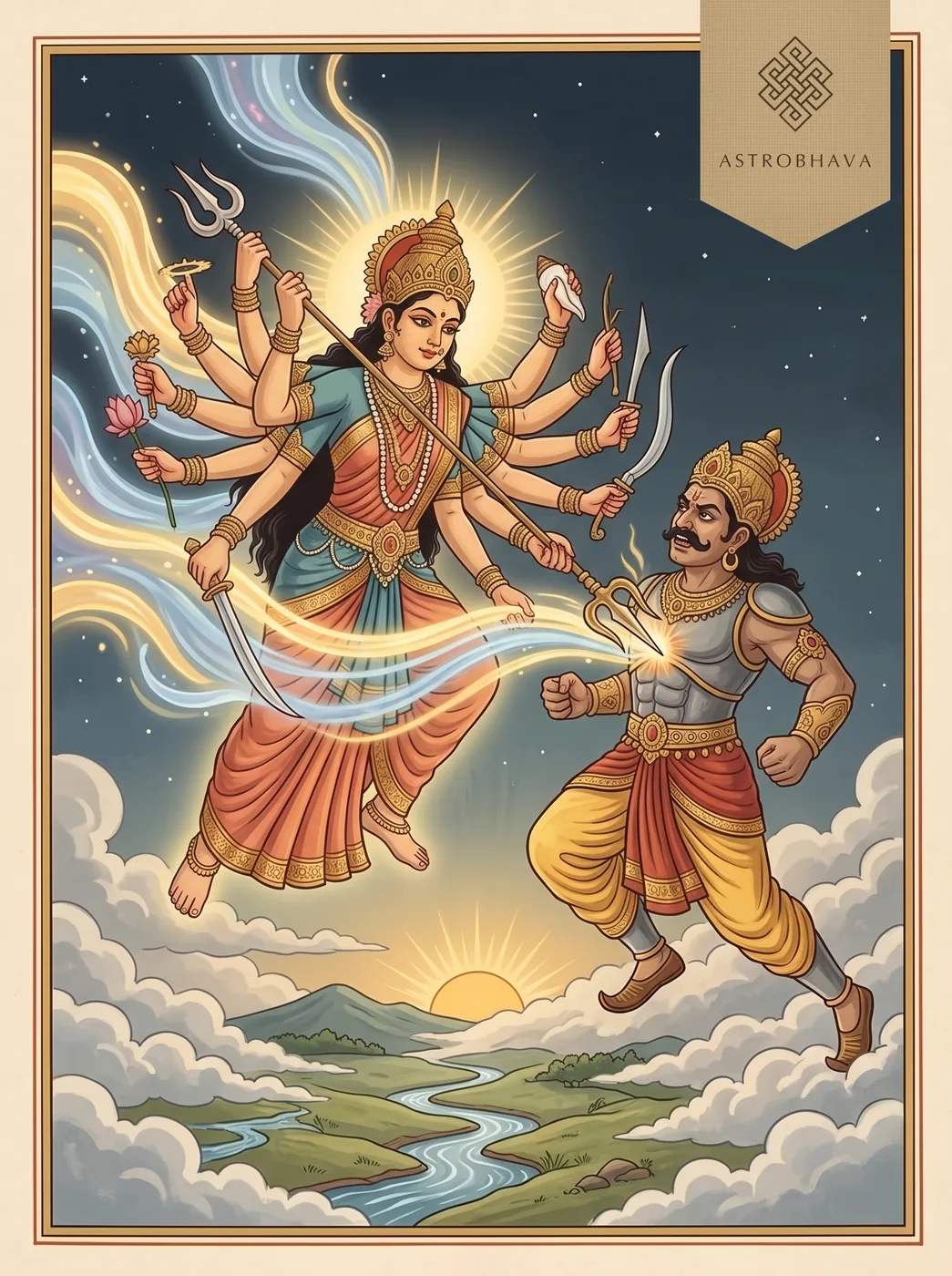
Durga Saptashati Chapter 10 (Shumbha Vadha, the slaying of Shumbha, as its concluding colophon has it) is the shortest battle chapter of the last episode and ends the war that began in chapter 5. Kameshvari is the subject of the dhyana the standard printed edition sets at its start: golden as refined metal, with the sun, moon and fire for her three eyes, holding bow, arrows, goad, noose and trident, wearing the crescent moon and described as the form of Shiva and Shakti together. The chapter opens directly after Nishumbha's death in chapter 9. In verses 2 and 3 Shumbha, grieving his brother, taunts the Goddess for fighting with other women's strength. Her answer in verses 5 and 8 is the doctrinal centre of the chapter, and verse 6 shows it happen: the goddesses led by Brahmani dissolve into her body. Verses 10 to 27 are a single duel, watched by gods and demons alike, that runs weapon by weapon from divine missiles and bows down to fists and wrestling, until her trident pierces his chest. Unlike the earlier battle chapters, no army fights here and no new form springs from her: the Goddess fights alone, as she says she will. Verses 28 to 32 describe the world recovering. Of the 32 numbered lines, four only name a speaker (the sage at lines 1 and 9, the Goddess at 4 and 7) and line 32 is a half-verse.
Shumbha's taunt and the duel in the sky
With Nishumbha dead and his army being cut down, Shumbha turns his anger on the Goddess, calling her Durga and accusing her of pride while she leans on the strength of others. The others are the Mothers, the gods' own energies, who had entered the fight against Raktabija. She replies that she alone exists in the world and there is no second beside her; the goddesses he sees are her own powers, now returning into her. Verse 6 says that Brahmani and all the rest merge into her body and Ambika alone remains. She tells him to stand firm. What follows is told almost blow by blow. He breaks the hundreds of divine missiles she looses; she breaks his, as if in play, with fierce cries of 'hum'. She cuts his bow, his spear, his sword and his shield marked with a hundred moons, then his club. Unarmed, he punches her over the heart and she strikes his chest with her open palm, felling him. He rises, seizes her and carries her up into the sky, where, verse 22 says, she fights with nothing beneath her, a contest that verse 23 calls the first of its kind and that leaves the siddhas and sages amazed. She whirls him round and throws him to the earth; he charges again with his fist raised, and her trident pierces his chest. His fall shakes the earth with its oceans, islands and mountains, then the omens stop: the sky clears, rivers return to their courses, gandharvas sing and apsaras dance, and the sacrificial fires that had gone out blaze again.
The mantra, in six scripts
- निशुम्भं
- niśumbhaṃ — Nishumbha
- निहतं
- nihataṃ — slain
- दृष्ट्वा
- dṛṣṭvā — having seen
- भ्रातरं
- bhrātaraṃ — brother
- प्राणसम्मितम्
- prāṇasammitam — dear as life
- हन्यमानं
- hanyamānaṃ — being slain
- बलं
- balaṃ — army
- चैव
- caiva — and also
- शुम्भः
- śumbhaḥ — Shumbha
- क्रुद्धोऽब्रवीद्वचः
- kruddho'bravīdvacaḥ — in anger spoke words
Durga Saptashati Chapter 10 lyrics in full
The Kameshvari meditation verse and all 32 numbered lines of the chapter in the standard numbering; the speaker of each passage is named above it.
All 32 numbered lines, in Sanskrit, Tamil, Telugu, Kannada, Malayalam and English, each with its meaning. Choose a script:
Download the Durga Saptashati Chapter 10 PDFAll 32 numbered lines with their meanings, in Sanskrit. Free to print and keep.
ॐ उत्तप्तहेमरुचिरां रविचन्द्रवह्निनेत्रां धनुश्शरयुताङ्कुशपाशशूलम् ।
रम्यैर्भुजैश्च दधतीं शिवशक्तिरूपां कामेश्वरीं हृदि भजामि धृतेन्दुलेखाम् ॥
ௐ உத்தப்தஹேமருசிராம் ரவிசந்த்ரவஹ்நிநேத்ராம் தநுஶ்ஶரயுதாங்குஶபாஶஶூலம் ।
ரம்யைர்புஜைஶ்ச தததீம் ஶிவஶக்திரூபாம் காமேஶ்வரீம் ஹ்ருதி பஜாமி த்ருதேந்துலேகாம் ॥
ఓం ఉత్తప్తహేమరుచిరాం రవిచన్ద్రవహ్నినేత్రాం ధనుశ్శరయుతాఙ్కుశపాశశూలమ్ ।
రమ్యైర్భుజైశ్చ దధతీం శివశక్తిరూపాం కామేశ్వరీం హృది భజామి ధృతేన్దులేఖామ్ ॥
ಓಂ ಉತ್ತಪ್ತಹೇಮರುಚಿರಾಂ ರವಿಚನ್ದ್ರವಹ್ನಿನೇತ್ರಾಂ ಧನುಶ್ಶರಯುತಾಙ್ಕುಶಪಾಶಶೂಲಮ್ ।
ರಮ್ಯೈರ್ಭುಜೈಶ್ಚ ದಧತೀಂ ಶಿವಶಕ್ತಿರೂಪಾಂ ಕಾಮೇಶ್ವರೀಂ ಹೃದಿ ಭಜಾಮಿ ಧೃತೇನ್ದುಲೇಖಾಮ್ ॥
ഓം ഉത്തപ്തഹേമരുചിരാം രവിചന്ദ്രവഹ്നിനേത്രാം ധനുശ്ശരയുതാങ്കുശപാശശൂലമ് ।
രമ്യൈര്ഭുജൈശ്ച ദധതീം ശിവശക്തിരൂപാം കാമേശ്വരീം ഹൃദി ഭജാമി ധൃതേന്ദുലേഖാമ് ॥
oṃ uttaptahemarucirāṃ ravicandravahninetrāṃ dhanuśśarayutāṅkuśapāśaśūlam |
ramyairbhujaiśca dadhatīṃ śivaśaktirūpāṃ kāmeśvarīṃ hṛdi bhajāmi dhṛtendulekhām ||
Om. I meditate in my heart on Kameshvari, lovely as refined gold, whose three eyes are the sun, the moon and fire, who holds in her beautiful arms a bow with arrows, a goad, a noose and a trident. She is the form of Shiva and Shakti and wears the crescent moon.
ऋषिरुवाच
निशुम्भं निहतं दृष्ट्वा भ्रातरं प्राणसम्मितम् । हन्यमानं बलं चैव शुम्भः क्रुद्धोऽब्रवीद्वचः ॥
ருஷிருவாச
நிஶும்பம் நிஹதம் த்ருஷ்ட்வா ப்ராதரம் ப்ராணஸம்மிதம் । ஹந்யமாநம் பலம் சைவ ஶும்பஃ க்ருத்தோப்ரவீத்வசஃ ॥
ఋషిరువాచ
నిశుమ్భం నిహతం దృష్ట్వా భ్రాతరం ప్రాణసమ్మితమ్ । హన్యమానం బలం చైవ శుమ్భః క్రుద్ధోఽబ్రవీద్వచః ॥
ಋಷಿರುವಾಚ
ನಿಶುಮ್ಭಂ ನಿಹತಂ ದೃಷ್ಟ್ವಾ ಭ್ರಾತರಂ ಪ್ರಾಣಸಮ್ಮಿತಮ್ । ಹನ್ಯಮಾನಂ ಬಲಂ ಚೈವ ಶುಮ್ಭಃ ಕ್ರುದ್ಧೋಽಬ್ರವೀದ್ವಚಃ ॥
ഋഷിരുവാച
നിശുമ്ഭം നിഹതം ദൃഷ്ട്വാ ഭ്രാതരം പ്രാണസമ്മിതമ് । ഹന്യമാനം ബലം ചൈവ ശുമ്ഭഃ ക്രുദ്ധോഽബ്രവീദ്വചഃ ॥
ṛṣiruvāca
niśumbhaṃ nihataṃ dṛṣṭvā bhrātaraṃ prāṇasammitam | hanyamānaṃ balaṃ caiva śumbhaḥ kruddho'bravīdvacaḥ ||
The sage said: Seeing his brother Nishumbha, dear to him as his own life, slain, and his army being cut down, Shumbha spoke in anger.
बलावलेपाद् दुष्टे त्वं मा दुर्गे गर्वमावह ।
अन्यासां बलमाश्रित्य युद्ध्यसे यातिमानिनी ॥
பலாவலேபாத் துஷ்டே த்வம் மா துர்கே கர்வமாவஹ ।
அந்யாஸாம் பலமாஶ்ரித்ய யுத்த்யஸே யாதிமாநிநீ ॥
బలావలేపాద్ దుష్టే త్వం మా దుర్గే గర్వమావహ ।
అన్యాసాం బలమాశ్రిత్య యుద్ధ్యసే యాతిమానినీ ॥
ಬಲಾವಲೇಪಾದ್ ದುಷ್ಟೇ ತ್ವಂ ಮಾ ದುರ್ಗೇ ಗರ್ವಮಾವಹ ।
ಅನ್ಯಾಸಾಂ ಬಲಮಾಶ್ರಿತ್ಯ ಯುದ್ಧ್ಯಸೇ ಯಾತಿಮಾನಿನೀ ॥
ബലാവലേപാദ് ദുഷ്ടേ ത്വം മാ ദുര്ഗേ ഗര്വമാവഹ ।
അന്യാസാം ബലമാശ്രിത്യ യുദ്ധ്യസേ യാതിമാനിനീ ॥
balāvalepād duṣṭe tvaṃ mā durge garvamāvaha |
anyāsāṃ balamāśritya yuddhyase yātimāninī ||
Wicked Durga, swollen with pride in your strength, do not be so arrogant. You think so highly of yourself, yet you fight by leaning on the strength of other women.
देव्युवाच
एकैवाहं जगत्यत्र द्वितीया का ममापरा । पश्यैता दुष्ट मय्येव विशन्त्यो मद्विभूतयः ॥
தேவ்யுவாச
ஏகைவாஹம் ஜகத்யத்ர த்விதீயா கா மமாபரா । பஶ்யைதா துஷ்ட மய்யேவ விஶந்த்யோ மத்விபூதயஃ ॥
దేవ్యువాచ
ఏకైవాహం జగత్యత్ర ద్వితీయా కా మమాపరా । పశ్యైతా దుష్ట మయ్యేవ విశన్త్యో మద్విభూతయః ॥
ದೇವ್ಯುವಾಚ
ಏಕೈವಾಹಂ ಜಗತ್ಯತ್ರ ದ್ವಿತೀಯಾ ಕಾ ಮಮಾಪರಾ । ಪಶ್ಯೈತಾ ದುಷ್ಟ ಮಯ್ಯೇವ ವಿಶನ್ತ್ಯೋ ಮದ್ವಿಭೂತಯಃ ॥
ദേവ്യുവാച
ഏകൈവാഹം ജഗത്യത്ര ദ്വിതീയാ കാ മമാപരാ । പശ്യൈതാ ദുഷ്ട മയ്യേവ വിശന്ത്യോ മദ്വിഭൂതയഃ ॥
devyuvāca
ekaivāhaṃ jagatyatra dvitīyā kā mamāparā | paśyaitā duṣṭa mayyeva viśantyo madvibhūtayaḥ ||
The Goddess said: I alone exist here in the world; who else is there besides me? Look, wicked one, these are my own powers, entering back into me.
ततः समस्तास्ता देव्यो ब्रह्माणीप्रमुखा लयम् ।
तस्या देव्यास्तनौ जग्मुरेकैवासीत्तदाम्बिका ॥
ததஃ ஸமஸ்தாஸ்தா தேவ்யோ ப்ரஹ்மாணீப்ரமுகா லயம் ।
தஸ்யா தேவ்யாஸ்தநௌ ஜக்முரேகைவாஸீத்ததாம்பிகா ॥
తతః సమస్తాస్తా దేవ్యో బ్రహ్మాణీప్రముఖా లయమ్ ।
తస్యా దేవ్యాస్తనౌ జగ్మురేకైవాసీత్తదామ్బికా ॥
ತತಃ ಸಮಸ್ತಾಸ್ತಾ ದೇವ್ಯೋ ಬ್ರಹ್ಮಾಣೀಪ್ರಮುಖಾ ಲಯಮ್ ।
ತಸ್ಯಾ ದೇವ್ಯಾಸ್ತನೌ ಜಗ್ಮುರೇಕೈವಾಸೀತ್ತದಾಮ್ಬಿಕಾ ॥
തതഃ സമസ്താസ്താ ദേവ്യോ ബ്രഹ്മാണീപ്രമുഖാ ലയമ് ।
തസ്യാ ദേവ്യാസ്തനൌ ജഗ്മുരേകൈവാസീത്തദാമ്ബികാ ॥
tataḥ samastāstā devyo brahmāṇīpramukhā layam |
tasyā devyāstanau jagmurekaivāsīttadāmbikā ||
Then all those goddesses, led by Brahmani, merged into the body of that Goddess, and Ambika alone remained.
देव्युवाच
अहं विभूत्या बहुभिरिह रूपैर्यदास्थिता । तत्संहृतं मयैकैव तिष्ठाम्याजौ स्थिरो भव ॥
தேவ்யுவாச
அஹம் விபூத்யா பஹுபிரிஹ ரூபைர்யதாஸ்திதா । தத்ஸம்ஹ்ருதம் மயைகைவ திஷ்டாம்யாஜௌ ஸ்திரோ பவ ॥
దేవ్యువాచ
అహం విభూత్యా బహుభిరిహ రూపైర్యదాస్థితా । తత్సంహృతం మయైకైవ తిష్ఠామ్యాజౌ స్థిరో భవ ॥
ದೇವ್ಯುವಾಚ
ಅಹಂ ವಿಭೂತ್ಯಾ ಬಹುಭಿರಿಹ ರೂಪೈರ್ಯದಾಸ್ಥಿತಾ । ತತ್ಸಂಹೃತಂ ಮಯೈಕೈವ ತಿಷ್ಠಾಮ್ಯಾಜೌ ಸ್ಥಿರೋ ಭವ ॥
ദേവ്യുവാച
അഹം വിഭൂത്യാ ബഹുഭിരിഹ രൂപൈര്യദാസ്ഥിതാ । തത്സംഹൃതം മയൈകൈവ തിഷ്ഠാമ്യാജൌ സ്ഥിരോ ഭവ ॥
devyuvāca
ahaṃ vibhūtyā bahubhiriha rūpairyadāsthitā | tatsaṃhṛtaṃ mayaikaiva tiṣṭhāmyājau sthiro bhava ||
The Goddess said: The many forms I took here through my power I have now drawn back into myself. I stand alone in the battle; hold your ground.
ऋषिरुवाच
ततः प्रववृते युद्धं देव्याः शुम्भस्य चोभयोः । पश्यतां सर्वदेवानामसुराणां च दारुणम् ॥
ருஷிருவாச
ததஃ ப்ரவவ்ருதே யுத்தம் தேவ்யாஃ ஶும்பஸ்ய சோபயோஃ । பஶ்யதாம் ஸர்வதேவாநாமஸுராணாம் ச தாருணம் ॥
ఋషిరువాచ
తతః ప్రవవృతే యుద్ధం దేవ్యాః శుమ్భస్య చోభయోః । పశ్యతాం సర్వదేవానామసురాణాం చ దారుణమ్ ॥
ಋಷಿರುವಾಚ
ತತಃ ಪ್ರವವೃತೇ ಯುದ್ಧಂ ದೇವ್ಯಾಃ ಶುಮ್ಭಸ್ಯ ಚೋಭಯೋಃ । ಪಶ್ಯತಾಂ ಸರ್ವದೇವಾನಾಮಸುರಾಣಾಂ ಚ ದಾರುಣಮ್ ॥
ഋഷിരുവാച
തതഃ പ്രവവൃതേ യുദ്ധം ദേവ്യാഃ ശുമ്ഭസ്യ ചോഭയോഃ । പശ്യതാം സര്വദേവാനാമസുരാണാം ച ദാരുണമ് ॥
ṛṣiruvāca
tataḥ pravavṛte yuddhaṃ devyāḥ śumbhasya cobhayoḥ | paśyatāṃ sarvadevānāmasurāṇāṃ ca dāruṇam ||
The sage said: Then a terrible battle began between the two, the Goddess and Shumbha, while all the gods and demons looked on.
शरवर्षैः शितैः शस्त्रैस्तथास्त्रैश्चैव दारुणैः ।
तयोर्युद्धमभूद्भूयः सर्वलोकभयङ्करम् ॥
ஶரவர்ஷைஃ ஶிதைஃ ஶஸ்த்ரைஸ்ததாஸ்த்ரைஶ்சைவ தாருணைஃ ।
தயோர்யுத்தமபூத்பூயஃ ஸர்வலோகபயங்கரம் ॥
శరవర్షైః శితైః శస్త్రైస్తథాస్త్రైశ్చైవ దారుణైః ।
తయోర్యుద్ధమభూద్భూయః సర్వలోకభయఙ్కరమ్ ॥
ಶರವರ್ಷೈಃ ಶಿತೈಃ ಶಸ್ತ್ರೈಸ್ತಥಾಸ್ತ್ರೈಶ್ಚೈವ ದಾರುಣೈಃ ।
ತಯೋರ್ಯುದ್ಧಮಭೂದ್ಭೂಯಃ ಸರ್ವಲೋಕಭಯಙ್ಕರಮ್ ॥
ശരവര്ഷൈഃ ശിതൈഃ ശസ്ത്രൈസ്തഥാസ്ത്രൈശ്ചൈവ ദാരുണൈഃ ।
തയോര്യുദ്ധമഭൂദ്ഭൂയഃ സര്വലോകഭയങ്കരമ് ॥
śaravarṣaiḥ śitaiḥ śastraistathāstraiścaiva dāruṇaiḥ |
tayoryuddhamabhūdbhūyaḥ sarvalokabhayaṅkaram ||
With showers of arrows, sharp weapons and dreadful missiles, their fight grew fierce once more, striking fear into all the worlds.
दिव्यान्यस्त्राणि शतशो मुमुचे यान्यथाम्बिका ।
बभञ्ज तानि दैत्येन्द्रस्तत्प्रतीघातकर्तृभिः ॥
திவ்யாந்யஸ்த்ராணி ஶதஶோ முமுசே யாந்யதாம்பிகா ।
பபஞ்ஜ தாநி தைத்யேந்த்ரஸ்தத்ப்ரதீகாதகர்த்ருபிஃ ॥
దివ్యాన్యస్త్రాణి శతశో ముముచే యాన్యథామ్బికా ।
బభఞ్జ తాని దైత్యేన్ద్రస్తత్ప్రతీఘాతకర్తృభిః ॥
ದಿವ್ಯಾನ್ಯಸ್ತ್ರಾಣಿ ಶತಶೋ ಮುಮುಚೇ ಯಾನ್ಯಥಾಮ್ಬಿಕಾ ।
ಬಭಞ್ಜ ತಾನಿ ದೈತ್ಯೇನ್ದ್ರಸ್ತತ್ಪ್ರತೀಘಾತಕರ್ತೃಭಿಃ ॥
ദിവ്യാന്യസ്ത്രാണി ശതശോ മുമുചേ യാന്യഥാമ്ബികാ ।
ബഭഞ്ജ താനി ദൈത്യേന്ദ്രസ്തത്പ്രതീഘാതകര്തൃഭിഃ ॥
divyānyastrāṇi śataśo mumuce yānyathāmbikā |
babhañja tāni daityendrastatpratīghātakartṛbhiḥ ||
The hundreds of divine missiles that Ambika then released, the lord of the demons broke with weapons that countered them.
मुक्तानि तेन चास्त्राणि दिव्यानि परमेश्वरी ।
बभञ्ज लीलयैवोग्रहुङ्कारोच्चारणादिभिः ॥
முக்தாநி தேந சாஸ்த்ராணி திவ்யாநி பரமேஶ்வரீ ।
பபஞ்ஜ லீலயைவோக்ரஹுங்காரோச்சாரணாதிபிஃ ॥
ముక్తాని తేన చాస్త్రాణి దివ్యాని పరమేశ్వరీ ।
బభఞ్జ లీలయైవోగ్రహుఙ్కారోచ్చారణాదిభిః ॥
ಮುಕ್ತಾನಿ ತೇನ ಚಾಸ್ತ್ರಾಣಿ ದಿವ್ಯಾನಿ ಪರಮೇಶ್ವರೀ ।
ಬಭಞ್ಜ ಲೀಲಯೈವೋಗ್ರಹುಙ್ಕಾರೋಚ್ಚಾರಣಾದಿಭಿಃ ॥
മുക്താനി തേന ചാസ്ത്രാണി ദിവ്യാനി പരമേശ്വരീ ।
ബഭഞ്ജ ലീലയൈവോഗ്രഹുങ്കാരോച്ചാരണാദിഭിഃ ॥
muktāni tena cāstrāṇi divyāni parameśvarī |
babhañja līlayaivograhuṅkāroccāraṇādibhiḥ ||
And the divine missiles he released, the Supreme Goddess broke as if in play, by uttering fierce cries of hum and the like.
ततः शरशतैर्देवीमाच्छादयत सोऽसुरः ।
सापि तत्कुपिता देवी धनुश्चिच्छेद चेषुभिः ॥
ததஃ ஶரஶதைர்தேவீமாச்சாதயத ஸோஸுரஃ ।
ஸாபி தத்குபிதா தேவீ தநுஶ்சிச்சேத சேஷுபிஃ ॥
తతః శరశతైర్దేవీమాచ్ఛాదయత సోఽసురః ।
సాపి తత్కుపితా దేవీ ధనుశ్చిచ్ఛేద చేషుభిః ॥
ತತಃ ಶರಶತೈರ್ದೇವೀಮಾಚ್ಛಾದಯತ ಸೋಽಸುರಃ ।
ಸಾಪಿ ತತ್ಕುಪಿತಾ ದೇವೀ ಧನುಶ್ಚಿಚ್ಛೇದ ಚೇಷುಭಿಃ ॥
തതഃ ശരശതൈര്ദേവീമാച്ഛാദയത സോഽസുരഃ ।
സാപി തത്കുപിതാ ദേവീ ധനുശ്ചിച്ഛേദ ചേഷുഭിഃ ॥
tataḥ śaraśatairdevīmācchādayata so'suraḥ |
sāpi tatkupitā devī dhanuściccheda ceṣubhiḥ ||
Then the demon covered the Goddess with hundreds of arrows. Angered by this, the Goddess cut his bow apart with her arrows.
छिन्ने धनुषि दैत्येन्द्रस्तथा शक्तिमथाददे ।
चिच्छेद देवी चक्रेण तामप्यस्य करे स्थिताम् ॥
சிந்நே தநுஷி தைத்யேந்த்ரஸ்ததா ஶக்திமதாததே ।
சிச்சேத தேவீ சக்ரேண தாமப்யஸ்ய கரே ஸ்திதாம் ॥
ఛిన్నే ధనుషి దైత్యేన్ద్రస్తథా శక్తిమథాదదే ।
చిచ్ఛేద దేవీ చక్రేణ తామప్యస్య కరే స్థితామ్ ॥
ಛಿನ್ನೇ ಧನುಷಿ ದೈತ್ಯೇನ್ದ್ರಸ್ತಥಾ ಶಕ್ತಿಮಥಾದದೇ ।
ಚಿಚ್ಛೇದ ದೇವೀ ಚಕ್ರೇಣ ತಾಮಪ್ಯಸ್ಯ ಕರೇ ಸ್ಥಿತಾಮ್ ॥
ഛിന്നേ ധനുഷി ദൈത്യേന്ദ്രസ്തഥാ ശക്തിമഥാദദേ ।
ചിച്ഛേദ ദേവീ ചക്രേണ താമപ്യസ്യ കരേ സ്ഥിതാമ് ॥
chinne dhanuṣi daityendrastathā śaktimathādade |
ciccheda devī cakreṇa tāmapyasya kare sthitām ||
His bow broken, the demon king took up a spear; the Goddess cut that too with her discus while it was still in his hand.
ततः खड्गमुपादाय शतचन्द्रं च भानुमत् ।
अभ्यधावत्तदा देवीं दैत्यानामधिपेश्वरः ॥
ததஃ கட்கமுபாதாய ஶதசந்த்ரம் ச பாநுமத் ।
அப்யதாவத்ததா தேவீம் தைத்யாநாமதிபேஶ்வரஃ ॥
తతః ఖడ్గముపాదాయ శతచన్ద్రం చ భానుమత్ ।
అభ్యధావత్తదా దేవీం దైత్యానామధిపేశ్వరః ॥
ತತಃ ಖಡ್ಗಮುಪಾದಾಯ ಶತಚನ್ದ್ರಂ ಚ ಭಾನುಮತ್ ।
ಅಭ್ಯಧಾವತ್ತದಾ ದೇವೀಂ ದೈತ್ಯಾನಾಮಧಿಪೇಶ್ವರಃ ॥
തതഃ ഖഡ്ഗമുപാദായ ശതചന്ദ്രം ച ഭാനുമത് ।
അഭ്യധാവത്തദാ ദേവീം ദൈത്യാനാമധിപേശ്വരഃ ॥
tataḥ khaḍgamupādāya śatacandraṃ ca bhānumat |
abhyadhāvattadā devīṃ daityānāmadhipeśvaraḥ ||
Then the overlord of the demons took up a sword and a gleaming shield marked with a hundred moons, and rushed at the Goddess.
तस्यापतत एवाशु खड्गं चिच्छेद चण्डिका ।
धनुर्मुक्तैः सितैर्बाणैश्चर्म चार्ककरामलम् ॥
தஸ்யாபதத ஏவாஶு கட்கம் சிச்சேத சண்டிகா ।
தநுர்முக்தைஃ ஸிதைர்பாணைஶ்சர்ம சார்ககராமலம் ॥
తస్యాపతత ఏవాశు ఖడ్గం చిచ్ఛేద చణ్డికా ।
ధనుర్ముక్తైః సితైర్బాణైశ్చర్మ చార్కకరామలమ్ ॥
ತಸ್ಯಾಪತತ ಏವಾಶು ಖಡ್ಗಂ ಚಿಚ್ಛೇದ ಚಣ್ಡಿಕಾ ।
ಧನುರ್ಮುಕ್ತೈಃ ಸಿತೈರ್ಬಾಣೈಶ್ಚರ್ಮ ಚಾರ್ಕಕರಾಮಲಮ್ ॥
തസ്യാപതത ഏവാശു ഖഡ്ഗം ചിച്ഛേദ ചണ്ഡികാ ।
ധനുര്മുക്തൈഃ സിതൈര്ബാണൈശ്ചര്മ ചാര്കകരാമലമ് ॥
tasyāpatata evāśu khaḍgaṃ ciccheda caṇḍikā |
dhanurmuktaiḥ sitairbāṇaiścarma cārkakarāmalam ||
Even as he charged, Chandika swiftly cut his sword, and with bright arrows loosed from her bow she cut his shield, which shone like the rays of the sun.
हताश्वः स तदा दैत्यश्छिन्नधन्वा विसारथिः ।
जग्राह मुद्गरं घोरमम्बिकानिधनोद्यतः ॥
ஹதாஶ்வஃ ஸ ததா தைத்யஶ்சிந்நதந்வா விஸாரதிஃ ।
ஜக்ராஹ முத்கரம் கோரமம்பிகாநிதநோத்யதஃ ॥
హతాశ్వః స తదా దైత్యశ్ఛిన్నధన్వా విసారథిః ।
జగ్రాహ ముద్గరం ఘోరమమ్బికానిధనోద్యతః ॥
ಹತಾಶ್ವಃ ಸ ತದಾ ದೈತ್ಯಶ್ಛಿನ್ನಧನ್ವಾ ವಿಸಾರಥಿಃ ।
ಜಗ್ರಾಹ ಮುದ್ಗರಂ ಘೋರಮಮ್ಬಿಕಾನಿಧನೋದ್ಯತಃ ॥
ഹതാശ്വഃ സ തദാ ദൈത്യശ്ഛിന്നധന്വാ വിസാരഥിഃ ।
ജഗ്രാഹ മുദ്ഗരം ഘോരമമ്ബികാനിധനോദ്യതഃ ॥
hatāśvaḥ sa tadā daityaśchinnadhanvā visārathiḥ |
jagrāha mudgaraṃ ghoramambikānidhanodyataḥ ||
His horses killed, his bow broken and his charioteer gone, the demon then seized a terrible club, bent on killing Ambika.
चिच्छेदापततस्तस्य मुद्गरं निशितैः शरैः ।
तथापि सोऽभ्यधावत्तां मुष्टिमुद्यम्य वेगवान् ॥
சிச்சேதாபததஸ்தஸ்ய முத்கரம் நிஶிதைஃ ஶரைஃ ।
ததாபி ஸோப்யதாவத்தாம் முஷ்டிமுத்யம்ய வேகவாந் ॥
చిచ్ఛేదాపతతస్తస్య ముద్గరం నిశితైః శరైః ।
తథాపి సోఽభ్యధావత్తాం ముష్టిముద్యమ్య వేగవాన్ ॥
ಚಿಚ್ಛೇದಾಪತತಸ್ತಸ್ಯ ಮುದ್ಗರಂ ನಿಶಿತೈಃ ಶರೈಃ ।
ತಥಾಪಿ ಸೋಽಭ್ಯಧಾವತ್ತಾಂ ಮುಷ್ಟಿಮುದ್ಯಮ್ಯ ವೇಗವಾನ್ ॥
ചിച്ഛേദാപതതസ്തസ്യ മുദ്ഗരം നിശിതൈഃ ശരൈഃ ।
തഥാപി സോഽഭ്യധാവത്താം മുഷ്ടിമുദ്യമ്യ വേഗവാന് ॥
cicchedāpatatastasya mudgaraṃ niśitaiḥ śaraiḥ |
tathāpi so'bhyadhāvattāṃ muṣṭimudyamya vegavān ||
As he came at her she cut his club with sharp arrows; even so he rushed at her swiftly with his fist raised.
स मुष्टिं पातयामास हृदये दैत्यपुङ्गवः ।
देव्यास्तं चापि सा देवी तलेनोरस्यताडयत् ॥
ஸ முஷ்டிம் பாதயாமாஸ ஹ்ருதயே தைத்யபுங்கவஃ ।
தேவ்யாஸ்தம் சாபி ஸா தேவீ தலேநோரஸ்யதாடயத் ॥
స ముష్టిం పాతయామాస హృదయే దైత్యపుఙ్గవః ।
దేవ్యాస్తం చాపి సా దేవీ తలేనోరస్యతాడయత్ ॥
ಸ ಮುಷ್ಟಿಂ ಪಾತಯಾಮಾಸ ಹೃದಯೇ ದೈತ್ಯಪುಙ್ಗವಃ ।
ದೇವ್ಯಾಸ್ತಂ ಚಾಪಿ ಸಾ ದೇವೀ ತಲೇನೋರಸ್ಯತಾಡಯತ್ ॥
സ മുഷ്ടിം പാതയാമാസ ഹൃദയേ ദൈത്യപുങ്ഗവഃ ।
ദേവ്യാസ്തം ചാപി സാ ദേവീ തലേനോരസ്യതാഡയത് ॥
sa muṣṭiṃ pātayāmāsa hṛdaye daityapuṅgavaḥ |
devyāstaṃ cāpi sā devī talenorasyatāḍayat ||
That bull among demons brought his fist down on the Goddess's heart, and the Goddess struck him on the chest with the flat of her hand.
तलप्रहाराभिहतो निपपात महीतले ।
स दैत्यराजः सहसा पुनरेव तथोत्थितः ॥
தலப்ரஹாராபிஹதோ நிபபாத மஹீதலே ।
ஸ தைத்யராஜஃ ஸஹஸா புநரேவ ததோத்திதஃ ॥
తలప్రహారాభిహతో నిపపాత మహీతలే ।
స దైత్యరాజః సహసా పునరేవ తథోత్థితః ॥
ತಲಪ್ರಹಾರಾಭಿಹತೋ ನಿಪಪಾತ ಮಹೀತಲೇ ।
ಸ ದೈತ್ಯರಾಜಃ ಸಹಸಾ ಪುನರೇವ ತಥೋತ್ಥಿತಃ ॥
തലപ്രഹാരാഭിഹതോ നിപപാത മഹീതലേ ।
സ ദൈത്യരാജഃ സഹസാ പുനരേവ തഥോത്ഥിതഃ ॥
talaprahārābhihato nipapāta mahītale |
sa daityarājaḥ sahasā punareva tathotthitaḥ ||
Struck by the blow of her palm, the demon king fell to the ground, but at once he rose up again.
उत्पत्य च प्रगृह्योच्चैर्देवीं गगनमास्थितः ।
तत्रापि सा निराधारा युयुधे तेन चण्डिका ॥
உத்பத்ய ச ப்ரக்ருஹ்யோச்சைர்தேவீம் ககநமாஸ்திதஃ ।
தத்ராபி ஸா நிராதாரா யுயுதே தேந சண்டிகா ॥
ఉత్పత్య చ ప్రగృహ్యోచ్చైర్దేవీం గగనమాస్థితః ।
తత్రాపి సా నిరాధారా యుయుధే తేన చణ్డికా ॥
ಉತ್ಪತ್ಯ ಚ ಪ್ರಗೃಹ್ಯೋಚ್ಚೈರ್ದೇವೀಂ ಗಗನಮಾಸ್ಥಿತಃ ।
ತತ್ರಾಪಿ ಸಾ ನಿರಾಧಾರಾ ಯುಯುಧೇ ತೇನ ಚಣ್ಡಿಕಾ ॥
ഉത്പത്യ ച പ്രഗൃഹ്യോച്ചൈര്ദേവീം ഗഗനമാസ്ഥിതഃ ।
തത്രാപി സാ നിരാധാരാ യുയുധേ തേന ചണ്ഡികാ ॥
utpatya ca pragṛhyoccairdevīṃ gaganamāsthitaḥ |
tatrāpi sā nirādhārā yuyudhe tena caṇḍikā ||
Leaping up, he seized the Goddess and rose high into the sky; there too Chandika, with nothing to stand on, fought with him.
नियुद्धं खे तदा दैत्यश्चण्डिका च परस्परम् ।
चक्रतुः प्रथमं सिद्धमुनिविस्मयकारकम् ॥
நியுத்தம் கே ததா தைத்யஶ்சண்டிகா ச பரஸ்பரம் ।
சக்ரதுஃ ப்ரதமம் ஸித்தமுநிவிஸ்மயகாரகம் ॥
నియుద్ధం ఖే తదా దైత్యశ్చణ్డికా చ పరస్పరమ్ ।
చక్రతుః ప్రథమం సిద్ధమునివిస్మయకారకమ్ ॥
ನಿಯುದ್ಧಂ ಖೇ ತದಾ ದೈತ್ಯಶ್ಚಣ್ಡಿಕಾ ಚ ಪರಸ್ಪರಮ್ ।
ಚಕ್ರತುಃ ಪ್ರಥಮಂ ಸಿದ್ಧಮುನಿವಿಸ್ಮಯಕಾರಕಮ್ ॥
നിയുദ്ധം ഖേ തദാ ദൈത്യശ്ചണ്ഡികാ ച പരസ്പരമ് ।
ചക്രതുഃ പ്രഥമം സിദ്ധമുനിവിസ്മയകാരകമ് ॥
niyuddhaṃ khe tadā daityaścaṇḍikā ca parasparam |
cakratuḥ prathamaṃ siddhamunivismayakārakam ||
Then the demon and Chandika fought each other hand to hand in the sky, a contest such as had never been, which filled the siddhas and sages with wonder.
ततो नियुद्धं सुचिरं कृत्वा तेनाम्बिका सह ।
उत्पात्य भ्रामयामास चिक्षेप धरणीतले ॥
ததோ நியுத்தம் ஸுசிரம் க்ருத்வா தேநாம்பிகா ஸஹ ।
உத்பாத்ய ப்ராமயாமாஸ சிக்ஷேப தரணீதலே ॥
తతో నియుద్ధం సుచిరం కృత్వా తేనామ్బికా సహ ।
ఉత్పాత్య భ్రామయామాస చిక్షేప ధరణీతలే ॥
ತತೋ ನಿಯುದ್ಧಂ ಸುಚಿರಂ ಕೃತ್ವಾ ತೇನಾಮ್ಬಿಕಾ ಸಹ ।
ಉತ್ಪಾತ್ಯ ಭ್ರಾಮಯಾಮಾಸ ಚಿಕ್ಷೇಪ ಧರಣೀತಲೇ ॥
തതോ നിയുദ്ധം സുചിരം കൃത്വാ തേനാമ്ബികാ സഹ ।
ഉത്പാത്യ ഭ്രാമയാമാസ ചിക്ഷേപ ധരണീതലേ ॥
tato niyuddhaṃ suciraṃ kṛtvā tenāmbikā saha |
utpātya bhrāmayāmāsa cikṣepa dharaṇītale ||
After wrestling with him for a long time, Ambika lifted him up, whirled him round and flung him to the ground.
स क्षिप्तो धरणीं प्राप्य मुष्टिमुद्यम्य वेगितः ।
अभ्यधावत दुष्टात्मा चण्डिकानिधनेच्छया ॥
ஸ க்ஷிப்தோ தரணீம் ப்ராப்ய முஷ்டிமுத்யம்ய வேகிதஃ ।
அப்யதாவத துஷ்டாத்மா சண்டிகாநிதநேச்சயா ॥
స క్షిప్తో ధరణీం ప్రాప్య ముష్టిముద్యమ్య వేగితః ।
అభ్యధావత దుష్టాత్మా చణ్డికానిధనేచ్ఛయా ॥
ಸ ಕ್ಷಿಪ್ತೋ ಧರಣೀಂ ಪ್ರಾಪ್ಯ ಮುಷ್ಟಿಮುದ್ಯಮ್ಯ ವೇಗಿತಃ ।
ಅಭ್ಯಧಾವತ ದುಷ್ಟಾತ್ಮಾ ಚಣ್ಡಿಕಾನಿಧನೇಚ್ಛಯಾ ॥
സ ക്ഷിപ്തോ ധരണീം പ്രാപ്യ മുഷ്ടിമുദ്യമ്യ വേഗിതഃ ।
അഭ്യധാവത ദുഷ്ടാത്മാ ചണ്ഡികാനിധനേച്ഛയാ ॥
sa kṣipto dharaṇīṃ prāpya muṣṭimudyamya vegitaḥ |
abhyadhāvata duṣṭātmā caṇḍikānidhanecchayā ||
Thrown down, the wicked one landed on the earth and, raising his fist, rushed swiftly at Chandika, wanting to kill her.
तमायान्तं ततो देवी सर्वदैत्यजनेश्वरम् ।
जगत्यां पातयामास भित्त्वा शूलेन वक्षसि ॥
தமாயாந்தம் ததோ தேவீ ஸர்வதைத்யஜநேஶ்வரம் ।
ஜகத்யாம் பாதயாமாஸ பித்த்வா ஶூலேந வக்ஷஸி ॥
తమాయాన్తం తతో దేవీ సర్వదైత్యజనేశ్వరమ్ ।
జగత్యాం పాతయామాస భిత్త్వా శూలేన వక్షసి ॥
ತಮಾಯಾನ್ತಂ ತತೋ ದೇವೀ ಸರ್ವದೈತ್ಯಜನೇಶ್ವರಮ್ ।
ಜಗತ್ಯಾಂ ಪಾತಯಾಮಾಸ ಭಿತ್ತ್ವಾ ಶೂಲೇನ ವಕ್ಷಸಿ ॥
തമായാന്തം തതോ ദേവീ സര്വദൈത്യജനേശ്വരമ് ।
ജഗത്യാം പാതയാമാസ ഭിത്ത്വാ ശൂലേന വക്ഷസി ॥
tamāyāntaṃ tato devī sarvadaityajaneśvaram |
jagatyāṃ pātayāmāsa bhittvā śūlena vakṣasi ||
As the lord of all the demon peoples came on, the Goddess pierced his chest with her trident and threw him down upon the earth.
स गतासुः पपातोर्व्यां देवीशूलाग्रविक्षतः ।
चालयन् सकलां पृथ्वीं साब्धिद्वीपां सपर्वताम् ॥
ஸ கதாஸுஃ பபாதோர்வ்யாம் தேவீஶூலாக்ரவிக்ஷதஃ ।
சாலயந் ஸகலாம் ப்ருத்வீம் ஸாப்தித்வீபாம் ஸபர்வதாம் ॥
స గతాసుః పపాతోర్వ్యాం దేవీశూలాగ్రవిక్షతః ।
చాలయన్ సకలాం పృథ్వీం సాబ్ధిద్వీపాం సపర్వతామ్ ॥
ಸ ಗತಾಸುಃ ಪಪಾತೋರ್ವ್ಯಾಂ ದೇವೀಶೂಲಾಗ್ರವಿಕ್ಷತಃ ।
ಚಾಲಯನ್ ಸಕಲಾಂ ಪೃಥ್ವೀಂ ಸಾಬ್ಧಿದ್ವೀಪಾಂ ಸಪರ್ವತಾಮ್ ॥
സ ഗതാസുഃ പപാതോര്വ്യാം ദേവീശൂലാഗ്രവിക്ഷതഃ ।
ചാലയന് സകലാം പൃഥ്വീം സാബ്ധിദ്വീപാം സപര്വതാമ് ॥
sa gatāsuḥ papātorvyāṃ devīśūlāgravikṣataḥ |
cālayan sakalāṃ pṛthvīṃ sābdhidvīpāṃ saparvatām ||
Torn by the point of the Goddess's trident, he fell lifeless to the ground, shaking the whole earth with its oceans, islands and mountains.
ततः प्रसन्नमखिलं हते तस्मिन् दुरात्मनि ।
जगत्स्वास्थ्यमतीवाप निर्मलं चाभवन्नभः ॥
ததஃ ப்ரஸந்நமகிலம் ஹதே தஸ்மிந் துராத்மநி ।
ஜகத்ஸ்வாஸ்த்யமதீவாப நிர்மலம் சாபவந்நபஃ ॥
తతః ప్రసన్నమఖిలం హతే తస్మిన్ దురాత్మని ।
జగత్స్వాస్థ్యమతీవాప నిర్మలం చాభవన్నభః ॥
ತತಃ ಪ್ರಸನ್ನಮಖಿಲಂ ಹತೇ ತಸ್ಮಿನ್ ದುರಾತ್ಮನಿ ।
ಜಗತ್ಸ್ವಾಸ್ಥ್ಯಮತೀವಾಪ ನಿರ್ಮಲಂ ಚಾಭವನ್ನಭಃ ॥
തതഃ പ്രസന്നമഖിലം ഹതേ തസ്മിന് ദുരാത്മനി ।
ജഗത്സ്വാസ്ഥ്യമതീവാപ നിര്മലം ചാഭവന്നഭഃ ॥
tataḥ prasannamakhilaṃ hate tasmin durātmani |
jagatsvāsthyamatīvāpa nirmalaṃ cābhavannabhaḥ ||
When that evil one was slain, the whole universe grew calm; the world was fully restored to health, and the sky became clear.
उत्पातमेघाः सोल्का ये प्रागासंस्ते शमं ययुः ।
सरितो मार्गवाहिन्यस्तथासंस्तत्र पातिते ॥
உத்பாதமேகாஃ ஸோல்கா யே ப்ராகாஸம்ஸ்தே ஶமம் யயுஃ ।
ஸரிதோ மார்கவாஹிந்யஸ்ததாஸம்ஸ்தத்ர பாதிதே ॥
ఉత్పాతమేఘాః సోల్కా యే ప్రాగాసంస్తే శమం యయుః ।
సరితో మార్గవాహిన్యస్తథాసంస్తత్ర పాతితే ॥
ಉತ್ಪಾತಮೇಘಾಃ ಸೋಲ್ಕಾ ಯೇ ಪ್ರಾಗಾಸಂಸ್ತೇ ಶಮಂ ಯಯುಃ ।
ಸರಿತೋ ಮಾರ್ಗವಾಹಿನ್ಯಸ್ತಥಾಸಂಸ್ತತ್ರ ಪಾತಿತೇ ॥
ഉത്പാതമേഘാഃ സോല്കാ യേ പ്രാഗാസംസ്തേ ശമം യയുഃ ।
സരിതോ മാര്ഗവാഹിന്യസ്തഥാസംസ്തത്ര പാതിതേ ॥
utpātameghāḥ solkā ye prāgāsaṃste śamaṃ yayuḥ |
sarito mārgavāhinyastathāsaṃstatra pātite ||
The ominous clouds and meteors seen before all died away, and once he was struck down the rivers flowed again in their proper courses.
ततो देवगणाः सर्वे हर्षनिर्भरमानसाः ।
बभूवुर्निहते तस्मिन् गन्धर्वा ललितं जगुः ॥
ததோ தேவகணாஃ ஸர்வே ஹர்ஷநிர்பரமாநஸாஃ ।
பபூவுர்நிஹதே தஸ்மிந் கந்தர்வா லலிதம் ஜகுஃ ॥
తతో దేవగణాః సర్వే హర్షనిర్భరమానసాః ।
బభూవుర్నిహతే తస్మిన్ గన్ధర్వా లలితం జగుః ॥
ತತೋ ದೇವಗಣಾಃ ಸರ್ವೇ ಹರ್ಷನಿರ್ಭರಮಾನಸಾಃ ।
ಬಭೂವುರ್ನಿಹತೇ ತಸ್ಮಿನ್ ಗನ್ಧರ್ವಾ ಲಲಿತಂ ಜಗುಃ ॥
തതോ ദേവഗണാഃ സര്വേ ഹര്ഷനിര്ഭരമാനസാഃ ।
ബഭൂവുര്നിഹതേ തസ്മിന് ഗന്ധര്വാ ലലിതം ജഗുഃ ॥
tato devagaṇāḥ sarve harṣanirbharamānasāḥ |
babhūvurnihate tasmin gandharvā lalitaṃ jaguḥ ||
With him slain, all the hosts of gods were filled with joy, and the gandharvas sang sweetly.
अवादयंस्तथैवान्ये ननृतुश्चाप्सरोगणाः ।
ववुः पुण्यास्तथा वाताः सुप्रभोऽभूद्दिवाकरः ॥
அவாதயம்ஸ்ததைவாந்யே நந்ருதுஶ்சாப்ஸரோகணாஃ ।
வவுஃ புண்யாஸ்ததா வாதாஃ ஸுப்ரபோபூத்திவாகரஃ ॥
అవాదయంస్తథైవాన్యే ననృతుశ్చాప్సరోగణాః ।
వవుః పుణ్యాస్తథా వాతాః సుప్రభోఽభూద్దివాకరః ॥
ಅವಾದಯಂಸ್ತಥೈವಾನ್ಯೇ ನನೃತುಶ್ಚಾಪ್ಸರೋಗಣಾಃ ।
ವವುಃ ಪುಣ್ಯಾಸ್ತಥಾ ವಾತಾಃ ಸುಪ್ರಭೋಽಭೂದ್ದಿವಾಕರಃ ॥
അവാദയംസ്തഥൈവാന്യേ നനൃതുശ്ചാപ്സരോഗണാഃ ।
വവുഃ പുണ്യാസ്തഥാ വാതാഃ സുപ്രഭോഽഭൂദ്ദിവാകരഃ ॥
avādayaṃstathaivānye nanṛtuścāpsarogaṇāḥ |
vavuḥ puṇyāstathā vātāḥ suprabho'bhūddivākaraḥ ||
Others played instruments, and the troupes of apsaras danced; pure winds blew, and the sun shone brightly.
जज्वलुश्चाग्नयः शान्ताः शान्ता दिग्जनितस्वनाः ॥
ஜஜ்வலுஶ்சாக்நயஃ ஶாந்தாஃ ஶாந்தா திக்ஜநிதஸ்வநாஃ ॥
జజ్వలుశ్చాగ్నయః శాన్తాః శాన్తా దిగ్జనితస్వనాః ॥
ಜಜ್ವಲುಶ್ಚಾಗ್ನಯಃ ಶಾನ್ತಾಃ ಶಾನ್ತಾ ದಿಗ್ಜನಿತಸ್ವನಾಃ ॥
ജജ്വലുശ്ചാഗ്നയഃ ശാന്താഃ ശാന്താ ദിഗ്ജനിതസ്വനാഃ ॥
jajvaluścāgnayaḥ śāntāḥ śāntā digjanitasvanāḥ ||
The sacred fires that had gone out blazed up again, and the fearful sounds that had risen in every direction fell silent.
The syllable people get wrong
In verse 2, kruddho'bravīdvacaḥ (क्रुद्धोऽब्रवीद्वचः) hides a word behind the avagraha (ऽ): it stands for the a of abravīt, dropped after kruddhaḥ becomes kruddho, and is not sounded. Say krud-dho-bra-veed-va-chah, with a doubled dd, not 'krud-dho-a-bra-vit'.
When the Durga Saptashati Chapter 10 is chanted
Weekday. Friday
Festival. Navaratri, read with chapter 9 on the fifth day of the seven-day division
Questions
Have your chart read before you decide
Chanting is yours to do, and free. But which deity your situation calls for — and whether a mantra alone is the right response — depends on your chart. Sometimes it is; sometimes it is not.
- Over 30 years in the Guru–Sishya Parampara, from the age of five
- He reads every chart himself — 60 minutes, one to one, never delegated
- Charts are read only between sunrise and sunset, following tradition
