Durga Saptashati Chapter 9
विचित्रमिदमाख्यातं भगवन् भवता मम । देव्याश्चरितमाहात्म्यं रक्तबीजवधाश्रितम् ॥In Devanagari, Tamil, Telugu, Kannada, Malayalam and English — with the meaning of every word, and the one syllable most people pronounce wrongly.
 The Chandi Homa, performed for youBook →
What the Durga Saptashati Chapter 9 is
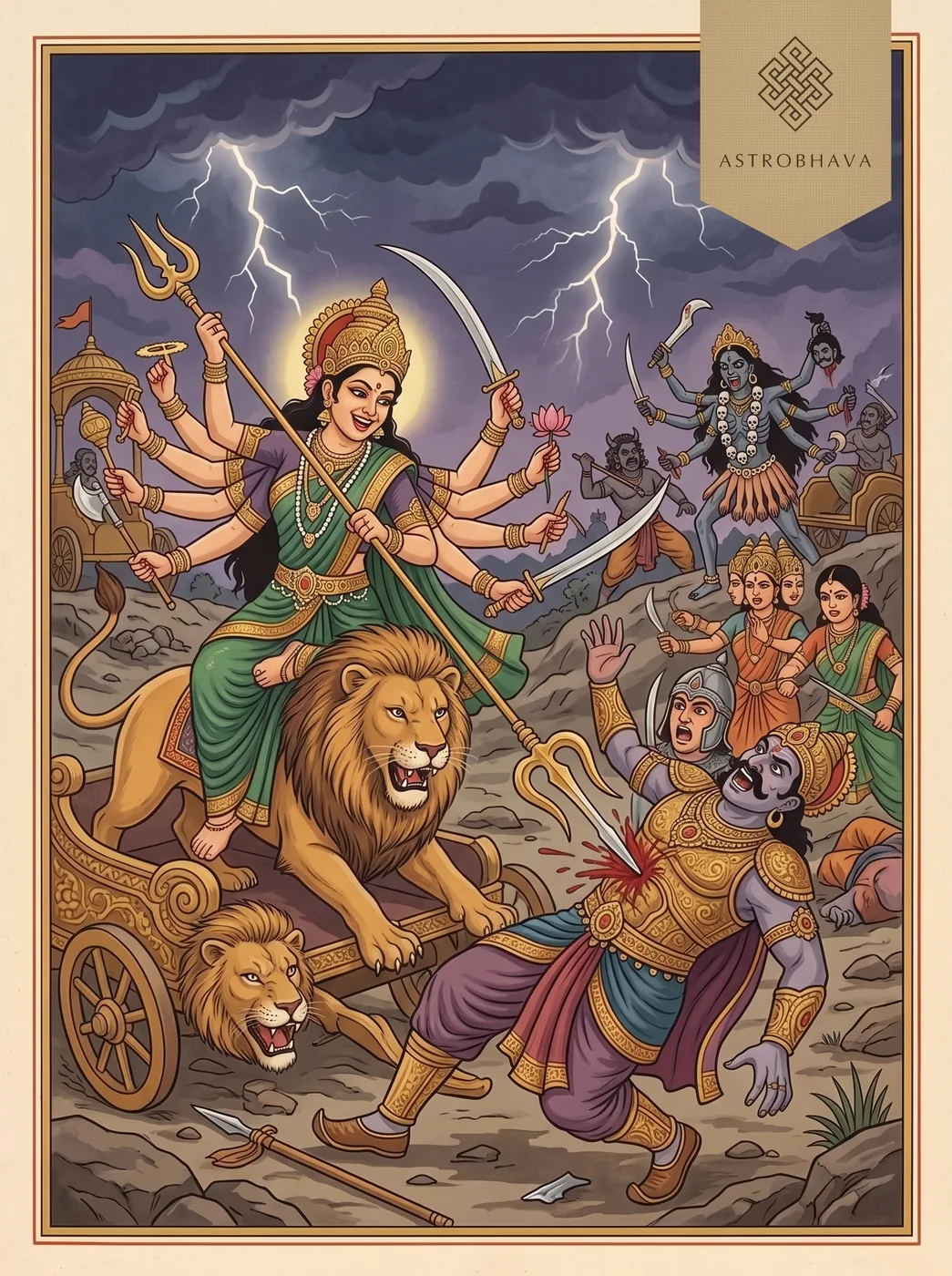
Durga Saptashati Chapter 9 ends with a colophon naming it Nishumbha Vadha, the slaying of Nishumbha, and is the fifth chapter of the last episode, the one given to Mahasaraswati. The meditation verse set before it in the standard printed edition is not addressed to a single goddess but to Ardhanarishvara, the form that is half Ambika and half Shiva: red as the bandhuka flower and gold, three-eyed, wearing the crescent moon, and holding a rosary, a noose and a goad with the fourth hand open in the gesture of giving. Verses 2 and 3 are the king's only lines in the chapter: having heard of Raktabija's death, he asks what Shumbha and the wrathful Nishumbha did next. Everything from verse 5 onward is the sage's answer. Verses 5 to 16 are Nishumbha's first assault and fall; verses 17 to 28 bring Shumbha in his chariot, the war of sounds and his collapse under the trident; verses 29 to 36 are Nishumbha's second attack and death; verses 37 to 41 show the lion, Kali, Shivaduti and six of the Mothers clearing the field. The Goddess is called Chandika, Ambika and Bhagavati through the fight, and only once by the name Durga, in verse 31, where she is 'Durga, who destroys the pain of hardship' as she cuts down Nishumbha's discuses. The chapter closes with Shumbha alive but unconscious, which leaves his fall to chapter 10.
Two brothers against the Goddess and her Mothers
With Raktabija dead, both brothers lose their temper at once (verse 5). Nishumbha charges first with the pick of the demon army, great demons pressing in front, behind and at either side of him, biting their lips (verses 6 and 7), and Shumbha follows with his own troops. Nishumbha goes for the lion, striking it on the head with his sword (verse 11), and the Goddess answers weapon by weapon: a razor-headed arrow cuts his sword and his shield of eight moons, her discus splits his spear, her fist grinds his trident to powder and her trident burns his mace to ash, until a flood of arrows lays him on the ground (verses 12 to 16). Shumbha now rises in his chariot with eight arms (verse 18), and the fight turns into a contest of noise: her conch, her bowstring and her bell, the lion's roar that robs elephants of their rut, Kali striking the earth with both palms, Shivaduti's ominous laughter, the gods in the sky shouting 'Victory' as she calls 'Stay, stay' (verses 19 to 24). Shumbha's blazing spear is turned aside by a great meteor-like flame (verse 25), and the two cut down each other's arrows by the hundred and the thousand (verse 27) before her trident fells him in a swoon (verse 28). Nishumbha comes to, grows ten thousand arms and buries her under discuses (verses 29 and 30), then charges with a mace at the head of what is left of the army; she cuts the mace apart with her sword, and he takes up a trident (verses 32 and 33). She pierces his heart (verse 34); a second warrior steps out of the wound shouting 'Stop', and she laughs and takes off his head (verses 35 and 36).
The mantra, in six scripts
- विचित्रमिदमाख्यातं
- vicitramidamākhyātaṃ — this wonderful (account) has been told
- भगवन्
- bhagavan — O lord
- भवता
- bhavatā — by you
- मम
- mama — to me
- देव्याश्चरितमाहात्म्यं
- devyāścaritamāhātmyaṃ — the Goddess's deeds and greatness
- रक्तबीजवधाश्रितम्
- raktabījavadhāśritam — concerning the slaying of Raktabija
Durga Saptashati Chapter 9 lyrics in full
The Ardhanarishvara meditation verse and all 41 numbered lines of the chapter in the standard numbering; lines 1 and 4 name the speaker and are printed above the verses they introduce.
All 41 numbered lines, in Sanskrit, Tamil, Telugu, Kannada, Malayalam and English, each with its meaning. Choose a script:
Download the Durga Saptashati Chapter 9 PDFAll 41 numbered lines with their meanings, in Sanskrit. Free to print and keep.
ॐ बन्धूककाञ्चननिभं रुचिराक्षमालां पाशाङ्कुशौ च वरदां निजबाहुदण्डैः ।
बिभ्राणमिन्दुशकलाभरणं त्रिनेत्रमर्धाम्बिकेशमनिशं वपुराश्रयामि ॥
ௐ பந்தூககாஞ்சநநிபம் ருசிராக்ஷமாலாம் பாஶாங்குஶௌ ச வரதாம் நிஜபாஹுதண்டைஃ ।
பிப்ராணமிந்துஶகலாபரணம் த்ரிநேத்ரமர்தாம்பிகேஶமநிஶம் வபுராஶ்ரயாமி ॥
ఓం బన్ధూకకాఞ్చననిభం రుచిరాక్షమాలాం పాశాఙ్కుశౌ చ వరదాం నిజబాహుదణ్డైః ।
బిభ్రాణమిన్దుశకలాభరణం త్రినేత్రమర్ధామ్బికేశమనిశం వపురాశ్రయామి ॥
ಓಂ ಬನ್ಧೂಕಕಾಞ್ಚನನಿಭಂ ರುಚಿರಾಕ್ಷಮಾಲಾಂ ಪಾಶಾಙ್ಕುಶೌ ಚ ವರದಾಂ ನಿಜಬಾಹುದಣ್ಡೈಃ ।
ಬಿಭ್ರಾಣಮಿನ್ದುಶಕಲಾಭರಣಂ ತ್ರಿನೇತ್ರಮರ್ಧಾಮ್ಬಿಕೇಶಮನಿಶಂ ವಪುರಾಶ್ರಯಾಮಿ ॥
ഓം ബന്ധൂകകാഞ്ചനനിഭം രുചിരാക്ഷമാലാം പാശാങ്കുശൌ ച വരദാം നിജബാഹുദണ്ഡൈഃ ।
ബിഭ്രാണമിന്ദുശകലാഭരണം ത്രിനേത്രമര്ധാമ്ബികേശമനിശം വപുരാശ്രയാമി ॥
oṃ bandhūkakāñcananibhaṃ rucirākṣamālāṃ pāśāṅkuśau ca varadāṃ nijabāhudaṇḍaiḥ |
bibhrāṇaminduśakalābharaṇaṃ trinetramardhāmbikeśamaniśaṃ vapurāśrayāmi ||
I take refuge always in the half-Ambika, half-Shiva form (Ardhanarishvara), glowing like the bandhuka flower and like gold, who holds in its own arms a fine rosary, a noose, a goad and the boon-giving gesture, wears the crescent moon as an ornament and has three eyes.
राजोवाच
विचित्रमिदमाख्यातं भगवन् भवता मम । देव्याश्चरितमाहात्म्यं रक्तबीजवधाश्रितम् ॥
ராஜோவாச
விசித்ரமிதமாக்யாதம் பகவந் பவதா மம । தேவ்யாஶ்சரிதமாஹாத்ம்யம் ரக்தபீஜவதாஶ்ரிதம் ॥
రాజోవాచ
విచిత్రమిదమాఖ్యాతం భగవన్ భవతా మమ । దేవ్యాశ్చరితమాహాత్మ్యం రక్తబీజవధాశ్రితమ్ ॥
ರಾಜೋವಾಚ
ವಿಚಿತ್ರಮಿದಮಾಖ್ಯಾತಂ ಭಗವನ್ ಭವತಾ ಮಮ । ದೇವ್ಯಾಶ್ಚರಿತಮಾಹಾತ್ಮ್ಯಂ ರಕ್ತಬೀಜವಧಾಶ್ರಿತಮ್ ॥
രാജോവാച
വിചിത്രമിദമാഖ്യാതം ഭഗവന് ഭവതാ മമ । ദേവ്യാശ്ചരിതമാഹാത്മ്യം രക്തബീജവധാശ്രിതമ് ॥
rājovāca
vicitramidamākhyātaṃ bhagavan bhavatā mama | devyāścaritamāhātmyaṃ raktabījavadhāśritam ||
The king said: Lord, you have told me a wonderful account of the Goddess's deeds and greatness, concerning the slaying of Raktabija.
भूयश्चेच्छाम्यहं श्रोतुं रक्तबीजे निपातिते ।
चकार शुम्भो यत्कर्म निशुम्भश्चातिकोपनः ॥
பூயஶ்சேச்சாம்யஹம் ஶ்ரோதும் ரக்தபீஜே நிபாதிதே ।
சகார ஶும்போ யத்கர்ம நிஶும்பஶ்சாதிகோபநஃ ॥
భూయశ్చేచ్ఛామ్యహం శ్రోతుం రక్తబీజే నిపాతితే ।
చకార శుమ్భో యత్కర్మ నిశుమ్భశ్చాతికోపనః ॥
ಭೂಯಶ್ಚೇಚ್ಛಾಮ್ಯಹಂ ಶ್ರೋತುಂ ರಕ್ತಬೀಜೇ ನಿಪಾತಿತೇ ।
ಚಕಾರ ಶುಮ್ಭೋ ಯತ್ಕರ್ಮ ನಿಶುಮ್ಭಶ್ಚಾತಿಕೋಪನಃ ॥
ഭൂയശ്ചേച്ഛാമ്യഹം ശ്രോതും രക്തബീജേ നിപാതിതേ ।
ചകാര ശുമ്ഭോ യത്കര്മ നിശുമ്ഭശ്ചാതികോപനഃ ॥
bhūyaścecchāmyahaṃ śrotuṃ raktabīje nipātite |
cakāra śumbho yatkarma niśumbhaścātikopanaḥ ||
I wish to hear more: after Raktabija fell, what did Shumbha do, and the very wrathful Nishumbha?
ऋषिरुवाच
चकार कोपमतुलं रक्तबीजे निपातिते । शुम्भासुरो निशुम्भश्च हतेष्वन्येषु चाहवे ॥
ருஷிருவாச
சகார கோபமதுலம் ரக்தபீஜே நிபாதிதே । ஶும்பாஸுரோ நிஶும்பஶ்ச ஹதேஷ்வந்யேஷு சாஹவே ॥
ఋషిరువాచ
చకార కోపమతులం రక్తబీజే నిపాతితే । శుమ్భాసురో నిశుమ్భశ్చ హతేష్వన్యేషు చాహవే ॥
ಋಷಿರುವಾಚ
ಚಕಾರ ಕೋಪಮತುಲಂ ರಕ್ತಬೀಜೇ ನಿಪಾತಿತೇ । ಶುಮ್ಭಾಸುರೋ ನಿಶುಮ್ಭಶ್ಚ ಹತೇಷ್ವನ್ಯೇಷು ಚಾಹವೇ ॥
ഋഷിരുവാച
ചകാര കോപമതുലം രക്തബീജേ നിപാതിതേ । ശുമ്ഭാസുരോ നിശുമ്ഭശ്ച ഹതേഷ്വന്യേഷു ചാഹവേ ॥
ṛṣiruvāca
cakāra kopamatulaṃ raktabīje nipātite | śumbhāsuro niśumbhaśca hateṣvanyeṣu cāhave ||
The sage said: When Raktabija had fallen and the others were slain in battle, the demon Shumbha and Nishumbha were seized by boundless anger.
हन्यमानं महासैन्यं विलोक्यामर्षमुद्वहन् ।
अभ्यधावन्निशुम्भोऽथ मुख्ययासुरसेनया ॥
ஹந்யமாநம் மஹாஸைந்யம் விலோக்யாமர்ஷமுத்வஹந் ।
அப்யதாவந்நிஶும்போத முக்யயாஸுரஸேநயா ॥
హన్యమానం మహాసైన్యం విలోక్యామర్షముద్వహన్ ।
అభ్యధావన్నిశుమ్భోఽథ ముఖ్యయాసురసేనయా ॥
ಹನ್ಯಮಾನಂ ಮಹಾಸೈನ್ಯಂ ವಿಲೋಕ್ಯಾಮರ್ಷಮುದ್ವಹನ್ ।
ಅಭ್ಯಧಾವನ್ನಿಶುಮ್ಭೋಽಥ ಮುಖ್ಯಯಾಸುರಸೇನಯಾ ॥
ഹന്യമാനം മഹാസൈന്യം വിലോക്യാമര്ഷമുദ്വഹന് ।
അഭ്യധാവന്നിശുമ്ഭോഽഥ മുഖ്യയാസുരസേനയാ ॥
hanyamānaṃ mahāsainyaṃ vilokyāmarṣamudvahan |
abhyadhāvanniśumbho'tha mukhyayāsurasenayā ||
Seeing his great army being destroyed, Nishumbha, burning with rage, rushed forward with the chief forces of the demons.
तस्याग्रतस्तथा पृष्ठे पार्श्वयोश्च महासुराः ।
संदष्टौष्ठपुटाः क्रुद्धा हन्तुं देवीमुपाययुः ॥
தஸ்யாக்ரதஸ்ததா ப்ருஷ்டே பார்ஶ்வயோஶ்ச மஹாஸுராஃ ।
ஸம்தஷ்டௌஷ்டபுடாஃ க்ருத்தா ஹந்தும் தேவீமுபாயயுஃ ॥
తస్యాగ్రతస్తథా పృష్ఠే పార్శ్వయోశ్చ మహాసురాః ।
సందష్టౌష్ఠపుటాః క్రుద్ధా హన్తుం దేవీముపాయయుః ॥
ತಸ್ಯಾಗ್ರತಸ್ತಥಾ ಪೃಷ್ಠೇ ಪಾರ್ಶ್ವಯೋಶ್ಚ ಮಹಾಸುರಾಃ ।
ಸಂದಷ್ಟೌಷ್ಠಪುಟಾಃ ಕ್ರುದ್ಧಾ ಹನ್ತುಂ ದೇವೀಮುಪಾಯಯುಃ ॥
തസ്യാഗ്രതസ്തഥാ പൃഷ്ഠേ പാര്ശ്വയോശ്ച മഹാസുരാഃ ।
സംദഷ്ടൌഷ്ഠപുടാഃ ക്രുദ്ധാ ഹന്തും ദേവീമുപായയുഃ ॥
tasyāgratastathā pṛṣṭhe pārśvayośca mahāsurāḥ |
saṃdaṣṭauṣṭhapuṭāḥ kruddhā hantuṃ devīmupāyayuḥ ||
In front of him, behind him and on both sides came great demons, biting their lips in fury, to kill the Goddess.
आजगाम महावीर्यः शुम्भोऽपि स्वबलैर्वृतः ।
निहन्तुं चण्डिकां कोपात्कृत्वा युद्धं तु मातृभिः ॥
ஆஜகாம மஹாவீர்யஃ ஶும்போபி ஸ்வபலைர்வ்ருதஃ ।
நிஹந்தும் சண்டிகாம் கோபாத்க்ருத்வா யுத்தம் து மாத்ருபிஃ ॥
ఆజగామ మహావీర్యః శుమ్భోఽపి స్వబలైర్వృతః ।
నిహన్తుం చణ్డికాం కోపాత్కృత్వా యుద్ధం తు మాతృభిః ॥
ಆಜಗಾಮ ಮಹಾವೀರ್ಯಃ ಶುಮ್ಭೋಽಪಿ ಸ್ವಬಲೈರ್ವೃತಃ ।
ನಿಹನ್ತುಂ ಚಣ್ಡಿಕಾಂ ಕೋಪಾತ್ಕೃತ್ವಾ ಯುದ್ಧಂ ತು ಮಾತೃಭಿಃ ॥
ആജഗാമ മഹാവീര്യഃ ശുമ്ഭോഽപി സ്വബലൈര്വൃതഃ ।
നിഹന്തും ചണ്ഡികാം കോപാത്കൃത്വാ യുദ്ധം തു മാതൃഭിഃ ॥
ājagāma mahāvīryaḥ śumbho'pi svabalairvṛtaḥ |
nihantuṃ caṇḍikāṃ kopātkṛtvā yuddhaṃ tu mātṛbhiḥ ||
Shumbha too, of great valour, came surrounded by his own forces, having fought with the Mothers, to slay Chandika in his anger.
ततो युद्धमतीवासीद् देव्या शुम्भनिशुम्भयोः ।
शरवर्षमतीवोग्रं मेघयोरिव वर्षतोः ॥
ததோ யுத்தமதீவாஸீத் தேவ்யா ஶும்பநிஶும்பயோஃ ।
ஶரவர்ஷமதீவோக்ரம் மேகயோரிவ வர்ஷதோஃ ॥
తతో యుద్ధమతీవాసీద్ దేవ్యా శుమ్భనిశుమ్భయోః ।
శరవర్షమతీవోగ్రం మేఘయోరివ వర్షతోః ॥
ತತೋ ಯುದ್ಧಮತೀವಾಸೀದ್ ದೇವ್ಯಾ ಶುಮ್ಭನಿಶುಮ್ಭಯೋಃ ।
ಶರವರ್ಷಮತೀವೋಗ್ರಂ ಮೇಘಯೋರಿವ ವರ್ಷತೋಃ ॥
തതോ യുദ്ധമതീവാസീദ് ദേവ്യാ ശുമ്ഭനിശുമ്ഭയോഃ ।
ശരവര്ഷമതീവോഗ്രം മേഘയോരിവ വര്ഷതോഃ ॥
tato yuddhamatīvāsīd devyā śumbhaniśumbhayoḥ |
śaravarṣamatīvograṃ meghayoriva varṣatoḥ ||
Then a fierce battle broke out between the Goddess and Shumbha and Nishumbha, who rained down a terrible shower of arrows like two clouds pouring rain.
चिच्छेदास्ताञ्छरांस्ताभ्यां चण्डिका स्वशरोत्करैः ।
ताडयामास चाङ्गेषु शस्त्रौघैरसुरेश्वरौ ॥
சிச்சேதாஸ்தாஞ்சராம்ஸ்தாப்யாம் சண்டிகா ஸ்வஶரோத்கரைஃ ।
தாடயாமாஸ சாங்கேஷு ஶஸ்த்ரௌகைரஸுரேஶ்வரௌ ॥
చిచ్ఛేదాస్తాఞ్ఛరాంస్తాభ్యాం చణ్డికా స్వశరోత్కరైః ।
తాడయామాస చాఙ్గేషు శస్త్రౌఘైరసురేశ్వరౌ ॥
ಚಿಚ್ಛೇದಾಸ್ತಾಞ್ಛರಾಂಸ್ತಾಭ್ಯಾಂ ಚಣ್ಡಿಕಾ ಸ್ವಶರೋತ್ಕರೈಃ ।
ತಾಡಯಾಮಾಸ ಚಾಙ್ಗೇಷು ಶಸ್ತ್ರೌಘೈರಸುರೇಶ್ವರೌ ॥
ചിച്ഛേദാസ്താഞ്ഛരാംസ്താഭ്യാം ചണ്ഡികാ സ്വശരോത്കരൈഃ ।
താഡയാമാസ ചാങ്ഗേഷു ശസ്ത്രൌഘൈരസുരേശ്വരൌ ॥
cicchedāstāñcharāṃstābhyāṃ caṇḍikā svaśarotkaraiḥ |
tāḍayāmāsa cāṅgeṣu śastraughairasureśvarau ||
Chandika cut down the arrows the two of them shot with swarms of her own arrows, and struck the two demon lords on their limbs with volleys of weapons.
निशुम्भो निशितं खड्गं चर्म चादाय सुप्रभम् ।
अताडयन्मूर्ध्नि सिंहं देव्या वाहनमुत्तमम् ॥
நிஶும்போ நிஶிதம் கட்கம் சர்ம சாதாய ஸுப்ரபம் ।
அதாடயந்மூர்த்நி ஸிம்ஹம் தேவ்யா வாஹநமுத்தமம் ॥
నిశుమ్భో నిశితం ఖడ్గం చర్మ చాదాయ సుప్రభమ్ ।
అతాడయన్మూర్ధ్ని సింహం దేవ్యా వాహనముత్తమమ్ ॥
ನಿಶುಮ್ಭೋ ನಿಶಿತಂ ಖಡ್ಗಂ ಚರ್ಮ ಚಾದಾಯ ಸುಪ್ರಭಮ್ ।
ಅತಾಡಯನ್ಮೂರ್ಧ್ನಿ ಸಿಂಹಂ ದೇವ್ಯಾ ವಾಹನಮುತ್ತಮಮ್ ॥
നിശുമ്ഭോ നിശിതം ഖഡ്ഗം ചര്മ ചാദായ സുപ്രഭമ് ।
അതാഡയന്മൂര്ധ്നി സിംഹം ദേവ്യാ വാഹനമുത്തമമ് ॥
niśumbho niśitaṃ khaḍgaṃ carma cādāya suprabham |
atāḍayanmūrdhni siṃhaṃ devyā vāhanamuttamam ||
Nishumbha took up a sharp sword and a shining shield and struck the lion, the Goddess's noble mount, on the head.
ताडिते वाहने देवी क्षुरप्रेणासिमुत्तमम् ।
निशुम्भस्याशु चिच्छेद चर्म चाप्यष्टचन्द्रकम् ॥
தாடிதே வாஹநே தேவீ க்ஷுரப்ரேணாஸிமுத்தமம் ।
நிஶும்பஸ்யாஶு சிச்சேத சர்ம சாப்யஷ்டசந்த்ரகம் ॥
తాడితే వాహనే దేవీ క్షురప్రేణాసిముత్తమమ్ ।
నిశుమ్భస్యాశు చిచ్ఛేద చర్మ చాప్యష్టచన్ద్రకమ్ ॥
ತಾಡಿತೇ ವಾಹನೇ ದೇವೀ ಕ್ಷುರಪ್ರೇಣಾಸಿಮುತ್ತಮಮ್ ।
ನಿಶುಮ್ಭಸ್ಯಾಶು ಚಿಚ್ಛೇದ ಚರ್ಮ ಚಾಪ್ಯಷ್ಟಚನ್ದ್ರಕಮ್ ॥
താഡിതേ വാഹനേ ദേവീ ക്ഷുരപ്രേണാസിമുത്തമമ് ।
നിശുമ്ഭസ്യാശു ചിച്ഛേദ ചര്മ ചാപ്യഷ്ടചന്ദ്രകമ് ॥
tāḍite vāhane devī kṣurapreṇāsimuttamam |
niśumbhasyāśu ciccheda carma cāpyaṣṭacandrakam ||
When her mount was struck, the Goddess quickly cut through Nishumbha's fine sword with a razor-edged arrow, and his shield marked with eight moons as well.
छिन्ने चर्मणि खड्गे च शक्तिं चिक्षेप सोऽसुरः ।
तामप्यस्य द्विधा चक्रे चक्रेणाभिमुखागताम् ॥
சிந்நே சர்மணி கட்கே ச ஶக்திம் சிக்ஷேப ஸோஸுரஃ ।
தாமப்யஸ்ய த்விதா சக்ரே சக்ரேணாபிமுகாகதாம் ॥
ఛిన్నే చర్మణి ఖడ్గే చ శక్తిం చిక్షేప సోఽసురః ।
తామప్యస్య ద్విధా చక్రే చక్రేణాభిముఖాగతామ్ ॥
ಛಿನ್ನೇ ಚರ್ಮಣಿ ಖಡ್ಗೇ ಚ ಶಕ್ತಿಂ ಚಿಕ್ಷೇಪ ಸೋಽಸುರಃ ।
ತಾಮಪ್ಯಸ್ಯ ದ್ವಿಧಾ ಚಕ್ರೇ ಚಕ್ರೇಣಾಭಿಮುಖಾಗತಾಮ್ ॥
ഛിന്നേ ചര്മണി ഖഡ്ഗേ ച ശക്തിം ചിക്ഷേപ സോഽസുരഃ ।
താമപ്യസ്യ ദ്വിധാ ചക്രേ ചക്രേണാഭിമുഖാഗതാമ് ॥
chinne carmaṇi khaḍge ca śaktiṃ cikṣepa so'suraḥ |
tāmapyasya dvidhā cakre cakreṇābhimukhāgatām ||
With his shield and sword cut down, the demon hurled a spear; as it came at her, she split it in two with her discus.
कोपाध्मातो निशुम्भोऽथ शूलं जग्राह दानवः ।
आयातं मुष्टिपातेन देवी तच्चाप्यचूर्णयत् ॥
கோபாத்மாதோ நிஶும்போத ஶூலம் ஜக்ராஹ தாநவஃ ।
ஆயாதம் முஷ்டிபாதேந தேவீ தச்சாப்யசூர்ணயத் ॥
కోపాధ్మాతో నిశుమ్భోఽథ శూలం జగ్రాహ దానవః ।
ఆయాతం ముష్టిపాతేన దేవీ తచ్చాప్యచూర్ణయత్ ॥
ಕೋಪಾಧ್ಮಾತೋ ನಿಶುಮ್ಭೋಽಥ ಶೂಲಂ ಜಗ್ರಾಹ ದಾನವಃ ।
ಆಯಾತಂ ಮುಷ್ಟಿಪಾತೇನ ದೇವೀ ತಚ್ಚಾಪ್ಯಚೂರ್ಣಯತ್ ॥
കോപാധ്മാതോ നിശുമ്ഭോഽഥ ശൂലം ജഗ്രാഹ ദാനവഃ ।
ആയാതം മുഷ്ടിപാതേന ദേവീ തച്ചാപ്യചൂര്ണയത് ॥
kopādhmāto niśumbho'tha śūlaṃ jagrāha dānavaḥ |
āyātaṃ muṣṭipātena devī taccāpyacūrṇayat ||
Swollen with rage, the demon Nishumbha seized a trident; as it came, the Goddess crushed it to powder with a blow of her fist.
आविध्याथ गदां सोऽपि चिक्षेप चण्डिकां प्रति ।
सापि देव्या त्रिशूलेन भिन्ना भस्मत्वमागता ॥
ஆவித்யாத கதாம் ஸோபி சிக்ஷேப சண்டிகாம் ப்ரதி ।
ஸாபி தேவ்யா த்ரிஶூலேந பிந்நா பஸ்மத்வமாகதா ॥
ఆవిధ్యాథ గదాం సోఽపి చిక్షేప చణ్డికాం ప్రతి ।
సాపి దేవ్యా త్రిశూలేన భిన్నా భస్మత్వమాగతా ॥
ಆವಿಧ್ಯಾಥ ಗದಾಂ ಸೋಽಪಿ ಚಿಕ್ಷೇಪ ಚಣ್ಡಿಕಾಂ ಪ್ರತಿ ।
ಸಾಪಿ ದೇವ್ಯಾ ತ್ರಿಶೂಲೇನ ಭಿನ್ನಾ ಭಸ್ಮತ್ವಮಾಗತಾ ॥
ആവിധ്യാഥ ഗദാം സോഽപി ചിക്ഷേപ ചണ്ഡികാം പ്രതി ।
സാപി ദേവ്യാ ത്രിശൂലേന ഭിന്നാ ഭസ്മത്വമാഗതാ ॥
āvidhyātha gadāṃ so'pi cikṣepa caṇḍikāṃ prati |
sāpi devyā triśūlena bhinnā bhasmatvamāgatā ||
Then he whirled a mace and hurled it at Chandika; it too was shattered by the Goddess's trident and turned to ashes.
ततः परशुहस्तं तमायान्तं दैत्यपुङ्गवम् ।
आहत्य देवी बाणौघैरपातयत भूतले ॥
ததஃ பரஶுஹஸ்தம் தமாயாந்தம் தைத்யபுங்கவம் ।
ஆஹத்ய தேவீ பாணௌகைரபாதயத பூதலே ॥
తతః పరశుహస్తం తమాయాన్తం దైత్యపుఙ్గవమ్ ।
ఆహత్య దేవీ బాణౌఘైరపాతయత భూతలే ॥
ತತಃ ಪರಶುಹಸ್ತಂ ತಮಾಯಾನ್ತಂ ದೈತ್ಯಪುಙ್ಗವಮ್ ।
ಆಹತ್ಯ ದೇವೀ ಬಾಣೌಘೈರಪಾತಯತ ಭೂತಲೇ ॥
തതഃ പരശുഹസ്തം തമായാന്തം ദൈത്യപുങ്ഗവമ് ।
ആഹത്യ ദേവീ ബാണൌഘൈരപാതയത ഭൂതലേ ॥
tataḥ paraśuhastaṃ tamāyāntaṃ daityapuṅgavam |
āhatya devī bāṇaughairapātayata bhūtale ||
Then, as that bull among demons came on with an axe in his hand, the Goddess struck him with a flood of arrows and laid him on the ground.
तस्मिन्निपतिते भूमौ निशुम्भे भीमविक्रमे ।
भ्रातर्यतीव संक्रुद्धः प्रययौ हन्तुमम्बिकाम् ॥
தஸ்மிந்நிபதிதே பூமௌ நிஶும்பே பீமவிக்ரமே ।
ப்ராதர்யதீவ ஸம்க்ருத்தஃ ப்ரயயௌ ஹந்துமம்பிகாம் ॥
తస్మిన్నిపతితే భూమౌ నిశుమ్భే భీమవిక్రమే ।
భ్రాతర్యతీవ సంక్రుద్ధః ప్రయయౌ హన్తుమమ్బికామ్ ॥
ತಸ್ಮಿನ್ನಿಪತಿತೇ ಭೂಮೌ ನಿಶುಮ್ಭೇ ಭೀಮವಿಕ್ರಮೇ ।
ಭ್ರಾತರ್ಯತೀವ ಸಂಕ್ರುದ್ಧಃ ಪ್ರಯಯೌ ಹನ್ತುಮಮ್ಬಿಕಾಮ್ ॥
തസ്മിന്നിപതിതേ ഭൂമൌ നിശുമ്ഭേ ഭീമവിക്രമേ ।
ഭ്രാതര്യതീവ സംക്രുദ്ധഃ പ്രയയൌ ഹന്തുമമ്ബികാമ് ॥
tasminnipatite bhūmau niśumbhe bhīmavikrame |
bhrātaryatīva saṃkruddhaḥ prayayau hantumambikām ||
When his brother Nishumbha, of terrible might, had fallen to the ground, Shumbha, in towering rage, set out to kill Ambika.
स रथस्थस्तथात्युच्चैर्गृहीतपरमायुधैः ।
भुजैरष्टाभिरतुलैर्व्याप्याशेषं बभौ नभः ॥
ஸ ரதஸ்தஸ்ததாத்யுச்சைர்க்ருஹீதபரமாயுதைஃ ।
புஜைரஷ்டாபிரதுலைர்வ்யாப்யாஶேஷம் பபௌ நபஃ ॥
స రథస్థస్తథాత్యుచ్చైర్గృహీతపరమాయుధైః ।
భుజైరష్టాభిరతులైర్వ్యాప్యాశేషం బభౌ నభః ॥
ಸ ರಥಸ್ಥಸ್ತಥಾತ್ಯುಚ್ಚೈರ್ಗೃಹೀತಪರಮಾಯುಧೈಃ ।
ಭುಜೈರಷ್ಟಾಭಿರತುಲೈರ್ವ್ಯಾಪ್ಯಾಶೇಷಂ ಬಭೌ ನಭಃ ॥
സ രഥസ്ഥസ്തഥാത്യുച്ചൈര്ഗൃഹീതപരമായുധൈഃ ।
ഭുജൈരഷ്ടാഭിരതുലൈര്വ്യാപ്യാശേഷം ബഭൌ നഭഃ ॥
sa rathasthastathātyuccairgṛhītaparamāyudhaiḥ |
bhujairaṣṭābhiratulairvyāpyāśeṣaṃ babhau nabhaḥ ||
Standing high in his chariot, with eight matchless arms holding excellent weapons, he shone as if filling the whole sky.
तमायान्तं समालोक्य देवी शङ्खमवादयत् ।
ज्याशब्दं चापि धनुषश्चकारातीव दुःसहम् ॥
தமாயாந்தம் ஸமாலோக்ய தேவீ ஶங்கமவாதயத் ।
ஜ்யாஶப்தம் சாபி தநுஷஶ்சகாராதீவ துஃஸஹம் ॥
తమాయాన్తం సమాలోక్య దేవీ శఙ్ఖమవాదయత్ ।
జ్యాశబ్దం చాపి ధనుషశ్చకారాతీవ దుఃసహమ్ ॥
ತಮಾಯಾನ್ತಂ ಸಮಾಲೋಕ್ಯ ದೇವೀ ಶಙ್ಖಮವಾದಯತ್ ।
ಜ್ಯಾಶಬ್ದಂ ಚಾಪಿ ಧನುಷಶ್ಚಕಾರಾತೀವ ದುಃಸಹಮ್ ॥
തമായാന്തം സമാലോക്യ ദേവീ ശങ്ഖമവാദയത് ।
ജ്യാശബ്ദം ചാപി ധനുഷശ്ചകാരാതീവ ദുഃസഹമ് ॥
tamāyāntaṃ samālokya devī śaṅkhamavādayat |
jyāśabdaṃ cāpi dhanuṣaścakārātīva duḥsaham ||
Seeing him come, the Goddess blew her conch and made the string of her bow twang with a sound very hard to bear.
पूरयामास ककुभो निजघण्टास्वनेन च ।
समस्तदैत्यसैन्यानां तेजोवधविधायिना ॥
பூரயாமாஸ ககுபோ நிஜகண்டாஸ்வநேந ச ।
ஸமஸ்ததைத்யஸைந்யாநாம் தேஜோவதவிதாயிநா ॥
పూరయామాస కకుభో నిజఘణ్టాస్వనేన చ ।
సమస్తదైత్యసైన్యానాం తేజోవధవిధాయినా ॥
ಪೂರಯಾಮಾಸ ಕಕುಭೋ ನಿಜಘಣ್ಟಾಸ್ವನೇನ ಚ ।
ಸಮಸ್ತದೈತ್ಯಸೈನ್ಯಾನಾಂ ತೇಜೋವಧವಿಧಾಯಿನಾ ॥
പൂരയാമാസ കകുഭോ നിജഘണ്ടാസ്വനേന ച ।
സമസ്തദൈത്യസൈന്യാനാം തേജോവധവിധായിനാ ॥
pūrayāmāsa kakubho nijaghaṇṭāsvanena ca |
samastadaityasainyānāṃ tejovadhavidhāyinā ||
She filled the quarters with the ringing of her own bell, a sound that destroyed the vigour of all the demon armies.
ततः सिंहो महानादैस्त्याजितेभमहामदैः ।
पूरयामास गगनं गां तथैव दिशो दश ॥
ததஃ ஸிம்ஹோ மஹாநாதைஸ்த்யாஜிதேபமஹாமதைஃ ।
பூரயாமாஸ ககநம் காம் ததைவ திஶோ தஶ ॥
తతః సింహో మహానాదైస్త్యాజితేభమహామదైః ।
పూరయామాస గగనం గాం తథైవ దిశో దశ ॥
ತತಃ ಸಿಂಹೋ ಮಹಾನಾದೈಸ್ತ್ಯಾಜಿತೇಭಮಹಾಮದೈಃ ।
ಪೂರಯಾಮಾಸ ಗಗನಂ ಗಾಂ ತಥೈವ ದಿಶೋ ದಶ ॥
തതഃ സിംഹോ മഹാനാദൈസ്ത്യാജിതേഭമഹാമദൈഃ ।
പൂരയാമാസ ഗഗനം ഗാം തഥൈവ ദിശോ ദശ ॥
tataḥ siṃho mahānādaistyājitebhamahāmadaiḥ |
pūrayāmāsa gaganaṃ gāṃ tathaiva diśo daśa ||
Then the lion filled the sky, the earth and all ten directions with great roars that robbed mighty elephants of their rut.
ततः काली समुत्पत्य गगनं क्ष्मामताडयत् ।
कराभ्यां तन्निनादेन प्राक्स्वनास्ते तिरोहिताः ॥
ததஃ காலீ ஸமுத்பத்ய ககநம் க்ஷ்மாமதாடயத் ।
கராப்யாம் தந்நிநாதேந ப்ராக்ஸ்வநாஸ்தே திரோஹிதாஃ ॥
తతః కాలీ సముత్పత్య గగనం క్ష్మామతాడయత్ ।
కరాభ్యాం తన్నినాదేన ప్రాక్స్వనాస్తే తిరోహితాః ॥
ತತಃ ಕಾಲೀ ಸಮುತ್ಪತ್ಯ ಗಗನಂ ಕ್ಷ್ಮಾಮತಾಡಯತ್ ।
ಕರಾಭ್ಯಾಂ ತನ್ನಿನಾದೇನ ಪ್ರಾಕ್ಸ್ವನಾಸ್ತೇ ತಿರೋಹಿತಾಃ ॥
തതഃ കാലീ സമുത്പത്യ ഗഗനം ക്ഷ്മാമതാഡയത് ।
കരാഭ്യാം തന്നിനാദേന പ്രാക്സ്വനാസ്തേ തിരോഹിതാഃ ॥
tataḥ kālī samutpatya gaganaṃ kṣmāmatāḍayat |
karābhyāṃ tanninādena prāksvanāste tirohitāḥ ||
Then Kali leapt into the sky and struck the earth with both hands; at that sound all the earlier sounds were drowned out.
अट्टाट्टहासमशिवं शिवदूती चकार ह ।
तैः शब्दैरसुरास्त्रेसुः शुम्भः कोपं परं ययौ ॥
அட்டாட்டஹாஸமஶிவம் ஶிவதூதீ சகார ஹ ।
தைஃ ஶப்தைரஸுராஸ்த்ரேஸுஃ ஶும்பஃ கோபம் பரம் யயௌ ॥
అట్టాట్టహాసమశివం శివదూతీ చకార హ ।
తైః శబ్దైరసురాస్త్రేసుః శుమ్భః కోపం పరం యయౌ ॥
ಅಟ್ಟಾಟ್ಟಹಾಸಮಶಿವಂ ಶಿವದೂತೀ ಚಕಾರ ಹ ।
ತೈಃ ಶಬ್ದೈರಸುರಾಸ್ತ್ರೇಸುಃ ಶುಮ್ಭಃ ಕೋಪಂ ಪರಂ ಯಯೌ ॥
അട്ടാട്ടഹാസമശിവം ശിവദൂതീ ചകാര ഹ ।
തൈഃ ശബ്ദൈരസുരാസ്ത്രേസുഃ ശുമ്ഭഃ കോപം പരം യയൌ ॥
aṭṭāṭṭahāsamaśivaṃ śivadūtī cakāra ha |
taiḥ śabdairasurāstresuḥ śumbhaḥ kopaṃ paraṃ yayau ||
Shivaduti let out an ominous, loud peal of laughter. At those sounds the demons trembled, and Shumbha flew into a great rage.
दुरात्मंस्तिष्ठ तिष्ठेति व्याजहाराम्बिका यदा ।
तदा जयेत्यभिहितं देवैराकाशसंस्थितैः ॥
துராத்மம்ஸ்திஷ்ட திஷ்டேதி வ்யாஜஹாராம்பிகா யதா ।
ததா ஜயேத்யபிஹிதம் தேவைராகாஶஸம்ஸ்திதைஃ ॥
దురాత్మంస్తిష్ఠ తిష్ఠేతి వ్యాజహారామ్బికా యదా ।
తదా జయేత్యభిహితం దేవైరాకాశసంస్థితైః ॥
ದುರಾತ್ಮಂಸ್ತಿಷ್ಠ ತಿಷ್ಠೇತಿ ವ್ಯಾಜಹಾರಾಮ್ಬಿಕಾ ಯದಾ ।
ತದಾ ಜಯೇತ್ಯಭಿಹಿತಂ ದೇವೈರಾಕಾಶಸಂಸ್ಥಿತೈಃ ॥
ദുരാത്മംസ്തിഷ്ഠ തിഷ്ഠേതി വ്യാജഹാരാമ്ബികാ യദാ ।
തദാ ജയേത്യഭിഹിതം ദേവൈരാകാശസംസ്ഥിതൈഃ ॥
durātmaṃstiṣṭha tiṣṭheti vyājahārāmbikā yadā |
tadā jayetyabhihitaṃ devairākāśasaṃsthitaiḥ ||
When Ambika cried, Evil one, stay, stay!, the gods standing in the sky called out, Victory!
शुम्भेनागत्य या शक्तिर्मुक्ता ज्वालातिभीषणा ।
आयान्ती वह्निकूटाभा सा निरस्ता महोल्कया ॥
ஶும்பேநாகத்ய யா ஶக்திர்முக்தா ஜ்வாலாதிபீஷணா ।
ஆயாந்தீ வஹ்நிகூடாபா ஸா நிரஸ்தா மஹோல்கயா ॥
శుమ్భేనాగత్య యా శక్తిర్ముక్తా జ్వాలాతిభీషణా ।
ఆయాన్తీ వహ్నికూటాభా సా నిరస్తా మహోల్కయా ॥
ಶುಮ್ಭೇನಾಗತ್ಯ ಯಾ ಶಕ್ತಿರ್ಮುಕ್ತಾ ಜ್ವಾಲಾತಿಭೀಷಣಾ ।
ಆಯಾನ್ತೀ ವಹ್ನಿಕೂಟಾಭಾ ಸಾ ನಿರಸ್ತಾ ಮಹೋಲ್ಕಯಾ ॥
ശുമ്ഭേനാഗത്യ യാ ശക്തിര്മുക്താ ജ്വാലാതിഭീഷണാ ।
ആയാന്തീ വഹ്നികൂടാഭാ സാ നിരസ്താ മഹോല്കയാ ॥
śumbhenāgatya yā śaktirmuktā jvālātibhīṣaṇā |
āyāntī vahnikūṭābhā sā nirastā maholkayā ||
The spear that Shumbha came forward and hurled, blazing and terrible, flashing like a mountain of fire as it came, was turned aside by a great meteor-like flame.
सिंहनादेन शुम्भस्य व्याप्तं लोकत्रयान्तरम् ।
निर्घातनिःस्वनो घोरो जितवानवनीपते ॥
ஸிம்ஹநாதேந ஶும்பஸ்ய வ்யாப்தம் லோகத்ரயாந்தரம் ।
நிர்காதநிஃஸ்வநோ கோரோ ஜிதவாநவநீபதே ॥
సింహనాదేన శుమ్భస్య వ్యాప్తం లోకత్రయాన్తరమ్ ।
నిర్ఘాతనిఃస్వనో ఘోరో జితవానవనీపతే ॥
ಸಿಂಹನಾದೇನ ಶುಮ್ಭಸ್ಯ ವ್ಯಾಪ್ತಂ ಲೋಕತ್ರಯಾನ್ತರಮ್ ।
ನಿರ್ಘಾತನಿಃಸ್ವನೋ ಘೋರೋ ಜಿತವಾನವನೀಪತೇ ॥
സിംഹനാദേന ശുമ്ഭസ്യ വ്യാപ്തം ലോകത്രയാന്തരമ് ।
നിര്ഘാതനിഃസ്വനോ ഘോരോ ജിതവാനവനീപതേ ॥
siṃhanādena śumbhasya vyāptaṃ lokatrayāntaram |
nirghātaniḥsvano ghoro jitavānavanīpate ||
King, Shumbha's lion-like roar filled the space of the three worlds, and a dreadful sound like a thunderclap overpowered every other sound.
शुम्भमुक्ताञ्छरान्देवी शुम्भस्तत्प्रहिताञ्छरान् ।
चिच्छेद स्वशरैरुग्रैः शतशोऽथ सहस्रशः ॥
ஶும்பமுக்தாஞ்சராந்தேவீ ஶும்பஸ்தத்ப்ரஹிதாஞ்சராந் ।
சிச்சேத ஸ்வஶரைருக்ரைஃ ஶதஶோத ஸஹஸ்ரஶஃ ॥
శుమ్భముక్తాఞ్ఛరాన్దేవీ శుమ్భస్తత్ప్రహితాఞ్ఛరాన్ ।
చిచ్ఛేద స్వశరైరుగ్రైః శతశోఽథ సహస్రశః ॥
ಶುಮ್ಭಮುಕ್ತಾಞ್ಛರಾನ್ದೇವೀ ಶುಮ್ಭಸ್ತತ್ಪ್ರಹಿತಾಞ್ಛರಾನ್ ।
ಚಿಚ್ಛೇದ ಸ್ವಶರೈರುಗ್ರೈಃ ಶತಶೋಽಥ ಸಹಸ್ರಶಃ ॥
ശുമ്ഭമുക്താഞ്ഛരാന്ദേവീ ശുമ്ഭസ്തത്പ്രഹിതാഞ്ഛരാന് ।
ചിച്ഛേദ സ്വശരൈരുഗ്രൈഃ ശതശോഽഥ സഹസ്രശഃ ॥
śumbhamuktāñcharāndevī śumbhastatprahitāñcharān |
ciccheda svaśarairugraiḥ śataśo'tha sahasraśaḥ ||
The Goddess cut down the arrows Shumbha shot, and Shumbha the arrows she sent, each with fierce arrows of their own, by the hundred and the thousand.
ततः सा चण्डिका क्रुद्धा शूलेनाभिजघान तम् ।
स तदाभिहतो भूमौ मूर्च्छितो निपपात ह ॥
ததஃ ஸா சண்டிகா க்ருத்தா ஶூலேநாபிஜகாந தம் ।
ஸ ததாபிஹதோ பூமௌ மூர்ச்சிதோ நிபபாத ஹ ॥
తతః సా చణ్డికా క్రుద్ధా శూలేనాభిజఘాన తమ్ ।
స తదాభిహతో భూమౌ మూర్చ్ఛితో నిపపాత హ ॥
ತತಃ ಸಾ ಚಣ್ಡಿಕಾ ಕ್ರುದ್ಧಾ ಶೂಲೇನಾಭಿಜಘಾನ ತಮ್ ।
ಸ ತದಾಭಿಹತೋ ಭೂಮೌ ಮೂರ್ಚ್ಛಿತೋ ನಿಪಪಾತ ಹ ॥
തതഃ സാ ചണ്ഡികാ ക്രുദ്ധാ ശൂലേനാഭിജഘാന തമ് ।
സ തദാഭിഹതോ ഭൂമൌ മൂര്ച്ഛിതോ നിപപാത ഹ ॥
tataḥ sā caṇḍikā kruddhā śūlenābhijaghāna tam |
sa tadābhihato bhūmau mūrcchito nipapāta ha ||
Then Chandika, enraged, struck him with her trident; struck by it, he fell to the ground in a swoon.
ततो निशुम्भः सम्प्राप्य चेतनामात्तकार्मुकः ।
आजघान शरैर्देवीं कालीं केसरिणं तथा ॥
ததோ நிஶும்பஃ ஸம்ப்ராப்ய சேதநாமாத்தகார்முகஃ ।
ஆஜகாந ஶரைர்தேவீம் காலீம் கேஸரிணம் ததா ॥
తతో నిశుమ్భః సమ్ప్రాప్య చేతనామాత్తకార్ముకః ।
ఆజఘాన శరైర్దేవీం కాలీం కేసరిణం తథా ॥
ತತೋ ನಿಶುಮ್ಭಃ ಸಮ್ಪ್ರಾಪ್ಯ ಚೇತನಾಮಾತ್ತಕಾರ್ಮುಕಃ ।
ಆಜಘಾನ ಶರೈರ್ದೇವೀಂ ಕಾಲೀಂ ಕೇಸರಿಣಂ ತಥಾ ॥
തതോ നിശുമ്ഭഃ സമ്പ്രാപ്യ ചേതനാമാത്തകാര്മുകഃ ।
ആജഘാന ശരൈര്ദേവീം കാലീം കേസരിണം തഥാ ॥
tato niśumbhaḥ samprāpya cetanāmāttakārmukaḥ |
ājaghāna śarairdevīṃ kālīṃ kesariṇaṃ tathā ||
Then Nishumbha regained consciousness, took up his bow, and struck the Goddess, Kali and the lion with arrows.
पुनश्च कृत्वा बाहूनामयुतं दनुजेश्वरः ।
चक्रायुधेन दितिजश्छादयामास चण्डिकाम् ॥
புநஶ்ச க்ருத்வா பாஹூநாமயுதம் தநுஜேஶ்வரஃ ।
சக்ராயுதேந திதிஜஶ்சாதயாமாஸ சண்டிகாம் ॥
పునశ్చ కృత్వా బాహూనామయుతం దనుజేశ్వరః ।
చక్రాయుధేన దితిజశ్ఛాదయామాస చణ్డికామ్ ॥
ಪುನಶ್ಚ ಕೃತ್ವಾ ಬಾಹೂನಾಮಯುತಂ ದನುಜೇಶ್ವರಃ ।
ಚಕ್ರಾಯುಧೇನ ದಿತಿಜಶ್ಛಾದಯಾಮಾಸ ಚಣ್ಡಿಕಾಮ್ ॥
പുനശ്ച കൃത്വാ ബാഹൂനാമയുതം ദനുജേശ്വരഃ ।
ചക്രായുധേന ദിതിജശ്ഛാദയാമാസ ചണ്ഡികാമ് ॥
punaśca kṛtvā bāhūnāmayutaṃ danujeśvaraḥ |
cakrāyudhena ditijaśchādayāmāsa caṇḍikām ||
Again, the demon lord, son of Diti, made himself ten thousand arms and covered Chandika with discuses.
ततो भगवती क्रुद्धा दुर्गा दुर्गार्तिनाशिनी ।
चिच्छेद तानि चक्राणि स्वशरैः सायकांश्च तान् ॥
ததோ பகவதீ க்ருத்தா துர்கா துர்கார்திநாஶிநீ ।
சிச்சேத தாநி சக்ராணி ஸ்வஶரைஃ ஸாயகாம்ஶ்ச தாந் ॥
తతో భగవతీ క్రుద్ధా దుర్గా దుర్గార్తినాశినీ ।
చిచ్ఛేద తాని చక్రాణి స్వశరైః సాయకాంశ్చ తాన్ ॥
ತತೋ ಭಗವತೀ ಕ್ರುದ್ಧಾ ದುರ್ಗಾ ದುರ್ಗಾರ್ತಿನಾಶಿನೀ ।
ಚಿಚ್ಛೇದ ತಾನಿ ಚಕ್ರಾಣಿ ಸ್ವಶರೈಃ ಸಾಯಕಾಂಶ್ಚ ತಾನ್ ॥
തതോ ഭഗവതീ ക്രുദ്ധാ ദുര്ഗാ ദുര്ഗാര്തിനാശിനീ ।
ചിച്ഛേദ താനി ചക്രാണി സ്വശരൈഃ സായകാംശ്ച താന് ॥
tato bhagavatī kruddhā durgā durgārtināśinī |
ciccheda tāni cakrāṇi svaśaraiḥ sāyakāṃśca tān ||
Then the blessed Durga, who destroys hardship and pain, grew angry and with her own arrows cut down those discuses and those arrows.
ततो निशुम्भो वेगेन गदामादाय चण्डिकाम् ।
अभ्यधावत वै हन्तुं दैत्यसेनासमावृतः ॥
ததோ நிஶும்போ வேகேந கதாமாதாய சண்டிகாம் ।
அப்யதாவத வை ஹந்தும் தைத்யஸேநாஸமாவ்ருதஃ ॥
తతో నిశుమ్భో వేగేన గదామాదాయ చణ్డికామ్ ।
అభ్యధావత వై హన్తుం దైత్యసేనాసమావృతః ॥
ತತೋ ನಿಶುಮ್ಭೋ ವೇಗೇನ ಗದಾಮಾದಾಯ ಚಣ್ಡಿಕಾಮ್ ।
ಅಭ್ಯಧಾವತ ವೈ ಹನ್ತುಂ ದೈತ್ಯಸೇನಾಸಮಾವೃತಃ ॥
തതോ നിശുമ്ഭോ വേഗേന ഗദാമാദായ ചണ്ഡികാമ് ।
അഭ്യധാവത വൈ ഹന്തും ദൈത്യസേനാസമാവൃതഃ ॥
tato niśumbho vegena gadāmādāya caṇḍikām |
abhyadhāvata vai hantuṃ daityasenāsamāvṛtaḥ ||
Then Nishumbha, surrounded by the demon army, seized a mace and rushed swiftly at Chandika to kill her.
तस्यापतत एवाशु गदां चिच्छेद चण्डिका ।
खड्गेन शितधारेण स च शूलं समाददे ॥
தஸ்யாபதத ஏவாஶு கதாம் சிச்சேத சண்டிகா ।
கட்கேந ஶிததாரேண ஸ ச ஶூலம் ஸமாததே ॥
తస్యాపతత ఏవాశు గదాం చిచ్ఛేద చణ్డికా ।
ఖడ్గేన శితధారేణ స చ శూలం సమాదదే ॥
ತಸ್ಯಾಪತತ ಏವಾಶು ಗದಾಂ ಚಿಚ್ಛೇದ ಚಣ್ಡಿಕಾ ।
ಖಡ್ಗೇನ ಶಿತಧಾರೇಣ ಸ ಚ ಶೂಲಂ ಸಮಾದದೇ ॥
തസ്യാപതത ഏവാശു ഗദാം ചിച്ഛേദ ചണ്ഡികാ ।
ഖഡ്ഗേന ശിതധാരേണ സ ച ശൂലം സമാദദേ ॥
tasyāpatata evāśu gadāṃ ciccheda caṇḍikā |
khaḍgena śitadhāreṇa sa ca śūlaṃ samādade ||
As he rushed in, Chandika quickly cut his mace apart with her sharp-edged sword, and he took up a trident.
शूलहस्तं समायान्तं निशुम्भममरार्दनम् ।
हृदि विव्याध शूलेन वेगाविद्धेन चण्डिका ॥
ஶூலஹஸ்தம் ஸமாயாந்தம் நிஶும்பமமரார்தநம் ।
ஹ்ருதி விவ்யாத ஶூலேந வேகாவித்தேந சண்டிகா ॥
శూలహస్తం సమాయాన్తం నిశుమ్భమమరార్దనమ్ ।
హృది వివ్యాధ శూలేన వేగావిద్ధేన చణ్డికా ॥
ಶೂಲಹಸ್ತಂ ಸಮಾಯಾನ್ತಂ ನಿಶುಮ್ಭಮಮರಾರ್ದನಮ್ ।
ಹೃದಿ ವಿವ್ಯಾಧ ಶೂಲೇನ ವೇಗಾವಿದ್ಧೇನ ಚಣ್ಡಿಕಾ ॥
ശൂലഹസ്തം സമായാന്തം നിശുമ്ഭമമരാര്ദനമ് ।
ഹൃദി വിവ്യാധ ശൂലേന വേഗാവിദ്ധേന ചണ്ഡികാ ॥
śūlahastaṃ samāyāntaṃ niśumbhamamarārdanam |
hṛdi vivyādha śūlena vegāviddhena caṇḍikā ||
As Nishumbha, the tormentor of the gods, came on with trident in hand, Chandika pierced him in the heart with her swiftly hurled trident.
भिन्नस्य तस्य शूलेन हृदयान्निःसृतोऽपरः ।
महाबलो महावीर्यस्तिष्ठेति पुरुषो वदन् ॥
பிந்நஸ்ய தஸ்ய ஶூலேந ஹ்ருதயாந்நிஃஸ்ருதோபரஃ ।
மஹாபலோ மஹாவீர்யஸ்திஷ்டேதி புருஷோ வதந் ॥
భిన్నస్య తస్య శూలేన హృదయాన్నిఃసృతోఽపరః ।
మహాబలో మహావీర్యస్తిష్ఠేతి పురుషో వదన్ ॥
ಭಿನ್ನಸ್ಯ ತಸ್ಯ ಶೂಲೇನ ಹೃದಯಾನ್ನಿಃಸೃತೋಽಪರಃ ।
ಮಹಾಬಲೋ ಮಹಾವೀರ್ಯಸ್ತಿಷ್ಠೇತಿ ಪುರುಷೋ ವದನ್ ॥
ഭിന്നസ്യ തസ്യ ശൂലേന ഹൃദയാന്നിഃസൃതോഽപരഃ ।
മഹാബലോ മഹാവീര്യസ്തിഷ്ഠേതി പുരുഷോ വദന് ॥
bhinnasya tasya śūlena hṛdayānniḥsṛto'paraḥ |
mahābalo mahāvīryastiṣṭheti puruṣo vadan ||
From the heart of the pierced demon came out another man, of great strength and valour, crying Stop!
तस्य निष्क्रामतो देवी प्रहस्य स्वनवत्ततः ।
शिरश्चिच्छेद खड्गेन ततोऽसावपतद्भुवि ॥
தஸ்ய நிஷ்க்ராமதோ தேவீ ப்ரஹஸ்ய ஸ்வநவத்ததஃ ।
ஶிரஶ்சிச்சேத கட்கேந ததோஸாவபதத்புவி ॥
తస్య నిష్క్రామతో దేవీ ప్రహస్య స్వనవత్తతః ।
శిరశ్చిచ్ఛేద ఖడ్గేన తతోఽసావపతద్భువి ॥
ತಸ್ಯ ನಿಷ್ಕ್ರಾಮತೋ ದೇವೀ ಪ್ರಹಸ್ಯ ಸ್ವನವತ್ತತಃ ।
ಶಿರಶ್ಚಿಚ್ಛೇದ ಖಡ್ಗೇನ ತತೋಽಸಾವಪತದ್ಭುವಿ ॥
തസ്യ നിഷ്ക്രാമതോ ദേവീ പ്രഹസ്യ സ്വനവത്തതഃ ।
ശിരശ്ചിച്ഛേദ ഖഡ്ഗേന തതോഽസാവപതദ്ഭുവി ॥
tasya niṣkrāmato devī prahasya svanavattataḥ |
śiraściccheda khaḍgena tato'sāvapatadbhuvi ||
As he was coming out, the Goddess laughed aloud and cut off his head with her sword; then he fell to the ground.
ततः सिंहश्चखादोग्रं दंष्ट्राक्षुण्णशिरोधरान् ।
असुरांस्तांस्तथा काली शिवदूती तथापरान् ॥
ததஃ ஸிம்ஹஶ்சகாதோக்ரம் தம்ஷ்ட்ராக்ஷுண்ணஶிரோதராந் ।
அஸுராம்ஸ்தாம்ஸ்ததா காலீ ஶிவதூதீ ததாபராந் ॥
తతః సింహశ్చఖాదోగ్రం దంష్ట్రాక్షుణ్ణశిరోధరాన్ ।
అసురాంస్తాంస్తథా కాలీ శివదూతీ తథాపరాన్ ॥
ತತಃ ಸಿಂಹಶ್ಚಖಾದೋಗ್ರಂ ದಂಷ್ಟ್ರಾಕ್ಷುಣ್ಣಶಿರೋಧರಾನ್ ।
ಅಸುರಾಂಸ್ತಾಂಸ್ತಥಾ ಕಾಲೀ ಶಿವದೂತೀ ತಥಾಪರಾನ್ ॥
തതഃ സിംഹശ്ചഖാദോഗ്രം ദംഷ്ട്രാക്ഷുണ്ണശിരോധരാന് ।
അസുരാംസ്താംസ്തഥാ കാലീ ശിവദൂതീ തഥാപരാന് ॥
tataḥ siṃhaścakhādograṃ daṃṣṭrākṣuṇṇaśirodharān |
asurāṃstāṃstathā kālī śivadūtī tathāparān ||
Then the lion fiercely devoured demons whose necks it had crushed with its teeth, and Kali and Shivaduti devoured others.
कौमारीशक्तिनिर्भिन्नाः केचिन्नेशुर्महासुराः ।
ब्रह्माणीमन्त्रपूतेन तोयेनान्ये निराकृताः ॥
கௌமாரீஶக்திநிர்பிந்நாஃ கேசிந்நேஶுர்மஹாஸுராஃ ।
ப்ரஹ்மாணீமந்த்ரபூதேந தோயேநாந்யே நிராக்ருதாஃ ॥
కౌమారీశక్తినిర్భిన్నాః కేచిన్నేశుర్మహాసురాః ।
బ్రహ్మాణీమన్త్రపూతేన తోయేనాన్యే నిరాకృతాః ॥
ಕೌಮಾರೀಶಕ್ತಿನಿರ್ಭಿನ್ನಾಃ ಕೇಚಿನ್ನೇಶುರ್ಮಹಾಸುರಾಃ ।
ಬ್ರಹ್ಮಾಣೀಮನ್ತ್ರಪೂತೇನ ತೋಯೇನಾನ್ಯೇ ನಿರಾಕೃತಾಃ ॥
കൌമാരീശക്തിനിര്ഭിന്നാഃ കേചിന്നേശുര്മഹാസുരാഃ ।
ബ്രഹ്മാണീമന്ത്രപൂതേന തോയേനാന്യേ നിരാകൃതാഃ ॥
kaumārīśaktinirbhinnāḥ kecinneśurmahāsurāḥ |
brahmāṇīmantrapūtena toyenānye nirākṛtāḥ ||
Some great demons perished, pierced by Kaumari's spear; others were driven off by water purified with Brahmani's mantras.
माहेश्वरीत्रिशूलेन भिन्नाः पेतुस्तथापरे ।
वाराहीतुण्डघातेन केचिच्चूर्णीकृता भुवि ॥
மாஹேஶ்வரீத்ரிஶூலேந பிந்நாஃ பேதுஸ்ததாபரே ।
வாராஹீதுண்டகாதேந கேசிச்சூர்ணீக்ருதா புவி ॥
మాహేశ్వరీత్రిశూలేన భిన్నాః పేతుస్తథాపరే ।
వారాహీతుణ్డఘాతేన కేచిచ్చూర్ణీకృతా భువి ॥
ಮಾಹೇಶ್ವರೀತ್ರಿಶೂಲೇನ ಭಿನ್ನಾಃ ಪೇತುಸ್ತಥಾಪರೇ ।
ವಾರಾಹೀತುಣ್ಡಘಾತೇನ ಕೇಚಿಚ್ಚೂರ್ಣೀಕೃತಾ ಭುವಿ ॥
മാഹേശ്വരീത്രിശൂലേന ഭിന്നാഃ പേതുസ്തഥാപരേ ।
വാരാഹീതുണ്ഡഘാതേന കേചിച്ചൂര്ണീകൃതാ ഭുവി ॥
māheśvarītriśūlena bhinnāḥ petustathāpare |
vārāhītuṇḍaghātena keciccūrṇīkṛtā bhuvi ||
Others fell, pierced by Maheshvari's trident; some were ground to dust on the earth by the blows of Varahi's snout.
खण्डं खण्डं च चक्रेण वैष्णव्या दानवाः कृताः ।
वज्रेण चैन्द्रीहस्ताग्रविमुक्तेन तथापरे ॥
கண்டம் கண்டம் ச சக்ரேண வைஷ்ணவ்யா தாநவாஃ க்ருதாஃ ।
வஜ்ரேண சைந்த்ரீஹஸ்தாக்ரவிமுக்தேந ததாபரே ॥
ఖణ్డం ఖణ్డం చ చక్రేణ వైష్ణవ్యా దానవాః కృతాః ।
వజ్రేణ చైన్ద్రీహస్తాగ్రవిముక్తేన తథాపరే ॥
ಖಣ್ಡಂ ಖಣ್ಡಂ ಚ ಚಕ್ರೇಣ ವೈಷ್ಣವ್ಯಾ ದಾನವಾಃ ಕೃತಾಃ ।
ವಜ್ರೇಣ ಚೈನ್ದ್ರೀಹಸ್ತಾಗ್ರವಿಮುಕ್ತೇನ ತಥಾಪರೇ ॥
ഖണ്ഡം ഖണ്ഡം ച ചക്രേണ വൈഷ്ണവ്യാ ദാനവാഃ കൃതാഃ ।
വജ്രേണ ചൈന്ദ്രീഹസ്താഗ്രവിമുക്തേന തഥാപരേ ॥
khaṇḍaṃ khaṇḍaṃ ca cakreṇa vaiṣṇavyā dānavāḥ kṛtāḥ |
vajreṇa caindrīhastāgravimuktena tathāpare ||
Some demons were hacked to pieces by Vaishnavi's discus, and others by the thunderbolt released from the hand of Aindri.
केचिद्विनेशुरसुराः केचिन्नष्टा महाहवात् ।
भक्षिताश्चापरे कालीशिवदूतीमृगाधिपैः ॥
கேசித்விநேஶுரஸுராஃ கேசிந்நஷ்டா மஹாஹவாத் ।
பக்ஷிதாஶ்சாபரே காலீஶிவதூதீம்ருகாதிபைஃ ॥
కేచిద్వినేశురసురాః కేచిన్నష్టా మహాహవాత్ ।
భక్షితాశ్చాపరే కాలీశివదూతీమృగాధిపైః ॥
ಕೇಚಿದ್ವಿನೇಶುರಸುರಾಃ ಕೇಚಿನ್ನಷ್ಟಾ ಮಹಾಹವಾತ್ ।
ಭಕ್ಷಿತಾಶ್ಚಾಪರೇ ಕಾಲೀಶಿವದೂತೀಮೃಗಾಧಿಪೈಃ ॥
കേചിദ്വിനേശുരസുരാഃ കേചിന്നഷ്ടാ മഹാഹവാത് ।
ഭക്ഷിതാശ്ചാപരേ കാലീശിവദൂതീമൃഗാധിപൈഃ ॥
kecidvineśurasurāḥ kecinnaṣṭā mahāhavāt |
bhakṣitāścāpare kālīśivadūtīmṛgādhipaiḥ ||
Some demons perished, some fled from the great battle, and others were devoured by Kali, Shivaduti and the lion.
The syllable people get wrong
In verse 23, aṭṭāṭṭahāsam (अट्टाट्टहासम्), Shivaduti's peal of laughter, has a doubled retroflex ṭṭ twice: hold each one, tongue curled back, and keep the long ā. Say aṭ-ṭaaṭ-ṭa-haa-sam, not 'atta-hasam'.
When the Durga Saptashati Chapter 9 is chanted
Weekday. Friday
Festival. Navaratri, read together with chapter 10
Questions
Have your chart read before you decide
Chanting is yours to do, and free. But which deity your situation calls for — and whether a mantra alone is the right response — depends on your chart. Sometimes it is; sometimes it is not.
- Over 30 years in the Guru–Sishya Parampara, from the age of five
- He reads every chart himself — 60 minutes, one to one, never delegated
- Charts are read only between sunrise and sunset, following tradition
