Durga Saptashati Chapter 8
चण्डे च निहते दैत्ये मुण्डे च विनिपातिते । बहुलेषु च सैन्येषु क्षयितेष्वसुरेश्वरः ॥In Devanagari, Tamil, Telugu, Kannada, Malayalam and English — with the meaning of every word, and the one syllable most people pronounce wrongly.
 The Chandi Homa, performed for youBook →
What the Durga Saptashati Chapter 8 is
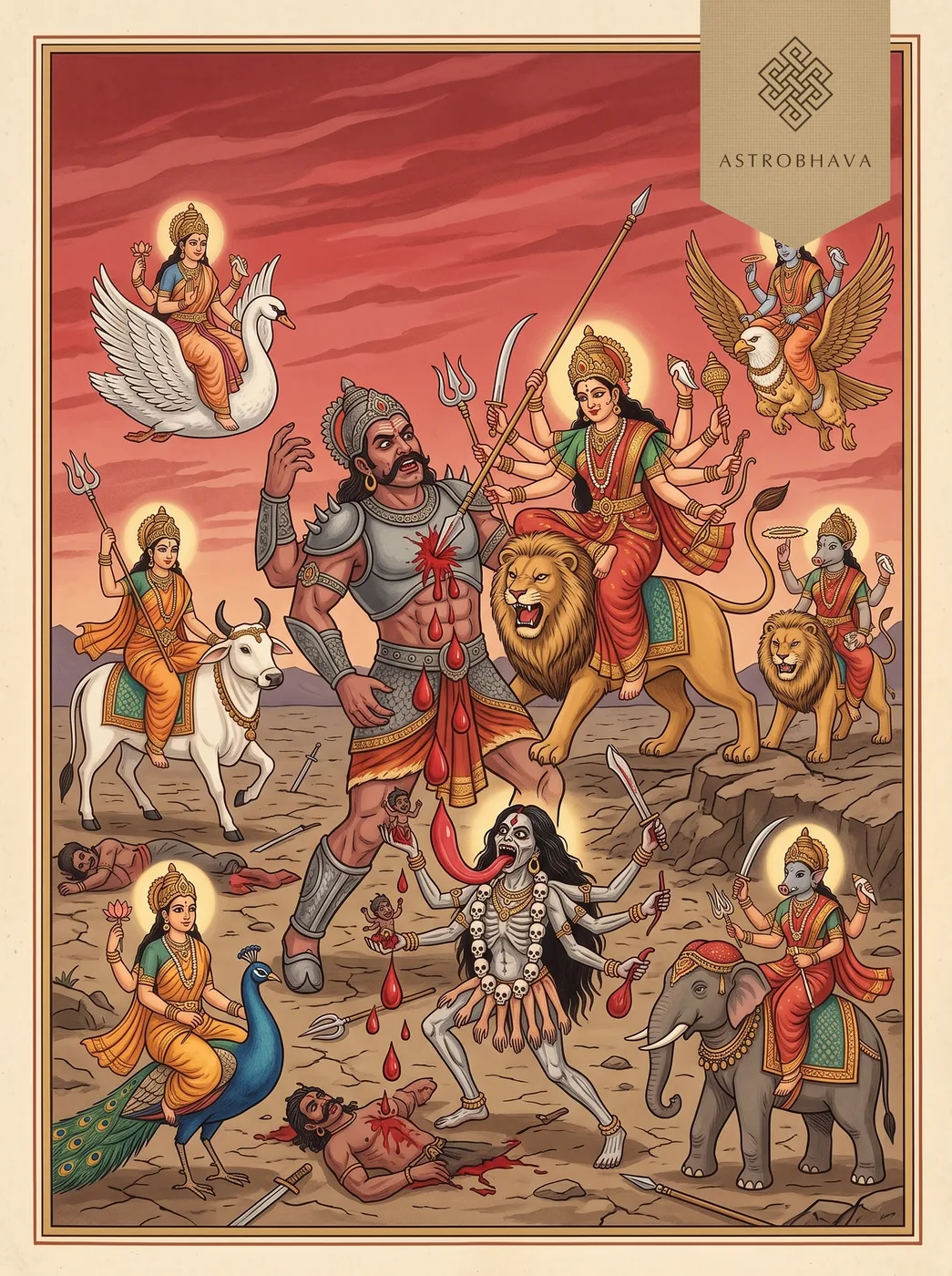
Durga Saptashati Chapter 8, whose colophon names it Raktabija Vadha, the slaying of Raktabija, is the fourth chapter of the last episode of the Devi Mahatmya and the one in which the Mothers, the Matrikas, take the field. Bhavani is the deity of the dhyana that precedes it. Verses 2 to 7 open straight after the deaths of Chanda and Munda: Shumbha, in a rage, sends out every clan he commands, from the eighty-six Udayudhas and eighty-four Kambus to the Kalakas, Mauryas and Kalakeyas. Verses 8 to 11 meet them with sound alone, the Goddess's bowstring, her lion's roar, her bell and Kali's cries. In verses 12 to 21 the powers (shaktis) of Brahma, Shiva, Guha, Vishnu and Indra leave the gods' bodies and arrive in each god's own form, mount and weapons. Verses 22 to 28 have a shakti come out of the Goddess herself and send Shiva to the demons as her envoy. Verses 29 to 39 are the Mothers' battle, each fighting in her own manner: Brahmani sprinkles water from her pot and leaves the enemy without strength, Varahi gores with her tusks and snout, Narasimhi tears with her claws and Shivaduti brings asuras down with her laughter, until the demon soldiers run. Verses 40 to 61 the long fight with Raktabija, whose name means 'blood-seed'. Verses 62 and 63 close the chapter with his fall and the Mothers' dance.
A demon who multiplies with every drop he sheds
With his armies breaking under the Mothers' attack, the asura Raktabija steps forward himself, mace in hand. Verse 41 states his nature plainly: whenever a drop of his blood touches the ground, an asura of his own size rises from the earth. The chapter gives no reason for it; it simply shows what follows. Aindri strikes him with her thunderbolt and the blood that pours out stands up as warriors of his form and strength. A second blow to the head brings thousands more. Vaishnavi's discus, Kaumari's spear, Varahi's sword and Maheshvari's trident each open a wound, and each wound fills the field, until verse 52 says the whole world was crowded with asuras born of one asura's blood and the gods were seized with fear. Chandika's answer, in verses 53 to 56, is to turn to Kali and call her Chamunda: open your mouth wide, take in every drop my weapons spill, and eat the asuras that spring from it, so that he is drained and none are born again. Then she strikes. Raktabija's mace lands on her and, verse 58 says, does not cause her the slightest pain. Chamunda catches the blood wherever it flows, devours the asuras that rise inside her mouth and drinks the rest, and the bloodless Raktabija falls under a storm of spear, thunderbolt, arrows, swords and lances. Verse 62 turns from the battlefield to the gods, who are filled with joy beyond measure, the answer to the fear of verse 52.
The mantra, in six scripts
- चण्डे
- caṇḍe — Chanda
- च
- ca — and
- निहते
- nihate — having been killed
- दैत्ये
- daitye — the demon
- मुण्डे
- muṇḍe — Munda
- च
- ca — and
- विनिपातिते
- vinipātite — having been struck down
- बहुलेषु
- bahuleṣu — many
- च
- ca — and
- सैन्येषु
- sainyeṣu — armies
- क्षयितेष्वसुरेश्वरः
- kṣayiteṣvasureśvaraḥ — being destroyed, the lord of the asuras
Durga Saptashati Chapter 8 lyrics in full
The Bhavani meditation verse and all 63 numbered lines of the chapter in the standard numbering: one speaker line, 61 full verses and a closing half-verse.
All 63 numbered lines, in Sanskrit, Tamil, Telugu, Kannada, Malayalam and English, each with its meaning. Choose a script:
Download the Durga Saptashati Chapter 8 PDFAll 63 numbered lines with their meanings, in Sanskrit. Free to print and keep.
ॐ अरुणां करुणातरङ्गिताक्षीं धृतपाशाङ्कुशबाणचापहस्ताम् ।
अणिमादिभिरावृतां मयूखैरहमित्येव विभावये भवानीम् ॥
ௐ அருணாம் கருணாதரங்கிதாக்ஷீம் த்ருதபாஶாங்குஶபாணசாபஹஸ்தாம் ।
அணிமாதிபிராவ்ருதாம் மயூகைரஹமித்யேவ விபாவயே பவாநீம் ॥
ఓం అరుణాం కరుణాతరఙ్గితాక్షీం ధృతపాశాఙ్కుశబాణచాపహస్తామ్ ।
అణిమాదిభిరావృతాం మయూఖైరహమిత్యేవ విభావయే భవానీమ్ ॥
ಓಂ ಅರುಣಾಂ ಕರುಣಾತರಙ್ಗಿತಾಕ್ಷೀಂ ಧೃತಪಾಶಾಙ್ಕುಶಬಾಣಚಾಪಹಸ್ತಾಮ್ ।
ಅಣಿಮಾದಿಭಿರಾವೃತಾಂ ಮಯೂಖೈರಹಮಿತ್ಯೇವ ವಿಭಾವಯೇ ಭವಾನೀಮ್ ॥
ഓം അരുണാം കരുണാതരങ്ഗിതാക്ഷീം ധൃതപാശാങ്കുശബാണചാപഹസ്താമ് ।
അണിമാദിഭിരാവൃതാം മയൂഖൈരഹമിത്യേവ വിഭാവയേ ഭവാനീമ് ॥
oṃ aruṇāṃ karuṇātaraṅgitākṣīṃ dhṛtapāśāṅkuśabāṇacāpahastām |
aṇimādibhirāvṛtāṃ mayūkhairahamityeva vibhāvaye bhavānīm ||
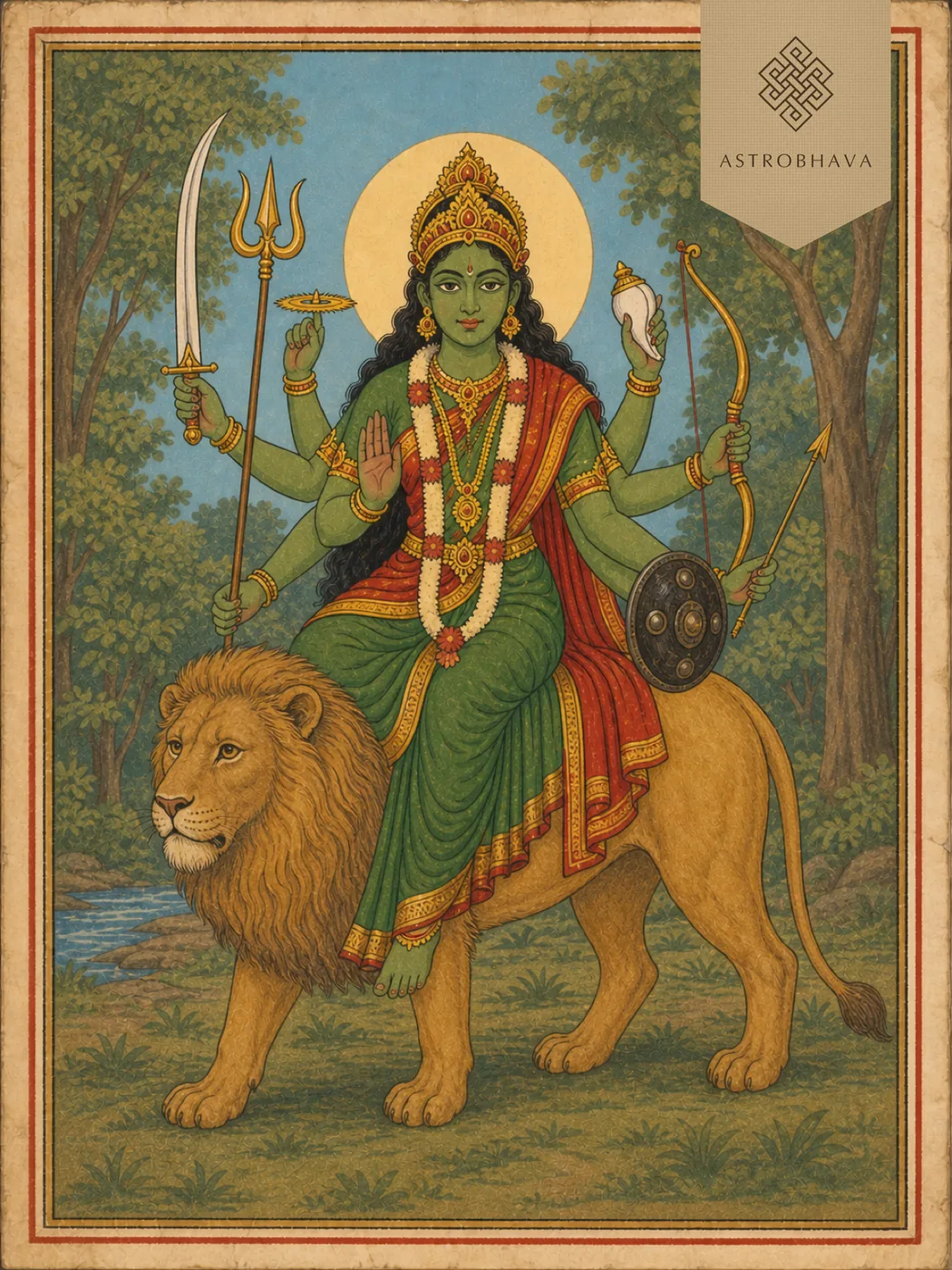
I meditate on Bhavani, red in colour, whose eyes ripple with waves of compassion, who holds in her hands the noose, the goad, arrows and a bow, and who is surrounded by rays that are the powers beginning with Anima. I contemplate her as my very self.
ऋषिरुवाच
चण्डे च निहते दैत्ये मुण्डे च विनिपातिते । बहुलेषु च सैन्येषु क्षयितेष्वसुरेश्वरः ॥
ருஷிருவாச
சண்டே ச நிஹதே தைத்யே முண்டே ச விநிபாதிதே । பஹுலேஷு ச ஸைந்யேஷு க்ஷயிதேஷ்வஸுரேஶ்வரஃ ॥
ఋషిరువాచ
చణ్డే చ నిహతే దైత్యే ముణ్డే చ వినిపాతితే । బహులేషు చ సైన్యేషు క్షయితేష్వసురేశ్వరః ॥
ಋಷಿರುವಾಚ
ಚಣ್ಡೇ ಚ ನಿಹತೇ ದೈತ್ಯೇ ಮುಣ್ಡೇ ಚ ವಿನಿಪಾತಿತೇ । ಬಹುಲೇಷು ಚ ಸೈನ್ಯೇಷು ಕ್ಷಯಿತೇಷ್ವಸುರೇಶ್ವರಃ ॥
ഋഷിരുവാച
ചണ്ഡേ ച നിഹതേ ദൈത്യേ മുണ്ഡേ ച വിനിപാതിതേ । ബഹുലേഷു ച സൈന്യേഷു ക്ഷയിതേഷ്വസുരേശ്വരഃ ॥
ṛṣiruvāca
caṇḍe ca nihate daitye muṇḍe ca vinipātite | bahuleṣu ca sainyeṣu kṣayiteṣvasureśvaraḥ ||
The sage said: When the demon Chanda had been killed and Munda struck down, and many of the armies had been destroyed, the lord of the asuras...
ततः कोपपराधीनचेताः शुम्भः प्रतापवान् ।
उद्योगं सर्वसैन्यानां दैत्यानामादिदेश ह ॥
ததஃ கோபபராதீநசேதாஃ ஶும்பஃ ப்ரதாபவாந் ।
உத்யோகம் ஸர்வஸைந்யாநாம் தைத்யாநாமாதிதேஶ ஹ ॥
తతః కోపపరాధీనచేతాః శుమ్భః ప్రతాపవాన్ ।
ఉద్యోగం సర్వసైన్యానాం దైత్యానామాదిదేశ హ ॥
ತತಃ ಕೋಪಪರಾಧೀನಚೇತಾಃ ಶುಮ್ಭಃ ಪ್ರತಾಪವಾನ್ ।
ಉದ್ಯೋಗಂ ಸರ್ವಸೈನ್ಯಾನಾಂ ದೈತ್ಯಾನಾಮಾದಿದೇಶ ಹ ॥
തതഃ കോപപരാധീനചേതാഃ ശുമ്ഭഃ പ്രതാപവാന് ।
ഉദ്യോഗം സര്വസൈന്യാനാം ദൈത്യാനാമാദിദേശ ഹ ॥
tataḥ kopaparādhīnacetāḥ śumbhaḥ pratāpavān |
udyogaṃ sarvasainyānāṃ daityānāmādideśa ha ||
...the mighty Shumbha, his mind overpowered by anger, ordered all the armies of the daityas to make ready for war.
अद्य सर्वबलैर्दैत्याः षडशीतिरुदायुधाः ।
कम्बूनां चतुरशीतिर्निर्यान्तु स्वबलैर्वृताः ॥
அத்ய ஸர்வபலைர்தைத்யாஃ ஷடஶீதிருதாயுதாஃ ।
கம்பூநாம் சதுரஶீதிர்நிர்யாந்து ஸ்வபலைர்வ்ருதாஃ ॥
అద్య సర్వబలైర్దైత్యాః షడశీతిరుదాయుధాః ।
కమ్బూనాం చతురశీతిర్నిర్యాన్తు స్వబలైర్వృతాః ॥
ಅದ್ಯ ಸರ್ವಬಲೈರ್ದೈತ್ಯಾಃ ಷಡಶೀತಿರುದಾಯುಧಾಃ ।
ಕಮ್ಬೂನಾಂ ಚತುರಶೀತಿರ್ನಿರ್ಯಾನ್ತು ಸ್ವಬಲೈರ್ವೃತಾಃ ॥
അദ്യ സര്വബലൈര്ദൈത്യാഃ ഷഡശീതിരുദായുധാഃ ।
കമ്ബൂനാം ചതുരശീതിര്നിര്യാന്തു സ്വബലൈര്വൃതാഃ ॥
adya sarvabalairdaityāḥ ṣaḍaśītirudāyudhāḥ |
kambūnāṃ caturaśītirniryāntu svabalairvṛtāḥ ||
He said: Today let the eighty-six Udayudha daitya chiefs march out with all their forces, and the eighty-four Kambu chiefs, each surrounded by his own troops.
कोटिवीर्याणि पञ्चाशदसुराणां कुलानि वै ।
शतं कुलानि धौम्राणां निर्गच्छन्तु ममाज्ञया ॥
கோடிவீர்யாணி பஞ்சாஶதஸுராணாம் குலாநி வை ।
ஶதம் குலாநி தௌம்ராணாம் நிர்கச்சந்து மமாஜ்ஞயா ॥
కోటివీర్యాణి పఞ్చాశదసురాణాం కులాని వై ।
శతం కులాని ధౌమ్రాణాం నిర్గచ్ఛన్తు మమాజ్ఞయా ॥
ಕೋಟಿವೀರ್ಯಾಣಿ ಪಞ್ಚಾಶದಸುರಾಣಾಂ ಕುಲಾನಿ ವೈ ।
ಶತಂ ಕುಲಾನಿ ಧೌಮ್ರಾಣಾಂ ನಿರ್ಗಚ್ಛನ್ತು ಮಮಾಜ್ಞಯಾ ॥
കോടിവീര്യാണി പഞ്ചാശദസുരാണാം കുലാനി വൈ ।
ശതം കുലാനി ധൌമ്രാണാം നിര്ഗച്ഛന്തു മമാജ്ഞയാ ॥
koṭivīryāṇi pañcāśadasurāṇāṃ kulāni vai |
śataṃ kulāni dhaumrāṇāṃ nirgacchantu mamājñayā ||
At my command let the fifty clans of asuras called Kotivirya and the hundred clans of the Dhaumras go forth.
कालका दौर्हृदा मौर्याः कालकेयास्तथासुराः ।
युद्धाय सज्जा निर्यान्तु आज्ञया त्वरिता मम ॥
காலகா தௌர்ஹ்ருதா மௌர்யாஃ காலகேயாஸ்ததாஸுராஃ ।
யுத்தாய ஸஜ்ஜா நிர்யாந்து ஆஜ்ஞயா த்வரிதா மம ॥
కాలకా దౌర్హృదా మౌర్యాః కాలకేయాస్తథాసురాః ।
యుద్ధాయ సజ్జా నిర్యాన్తు ఆజ్ఞయా త్వరితా మమ ॥
ಕಾಲಕಾ ದೌರ್ಹೃದಾ ಮೌರ್ಯಾಃ ಕಾಲಕೇಯಾಸ್ತಥಾಸುರಾಃ ।
ಯುದ್ಧಾಯ ಸಜ್ಜಾ ನಿರ್ಯಾನ್ತು ಆಜ್ಞಯಾ ತ್ವರಿತಾ ಮಮ ॥
കാലകാ ദൌര്ഹൃദാ മൌര്യാഃ കാലകേയാസ്തഥാസുരാഃ ।
യുദ്ധായ സജ്ജാ നിര്യാന്തു ആജ്ഞയാ ത്വരിതാ മമ ॥
kālakā daurhṛdā mauryāḥ kālakeyāstathāsurāḥ |
yuddhāya sajjā niryāntu ājñayā tvaritā mama ||
Let the Kalakas, the Daurhridas, the Mauryas and the Kalakeya asuras, ready for battle, march out quickly at my order.
इत्याज्ञाप्यासुरपतिः शुम्भो भैरवशासनः ।
निर्जगाम महासैन्यसहस्रैर्बहुभिर्वृतः ॥
இத்யாஜ்ஞாப்யாஸுரபதிஃ ஶும்போ பைரவஶாஸநஃ ।
நிர்ஜகாம மஹாஸைந்யஸஹஸ்ரைர்பஹுபிர்வ்ருதஃ ॥
ఇత్యాజ్ఞాప్యాసురపతిః శుమ్భో భైరవశాసనః ।
నిర్జగామ మహాసైన్యసహస్రైర్బహుభిర్వృతః ॥
ಇತ್ಯಾಜ್ಞಾಪ್ಯಾಸುರಪತಿಃ ಶುಮ್ಭೋ ಭೈರವಶಾಸನಃ ।
ನಿರ್ಜಗಾಮ ಮಹಾಸೈನ್ಯಸಹಸ್ರೈರ್ಬಹುಭಿರ್ವೃತಃ ॥
ഇത്യാജ്ഞാപ്യാസുരപതിഃ ശുമ്ഭോ ഭൈരവശാസനഃ ।
നിര്ജഗാമ മഹാസൈന്യസഹസ്രൈര്ബഹുഭിര്വൃതഃ ॥
ityājñāpyāsurapatiḥ śumbho bhairavaśāsanaḥ |
nirjagāma mahāsainyasahasrairbahubhirvṛtaḥ ||
Having given these orders, Shumbha, the lord of the asuras and a fearsome ruler, set out surrounded by many thousands of great troops.
आयान्तं चण्डिका दृष्ट्वा तत्सैन्यमतिभीषणम् ।
ज्यास्वनैः पूरयामास धरणीगगनान्तरम् ॥
ஆயாந்தம் சண்டிகா த்ருஷ்ட்வா தத்ஸைந்யமதிபீஷணம் ।
ஜ்யாஸ்வநைஃ பூரயாமாஸ தரணீககநாந்தரம் ॥
ఆయాన్తం చణ్డికా దృష్ట్వా తత్సైన్యమతిభీషణమ్ ।
జ్యాస్వనైః పూరయామాస ధరణీగగనాన్తరమ్ ॥
ಆಯಾನ್ತಂ ಚಣ್ಡಿಕಾ ದೃಷ್ಟ್ವಾ ತತ್ಸೈನ್ಯಮತಿಭೀಷಣಮ್ ।
ಜ್ಯಾಸ್ವನೈಃ ಪೂರಯಾಮಾಸ ಧರಣೀಗಗನಾನ್ತರಮ್ ॥
ആയാന്തം ചണ്ഡികാ ദൃഷ്ട്വാ തത്സൈന്യമതിഭീഷണമ് ।
ജ്യാസ്വനൈഃ പൂരയാമാസ ധരണീഗഗനാന്തരമ് ॥
āyāntaṃ caṇḍikā dṛṣṭvā tatsainyamatibhīṣaṇam |
jyāsvanaiḥ pūrayāmāsa dharaṇīgaganāntaram ||
Seeing that terrible army approaching, Chandika filled the space between earth and sky with the twanging of her bowstring.
ततः सिंहो महानादमतीव कृतवान् नृप ।
घण्टास्वनेन तन्नादमम्बिका चोपबृंहयत् ॥
ததஃ ஸிம்ஹோ மஹாநாதமதீவ க்ருதவாந் ந்ருப ।
கண்டாஸ்வநேந தந்நாதமம்பிகா சோபப்ரும்ஹயத் ॥
తతః సింహో మహానాదమతీవ కృతవాన్ నృప ।
ఘణ్టాస్వనేన తన్నాదమమ్బికా చోపబృంహయత్ ॥
ತತಃ ಸಿಂಹೋ ಮಹಾನಾದಮತೀವ ಕೃತವಾನ್ ನೃಪ ।
ಘಣ್ಟಾಸ್ವನೇನ ತನ್ನಾದಮಮ್ಬಿಕಾ ಚೋಪಬೃಂಹಯತ್ ॥
തതഃ സിംഹോ മഹാനാദമതീവ കൃതവാന് നൃപ ।
ഘണ്ടാസ്വനേന തന്നാദമമ്ബികാ ചോപബൃംഹയത് ॥
tataḥ siṃho mahānādamatīva kṛtavān nṛpa |
ghaṇṭāsvanena tannādamambikā copabṛṃhayat ||
Then, O king, her lion gave a mighty roar, and Ambika swelled that sound further with the ringing of her bell.
धनुर्ज्यासिंहघण्टानां नादापूरितदिङ्मुखा ।
निनादैर्भीषणैः काली जिग्ये विस्तारितानना ॥
தநுர்ஜ்யாஸிம்ஹகண்டாநாம் நாதாபூரிததிங்முகா ।
நிநாதைர்பீஷணைஃ காலீ ஜிக்யே விஸ்தாரிதாநநா ॥
ధనుర్జ్యాసింహఘణ్టానాం నాదాపూరితదిఙ్ముఖా ।
నినాదైర్భీషణైః కాలీ జిగ్యే విస్తారితాననా ॥
ಧನುರ್ಜ್ಯಾಸಿಂಹಘಣ್ಟಾನಾಂ ನಾದಾಪೂರಿತದಿಙ್ಮುಖಾ ।
ನಿನಾದೈರ್ಭೀಷಣೈಃ ಕಾಲೀ ಜಿಗ್ಯೇ ವಿಸ್ತಾರಿತಾನನಾ ॥
ധനുര്ജ്യാസിംഹഘണ്ടാനാം നാദാപൂരിതദിങ്മുഖാ ।
നിനാദൈര്ഭീഷണൈഃ കാലീ ജിഗ്യേ വിസ്താരിതാനനാ ॥
dhanurjyāsiṃhaghaṇṭānāṃ nādāpūritadiṅmukhā |
ninādairbhīṣaṇaiḥ kālī jigye vistāritānanā ||
With the quarters filled by the sound of bowstring, lion and bell, Kali, her mouth opened wide, prevailed with her own terrible cries.
तं निनादमुपश्रुत्य दैत्यसैन्यैश्चतुर्दिशम् ।
देवी सिंहस्तथा काली सरोषैः परिवारिताः ॥
தம் நிநாதமுபஶ்ருத்ய தைத்யஸைந்யைஶ்சதுர்திஶம் ।
தேவீ ஸிம்ஹஸ்ததா காலீ ஸரோஷைஃ பரிவாரிதாஃ ॥
తం నినాదముపశ్రుత్య దైత్యసైన్యైశ్చతుర్దిశమ్ ।
దేవీ సింహస్తథా కాలీ సరోషైః పరివారితాః ॥
ತಂ ನಿನಾದಮುಪಶ್ರುತ್ಯ ದೈತ್ಯಸೈನ್ಯೈಶ್ಚತುರ್ದಿಶಮ್ ।
ದೇವೀ ಸಿಂಹಸ್ತಥಾ ಕಾಲೀ ಸರೋಷೈಃ ಪರಿವಾರಿತಾಃ ॥
തം നിനാദമുപശ്രുത്യ ദൈത്യസൈന്യൈശ്ചതുര്ദിശമ് ।
ദേവീ സിംഹസ്തഥാ കാലീ സരോഷൈഃ പരിവാരിതാഃ ॥
taṃ ninādamupaśrutya daityasainyaiścaturdiśam |
devī siṃhastathā kālī saroṣaiḥ parivāritāḥ ||
Hearing that uproar, the daitya armies in their fury surrounded the Goddess, the lion and Kali on all four sides.
एतस्मिन्नन्तरे भूप विनाशाय सुरद्विषाम् ।
भवायामरसिंहानामतिवीर्यबलान्विताः ॥
ஏதஸ்மிந்நந்தரே பூப விநாஶாய ஸுரத்விஷாம் ।
பவாயாமரஸிம்ஹாநாமதிவீர்யபலாந்விதாஃ ॥
ఏతస్మిన్నన్తరే భూప వినాశాయ సురద్విషామ్ ।
భవాయామరసింహానామతివీర్యబలాన్వితాః ॥
ಏತಸ್ಮಿನ್ನನ್ತರೇ ಭೂಪ ವಿನಾಶಾಯ ಸುರದ್ವಿಷಾಮ್ ।
ಭವಾಯಾಮರಸಿಂಹಾನಾಮತಿವೀರ್ಯಬಲಾನ್ವಿತಾಃ ॥
ഏതസ്മിന്നന്തരേ ഭൂപ വിനാശായ സുരദ്വിഷാമ് ।
ഭവായാമരസിംഹാനാമതിവീര്യബലാന്വിതാഃ ॥
etasminnantare bhūpa vināśāya suradviṣām |
bhavāyāmarasiṃhānāmativīryabalānvitāḥ ||
At that moment, O king, for the destruction of the enemies of the gods and for the welfare of those lions among the immortals, endowed with great valour and strength...
ब्रह्मेशगुहविष्णूनां तथेन्द्रस्य च शक्तयः ।
शरीरेभ्यो विनिष्क्रम्य तद्रूपैश्चण्डिकां ययुः ॥
ப்ரஹ்மேஶகுஹவிஷ்ணூநாம் ததேந்த்ரஸ்ய ச ஶக்தயஃ ।
ஶரீரேப்யோ விநிஷ்க்ரம்ய தத்ரூபைஶ்சண்டிகாம் யயுஃ ॥
బ్రహ్మేశగుహవిష్ణూనాం తథేన్ద్రస్య చ శక్తయః ।
శరీరేభ్యో వినిష్క్రమ్య తద్రూపైశ్చణ్డికాం యయుః ॥
ಬ್ರಹ್ಮೇಶಗುಹವಿಷ್ಣೂನಾಂ ತಥೇನ್ದ್ರಸ್ಯ ಚ ಶಕ್ತಯಃ ।
ಶರೀರೇಭ್ಯೋ ವಿನಿಷ್ಕ್ರಮ್ಯ ತದ್ರೂಪೈಶ್ಚಣ್ಡಿಕಾಂ ಯಯುಃ ॥
ബ്രഹ്മേശഗുഹവിഷ്ണൂനാം തഥേന്ദ്രസ്യ ച ശക്തയഃ ।
ശരീരേഭ്യോ വിനിഷ്ക്രമ്യ തദ്രൂപൈശ്ചണ്ഡികാം യയുഃ ॥
brahmeśaguhaviṣṇūnāṃ tathendrasya ca śaktayaḥ |
śarīrebhyo viniṣkramya tadrūpaiścaṇḍikāṃ yayuḥ ||
...the shaktis (powers) of Brahma, Shiva, Guha, Vishnu and Indra came out of their bodies and went to Chandika, each in the form of its god.
यस्य देवस्य यद्रूपं यथाभूषणवाहनम् ।
तद्वदेव हि तच्छक्तिरसुरान् योद्धुमाययौ ॥
யஸ்ய தேவஸ்ய யத்ரூபம் யதாபூஷணவாஹநம் ।
தத்வதேவ ஹி தச்சக்திரஸுராந் யோத்துமாயயௌ ॥
యస్య దేవస్య యద్రూపం యథాభూషణవాహనమ్ ।
తద్వదేవ హి తచ్ఛక్తిరసురాన్ యోద్ధుమాయయౌ ॥
ಯಸ್ಯ ದೇವಸ್ಯ ಯದ್ರೂಪಂ ಯಥಾಭೂಷಣವಾಹನಮ್ ।
ತದ್ವದೇವ ಹಿ ತಚ್ಛಕ್ತಿರಸುರಾನ್ ಯೋದ್ಧುಮಾಯಯೌ ॥
യസ്യ ദേവസ്യ യദ്രൂപം യഥാഭൂഷണവാഹനമ് ।
തദ്വദേവ ഹി തച്ഛക്തിരസുരാന് യോദ്ധുമായയൌ ॥
yasya devasya yadrūpaṃ yathābhūṣaṇavāhanam |
tadvadeva hi tacchaktirasurān yoddhumāyayau ||
Whatever form, ornaments and mount each god had, his shakti came in just that form to fight the asuras.
हंसयुक्तविमानाग्रे साक्षसूत्रकमण्डलुः ।
आयाता ब्रह्मणः शक्तिर्ब्रह्माणी साभिधीयते ॥
ஹம்ஸயுக்தவிமாநாக்ரே ஸாக்ஷஸூத்ரகமண்டலுஃ ।
ஆயாதா ப்ரஹ்மணஃ ஶக்திர்ப்ரஹ்மாணீ ஸாபிதீயதே ॥
హంసయుక్తవిమానాగ్రే సాక్షసూత్రకమణ్డలుః ।
ఆయాతా బ్రహ్మణః శక్తిర్బ్రహ్మాణీ సాభిధీయతే ॥
ಹಂಸಯುಕ್ತವಿಮಾನಾಗ್ರೇ ಸಾಕ್ಷಸೂತ್ರಕಮಣ್ಡಲುಃ ।
ಆಯಾತಾ ಬ್ರಹ್ಮಣಃ ಶಕ್ತಿರ್ಬ್ರಹ್ಮಾಣೀ ಸಾಭಿಧೀಯತೇ ॥
ഹംസയുക്തവിമാനാഗ്രേ സാക്ഷസൂത്രകമണ്ഡലുഃ ।
ആയാതാ ബ്രഹ്മണഃ ശക്തിര്ബ്രഹ്മാണീ സാഭിധീയതേ ॥
haṃsayuktavimānāgre sākṣasūtrakamaṇḍaluḥ |
āyātā brahmaṇaḥ śaktirbrahmāṇī sābhidhīyate ||
The shakti of Brahma came seated in a chariot drawn by swans, holding a rosary and a water pot; she is called Brahmani.
माहेश्वरी वृषारूढा त्रिशूलवरधारिणी ।
महाहिवलया प्राप्ता चन्द्ररेखाविभूषणा ॥
மாஹேஶ்வரீ வ்ருஷாரூடா த்ரிஶூலவரதாரிணீ ।
மஹாஹிவலயா ப்ராப்தா சந்த்ரரேகாவிபூஷணா ॥
మాహేశ్వరీ వృషారూఢా త్రిశూలవరధారిణీ ।
మహాహివలయా ప్రాప్తా చన్ద్రరేఖావిభూషణా ॥
ಮಾಹೇಶ್ವರೀ ವೃಷಾರೂಢಾ ತ್ರಿಶೂಲವರಧಾರಿಣೀ ।
ಮಹಾಹಿವಲಯಾ ಪ್ರಾಪ್ತಾ ಚನ್ದ್ರರೇಖಾವಿಭೂಷಣಾ ॥
മാഹേശ്വരീ വൃഷാരൂഢാ ത്രിശൂലവരധാരിണീ ।
മഹാഹിവലയാ പ്രാപ്താ ചന്ദ്രരേഖാവിഭൂഷണാ ॥
māheśvarī vṛṣārūḍhā triśūlavaradhāriṇī |
mahāhivalayā prāptā candrarekhāvibhūṣaṇā ||
Maheshvari arrived riding a bull, holding a fine trident, with great serpents for bracelets and the crescent moon as her ornament.
कौमारी शक्तिहस्ता च मयूरवरवाहना ।
योद्धुमभ्याययौ दैत्यानम्बिका गुहरूपिणी ॥
கௌமாரீ ஶக்திஹஸ்தா ச மயூரவரவாஹநா ।
யோத்துமப்யாயயௌ தைத்யாநம்பிகா குஹரூபிணீ ॥
కౌమారీ శక్తిహస్తా చ మయూరవరవాహనా ।
యోద్ధుమభ్యాయయౌ దైత్యానమ్బికా గుహరూపిణీ ॥
ಕೌಮಾರೀ ಶಕ್ತಿಹಸ್ತಾ ಚ ಮಯೂರವರವಾಹನಾ ।
ಯೋದ್ಧುಮಭ್ಯಾಯಯೌ ದೈತ್ಯಾನಮ್ಬಿಕಾ ಗುಹರೂಪಿಣೀ ॥
കൌമാരീ ശക്തിഹസ്താ ച മയൂരവരവാഹനാ ।
യോദ്ധുമഭ്യായയൌ ദൈത്യാനമ്ബികാ ഗുഹരൂപിണീ ॥
kaumārī śaktihastā ca mayūravaravāhanā |
yoddhumabhyāyayau daityānambikā guharūpiṇī ||
Kaumari, mother in the form of Guha, came to fight the daityas with a spear in her hand, riding a fine peacock.
तथैव वैष्णवी शक्तिर्गरुडोपरि संस्थिता ।
शङ्खचक्रगदाशार्ङ्गखड्गहस्ताभ्युपाययौ ॥
ததைவ வைஷ்ணவீ ஶக்திர்கருடோபரி ஸம்ஸ்திதா ।
ஶங்கசக்ரகதாஶார்ங்ககட்கஹஸ்தாப்யுபாயயௌ ॥
తథైవ వైష్ణవీ శక్తిర్గరుడోపరి సంస్థితా ।
శఙ్ఖచక్రగదాశార్ఙ్గఖడ్గహస్తాభ్యుపాయయౌ ॥
ತಥೈವ ವೈಷ್ಣವೀ ಶಕ್ತಿರ್ಗರುಡೋಪರಿ ಸಂಸ್ಥಿತಾ ।
ಶಙ್ಖಚಕ್ರಗದಾಶಾರ್ಙ್ಗಖಡ್ಗಹಸ್ತಾಭ್ಯುಪಾಯಯೌ ॥
തഥൈവ വൈഷ്ണവീ ശക്തിര്ഗരുഡോപരി സംസ്ഥിതാ ।
ശങ്ഖചക്രഗദാശാര്ങ്ഗഖഡ്ഗഹസ്താഭ്യുപായയൌ ॥
tathaiva vaiṣṇavī śaktirgaruḍopari saṃsthitā |
śaṅkhacakragadāśārṅgakhaḍgahastābhyupāyayau ||
In the same way the shakti Vaishnavi came, seated on Garuda, with conch, discus, mace, the Sharnga bow and sword in her hands.
यज्ञवाराहमतुलं रूपं या बिभ्रतो हरेः ।
शक्तिः साप्याययौ तत्र वाराहीं बिभ्रती तनुम् ॥
யஜ்ஞவாராஹமதுலம் ரூபம் யா பிப்ரதோ ஹரேஃ ।
ஶக்திஃ ஸாப்யாயயௌ தத்ர வாராஹீம் பிப்ரதீ தநும் ॥
యజ్ఞవారాహమతులం రూపం యా బిభ్రతో హరేః ।
శక్తిః సాప్యాయయౌ తత్ర వారాహీం బిభ్రతీ తనుమ్ ॥
ಯಜ್ಞವಾರಾಹಮತುಲಂ ರೂಪಂ ಯಾ ಬಿಭ್ರತೋ ಹರೇಃ ।
ಶಕ್ತಿಃ ಸಾಪ್ಯಾಯಯೌ ತತ್ರ ವಾರಾಹೀಂ ಬಿಭ್ರತೀ ತನುಮ್ ॥
യജ്ഞവാരാഹമതുലം രൂപം യാ ബിഭ്രതോ ഹരേഃ ।
ശക്തിഃ സാപ്യായയൌ തത്ര വാരാഹീം ബിഭ്രതീ തനുമ് ॥
yajñavārāhamatulaṃ rūpaṃ yā bibhrato hareḥ |
śaktiḥ sāpyāyayau tatra vārāhīṃ bibhratī tanum ||
The shakti of Hari, who takes the matchless form of the sacrificial boar, also came there, bearing the body of a sow (Varahi).
नारसिंही नृसिंहस्य बिभ्रती सदृशं वपुः ।
प्राप्ता तत्र सटाक्षेपक्षिप्तनक्षत्रसंहतिः ॥
நாரஸிம்ஹீ ந்ருஸிம்ஹஸ்ய பிப்ரதீ ஸத்ருஶம் வபுஃ ।
ப்ராப்தா தத்ர ஸடாக்ஷேபக்ஷிப்தநக்ஷத்ரஸம்ஹதிஃ ॥
నారసింహీ నృసింహస్య బిభ్రతీ సదృశం వపుః ।
ప్రాప్తా తత్ర సటాక్షేపక్షిప్తనక్షత్రసంహతిః ॥
ನಾರಸಿಂಹೀ ನೃಸಿಂಹಸ್ಯ ಬಿಭ್ರತೀ ಸದೃಶಂ ವಪುಃ ।
ಪ್ರಾಪ್ತಾ ತತ್ರ ಸಟಾಕ್ಷೇಪಕ್ಷಿಪ್ತನಕ್ಷತ್ರಸಂಹತಿಃ ॥
നാരസിംഹീ നൃസിംഹസ്യ ബിഭ്രതീ സദൃശം വപുഃ ।
പ്രാപ്താ തത്ര സടാക്ഷേപക്ഷിപ്തനക്ഷത്രസംഹതിഃ ॥
nārasiṃhī nṛsiṃhasya bibhratī sadṛśaṃ vapuḥ |
prāptā tatra saṭākṣepakṣiptanakṣatrasaṃhatiḥ ||
Narasimhi arrived there in a body like that of Narasimha, scattering the clusters of stars with the toss of her mane.
वज्रहस्ता तथैवैन्द्री गजराजोपरि स्थिता ।
प्राप्ता सहस्रनयना यथा शक्रस्तथैव सा ॥
வஜ்ரஹஸ்தா ததைவைந்த்ரீ கஜராஜோபரி ஸ்திதா ।
ப்ராப்தா ஸஹஸ்ரநயநா யதா ஶக்ரஸ்ததைவ ஸா ॥
వజ్రహస్తా తథైవైన్ద్రీ గజరాజోపరి స్థితా ।
ప్రాప్తా సహస్రనయనా యథా శక్రస్తథైవ సా ॥
ವಜ್ರಹಸ್ತಾ ತಥೈವೈನ್ದ್ರೀ ಗಜರಾಜೋಪರಿ ಸ್ಥಿತಾ ।
ಪ್ರಾಪ್ತಾ ಸಹಸ್ರನಯನಾ ಯಥಾ ಶಕ್ರಸ್ತಥೈವ ಸಾ ॥
വജ്രഹസ്താ തഥൈവൈന്ദ്രീ ഗജരാജോപരി സ്ഥിതാ ।
പ്രാപ്താ സഹസ്രനയനാ യഥാ ശക്രസ്തഥൈവ സാ ॥
vajrahastā tathaivaindrī gajarājopari sthitā |
prāptā sahasranayanā yathā śakrastathaiva sā ||
Likewise Aindri came, thunderbolt in hand, seated on the king of elephants, with a thousand eyes; she was just as Indra is.
ततः परिवृतस्ताभिरीशानो देवशक्तिभिः ।
हन्यन्तामसुराः शीघ्रं मम प्रीत्याऽऽह चण्डिकाम् ॥
ததஃ பரிவ்ருதஸ்தாபிரீஶாநோ தேவஶக்திபிஃ ।
ஹந்யந்தாமஸுராஃ ஶீக்ரம் மம ப்ரீத்யாஹ சண்டிகாம் ॥
తతః పరివృతస్తాభిరీశానో దేవశక్తిభిః ।
హన్యన్తామసురాః శీఘ్రం మమ ప్రీత్యాఽఽహ చణ్డికామ్ ॥
ತತಃ ಪರಿವೃತಸ್ತಾಭಿರೀಶಾನೋ ದೇವಶಕ್ತಿಭಿಃ ।
ಹನ್ಯನ್ತಾಮಸುರಾಃ ಶೀಘ್ರಂ ಮಮ ಪ್ರೀತ್ಯಾಽಽಹ ಚಣ್ಡಿಕಾಮ್ ॥
തതഃ പരിവൃതസ്താഭിരീശാനോ ദേവശക്തിഭിഃ ।
ഹന്യന്താമസുരാഃ ശീഘ്രം മമ പ്രീത്യാഽഽഹ ചണ്ഡികാമ് ॥
tataḥ parivṛtastābhirīśāno devaśaktibhiḥ |
hanyantāmasurāḥ śīghraṃ mama prītyā'ha caṇḍikām ||
Then Shiva, surrounded by these shaktis of the gods, said to Chandika: Let the asuras be slain quickly, for my pleasure.
ततो देवीशरीरात्तु विनिष्क्रान्तातिभीषणा ।
चण्डिकाशक्तिरत्युग्रा शिवाशतनिनादिनी ॥
ததோ தேவீஶரீராத்து விநிஷ்க்ராந்தாதிபீஷணா ।
சண்டிகாஶக்திரத்யுக்ரா ஶிவாஶதநிநாதிநீ ॥
తతో దేవీశరీరాత్తు వినిష్క్రాన్తాతిభీషణా ।
చణ్డికాశక్తిరత్యుగ్రా శివాశతనినాదినీ ॥
ತತೋ ದೇವೀಶರೀರಾತ್ತು ವಿನಿಷ್ಕ್ರಾನ್ತಾತಿಭೀಷಣಾ ।
ಚಣ್ಡಿಕಾಶಕ್ತಿರತ್ಯುಗ್ರಾ ಶಿವಾಶತನಿನಾದಿನೀ ॥
തതോ ദേവീശരീരാത്തു വിനിഷ്ക്രാന്താതിഭീഷണാ ।
ചണ്ഡികാശക്തിരത്യുഗ്രാ ശിവാശതനിനാദിനീ ॥
tato devīśarīrāttu viniṣkrāntātibhīṣaṇā |
caṇḍikāśaktiratyugrā śivāśataninādinī ||
Then from the body of the Goddess came forth the shakti of Chandika, most terrible and fierce, howling like a hundred jackals.
सा चाह धूम्रजटिलमीशानमपराजिता ।
दूत त्वं गच्छ भगवन् पार्श्वं शुम्भनिशुम्भयोः ॥
ஸா சாஹ தூம்ரஜடிலமீஶாநமபராஜிதா ।
தூத த்வம் கச்ச பகவந் பார்ஶ்வம் ஶும்பநிஶும்பயோஃ ॥
సా చాహ ధూమ్రజటిలమీశానమపరాజితా ।
దూత త్వం గచ్ఛ భగవన్ పార్శ్వం శుమ్భనిశుమ్భయోః ॥
ಸಾ ಚಾಹ ಧೂಮ್ರಜಟಿಲಮೀಶಾನಮಪರಾಜಿತಾ ।
ದೂತ ತ್ವಂ ಗಚ್ಛ ಭಗವನ್ ಪಾರ್ಶ್ವಂ ಶುಮ್ಭನಿಶುಮ್ಭಯೋಃ ॥
സാ ചാഹ ധൂമ്രജടിലമീശാനമപരാജിതാ ।
ദൂത ത്വം ഗച്ഛ ഭഗവന് പാര്ശ്വം ശുമ്ഭനിശുമ്ഭയോഃ ॥
sā cāha dhūmrajaṭilamīśānamaparājitā |
dūta tvaṃ gaccha bhagavan pārśvaṃ śumbhaniśumbhayoḥ ||
That unconquered one said to Shiva, whose matted hair is smoke-coloured: Lord, go as my messenger to Shumbha and Nishumbha.
ब्रूहि शुम्भं निशुम्भं च दानवावतिगर्वितौ ।
ये चान्ये दानवास्तत्र युद्धाय समुपस्थिताः ॥
ப்ரூஹி ஶும்பம் நிஶும்பம் ச தாநவாவதிகர்விதௌ ।
யே சாந்யே தாநவாஸ்தத்ர யுத்தாய ஸமுபஸ்திதாஃ ॥
బ్రూహి శుమ్భం నిశుమ్భం చ దానవావతిగర్వితౌ ।
యే చాన్యే దానవాస్తత్ర యుద్ధాయ సముపస్థితాః ॥
ಬ್ರೂಹಿ ಶುಮ್ಭಂ ನಿಶುಮ್ಭಂ ಚ ದಾನವಾವತಿಗರ್ವಿತೌ ।
ಯೇ ಚಾನ್ಯೇ ದಾನವಾಸ್ತತ್ರ ಯುದ್ಧಾಯ ಸಮುಪಸ್ಥಿತಾಃ ॥
ബ്രൂഹി ശുമ്ഭം നിശുമ്ഭം ച ദാനവാവതിഗര്വിതൌ ।
യേ ചാന്യേ ദാനവാസ്തത്ര യുദ്ധായ സമുപസ്ഥിതാഃ ॥
brūhi śumbhaṃ niśumbhaṃ ca dānavāvatigarvitau |
ye cānye dānavāstatra yuddhāya samupasthitāḥ ||
Speak to Shumbha and Nishumbha, those two very arrogant danavas, and to the other danavas gathered there for battle.
त्रैलोक्यमिन्द्रो लभतां देवाः सन्तु हविर्भुजः ।
यूयं प्रयात पातालं यदि जीवितुमिच्छथ ॥
த்ரைலோக்யமிந்த்ரோ லபதாம் தேவாஃ ஸந்து ஹவிர்புஜஃ ।
யூயம் ப்ரயாத பாதாலம் யதி ஜீவிதுமிச்சத ॥
త్రైలోక్యమిన్ద్రో లభతాం దేవాః సన్తు హవిర్భుజః ।
యూయం ప్రయాత పాతాలం యది జీవితుమిచ్ఛథ ॥
ತ್ರೈಲೋಕ್ಯಮಿನ್ದ್ರೋ ಲಭತಾಂ ದೇವಾಃ ಸನ್ತು ಹವಿರ್ಭುಜಃ ।
ಯೂಯಂ ಪ್ರಯಾತ ಪಾತಾಲಂ ಯದಿ ಜೀವಿತುಮಿಚ್ಛಥ ॥
ത്രൈലോക്യമിന്ദ്രോ ലഭതാം ദേവാഃ സന്തു ഹവിര്ഭുജഃ ।
യൂയം പ്രയാത പാതാലം യദി ജീവിതുമിച്ഛഥ ॥
trailokyamindro labhatāṃ devāḥ santu havirbhujaḥ |
yūyaṃ prayāta pātālaṃ yadi jīvitumicchatha ||
Say: Let Indra have the three worlds, and let the gods again enjoy the sacrificial offerings. If you wish to live, go down to Patala.
बलावलेपादथ चेद्भवन्तो युद्धकाङ्क्षिणः ।
तदागच्छत तृप्यन्तु मच्छिवाः पिशितेन वः ॥
பலாவலேபாதத சேத்பவந்தோ யுத்தகாங்க்ஷிணஃ ।
ததாகச்சத த்ருப்யந்து மச்சிவாஃ பிஶிதேந வஃ ॥
బలావలేపాదథ చేద్భవన్తో యుద్ధకాఙ్క్షిణః ।
తదాగచ్ఛత తృప్యన్తు మచ్ఛివాః పిశితేన వః ॥
ಬಲಾವಲೇಪಾದಥ ಚೇದ್ಭವನ್ತೋ ಯುದ್ಧಕಾಙ್ಕ್ಷಿಣಃ ।
ತದಾಗಚ್ಛತ ತೃಪ್ಯನ್ತು ಮಚ್ಛಿವಾಃ ಪಿಶಿತೇನ ವಃ ॥
ബലാവലേപാദഥ ചേദ്ഭവന്തോ യുദ്ധകാങ്ക്ഷിണഃ ।
തദാഗച്ഛത തൃപ്യന്തു മച്ഛിവാഃ പിശിതേന വഃ ॥
balāvalepādatha cedbhavanto yuddhakāṅkṣiṇaḥ |
tadāgacchata tṛpyantu macchivāḥ piśitena vaḥ ||
But if, proud of your strength, you long for battle, then come, and let my jackals be sated with your flesh.
यतो नियुक्तो दौत्येन तथा देव्या शिवः स्वयम् ।
शिवदूतीति लोकेऽस्मिंस्ततः सा ख्यातिमागता ॥
யதோ நியுக்தோ தௌத்யேந ததா தேவ்யா ஶிவஃ ஸ்வயம் ।
ஶிவதூதீதி லோகேஸ்மிம்ஸ்ததஃ ஸா க்யாதிமாகதா ॥
యతో నియుక్తో దౌత్యేన తథా దేవ్యా శివః స్వయమ్ ।
శివదూతీతి లోకేఽస్మింస్తతః సా ఖ్యాతిమాగతా ॥
ಯತೋ ನಿಯುಕ್ತೋ ದೌತ್ಯೇನ ತಥಾ ದೇವ್ಯಾ ಶಿವಃ ಸ್ವಯಮ್ ।
ಶಿವದೂತೀತಿ ಲೋಕೇಽಸ್ಮಿಂಸ್ತತಃ ಸಾ ಖ್ಯಾತಿಮಾಗತಾ ॥
യതോ നിയുക്തോ ദൌത്യേന തഥാ ദേവ്യാ ശിവഃ സ്വയമ് ।
ശിവദൂതീതി ലോകേഽസ്മിംസ്തതഃ സാ ഖ്യാതിമാഗതാ ॥
yato niyukto dautyena tathā devyā śivaḥ svayam |
śivadūtīti loke'smiṃstataḥ sā khyātimāgatā ||
Because the Goddess appointed Shiva himself as her messenger, she became known in this world as Shivaduti.
तेऽपि श्रुत्वा वचो देव्याः शर्वाख्यातं महासुराः ।
अमर्षापूरिता जग्मुर्यत्र कात्यायनी स्थिता ॥
தேபி ஶ்ருத்வா வசோ தேவ்யாஃ ஶர்வாக்யாதம் மஹாஸுராஃ ।
அமர்ஷாபூரிதா ஜக்முர்யத்ர காத்யாயநீ ஸ்திதா ॥
తేఽపి శ్రుత్వా వచో దేవ్యాః శర్వాఖ్యాతం మహాసురాః ।
అమర్షాపూరితా జగ్ముర్యత్ర కాత్యాయనీ స్థితా ॥
ತೇಽಪಿ ಶ್ರುತ್ವಾ ವಚೋ ದೇವ್ಯಾಃ ಶರ್ವಾಖ್ಯಾತಂ ಮಹಾಸುರಾಃ ।
ಅಮರ್ಷಾಪೂರಿತಾ ಜಗ್ಮುರ್ಯತ್ರ ಕಾತ್ಯಾಯನೀ ಸ್ಥಿತಾ ॥
തേഽപി ശ്രുത്വാ വചോ ദേവ്യാഃ ശര്വാഖ്യാതം മഹാസുരാഃ ।
അമര്ഷാപൂരിതാ ജഗ്മുര്യത്ര കാത്യായനീ സ്ഥിതാ ॥
te'pi śrutvā vaco devyāḥ śarvākhyātaṃ mahāsurāḥ |
amarṣāpūritā jagmuryatra kātyāyanī sthitā ||
The great asuras, hearing the Goddess's words as Shiva delivered them, were filled with rage and went to where Katyayani stood.
ततः प्रथममेवाग्रे शरशक्त्यृष्टिवृष्टिभिः ।
ववर्षुरुद्धतामर्षास्तां देवीममरारयः ॥
ததஃ ப்ரதமமேவாக்ரே ஶரஶக்த்ய்ருஷ்டிவ்ருஷ்டிபிஃ ।
வவர்ஷுருத்ததாமர்ஷாஸ்தாம் தேவீமமராரயஃ ॥
తతః ప్రథమమేవాగ్రే శరశక్త్యృష్టివృష్టిభిః ।
వవర్షురుద్ధతామర్షాస్తాం దేవీమమరారయః ॥
ತತಃ ಪ್ರಥಮಮೇವಾಗ್ರೇ ಶರಶಕ್ತ್ಯೃಷ್ಟಿವೃಷ್ಟಿಭಿಃ ।
ವವರ್ಷುರುದ್ಧತಾಮರ್ಷಾಸ್ತಾಂ ದೇವೀಮಮರಾರಯಃ ॥
തതഃ പ്രഥമമേവാഗ്രേ ശരശക്ത്യൃഷ്ടിവൃഷ്ടിഭിഃ ।
വവര്ഷുരുദ്ധതാമര്ഷാസ്താം ദേവീമമരാരയഃ ॥
tataḥ prathamamevāgre śaraśaktyṛṣṭivṛṣṭibhiḥ |
vavarṣuruddhatāmarṣāstāṃ devīmamarārayaḥ ||
Then, at the very start, the enemies of the gods, swollen with fury, rained arrows, spears and lances upon the Goddess.
सा च तान् प्रहितान् बाणाञ्छूलशक्तिपरश्वधान् ।
चिच्छेद लीलयाऽऽध्मातधनुर्मुक्तैर्महेषुभिः ॥
ஸா ச தாந் ப்ரஹிதாந் பாணாஞ்சூலஶக்திபரஶ்வதாந் ।
சிச்சேத லீலயாத்மாததநுர்முக்தைர்மஹேஷுபிஃ ॥
సా చ తాన్ ప్రహితాన్ బాణాఞ్ఛూలశక్తిపరశ్వధాన్ ।
చిచ్ఛేద లీలయాఽఽధ్మాతధనుర్ముక్తైర్మహేషుభిః ॥
ಸಾ ಚ ತಾನ್ ಪ್ರಹಿತಾನ್ ಬಾಣಾಞ್ಛೂಲಶಕ್ತಿಪರಶ್ವಧಾನ್ ।
ಚಿಚ್ಛೇದ ಲೀಲಯಾಽಽಧ್ಮಾತಧನುರ್ಮುಕ್ತೈರ್ಮಹೇಷುಭಿಃ ॥
സാ ച താന് പ്രഹിതാന് ബാണാഞ്ഛൂലശക്തിപരശ്വധാന് ।
ചിച്ഛേദ ലീലയാഽഽധ്മാതധനുര്മുക്തൈര്മഹേഷുഭിഃ ॥
sā ca tān prahitān bāṇāñchūlaśaktiparaśvadhān |
ciccheda līlayā'dhmātadhanurmuktairmaheṣubhiḥ ||
With great arrows shot from her twanging bow she cut down, as if in play, the arrows, tridents, spears and axes they had hurled.
तस्याग्रतस्तथा काली शूलपातविदारितान् ।
खट्वाङ्गपोथितांश्चारीन् कुर्वती व्यचरत्तदा ॥
தஸ்யாக்ரதஸ்ததா காலீ ஶூலபாதவிதாரிதாந் ।
கட்வாங்கபோதிதாம்ஶ்சாரீந் குர்வதீ வ்யசரத்ததா ॥
తస్యాగ్రతస్తథా కాలీ శూలపాతవిదారితాన్ ।
ఖట్వాఙ్గపోథితాంశ్చారీన్ కుర్వతీ వ్యచరత్తదా ॥
ತಸ್ಯಾಗ್ರತಸ್ತಥಾ ಕಾಲೀ ಶೂಲಪಾತವಿದಾರಿತಾನ್ ।
ಖಟ್ವಾಙ್ಗಪೋಥಿತಾಂಶ್ಚಾರೀನ್ ಕುರ್ವತೀ ವ್ಯಚರತ್ತದಾ ॥
തസ്യാഗ്രതസ്തഥാ കാലീ ശൂലപാതവിദാരിതാന് ।
ഖട്വാങ്ഗപോഥിതാംശ്ചാരീന് കുര്വതീ വ്യചരത്തദാ ॥
tasyāgratastathā kālī śūlapātavidāritān |
khaṭvāṅgapothitāṃścārīn kurvatī vyacarattadā ||
Then Kali ranged in front of her, tearing the enemies apart with blows of her spear and crushing them with her skull-topped staff.
कमण्डलुजलाक्षेपहतवीर्यान् हतौजसः ।
ब्रह्माणी चाकरोच्छत्रून् येन येन स्म धावति ॥
கமண்டலுஜலாக்ஷேபஹதவீர்யாந் ஹதௌஜஸஃ ।
ப்ரஹ்மாணீ சாகரோச்சத்ரூந் யேந யேந ஸ்ம தாவதி ॥
కమణ్డలుజలాక్షేపహతవీర్యాన్ హతౌజసః ।
బ్రహ్మాణీ చాకరోచ్ఛత్రూన్ యేన యేన స్మ ధావతి ॥
ಕಮಣ್ಡಲುಜಲಾಕ್ಷೇಪಹತವೀರ್ಯಾನ್ ಹತೌಜಸಃ ।
ಬ್ರಹ್ಮಾಣೀ ಚಾಕರೋಚ್ಛತ್ರೂನ್ ಯೇನ ಯೇನ ಸ್ಮ ಧಾವತಿ ॥
കമണ്ഡലുജലാക്ഷേപഹതവീര്യാന് ഹതൌജസഃ ।
ബ്രഹ്മാണീ ചാകരോച്ഛത്രൂന് യേന യേന സ്മ ധാവതി ॥
kamaṇḍalujalākṣepahatavīryān hataujasaḥ |
brahmāṇī cākarocchatrūn yena yena sma dhāvati ||
Wherever Brahmani ran, she sprinkled water from her water pot and left the enemies drained of valour and vigour.
माहेश्वरी त्रिशूलेन तथा चक्रेण वैष्णवी ।
दैत्याञ्जघान कौमारी तथा शक्त्यातिकोपना ॥
மாஹேஶ்வரீ த்ரிஶூலேந ததா சக்ரேண வைஷ்ணவீ ।
தைத்யாஞ்ஜகாந கௌமாரீ ததா ஶக்த்யாதிகோபநா ॥
మాహేశ్వరీ త్రిశూలేన తథా చక్రేణ వైష్ణవీ ।
దైత్యాఞ్జఘాన కౌమారీ తథా శక్త్యాతికోపనా ॥
ಮಾಹೇಶ್ವರೀ ತ್ರಿಶೂಲೇನ ತಥಾ ಚಕ್ರೇಣ ವೈಷ್ಣವೀ ।
ದೈತ್ಯಾಞ್ಜಘಾನ ಕೌಮಾರೀ ತಥಾ ಶಕ್ತ್ಯಾತಿಕೋಪನಾ ॥
മാഹേശ്വരീ ത്രിശൂലേന തഥാ ചക്രേണ വൈഷ്ണവീ ।
ദൈത്യാഞ്ജഘാന കൌമാരീ തഥാ ശക്ത്യാതികോപനാ ॥
māheśvarī triśūlena tathā cakreṇa vaiṣṇavī |
daityāñjaghāna kaumārī tathā śaktyātikopanā ||
Maheshvari slew the daityas with her trident, Vaishnavi with her discus, and Kaumari, very wrathful, with her spear.
ऐन्द्रीकुलिशपातेन शतशो दैत्यदानवाः ।
पेतुर्विदारिताः पृथ्व्यां रुधिरौघप्रवर्षिणः ॥
ஐந்த்ரீகுலிஶபாதேந ஶதஶோ தைத்யதாநவாஃ ।
பேதுர்விதாரிதாஃ ப்ருத்வ்யாம் ருதிரௌகப்ரவர்ஷிணஃ ॥
ఐన్ద్రీకులిశపాతేన శతశో దైత్యదానవాః ।
పేతుర్విదారితాః పృథ్వ్యాం రుధిరౌఘప్రవర్షిణః ॥
ಐನ್ದ್ರೀಕುಲಿಶಪಾತೇನ ಶತಶೋ ದೈತ್ಯದಾನವಾಃ ।
ಪೇತುರ್ವಿದಾರಿತಾಃ ಪೃಥ್ವ್ಯಾಂ ರುಧಿರೌಘಪ್ರವರ್ಷಿಣಃ ॥
ഐന്ദ്രീകുലിശപാതേന ശതശോ ദൈത്യദാനവാഃ ।
പേതുര്വിദാരിതാഃ പൃഥ്വ്യാം രുധിരൌഘപ്രവര്ഷിണഃ ॥
aindrīkuliśapātena śataśo daityadānavāḥ |
peturvidāritāḥ pṛthvyāṃ rudhiraughapravarṣiṇaḥ ||
Torn open by the strokes of Aindri's thunderbolt, daityas and danavas fell to the earth by hundreds, pouring streams of blood.
तुण्डप्रहारविध्वस्ता दंष्ट्राग्रक्षतवक्षसः ।
वाराहमूर्त्या न्यपतंश्चक्रेण च विदारिताः ॥
துண்டப்ரஹாரவித்வஸ்தா தம்ஷ்ட்ராக்ரக்ஷதவக்ஷஸஃ ।
வாராஹமூர்த்யா ந்யபதம்ஶ்சக்ரேண ச விதாரிதாஃ ॥
తుణ్డప్రహారవిధ్వస్తా దంష్ట్రాగ్రక్షతవక్షసః ।
వారాహమూర్త్యా న్యపతంశ్చక్రేణ చ విదారితాః ॥
ತುಣ್ಡಪ್ರಹಾರವಿಧ್ವಸ್ತಾ ದಂಷ್ಟ್ರಾಗ್ರಕ್ಷತವಕ್ಷಸಃ ।
ವಾರಾಹಮೂರ್ತ್ಯಾ ನ್ಯಪತಂಶ್ಚಕ್ರೇಣ ಚ ವಿದಾರಿತಾಃ ॥
തുണ്ഡപ്രഹാരവിധ്വസ്താ ദംഷ്ട്രാഗ്രക്ഷതവക്ഷസഃ ।
വാരാഹമൂര്ത്യാ ന്യപതംശ്ചക്രേണ ച വിദാരിതാഃ ॥
tuṇḍaprahāravidhvastā daṃṣṭrāgrakṣatavakṣasaḥ |
vārāhamūrtyā nyapataṃścakreṇa ca vidāritāḥ ||
Shattered by blows of her snout, their chests wounded by her tusk tips and torn by her discus, they fell before the one in boar form.
नखैर्विदारितांश्चान्यान् भक्षयन्ती महासुरान् ।
नारसिंही चचाराजौ नादापूर्णदिगम्बरा ॥
நகைர்விதாரிதாம்ஶ்சாந்யாந் பக்ஷயந்தீ மஹாஸுராந் ।
நாரஸிம்ஹீ சசாராஜௌ நாதாபூர்ணதிகம்பரா ॥
నఖైర్విదారితాంశ్చాన్యాన్ భక్షయన్తీ మహాసురాన్ ।
నారసింహీ చచారాజౌ నాదాపూర్ణదిగమ్బరా ॥
ನಖೈರ್ವಿದಾರಿತಾಂಶ್ಚಾನ್ಯಾನ್ ಭಕ್ಷಯನ್ತೀ ಮಹಾಸುರಾನ್ ।
ನಾರಸಿಂಹೀ ಚಚಾರಾಜೌ ನಾದಾಪೂರ್ಣದಿಗಮ್ಬರಾ ॥
നഖൈര്വിദാരിതാംശ്ചാന്യാന് ഭക്ഷയന്തീ മഹാസുരാന് ।
നാരസിംഹീ ചചാരാജൌ നാദാപൂര്ണദിഗമ്ബരാ ॥
nakhairvidāritāṃścānyān bhakṣayantī mahāsurān |
nārasiṃhī cacārājau nādāpūrṇadigambarā ||
Narasimhi roamed the battlefield devouring other great asuras torn apart by her claws, filling the quarters and the sky with her roars.
चण्डाट्टहासैरसुराः शिवदूत्यभिदूषिताः ।
पेतुः पृथिव्यां पतितांस्तांश्चखादाथ सा तदा ॥
சண்டாட்டஹாஸைரஸுராஃ ஶிவதூத்யபிதூஷிதாஃ ।
பேதுஃ ப்ருதிவ்யாம் பதிதாம்ஸ்தாம்ஶ்சகாதாத ஸா ததா ॥
చణ్డాట్టహాసైరసురాః శివదూత్యభిదూషితాః ।
పేతుః పృథివ్యాం పతితాంస్తాంశ్చఖాదాథ సా తదా ॥
ಚಣ್ಡಾಟ್ಟಹಾಸೈರಸುರಾಃ ಶಿವದೂತ್ಯಭಿದೂಷಿತಾಃ ।
ಪೇತುಃ ಪೃಥಿವ್ಯಾಂ ಪತಿತಾಂಸ್ತಾಂಶ್ಚಖಾದಾಥ ಸಾ ತದಾ ॥
ചണ്ഡാട്ടഹാസൈരസുരാഃ ശിവദൂത്യഭിദൂഷിതാഃ ।
പേതുഃ പൃഥിവ്യാം പതിതാംസ്താംശ്ചഖാദാഥ സാ തദാ ॥
caṇḍāṭṭahāsairasurāḥ śivadūtyabhidūṣitāḥ |
petuḥ pṛthivyāṃ patitāṃstāṃścakhādātha sā tadā ||
Struck down by the fierce loud laughter of Shivaduti, asuras fell to the ground, and she then devoured those who had fallen.
इति मातृगणं क्रुद्धं मर्दयन्तं महासुरान् ।
दृष्ट्वाभ्युपायैर्विविधैर्नेशुर्देवारिसैनिकाः ॥
இதி மாத்ருகணம் க்ருத்தம் மர்தயந்தம் மஹாஸுராந் ।
த்ருஷ்ட்வாப்யுபாயைர்விவிதைர்நேஶுர்தேவாரிஸைநிகாஃ ॥
ఇతి మాతృగణం క్రుద్ధం మర్దయన్తం మహాసురాన్ ।
దృష్ట్వాభ్యుపాయైర్వివిధైర్నేశుర్దేవారిసైనికాః ॥
ಇತಿ ಮಾತೃಗಣಂ ಕ್ರುದ್ಧಂ ಮರ್ದಯನ್ತಂ ಮಹಾಸುರಾನ್ ।
ದೃಷ್ಟ್ವಾಭ್ಯುಪಾಯೈರ್ವಿವಿಧೈರ್ನೇಶುರ್ದೇವಾರಿಸೈನಿಕಾಃ ॥
ഇതി മാതൃഗണം ക്രുദ്ധം മര്ദയന്തം മഹാസുരാന് ।
ദൃഷ്ട്വാഭ്യുപായൈര്വിവിധൈര്നേശുര്ദേവാരിസൈനികാഃ ॥
iti mātṛgaṇaṃ kruddhaṃ mardayantaṃ mahāsurān |
dṛṣṭvābhyupāyairvividhairneśurdevārisainikāḥ ||
Seeing the angry band of Mothers crushing the great asuras by many means, the soldiers of the gods' enemies fled.
पलायनपरान् दृष्ट्वा दैत्यान् मातृगणार्दितान् ।
योद्धुमभ्याययौ क्रुद्धो रक्तबीजो महासुरः ॥
பலாயநபராந் த்ருஷ்ட்வா தைத்யாந் மாத்ருகணார்திதாந் ।
யோத்துமப்யாயயௌ க்ருத்தோ ரக்தபீஜோ மஹாஸுரஃ ॥
పలాయనపరాన్ దృష్ట్వా దైత్యాన్ మాతృగణార్దితాన్ ।
యోద్ధుమభ్యాయయౌ క్రుద్ధో రక్తబీజో మహాసురః ॥
ಪಲಾಯನಪರಾನ್ ದೃಷ್ಟ್ವಾ ದೈತ್ಯಾನ್ ಮಾತೃಗಣಾರ್ದಿತಾನ್ ।
ಯೋದ್ಧುಮಭ್ಯಾಯಯೌ ಕ್ರುದ್ಧೋ ರಕ್ತಬೀಜೋ ಮಹಾಸುರಃ ॥
പലായനപരാന് ദൃഷ്ട്വാ ദൈത്യാന് മാതൃഗണാര്ദിതാന് ।
യോദ്ധുമഭ്യായയൌ ക്രുദ്ധോ രക്തബീജോ മഹാസുരഃ ॥
palāyanaparān dṛṣṭvā daityān mātṛgaṇārditān |
yoddhumabhyāyayau kruddho raktabījo mahāsuraḥ ||
Seeing the daityas, harassed by the Mothers, bent on flight, the great asura Raktabija came forward in anger to fight.
रक्तबिन्दुर्यदा भूमौ पतत्यस्य शरीरतः ।
समुत्पतति मेदिन्यां तत्प्रमाणस्तदासुरः ॥
ரக்தபிந்துர்யதா பூமௌ பதத்யஸ்ய ஶரீரதஃ ।
ஸமுத்பததி மேதிந்யாம் தத்ப்ரமாணஸ்ததாஸுரஃ ॥
రక్తబిన్దుర్యదా భూమౌ పతత్యస్య శరీరతః ।
సముత్పతతి మేదిన్యాం తత్ప్రమాణస్తదాసురః ॥
ರಕ್ತಬಿನ್ದುರ್ಯದಾ ಭೂಮೌ ಪತತ್ಯಸ್ಯ ಶರೀರತಃ ।
ಸಮುತ್ಪತತಿ ಮೇದಿನ್ಯಾಂ ತತ್ಪ್ರಮಾಣಸ್ತದಾಸುರಃ ॥
രക്തബിന്ദുര്യദാ ഭൂമൌ പതത്യസ്യ ശരീരതഃ ।
സമുത്പതതി മേദിന്യാം തത്പ്രമാണസ്തദാസുരഃ ॥
raktabinduryadā bhūmau patatyasya śarīrataḥ |
samutpatati medinyāṃ tatpramāṇastadāsuraḥ ||
Whenever a drop of blood fell from his body to the ground, an asura of his own size sprang up from the earth.
युयुधे स गदापाणिरिन्द्रशक्त्या महासुरः ।
ततश्चैन्द्री स्ववज्रेण रक्तबीजमताडयत् ॥
யுயுதே ஸ கதாபாணிரிந்த்ரஶக்த்யா மஹாஸுரஃ ।
ததஶ்சைந்த்ரீ ஸ்வவஜ்ரேண ரக்தபீஜமதாடயத் ॥
యుయుధే స గదాపాణిరిన్ద్రశక్త్యా మహాసురః ।
తతశ్చైన్ద్రీ స్వవజ్రేణ రక్తబీజమతాడయత్ ॥
ಯುಯುಧೇ ಸ ಗದಾಪಾಣಿರಿನ್ದ್ರಶಕ್ತ್ಯಾ ಮಹಾಸುರಃ ।
ತತಶ್ಚೈನ್ದ್ರೀ ಸ್ವವಜ್ರೇಣ ರಕ್ತಬೀಜಮತಾಡಯತ್ ॥
യുയുധേ സ ഗദാപാണിരിന്ദ്രശക്ത്യാ മഹാസുരഃ ।
തതശ്ചൈന്ദ്രീ സ്വവജ്രേണ രക്തബീജമതാഡയത് ॥
yuyudhe sa gadāpāṇirindraśaktyā mahāsuraḥ |
tataścaindrī svavajreṇa raktabījamatāḍayat ||
Mace in hand, the great asura fought with Indra's shakti, and Aindri struck Raktabija with her thunderbolt.
कुलिशेनाहतस्याशु बहु सुस्राव शोणितम् ।
समुत्तस्थुस्ततो योधास्तद्रूपास्तत्पराक्रमाः ॥
குலிஶேநாஹதஸ்யாஶு பஹு ஸுஸ்ராவ ஶோணிதம் ।
ஸமுத்தஸ்துஸ்ததோ யோதாஸ்தத்ரூபாஸ்தத்பராக்ரமாஃ ॥
కులిశేనాహతస్యాశు బహు సుస్రావ శోణితమ్ ।
సముత్తస్థుస్తతో యోధాస్తద్రూపాస్తత్పరాక్రమాః ॥
ಕುಲಿಶೇನಾಹತಸ್ಯಾಶು ಬಹು ಸುಸ್ರಾವ ಶೋಣಿತಮ್ ।
ಸಮುತ್ತಸ್ಥುಸ್ತತೋ ಯೋಧಾಸ್ತದ್ರೂಪಾಸ್ತತ್ಪರಾಕ್ರಮಾಃ ॥
കുലിശേനാഹതസ്യാശു ബഹു സുസ്രാവ ശോണിതമ് ।
സമുത്തസ്ഥുസ്തതോ യോധാസ്തദ്രൂപാസ്തത്പരാക്രമാഃ ॥
kuliśenāhatasyāśu bahu susrāva śoṇitam |
samuttasthustato yodhāstadrūpāstatparākramāḥ ||
Struck by the thunderbolt, he quickly shed much blood, and from it rose warriors of his form and his prowess.
यावन्तः पतितास्तस्य शरीराद्रक्तबिन्दवः ।
तावन्तः पुरुषा जातास्तद्वीर्यबलविक्रमाः ॥
யாவந்தஃ பதிதாஸ்தஸ்ய ஶரீராத்ரக்தபிந்தவஃ ।
தாவந்தஃ புருஷா ஜாதாஸ்தத்வீர்யபலவிக்ரமாஃ ॥
యావన్తః పతితాస్తస్య శరీరాద్రక్తబిన్దవః ।
తావన్తః పురుషా జాతాస్తద్వీర్యబలవిక్రమాః ॥
ಯಾವನ್ತಃ ಪತಿತಾಸ್ತಸ್ಯ ಶರೀರಾದ್ರಕ್ತಬಿನ್ದವಃ ।
ತಾವನ್ತಃ ಪುರುಷಾ ಜಾತಾಸ್ತದ್ವೀರ್ಯಬಲವಿಕ್ರಮಾಃ ॥
യാവന്തഃ പതിതാസ്തസ്യ ശരീരാദ്രക്തബിന്ദവഃ ।
താവന്തഃ പുരുഷാ ജാതാസ്തദ്വീര്യബലവിക്രമാഃ ॥
yāvantaḥ patitāstasya śarīrādraktabindavaḥ |
tāvantaḥ puruṣā jātāstadvīryabalavikramāḥ ||
As many drops of blood as fell from his body, so many men were born, with his valour, strength and might.
ते चापि युयुधुस्तत्र पुरुषा रक्तसम्भवाः ।
समं मातृभिरत्युग्रशस्त्रपातातिभीषणम् ॥
தே சாபி யுயுதுஸ்தத்ர புருஷா ரக்தஸம்பவாஃ ।
ஸமம் மாத்ருபிரத்யுக்ரஶஸ்த்ரபாதாதிபீஷணம் ॥
తే చాపి యుయుధుస్తత్ర పురుషా రక్తసమ్భవాః ।
సమం మాతృభిరత్యుగ్రశస్త్రపాతాతిభీషణమ్ ॥
ತೇ ಚಾಪಿ ಯುಯುಧುಸ್ತತ್ರ ಪುರುಷಾ ರಕ್ತಸಮ್ಭವಾಃ ।
ಸಮಂ ಮಾತೃಭಿರತ್ಯುಗ್ರಶಸ್ತ್ರಪಾತಾತಿಭೀಷಣಮ್ ॥
തേ ചാപി യുയുധുസ്തത്ര പുരുഷാ രക്തസമ്ഭവാഃ ।
സമം മാതൃഭിരത്യുഗ്രശസ്ത്രപാതാതിഭീഷണമ് ॥
te cāpi yuyudhustatra puruṣā raktasambhavāḥ |
samaṃ mātṛbhiratyugraśastrapātātibhīṣaṇam ||
Those men born of the blood also fought there with the Mothers, a most terrible fight of fierce weapon strokes.
पुनश्च वज्रपातेन क्षतमस्य शिरो यदा ।
ववाह रक्तं पुरुषास्ततो जाताः सहस्रशः ॥
புநஶ்ச வஜ்ரபாதேந க்ஷதமஸ்ய ஶிரோ யதா ।
வவாஹ ரக்தம் புருஷாஸ்ததோ ஜாதாஃ ஸஹஸ்ரஶஃ ॥
పునశ్చ వజ్రపాతేన క్షతమస్య శిరో యదా ।
వవాహ రక్తం పురుషాస్తతో జాతాః సహస్రశః ॥
ಪುನಶ್ಚ ವಜ್ರಪಾತೇನ ಕ್ಷತಮಸ್ಯ ಶಿರೋ ಯದಾ ।
ವವಾಹ ರಕ್ತಂ ಪುರುಷಾಸ್ತತೋ ಜಾತಾಃ ಸಹಸ್ರಶಃ ॥
പുനശ്ച വജ്രപാതേന ക്ഷതമസ്യ ശിരോ യദാ ।
വവാഹ രക്തം പുരുഷാസ്തതോ ജാതാഃ സഹസ്രശഃ ॥
punaśca vajrapātena kṣatamasya śiro yadā |
vavāha raktaṃ puruṣāstato jātāḥ sahasraśaḥ ||
When his head was wounded again by a stroke of the thunderbolt, blood flowed, and from it men were born by thousands.
वैष्णवी समरे चैनं चक्रेणाभिजघान ह ।
गदया ताडयामास ऐन्द्री तमसुरेश्वरम् ॥
வைஷ்ணவீ ஸமரே சைநம் சக்ரேணாபிஜகாந ஹ ।
கதயா தாடயாமாஸ ஐந்த்ரீ தமஸுரேஶ்வரம் ॥
వైష్ణవీ సమరే చైనం చక్రేణాభిజఘాన హ ।
గదయా తాడయామాస ఐన్ద్రీ తమసురేశ్వరమ్ ॥
ವೈಷ್ಣವೀ ಸಮರೇ ಚೈನಂ ಚಕ್ರೇಣಾಭಿಜಘಾನ ಹ ।
ಗದಯಾ ತಾಡಯಾಮಾಸ ಐನ್ದ್ರೀ ತಮಸುರೇಶ್ವರಮ್ ॥
വൈഷ്ണവീ സമരേ ചൈനം ചക്രേണാഭിജഘാന ഹ ।
ഗദയാ താഡയാമാസ ഐന്ദ്രീ തമസുരേശ്വരമ് ॥
vaiṣṇavī samare cainaṃ cakreṇābhijaghāna ha |
gadayā tāḍayāmāsa aindrī tamasureśvaram ||
In the battle Vaishnavi struck him with her discus, and Aindri beat that lord of asuras with a mace.
वैष्णवीचक्रभिन्नस्य रुधिरस्रावसम्भवैः ।
सहस्रशो जगद्व्याप्तं तत्प्रमाणैर्महासुरैः ॥
வைஷ்ணவீசக்ரபிந்நஸ்ய ருதிரஸ்ராவஸம்பவைஃ ।
ஸஹஸ்ரஶோ ஜகத்வ்யாப்தம் தத்ப்ரமாணைர்மஹாஸுரைஃ ॥
వైష్ణవీచక్రభిన్నస్య రుధిరస్రావసమ్భవైః ।
సహస్రశో జగద్వ్యాప్తం తత్ప్రమాణైర్మహాసురైః ॥
ವೈಷ್ಣವೀಚಕ್ರಭಿನ್ನಸ್ಯ ರುಧಿರಸ್ರಾವಸಮ್ಭವೈಃ ।
ಸಹಸ್ರಶೋ ಜಗದ್ವ್ಯಾಪ್ತಂ ತತ್ಪ್ರಮಾಣೈರ್ಮಹಾಸುರೈಃ ॥
വൈഷ്ണവീചക്രഭിന്നസ്യ രുധിരസ്രാവസമ്ഭവൈഃ ।
സഹസ്രശോ ജഗദ്വ്യാപ്തം തത്പ്രമാണൈര്മഹാസുരൈഃ ॥
vaiṣṇavīcakrabhinnasya rudhirasrāvasambhavaiḥ |
sahasraśo jagadvyāptaṃ tatpramāṇairmahāsuraiḥ ||
The world was filled by thousands of great asuras his size, born from the blood that flowed when Vaishnavi's discus cut him.
शक्त्या जघान कौमारी वाराही च तथासिना ।
माहेश्वरी त्रिशूलेन रक्तबीजं महासुरम् ॥
ஶக்த்யா ஜகாந கௌமாரீ வாராஹீ ச ததாஸிநா ।
மாஹேஶ்வரீ த்ரிஶூலேந ரக்தபீஜம் மஹாஸுரம் ॥
శక్త్యా జఘాన కౌమారీ వారాహీ చ తథాసినా ।
మాహేశ్వరీ త్రిశూలేన రక్తబీజం మహాసురమ్ ॥
ಶಕ್ತ್ಯಾ ಜಘಾನ ಕೌಮಾರೀ ವಾರಾಹೀ ಚ ತಥಾಸಿನಾ ।
ಮಾಹೇಶ್ವರೀ ತ್ರಿಶೂಲೇನ ರಕ್ತಬೀಜಂ ಮಹಾಸುರಮ್ ॥
ശക്ത്യാ ജഘാന കൌമാരീ വാരാഹീ ച തഥാസിനാ ।
മാഹേശ്വരീ ത്രിശൂലേന രക്തബീജം മഹാസുരമ് ॥
śaktyā jaghāna kaumārī vārāhī ca tathāsinā |
māheśvarī triśūlena raktabījaṃ mahāsuram ||
Kaumari struck the great asura Raktabija with her spear, Varahi with her sword, and Maheshvari with her trident.
स चापि गदया दैत्यः सर्वा एवाहनत् पृथक् ।
मातॄः कोपसमाविष्टो रक्तबीजो महासुरः ॥
ஸ சாபி கதயா தைத்யஃ ஸர்வா ஏவாஹநத் ப்ருதக் ।
மாத்ரூஃ கோபஸமாவிஷ்டோ ரக்தபீஜோ மஹாஸுரஃ ॥
స చాపి గదయా దైత్యః సర్వా ఏవాహనత్ పృథక్ ।
మాతౄః కోపసమావిష్టో రక్తబీజో మహాసురః ॥
ಸ ಚಾಪಿ ಗದಯಾ ದೈತ್ಯಃ ಸರ್ವಾ ಏವಾಹನತ್ ಪೃಥಕ್ ।
ಮಾತೄಃ ಕೋಪಸಮಾವಿಷ್ಟೋ ರಕ್ತಬೀಜೋ ಮಹಾಸುರಃ ॥
സ ചാപി ഗദയാ ദൈത്യഃ സര്വാ ഏവാഹനത് പൃഥക് ।
മാതൄഃ കോപസമാവിഷ്ടോ രക്തബീജോ മഹാസുരഃ ॥
sa cāpi gadayā daityaḥ sarvā evāhanat pṛthak |
mātṝḥ kopasamāviṣṭo raktabījo mahāsuraḥ ||
And the daitya Raktabija, the great asura, filled with rage, struck each of the Mothers in turn with his mace.
तस्याहतस्य बहुधा शक्तिशूलादिभिर्भुवि ।
पपात यो वै रक्तौघस्तेनासञ्छतशोऽसुराः ॥
தஸ்யாஹதஸ்ய பஹுதா ஶக்திஶூலாதிபிர்புவி ।
பபாத யோ வை ரக்தௌகஸ்தேநாஸஞ்சதஶோஸுராஃ ॥
తస్యాహతస్య బహుధా శక్తిశూలాదిభిర్భువి ।
పపాత యో వై రక్తౌఘస్తేనాసఞ్ఛతశోఽసురాః ॥
ತಸ್ಯಾಹತಸ್ಯ ಬಹುಧಾ ಶಕ್ತಿಶೂಲಾದಿಭಿರ್ಭುವಿ ।
ಪಪಾತ ಯೋ ವೈ ರಕ್ತೌಘಸ್ತೇನಾಸಞ್ಛತಶೋಽಸುರಾಃ ॥
തസ്യാഹതസ്യ ബഹുധാ ശക്തിശൂലാദിഭിര്ഭുവി ।
പപാത യോ വൈ രക്തൌഘസ്തേനാസഞ്ഛതശോഽസുരാഃ ॥
tasyāhatasya bahudhā śaktiśūlādibhirbhuvi |
papāta yo vai raktaughastenāsañchataśo'surāḥ ||
From the stream of blood that fell to the ground as he was struck again and again by spears, tridents and other weapons, asuras arose by hundreds.
तैश्चासुरासृक्सम्भूतैरसुरैः सकलं जगत् ।
व्याप्तमासीत्ततो देवा भयमाजग्मुरुत्तमम् ॥
தைஶ்சாஸுராஸ்ருக்ஸம்பூதைரஸுரைஃ ஸகலம் ஜகத் ।
வ்யாப்தமாஸீத்ததோ தேவா பயமாஜக்முருத்தமம் ॥
తైశ్చాసురాసృక్సమ్భూతైరసురైః సకలం జగత్ ।
వ్యాప్తమాసీత్తతో దేవా భయమాజగ్మురుత్తమమ్ ॥
ತೈಶ್ಚಾಸುರಾಸೃಕ್ಸಮ್ಭೂತೈರಸುರೈಃ ಸಕಲಂ ಜಗತ್ ।
ವ್ಯಾಪ್ತಮಾಸೀತ್ತತೋ ದೇವಾ ಭಯಮಾಜಗ್ಮುರುತ್ತಮಮ್ ॥
തൈശ്ചാസുരാസൃക്സമ്ഭൂതൈരസുരൈഃ സകലം ജഗത് ।
വ്യാപ്തമാസീത്തതോ ദേവാ ഭയമാജഗ്മുരുത്തമമ് ॥
taiścāsurāsṛksambhūtairasuraiḥ sakalaṃ jagat |
vyāptamāsīttato devā bhayamājagmuruttamam ||
The whole world was filled with those asuras born of the asura's blood, and the gods fell into the greatest fear.
तान् विषण्णान् सुरान् दृष्ट्वा चण्डिका प्राह सत्वरा ।
उवाच कालीं चामुण्डे विस्तीर्णं वदनं कुरु ॥
தாந் விஷண்ணாந் ஸுராந் த்ருஷ்ட்வா சண்டிகா ப்ராஹ ஸத்வரா ।
உவாச காலீம் சாமுண்டே விஸ்தீர்ணம் வதநம் குரு ॥
తాన్ విషణ్ణాన్ సురాన్ దృష్ట్వా చణ్డికా ప్రాహ సత్వరా ।
ఉవాచ కాలీం చాముణ్డే విస్తీర్ణం వదనం కురు ॥
ತಾನ್ ವಿಷಣ್ಣಾನ್ ಸುರಾನ್ ದೃಷ್ಟ್ವಾ ಚಣ್ಡಿಕಾ ಪ್ರಾಹ ಸತ್ವರಾ ।
ಉವಾಚ ಕಾಲೀಂ ಚಾಮುಣ್ಡೇ ವಿಸ್ತೀರ್ಣಂ ವದನಂ ಕುರು ॥
താന് വിഷണ്ണാന് സുരാന് ദൃഷ്ട്വാ ചണ്ഡികാ പ്രാഹ സത്വരാ ।
ഉവാച കാലീം ചാമുണ്ഡേ വിസ്തീര്ണം വദനം കുരു ॥
tān viṣaṇṇān surān dṛṣṭvā caṇḍikā prāha satvarā |
uvāca kālīṃ cāmuṇḍe vistīrṇaṃ vadanaṃ kuru ||
Seeing the gods dejected, Chandika spoke quickly to Kali: Chamunda, open your mouth wide.
मच्छस्त्रपातसम्भूतान् रक्तबिन्दून्महासुरान् ।
रक्तबिन्दोः प्रतीच्छ त्वं वक्त्रेणानेन वेगिना ॥
மச்சஸ்த்ரபாதஸம்பூதாந் ரக்தபிந்தூந்மஹாஸுராந் ।
ரக்தபிந்தோஃ ப்ரதீச்ச த்வம் வக்த்ரேணாநேந வேகிநா ॥
మచ్ఛస్త్రపాతసమ్భూతాన్ రక్తబిన్దూన్మహాసురాన్ ।
రక్తబిన్దోః ప్రతీచ్ఛ త్వం వక్త్రేణానేన వేగినా ॥
ಮಚ್ಛಸ್ತ್ರಪಾತಸಮ್ಭೂತಾನ್ ರಕ್ತಬಿನ್ದೂನ್ಮಹಾಸುರಾನ್ ।
ರಕ್ತಬಿನ್ದೋಃ ಪ್ರತೀಚ್ಛ ತ್ವಂ ವಕ್ತ್ರೇಣಾನೇನ ವೇಗಿನಾ ॥
മച്ഛസ്ത്രപാതസമ്ഭൂതാന് രക്തബിന്ദൂന്മഹാസുരാന് ।
രക്തബിന്ദോഃ പ്രതീച്ഛ ത്വം വക്ത്രേണാനേന വേഗിനാ ॥
macchastrapātasambhūtān raktabindūnmahāsurān |
raktabindoḥ pratīccha tvaṃ vaktreṇānena veginā ||
With this swift mouth of yours, take in the drops of blood shed by the strokes of my weapons, and the great asuras born from those drops.
भक्षयन्ती चर रणे तदुत्पन्नान्महासुरान् ।
एवमेष क्षयं दैत्यः क्षीणरक्तो गमिष्यति ॥
பக்ஷயந்தீ சர ரணே ததுத்பந்நாந்மஹாஸுராந் ।
ஏவமேஷ க்ஷயம் தைத்யஃ க்ஷீணரக்தோ கமிஷ்யதி ॥
భక్షయన్తీ చర రణే తదుత్పన్నాన్మహాసురాన్ ।
ఏవమేష క్షయం దైత్యః క్షీణరక్తో గమిష్యతి ॥
ಭಕ್ಷಯನ್ತೀ ಚರ ರಣೇ ತದುತ್ಪನ್ನಾನ್ಮಹಾಸುರಾನ್ ।
ಏವಮೇಷ ಕ್ಷಯಂ ದೈತ್ಯಃ ಕ್ಷೀಣರಕ್ತೋ ಗಮಿಷ್ಯತಿ ॥
ഭക്ഷയന്തീ ചര രണേ തദുത്പന്നാന്മഹാസുരാന് ।
ഏവമേഷ ക്ഷയം ദൈത്യഃ ക്ഷീണരക്തോ ഗമിഷ്യതി ॥
bhakṣayantī cara raṇe tadutpannānmahāsurān |
evameṣa kṣayaṃ daityaḥ kṣīṇarakto gamiṣyati ||
Range over the battlefield devouring the great asuras born from it. In this way the daitya, drained of blood, will perish.
भक्ष्यमाणास्त्वया चोग्रा न चोत्पत्स्यन्ति चापरे ।
इत्युक्त्वा तां ततो देवी शूलेनाभिजघान तम् ॥
பக்ஷ்யமாணாஸ்த்வயா சோக்ரா ந சோத்பத்ஸ்யந்தி சாபரே ।
இத்யுக்த்வா தாம் ததோ தேவீ ஶூலேநாபிஜகாந தம் ॥
భక్ష్యమాణాస్త్వయా చోగ్రా న చోత్పత్స్యన్తి చాపరే ।
ఇత్యుక్త్వా తాం తతో దేవీ శూలేనాభిజఘాన తమ్ ॥
ಭಕ್ಷ್ಯಮಾಣಾಸ್ತ್ವಯಾ ಚೋಗ್ರಾ ನ ಚೋತ್ಪತ್ಸ್ಯನ್ತಿ ಚಾಪರೇ ।
ಇತ್ಯುಕ್ತ್ವಾ ತಾಂ ತತೋ ದೇವೀ ಶೂಲೇನಾಭಿಜಘಾನ ತಮ್ ॥
ഭക്ഷ്യമാണാസ്ത്വയാ ചോഗ്രാ ന ചോത്പത്സ്യന്തി ചാപരേ ।
ഇത്യുക്ത്വാ താം തതോ ദേവീ ശൂലേനാഭിജഘാന തമ് ॥
bhakṣyamāṇāstvayā cogrā na cotpatsyanti cāpare |
ityuktvā tāṃ tato devī śūlenābhijaghāna tam ||
As you devour these fierce ones, no others will be born. Having said this to her, the Goddess struck him with her spear.
मुखेन काली जगृहे रक्तबीजस्य शोणितम् ।
ततोऽसावाजघानाथ गदया तत्र चण्डिकाम् ॥
முகேந காலீ ஜக்ருஹே ரக்தபீஜஸ்ய ஶோணிதம் ।
ததோஸாவாஜகாநாத கதயா தத்ர சண்டிகாம் ॥
ముఖేన కాలీ జగృహే రక్తబీజస్య శోణితమ్ ।
తతోఽసావాజఘానాథ గదయా తత్ర చణ్డికామ్ ॥
ಮುಖೇನ ಕಾಲೀ ಜಗೃಹೇ ರಕ್ತಬೀಜಸ್ಯ ಶೋಣಿತಮ್ ।
ತತೋಽಸಾವಾಜಘಾನಾಥ ಗದಯಾ ತತ್ರ ಚಣ್ಡಿಕಾಮ್ ॥
മുഖേന കാലീ ജഗൃഹേ രക്തബീജസ്യ ശോണിതമ് ।
തതോഽസാവാജഘാനാഥ ഗദയാ തത്ര ചണ്ഡികാമ് ॥
mukhena kālī jagṛhe raktabījasya śoṇitam |
tato'sāvājaghānātha gadayā tatra caṇḍikām ||
Kali caught Raktabija's blood in her mouth. Then he struck Chandika there with his mace.
न चास्या वेदनां चक्रे गदापातोऽल्पिकामपि ।
तस्याहतस्य देहात्तु बहु सुस्राव शोणितम् ॥
ந சாஸ்யா வேதநாம் சக்ரே கதாபாதோல்பிகாமபி ।
தஸ்யாஹதஸ்ய தேஹாத்து பஹு ஸுஸ்ராவ ஶோணிதம் ॥
న చాస్యా వేదనాం చక్రే గదాపాతోఽల్పికామపి ।
తస్యాహతస్య దేహాత్తు బహు సుస్రావ శోణితమ్ ॥
ನ ಚಾಸ್ಯಾ ವೇದನಾಂ ಚಕ್ರೇ ಗದಾಪಾತೋಽಲ್ಪಿಕಾಮಪಿ ।
ತಸ್ಯಾಹತಸ್ಯ ದೇಹಾತ್ತು ಬಹು ಸುಸ್ರಾವ ಶೋಣಿತಮ್ ॥
ന ചാസ്യാ വേദനാം ചക്രേ ഗദാപാതോഽല്പികാമപി ।
തസ്യാഹതസ്യ ദേഹാത്തു ബഹു സുസ്രാവ ശോണിതമ് ॥
na cāsyā vedanāṃ cakre gadāpāto'lpikāmapi |
tasyāhatasya dehāttu bahu susrāva śoṇitam ||
The blow of the mace did not cause her even the slightest pain. Much blood flowed from his wounded body.
यतस्ततस्तद्वक्त्रेण चामुण्डा सम्प्रतीच्छति ।
मुखे समुद्गता येऽस्या रक्तपातान् महासुराः ॥
யதஸ்ததஸ்தத்வக்த்ரேண சாமுண்டா ஸம்ப்ரதீச்சதி ।
முகே ஸமுத்கதா யேஸ்யா ரக்தபாதாந் மஹாஸுராஃ ॥
యతస్తతస్తద్వక్త్రేణ చాముణ్డా సమ్ప్రతీచ్ఛతి ।
ముఖే సముద్గతా యేఽస్యా రక్తపాతాన్ మహాసురాః ॥
ಯತಸ್ತತಸ್ತದ್ವಕ್ತ್ರೇಣ ಚಾಮುಣ್ಡಾ ಸಮ್ಪ್ರತೀಚ್ಛತಿ ।
ಮುಖೇ ಸಮುದ್ಗತಾ ಯೇಽಸ್ಯಾ ರಕ್ತಪಾತಾನ್ ಮಹಾಸುರಾಃ ॥
യതസ്തതസ്തദ്വക്ത്രേണ ചാമുണ്ഡാ സമ്പ്രതീച്ഛതി ।
മുഖേ സമുദ്ഗതാ യേഽസ്യാ രക്തപാതാന് മഹാസുരാഃ ॥
yatastatastadvaktreṇa cāmuṇḍā sampratīcchati |
mukhe samudgatā ye'syā raktapātān mahāsurāḥ ||
Wherever it flowed, Chamunda took it into her mouth. The great asuras that sprang up in her mouth from the falling blood...
तांश्चखादाथ चामुण्डा पपौ तस्य च शोणितम् ।
देवी शूलेन वज्रेण बाणैरसिभिर्ऋष्टिभिः ॥
தாம்ஶ்சகாதாத சாமுண்டா பபௌ தஸ்ய ச ஶோணிதம் ।
தேவீ ஶூலேந வஜ்ரேண பாணைரஸிபிர்ருஷ்டிபிஃ ॥
తాంశ్చఖాదాథ చాముణ్డా పపౌ తస్య చ శోణితమ్ ।
దేవీ శూలేన వజ్రేణ బాణైరసిభిర్ఋష్టిభిః ॥
ತಾಂಶ್ಚಖಾದಾಥ ಚಾಮುಣ್ಡಾ ಪಪೌ ತಸ್ಯ ಚ ಶೋಣಿತಮ್ ।
ದೇವೀ ಶೂಲೇನ ವಜ್ರೇಣ ಬಾಣೈರಸಿಭಿರ್ಋಷ್ಟಿಭಿಃ ॥
താംശ്ചഖാദാഥ ചാമുണ്ഡാ പപൌ തസ്യ ച ശോണിതമ് ।
ദേവീ ശൂലേന വജ്രേണ ബാണൈരസിഭിര്ഋഷ്ടിഭിഃ ॥
tāṃścakhādātha cāmuṇḍā papau tasya ca śoṇitam |
devī śūlena vajreṇa bāṇairasibhirṛṣṭibhiḥ ||
...Chamunda devoured, and she drank his blood. The Goddess, with spear, thunderbolt, arrows, swords and lances...
जघान रक्तबीजं तं चामुण्डापीतशोणितम् ।
स पपात महीपृष्ठे शस्त्रसङ्घसमाहतः ॥
ஜகாந ரக்தபீஜம் தம் சாமுண்டாபீதஶோணிதம் ।
ஸ பபாத மஹீப்ருஷ்டே ஶஸ்த்ரஸங்கஸமாஹதஃ ॥
జఘాన రక్తబీజం తం చాముణ్డాపీతశోణితమ్ ।
స పపాత మహీపృష్ఠే శస్త్రసఙ్ఘసమాహతః ॥
ಜಘಾನ ರಕ್ತಬೀಜಂ ತಂ ಚಾಮುಣ್ಡಾಪೀತಶೋಣಿತಮ್ ।
ಸ ಪಪಾತ ಮಹೀಪೃಷ್ಠೇ ಶಸ್ತ್ರಸಙ್ಘಸಮಾಹತಃ ॥
ജഘാന രക്തബീജം തം ചാമുണ്ഡാപീതശോണിതമ് ।
സ പപാത മഹീപൃഷ്ഠേ ശസ്ത്രസങ്ഘസമാഹതഃ ॥
jaghāna raktabījaṃ taṃ cāmuṇḍāpītaśoṇitam |
sa papāta mahīpṛṣṭhe śastrasaṅghasamāhataḥ ||
...struck down Raktabija, whose blood Chamunda had drunk. Smitten by the mass of weapons, he fell on the face of the earth...
नीरक्तश्च महीपाल रक्तबीजो महासुरः ।
ततस्ते हर्षमतुलमवापुस्त्रिदशा नृप ॥
நீரக்தஶ்ச மஹீபால ரக்தபீஜோ மஹாஸுரஃ ।
ததஸ்தே ஹர்ஷமதுலமவாபுஸ்த்ரிதஶா ந்ருப ॥
నీరక్తశ్చ మహీపాల రక్తబీజో మహాసురః ।
తతస్తే హర్షమతులమవాపుస్త్రిదశా నృప ॥
ನೀರಕ್ತಶ್ಚ ಮಹೀಪಾಲ ರಕ್ತಬೀಜೋ ಮಹಾಸುರಃ ।
ತತಸ್ತೇ ಹರ್ಷಮತುಲಮವಾಪುಸ್ತ್ರಿದಶಾ ನೃಪ ॥
നീരക്തശ്ച മഹീപാല രക്തബീജോ മഹാസുരഃ ।
തതസ്തേ ഹര്ഷമതുലമവാപുസ്ത്രിദശാ നൃപ ॥
nīraktaśca mahīpāla raktabījo mahāsuraḥ |
tataste harṣamatulamavāpustridaśā nṛpa ||
...the great asura Raktabija, O protector of the earth, drained of blood. Then, O king, the gods attained boundless joy.
तेषां मातृगणो जातो ननर्तासृङ्मदोद्धतः ॥
தேஷாம் மாத்ருகணோ ஜாதோ நநர்தாஸ்ருங்மதோத்ததஃ ॥
తేషాం మాతృగణో జాతో ననర్తాసృఙ్మదోద్ధతః ॥
ತೇಷಾಂ ಮಾತೃಗಣೋ ಜಾತೋ ನನರ್ತಾಸೃಙ್ಮದೋದ್ಧತಃ ॥
തേഷാം മാതൃഗണോ ജാതോ നനര്താസൃങ്മദോദ്ധതഃ ॥
teṣāṃ mātṛgaṇo jāto nanartāsṛṅmadoddhataḥ ||
The band of Mothers born from them danced, wild with the intoxication of blood.
The syllable people get wrong
In verse 53, cāmuṇḍe (चामुण्डे), the name spoken to Kali, has a long ā and a ṇḍ struck from the roof of the mouth with the tongue tip flipped backward: say chaa-MUN-day, with a hard, curled d, not 'cha-moon-dee'.
When the Durga Saptashati Chapter 8 is chanted
Weekday. Friday
Festival. Navaratri, as the last chapter of the fourth day's reading
Questions
Have your chart read before you decide
Chanting is yours to do, and free. But which deity your situation calls for — and whether a mantra alone is the right response — depends on your chart. Sometimes it is; sometimes it is not.
- Over 30 years in the Guru–Sishya Parampara, from the age of five
- He reads every chart himself — 60 minutes, one to one, never delegated
- Charts are read only between sunrise and sunset, following tradition
