Durga Saptashati Chapter 7
आज्ञप्तास्ते ततो दैत्याश्चण्डमुण्डपुरोगमाः । चतुरङ्गबलोपेता ययुरभ्युद्यतायुधाः ॥In Devanagari, Tamil, Telugu, Kannada, Malayalam and English — with the meaning of every word, and the one syllable most people pronounce wrongly.
 The Chandi Homa, performed for youBook →
What the Durga Saptashati Chapter 7 is
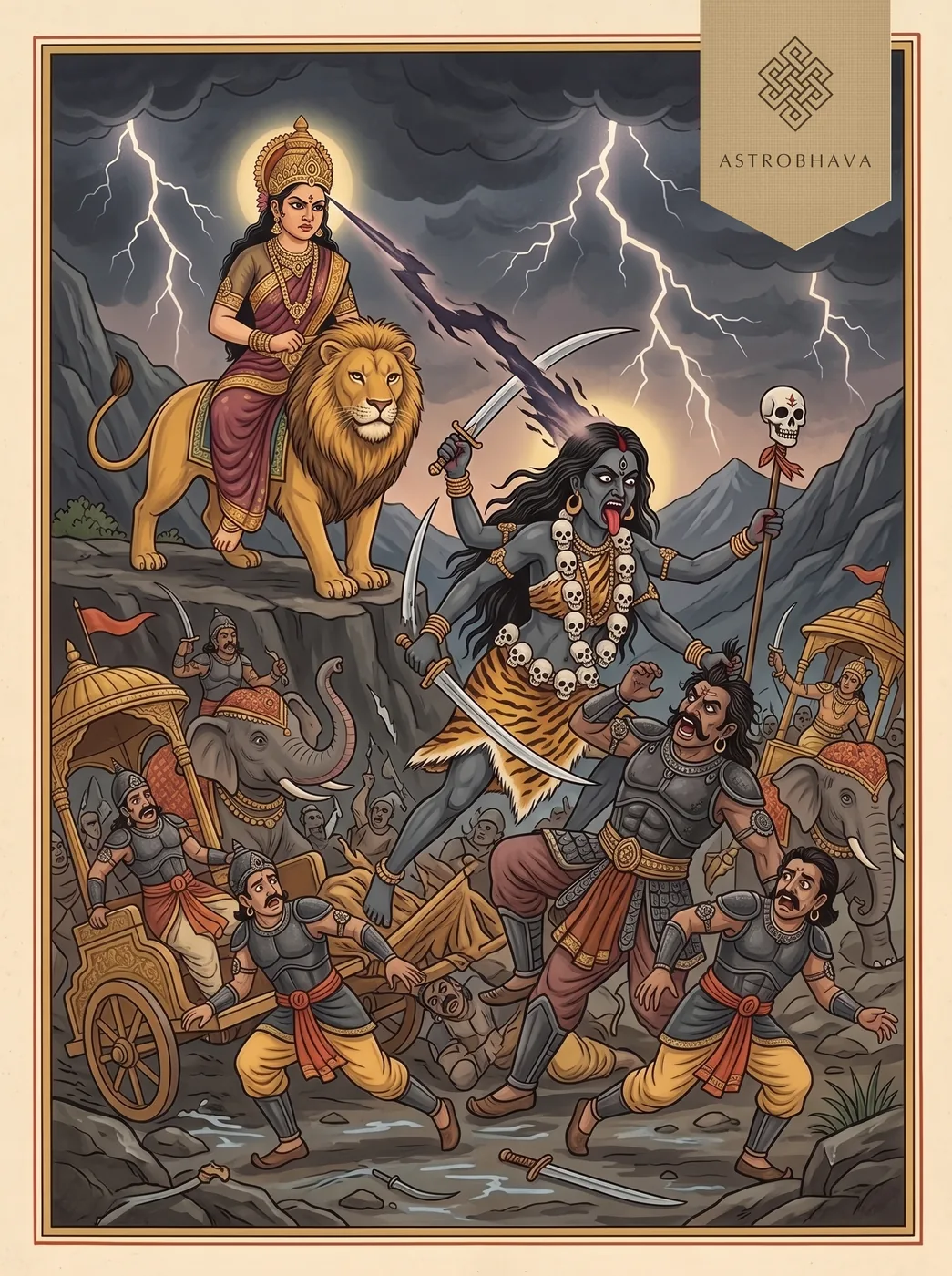
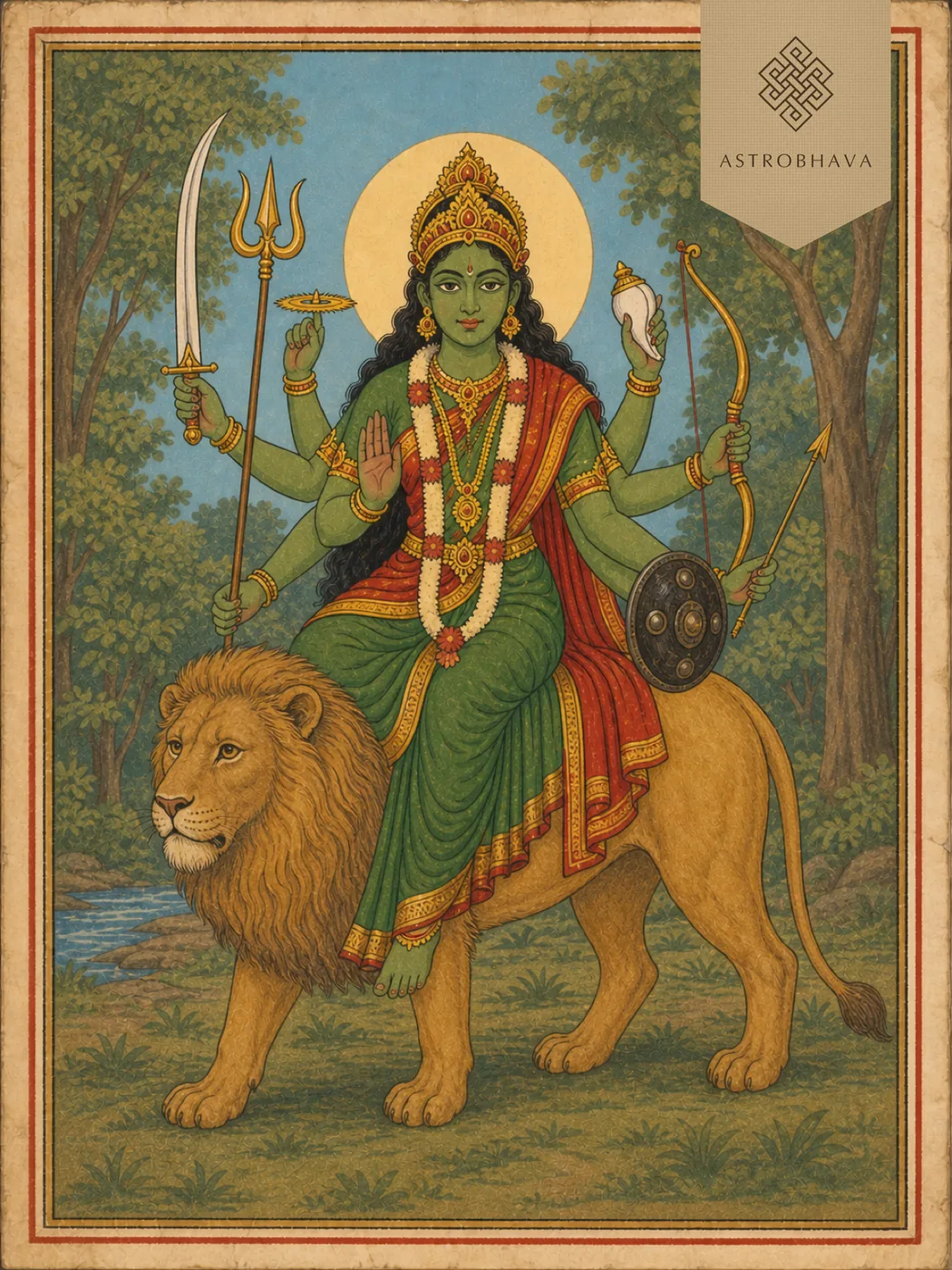
Durga Saptashati Chapter 7, called Chanda-Munda Vadha in its colophon, the slaying of Chanda and Munda, sits in the middle of the third episode and is the chapter in which Kali first takes the field. The verse for meditation placed ahead of this chapter in the standard printed text is addressed to Matangi, seated on a jewelled throne, dark of body, one foot on a lotus, playing the vina while a parrot speaks to her. Verses 2 to 4 send Shumbha's two generals with a full army against the Goddess, who sits smiling on her lion on a golden Himalayan peak. In verses 5 to 8 her face turns black as ink with anger and Kali springs from her frowning forehead. Verses 9 to 15 show Kali eating the army, elephants and chariots included. Verses 16 to 22 are the two duels and the rout of what is left. In verses 23 to 27 Kali brings the two heads to Chandika and receives the name Chamunda. The chapter has 27 numbered lines: 25 verses and two lines naming the sage as speaker, numbered 1 and 25.
Kali from the brow, and the name Chamunda
At the end of chapter 6 Shumbha, furious that Dhumralochana has been burnt to ash, sends Chanda and Munda to bring the Goddess back, dragged by the hair or bound, and to kill her if they must (chapter 6, verse 23). Chapter 7 opens with their army of four divisions, elephants, horses, chariots and foot soldiers, marching on her. They find her smiling slightly on her lion, and some draw bows while others close in to seize her. Ambika's answer is anger: her face darkens, and out of her knitted brow leaps Kali, sword and noose in hand, carrying a skull-topped staff, wearing a garland of human heads and a tiger's skin, her flesh withered, mouth gaping, tongue lolling, eyes sunken and red. She does not fight the army so much as eat it. Verse 10 has her pick up elephants in one hand, with their drivers, rear-guards, warriors and bells, and toss them into her mouth; verse 13 has her catch the demons' missiles in her teeth and grind them. Chanda covers her with arrows and Munda hurls discuses by the thousand, which vanish into her mouth like many suns entering a cloud (verse 18). Laughing, she does to Chanda what he was sent to do to the Goddess, seizes him by the hair, and beheads him with her sword, then cuts Munda down, and the survivors scatter. She carries both heads to Chandika and offers them as victims for a sacrifice of battle, telling her that Shumbha and Nishumbha are hers to kill. Chandika answers gently, and gives Kali the name that joins Chanda and Munda: Chamunda.
The mantra, in six scripts
- आज्ञप्तास्ते
- ājñaptāste — they, so commanded
- ततो
- tato — then
- दैत्याश्चण्डमुण्डपुरोगमाः
- daityāścaṇḍamuṇḍapurogamāḥ — the demons, led by Chanda and Munda
- चतुरङ्गबलोपेता
- caturaṅgabalopetā — with an army of four divisions
- ययुरभ्युद्यतायुधाः
- yayurabhyudyatāyudhāḥ — went, weapons raised
Durga Saptashati Chapter 7 lyrics in full
The Matangi meditation verse and all 27 numbered lines of the chapter in the standard numbering; the speaker of each passage is named above it.
All 27 numbered lines, in Sanskrit, Tamil, Telugu, Kannada, Malayalam and English, each with its meaning. Choose a script:
Download the Durga Saptashati Chapter 7 PDFAll 27 numbered lines with their meanings, in Sanskrit. Free to print and keep.
ॐ ध्यायेयं रत्नपीठे शुककलपठितं शृण्वतीं श्यामलाङ्गीं न्यस्तैकाङ्घ्रिं सरोजे शशिशकलधरां वल्लकीं वादयन्तीम् ।
कह्लाराबद्धमालां नियमितविलसच्चोलिकां रक्तवस्त्रां मातङ्गीं शङ्खपात्रां मधुरमधुमदां चित्रकोद्भासिभालाम् ॥
ௐ த்யாயேயம் ரத்நபீடே ஶுககலபடிதம் ஶ்ருண்வதீம் ஶ்யாமலாங்கீம் ந்யஸ்தைகாங்க்ரிம் ஸரோஜே ஶஶிஶகலதராம் வல்லகீம் வாதயந்தீம் ।
கஹ்லாராபத்தமாலாம் நியமிதவிலஸச்சோலிகாம் ரக்தவஸ்த்ராம் மாதங்கீம் ஶங்கபாத்ராம் மதுரமதுமதாம் சித்ரகோத்பாஸிபாலாம் ॥
ఓం ధ్యాయేయం రత్నపీఠే శుకకలపఠితం శృణ్వతీం శ్యామలాఙ్గీం న్యస్తైకాఙ్ఘ్రిం సరోజే శశిశకలధరాం వల్లకీం వాదయన్తీమ్ ।
కహ్లారాబద్ధమాలాం నియమితవిలసచ్చోలికాం రక్తవస్త్రాం మాతఙ్గీం శఙ్ఖపాత్రాం మధురమధుమదాం చిత్రకోద్భాసిభాలామ్ ॥
ಓಂ ಧ್ಯಾಯೇಯಂ ರತ್ನಪೀಠೇ ಶುಕಕಲಪಠಿತಂ ಶೃಣ್ವತೀಂ ಶ್ಯಾಮಲಾಙ್ಗೀಂ ನ್ಯಸ್ತೈಕಾಙ್ಘ್ರಿಂ ಸರೋಜೇ ಶಶಿಶಕಲಧರಾಂ ವಲ್ಲಕೀಂ ವಾದಯನ್ತೀಮ್ ।
ಕಹ್ಲಾರಾಬದ್ಧಮಾಲಾಂ ನಿಯಮಿತವಿಲಸಚ್ಚೋಲಿಕಾಂ ರಕ್ತವಸ್ತ್ರಾಂ ಮಾತಙ್ಗೀಂ ಶಙ್ಖಪಾತ್ರಾಂ ಮಧುರಮಧುಮದಾಂ ಚಿತ್ರಕೋದ್ಭಾಸಿಭಾಲಾಮ್ ॥
ഓം ധ്യായേയം രത്നപീഠേ ശുകകലപഠിതം ശൃണ്വതീം ശ്യാമലാങ്ഗീം ന്യസ്തൈകാങ്ഘ്രിം സരോജേ ശശിശകലധരാം വല്ലകീം വാദയന്തീമ് ।
കഹ്ലാരാബദ്ധമാലാം നിയമിതവിലസച്ചോലികാം രക്തവസ്ത്രാം മാതങ്ഗീം ശങ്ഖപാത്രാം മധുരമധുമദാം ചിത്രകോദ്ഭാസിഭാലാമ് ॥
oṃ dhyāyeyaṃ ratnapīṭhe śukakalapaṭhitaṃ śṛṇvatīṃ śyāmalāṅgīṃ nyastaikāṅghriṃ saroje śaśiśakaladharāṃ vallakīṃ vādayantīm |
kahlārābaddhamālāṃ niyamitavilasaccolikāṃ raktavastrāṃ mātaṅgīṃ śaṅkhapātrāṃ madhuramadhumadāṃ citrakodbhāsibhālām ||
I meditate on Matangi, seated on a jewelled throne, listening to the sweet speech of a parrot, dark of body, one foot resting on a lotus, wearing the crescent moon and playing the vina. She wears a garland of white water-lilies, a close-fitting bodice and red garments, holds a vessel of conch, is gently intoxicated with sweet wine, and has a bright mark shining on her forehead.
ऋषिरुवाच
आज्ञप्तास्ते ततो दैत्याश्चण्डमुण्डपुरोगमाः । चतुरङ्गबलोपेता ययुरभ्युद्यतायुधाः ॥
ருஷிருவாச
ஆஜ்ஞப்தாஸ்தே ததோ தைத்யாஶ்சண்டமுண்டபுரோகமாஃ । சதுரங்கபலோபேதா யயுரப்யுத்யதாயுதாஃ ॥
ఋషిరువాచ
ఆజ్ఞప్తాస్తే తతో దైత్యాశ్చణ్డముణ్డపురోగమాః । చతురఙ్గబలోపేతా యయురభ్యుద్యతాయుధాః ॥
ಋಷಿರುವಾಚ
ಆಜ್ಞಪ್ತಾಸ್ತೇ ತತೋ ದೈತ್ಯಾಶ್ಚಣ್ಡಮುಣ್ಡಪುರೋಗಮಾಃ । ಚತುರಙ್ಗಬಲೋಪೇತಾ ಯಯುರಭ್ಯುದ್ಯತಾಯುಧಾಃ ॥
ഋഷിരുവാച
ആജ്ഞപ്താസ്തേ തതോ ദൈത്യാശ്ചണ്ഡമുണ്ഡപുരോഗമാഃ । ചതുരങ്ഗബലോപേതാ യയുരഭ്യുദ്യതായുധാഃ ॥
ṛṣiruvāca
ājñaptāste tato daityāścaṇḍamuṇḍapurogamāḥ | caturaṅgabalopetā yayurabhyudyatāyudhāḥ ||
The sage said: Then the demons, so commanded, with Chanda and Munda at their head, set out with an army of four divisions and weapons raised.
ददृशुस्ते ततो देवीमीषद्धासां व्यवस्थिताम् ।
सिंहस्योपरि शैलेन्द्रशृङ्गे महति काञ्चने ॥
தத்ருஶுஸ்தே ததோ தேவீமீஷத்தாஸாம் வ்யவஸ்திதாம் ।
ஸிம்ஹஸ்யோபரி ஶைலேந்த்ரஶ்ருங்கே மஹதி காஞ்சநே ॥
దదృశుస్తే తతో దేవీమీషద్ధాసాం వ్యవస్థితామ్ ।
సింహస్యోపరి శైలేన్ద్రశృఙ్గే మహతి కాఞ్చనే ॥
ದದೃಶುಸ್ತೇ ತತೋ ದೇವೀಮೀಷದ್ಧಾಸಾಂ ವ್ಯವಸ್ಥಿತಾಮ್ ।
ಸಿಂಹಸ್ಯೋಪರಿ ಶೈಲೇನ್ದ್ರಶೃಙ್ಗೇ ಮಹತಿ ಕಾಞ್ಚನೇ ॥
ദദൃശുസ്തേ തതോ ദേവീമീഷദ്ധാസാം വ്യവസ്ഥിതാമ് ।
സിംഹസ്യോപരി ശൈലേന്ദ്രശൃങ്ഗേ മഹതി കാഞ്ചനേ ॥
dadṛśuste tato devīmīṣaddhāsāṃ vyavasthitām |
siṃhasyopari śailendraśṛṅge mahati kāñcane ||
Then they saw the Goddess, smiling slightly, seated on the lion on a great golden peak of the king of mountains.
ते दृष्ट्वा तां समादातुमुद्यमं चक्रुरुद्यताः ।
आकृष्टचापासिधरास्तथान्ये तत्समीपगाः ॥
தே த்ருஷ்ட்வா தாம் ஸமாதாதுமுத்யமம் சக்ருருத்யதாஃ ।
ஆக்ருஷ்டசாபாஸிதராஸ்ததாந்யே தத்ஸமீபகாஃ ॥
తే దృష్ట్వా తాం సమాదాతుముద్యమం చక్రురుద్యతాః ।
ఆకృష్టచాపాసిధరాస్తథాన్యే తత్సమీపగాః ॥
ತೇ ದೃಷ್ಟ್ವಾ ತಾಂ ಸಮಾದಾತುಮುದ್ಯಮಂ ಚಕ್ರುರುದ್ಯತಾಃ ।
ಆಕೃಷ್ಟಚಾಪಾಸಿಧರಾಸ್ತಥಾನ್ಯೇ ತತ್ಸಮೀಪಗಾಃ ॥
തേ ദൃഷ്ട്വാ താം സമാദാതുമുദ്യമം ചക്രുരുദ്യതാഃ ।
ആകൃഷ്ടചാപാസിധരാസ്തഥാന്യേ തത്സമീപഗാഃ ॥
te dṛṣṭvā tāṃ samādātumudyamaṃ cakrurudyatāḥ |
ākṛṣṭacāpāsidharāstathānye tatsamīpagāḥ ||
Seeing her, they made ready and set about seizing her; some drew their bows and held up swords, and others came up close to her.
ततः कोपं चकारोच्चैरम्बिका तानरीन् प्रति ।
कोपेन चास्या वदनं मषीवर्णमभूत्तदा ॥
ததஃ கோபம் சகாரோச்சைரம்பிகா தாநரீந் ப்ரதி ।
கோபேந சாஸ்யா வதநம் மஷீவர்ணமபூத்ததா ॥
తతః కోపం చకారోచ్చైరమ్బికా తానరీన్ ప్రతి ।
కోపేన చాస్యా వదనం మషీవర్ణమభూత్తదా ॥
ತತಃ ಕೋಪಂ ಚಕಾರೋಚ್ಚೈರಮ್ಬಿಕಾ ತಾನರೀನ್ ಪ್ರತಿ ।
ಕೋಪೇನ ಚಾಸ್ಯಾ ವದನಂ ಮಷೀವರ್ಣಮಭೂತ್ತದಾ ॥
തതഃ കോപം ചകാരോച്ചൈരമ്ബികാ താനരീന് പ്രതി ।
കോപേന ചാസ്യാ വദനം മഷീവര്ണമഭൂത്തദാ ॥
tataḥ kopaṃ cakāroccairambikā tānarīn prati |
kopena cāsyā vadanaṃ maṣīvarṇamabhūttadā ||
Then Ambika grew fiercely angry with those enemies, and in her anger her face turned black as ink.
भ्रुकुटीकुटिलात्तस्या ललाटफलकाद्द्रुतम् ।
काली करालवदना विनिष्क्रान्तासिपाशिनी ॥
ப்ருகுடீகுடிலாத்தஸ்யா லலாடபலகாத்த்ருதம் ।
காலீ கராலவதநா விநிஷ்க்ராந்தாஸிபாஶிநீ ॥
భ్రుకుటీకుటిలాత్తస్యా లలాటఫలకాద్ద్రుతమ్ ।
కాలీ కరాలవదనా వినిష్క్రాన్తాసిపాశినీ ॥
ಭ್ರುಕುಟೀಕುಟಿಲಾತ್ತಸ್ಯಾ ಲಲಾಟಫಲಕಾದ್ದ್ರುತಮ್ ।
ಕಾಲೀ ಕರಾಲವದನಾ ವಿನಿಷ್ಕ್ರಾನ್ತಾಸಿಪಾಶಿನೀ ॥
ഭ്രുകുടീകുടിലാത്തസ്യാ ലലാടഫലകാദ്ദ്രുതമ് ।
കാലീ കരാലവദനാ വിനിഷ്ക്രാന്താസിപാശിനീ ॥
bhrukuṭīkuṭilāttasyā lalāṭaphalakāddrutam |
kālī karālavadanā viniṣkrāntāsipāśinī ||
From the surface of her forehead, knitted in a frown, there swiftly sprang Kali, with a dreadful face, armed with sword and noose.
विचित्रखट्वाङ्गधरा नरमालाविभूषणा ।
द्वीपिचर्मपरीधाना शुष्कमांसातिभैरवा ॥
விசித்ரகட்வாங்கதரா நரமாலாவிபூஷணா ।
த்வீபிசர்மபரீதாநா ஶுஷ்கமாம்ஸாதிபைரவா ॥
విచిత్రఖట్వాఙ్గధరా నరమాలావిభూషణా ।
ద్వీపిచర్మపరీధానా శుష్కమాంసాతిభైరవా ॥
ವಿಚಿತ್ರಖಟ್ವಾಙ್ಗಧರಾ ನರಮಾಲಾವಿಭೂಷಣಾ ।
ದ್ವೀಪಿಚರ್ಮಪರೀಧಾನಾ ಶುಷ್ಕಮಾಂಸಾತಿಭೈರವಾ ॥
വിചിത്രഖട്വാങ്ഗധരാ നരമാലാവിഭൂഷണാ ।
ദ്വീപിചര്മപരീധാനാ ശുഷ്കമാംസാതിഭൈരവാ ॥
vicitrakhaṭvāṅgadharā naramālāvibhūṣaṇā |
dvīpicarmaparīdhānā śuṣkamāṃsātibhairavā ||
She carried a strange skull-topped staff, wore a garland of human heads, was clad in a tiger's skin, and looked most terrible with her withered flesh.
अतिविस्तारवदना जिह्वाललनभीषणा ।
निमग्नारक्तनयना नादापूरितदिङ्मुखा ॥
அதிவிஸ்தாரவதநா ஜிஹ்வாலலநபீஷணா ।
நிமக்நாரக்தநயநா நாதாபூரிததிங்முகா ॥
అతివిస్తారవదనా జిహ్వాలలనభీషణా ।
నిమగ్నారక్తనయనా నాదాపూరితదిఙ్ముఖా ॥
ಅತಿವಿಸ್ತಾರವದನಾ ಜಿಹ್ವಾಲಲನಭೀಷಣಾ ।
ನಿಮಗ್ನಾರಕ್ತನಯನಾ ನಾದಾಪೂರಿತದಿಙ್ಮುಖಾ ॥
അതിവിസ്താരവദനാ ജിഹ്വാലലനഭീഷണാ ।
നിമഗ്നാരക്തനയനാ നാദാപൂരിതദിങ്മുഖാ ॥
ativistāravadanā jihvālalanabhīṣaṇā |
nimagnāraktanayanā nādāpūritadiṅmukhā ||
Her mouth was gaping wide, she was fearful with her lolling tongue, her eyes were sunken and reddish, and she filled the quarters with her roar.
सा वेगेनाभिपतिता घातयन्ती महासुरान् ।
सैन्ये तत्र सुरारीणामभक्षयत तद्बलम् ॥
ஸா வேகேநாபிபதிதா காதயந்தீ மஹாஸுராந் ।
ஸைந்யே தத்ர ஸுராரீணாமபக்ஷயத தத்பலம் ॥
సా వేగేనాభిపతితా ఘాతయన్తీ మహాసురాన్ ।
సైన్యే తత్ర సురారీణామభక్షయత తద్బలమ్ ॥
ಸಾ ವೇಗೇನಾಭಿಪತಿತಾ ಘಾತಯನ್ತೀ ಮಹಾಸುರಾನ್ ।
ಸೈನ್ಯೇ ತತ್ರ ಸುರಾರೀಣಾಮಭಕ್ಷಯತ ತದ್ಬಲಮ್ ॥
സാ വേഗേനാഭിപതിതാ ഘാതയന്തീ മഹാസുരാന് ।
സൈന്യേ തത്ര സുരാരീണാമഭക്ഷയത തദ്ബലമ് ॥
sā vegenābhipatitā ghātayantī mahāsurān |
sainye tatra surārīṇāmabhakṣayata tadbalam ||
Rushing on at speed and slaughtering the great demons, she devoured that army of the enemies of the gods.
पार्ष्णिग्राहाङ्कुशग्राहियोधघण्टासमन्वितान् ।
समादायैकहस्तेन मुखे चिक्षेप वारणान् ॥
பார்ஷ்ணிக்ராஹாங்குஶக்ராஹியோதகண்டாஸமந்விதாந் ।
ஸமாதாயைகஹஸ்தேந முகே சிக்ஷேப வாரணாந் ॥
పార్ష్ణిగ్రాహాఙ్కుశగ్రాహియోధఘణ్టాసమన్వితాన్ ।
సమాదాయైకహస్తేన ముఖే చిక్షేప వారణాన్ ॥
ಪಾರ್ಷ್ಣಿಗ್ರಾಹಾಙ್ಕುಶಗ್ರಾಹಿಯೋಧಘಣ್ಟಾಸಮನ್ವಿತಾನ್ ।
ಸಮಾದಾಯೈಕಹಸ್ತೇನ ಮುಖೇ ಚಿಕ್ಷೇಪ ವಾರಣಾನ್ ॥
പാര്ഷ്ണിഗ്രാഹാങ്കുശഗ്രാഹിയോധഘണ്ടാസമന്വിതാന് ।
സമാദായൈകഹസ്തേന മുഖേ ചിക്ഷേപ വാരണാന് ॥
pārṣṇigrāhāṅkuśagrāhiyodhaghaṇṭāsamanvitān |
samādāyaikahastena mukhe cikṣepa vāraṇān ||
Seizing elephants with one hand, together with their rear-guards, the drivers with their goads, the warriors and the bells, she flung them into her mouth.
तथैव योधं तुरगै रथं सारथिना सह ।
निक्षिप्य वक्त्रे दशनैश्चर्वयन्त्यतिभैरवम् ॥
ததைவ யோதம் துரகை ரதம் ஸாரதிநா ஸஹ ।
நிக்ஷிப்ய வக்த்ரே தஶநைஶ்சர்வயந்த்யதிபைரவம் ॥
తథైవ యోధం తురగై రథం సారథినా సహ ।
నిక్షిప్య వక్త్రే దశనైశ్చర్వయన్త్యతిభైరవమ్ ॥
ತಥೈವ ಯೋಧಂ ತುರಗೈ ರಥಂ ಸಾರಥಿನಾ ಸಹ ।
ನಿಕ್ಷಿಪ್ಯ ವಕ್ತ್ರೇ ದಶನೈಶ್ಚರ್ವಯನ್ತ್ಯತಿಭೈರವಮ್ ॥
തഥൈവ യോധം തുരഗൈ രഥം സാരഥിനാ സഹ ।
നിക്ഷിപ്യ വക്ത്രേ ദശനൈശ്ചര്വയന്ത്യതിഭൈരവമ് ॥
tathaiva yodhaṃ turagai rathaṃ sārathinā saha |
nikṣipya vaktre daśanaiścarvayantyatibhairavam ||
In the same way she threw into her mouth the warriors with their horses and the chariots with their charioteers, and chewed them up most fearfully with her teeth.
एकं जग्राह केशेषु ग्रीवायामथ चापरम् ।
पादेनाक्रम्य चैवान्यमुरसान्यमपोथयत् ॥
ஏகம் ஜக்ராஹ கேஶேஷு க்ரீவாயாமத சாபரம் ।
பாதேநாக்ரம்ய சைவாந்யமுரஸாந்யமபோதயத் ॥
ఏకం జగ్రాహ కేశేషు గ్రీవాయామథ చాపరమ్ ।
పాదేనాక్రమ్య చైవాన్యమురసాన్యమపోథయత్ ॥
ಏಕಂ ಜಗ್ರಾಹ ಕೇಶೇಷು ಗ್ರೀವಾಯಾಮಥ ಚಾಪರಮ್ ।
ಪಾದೇನಾಕ್ರಮ್ಯ ಚೈವಾನ್ಯಮುರಸಾನ್ಯಮಪೋಥಯತ್ ॥
ഏകം ജഗ്രാഹ കേശേഷു ഗ്രീവായാമഥ ചാപരമ് ।
പാദേനാക്രമ്യ ചൈവാന്യമുരസാന്യമപോഥയത് ॥
ekaṃ jagrāha keśeṣu grīvāyāmatha cāparam |
pādenākramya caivānyamurasānyamapothayat ||
She seized one by the hair and another by the neck; one she trampled under foot and another she crushed against her chest.
तैर्मुक्तानि च शस्त्राणि महास्त्राणि तथासुरैः ।
मुखेन जग्राह रुषा दशनैर्मथितान्यपि ॥
தைர்முக்தாநி ச ஶஸ்த்ராணி மஹாஸ்த்ராணி ததாஸுரைஃ ।
முகேந ஜக்ராஹ ருஷா தஶநைர்மதிதாந்யபி ॥
తైర్ముక్తాని చ శస్త్రాణి మహాస్త్రాణి తథాసురైః ।
ముఖేన జగ్రాహ రుషా దశనైర్మథితాన్యపి ॥
ತೈರ್ಮುಕ್ತಾನಿ ಚ ಶಸ್ತ್ರಾಣಿ ಮಹಾಸ್ತ್ರಾಣಿ ತಥಾಸುರೈಃ ।
ಮುಖೇನ ಜಗ್ರಾಹ ರುಷಾ ದಶನೈರ್ಮಥಿತಾನ್ಯಪಿ ॥
തൈര്മുക്താനി ച ശസ്ത്രാണി മഹാസ്ത്രാണി തഥാസുരൈഃ ।
മുഖേന ജഗ്രാഹ രുഷാ ദശനൈര്മഥിതാന്യപി ॥
tairmuktāni ca śastrāṇi mahāstrāṇi tathāsuraiḥ |
mukhena jagrāha ruṣā daśanairmathitānyapi ||
The weapons and great missiles hurled by the demons she caught in her mouth in fury and ground them with her teeth.
बलिनां तद् बलं सर्वमसुराणां दुरात्मनाम् ।
ममर्दाभक्षयच्चान्यानन्यांश्चाताडयत्तथा ॥
பலிநாம் தத் பலம் ஸர்வமஸுராணாம் துராத்மநாம் ।
மமர்தாபக்ஷயச்சாந்யாநந்யாம்ஶ்சாதாடயத்ததா ॥
బలినాం తద్ బలం సర్వమసురాణాం దురాత్మనామ్ ।
మమర్దాభక్షయచ్చాన్యానన్యాంశ్చాతాడయత్తథా ॥
ಬಲಿನಾಂ ತದ್ ಬಲಂ ಸರ್ವಮಸುರಾಣಾಂ ದುರಾತ್ಮನಾಮ್ ।
ಮಮರ್ದಾಭಕ್ಷಯಚ್ಚಾನ್ಯಾನನ್ಯಾಂಶ್ಚಾತಾಡಯತ್ತಥಾ ॥
ബലിനാം തദ് ബലം സര്വമസുരാണാം ദുരാത്മനാമ് ।
മമര്ദാഭക്ഷയച്ചാന്യാനന്യാംശ്ചാതാഡയത്തഥാ ॥
balināṃ tad balaṃ sarvamasurāṇāṃ durātmanām |
mamardābhakṣayaccānyānanyāṃścātāḍayattathā ||
That whole army of mighty, evil-minded demons she crushed; some she devoured and others she struck down.
असिना निहताः केचित्केचित्खट्वाङ्गताडिताः ।
जग्मुर्विनाशमसुरा दन्ताग्राभिहतास्तथा ॥
அஸிநா நிஹதாஃ கேசித்கேசித்கட்வாங்கதாடிதாஃ ।
ஜக்முர்விநாஶமஸுரா தந்தாக்ராபிஹதாஸ்ததா ॥
అసినా నిహతాః కేచిత్కేచిత్ఖట్వాఙ్గతాడితాః ।
జగ్ముర్వినాశమసురా దన్తాగ్రాభిహతాస్తథా ॥
ಅಸಿನಾ ನಿಹತಾಃ ಕೇಚಿತ್ಕೇಚಿತ್ಖಟ್ವಾಙ್ಗತಾಡಿತಾಃ ।
ಜಗ್ಮುರ್ವಿನಾಶಮಸುರಾ ದನ್ತಾಗ್ರಾಭಿಹತಾಸ್ತಥಾ ॥
അസിനാ നിഹതാഃ കേചിത്കേചിത്ഖട്വാങ്ഗതാഡിതാഃ ।
ജഗ്മുര്വിനാശമസുരാ ദന്താഗ്രാഭിഹതാസ്തഥാ ॥
asinā nihatāḥ kecitkecitkhaṭvāṅgatāḍitāḥ |
jagmurvināśamasurā dantāgrābhihatāstathā ||
Some were killed by the sword, some beaten with the skull-staff, and so the demons met their end, struck also by the points of her teeth.
क्षणेन तद् बलं सर्वमसुराणां निपातितम् ।
दृष्ट्वा चण्डोऽभिदुद्राव तां कालीमतिभीषणाम् ॥
க்ஷணேந தத் பலம் ஸர்வமஸுராணாம் நிபாதிதம் ।
த்ருஷ்ட்வா சண்டோபிதுத்ராவ தாம் காலீமதிபீஷணாம் ॥
క్షణేన తద్ బలం సర్వమసురాణాం నిపాతితమ్ ।
దృష్ట్వా చణ్డోఽభిదుద్రావ తాం కాలీమతిభీషణామ్ ॥
ಕ್ಷಣೇನ ತದ್ ಬಲಂ ಸರ್ವಮಸುರಾಣಾಂ ನಿಪಾತಿತಮ್ ।
ದೃಷ್ಟ್ವಾ ಚಣ್ಡೋಽಭಿದುದ್ರಾವ ತಾಂ ಕಾಲೀಮತಿಭೀಷಣಾಮ್ ॥
ക്ഷണേന തദ് ബലം സര്വമസുരാണാം നിപാതിതമ് ।
ദൃഷ്ട്വാ ചണ്ഡോഽഭിദുദ്രാവ താം കാലീമതിഭീഷണാമ് ॥
kṣaṇena tad balaṃ sarvamasurāṇāṃ nipātitam |
dṛṣṭvā caṇḍo'bhidudrāva tāṃ kālīmatibhīṣaṇām ||
Seeing that whole army of demons felled in a moment, Chanda rushed at Kali, who was most terrifying.
शरवर्षैर्महाभीमैर्भीमाक्षीं तां महासुरः ।
छादयामास चक्रैश्च मुण्डः क्षिप्तैः सहस्रशः ॥
ஶரவர்ஷைர்மஹாபீமைர்பீமாக்ஷீம் தாம் மஹாஸுரஃ ।
சாதயாமாஸ சக்ரைஶ்ச முண்டஃ க்ஷிப்தைஃ ஸஹஸ்ரஶஃ ॥
శరవర్షైర్మహాభీమైర్భీమాక్షీం తాం మహాసురః ।
ఛాదయామాస చక్రైశ్చ ముణ్డః క్షిప్తైః సహస్రశః ॥
ಶರವರ್ಷೈರ್ಮಹಾಭೀಮೈರ್ಭೀಮಾಕ್ಷೀಂ ತಾಂ ಮಹಾಸುರಃ ।
ಛಾದಯಾಮಾಸ ಚಕ್ರೈಶ್ಚ ಮುಣ್ಡಃ ಕ್ಷಿಪ್ತೈಃ ಸಹಸ್ರಶಃ ॥
ശരവര്ഷൈര്മഹാഭീമൈര്ഭീമാക്ഷീം താം മഹാസുരഃ ।
ഛാദയാമാസ ചക്രൈശ്ച മുണ്ഡഃ ക്ഷിപ്തൈഃ സഹസ്രശഃ ॥
śaravarṣairmahābhīmairbhīmākṣīṃ tāṃ mahāsuraḥ |
chādayāmāsa cakraiśca muṇḍaḥ kṣiptaiḥ sahasraśaḥ ||
The great demon covered the terrible-eyed Goddess with showers of very dreadful arrows, and Munda with discuses hurled by the thousand.
तानि चक्राण्यनेकानि विशमानानि तन्मुखम् ।
बभुर्यथार्कबिम्बानि सुबहूनि घनोदरम् ॥
தாநி சக்ராண்யநேகாநி விஶமாநாநி தந்முகம் ।
பபுர்யதார்கபிம்பாநி ஸுபஹூநி கநோதரம் ॥
తాని చక్రాణ్యనేకాని విశమానాని తన్ముఖమ్ ।
బభుర్యథార్కబిమ్బాని సుబహూని ఘనోదరమ్ ॥
ತಾನಿ ಚಕ್ರಾಣ್ಯನೇಕಾನಿ ವಿಶಮಾನಾನಿ ತನ್ಮುಖಮ್ ।
ಬಭುರ್ಯಥಾರ್ಕಬಿಮ್ಬಾನಿ ಸುಬಹೂನಿ ಘನೋದರಮ್ ॥
താനി ചക്രാണ്യനേകാനി വിശമാനാനി തന്മുഖമ് ।
ബഭുര്യഥാര്കബിമ്ബാനി സുബഹൂനി ഘനോദരമ് ॥
tāni cakrāṇyanekāni viśamānāni tanmukham |
babhuryathārkabimbāni subahūni ghanodaram ||
Those many discuses, entering her mouth, looked like many orbs of the sun entering the belly of a cloud.
ततो जहासातिरुषा भीमं भैरवनादिनी ।
काली करालवक्त्रान्तर्दुर्दर्शदशनोज्ज्वला ॥
ததோ ஜஹாஸாதிருஷா பீமம் பைரவநாதிநீ ।
காலீ கராலவக்த்ராந்தர்துர்தர்ஶதஶநோஜ்ஜ்வலா ॥
తతో జహాసాతిరుషా భీమం భైరవనాదినీ ।
కాలీ కరాలవక్త్రాన్తర్దుర్దర్శదశనోజ్జ్వలా ॥
ತತೋ ಜಹಾಸಾತಿರುಷಾ ಭೀಮಂ ಭೈರವನಾದಿನೀ ।
ಕಾಲೀ ಕರಾಲವಕ್ತ್ರಾನ್ತರ್ದುರ್ದರ್ಶದಶನೋಜ್ಜ್ವಲಾ ॥
തതോ ജഹാസാതിരുഷാ ഭീമം ഭൈരവനാദിനീ ।
കാലീ കരാലവക്ത്രാന്തര്ദുര്ദര്ശദശനോജ്ജ്വലാ ॥
tato jahāsātiruṣā bhīmaṃ bhairavanādinī |
kālī karālavaktrāntardurdarśadaśanojjvalā ||
Then Kali, roaring terribly, laughed fearfully in great fury, her dreadful mouth gleaming with teeth hard to look upon.
उत्थाय च महासिं हं देवी चण्डमधावत ।
गृहीत्वा चास्य केशेषु शिरस्तेनासिनाच्छिनत् ॥
உத்தாய ச மஹாஸிம் ஹம் தேவீ சண்டமதாவத ।
க்ருஹீத்வா சாஸ்ய கேஶேஷு ஶிரஸ்தேநாஸிநாச்சிநத் ॥
ఉత్థాయ చ మహాసిం హం దేవీ చణ్డమధావత ।
గృహీత్వా చాస్య కేశేషు శిరస్తేనాసినాచ్ఛినత్ ॥
ಉತ್ಥಾಯ ಚ ಮಹಾಸಿಂ ಹಂ ದೇವೀ ಚಣ್ಡಮಧಾವತ ।
ಗೃಹೀತ್ವಾ ಚಾಸ್ಯ ಕೇಶೇಷು ಶಿರಸ್ತೇನಾಸಿನಾಚ್ಛಿನತ್ ॥
ഉത്ഥായ ച മഹാസിം ഹം ദേവീ ചണ്ഡമധാവത ।
ഗൃഹീത്വാ ചാസ്യ കേശേഷു ശിരസ്തേനാസിനാച്ഛിനത് ॥
utthāya ca mahāsiṃ haṃ devī caṇḍamadhāvata |
gṛhītvā cāsya keśeṣu śirastenāsinācchinat ||
Then the Goddess raised her great sword and, crying out 'ham', rushed at Chanda; seizing him by the hair, she cut off his head with that sword.
अथ मुण्डोऽभ्यधावत्तां दृष्ट्वा चण्डं निपातितम् ।
तमप्यपातयद्भूमौ सा खड्गाभिहतं रुषा ॥
அத முண்டோப்யதாவத்தாம் த்ருஷ்ட்வா சண்டம் நிபாதிதம் ।
தமப்யபாதயத்பூமௌ ஸா கட்காபிஹதம் ருஷா ॥
అథ ముణ్డోఽభ్యధావత్తాం దృష్ట్వా చణ్డం నిపాతితమ్ ।
తమప్యపాతయద్భూమౌ సా ఖడ్గాభిహతం రుషా ॥
ಅಥ ಮುಣ್ಡೋಽಭ್ಯಧಾವತ್ತಾಂ ದೃಷ್ಟ್ವಾ ಚಣ್ಡಂ ನಿಪಾತಿತಮ್ ।
ತಮಪ್ಯಪಾತಯದ್ಭೂಮೌ ಸಾ ಖಡ್ಗಾಭಿಹತಂ ರುಷಾ ॥
അഥ മുണ്ഡോഽഭ്യധാവത്താം ദൃഷ്ട്വാ ചണ്ഡം നിപാതിതമ് ।
തമപ്യപാതയദ്ഭൂമൌ സാ ഖഡ്ഗാഭിഹതം രുഷാ ॥
atha muṇḍo'bhyadhāvattāṃ dṛṣṭvā caṇḍaṃ nipātitam |
tamapyapātayadbhūmau sā khaḍgābhihataṃ ruṣā ||
Then Munda, seeing Chanda felled, ran at her; and she too, in her fury, struck him with the sword and threw him to the ground.
हतशेषं ततः सैन्यं दृष्ट्वा चण्डं निपातितम् ।
मुण्डं च सुमहावीर्यं दिशो भेजे भयातुरम् ॥
ஹதஶேஷம் ததஃ ஸைந்யம் த்ருஷ்ட்வா சண்டம் நிபாதிதம் ।
முண்டம் ச ஸுமஹாவீர்யம் திஶோ பேஜே பயாதுரம் ॥
హతశేషం తతః సైన్యం దృష్ట్వా చణ్డం నిపాతితమ్ ।
ముణ్డం చ సుమహావీర్యం దిశో భేజే భయాతురమ్ ॥
ಹತಶೇಷಂ ತತಃ ಸೈನ್ಯಂ ದೃಷ್ಟ್ವಾ ಚಣ್ಡಂ ನಿಪಾತಿತಮ್ ।
ಮುಣ್ಡಂ ಚ ಸುಮಹಾವೀರ್ಯಂ ದಿಶೋ ಭೇಜೇ ಭಯಾತುರಮ್ ॥
ഹതശേഷം തതഃ സൈന്യം ദൃഷ്ട്വാ ചണ്ഡം നിപാതിതമ് ।
മുണ്ഡം ച സുമഹാവീര്യം ദിശോ ഭേജേ ഭയാതുരമ് ॥
hataśeṣaṃ tataḥ sainyaṃ dṛṣṭvā caṇḍaṃ nipātitam |
muṇḍaṃ ca sumahāvīryaṃ diśo bheje bhayāturam ||
Seeing Chanda felled, and the very mighty Munda too, what was left of the army fled in all directions, overcome with fear.
शिरश्चण्डस्य काली च गृहीत्वा मुण्डमेव च ।
प्राह प्रचण्डाट्टहासमिश्रमभ्येत्य चण्डिकाम् ॥
ஶிரஶ்சண்டஸ்ய காலீ ச க்ருஹீத்வா முண்டமேவ ச ।
ப்ராஹ ப்ரசண்டாட்டஹாஸமிஶ்ரமப்யேத்ய சண்டிகாம் ॥
శిరశ్చణ్డస్య కాలీ చ గృహీత్వా ముణ్డమేవ చ ।
ప్రాహ ప్రచణ్డాట్టహాసమిశ్రమభ్యేత్య చణ్డికామ్ ॥
ಶಿರಶ್ಚಣ್ಡಸ್ಯ ಕಾಲೀ ಚ ಗೃಹೀತ್ವಾ ಮುಣ್ಡಮೇವ ಚ ।
ಪ್ರಾಹ ಪ್ರಚಣ್ಡಾಟ್ಟಹಾಸಮಿಶ್ರಮಭ್ಯೇತ್ಯ ಚಣ್ಡಿಕಾಮ್ ॥
ശിരശ്ചണ്ഡസ്യ കാലീ ച ഗൃഹീത്വാ മുണ്ഡമേവ ച ।
പ്രാഹ പ്രചണ്ഡാട്ടഹാസമിശ്രമഭ്യേത്യ ചണ്ഡികാമ് ॥
śiraścaṇḍasya kālī ca gṛhītvā muṇḍameva ca |
prāha pracaṇḍāṭṭahāsamiśramabhyetya caṇḍikām ||
Kali took the heads of Chanda and Munda, came to Chandika and spoke, mingling her words with fierce, loud laughter.
मया तवात्रोपहृतौ चण्डमुण्डौ महापशू ।
युद्धयज्ञे स्वयं शुम्भं निशुम्भं च हनिष्यसि ॥
மயா தவாத்ரோபஹ்ருதௌ சண்டமுண்டௌ மஹாபஶூ ।
யுத்தயஜ்ஞே ஸ்வயம் ஶும்பம் நிஶும்பம் ச ஹநிஷ்யஸி ॥
మయా తవాత్రోపహృతౌ చణ్డముణ్డౌ మహాపశూ ।
యుద్ధయజ్ఞే స్వయం శుమ్భం నిశుమ్భం చ హనిష్యసి ॥
ಮಯಾ ತವಾತ್ರೋಪಹೃತೌ ಚಣ್ಡಮುಣ್ಡೌ ಮಹಾಪಶೂ ।
ಯುದ್ಧಯಜ್ಞೇ ಸ್ವಯಂ ಶುಮ್ಭಂ ನಿಶುಮ್ಭಂ ಚ ಹನಿಷ್ಯಸಿ ॥
മയാ തവാത്രോപഹൃതൌ ചണ്ഡമുണ്ഡൌ മഹാപശൂ ।
യുദ്ധയജ്ഞേ സ്വയം ശുമ്ഭം നിശുമ്ഭം ച ഹനിഷ്യസി ॥
mayā tavātropahṛtau caṇḍamuṇḍau mahāpaśū |
yuddhayajñe svayaṃ śumbhaṃ niśumbhaṃ ca haniṣyasi ||
I have brought you here Chanda and Munda, two great beasts for sacrifice. In the sacrifice of battle you yourself will slay Shumbha and Nishumbha.
ऋषिरुवाच
तावानीतौ ततो दृष्ट्वा चण्डमुण्डौ महासुरौ । उवाच कालीं कल्याणी ललितं चण्डिका वचः ॥
ருஷிருவாச
தாவாநீதௌ ததோ த்ருஷ்ட்வா சண்டமுண்டௌ மஹாஸுரௌ । உவாச காலீம் கல்யாணீ லலிதம் சண்டிகா வசஃ ॥
ఋషిరువాచ
తావానీతౌ తతో దృష్ట్వా చణ్డముణ్డౌ మహాసురౌ । ఉవాచ కాలీం కల్యాణీ లలితం చణ్డికా వచః ॥
ಋಷಿರುವಾಚ
ತಾವಾನೀತೌ ತತೋ ದೃಷ್ಟ್ವಾ ಚಣ್ಡಮುಣ್ಡೌ ಮಹಾಸುರೌ । ಉವಾಚ ಕಾಲೀಂ ಕಲ್ಯಾಣೀ ಲಲಿತಂ ಚಣ್ಡಿಕಾ ವಚಃ ॥
ഋഷിരുവാച
താവാനീതൌ തതോ ദൃഷ്ട്വാ ചണ്ഡമുണ്ഡൌ മഹാസുരൌ । ഉവാച കാലീം കല്യാണീ ലലിതം ചണ്ഡികാ വചഃ ॥
ṛṣiruvāca
tāvānītau tato dṛṣṭvā caṇḍamuṇḍau mahāsurau | uvāca kālīṃ kalyāṇī lalitaṃ caṇḍikā vacaḥ ||
The sage said: Seeing the two great demons Chanda and Munda brought before her, the auspicious Chandika spoke gentle words to Kali.
यस्माच्चण्डं च मुण्डं च गृहीत्वा त्वमुपागता ।
चामुण्डेति ततो लोके ख्याता देवि भविष्यसि ॥
யஸ்மாச்சண்டம் ச முண்டம் ச க்ருஹீத்வா த்வமுபாகதா ।
சாமுண்டேதி ததோ லோகே க்யாதா தேவி பவிஷ்யஸி ॥
యస్మాచ్చణ్డం చ ముణ్డం చ గృహీత్వా త్వముపాగతా ।
చాముణ్డేతి తతో లోకే ఖ్యాతా దేవి భవిష్యసి ॥
ಯಸ್ಮಾಚ್ಚಣ್ಡಂ ಚ ಮುಣ್ಡಂ ಚ ಗೃಹೀತ್ವಾ ತ್ವಮುಪಾಗತಾ ।
ಚಾಮುಣ್ಡೇತಿ ತತೋ ಲೋಕೇ ಖ್ಯಾತಾ ದೇವಿ ಭವಿಷ್ಯಸಿ ॥
യസ്മാച്ചണ്ഡം ച മുണ്ഡം ച ഗൃഹീത്വാ ത്വമുപാഗതാ ।
ചാമുണ്ഡേതി തതോ ലോകേ ഖ്യാതാ ദേവി ഭവിഷ്യസി ॥
yasmāccaṇḍaṃ ca muṇḍaṃ ca gṛhītvā tvamupāgatā |
cāmuṇḍeti tato loke khyātā devi bhaviṣyasi ||
Because you have seized Chanda and Munda and come to me, O Goddess, you will be famed in the world by the name Chamunda.
The syllable people get wrong
In verse 27, cāmuṇḍeti (चामुण्डेति, 'as Chamunda') opens with a long ā and carries the retroflex pair ṇḍ, sounded with the tongue tip turned up and back against the palate: say chaa-mun-ḍaa, not 'cha-MOON-da' with an English d.
When the Durga Saptashati Chapter 7 is chanted
Weekday. Friday
Festival. Navaratri, in the fourth day's reading (chapters 5 to 8)
Questions
Have your chart read before you decide
Chanting is yours to do, and free. But which deity your situation calls for — and whether a mantra alone is the right response — depends on your chart. Sometimes it is; sometimes it is not.
- Over 30 years in the Guru–Sishya Parampara, from the age of five
- He reads every chart himself — 60 minutes, one to one, never delegated
- Charts are read only between sunrise and sunset, following tradition
