Durga Saptashati Chapter 6
इत्याकर्ण्य वचो देव्याः स दूतोऽमर्षपूरितः । समाचष्ट समागम्य दैत्यराजाय विस्तरात् ॥In Devanagari, Tamil, Telugu, Kannada, Malayalam and English — with the meaning of every word, and the one syllable most people pronounce wrongly.
 The Chandi Homa, performed for youBook →
What the Durga Saptashati Chapter 6 is
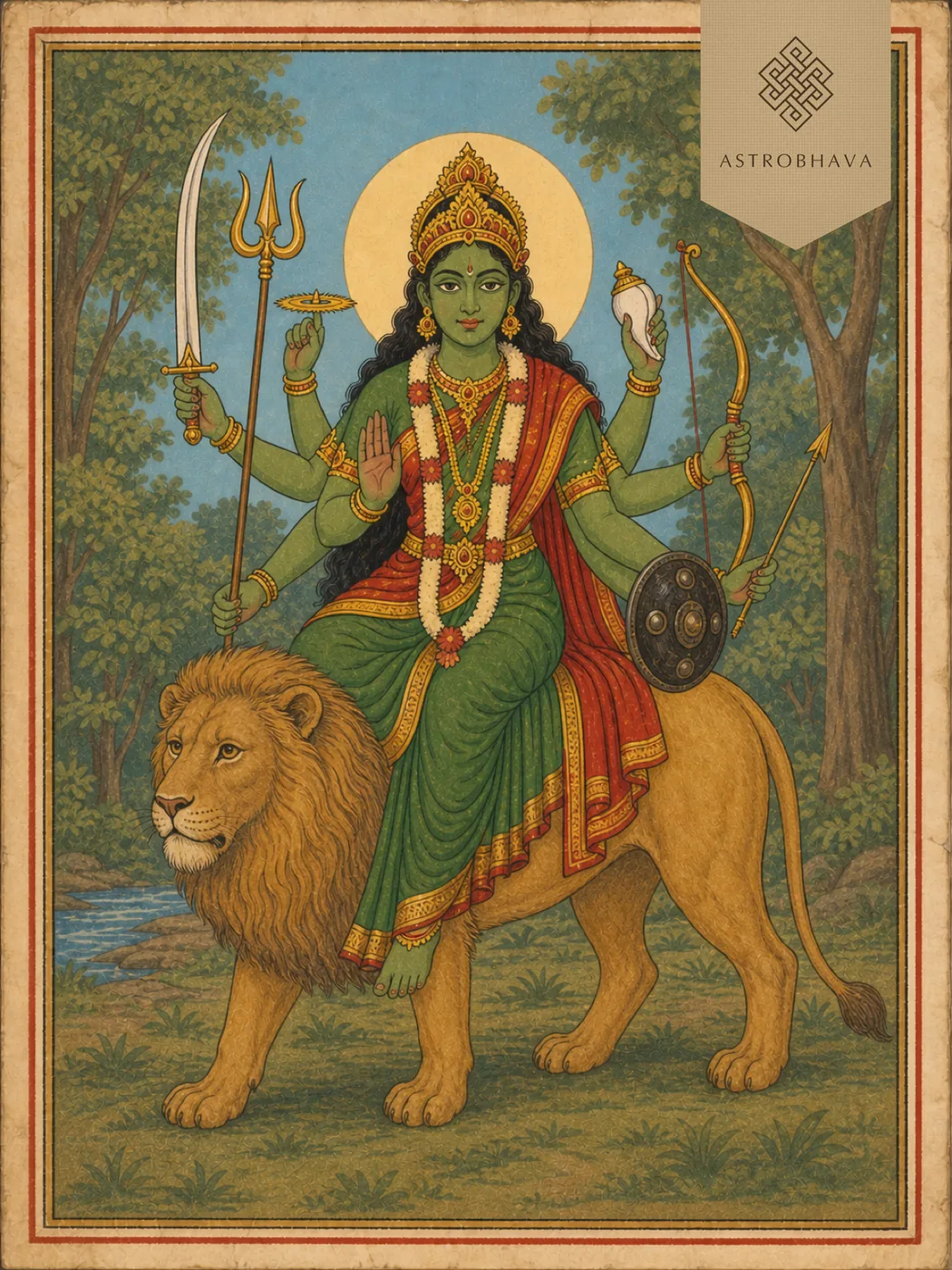
Durga Saptashati Chapter 6 is titled Dhumralochana Vadha, the slaying of Dhumralochana, in the colophon that seals it; it is the second chapter of the last episode and, at 24 numbered lines, the shortest of the thirteen. Its opening dhyana in the standard printed edition pictures the Goddess as Padmavati. The chapter picks up the moment chapter 5 leaves off, with Shumbha's envoy turned away by the Goddess's vow. In verses 2 to 5 the envoy reports back, and the demon king, angry, sends his commander Dhumralochana to bring her by force and to kill anyone, god, Yaksha or Gandharva, who stands up for her. Verses 7 to 11 carry the only exchange: Dhumralochana's threat on the snowy mountain and her one-line reply. Verse 13 is his death. Verses 14 to 19 belong almost wholly to her lion, which destroys his army of sixty thousand in a moment. Verses 20 to 24 return to Shumbha, who, lip trembling with rage, gives Chanda and Munda the orders that chapter 7 sees carried out. The threat to drag her by the hair, first made by the envoy at the end of chapter 5, comes three more times here: from Shumbha in verse 4, from Dhumralochana in verse 9 and from Shumbha again in verse 23. The chapter has no hymn and no half-verses; its four speaker lines (1, 6, 10 and 12) are numbered, so the verse numbers skip there.
A demon commander, one sound and a lion
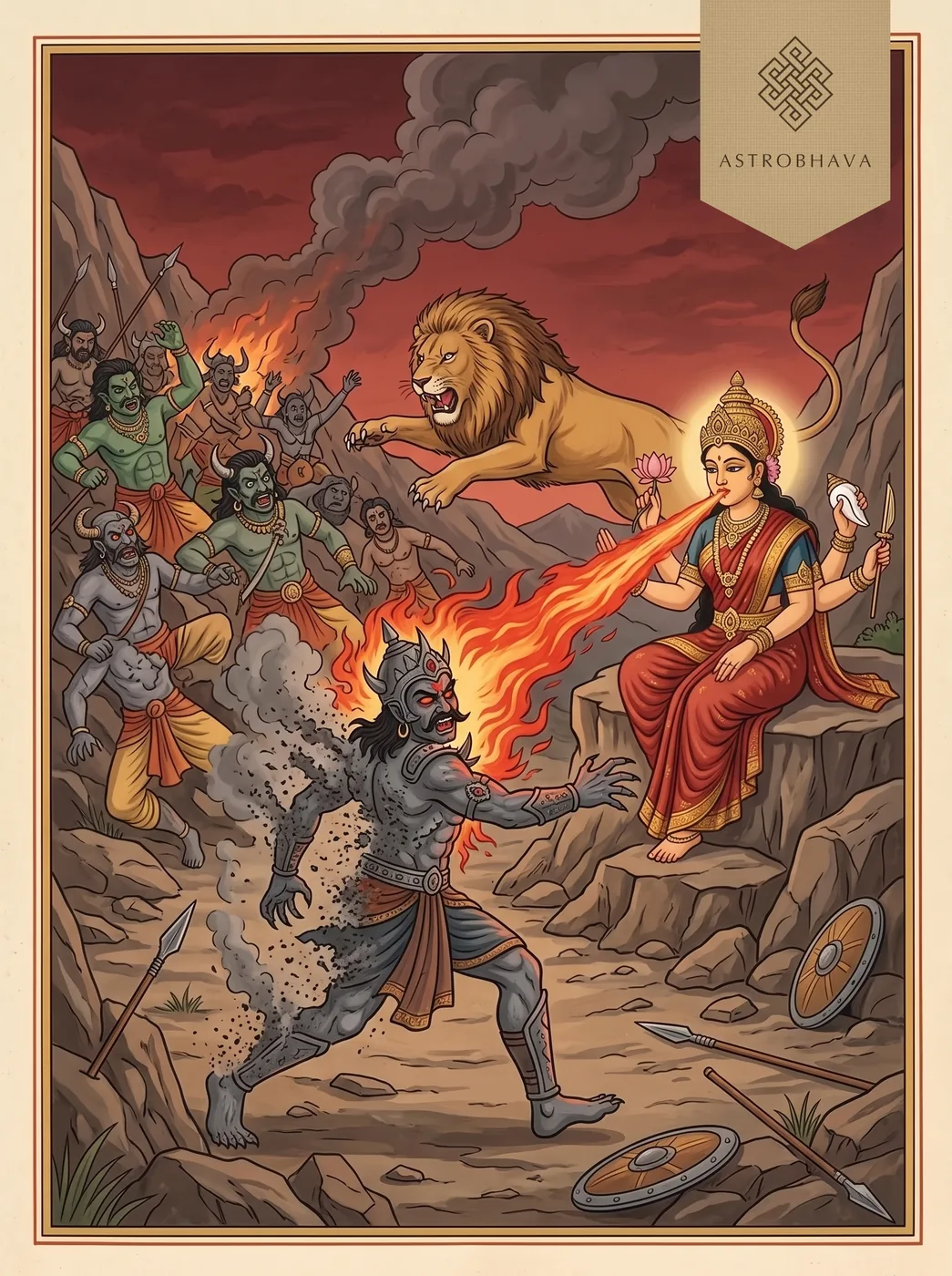
The envoy of chapter 5 goes back to Shumbha's court, still smarting, and repeats what the Goddess said: she will marry only the one who beats her in battle. The demon king does not send another message. He turns to Dhumralochana and tells him to take his own troops, go at once, and bring 'that wicked woman' back dragged by the hair (verse 4); if anyone tries to protect her, even a god, he is to be killed. Dhumralochana sets out with sixty thousand asuras and finds the Goddess standing on the Himalaya. He shouts up to her to come along to Shumbha and Nishumbha, and adds that if she will not come willingly he will haul her there by her hair, using the very words of his master's order (verse 9). Her answer in verse 11 is quiet and turns his strength back on him: he is sent by the lord of the demons, he is strong and has an army around him, so if he takes her by force, what can she do to him? He runs at her, and in verse 13 Ambika burns him to ash with nothing more than the sound 'hum'. When his army attacks, it is the lion that answers, roaring, mauling, tearing and beheading until nothing of the host is left (verses 15 to 19). Hearing this, Shumbha orders Chanda and Munda to take large forces and bring her bound or by the hair, and, if they doubt they can win, to strike her down with every weapon, kill the lion, and bring her back bound (verses 22 to 24).
The mantra, in six scripts
- इत्याकर्ण्य
- ityākarṇya — having thus heard
- वचो
- vaco — the words
- देव्याः
- devyāḥ — of the Goddess
- स
- sa — that
- दूतोऽमर्षपूरितः
- dūto'marṣapūritaḥ — messenger, filled with fury
- समाचष्ट
- samācaṣṭa — reported
- समागम्य
- samāgamya — having come back
- दैत्यराजाय
- daityarājāya — to the king of the demons
- विस्तरात्
- vistarāt — in detail
Durga Saptashati Chapter 6 lyrics in full
The Padmavati meditation verse and all 24 numbered lines of the chapter in the standard numbering, 20 verses and 4 speaker lines; the speaker of each passage is named above it.
All 24 numbered lines, in Sanskrit, Tamil, Telugu, Kannada, Malayalam and English, each with its meaning. Choose a script:
Download the Durga Saptashati Chapter 6 PDFAll 24 numbered lines with their meanings, in Sanskrit. Free to print and keep.
ॐ नागाधीश्वरविष्टरां फणिफणोत्तंसोरुरत्नावलीभास्वद्देहलतां दिवाकरनिभां नेत्रत्रयोद्भासिताम् ।
मालाकुम्भकपालनीरजकरां चन्द्रार्धचूडां परां सर्वज्ञेश्वरभैरवाङ्कनिलयां पद्मावतीं चिन्तये ॥
ௐ நாகாதீஶ்வரவிஷ்டராம் பணிபணோத்தம்ஸோருரத்நாவலீபாஸ்வத்தேஹலதாம் திவாகரநிபாம் நேத்ரத்ரயோத்பாஸிதாம் ।
மாலாகும்பகபாலநீரஜகராம் சந்த்ரார்தசூடாம் பராம் ஸர்வஜ்ஞேஶ்வரபைரவாங்கநிலயாம் பத்மாவதீம் சிந்தயே ॥
ఓం నాగాధీశ్వరవిష్టరాం ఫణిఫణోత్తంసోరురత్నావలీభాస్వద్దేహలతాం దివాకరనిభాం నేత్రత్రయోద్భాసితామ్ ।
మాలాకుమ్భకపాలనీరజకరాం చన్ద్రార్ధచూడాం పరాం సర్వజ్ఞేశ్వరభైరవాఙ్కనిలయాం పద్మావతీం చిన్తయే ॥
ಓಂ ನಾಗಾಧೀಶ್ವರವಿಷ್ಟರಾಂ ಫಣಿಫಣೋತ್ತಂಸೋರುರತ್ನಾವಲೀಭಾಸ್ವದ್ದೇಹಲತಾಂ ದಿವಾಕರನಿಭಾಂ ನೇತ್ರತ್ರಯೋದ್ಭಾಸಿತಾಮ್ ।
ಮಾಲಾಕುಮ್ಭಕಪಾಲನೀರಜಕರಾಂ ಚನ್ದ್ರಾರ್ಧಚೂಡಾಂ ಪರಾಂ ಸರ್ವಜ್ಞೇಶ್ವರಭೈರವಾಙ್ಕನಿಲಯಾಂ ಪದ್ಮಾವತೀಂ ಚಿನ್ತಯೇ ॥
ഓം നാഗാധീശ്വരവിഷ്ടരാം ഫണിഫണോത്തംസോരുരത്നാവലീഭാസ്വദ്ദേഹലതാം ദിവാകരനിഭാം നേത്രത്രയോദ്ഭാസിതാമ് ।
മാലാകുമ്ഭകപാലനീരജകരാം ചന്ദ്രാര്ധചൂഡാം പരാം സര്വജ്ഞേശ്വരഭൈരവാങ്കനിലയാം പദ്മാവതീം ചിന്തയേ ॥
oṃ nāgādhīśvaraviṣṭarāṃ phaṇiphaṇottaṃsoruratnāvalībhāsvaddehalatāṃ divākaranibhāṃ netratrayodbhāsitām |
mālākumbhakapālanīrajakarāṃ candrārdhacūḍāṃ parāṃ sarvajñeśvarabhairavāṅkanilayāṃ padmāvatīṃ cintaye ||
Om. I meditate on Padmavati, the supreme Goddess seated on the king of serpents, her slender body shining with the great string of jewels from the serpents' hoods; she is bright as the sun and glows with three eyes. She holds a rosary, a water-pot, a skull-bowl and a lotus, wears the half-moon on her head, and dwells on the lap of Bhairava, the all-knowing Lord.
ऋषिरुवाच
इत्याकर्ण्य वचो देव्याः स दूतोऽमर्षपूरितः । समाचष्ट समागम्य दैत्यराजाय विस्तरात् ॥
ருஷிருவாச
இத்யாகர்ண்ய வசோ தேவ்யாஃ ஸ தூதோமர்ஷபூரிதஃ । ஸமாசஷ்ட ஸமாகம்ய தைத்யராஜாய விஸ்தராத் ॥
ఋషిరువాచ
ఇత్యాకర్ణ్య వచో దేవ్యాః స దూతోఽమర్షపూరితః । సమాచష్ట సమాగమ్య దైత్యరాజాయ విస్తరాత్ ॥
ಋಷಿರುವಾಚ
ಇತ್ಯಾಕರ್ಣ್ಯ ವಚೋ ದೇವ್ಯಾಃ ಸ ದೂತೋಽಮರ್ಷಪೂರಿತಃ । ಸಮಾಚಷ್ಟ ಸಮಾಗಮ್ಯ ದೈತ್ಯರಾಜಾಯ ವಿಸ್ತರಾತ್ ॥
ഋഷിരുവാച
ഇത്യാകര്ണ്യ വചോ ദേവ്യാഃ സ ദൂതോഽമര്ഷപൂരിതഃ । സമാചഷ്ട സമാഗമ്യ ദൈത്യരാജായ വിസ്തരാത് ॥
ṛṣiruvāca
ityākarṇya vaco devyāḥ sa dūto'marṣapūritaḥ | samācaṣṭa samāgamya daityarājāya vistarāt ||
The sage said: Hearing the Goddess's words, the messenger was filled with fury. He went back to the king of the demons and told him everything in detail.
तस्य दूतस्य तद्वाक्यमाकर्ण्यासुरराट् ततः ।
सक्रोधः प्राह दैत्यानामधिपं धूम्रलोचनम् ॥
தஸ்ய தூதஸ்ய தத்வாக்யமாகர்ண்யாஸுரராட் ததஃ ।
ஸக்ரோதஃ ப்ராஹ தைத்யாநாமதிபம் தூம்ரலோசநம் ॥
తస్య దూతస్య తద్వాక్యమాకర్ణ్యాసురరాట్ తతః ।
సక్రోధః ప్రాహ దైత్యానామధిపం ధూమ్రలోచనమ్ ॥
ತಸ್ಯ ದೂತಸ್ಯ ತದ್ವಾಕ್ಯಮಾಕರ್ಣ್ಯಾಸುರರಾಟ್ ತತಃ ।
ಸಕ್ರೋಧಃ ಪ್ರಾಹ ದೈತ್ಯಾನಾಮಧಿಪಂ ಧೂಮ್ರಲೋಚನಮ್ ॥
തസ്യ ദൂതസ്യ തദ്വാക്യമാകര്ണ്യാസുരരാട് തതഃ ।
സക്രോധഃ പ്രാഹ ദൈത്യാനാമധിപം ധൂമ്രലോചനമ് ॥
tasya dūtasya tadvākyamākarṇyāsurarāṭ tataḥ |
sakrodhaḥ prāha daityānāmadhipaṃ dhūmralocanam ||
Hearing that report from the messenger, the demon king grew angry and spoke to Dhumralochana, a commander of the demons.
हे धूम्रलोचनाशु त्वं स्वसैन्यपरिवारितः ।
तामानय बलाद् दुष्टां केशाकर्षणविह्वलाम् ॥
ஹே தூம்ரலோசநாஶு த்வம் ஸ்வஸைந்யபரிவாரிதஃ ।
தாமாநய பலாத் துஷ்டாம் கேஶாகர்ஷணவிஹ்வலாம் ॥
హే ధూమ్రలోచనాశు త్వం స్వసైన్యపరివారితః ।
తామానయ బలాద్ దుష్టాం కేశాకర్షణవిహ్వలామ్ ॥
ಹೇ ಧೂಮ್ರಲೋಚನಾಶು ತ್ವಂ ಸ್ವಸೈನ್ಯಪರಿವಾರಿತಃ ।
ತಾಮಾನಯ ಬಲಾದ್ ದುಷ್ಟಾಂ ಕೇಶಾಕರ್ಷಣವಿಹ್ವಲಾಮ್ ॥
ഹേ ധൂമ്രലോചനാശു ത്വം സ്വസൈന്യപരിവാരിതഃ ।
താമാനയ ബലാദ് ദുഷ്ടാം കേശാകര്ഷണവിഹ്വലാമ് ॥
he dhūmralocanāśu tvaṃ svasainyaparivāritaḥ |
tāmānaya balād duṣṭāṃ keśākarṣaṇavihvalām ||
O Dhumralochana, go quickly, surrounded by your own army, and bring that wicked woman here by force, dragged helpless by her hair.
तत्परित्राणदः कश्चिद्यदि वोत्तिष्ठतेऽपरः ।
स हन्तव्योऽमरो वापि यक्षो गन्धर्व एव वा ॥
தத்பரித்ராணதஃ கஶ்சித்யதி வோத்திஷ்டதேபரஃ ।
ஸ ஹந்தவ்யோமரோ வாபி யக்ஷோ கந்தர்வ ஏவ வா ॥
తత్పరిత్రాణదః కశ్చిద్యది వోత్తిష్ఠతేఽపరః ।
స హన్తవ్యోఽమరో వాపి యక్షో గన్ధర్వ ఏవ వా ॥
ತತ್ಪರಿತ್ರಾಣದಃ ಕಶ್ಚಿದ್ಯದಿ ವೋತ್ತಿಷ್ಠತೇಽಪರಃ ।
ಸ ಹನ್ತವ್ಯೋಽಮರೋ ವಾಪಿ ಯಕ್ಷೋ ಗನ್ಧರ್ವ ಏವ ವಾ ॥
തത്പരിത്രാണദഃ കശ്ചിദ്യദി വോത്തിഷ്ഠതേഽപരഃ ।
സ ഹന്തവ്യോഽമരോ വാപി യക്ഷോ ഗന്ധര്വ ഏവ വാ ॥
tatparitrāṇadaḥ kaścidyadi vottiṣṭhate'paraḥ |
sa hantavyo'maro vāpi yakṣo gandharva eva vā ||
If anyone else rises up to protect her, kill him, whether he is a god, a Yaksha or a Gandharva.
ऋषिरुवाच
तेनाज्ञप्तस्ततः शीघ्रं स दैत्यो धूम्रलोचनः । वृतः षष्ट्या सहस्राणामसुराणां द्रुतं ययौ ॥
ருஷிருவாச
தேநாஜ்ஞப்தஸ்ததஃ ஶீக்ரம் ஸ தைத்யோ தூம்ரலோசநஃ । வ்ருதஃ ஷஷ்ட்யா ஸஹஸ்ராணாமஸுராணாம் த்ருதம் யயௌ ॥
ఋషిరువాచ
తేనాజ్ఞప్తస్తతః శీఘ్రం స దైత్యో ధూమ్రలోచనః । వృతః షష్ట్యా సహస్రాణామసురాణాం ద్రుతం యయౌ ॥
ಋಷಿರುವಾಚ
ತೇನಾಜ್ಞಪ್ತಸ್ತತಃ ಶೀಘ್ರಂ ಸ ದೈತ್ಯೋ ಧೂಮ್ರಲೋಚನಃ । ವೃತಃ ಷಷ್ಟ್ಯಾ ಸಹಸ್ರಾಣಾಮಸುರಾಣಾಂ ದ್ರುತಂ ಯಯೌ ॥
ഋഷിരുവാച
തേനാജ്ഞപ്തസ്തതഃ ശീഘ്രം സ ദൈത്യോ ധൂമ്രലോചനഃ । വൃതഃ ഷഷ്ട്യാ സഹസ്രാണാമസുരാണാം ദ്രുതം യയൌ ॥
ṛṣiruvāca
tenājñaptastataḥ śīghraṃ sa daityo dhūmralocanaḥ | vṛtaḥ ṣaṣṭyā sahasrāṇāmasurāṇāṃ drutaṃ yayau ||
The sage said: So commanded by him, the demon Dhumralochana set out at once, surrounded by sixty thousand asuras.
स दृष्ट्वा तां ततो देवीं तुहिनाचलसंस्थिताम् ।
जगादोच्चैः प्रयाहीति मूलं शुम्भनिशुम्भयोः ॥
ஸ த்ருஷ்ட்வா தாம் ததோ தேவீம் துஹிநாசலஸம்ஸ்திதாம் ।
ஜகாதோச்சைஃ ப்ரயாஹீதி மூலம் ஶும்பநிஶும்பயோஃ ॥
స దృష్ట్వా తాం తతో దేవీం తుహినాచలసంస్థితామ్ ।
జగాదోచ్చైః ప్రయాహీతి మూలం శుమ్భనిశుమ్భయోః ॥
ಸ ದೃಷ್ಟ್ವಾ ತಾಂ ತತೋ ದೇವೀಂ ತುಹಿನಾಚಲಸಂಸ್ಥಿತಾಮ್ ।
ಜಗಾದೋಚ್ಚೈಃ ಪ್ರಯಾಹೀತಿ ಮೂಲಂ ಶುಮ್ಭನಿಶುಮ್ಭಯೋಃ ॥
സ ദൃഷ്ട്വാ താം തതോ ദേവീം തുഹിനാചലസംസ്ഥിതാമ് ।
ജഗാദോച്ചൈഃ പ്രയാഹീതി മൂലം ശുമ്ഭനിശുമ്ഭയോഃ ॥
sa dṛṣṭvā tāṃ tato devīṃ tuhinācalasaṃsthitām |
jagādoccaiḥ prayāhīti mūlaṃ śumbhaniśumbhayoḥ ||
Seeing the Goddess standing on the snowy mountain, he shouted aloud: Come along to Shumbha and Nishumbha.
न चेत्प्रीत्याद्य भवती मद्भर्तारमुपैष्यति ।
ततो बलान्नयाम्येष केशाकर्षणविह्वलाम् ॥
ந சேத்ப்ரீத்யாத்ய பவதீ மத்பர்தாரமுபைஷ்யதி ।
ததோ பலாந்நயாம்யேஷ கேஶாகர்ஷணவிஹ்வலாம் ॥
న చేత్ప్రీత్యాద్య భవతీ మద్భర్తారముపైష్యతి ।
తతో బలాన్నయామ్యేష కేశాకర్షణవిహ్వలామ్ ॥
ನ ಚೇತ್ಪ್ರೀತ್ಯಾದ್ಯ ಭವತೀ ಮದ್ಭರ್ತಾರಮುಪೈಷ್ಯತಿ ।
ತತೋ ಬಲಾನ್ನಯಾಮ್ಯೇಷ ಕೇಶಾಕರ್ಷಣವಿಹ್ವಲಾಮ್ ॥
ന ചേത്പ്രീത്യാദ്യ ഭവതീ മദ്ഭര്താരമുപൈഷ്യതി ।
തതോ ബലാന്നയാമ്യേഷ കേശാകര്ഷണവിഹ്വലാമ് ॥
na cetprītyādya bhavatī madbhartāramupaiṣyati |
tato balānnayāmyeṣa keśākarṣaṇavihvalām ||
If you do not come to my master willingly now, I will take you by force, dragged helpless by your hair.
देव्युवाच
दैत्येश्वरेण प्रहितो बलवान् बलसंवृतः । बलान्नयसि मामेवं ततः किं ते करोम्यहम् ॥
தேவ்யுவாச
தைத்யேஶ்வரேண ப்ரஹிதோ பலவாந் பலஸம்வ்ருதஃ । பலாந்நயஸி மாமேவம் ததஃ கிம் தே கரோம்யஹம் ॥
దేవ్యువాచ
దైత్యేశ్వరేణ ప్రహితో బలవాన్ బలసంవృతః । బలాన్నయసి మామేవం తతః కిం తే కరోమ్యహమ్ ॥
ದೇವ್ಯುವಾಚ
ದೈತ್ಯೇಶ್ವರೇಣ ಪ್ರಹಿತೋ ಬಲವಾನ್ ಬಲಸಂವೃತಃ । ಬಲಾನ್ನಯಸಿ ಮಾಮೇವಂ ತತಃ ಕಿಂ ತೇ ಕರೋಮ್ಯಹಮ್ ॥
ദേവ്യുവാച
ദൈത്യേശ്വരേണ പ്രഹിതോ ബലവാന് ബലസംവൃതഃ । ബലാന്നയസി മാമേവം തതഃ കിം തേ കരോമ്യഹമ് ॥
devyuvāca
daityeśvareṇa prahito balavān balasaṃvṛtaḥ | balānnayasi māmevaṃ tataḥ kiṃ te karomyaham ||
The Goddess said: You are sent by the lord of the demons, you are strong, and you have an army around you. If you take me by force like this, what can I do to you?
ऋषिरुवाच
इत्युक्तः सोऽभ्यधावत्तामसुरो धूम्रलोचनः । हुंकारेणैव तं भस्म सा चकाराम्बिका ततः ॥
ருஷிருவாச
இத்யுக்தஃ ஸோப்யதாவத்தாமஸுரோ தூம்ரலோசநஃ । ஹும்காரேணைவ தம் பஸ்ம ஸா சகாராம்பிகா ததஃ ॥
ఋషిరువాచ
ఇత్యుక్తః సోఽభ్యధావత్తామసురో ధూమ్రలోచనః । హుంకారేణైవ తం భస్మ సా చకారామ్బికా తతః ॥
ಋಷಿರುವಾಚ
ಇತ್ಯುಕ್ತಃ ಸೋಽಭ್ಯಧಾವತ್ತಾಮಸುರೋ ಧೂಮ್ರಲೋಚನಃ । ಹುಂಕಾರೇಣೈವ ತಂ ಭಸ್ಮ ಸಾ ಚಕಾರಾಮ್ಬಿಕಾ ತತಃ ॥
ഋഷിരുവാച
ഇത്യുക്തഃ സോഽഭ്യധാവത്താമസുരോ ധൂമ്രലോചനഃ । ഹുംകാരേണൈവ തം ഭസ്മ സാ ചകാരാമ്ബികാ തതഃ ॥
ṛṣiruvāca
ityuktaḥ so'bhyadhāvattāmasuro dhūmralocanaḥ | huṃkāreṇaiva taṃ bhasma sā cakārāmbikā tataḥ ||
The sage said: When she said this, the asura Dhumralochana rushed at her. Then Ambika burnt him to ashes with nothing more than the sound hum.
अथ क्रुद्धं महासैन्यमसुराणां तथाम्बिका ।
ववर्ष सायकैस्तीक्ष्णैस्तथा शक्तिपरश्वधैः ॥
அத க்ருத்தம் மஹாஸைந்யமஸுராணாம் ததாம்பிகா ।
வவர்ஷ ஸாயகைஸ்தீக்ஷ்ணைஸ்ததா ஶக்திபரஶ்வதைஃ ॥
అథ క్రుద్ధం మహాసైన్యమసురాణాం తథామ్బికా ।
వవర్ష సాయకైస్తీక్ష్ణైస్తథా శక్తిపరశ్వధైః ॥
ಅಥ ಕ್ರುದ್ಧಂ ಮಹಾಸೈನ್ಯಮಸುರಾಣಾಂ ತಥಾಮ್ಬಿಕಾ ।
ವವರ್ಷ ಸಾಯಕೈಸ್ತೀಕ್ಷ್ಣೈಸ್ತಥಾ ಶಕ್ತಿಪರಶ್ವಧೈಃ ॥
അഥ ക്രുദ്ധം മഹാസൈന്യമസുരാണാം തഥാമ്ബികാ ।
വവര്ഷ സായകൈസ്തീക്ഷ്ണൈസ്തഥാ ശക്തിപരശ്വധൈഃ ॥
atha kruddhaṃ mahāsainyamasurāṇāṃ tathāmbikā |
vavarṣa sāyakaistīkṣṇaistathā śaktiparaśvadhaiḥ ||
Then the great army of the asuras, in a rage, and Ambika rained sharp arrows, spears and axes on one another.
ततो धुतसटः कोपात्कृत्वा नादं सुभैरवम् ।
पपातासुरसेनायां सिंहो देव्याः स्ववाहनः ॥
ததோ துதஸடஃ கோபாத்க்ருத்வா நாதம் ஸுபைரவம் ।
பபாதாஸுரஸேநாயாம் ஸிம்ஹோ தேவ்யாஃ ஸ்வவாஹநஃ ॥
తతో ధుతసటః కోపాత్కృత్వా నాదం సుభైరవమ్ ।
పపాతాసురసేనాయాం సింహో దేవ్యాః స్వవాహనః ॥
ತತೋ ಧುತಸಟಃ ಕೋಪಾತ್ಕೃತ್ವಾ ನಾದಂ ಸುಭೈರವಮ್ ।
ಪಪಾತಾಸುರಸೇನಾಯಾಂ ಸಿಂಹೋ ದೇವ್ಯಾಃ ಸ್ವವಾಹನಃ ॥
തതോ ധുതസടഃ കോപാത്കൃത്വാ നാദം സുഭൈരവമ് ।
പപാതാസുരസേനായാം സിംഹോ ദേവ്യാഃ സ്വവാഹനഃ ॥
tato dhutasaṭaḥ kopātkṛtvā nādaṃ subhairavam |
papātāsurasenāyāṃ siṃho devyāḥ svavāhanaḥ ||
Then the lion, the Goddess's own mount, shaking its mane in anger and giving a terrifying roar, fell upon the asura army.
कांश्चित् करप्रहारेण दैत्यानास्येन चापरान् ।
आक्रम्य चाधरेणान्यान् स जघान महासुरान् ॥
காம்ஶ்சித் கரப்ரஹாரேண தைத்யாநாஸ்யேந சாபராந் ।
ஆக்ரம்ய சாதரேணாந்யாந் ஸ ஜகாந மஹாஸுராந் ॥
కాంశ్చిత్ కరప్రహారేణ దైత్యానాస్యేన చాపరాన్ ।
ఆక్రమ్య చాధరేణాన్యాన్ స జఘాన మహాసురాన్ ॥
ಕಾಂಶ್ಚಿತ್ ಕರಪ್ರಹಾರೇಣ ದೈತ್ಯಾನಾಸ್ಯೇನ ಚಾಪರಾನ್ ।
ಆಕ್ರಮ್ಯ ಚಾಧರೇಣಾನ್ಯಾನ್ ಸ ಜಘಾನ ಮಹಾಸುರಾನ್ ॥
കാംശ്ചിത് കരപ്രഹാരേണ ദൈത്യാനാസ്യേന ചാപരാന് ।
ആക്രമ്യ ചാധരേണാന്യാന് സ ജഘാന മഹാസുരാന് ॥
kāṃścit karaprahāreṇa daityānāsyena cāparān |
ākramya cādhareṇānyān sa jaghāna mahāsurān ||
It killed some demons with blows of its paws, others with its jaws, and still other great asuras by trampling them and biting with its lower jaw.
केषांचित्पाटयामास नखैः कोष्ठानि केसरी ।
तथा तलप्रहारेण शिरांसि कृतवान् पृथक् ॥
கேஷாம்சித்பாடயாமாஸ நகைஃ கோஷ்டாநி கேஸரீ ।
ததா தலப்ரஹாரேண ஶிராம்ஸி க்ருதவாந் ப்ருதக் ॥
కేషాంచిత్పాటయామాస నఖైః కోష్ఠాని కేసరీ ।
తథా తలప్రహారేణ శిరాంసి కృతవాన్ పృథక్ ॥
ಕೇಷಾಂಚಿತ್ಪಾಟಯಾಮಾಸ ನಖೈಃ ಕೋಷ್ಠಾನಿ ಕೇಸರೀ ।
ತಥಾ ತಲಪ್ರಹಾರೇಣ ಶಿರಾಂಸಿ ಕೃತವಾನ್ ಪೃಥಕ್ ॥
കേഷാംചിത്പാടയാമാസ നഖൈഃ കോഷ്ഠാനി കേസരീ ।
തഥാ തലപ്രഹാരേണ ശിരാംസി കൃതവാന് പൃഥക് ॥
keṣāṃcitpāṭayāmāsa nakhaiḥ koṣṭhāni kesarī |
tathā talaprahāreṇa śirāṃsi kṛtavān pṛthak ||
The lion tore open the bellies of some with its claws, and with slaps of its paw it struck the heads off others.
विच्छिन्नबाहुशिरसः कृतास्तेन तथापरे ।
पपौ च रुधिरं कोष्ठादन्येषां धुतकेसरः ॥
விச்சிந்நபாஹுஶிரஸஃ க்ருதாஸ்தேந ததாபரே ।
பபௌ ச ருதிரம் கோஷ்டாதந்யேஷாம் துதகேஸரஃ ॥
విచ్ఛిన్నబాహుశిరసః కృతాస్తేన తథాపరే ।
పపౌ చ రుధిరం కోష్ఠాదన్యేషాం ధుతకేసరః ॥
ವಿಚ್ಛಿನ್ನಬಾಹುಶಿರಸಃ ಕೃತಾಸ್ತೇನ ತಥಾಪರೇ ।
ಪಪೌ ಚ ರುಧಿರಂ ಕೋಷ್ಠಾದನ್ಯೇಷಾಂ ಧುತಕೇಸರಃ ॥
വിച്ഛിന്നബാഹുശിരസഃ കൃതാസ്തേന തഥാപരേ ।
പപൌ ച രുധിരം കോഷ്ഠാദന്യേഷാം ധുതകേസരഃ ॥
vicchinnabāhuśirasaḥ kṛtāstena tathāpare |
papau ca rudhiraṃ koṣṭhādanyeṣāṃ dhutakesaraḥ ||
It cut off the arms and heads of others, and shaking its mane it drank the blood from the bellies of yet others.
क्षणेन तद्बलं सर्वं क्षयं नीतं महात्मना ।
तेन केसरिणा देव्या वाहनेनातिकोपिना ॥
க்ஷணேந தத்பலம் ஸர்வம் க்ஷயம் நீதம் மஹாத்மநா ।
தேந கேஸரிணா தேவ்யா வாஹநேநாதிகோபிநா ॥
క్షణేన తద్బలం సర్వం క్షయం నీతం మహాత్మనా ।
తేన కేసరిణా దేవ్యా వాహనేనాతికోపినా ॥
ಕ್ಷಣೇನ ತದ್ಬಲಂ ಸರ್ವಂ ಕ್ಷಯಂ ನೀತಂ ಮಹಾತ್ಮನಾ ।
ತೇನ ಕೇಸರಿಣಾ ದೇವ್ಯಾ ವಾಹನೇನಾತಿಕೋಪಿನಾ ॥
ക്ഷണേന തദ്ബലം സര്വം ക്ഷയം നീതം മഹാത്മനാ ।
തേന കേസരിണാ ദേവ്യാ വാഹനേനാതികോപിനാ ॥
kṣaṇena tadbalaṃ sarvaṃ kṣayaṃ nītaṃ mahātmanā |
tena kesariṇā devyā vāhanenātikopinā ||
In a moment that whole army was destroyed by the mighty lion, the Goddess's mount, in its great fury.
श्रुत्वा तमसुरं देव्या निहतं धूम्रलोचनम् ।
बलं च क्षयितं कृत्स्नं देवीकेसरिणा ततः ॥
ஶ்ருத்வா தமஸுரம் தேவ்யா நிஹதம் தூம்ரலோசநம் ।
பலம் ச க்ஷயிதம் க்ருத்ஸ்நம் தேவீகேஸரிணா ததஃ ॥
శ్రుత్వా తమసురం దేవ్యా నిహతం ధూమ్రలోచనమ్ ।
బలం చ క్షయితం కృత్స్నం దేవీకేసరిణా తతః ॥
ಶ್ರುತ್ವಾ ತಮಸುರಂ ದೇವ್ಯಾ ನಿಹತಂ ಧೂಮ್ರಲೋಚನಮ್ ।
ಬಲಂ ಚ ಕ್ಷಯಿತಂ ಕೃತ್ಸ್ನಂ ದೇವೀಕೇಸರಿಣಾ ತತಃ ॥
ശ്രുത്വാ തമസുരം ദേവ്യാ നിഹതം ധൂമ്രലോചനമ് ।
ബലം ച ക്ഷയിതം കൃത്സ്നം ദേവീകേസരിണാ തതഃ ॥
śrutvā tamasuraṃ devyā nihataṃ dhūmralocanam |
balaṃ ca kṣayitaṃ kṛtsnaṃ devīkesariṇā tataḥ ||
Hearing that the asura Dhumralochana had been slain by the Goddess, and that his whole army had been destroyed by the Goddess's lion,
चुकोप दैत्याधिपतिः शुम्भः प्रस्फुरिताधरः ।
आज्ञापयामास च तौ चण्डमुण्डौ महासुरौ ॥
சுகோப தைத்யாதிபதிஃ ஶும்பஃ ப்ரஸ்புரிதாதரஃ ।
ஆஜ்ஞாபயாமாஸ ச தௌ சண்டமுண்டௌ மஹாஸுரௌ ॥
చుకోప దైత్యాధిపతిః శుమ్భః ప్రస్ఫురితాధరః ।
ఆజ్ఞాపయామాస చ తౌ చణ్డముణ్డౌ మహాసురౌ ॥
ಚುಕೋಪ ದೈತ್ಯಾಧಿಪತಿಃ ಶುಮ್ಭಃ ಪ್ರಸ್ಫುರಿತಾಧರಃ ।
ಆಜ್ಞಾಪಯಾಮಾಸ ಚ ತೌ ಚಣ್ಡಮುಣ್ಡೌ ಮಹಾಸುರೌ ॥
ചുകോപ ദൈത്യാധിപതിഃ ശുമ്ഭഃ പ്രസ്ഫുരിതാധരഃ ।
ആജ്ഞാപയാമാസ ച തൌ ചണ്ഡമുണ്ഡൌ മഹാസുരൌ ॥
cukopa daityādhipatiḥ śumbhaḥ prasphuritādharaḥ |
ājñāpayāmāsa ca tau caṇḍamuṇḍau mahāsurau ||
Shumbha, the lord of the demons, grew furious, his lip trembling, and he gave orders to the two great asuras Chanda and Munda.
हे चण्ड हे मुण्ड बलैर्बहुभिः परिवारितौ ।
तत्र गच्छत गत्वा च सा समानीयतां लघु ॥
ஹே சண்ட ஹே முண்ட பலைர்பஹுபிஃ பரிவாரிதௌ ।
தத்ர கச்சத கத்வா ச ஸா ஸமாநீயதாம் லகு ॥
హే చణ్డ హే ముణ్డ బలైర్బహుభిః పరివారితౌ ।
తత్ర గచ్ఛత గత్వా చ సా సమానీయతాం లఘు ॥
ಹೇ ಚಣ್ಡ ಹೇ ಮುಣ್ಡ ಬಲೈರ್ಬಹುಭಿಃ ಪರಿವಾರಿತೌ ।
ತತ್ರ ಗಚ್ಛತ ಗತ್ವಾ ಚ ಸಾ ಸಮಾನೀಯತಾಂ ಲಘು ॥
ഹേ ചണ്ഡ ഹേ മുണ്ഡ ബലൈര്ബഹുഭിഃ പരിവാരിതൌ ।
തത്ര ഗച്ഛത ഗത്വാ ച സാ സമാനീയതാം ലഘു ॥
he caṇḍa he muṇḍa balairbahubhiḥ parivāritau |
tatra gacchata gatvā ca sā samānīyatāṃ laghu ||
O Chanda, O Munda, go there surrounded by large armies, and once there, bring her back quickly.
केशेष्वाकृष्य बद्ध्वा वा यदि वः संशयो युधि ।
तदाशेषायुधैः सर्वैरसुरैर्विनिहन्यताम् ॥
கேஶேஷ்வாக்ருஷ்ய பத்த்வா வா யதி வஃ ஸம்ஶயோ யுதி ।
ததாஶேஷாயுதைஃ ஸர்வைரஸுரைர்விநிஹந்யதாம் ॥
కేశేష్వాకృష్య బద్ధ్వా వా యది వః సంశయో యుధి ।
తదాశేషాయుధైః సర్వైరసురైర్వినిహన్యతామ్ ॥
ಕೇಶೇಷ್ವಾಕೃಷ್ಯ ಬದ್ಧ್ವಾ ವಾ ಯದಿ ವಃ ಸಂಶಯೋ ಯುಧಿ ।
ತದಾಶೇಷಾಯುಧೈಃ ಸರ್ವೈರಸುರೈರ್ವಿನಿಹನ್ಯತಾಮ್ ॥
കേശേഷ്വാകൃഷ്യ ബദ്ധ്വാ വാ യദി വഃ സംശയോ യുധി ।
തദാശേഷായുധൈഃ സര്വൈരസുരൈര്വിനിഹന്യതാമ് ॥
keśeṣvākṛṣya baddhvā vā yadi vaḥ saṃśayo yudhi |
tadāśeṣāyudhaiḥ sarvairasurairvinihanyatām ||
Drag her by the hair or bind her and bring her. If you are in doubt of success in battle, then let her be killed by all the asuras with every weapon they have.
तस्यां हतायां दुष्टायां सिंहे च विनिपातिते ।
शीघ्रमागम्यतां बद्ध्वा गृहीत्वा तामथाम्बिकाम् ॥
தஸ்யாம் ஹதாயாம் துஷ்டாயாம் ஸிம்ஹே ச விநிபாதிதே ।
ஶீக்ரமாகம்யதாம் பத்த்வா க்ருஹீத்வா தாமதாம்பிகாம் ॥
తస్యాం హతాయాం దుష్టాయాం సింహే చ వినిపాతితే ।
శీఘ్రమాగమ్యతాం బద్ధ్వా గృహీత్వా తామథామ్బికామ్ ॥
ತಸ್ಯಾಂ ಹತಾಯಾಂ ದುಷ್ಟಾಯಾಂ ಸಿಂಹೇ ಚ ವಿನಿಪಾತಿತೇ ।
ಶೀಘ್ರಮಾಗಮ್ಯತಾಂ ಬದ್ಧ್ವಾ ಗೃಹೀತ್ವಾ ತಾಮಥಾಮ್ಬಿಕಾಮ್ ॥
തസ്യാം ഹതായാം ദുഷ്ടായാം സിംഹേ ച വിനിപാതിതേ ।
ശീഘ്രമാഗമ്യതാം ബദ്ധ്വാ ഗൃഹീത്വാ താമഥാമ്ബികാമ് ॥
tasyāṃ hatāyāṃ duṣṭāyāṃ siṃhe ca vinipātite |
śīghramāgamyatāṃ baddhvā gṛhītvā tāmathāmbikām ||
When that wicked one is struck down and the lion is killed too, bind that Ambika, seize her, and come back quickly.
The syllable people get wrong
In verse 13, huṃkāreṇaiva (हुंकारेणैव), 'by the sound hum alone', has an anusvara before k that is said as the 'ng' of 'sung', and a retroflex ṇ: say hung-KAA-re-ṇai-va, not 'hum-ka-rena-iva'.
When the Durga Saptashati Chapter 6 is chanted
Weekday. Friday
Festival. Navaratri, as part of the fourth day's reading (chapters 5 to 8)
Questions
Have your chart read before you decide
Chanting is yours to do, and free. But which deity your situation calls for — and whether a mantra alone is the right response — depends on your chart. Sometimes it is; sometimes it is not.
- Over 30 years in the Guru–Sishya Parampara, from the age of five
- He reads every chart himself — 60 minutes, one to one, never delegated
- Charts are read only between sunrise and sunset, following tradition
