Durga Saptashati Chapter 5
पुरा शुम्भनिशुम्भाभ्यामसुराभ्यां शचीपतेः । त्रैलोक्यं यज्ञभागाश्च हृता मदबलाश्रयात् ॥In Devanagari, Tamil, Telugu, Kannada, Malayalam and English — with the meaning of every word, and the one syllable most people pronounce wrongly.
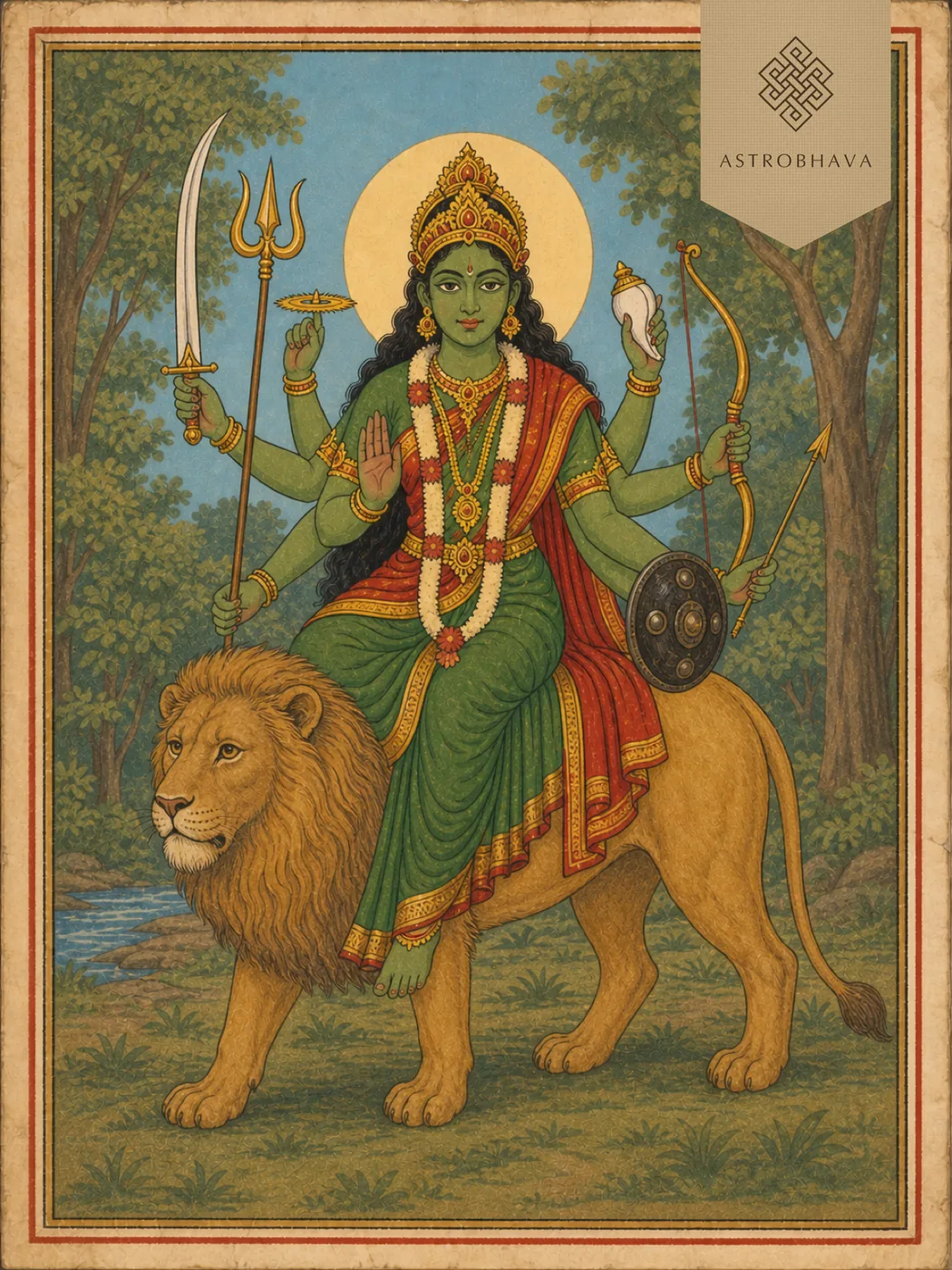 The Chandi Homa, performed for youBook →
What the Durga Saptashati Chapter 5 is
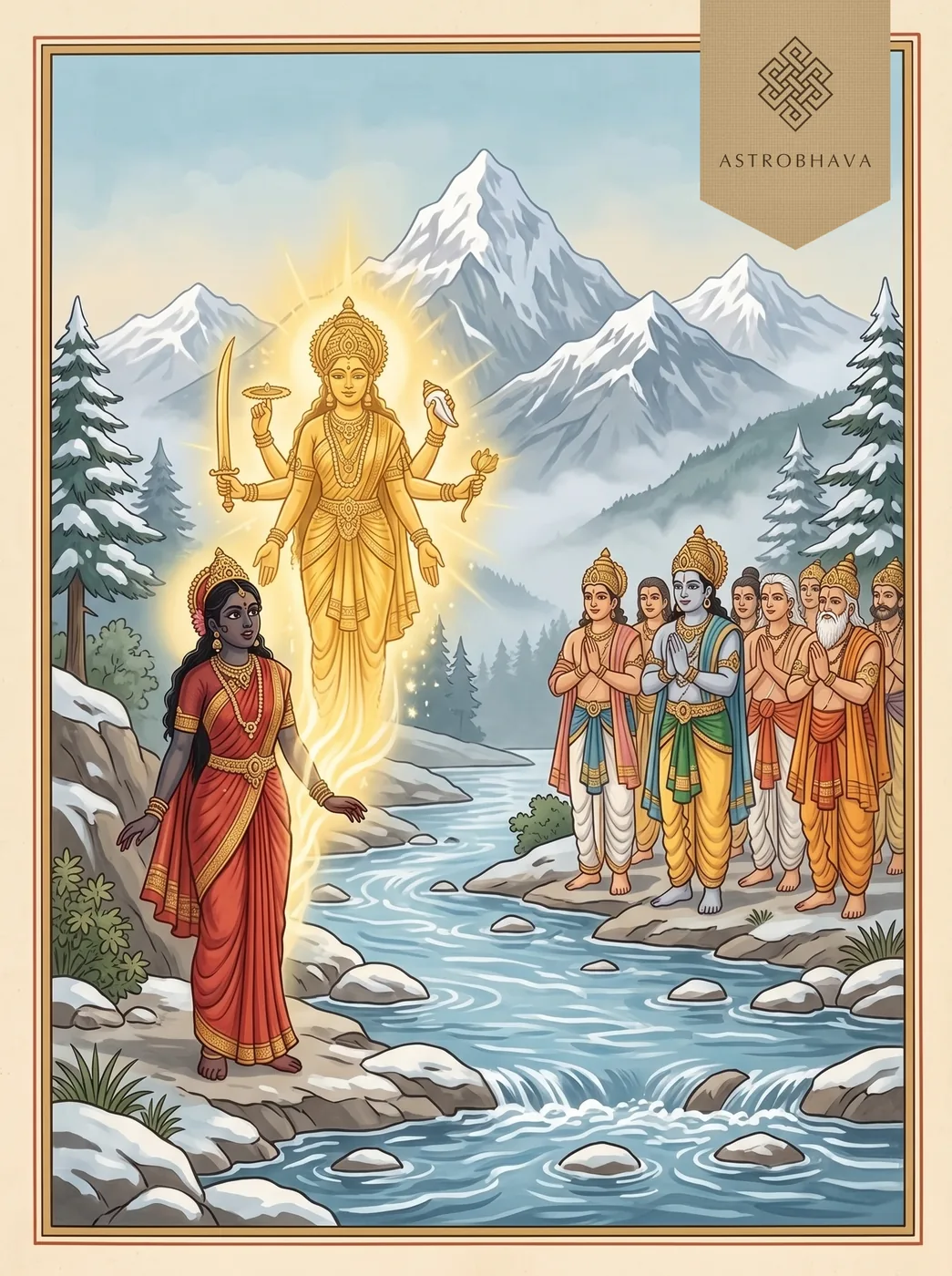
Durga Saptashati Chapter 5, called Devi Duta Samvada in its colophon, the Goddess's dialogue with the messenger, opens the last and longest episode of the Devi Mahatmya, the one given to Mahasaraswati; her meditation verse stands at its head. The scene is set in verses 2 to 7: the demon brothers Shumbha and Nishumbha have taken Indra's three worlds and the offices of the Sun, Moon, Kubera, Yama, Varuna, Wind and Fire. Verse 5 has the outcast gods call to mind the Goddess as aparajita, the unconquered, which is why their hymn is also known as the Aparajita Stuti; verse 6 recalls the promise she made them at the end of chapter 4. On the Himalaya they praise her in verses 9 to 82. Verses 9 to 13 salute her by name, as Prakriti, Gauri, Durga, Nairriti and Sharvani, as most gentle and most fierce at once. Verses 14 to 80 are the 'ya devi sarvabhuteshu' litany, and verses 81 and 82 close it with a prayer to her as the Sovereign who ends misfortune the moment she is remembered. The rest of the chapter turns to story: Kaushiki's appearance in verses 84 to 88, the report of Chanda and Munda in verses 89 to 100, and Shumbha's messenger in verses 102 to 129.
Kaushiki, the loot list and the envoy's errand
While the gods are still praising her, Parvati comes there to bathe in the Ganga and asks whom they are singing to (verses 84 and 85). The answer comes from inside her: a Goddess steps out of the sheath of her body and says the hymn is hers, offered by gods whom Shumbha drove out and Nishumbha beat in battle. Because she came from Parvati's kosha, the text explains in verse 87, she is sung of as Kaushiki; Parvati, emptied of her, turns dark and is known as Kalika, living on the Himalaya. Two of Shumbha's servants, Chanda and Munda, see Kaushiki and hurry to their king. Their speech in verses 90 to 100 is an inventory of everything the brothers have seized: Indra's elephant Airavata, the Parijata tree and the horse Uchchaihshravas, Brahma's swan-drawn car, Kubera's treasure Mahapadma, a garland of never-fading lotuses from the ocean, Varuna's umbrella that showers gold and his noose, Prajapati's chariot, the spear Utkrantida taken from Death, and two garments cleansed by Fire. Every jewel of the three worlds is theirs, they say, except this jewel among women. Shumbha sends a demon named Sugriva, not the monkey king of the Ramayana, to win her over, telling him in verse 103 to say this and that and see that she comes gladly and soon. The envoy repeats his master's boasts and offers her a choice of the two brothers. She agrees that every word is true, then states the vow she made long ago: she will marry only the one who defeats her in battle. The messenger warns that she will be dragged to Shumbha by the hair, and she sends him back to report exactly what she said.
The mantra, in six scripts
- पुरा
- purā — long ago
- शुम्भनिशुम्भाभ्यामसुराभ्यां
- śumbhaniśumbhābhyāmasurābhyāṃ — by the two demons Shumbha and Nishumbha
- शचीपतेः
- śacīpateḥ — of the lord of Shachi (Indra)
- त्रैलोक्यं
- trailokyaṃ — the three worlds
- यज्ञभागाश्च
- yajñabhāgāśca — and the shares of the sacrifices
- हृता
- hṛtā — were taken
- मदबलाश्रयात्
- madabalāśrayāt — relying on pride and strength
Durga Saptashati Chapter 5 lyrics in full
The Mahasaraswati meditation verse and all 129 numbered lines of the chapter in the standard numbering; each 'ya devi' stanza appears once under its three numbers, and the speaker of each passage is named above it.
All 129 numbered lines, in Sanskrit, Tamil, Telugu, Kannada, Malayalam and English, each with its meaning. Choose a script:
Download the Durga Saptashati Chapter 5 PDFAll 129 numbered lines with their meanings, in Sanskrit. Free to print and keep.
ॐ घण्टाशूलहलानि शङ्खमुसले चक्रं धनुः सायकं हस्ताब्जैर्दधतीं घनान्तविलसच्छीतांशुतुल्यप्रभाम् ।
गौरीदेहसमुद्भवां त्रिजगतामाधारभूतां महापूर्वामत्र सरस्वतीमनुभजे शुम्भादिदैत्यार्दिनीम् ॥
ௐ கண்டாஶூலஹலாநி ஶங்கமுஸலே சக்ரம் தநுஃ ஸாயகம் ஹஸ்தாப்ஜைர்தததீம் கநாந்தவிலஸச்சீதாம்ஶுதுல்யப்ரபாம் ।
கௌரீதேஹஸமுத்பவாம் த்ரிஜகதாமாதாரபூதாம் மஹாபூர்வாமத்ர ஸரஸ்வதீமநுபஜே ஶும்பாதிதைத்யார்திநீம் ॥
ఓం ఘణ్టాశూలహలాని శఙ్ఖముసలే చక్రం ధనుః సాయకం హస్తాబ్జైర్దధతీం ఘనాన్తవిలసచ్ఛీతాంశుతుల్యప్రభామ్ ।
గౌరీదేహసముద్భవాం త్రిజగతామాధారభూతాం మహాపూర్వామత్ర సరస్వతీమనుభజే శుమ్భాదిదైత్యార్దినీమ్ ॥
ಓಂ ಘಣ್ಟಾಶೂಲಹಲಾನಿ ಶಙ್ಖಮುಸಲೇ ಚಕ್ರಂ ಧನುಃ ಸಾಯಕಂ ಹಸ್ತಾಬ್ಜೈರ್ದಧತೀಂ ಘನಾನ್ತವಿಲಸಚ್ಛೀತಾಂಶುತುಲ್ಯಪ್ರಭಾಮ್ ।
ಗೌರೀದೇಹಸಮುದ್ಭವಾಂ ತ್ರಿಜಗತಾಮಾಧಾರಭೂತಾಂ ಮಹಾಪೂರ್ವಾಮತ್ರ ಸರಸ್ವತೀಮನುಭಜೇ ಶುಮ್ಭಾದಿದೈತ್ಯಾರ್ದಿನೀಮ್ ॥
ഓം ഘണ്ടാശൂലഹലാനി ശങ്ഖമുസലേ ചക്രം ധനുഃ സായകം ഹസ്താബ്ജൈര്ദധതീം ഘനാന്തവിലസച്ഛീതാംശുതുല്യപ്രഭാമ് ।
ഗൌരീദേഹസമുദ്ഭവാം ത്രിജഗതാമാധാരഭൂതാം മഹാപൂര്വാമത്ര സരസ്വതീമനുഭജേ ശുമ്ഭാദിദൈത്യാര്ദിനീമ് ॥
oṃ ghaṇṭāśūlahalāni śaṅkhamusale cakraṃ dhanuḥ sāyakaṃ hastābjairdadhatīṃ ghanāntavilasacchītāṃśutulyaprabhām |
gaurīdehasamudbhavāṃ trijagatāmādhārabhūtāṃ mahāpūrvāmatra sarasvatīmanubhaje śumbhādidaityārdinīm ||
Om. I worship here Mahasaraswati, who holds in her lotus hands the bell, trident, plough, conch, pestle, discus, bow and arrow, and whose radiance is like the moon shining at the end of the rainy season. She arose from the body of Gauri, is the support of the three worlds, and destroys Shumbha and the other demons.
ऋषिरुवाच
पुरा शुम्भनिशुम्भाभ्यामसुराभ्यां शचीपतेः । त्रैलोक्यं यज्ञभागाश्च हृता मदबलाश्रयात् ॥
ருஷிருவாச
புரா ஶும்பநிஶும்பாப்யாமஸுராப்யாம் ஶசீபதேஃ । த்ரைலோக்யம் யஜ்ஞபாகாஶ்ச ஹ்ருதா மதபலாஶ்ரயாத் ॥
ఋషిరువాచ
పురా శుమ్భనిశుమ్భాభ్యామసురాభ్యాం శచీపతేః । త్రైలోక్యం యజ్ఞభాగాశ్చ హృతా మదబలాశ్రయాత్ ॥
ಋಷಿರುವಾಚ
ಪುರಾ ಶುಮ್ಭನಿಶುಮ್ಭಾಭ್ಯಾಮಸುರಾಭ್ಯಾಂ ಶಚೀಪತೇಃ । ತ್ರೈಲೋಕ್ಯಂ ಯಜ್ಞಭಾಗಾಶ್ಚ ಹೃತಾ ಮದಬಲಾಶ್ರಯಾತ್ ॥
ഋഷിരുവാച
പുരാ ശുമ്ഭനിശുമ്ഭാഭ്യാമസുരാഭ്യാം ശചീപതേഃ । ത്രൈലോക്യം യജ്ഞഭാഗാശ്ച ഹൃതാ മദബലാശ്രയാത് ॥
ṛṣiruvāca
purā śumbhaniśumbhābhyāmasurābhyāṃ śacīpateḥ | trailokyaṃ yajñabhāgāśca hṛtā madabalāśrayāt ||
The sage said: Long ago the two demons Shumbha and Nishumbha, relying on their pride and strength, took from Indra, the lord of Shachi, the three worlds and his shares of the sacrifices.
तावेव सूर्यतां तद्वदधिकारं तथैन्दवम् ।
कौबेरमथ याम्यं च चक्राते वरुणस्य च ॥
தாவேவ ஸூர்யதாம் தத்வததிகாரம் ததைந்தவம் ।
கௌபேரமத யாம்யம் ச சக்ராதே வருணஸ்ய ச ॥
తావేవ సూర్యతాం తద్వదధికారం తథైన్దవమ్ ।
కౌబేరమథ యామ్యం చ చక్రాతే వరుణస్య చ ॥
ತಾವೇವ ಸೂರ್ಯತಾಂ ತದ್ವದಧಿಕಾರಂ ತಥೈನ್ದವಮ್ ।
ಕೌಬೇರಮಥ ಯಾಮ್ಯಂ ಚ ಚಕ್ರಾತೇ ವರುಣಸ್ಯ ಚ ॥
താവേവ സൂര്യതാം തദ്വദധികാരം തഥൈന്ദവമ് ।
കൌബേരമഥ യാമ്യം ച ചക്രാതേ വരുണസ്യ ച ॥
tāveva sūryatāṃ tadvadadhikāraṃ tathaindavam |
kauberamatha yāmyaṃ ca cakrāte varuṇasya ca ||
Those two themselves took over the office of the Sun, and likewise the authority of the Moon, of Kubera, of Yama and of Varuna.
तावेव पवनर्द्धिं च चक्रतुर्वह्निकर्म च ।
ततो देवा विनिर्धूता भ्रष्टराज्याः पराजिताः ॥
தாவேவ பவநர்த்திம் ச சக்ரதுர்வஹ்நிகர்ம ச ।
ததோ தேவா விநிர்தூதா ப்ரஷ்டராஜ்யாஃ பராஜிதாஃ ॥
తావేవ పవనర్ద్ధిం చ చక్రతుర్వహ్నికర్మ చ ।
తతో దేవా వినిర్ధూతా భ్రష్టరాజ్యాః పరాజితాః ॥
ತಾವೇವ ಪವನರ್ದ್ಧಿಂ ಚ ಚಕ್ರತುರ್ವಹ್ನಿಕರ್ಮ ಚ ।
ತತೋ ದೇವಾ ವಿನಿರ್ಧೂತಾ ಭ್ರಷ್ಟರಾಜ್ಯಾಃ ಪರಾಜಿತಾಃ ॥
താവേവ പവനര്ദ്ധിം ച ചക്രതുര്വഹ്നികര്മ ച ।
തതോ ദേവാ വിനിര്ധൂതാ ഭ്രഷ്ടരാജ്യാഃ പരാജിതാഃ ॥
tāveva pavanarddhiṃ ca cakraturvahnikarma ca |
tato devā vinirdhūtā bhraṣṭarājyāḥ parājitāḥ ||
They themselves took the power of the Wind and did the work of Fire. So the gods were driven out, defeated and stripped of their realms.
हृताधिकारास्त्रिदशास्ताभ्यां सर्वे निराकृताः ।
महासुराभ्यां तां देवीं संस्मरन्त्यपराजिताम् ॥
ஹ்ருதாதிகாராஸ்த்ரிதஶாஸ்தாப்யாம் ஸர்வே நிராக்ருதாஃ ।
மஹாஸுராப்யாம் தாம் தேவீம் ஸம்ஸ்மரந்த்யபராஜிதாம் ॥
హృతాధికారాస్త్రిదశాస్తాభ్యాం సర్వే నిరాకృతాః ।
మహాసురాభ్యాం తాం దేవీం సంస్మరన్త్యపరాజితామ్ ॥
ಹೃತಾಧಿಕಾರಾಸ್ತ್ರಿದಶಾಸ್ತಾಭ್ಯಾಂ ಸರ್ವೇ ನಿರಾಕೃತಾಃ ।
ಮಹಾಸುರಾಭ್ಯಾಂ ತಾಂ ದೇವೀಂ ಸಂಸ್ಮರನ್ತ್ಯಪರಾಜಿತಾಮ್ ॥
ഹൃതാധികാരാസ്ത്രിദശാസ്താഭ്യാം സര്വേ നിരാകൃതാഃ ।
മഹാസുരാഭ്യാം താം ദേവീം സംസ്മരന്ത്യപരാജിതാമ് ॥
hṛtādhikārāstridaśāstābhyāṃ sarve nirākṛtāḥ |
mahāsurābhyāṃ tāṃ devīṃ saṃsmarantyaparājitām ||
Robbed of their offices and cast out by those two great demons, all the gods called to mind the unconquered Goddess.
तयास्माकं वरो दत्तो यथाऽऽपत्सु स्मृताखिलाः ।
भवतां नाशयिष्यामि तत्क्षणात्परमापदः ॥
தயாஸ்மாகம் வரோ தத்தோ யதாபத்ஸு ஸ்ம்ருதாகிலாஃ ।
பவதாம் நாஶயிஷ்யாமி தத்க்ஷணாத்பரமாபதஃ ॥
తయాస్మాకం వరో దత్తో యథాఽఽపత్సు స్మృతాఖిలాః ।
భవతాం నాశయిష్యామి తత్క్షణాత్పరమాపదః ॥
ತಯಾಸ್ಮಾಕಂ ವರೋ ದತ್ತೋ ಯಥಾಽಽಪತ್ಸು ಸ್ಮೃತಾಖಿಲಾಃ ।
ಭವತಾಂ ನಾಶಯಿಷ್ಯಾಮಿ ತತ್ಕ್ಷಣಾತ್ಪರಮಾಪದಃ ॥
തയാസ്മാകം വരോ ദത്തോ യഥാഽഽപത്സു സ്മൃതാഖിലാഃ ।
ഭവതാം നാശയിഷ്യാമി തത്ക്ഷണാത്പരമാപദഃ ॥
tayāsmākaṃ varo datto yathā'patsu smṛtākhilāḥ |
bhavatāṃ nāśayiṣyāmi tatkṣaṇātparamāpadaḥ ||
They thought: She gave us a boon, saying, When you remember me in times of trouble, I will at that very moment destroy all your gravest misfortunes.
इति कृत्वा मतिं देवा हिमवन्तं नगेश्वरम् ।
जग्मुस्तत्र ततो देवीं विष्णुमायां प्रतुष्टुवुः ॥
இதி க்ருத்வா மதிம் தேவா ஹிமவந்தம் நகேஶ்வரம் ।
ஜக்முஸ்தத்ர ததோ தேவீம் விஷ்ணுமாயாம் ப்ரதுஷ்டுவுஃ ॥
ఇతి కృత్వా మతిం దేవా హిమవన్తం నగేశ్వరమ్ ।
జగ్ముస్తత్ర తతో దేవీం విష్ణుమాయాం ప్రతుష్టువుః ॥
ಇತಿ ಕೃತ್ವಾ ಮತಿಂ ದೇವಾ ಹಿಮವನ್ತಂ ನಗೇಶ್ವರಮ್ ।
ಜಗ್ಮುಸ್ತತ್ರ ತತೋ ದೇವೀಂ ವಿಷ್ಣುಮಾಯಾಂ ಪ್ರತುಷ್ಟುವುಃ ॥
ഇതി കൃത്വാ മതിം ദേവാ ഹിമവന്തം നഗേശ്വരമ് ।
ജഗ്മുസ്തത്ര തതോ ദേവീം വിഷ്ണുമായാം പ്രതുഷ്ടുവുഃ ॥
iti kṛtvā matiṃ devā himavantaṃ nageśvaram |
jagmustatra tato devīṃ viṣṇumāyāṃ pratuṣṭuvuḥ ||
Having resolved this, the gods went to Himavan, lord of mountains, and there they praised the Goddess Vishnumaya.
देवा ऊचुः
नमो देव्यै महादेव्यै शिवायै सततं नमः । नमः प्रकृत्यै भद्रायै नियताः प्रणताः स्म ताम् ॥
தேவா ஊசுஃ
நமோ தேவ்யை மஹாதேவ்யை ஶிவாயை ஸததம் நமஃ । நமஃ ப்ரக்ருத்யை பத்ராயை நியதாஃ ப்ரணதாஃ ஸ்ம தாம் ॥
దేవా ఊచుః
నమో దేవ్యై మహాదేవ్యై శివాయై సతతం నమః । నమః ప్రకృత్యై భద్రాయై నియతాః ప్రణతాః స్మ తామ్ ॥
ದೇವಾ ಊಚುಃ
ನಮೋ ದೇವ್ಯೈ ಮಹಾದೇವ್ಯೈ ಶಿವಾಯೈ ಸತತಂ ನಮಃ । ನಮಃ ಪ್ರಕೃತ್ಯೈ ಭದ್ರಾಯೈ ನಿಯತಾಃ ಪ್ರಣತಾಃ ಸ್ಮ ತಾಮ್ ॥
ദേവാ ഊചുഃ
നമോ ദേവ്യൈ മഹാദേവ്യൈ ശിവായൈ സതതം നമഃ । നമഃ പ്രകൃത്യൈ ഭദ്രായൈ നിയതാഃ പ്രണതാഃ സ്മ താമ് ॥
devā ūcuḥ
namo devyai mahādevyai śivāyai satataṃ namaḥ | namaḥ prakṛtyai bhadrāyai niyatāḥ praṇatāḥ sma tām ||
The gods said: Salutation to the Goddess, to the Great Goddess; salutation always to Shiva, the auspicious one. Salutation to Prakriti, to the gracious one; with minds controlled we bow to her.
रौद्रायै नमो नित्यायै गौर्यै धात्र्यै नमो नमः ।
ज्योत्स्नायै चेन्दुरूपिण्यै सुखायै सततं नमः ॥
ரௌத்ராயை நமோ நித்யாயை கௌர்யை தாத்ர்யை நமோ நமஃ ।
ஜ்யோத்ஸ்நாயை சேந்துரூபிண்யை ஸுகாயை ஸததம் நமஃ ॥
రౌద్రాయై నమో నిత్యాయై గౌర్యై ధాత్ర్యై నమో నమః ।
జ్యోత్స్నాయై చేన్దురూపిణ్యై సుఖాయై సతతం నమః ॥
ರೌದ್ರಾಯೈ ನಮೋ ನಿತ್ಯಾಯೈ ಗೌರ್ಯೈ ಧಾತ್ರ್ಯೈ ನಮೋ ನಮಃ ।
ಜ್ಯೋತ್ಸ್ನಾಯೈ ಚೇನ್ದುರೂಪಿಣ್ಯೈ ಸುಖಾಯೈ ಸತತಂ ನಮಃ ॥
രൌദ്രായൈ നമോ നിത്യായൈ ഗൌര്യൈ ധാത്ര്യൈ നമോ നമഃ ।
ജ്യോത്സ്നായൈ ചേന്ദുരൂപിണ്യൈ സുഖായൈ സതതം നമഃ ॥
raudrāyai namo nityāyai gauryai dhātryai namo namaḥ |
jyotsnāyai cendurūpiṇyai sukhāyai satataṃ namaḥ ||
Salutation to the fierce one; salutation again and again to the eternal one, to Gauri, to the sustainer. Salutation always to her who is moonlight, who has the form of the moon, who is happiness itself.
कल्याण्यै प्रणतां वृद्ध्यै सिद्ध्यै कुर्मो नमो नमः ।
नैर्ऋत्यै भूभृतां लक्ष्म्यै शर्वाण्यै ते नमो नमः ॥
கல்யாண்யை ப்ரணதாம் வ்ருத்த்யை ஸித்த்யை குர்மோ நமோ நமஃ ।
நைர்ருத்யை பூப்ருதாம் லக்ஷ்ம்யை ஶர்வாண்யை தே நமோ நமஃ ॥
కల్యాణ్యై ప్రణతాం వృద్ధ్యై సిద్ధ్యై కుర్మో నమో నమః ।
నైర్ఋత్యై భూభృతాం లక్ష్మ్యై శర్వాణ్యై తే నమో నమః ॥
ಕಲ್ಯಾಣ್ಯೈ ಪ್ರಣತಾಂ ವೃದ್ಧ್ಯೈ ಸಿದ್ಧ್ಯೈ ಕುರ್ಮೋ ನಮೋ ನಮಃ ।
ನೈರ್ಋತ್ಯೈ ಭೂಭೃತಾಂ ಲಕ್ಷ್ಮ್ಯೈ ಶರ್ವಾಣ್ಯೈ ತೇ ನಮೋ ನಮಃ ॥
കല്യാണ്യൈ പ്രണതാം വൃദ്ധ്യൈ സിദ്ധ്യൈ കുര്മോ നമോ നമഃ ।
നൈര്ഋത്യൈ ഭൂഭൃതാം ലക്ഷ്മ്യൈ ശര്വാണ്യൈ തേ നമോ നമഃ ॥
kalyāṇyai praṇatāṃ vṛddhyai siddhyai kurmo namo namaḥ |
nairṛtyai bhūbhṛtāṃ lakṣmyai śarvāṇyai te namo namaḥ ||
We bow again and again to her who is welfare, and growth and success for those who bow to her. Salutation again and again to you who are Nairriti, the fortune of kings, and Sharvani, consort of Shiva.
दुर्गायै दुर्गपारायै सारायै सर्वकारिण्यै ।
ख्यात्यै तथैव कृष्णायै धूम्रायै सततं नमः ॥
துர்காயை துர்கபாராயை ஸாராயை ஸர்வகாரிண்யை ।
க்யாத்யை ததைவ க்ருஷ்ணாயை தூம்ராயை ஸததம் நமஃ ॥
దుర్గాయై దుర్గపారాయై సారాయై సర్వకారిణ్యై ।
ఖ్యాత్యై తథైవ కృష్ణాయై ధూమ్రాయై సతతం నమః ॥
ದುರ್ಗಾಯೈ ದುರ್ಗಪಾರಾಯೈ ಸಾರಾಯೈ ಸರ್ವಕಾರಿಣ್ಯೈ ।
ಖ್ಯಾತ್ಯೈ ತಥೈವ ಕೃಷ್ಣಾಯೈ ಧೂಮ್ರಾಯೈ ಸತತಂ ನಮಃ ॥
ദുര്ഗായൈ ദുര്ഗപാരായൈ സാരായൈ സര്വകാരിണ്യൈ ।
ഖ്യാത്യൈ തഥൈവ കൃഷ്ണായൈ ധൂമ്രായൈ സതതം നമഃ ॥
durgāyai durgapārāyai sārāyai sarvakāriṇyai |
khyātyai tathaiva kṛṣṇāyai dhūmrāyai satataṃ namaḥ ||
Salutation always to Durga, who carries us across difficulties, to the essence of all, to the maker of all, to Khyati (renown), to the dark one and to the smoke-coloured one.
अतिसौम्यातिरौद्रायै नतास्तस्यै नमो नमः ।
नमो जगत्प्रतिष्ठायै देव्यै कृत्यै नमो नमः ॥
அதிஸௌம்யாதிரௌத்ராயை நதாஸ்தஸ்யை நமோ நமஃ ।
நமோ ஜகத்ப்ரதிஷ்டாயை தேவ்யை க்ருத்யை நமோ நமஃ ॥
అతిసౌమ్యాతిరౌద్రాయై నతాస్తస్యై నమో నమః ।
నమో జగత్ప్రతిష్ఠాయై దేవ్యై కృత్యై నమో నమః ॥
ಅತಿಸೌಮ್ಯಾತಿರೌದ್ರಾಯೈ ನತಾಸ್ತಸ್ಯೈ ನಮೋ ನಮಃ ।
ನಮೋ ಜಗತ್ಪ್ರತಿಷ್ಠಾಯೈ ದೇವ್ಯೈ ಕೃತ್ಯೈ ನಮೋ ನಮಃ ॥
അതിസൌമ്യാതിരൌദ്രായൈ നതാസ്തസ്യൈ നമോ നമഃ ।
നമോ ജഗത്പ്രതിഷ്ഠായൈ ദേവ്യൈ കൃത്യൈ നമോ നമഃ ॥
atisaumyātiraudrāyai natāstasyai namo namaḥ |
namo jagatpratiṣṭhāyai devyai kṛtyai namo namaḥ ||
We bow to her who is most gentle and most fierce; salutation to her again and again. Salutation to the Goddess who is the foundation of the world; salutation again and again to her who is action.
या देवी सर्वभूतेषु विष्णुमायेति शब्दिता ।
नमस्तस्यै नमस्तस्यै नमस्तस्यै नमो नमः ॥
யா தேவீ ஸர்வபூதேஷு விஷ்ணுமாயேதி ஶப்திதா ।
நமஸ்தஸ்யை நமஸ்தஸ்யை நமஸ்தஸ்யை நமோ நமஃ ॥
యా దేవీ సర్వభూతేషు విష్ణుమాయేతి శబ్దితా ।
నమస్తస్యై నమస్తస్యై నమస్తస్యై నమో నమః ॥
ಯಾ ದೇವೀ ಸರ್ವಭೂತೇಷು ವಿಷ್ಣುಮಾಯೇತಿ ಶಬ್ದಿತಾ ।
ನಮಸ್ತಸ್ಯೈ ನಮಸ್ತಸ್ಯೈ ನಮಸ್ತಸ್ಯೈ ನಮೋ ನಮಃ ॥
യാ ദേവീ സര്വഭൂതേഷു വിഷ്ണുമായേതി ശബ്ദിതാ ।
നമസ്തസ്യൈ നമസ്തസ്യൈ നമസ്തസ്യൈ നമോ നമഃ ॥
yā devī sarvabhūteṣu viṣṇumāyeti śabditā |
namastasyai namastasyai namastasyai namo namaḥ ||
To the Goddess who in all beings is called Vishnumaya: salutation to her, salutation to her, salutation to her, salutation again and again.
या देवी सर्वभूतेषु चेतनेत्यभिधीयते ।
नमस्तस्यै नमस्तस्यै नमस्तस्यै नमो नमः ॥
யா தேவீ ஸர்வபூதேஷு சேதநேத்யபிதீயதே ।
நமஸ்தஸ்யை நமஸ்தஸ்யை நமஸ்தஸ்யை நமோ நமஃ ॥
యా దేవీ సర్వభూతేషు చేతనేత్యభిధీయతే ।
నమస్తస్యై నమస్తస్యై నమస్తస్యై నమో నమః ॥
ಯಾ ದೇವೀ ಸರ್ವಭೂತೇಷು ಚೇತನೇತ್ಯಭಿಧೀಯತೇ ।
ನಮಸ್ತಸ್ಯೈ ನಮಸ್ತಸ್ಯೈ ನಮಸ್ತಸ್ಯೈ ನಮೋ ನಮಃ ॥
യാ ദേവീ സര്വഭൂതേഷു ചേതനേത്യഭിധീയതേ ।
നമസ്തസ്യൈ നമസ്തസ്യൈ നമസ്തസ്യൈ നമോ നമഃ ॥
yā devī sarvabhūteṣu cetanetyabhidhīyate |
namastasyai namastasyai namastasyai namo namaḥ ||
To the Goddess who in all beings is known as consciousness: salutation to her, salutation to her, salutation to her, salutation again and again.
या देवी सर्वभूतेषु बुद्धिरूपेण संस्थिता ।
नमस्तस्यै नमस्तस्यै नमस्तस्यै नमो नमः ॥
யா தேவீ ஸர்வபூதேஷு புத்திரூபேண ஸம்ஸ்திதா ।
நமஸ்தஸ்யை நமஸ்தஸ்யை நமஸ்தஸ்யை நமோ நமஃ ॥
యా దేవీ సర్వభూతేషు బుద్ధిరూపేణ సంస్థితా ।
నమస్తస్యై నమస్తస్యై నమస్తస్యై నమో నమః ॥
ಯಾ ದೇವೀ ಸರ್ವಭೂತೇಷು ಬುದ್ಧಿರೂಪೇಣ ಸಂಸ್ಥಿತಾ ।
ನಮಸ್ತಸ್ಯೈ ನಮಸ್ತಸ್ಯೈ ನಮಸ್ತಸ್ಯೈ ನಮೋ ನಮಃ ॥
യാ ദേവീ സര്വഭൂതേഷു ബുദ്ധിരൂപേണ സംസ്ഥിതാ ।
നമസ്തസ്യൈ നമസ്തസ്യൈ നമസ്തസ്യൈ നമോ നമഃ ॥
yā devī sarvabhūteṣu buddhirūpeṇa saṃsthitā |
namastasyai namastasyai namastasyai namo namaḥ ||
To the Goddess who in all beings abides in the form of intelligence: salutation to her, salutation to her, salutation to her, salutation again and again.
या देवी सर्वभूतेषु निद्रारूपेण संस्थिता ।
नमस्तस्यै नमस्तस्यै नमस्तस्यै नमो नमः ॥
யா தேவீ ஸர்வபூதேஷு நித்ராரூபேண ஸம்ஸ்திதா ।
நமஸ்தஸ்யை நமஸ்தஸ்யை நமஸ்தஸ்யை நமோ நமஃ ॥
యా దేవీ సర్వభూతేషు నిద్రారూపేణ సంస్థితా ।
నమస్తస్యై నమస్తస్యై నమస్తస్యై నమో నమః ॥
ಯಾ ದೇವೀ ಸರ್ವಭೂತೇಷು ನಿದ್ರಾರೂಪೇಣ ಸಂಸ್ಥಿತಾ ।
ನಮಸ್ತಸ್ಯೈ ನಮಸ್ತಸ್ಯೈ ನಮಸ್ತಸ್ಯೈ ನಮೋ ನಮಃ ॥
യാ ദേവീ സര്വഭൂതേഷു നിദ്രാരൂപേണ സംസ്ഥിതാ ।
നമസ്തസ്യൈ നമസ്തസ്യൈ നമസ്തസ്യൈ നമോ നമഃ ॥
yā devī sarvabhūteṣu nidrārūpeṇa saṃsthitā |
namastasyai namastasyai namastasyai namo namaḥ ||
To the Goddess who in all beings abides in the form of sleep: salutation to her, salutation to her, salutation to her, salutation again and again.
या देवी सर्वभूतेषु क्षुधारूपेण संस्थिता ।
नमस्तस्यै नमस्तस्यै नमस्तस्यै नमो नमः ॥
யா தேவீ ஸர்வபூதேஷு க்ஷுதாரூபேண ஸம்ஸ்திதா ।
நமஸ்தஸ்யை நமஸ்தஸ்யை நமஸ்தஸ்யை நமோ நமஃ ॥
యా దేవీ సర్వభూతేషు క్షుధారూపేణ సంస్థితా ।
నమస్తస్యై నమస్తస్యై నమస్తస్యై నమో నమః ॥
ಯಾ ದೇವೀ ಸರ್ವಭೂತೇಷು ಕ್ಷುಧಾರೂಪೇಣ ಸಂಸ್ಥಿತಾ ।
ನಮಸ್ತಸ್ಯೈ ನಮಸ್ತಸ್ಯೈ ನಮಸ್ತಸ್ಯೈ ನಮೋ ನಮಃ ॥
യാ ദേവീ സര്വഭൂതേഷു ക്ഷുധാരൂപേണ സംസ്ഥിതാ ।
നമസ്തസ്യൈ നമസ്തസ്യൈ നമസ്തസ്യൈ നമോ നമഃ ॥
yā devī sarvabhūteṣu kṣudhārūpeṇa saṃsthitā |
namastasyai namastasyai namastasyai namo namaḥ ||
To the Goddess who in all beings abides in the form of hunger: salutation to her, salutation to her, salutation to her, salutation again and again.
या देवी सर्वभूतेषुच्छायारूपेण संस्थिता ।
नमस्तस्यै नमस्तस्यै नमस्तस्यै नमो नमः ॥
யா தேவீ ஸர்வபூதேஷுச்சாயாரூபேண ஸம்ஸ்திதா ।
நமஸ்தஸ்யை நமஸ்தஸ்யை நமஸ்தஸ்யை நமோ நமஃ ॥
యా దేవీ సర్వభూతేషుచ్ఛాయారూపేణ సంస్థితా ।
నమస్తస్యై నమస్తస్యై నమస్తస్యై నమో నమః ॥
ಯಾ ದೇವೀ ಸರ್ವಭೂತೇಷುಚ್ಛಾಯಾರೂಪೇಣ ಸಂಸ್ಥಿತಾ ।
ನಮಸ್ತಸ್ಯೈ ನಮಸ್ತಸ್ಯೈ ನಮಸ್ತಸ್ಯೈ ನಮೋ ನಮಃ ॥
യാ ദേവീ സര്വഭൂതേഷുച്ഛായാരൂപേണ സംസ്ഥിതാ ।
നമസ്തസ്യൈ നമസ്തസ്യൈ നമസ്തസ്യൈ നമോ നമഃ ॥
yā devī sarvabhūteṣucchāyārūpeṇa saṃsthitā |
namastasyai namastasyai namastasyai namo namaḥ ||
To the Goddess who in all beings abides in the form of shadow (reflection): salutation to her, salutation to her, salutation to her, salutation again and again.
या देवी सर्वभूतेषु शक्तिरूपेण संस्थिता ।
नमस्तस्यै नमस्तस्यै नमस्तस्यै नमो नमः ॥
யா தேவீ ஸர்வபூதேஷு ஶக்திரூபேண ஸம்ஸ்திதா ।
நமஸ்தஸ்யை நமஸ்தஸ்யை நமஸ்தஸ்யை நமோ நமஃ ॥
యా దేవీ సర్వభూతేషు శక్తిరూపేణ సంస్థితా ।
నమస్తస్యై నమస్తస్యై నమస్తస్యై నమో నమః ॥
ಯಾ ದೇವೀ ಸರ್ವಭೂತೇಷು ಶಕ್ತಿರೂಪೇಣ ಸಂಸ್ಥಿತಾ ।
ನಮಸ್ತಸ್ಯೈ ನಮಸ್ತಸ್ಯೈ ನಮಸ್ತಸ್ಯೈ ನಮೋ ನಮಃ ॥
യാ ദേവീ സര്വഭൂതേഷു ശക്തിരൂപേണ സംസ്ഥിതാ ।
നമസ്തസ്യൈ നമസ്തസ്യൈ നമസ്തസ്യൈ നമോ നമഃ ॥
yā devī sarvabhūteṣu śaktirūpeṇa saṃsthitā |
namastasyai namastasyai namastasyai namo namaḥ ||
To the Goddess who in all beings abides in the form of power: salutation to her, salutation to her, salutation to her, salutation again and again.
या देवी सर्वभूतेषु तृष्णारूपेण संस्थिता ।
नमस्तस्यै नमस्तस्यै नमस्तस्यै नमो नमः ॥
யா தேவீ ஸர்வபூதேஷு த்ருஷ்ணாரூபேண ஸம்ஸ்திதா ।
நமஸ்தஸ்யை நமஸ்தஸ்யை நமஸ்தஸ்யை நமோ நமஃ ॥
యా దేవీ సర్వభూతేషు తృష్ణారూపేణ సంస్థితా ।
నమస్తస్యై నమస్తస్యై నమస్తస్యై నమో నమః ॥
ಯಾ ದೇವೀ ಸರ್ವಭೂತೇಷು ತೃಷ್ಣಾರೂಪೇಣ ಸಂಸ್ಥಿತಾ ।
ನಮಸ್ತಸ್ಯೈ ನಮಸ್ತಸ್ಯೈ ನಮಸ್ತಸ್ಯೈ ನಮೋ ನಮಃ ॥
യാ ദേവീ സര്വഭൂതേഷു തൃഷ്ണാരൂപേണ സംസ്ഥിതാ ।
നമസ്തസ്യൈ നമസ്തസ്യൈ നമസ്തസ്യൈ നമോ നമഃ ॥
yā devī sarvabhūteṣu tṛṣṇārūpeṇa saṃsthitā |
namastasyai namastasyai namastasyai namo namaḥ ||
To the Goddess who in all beings abides in the form of thirst (desire): salutation to her, salutation to her, salutation to her, salutation again and again.
या देवी सर्वभूतेषु क्षान्तिरूपेण संस्थिता ।
नमस्तस्यै नमस्तस्यै नमस्तस्यै नमो नमः ॥
யா தேவீ ஸர்வபூதேஷு க்ஷாந்திரூபேண ஸம்ஸ்திதா ।
நமஸ்தஸ்யை நமஸ்தஸ்யை நமஸ்தஸ்யை நமோ நமஃ ॥
యా దేవీ సర్వభూతేషు క్షాన్తిరూపేణ సంస్థితా ।
నమస్తస్యై నమస్తస్యై నమస్తస్యై నమో నమః ॥
ಯಾ ದೇವೀ ಸರ್ವಭೂತೇಷು ಕ್ಷಾನ್ತಿರೂಪೇಣ ಸಂಸ್ಥಿತಾ ।
ನಮಸ್ತಸ್ಯೈ ನಮಸ್ತಸ್ಯೈ ನಮಸ್ತಸ್ಯೈ ನಮೋ ನಮಃ ॥
യാ ദേവീ സര്വഭൂതേഷു ക്ഷാന്തിരൂപേണ സംസ്ഥിതാ ।
നമസ്തസ്യൈ നമസ്തസ്യൈ നമസ്തസ്യൈ നമോ നമഃ ॥
yā devī sarvabhūteṣu kṣāntirūpeṇa saṃsthitā |
namastasyai namastasyai namastasyai namo namaḥ ||
To the Goddess who in all beings abides in the form of forbearance: salutation to her, salutation to her, salutation to her, salutation again and again.
या देवी सर्वभूतेषु जातिरूपेण संस्थिता ।
नमस्तस्यै नमस्तस्यै नमस्तस्यै नमो नमः ॥
யா தேவீ ஸர்வபூதேஷு ஜாதிரூபேண ஸம்ஸ்திதா ।
நமஸ்தஸ்யை நமஸ்தஸ்யை நமஸ்தஸ்யை நமோ நமஃ ॥
యా దేవీ సర్వభూతేషు జాతిరూపేణ సంస్థితా ।
నమస్తస్యై నమస్తస్యై నమస్తస్యై నమో నమః ॥
ಯಾ ದೇವೀ ಸರ್ವಭೂತೇಷು ಜಾತಿರೂಪೇಣ ಸಂಸ್ಥಿತಾ ।
ನಮಸ್ತಸ್ಯೈ ನಮಸ್ತಸ್ಯೈ ನಮಸ್ತಸ್ಯೈ ನಮೋ ನಮಃ ॥
യാ ദേവീ സര്വഭൂതേഷു ജാതിരൂപേണ സംസ്ഥിതാ ।
നമസ്തസ്യൈ നമസ്തസ്യൈ നമസ്തസ്യൈ നമോ നമഃ ॥
yā devī sarvabhūteṣu jātirūpeṇa saṃsthitā |
namastasyai namastasyai namastasyai namo namaḥ ||
To the Goddess who in all beings abides in the form of birth (kind): salutation to her, salutation to her, salutation to her, salutation again and again.
या देवी सर्वभूतेषु लज्जारूपेण संस्थिता ।
नमस्तस्यै नमस्तस्यै नमस्तस्यै नमो नमः ॥
யா தேவீ ஸர்வபூதேஷு லஜ்ஜாரூபேண ஸம்ஸ்திதா ।
நமஸ்தஸ்யை நமஸ்தஸ்யை நமஸ்தஸ்யை நமோ நமஃ ॥
యా దేవీ సర్వభూతేషు లజ్జారూపేణ సంస్థితా ।
నమస్తస్యై నమస్తస్యై నమస్తస్యై నమో నమః ॥
ಯಾ ದೇವೀ ಸರ್ವಭೂತೇಷು ಲಜ್ಜಾರೂಪೇಣ ಸಂಸ್ಥಿತಾ ।
ನಮಸ್ತಸ್ಯೈ ನಮಸ್ತಸ್ಯೈ ನಮಸ್ತಸ್ಯೈ ನಮೋ ನಮಃ ॥
യാ ദേവീ സര്വഭൂതേഷു ലജ്ജാരൂപേണ സംസ്ഥിതാ ।
നമസ്തസ്യൈ നമസ്തസ്യൈ നമസ്തസ്യൈ നമോ നമഃ ॥
yā devī sarvabhūteṣu lajjārūpeṇa saṃsthitā |
namastasyai namastasyai namastasyai namo namaḥ ||
To the Goddess who in all beings abides in the form of modesty: salutation to her, salutation to her, salutation to her, salutation again and again.
या देवी सर्वभूतेषु शान्तिरूपेण संस्थिता ।
नमस्तस्यै नमस्तस्यै नमस्तस्यै नमो नमः ॥
யா தேவீ ஸர்வபூதேஷு ஶாந்திரூபேண ஸம்ஸ்திதா ।
நமஸ்தஸ்யை நமஸ்தஸ்யை நமஸ்தஸ்யை நமோ நமஃ ॥
యా దేవీ సర్వభూతేషు శాన్తిరూపేణ సంస్థితా ।
నమస్తస్యై నమస్తస్యై నమస్తస్యై నమో నమః ॥
ಯಾ ದೇವೀ ಸರ್ವಭೂತೇಷು ಶಾನ್ತಿರೂಪೇಣ ಸಂಸ್ಥಿತಾ ।
ನಮಸ್ತಸ್ಯೈ ನಮಸ್ತಸ್ಯೈ ನಮಸ್ತಸ್ಯೈ ನಮೋ ನಮಃ ॥
യാ ദേവീ സര്വഭൂതേഷു ശാന്തിരൂപേണ സംസ്ഥിതാ ।
നമസ്തസ്യൈ നമസ്തസ്യൈ നമസ്തസ്യൈ നമോ നമഃ ॥
yā devī sarvabhūteṣu śāntirūpeṇa saṃsthitā |
namastasyai namastasyai namastasyai namo namaḥ ||
To the Goddess who in all beings abides in the form of peace: salutation to her, salutation to her, salutation to her, salutation again and again.
या देवी सर्वभूतेषु श्रद्धारूपेण संस्थिता ।
नमस्तस्यै नमस्तस्यै नमस्तस्यै नमो नमः ॥
யா தேவீ ஸர்வபூதேஷு ஶ்ரத்தாரூபேண ஸம்ஸ்திதா ।
நமஸ்தஸ்யை நமஸ்தஸ்யை நமஸ்தஸ்யை நமோ நமஃ ॥
యా దేవీ సర్వభూతేషు శ్రద్ధారూపేణ సంస్థితా ।
నమస్తస్యై నమస్తస్యై నమస్తస్యై నమో నమః ॥
ಯಾ ದೇವೀ ಸರ್ವಭೂತೇಷು ಶ್ರದ್ಧಾರೂಪೇಣ ಸಂಸ್ಥಿತಾ ।
ನಮಸ್ತಸ್ಯೈ ನಮಸ್ತಸ್ಯೈ ನಮಸ್ತಸ್ಯೈ ನಮೋ ನಮಃ ॥
യാ ദേവീ സര്വഭൂതേഷു ശ്രദ്ധാരൂപേണ സംസ്ഥിതാ ।
നമസ്തസ്യൈ നമസ്തസ്യൈ നമസ്തസ്യൈ നമോ നമഃ ॥
yā devī sarvabhūteṣu śraddhārūpeṇa saṃsthitā |
namastasyai namastasyai namastasyai namo namaḥ ||
To the Goddess who in all beings abides in the form of faith: salutation to her, salutation to her, salutation to her, salutation again and again.
या देवी सर्वभूतेषु कान्तिरूपेण संस्थिता ।
नमस्तस्यै नमस्तस्यै नमस्तस्यै नमो नमः ॥
யா தேவீ ஸர்வபூதேஷு காந்திரூபேண ஸம்ஸ்திதா ।
நமஸ்தஸ்யை நமஸ்தஸ்யை நமஸ்தஸ்யை நமோ நமஃ ॥
యా దేవీ సర్వభూతేషు కాన్తిరూపేణ సంస్థితా ।
నమస్తస్యై నమస్తస్యై నమస్తస్యై నమో నమః ॥
ಯಾ ದೇವೀ ಸರ್ವಭೂತೇಷು ಕಾನ್ತಿರೂಪೇಣ ಸಂಸ್ಥಿತಾ ।
ನಮಸ್ತಸ್ಯೈ ನಮಸ್ತಸ್ಯೈ ನಮಸ್ತಸ್ಯೈ ನಮೋ ನಮಃ ॥
യാ ദേവീ സര്വഭൂതേഷു കാന്തിരൂപേണ സംസ്ഥിതാ ।
നമസ്തസ്യൈ നമസ്തസ്യൈ നമസ്തസ്യൈ നമോ നമഃ ॥
yā devī sarvabhūteṣu kāntirūpeṇa saṃsthitā |
namastasyai namastasyai namastasyai namo namaḥ ||
To the Goddess who in all beings abides in the form of loveliness: salutation to her, salutation to her, salutation to her, salutation again and again.
या देवी सर्वभूतेषु लक्ष्मीरूपेण संस्थिता ।
नमस्तस्यै नमस्तस्यै नमस्तस्यै नमो नमः ॥
யா தேவீ ஸர்வபூதேஷு லக்ஷ்மீரூபேண ஸம்ஸ்திதா ।
நமஸ்தஸ்யை நமஸ்தஸ்யை நமஸ்தஸ்யை நமோ நமஃ ॥
యా దేవీ సర్వభూతేషు లక్ష్మీరూపేణ సంస్థితా ।
నమస్తస్యై నమస్తస్యై నమస్తస్యై నమో నమః ॥
ಯಾ ದೇವೀ ಸರ್ವಭೂತೇಷು ಲಕ್ಷ್ಮೀರೂಪೇಣ ಸಂಸ್ಥಿತಾ ।
ನಮಸ್ತಸ್ಯೈ ನಮಸ್ತಸ್ಯೈ ನಮಸ್ತಸ್ಯೈ ನಮೋ ನಮಃ ॥
യാ ദേവീ സര്വഭൂതേഷു ലക്ഷ്മീരൂപേണ സംസ്ഥിതാ ।
നമസ്തസ്യൈ നമസ്തസ്യൈ നമസ്തസ്യൈ നമോ നമഃ ॥
yā devī sarvabhūteṣu lakṣmīrūpeṇa saṃsthitā |
namastasyai namastasyai namastasyai namo namaḥ ||
To the Goddess who in all beings abides in the form of Lakshmi, good fortune: salutation to her, salutation to her, salutation to her, salutation again and again.
या देवी सर्वभूतेषु वृत्तिरूपेण संस्थिता ।
नमस्तस्यै नमस्तस्यै नमस्तस्यै नमो नमः ॥
யா தேவீ ஸர்வபூதேஷு வ்ருத்திரூபேண ஸம்ஸ்திதா ।
நமஸ்தஸ்யை நமஸ்தஸ்யை நமஸ்தஸ்யை நமோ நமஃ ॥
యా దేవీ సర్వభూతేషు వృత్తిరూపేణ సంస్థితా ।
నమస్తస్యై నమస్తస్యై నమస్తస్యై నమో నమః ॥
ಯಾ ದೇವೀ ಸರ್ವಭೂತೇಷು ವೃತ್ತಿರೂಪೇಣ ಸಂಸ್ಥಿತಾ ।
ನಮಸ್ತಸ್ಯೈ ನಮಸ್ತಸ್ಯೈ ನಮಸ್ತಸ್ಯೈ ನಮೋ ನಮಃ ॥
യാ ദേവീ സര്വഭൂതേഷു വൃത്തിരൂപേണ സംസ്ഥിതാ ।
നമസ്തസ്യൈ നമസ്തസ്യൈ നമസ്തസ്യൈ നമോ നമഃ ॥
yā devī sarvabhūteṣu vṛttirūpeṇa saṃsthitā |
namastasyai namastasyai namastasyai namo namaḥ ||
To the Goddess who in all beings abides in the form of livelihood (activity): salutation to her, salutation to her, salutation to her, salutation again and again.
या देवी सर्वभूतेषु स्मृतिरूपेण संस्थिता ।
नमस्तस्यै नमस्तस्यै नमस्तस्यै नमो नमः ॥
யா தேவீ ஸர்வபூதேஷு ஸ்ம்ருதிரூபேண ஸம்ஸ்திதா ।
நமஸ்தஸ்யை நமஸ்தஸ்யை நமஸ்தஸ்யை நமோ நமஃ ॥
యా దేవీ సర్వభూతేషు స్మృతిరూపేణ సంస్థితా ।
నమస్తస్యై నమస్తస్యై నమస్తస్యై నమో నమః ॥
ಯಾ ದೇವೀ ಸರ್ವಭೂತೇಷು ಸ್ಮೃತಿರೂಪೇಣ ಸಂಸ್ಥಿತಾ ।
ನಮಸ್ತಸ್ಯೈ ನಮಸ್ತಸ್ಯೈ ನಮಸ್ತಸ್ಯೈ ನಮೋ ನಮಃ ॥
യാ ദേവീ സര്വഭൂതേഷു സ്മൃതിരൂപേണ സംസ്ഥിതാ ।
നമസ്തസ്യൈ നമസ്തസ്യൈ നമസ്തസ്യൈ നമോ നമഃ ॥
yā devī sarvabhūteṣu smṛtirūpeṇa saṃsthitā |
namastasyai namastasyai namastasyai namo namaḥ ||
To the Goddess who in all beings abides in the form of memory: salutation to her, salutation to her, salutation to her, salutation again and again.
या देवी सर्वभूतेषु दयारूपेण संस्थिता ।
नमस्तस्यै नमस्तस्यै नमस्तस्यै नमो नमः ॥
யா தேவீ ஸர்வபூதேஷு தயாரூபேண ஸம்ஸ்திதா ।
நமஸ்தஸ்யை நமஸ்தஸ்யை நமஸ்தஸ்யை நமோ நமஃ ॥
యా దేవీ సర్వభూతేషు దయారూపేణ సంస్థితా ।
నమస్తస్యై నమస్తస్యై నమస్తస్యై నమో నమః ॥
ಯಾ ದೇವೀ ಸರ್ವಭೂತೇಷು ದಯಾರೂಪೇಣ ಸಂಸ್ಥಿತಾ ।
ನಮಸ್ತಸ್ಯೈ ನಮಸ್ತಸ್ಯೈ ನಮಸ್ತಸ್ಯೈ ನಮೋ ನಮಃ ॥
യാ ദേവീ സര്വഭൂതേഷു ദയാരൂപേണ സംസ്ഥിതാ ।
നമസ്തസ്യൈ നമസ്തസ്യൈ നമസ്തസ്യൈ നമോ നമഃ ॥
yā devī sarvabhūteṣu dayārūpeṇa saṃsthitā |
namastasyai namastasyai namastasyai namo namaḥ ||
To the Goddess who in all beings abides in the form of compassion: salutation to her, salutation to her, salutation to her, salutation again and again.
या देवी सर्वभूतेषु तुष्टिरूपेण संस्थिता ।
नमस्तस्यै नमस्तस्यै नमस्तस्यै नमो नमः ॥
யா தேவீ ஸர்வபூதேஷு துஷ்டிரூபேண ஸம்ஸ்திதா ।
நமஸ்தஸ்யை நமஸ்தஸ்யை நமஸ்தஸ்யை நமோ நமஃ ॥
యా దేవీ సర్వభూతేషు తుష్టిరూపేణ సంస్థితా ।
నమస్తస్యై నమస్తస్యై నమస్తస్యై నమో నమః ॥
ಯಾ ದೇವೀ ಸರ್ವಭೂತೇಷು ತುಷ್ಟಿರೂಪೇಣ ಸಂಸ್ಥಿತಾ ।
ನಮಸ್ತಸ್ಯೈ ನಮಸ್ತಸ್ಯೈ ನಮಸ್ತಸ್ಯೈ ನಮೋ ನಮಃ ॥
യാ ദേവീ സര്വഭൂതേഷു തുഷ്ടിരൂപേണ സംസ്ഥിതാ ।
നമസ്തസ്യൈ നമസ്തസ്യൈ നമസ്തസ്യൈ നമോ നമഃ ॥
yā devī sarvabhūteṣu tuṣṭirūpeṇa saṃsthitā |
namastasyai namastasyai namastasyai namo namaḥ ||
To the Goddess who in all beings abides in the form of contentment: salutation to her, salutation to her, salutation to her, salutation again and again.
या देवी सर्वभूतेषु मातृरूपेण संस्थिता ।
नमस्तस्यै नमस्तस्यै नमस्तस्यै नमो नमः ॥
யா தேவீ ஸர்வபூதேஷு மாத்ருரூபேண ஸம்ஸ்திதா ।
நமஸ்தஸ்யை நமஸ்தஸ்யை நமஸ்தஸ்யை நமோ நமஃ ॥
యా దేవీ సర్వభూతేషు మాతృరూపేణ సంస్థితా ।
నమస్తస్యై నమస్తస్యై నమస్తస్యై నమో నమః ॥
ಯಾ ದೇವೀ ಸರ್ವಭೂತೇಷು ಮಾತೃರೂಪೇಣ ಸಂಸ್ಥಿತಾ ।
ನಮಸ್ತಸ್ಯೈ ನಮಸ್ತಸ್ಯೈ ನಮಸ್ತಸ್ಯೈ ನಮೋ ನಮಃ ॥
യാ ദേവീ സര്വഭൂതേഷു മാതൃരൂപേണ സംസ്ഥിതാ ।
നമസ്തസ്യൈ നമസ്തസ്യൈ നമസ്തസ്യൈ നമോ നമഃ ॥
yā devī sarvabhūteṣu mātṛrūpeṇa saṃsthitā |
namastasyai namastasyai namastasyai namo namaḥ ||
To the Goddess who in all beings abides in the form of the mother: salutation to her, salutation to her, salutation to her, salutation again and again.
या देवी सर्वभूतेषु भ्रान्तिरूपेण संस्थिता ।
नमस्तस्यै नमस्तस्यै नमस्तस्यै नमो नमः ॥
யா தேவீ ஸர்வபூதேஷு ப்ராந்திரூபேண ஸம்ஸ்திதா ।
நமஸ்தஸ்யை நமஸ்தஸ்யை நமஸ்தஸ்யை நமோ நமஃ ॥
యా దేవీ సర్వభూతేషు భ్రాన్తిరూపేణ సంస్థితా ।
నమస్తస్యై నమస్తస్యై నమస్తస్యై నమో నమః ॥
ಯಾ ದೇವೀ ಸರ್ವಭೂತೇಷು ಭ್ರಾನ್ತಿರೂಪೇಣ ಸಂಸ್ಥಿತಾ ।
ನಮಸ್ತಸ್ಯೈ ನಮಸ್ತಸ್ಯೈ ನಮಸ್ತಸ್ಯೈ ನಮೋ ನಮಃ ॥
യാ ദേവീ സര്വഭൂതേഷു ഭ്രാന്തിരൂപേണ സംസ്ഥിതാ ।
നമസ്തസ്യൈ നമസ്തസ്യൈ നമസ്തസ്യൈ നമോ നമഃ ॥
yā devī sarvabhūteṣu bhrāntirūpeṇa saṃsthitā |
namastasyai namastasyai namastasyai namo namaḥ ||
To the Goddess who in all beings abides in the form of delusion: salutation to her, salutation to her, salutation to her, salutation again and again.
इन्द्रियाणामधिष्ठात्री भूतानां चाखिलेषु या ।
भूतेषु सततं तस्यै व्याप्तिदेव्यै नमो नमः ॥
இந்த்ரியாணாமதிஷ்டாத்ரீ பூதாநாம் சாகிலேஷு யா ।
பூதேஷு ஸததம் தஸ்யை வ்யாப்திதேவ்யை நமோ நமஃ ॥
ఇన్ద్రియాణామధిష్ఠాత్రీ భూతానాం చాఖిలేషు యా ।
భూతేషు సతతం తస్యై వ్యాప్తిదేవ్యై నమో నమః ॥
ಇನ್ದ್ರಿಯಾಣಾಮಧಿಷ್ಠಾತ್ರೀ ಭೂತಾನಾಂ ಚಾಖಿಲೇಷು ಯಾ ।
ಭೂತೇಷು ಸತತಂ ತಸ್ಯೈ ವ್ಯಾಪ್ತಿದೇವ್ಯೈ ನಮೋ ನಮಃ ॥
ഇന്ദ്രിയാണാമധിഷ്ഠാത്രീ ഭൂതാനാം ചാഖിലേഷു യാ ।
ഭൂതേഷു സതതം തസ്യൈ വ്യാപ്തിദേവ്യൈ നമോ നമഃ ॥
indriyāṇāmadhiṣṭhātrī bhūtānāṃ cākhileṣu yā |
bhūteṣu satataṃ tasyai vyāptidevyai namo namaḥ ||
Salutation again and again to her, the all-pervading Goddess, who presides over the senses of beings and is ever present in all creatures.
चितिरूपेण या कृत्स्नमेतद्व्याप्य स्थिता जगत् ।
नमस्तस्यै नमस्तस्यै नमस्तस्यै नमो नमः ॥
சிதிரூபேண யா க்ருத்ஸ்நமேதத்வ்யாப்ய ஸ்திதா ஜகத் ।
நமஸ்தஸ்யை நமஸ்தஸ்யை நமஸ்தஸ்யை நமோ நமஃ ॥
చితిరూపేణ యా కృత్స్నమేతద్వ్యాప్య స్థితా జగత్ ।
నమస్తస్యై నమస్తస్యై నమస్తస్యై నమో నమః ॥
ಚಿತಿರೂಪೇಣ ಯಾ ಕೃತ್ಸ್ನಮೇತದ್ವ್ಯಾಪ್ಯ ಸ್ಥಿತಾ ಜಗತ್ ।
ನಮಸ್ತಸ್ಯೈ ನಮಸ್ತಸ್ಯೈ ನಮಸ್ತಸ್ಯೈ ನಮೋ ನಮಃ ॥
ചിതിരൂപേണ യാ കൃത്സ്നമേതദ്വ്യാപ്യ സ്ഥിതാ ജഗത് ।
നമസ്തസ്യൈ നമസ്തസ്യൈ നമസ്തസ്യൈ നമോ നമഃ ॥
citirūpeṇa yā kṛtsnametadvyāpya sthitā jagat |
namastasyai namastasyai namastasyai namo namaḥ ||
To her who pervades this whole world and abides in it as consciousness: salutation to her, salutation to her, salutation to her, salutation again and again.
स्तुता सुरैः पूर्वमभीष्टसंश्रयात्तथा सुरेन्द्रेण दिनेषु सेविता ।
करोतु सा नः शुभहेतुरीश्वरी शुभानि भद्राण्यभिहन्तु चापदः ॥
ஸ்துதா ஸுரைஃ பூர்வமபீஷ்டஸம்ஶ்ரயாத்ததா ஸுரேந்த்ரேண திநேஷு ஸேவிதா ।
கரோது ஸா நஃ ஶுபஹேதுரீஶ்வரீ ஶுபாநி பத்ராண்யபிஹந்து சாபதஃ ॥
స్తుతా సురైః పూర్వమభీష్టసంశ్రయాత్తథా సురేన్ద్రేణ దినేషు సేవితా ।
కరోతు సా నః శుభహేతురీశ్వరీ శుభాని భద్రాణ్యభిహన్తు చాపదః ॥
ಸ್ತುತಾ ಸುರೈಃ ಪೂರ್ವಮಭೀಷ್ಟಸಂಶ್ರಯಾತ್ತಥಾ ಸುರೇನ್ದ್ರೇಣ ದಿನೇಷು ಸೇವಿತಾ ।
ಕರೋತು ಸಾ ನಃ ಶುಭಹೇತುರೀಶ್ವರೀ ಶುಭಾನಿ ಭದ್ರಾಣ್ಯಭಿಹನ್ತು ಚಾಪದಃ ॥
സ്തുതാ സുരൈഃ പൂര്വമഭീഷ്ടസംശ്രയാത്തഥാ സുരേന്ദ്രേണ ദിനേഷു സേവിതാ ।
കരോതു സാ നഃ ശുഭഹേതുരീശ്വരീ ശുഭാനി ഭദ്രാണ്യഭിഹന്തു ചാപദഃ ॥
stutā suraiḥ pūrvamabhīṣṭasaṃśrayāttathā surendreṇa dineṣu sevitā |
karotu sā naḥ śubhaheturīśvarī śubhāni bhadrāṇyabhihantu cāpadaḥ ||
She was praised by the gods long ago for the fulfilment of their wishes, and served for many days by Indra, lord of the gods. May that Sovereign, the source of all good, bring us what is good and auspicious and strike down our misfortunes.
या साम्प्रतं चोद्धतदैत्यतापितैरस्माभिरीशा च सुरैर्नमस्यते ।
या च स्मृता तत्क्षणमेव हन्ति नः सर्वापदो भक्तिविनम्रमूर्तिभिः ॥
யா ஸாம்ப்ரதம் சோத்தததைத்யதாபிதைரஸ்மாபிரீஶா ச ஸுரைர்நமஸ்யதே ।
யா ச ஸ்ம்ருதா தத்க்ஷணமேவ ஹந்தி நஃ ஸர்வாபதோ பக்திவிநம்ரமூர்திபிஃ ॥
యా సామ్ప్రతం చోద్ధతదైత్యతాపితైరస్మాభిరీశా చ సురైర్నమస్యతే ।
యా చ స్మృతా తత్క్షణమేవ హన్తి నః సర్వాపదో భక్తివినమ్రమూర్తిభిః ॥
ಯಾ ಸಾಮ್ಪ್ರತಂ ಚೋದ್ಧತದೈತ್ಯತಾಪಿತೈರಸ್ಮಾಭಿರೀಶಾ ಚ ಸುರೈರ್ನಮಸ್ಯತೇ ।
ಯಾ ಚ ಸ್ಮೃತಾ ತತ್ಕ್ಷಣಮೇವ ಹನ್ತಿ ನಃ ಸರ್ವಾಪದೋ ಭಕ್ತಿವಿನಮ್ರಮೂರ್ತಿಭಿಃ ॥
യാ സാമ്പ്രതം ചോദ്ധതദൈത്യതാപിതൈരസ്മാഭിരീശാ ച സുരൈര്നമസ്യതേ ।
യാ ച സ്മൃതാ തത്ക്ഷണമേവ ഹന്തി നഃ സര്വാപദോ ഭക്തിവിനമ്രമൂര്തിഭിഃ ॥
yā sāmprataṃ coddhatadaityatāpitairasmābhirīśā ca surairnamasyate |
yā ca smṛtā tatkṣaṇameva hanti naḥ sarvāpado bhaktivinamramūrtibhiḥ ||
She is the Sovereign whom we gods, tormented by arrogant demons, now worship; and when she is remembered by those bowed down in devotion, she at that very moment destroys all our misfortunes.
ऋषिरुवाच
एवं स्तवादियुक्तानां देवानां तत्र पार्वती । स्नातुमभ्याययौ तोये जाह्नव्या नृपनन्दन ॥
ருஷிருவாச
ஏவம் ஸ்தவாதியுக்தாநாம் தேவாநாம் தத்ர பார்வதீ । ஸ்நாதுமப்யாயயௌ தோயே ஜாஹ்நவ்யா ந்ருபநந்தந ॥
ఋషిరువాచ
ఏవం స్తవాదియుక్తానాం దేవానాం తత్ర పార్వతీ । స్నాతుమభ్యాయయౌ తోయే జాహ్నవ్యా నృపనన్దన ॥
ಋಷಿರುವಾಚ
ಏವಂ ಸ್ತವಾದಿಯುಕ್ತಾನಾಂ ದೇವಾನಾಂ ತತ್ರ ಪಾರ್ವತೀ । ಸ್ನಾತುಮಭ್ಯಾಯಯೌ ತೋಯೇ ಜಾಹ್ನವ್ಯಾ ನೃಪನನ್ದನ ॥
ഋഷിരുവാച
ഏവം സ്തവാദിയുക്താനാം ദേവാനാം തത്ര പാര്വതീ । സ്നാതുമഭ്യായയൌ തോയേ ജാഹ്നവ്യാ നൃപനന്ദന ॥
ṛṣiruvāca
evaṃ stavādiyuktānāṃ devānāṃ tatra pārvatī | snātumabhyāyayau toye jāhnavyā nṛpanandana ||
The sage said: O prince, while the gods were engaged in these praises, Parvati came there to bathe in the waters of the Ganga.
साब्रवीत्तान् सुरान् सुभ्रूर्भवद्भिः स्तूयतेऽत्र का ।
शरीरकोशतश्चास्याः समुद्भूताब्रवीच्छिवा ॥
ஸாப்ரவீத்தாந் ஸுராந் ஸுப்ரூர்பவத்பிஃ ஸ்தூயதேத்ர கா ।
ஶரீரகோஶதஶ்சாஸ்யாஃ ஸமுத்பூதாப்ரவீச்சிவா ॥
సాబ్రవీత్తాన్ సురాన్ సుభ్రూర్భవద్భిః స్తూయతేఽత్ర కా ।
శరీరకోశతశ్చాస్యాః సముద్భూతాబ్రవీచ్ఛివా ॥
ಸಾಬ್ರವೀತ್ತಾನ್ ಸುರಾನ್ ಸುಭ್ರೂರ್ಭವದ್ಭಿಃ ಸ್ತೂಯತೇಽತ್ರ ಕಾ ।
ಶರೀರಕೋಶತಶ್ಚಾಸ್ಯಾಃ ಸಮುದ್ಭೂತಾಬ್ರವೀಚ್ಛಿವಾ ॥
സാബ്രവീത്താന് സുരാന് സുഭ്രൂര്ഭവദ്ഭിഃ സ്തൂയതേഽത്ര കാ ।
ശരീരകോശതശ്ചാസ്യാഃ സമുദ്ഭൂതാബ്രവീച്ഛിവാ ॥
sābravīttān surān subhrūrbhavadbhiḥ stūyate'tra kā |
śarīrakośataścāsyāḥ samudbhūtābravīcchivā ||
The lovely-browed Goddess asked the gods, Whom are you praising here? Then Shiva, the auspicious one, arising from the sheath of her body, answered.
स्तोत्रं ममैतत् क्रियते शुम्भदैत्यनिराकृतैः ।
देवैः समेतैः समरे निशुम्भेन पराजितैः ॥
ஸ்தோத்ரம் மமைதத் க்ரியதே ஶும்பதைத்யநிராக்ருதைஃ ।
தேவைஃ ஸமேதைஃ ஸமரே நிஶும்பேந பராஜிதைஃ ॥
స్తోత్రం మమైతత్ క్రియతే శుమ్భదైత్యనిరాకృతైః ।
దేవైః సమేతైః సమరే నిశుమ్భేన పరాజితైః ॥
ಸ್ತೋತ್ರಂ ಮಮೈತತ್ ಕ್ರಿಯತೇ ಶುಮ್ಭದೈತ್ಯನಿರಾಕೃತೈಃ ।
ದೇವೈಃ ಸಮೇತೈಃ ಸಮರೇ ನಿಶುಮ್ಭೇನ ಪರಾಜಿತೈಃ ॥
സ്തോത്രം മമൈതത് ക്രിയതേ ശുമ്ഭദൈത്യനിരാകൃതൈഃ ।
ദേവൈഃ സമേതൈഃ സമരേ നിശുമ്ഭേന പരാജിതൈഃ ॥
stotraṃ mamaitat kriyate śumbhadaityanirākṛtaiḥ |
devaiḥ sametaiḥ samare niśumbhena parājitaiḥ ||
This hymn is offered to me by the gods gathered here, who were cast out by the demon Shumbha and defeated in battle by Nishumbha.
शरीरकोशाद्यत्तस्याः पार्वत्या निःसृताम्बिका ।
कौशिकीति समस्तेषु ततो लोकेषु गीयते ॥
ஶரீரகோஶாத்யத்தஸ்யாஃ பார்வத்யா நிஃஸ்ருதாம்பிகா ।
கௌஶிகீதி ஸமஸ்தேஷு ததோ லோகேஷு கீயதே ॥
శరీరకోశాద్యత్తస్యాః పార్వత్యా నిఃసృతామ్బికా ।
కౌశికీతి సమస్తేషు తతో లోకేషు గీయతే ॥
ಶರೀರಕೋಶಾದ್ಯತ್ತಸ್ಯಾಃ ಪಾರ್ವತ್ಯಾ ನಿಃಸೃತಾಮ್ಬಿಕಾ ।
ಕೌಶಿಕೀತಿ ಸಮಸ್ತೇಷು ತತೋ ಲೋಕೇಷು ಗೀಯತೇ ॥
ശരീരകോശാദ്യത്തസ്യാഃ പാര്വത്യാ നിഃസൃതാമ്ബികാ ।
കൌശികീതി സമസ്തേഷു തതോ ലോകേഷു ഗീയതേ ॥
śarīrakośādyattasyāḥ pārvatyā niḥsṛtāmbikā |
kauśikīti samasteṣu tato lokeṣu gīyate ||
Because Ambika came forth from the sheath (kosha) of Parvati's body, she is sung of in all the worlds as Kaushiki.
तस्यां विनिर्गतायां तु कृष्णाभूत्सापि पार्वती ।
कालिकेति समाख्याता हिमाचलकृताश्रया ॥
தஸ்யாம் விநிர்கதாயாம் து க்ருஷ்ணாபூத்ஸாபி பார்வதீ ।
காலிகேதி ஸமாக்யாதா ஹிமாசலக்ருதாஶ்ரயா ॥
తస్యాం వినిర్గతాయాం తు కృష్ణాభూత్సాపి పార్వతీ ।
కాలికేతి సమాఖ్యాతా హిమాచలకృతాశ్రయా ॥
ತಸ್ಯಾಂ ವಿನಿರ್ಗತಾಯಾಂ ತು ಕೃಷ್ಣಾಭೂತ್ಸಾಪಿ ಪಾರ್ವತೀ ।
ಕಾಲಿಕೇತಿ ಸಮಾಖ್ಯಾತಾ ಹಿಮಾಚಲಕೃತಾಶ್ರಯಾ ॥
തസ്യാം വിനിര്ഗതായാം തു കൃഷ്ണാഭൂത്സാപി പാര്വതീ ।
കാലികേതി സമാഖ്യാതാ ഹിമാചലകൃതാശ്രയാ ॥
tasyāṃ vinirgatāyāṃ tu kṛṣṇābhūtsāpi pārvatī |
kāliketi samākhyātā himācalakṛtāśrayā ||
When she had come forth, Parvati herself became dark, and she became known as Kalika, making her home on the Himalaya.
ततोऽम्बिकां परं रूपं बिभ्राणां सुमनोहरम् ।
ददर्श चण्डो मुण्डश्च भृत्यौ शुम्भनिशुम्भयोः ॥
ததோம்பிகாம் பரம் ரூபம் பிப்ராணாம் ஸுமநோஹரம் ।
ததர்ஶ சண்டோ முண்டஶ்ச ப்ருத்யௌ ஶும்பநிஶும்பயோஃ ॥
తతోఽమ్బికాం పరం రూపం బిభ్రాణాం సుమనోహరమ్ ।
దదర్శ చణ్డో ముణ్డశ్చ భృత్యౌ శుమ్భనిశుమ్భయోః ॥
ತತೋಽಮ್ಬಿಕಾಂ ಪರಂ ರೂಪಂ ಬಿಭ್ರಾಣಾಂ ಸುಮನೋಹರಮ್ ।
ದದರ್ಶ ಚಣ್ಡೋ ಮುಣ್ಡಶ್ಚ ಭೃತ್ಯೌ ಶುಮ್ಭನಿಶುಮ್ಭಯೋಃ ॥
തതോഽമ്ബികാം പരം രൂപം ബിഭ്രാണാം സുമനോഹരമ് ।
ദദര്ശ ചണ്ഡോ മുണ്ഡശ്ച ഭൃത്യൌ ശുമ്ഭനിശുമ്ഭയോഃ ॥
tato'mbikāṃ paraṃ rūpaṃ bibhrāṇāṃ sumanoharam |
dadarśa caṇḍo muṇḍaśca bhṛtyau śumbhaniśumbhayoḥ ||
Then Chanda and Munda, servants of Shumbha and Nishumbha, saw Ambika bearing a supremely captivating form.
ताभ्यां शुम्भाय चाख्याता अतीव सुमनोहरा ।
काप्यास्ते स्त्री महाराज भासयन्ती हिमाचलम् ॥
தாப்யாம் ஶும்பாய சாக்யாதா அதீவ ஸுமநோஹரா ।
காப்யாஸ்தே ஸ்த்ரீ மஹாராஜ பாஸயந்தீ ஹிமாசலம் ॥
తాభ్యాం శుమ్భాయ చాఖ్యాతా అతీవ సుమనోహరా ।
కాప్యాస్తే స్త్రీ మహారాజ భాసయన్తీ హిమాచలమ్ ॥
ತಾಭ್ಯಾಂ ಶುಮ್ಭಾಯ ಚಾಖ್ಯಾತಾ ಅತೀವ ಸುಮನೋಹರಾ ।
ಕಾಪ್ಯಾಸ್ತೇ ಸ್ತ್ರೀ ಮಹಾರಾಜ ಭಾಸಯನ್ತೀ ಹಿಮಾಚಲಮ್ ॥
താഭ്യാം ശുമ്ഭായ ചാഖ്യാതാ അതീവ സുമനോഹരാ ।
കാപ്യാസ്തേ സ്ത്രീ മഹാരാജ ഭാസയന്തീ ഹിമാചലമ് ॥
tābhyāṃ śumbhāya cākhyātā atīva sumanoharā |
kāpyāste strī mahārāja bhāsayantī himācalam ||
They told Shumbha about her, so very captivating: Great king, some woman is there, lighting up the Himalaya.
नैव तादृक् क्वचिद्रूपं दृष्टं केनचिदुत्तमम् ।
ज्ञायतां काप्यसौ देवी गृह्यतां चासुरेश्वर ॥
நைவ தாத்ருக் க்வசித்ரூபம் த்ருஷ்டம் கேநசிதுத்தமம் ।
ஜ்ஞாயதாம் காப்யஸௌ தேவீ க்ருஹ்யதாம் சாஸுரேஶ்வர ॥
నైవ తాదృక్ క్వచిద్రూపం దృష్టం కేనచిదుత్తమమ్ ।
జ్ఞాయతాం కాప్యసౌ దేవీ గృహ్యతాం చాసురేశ్వర ॥
ನೈವ ತಾದೃಕ್ ಕ್ವಚಿದ್ರೂಪಂ ದೃಷ್ಟಂ ಕೇನಚಿದುತ್ತಮಮ್ ।
ಜ್ಞಾಯತಾಂ ಕಾಪ್ಯಸೌ ದೇವೀ ಗೃಹ್ಯತಾಂ ಚಾಸುರೇಶ್ವರ ॥
നൈവ താദൃക് ക്വചിദ്രൂപം ദൃഷ്ടം കേനചിദുത്തമമ് ।
ജ്ഞായതാം കാപ്യസൌ ദേവീ ഗൃഹ്യതാം ചാസുരേശ്വര ॥
naiva tādṛk kvacidrūpaṃ dṛṣṭaṃ kenaciduttamam |
jñāyatāṃ kāpyasau devī gṛhyatāṃ cāsureśvara ||
Such a perfect form has never been seen by anyone anywhere. Lord of the demons, find out who this goddess is and take her.
स्त्रीरत्नमतिचार्वङ्गी द्योतयन्ती दिशस्त्विषा ।
सा तु तिष्ठति दैत्येन्द्र तां भवान् द्रष्टुमर्हति ॥
ஸ்த்ரீரத்நமதிசார்வங்கீ த்யோதயந்தீ திஶஸ்த்விஷா ।
ஸா து திஷ்டதி தைத்யேந்த்ர தாம் பவாந் த்ரஷ்டுமர்ஹதி ॥
స్త్రీరత్నమతిచార్వఙ్గీ ద్యోతయన్తీ దిశస్త్విషా ।
సా తు తిష్ఠతి దైత్యేన్ద్ర తాం భవాన్ ద్రష్టుమర్హతి ॥
ಸ್ತ್ರೀರತ್ನಮತಿಚಾರ್ವಙ್ಗೀ ದ್ಯೋತಯನ್ತೀ ದಿಶಸ್ತ್ವಿಷಾ ।
ಸಾ ತು ತಿಷ್ಠತಿ ದೈತ್ಯೇನ್ದ್ರ ತಾಂ ಭವಾನ್ ದ್ರಷ್ಟುಮರ್ಹತಿ ॥
സ്ത്രീരത്നമതിചാര്വങ്ഗീ ദ്യോതയന്തീ ദിശസ്ത്വിഷാ ।
സാ തു തിഷ്ഠതി ദൈത്യേന്ദ്ര താം ഭവാന് ദ്രഷ്ടുമര്ഹതി ॥
strīratnamaticārvaṅgī dyotayantī diśastviṣā |
sā tu tiṣṭhati daityendra tāṃ bhavān draṣṭumarhati ||
She is a jewel among women, exceedingly graceful of limb, lighting the directions with her splendour. She is there now, king of the demons; you should see her.
यानि रत्नानि मणयो गजाश्वादीनि वै प्रभो ।
त्रैलोक्ये तु समस्तानि साम्प्रतं भान्ति ते गृहे ॥
யாநி ரத்நாநி மணயோ கஜாஶ்வாதீநி வை ப்ரபோ ।
த்ரைலோக்யே து ஸமஸ்தாநி ஸாம்ப்ரதம் பாந்தி தே க்ருஹே ॥
యాని రత్నాని మణయో గజాశ్వాదీని వై ప్రభో ।
త్రైలోక్యే తు సమస్తాని సామ్ప్రతం భాన్తి తే గృహే ॥
ಯಾನಿ ರತ್ನಾನಿ ಮಣಯೋ ಗಜಾಶ್ವಾದೀನಿ ವೈ ಪ್ರಭೋ ।
ತ್ರೈಲೋಕ್ಯೇ ತು ಸಮಸ್ತಾನಿ ಸಾಮ್ಪ್ರತಂ ಭಾನ್ತಿ ತೇ ಗೃಹೇ ॥
യാനി രത്നാനി മണയോ ഗജാശ്വാദീനി വൈ പ്രഭോ ।
ത്രൈലോക്യേ തു സമസ്താനി സാമ്പ്രതം ഭാന്തി തേ ഗൃഹേ ॥
yāni ratnāni maṇayo gajāśvādīni vai prabho |
trailokye tu samastāni sāmprataṃ bhānti te gṛhe ||
Lord, all the treasures of the three worlds, the gems, the elephants, the horses and the rest, now shine in your house.
ऐरावतः समानीतो गजरत्नं पुरन्दरात् ।
पारिजाततरुश्चायं तथैवोच्चैःश्रवा हयः ॥
ஐராவதஃ ஸமாநீதோ கஜரத்நம் புரந்தராத் ।
பாரிஜாததருஶ்சாயம் ததைவோச்சைஃஶ்ரவா ஹயஃ ॥
ఐరావతః సమానీతో గజరత్నం పురన్దరాత్ ।
పారిజాతతరుశ్చాయం తథైవోచ్చైఃశ్రవా హయః ॥
ಐರಾವತಃ ಸಮಾನೀತೋ ಗಜರತ್ನಂ ಪುರನ್ದರಾತ್ ।
ಪಾರಿಜಾತತರುಶ್ಚಾಯಂ ತಥೈವೋಚ್ಚೈಃಶ್ರವಾ ಹಯಃ ॥
ഐരാവതഃ സമാനീതോ ഗജരത്നം പുരന്ദരാത് ।
പാരിജാതതരുശ്ചായം തഥൈവോച്ചൈഃശ്രവാ ഹയഃ ॥
airāvataḥ samānīto gajaratnaṃ purandarāt |
pārijātataruścāyaṃ tathaivoccaiḥśravā hayaḥ ||
Airavata, the jewel among elephants, has been brought from Indra, and so have this Parijata tree and the horse Uchchaihshravas.
विमानं हंससंयुक्तमेतत्तिष्ठति तेऽङ्गणे ।
रत्नभूतमिहानीतं यदासीद्वेधसोऽद्भुतम् ॥
விமாநம் ஹம்ஸஸம்யுக்தமேதத்திஷ்டதி தேங்கணே ।
ரத்நபூதமிஹாநீதம் யதாஸீத்வேதஸோத்புதம் ॥
విమానం హంససంయుక్తమేతత్తిష్ఠతి తేఽఙ్గణే ।
రత్నభూతమిహానీతం యదాసీద్వేధసోఽద్భుతమ్ ॥
ವಿಮಾನಂ ಹಂಸಸಂಯುಕ್ತಮೇತತ್ತಿಷ್ಠತಿ ತೇಽಙ್ಗಣೇ ।
ರತ್ನಭೂತಮಿಹಾನೀತಂ ಯದಾಸೀದ್ವೇಧಸೋಽದ್ಭುತಮ್ ॥
വിമാനം ഹംസസംയുക്തമേതത്തിഷ്ഠതി തേഽങ്ഗണേ ।
രത്നഭൂതമിഹാനീതം യദാസീദ്വേധസോഽദ്ഭുതമ് ॥
vimānaṃ haṃsasaṃyuktametattiṣṭhati te'ṅgaṇe |
ratnabhūtamihānītaṃ yadāsīdvedhaso'dbhutam ||
This wondrous aerial car yoked with swans, a treasure that once belonged to Brahma, has been brought here and stands in your courtyard.
निधिरेष महापद्मः समानीतो धनेश्वरात् ।
किञ्जल्किनीं ददौ चाब्धिर्मालामम्लानपङ्कजाम् ॥
நிதிரேஷ மஹாபத்மஃ ஸமாநீதோ தநேஶ்வராத் ।
கிஞ்ஜல்கிநீம் ததௌ சாப்திர்மாலாமம்லாநபங்கஜாம் ॥
నిధిరేష మహాపద్మః సమానీతో ధనేశ్వరాత్ ।
కిఞ్జల్కినీం దదౌ చాబ్ధిర్మాలామమ్లానపఙ్కజామ్ ॥
ನಿಧಿರೇಷ ಮಹಾಪದ್ಮಃ ಸಮಾನೀತೋ ಧನೇಶ್ವರಾತ್ ।
ಕಿಞ್ಜಲ್ಕಿನೀಂ ದದೌ ಚಾಬ್ಧಿರ್ಮಾಲಾಮಮ್ಲಾನಪಙ್ಕಜಾಮ್ ॥
നിധിരേഷ മഹാപദ്മഃ സമാനീതോ ധനേശ്വരാത് ।
കിഞ്ജല്കിനീം ദദൌ ചാബ്ധിര്മാലാമമ്ലാനപങ്കജാമ് ॥
nidhireṣa mahāpadmaḥ samānīto dhaneśvarāt |
kiñjalkinīṃ dadau cābdhirmālāmamlānapaṅkajām ||
This treasure called Mahapadma was brought from Kubera, lord of wealth, and the ocean gave you the garland Kinjalkini of never-fading lotuses.
छत्रं ते वारुणं गेहे काञ्चनस्रावि तिष्ठति ।
तथायं स्यन्दनवरो यः पुराऽऽसीत्प्रजापतेः ॥
சத்ரம் தே வாருணம் கேஹே காஞ்சநஸ்ராவி திஷ்டதி ।
ததாயம் ஸ்யந்தநவரோ யஃ புராஸீத்ப்ரஜாபதேஃ ॥
ఛత్రం తే వారుణం గేహే కాఞ్చనస్రావి తిష్ఠతి ।
తథాయం స్యన్దనవరో యః పురాఽఽసీత్ప్రజాపతేః ॥
ಛತ್ರಂ ತೇ ವಾರುಣಂ ಗೇಹೇ ಕಾಞ್ಚನಸ್ರಾವಿ ತಿಷ್ಠತಿ ।
ತಥಾಯಂ ಸ್ಯನ್ದನವರೋ ಯಃ ಪುರಾಽಽಸೀತ್ಪ್ರಜಾಪತೇಃ ॥
ഛത്രം തേ വാരുണം ഗേഹേ കാഞ്ചനസ്രാവി തിഷ്ഠതി ।
തഥായം സ്യന്ദനവരോ യഃ പുരാഽഽസീത്പ്രജാപതേഃ ॥
chatraṃ te vāruṇaṃ gehe kāñcanasrāvi tiṣṭhati |
tathāyaṃ syandanavaro yaḥ purā'sītprajāpateḥ ||
Varuna's umbrella that showers gold is in your house, and so is this finest of chariots that once belonged to Prajapati.
मृत्योरुत्क्रान्तिदा नाम शक्तिरीश त्वया हृता ।
पाशः सलिलराजस्य भ्रातुस्तव परिग्रहे ॥
ம்ருத்யோருத்க்ராந்திதா நாம ஶக்திரீஶ த்வயா ஹ்ருதா ।
பாஶஃ ஸலிலராஜஸ்ய ப்ராதுஸ்தவ பரிக்ரஹே ॥
మృత్యోరుత్క్రాన్తిదా నామ శక్తిరీశ త్వయా హృతా ।
పాశః సలిలరాజస్య భ్రాతుస్తవ పరిగ్రహే ॥
ಮೃತ್ಯೋರುತ್ಕ್ರಾನ್ತಿದಾ ನಾಮ ಶಕ್ತಿರೀಶ ತ್ವಯಾ ಹೃತಾ ।
ಪಾಶಃ ಸಲಿಲರಾಜಸ್ಯ ಭ್ರಾತುಸ್ತವ ಪರಿಗ್ರಹೇ ॥
മൃത്യോരുത്ക്രാന്തിദാ നാമ ശക്തിരീശ ത്വയാ ഹൃതാ ।
പാശഃ സലിലരാജസ്യ ഭ്രാതുസ്തവ പരിഗ്രഹേ ॥
mṛtyorutkrāntidā nāma śaktirīśa tvayā hṛtā |
pāśaḥ salilarājasya bhrātustava parigrahe ||
Lord, you have taken from Death the spear named Utkrantida, and the noose of Varuna, king of the waters, is in your brother's possession.
निशुम्भस्याब्धिजाताश्च समस्ता रत्नजातयः ।
वह्निरपि ददौ तुभ्यमग्निशौचे च वाससी ॥
நிஶும்பஸ்யாப்திஜாதாஶ்ச ஸமஸ்தா ரத்நஜாதயஃ ।
வஹ்நிரபி ததௌ துப்யமக்நிஶௌசே ச வாஸஸீ ॥
నిశుమ్భస్యాబ్ధిజాతాశ్చ సమస్తా రత్నజాతయః ।
వహ్నిరపి దదౌ తుభ్యమగ్నిశౌచే చ వాససీ ॥
ನಿಶುಮ್ಭಸ್ಯಾಬ್ಧಿಜಾತಾಶ್ಚ ಸಮಸ್ತಾ ರತ್ನಜಾತಯಃ ।
ವಹ್ನಿರಪಿ ದದೌ ತುಭ್ಯಮಗ್ನಿಶೌಚೇ ಚ ವಾಸಸೀ ॥
നിശുമ്ഭസ്യാബ്ധിജാതാശ്ച സമസ്താ രത്നജാതയഃ ।
വഹ്നിരപി ദദൌ തുഭ്യമഗ്നിശൌചേ ച വാസസീ ॥
niśumbhasyābdhijātāśca samastā ratnajātayaḥ |
vahnirapi dadau tubhyamagniśauce ca vāsasī ||
Every kind of gem born of the ocean belongs to Nishumbha, and Fire too gave you two garments purified by fire.
एवं दैत्येन्द्र रत्नानि समस्तान्याहृतानि ते ।
स्त्रीरत्नमेषा कल्याणी त्वया कस्मान्न गृह्यते ॥
ஏவம் தைத்யேந்த்ர ரத்நாநி ஸமஸ்தாந்யாஹ்ருதாநி தே ।
ஸ்த்ரீரத்நமேஷா கல்யாணீ த்வயா கஸ்மாந்ந க்ருஹ்யதே ॥
ఏవం దైత్యేన్ద్ర రత్నాని సమస్తాన్యాహృతాని తే ।
స్త్రీరత్నమేషా కల్యాణీ త్వయా కస్మాన్న గృహ్యతే ॥
ಏವಂ ದೈತ್ಯೇನ್ದ್ರ ರತ್ನಾನಿ ಸಮಸ್ತಾನ್ಯಾಹೃತಾನಿ ತೇ ।
ಸ್ತ್ರೀರತ್ನಮೇಷಾ ಕಲ್ಯಾಣೀ ತ್ವಯಾ ಕಸ್ಮಾನ್ನ ಗೃಹ್ಯತೇ ॥
ഏവം ദൈത്യേന്ദ്ര രത്നാനി സമസ്താന്യാഹൃതാനി തേ ।
സ്ത്രീരത്നമേഷാ കല്യാണീ ത്വയാ കസ്മാന്ന ഗൃഹ്യതേ ॥
evaṃ daityendra ratnāni samastānyāhṛtāni te |
strīratnameṣā kalyāṇī tvayā kasmānna gṛhyate ||
So, king of the demons, all treasures have been brought to you. Why do you not take this lovely one, the jewel among women?
ऋषिरुवाच
निशम्येति वचः शुम्भः स तदा चण्डमुण्डयोः । प्रेषयामास सुग्रीवं दूतं देव्या महासुरम् ॥
ருஷிருவாச
நிஶம்யேதி வசஃ ஶும்பஃ ஸ ததா சண்டமுண்டயோஃ । ப்ரேஷயாமாஸ ஸுக்ரீவம் தூதம் தேவ்யா மஹாஸுரம் ॥
ఋషిరువాచ
నిశమ్యేతి వచః శుమ్భః స తదా చణ్డముణ్డయోః । ప్రేషయామాస సుగ్రీవం దూతం దేవ్యా మహాసురమ్ ॥
ಋಷಿರುವಾಚ
ನಿಶಮ್ಯೇತಿ ವಚಃ ಶುಮ್ಭಃ ಸ ತದಾ ಚಣ್ಡಮುಣ್ಡಯೋಃ । ಪ್ರೇಷಯಾಮಾಸ ಸುಗ್ರೀವಂ ದೂತಂ ದೇವ್ಯಾ ಮಹಾಸುರಮ್ ॥
ഋഷിരുവാച
നിശമ്യേതി വചഃ ശുമ്ഭഃ സ തദാ ചണ്ഡമുണ്ഡയോഃ । പ്രേഷയാമാസ സുഗ്രീവം ദൂതം ദേവ്യാ മഹാസുരമ് ॥
ṛṣiruvāca
niśamyeti vacaḥ śumbhaḥ sa tadā caṇḍamuṇḍayoḥ | preṣayāmāsa sugrīvaṃ dūtaṃ devyā mahāsuram ||
The sage said: Hearing these words of Chanda and Munda, Shumbha sent the great demon Sugriva as his messenger to the Goddess.
इति चेति च वक्तव्या सा गत्वा वचनान्मम ।
यथा चाभ्येति सम्प्रीत्या तथा कार्यं त्वया लघु ॥
இதி சேதி ச வக்தவ்யா ஸா கத்வா வசநாந்மம ।
யதா சாப்யேதி ஸம்ப்ரீத்யா ததா கார்யம் த்வயா லகு ॥
ఇతి చేతి చ వక్తవ్యా సా గత్వా వచనాన్మమ ।
యథా చాభ్యేతి సమ్ప్రీత్యా తథా కార్యం త్వయా లఘు ॥
ಇತಿ ಚೇತಿ ಚ ವಕ್ತವ್ಯಾ ಸಾ ಗತ್ವಾ ವಚನಾನ್ಮಮ ।
ಯಥಾ ಚಾಭ್ಯೇತಿ ಸಮ್ಪ್ರೀತ್ಯಾ ತಥಾ ಕಾರ್ಯಂ ತ್ವಯಾ ಲಘು ॥
ഇതി ചേതി ച വക്തവ്യാ സാ ഗത്വാ വചനാന്മമ ।
യഥാ ചാഭ്യേതി സമ്പ്രീത്യാ തഥാ കാര്യം ത്വയാ ലഘു ॥
iti ceti ca vaktavyā sā gatvā vacanānmama |
yathā cābhyeti samprītyā tathā kāryaṃ tvayā laghu ||
He said: Go and tell her this and that on my behalf, and act quickly so that she comes here gladly.
स तत्र गत्वा यत्रास्ते शैलोद्देशेऽतिशोभने ।
तां च देवीं ततः प्राह श्लक्ष्णं मधुरया गिरा ॥
ஸ தத்ர கத்வா யத்ராஸ்தே ஶைலோத்தேஶேதிஶோபநே ।
தாம் ச தேவீம் ததஃ ப்ராஹ ஶ்லக்ஷ்ணம் மதுரயா கிரா ॥
స తత్ర గత్వా యత్రాస్తే శైలోద్దేశేఽతిశోభనే ।
తాం చ దేవీం తతః ప్రాహ శ్లక్ష్ణం మధురయా గిరా ॥
ಸ ತತ್ರ ಗತ್ವಾ ಯತ್ರಾಸ್ತೇ ಶೈಲೋದ್ದೇಶೇಽತಿಶೋಭನೇ ।
ತಾಂ ಚ ದೇವೀಂ ತತಃ ಪ್ರಾಹ ಶ್ಲಕ್ಷ್ಣಂ ಮಧುರಯಾ ಗಿರಾ ॥
സ തത്ര ഗത്വാ യത്രാസ്തേ ശൈലോദ്ദേശേഽതിശോഭനേ ।
താം ച ദേവീം തതഃ പ്രാഹ ശ്ലക്ഷ്ണം മധുരയാ ഗിരാ ॥
sa tatra gatvā yatrāste śailoddeśe'tiśobhane |
tāṃ ca devīṃ tataḥ prāha ślakṣṇaṃ madhurayā girā ||
He went to the very beautiful spot on the mountain where the Goddess was, and spoke to her in soft and sweet words.
दूत उवाच
देवि दैत्येश्वरः शुम्भस्त्रैलोक्ये परमेश्वरः । दूतोऽहं प्रेषितस्तेन त्वत्सकाशमिहागतः ॥
தூத உவாச
தேவி தைத்யேஶ்வரஃ ஶும்பஸ்த்ரைலோக்யே பரமேஶ்வரஃ । தூதோஹம் ப்ரேஷிதஸ்தேந த்வத்ஸகாஶமிஹாகதஃ ॥
దూత ఉవాచ
దేవి దైత్యేశ్వరః శుమ్భస్త్రైలోక్యే పరమేశ్వరః । దూతోఽహం ప్రేషితస్తేన త్వత్సకాశమిహాగతః ॥
ದೂತ ಉವಾಚ
ದೇವಿ ದೈತ್ಯೇಶ್ವರಃ ಶುಮ್ಭಸ್ತ್ರೈಲೋಕ್ಯೇ ಪರಮೇಶ್ವರಃ । ದೂತೋಽಹಂ ಪ್ರೇಷಿತಸ್ತೇನ ತ್ವತ್ಸಕಾಶಮಿಹಾಗತಃ ॥
ദൂത ഉവാച
ദേവി ദൈത്യേശ്വരഃ ശുമ്ഭസ്ത്രൈലോക്യേ പരമേശ്വരഃ । ദൂതോഽഹം പ്രേഷിതസ്തേന ത്വത്സകാശമിഹാഗതഃ ॥
dūta uvāca
devi daityeśvaraḥ śumbhastrailokye parameśvaraḥ | dūto'haṃ preṣitastena tvatsakāśamihāgataḥ ||
The messenger said: Goddess, Shumbha, lord of the demons, is the supreme ruler of the three worlds. I am his messenger, sent by him, and I have come here to you.
अव्याहताज्ञः सर्वासु यः सदा देवयोनिषु ।
निर्जिताखिलदैत्यारिः स यदाह शृणुष्व तत् ॥
அவ்யாஹதாஜ்ஞஃ ஸர்வாஸு யஃ ஸதா தேவயோநிஷு ।
நிர்ஜிதாகிலதைத்யாரிஃ ஸ யதாஹ ஶ்ருணுஷ்வ தத் ॥
అవ్యాహతాజ్ఞః సర్వాసు యః సదా దేవయోనిషు ।
నిర్జితాఖిలదైత్యారిః స యదాహ శృణుష్వ తత్ ॥
ಅವ್ಯಾಹತಾಜ್ಞಃ ಸರ್ವಾಸು ಯಃ ಸದಾ ದೇವಯೋನಿಷು ।
ನಿರ್ಜಿತಾಖಿಲದೈತ್ಯಾರಿಃ ಸ ಯದಾಹ ಶೃಣುಷ್ವ ತತ್ ॥
അവ്യാഹതാജ്ഞഃ സര്വാസു യഃ സദാ ദേവയോനിഷു ।
നിര്ജിതാഖിലദൈത്യാരിഃ സ യദാഹ ശൃണുഷ്വ തത് ॥
avyāhatājñaḥ sarvāsu yaḥ sadā devayoniṣu |
nirjitākhiladaityāriḥ sa yadāha śṛṇuṣva tat ||
His command is never resisted among any of the races of gods, and he has conquered all the enemies of the demons. Hear what he says.
मम त्रैलोक्यमखिलं मम देवा वशानुगाः ।
यज्ञभागानहं सर्वानुपाश्नामि पृथक् पृथक् ॥
மம த்ரைலோக்யமகிலம் மம தேவா வஶாநுகாஃ ।
யஜ்ஞபாகாநஹம் ஸர்வாநுபாஶ்நாமி ப்ருதக் ப்ருதக் ॥
మమ త్రైలోక్యమఖిలం మమ దేవా వశానుగాః ।
యజ్ఞభాగానహం సర్వానుపాశ్నామి పృథక్ పృథక్ ॥
ಮಮ ತ್ರೈಲೋಕ್ಯಮಖಿಲಂ ಮಮ ದೇವಾ ವಶಾನುಗಾಃ ।
ಯಜ್ಞಭಾಗಾನಹಂ ಸರ್ವಾನುಪಾಶ್ನಾಮಿ ಪೃಥಕ್ ಪೃಥಕ್ ॥
മമ ത്രൈലോക്യമഖിലം മമ ദേവാ വശാനുഗാഃ ।
യജ്ഞഭാഗാനഹം സര്വാനുപാശ്നാമി പൃഥക് പൃഥക് ॥
mama trailokyamakhilaṃ mama devā vaśānugāḥ |
yajñabhāgānahaṃ sarvānupāśnāmi pṛthak pṛthak ||
The whole of the three worlds is mine, and the gods obey my will. I enjoy all the shares of the sacrifices, each one separately.
त्रैलोक्ये वररत्नानि मम वश्यान्यशेषतः ।
तथैव गजरत्नं च हृत्वा देवेन्द्रवाहनम् ॥
த்ரைலோக்யே வரரத்நாநி மம வஶ்யாந்யஶேஷதஃ ।
ததைவ கஜரத்நம் ச ஹ்ருத்வா தேவேந்த்ரவாஹநம் ॥
త్రైలోక్యే వరరత్నాని మమ వశ్యాన్యశేషతః ।
తథైవ గజరత్నం చ హృత్వా దేవేన్ద్రవాహనమ్ ॥
ತ್ರೈಲೋಕ್ಯೇ ವರರತ್ನಾನಿ ಮಮ ವಶ್ಯಾನ್ಯಶೇಷತಃ ।
ತಥೈವ ಗಜರತ್ನಂ ಚ ಹೃತ್ವಾ ದೇವೇನ್ದ್ರವಾಹನಮ್ ॥
ത്രൈലോക്യേ വരരത്നാനി മമ വശ്യാന്യശേഷതഃ ।
തഥൈവ ഗജരത്നം ച ഹൃത്വാ ദേവേന്ദ്രവാഹനമ് ॥
trailokye vararatnāni mama vaśyānyaśeṣataḥ |
tathaiva gajaratnaṃ ca hṛtvā devendravāhanam ||
All the finest treasures of the three worlds are in my power without exception, and so is the jewel among elephants, the mount of Indra, which I have taken.
क्षीरोदमथनोद्भूतमश्वरत्नं ममामरैः ।
उच्चैःश्रवससंज्ञं तत्प्रणिपत्य समर्पितम् ॥
க்ஷீரோதமதநோத்பூதமஶ்வரத்நம் மமாமரைஃ ।
உச்சைஃஶ்ரவஸஸம்ஜ்ஞம் தத்ப்ரணிபத்ய ஸமர்பிதம் ॥
క్షీరోదమథనోద్భూతమశ్వరత్నం మమామరైః ।
ఉచ్చైఃశ్రవససంజ్ఞం తత్ప్రణిపత్య సమర్పితమ్ ॥
ಕ್ಷೀರೋದಮಥನೋದ್ಭೂತಮಶ್ವರತ್ನಂ ಮಮಾಮರೈಃ ।
ಉಚ್ಚೈಃಶ್ರವಸಸಂಜ್ಞಂ ತತ್ಪ್ರಣಿಪತ್ಯ ಸಮರ್ಪಿತಮ್ ॥
ക്ഷീരോദമഥനോദ്ഭൂതമശ്വരത്നം മമാമരൈഃ ।
ഉച്ചൈഃശ്രവസസംജ്ഞം തത്പ്രണിപത്യ സമര്പിതമ് ॥
kṣīrodamathanodbhūtamaśvaratnaṃ mamāmaraiḥ |
uccaiḥśravasasaṃjñaṃ tatpraṇipatya samarpitam ||
The jewel among horses named Uchchaihshravas, which rose from the churning of the milk ocean, was handed over to me by the gods with bowed heads.
यानि चान्यानि देवेषु गन्धर्वेषूरगेषु च ।
रत्नभूतानि भूतानि तानि मय्येव शोभने ॥
யாநி சாந்யாநி தேவேஷு கந்தர்வேஷூரகேஷு ச ।
ரத்நபூதாநி பூதாநி தாநி மய்யேவ ஶோபநே ॥
యాని చాన్యాని దేవేషు గన్ధర్వేషూరగేషు చ ।
రత్నభూతాని భూతాని తాని మయ్యేవ శోభనే ॥
ಯಾನಿ ಚಾನ್ಯಾನಿ ದೇವೇಷು ಗನ್ಧರ್ವೇಷೂರಗೇಷು ಚ ।
ರತ್ನಭೂತಾನಿ ಭೂತಾನಿ ತಾನಿ ಮಯ್ಯೇವ ಶೋಭನೇ ॥
യാനി ചാന്യാനി ദേവേഷു ഗന്ധര്വേഷൂരഗേഷു ച ।
രത്നഭൂതാനി ഭൂതാനി താനി മയ്യേവ ശോഭനേ ॥
yāni cānyāni deveṣu gandharveṣūrageṣu ca |
ratnabhūtāni bhūtāni tāni mayyeva śobhane ||
Whatever other precious things there were among the gods, the Gandharvas and the serpents, they are all with me, lovely one.
स्त्रीरत्नभूतां त्वां देवि लोके मन्यामहे वयम् ।
सा त्वमस्मानुपागच्छ यतो रत्नभुजो वयम् ॥
ஸ்த்ரீரத்நபூதாம் த்வாம் தேவி லோகே மந்யாமஹே வயம் ।
ஸா த்வமஸ்மாநுபாகச்ச யதோ ரத்நபுஜோ வயம் ॥
స్త్రీరత్నభూతాం త్వాం దేవి లోకే మన్యామహే వయమ్ ।
సా త్వమస్మానుపాగచ్ఛ యతో రత్నభుజో వయమ్ ॥
ಸ್ತ್ರೀರತ್ನಭೂತಾಂ ತ್ವಾಂ ದೇವಿ ಲೋಕೇ ಮನ್ಯಾಮಹೇ ವಯಮ್ ।
ಸಾ ತ್ವಮಸ್ಮಾನುಪಾಗಚ್ಛ ಯತೋ ರತ್ನಭುಜೋ ವಯಮ್ ॥
സ്ത്രീരത്നഭൂതാം ത്വാം ദേവി ലോകേ മന്യാമഹേ വയമ് ।
സാ ത്വമസ്മാനുപാഗച്ഛ യതോ രത്നഭുജോ വയമ് ॥
strīratnabhūtāṃ tvāṃ devi loke manyāmahe vayam |
sā tvamasmānupāgaccha yato ratnabhujo vayam ||
Goddess, we regard you as the jewel among women in the world. So come to us, for we are the enjoyers of all jewels.
मां वा ममानुजं वापि निशुम्भमुरुविक्रमम् ।
भज त्वं चञ्चलापाङ्गि रत्नभूतासि वै यतः ॥
மாம் வா மமாநுஜம் வாபி நிஶும்பமுருவிக்ரமம் ।
பஜ த்வம் சஞ்சலாபாங்கி ரத்நபூதாஸி வை யதஃ ॥
మాం వా మమానుజం వాపి నిశుమ్భమురువిక్రమమ్ ।
భజ త్వం చఞ్చలాపాఙ్గి రత్నభూతాసి వై యతః ॥
ಮಾಂ ವಾ ಮಮಾನುಜಂ ವಾಪಿ ನಿಶುಮ್ಭಮುರುವಿಕ್ರಮಮ್ ।
ಭಜ ತ್ವಂ ಚಞ್ಚಲಾಪಾಙ್ಗಿ ರತ್ನಭೂತಾಸಿ ವೈ ಯತಃ ॥
മാം വാ മമാനുജം വാപി നിശുമ്ഭമുരുവിക്രമമ് ।
ഭജ ത്വം ചഞ്ചലാപാങ്ഗി രത്നഭൂതാസി വൈ യതഃ ॥
māṃ vā mamānujaṃ vāpi niśumbhamuruvikramam |
bhaja tvaṃ cañcalāpāṅgi ratnabhūtāsi vai yataḥ ||
You of the darting glances, take either me or my younger brother Nishumbha of great valour, since you are indeed a jewel.
परमैश्वर्यमतुलं प्राप्स्यसे मत्परिग्रहात् ।
एतद् बुद्ध्या समालोच्य मत्परिग्रहतां व्रज ॥
பரமைஶ்வர்யமதுலம் ப்ராப்ஸ்யஸே மத்பரிக்ரஹாத் ।
ஏதத் புத்த்யா ஸமாலோச்ய மத்பரிக்ரஹதாம் வ்ரஜ ॥
పరమైశ్వర్యమతులం ప్రాప్స్యసే మత్పరిగ్రహాత్ ।
ఏతద్ బుద్ధ్యా సమాలోచ్య మత్పరిగ్రహతాం వ్రజ ॥
ಪರಮೈಶ್ವರ್ಯಮತುಲಂ ಪ್ರಾಪ್ಸ್ಯಸೇ ಮತ್ಪರಿಗ್ರಹಾತ್ ।
ಏತದ್ ಬುದ್ಧ್ಯಾ ಸಮಾಲೋಚ್ಯ ಮತ್ಪರಿಗ್ರಹತಾಂ ವ್ರಜ ॥
പരമൈശ്വര്യമതുലം പ്രാപ്സ്യസേ മത്പരിഗ്രഹാത് ।
ഏതദ് ബുദ്ധ്യാ സമാലോച്യ മത്പരിഗ്രഹതാം വ്രജ ॥
paramaiśvaryamatulaṃ prāpsyase matparigrahāt |
etad buddhyā samālocya matparigrahatāṃ vraja ||
By marrying me you will gain supreme and unequalled sovereignty. Consider this with your mind and become my wife.
ऋषिरुवाच
इत्युक्ता सा तदा देवी गम्भीरान्तःस्मिता जगौ । दुर्गा भगवती भद्रा ययेदं धार्यते जगत् ॥
ருஷிருவாச
இத்யுக்தா ஸா ததா தேவீ கம்பீராந்தஃஸ்மிதா ஜகௌ । துர்கா பகவதீ பத்ரா யயேதம் தார்யதே ஜகத் ॥
ఋషిరువాచ
ఇత్యుక్తా సా తదా దేవీ గమ్భీరాన్తఃస్మితా జగౌ । దుర్గా భగవతీ భద్రా యయేదం ధార్యతే జగత్ ॥
ಋಷಿರುವಾಚ
ಇತ್ಯುಕ್ತಾ ಸಾ ತದಾ ದೇವೀ ಗಮ್ಭೀರಾನ್ತಃಸ್ಮಿತಾ ಜಗೌ । ದುರ್ಗಾ ಭಗವತೀ ಭದ್ರಾ ಯಯೇದಂ ಧಾರ್ಯತೇ ಜಗತ್ ॥
ഋഷിരുവാച
ഇത്യുക്താ സാ തദാ ദേവീ ഗമ്ഭീരാന്തഃസ്മിതാ ജഗൌ । ദുര്ഗാ ഭഗവതീ ഭദ്രാ യയേദം ധാര്യതേ ജഗത് ॥
ṛṣiruvāca
ityuktā sā tadā devī gambhīrāntaḥsmitā jagau | durgā bhagavatī bhadrā yayedaṃ dhāryate jagat ||
The sage said: Spoken to in this way, the Goddess, the blessed and gracious Durga by whom this world is upheld, smiled deeply within and spoke.
देव्युवाच
सत्यमुक्तं त्वया नात्र मिथ्या किंचित्त्वयोदितम् । त्रैलोक्याधिपतिः शुम्भो निशुम्भश्चापि तादृशः ॥
தேவ்யுவாச
ஸத்யமுக்தம் த்வயா நாத்ர மித்யா கிம்சித்த்வயோதிதம் । த்ரைலோக்யாதிபதிஃ ஶும்போ நிஶும்பஶ்சாபி தாத்ருஶஃ ॥
దేవ్యువాచ
సత్యముక్తం త్వయా నాత్ర మిథ్యా కించిత్త్వయోదితమ్ । త్రైలోక్యాధిపతిః శుమ్భో నిశుమ్భశ్చాపి తాదృశః ॥
ದೇವ್ಯುವಾಚ
ಸತ್ಯಮುಕ್ತಂ ತ್ವಯಾ ನಾತ್ರ ಮಿಥ್ಯಾ ಕಿಂಚಿತ್ತ್ವಯೋದಿತಮ್ । ತ್ರೈಲೋಕ್ಯಾಧಿಪತಿಃ ಶುಮ್ಭೋ ನಿಶುಮ್ಭಶ್ಚಾಪಿ ತಾದೃಶಃ ॥
ദേവ്യുവാച
സത്യമുക്തം ത്വയാ നാത്ര മിഥ്യാ കിംചിത്ത്വയോദിതമ് । ത്രൈലോക്യാധിപതിഃ ശുമ്ഭോ നിശുമ്ഭശ്ചാപി താദൃശഃ ॥
devyuvāca
satyamuktaṃ tvayā nātra mithyā kiṃcittvayoditam | trailokyādhipatiḥ śumbho niśumbhaścāpi tādṛśaḥ ||
The Goddess said: You have spoken the truth; nothing you said is false. Shumbha is lord of the three worlds, and Nishumbha is just like him.
किं त्वत्र यत्प्रतिज्ञातं मिथ्या तत्क्रियते कथम् ।
श्रूयतामल्पबुद्धित्वात्प्रतिज्ञा या कृता पुरा ॥
கிம் த்வத்ர யத்ப்ரதிஜ்ஞாதம் மித்யா தத்க்ரியதே கதம் ।
ஶ்ரூயதாமல்பபுத்தித்வாத்ப்ரதிஜ்ஞா யா க்ருதா புரா ॥
కిం త్వత్ర యత్ప్రతిజ్ఞాతం మిథ్యా తత్క్రియతే కథమ్ ।
శ్రూయతామల్పబుద్ధిత్వాత్ప్రతిజ్ఞా యా కృతా పురా ॥
ಕಿಂ ತ್ವತ್ರ ಯತ್ಪ್ರತಿಜ್ಞಾತಂ ಮಿಥ್ಯಾ ತತ್ಕ್ರಿಯತೇ ಕಥಮ್ ।
ಶ್ರೂಯತಾಮಲ್ಪಬುದ್ಧಿತ್ವಾತ್ಪ್ರತಿಜ್ಞಾ ಯಾ ಕೃತಾ ಪುರಾ ॥
കിം ത്വത്ര യത്പ്രതിജ്ഞാതം മിഥ്യാ തത്ക്രിയതേ കഥമ് ।
ശ്രൂയതാമല്പബുദ്ധിത്വാത്പ്രതിജ്ഞാ യാ കൃതാ പുരാ ॥
kiṃ tvatra yatpratijñātaṃ mithyā tatkriyate katham |
śrūyatāmalpabuddhitvātpratijñā yā kṛtā purā ||
But how can I make false the vow I have taken in this matter? Hear the vow I made long ago out of my little understanding.
यो मां जयति संग्रामे यो मे दर्पं व्यपोहति ।
यो मे प्रतिबलो लोके स मे भर्ता भविष्यति ॥
யோ மாம் ஜயதி ஸம்க்ராமே யோ மே தர்பம் வ்யபோஹதி ।
யோ மே ப்ரதிபலோ லோகே ஸ மே பர்தா பவிஷ்யதி ॥
యో మాం జయతి సంగ్రామే యో మే దర్పం వ్యపోహతి ।
యో మే ప్రతిబలో లోకే స మే భర్తా భవిష్యతి ॥
ಯೋ ಮಾಂ ಜಯತಿ ಸಂಗ್ರಾಮೇ ಯೋ ಮೇ ದರ್ಪಂ ವ್ಯಪೋಹತಿ ।
ಯೋ ಮೇ ಪ್ರತಿಬಲೋ ಲೋಕೇ ಸ ಮೇ ಭರ್ತಾ ಭವಿಷ್ಯತಿ ॥
യോ മാം ജയതി സംഗ്രാമേ യോ മേ ദര്പം വ്യപോഹതി ।
യോ മേ പ്രതിബലോ ലോകേ സ മേ ഭര്താ ഭവിഷ്യതി ॥
yo māṃ jayati saṃgrāme yo me darpaṃ vyapohati |
yo me pratibalo loke sa me bhartā bhaviṣyati ||
He who conquers me in battle, who removes my pride, who is my equal in strength in the world, he shall be my husband.
तदागच्छतु शुम्भोऽत्र निशुम्भो वा महासुरः ।
मां जित्वा किं चिरेणात्र पाणिं गृह्णातु मे लघु ॥
ததாகச்சது ஶும்போத்ர நிஶும்போ வா மஹாஸுரஃ ।
மாம் ஜித்வா கிம் சிரேணாத்ர பாணிம் க்ருஹ்ணாது மே லகு ॥
తదాగచ్ఛతు శుమ్భోఽత్ర నిశుమ్భో వా మహాసురః ।
మాం జిత్వా కిం చిరేణాత్ర పాణిం గృహ్ణాతు మే లఘు ॥
ತದಾಗಚ್ಛತು ಶುಮ್ಭೋಽತ್ರ ನಿಶುಮ್ಭೋ ವಾ ಮಹಾಸುರಃ ।
ಮಾಂ ಜಿತ್ವಾ ಕಿಂ ಚಿರೇಣಾತ್ರ ಪಾಣಿಂ ಗೃಹ್ಣಾತು ಮೇ ಲಘು ॥
തദാഗച്ഛതു ശുമ്ഭോഽത്ര നിശുമ്ഭോ വാ മഹാസുരഃ ।
മാം ജിത്വാ കിം ചിരേണാത്ര പാണിം ഗൃഹ്ണാതു മേ ലഘു ॥
tadāgacchatu śumbho'tra niśumbho vā mahāsuraḥ |
māṃ jitvā kiṃ cireṇātra pāṇiṃ gṛhṇātu me laghu ||
So let Shumbha come here, or the great demon Nishumbha. Why delay? Let him conquer me and quickly take my hand.
दूत उवाच
अवलिप्तासि मैवं त्वं देवि ब्रूहि ममाग्रतः । त्रैलोक्ये कः पुमांस्तिष्ठेदग्रे शुम्भनिशुम्भयोः ॥
தூத உவாச
அவலிப்தாஸி மைவம் த்வம் தேவி ப்ரூஹி மமாக்ரதஃ । த்ரைலோக்யே கஃ புமாம்ஸ்திஷ்டேதக்ரே ஶும்பநிஶும்பயோஃ ॥
దూత ఉవాచ
అవలిప్తాసి మైవం త్వం దేవి బ్రూహి మమాగ్రతః । త్రైలోక్యే కః పుమాంస్తిష్ఠేదగ్రే శుమ్భనిశుమ్భయోః ॥
ದೂತ ಉವಾಚ
ಅವಲಿಪ್ತಾಸಿ ಮೈವಂ ತ್ವಂ ದೇವಿ ಬ್ರೂಹಿ ಮಮಾಗ್ರತಃ । ತ್ರೈಲೋಕ್ಯೇ ಕಃ ಪುಮಾಂಸ್ತಿಷ್ಠೇದಗ್ರೇ ಶುಮ್ಭನಿಶುಮ್ಭಯೋಃ ॥
ദൂത ഉവാച
അവലിപ്താസി മൈവം ത്വം ദേവി ബ്രൂഹി മമാഗ്രതഃ । ത്രൈലോക്യേ കഃ പുമാംസ്തിഷ്ഠേദഗ്രേ ശുമ്ഭനിശുമ്ഭയോഃ ॥
dūta uvāca
avaliptāsi maivaṃ tvaṃ devi brūhi mamāgrataḥ | trailokye kaḥ pumāṃstiṣṭhedagre śumbhaniśumbhayoḥ ||
The messenger said: You are proud, Goddess. Do not speak like this before me. What man in the three worlds could stand before Shumbha and Nishumbha?
अन्येषामपि दैत्यानां सर्वे देवा न वै युधि ।
तिष्ठन्ति सम्मुखे देवि किं पुनः स्त्री त्वमेकिका ॥
அந்யேஷாமபி தைத்யாநாம் ஸர்வே தேவா ந வை யுதி ।
திஷ்டந்தி ஸம்முகே தேவி கிம் புநஃ ஸ்த்ரீ த்வமேகிகா ॥
అన్యేషామపి దైత్యానాం సర్వే దేవా న వై యుధి ।
తిష్ఠన్తి సమ్ముఖే దేవి కిం పునః స్త్రీ త్వమేకికా ॥
ಅನ್ಯೇಷಾಮಪಿ ದೈತ್ಯಾನಾಂ ಸರ್ವೇ ದೇವಾ ನ ವೈ ಯುಧಿ ।
ತಿಷ್ಠನ್ತಿ ಸಮ್ಮುಖೇ ದೇವಿ ಕಿಂ ಪುನಃ ಸ್ತ್ರೀ ತ್ವಮೇಕಿಕಾ ॥
അന്യേഷാമപി ദൈത്യാനാം സര്വേ ദേവാ ന വൈ യുധി ।
തിഷ്ഠന്തി സമ്മുഖേ ദേവി കിം പുനഃ സ്ത്രീ ത്വമേകികാ ॥
anyeṣāmapi daityānāṃ sarve devā na vai yudhi |
tiṣṭhanti sammukhe devi kiṃ punaḥ strī tvamekikā ||
Goddess, all the gods together cannot stand face to face in battle even with the other demons; how then can you, a woman alone?
इन्द्राद्याः सकला देवास्तस्थुर्येषां न संयुगे ।
शुम्भादीनां कथं तेषां स्त्री प्रयास्यसि सम्मुखम् ॥
இந்த்ராத்யாஃ ஸகலா தேவாஸ்தஸ்துர்யேஷாம் ந ஸம்யுகே ।
ஶும்பாதீநாம் கதம் தேஷாம் ஸ்த்ரீ ப்ரயாஸ்யஸி ஸம்முகம் ॥
ఇన్ద్రాద్యాః సకలా దేవాస్తస్థుర్యేషాం న సంయుగే ।
శుమ్భాదీనాం కథం తేషాం స్త్రీ ప్రయాస్యసి సమ్ముఖమ్ ॥
ಇನ್ದ್ರಾದ್ಯಾಃ ಸಕಲಾ ದೇವಾಸ್ತಸ್ಥುರ್ಯೇಷಾಂ ನ ಸಂಯುಗೇ ।
ಶುಮ್ಭಾದೀನಾಂ ಕಥಂ ತೇಷಾಂ ಸ್ತ್ರೀ ಪ್ರಯಾಸ್ಯಸಿ ಸಮ್ಮುಖಮ್ ॥
ഇന്ദ്രാദ്യാഃ സകലാ ദേവാസ്തസ്ഥുര്യേഷാം ന സംയുഗേ ।
ശുമ്ഭാദീനാം കഥം തേഷാം സ്ത്രീ പ്രയാസ്യസി സമ്മുഖമ് ॥
indrādyāḥ sakalā devāstasthuryeṣāṃ na saṃyuge |
śumbhādīnāṃ kathaṃ teṣāṃ strī prayāsyasi sammukham ||
Indra and all the gods could not stand against Shumbha and the others in battle. How will you, a woman, go to face them?
सा त्वं गच्छ मयैवोक्ता पार्श्वं शुम्भनिशुम्भयोः ।
केशाकर्षणनिर्धूतगौरवा मा गमिष्यसि ॥
ஸா த்வம் கச்ச மயைவோக்தா பார்ஶ்வம் ஶும்பநிஶும்பயோஃ ।
கேஶாகர்ஷணநிர்தூதகௌரவா மா கமிஷ்யஸி ॥
సా త్వం గచ్ఛ మయైవోక్తా పార్శ్వం శుమ్భనిశుమ్భయోః ।
కేశాకర్షణనిర్ధూతగౌరవా మా గమిష్యసి ॥
ಸಾ ತ್ವಂ ಗಚ್ಛ ಮಯೈವೋಕ್ತಾ ಪಾರ್ಶ್ವಂ ಶುಮ್ಭನಿಶುಮ್ಭಯೋಃ ।
ಕೇಶಾಕರ್ಷಣನಿರ್ಧೂತಗೌರವಾ ಮಾ ಗಮಿಷ್ಯಸಿ ॥
സാ ത്വം ഗച്ഛ മയൈവോക്താ പാര്ശ്വം ശുമ്ഭനിശുമ്ഭയോഃ ।
കേശാകര്ഷണനിര്ധൂതഗൌരവാ മാ ഗമിഷ്യസി ॥
sā tvaṃ gaccha mayaivoktā pārśvaṃ śumbhaniśumbhayoḥ |
keśākarṣaṇanirdhūtagauravā mā gamiṣyasi ||
So go to Shumbha and Nishumbha at my word, so that you do not go with your dignity lost, dragged there by the hair.
देव्युवाच
एवमेतद् बली शुम्भो निशुम्भश्चातिवीर्यवान् । किं करोमि प्रतिज्ञा मे यदनालोचिता पुरा ॥
தேவ்யுவாச
ஏவமேதத் பலீ ஶும்போ நிஶும்பஶ்சாதிவீர்யவாந் । கிம் கரோமி ப்ரதிஜ்ஞா மே யதநாலோசிதா புரா ॥
దేవ్యువాచ
ఏవమేతద్ బలీ శుమ్భో నిశుమ్భశ్చాతివీర్యవాన్ । కిం కరోమి ప్రతిజ్ఞా మే యదనాలోచితా పురా ॥
ದೇವ್ಯುವಾಚ
ಏವಮೇತದ್ ಬಲೀ ಶುಮ್ಭೋ ನಿಶುಮ್ಭಶ್ಚಾತಿವೀರ್ಯವಾನ್ । ಕಿಂ ಕರೋಮಿ ಪ್ರತಿಜ್ಞಾ ಮೇ ಯದನಾಲೋಚಿತಾ ಪುರಾ ॥
ദേവ്യുവാച
ഏവമേതദ് ബലീ ശുമ്ഭോ നിശുമ്ഭശ്ചാതിവീര്യവാന് । കിം കരോമി പ്രതിജ്ഞാ മേ യദനാലോചിതാ പുരാ ॥
devyuvāca
evametad balī śumbho niśumbhaścātivīryavān | kiṃ karomi pratijñā me yadanālocitā purā ||
The Goddess said: It is as you say: Shumbha is strong and Nishumbha is exceedingly mighty. But what can I do, since I made my vow long ago without thinking?
स त्वं गच्छ मयोक्तं ते यदेतत्सर्वमादृतः ।
तदाचक्ष्वासुरेन्द्राय स च युक्तं करोतु तत् ॥
ஸ த்வம் கச்ச மயோக்தம் தே யதேதத்ஸர்வமாத்ருதஃ ।
ததாசக்ஷ்வாஸுரேந்த்ராய ஸ ச யுக்தம் கரோது தத் ॥
స త్వం గచ్ఛ మయోక్తం తే యదేతత్సర్వమాదృతః ।
తదాచక్ష్వాసురేన్ద్రాయ స చ యుక్తం కరోతు తత్ ॥
ಸ ತ್ವಂ ಗಚ್ಛ ಮಯೋಕ್ತಂ ತೇ ಯದೇತತ್ಸರ್ವಮಾದೃತಃ ।
ತದಾಚಕ್ಷ್ವಾಸುರೇನ್ದ್ರಾಯ ಸ ಚ ಯುಕ್ತಂ ಕರೋತು ತತ್ ॥
സ ത്വം ഗച്ഛ മയോക്തം തേ യദേതത്സര്വമാദൃതഃ ।
തദാചക്ഷ്വാസുരേന്ദ്രായ സ ച യുക്തം കരോതു തത് ॥
sa tvaṃ gaccha mayoktaṃ te yadetatsarvamādṛtaḥ |
tadācakṣvāsurendrāya sa ca yuktaṃ karotu tat ||
So go, and report carefully to the lord of the demons all that I have told you; and let him do what he thinks fit.
The syllable people get wrong
In verses 35 to 37, tṛṣṇārūpeṇa (तृष्णारूपेण) begins with ṛ, a vowel and not 'r' plus a vowel, followed by two retroflex sounds, ṣ and ṇ, made with the tongue curled back. Say TRISH-naa-roo-pay-ṇa, not 'tursh-na' or 'trush-na'.
When the Durga Saptashati Chapter 5 is chanted
Weekday. Friday
Festival. Navaratri, opening the fourth day's reading
Questions
Have your chart read before you decide
Chanting is yours to do, and free. But which deity your situation calls for — and whether a mantra alone is the right response — depends on your chart. Sometimes it is; sometimes it is not.
- Over 30 years in the Guru–Sishya Parampara, from the age of five
- He reads every chart himself — 60 minutes, one to one, never delegated
- Charts are read only between sunrise and sunset, following tradition
