Durga Saptashati Chapter 4
शक्रादयः सुरगणा निहतेऽतिवीर्ये तस्मिन्दुरात्मनि सुरारिबले च देव्या । तां तुष्टुवुः प्रणतिनम्रशिरोधरांसा वाग्भिः प्रहर्षपुलकोद्गमचारुदेहाः ॥In Devanagari, Tamil, Telugu, Kannada, Malayalam and English — with the meaning of every word, and the one syllable most people pronounce wrongly.
 The Chandi Homa, performed for youBook →
What the Durga Saptashati Chapter 4 is
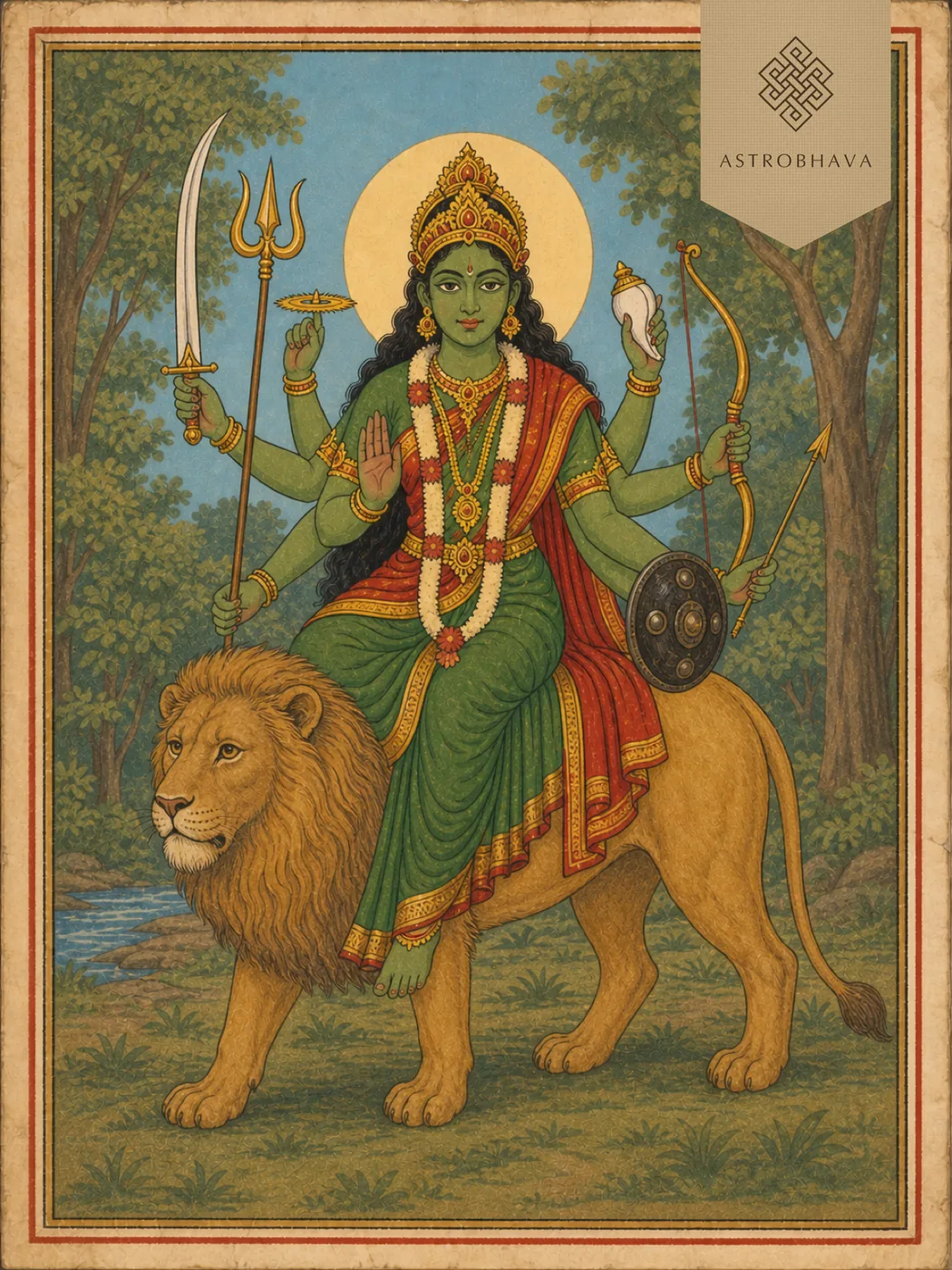
Durga Saptashati Chapter 4 bears the colophon title Shakradi Stuti, the praise by Shakra (Indra) and the other gods, and with it the Mahalakshmi section at the centre of the Devi Mahatmya comes to an end. The meditation verse printed before it is not of the eighteen-armed Mahalakshmi who opens chapter 2 but of Durga named Jaya: dark as a rain cloud, three-eyed, a crescent moon bound on her crown, seated on a lion's shoulders, holding conch, discus, sword and trident, her side glances enough to frighten the ranks of her enemies. The chapter is almost all hymn. Verses 2 to 23 are the gods' praise in the long fourteen-syllable vasantatilaka metre; verses 24 to 27 drop to the short anushtubh and become a prayer for protection. Verses 29 and 30 describe the worship that follows, verses 31 to 37 an exchange over a boon, and verse 39 her leaving. In verses 40 to 42 Medhas tells the king he has finished the account of her birth from the bodies of the gods and will now tell how she arose again, from the body of Gauri, to kill Shumbha and Nishumbha, the opening of chapter 5. The standard count gives the chapter 42 lines: 35 full verses, the two single lines in which the Goddess offers a boon and the gods decline it (32 and 34), and five lines naming the speaker, which is why the numbering skips at 28, 31, 33 and 38.
The gods praise the victor and ask one boon
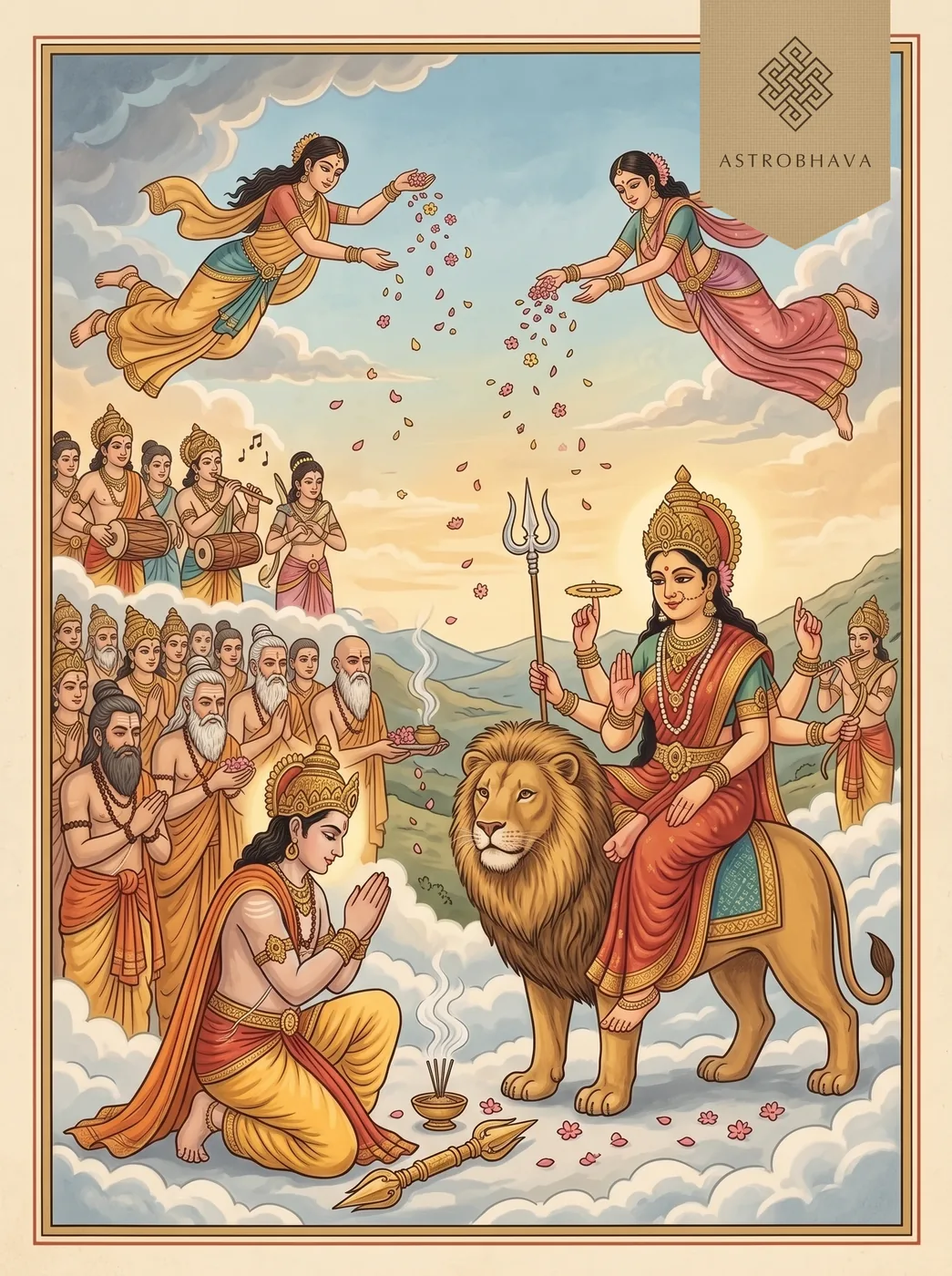
The chapter begins where chapter 3 ends, with Mahishasura and his army dead. Indra and the gods praise her with necks and shoulders bowed low and their hair standing on end for joy (verse 2). Their hymn starts from the largest claims: her form is the gathered power of all the gods (verse 3), her greatness is more than Ananta, Brahma or Shiva can describe (verse 4), and she is the unmanifest first Nature, of which the whole world is only a portion (verse 7). Verse 5 brings her into ordinary life: good fortune in the homes of the virtuous and misfortune in the homes of the wicked, understanding in the wise, faith in the good, modesty in the well-born. Verses 8 to 11 name her Svaha and Svadha, the threefold Veda, Varta or livelihood, Medha the intellect, Durga the boat across the hard ocean of worldly life, Shri who lives in Vishnu's heart and Gauri who stays beside Shiva. Then the gods turn to the fight just won. They marvel that Mahishasura could look at her smiling face, like the full moon and the glow of fine gold, and still strike at it (verse 12), and that he did not die on the spot when that face turned red and frowning (verse 13). Verses 15 and 16 turn to those she is pleased with: honoured in their lands, wealthy and famous, their store of righteous deeds never failing. After the protection verses they worship her with flowers from Indra's Nandana garden, with fragrances, unguents and incense, and she, her face bright with favour, tells them to choose a boon.
The mantra, in six scripts
- शक्रादयः
- śakrādayaḥ — Indra and the others
- सुरगणा
- suragaṇā — the hosts of gods
- निहतेऽतिवीर्ये
- nihate'tivīrye — when the mighty one was slain
- तस्मिन्दुरात्मनि
- tasmindurātmani — that evil-minded one
- सुरारिबले
- surāribale — the army of the gods' enemies
- च
- ca — and
- देव्या
- devyā — by the Goddess
Durga Saptashati Chapter 4 lyrics in full
The meditation verse on Durga named Jaya and all 42 numbered lines of the chapter in the standard numbering; the speaker of each passage is named above it.
All 42 numbered lines, in Sanskrit, Tamil, Telugu, Kannada, Malayalam and English, each with its meaning. Choose a script:
Download the Durga Saptashati Chapter 4 PDFAll 42 numbered lines with their meanings, in Sanskrit. Free to print and keep.
ॐ कालाभ्राभां कटाक्षैररिकुलभयदां मौलिबद्धेन्दुरेखां शङ्खं चक्रं कृपाणं त्रिशिखमपि करैरुद्वहन्तीं त्रिनेत्राम् ।
सिंहस्कन्धाधिरूढां त्रिभुवनमखिलं तेजसा पूरयन्तीं ध्यायेद् दुर्गां जयाख्यां त्रिदशपरिवृतां सेवितां सिद्धिकामैः ॥
ௐ காலாப்ராபாம் கடாக்ஷைரரிகுலபயதாம் மௌலிபத்தேந்துரேகாம் ஶங்கம் சக்ரம் க்ருபாணம் த்ரிஶிகமபி கரைருத்வஹந்தீம் த்ரிநேத்ராம் ।
ஸிம்ஹஸ்கந்தாதிரூடாம் த்ரிபுவநமகிலம் தேஜஸா பூரயந்தீம் த்யாயேத் துர்காம் ஜயாக்யாம் த்ரிதஶபரிவ்ருதாம் ஸேவிதாம் ஸித்திகாமைஃ ॥
ఓం కాలాభ్రాభాం కటాక్షైరరికులభయదాం మౌలిబద్ధేన్దురేఖాం శఙ్ఖం చక్రం కృపాణం త్రిశిఖమపి కరైరుద్వహన్తీం త్రినేత్రామ్ ।
సింహస్కన్ధాధిరూఢాం త్రిభువనమఖిలం తేజసా పూరయన్తీం ధ్యాయేద్ దుర్గాం జయాఖ్యాం త్రిదశపరివృతాం సేవితాం సిద్ధికామైః ॥
ಓಂ ಕಾಲಾಭ್ರಾಭಾಂ ಕಟಾಕ್ಷೈರರಿಕುಲಭಯದಾಂ ಮೌಲಿಬದ್ಧೇನ್ದುರೇಖಾಂ ಶಙ್ಖಂ ಚಕ್ರಂ ಕೃಪಾಣಂ ತ್ರಿಶಿಖಮಪಿ ಕರೈರುದ್ವಹನ್ತೀಂ ತ್ರಿನೇತ್ರಾಮ್ ।
ಸಿಂಹಸ್ಕನ್ಧಾಧಿರೂಢಾಂ ತ್ರಿಭುವನಮಖಿಲಂ ತೇಜಸಾ ಪೂರಯನ್ತೀಂ ಧ್ಯಾಯೇದ್ ದುರ್ಗಾಂ ಜಯಾಖ್ಯಾಂ ತ್ರಿದಶಪರಿವೃತಾಂ ಸೇವಿತಾಂ ಸಿದ್ಧಿಕಾಮೈಃ ॥
ഓം കാലാഭ്രാഭാം കടാക്ഷൈരരികുലഭയദാം മൌലിബദ്ധേന്ദുരേഖാം ശങ്ഖം ചക്രം കൃപാണം ത്രിശിഖമപി കരൈരുദ്വഹന്തീം ത്രിനേത്രാമ് ।
സിംഹസ്കന്ധാധിരൂഢാം ത്രിഭുവനമഖിലം തേജസാ പൂരയന്തീം ധ്യായേദ് ദുര്ഗാം ജയാഖ്യാം ത്രിദശപരിവൃതാം സേവിതാം സിദ്ധികാമൈഃ ॥
oṃ kālābhrābhāṃ kaṭākṣairarikulabhayadāṃ maulibaddhendurekhāṃ śaṅkhaṃ cakraṃ kṛpāṇaṃ triśikhamapi karairudvahantīṃ trinetrām |
siṃhaskandhādhirūḍhāṃ tribhuvanamakhilaṃ tejasā pūrayantīṃ dhyāyed durgāṃ jayākhyāṃ tridaśaparivṛtāṃ sevitāṃ siddhikāmaiḥ ||
Om. One who seeks success should meditate on Durga named Jaya: dark as a black rain cloud, her side glances striking fear into the hosts of enemies, a crescent moon bound on her crown, holding conch, discus, sword and trident in her hands, three-eyed, seated on the shoulders of a lion, filling all three worlds with her radiance, surrounded by the gods and served by those who seek attainment.
ऋषिरुवाच
शक्रादयः सुरगणा निहतेऽतिवीर्ये तस्मिन्दुरात्मनि सुरारिबले च देव्या । तां तुष्टुवुः प्रणतिनम्रशिरोधरांसा वाग्भिः प्रहर्षपुलकोद्गमचारुदेहाः ॥
ருஷிருவாச
ஶக்ராதயஃ ஸுரகணா நிஹதேதிவீர்யே தஸ்மிந்துராத்மநி ஸுராரிபலே ச தேவ்யா । தாம் துஷ்டுவுஃ ப்ரணதிநம்ரஶிரோதராம்ஸா வாக்பிஃ ப்ரஹர்ஷபுலகோத்கமசாருதேஹாஃ ॥
ఋషిరువాచ
శక్రాదయః సురగణా నిహతేఽతివీర్యే తస్మిన్దురాత్మని సురారిబలే చ దేవ్యా । తాం తుష్టువుః ప్రణతినమ్రశిరోధరాంసా వాగ్భిః ప్రహర్షపులకోద్గమచారుదేహాః ॥
ಋಷಿರುವಾಚ
ಶಕ್ರಾದಯಃ ಸುರಗಣಾ ನಿಹತೇಽತಿವೀರ್ಯೇ ತಸ್ಮಿನ್ದುರಾತ್ಮನಿ ಸುರಾರಿಬಲೇ ಚ ದೇವ್ಯಾ । ತಾಂ ತುಷ್ಟುವುಃ ಪ್ರಣತಿನಮ್ರಶಿರೋಧರಾಂಸಾ ವಾಗ್ಭಿಃ ಪ್ರಹರ್ಷಪುಲಕೋದ್ಗಮಚಾರುದೇಹಾಃ ॥
ഋഷിരുവാച
ശക്രാദയഃ സുരഗണാ നിഹതേഽതിവീര്യേ തസ്മിന്ദുരാത്മനി സുരാരിബലേ ച ദേവ്യാ । താം തുഷ്ടുവുഃ പ്രണതിനമ്രശിരോധരാംസാ വാഗ്ഭിഃ പ്രഹര്ഷപുലകോദ്ഗമചാരുദേഹാഃ ॥
ṛṣiruvāca
śakrādayaḥ suragaṇā nihate'tivīrye tasmindurātmani surāribale ca devyā | tāṃ tuṣṭuvuḥ praṇatinamraśirodharāṃsā vāgbhiḥ praharṣapulakodgamacārudehāḥ ||
The sage said: When that mighty, evil-minded demon and the army of the gods' enemies had been slain by the Goddess, Indra and the hosts of gods praised her with words, their necks and shoulders bowed low, their bodies made beautiful by hair standing on end for joy.
देव्या यया ततमिदं जगदात्मशक्त्या निश्शेषदेवगणशक्तिसमूहमूर्त्या ।
तामम्बिकामखिलदेवमहर्षिपूज्यां भक्त्या नताः स्म विदधातु शुभानि सा नः ॥
தேவ்யா யயா ததமிதம் ஜகதாத்மஶக்த்யா நிஶ்ஶேஷதேவகணஶக்திஸமூஹமூர்த்யா ।
தாமம்பிகாமகிலதேவமஹர்ஷிபூஜ்யாம் பக்த்யா நதாஃ ஸ்ம விததாது ஶுபாநி ஸா நஃ ॥
దేవ్యా యయా తతమిదం జగదాత్మశక్త్యా నిశ్శేషదేవగణశక్తిసమూహమూర్త్యా ।
తామమ్బికామఖిలదేవమహర్షిపూజ్యాం భక్త్యా నతాః స్మ విదధాతు శుభాని సా నః ॥
ದೇವ್ಯಾ ಯಯಾ ತತಮಿದಂ ಜಗದಾತ್ಮಶಕ್ತ್ಯಾ ನಿಶ್ಶೇಷದೇವಗಣಶಕ್ತಿಸಮೂಹಮೂರ್ತ್ಯಾ ।
ತಾಮಮ್ಬಿಕಾಮಖಿಲದೇವಮಹರ್ಷಿಪೂಜ್ಯಾಂ ಭಕ್ತ್ಯಾ ನತಾಃ ಸ್ಮ ವಿದಧಾತು ಶುಭಾನಿ ಸಾ ನಃ ॥
ദേവ്യാ യയാ തതമിദം ജഗദാത്മശക്ത്യാ നിശ്ശേഷദേവഗണശക്തിസമൂഹമൂര്ത്യാ ।
താമമ്ബികാമഖിലദേവമഹര്ഷിപൂജ്യാം ഭക്ത്യാ നതാഃ സ്മ വിദധാതു ശുഭാനി സാ നഃ ॥
devyā yayā tatamidaṃ jagadātmaśaktyā niśśeṣadevagaṇaśaktisamūhamūrtyā |
tāmambikāmakhiladevamaharṣipūjyāṃ bhaktyā natāḥ sma vidadhātu śubhāni sā naḥ ||
We bow in devotion to Ambika, worshipped by all gods and great sages, the Goddess whose form is the gathered power of all the hosts of gods and who pervades this world by her own power. May she grant us what is good.
यस्याः प्रभावमतुलं भगवाननन्तो ब्रह्मा हरश्च न हि वक्तुमलं बलं च ।
सा चण्डिकाखिलजगत्परिपालनाय नाशाय चाशुभभयस्य मतिं करोतु ॥
யஸ்யாஃ ப்ரபாவமதுலம் பகவாநநந்தோ ப்ரஹ்மா ஹரஶ்ச ந ஹி வக்துமலம் பலம் ச ।
ஸா சண்டிகாகிலஜகத்பரிபாலநாய நாஶாய சாஶுபபயஸ்ய மதிம் கரோது ॥
యస్యాః ప్రభావమతులం భగవాననన్తో బ్రహ్మా హరశ్చ న హి వక్తుమలం బలం చ ।
సా చణ్డికాఖిలజగత్పరిపాలనాయ నాశాయ చాశుభభయస్య మతిం కరోతు ॥
ಯಸ್ಯಾಃ ಪ್ರಭಾವಮತುಲಂ ಭಗವಾನನನ್ತೋ ಬ್ರಹ್ಮಾ ಹರಶ್ಚ ನ ಹಿ ವಕ್ತುಮಲಂ ಬಲಂ ಚ ।
ಸಾ ಚಣ್ಡಿಕಾಖಿಲಜಗತ್ಪರಿಪಾಲನಾಯ ನಾಶಾಯ ಚಾಶುಭಭಯಸ್ಯ ಮತಿಂ ಕರೋತು ॥
യസ്യാഃ പ്രഭാവമതുലം ഭഗവാനനന്തോ ബ്രഹ്മാ ഹരശ്ച ന ഹി വക്തുമലം ബലം ച ।
സാ ചണ്ഡികാഖിലജഗത്പരിപാലനായ നാശായ ചാശുഭഭയസ്യ മതിം കരോതു ॥
yasyāḥ prabhāvamatulaṃ bhagavānananto brahmā haraśca na hi vaktumalaṃ balaṃ ca |
sā caṇḍikākhilajagatparipālanāya nāśāya cāśubhabhayasya matiṃ karotu ||
Her matchless greatness and strength cannot be described even by the Lord Ananta, by Brahma or by Shiva. May that Chandika set her mind on protecting the whole world and on destroying the fear of evil.
या श्रीः स्वयं सुकृतिनां भवनेष्वलक्ष्मीः पापात्मनां कृतधियां हृदयेषु बुद्धिः ।
श्रद्धा सतां कुलजनप्रभवस्य लज्जा तां त्वां नताः स्म परिपालय देवि विश्वम् ॥
யா ஶ்ரீஃ ஸ்வயம் ஸுக்ருதிநாம் பவநேஷ்வலக்ஷ்மீஃ பாபாத்மநாம் க்ருததியாம் ஹ்ருதயேஷு புத்திஃ ।
ஶ்ரத்தா ஸதாம் குலஜநப்ரபவஸ்ய லஜ்ஜா தாம் த்வாம் நதாஃ ஸ்ம பரிபாலய தேவி விஶ்வம் ॥
యా శ్రీః స్వయం సుకృతినాం భవనేష్వలక్ష్మీః పాపాత్మనాం కృతధియాం హృదయేషు బుద్ధిః ।
శ్రద్ధా సతాం కులజనప్రభవస్య లజ్జా తాం త్వాం నతాః స్మ పరిపాలయ దేవి విశ్వమ్ ॥
ಯಾ ಶ್ರೀಃ ಸ್ವಯಂ ಸುಕೃತಿನಾಂ ಭವನೇಷ್ವಲಕ್ಷ್ಮೀಃ ಪಾಪಾತ್ಮನಾಂ ಕೃತಧಿಯಾಂ ಹೃದಯೇಷು ಬುದ್ಧಿಃ ।
ಶ್ರದ್ಧಾ ಸತಾಂ ಕುಲಜನಪ್ರಭವಸ್ಯ ಲಜ್ಜಾ ತಾಂ ತ್ವಾಂ ನತಾಃ ಸ್ಮ ಪರಿಪಾಲಯ ದೇವಿ ವಿಶ್ವಮ್ ॥
യാ ശ്രീഃ സ്വയം സുകൃതിനാം ഭവനേഷ്വലക്ഷ്മീഃ പാപാത്മനാം കൃതധിയാം ഹൃദയേഷു ബുദ്ധിഃ ।
ശ്രദ്ധാ സതാം കുലജനപ്രഭവസ്യ ലജ്ജാ താം ത്വാം നതാഃ സ്മ പരിപാലയ ദേവി വിശ്വമ് ॥
yā śrīḥ svayaṃ sukṛtināṃ bhavaneṣvalakṣmīḥ pāpātmanāṃ kṛtadhiyāṃ hṛdayeṣu buddhiḥ |
śraddhā satāṃ kulajanaprabhavasya lajjā tāṃ tvāṃ natāḥ sma paripālaya devi viśvam ||
You are good fortune itself in the homes of the virtuous and misfortune in the homes of the wicked, understanding in the hearts of the wise, faith in the good and modesty in the well-born. We bow to you; O Goddess, protect the universe.
किं वर्णयाम तव रूपमचिन्त्यमेतत् किं चातिवीर्यमसुरक्षयकारि भूरि ।
किं चाहवेषु चरितानि तवाद्भुतानि सर्वेषु देव्यसुरदेवगणादिकेषु ॥
கிம் வர்ணயாம தவ ரூபமசிந்த்யமேதத் கிம் சாதிவீர்யமஸுரக்ஷயகாரி பூரி ।
கிம் சாஹவேஷு சரிதாநி தவாத்புதாநி ஸர்வேஷு தேவ்யஸுரதேவகணாதிகேஷு ॥
కిం వర్ణయామ తవ రూపమచిన్త్యమేతత్ కిం చాతివీర్యమసురక్షయకారి భూరి ।
కిం చాహవేషు చరితాని తవాద్భుతాని సర్వేషు దేవ్యసురదేవగణాదికేషు ॥
ಕಿಂ ವರ್ಣಯಾಮ ತವ ರೂಪಮಚಿನ್ತ್ಯಮೇತತ್ ಕಿಂ ಚಾತಿವೀರ್ಯಮಸುರಕ್ಷಯಕಾರಿ ಭೂರಿ ।
ಕಿಂ ಚಾಹವೇಷು ಚರಿತಾನಿ ತವಾದ್ಭುತಾನಿ ಸರ್ವೇಷು ದೇವ್ಯಸುರದೇವಗಣಾದಿಕೇಷು ॥
കിം വര്ണയാമ തവ രൂപമചിന്ത്യമേതത് കിം ചാതിവീര്യമസുരക്ഷയകാരി ഭൂരി ।
കിം ചാഹവേഷു ചരിതാനി തവാദ്ഭുതാനി സര്വേഷു ദേവ്യസുരദേവഗണാദികേഷു ॥
kiṃ varṇayāma tava rūpamacintyametat kiṃ cātivīryamasurakṣayakāri bhūri |
kiṃ cāhaveṣu caritāni tavādbhutāni sarveṣu devyasuradevagaṇādikeṣu ||
How can we describe this form of yours that is beyond thought, or your vast valour that destroys the demons, or your wonderful deeds in battle before all the hosts of gods, demons and others?
हेतुः समस्तजगतां त्रिगुणापि दोषैर्न ज्ञायसे हरिहरादिभिरप्यपारा ।
सर्वाश्रयाखिलमिदं जगदंशभूतमव्याकृता हि परमा प्रकृतिस्त्वमाद्या ॥
ஹேதுஃ ஸமஸ்தஜகதாம் த்ரிகுணாபி தோஷைர்ந ஜ்ஞாயஸே ஹரிஹராதிபிரப்யபாரா ।
ஸர்வாஶ்ரயாகிலமிதம் ஜகதம்ஶபூதமவ்யாக்ருதா ஹி பரமா ப்ரக்ருதிஸ்த்வமாத்யா ॥
హేతుః సమస్తజగతాం త్రిగుణాపి దోషైర్న జ్ఞాయసే హరిహరాదిభిరప్యపారా ।
సర్వాశ్రయాఖిలమిదం జగదంశభూతమవ్యాకృతా హి పరమా ప్రకృతిస్త్వమాద్యా ॥
ಹೇತುಃ ಸಮಸ್ತಜಗತಾಂ ತ್ರಿಗುಣಾಪಿ ದೋಷೈರ್ನ ಜ್ಞಾಯಸೇ ಹರಿಹರಾದಿಭಿರಪ್ಯಪಾರಾ ।
ಸರ್ವಾಶ್ರಯಾಖಿಲಮಿದಂ ಜಗದಂಶಭೂತಮವ್ಯಾಕೃತಾ ಹಿ ಪರಮಾ ಪ್ರಕೃತಿಸ್ತ್ವಮಾದ್ಯಾ ॥
ഹേതുഃ സമസ്തജഗതാം ത്രിഗുണാപി ദോഷൈര്ന ജ്ഞായസേ ഹരിഹരാദിഭിരപ്യപാരാ ।
സര്വാശ്രയാഖിലമിദം ജഗദംശഭൂതമവ്യാകൃതാ ഹി പരമാ പ്രകൃതിസ്ത്വമാദ്യാ ॥
hetuḥ samastajagatāṃ triguṇāpi doṣairna jñāyase hariharādibhirapyapārā |
sarvāśrayākhilamidaṃ jagadaṃśabhūtamavyākṛtā hi paramā prakṛtistvamādyā ||
You are the cause of all the worlds; though made of the three gunas you are not known to have their faults, and even Vishnu, Shiva and the others cannot reach your end. You are the refuge of all; this whole world is a portion of you, for you are the unmanifest, supreme, primal Nature.
यस्याः समस्तसुरता समुदीरणेन तृप्तिं प्रयाति सकलेषु मखेषु देवि ।
स्वाहासि वै पितृगणस्य च तृप्तिहेतुरुच्चार्यसे त्वमत एव जनैः स्वधा च ॥
யஸ்யாஃ ஸமஸ்தஸுரதா ஸமுதீரணேந த்ருப்திம் ப்ரயாதி ஸகலேஷு மகேஷு தேவி ।
ஸ்வாஹாஸி வை பித்ருகணஸ்ய ச த்ருப்திஹேதுருச்சார்யஸே த்வமத ஏவ ஜநைஃ ஸ்வதா ச ॥
యస్యాః సమస్తసురతా సముదీరణేన తృప్తిం ప్రయాతి సకలేషు మఖేషు దేవి ।
స్వాహాసి వై పితృగణస్య చ తృప్తిహేతురుచ్చార్యసే త్వమత ఏవ జనైః స్వధా చ ॥
ಯಸ್ಯಾಃ ಸಮಸ್ತಸುರತಾ ಸಮುದೀರಣೇನ ತೃಪ್ತಿಂ ಪ್ರಯಾತಿ ಸಕಲೇಷು ಮಖೇಷು ದೇವಿ ।
ಸ್ವಾಹಾಸಿ ವೈ ಪಿತೃಗಣಸ್ಯ ಚ ತೃಪ್ತಿಹೇತುರುಚ್ಚಾರ್ಯಸೇ ತ್ವಮತ ಏವ ಜನೈಃ ಸ್ವಧಾ ಚ ॥
യസ്യാഃ സമസ്തസുരതാ സമുദീരണേന തൃപ്തിം പ്രയാതി സകലേഷു മഖേഷു ദേവി ।
സ്വാഹാസി വൈ പിതൃഗണസ്യ ച തൃപ്തിഹേതുരുച്ചാര്യസേ ത്വമത ഏവ ജനൈഃ സ്വധാ ച ॥
yasyāḥ samastasuratā samudīraṇena tṛptiṃ prayāti sakaleṣu makheṣu devi |
svāhāsi vai pitṛgaṇasya ca tṛptiheturuccāryase tvamata eva janaiḥ svadhā ca ||
O Goddess, you are Svaha, by whose utterance all the gods are satisfied in every sacrifice; and because you are the cause of the ancestors' satisfaction, people also call on you as Svadha.
या मुक्तिहेतुरविचिन्त्यमहाव्रता त्वमभ्यस्यसे सुनियतेन्द्रियतत्त्वसारैः ।
मोक्षार्थिभिर्मुनिभिरस्तसमस्तदोषैर्विद्यासि सा भगवती परमा हि देवि ॥
யா முக்திஹேதுரவிசிந்த்யமஹாவ்ரதா த்வமப்யஸ்யஸே ஸுநியதேந்த்ரியதத்த்வஸாரைஃ ।
மோக்ஷார்திபிர்முநிபிரஸ்தஸமஸ்ததோஷைர்வித்யாஸி ஸா பகவதீ பரமா ஹி தேவி ॥
యా ముక్తిహేతురవిచిన్త్యమహావ్రతా త్వమభ్యస్యసే సునియతేన్ద్రియతత్త్వసారైః ।
మోక్షార్థిభిర్మునిభిరస్తసమస్తదోషైర్విద్యాసి సా భగవతీ పరమా హి దేవి ॥
ಯಾ ಮುಕ್ತಿಹೇತುರವಿಚಿನ್ತ್ಯಮಹಾವ್ರತಾ ತ್ವಮಭ್ಯಸ್ಯಸೇ ಸುನಿಯತೇನ್ದ್ರಿಯತತ್ತ್ವಸಾರೈಃ ।
ಮೋಕ್ಷಾರ್ಥಿಭಿರ್ಮುನಿಭಿರಸ್ತಸಮಸ್ತದೋಷೈರ್ವಿದ್ಯಾಸಿ ಸಾ ಭಗವತೀ ಪರಮಾ ಹಿ ದೇವಿ ॥
യാ മുക്തിഹേതുരവിചിന്ത്യമഹാവ്രതാ ത്വമഭ്യസ്യസേ സുനിയതേന്ദ്രിയതത്ത്വസാരൈഃ ।
മോക്ഷാര്ഥിഭിര്മുനിഭിരസ്തസമസ്തദോഷൈര്വിദ്യാസി സാ ഭഗവതീ പരമാ ഹി ദേവി ॥
yā muktiheturavicintyamahāvratā tvamabhyasyase suniyatendriyatattvasāraiḥ |
mokṣārthibhirmunibhirastasamastadoṣairvidyāsi sā bhagavatī paramā hi devi ||
O Goddess, you are the cause of liberation and the great vow beyond thought, practised by sages who seek freedom, who have mastered their senses, hold to the essence of truth and have cast off every fault. You are that blessed supreme Knowledge.
शब्दात्मिका सुविमलर्ग्यजुषां निधानमुद्गीथरम्यपदपाठवतां च साम्नाम् ।
देवी त्रयी भगवती भवभावनाय वार्त्ता च सर्वजगतां परमार्तिहन्त्री ॥
ஶப்தாத்மிகா ஸுவிமலர்க்யஜுஷாம் நிதாநமுத்கீதரம்யபதபாடவதாம் ச ஸாம்நாம் ।
தேவீ த்ரயீ பகவதீ பவபாவநாய வார்த்தா ச ஸர்வஜகதாம் பரமார்திஹந்த்ரீ ॥
శబ్దాత్మికా సువిమలర్గ్యజుషాం నిధానముద్గీథరమ్యపదపాఠవతాం చ సామ్నామ్ ।
దేవీ త్రయీ భగవతీ భవభావనాయ వార్త్తా చ సర్వజగతాం పరమార్తిహన్త్రీ ॥
ಶಬ್ದಾತ್ಮಿಕಾ ಸುವಿಮಲರ್ಗ್ಯಜುಷಾಂ ನಿಧಾನಮುದ್ಗೀಥರಮ್ಯಪದಪಾಠವತಾಂ ಚ ಸಾಮ್ನಾಮ್ ।
ದೇವೀ ತ್ರಯೀ ಭಗವತೀ ಭವಭಾವನಾಯ ವಾರ್ತ್ತಾ ಚ ಸರ್ವಜಗತಾಂ ಪರಮಾರ್ತಿಹನ್ತ್ರೀ ॥
ശബ്ദാത്മികാ സുവിമലര്ഗ്യജുഷാം നിധാനമുദ്ഗീഥരമ്യപദപാഠവതാം ച സാമ്നാമ് ।
ദേവീ ത്രയീ ഭഗവതീ ഭവഭാവനായ വാര്ത്താ ച സര്വജഗതാം പരമാര്തിഹന്ത്രീ ॥
śabdātmikā suvimalargyajuṣāṃ nidhānamudgītharamyapadapāṭhavatāṃ ca sāmnām |
devī trayī bhagavatī bhavabhāvanāya vārttā ca sarvajagatāṃ paramārtihantrī ||
You are the very soul of sound, the treasury of the pure Rig and Yajur hymns and of the Sama chants with their lovely Udgitha recitation. You are the Goddess, the threefold Veda, the blessed one; for the life of the world you are Varta, livelihood, and you destroy the deepest suffering of all the worlds.
मेधासि देवि विदिताखिलशास्त्रसारा दुर्गासि दुर्गभवसागरनौरसङ्गा ।
श्रीः कैटभारिहृदयैककृताधिवासा गौरी त्वमेव शशिमौलिकृतप्रतिष्ठा ॥
மேதாஸி தேவி விதிதாகிலஶாஸ்த்ரஸாரா துர்காஸி துர்கபவஸாகரநௌரஸங்கா ।
ஶ்ரீஃ கைடபாரிஹ்ருதயைகக்ருதாதிவாஸா கௌரீ த்வமேவ ஶஶிமௌலிக்ருதப்ரதிஷ்டா ॥
మేధాసి దేవి విదితాఖిలశాస్త్రసారా దుర్గాసి దుర్గభవసాగరనౌరసఙ్గా ।
శ్రీః కైటభారిహృదయైకకృతాధివాసా గౌరీ త్వమేవ శశిమౌలికృతప్రతిష్ఠా ॥
ಮೇಧಾಸಿ ದೇವಿ ವಿದಿತಾಖಿಲಶಾಸ್ತ್ರಸಾರಾ ದುರ್ಗಾಸಿ ದುರ್ಗಭವಸಾಗರನೌರಸಙ್ಗಾ ।
ಶ್ರೀಃ ಕೈಟಭಾರಿಹೃದಯೈಕಕೃತಾಧಿವಾಸಾ ಗೌರೀ ತ್ವಮೇವ ಶಶಿಮೌಲಿಕೃತಪ್ರತಿಷ್ಠಾ ॥
മേധാസി ദേവി വിദിതാഖിലശാസ്ത്രസാരാ ദുര്ഗാസി ദുര്ഗഭവസാഗരനൌരസങ്ഗാ ।
ശ്രീഃ കൈടഭാരിഹൃദയൈകകൃതാധിവാസാ ഗൌരീ ത്വമേവ ശശിമൌലികൃതപ്രതിഷ്ഠാ ॥
medhāsi devi viditākhilaśāstrasārā durgāsi durgabhavasāgaranaurasaṅgā |
śrīḥ kaiṭabhārihṛdayaikakṛtādhivāsā gaurī tvameva śaśimaulikṛtapratiṣṭhā ||
O Goddess, you are Medha, the intellect that knows the essence of all scriptures; you are Durga, the boat across the hard ocean of worldly life, free of attachment. You are Shri, who dwells only in the heart of Vishnu, the foe of Kaitabha, and you are Gauri, who has her place with the moon-crested Shiva.
ईषत्सहासममलं परिपूर्णचन्द्रबिम्बानुकारि कनकोत्तमकान्तिकान्तम् ।
अत्यद्भुतं प्रहृतमात्तरुषा तथापि वक्त्रं विलोक्य सहसा महिषासुरेण ॥
ஈஷத்ஸஹாஸமமலம் பரிபூர்ணசந்த்ரபிம்பாநுகாரி கநகோத்தமகாந்திகாந்தம் ।
அத்யத்புதம் ப்ரஹ்ருதமாத்தருஷா ததாபி வக்த்ரம் விலோக்ய ஸஹஸா மஹிஷாஸுரேண ॥
ఈషత్సహాసమమలం పరిపూర్ణచన్ద్రబిమ్బానుకారి కనకోత్తమకాన్తికాన్తమ్ ।
అత్యద్భుతం ప్రహృతమాత్తరుషా తథాపి వక్త్రం విలోక్య సహసా మహిషాసురేణ ॥
ಈಷತ್ಸಹಾಸಮಮಲಂ ಪರಿಪೂರ್ಣಚನ್ದ್ರಬಿಮ್ಬಾನುಕಾರಿ ಕನಕೋತ್ತಮಕಾನ್ತಿಕಾನ್ತಮ್ ।
ಅತ್ಯದ್ಭುತಂ ಪ್ರಹೃತಮಾತ್ತರುಷಾ ತಥಾಪಿ ವಕ್ತ್ರಂ ವಿಲೋಕ್ಯ ಸಹಸಾ ಮಹಿಷಾಸುರೇಣ ॥
ഈഷത്സഹാസമമലം പരിപൂര്ണചന്ദ്രബിമ്ബാനുകാരി കനകോത്തമകാന്തികാന്തമ് ।
അത്യദ്ഭുതം പ്രഹൃതമാത്തരുഷാ തഥാപി വക്ത്രം വിലോക്യ സഹസാ മഹിഷാസുരേണ ॥
īṣatsahāsamamalaṃ paripūrṇacandrabimbānukāri kanakottamakāntikāntam |
atyadbhutaṃ prahṛtamāttaruṣā tathāpi vaktraṃ vilokya sahasā mahiṣāsureṇa ||
Your face was gently smiling, spotless, like the disc of the full moon and lovely with the glow of the finest gold. It is most astonishing that Mahishasura, seeing it, was still seized by anger and struck at it.
दृष्ट्वा तु देवि कुपितं भ्रुकुटीकरालमुद्यच्छशाङ्कसदृशच्छवि यन्न सद्यः ।
प्राणान्मुमोच महिषस्तदतीव चित्रं कैर्जीव्यते हि कुपितान्तकदर्शनेन ॥
த்ருஷ்ட்வா து தேவி குபிதம் ப்ருகுடீகராலமுத்யச்சஶாங்கஸத்ருஶச்சவி யந்ந ஸத்யஃ ।
ப்ராணாந்முமோச மஹிஷஸ்தததீவ சித்ரம் கைர்ஜீவ்யதே ஹி குபிதாந்தகதர்ஶநேந ॥
దృష్ట్వా తు దేవి కుపితం భ్రుకుటీకరాలముద్యచ్ఛశాఙ్కసదృశచ్ఛవి యన్న సద్యః ।
ప్రాణాన్ముమోచ మహిషస్తదతీవ చిత్రం కైర్జీవ్యతే హి కుపితాన్తకదర్శనేన ॥
ದೃಷ್ಟ್ವಾ ತು ದೇವಿ ಕುಪಿತಂ ಭ್ರುಕುಟೀಕರಾಲಮುದ್ಯಚ್ಛಶಾಙ್ಕಸದೃಶಚ್ಛವಿ ಯನ್ನ ಸದ್ಯಃ ।
ಪ್ರಾಣಾನ್ಮುಮೋಚ ಮಹಿಷಸ್ತದತೀವ ಚಿತ್ರಂ ಕೈರ್ಜೀವ್ಯತೇ ಹಿ ಕುಪಿತಾನ್ತಕದರ್ಶನೇನ ॥
ദൃഷ്ട്വാ തു ദേവി കുപിതം ഭ്രുകുടീകരാലമുദ്യച്ഛശാങ്കസദൃശച്ഛവി യന്ന സദ്യഃ ।
പ്രാണാന്മുമോച മഹിഷസ്തദതീവ ചിത്രം കൈര്ജീവ്യതേ ഹി കുപിതാന്തകദര്ശനേന ॥
dṛṣṭvā tu devi kupitaṃ bhrukuṭīkarālamudyacchaśāṅkasadṛśacchavi yanna sadyaḥ |
prāṇānmumoca mahiṣastadatīva citraṃ kairjīvyate hi kupitāntakadarśanena ||
O Goddess, it is more wonderful still that Mahisha did not give up his life at once on seeing that face angered, fearsome with knitted brows and red like the rising moon. For who can stay alive after seeing Death himself enraged?
देवि प्रसीद परमा भवती भवाय सद्यो विनाशयसि कोपवती कुलानि ।
विज्ञातमेतदधुनैव यदस्तमेतन्नीतं बलं सुविपुलं महिषासुरस्य ॥
தேவி ப்ரஸீத பரமா பவதீ பவாய ஸத்யோ விநாஶயஸி கோபவதீ குலாநி ।
விஜ்ஞாதமேதததுநைவ யதஸ்தமேதந்நீதம் பலம் ஸுவிபுலம் மஹிஷாஸுரஸ்ய ॥
దేవి ప్రసీద పరమా భవతీ భవాయ సద్యో వినాశయసి కోపవతీ కులాని ।
విజ్ఞాతమేతదధునైవ యదస్తమేతన్నీతం బలం సువిపులం మహిషాసురస్య ॥
ದೇವಿ ಪ್ರಸೀದ ಪರಮಾ ಭವತೀ ಭವಾಯ ಸದ್ಯೋ ವಿನಾಶಯಸಿ ಕೋಪವತೀ ಕುಲಾನಿ ।
ವಿಜ್ಞಾತಮೇತದಧುನೈವ ಯದಸ್ತಮೇತನ್ನೀತಂ ಬಲಂ ಸುವಿಪುಲಂ ಮಹಿಷಾಸುರಸ್ಯ ॥
ദേവി പ്രസീദ പരമാ ഭവതീ ഭവായ സദ്യോ വിനാശയസി കോപവതീ കുലാനി ।
വിജ്ഞാതമേതദധുനൈവ യദസ്തമേതന്നീതം ബലം സുവിപുലം മഹിഷാസുരസ്യ ॥
devi prasīda paramā bhavatī bhavāya sadyo vināśayasi kopavatī kulāni |
vijñātametadadhunaiva yadastametannītaṃ balaṃ suvipulaṃ mahiṣāsurasya ||
O Goddess, be gracious. When you are pleased you are supreme for the world's welfare; when angered you destroy whole races at once. We have just learned this, now that the vast army of Mahishasura has been brought to its end.
ते सम्मता जनपदेषु धनानि तेषां तेषां यशांसि न च सीदति धर्मवर्गः ।
धन्यास्त एव निभृतात्मजभृत्यदारा येषां सदाभ्युदयदा भवती प्रसन्ना ॥
தே ஸம்மதா ஜநபதேஷு தநாநி தேஷாம் தேஷாம் யஶாம்ஸி ந ச ஸீததி தர்மவர்கஃ ।
தந்யாஸ்த ஏவ நிப்ருதாத்மஜப்ருத்யதாரா யேஷாம் ஸதாப்யுதயதா பவதீ ப்ரஸந்நா ॥
తే సమ్మతా జనపదేషు ధనాని తేషాం తేషాం యశాంసి న చ సీదతి ధర్మవర్గః ।
ధన్యాస్త ఏవ నిభృతాత్మజభృత్యదారా యేషాం సదాభ్యుదయదా భవతీ ప్రసన్నా ॥
ತೇ ಸಮ್ಮತಾ ಜನಪದೇಷು ಧನಾನಿ ತೇಷಾಂ ತೇಷಾಂ ಯಶಾಂಸಿ ನ ಚ ಸೀದತಿ ಧರ್ಮವರ್ಗಃ ।
ಧನ್ಯಾಸ್ತ ಏವ ನಿಭೃತಾತ್ಮಜಭೃತ್ಯದಾರಾ ಯೇಷಾಂ ಸದಾಭ್ಯುದಯದಾ ಭವತೀ ಪ್ರಸನ್ನಾ ॥
തേ സമ്മതാ ജനപദേഷു ധനാനി തേഷാം തേഷാം യശാംസി ന ച സീദതി ധര്മവര്ഗഃ ।
ധന്യാസ്ത ഏവ നിഭൃതാത്മജഭൃത്യദാരാ യേഷാം സദാഭ്യുദയദാ ഭവതീ പ്രസന്നാ ॥
te sammatā janapadeṣu dhanāni teṣāṃ teṣāṃ yaśāṃsi na ca sīdati dharmavargaḥ |
dhanyāsta eva nibhṛtātmajabhṛtyadārā yeṣāṃ sadābhyudayadā bhavatī prasannā ||
Those with whom you, the giver of prosperity, are always pleased are honoured in their lands; theirs is wealth, theirs is fame, and their store of righteous deeds never fails. Blessed are they, with devoted sons, servants and wives.
धर्म्याणि देवि सकलानि सदैव कर्माण्यत्यादृतः प्रतिदिनं सुकृती करोति ।
स्वर्गं प्रयाति च ततो भवतीप्रसादाल्लोकत्रयेऽपि फलदा ननु देवि तेन ॥
தர்ம்யாணி தேவி ஸகலாநி ஸதைவ கர்மாண்யத்யாத்ருதஃ ப்ரதிதிநம் ஸுக்ருதீ கரோதி ।
ஸ்வர்கம் ப்ரயாதி ச ததோ பவதீப்ரஸாதால்லோகத்ரயேபி பலதா நநு தேவி தேந ॥
ధర్మ్యాణి దేవి సకలాని సదైవ కర్మాణ్యత్యాదృతః ప్రతిదినం సుకృతీ కరోతి ।
స్వర్గం ప్రయాతి చ తతో భవతీప్రసాదాల్లోకత్రయేఽపి ఫలదా నను దేవి తేన ॥
ಧರ್ಮ್ಯಾಣಿ ದೇವಿ ಸಕಲಾನಿ ಸದೈವ ಕರ್ಮಾಣ್ಯತ್ಯಾದೃತಃ ಪ್ರತಿದಿನಂ ಸುಕೃತೀ ಕರೋತಿ ।
ಸ್ವರ್ಗಂ ಪ್ರಯಾತಿ ಚ ತತೋ ಭವತೀಪ್ರಸಾದಾಲ್ಲೋಕತ್ರಯೇಽಪಿ ಫಲದಾ ನನು ದೇವಿ ತೇನ ॥
ധര്മ്യാണി ദേവി സകലാനി സദൈവ കര്മാണ്യത്യാദൃതഃ പ്രതിദിനം സുകൃതീ കരോതി ।
സ്വര്ഗം പ്രയാതി ച തതോ ഭവതീപ്രസാദാല്ലോകത്രയേഽപി ഫലദാ നനു ദേവി തേന ॥
dharmyāṇi devi sakalāni sadaiva karmāṇyatyādṛtaḥ pratidinaṃ sukṛtī karoti |
svargaṃ prayāti ca tato bhavatīprasādāllokatraye'pi phaladā nanu devi tena ||
O Goddess, by your grace the virtuous person performs every righteous act with great care day after day, and so reaches heaven. Surely, then, O Goddess, you are the giver of rewards in all three worlds.
दुर्गे स्मृता हरसि भीतिमशेषजन्तोः स्वस्थैः स्मृता मतिमतीव शुभां ददासि ।
दारिद्र्यदुःखभयहारिणि का त्वदन्या सर्वोपकारकरणाय सदाऽऽर्द्रचित्ता ॥
துர்கே ஸ்ம்ருதா ஹரஸி பீதிமஶேஷஜந்தோஃ ஸ்வஸ்தைஃ ஸ்ம்ருதா மதிமதீவ ஶுபாம் ததாஸி ।
தாரித்ர்யதுஃகபயஹாரிணி கா த்வதந்யா ஸர்வோபகாரகரணாய ஸதார்த்ரசித்தா ॥
దుర్గే స్మృతా హరసి భీతిమశేషజన్తోః స్వస్థైః స్మృతా మతిమతీవ శుభాం దదాసి ।
దారిద్ర్యదుఃఖభయహారిణి కా త్వదన్యా సర్వోపకారకరణాయ సదాఽఽర్ద్రచిత్తా ॥
ದುರ್ಗೇ ಸ್ಮೃತಾ ಹರಸಿ ಭೀತಿಮಶೇಷಜನ್ತೋಃ ಸ್ವಸ್ಥೈಃ ಸ್ಮೃತಾ ಮತಿಮತೀವ ಶುಭಾಂ ದದಾಸಿ ।
ದಾರಿದ್ರ್ಯದುಃಖಭಯಹಾರಿಣಿ ಕಾ ತ್ವದನ್ಯಾ ಸರ್ವೋಪಕಾರಕರಣಾಯ ಸದಾಽಽರ್ದ್ರಚಿತ್ತಾ ॥
ദുര്ഗേ സ്മൃതാ ഹരസി ഭീതിമശേഷജന്തോഃ സ്വസ്ഥൈഃ സ്മൃതാ മതിമതീവ ശുഭാം ദദാസി ।
ദാരിദ്ര്യദുഃഖഭയഹാരിണി കാ ത്വദന്യാ സര്വോപകാരകരണായ സദാഽഽര്ദ്രചിത്താ ॥
durge smṛtā harasi bhītimaśeṣajantoḥ svasthaiḥ smṛtā matimatīva śubhāṃ dadāsi |
dāridryaduḥkhabhayahāriṇi kā tvadanyā sarvopakārakaraṇāya sadā'rdracittā ||
O Durga, when remembered you take away the fear of every creature; when remembered by those at ease you give a mind that is most auspicious. O remover of poverty, pain and fear, who but you has a heart always tender to do good to all?
एभिर्हतैर्जगदुपैति सुखं तथैते कुर्वन्तु नाम नरकाय चिराय पापम् ।
संग्राममृत्युमधिगम्य दिवं प्रयान्तु मत्वेति नूनमहितान् विनिहंसि देवि ॥
ஏபிர்ஹதைர்ஜகதுபைதி ஸுகம் ததைதே குர்வந்து நாம நரகாய சிராய பாபம் ।
ஸம்க்ராமம்ருத்யுமதிகம்ய திவம் ப்ரயாந்து மத்வேதி நூநமஹிதாந் விநிஹம்ஸி தேவி ॥
ఏభిర్హతైర్జగదుపైతి సుఖం తథైతే కుర్వన్తు నామ నరకాయ చిరాయ పాపమ్ ।
సంగ్రామమృత్యుమధిగమ్య దివం ప్రయాన్తు మత్వేతి నూనమహితాన్ వినిహంసి దేవి ॥
ಏಭಿರ್ಹತೈರ್ಜಗದುಪೈತಿ ಸುಖಂ ತಥೈತೇ ಕುರ್ವನ್ತು ನಾಮ ನರಕಾಯ ಚಿರಾಯ ಪಾಪಮ್ ।
ಸಂಗ್ರಾಮಮೃತ್ಯುಮಧಿಗಮ್ಯ ದಿವಂ ಪ್ರಯಾನ್ತು ಮತ್ವೇತಿ ನೂನಮಹಿತಾನ್ ವಿನಿಹಂಸಿ ದೇವಿ ॥
ഏഭിര്ഹതൈര്ജഗദുപൈതി സുഖം തഥൈതേ കുര്വന്തു നാമ നരകായ ചിരായ പാപമ് ।
സംഗ്രാമമൃത്യുമധിഗമ്യ ദിവം പ്രയാന്തു മത്വേതി നൂനമഹിതാന് വിനിഹംസി ദേവി ॥
ebhirhatairjagadupaiti sukhaṃ tathaite kurvantu nāma narakāya cirāya pāpam |
saṃgrāmamṛtyumadhigamya divaṃ prayāntu matveti nūnamahitān vinihaṃsi devi ||
O Goddess, surely you slay the enemies with this thought: with them slain the world will be happy, and though these have done sin enough to keep them long in hell, let them win death in battle and go to heaven.
दृष्ट्वैव किं न भवती प्रकरोति भस्म सर्वासुरानरिषु यत्प्रहिणोषि शस्त्रम् ।
लोकान् प्रयान्तु रिपवोऽपि हि शस्त्रपूता इत्थं मतिर्भवति तेष्वपि तेऽतिसाध्वी ॥
த்ருஷ்ட்வைவ கிம் ந பவதீ ப்ரகரோதி பஸ்ம ஸர்வாஸுராநரிஷு யத்ப்ரஹிணோஷி ஶஸ்த்ரம் ।
லோகாந் ப்ரயாந்து ரிபவோபி ஹி ஶஸ்த்ரபூதா இத்தம் மதிர்பவதி தேஷ்வபி தேதிஸாத்வீ ॥
దృష్ట్వైవ కిం న భవతీ ప్రకరోతి భస్మ సర్వాసురానరిషు యత్ప్రహిణోషి శస్త్రమ్ ।
లోకాన్ ప్రయాన్తు రిపవోఽపి హి శస్త్రపూతా ఇత్థం మతిర్భవతి తేష్వపి తేఽతిసాధ్వీ ॥
ದೃಷ್ಟ್ವೈವ ಕಿಂ ನ ಭವತೀ ಪ್ರಕರೋತಿ ಭಸ್ಮ ಸರ್ವಾಸುರಾನರಿಷು ಯತ್ಪ್ರಹಿಣೋಷಿ ಶಸ್ತ್ರಮ್ ।
ಲೋಕಾನ್ ಪ್ರಯಾನ್ತು ರಿಪವೋಽಪಿ ಹಿ ಶಸ್ತ್ರಪೂತಾ ಇತ್ಥಂ ಮತಿರ್ಭವತಿ ತೇಷ್ವಪಿ ತೇಽತಿಸಾಧ್ವೀ ॥
ദൃഷ്ട്വൈവ കിം ന ഭവതീ പ്രകരോതി ഭസ്മ സര്വാസുരാനരിഷു യത്പ്രഹിണോഷി ശസ്ത്രമ് ।
ലോകാന് പ്രയാന്തു രിപവോഽപി ഹി ശസ്ത്രപൂതാ ഇത്ഥം മതിര്ഭവതി തേഷ്വപി തേഽതിസാധ്വീ ॥
dṛṣṭvaiva kiṃ na bhavatī prakaroti bhasma sarvāsurānariṣu yatprahiṇoṣi śastram |
lokān prayāntu ripavo'pi hi śastrapūtā itthaṃ matirbhavati teṣvapi te'tisādhvī ||
Why do you not burn all the demons to ash with a mere glance, but hurl weapons at the foes? So that even enemies, purified by your weapons, may reach the higher worlds. Such is your most kindly intention even towards them.
खड्गप्रभानिकरविस्फुरणैस्तथोग्रैः शूलाग्रकान्तिनिवहेन दृशोऽसुराणाम् ।
यन्नागता विलयमंशुमदिन्दुखण्डयोग्याननं तव विलोकयतां तदेतत् ॥
கட்கப்ரபாநிகரவிஸ்புரணைஸ்ததோக்ரைஃ ஶூலாக்ரகாந்திநிவஹேந த்ருஶோஸுராணாம் ।
யந்நாகதா விலயமம்ஶுமதிந்துகண்டயோக்யாநநம் தவ விலோகயதாம் ததேதத் ॥
ఖడ్గప్రభానికరవిస్ఫురణైస్తథోగ్రైః శూలాగ్రకాన్తినివహేన దృశోఽసురాణామ్ ।
యన్నాగతా విలయమంశుమదిన్దుఖణ్డయోగ్యాననం తవ విలోకయతాం తదేతత్ ॥
ಖಡ್ಗಪ್ರಭಾನಿಕರವಿಸ್ಫುರಣೈಸ್ತಥೋಗ್ರೈಃ ಶೂಲಾಗ್ರಕಾನ್ತಿನಿವಹೇನ ದೃಶೋಽಸುರಾಣಾಮ್ ।
ಯನ್ನಾಗತಾ ವಿಲಯಮಂಶುಮದಿನ್ದುಖಣ್ಡಯೋಗ್ಯಾನನಂ ತವ ವಿಲೋಕಯತಾಂ ತದೇತತ್ ॥
ഖഡ്ഗപ്രഭാനികരവിസ്ഫുരണൈസ്തഥോഗ്രൈഃ ശൂലാഗ്രകാന്തിനിവഹേന ദൃശോഽസുരാണാമ് ।
യന്നാഗതാ വിലയമംശുമദിന്ദുഖണ്ഡയോഗ്യാനനം തവ വിലോകയതാം തദേതത് ॥
khaḍgaprabhānikaravisphuraṇaistathograiḥ śūlāgrakāntinivahena dṛśo'surāṇām |
yannāgatā vilayamaṃśumadindukhaṇḍayogyānanaṃ tava vilokayatāṃ tadetat ||
The eyes of the demons were not destroyed by the fierce flashing of your sword's light or the dazzling gleam of your trident's point, because they were gazing on your face, lovely as a portion of the radiant moon.
दुर्वृत्तवृत्तशमनं तव देवि शीलं रूपं तथैतदविचिन्त्यमतुल्यमन्यैः ।
वीर्यं च हन्तृ हृतदेवपराक्रमाणां वैरिष्वपि प्रकटितैव दया त्वयेत्थम् ॥
துர்வ்ருத்தவ்ருத்தஶமநம் தவ தேவி ஶீலம் ரூபம் ததைததவிசிந்த்யமதுல்யமந்யைஃ ।
வீர்யம் ச ஹந்த்ரு ஹ்ருததேவபராக்ரமாணாம் வைரிஷ்வபி ப்ரகடிதைவ தயா த்வயேத்தம் ॥
దుర్వృత్తవృత్తశమనం తవ దేవి శీలం రూపం తథైతదవిచిన్త్యమతుల్యమన్యైః ।
వీర్యం చ హన్తృ హృతదేవపరాక్రమాణాం వైరిష్వపి ప్రకటితైవ దయా త్వయేత్థమ్ ॥
ದುರ್ವೃತ್ತವೃತ್ತಶಮನಂ ತವ ದೇವಿ ಶೀಲಂ ರೂಪಂ ತಥೈತದವಿಚಿನ್ತ್ಯಮತುಲ್ಯಮನ್ಯೈಃ ।
ವೀರ್ಯಂ ಚ ಹನ್ತೃ ಹೃತದೇವಪರಾಕ್ರಮಾಣಾಂ ವೈರಿಷ್ವಪಿ ಪ್ರಕಟಿತೈವ ದಯಾ ತ್ವಯೇತ್ಥಮ್ ॥
ദുര്വൃത്തവൃത്തശമനം തവ ദേവി ശീലം രൂപം തഥൈതദവിചിന്ത്യമതുല്യമന്യൈഃ ।
വീര്യം ച ഹന്തൃ ഹൃതദേവപരാക്രമാണാം വൈരിഷ്വപി പ്രകടിതൈവ ദയാ ത്വയേത്ഥമ് ॥
durvṛttavṛttaśamanaṃ tava devi śīlaṃ rūpaṃ tathaitadavicintyamatulyamanyaiḥ |
vīryaṃ ca hantṛ hṛtadevaparākramāṇāṃ vairiṣvapi prakaṭitaiva dayā tvayettham ||
O Goddess, your nature is to quell the conduct of the wicked; this form of yours is beyond thought and beyond compare; your valour destroys those who had robbed the gods of their might. In this way you have shown compassion even to enemies.
केनोपमा भवतु तेऽस्य पराक्रमस्य रूपं च शत्रुभयकार्यतिहारि कुत्र ।
चित्ते कृपा समरनिष्ठुरता च दृष्टा त्वय्येव देवि वरदे भुवनत्रयेऽपि ॥
கேநோபமா பவது தேஸ்ய பராக்ரமஸ்ய ரூபம் ச ஶத்ருபயகார்யதிஹாரி குத்ர ।
சித்தே க்ருபா ஸமரநிஷ்டுரதா ச த்ருஷ்டா த்வய்யேவ தேவி வரதே புவநத்ரயேபி ॥
కేనోపమా భవతు తేఽస్య పరాక్రమస్య రూపం చ శత్రుభయకార్యతిహారి కుత్ర ।
చిత్తే కృపా సమరనిష్ఠురతా చ దృష్టా త్వయ్యేవ దేవి వరదే భువనత్రయేఽపి ॥
ಕೇನೋಪಮಾ ಭವತು ತೇಽಸ್ಯ ಪರಾಕ್ರಮಸ್ಯ ರೂಪಂ ಚ ಶತ್ರುಭಯಕಾರ್ಯತಿಹಾರಿ ಕುತ್ರ ।
ಚಿತ್ತೇ ಕೃಪಾ ಸಮರನಿಷ್ಠುರತಾ ಚ ದೃಷ್ಟಾ ತ್ವಯ್ಯೇವ ದೇವಿ ವರದೇ ಭುವನತ್ರಯೇಽಪಿ ॥
കേനോപമാ ഭവതു തേഽസ്യ പരാക്രമസ്യ രൂപം ച ശത്രുഭയകാര്യതിഹാരി കുത്ര ।
ചിത്തേ കൃപാ സമരനിഷ്ഠുരതാ ച ദൃഷ്ടാ ത്വയ്യേവ ദേവി വരദേ ഭുവനത്രയേഽപി ॥
kenopamā bhavatu te'sya parākramasya rūpaṃ ca śatrubhayakāryatihāri kutra |
citte kṛpā samaraniṣṭhuratā ca dṛṣṭā tvayyeva devi varade bhuvanatraye'pi ||
With what can this valour of yours be compared? Where else is a form so lovely yet so terrifying to enemies? O boon-giving Goddess, mercy in the heart and sternness in battle are seen together, in all three worlds, in you alone.
त्रैलोक्यमेतदखिलं रिपुनाशनेन त्रातं त्वया समरमूर्धनि तेऽपि हत्वा ।
नीता दिवं रिपुगणा भयमप्यपास्तमस्माकमुन्मदसुरारिभवं नमस्ते ॥
த்ரைலோக்யமேததகிலம் ரிபுநாஶநேந த்ராதம் த்வயா ஸமரமூர்தநி தேபி ஹத்வா ।
நீதா திவம் ரிபுகணா பயமப்யபாஸ்தமஸ்மாகமுந்மதஸுராரிபவம் நமஸ்தே ॥
త్రైలోక్యమేతదఖిలం రిపునాశనేన త్రాతం త్వయా సమరమూర్ధని తేఽపి హత్వా ।
నీతా దివం రిపుగణా భయమప్యపాస్తమస్మాకమున్మదసురారిభవం నమస్తే ॥
ತ್ರೈಲೋಕ್ಯಮೇತದಖಿಲಂ ರಿಪುನಾಶನೇನ ತ್ರಾತಂ ತ್ವಯಾ ಸಮರಮೂರ್ಧನಿ ತೇಽಪಿ ಹತ್ವಾ ।
ನೀತಾ ದಿವಂ ರಿಪುಗಣಾ ಭಯಮಪ್ಯಪಾಸ್ತಮಸ್ಮಾಕಮುನ್ಮದಸುರಾರಿಭವಂ ನಮಸ್ತೇ ॥
ത്രൈലോക്യമേതദഖിലം രിപുനാശനേന ത്രാതം ത്വയാ സമരമൂര്ധനി തേഽപി ഹത്വാ ।
നീതാ ദിവം രിപുഗണാ ഭയമപ്യപാസ്തമസ്മാകമുന്മദസുരാരിഭവം നമസ്തേ ॥
trailokyametadakhilaṃ ripunāśanena trātaṃ tvayā samaramūrdhani te'pi hatvā |
nītā divaṃ ripugaṇā bhayamapyapāstamasmākamunmadasurāribhavaṃ namaste ||
By destroying the enemies you have saved all three worlds; slaying those hosts of foes at the front of battle, you have led them to heaven, and you have driven away our fear of the frenzied demons. Salutation to you.
शूलेन पाहि नो देवि पाहि खड्गेन चाम्बिके ।
घण्टास्वनेन नः पाहि चापज्यानिःस्वनेन च ॥
ஶூலேந பாஹி நோ தேவி பாஹி கட்கேந சாம்பிகே ।
கண்டாஸ்வநேந நஃ பாஹி சாபஜ்யாநிஃஸ்வநேந ச ॥
శూలేన పాహి నో దేవి పాహి ఖడ్గేన చామ్బికే ।
ఘణ్టాస్వనేన నః పాహి చాపజ్యానిఃస్వనేన చ ॥
ಶೂಲೇನ ಪಾಹಿ ನೋ ದೇವಿ ಪಾಹಿ ಖಡ್ಗೇನ ಚಾಮ್ಬಿಕೇ ।
ಘಣ್ಟಾಸ್ವನೇನ ನಃ ಪಾಹಿ ಚಾಪಜ್ಯಾನಿಃಸ್ವನೇನ ಚ ॥
ശൂലേന പാഹി നോ ദേവി പാഹി ഖഡ്ഗേന ചാമ്ബികേ ।
ഘണ്ടാസ്വനേന നഃ പാഹി ചാപജ്യാനിഃസ്വനേന ച ॥
śūlena pāhi no devi pāhi khaḍgena cāmbike |
ghaṇṭāsvanena naḥ pāhi cāpajyāniḥsvanena ca ||
O Goddess, protect us with your trident; O Ambika, protect us with your sword; protect us with the sound of your bell and the twang of your bowstring.
प्राच्यां रक्ष प्रतीच्यां च चण्डिके रक्ष दक्षिणे ।
भ्रामणेनात्मशूलस्य उत्तरस्यां तथेश्वरि ॥
ப்ராச்யாம் ரக்ஷ ப்ரதீச்யாம் ச சண்டிகே ரக்ஷ தக்ஷிணே ।
ப்ராமணேநாத்மஶூலஸ்ய உத்தரஸ்யாம் ததேஶ்வரி ॥
ప్రాచ్యాం రక్ష ప్రతీచ్యాం చ చణ్డికే రక్ష దక్షిణే ।
భ్రామణేనాత్మశూలస్య ఉత్తరస్యాం తథేశ్వరి ॥
ಪ್ರಾಚ್ಯಾಂ ರಕ್ಷ ಪ್ರತೀಚ್ಯಾಂ ಚ ಚಣ್ಡಿಕೇ ರಕ್ಷ ದಕ್ಷಿಣೇ ।
ಭ್ರಾಮಣೇನಾತ್ಮಶೂಲಸ್ಯ ಉತ್ತರಸ್ಯಾಂ ತಥೇಶ್ವರಿ ॥
പ്രാച്യാം രക്ഷ പ്രതീച്യാം ച ചണ്ഡികേ രക്ഷ ദക്ഷിണേ ।
ഭ്രാമണേനാത്മശൂലസ്യ ഉത്തരസ്യാം തഥേശ്വരി ॥
prācyāṃ rakṣa pratīcyāṃ ca caṇḍike rakṣa dakṣiṇe |
bhrāmaṇenātmaśūlasya uttarasyāṃ tatheśvari ||
O Chandika, guard us in the east and in the west; guard us in the south; and, O Ishvari, guard us in the north as well by whirling your trident.
सौम्यानि यानि रूपाणि त्रैलोक्ये विचरन्ति ते ।
यानि चात्यर्थघोराणि तै रक्षास्मांस्तथा भुवम् ॥
ஸௌம்யாநி யாநி ரூபாணி த்ரைலோக்யே விசரந்தி தே ।
யாநி சாத்யர்தகோராணி தை ரக்ஷாஸ்மாம்ஸ்ததா புவம் ॥
సౌమ్యాని యాని రూపాణి త్రైలోక్యే విచరన్తి తే ।
యాని చాత్యర్థఘోరాణి తై రక్షాస్మాంస్తథా భువమ్ ॥
ಸೌಮ್ಯಾನಿ ಯಾನಿ ರೂಪಾಣಿ ತ್ರೈಲೋಕ್ಯೇ ವಿಚರನ್ತಿ ತೇ ।
ಯಾನಿ ಚಾತ್ಯರ್ಥಘೋರಾಣಿ ತೈ ರಕ್ಷಾಸ್ಮಾಂಸ್ತಥಾ ಭುವಮ್ ॥
സൌമ്യാനി യാനി രൂപാണി ത്രൈലോക്യേ വിചരന്തി തേ ।
യാനി ചാത്യര്ഥഘോരാണി തൈ രക്ഷാസ്മാംസ്തഥാ ഭുവമ് ॥
saumyāni yāni rūpāṇi trailokye vicaranti te |
yāni cātyarthaghorāṇi tai rakṣāsmāṃstathā bhuvam ||
With those gentle forms of yours that move through the three worlds, and with those that are exceedingly terrible, protect us and protect the earth.
खड्गशूलगदादीनि यानि चास्त्राणि तेऽम्बिके ।
करपल्लवसङ्गीनि तैरस्मान् रक्ष सर्वतः ॥
கட்கஶூலகதாதீநி யாநி சாஸ்த்ராணி தேம்பிகே ।
கரபல்லவஸங்கீநி தைரஸ்மாந் ரக்ஷ ஸர்வதஃ ॥
ఖడ్గశూలగదాదీని యాని చాస్త్రాణి తేఽమ్బికే ।
కరపల్లవసఙ్గీని తైరస్మాన్ రక్ష సర్వతః ॥
ಖಡ್ಗಶೂಲಗದಾದೀನಿ ಯಾನಿ ಚಾಸ್ತ್ರಾಣಿ ತೇಽಮ್ಬಿಕೇ ।
ಕರಪಲ್ಲವಸಙ್ಗೀನಿ ತೈರಸ್ಮಾನ್ ರಕ್ಷ ಸರ್ವತಃ ॥
ഖഡ്ഗശൂലഗദാദീനി യാനി ചാസ്ത്രാണി തേഽമ്ബികേ ।
കരപല്ലവസങ്ഗീനി തൈരസ്മാന് രക്ഷ സര്വതഃ ॥
khaḍgaśūlagadādīni yāni cāstrāṇi te'mbike |
karapallavasaṅgīni tairasmān rakṣa sarvataḥ ||
O Ambika, with the sword, trident, mace and the other weapons held in your tender hands, protect us on every side.
ऋषिरुवाच
एवं स्तुता सुरैर्दिव्यैः कुसुमैर्नन्दनोद्भवैः । अर्चिता जगतां धात्री तथा गन्धानुलेपनैः ॥
ருஷிருவாச
ஏவம் ஸ்துதா ஸுரைர்திவ்யைஃ குஸுமைர்நந்தநோத்பவைஃ । அர்சிதா ஜகதாம் தாத்ரீ ததா கந்தாநுலேபநைஃ ॥
ఋషిరువాచ
ఏవం స్తుతా సురైర్దివ్యైః కుసుమైర్నన్దనోద్భవైః । అర్చితా జగతాం ధాత్రీ తథా గన్ధానులేపనైః ॥
ಋಷಿರುವಾಚ
ಏವಂ ಸ್ತುತಾ ಸುರೈರ್ದಿವ್ಯೈಃ ಕುಸುಮೈರ್ನನ್ದನೋದ್ಭವೈಃ । ಅರ್ಚಿತಾ ಜಗತಾಂ ಧಾತ್ರೀ ತಥಾ ಗನ್ಧಾನುಲೇಪನೈಃ ॥
ഋഷിരുവാച
ഏവം സ്തുതാ സുരൈര്ദിവ്യൈഃ കുസുമൈര്നന്ദനോദ്ഭവൈഃ । അര്ചിതാ ജഗതാം ധാത്രീ തഥാ ഗന്ധാനുലേപനൈഃ ॥
ṛṣiruvāca
evaṃ stutā surairdivyaiḥ kusumairnandanodbhavaiḥ | arcitā jagatāṃ dhātrī tathā gandhānulepanaiḥ ||
The sage said: Praised in this way by the gods, the Sustainer of the worlds was worshipped with heavenly flowers grown in the Nandana garden, and with fragrances and unguents.
भक्त्या समस्तैस्त्रिदशैर्दिव्यैर्धूपैस्तु धूपिता ।
प्राह प्रसादसुमुखी समस्तान् प्रणतान् सुरान् ॥
பக்த்யா ஸமஸ்தைஸ்த்ரிதஶைர்திவ்யைர்தூபைஸ்து தூபிதா ।
ப்ராஹ ப்ரஸாதஸுமுகீ ஸமஸ்தாந் ப்ரணதாந் ஸுராந் ॥
భక్త్యా సమస్తైస్త్రిదశైర్దివ్యైర్ధూపైస్తు ధూపితా ।
ప్రాహ ప్రసాదసుముఖీ సమస్తాన్ ప్రణతాన్ సురాన్ ॥
ಭಕ್ತ್ಯಾ ಸಮಸ್ತೈಸ್ತ್ರಿದಶೈರ್ದಿವ್ಯೈರ್ಧೂಪೈಸ್ತು ಧೂಪಿತಾ ।
ಪ್ರಾಹ ಪ್ರಸಾದಸುಮುಖೀ ಸಮಸ್ತಾನ್ ಪ್ರಣತಾನ್ ಸುರಾನ್ ॥
ഭക്ത്യാ സമസ്തൈസ്ത്രിദശൈര്ദിവ്യൈര്ധൂപൈസ്തു ധൂപിതാ ।
പ്രാഹ പ്രസാദസുമുഖീ സമസ്താന് പ്രണതാന് സുരാന് ॥
bhaktyā samastaistridaśairdivyairdhūpaistu dhūpitā |
prāha prasādasumukhī samastān praṇatān surān ||
When all the gods had devoutly offered her heavenly incense, she, her face bright with grace, spoke to all the gods bowed before her.
देव्युवाच
व्रियतां त्रिदशाः सर्वे यदस्मत्तोऽभिवाञ्छितम् ॥
தேவ்யுவாச
வ்ரியதாம் த்ரிதஶாஃ ஸர்வே யதஸ்மத்தோபிவாஞ்சிதம் ॥
దేవ్యువాచ
వ్రియతాం త్రిదశాః సర్వే యదస్మత్తోఽభివాఞ్ఛితమ్ ॥
ದೇವ್ಯುವಾಚ
ವ್ರಿಯತಾಂ ತ್ರಿದಶಾಃ ಸರ್ವೇ ಯದಸ್ಮತ್ತೋಽಭಿವಾಞ್ಛಿತಮ್ ॥
ദേവ്യുവാച
വ്രിയതാം ത്രിദശാഃ സര്വേ യദസ്മത്തോഽഭിവാഞ്ഛിതമ് ॥
devyuvāca
vriyatāṃ tridaśāḥ sarve yadasmatto'bhivāñchitam ||
The Goddess said: O gods, all of you, choose whatever you desire from me.
देवा ऊचुः
भगवत्या कृतं सर्वं न किंचिदवशिष्यते ॥
தேவா ஊசுஃ
பகவத்யா க்ருதம் ஸர்வம் ந கிம்சிதவஶிஷ்யதே ॥
దేవా ఊచుః
భగవత్యా కృతం సర్వం న కించిదవశిష్యతే ॥
ದೇವಾ ಊಚುಃ
ಭಗವತ್ಯಾ ಕೃತಂ ಸರ್ವಂ ನ ಕಿಂಚಿದವಶಿಷ್ಯತೇ ॥
ദേവാ ഊചുഃ
ഭഗവത്യാ കൃതം സര്വം ന കിംചിദവശിഷ്യതേ ॥
devā ūcuḥ
bhagavatyā kṛtaṃ sarvaṃ na kiṃcidavaśiṣyate ||
The gods said: The Blessed Goddess has done everything; nothing remains to be done.
यदयं निहतः शत्रुरस्माकं महिषासुरः ।
यदि चापि वरो देयस्त्वयास्माकं महेश्वरि ॥
யதயம் நிஹதஃ ஶத்ருரஸ்மாகம் மஹிஷாஸுரஃ ।
யதி சாபி வரோ தேயஸ்த்வயாஸ்மாகம் மஹேஶ்வரி ॥
యదయం నిహతః శత్రురస్మాకం మహిషాసురః ।
యది చాపి వరో దేయస్త్వయాస్మాకం మహేశ్వరి ॥
ಯದಯಂ ನಿಹತಃ ಶತ್ರುರಸ್ಮಾಕಂ ಮಹಿಷಾಸುರಃ ।
ಯದಿ ಚಾಪಿ ವರೋ ದೇಯಸ್ತ್ವಯಾಸ್ಮಾಕಂ ಮಹೇಶ್ವರಿ ॥
യദയം നിഹതഃ ശത്രുരസ്മാകം മഹിഷാസുരഃ ।
യദി ചാപി വരോ ദേയസ്ത്വയാസ്മാകം മഹേശ്വരി ॥
yadayaṃ nihataḥ śatrurasmākaṃ mahiṣāsuraḥ |
yadi cāpi varo deyastvayāsmākaṃ maheśvari ||
For this enemy of ours, Mahishasura, has been slain. Yet if you must still give us a boon, O great Goddess,
संस्मृता संस्मृता त्वं नो हिंसेथाः परमापदः ।
यश्च मर्त्यः स्तवैरेभिस्त्वां स्तोष्यत्यमलानने ॥
ஸம்ஸ்ம்ருதா ஸம்ஸ்ம்ருதா த்வம் நோ ஹிம்ஸேதாஃ பரமாபதஃ ।
யஶ்ச மர்த்யஃ ஸ்தவைரேபிஸ்த்வாம் ஸ்தோஷ்யத்யமலாநநே ॥
సంస్మృతా సంస్మృతా త్వం నో హింసేథాః పరమాపదః ।
యశ్చ మర్త్యః స్తవైరేభిస్త్వాం స్తోష్యత్యమలాననే ॥
ಸಂಸ್ಮೃತಾ ಸಂಸ್ಮೃತಾ ತ್ವಂ ನೋ ಹಿಂಸೇಥಾಃ ಪರಮಾಪದಃ ।
ಯಶ್ಚ ಮರ್ತ್ಯಃ ಸ್ತವೈರೇಭಿಸ್ತ್ವಾಂ ಸ್ತೋಷ್ಯತ್ಯಮಲಾನನೇ ॥
സംസ്മൃതാ സംസ്മൃതാ ത്വം നോ ഹിംസേഥാഃ പരമാപദഃ ।
യശ്ച മര്ത്യഃ സ്തവൈരേഭിസ്ത്വാം സ്തോഷ്യത്യമലാനനേ ॥
saṃsmṛtā saṃsmṛtā tvaṃ no hiṃsethāḥ paramāpadaḥ |
yaśca martyaḥ stavairebhistvāṃ stoṣyatyamalānane ||
then whenever we remember you, destroy our gravest misfortunes. And, O pure-faced one, whatever mortal praises you with these hymns,
तस्य वित्तर्द्धिविभवैर्धनदारादिसम्पदाम् ।
वृद्धयेऽस्मत्प्रसन्ना त्वं भवेथाः सर्वदाम्बिके ॥
தஸ்ய வித்தர்த்திவிபவைர்தநதாராதிஸம்பதாம் ।
வ்ருத்தயேஸ்மத்ப்ரஸந்நா த்வம் பவேதாஃ ஸர்வதாம்பிகே ॥
తస్య విత్తర్ద్ధివిభవైర్ధనదారాదిసమ్పదామ్ ।
వృద్ధయేఽస్మత్ప్రసన్నా త్వం భవేథాః సర్వదామ్బికే ॥
ತಸ್ಯ ವಿತ್ತರ್ದ್ಧಿವಿಭವೈರ್ಧನದಾರಾದಿಸಮ್ಪದಾಮ್ ।
ವೃದ್ಧಯೇಽಸ್ಮತ್ಪ್ರಸನ್ನಾ ತ್ವಂ ಭವೇಥಾಃ ಸರ್ವದಾಮ್ಬಿಕೇ ॥
തസ്യ വിത്തര്ദ്ധിവിഭവൈര്ധനദാരാദിസമ്പദാമ് ।
വൃദ്ധയേഽസ്മത്പ്രസന്നാ ത്വം ഭവേഥാഃ സര്വദാമ്ബികേ ॥
tasya vittarddhivibhavairdhanadārādisampadām |
vṛddhaye'smatprasannā tvaṃ bhavethāḥ sarvadāmbike ||
O Ambika, may you, pleased with us, always favour that person, so that his wealth, prosperity and standing grow, along with riches, wife and other blessings.
ऋषिरुवाच
इति प्रसादिता देवैर्जगतोऽर्थे तथाऽऽत्मनः । तथेत्युक्त्वा भद्रकाली बभूवान्तर्हिता नृप ॥
ருஷிருவாச
இதி ப்ரஸாதிதா தேவைர்ஜகதோர்தே ததாத்மநஃ । ததேத்யுக்த்வா பத்ரகாலீ பபூவாந்தர்ஹிதா ந்ருப ॥
ఋషిరువాచ
ఇతి ప్రసాదితా దేవైర్జగతోఽర్థే తథాఽఽత్మనః । తథేత్యుక్త్వా భద్రకాలీ బభూవాన్తర్హితా నృప ॥
ಋಷಿರುವಾಚ
ಇತಿ ಪ್ರಸಾದಿತಾ ದೇವೈರ್ಜಗತೋಽರ್ಥೇ ತಥಾಽಽತ್ಮನಃ । ತಥೇತ್ಯುಕ್ತ್ವಾ ಭದ್ರಕಾಲೀ ಬಭೂವಾನ್ತರ್ಹಿತಾ ನೃಪ ॥
ഋഷിരുവാച
ഇതി പ്രസാദിതാ ദേവൈര്ജഗതോഽര്ഥേ തഥാഽഽത്മനഃ । തഥേത്യുക്ത്വാ ഭദ്രകാലീ ബഭൂവാന്തര്ഹിതാ നൃപ ॥
ṛṣiruvāca
iti prasāditā devairjagato'rthe tathā'tmanaḥ | tathetyuktvā bhadrakālī babhūvāntarhitā nṛpa ||
The sage said: O king, entreated in this way by the gods for the sake of the world and of themselves, Bhadrakali said So be it and vanished.
इत्येतत्कथितं भूप सम्भूता सा यथा पुरा ।
देवी देवशरीरेभ्यो जगत्त्रयहितैषिणी ॥
இத்யேதத்கதிதம் பூப ஸம்பூதா ஸா யதா புரா ।
தேவீ தேவஶரீரேப்யோ ஜகத்த்ரயஹிதைஷிணீ ॥
ఇత్యేతత్కథితం భూప సమ్భూతా సా యథా పురా ।
దేవీ దేవశరీరేభ్యో జగత్త్రయహితైషిణీ ॥
ಇತ್ಯೇತತ್ಕಥಿತಂ ಭೂಪ ಸಮ್ಭೂತಾ ಸಾ ಯಥಾ ಪುರಾ ।
ದೇವೀ ದೇವಶರೀರೇಭ್ಯೋ ಜಗತ್ತ್ರಯಹಿತೈಷಿಣೀ ॥
ഇത്യേതത്കഥിതം ഭൂപ സമ്ഭൂതാ സാ യഥാ പുരാ ।
ദേവീ ദേവശരീരേഭ്യോ ജഗത്ത്രയഹിതൈഷിണീ ॥
ityetatkathitaṃ bhūpa sambhūtā sā yathā purā |
devī devaśarīrebhyo jagattrayahitaiṣiṇī ||
O king, I have now told you how, long ago, the Goddess who seeks the good of the three worlds arose from the bodies of the gods.
पुनश्च गौरीदेहात्सा समुद्भूता यथाभवत् ।
वधाय दुष्टदैत्यानां तथा शुम्भनिशुम्भयोः ॥
புநஶ்ச கௌரீதேஹாத்ஸா ஸமுத்பூதா யதாபவத் ।
வதாய துஷ்டதைத்யாநாம் ததா ஶும்பநிஶும்பயோஃ ॥
పునశ్చ గౌరీదేహాత్సా సముద్భూతా యథాభవత్ ।
వధాయ దుష్టదైత్యానాం తథా శుమ్భనిశుమ్భయోః ॥
ಪುನಶ್ಚ ಗೌರೀದೇಹಾತ್ಸಾ ಸಮುದ್ಭೂತಾ ಯಥಾಭವತ್ ।
ವಧಾಯ ದುಷ್ಟದೈತ್ಯಾನಾಂ ತಥಾ ಶುಮ್ಭನಿಶುಮ್ಭಯೋಃ ॥
പുനശ്ച ഗൌരീദേഹാത്സാ സമുദ്ഭൂതാ യഥാഭവത് ।
വധായ ദുഷ്ടദൈത്യാനാം തഥാ ശുമ്ഭനിശുമ്ഭയോഃ ॥
punaśca gaurīdehātsā samudbhūtā yathābhavat |
vadhāya duṣṭadaityānāṃ tathā śumbhaniśumbhayoḥ ||
And again, how she arose from the body of Gauri to slay the wicked demons and Shumbha and Nishumbha,
रक्षणाय च लोकानां देवानामुपकारिणी ।
तच्छृणुष्व मयाऽऽख्यातं यथावत्कथयामि ते ॥
ரக்ஷணாய ச லோகாநாம் தேவாநாமுபகாரிணீ ।
தச்ச்ருணுஷ்வ மயாக்யாதம் யதாவத்கதயாமி தே ॥
రక్షణాయ చ లోకానాం దేవానాముపకారిణీ ।
తచ్ఛృణుష్వ మయాఽఽఖ్యాతం యథావత్కథయామి తే ॥
ರಕ್ಷಣಾಯ ಚ ಲೋಕಾನಾಂ ದೇವಾನಾಮುಪಕಾರಿಣೀ ।
ತಚ್ಛೃಣುಷ್ವ ಮಯಾಽಽಖ್ಯಾತಂ ಯಥಾವತ್ಕಥಯಾಮಿ ತೇ ॥
രക്ഷണായ ച ലോകാനാം ദേവാനാമുപകാരിണീ ।
തച്ഛൃണുഷ്വ മയാഽഽഖ്യാതം യഥാവത്കഥയാമി തേ ॥
rakṣaṇāya ca lokānāṃ devānāmupakāriṇī |
tacchṛṇuṣva mayā'khyātaṃ yathāvatkathayāmi te ||
and to protect the worlds, as the helper of the gods: listen to that as I tell it to you, exactly as it happened.
The syllable people get wrong
In verse 17, dāridrya (दारिद्र्य), 'poverty', has a long first ā and ends in the cluster drya, where d, r and y run together without a vowel between them. Say daa-rid-rya, not 'da-ridra'.
When the Durga Saptashati Chapter 4 is chanted
Weekday. Friday
Festival. Navaratri, as the third day's reading
Questions
Have your chart read before you decide
Chanting is yours to do, and free. But which deity your situation calls for — and whether a mantra alone is the right response — depends on your chart. Sometimes it is; sometimes it is not.
- Over 30 years in the Guru–Sishya Parampara, from the age of five
- He reads every chart himself — 60 minutes, one to one, never delegated
- Charts are read only between sunrise and sunset, following tradition
