Durga Saptashati Chapter 3
निहन्यमानं तत्सैन्यमवलोक्य महासुरः । सेनानीश्चिक्षुरः कोपाद्ययौ योद्धुमथाम्बिकाम् ॥In Devanagari, Tamil, Telugu, Kannada, Malayalam and English — with the meaning of every word, and the one syllable most people pronounce wrongly.
 The Chandi Homa, performed for youBook →
What the Durga Saptashati Chapter 3 is
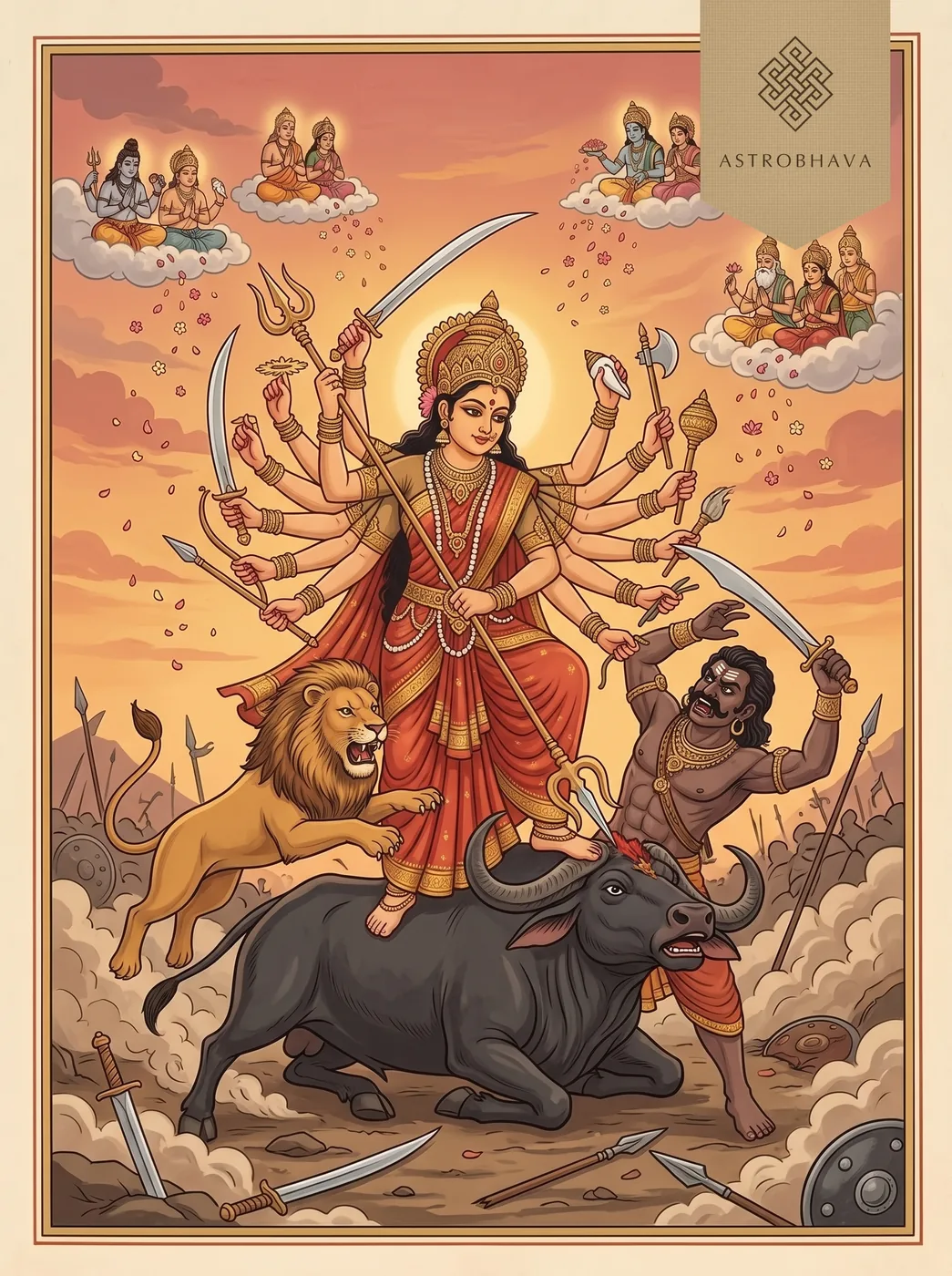
Durga Saptashati Chapter 3 takes its title, Mahishasura Vadha or the slaying of Mahishasura, from its final colophon line, and it sits second among the three Mahalakshmi chapters that form the Devi Mahatmya's central part. It takes up the battle where chapter 2 leaves it, with the demon army being cut down, and ends with the demon king dead. The standard printed edition sets a dhyana, a verse for meditation, at the head of this chapter: the Goddess seated on a lotus, glowing like a thousand rising suns. The sage Medhas tells the whole chapter, quoting the Goddess once. Verses 2 to 10 are the duel with Chikshura, Mahishasura's commander; verses 11 to 16 the fight with Chamara, whom her lion kills; verses 17 to 20 dispose of twelve more generals by name. In verses 21 to 27 Mahishasura himself, as a buffalo, scatters her attendants and tears at earth, ocean and sky. Verses 28 to 42 are their duel, and verses 43 and 44 bring the gods' joy and the praise that chapter 4 gives in full. There are no half-verses here: the 44 numbered lines are 41 full verses and three lines naming the speaker (1, 37 and 39), which is why the numbers skip at 37 and 39.
The generals fall, then a buffalo that keeps changing shape
The chapter opens on a field where the demon army is already being cut down. Chikshura, the commander, rains arrows on Ambika as a cloud pours rain on the peak of Meru. She cuts his volleys down as if at play (verse 4), kills his horses and driver, and splits his bow and his tall banner. On foot with sword and shield, he strikes the lion on the head and the Goddess on her left arm, and the sword shatters against her. The spear he hurls next, blazing like the sun's disc, meets her own spear and breaks into a hundred pieces, and he breaks with it. Chamara comes on an elephant; his javelin drops lifeless at her cry of 'hum', and the lion leaps onto the elephant's head, wrestles him to the ground and takes off his head with a paw. Then Mahishasura comes himself as a buffalo, felling her attendants with muzzle, hooves, tail, horns and the gust of his breath. When he charges her lion, she is roused to anger. His hooves split the earth, his tail sends the ocean over the land, his horns shred the clouds, and mountains fall from the sky on his breath. She throws a noose and binds him. He leaves the buffalo and becomes a lion, then, as she beheads the lion, a man with a sword, then an elephant that drags at her lion with its trunk until she cuts the trunk away. A buffalo once more, he shakes the three worlds. She drinks, laughs, speaks once, leaps onto him and pins his neck under her foot. Half out of his own mouth in another form, still fighting, he loses his head to her sword.
The mantra, in six scripts
- निहन्यमानं
- nihanyamānaṃ — being slaughtered
- तत्सैन्यमवलोक्य
- tatsainyamavalokya — seeing that army
- महासुरः
- mahāsuraḥ — the great demon
- सेनानीश्चिक्षुरः
- senānīścikṣuraḥ — the commander Chikshura
- कोपाद्ययौ
- kopādyayau — went in anger
- योद्धुमथाम्बिकाम्
- yoddhumathāmbikām — then, to fight Ambika
Durga Saptashati Chapter 3 lyrics in full
The meditation verse on the lotus-seated Goddess and all 44 numbered lines of the chapter in the standard numbering; the speaker of each passage is named above it.
All 44 numbered lines, in Sanskrit, Tamil, Telugu, Kannada, Malayalam and English, each with its meaning. Choose a script:
Download the Durga Saptashati Chapter 3 PDFAll 44 numbered lines with their meanings, in Sanskrit. Free to print and keep.
ॐ उद्यद्भानुसहस्रकान्तिमरुणक्षौमां शिरोमालिकां रक्तालिप्तपयोधरां जपवटीं विद्यामभीतिं वरम् ।
हस्ताब्जैर्दधतीं त्रिनेत्रविलसद्वक्त्रारविन्दश्रियं देवीं बद्धहिमांशुरत्नमुकुटां वन्देऽरविन्दस्थिताम् ॥
ௐ உத்யத்பாநுஸஹஸ்ரகாந்திமருணக்ஷௌமாம் ஶிரோமாலிகாம் ரக்தாலிப்தபயோதராம் ஜபவடீம் வித்யாமபீதிம் வரம் ।
ஹஸ்தாப்ஜைர்தததீம் த்ரிநேத்ரவிலஸத்வக்த்ராரவிந்தஶ்ரியம் தேவீம் பத்தஹிமாம்ஶுரத்நமுகுடாம் வந்தேரவிந்தஸ்திதாம் ॥
ఓం ఉద్యద్భానుసహస్రకాన్తిమరుణక్షౌమాం శిరోమాలికాం రక్తాలిప్తపయోధరాం జపవటీం విద్యామభీతిం వరమ్ ।
హస్తాబ్జైర్దధతీం త్రినేత్రవిలసద్వక్త్రారవిన్దశ్రియం దేవీం బద్ధహిమాంశురత్నముకుటాం వన్దేఽరవిన్దస్థితామ్ ॥
ಓಂ ಉದ್ಯದ್ಭಾನುಸಹಸ್ರಕಾನ್ತಿಮರುಣಕ್ಷೌಮಾಂ ಶಿರೋಮಾಲಿಕಾಂ ರಕ್ತಾಲಿಪ್ತಪಯೋಧರಾಂ ಜಪವಟೀಂ ವಿದ್ಯಾಮಭೀತಿಂ ವರಮ್ ।
ಹಸ್ತಾಬ್ಜೈರ್ದಧತೀಂ ತ್ರಿನೇತ್ರವಿಲಸದ್ವಕ್ತ್ರಾರವಿನ್ದಶ್ರಿಯಂ ದೇವೀಂ ಬದ್ಧಹಿಮಾಂಶುರತ್ನಮುಕುಟಾಂ ವನ್ದೇಽರವಿನ್ದಸ್ಥಿತಾಮ್ ॥
ഓം ഉദ്യദ്ഭാനുസഹസ്രകാന്തിമരുണക്ഷൌമാം ശിരോമാലികാം രക്താലിപ്തപയോധരാം ജപവടീം വിദ്യാമഭീതിം വരമ് ।
ഹസ്താബ്ജൈര്ദധതീം ത്രിനേത്രവിലസദ്വക്ത്രാരവിന്ദശ്രിയം ദേവീം ബദ്ധഹിമാംശുരത്നമുകുടാം വന്ദേഽരവിന്ദസ്ഥിതാമ് ॥
oṃ udyadbhānusahasrakāntimaruṇakṣaumāṃ śiromālikāṃ raktāliptapayodharāṃ japavaṭīṃ vidyāmabhītiṃ varam |
hastābjairdadhatīṃ trinetravilasadvaktrāravindaśriyaṃ devīṃ baddhahimāṃśuratnamukuṭāṃ vande'ravindasthitām ||
Om. I bow to the Goddess seated on a lotus, radiant as a thousand rising suns, clad in red silk, wearing a garland of heads, her breasts smeared with red sandal paste. In her lotus hands she holds a rosary, learning (the book), and shows the gestures of fearlessness and boon-giving; her lotus face shines with three eyes, and she wears a jewelled crown bound with the crescent moon.
ऋषिरुवाच
निहन्यमानं तत्सैन्यमवलोक्य महासुरः । सेनानीश्चिक्षुरः कोपाद्ययौ योद्धुमथाम्बिकाम् ॥
ருஷிருவாச
நிஹந்யமாநம் தத்ஸைந்யமவலோக்ய மஹாஸுரஃ । ஸேநாநீஶ்சிக்ஷுரஃ கோபாத்யயௌ யோத்துமதாம்பிகாம் ॥
ఋషిరువాచ
నిహన్యమానం తత్సైన్యమవలోక్య మహాసురః । సేనానీశ్చిక్షురః కోపాద్యయౌ యోద్ధుమథామ్బికామ్ ॥
ಋಷಿರುವಾಚ
ನಿಹನ್ಯಮಾನಂ ತತ್ಸೈನ್ಯಮವಲೋಕ್ಯ ಮಹಾಸುರಃ । ಸೇನಾನೀಶ್ಚಿಕ್ಷುರಃ ಕೋಪಾದ್ಯಯೌ ಯೋದ್ಧುಮಥಾಮ್ಬಿಕಾಮ್ ॥
ഋഷിരുവാച
നിഹന്യമാനം തത്സൈന്യമവലോക്യ മഹാസുരഃ । സേനാനീശ്ചിക്ഷുരഃ കോപാദ്യയൌ യോദ്ധുമഥാമ്ബികാമ് ॥
ṛṣiruvāca
nihanyamānaṃ tatsainyamavalokya mahāsuraḥ | senānīścikṣuraḥ kopādyayau yoddhumathāmbikām ||
The sage said: Seeing that army being slaughtered, the great demon Chikshura, the commander, went in anger to fight Ambika.
स देवीं शरवर्षेण ववर्ष समरेऽसुरः ।
यथा मेरुगिरेः शृङ्गं तोयवर्षेण तोयदः ॥
ஸ தேவீம் ஶரவர்ஷேண வவர்ஷ ஸமரேஸுரஃ ।
யதா மேருகிரேஃ ஶ்ருங்கம் தோயவர்ஷேண தோயதஃ ॥
స దేవీం శరవర్షేణ వవర్ష సమరేఽసురః ।
యథా మేరుగిరేః శృఙ్గం తోయవర్షేణ తోయదః ॥
ಸ ದೇವೀಂ ಶರವರ್ಷೇಣ ವವರ್ಷ ಸಮರೇಽಸುರಃ ।
ಯಥಾ ಮೇರುಗಿರೇಃ ಶೃಙ್ಗಂ ತೋಯವರ್ಷೇಣ ತೋಯದಃ ॥
സ ദേവീം ശരവര്ഷേണ വവര്ഷ സമരേഽസുരഃ ।
യഥാ മേരുഗിരേഃ ശൃങ്ഗം തോയവര്ഷേണ തോയദഃ ॥
sa devīṃ śaravarṣeṇa vavarṣa samare'suraḥ |
yathā merugireḥ śṛṅgaṃ toyavarṣeṇa toyadaḥ ||
In the battle the demon rained arrows on the Goddess, as a cloud pours rain on the peak of Mount Meru.
तस्यच्छित्त्वा ततो देवी लीलयैव शरोत्करान् ।
जघान तुरगान् बाणैर्यन्तारं चैव वाजिनाम् ॥
தஸ்யச்சித்த்வா ததோ தேவீ லீலயைவ ஶரோத்கராந் ।
ஜகாந துரகாந் பாணைர்யந்தாரம் சைவ வாஜிநாம் ॥
తస్యచ్ఛిత్త్వా తతో దేవీ లీలయైవ శరోత్కరాన్ ।
జఘాన తురగాన్ బాణైర్యన్తారం చైవ వాజినామ్ ॥
ತಸ್ಯಚ್ಛಿತ್ತ್ವಾ ತತೋ ದೇವೀ ಲೀಲಯೈವ ಶರೋತ್ಕರಾನ್ ।
ಜಘಾನ ತುರಗಾನ್ ಬಾಣೈರ್ಯನ್ತಾರಂ ಚೈವ ವಾಜಿನಾಮ್ ॥
തസ്യച്ഛിത്ത്വാ തതോ ദേവീ ലീലയൈവ ശരോത്കരാന് ।
ജഘാന തുരഗാന് ബാണൈര്യന്താരം ചൈവ വാജിനാമ് ॥
tasyacchittvā tato devī līlayaiva śarotkarān |
jaghāna turagān bāṇairyantāraṃ caiva vājinām ||
Then the Goddess, as if at play, cut down his volleys of arrows, and with her arrows killed his horses and their driver.
चिच्छेद च धनुः सद्यो ध्वजं चातिसमुच्छ्रितम् ।
विव्याध चैव गात्रेषु छिन्नधन्वानमाशुगैः ॥
சிச்சேத ச தநுஃ ஸத்யோ த்வஜம் சாதிஸமுச்ச்ரிதம் ।
விவ்யாத சைவ காத்ரேஷு சிந்நதந்வாநமாஶுகைஃ ॥
చిచ్ఛేద చ ధనుః సద్యో ధ్వజం చాతిసముచ్ఛ్రితమ్ ।
వివ్యాధ చైవ గాత్రేషు ఛిన్నధన్వానమాశుగైః ॥
ಚಿಚ್ಛೇದ ಚ ಧನುಃ ಸದ್ಯೋ ಧ್ವಜಂ ಚಾತಿಸಮುಚ್ಛ್ರಿತಮ್ ।
ವಿವ್ಯಾಧ ಚೈವ ಗಾತ್ರೇಷು ಛಿನ್ನಧನ್ವಾನಮಾಶುಗೈಃ ॥
ചിച്ഛേദ ച ധനുഃ സദ്യോ ധ്വജം ചാതിസമുച്ഛ്രിതമ് ।
വിവ്യാധ ചൈവ ഗാത്രേഷു ഛിന്നധന്വാനമാശുഗൈഃ ॥
ciccheda ca dhanuḥ sadyo dhvajaṃ cātisamucchritam |
vivyādha caiva gātreṣu chinnadhanvānamāśugaiḥ ||
At once she split his bow and his very tall banner, and with swift arrows pierced the limbs of the demon whose bow was broken.
सच्छिन्नधन्वा विरथो हताश्वो हतसारथिः ।
अभ्यधावत तां देवीं खड्गचर्मधरोऽसुरः ॥
ஸச்சிந்நதந்வா விரதோ ஹதாஶ்வோ ஹதஸாரதிஃ ।
அப்யதாவத தாம் தேவீம் கட்கசர்மதரோஸுரஃ ॥
సచ్ఛిన్నధన్వా విరథో హతాశ్వో హతసారథిః ।
అభ్యధావత తాం దేవీం ఖడ్గచర్మధరోఽసురః ॥
ಸಚ್ಛಿನ್ನಧನ್ವಾ ವಿರಥೋ ಹತಾಶ್ವೋ ಹತಸಾರಥಿಃ ।
ಅಭ್ಯಧಾವತ ತಾಂ ದೇವೀಂ ಖಡ್ಗಚರ್ಮಧರೋಽಸುರಃ ॥
സച്ഛിന്നധന്വാ വിരഥോ ഹതാശ്വോ ഹതസാരഥിഃ ।
അഭ്യധാവത താം ദേവീം ഖഡ്ഗചര്മധരോഽസുരഃ ॥
sacchinnadhanvā viratho hatāśvo hatasārathiḥ |
abhyadhāvata tāṃ devīṃ khaḍgacarmadharo'suraḥ ||
His bow broken, his chariot gone, his horses and charioteer killed, the demon rushed at the Goddess holding sword and shield.
सिंहमाहत्य खड्गेन तीक्ष्णधारेण मूर्धनि ।
आजघान भुजे सव्ये देवीमप्यतिवेगवान् ॥
ஸிம்ஹமாஹத்ய கட்கேந தீக்ஷ்ணதாரேண மூர்தநி ।
ஆஜகாந புஜே ஸவ்யே தேவீமப்யதிவேகவாந் ॥
సింహమాహత్య ఖడ్గేన తీక్ష్ణధారేణ మూర్ధని ।
ఆజఘాన భుజే సవ్యే దేవీమప్యతివేగవాన్ ॥
ಸಿಂಹಮಾಹತ್ಯ ಖಡ್ಗೇನ ತೀಕ್ಷ್ಣಧಾರೇಣ ಮೂರ್ಧನಿ ।
ಆಜಘಾನ ಭುಜೇ ಸವ್ಯೇ ದೇವೀಮಪ್ಯತಿವೇಗವಾನ್ ॥
സിംഹമാഹത്യ ഖഡ്ഗേന തീക്ഷ്ണധാരേണ മൂര്ധനി ।
ആജഘാന ഭുജേ സവ്യേ ദേവീമപ്യതിവേഗവാന് ॥
siṃhamāhatya khaḍgena tīkṣṇadhāreṇa mūrdhani |
ājaghāna bhuje savye devīmapyativegavān ||
With great speed he struck the lion on the head with his sharp-edged sword, and struck the Goddess too on her left arm.
तस्याः खड्गो भुजं प्राप्य पफाल नृपनन्दन ।
ततो जग्राह शूलं स कोपादरुणलोचनः ॥
தஸ்யாஃ கட்கோ புஜம் ப்ராப்ய பபால ந்ருபநந்தந ।
ததோ ஜக்ராஹ ஶூலம் ஸ கோபாதருணலோசநஃ ॥
తస్యాః ఖడ్గో భుజం ప్రాప్య పఫాల నృపనన్దన ।
తతో జగ్రాహ శూలం స కోపాదరుణలోచనః ॥
ತಸ್ಯಾಃ ಖಡ್ಗೋ ಭುಜಂ ಪ್ರಾಪ್ಯ ಪಫಾಲ ನೃಪನನ್ದನ ।
ತತೋ ಜಗ್ರಾಹ ಶೂಲಂ ಸ ಕೋಪಾದರುಣಲೋಚನಃ ॥
തസ്യാഃ ഖഡ്ഗോ ഭുജം പ്രാപ്യ പഫാല നൃപനന്ദന ।
തതോ ജഗ്രാഹ ശൂലം സ കോപാദരുണലോചനഃ ॥
tasyāḥ khaḍgo bhujaṃ prāpya paphāla nṛpanandana |
tato jagrāha śūlaṃ sa kopādaruṇalocanaḥ ||
O prince, the sword shattered on touching her arm. Then, his eyes red with anger, he seized a spear.
चिक्षेप च ततस्तत्तु भद्रकाल्यां महासुरः ।
जाज्वल्यमानं तेजोभी रविबिम्बमिवाम्बरात् ॥
சிக்ஷேப ச ததஸ்தத்து பத்ரகால்யாம் மஹாஸுரஃ ।
ஜாஜ்வல்யமாநம் தேஜோபீ ரவிபிம்பமிவாம்பராத் ॥
చిక్షేప చ తతస్తత్తు భద్రకాల్యాం మహాసురః ।
జాజ్వల్యమానం తేజోభీ రవిబిమ్బమివామ్బరాత్ ॥
ಚಿಕ್ಷೇಪ ಚ ತತಸ್ತತ್ತು ಭದ್ರಕಾಲ್ಯಾಂ ಮಹಾಸುರಃ ।
ಜಾಜ್ವಲ್ಯಮಾನಂ ತೇಜೋಭೀ ರವಿಬಿಮ್ಬಮಿವಾಮ್ಬರಾತ್ ॥
ചിക്ഷേപ ച തതസ്തത്തു ഭദ്രകാല്യാം മഹാസുരഃ ।
ജാജ്വല്യമാനം തേജോഭീ രവിബിമ്ബമിവാമ്ബരാത് ॥
cikṣepa ca tatastattu bhadrakālyāṃ mahāsuraḥ |
jājvalyamānaṃ tejobhī ravibimbamivāmbarāt ||
The great demon hurled it at Bhadrakali, blazing with light like the disc of the sun falling from the sky.
दृष्ट्वा तदापतच्छूलं देवी शूलममुञ्चत ।
तच्छूलं शतधा तेन नीतं स च महासुरः ॥
த்ருஷ்ட்வா ததாபதச்சூலம் தேவீ ஶூலமமுஞ்சத ।
தச்சூலம் ஶததா தேந நீதம் ஸ ச மஹாஸுரஃ ॥
దృష్ట్వా తదాపతచ్ఛూలం దేవీ శూలమముఞ్చత ।
తచ్ఛూలం శతధా తేన నీతం స చ మహాసురః ॥
ದೃಷ್ಟ್ವಾ ತದಾಪತಚ್ಛೂಲಂ ದೇವೀ ಶೂಲಮಮುಞ್ಚತ ।
ತಚ್ಛೂಲಂ ಶತಧಾ ತೇನ ನೀತಂ ಸ ಚ ಮಹಾಸುರಃ ॥
ദൃഷ്ട്വാ തദാപതച്ഛൂലം ദേവീ ശൂലമമുഞ്ചത ।
തച്ഛൂലം ശതധാ തേന നീതം സ ച മഹാസുരഃ ॥
dṛṣṭvā tadāpatacchūlaṃ devī śūlamamuñcata |
tacchūlaṃ śatadhā tena nītaṃ sa ca mahāsuraḥ ||
Seeing the spear coming, the Goddess loosed her own spear. By it that spear was broken into a hundred pieces, and so was the great demon.
हते तस्मिन्महावीर्ये महिषस्य चमूपतौ ।
आजगाम गजारूढश्चामरस्त्रिदशार्दनः ॥
ஹதே தஸ்மிந்மஹாவீர்யே மஹிஷஸ்ய சமூபதௌ ।
ஆஜகாம கஜாரூடஶ்சாமரஸ்த்ரிதஶார்தநஃ ॥
హతే తస్మిన్మహావీర్యే మహిషస్య చమూపతౌ ।
ఆజగామ గజారూఢశ్చామరస్త్రిదశార్దనః ॥
ಹತೇ ತಸ್ಮಿನ್ಮಹಾವೀರ್ಯೇ ಮಹಿಷಸ್ಯ ಚಮೂಪತೌ ।
ಆಜಗಾಮ ಗಜಾರೂಢಶ್ಚಾಮರಸ್ತ್ರಿದಶಾರ್ದನಃ ॥
ഹതേ തസ്മിന്മഹാവീര്യേ മഹിഷസ്യ ചമൂപതൌ ।
ആജഗാമ ഗജാരൂഢശ്ചാമരസ്ത്രിദശാര്ദനഃ ॥
hate tasminmahāvīrye mahiṣasya camūpatau |
ājagāma gajārūḍhaścāmarastridaśārdanaḥ ||
When that mighty general of Mahisha was slain, Chamara, tormentor of the gods, came riding on an elephant.
सोऽपि शक्तिं मुमोचाथ देव्यास्तामम्बिका द्रुतम् ।
हुंकाराभिहतां भूमौ पातयामास निष्प्रभाम् ॥
ஸோபி ஶக்திம் முமோசாத தேவ்யாஸ்தாமம்பிகா த்ருதம் ।
ஹும்காராபிஹதாம் பூமௌ பாதயாமாஸ நிஷ்ப்ரபாம் ॥
సోఽపి శక్తిం ముమోచాథ దేవ్యాస్తామమ్బికా ద్రుతమ్ ।
హుంకారాభిహతాం భూమౌ పాతయామాస నిష్ప్రభామ్ ॥
ಸೋಽಪಿ ಶಕ್ತಿಂ ಮುಮೋಚಾಥ ದೇವ್ಯಾಸ್ತಾಮಮ್ಬಿಕಾ ದ್ರುತಮ್ ।
ಹುಂಕಾರಾಭಿಹತಾಂ ಭೂಮೌ ಪಾತಯಾಮಾಸ ನಿಷ್ಪ್ರಭಾಮ್ ॥
സോഽപി ശക്തിം മുമോചാഥ ദേവ്യാസ്താമമ്ബികാ ദ്രുതമ് ।
ഹുംകാരാഭിഹതാം ഭൂമൌ പാതയാമാസ നിഷ്പ്രഭാമ് ॥
so'pi śaktiṃ mumocātha devyāstāmambikā drutam |
huṃkārābhihatāṃ bhūmau pātayāmāsa niṣprabhām ||
He too hurled a javelin at the Goddess. Ambika quickly struck it down with the sound 'hum', and it fell to the ground, its lustre gone.
भग्नां शक्तिं निपतितां दृष्ट्वा क्रोधसमन्वितः ।
चिक्षेप चामरः शूलं बाणैस्तदपि साच्छिनत् ॥
பக்நாம் ஶக்திம் நிபதிதாம் த்ருஷ்ட்வா க்ரோதஸமந்விதஃ ।
சிக்ஷேப சாமரஃ ஶூலம் பாணைஸ்ததபி ஸாச்சிநத் ॥
భగ్నాం శక్తిం నిపతితాం దృష్ట్వా క్రోధసమన్వితః ।
చిక్షేప చామరః శూలం బాణైస్తదపి సాచ్ఛినత్ ॥
ಭಗ್ನಾಂ ಶಕ್ತಿಂ ನಿಪತಿತಾಂ ದೃಷ್ಟ್ವಾ ಕ್ರೋಧಸಮನ್ವಿತಃ ।
ಚಿಕ್ಷೇಪ ಚಾಮರಃ ಶೂಲಂ ಬಾಣೈಸ್ತದಪಿ ಸಾಚ್ಛಿನತ್ ॥
ഭഗ്നാം ശക്തിം നിപതിതാം ദൃഷ്ട്വാ ക്രോധസമന്വിതഃ ।
ചിക്ഷേപ ചാമരഃ ശൂലം ബാണൈസ്തദപി സാച്ഛിനത് ॥
bhagnāṃ śaktiṃ nipatitāṃ dṛṣṭvā krodhasamanvitaḥ |
cikṣepa cāmaraḥ śūlaṃ bāṇaistadapi sācchinat ||
Seeing his javelin broken and fallen, Chamara, full of rage, hurled a spear; that too she cut down with her arrows.
ततः सिंहः समुत्पत्य गजकुम्भान्तरे स्थितः ।
बाहुयुद्धेन युयुधे तेनोच्चैस्त्रिदशारिणा ॥
ததஃ ஸிம்ஹஃ ஸமுத்பத்ய கஜகும்பாந்தரே ஸ்திதஃ ।
பாஹுயுத்தேந யுயுதே தேநோச்சைஸ்த்ரிதஶாரிணா ॥
తతః సింహః సముత్పత్య గజకుమ్భాన్తరే స్థితః ।
బాహుయుద్ధేన యుయుధే తేనోచ్చైస్త్రిదశారిణా ॥
ತತಃ ಸಿಂಹಃ ಸಮುತ್ಪತ್ಯ ಗಜಕುಮ್ಭಾನ್ತರೇ ಸ್ಥಿತಃ ।
ಬಾಹುಯುದ್ಧೇನ ಯುಯುಧೇ ತೇನೋಚ್ಚೈಸ್ತ್ರಿದಶಾರಿಣಾ ॥
തതഃ സിംഹഃ സമുത്പത്യ ഗജകുമ്ഭാന്തരേ സ്ഥിതഃ ।
ബാഹുയുദ്ധേന യുയുധേ തേനോച്ചൈസ്ത്രിദശാരിണാ ॥
tataḥ siṃhaḥ samutpatya gajakumbhāntare sthitaḥ |
bāhuyuddhena yuyudhe tenoccaistridaśāriṇā ||
Then the lion leapt up, landed between the elephant's temples, and fought hand to hand, fiercely, with that enemy of the gods.
युद्ध्यमानौ ततस्तौ तु तस्मान्नागान्महीं गतौ ।
युयुधातेऽतिसंरब्धौ प्रहारैरतिदारुणैः ॥
யுத்த்யமாநௌ ததஸ்தௌ து தஸ்மாந்நாகாந்மஹீம் கதௌ ।
யுயுதாதேதிஸம்ரப்தௌ ப்ரஹாரைரதிதாருணைஃ ॥
యుద్ధ్యమానౌ తతస్తౌ తు తస్మాన్నాగాన్మహీం గతౌ ।
యుయుధాతేఽతిసంరబ్ధౌ ప్రహారైరతిదారుణైః ॥
ಯುದ್ಧ್ಯಮಾನೌ ತತಸ್ತೌ ತು ತಸ್ಮಾನ್ನಾಗಾನ್ಮಹೀಂ ಗತೌ ।
ಯುಯುಧಾತೇಽತಿಸಂರಬ್ಧೌ ಪ್ರಹಾರೈರತಿದಾರುಣೈಃ ॥
യുദ്ധ്യമാനൌ തതസ്തൌ തു തസ്മാന്നാഗാന്മഹീം ഗതൌ ।
യുയുധാതേഽതിസംരബ്ധൌ പ്രഹാരൈരതിദാരുണൈഃ ॥
yuddhyamānau tatastau tu tasmānnāgānmahīṃ gatau |
yuyudhāte'tisaṃrabdhau prahārairatidāruṇaiḥ ||
Still fighting, the two came down from the elephant to the ground and fought on in great fury, with terrible blows.
ततो वेगात् खमुत्पत्य निपत्य च मृगारिणा ।
करप्रहारेण शिरश्चामरस्य पृथक्कृतम् ॥
ததோ வேகாத் கமுத்பத்ய நிபத்ய ச ம்ருகாரிணா ।
கரப்ரஹாரேண ஶிரஶ்சாமரஸ்ய ப்ருதக்க்ருதம் ॥
తతో వేగాత్ ఖముత్పత్య నిపత్య చ మృగారిణా ।
కరప్రహారేణ శిరశ్చామరస్య పృథక్కృతమ్ ॥
ತತೋ ವೇಗಾತ್ ಖಮುತ್ಪತ್ಯ ನಿಪತ್ಯ ಚ ಮೃಗಾರಿಣಾ ।
ಕರಪ್ರಹಾರೇಣ ಶಿರಶ್ಚಾಮರಸ್ಯ ಪೃಥಕ್ಕೃತಮ್ ॥
തതോ വേഗാത് ഖമുത്പത്യ നിപത്യ ച മൃഗാരിണാ ।
കരപ്രഹാരേണ ശിരശ്ചാമരസ്യ പൃഥക്കൃതമ് ॥
tato vegāt khamutpatya nipatya ca mṛgāriṇā |
karaprahāreṇa śiraścāmarasya pṛthakkṛtam ||
Then the lion sprang swiftly into the sky and, coming down, struck off Chamara's head with a blow of its paw.
उदग्रश्च रणे देव्या शिलावृक्षादिभिर्हतः ।
दन्तमुष्टितलैश्चैव करालश्च निपातितः ॥
உதக்ரஶ்ச ரணே தேவ்யா ஶிலாவ்ருக்ஷாதிபிர்ஹதஃ ।
தந்தமுஷ்டிதலைஶ்சைவ கராலஶ்ச நிபாதிதஃ ॥
ఉదగ్రశ్చ రణే దేవ్యా శిలావృక్షాదిభిర్హతః ।
దన్తముష్టితలైశ్చైవ కరాలశ్చ నిపాతితః ॥
ಉದಗ್ರಶ್ಚ ರಣೇ ದೇವ್ಯಾ ಶಿಲಾವೃಕ್ಷಾದಿಭಿರ್ಹತಃ ।
ದನ್ತಮುಷ್ಟಿತಲೈಶ್ಚೈವ ಕರಾಲಶ್ಚ ನಿಪಾತಿತಃ ॥
ഉദഗ്രശ്ച രണേ ദേവ്യാ ശിലാവൃക്ഷാദിഭിര്ഹതഃ ।
ദന്തമുഷ്ടിതലൈശ്ചൈവ കരാലശ്ച നിപാതിതഃ ॥
udagraśca raṇe devyā śilāvṛkṣādibhirhataḥ |
dantamuṣṭitalaiścaiva karālaśca nipātitaḥ ||
Udagra was killed in battle by the Goddess with stones, trees and the like, and Karala was felled with teeth, fists and slaps.
देवी क्रुद्धा गदापातैश्चूर्णयामास चोद्धतम् ।
वाष्कलं भिन्दिपालेन बाणैस्ताम्रं तथान्धकम् ॥
தேவீ க்ருத்தா கதாபாதைஶ்சூர்ணயாமாஸ சோத்ததம் ।
வாஷ்கலம் பிந்திபாலேந பாணைஸ்தாம்ரம் ததாந்தகம் ॥
దేవీ క్రుద్ధా గదాపాతైశ్చూర్ణయామాస చోద్ధతమ్ ।
వాష్కలం భిన్దిపాలేన బాణైస్తామ్రం తథాన్ధకమ్ ॥
ದೇವೀ ಕ್ರುದ್ಧಾ ಗದಾಪಾತೈಶ್ಚೂರ್ಣಯಾಮಾಸ ಚೋದ್ಧತಮ್ ।
ವಾಷ್ಕಲಂ ಭಿನ್ದಿಪಾಲೇನ ಬಾಣೈಸ್ತಾಮ್ರಂ ತಥಾನ್ಧಕಮ್ ॥
ദേവീ ക്രുദ്ധാ ഗദാപാതൈശ്ചൂര്ണയാമാസ ചോദ്ധതമ് ।
വാഷ്കലം ഭിന്ദിപാലേന ബാണൈസ്താമ്രം തഥാന്ധകമ് ॥
devī kruddhā gadāpātaiścūrṇayāmāsa coddhatam |
vāṣkalaṃ bhindipālena bāṇaistāmraṃ tathāndhakam ||
The angry Goddess crushed Uddhata with blows of her mace, Vashkala with a javelin, and Tamra and Andhaka with arrows.
उग्रास्यमुग्रवीर्यं च तथैव च महाहनुम् ।
त्रिनेत्रा च त्रिशूलेन जघान परमेश्वरी ॥
உக்ராஸ்யமுக்ரவீர்யம் ச ததைவ ச மஹாஹநும் ।
த்ரிநேத்ரா ச த்ரிஶூலேந ஜகாந பரமேஶ்வரீ ॥
ఉగ్రాస్యముగ్రవీర్యం చ తథైవ చ మహాహనుమ్ ।
త్రినేత్రా చ త్రిశూలేన జఘాన పరమేశ్వరీ ॥
ಉಗ್ರಾಸ್ಯಮುಗ್ರವೀರ್ಯಂ ಚ ತಥೈವ ಚ ಮಹಾಹನುಮ್ ।
ತ್ರಿನೇತ್ರಾ ಚ ತ್ರಿಶೂಲೇನ ಜಘಾನ ಪರಮೇಶ್ವರೀ ॥
ഉഗ്രാസ്യമുഗ്രവീര്യം ച തഥൈവ ച മഹാഹനുമ് ।
ത്രിനേത്രാ ച ത്രിശൂലേന ജഘാന പരമേശ്വരീ ॥
ugrāsyamugravīryaṃ ca tathaiva ca mahāhanum |
trinetrā ca triśūlena jaghāna parameśvarī ||
The three-eyed supreme Goddess slew Ugrasya, Ugravirya and Mahahanu with her trident.
विडालस्यासिना कायात्पातयामास वै शिरः ।
दुर्धरं दुर्मुखं चोभौ शरैर्निन्ये यमक्षयम् ॥
விடாலஸ்யாஸிநா காயாத்பாதயாமாஸ வை ஶிரஃ ।
துர்தரம் துர்முகம் சோபௌ ஶரைர்நிந்யே யமக்ஷயம் ॥
విడాలస్యాసినా కాయాత్పాతయామాస వై శిరః ।
దుర్ధరం దుర్ముఖం చోభౌ శరైర్నిన్యే యమక్షయమ్ ॥
ವಿಡಾಲಸ್ಯಾಸಿನಾ ಕಾಯಾತ್ಪಾತಯಾಮಾಸ ವೈ ಶಿರಃ ।
ದುರ್ಧರಂ ದುರ್ಮುಖಂ ಚೋಭೌ ಶರೈರ್ನಿನ್ಯೇ ಯಮಕ್ಷಯಮ್ ॥
വിഡാലസ്യാസിനാ കായാത്പാതയാമാസ വൈ ശിരഃ ।
ദുര്ധരം ദുര്മുഖം ചോഭൌ ശരൈര്നിന്യേ യമക്ഷയമ് ॥
viḍālasyāsinā kāyātpātayāmāsa vai śiraḥ |
durdharaṃ durmukhaṃ cobhau śarairninye yamakṣayam ||
With her sword she struck Vidala's head from his body, and with arrows she sent both Durdhara and Durmukha to the abode of Yama, god of death.
एवं संक्षीयमाणे तु स्वसैन्ये महिषासुरः ।
माहिषेण स्वरूपेण त्रासयामास तान् गणान् ॥
ஏவம் ஸம்க்ஷீயமாணே து ஸ்வஸைந்யே மஹிஷாஸுரஃ ।
மாஹிஷேண ஸ்வரூபேண த்ராஸயாமாஸ தாந் கணாந் ॥
ఏవం సంక్షీయమాణే తు స్వసైన్యే మహిషాసురః ।
మాహిషేణ స్వరూపేణ త్రాసయామాస తాన్ గణాన్ ॥
ಏವಂ ಸಂಕ್ಷೀಯಮಾಣೇ ತು ಸ್ವಸೈನ್ಯೇ ಮಹಿಷಾಸುರಃ ।
ಮಾಹಿಷೇಣ ಸ್ವರೂಪೇಣ ತ್ರಾಸಯಾಮಾಸ ತಾನ್ ಗಣಾನ್ ॥
ഏവം സംക്ഷീയമാണേ തു സ്വസൈന്യേ മഹിഷാസുരഃ ।
മാഹിഷേണ സ്വരൂപേണ ത്രാസയാമാസ താന് ഗണാന് ॥
evaṃ saṃkṣīyamāṇe tu svasainye mahiṣāsuraḥ |
māhiṣeṇa svarūpeṇa trāsayāmāsa tān gaṇān ||
As his army was being destroyed in this way, Mahishasura, in his own buffalo form, began to terrify the Goddess's attendants.
कांश्चित्तुण्डप्रहारेण खुरक्षेपैस्तथापरान् ।
लाङ्गूलताडितांश्चान्याञ्छृङ्गाभ्यां च विदारितान् ॥
காம்ஶ்சித்துண்டப்ரஹாரேண குரக்ஷேபைஸ்ததாபராந் ।
லாங்கூலதாடிதாம்ஶ்சாந்யாஞ்ச்ருங்காப்யாம் ச விதாரிதாந் ॥
కాంశ్చిత్తుణ్డప్రహారేణ ఖురక్షేపైస్తథాపరాన్ ।
లాఙ్గూలతాడితాంశ్చాన్యాఞ్ఛృఙ్గాభ్యాం చ విదారితాన్ ॥
ಕಾಂಶ್ಚಿತ್ತುಣ್ಡಪ್ರಹಾರೇಣ ಖುರಕ್ಷೇಪೈಸ್ತಥಾಪರಾನ್ ।
ಲಾಙ್ಗೂಲತಾಡಿತಾಂಶ್ಚಾನ್ಯಾಞ್ಛೃಙ್ಗಾಭ್ಯಾಂ ಚ ವಿದಾರಿತಾನ್ ॥
കാംശ്ചിത്തുണ്ഡപ്രഹാരേണ ഖുരക്ഷേപൈസ്തഥാപരാന് ।
ലാങ്ഗൂലതാഡിതാംശ്ചാന്യാഞ്ഛൃങ്ഗാഭ്യാം ച വിദാരിതാന് ॥
kāṃścittuṇḍaprahāreṇa khurakṣepaistathāparān |
lāṅgūlatāḍitāṃścānyāñchṛṅgābhyāṃ ca vidāritān ||
Some he struck down with blows of his muzzle, others with kicks of his hooves, others lashed by his tail, and others torn by his two horns.
वेगेन कांश्चिदपरान्नादेन भ्रमणेन च ।
निःश्वासपवनेनान्यान् पातयामास भूतले ॥
வேகேந காம்ஶ்சிதபராந்நாதேந ப்ரமணேந ச ।
நிஃஶ்வாஸபவநேநாந்யாந் பாதயாமாஸ பூதலே ॥
వేగేన కాంశ్చిదపరాన్నాదేన భ్రమణేన చ ।
నిఃశ్వాసపవనేనాన్యాన్ పాతయామాస భూతలే ॥
ವೇಗೇನ ಕಾಂಶ್ಚಿದಪರಾನ್ನಾದೇನ ಭ್ರಮಣೇನ ಚ ।
ನಿಃಶ್ವಾಸಪವನೇನಾನ್ಯಾನ್ ಪಾತಯಾಮಾಸ ಭೂತಲೇ ॥
വേഗേന കാംശ്ചിദപരാന്നാദേന ഭ്രമണേന ച ।
നിഃശ്വാസപവനേനാന്യാന് പാതയാമാസ ഭൂതലേ ॥
vegena kāṃścidaparānnādena bhramaṇena ca |
niḥśvāsapavanenānyān pātayāmāsa bhūtale ||
Some he threw to the ground by his speed, others by his bellowing and his whirling about, and others by the blast of his breath.
निपात्य प्रमथानीकमभ्यधावत सोऽसुरः ।
सिंहं हन्तुं महादेव्याः कोपं चक्रे ततोऽम्बिका ॥
நிபாத்ய ப்ரமதாநீகமப்யதாவத ஸோஸுரஃ ।
ஸிம்ஹம் ஹந்தும் மஹாதேவ்யாஃ கோபம் சக்ரே ததோம்பிகா ॥
నిపాత్య ప్రమథానీకమభ్యధావత సోఽసురః ।
సింహం హన్తుం మహాదేవ్యాః కోపం చక్రే తతోఽమ్బికా ॥
ನಿಪಾತ್ಯ ಪ್ರಮಥಾನೀಕಮಭ್ಯಧಾವತ ಸೋಽಸುರಃ ।
ಸಿಂಹಂ ಹನ್ತುಂ ಮಹಾದೇವ್ಯಾಃ ಕೋಪಂ ಚಕ್ರೇ ತತೋಽಮ್ಬಿಕಾ ॥
നിപാത്യ പ്രമഥാനീകമഭ്യധാവത സോഽസുരഃ ।
സിംഹം ഹന്തും മഹാദേവ്യാഃ കോപം ചക്രേ തതോഽമ്ബികാ ॥
nipātya pramathānīkamabhyadhāvata so'suraḥ |
siṃhaṃ hantuṃ mahādevyāḥ kopaṃ cakre tato'mbikā ||
Having laid low the host of attendants, the demon rushed to kill the great Goddess's lion. At this Ambika grew angry.
सोऽपि कोपान्महावीर्यः खुरक्षुण्णमहीतलः ।
शृङ्गाभ्यां पर्वतानुच्चांश्चिक्षेप च ननाद च ॥
ஸோபி கோபாந்மஹாவீர்யஃ குரக்ஷுண்ணமஹீதலஃ ।
ஶ்ருங்காப்யாம் பர்வதாநுச்சாம்ஶ்சிக்ஷேப ச நநாத ச ॥
సోఽపి కోపాన్మహావీర్యః ఖురక్షుణ్ణమహీతలః ।
శృఙ్గాభ్యాం పర్వతానుచ్చాంశ్చిక్షేప చ ననాద చ ॥
ಸೋಽಪಿ ಕೋಪಾನ್ಮಹಾವೀರ್ಯಃ ಖುರಕ್ಷುಣ್ಣಮಹೀತಲಃ ।
ಶೃಙ್ಗಾಭ್ಯಾಂ ಪರ್ವತಾನುಚ್ಚಾಂಶ್ಚಿಕ್ಷೇಪ ಚ ನನಾದ ಚ ॥
സോഽപി കോപാന്മഹാവീര്യഃ ഖുരക്ഷുണ്ണമഹീതലഃ ।
ശൃങ്ഗാഭ്യാം പര്വതാനുച്ചാംശ്ചിക്ഷേപ ച നനാദ ച ॥
so'pi kopānmahāvīryaḥ khurakṣuṇṇamahītalaḥ |
śṛṅgābhyāṃ parvatānuccāṃścikṣepa ca nanāda ca ||
He too, mighty and enraged, pounding the earth with his hooves, tossed high mountains with his horns and bellowed.
वेगभ्रमणविक्षुण्णा मही तस्य व्यशीर्यत ।
लाङ्गूलेनाहतश्चाब्धिः प्लावयामास सर्वतः ॥
வேகப்ரமணவிக்ஷுண்ணா மஹீ தஸ்ய வ்யஶீர்யத ।
லாங்கூலேநாஹதஶ்சாப்திஃ ப்லாவயாமாஸ ஸர்வதஃ ॥
వేగభ్రమణవిక్షుణ్ణా మహీ తస్య వ్యశీర్యత ।
లాఙ్గూలేనాహతశ్చాబ్ధిః ప్లావయామాస సర్వతః ॥
ವೇಗಭ್ರಮಣವಿಕ್ಷುಣ್ಣಾ ಮಹೀ ತಸ್ಯ ವ್ಯಶೀರ್ಯತ ।
ಲಾಙ್ಗೂಲೇನಾಹತಶ್ಚಾಬ್ಧಿಃ ಪ್ಲಾವಯಾಮಾಸ ಸರ್ವತಃ ॥
വേഗഭ്രമണവിക്ഷുണ്ണാ മഹീ തസ്യ വ്യശീര്യത ।
ലാങ്ഗൂലേനാഹതശ്ചാബ്ധിഃ പ്ലാവയാമാസ സര്വതഃ ॥
vegabhramaṇavikṣuṇṇā mahī tasya vyaśīryata |
lāṅgūlenāhataścābdhiḥ plāvayāmāsa sarvataḥ ||
Trampled by his rushing and whirling, the earth split apart; the ocean, lashed by his tail, flooded everything on all sides.
धुतशृङ्गविभिन्नाश्च खण्डं खण्डं ययुर्घनाः ।
श्वासानिलास्ताः शतशो निपेतुर्नभसोऽचलाः ॥
துதஶ்ருங்கவிபிந்நாஶ்ச கண்டம் கண்டம் யயுர்கநாஃ ।
ஶ்வாஸாநிலாஸ்தாஃ ஶதஶோ நிபேதுர்நபஸோசலாஃ ॥
ధుతశృఙ్గవిభిన్నాశ్చ ఖణ్డం ఖణ్డం యయుర్ఘనాః ।
శ్వాసానిలాస్తాః శతశో నిపేతుర్నభసోఽచలాః ॥
ಧುತಶೃಙ್ಗವಿಭಿನ್ನಾಶ್ಚ ಖಣ್ಡಂ ಖಣ್ಡಂ ಯಯುರ್ಘನಾಃ ।
ಶ್ವಾಸಾನಿಲಾಸ್ತಾಃ ಶತಶೋ ನಿಪೇತುರ್ನಭಸೋಽಚಲಾಃ ॥
ധുതശൃങ്ഗവിഭിന്നാശ്ച ഖണ്ഡം ഖണ്ഡം യയുര്ഘനാഃ ।
ശ്വാസാനിലാസ്താഃ ശതശോ നിപേതുര്നഭസോഽചലാഃ ॥
dhutaśṛṅgavibhinnāśca khaṇḍaṃ khaṇḍaṃ yayurghanāḥ |
śvāsānilāstāḥ śataśo nipeturnabhaso'calāḥ ||
Pierced by his tossing horns, the clouds were torn to pieces; thrown by the wind of his breath, mountains fell from the sky by the hundred.
इति क्रोधसमाध्मातमापतन्तं महासुरम् ।
दृष्ट्वा सा चण्डिका कोपं तद्वधाय तदाकरोत् ॥
இதி க்ரோதஸமாத்மாதமாபதந்தம் மஹாஸுரம் ।
த்ருஷ்ட்வா ஸா சண்டிகா கோபம் தத்வதாய ததாகரோத் ॥
ఇతి క్రోధసమాధ్మాతమాపతన్తం మహాసురమ్ ।
దృష్ట్వా సా చణ్డికా కోపం తద్వధాయ తదాకరోత్ ॥
ಇತಿ ಕ್ರೋಧಸಮಾಧ್ಮಾತಮಾಪತನ್ತಂ ಮಹಾಸುರಮ್ ।
ದೃಷ್ಟ್ವಾ ಸಾ ಚಣ್ಡಿಕಾ ಕೋಪಂ ತದ್ವಧಾಯ ತದಾಕರೋತ್ ॥
ഇതി ക്രോധസമാധ്മാതമാപതന്തം മഹാസുരമ് ।
ദൃഷ്ട്വാ സാ ചണ്ഡികാ കോപം തദ്വധായ തദാകരോത് ॥
iti krodhasamādhmātamāpatantaṃ mahāsuram |
dṛṣṭvā sā caṇḍikā kopaṃ tadvadhāya tadākarot ||
Seeing the great demon rushing at her, swollen with rage, Chandika then grew angry in order to slay him.
सा क्षिप्त्वा तस्य वै पाशं तं बबन्ध महासुरम् ।
तत्याज माहिषं रूपं सोऽपि बद्धो महामृधे ॥
ஸா க்ஷிப்த்வா தஸ்ய வை பாஶம் தம் பபந்த மஹாஸுரம் ।
தத்யாஜ மாஹிஷம் ரூபம் ஸோபி பத்தோ மஹாம்ருதே ॥
సా క్షిప్త్వా తస్య వై పాశం తం బబన్ధ మహాసురమ్ ।
తత్యాజ మాహిషం రూపం సోఽపి బద్ధో మహామృధే ॥
ಸಾ ಕ್ಷಿಪ್ತ್ವಾ ತಸ್ಯ ವೈ ಪಾಶಂ ತಂ ಬಬನ್ಧ ಮಹಾಸುರಮ್ ।
ತತ್ಯಾಜ ಮಾಹಿಷಂ ರೂಪಂ ಸೋಽಪಿ ಬದ್ಧೋ ಮಹಾಮೃಧೇ ॥
സാ ക്ഷിപ്ത്വാ തസ്യ വൈ പാശം തം ബബന്ധ മഹാസുരമ് ।
തത്യാജ മാഹിഷം രൂപം സോഽപി ബദ്ധോ മഹാമൃധേ ॥
sā kṣiptvā tasya vai pāśaṃ taṃ babandha mahāsuram |
tatyāja māhiṣaṃ rūpaṃ so'pi baddho mahāmṛdhe ||
She threw her noose over him and bound the great demon. Bound in that great battle, he gave up his buffalo form.
ततः सिंहोऽभवत्सद्यो यावत्तस्याम्बिका शिरः ।
छिनत्ति तावत्पुरुषः खड्गपाणिरदृश्यत ॥
ததஃ ஸிம்ஹோபவத்ஸத்யோ யாவத்தஸ்யாம்பிகா ஶிரஃ ।
சிநத்தி தாவத்புருஷஃ கட்கபாணிரத்ருஶ்யத ॥
తతః సింహోఽభవత్సద్యో యావత్తస్యామ్బికా శిరః ।
ఛినత్తి తావత్పురుషః ఖడ్గపాణిరదృశ్యత ॥
ತತಃ ಸಿಂಹೋಽಭವತ್ಸದ್ಯೋ ಯಾವತ್ತಸ್ಯಾಮ್ಬಿಕಾ ಶಿರಃ ।
ಛಿನತ್ತಿ ತಾವತ್ಪುರುಷಃ ಖಡ್ಗಪಾಣಿರದೃಶ್ಯತ ॥
തതഃ സിംഹോഽഭവത്സദ്യോ യാവത്തസ്യാമ്ബികാ ശിരഃ ।
ഛിനത്തി താവത്പുരുഷഃ ഖഡ്ഗപാണിരദൃശ്യത ॥
tataḥ siṃho'bhavatsadyo yāvattasyāmbikā śiraḥ |
chinatti tāvatpuruṣaḥ khaḍgapāṇiradṛśyata ||
At once he became a lion. As Ambika was cutting off its head, a man with a sword in his hand appeared.
तत एवाशु पुरुषं देवी चिच्छेद सायकैः ।
तं खड्गचर्मणा सार्धं ततः सोऽभून्महागजः ॥
தத ஏவாஶு புருஷம் தேவீ சிச்சேத ஸாயகைஃ ।
தம் கட்கசர்மணா ஸார்தம் ததஃ ஸோபூந்மஹாகஜஃ ॥
తత ఏవాశు పురుషం దేవీ చిచ్ఛేద సాయకైః ।
తం ఖడ్గచర్మణా సార్ధం తతః సోఽభూన్మహాగజః ॥
ತತ ಏವಾಶು ಪುರುಷಂ ದೇವೀ ಚಿಚ್ಛೇದ ಸಾಯಕೈಃ ।
ತಂ ಖಡ್ಗಚರ್ಮಣಾ ಸಾರ್ಧಂ ತತಃ ಸೋಽಭೂನ್ಮಹಾಗಜಃ ॥
തത ഏവാശു പുരുഷം ദേവീ ചിച്ഛേദ സായകൈഃ ।
തം ഖഡ്ഗചര്മണാ സാര്ധം തതഃ സോഽഭൂന്മഹാഗജഃ ॥
tata evāśu puruṣaṃ devī ciccheda sāyakaiḥ |
taṃ khaḍgacarmaṇā sārdhaṃ tataḥ so'bhūnmahāgajaḥ ||
At once the Goddess cut down that man, together with his sword and shield, with her arrows. Then he became a huge elephant.
करेण च महासिंहं तं चकर्ष जगर्ज च ।
कर्षतस्तु करं देवी खड्गेन निरकृन्तत ॥
கரேண ச மஹாஸிம்ஹம் தம் சகர்ஷ ஜகர்ஜ ச ।
கர்ஷதஸ்து கரம் தேவீ கட்கேந நிரக்ருந்தத ॥
కరేణ చ మహాసింహం తం చకర్ష జగర్జ చ ।
కర్షతస్తు కరం దేవీ ఖడ్గేన నిరకృన్తత ॥
ಕರೇಣ ಚ ಮಹಾಸಿಂಹಂ ತಂ ಚಕರ್ಷ ಜಗರ್ಜ ಚ ।
ಕರ್ಷತಸ್ತು ಕರಂ ದೇವೀ ಖಡ್ಗೇನ ನಿರಕೃನ್ತತ ॥
കരേണ ച മഹാസിംഹം തം ചകര്ഷ ജഗര്ജ ച ।
കര്ഷതസ്തു കരം ദേവീ ഖഡ്ഗേന നിരകൃന്തത ॥
kareṇa ca mahāsiṃhaṃ taṃ cakarṣa jagarja ca |
karṣatastu karaṃ devī khaḍgena nirakṛntata ||
With his trunk he dragged at the great lion and roared. As he dragged, the Goddess cut off his trunk with her sword.
ततो महासुरो भूयो माहिषं वपुरास्थितः ।
तथैव क्षोभयामास त्रैलोक्यं सचराचरम् ॥
ததோ மஹாஸுரோ பூயோ மாஹிஷம் வபுராஸ்திதஃ ।
ததைவ க்ஷோபயாமாஸ த்ரைலோக்யம் ஸசராசரம் ॥
తతో మహాసురో భూయో మాహిషం వపురాస్థితః ।
తథైవ క్షోభయామాస త్రైలోక్యం సచరాచరమ్ ॥
ತತೋ ಮಹಾಸುರೋ ಭೂಯೋ ಮಾಹಿಷಂ ವಪುರಾಸ್ಥಿತಃ ।
ತಥೈವ ಕ್ಷೋಭಯಾಮಾಸ ತ್ರೈಲೋಕ್ಯಂ ಸಚರಾಚರಮ್ ॥
തതോ മഹാസുരോ ഭൂയോ മാഹിഷം വപുരാസ്ഥിതഃ ।
തഥൈവ ക്ഷോഭയാമാസ ത്രൈലോക്യം സചരാചരമ് ॥
tato mahāsuro bhūyo māhiṣaṃ vapurāsthitaḥ |
tathaiva kṣobhayāmāsa trailokyaṃ sacarācaram ||
Then the great demon took on his buffalo body once more and, as before, shook the three worlds with all that moves and does not move.
ततः क्रुद्धा जगन्माता चण्डिका पानमुत्तमम् ।
पपौ पुनः पुनश्चैव जहासारुणलोचना ॥
ததஃ க்ருத்தா ஜகந்மாதா சண்டிகா பாநமுத்தமம் ।
பபௌ புநஃ புநஶ்சைவ ஜஹாஸாருணலோசநா ॥
తతః క్రుద్ధా జగన్మాతా చణ్డికా పానముత్తమమ్ ।
పపౌ పునః పునశ్చైవ జహాసారుణలోచనా ॥
ತತಃ ಕ್ರುದ್ಧಾ ಜಗನ್ಮಾತಾ ಚಣ್ಡಿಕಾ ಪಾನಮುತ್ತಮಮ್ ।
ಪಪೌ ಪುನಃ ಪುನಶ್ಚೈವ ಜಹಾಸಾರುಣಲೋಚನಾ ॥
തതഃ ക്രുദ്ധാ ജഗന്മാതാ ചണ്ഡികാ പാനമുത്തമമ് ।
പപൌ പുനഃ പുനശ്ചൈവ ജഹാസാരുണലോചനാ ॥
tataḥ kruddhā jaganmātā caṇḍikā pānamuttamam |
papau punaḥ punaścaiva jahāsāruṇalocanā ||
Then Chandika, mother of the world, enraged, drank a supreme drink again and again, and laughed, her eyes turning red.
ननर्द चासुरः सोऽपि बलवीर्यमदोद्धतः ।
विषाणाभ्यां च चिक्षेप चण्डिकां प्रति भूधरान् ॥
நநர்த சாஸுரஃ ஸோபி பலவீர்யமதோத்ததஃ ।
விஷாணாப்யாம் ச சிக்ஷேப சண்டிகாம் ப்ரதி பூதராந் ॥
ననర్ద చాసురః సోఽపి బలవీర్యమదోద్ధతః ।
విషాణాభ్యాం చ చిక్షేప చణ్డికాం ప్రతి భూధరాన్ ॥
ನನರ್ದ ಚಾಸುರಃ ಸೋಽಪಿ ಬಲವೀರ್ಯಮದೋದ್ಧತಃ ।
ವಿಷಾಣಾಭ್ಯಾಂ ಚ ಚಿಕ್ಷೇಪ ಚಣ್ಡಿಕಾಂ ಪ್ರತಿ ಭೂಧರಾನ್ ॥
നനര്ദ ചാസുരഃ സോഽപി ബലവീര്യമദോദ്ധതഃ ।
വിഷാണാഭ്യാം ച ചിക്ഷേപ ചണ്ഡികാം പ്രതി ഭൂധരാന് ॥
nanarda cāsuraḥ so'pi balavīryamadoddhataḥ |
viṣāṇābhyāṃ ca cikṣepa caṇḍikāṃ prati bhūdharān ||
The demon too roared, drunk with pride in his strength and valour, and with his horns hurled mountains at Chandika.
सा च तान् प्रहितांस्तेन चूर्णयन्ती शरोत्करैः ।
उवाच तं मदोद्धूतमुखरागाकुलाक्षरम् ॥
ஸா ச தாந் ப்ரஹிதாம்ஸ்தேந சூர்ணயந்தீ ஶரோத்கரைஃ ।
உவாச தம் மதோத்தூதமுகராகாகுலாக்ஷரம் ॥
సా చ తాన్ ప్రహితాంస్తేన చూర్ణయన్తీ శరోత్కరైః ।
ఉవాచ తం మదోద్ధూతముఖరాగాకులాక్షరమ్ ॥
ಸಾ ಚ ತಾನ್ ಪ್ರಹಿತಾಂಸ್ತೇನ ಚೂರ್ಣಯನ್ತೀ ಶರೋತ್ಕರೈಃ ।
ಉವಾಚ ತಂ ಮದೋದ್ಧೂತಮುಖರಾಗಾಕುಲಾಕ್ಷರಮ್ ॥
സാ ച താന് പ്രഹിതാംസ്തേന ചൂര്ണയന്തീ ശരോത്കരൈഃ ।
ഉവാച തം മദോദ്ധൂതമുഖരാഗാകുലാക്ഷരമ് ॥
sā ca tān prahitāṃstena cūrṇayantī śarotkaraiḥ |
uvāca taṃ madoddhūtamukharāgākulākṣaram ||
Crushing with showers of arrows the mountains he threw, she spoke to him, her face flushed with the drink and her words unsteady.
देव्युवाच
गर्ज गर्ज क्षणं मूढ मधु यावत्पिबाम्यहम् । मया त्वयि हतेऽत्रैव गर्जिष्यन्त्याशु देवताः ॥
தேவ்யுவாச
கர்ஜ கர்ஜ க்ஷணம் மூட மது யாவத்பிபாம்யஹம் । மயா த்வயி ஹதேத்ரைவ கர்ஜிஷ்யந்த்யாஶு தேவதாஃ ॥
దేవ్యువాచ
గర్జ గర్జ క్షణం మూఢ మధు యావత్పిబామ్యహమ్ । మయా త్వయి హతేఽత్రైవ గర్జిష్యన్త్యాశు దేవతాః ॥
ದೇವ್ಯುವಾಚ
ಗರ್ಜ ಗರ್ಜ ಕ್ಷಣಂ ಮೂಢ ಮಧು ಯಾವತ್ಪಿಬಾಮ್ಯಹಮ್ । ಮಯಾ ತ್ವಯಿ ಹತೇಽತ್ರೈವ ಗರ್ಜಿಷ್ಯನ್ತ್ಯಾಶು ದೇವತಾಃ ॥
ദേവ്യുവാച
ഗര്ജ ഗര്ജ ക്ഷണം മൂഢ മധു യാവത്പിബാമ്യഹമ് । മയാ ത്വയി ഹതേഽത്രൈവ ഗര്ജിഷ്യന്ത്യാശു ദേവതാഃ ॥
devyuvāca
garja garja kṣaṇaṃ mūḍha madhu yāvatpibāmyaham | mayā tvayi hate'traiva garjiṣyantyāśu devatāḥ ||
The Goddess said: Roar, roar for a moment, fool, while I drink this honey-drink. When you are slain by me right here, it is the gods who will soon be roaring.
ऋषिरुवाच
एवमुक्त्वा समुत्पत्य साऽऽरूढा तं महासुरम् । पादेनाक्रम्य कण्ठे च शूलेनैनमताडयत् ॥
ருஷிருவாச
ஏவமுக்த்வா ஸமுத்பத்ய ஸாரூடா தம் மஹாஸுரம் । பாதேநாக்ரம்ய கண்டே ச ஶூலேநைநமதாடயத் ॥
ఋషిరువాచ
ఏవముక్త్వా సముత్పత్య సాఽఽరూఢా తం మహాసురమ్ । పాదేనాక్రమ్య కణ్ఠే చ శూలేనైనమతాడయత్ ॥
ಋಷಿರುವಾಚ
ಏವಮುಕ್ತ್ವಾ ಸಮುತ್ಪತ್ಯ ಸಾಽಽರೂಢಾ ತಂ ಮಹಾಸುರಮ್ । ಪಾದೇನಾಕ್ರಮ್ಯ ಕಣ್ಠೇ ಚ ಶೂಲೇನೈನಮತಾಡಯತ್ ॥
ഋഷിരുവാച
ഏവമുക്ത്വാ സമുത്പത്യ സാഽഽരൂഢാ തം മഹാസുരമ് । പാദേനാക്രമ്യ കണ്ഠേ ച ശൂലേനൈനമതാഡയത് ॥
ṛṣiruvāca
evamuktvā samutpatya sā'rūḍhā taṃ mahāsuram | pādenākramya kaṇṭhe ca śūlenainamatāḍayat ||
The sage said: Having spoken thus, she leapt up and mounted the great demon, pressed him down with her foot on his neck, and struck him with her spear.
ततः सोऽपि पदाऽऽक्रान्तस्तया निजमुखात्ततः ।
अर्धनिष्क्रान्त एवासीद् देव्या वीर्येण संवृतः ॥
ததஃ ஸோபி பதாக்ராந்தஸ்தயா நிஜமுகாத்ததஃ ।
அர்தநிஷ்க்ராந்த ஏவாஸீத் தேவ்யா வீர்யேண ஸம்வ்ருதஃ ॥
తతః సోఽపి పదాఽఽక్రాన్తస్తయా నిజముఖాత్తతః ।
అర్ధనిష్క్రాన్త ఏవాసీద్ దేవ్యా వీర్యేణ సంవృతః ॥
ತತಃ ಸೋಽಪಿ ಪದಾಽಽಕ್ರಾನ್ತಸ್ತಯಾ ನಿಜಮುಖಾತ್ತತಃ ।
ಅರ್ಧನಿಷ್ಕ್ರಾನ್ತ ಏವಾಸೀದ್ ದೇವ್ಯಾ ವೀರ್ಯೇಣ ಸಂವೃತಃ ॥
തതഃ സോഽപി പദാഽഽക്രാന്തസ്തയാ നിജമുഖാത്തതഃ ।
അര്ധനിഷ്ക്രാന്ത ഏവാസീദ് ദേവ്യാ വീര്യേണ സംവൃതഃ ॥
tataḥ so'pi padā'krāntastayā nijamukhāttataḥ |
ardhaniṣkrānta evāsīd devyā vīryeṇa saṃvṛtaḥ ||
Pinned under her foot, he began to come out of his own mouth in another form, but had come only halfway out when he was held back by the Goddess's power.
अर्धनिष्क्रान्त एवासौ युध्यमानो महासुरः ।
तया महासिना देव्या शिरश्छित्त्वा निपातितः ॥
அர்தநிஷ்க்ராந்த ஏவாஸௌ யுத்யமாநோ மஹாஸுரஃ ।
தயா மஹாஸிநா தேவ்யா ஶிரஶ்சித்த்வா நிபாதிதஃ ॥
అర్ధనిష్క్రాన్త ఏవాసౌ యుధ్యమానో మహాసురః ।
తయా మహాసినా దేవ్యా శిరశ్ఛిత్త్వా నిపాతితః ॥
ಅರ್ಧನಿಷ್ಕ್ರಾನ್ತ ಏವಾಸೌ ಯುಧ್ಯಮಾನೋ ಮಹಾಸುರಃ ।
ತಯಾ ಮಹಾಸಿನಾ ದೇವ್ಯಾ ಶಿರಶ್ಛಿತ್ತ್ವಾ ನಿಪಾತಿತಃ ॥
അര്ധനിഷ്ക്രാന്ത ഏവാസൌ യുധ്യമാനോ മഹാസുരഃ ।
തയാ മഹാസിനാ ദേവ്യാ ശിരശ്ഛിത്ത്വാ നിപാതിതഃ ॥
ardhaniṣkrānta evāsau yudhyamāno mahāsuraḥ |
tayā mahāsinā devyā śiraśchittvā nipātitaḥ ||
Still fighting though only half emerged, the great demon was struck down by the Goddess, who cut off his head with her great sword.
ततो हाहाकृतं सर्वं दैत्यसैन्यं ननाश तत् ।
प्रहर्षं च परं जग्मुः सकला देवतागणाः ॥
ததோ ஹாஹாக்ருதம் ஸர்வம் தைத்யஸைந்யம் நநாஶ தத் ।
ப்ரஹர்ஷம் ச பரம் ஜக்முஃ ஸகலா தேவதாகணாஃ ॥
తతో హాహాకృతం సర్వం దైత్యసైన్యం ననాశ తత్ ।
ప్రహర్షం చ పరం జగ్ముః సకలా దేవతాగణాః ॥
ತತೋ ಹಾಹಾಕೃತಂ ಸರ್ವಂ ದೈತ್ಯಸೈನ್ಯಂ ನನಾಶ ತತ್ ।
ಪ್ರಹರ್ಷಂ ಚ ಪರಂ ಜಗ್ಮುಃ ಸಕಲಾ ದೇವತಾಗಣಾಃ ॥
തതോ ഹാഹാകൃതം സര്വം ദൈത്യസൈന്യം നനാശ തത് ।
പ്രഹര്ഷം ച പരം ജഗ്മുഃ സകലാ ദേവതാഗണാഃ ॥
tato hāhākṛtaṃ sarvaṃ daityasainyaṃ nanāśa tat |
praharṣaṃ ca paraṃ jagmuḥ sakalā devatāgaṇāḥ ||
Then the whole demon army, crying out in dismay, perished, and all the hosts of the gods were filled with the greatest joy.
तुष्टुवुस्तां सुरा देवीं सह दिव्यैर्महर्षिभिः ।
जगुर्गन्धर्वपतयो ननृतुश्चाप्सरोगणाः ॥
துஷ்டுவுஸ்தாம் ஸுரா தேவீம் ஸஹ திவ்யைர்மஹர்ஷிபிஃ ।
ஜகுர்கந்தர்வபதயோ நந்ருதுஶ்சாப்ஸரோகணாஃ ॥
తుష్టువుస్తాం సురా దేవీం సహ దివ్యైర్మహర్షిభిః ।
జగుర్గన్ధర్వపతయో ననృతుశ్చాప్సరోగణాః ॥
ತುಷ್ಟುವುಸ್ತಾಂ ಸುರಾ ದೇವೀಂ ಸಹ ದಿವ್ಯೈರ್ಮಹರ್ಷಿಭಿಃ ।
ಜಗುರ್ಗನ್ಧರ್ವಪತಯೋ ನನೃತುಶ್ಚಾಪ್ಸರೋಗಣಾಃ ॥
തുഷ്ടുവുസ്താം സുരാ ദേവീം സഹ ദിവ്യൈര്മഹര്ഷിഭിഃ ।
ജഗുര്ഗന്ധര്വപതയോ നനൃതുശ്ചാപ്സരോഗണാഃ ॥
tuṣṭuvustāṃ surā devīṃ saha divyairmaharṣibhiḥ |
jagurgandharvapatayo nanṛtuścāpsarogaṇāḥ ||
The gods, with the heavenly great sages, praised the Goddess; the lords of the Gandharvas sang and the troops of Apsaras danced.
The syllable people get wrong
The commander's name cikṣuraḥ (चिक्षुरः) in verse 2 fuses k with retroflex ṣ, whose hiss comes from a tongue bent back behind the ridge of the gums: say chik-shu-rah, with short i and u, not 'chik-sur'.
When the Durga Saptashati Chapter 3 is chanted
Weekday. Friday
Festival. Navaratri, read with chapter 2 as the second day's portion
Questions
Have your chart read before you decide
Chanting is yours to do, and free. But which deity your situation calls for — and whether a mantra alone is the right response — depends on your chart. Sometimes it is; sometimes it is not.
- Over 30 years in the Guru–Sishya Parampara, from the age of five
- He reads every chart himself — 60 minutes, one to one, never delegated
- Charts are read only between sunrise and sunset, following tradition
