Durga Saptashati Chapter 2
देवासुरमभूद्युद्धं पूर्णमब्दशतं पुरा । महिषेऽसुराणामधिपे देवानां च पुरन्दरे ॥In Devanagari, Tamil, Telugu, Kannada, Malayalam and English — with the meaning of every word, and the one syllable most people pronounce wrongly.
 The Chandi Homa, performed for youBook →
What the Durga Saptashati Chapter 2 is
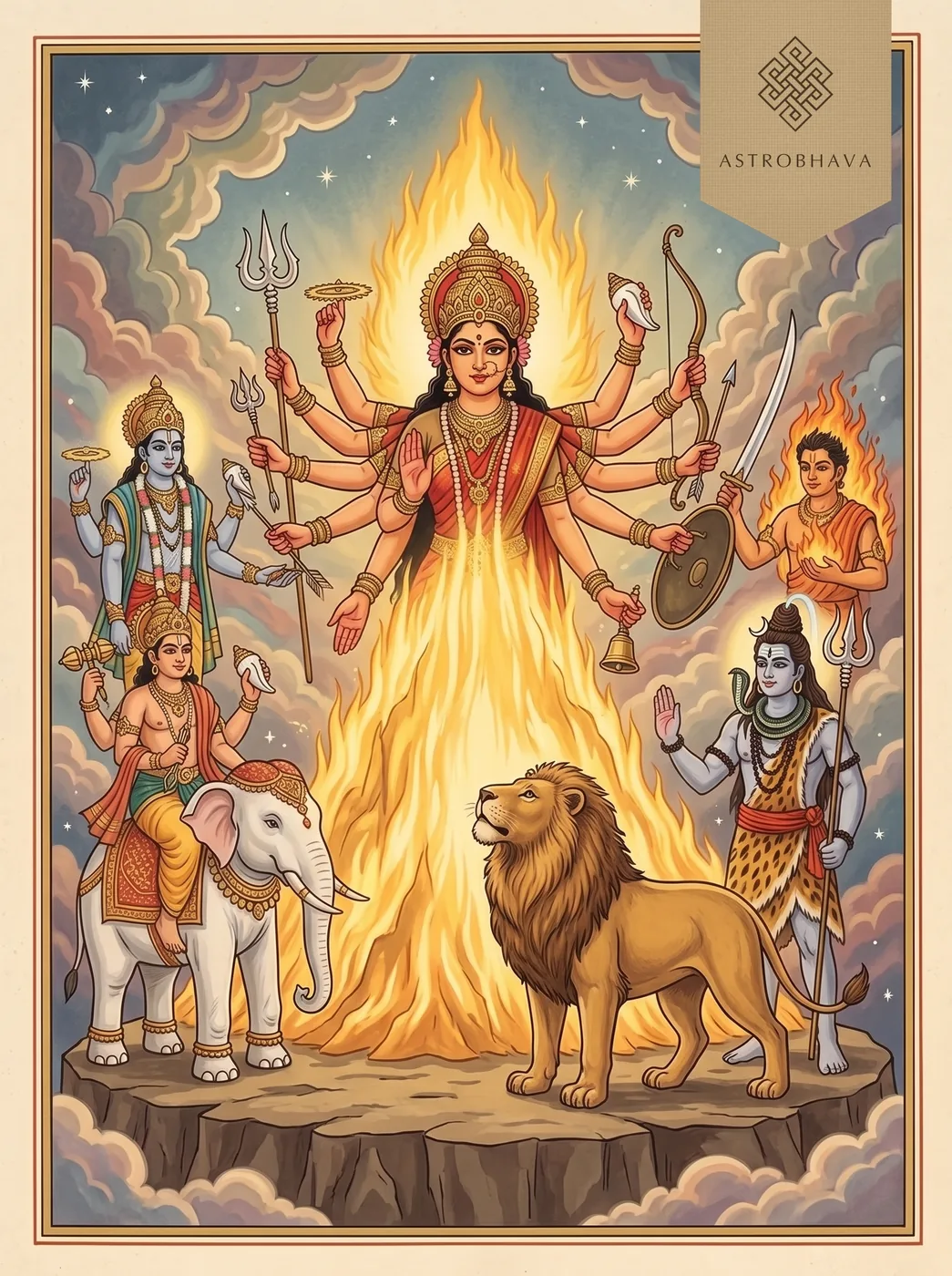
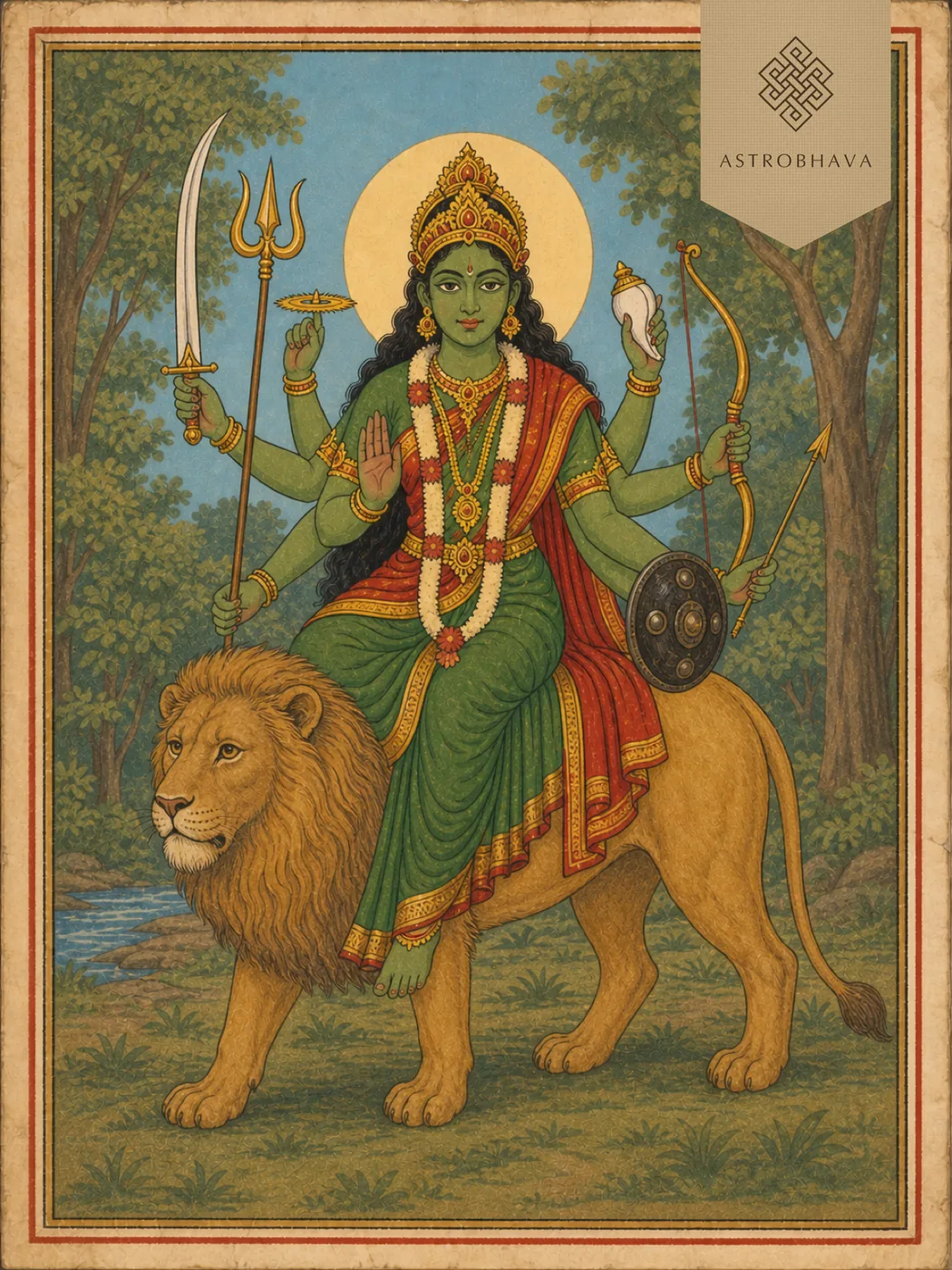
Durga Saptashati Chapter 2 is named Mahishasura Sainya Vadha by the line that ends it, meaning the destruction of Mahishasura's armies, and it begins the Devi Mahatmya's central section: three chapters given to Mahalakshmi. Her meditation verse is printed before it: seated on a lotus, her face calm, she holds eighteen things in her hands, from a rosary and an axe to a wine cup and the Sudarshana discus, and is named sairibhamardini, crusher of the buffalo. The chapter has one speaker throughout, the sage Medhas, and falls into four movements. Verses 2 to 8 tell of a hundred-year war that Mahishasura wins, and the gods' complaint to Shiva and Vishnu. Verses 9 to 19 turn that complaint into anger, and the anger into light that takes a woman's form, each part of her body from a different god. Verses 20 to 34 are the gifts: weapons, ornaments, a lion, and the roar that shakes the worlds. Verses 35 to 69 are the battle with Mahishasura's generals and their numberless chariots, elephants and horses, which ends with the demon army destroyed and flowers falling from heaven. Mahishasura himself is on the field in verse 47 but is not killed here; his death is the subject of chapter 3.
A Goddess made from the anger of the gods
Medhas begins with a defeat. The gods and demons fight for a full hundred years, the gods lose, and Mahishasura makes himself Indra (verse 3). Verse 6 lists what he has taken: the offices of the Sun, Indra, Agni, Vayu, the Moon, Yama and Varuna. Thrown out of heaven, the gods wander the earth like mortals, and with Brahma at their head they go to Shiva and Vishnu to ask how he can be killed. Hearing them, Shiva and Vishnu frown, and a great light pours from Vishnu's face, then from Brahma, Shiva, Indra and the rest. The lights merge into a blazing mountain that fills every direction, and in verse 13 the mass becomes a woman. Her face comes from Shiva, her arms from Vishnu, her feet from Brahma, her three eyes from Agni. Each god then draws a copy of his own weapon from it and hands it to her, and Himavan gives the lion. She laughs and roars until the oceans tremble. Mahishasura rushes towards the sound with the cry 'Ha! What is this?' (verse 36) and sees her crown grazing the sky and her thousand arms filling the directions. The battle that follows is told as a scene of carnage and music at once. The breaths she lets out as she fights become attendant hosts by the hundreds of thousands, who beat drums, blow conches and play the mridanga at what verse 55 calls the great festival of battle. The ringing of her bell stuns whole ranks, headless trunks take up weapons and dance to the war music, and rivers of blood run through the fallen elephants and horses. In verse 67 she burns the army away as fire burns a heap of grass and wood, and the gods rain flowers.
The mantra, in six scripts
- देवासुरम्
- devāsuram — between gods and demons
- अभूद्
- abhūd — there was
- युद्धं
- yuddhaṃ — a war
- पूर्णम्
- pūrṇam — full
- अब्दशतं
- abdaśataṃ — a hundred years
- पुरा
- purā — long ago
- महिषे
- mahiṣe — Mahisha being
- असुराणाम्
- asurāṇām — of the demons
- अधिपे
- adhipe — lord
- देवानां
- devānāṃ — of the gods
- च
- ca — and
- पुरन्दरे
- purandare — Indra being (lord)
Durga Saptashati Chapter 2 lyrics in full
The Mahalakshmi meditation verse and all 69 numbered lines of the chapter in the standard numbering; line 1 is the sage's speaker line, so the verses run from 2 to 69.
All 69 numbered lines, in Sanskrit, Tamil, Telugu, Kannada, Malayalam and English, each with its meaning. Choose a script:
Download the Durga Saptashati Chapter 2 PDFAll 69 numbered lines with their meanings, in Sanskrit. Free to print and keep.
ॐ अक्षस्रक्परशुं गदेषुकुलिशं पद्मं धनुष्कुण्डिकां दण्डं शक्तिमसिं च चर्म जलजं घण्टां सुराभाजनम् ।
शूलं पाशसुदर्शने च दधतीं हस्तैः प्रसन्नाननां सेवे सैरिभमर्दिनीमिह महालक्ष्मीं सरोजस्थिताम् ॥
ௐ அக்ஷஸ்ரக்பரஶும் கதேஷுகுலிஶம் பத்மம் தநுஷ்குண்டிகாம் தண்டம் ஶக்திமஸிம் ச சர்ம ஜலஜம் கண்டாம் ஸுராபாஜநம் ।
ஶூலம் பாஶஸுதர்ஶநே ச தததீம் ஹஸ்தைஃ ப்ரஸந்நாநநாம் ஸேவே ஸைரிபமர்திநீமிஹ மஹாலக்ஷ்மீம் ஸரோஜஸ்திதாம் ॥
ఓం అక్షస్రక్పరశుం గదేషుకులిశం పద్మం ధనుష్కుణ్డికాం దణ్డం శక్తిమసిం చ చర్మ జలజం ఘణ్టాం సురాభాజనమ్ ।
శూలం పాశసుదర్శనే చ దధతీం హస్తైః ప్రసన్నాననాం సేవే సైరిభమర్దినీమిహ మహాలక్ష్మీం సరోజస్థితామ్ ॥
ಓಂ ಅಕ್ಷಸ್ರಕ್ಪರಶುಂ ಗದೇಷುಕುಲಿಶಂ ಪದ್ಮಂ ಧನುಷ್ಕುಣ್ಡಿಕಾಂ ದಣ್ಡಂ ಶಕ್ತಿಮಸಿಂ ಚ ಚರ್ಮ ಜಲಜಂ ಘಣ್ಟಾಂ ಸುರಾಭಾಜನಮ್ ।
ಶೂಲಂ ಪಾಶಸುದರ್ಶನೇ ಚ ದಧತೀಂ ಹಸ್ತೈಃ ಪ್ರಸನ್ನಾನನಾಂ ಸೇವೇ ಸೈರಿಭಮರ್ದಿನೀಮಿಹ ಮಹಾಲಕ್ಷ್ಮೀಂ ಸರೋಜಸ್ಥಿತಾಮ್ ॥
ഓം അക്ഷസ്രക്പരശും ഗദേഷുകുലിശം പദ്മം ധനുഷ്കുണ്ഡികാം ദണ്ഡം ശക്തിമസിം ച ചര്മ ജലജം ഘണ്ടാം സുരാഭാജനമ് ।
ശൂലം പാശസുദര്ശനേ ച ദധതീം ഹസ്തൈഃ പ്രസന്നാനനാം സേവേ സൈരിഭമര്ദിനീമിഹ മഹാലക്ഷ്മീം സരോജസ്ഥിതാമ് ॥
oṃ akṣasrakparaśuṃ gadeṣukuliśaṃ padmaṃ dhanuṣkuṇḍikāṃ daṇḍaṃ śaktimasiṃ ca carma jalajaṃ ghaṇṭāṃ surābhājanam |
śūlaṃ pāśasudarśane ca dadhatīṃ hastaiḥ prasannānanāṃ seve sairibhamardinīmiha mahālakṣmīṃ sarojasthitām ||
Om. I worship here Mahalakshmi, the slayer of the buffalo demon, seated on a lotus, her face serene, who holds in her hands a rosary, axe, mace, arrow, thunderbolt, lotus, bow, water-pot, staff, spear, sword, shield, conch, bell, wine cup, trident, noose and the Sudarshana discus.
ऋषिरुवाच
देवासुरमभूद्युद्धं पूर्णमब्दशतं पुरा । महिषेऽसुराणामधिपे देवानां च पुरन्दरे ॥
ருஷிருவாச
தேவாஸுரமபூத்யுத்தம் பூர்ணமப்தஶதம் புரா । மஹிஷேஸுராணாமதிபே தேவாநாம் ச புரந்தரே ॥
ఋషిరువాచ
దేవాసురమభూద్యుద్ధం పూర్ణమబ్దశతం పురా । మహిషేఽసురాణామధిపే దేవానాం చ పురన్దరే ॥
ಋಷಿರುವಾಚ
ದೇವಾಸುರಮಭೂದ್ಯುದ್ಧಂ ಪೂರ್ಣಮಬ್ದಶತಂ ಪುರಾ । ಮಹಿಷೇಽಸುರಾಣಾಮಧಿಪೇ ದೇವಾನಾಂ ಚ ಪುರನ್ದರೇ ॥
ഋഷിരുവാച
ദേവാസുരമഭൂദ്യുദ്ധം പൂര്ണമബ്ദശതം പുരാ । മഹിഷേഽസുരാണാമധിപേ ദേവാനാം ച പുരന്ദരേ ॥
ṛṣiruvāca
devāsuramabhūdyuddhaṃ pūrṇamabdaśataṃ purā | mahiṣe'surāṇāmadhipe devānāṃ ca purandare ||
The sage said: Long ago a war between the gods and the demons went on for a full hundred years, when Mahisha was lord of the demons and Indra was lord of the gods.
तत्रासुरैर्महावीर्यैर्देवसैन्यं पराजितम् ।
जित्वा च सकलान् देवानिन्द्रोऽभून्महिषासुरः ॥
தத்ராஸுரைர்மஹாவீர்யைர்தேவஸைந்யம் பராஜிதம் ।
ஜித்வா ச ஸகலாந் தேவாநிந்த்ரோபூந்மஹிஷாஸுரஃ ॥
తత్రాసురైర్మహావీర్యైర్దేవసైన్యం పరాజితమ్ ।
జిత్వా చ సకలాన్ దేవానిన్ద్రోఽభూన్మహిషాసురః ॥
ತತ್ರಾಸುರೈರ್ಮಹಾವೀರ್ಯೈರ್ದೇವಸೈನ್ಯಂ ಪರಾಜಿತಮ್ ।
ಜಿತ್ವಾ ಚ ಸಕಲಾನ್ ದೇವಾನಿನ್ದ್ರೋಽಭೂನ್ಮಹಿಷಾಸುರಃ ॥
തത്രാസുരൈര്മഹാവീര്യൈര്ദേവസൈന്യം പരാജിതമ് ।
ജിത്വാ ച സകലാന് ദേവാനിന്ദ്രോഽഭൂന്മഹിഷാസുരഃ ॥
tatrāsurairmahāvīryairdevasainyaṃ parājitam |
jitvā ca sakalān devānindro'bhūnmahiṣāsuraḥ ||
In that war the army of the gods was defeated by the mighty demons, and having conquered all the gods, Mahishasura made himself Indra.
ततः पराजिता देवाः पद्मयोनिं प्रजापतिम् ।
पुरस्कृत्य गतास्तत्र यत्रेशगरुडध्वजौ ॥
ததஃ பராஜிதா தேவாஃ பத்மயோநிம் ப்ரஜாபதிம் ।
புரஸ்க்ருத்ய கதாஸ்தத்ர யத்ரேஶகருடத்வஜௌ ॥
తతః పరాజితా దేవాః పద్మయోనిం ప్రజాపతిమ్ ।
పురస్కృత్య గతాస్తత్ర యత్రేశగరుడధ్వజౌ ॥
ತತಃ ಪರಾಜಿತಾ ದೇವಾಃ ಪದ್ಮಯೋನಿಂ ಪ್ರಜಾಪತಿಮ್ ।
ಪುರಸ್ಕೃತ್ಯ ಗತಾಸ್ತತ್ರ ಯತ್ರೇಶಗರುಡಧ್ವಜೌ ॥
തതഃ പരാജിതാ ദേവാഃ പദ്മയോനിം പ്രജാപതിമ് ।
പുരസ്കൃത്യ ഗതാസ്തത്ര യത്രേശഗരുഡധ്വജൌ ॥
tataḥ parājitā devāḥ padmayoniṃ prajāpatim |
puraskṛtya gatāstatra yatreśagaruḍadhvajau ||
Then the defeated gods, with the lotus-born Brahma, lord of creatures, at their head, went to where Shiva and Vishnu, whose banner bears Garuda, were.
यथावृत्तं तयोस्तद्वन्महिषासुरचेष्टितम् ।
त्रिदशाः कथयामासुर्देवाभिभवविस्तरम् ॥
யதாவ்ருத்தம் தயோஸ்தத்வந்மஹிஷாஸுரசேஷ்டிதம் ।
த்ரிதஶாஃ கதயாமாஸுர்தேவாபிபவவிஸ்தரம் ॥
యథావృత్తం తయోస్తద్వన్మహిషాసురచేష్టితమ్ ।
త్రిదశాః కథయామాసుర్దేవాభిభవవిస్తరమ్ ॥
ಯಥಾವೃತ್ತಂ ತಯೋಸ್ತದ್ವನ್ಮಹಿಷಾಸುರಚೇಷ್ಟಿತಮ್ ।
ತ್ರಿದಶಾಃ ಕಥಯಾಮಾಸುರ್ದೇವಾಭಿಭವವಿಸ್ತರಮ್ ॥
യഥാവൃത്തം തയോസ്തദ്വന്മഹിഷാസുരചേഷ്ടിതമ് ।
ത്രിദശാഃ കഥയാമാസുര്ദേവാഭിഭവവിസ്തരമ് ॥
yathāvṛttaṃ tayostadvanmahiṣāsuraceṣṭitam |
tridaśāḥ kathayāmāsurdevābhibhavavistaram ||
The gods told the two of them just what had happened: the deeds of Mahishasura and, in full, how the gods had been overpowered.
सूर्येन्द्राग्न्यनिलेन्दूनां यमस्य वरुणस्य च ।
अन्येषां चाधिकारान् स स्वयमेवाधितिष्ठति ॥
ஸூர்யேந்த்ராக்ந்யநிலேந்தூநாம் யமஸ்ய வருணஸ்ய ச ।
அந்யேஷாம் சாதிகாராந் ஸ ஸ்வயமேவாதிதிஷ்டதி ॥
సూర్యేన్ద్రాగ్న్యనిలేన్దూనాం యమస్య వరుణస్య చ ।
అన్యేషాం చాధికారాన్ స స్వయమేవాధితిష్ఠతి ॥
ಸೂರ್ಯೇನ್ದ್ರಾಗ್ನ್ಯನಿಲೇನ್ದೂನಾಂ ಯಮಸ್ಯ ವರುಣಸ್ಯ ಚ ।
ಅನ್ಯೇಷಾಂ ಚಾಧಿಕಾರಾನ್ ಸ ಸ್ವಯಮೇವಾಧಿತಿಷ್ಠತಿ ॥
സൂര്യേന്ദ്രാഗ്ന്യനിലേന്ദൂനാം യമസ്യ വരുണസ്യ ച ।
അന്യേഷാം ചാധികാരാന് സ സ്വയമേവാധിതിഷ്ഠതി ॥
sūryendrāgnyanilendūnāṃ yamasya varuṇasya ca |
anyeṣāṃ cādhikārān sa svayamevādhitiṣṭhati ||
He himself has taken over the offices of the Sun, Indra, Agni, Vayu, the Moon, Yama, Varuna and the other gods.
स्वर्गान्निराकृताः सर्वे तेन देवगणा भुवि ।
विचरन्ति यथा मर्त्या महिषेण दुरात्मना ॥
ஸ்வர்காந்நிராக்ருதாஃ ஸர்வே தேந தேவகணா புவி ।
விசரந்தி யதா மர்த்யா மஹிஷேண துராத்மநா ॥
స్వర్గాన్నిరాకృతాః సర్వే తేన దేవగణా భువి ।
విచరన్తి యథా మర్త్యా మహిషేణ దురాత్మనా ॥
ಸ್ವರ್ಗಾನ್ನಿರಾಕೃತಾಃ ಸರ್ವೇ ತೇನ ದೇವಗಣಾ ಭುವಿ ।
ವಿಚರನ್ತಿ ಯಥಾ ಮರ್ತ್ಯಾ ಮಹಿಷೇಣ ದುರಾತ್ಮನಾ ॥
സ്വര്ഗാന്നിരാകൃതാഃ സര്വേ തേന ദേവഗണാ ഭുവി ।
വിചരന്തി യഥാ മര്ത്യാ മഹിഷേണ ദുരാത്മനാ ॥
svargānnirākṛtāḥ sarve tena devagaṇā bhuvi |
vicaranti yathā martyā mahiṣeṇa durātmanā ||
Driven out of heaven by that wicked Mahisha, all the hosts of gods wander the earth like mortals.
एतद्वः कथितं सर्वममरारिविचेष्टितम् ।
शरणं वः प्रपन्नाः स्मो वधस्तस्य विचिन्त्यताम् ॥
ஏதத்வஃ கதிதம் ஸர்வமமராரிவிசேஷ்டிதம் ।
ஶரணம் வஃ ப்ரபந்நாஃ ஸ்மோ வதஸ்தஸ்ய விசிந்த்யதாம் ॥
ఏతద్వః కథితం సర్వమమరారివిచేష్టితమ్ ।
శరణం వః ప్రపన్నాః స్మో వధస్తస్య విచిన్త్యతామ్ ॥
ಏತದ್ವಃ ಕಥಿತಂ ಸರ್ವಮಮರಾರಿವಿಚೇಷ್ಟಿತಮ್ ।
ಶರಣಂ ವಃ ಪ್ರಪನ್ನಾಃ ಸ್ಮೋ ವಧಸ್ತಸ್ಯ ವಿಚಿನ್ತ್ಯತಾಮ್ ॥
ഏതദ്വഃ കഥിതം സര്വമമരാരിവിചേഷ്ടിതമ് ।
ശരണം വഃ പ്രപന്നാഃ സ്മോ വധസ്തസ്യ വിചിന്ത്യതാമ് ॥
etadvaḥ kathitaṃ sarvamamarāriviceṣṭitam |
śaraṇaṃ vaḥ prapannāḥ smo vadhastasya vicintyatām ||
We have told you everything the enemy of the gods has done. We have come to you for refuge; please think of a way to slay him.
इत्थं निशम्य देवानां वचांसि मधुसूदनः ।
चकार कोपं शम्भुश्च भ्रुकुटीकुटिलाननौ ॥
இத்தம் நிஶம்ய தேவாநாம் வசாம்ஸி மதுஸூதநஃ ।
சகார கோபம் ஶம்புஶ்ச ப்ருகுடீகுடிலாநநௌ ॥
ఇత్థం నిశమ్య దేవానాం వచాంసి మధుసూదనః ।
చకార కోపం శమ్భుశ్చ భ్రుకుటీకుటిలాననౌ ॥
ಇತ್ಥಂ ನಿಶಮ್ಯ ದೇವಾನಾಂ ವಚಾಂಸಿ ಮಧುಸೂದನಃ ।
ಚಕಾರ ಕೋಪಂ ಶಮ್ಭುಶ್ಚ ಭ್ರುಕುಟೀಕುಟಿಲಾನನೌ ॥
ഇത്ഥം നിശമ്യ ദേവാനാം വചാംസി മധുസൂദനഃ ।
ചകാര കോപം ശമ്ഭുശ്ച ഭ്രുകുടീകുടിലാനനൌ ॥
itthaṃ niśamya devānāṃ vacāṃsi madhusūdanaḥ |
cakāra kopaṃ śambhuśca bhrukuṭīkuṭilānanau ||
Hearing these words of the gods, Vishnu, slayer of Madhu, and Shiva grew angry, their faces twisted with frowning brows.
ततोऽतिकोपपूर्णस्य चक्रिणो वदनात्ततः ।
निश्चक्राम महत्तेजो ब्रह्मणः शंकरस्य च ॥
ததோதிகோபபூர்ணஸ்ய சக்ரிணோ வதநாத்ததஃ ।
நிஶ்சக்ராம மஹத்தேஜோ ப்ரஹ்மணஃ ஶம்கரஸ்ய ச ॥
తతోఽతికోపపూర్ణస్య చక్రిణో వదనాత్తతః ।
నిశ్చక్రామ మహత్తేజో బ్రహ్మణః శంకరస్య చ ॥
ತತೋಽತಿಕೋಪಪೂರ್ಣಸ್ಯ ಚಕ್ರಿಣೋ ವದನಾತ್ತತಃ ।
ನಿಶ್ಚಕ್ರಾಮ ಮಹತ್ತೇಜೋ ಬ್ರಹ್ಮಣಃ ಶಂಕರಸ್ಯ ಚ ॥
തതോഽതികോപപൂര്ണസ്യ ചക്രിണോ വദനാത്തതഃ ।
നിശ്ചക്രാമ മഹത്തേജോ ബ്രഹ്മണഃ ശംകരസ്യ ച ॥
tato'tikopapūrṇasya cakriṇo vadanāttataḥ |
niścakrāma mahattejo brahmaṇaḥ śaṃkarasya ca ||
Then from the face of Vishnu, the discus-bearer, filled with great anger, a great radiance came forth, and likewise from Brahma and Shankara.
अन्येषां चैव देवानां शक्रादीनां शरीरतः ।
निर्गतं सुमहत्तेजस्तच्चैक्यं समगच्छत ॥
அந்யேஷாம் சைவ தேவாநாம் ஶக்ராதீநாம் ஶரீரதஃ ।
நிர்கதம் ஸுமஹத்தேஜஸ்தச்சைக்யம் ஸமகச்சத ॥
అన్యేషాం చైవ దేవానాం శక్రాదీనాం శరీరతః ।
నిర్గతం సుమహత్తేజస్తచ్చైక్యం సమగచ్ఛత ॥
ಅನ್ಯೇಷಾಂ ಚೈವ ದೇವಾನಾಂ ಶಕ್ರಾದೀನಾಂ ಶರೀರತಃ ।
ನಿರ್ಗತಂ ಸುಮಹತ್ತೇಜಸ್ತಚ್ಚೈಕ್ಯಂ ಸಮಗಚ್ಛತ ॥
അന്യേഷാം ചൈവ ദേവാനാം ശക്രാദീനാം ശരീരതഃ ।
നിര്ഗതം സുമഹത്തേജസ്തച്ചൈക്യം സമഗച്ഛത ॥
anyeṣāṃ caiva devānāṃ śakrādīnāṃ śarīrataḥ |
nirgataṃ sumahattejastaccaikyaṃ samagacchata ||
From the bodies of the other gods too, Indra and the rest, a very great radiance came out, and it all merged into one.
अतीव तेजसः कूटं ज्वलन्तमिव पर्वतम् ।
ददृशुस्ते सुरास्तत्र ज्वालाव्याप्तदिगन्तरम् ॥
அதீவ தேஜஸஃ கூடம் ஜ்வலந்தமிவ பர்வதம் ।
தத்ருஶுஸ்தே ஸுராஸ்தத்ர ஜ்வாலாவ்யாப்ததிகந்தரம் ॥
అతీవ తేజసః కూటం జ్వలన్తమివ పర్వతమ్ ।
దదృశుస్తే సురాస్తత్ర జ్వాలావ్యాప్తదిగన్తరమ్ ॥
ಅತೀವ ತೇಜಸಃ ಕೂಟಂ ಜ್ವಲನ್ತಮಿವ ಪರ್ವತಮ್ ।
ದದೃಶುಸ್ತೇ ಸುರಾಸ್ತತ್ರ ಜ್ವಾಲಾವ್ಯಾಪ್ತದಿಗನ್ತರಮ್ ॥
അതീവ തേജസഃ കൂടം ജ്വലന്തമിവ പര്വതമ് ।
ദദൃശുസ്തേ സുരാസ്തത്ര ജ്വാലാവ്യാപ്തദിഗന്തരമ് ॥
atīva tejasaḥ kūṭaṃ jvalantamiva parvatam |
dadṛśuste surāstatra jvālāvyāptadigantaram ||
There the gods saw that mass of radiance like a blazing mountain, its flames filling every direction.
अतुलं तत्र तत्तेजः सर्वदेवशरीरजम् ।
एकस्थं तदभून्नारी व्याप्तलोकत्रयं त्विषा ॥
அதுலம் தத்ர தத்தேஜஃ ஸர்வதேவஶரீரஜம் ।
ஏகஸ்தம் ததபூந்நாரீ வ்யாப்தலோகத்ரயம் த்விஷா ॥
అతులం తత్ర తత్తేజః సర్వదేవశరీరజమ్ ।
ఏకస్థం తదభూన్నారీ వ్యాప్తలోకత్రయం త్విషా ॥
ಅತುಲಂ ತತ್ರ ತತ್ತೇಜಃ ಸರ್ವದೇವಶರೀರಜಮ್ ।
ಏಕಸ್ಥಂ ತದಭೂನ್ನಾರೀ ವ್ಯಾಪ್ತಲೋಕತ್ರಯಂ ತ್ವಿಷಾ ॥
അതുലം തത്ര തത്തേജഃ സര്വദേവശരീരജമ് ।
ഏകസ്ഥം തദഭൂന്നാരീ വ്യാപ്തലോകത്രയം ത്വിഷാ ॥
atulaṃ tatra tattejaḥ sarvadevaśarīrajam |
ekasthaṃ tadabhūnnārī vyāptalokatrayaṃ tviṣā ||
That matchless radiance, born from the bodies of all the gods, gathered in one place and became a woman, filling the three worlds with her light.
यदभूच्छाम्भवं तेजस्तेनाजायत तन्मुखम् ।
याम्येन चाभवन् केशा बाहवो विष्णुतेजसा ॥
யதபூச்சாம்பவம் தேஜஸ்தேநாஜாயத தந்முகம் ।
யாம்யேந சாபவந் கேஶா பாஹவோ விஷ்ணுதேஜஸா ॥
యదభూచ్ఛామ్భవం తేజస్తేనాజాయత తన్ముఖమ్ ।
యామ్యేన చాభవన్ కేశా బాహవో విష్ణుతేజసా ॥
ಯದಭೂಚ್ಛಾಮ್ಭವಂ ತೇಜಸ್ತೇನಾಜಾಯತ ತನ್ಮುಖಮ್ ।
ಯಾಮ್ಯೇನ ಚಾಭವನ್ ಕೇಶಾ ಬಾಹವೋ ವಿಷ್ಣುತೇಜಸಾ ॥
യദഭൂച്ഛാമ്ഭവം തേജസ്തേനാജായത തന്മുഖമ് ।
യാമ്യേന ചാഭവന് കേശാ ബാഹവോ വിഷ്ണുതേജസാ ॥
yadabhūcchāmbhavaṃ tejastenājāyata tanmukham |
yāmyena cābhavan keśā bāhavo viṣṇutejasā ||
From Shiva's radiance her face was formed; from Yama's came her hair, and from Vishnu's radiance her arms.
सौम्येन स्तनयोर्युग्मं मध्यं चैन्द्रेण चाभवत् ।
वारुणेन च जङ्घोरू नितम्बस्तेजसा भुवः ॥
ஸௌம்யேந ஸ்தநயோர்யுக்மம் மத்யம் சைந்த்ரேண சாபவத் ।
வாருணேந ச ஜங்கோரூ நிதம்பஸ்தேஜஸா புவஃ ॥
సౌమ్యేన స్తనయోర్యుగ్మం మధ్యం చైన్ద్రేణ చాభవత్ ।
వారుణేన చ జఙ్ఘోరూ నితమ్బస్తేజసా భువః ॥
ಸೌಮ್ಯೇನ ಸ್ತನಯೋರ್ಯುಗ್ಮಂ ಮಧ್ಯಂ ಚೈನ್ದ್ರೇಣ ಚಾಭವತ್ ।
ವಾರುಣೇನ ಚ ಜಙ್ಘೋರೂ ನಿತಮ್ಬಸ್ತೇಜಸಾ ಭುವಃ ॥
സൌമ്യേന സ്തനയോര്യുഗ്മം മധ്യം ചൈന്ദ്രേണ ചാഭവത് ।
വാരുണേന ച ജങ്ഘോരൂ നിതമ്ബസ്തേജസാ ഭുവഃ ॥
saumyena stanayoryugmaṃ madhyaṃ caindreṇa cābhavat |
vāruṇena ca jaṅghorū nitambastejasā bhuvaḥ ||
From the Moon's radiance came her two breasts and from Indra's her waist; from Varuna's her shanks and thighs, and from the Earth's radiance her hips.
ब्रह्मणस्तेजसा पादौ तदङ्गुल्योऽर्कतेजसा ।
वसूनां च कराङ्गुल्यः कौबेरेण च नासिका ॥
ப்ரஹ்மணஸ்தேஜஸா பாதௌ ததங்குல்யோர்கதேஜஸா ।
வஸூநாம் ச கராங்குல்யஃ கௌபேரேண ச நாஸிகா ॥
బ్రహ్మణస్తేజసా పాదౌ తదఙ్గుల్యోఽర్కతేజసా ।
వసూనాం చ కరాఙ్గుల్యః కౌబేరేణ చ నాసికా ॥
ಬ್ರಹ್ಮಣಸ್ತೇಜಸಾ ಪಾದೌ ತದಙ್ಗುಲ್ಯೋಽರ್ಕತೇಜಸಾ ।
ವಸೂನಾಂ ಚ ಕರಾಙ್ಗುಲ್ಯಃ ಕೌಬೇರೇಣ ಚ ನಾಸಿಕಾ ॥
ബ്രഹ്മണസ്തേജസാ പാദൌ തദങ്ഗുല്യോഽര്കതേജസാ ।
വസൂനാം ച കരാങ്ഗുല്യഃ കൌബേരേണ ച നാസികാ ॥
brahmaṇastejasā pādau tadaṅgulyo'rkatejasā |
vasūnāṃ ca karāṅgulyaḥ kaubereṇa ca nāsikā ||
From Brahma's radiance came her feet, from the Sun's her toes, from the Vasus' her fingers, and from Kubera's her nose.
तस्यास्तु दन्ताः सम्भूताः प्राजापत्येन तेजसा ।
नयनत्रितयं जज्ञे तथा पावकतेजसा ॥
தஸ்யாஸ்து தந்தாஃ ஸம்பூதாஃ ப்ராஜாபத்யேந தேஜஸா ।
நயநத்ரிதயம் ஜஜ்ஞே ததா பாவகதேஜஸா ॥
తస్యాస్తు దన్తాః సమ్భూతాః ప్రాజాపత్యేన తేజసా ।
నయనత్రితయం జజ్ఞే తథా పావకతేజసా ॥
ತಸ್ಯಾಸ್ತು ದನ್ತಾಃ ಸಮ್ಭೂತಾಃ ಪ್ರಾಜಾಪತ್ಯೇನ ತೇಜಸಾ ।
ನಯನತ್ರಿತಯಂ ಜಜ್ಞೇ ತಥಾ ಪಾವಕತೇಜಸಾ ॥
തസ്യാസ്തു ദന്താഃ സമ്ഭൂതാഃ പ്രാജാപത്യേന തേജസാ ।
നയനത്രിതയം ജജ്ഞേ തഥാ പാവകതേജസാ ॥
tasyāstu dantāḥ sambhūtāḥ prājāpatyena tejasā |
nayanatritayaṃ jajñe tathā pāvakatejasā ||
Her teeth arose from the radiance of Prajapati, and her three eyes were born from the radiance of Agni.
भ्रुवौ च संध्ययोस्तेजः श्रवणावनिलस्य च ।
अन्येषां चैव देवानां सम्भवस्तेजसां शिवा ॥
ப்ருவௌ ச ஸம்த்யயோஸ்தேஜஃ ஶ்ரவணாவநிலஸ்ய ச ।
அந்யேஷாம் சைவ தேவாநாம் ஸம்பவஸ்தேஜஸாம் ஶிவா ॥
భ్రువౌ చ సంధ్యయోస్తేజః శ్రవణావనిలస్య చ ।
అన్యేషాం చైవ దేవానాం సమ్భవస్తేజసాం శివా ॥
ಭ್ರುವೌ ಚ ಸಂಧ್ಯಯೋಸ್ತೇಜಃ ಶ್ರವಣಾವನಿಲಸ್ಯ ಚ ।
ಅನ್ಯೇಷಾಂ ಚೈವ ದೇವಾನಾಂ ಸಮ್ಭವಸ್ತೇಜಸಾಂ ಶಿವಾ ॥
ഭ്രുവൌ ച സംധ്യയോസ്തേജഃ ശ്രവണാവനിലസ്യ ച ।
അന്യേഷാം ചൈവ ദേവാനാം സമ്ഭവസ്തേജസാം ശിവാ ॥
bhruvau ca saṃdhyayostejaḥ śravaṇāvanilasya ca |
anyeṣāṃ caiva devānāṃ sambhavastejasāṃ śivā ||
Her brows came from the radiance of the two twilights and her ears from that of Vayu; so the auspicious Goddess arose from the radiance of the other gods as well.
ततः समस्तदेवानां तेजोराशिसमुद्भवाम् ।
तां विलोक्य मुदं प्रापुरमरा महिषार्दिताः ॥
ததஃ ஸமஸ்ததேவாநாம் தேஜோராஶிஸமுத்பவாம் ।
தாம் விலோக்ய முதம் ப்ராபுரமரா மஹிஷார்திதாஃ ॥
తతః సమస్తదేవానాం తేజోరాశిసముద్భవామ్ ।
తాం విలోక్య ముదం ప్రాపురమరా మహిషార్దితాః ॥
ತತಃ ಸಮಸ್ತದೇವಾನಾಂ ತೇಜೋರಾಶಿಸಮುದ್ಭವಾಮ್ ।
ತಾಂ ವಿಲೋಕ್ಯ ಮುದಂ ಪ್ರಾಪುರಮರಾ ಮಹಿಷಾರ್ದಿತಾಃ ॥
തതഃ സമസ്തദേവാനാം തേജോരാശിസമുദ്ഭവാമ് ।
താം വിലോക്യ മുദം പ്രാപുരമരാ മഹിഷാര്ദിതാഃ ॥
tataḥ samastadevānāṃ tejorāśisamudbhavām |
tāṃ vilokya mudaṃ prāpuramarā mahiṣārditāḥ ||
Then, seeing her who had arisen from the gathered radiance of all the gods, the immortals oppressed by Mahisha were filled with joy.
शूलं शूलाद्विनिष्कृष्य ददौ तस्यै पिनाकधृक् ।
चक्रं च दत्तवान् कृष्णः समुत्पाद्य स्वचक्रतः ॥
ஶூலம் ஶூலாத்விநிஷ்க்ருஷ்ய ததௌ தஸ்யை பிநாகத்ருக் ।
சக்ரம் ச தத்தவாந் க்ருஷ்ணஃ ஸமுத்பாத்ய ஸ்வசக்ரதஃ ॥
శూలం శూలాద్వినిష్కృష్య దదౌ తస్యై పినాకధృక్ ।
చక్రం చ దత్తవాన్ కృష్ణః సముత్పాద్య స్వచక్రతః ॥
ಶೂಲಂ ಶೂಲಾದ್ವಿನಿಷ್ಕೃಷ್ಯ ದದೌ ತಸ್ಯೈ ಪಿನಾಕಧೃಕ್ ।
ಚಕ್ರಂ ಚ ದತ್ತವಾನ್ ಕೃಷ್ಣಃ ಸಮುತ್ಪಾದ್ಯ ಸ್ವಚಕ್ರತಃ ॥
ശൂലം ശൂലാദ്വിനിഷ്കൃഷ്യ ദദൌ തസ്യൈ പിനാകധൃക് ।
ചക്രം ച ദത്തവാന് കൃഷ്ണഃ സമുത്പാദ്യ സ്വചക്രതഃ ॥
śūlaṃ śūlādviniṣkṛṣya dadau tasyai pinākadhṛk |
cakraṃ ca dattavān kṛṣṇaḥ samutpādya svacakrataḥ ||
Shiva, bearer of the Pinaka bow, drew a trident out of his own trident and gave it to her; and Krishna (Vishnu) brought forth a discus from his own discus and gave it.
शङ्खं च वरुणः शक्तिं ददौ तस्यै हुताशनः ।
मारुतो दत्तवांश्चापं बाणपूर्णे तथेषुधी ॥
ஶங்கம் ச வருணஃ ஶக்திம் ததௌ தஸ்யை ஹுதாஶநஃ ।
மாருதோ தத்தவாம்ஶ்சாபம் பாணபூர்ணே ததேஷுதீ ॥
శఙ్ఖం చ వరుణః శక్తిం దదౌ తస్యై హుతాశనః ।
మారుతో దత్తవాంశ్చాపం బాణపూర్ణే తథేషుధీ ॥
ಶಙ್ಖಂ ಚ ವರುಣಃ ಶಕ್ತಿಂ ದದೌ ತಸ್ಯೈ ಹುತಾಶನಃ ।
ಮಾರುತೋ ದತ್ತವಾಂಶ್ಚಾಪಂ ಬಾಣಪೂರ್ಣೇ ತಥೇಷುಧೀ ॥
ശങ്ഖം ച വരുണഃ ശക്തിം ദദൌ തസ്യൈ ഹുതാശനഃ ।
മാരുതോ ദത്തവാംശ്ചാപം ബാണപൂര്ണേ തഥേഷുധീ ॥
śaṅkhaṃ ca varuṇaḥ śaktiṃ dadau tasyai hutāśanaḥ |
māruto dattavāṃścāpaṃ bāṇapūrṇe tatheṣudhī ||
Varuna gave her a conch, Agni a spear, and Vayu gave a bow and two quivers full of arrows.
वज्रमिन्द्रः समुत्पाद्य कुलिशादमराधिपः ।
ददौ तस्यै सहस्राक्षो घण्टामैरावताद् गजात् ॥
வஜ்ரமிந்த்ரஃ ஸமுத்பாத்ய குலிஶாதமராதிபஃ ।
ததௌ தஸ்யை ஸஹஸ்ராக்ஷோ கண்டாமைராவதாத் கஜாத் ॥
వజ్రమిన్ద్రః సముత్పాద్య కులిశాదమరాధిపః ।
దదౌ తస్యై సహస్రాక్షో ఘణ్టామైరావతాద్ గజాత్ ॥
ವಜ್ರಮಿನ್ದ್ರಃ ಸಮುತ್ಪಾದ್ಯ ಕುಲಿಶಾದಮರಾಧಿಪಃ ।
ದದೌ ತಸ್ಯೈ ಸಹಸ್ರಾಕ್ಷೋ ಘಣ್ಟಾಮೈರಾವತಾದ್ ಗಜಾತ್ ॥
വജ്രമിന്ദ്രഃ സമുത്പാദ്യ കുലിശാദമരാധിപഃ ।
ദദൌ തസ്യൈ സഹസ്രാക്ഷോ ഘണ്ടാമൈരാവതാദ് ഗജാത് ॥
vajramindraḥ samutpādya kuliśādamarādhipaḥ |
dadau tasyai sahasrākṣo ghaṇṭāmairāvatād gajāt ||
Indra, the thousand-eyed lord of the immortals, brought forth a thunderbolt from his own thunderbolt and gave it to her, and a bell from his elephant Airavata.
कालदण्डाद्यमो दण्डं पाशं चाम्बुपतिर्ददौ ।
प्रजापतिश्चाक्षमालां ददौ ब्रह्मा कमण्डलुम् ॥
காலதண்டாத்யமோ தண்டம் பாஶம் சாம்புபதிர்ததௌ ।
ப்ரஜாபதிஶ்சாக்ஷமாலாம் ததௌ ப்ரஹ்மா கமண்டலும் ॥
కాలదణ్డాద్యమో దణ్డం పాశం చామ్బుపతిర్దదౌ ।
ప్రజాపతిశ్చాక్షమాలాం దదౌ బ్రహ్మా కమణ్డలుమ్ ॥
ಕಾಲದಣ್ಡಾದ್ಯಮೋ ದಣ್ಡಂ ಪಾಶಂ ಚಾಮ್ಬುಪತಿರ್ದದೌ ।
ಪ್ರಜಾಪತಿಶ್ಚಾಕ್ಷಮಾಲಾಂ ದದೌ ಬ್ರಹ್ಮಾ ಕಮಣ್ಡಲುಮ್ ॥
കാലദണ്ഡാദ്യമോ ദണ്ഡം പാശം ചാമ്ബുപതിര്ദദൌ ।
പ്രജാപതിശ്ചാക്ഷമാലാം ദദൌ ബ്രഹ്മാ കമണ്ഡലുമ് ॥
kāladaṇḍādyamo daṇḍaṃ pāśaṃ cāmbupatirdadau |
prajāpatiścākṣamālāṃ dadau brahmā kamaṇḍalum ||
Yama gave a staff from his staff of death, and Varuna, lord of the waters, a noose; Prajapati gave a rosary of beads, and Brahma a water-pot.
समस्तरोमकूपेषु निजरश्मीन् दिवाकरः ।
कालश्च दत्तवान् खड्गं तस्याश्चर्म च निर्मलम् ॥
ஸமஸ்தரோமகூபேஷு நிஜரஶ்மீந் திவாகரஃ ।
காலஶ்ச தத்தவாந் கட்கம் தஸ்யாஶ்சர்ம ச நிர்மலம் ॥
సమస్తరోమకూపేషు నిజరశ్మీన్ దివాకరః ।
కాలశ్చ దత్తవాన్ ఖడ్గం తస్యాశ్చర్మ చ నిర్మలమ్ ॥
ಸಮಸ್ತರೋಮಕೂಪೇಷು ನಿಜರಶ್ಮೀನ್ ದಿವಾಕರಃ ।
ಕಾಲಶ್ಚ ದತ್ತವಾನ್ ಖಡ್ಗಂ ತಸ್ಯಾಶ್ಚರ್ಮ ಚ ನಿರ್ಮಲಮ್ ॥
സമസ്തരോമകൂപേഷു നിജരശ്മീന് ദിവാകരഃ ।
കാലശ്ച ദത്തവാന് ഖഡ്ഗം തസ്യാശ്ചര്മ ച നിര്മലമ് ॥
samastaromakūpeṣu nijaraśmīn divākaraḥ |
kālaśca dattavān khaḍgaṃ tasyāścarma ca nirmalam ||
The Sun placed his own rays in all the pores of her skin, and Kala (Time) gave her a sword and a spotless shield.
क्षीरोदश्चामलं हारमजरे च तथाम्बरे ।
चूडामणिं तथा दिव्यं कुण्डले कटकानि च ॥
க்ஷீரோதஶ்சாமலம் ஹாரமஜரே ச ததாம்பரே ।
சூடாமணிம் ததா திவ்யம் குண்டலே கடகாநி ச ॥
క్షీరోదశ్చామలం హారమజరే చ తథామ్బరే ।
చూడామణిం తథా దివ్యం కుణ్డలే కటకాని చ ॥
ಕ್ಷೀರೋದಶ್ಚಾಮಲಂ ಹಾರಮಜರೇ ಚ ತಥಾಮ್ಬರೇ ।
ಚೂಡಾಮಣಿಂ ತಥಾ ದಿವ್ಯಂ ಕುಣ್ಡಲೇ ಕಟಕಾನಿ ಚ ॥
ക്ഷീരോദശ്ചാമലം ഹാരമജരേ ച തഥാമ്ബരേ ।
ചൂഡാമണിം തഥാ ദിവ്യം കുണ്ഡലേ കടകാനി ച ॥
kṣīrodaścāmalaṃ hāramajare ca tathāmbare |
cūḍāmaṇiṃ tathā divyaṃ kuṇḍale kaṭakāni ca ||
The Ocean of Milk gave a pure necklace and a pair of garments that never wear out, a divine crest-jewel, two earrings and bracelets,
अर्धचन्द्रं तथा शुभ्रं केयूरान् सर्वबाहुषु ।
नूपुरौ विमलौ तद्वद् ग्रैवेयकमनुत्तमम् ॥
அர்தசந்த்ரம் ததா ஶுப்ரம் கேயூராந் ஸர்வபாஹுஷு ।
நூபுரௌ விமலௌ தத்வத் க்ரைவேயகமநுத்தமம் ॥
అర్ధచన్ద్రం తథా శుభ్రం కేయూరాన్ సర్వబాహుషు ।
నూపురౌ విమలౌ తద్వద్ గ్రైవేయకమనుత్తమమ్ ॥
ಅರ್ಧಚನ್ದ್ರಂ ತಥಾ ಶುಭ್ರಂ ಕೇಯೂರಾನ್ ಸರ್ವಬಾಹುಷು ।
ನೂಪುರೌ ವಿಮಲೌ ತದ್ವದ್ ಗ್ರೈವೇಯಕಮನುತ್ತಮಮ್ ॥
അര്ധചന്ദ്രം തഥാ ശുഭ്രം കേയൂരാന് സര്വബാഹുഷു ।
നൂപുരൌ വിമലൌ തദ്വദ് ഗ്രൈവേയകമനുത്തമമ് ॥
ardhacandraṃ tathā śubhraṃ keyūrān sarvabāhuṣu |
nūpurau vimalau tadvad graiveyakamanuttamam ||
a bright half-moon ornament, armlets for all her arms, a pair of shining anklets and a peerless neck ornament,
अङ्गुलीयकरत्नानि समस्तास्वङ्गुलीषु च ।
विश्वकर्मा ददौ तस्यै परशुं चातिनिर्मलम् ॥
அங்குலீயகரத்நாநி ஸமஸ்தாஸ்வங்குலீஷு ச ।
விஶ்வகர்மா ததௌ தஸ்யை பரஶும் சாதிநிர்மலம் ॥
అఙ్గులీయకరత్నాని సమస్తాస్వఙ్గులీషు చ ।
విశ్వకర్మా దదౌ తస్యై పరశుం చాతినిర్మలమ్ ॥
ಅಙ್ಗುಲೀಯಕರತ್ನಾನಿ ಸಮಸ್ತಾಸ್ವಙ್ಗುಲೀಷು ಚ ।
ವಿಶ್ವಕರ್ಮಾ ದದೌ ತಸ್ಯೈ ಪರಶುಂ ಚಾತಿನಿರ್ಮಲಮ್ ॥
അങ്ഗുലീയകരത്നാനി സമസ്താസ്വങ്ഗുലീഷു ച ।
വിശ്വകര്മാ ദദൌ തസ്യൈ പരശും ചാതിനിര്മലമ് ॥
aṅgulīyakaratnāni samastāsvaṅgulīṣu ca |
viśvakarmā dadau tasyai paraśuṃ cātinirmalam ||
and jewelled rings for all her fingers. Vishvakarma gave her a gleaming axe,
अस्त्राण्यनेकरूपाणि तथाभेद्यं च दंशनम् ।
अम्लानपङ्कजां मालां शिरस्युरसि चापराम् ॥
அஸ்த்ராண்யநேகரூபாணி ததாபேத்யம் ச தம்ஶநம் ।
அம்லாநபங்கஜாம் மாலாம் ஶிரஸ்யுரஸி சாபராம் ॥
అస్త్రాణ్యనేకరూపాణి తథాభేద్యం చ దంశనమ్ ।
అమ్లానపఙ్కజాం మాలాం శిరస్యురసి చాపరామ్ ॥
ಅಸ್ತ್ರಾಣ್ಯನೇಕರೂಪಾಣಿ ತಥಾಭೇದ್ಯಂ ಚ ದಂಶನಮ್ ।
ಅಮ್ಲಾನಪಙ್ಕಜಾಂ ಮಾಲಾಂ ಶಿರಸ್ಯುರಸಿ ಚಾಪರಾಮ್ ॥
അസ്ത്രാണ്യനേകരൂപാണി തഥാഭേദ്യം ച ദംശനമ് ।
അമ്ലാനപങ്കജാം മാലാം ശിരസ്യുരസി ചാപരാമ് ॥
astrāṇyanekarūpāṇi tathābhedyaṃ ca daṃśanam |
amlānapaṅkajāṃ mālāṃ śirasyurasi cāparām ||
weapons of many kinds and armour that cannot be pierced; and garlands of never-fading lotuses, one for her head and another for her breast.
अददज्जलधिस्तस्यै पङ्कजं चातिशोभनम् ।
हिमवान् वाहनं सिंहं रत्नानि विविधानि च ॥
அததஜ்ஜலதிஸ்தஸ்யை பங்கஜம் சாதிஶோபநம் ।
ஹிமவாந் வாஹநம் ஸிம்ஹம் ரத்நாநி விவிதாநி ச ॥
అదదజ్జలధిస్తస్యై పఙ్కజం చాతిశోభనమ్ ।
హిమవాన్ వాహనం సింహం రత్నాని వివిధాని చ ॥
ಅದದಜ್ಜಲಧಿಸ್ತಸ್ಯೈ ಪಙ್ಕಜಂ ಚಾತಿಶೋಭನಮ್ ।
ಹಿಮವಾನ್ ವಾಹನಂ ಸಿಂಹಂ ರತ್ನಾನಿ ವಿವಿಧಾನಿ ಚ ॥
അദദജ്ജലധിസ്തസ്യൈ പങ്കജം ചാതിശോഭനമ് ।
ഹിമവാന് വാഹനം സിംഹം രത്നാനി വിവിധാനി ച ॥
adadajjaladhistasyai paṅkajaṃ cātiśobhanam |
himavān vāhanaṃ siṃhaṃ ratnāni vividhāni ca ||
The Ocean gave her a most beautiful lotus; Himavan gave a lion to ride and jewels of many kinds.
ददावशून्यं सुरया पानपात्रं धनाधिपः ।
शेषश्च सर्वनागेशो महामणिविभूषितम् ॥
ததாவஶூந்யம் ஸுரயா பாநபாத்ரம் தநாதிபஃ ।
ஶேஷஶ்ச ஸர்வநாகேஶோ மஹாமணிவிபூஷிதம் ॥
దదావశూన్యం సురయా పానపాత్రం ధనాధిపః ।
శేషశ్చ సర్వనాగేశో మహామణివిభూషితమ్ ॥
ದದಾವಶೂನ್ಯಂ ಸುರಯಾ ಪಾನಪಾತ್ರಂ ಧನಾಧಿಪಃ ।
ಶೇಷಶ್ಚ ಸರ್ವನಾಗೇಶೋ ಮಹಾಮಣಿವಿಭೂಷಿತಮ್ ॥
ദദാവശൂന്യം സുരയാ പാനപാത്രം ധനാധിപഃ ।
ശേഷശ്ച സര്വനാഗേശോ മഹാമണിവിഭൂഷിതമ് ॥
dadāvaśūnyaṃ surayā pānapātraṃ dhanādhipaḥ |
śeṣaśca sarvanāgeśo mahāmaṇivibhūṣitam ||
Kubera, lord of wealth, gave a drinking cup never empty of wine; and Shesha, lord of all serpents, who bears this earth,
नागहारं ददौ तस्यै धत्ते यः पृथिवीमिमाम् ।
अन्यैरपि सुरैर्देवी भूषणैरायुधैस्तथा ॥
நாகஹாரம் ததௌ தஸ்யை தத்தே யஃ ப்ருதிவீமிமாம் ।
அந்யைரபி ஸுரைர்தேவீ பூஷணைராயுதைஸ்ததா ॥
నాగహారం దదౌ తస్యై ధత్తే యః పృథివీమిమామ్ ।
అన్యైరపి సురైర్దేవీ భూషణైరాయుధైస్తథా ॥
ನಾಗಹಾರಂ ದದೌ ತಸ್ಯೈ ಧತ್ತೇ ಯಃ ಪೃಥಿವೀಮಿಮಾಮ್ ।
ಅನ್ಯೈರಪಿ ಸುರೈರ್ದೇವೀ ಭೂಷಣೈರಾಯುಧೈಸ್ತಥಾ ॥
നാഗഹാരം ദദൌ തസ്യൈ ധത്തേ യഃ പൃഥിവീമിമാമ് ।
അന്യൈരപി സുരൈര്ദേവീ ഭൂഷണൈരായുധൈസ്തഥാ ॥
nāgahāraṃ dadau tasyai dhatte yaḥ pṛthivīmimām |
anyairapi surairdevī bhūṣaṇairāyudhaistathā ||
gave her a serpent necklace adorned with great gems. Honoured likewise by the other gods with ornaments and weapons,
सम्मानिता ननादोच्चैः साट्टहासं मुहुर्मुहुः ।
तस्या नादेन घोरेण कृत्स्नमापूरितं नभः ॥
ஸம்மாநிதா நநாதோச்சைஃ ஸாட்டஹாஸம் முஹுர்முஹுஃ ।
தஸ்யா நாதேந கோரேண க்ருத்ஸ்நமாபூரிதம் நபஃ ॥
సమ్మానితా ననాదోచ్చైః సాట్టహాసం ముహుర్ముహుః ।
తస్యా నాదేన ఘోరేణ కృత్స్నమాపూరితం నభః ॥
ಸಮ್ಮಾನಿತಾ ನನಾದೋಚ್ಚೈಃ ಸಾಟ್ಟಹಾಸಂ ಮುಹುರ್ಮುಹುಃ ।
ತಸ್ಯಾ ನಾದೇನ ಘೋರೇಣ ಕೃತ್ಸ್ನಮಾಪೂರಿತಂ ನಭಃ ॥
സമ്മാനിതാ നനാദോച്ചൈഃ സാട്ടഹാസം മുഹുര്മുഹുഃ ।
തസ്യാ നാദേന ഘോരേണ കൃത്സ്നമാപൂരിതം നഭഃ ॥
sammānitā nanādoccaiḥ sāṭṭahāsaṃ muhurmuhuḥ |
tasyā nādena ghoreṇa kṛtsnamāpūritaṃ nabhaḥ ||
the Goddess roared aloud again and again with laughter, and the whole sky was filled with her terrible roar.
अमायतातिमहता प्रतिशब्दो महानभूत् ।
चुक्षुभुः सकला लोकाः समुद्राश्च चकम्पिरे ॥
அமாயதாதிமஹதா ப்ரதிஶப்தோ மஹாநபூத் ।
சுக்ஷுபுஃ ஸகலா லோகாஃ ஸமுத்ராஶ்ச சகம்பிரே ॥
అమాయతాతిమహతా ప్రతిశబ్దో మహానభూత్ ।
చుక్షుభుః సకలా లోకాః సముద్రాశ్చ చకమ్పిరే ॥
ಅಮಾಯತಾತಿಮಹತಾ ಪ್ರತಿಶಬ್ದೋ ಮಹಾನಭೂತ್ ।
ಚುಕ್ಷುಭುಃ ಸಕಲಾ ಲೋಕಾಃ ಸಮುದ್ರಾಶ್ಚ ಚಕಮ್ಪಿರೇ ॥
അമായതാതിമഹതാ പ്രതിശബ്ദോ മഹാനഭൂത് ।
ചുക്ഷുഭുഃ സകലാ ലോകാഃ സമുദ്രാശ്ച ചകമ്പിരേ ॥
amāyatātimahatā pratiśabdo mahānabhūt |
cukṣubhuḥ sakalā lokāḥ samudrāśca cakampire ||
That immense sound could not be contained, and a great echo arose; all the worlds were shaken and the oceans trembled.
चचाल वसुधा चेलुः सकलाश्च महीधराः ।
जयेति देवाश्च मुदा तामूचुः सिंहवाहिनीम् ॥
சசால வஸுதா சேலுஃ ஸகலாஶ்ச மஹீதராஃ ।
ஜயேதி தேவாஶ்ச முதா தாமூசுஃ ஸிம்ஹவாஹிநீம் ॥
చచాల వసుధా చేలుః సకలాశ్చ మహీధరాః ।
జయేతి దేవాశ్చ ముదా తామూచుః సింహవాహినీమ్ ॥
ಚಚಾಲ ವಸುಧಾ ಚೇಲುಃ ಸಕಲಾಶ್ಚ ಮಹೀಧರಾಃ ।
ಜಯೇತಿ ದೇವಾಶ್ಚ ಮುದಾ ತಾಮೂಚುಃ ಸಿಂಹವಾಹಿನೀಮ್ ॥
ചചാല വസുധാ ചേലുഃ സകലാശ്ച മഹീധരാഃ ।
ജയേതി ദേവാശ്ച മുദാ താമൂചുഃ സിംഹവാഹിനീമ് ॥
cacāla vasudhā celuḥ sakalāśca mahīdharāḥ |
jayeti devāśca mudā tāmūcuḥ siṃhavāhinīm ||
The earth shook and all the mountains moved. Joyfully the gods cried 'Victory!' to her who rides the lion.
तुष्टुवुर्मुनयश्चैनां भक्तिनम्रात्ममूर्तयः ।
दृष्ट्वा समस्तं संक्षुब्धं त्रैलोक्यममरारयः ॥
துஷ்டுவுர்முநயஶ்சைநாம் பக்திநம்ராத்மமூர்தயஃ ।
த்ருஷ்ட்வா ஸமஸ்தம் ஸம்க்ஷுப்தம் த்ரைலோக்யமமராரயஃ ॥
తుష్టువుర్మునయశ్చైనాం భక్తినమ్రాత్మమూర్తయః ।
దృష్ట్వా సమస్తం సంక్షుబ్ధం త్రైలోక్యమమరారయః ॥
ತುಷ್ಟುವುರ್ಮುನಯಶ್ಚೈನಾಂ ಭಕ್ತಿನಮ್ರಾತ್ಮಮೂರ್ತಯಃ ।
ದೃಷ್ಟ್ವಾ ಸಮಸ್ತಂ ಸಂಕ್ಷುಬ್ಧಂ ತ್ರೈಲೋಕ್ಯಮಮರಾರಯಃ ॥
തുഷ്ടുവുര്മുനയശ്ചൈനാം ഭക്തിനമ്രാത്മമൂര്തയഃ ।
ദൃഷ്ട്വാ സമസ്തം സംക്ഷുബ്ധം ത്രൈലോക്യമമരാരയഃ ॥
tuṣṭuvurmunayaścaināṃ bhaktinamrātmamūrtayaḥ |
dṛṣṭvā samastaṃ saṃkṣubdhaṃ trailokyamamarārayaḥ ||
The sages, bowed in devotion, praised her. Seeing the three worlds all in turmoil, the enemies of the gods
संनद्धाखिलसैन्यास्ते समुत्तस्थुरुदायुधाः ।
आः किमेतदिति क्रोधादाभाष्य महिषासुरः ॥
ஸம்நத்தாகிலஸைந்யாஸ்தே ஸமுத்தஸ்துருதாயுதாஃ ।
ஆஃ கிமேததிதி க்ரோதாதாபாஷ்ய மஹிஷாஸுரஃ ॥
సంనద్ధాఖిలసైన్యాస్తే సముత్తస్థురుదాయుధాః ।
ఆః కిమేతదితి క్రోధాదాభాష్య మహిషాసురః ॥
ಸಂನದ್ಧಾಖಿಲಸೈನ್ಯಾಸ್ತೇ ಸಮುತ್ತಸ್ಥುರುದಾಯುಧಾಃ ।
ಆಃ ಕಿಮೇತದಿತಿ ಕ್ರೋಧಾದಾಭಾಷ್ಯ ಮಹಿಷಾಸುರಃ ॥
സംനദ്ധാഖിലസൈന്യാസ്തേ സമുത്തസ്ഥുരുദായുധാഃ ।
ആഃ കിമേതദിതി ക്രോധാദാഭാഷ്യ മഹിഷാസുരഃ ॥
saṃnaddhākhilasainyāste samuttasthurudāyudhāḥ |
āḥ kimetaditi krodhādābhāṣya mahiṣāsuraḥ ||
rose up with all their armies armed and weapons raised. Mahishasura cried out in anger, 'Ha! What is this?'
अभ्यधावत तं शब्दमशेषैरसुरैर्वृतः ।
स ददर्श ततो देवीं व्याप्तलोकत्रयां त्विषा ॥
அப்யதாவத தம் ஶப்தமஶேஷைரஸுரைர்வ்ருதஃ ।
ஸ ததர்ஶ ததோ தேவீம் வ்யாப்தலோகத்ரயாம் த்விஷா ॥
అభ్యధావత తం శబ్దమశేషైరసురైర్వృతః ।
స దదర్శ తతో దేవీం వ్యాప్తలోకత్రయాం త్విషా ॥
ಅಭ್ಯಧಾವತ ತಂ ಶಬ್ದಮಶೇಷೈರಸುರೈರ್ವೃತಃ ।
ಸ ದದರ್ಶ ತತೋ ದೇವೀಂ ವ್ಯಾಪ್ತಲೋಕತ್ರಯಾಂ ತ್ವಿಷಾ ॥
അഭ്യധാവത തം ശബ്ദമശേഷൈരസുരൈര്വൃതഃ ।
സ ദദര്ശ തതോ ദേവീം വ്യാപ്തലോകത്രയാം ത്വിഷാ ॥
abhyadhāvata taṃ śabdamaśeṣairasurairvṛtaḥ |
sa dadarśa tato devīṃ vyāptalokatrayāṃ tviṣā ||
and rushed toward that sound, surrounded by all the demons. Then he saw the Goddess, filling the three worlds with her light,
पादाक्रान्त्या नतभुवं किरीटोल्लिखिताम्बराम् ।
क्षोभिताशेषपातालां धनुर्ज्यानिःस्वनेन ताम् ॥
பாதாக்ராந்த்யா நதபுவம் கிரீடோல்லிகிதாம்பராம் ।
க்ஷோபிதாஶேஷபாதாலாம் தநுர்ஜ்யாநிஃஸ்வநேந தாம் ॥
పాదాక్రాన్త్యా నతభువం కిరీటోల్లిఖితామ్బరామ్ ।
క్షోభితాశేషపాతాలాం ధనుర్జ్యానిఃస్వనేన తామ్ ॥
ಪಾದಾಕ್ರಾನ್ತ್ಯಾ ನತಭುವಂ ಕಿರೀಟೋಲ್ಲಿಖಿತಾಮ್ಬರಾಮ್ ।
ಕ್ಷೋಭಿತಾಶೇಷಪಾತಾಲಾಂ ಧನುರ್ಜ್ಯಾನಿಃಸ್ವನೇನ ತಾಮ್ ॥
പാദാക്രാന്ത്യാ നതഭുവം കിരീടോല്ലിഖിതാമ്ബരാമ് ।
ക്ഷോഭിതാശേഷപാതാലാം ധനുര്ജ്യാനിഃസ്വനേന താമ് ॥
pādākrāntyā natabhuvaṃ kirīṭollikhitāmbarām |
kṣobhitāśeṣapātālāṃ dhanurjyāniḥsvanena tām ||
the earth bowing under the tread of her feet, her crown grazing the sky, all the netherworlds shaken by the twang of her bowstring,
दिशो भुजसहस्रेण समन्ताद् व्याप्य संस्थिताम् ।
ततः प्रववृते युद्धं तया देव्या सुरद्विषाम् ॥
திஶோ புஜஸஹஸ்ரேண ஸமந்தாத் வ்யாப்ய ஸம்ஸ்திதாம் ।
ததஃ ப்ரவவ்ருதே யுத்தம் தயா தேவ்யா ஸுரத்விஷாம் ॥
దిశో భుజసహస్రేణ సమన్తాద్ వ్యాప్య సంస్థితామ్ ।
తతః ప్రవవృతే యుద్ధం తయా దేవ్యా సురద్విషామ్ ॥
ದಿಶೋ ಭುಜಸಹಸ್ರೇಣ ಸಮನ್ತಾದ್ ವ್ಯಾಪ್ಯ ಸಂಸ್ಥಿತಾಮ್ ।
ತತಃ ಪ್ರವವೃತೇ ಯುದ್ಧಂ ತಯಾ ದೇವ್ಯಾ ಸುರದ್ವಿಷಾಮ್ ॥
ദിശോ ഭുജസഹസ്രേണ സമന്താദ് വ്യാപ്യ സംസ്ഥിതാമ് ।
തതഃ പ്രവവൃതേ യുദ്ധം തയാ ദേവ്യാ സുരദ്വിഷാമ് ॥
diśo bhujasahasreṇa samantād vyāpya saṃsthitām |
tataḥ pravavṛte yuddhaṃ tayā devyā suradviṣām ||
standing with her thousand arms filling the directions all around. Then began the battle of the enemies of the gods with that Goddess,
शस्त्रास्त्रैर्बहुधा मुक्तैरादीपितदिगन्तरम् ।
महिषासुरसेनानीश्चिक्षुराख्यो महासुरः ॥
ஶஸ்த்ராஸ்த்ரைர்பஹுதா முக்தைராதீபிததிகந்தரம் ।
மஹிஷாஸுரஸேநாநீஶ்சிக்ஷுராக்யோ மஹாஸுரஃ ॥
శస్త్రాస్త్రైర్బహుధా ముక్తైరాదీపితదిగన్తరమ్ ।
మహిషాసురసేనానీశ్చిక్షురాఖ్యో మహాసురః ॥
ಶಸ್ತ್ರಾಸ್ತ್ರೈರ್ಬಹುಧಾ ಮುಕ್ತೈರಾದೀಪಿತದಿಗನ್ತರಮ್ ।
ಮಹಿಷಾಸುರಸೇನಾನೀಶ್ಚಿಕ್ಷುರಾಖ್ಯೋ ಮಹಾಸುರಃ ॥
ശസ്ത്രാസ്ത്രൈര്ബഹുധാ മുക്തൈരാദീപിതദിഗന്തരമ് ।
മഹിഷാസുരസേനാനീശ്ചിക്ഷുരാഖ്യോ മഹാസുരഃ ॥
śastrāstrairbahudhā muktairādīpitadigantaram |
mahiṣāsurasenānīścikṣurākhyo mahāsuraḥ ||
the quarters lit up by the many weapons and missiles hurled. The great demon named Chikshura, Mahishasura's general,
युयुधे चामरश्चान्यैश्चतुरङ्गबलान्वितः ।
रथानामयुतैः षड्भिरुदग्राख्यो महासुरः ॥
யுயுதே சாமரஶ்சாந்யைஶ்சதுரங்கபலாந்விதஃ ।
ரதாநாமயுதைஃ ஷட்பிருதக்ராக்யோ மஹாஸுரஃ ॥
యుయుధే చామరశ్చాన్యైశ్చతురఙ్గబలాన్వితః ।
రథానామయుతైః షడ్భిరుదగ్రాఖ్యో మహాసురః ॥
ಯುಯುಧೇ ಚಾಮರಶ್ಚಾನ್ಯೈಶ್ಚತುರಙ್ಗಬಲಾನ್ವಿತಃ ।
ರಥಾನಾಮಯುತೈಃ ಷಡ್ಭಿರುದಗ್ರಾಖ್ಯೋ ಮಹಾಸುರಃ ॥
യുയുധേ ചാമരശ്ചാന്യൈശ്ചതുരങ്ഗബലാന്വിതഃ ।
രഥാനാമയുതൈഃ ഷഡ്ഭിരുദഗ്രാഖ്യോ മഹാസുരഃ ॥
yuyudhe cāmaraścānyaiścaturaṅgabalānvitaḥ |
rathānāmayutaiḥ ṣaḍbhirudagrākhyo mahāsuraḥ ||
fought, and Chamara too, with others, at the head of a fourfold army. The great demon named Udagra fought with sixty thousand chariots,
अयुध्यतायुतानां च सहस्रेण महाहनुः ।
पञ्चाशद्भिश्च नियुतैरसिलोमा महासुरः ॥
அயுத்யதாயுதாநாம் ச ஸஹஸ்ரேண மஹாஹநுஃ ।
பஞ்சாஶத்பிஶ்ச நியுதைரஸிலோமா மஹாஸுரஃ ॥
అయుధ్యతాయుతానాం చ సహస్రేణ మహాహనుః ।
పఞ్చాశద్భిశ్చ నియుతైరసిలోమా మహాసురః ॥
ಅಯುಧ್ಯತಾಯುತಾನಾಂ ಚ ಸಹಸ್ರೇಣ ಮಹಾಹನುಃ ।
ಪಞ್ಚಾಶದ್ಭಿಶ್ಚ ನಿಯುತೈರಸಿಲೋಮಾ ಮಹಾಸುರಃ ॥
അയുധ്യതായുതാനാം ച സഹസ്രേണ മഹാഹനുഃ ।
പഞ്ചാശദ്ഭിശ്ച നിയുതൈരസിലോമാ മഹാസുരഃ ॥
ayudhyatāyutānāṃ ca sahasreṇa mahāhanuḥ |
pañcāśadbhiśca niyutairasilomā mahāsuraḥ ||
Mahahanu with ten million, and the great demon Asiloma with fifty niyutas (five million).
अयुतानां शतैः षड्भिर्बाष्कलो युयुधे रणे ।
गजवाजिसहस्रौघैरनेकैः परिवारितः ॥
அயுதாநாம் ஶதைஃ ஷட்பிர்பாஷ்கலோ யுயுதே ரணே ।
கஜவாஜிஸஹஸ்ரௌகைரநேகைஃ பரிவாரிதஃ ॥
అయుతానాం శతైః షడ్భిర్బాష్కలో యుయుధే రణే ।
గజవాజిసహస్రౌఘైరనేకైః పరివారితః ॥
ಅಯುತಾನಾಂ ಶತೈಃ ಷಡ್ಭಿರ್ಬಾಷ್ಕಲೋ ಯುಯುಧೇ ರಣೇ ।
ಗಜವಾಜಿಸಹಸ್ರೌಘೈರನೇಕೈಃ ಪರಿವಾರಿತಃ ॥
അയുതാനാം ശതൈഃ ഷഡ്ഭിര്ബാഷ്കലോ യുയുധേ രണേ ।
ഗജവാജിസഹസ്രൌഘൈരനേകൈഃ പരിവാരിതഃ ॥
ayutānāṃ śataiḥ ṣaḍbhirbāṣkalo yuyudhe raṇe |
gajavājisahasraughairanekaiḥ parivāritaḥ ||
Bashkala fought in the battle with six hundred ayutas (six million). Parivarita, surrounded by many thousands of elephants and horses,
वृतो रथानां कोट्या च युद्धे तस्मिन्नयुध्यत ।
बिडालाख्योऽयुतानां च पञ्चाशद्भिरथायुतैः ॥
வ்ருதோ ரதாநாம் கோட்யா ச யுத்தே தஸ்மிந்நயுத்யத ।
பிடாலாக்யோயுதாநாம் ச பஞ்சாஶத்பிரதாயுதைஃ ॥
వృతో రథానాం కోట్యా చ యుద్ధే తస్మిన్నయుధ్యత ।
బిడాలాఖ్యోఽయుతానాం చ పఞ్చాశద్భిరథాయుతైః ॥
ವೃತೋ ರಥಾನಾಂ ಕೋಟ್ಯಾ ಚ ಯುದ್ಧೇ ತಸ್ಮಿನ್ನಯುಧ್ಯತ ।
ಬಿಡಾಲಾಖ್ಯೋಽಯುತಾನಾಂ ಚ ಪಞ್ಚಾಶದ್ಭಿರಥಾಯುತೈಃ ॥
വൃതോ രഥാനാം കോട്യാ ച യുദ്ധേ തസ്മിന്നയുധ്യത ।
ബിഡാലാഖ്യോഽയുതാനാം ച പഞ്ചാശദ്ഭിരഥായുതൈഃ ॥
vṛto rathānāṃ koṭyā ca yuddhe tasminnayudhyata |
biḍālākhyo'yutānāṃ ca pañcāśadbhirathāyutaiḥ ||
and by ten million chariots, fought in that battle. The one named Bidala, with fifty ayutas of chariots (five hundred thousand),
युयुधे संयुगे तत्र रथानां परिवारितः ।
अन्ये च तत्रायुतशो रथनागहयैर्वृताः ॥
யுயுதே ஸம்யுகே தத்ர ரதாநாம் பரிவாரிதஃ ।
அந்யே ச தத்ராயுதஶோ ரதநாகஹயைர்வ்ருதாஃ ॥
యుయుధే సంయుగే తత్ర రథానాం పరివారితః ।
అన్యే చ తత్రాయుతశో రథనాగహయైర్వృతాః ॥
ಯುಯುಧೇ ಸಂಯುಗೇ ತತ್ರ ರಥಾನಾಂ ಪರಿವಾರಿತಃ ।
ಅನ್ಯೇ ಚ ತತ್ರಾಯುತಶೋ ರಥನಾಗಹಯೈರ್ವೃತಾಃ ॥
യുയുധേ സംയുഗേ തത്ര രഥാനാം പരിവാരിതഃ ।
അന്യേ ച തത്രായുതശോ രഥനാഗഹയൈര്വൃതാഃ ॥
yuyudhe saṃyuge tatra rathānāṃ parivāritaḥ |
anye ca tatrāyutaśo rathanāgahayairvṛtāḥ ||
fought there in the fray, surrounded by chariots. Other great demons, by the tens of thousands, surrounded by chariots, elephants and horses,
युयुधुः संयुगे देव्या सह तत्र महासुराः ।
कोटिकोटिसहस्रैस्तु रथानां दन्तिनां तथा ॥
யுயுதுஃ ஸம்யுகே தேவ்யா ஸஹ தத்ர மஹாஸுராஃ ।
கோடிகோடிஸஹஸ்ரைஸ்து ரதாநாம் தந்திநாம் ததா ॥
యుయుధుః సంయుగే దేవ్యా సహ తత్ర మహాసురాః ।
కోటికోటిసహస్రైస్తు రథానాం దన్తినాం తథా ॥
ಯುಯುಧುಃ ಸಂಯುಗೇ ದೇವ್ಯಾ ಸಹ ತತ್ರ ಮಹಾಸುರಾಃ ।
ಕೋಟಿಕೋಟಿಸಹಸ್ರೈಸ್ತು ರಥಾನಾಂ ದನ್ತಿನಾಂ ತಥಾ ॥
യുയുധുഃ സംയുഗേ ദേവ്യാ സഹ തത്ര മഹാസുരാഃ ।
കോടികോടിസഹസ്രൈസ്തു രഥാനാം ദന്തിനാം തഥാ ॥
yuyudhuḥ saṃyuge devyā saha tatra mahāsurāḥ |
koṭikoṭisahasraistu rathānāṃ dantināṃ tathā ||
fought there in battle with the Goddess. And with thousands of crores upon crores of chariots and elephants
हयानां च वृतो युद्धे तत्राभून्महिषासुरः ।
तोमरैर्भिन्दिपालैश्च शक्तिभिर्मुसलैस्तथा ॥
ஹயாநாம் ச வ்ருதோ யுத்தே தத்ராபூந்மஹிஷாஸுரஃ ।
தோமரைர்பிந்திபாலைஶ்ச ஶக்திபிர்முஸலைஸ்ததா ॥
హయానాం చ వృతో యుద్ధే తత్రాభూన్మహిషాసురః ।
తోమరైర్భిన్దిపాలైశ్చ శక్తిభిర్ముసలైస్తథా ॥
ಹಯಾನಾಂ ಚ ವೃತೋ ಯುದ್ಧೇ ತತ್ರಾಭೂನ್ಮಹಿಷಾಸುರಃ ।
ತೋಮರೈರ್ಭಿನ್ದಿಪಾಲೈಶ್ಚ ಶಕ್ತಿಭಿರ್ಮುಸಲೈಸ್ತಥಾ ॥
ഹയാനാം ച വൃതോ യുദ്ധേ തത്രാഭൂന്മഹിഷാസുരഃ ।
തോമരൈര്ഭിന്ദിപാലൈശ്ച ശക്തിഭിര്മുസലൈസ്തഥാ ॥
hayānāṃ ca vṛto yuddhe tatrābhūnmahiṣāsuraḥ |
tomarairbhindipālaiśca śaktibhirmusalaistathā ||
and horses around him, Mahishasura himself was there in the battle. With lances and javelins, spears and clubs,
युयुधुः संयुगे देव्या खड्गैः परशुपट्टिशैः ।
केचिच्च चिक्षिपुः शक्तीः केचित्पाशांस्तथापरे ॥
யுயுதுஃ ஸம்யுகே தேவ்யா கட்கைஃ பரஶுபட்டிஶைஃ ।
கேசிச்ச சிக்ஷிபுஃ ஶக்தீஃ கேசித்பாஶாம்ஸ்ததாபரே ॥
యుయుధుః సంయుగే దేవ్యా ఖడ్గైః పరశుపట్టిశైః ।
కేచిచ్చ చిక్షిపుః శక్తీః కేచిత్పాశాంస్తథాపరే ॥
ಯುಯುಧುಃ ಸಂಯುಗೇ ದೇವ್ಯಾ ಖಡ್ಗೈಃ ಪರಶುಪಟ್ಟಿಶೈಃ ।
ಕೇಚಿಚ್ಚ ಚಿಕ್ಷಿಪುಃ ಶಕ್ತೀಃ ಕೇಚಿತ್ಪಾಶಾಂಸ್ತಥಾಪರೇ ॥
യുയുധുഃ സംയുഗേ ദേവ്യാ ഖഡ്ഗൈഃ പരശുപട്ടിശൈഃ ।
കേചിച്ച ചിക്ഷിപുഃ ശക്തീഃ കേചിത്പാശാംസ്തഥാപരേ ॥
yuyudhuḥ saṃyuge devyā khaḍgaiḥ paraśupaṭṭiśaiḥ |
kecicca cikṣipuḥ śaktīḥ kecitpāśāṃstathāpare ||
with swords, axes and halberds they fought the Goddess in battle. Some hurled spears, and others nooses.
देवीं खड्गप्रहारैस्तु ते तां हन्तुं प्रचक्रमुः ।
सापि देवी ततस्तानि शस्त्राण्यस्त्राणि चण्डिका ॥
தேவீம் கட்கப்ரஹாரைஸ்து தே தாம் ஹந்தும் ப்ரசக்ரமுஃ ।
ஸாபி தேவீ ததஸ்தாநி ஶஸ்த்ராண்யஸ்த்ராணி சண்டிகா ॥
దేవీం ఖడ్గప్రహారైస్తు తే తాం హన్తుం ప్రచక్రముః ।
సాపి దేవీ తతస్తాని శస్త్రాణ్యస్త్రాణి చణ్డికా ॥
ದೇವೀಂ ಖಡ್ಗಪ್ರಹಾರೈಸ್ತು ತೇ ತಾಂ ಹನ್ತುಂ ಪ್ರಚಕ್ರಮುಃ ।
ಸಾಪಿ ದೇವೀ ತತಸ್ತಾನಿ ಶಸ್ತ್ರಾಣ್ಯಸ್ತ್ರಾಣಿ ಚಣ್ಡಿಕಾ ॥
ദേവീം ഖഡ്ഗപ്രഹാരൈസ്തു തേ താം ഹന്തും പ്രചക്രമുഃ ।
സാപി ദേവീ തതസ്താനി ശസ്ത്രാണ്യസ്ത്രാണി ചണ്ഡികാ ॥
devīṃ khaḍgaprahāraistu te tāṃ hantuṃ pracakramuḥ |
sāpi devī tatastāni śastrāṇyastrāṇi caṇḍikā ||
They set about killing the Goddess with sword strokes. Then that Goddess Chandika, raining down her own weapons and missiles,
लीलयैव प्रचिच्छेद निजशस्त्रास्त्रवर्षिणी ।
अनायस्तानना देवी स्तूयमाना सुरर्षिभिः ॥
லீலயைவ ப்ரசிச்சேத நிஜஶஸ்த்ராஸ்த்ரவர்ஷிணீ ।
அநாயஸ்தாநநா தேவீ ஸ்தூயமாநா ஸுரர்ஷிபிஃ ॥
లీలయైవ ప్రచిచ్ఛేద నిజశస్త్రాస్త్రవర్షిణీ ।
అనాయస్తాననా దేవీ స్తూయమానా సురర్షిభిః ॥
ಲೀಲಯೈವ ಪ್ರಚಿಚ್ಛೇದ ನಿಜಶಸ್ತ್ರಾಸ್ತ್ರವರ್ಷಿಣೀ ।
ಅನಾಯಸ್ತಾನನಾ ದೇವೀ ಸ್ತೂಯಮಾನಾ ಸುರರ್ಷಿಭಿಃ ॥
ലീലയൈവ പ്രചിച്ഛേദ നിജശസ്ത്രാസ്ത്രവര്ഷിണീ ।
അനായസ്താനനാ ദേവീ സ്തൂയമാനാ സുരര്ഷിഭിഃ ॥
līlayaiva praciccheda nijaśastrāstravarṣiṇī |
anāyastānanā devī stūyamānā surarṣibhiḥ ||
cut all their weapons and missiles to pieces as if in play. Her face showing no strain, praised by the gods and sages,
मुमोचासुरदेहेषु शस्त्राण्यस्त्राणि चेश्वरी ।
सोऽपि क्रुद्धो धुतसटो देव्या वाहनकेशरी ॥
முமோசாஸுரதேஹேஷு ஶஸ்த்ராண்யஸ்த்ராணி சேஶ்வரீ ।
ஸோபி க்ருத்தோ துதஸடோ தேவ்யா வாஹநகேஶரீ ॥
ముమోచాసురదేహేషు శస్త్రాణ్యస్త్రాణి చేశ్వరీ ।
సోఽపి క్రుద్ధో ధుతసటో దేవ్యా వాహనకేశరీ ॥
ಮುಮೋಚಾಸುರದೇಹೇಷು ಶಸ್ತ್ರಾಣ್ಯಸ್ತ್ರಾಣಿ ಚೇಶ್ವರೀ ।
ಸೋಽಪಿ ಕ್ರುದ್ಧೋ ಧುತಸಟೋ ದೇವ್ಯಾ ವಾಹನಕೇಶರೀ ॥
മുമോചാസുരദേഹേഷു ശസ്ത്രാണ്യസ്ത്രാണി ചേശ്വരീ ।
സോഽപി ക്രുദ്ധോ ധുതസടോ ദേവ്യാ വാഹനകേശരീ ॥
mumocāsuradeheṣu śastrāṇyastrāṇi ceśvarī |
so'pi kruddho dhutasaṭo devyā vāhanakeśarī ||
the sovereign Goddess loosed her weapons and missiles on the bodies of the demons. The lion that carried the Goddess, enraged and shaking its mane,
चचारासुरसैन्येषु वनेष्विव हुताशनः ।
निःश्वासान् मुमुचे यांश्च युध्यमाना रणेऽम्बिका ॥
சசாராஸுரஸைந்யேஷு வநேஷ்விவ ஹுதாஶநஃ ।
நிஃஶ்வாஸாந் முமுசே யாம்ஶ்ச யுத்யமாநா ரணேம்பிகா ॥
చచారాసురసైన్యేషు వనేష్వివ హుతాశనః ।
నిఃశ్వాసాన్ ముముచే యాంశ్చ యుధ్యమానా రణేఽమ్బికా ॥
ಚಚಾರಾಸುರಸೈನ್ಯೇಷು ವನೇಷ್ವಿವ ಹುತಾಶನಃ ।
ನಿಃಶ್ವಾಸಾನ್ ಮುಮುಚೇ ಯಾಂಶ್ಚ ಯುಧ್ಯಮಾನಾ ರಣೇಽಮ್ಬಿಕಾ ॥
ചചാരാസുരസൈന്യേഷു വനേഷ്വിവ ഹുതാശനഃ ।
നിഃശ്വാസാന് മുമുചേ യാംശ്ച യുധ്യമാനാ രണേഽമ്ബികാ ॥
cacārāsurasainyeṣu vaneṣviva hutāśanaḥ |
niḥśvāsān mumuce yāṃśca yudhyamānā raṇe'mbikā ||
moved through the demon armies like a fire through forests. The breaths that Ambika let out as she fought in the battle
त एव सद्यः सम्भूता गणाः शतसहस्रशः ।
युयुधुस्ते परशुभिर्भिन्दिपालासिपट्टिशैः ॥
த ஏவ ஸத்யஃ ஸம்பூதா கணாஃ ஶதஸஹஸ்ரஶஃ ।
யுயுதுஸ்தே பரஶுபிர்பிந்திபாலாஸிபட்டிஶைஃ ॥
త ఏవ సద్యః సమ్భూతా గణాః శతసహస్రశః ।
యుయుధుస్తే పరశుభిర్భిన్దిపాలాసిపట్టిశైః ॥
ತ ಏವ ಸದ್ಯಃ ಸಮ್ಭೂತಾ ಗಣಾಃ ಶತಸಹಸ್ರಶಃ ।
ಯುಯುಧುಸ್ತೇ ಪರಶುಭಿರ್ಭಿನ್ದಿಪಾಲಾಸಿಪಟ್ಟಿಶೈಃ ॥
ത ഏവ സദ്യഃ സമ്ഭൂതാ ഗണാഃ ശതസഹസ്രശഃ ।
യുയുധുസ്തേ പരശുഭിര്ഭിന്ദിപാലാസിപട്ടിശൈഃ ॥
ta eva sadyaḥ sambhūtā gaṇāḥ śatasahasraśaḥ |
yuyudhuste paraśubhirbhindipālāsipaṭṭiśaiḥ ||
at once became attendant hosts by the hundreds of thousands, and they fought with axes, javelins, swords and halberds.
नाशयन्तोऽसुरगणान् देवीशक्त्युपबृंहिताः ।
अवादयन्त पटहान् गणाः शङ्खांस्तथापरे ॥
நாஶயந்தோஸுரகணாந் தேவீஶக்த்யுபப்ரும்ஹிதாஃ ।
அவாதயந்த படஹாந் கணாஃ ஶங்காம்ஸ்ததாபரே ॥
నాశయన్తోఽసురగణాన్ దేవీశక్త్యుపబృంహితాః ।
అవాదయన్త పటహాన్ గణాః శఙ్ఖాంస్తథాపరే ॥
ನಾಶಯನ್ತೋಽಸುರಗಣಾನ್ ದೇವೀಶಕ್ತ್ಯುಪಬೃಂಹಿತಾಃ ।
ಅವಾದಯನ್ತ ಪಟಹಾನ್ ಗಣಾಃ ಶಙ್ಖಾಂಸ್ತಥಾಪರೇ ॥
നാശയന്തോഽസുരഗണാന് ദേവീശക്ത്യുപബൃംഹിതാഃ ।
അവാദയന്ത പടഹാന് ഗണാഃ ശങ്ഖാംസ്തഥാപരേ ॥
nāśayanto'suragaṇān devīśaktyupabṛṃhitāḥ |
avādayanta paṭahān gaṇāḥ śaṅkhāṃstathāpare ||
Strengthened by the Goddess's power, they destroyed the demon hosts; some of these attendants beat drums and others blew conches,
मृदङ्गांश्च तथैवान्ये तस्मिन् युद्धमहोत्सवे ।
ततो देवी त्रिशूलेन गदया शक्तिवृष्टिभिः ॥
ம்ருதங்காம்ஶ்ச ததைவாந்யே தஸ்மிந் யுத்தமஹோத்ஸவே ।
ததோ தேவீ த்ரிஶூலேந கதயா ஶக்திவ்ருஷ்டிபிஃ ॥
మృదఙ్గాంశ్చ తథైవాన్యే తస్మిన్ యుద్ధమహోత్సవే ।
తతో దేవీ త్రిశూలేన గదయా శక్తివృష్టిభిః ॥
ಮೃದಙ್ಗಾಂಶ್ಚ ತಥೈವಾನ್ಯೇ ತಸ್ಮಿನ್ ಯುದ್ಧಮಹೋತ್ಸವೇ ।
ತತೋ ದೇವೀ ತ್ರಿಶೂಲೇನ ಗದಯಾ ಶಕ್ತಿವೃಷ್ಟಿಭಿಃ ॥
മൃദങ്ഗാംശ്ച തഥൈവാന്യേ തസ്മിന് യുദ്ധമഹോത്സവേ ।
തതോ ദേവീ ത്രിശൂലേന ഗദയാ ശക്തിവൃഷ്ടിഭിഃ ॥
mṛdaṅgāṃśca tathaivānye tasmin yuddhamahotsave |
tato devī triśūlena gadayā śaktivṛṣṭibhiḥ ||
and still others played mridangas at that great festival of battle. Then the Goddess, with her trident, her mace, showers of spears,
खड्गादिभिश्च शतशो निजघान महासुरान् ।
पातयामास चैवान्यान् घण्टास्वनविमोहितान् ॥
கட்காதிபிஶ்ச ஶதஶோ நிஜகாந மஹாஸுராந் ।
பாதயாமாஸ சைவாந்யாந் கண்டாஸ்வநவிமோஹிதாந் ॥
ఖడ్గాదిభిశ్చ శతశో నిజఘాన మహాసురాన్ ।
పాతయామాస చైవాన్యాన్ ఘణ్టాస్వనవిమోహితాన్ ॥
ಖಡ್ಗಾದಿಭಿಶ್ಚ ಶತಶೋ ನಿಜಘಾನ ಮಹಾಸುರಾನ್ ।
ಪಾತಯಾಮಾಸ ಚೈವಾನ್ಯಾನ್ ಘಣ್ಟಾಸ್ವನವಿಮೋಹಿತಾನ್ ॥
ഖഡ്ഗാദിഭിശ്ച ശതശോ നിജഘാന മഹാസുരാന് ।
പാതയാമാസ ചൈവാന്യാന് ഘണ്ടാസ്വനവിമോഹിതാന് ॥
khaḍgādibhiśca śataśo nijaghāna mahāsurān |
pātayāmāsa caivānyān ghaṇṭāsvanavimohitān ||
her sword and other weapons, slew great demons by the hundreds, and felled others who were stunned by the sound of her bell.
असुरान् भुवि पाशेन बद्ध्वा चान्यानकर्षयत् ।
केचिद् द्विधा कृतास्तीक्ष्णैः खड्गपातैस्तथापरे ॥
அஸுராந் புவி பாஶேந பத்த்வா சாந்யாநகர்ஷயத் ।
கேசித் த்விதா க்ருதாஸ்தீக்ஷ்ணைஃ கட்கபாதைஸ்ததாபரே ॥
అసురాన్ భువి పాశేన బద్ధ్వా చాన్యానకర్షయత్ ।
కేచిద్ ద్విధా కృతాస్తీక్ష్ణైః ఖడ్గపాతైస్తథాపరే ॥
ಅಸುರಾನ್ ಭುವಿ ಪಾಶೇನ ಬದ್ಧ್ವಾ ಚಾನ್ಯಾನಕರ್ಷಯತ್ ।
ಕೇಚಿದ್ ದ್ವಿಧಾ ಕೃತಾಸ್ತೀಕ್ಷ್ಣೈಃ ಖಡ್ಗಪಾತೈಸ್ತಥಾಪರೇ ॥
അസുരാന് ഭുവി പാശേന ബദ്ധ്വാ ചാന്യാനകര്ഷയത് ।
കേചിദ് ദ്വിധാ കൃതാസ്തീക്ഷ്ണൈഃ ഖഡ്ഗപാതൈസ്തഥാപരേ ॥
asurān bhuvi pāśena baddhvā cānyānakarṣayat |
kecid dvidhā kṛtāstīkṣṇaiḥ khaḍgapātaistathāpare ||
Other demons she bound with her noose and dragged along the ground. Some were cut in two by the blows of her sharp sword, and others,
विपोथिता निपातेन गदया भुवि शेरते ।
वेमुश्च केचिद्रुधिरं मुसलेन भृशं हताः ॥
விபோதிதா நிபாதேந கதயா புவி ஶேரதே ।
வேமுஶ்ச கேசித்ருதிரம் முஸலேந ப்ருஶம் ஹதாஃ ॥
విపోథితా నిపాతేన గదయా భువి శేరతే ।
వేముశ్చ కేచిద్రుధిరం ముసలేన భృశం హతాః ॥
ವಿಪೋಥಿತಾ ನಿಪಾತೇನ ಗದಯಾ ಭುವಿ ಶೇರತೇ ।
ವೇಮುಶ್ಚ ಕೇಚಿದ್ರುಧಿರಂ ಮುಸಲೇನ ಭೃಶಂ ಹತಾಃ ॥
വിപോഥിതാ നിപാതേന ഗദയാ ഭുവി ശേരതേ ।
വേമുശ്ച കേചിദ്രുധിരം മുസലേന ഭൃശം ഹതാഃ ॥
vipothitā nipātena gadayā bhuvi śerate |
vemuśca kecidrudhiraṃ musalena bhṛśaṃ hatāḥ ||
crushed by the fall of her mace, lay on the ground. Some, struck hard by her club, vomited blood.
केचिन्निपतिता भूमौ भिन्नाः शूलेन वक्षसि ।
निरन्तराः शरौघेण कृताः केचिद्रणाजिरे ॥
கேசிந்நிபதிதா பூமௌ பிந்நாஃ ஶூலேந வக்ஷஸி ।
நிரந்தராஃ ஶரௌகேண க்ருதாஃ கேசித்ரணாஜிரே ॥
కేచిన్నిపతితా భూమౌ భిన్నాః శూలేన వక్షసి ।
నిరన్తరాః శరౌఘేణ కృతాః కేచిద్రణాజిరే ॥
ಕೇಚಿನ್ನಿಪತಿತಾ ಭೂಮೌ ಭಿನ್ನಾಃ ಶೂಲೇನ ವಕ್ಷಸಿ ।
ನಿರನ್ತರಾಃ ಶರೌಘೇಣ ಕೃತಾಃ ಕೇಚಿದ್ರಣಾಜಿರೇ ॥
കേചിന്നിപതിതാ ഭൂമൌ ഭിന്നാഃ ശൂലേന വക്ഷസി ।
നിരന്തരാഃ ശരൌഘേണ കൃതാഃ കേചിദ്രണാജിരേ ॥
kecinnipatitā bhūmau bhinnāḥ śūlena vakṣasi |
nirantarāḥ śaraugheṇa kṛtāḥ kecidraṇājire ||
Some fell to the ground, their chests pierced by the trident; some on the battlefield were riddled through by a flood of arrows.
श्येनानुकारिणः प्राणान् मुमुचुस्त्रिदशार्दनाः ।
केषांचिद् बाहवश्छिन्नाश्छिन्नग्रीवास्तथापरे ॥
ஶ்யேநாநுகாரிணஃ ப்ராணாந் முமுசுஸ்த்ரிதஶார்தநாஃ ।
கேஷாம்சித் பாஹவஶ்சிந்நாஶ்சிந்நக்ரீவாஸ்ததாபரே ॥
శ్యేనానుకారిణః ప్రాణాన్ ముముచుస్త్రిదశార్దనాః ।
కేషాంచిద్ బాహవశ్ఛిన్నాశ్ఛిన్నగ్రీవాస్తథాపరే ॥
ಶ್ಯೇನಾನುಕಾರಿಣಃ ಪ್ರಾಣಾನ್ ಮುಮುಚುಸ್ತ್ರಿದಶಾರ್ದನಾಃ ।
ಕೇಷಾಂಚಿದ್ ಬಾಹವಶ್ಛಿನ್ನಾಶ್ಛಿನ್ನಗ್ರೀವಾಸ್ತಥಾಪರೇ ॥
ശ്യേനാനുകാരിണഃ പ്രാണാന് മുമുചുസ്ത്രിദശാര്ദനാഃ ।
കേഷാംചിദ് ബാഹവശ്ഛിന്നാശ്ഛിന്നഗ്രീവാസ്തഥാപരേ ॥
śyenānukāriṇaḥ prāṇān mumucustridaśārdanāḥ |
keṣāṃcid bāhavaśchinnāśchinnagrīvāstathāpare ||
Those tormentors of the gods, swooping like hawks, gave up their lives. The arms of some were cut off, and the necks of others were severed.
शिरांसि पेतुरन्येषामन्ये मध्ये विदारिताः ।
विच्छिन्नजङ्घास्त्वपरे पेतुरुर्व्यां महासुराः ॥
ஶிராம்ஸி பேதுரந்யேஷாமந்யே மத்யே விதாரிதாஃ ।
விச்சிந்நஜங்காஸ்த்வபரே பேதுருர்வ்யாம் மஹாஸுராஃ ॥
శిరాంసి పేతురన్యేషామన్యే మధ్యే విదారితాః ।
విచ్ఛిన్నజఙ్ఘాస్త్వపరే పేతురుర్వ్యాం మహాసురాః ॥
ಶಿರಾಂಸಿ ಪೇತುರನ್ಯೇಷಾಮನ್ಯೇ ಮಧ್ಯೇ ವಿದಾರಿತಾಃ ।
ವಿಚ್ಛಿನ್ನಜಙ್ಘಾಸ್ತ್ವಪರೇ ಪೇತುರುರ್ವ್ಯಾಂ ಮಹಾಸುರಾಃ ॥
ശിരാംസി പേതുരന്യേഷാമന്യേ മധ്യേ വിദാരിതാഃ ।
വിച്ഛിന്നജങ്ഘാസ്ത്വപരേ പേതുരുര്വ്യാം മഹാസുരാഃ ॥
śirāṃsi peturanyeṣāmanye madhye vidāritāḥ |
vicchinnajaṅghāstvapare petururvyāṃ mahāsurāḥ ||
The heads of others fell, others were split through the middle, and other great demons, their legs cut away, fell to the earth.
एकबाह्वक्षिचरणाः केचिद्देव्या द्विधा कृताः ।
छिन्नेऽपि चान्ये शिरसि पतिताः पुनरुत्थिताः ॥
ஏகபாஹ்வக்ஷிசரணாஃ கேசித்தேவ்யா த்விதா க்ருதாஃ ।
சிந்நேபி சாந்யே ஶிரஸி பதிதாஃ புநருத்திதாஃ ॥
ఏకబాహ్వక్షిచరణాః కేచిద్దేవ్యా ద్విధా కృతాః ।
ఛిన్నేఽపి చాన్యే శిరసి పతితాః పునరుత్థితాః ॥
ಏಕಬಾಹ್ವಕ್ಷಿಚರಣಾಃ ಕೇಚಿದ್ದೇವ್ಯಾ ದ್ವಿಧಾ ಕೃತಾಃ ।
ಛಿನ್ನೇಽಪಿ ಚಾನ್ಯೇ ಶಿರಸಿ ಪತಿತಾಃ ಪುನರುತ್ಥಿತಾಃ ॥
ഏകബാഹ്വക്ഷിചരണാഃ കേചിദ്ദേവ്യാ ദ്വിധാ കൃതാഃ ।
ഛിന്നേഽപി ചാന്യേ ശിരസി പതിതാഃ പുനരുത്ഥിതാഃ ॥
ekabāhvakṣicaraṇāḥ keciddevyā dvidhā kṛtāḥ |
chinne'pi cānye śirasi patitāḥ punarutthitāḥ ||
Some were split in two by the Goddess, left with one arm, one eye and one foot. Others, though their heads were cut off, fell and rose again.
कबन्धा युयुधुर्देव्या गृहीतपरमायुधाः ।
ननृतुश्चापरे तत्र युद्धे तूर्यलयाश्रिताः ॥
கபந்தா யுயுதுர்தேவ்யா க்ருஹீதபரமாயுதாஃ ।
நந்ருதுஶ்சாபரே தத்ர யுத்தே தூர்யலயாஶ்ரிதாஃ ॥
కబన్ధా యుయుధుర్దేవ్యా గృహీతపరమాయుధాః ।
ననృతుశ్చాపరే తత్ర యుద్ధే తూర్యలయాశ్రితాః ॥
ಕಬನ್ಧಾ ಯುಯುಧುರ್ದೇವ್ಯಾ ಗೃಹೀತಪರಮಾಯುಧಾಃ ।
ನನೃತುಶ್ಚಾಪರೇ ತತ್ರ ಯುದ್ಧೇ ತೂರ್ಯಲಯಾಶ್ರಿತಾಃ ॥
കബന്ധാ യുയുധുര്ദേവ്യാ ഗൃഹീതപരമായുധാഃ ।
നനൃതുശ്ചാപരേ തത്ര യുദ്ധേ തൂര്യലയാശ്രിതാഃ ॥
kabandhā yuyudhurdevyā gṛhītaparamāyudhāḥ |
nanṛtuścāpare tatra yuddhe tūryalayāśritāḥ ||
Headless trunks seized fine weapons and fought the Goddess, while others danced there in the battle to the rhythm of the war music.
कबन्धाश्छिन्नशिरसः खड्गशक्त्यृष्टिपाणयः ।
तिष्ठ तिष्ठेति भाषन्तो देवीमन्ये महासुराः ॥
கபந்தாஶ்சிந்நஶிரஸஃ கட்கஶக்த்ய்ருஷ்டிபாணயஃ ।
திஷ்ட திஷ்டேதி பாஷந்தோ தேவீமந்யே மஹாஸுராஃ ॥
కబన్ధాశ్ఛిన్నశిరసః ఖడ్గశక్త్యృష్టిపాణయః ।
తిష్ఠ తిష్ఠేతి భాషన్తో దేవీమన్యే మహాసురాః ॥
ಕಬನ್ಧಾಶ್ಛಿನ್ನಶಿರಸಃ ಖಡ್ಗಶಕ್ತ್ಯೃಷ್ಟಿಪಾಣಯಃ ।
ತಿಷ್ಠ ತಿಷ್ಠೇತಿ ಭಾಷನ್ತೋ ದೇವೀಮನ್ಯೇ ಮಹಾಸುರಾಃ ॥
കബന്ധാശ്ഛിന്നശിരസഃ ഖഡ്ഗശക്ത്യൃഷ്ടിപാണയഃ ।
തിഷ്ഠ തിഷ്ഠേതി ഭാഷന്തോ ദേവീമന്യേ മഹാസുരാഃ ॥
kabandhāśchinnaśirasaḥ khaḍgaśaktyṛṣṭipāṇayaḥ |
tiṣṭha tiṣṭheti bhāṣanto devīmanye mahāsurāḥ ||
Other great demons, headless trunks with severed heads, swords, spears and lances in hand, cried out to the Goddess, 'Stop! Stop!'
पातितै रथनागाश्वैरसुरैश्च वसुन्धरा ।
अगम्या साभवत्तत्र यत्राभूत्स महारणः ॥
பாதிதை ரதநாகாஶ்வைரஸுரைஶ்ச வஸுந்தரா ।
அகம்யா ஸாபவத்தத்ர யத்ராபூத்ஸ மஹாரணஃ ॥
పాతితై రథనాగాశ్వైరసురైశ్చ వసున్ధరా ।
అగమ్యా సాభవత్తత్ర యత్రాభూత్స మహారణః ॥
ಪಾತಿತೈ ರಥನಾಗಾಶ್ವೈರಸುರೈಶ್ಚ ವಸುನ್ಧರಾ ।
ಅಗಮ್ಯಾ ಸಾಭವತ್ತತ್ರ ಯತ್ರಾಭೂತ್ಸ ಮಹಾರಣಃ ॥
പാതിതൈ രഥനാഗാശ്വൈരസുരൈശ്ച വസുന്ധരാ ।
അഗമ്യാ സാഭവത്തത്ര യത്രാഭൂത്സ മഹാരണഃ ॥
pātitai rathanāgāśvairasuraiśca vasundharā |
agamyā sābhavattatra yatrābhūtsa mahāraṇaḥ ||
Where that great battle took place, the earth became impassable with the fallen chariots, elephants, horses and demons.
शोणितौघा महानद्यः सद्यस्तत्र प्रसुस्रुवुः ।
मध्ये चासुरसैन्यस्य वारणासुरवाजिनाम् ॥
ஶோணிதௌகா மஹாநத்யஃ ஸத்யஸ்தத்ர ப்ரஸுஸ்ருவுஃ ।
மத்யே சாஸுரஸைந்யஸ்ய வாரணாஸுரவாஜிநாம் ॥
శోణితౌఘా మహానద్యః సద్యస్తత్ర ప్రసుస్రువుః ।
మధ్యే చాసురసైన్యస్య వారణాసురవాజినామ్ ॥
ಶೋಣಿತೌಘಾ ಮಹಾನದ್ಯಃ ಸದ್ಯಸ್ತತ್ರ ಪ್ರಸುಸ್ರುವುಃ ।
ಮಧ್ಯೇ ಚಾಸುರಸೈನ್ಯಸ್ಯ ವಾರಣಾಸುರವಾಜಿನಾಮ್ ॥
ശോണിതൌഘാ മഹാനദ്യഃ സദ്യസ്തത്ര പ്രസുസ്രുവുഃ ।
മധ്യേ ചാസുരസൈന്യസ്യ വാരണാസുരവാജിനാമ് ॥
śoṇitaughā mahānadyaḥ sadyastatra prasusruvuḥ |
madhye cāsurasainyasya vāraṇāsuravājinām ||
Great rivers of blood at once flowed there, through the middle of the demon army, among its elephants, demons and horses.
क्षणेन तन्महासैन्यमसुराणां तथाम्बिका ।
निन्ये क्षयं यथा वह्निस्तृणदारुमहाचयम् ॥
க்ஷணேந தந்மஹாஸைந்யமஸுராணாம் ததாம்பிகா ।
நிந்யே க்ஷயம் யதா வஹ்நிஸ்த்ருணதாருமஹாசயம் ॥
క్షణేన తన్మహాసైన్యమసురాణాం తథామ్బికా ।
నిన్యే క్షయం యథా వహ్నిస్తృణదారుమహాచయమ్ ॥
ಕ್ಷಣೇನ ತನ್ಮಹಾಸೈನ್ಯಮಸುರಾಣಾಂ ತಥಾಮ್ಬಿಕಾ ।
ನಿನ್ಯೇ ಕ್ಷಯಂ ಯಥಾ ವಹ್ನಿಸ್ತೃಣದಾರುಮಹಾಚಯಮ್ ॥
ക്ഷണേന തന്മഹാസൈന്യമസുരാണാം തഥാമ്ബികാ ।
നിന്യേ ക്ഷയം യഥാ വഹ്നിസ്തൃണദാരുമഹാചയമ് ॥
kṣaṇena tanmahāsainyamasurāṇāṃ tathāmbikā |
ninye kṣayaṃ yathā vahnistṛṇadārumahācayam ||
In a moment Ambika destroyed that great army of the demons, as fire destroys a great heap of grass and wood.
स च सिंहो महानादमुत्सृजन्धुतकेशरः ।
शरीरेभ्योऽमरारीणामसूनिव विचिन्वति ॥
ஸ ச ஸிம்ஹோ மஹாநாதமுத்ஸ்ருஜந்துதகேஶரஃ ।
ஶரீரேப்யோமராரீணாமஸூநிவ விசிந்வதி ॥
స చ సింహో మహానాదముత్సృజన్ధుతకేశరః ।
శరీరేభ్యోఽమరారీణామసూనివ విచిన్వతి ॥
ಸ ಚ ಸಿಂಹೋ ಮಹಾನಾದಮುತ್ಸೃಜನ್ಧುತಕೇಶರಃ ।
ಶರೀರೇಭ್ಯೋಽಮರಾರೀಣಾಮಸೂನಿವ ವಿಚಿನ್ವತಿ ॥
സ ച സിംഹോ മഹാനാദമുത്സൃജന്ധുതകേശരഃ ।
ശരീരേഭ്യോഽമരാരീണാമസൂനിവ വിചിന്വതി ॥
sa ca siṃho mahānādamutsṛjandhutakeśaraḥ |
śarīrebhyo'marārīṇāmasūniva vicinvati ||
And the lion, shaking its mane and letting out a great roar, seemed to be searching out the very life-breath from the bodies of the enemies of the gods.
देव्या गणैश्च तैस्तत्र कृतं युद्धं महासुरैः ।
यथैषां तुतुषुर्देवाः पुष्पवृष्टिमुचो दिवि ॥
தேவ்யா கணைஶ்ச தைஸ்தத்ர க்ருதம் யுத்தம் மஹாஸுரைஃ ।
யதைஷாம் துதுஷுர்தேவாஃ புஷ்பவ்ருஷ்டிமுசோ திவி ॥
దేవ్యా గణైశ్చ తైస్తత్ర కృతం యుద్ధం మహాసురైః ।
యథైషాం తుతుషుర్దేవాః పుష్పవృష్టిముచో దివి ॥
ದೇವ್ಯಾ ಗಣೈಶ್ಚ ತೈಸ್ತತ್ರ ಕೃತಂ ಯುದ್ಧಂ ಮಹಾಸುರೈಃ ।
ಯಥೈಷಾಂ ತುತುಷುರ್ದೇವಾಃ ಪುಷ್ಪವೃಷ್ಟಿಮುಚೋ ದಿವಿ ॥
ദേവ്യാ ഗണൈശ്ച തൈസ്തത്ര കൃതം യുദ്ധം മഹാസുരൈഃ ।
യഥൈഷാം തുതുഷുര്ദേവാഃ പുഷ്പവൃഷ്ടിമുചോ ദിവി ॥
devyā gaṇaiśca taistatra kṛtaṃ yuddhaṃ mahāsuraiḥ |
yathaiṣāṃ tutuṣurdevāḥ puṣpavṛṣṭimuco divi ||
The Goddess's attendants fought such a battle there with the great demons that the gods in heaven were delighted with them and rained down flowers.
The syllable people get wrong
In verse 40, the name of Mahishasura's general, cikṣura (चिक्षुर), carries the cluster kṣ: a k that slides without a break into a retroflex sh, the tongue tip turned up toward the roof of the mouth. Say chik-shu-ra, not 'chik-sura'.
When the Durga Saptashati Chapter 2 is chanted
Weekday. Friday
Festival. Navaratri, read with chapter 3 on the second day of the seven-day division
Questions
Have your chart read before you decide
Chanting is yours to do, and free. But which deity your situation calls for — and whether a mantra alone is the right response — depends on your chart. Sometimes it is; sometimes it is not.
- Over 30 years in the Guru–Sishya Parampara, from the age of five
- He reads every chart himself — 60 minutes, one to one, never delegated
- Charts are read only between sunrise and sunset, following tradition
