Guru Purnima Mantra
व्यासं वसिष्ठनप्तारं शक्तेः पौत्रमकल्मषम् । पराशरात्मजं वन्दे शुकतातं तपोनिधिम् ॥Also known as Vyasam Vasishtha Naptaram
In Devanagari, Tamil, Telugu, Kannada, Malayalam and English — with the meaning of every word, and the one syllable most people pronounce wrongly.
 The Guru Ashtakam Homam, performed for youBook →
What the Guru Purnima Mantra is
The Guru Purnima mantra is not one line but a set of four Sanskrit shlokas said at the Vyasa puja on Ashadha Purnima, the full moon also called Vyasa Purnima. The first two address Vyasa. Verse 1 names his family: great-grandson of Vasishtha, grandson of Shakti, son of Parashara and father of Shuka. Verse 2 calls Vyasa a form of Vishnu and Vishnu a form of Vyasa. Both are printed among the opening verses recited before the Vishnu Sahasranama, outside the Mahabharata chapter that holds the thousand names. Verses 3 and 4 are teacher-line verses of the Advaita tradition. Verse 3 salutes the whole succession, from Sadashiva through Shankaracharya down to the reciter's own teacher. Verse 4 pairs Badarayana, to whom the Brahma Sutras are ascribed, with Shankaracharya, who wrote the commentary on them, and names the two as Keshava and Shankara. No single scripture is given as the source of Verses 3 and 4; they come down in the books printed for the day's worship.
Five generations and an unbroken teacher line
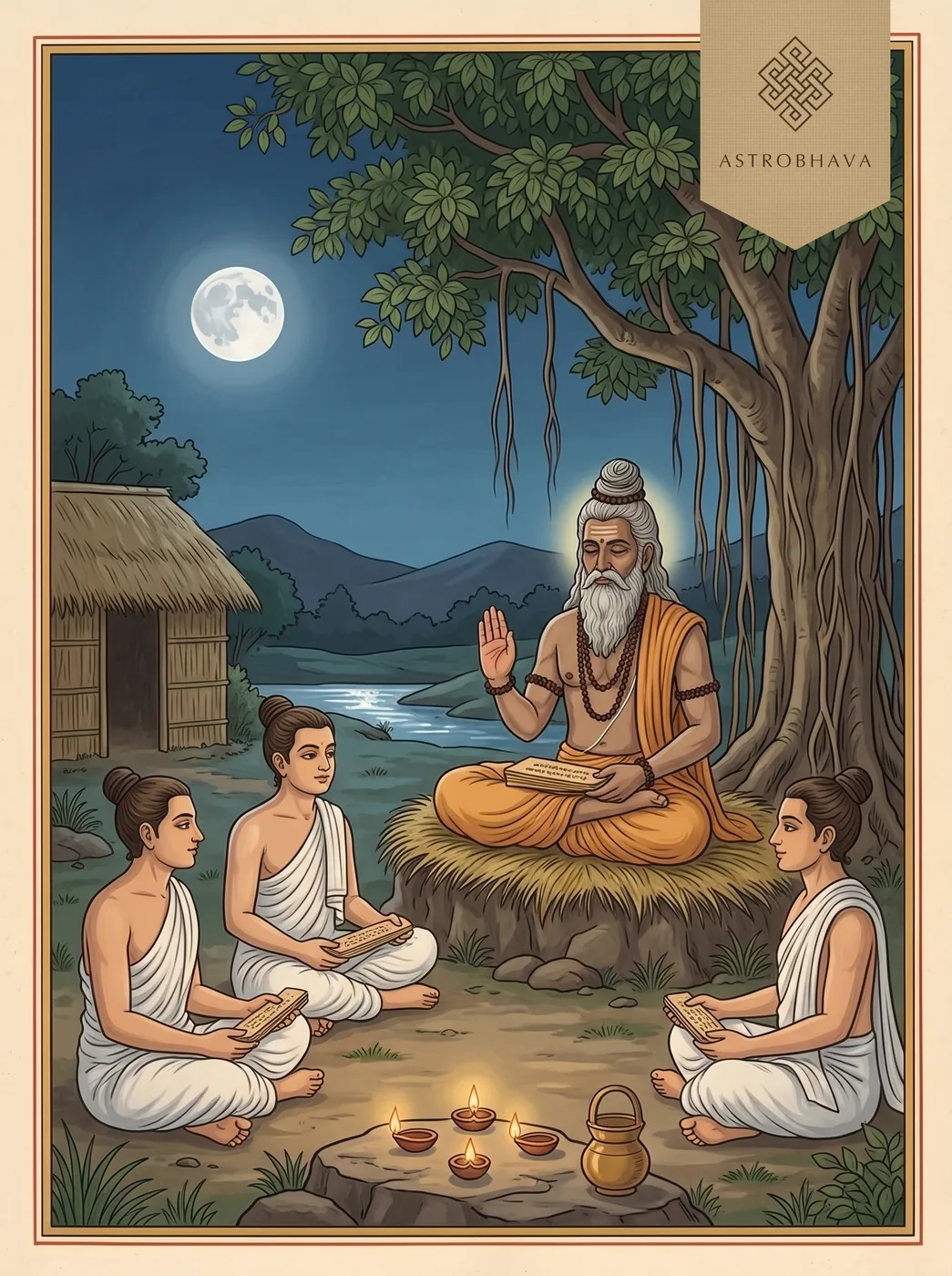
According to tradition, Vyasa was born on this full moon of Ashadha to the sage Parashara and Satyavati, a fisherman's daughter, on an island, which gave him the name Dvaipayana. His title means the arranger: tradition holds that he gathered the one Veda and divided it into four, then handed each to a disciple, Paila, Vaishampayana, Jaimini and Sumantu. The Vishnu Purana adds that in every Dvapara age Vishnu takes the form of a Vyasa to divide the Veda again, which is the thought behind Verse 2. The family named in Verse 1 carries its own story. Shakti, Vasishtha's son, was killed before his child was born, and the grieving Vasishtha raised the boy, Parashara. Vyasa's own son Shuka became the renunciate who narrates the Bhagavata Purana. These names are not only a pedigree. In the Advaita teacher line, Narayana and Brahma are followed by Vasishtha, Shakti, Parashara, Vyasa and Shuka, then Gaudapada, Govinda and Shankaracharya, so Verse 1 recites the first human rungs of the succession that Verse 3 salutes as a whole. Ascetics who keep the rainy-season retreat of Chaturmasya begin it on this day with worship of Vyasa and of their own teachers, and householders honour their teachers the same day.
The mantra, in six scripts
- व्यासं
- vyāsaṃ — Vyasa (to him)
- वसिष्ठनप्तारं
- vasiṣṭhanaptāraṃ — the great-grandson of Vasishtha
- शक्तेः
- śakteḥ — of Shakti
- पौत्रमकल्मषम्
- pautramakalmaṣam — the spotless grandson
- पराशरात्मजं
- parāśarātmajaṃ — the son of Parashara
- वन्दे
- vande — I bow to
- शुकतातं
- śukatātaṃ — the father of Shuka
- तपोनिधिम्
- taponidhim — a treasure of austerity
Guru Purnima Mantra lyrics in full
Four shlokas: the two Vyasa verses first, as befits Vyasa Purnima, then the two verses to the line of teachers.
All 4 verses, in Sanskrit, Tamil, Telugu, Kannada, Malayalam and English, each with its meaning. Choose a script:
Download the Guru Purnima Mantra PDFAll 4 verses with their meanings, in Sanskrit. Free to print and keep.
व्यासं वसिष्ठनप्तारं शक्तेः पौत्रमकल्मषम् ।
पराशरात्मजं वन्दे शुकतातं तपोनिधिम् ॥
வ்யாஸம் வஸிஷ்டநப்தாரம் ஶக்தேஃ பௌத்ரமகல்மஷம் ।
பராஶராத்மஜம் வந்தே ஶுகதாதம் தபோநிதிம் ॥
వ్యాసం వసిష్ఠనప్తారం శక్తేః పౌత్రమకల్మషమ్ ।
పరాశరాత్మజం వన్దే శుకతాతం తపోనిధిమ్ ॥
ವ್ಯಾಸಂ ವಸಿಷ್ಠನಪ್ತಾರಂ ಶಕ್ತೇಃ ಪೌತ್ರಮಕಲ್ಮಷಮ್ ।
ಪರಾಶರಾತ್ಮಜಂ ವನ್ದೇ ಶುಕತಾತಂ ತಪೋನಿಧಿಮ್ ॥
വ്യാസം വസിഷ്ഠനപ്താരം ശക്തേഃ പൌത്രമകല്മഷമ് ।
പരാശരാത്മജം വന്ദേ ശുകതാതം തപോനിധിമ് ॥
vyāsaṃ vasiṣṭhanaptāraṃ śakteḥ pautramakalmaṣam |
parāśarātmajaṃ vande śukatātaṃ taponidhim ||
I bow to Vyasa, the spotless one, great-grandson of Vasishtha and grandson of Shakti, the son of Parashara and father of Shuka, a treasure of austerity.
व्यासाय विष्णुरूपाय व्यासरूपाय विष्णवे ।
नमो वै ब्रह्मनिधये वासिष्ठाय नमो नमः ॥
வ்யாஸாய விஷ்ணுரூபாய வ்யாஸரூபாய விஷ்ணவே ।
நமோ வை ப்ரஹ்மநிதயே வாஸிஷ்டாய நமோ நமஃ ॥
వ్యాసాయ విష్ణురూపాయ వ్యాసరూపాయ విష్ణవే ।
నమో వై బ్రహ్మనిధయే వాసిష్ఠాయ నమో నమః ॥
ವ್ಯಾಸಾಯ ವಿಷ್ಣುರೂಪಾಯ ವ್ಯಾಸರೂಪಾಯ ವಿಷ್ಣವೇ ।
ನಮೋ ವೈ ಬ್ರಹ್ಮನಿಧಯೇ ವಾಸಿಷ್ಠಾಯ ನಮೋ ನಮಃ ॥
വ്യാസായ വിഷ്ണുരൂപായ വ്യാസരൂപായ വിഷ്ണവേ ।
നമോ വൈ ബ്രഹ്മനിധയേ വാസിഷ്ഠായ നമോ നമഃ ॥
vyāsāya viṣṇurūpāya vyāsarūpāya viṣṇave |
namo vai brahmanidhaye vāsiṣṭhāya namo namaḥ ||
Salutation to Vyasa who is Vishnu in form, and to Vishnu who takes the form of Vyasa. Again and again I bow to him, the treasure-house of Brahman, born in the line of Vasishtha.
सदाशिवसमारम्भां शङ्कराचार्यमध्यमाम् ।
अस्मदाचार्यपर्यन्तां वन्दे गुरुपरम्पराम् ॥
ஸதாஶிவஸமாரம்பாம் ஶங்கராசார்யமத்யமாம் ।
அஸ்மதாசார்யபர்யந்தாம் வந்தே குருபரம்பராம் ॥
సదాశివసమారమ్భాం శఙ్కరాచార్యమధ్యమామ్ ।
అస్మదాచార్యపర్యన్తాం వన్దే గురుపరమ్పరామ్ ॥
ಸದಾಶಿವಸಮಾರಮ್ಭಾಂ ಶಙ್ಕರಾಚಾರ್ಯಮಧ್ಯಮಾಮ್ ।
ಅಸ್ಮದಾಚಾರ್ಯಪರ್ಯನ್ತಾಂ ವನ್ದೇ ಗುರುಪರಮ್ಪರಾಮ್ ॥
സദാശിവസമാരമ്ഭാം ശങ്കരാചാര്യമധ്യമാമ് ।
അസ്മദാചാര്യപര്യന്താം വന്ദേ ഗുരുപരമ്പരാമ് ॥
sadāśivasamārambhāṃ śaṅkarācāryamadhyamām |
asmadācāryaparyantāṃ vande guruparamparām ||
I bow to the line of teachers that begins with Sadashiva, has Shankaracharya in its middle, and reaches down to my own teacher.
शङ्करं शङ्कराचार्यं केशवं बादरायणम् ।
सूत्रभाष्यकृतौ वन्दे भगवन्तौ पुनः पुनः ॥
ஶங்கரம் ஶங்கராசார்யம் கேஶவம் பாதராயணம் ।
ஸூத்ரபாஷ்யக்ருதௌ வந்தே பகவந்தௌ புநஃ புநஃ ॥
శఙ్కరం శఙ్కరాచార్యం కేశవం బాదరాయణమ్ ।
సూత్రభాష్యకృతౌ వన్దే భగవన్తౌ పునః పునః ॥
ಶಙ್ಕರಂ ಶಙ್ಕರಾಚಾರ್ಯಂ ಕೇಶವಂ ಬಾದರಾಯಣಮ್ ।
ಸೂತ್ರಭಾಷ್ಯಕೃತೌ ವನ್ದೇ ಭಗವನ್ತೌ ಪುನಃ ಪುನಃ ॥
ശങ്കരം ശങ്കരാചാര്യം കേശവം ബാദരായണമ് ।
സൂത്രഭാഷ്യകൃതൌ വന്ദേ ഭഗവന്തൌ പുനഃ പുനഃ ॥
śaṅkaraṃ śaṅkarācāryaṃ keśavaṃ bādarāyaṇam |
sūtrabhāṣyakṛtau vande bhagavantau punaḥ punaḥ ||
Again and again I bow to the two revered ones: Badarayana, who is Keshava (Vishnu) and wrote the Sutras, and Shankaracharya, who is Shankara (Shiva) and wrote the commentary on them.
The syllable people get wrong
In vasiṣṭhanaptāraṃ (Verse 1), the ṣṭh of vasiṣṭha is a retroflex cluster: curl the tongue tip back for ṣ, then release an aspirated ṭh, va-siSHT-ha. It is often said 'Vashishta' with a soft sh and a plain t, which loses both the retroflex sounds and the breath.
When the Guru Purnima Mantra is chanted
Festival. Guru Purnima (Ashadha Purnima, Vyasa Purnima)
Questions
Have your chart read before you decide
Chanting is yours to do, and free. But which deity your situation calls for — and whether a mantra alone is the right response — depends on your chart. Sometimes it is; sometimes it is not.
- Over 30 years in the Guru–Sishya Parampara, from the age of five
- He reads every chart himself — 60 minutes, one to one, never delegated
- Charts are read only between sunrise and sunset, following tradition