Hanuman Sahasranamam
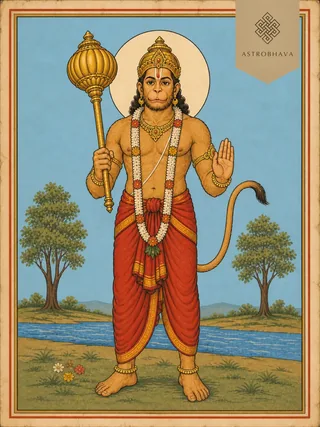
प्रतप्तस्वर्णवर्णाभं संरक्तारुणलोचनम् । सुग्रीवादियुतं ध्यायेत् पीताम्बरसमावृतम् ॥Also known as Anjaneya Sahasranama Stotram
In Devanagari, Tamil, Telugu, Kannada, Malayalam and English — with the meaning of every word, and the one syllable most people pronounce wrongly.
 The Hanuman Homam, performed for youBook →
What the Hanuman Sahasranamam is
The Hanuman Sahasranamam, also called the Hanuman Sahasranama, praises Hanuman in a thousand names set out as Sanskrit verse rather than as a numbered list. The form printed here opens with the names hanuman shriprado vayuputro rudro nayo'jarah. Three dhyana verses come first, picturing Hanuman glowing like molten gold, the ocean shrunk to a cow's hoofprint beneath him and Ravana's ten faces dragged down by his left hand. Then follow 128 verses of names and six verses of phala shruti. The names move freely between the Ramayana and theology. Beside the burning of Lanka and the life restored to Lakshmana, they call Hanuman Rudra, Sharva and Sadyojata, set all ten avatars of Vishnu in a single verse, and describe him as the Brahman reached through the teaching neti neti, not this, not this. No poet is named; the opening frame gives Sri Ramachandra as the seer of the hymn.
Rama's thousand names at Lohagiri
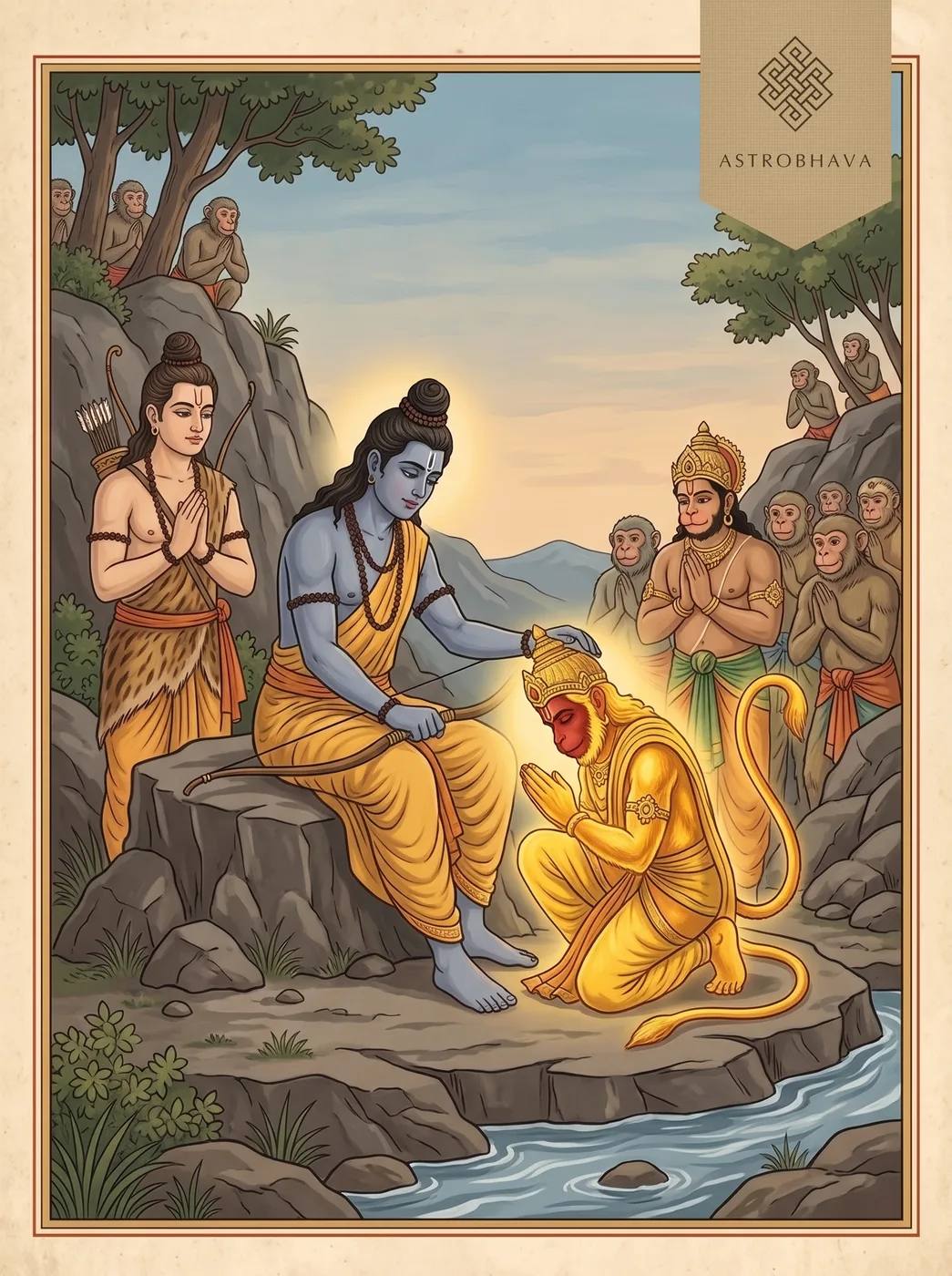
The printed text sets the hymn inside a short frame narrated by Valmiki. The rishis ask him what Rama did when he reached Lohagiri, worn down by his separation from Sita. Valmiki relates that Hanuman came quickly, fell at Rama's feet and spoke with folded hands, saying that the sight of those feet had made his life complete. Rama told him that someone had carried Vaidehi away while he was chasing Marica. When the rishis ask for the mantra Rama then used, Valmiki gives a root mantra and the thousand names, and says that remembering them helped Hanuman win Sita back and gave Vibhishana a kingdom free of enemies. The frame reverses the usual direction of praise: here the god honours his servant, which is why the viniyoga names Sri Ramachandra as the seer, Anushtubh as the metre and Hanuman, the great Rudra, as the deity. One recension adds a seven-verse coda after the names, in which Hanuman, pleased, tells Rama he recognises him as the Brahman on whom devotees meditate, asks what task awaits him and accepts the charge to find Sita. Some popular prints connect the hymn with the Ananda Ramayana, a later retelling of Rama's story traditionally ascribed to Valmiki, but the standard printed text names no parent work.
The mantra, in six scripts
- हनूमान्
- hanūmān — Hanuman
- श्रीप्रदो
- śrīprado — giver of fortune
- वायुपुत्रो
- vāyuputro — son of Vayu
- रुद्रो
- rudro — Rudra
- नयोऽजरः
- nayo'jaraḥ — the guide, the ageless
- अमृत्युर्वीरवीरश्च
- amṛtyurvīravīraśca — deathless, hero of heroes, and
- ग्रामवासो
- grāmavāso — who dwells in the village
- जनाश्रयः
- janāśrayaḥ — refuge of the people
Hanuman Sahasranamam lyrics in full
Three dhyana verses, 128 verses of names and six verses of phala shruti, in the form that opens hanuman shriprado vayuputro. The printed closing line is given at the end.
All 138 verses, in Sanskrit, Tamil, Telugu, Kannada, Malayalam and English, each with its meaning. Choose a script:
Download the Hanuman Sahasranamam PDFAll 138 verses with their meanings, in Sanskrit. Free to print and keep.
प्रतप्तस्वर्णवर्णाभं संरक्तारुणलोचनम् ।
सुग्रीवादियुतं ध्यायेत् पीताम्बरसमावृतम् ॥
ப்ரதப்தஸ்வர்ணவர்ணாபம் ஸம்ரக்தாருணலோசநம் ।
ஸுக்ரீவாதியுதம் த்யாயேத் பீதாம்பரஸமாவ்ருதம் ॥
ప్రతప్తస్వర్ణవర్ణాభం సంరక్తారుణలోచనమ్ ।
సుగ్రీవాదియుతం ధ్యాయేత్ పీతామ్బరసమావృతమ్ ॥
ಪ್ರತಪ್ತಸ್ವರ್ಣವರ್ಣಾಭಂ ಸಂರಕ್ತಾರುಣಲೋಚನಮ್ ।
ಸುಗ್ರೀವಾದಿಯುತಂ ಧ್ಯಾಯೇತ್ ಪೀತಾಮ್ಬರಸಮಾವೃತಮ್ ॥
പ്രതപ്തസ്വര്ണവര്ണാഭം സംരക്താരുണലോചനമ് ।
സുഗ്രീവാദിയുതം ധ്യായേത് പീതാമ്ബരസമാവൃതമ് ॥
prataptasvarṇavarṇābhaṃ saṃraktāruṇalocanam |
sugrīvādiyutaṃ dhyāyet pītāmbarasamāvṛtam ||
One should meditate on Hanuman, glowing like molten gold, with deep red eyes, attended by Sugriva and the other Vanaras, and clad in yellow garments.
गोष्पदीकृतवाराशिं पुच्छमस्तकमीश्वरम् ।
ज्ञानमुद्रां च बिभ्राणं सर्वालङ्कारभूषितम् ॥
கோஷ்பதீக்ருதவாராஶிம் புச்சமஸ்தகமீஶ்வரம் ।
ஜ்ஞாநமுத்ராம் ச பிப்ராணம் ஸர்வாலங்காரபூஷிதம் ॥
గోష్పదీకృతవారాశిం పుచ్ఛమస్తకమీశ్వరమ్ ।
జ్ఞానముద్రాం చ బిభ్రాణం సర్వాలఙ్కారభూషితమ్ ॥
ಗೋಷ್ಪದೀಕೃತವಾರಾಶಿಂ ಪುಚ್ಛಮಸ್ತಕಮೀಶ್ವರಮ್ ।
ಜ್ಞಾನಮುದ್ರಾಂ ಚ ಬಿಭ್ರಾಣಂ ಸರ್ವಾಲಙ್ಕಾರಭೂಷಿತಮ್ ॥
ഗോഷ്പദീകൃതവാരാശിം പുച്ഛമസ്തകമീശ്വരമ് ।
ജ്ഞാനമുദ്രാം ച ബിഭ്രാണം സര്വാലങ്കാരഭൂഷിതമ് ॥
goṣpadīkṛtavārāśiṃ pucchamastakamīśvaram |
jñānamudrāṃ ca bibhrāṇaṃ sarvālaṅkārabhūṣitam ||
He made the ocean as small as a cow's hoofprint, his tail raised above his head; he is the Lord, holding the gesture of knowledge and adorned with every ornament.
वामहस्तसमाकृष्टदशास्याननमण्डलम् ।
उद्यद्दक्षिणदोर्दण्डं हनूमन्तं विचिन्तयेत् ॥
வாமஹஸ்தஸமாக்ருஷ்டதஶாஸ்யாநநமண்டலம் ।
உத்யத்தக்ஷிணதோர்தண்டம் ஹநூமந்தம் விசிந்தயேத் ॥
వామహస్తసమాకృష్టదశాస్యాననమణ్డలమ్ ।
ఉద్యద్దక్షిణదోర్దణ్డం హనూమన్తం విచిన్తయేత్ ॥
ವಾಮಹಸ್ತಸಮಾಕೃಷ್ಟದಶಾಸ್ಯಾನನಮಣ್ಡಲಮ್ ।
ಉದ್ಯದ್ದಕ್ಷಿಣದೋರ್ದಣ್ಡಂ ಹನೂಮನ್ತಂ ವಿಚಿನ್ತಯೇತ್ ॥
വാമഹസ്തസമാകൃഷ്ടദശാസ്യാനനമണ്ഡലമ് ।
ഉദ്യദ്ദക്ഷിണദോര്ദണ്ഡം ഹനൂമന്തം വിചിന്തയേത് ॥
vāmahastasamākṛṣṭadaśāsyānanamaṇḍalam |
udyaddakṣiṇadordaṇḍaṃ hanūmantaṃ vicintayet ||
One should contemplate Hanuman, who with his left hand drags down the circle of Ravana's ten faces and raises his mighty right arm.
हनूमान् श्रीप्रदो वायुपुत्रो रुद्रो नयोऽजरः ।
अमृत्युर्वीरवीरश्च ग्रामवासो जनाश्रयः ॥
ஹநூமாந் ஶ்ரீப்ரதோ வாயுபுத்ரோ ருத்ரோ நயோஜரஃ ।
அம்ருத்யுர்வீரவீரஶ்ச க்ராமவாஸோ ஜநாஶ்ரயஃ ॥
హనూమాన్ శ్రీప్రదో వాయుపుత్రో రుద్రో నయోఽజరః ।
అమృత్యుర్వీరవీరశ్చ గ్రామవాసో జనాశ్రయః ॥
ಹನೂಮಾನ್ ಶ್ರೀಪ್ರದೋ ವಾಯುಪುತ್ರೋ ರುದ್ರೋ ನಯೋಽಜರಃ ।
ಅಮೃತ್ಯುರ್ವೀರವೀರಶ್ಚ ಗ್ರಾಮವಾಸೋ ಜನಾಶ್ರಯಃ ॥
ഹനൂമാന് ശ്രീപ്രദോ വായുപുത്രോ രുദ്രോ നയോഽജരഃ ।
അമൃത്യുര്വീരവീരശ്ച ഗ്രാമവാസോ ജനാശ്രയഃ ॥
hanūmān śrīprado vāyuputro rudro nayo'jaraḥ |
amṛtyurvīravīraśca grāmavāso janāśrayaḥ ||
Hanuman, giver of fortune, son of Vayu, Rudra, the guide, the ageless one; the deathless, hero among heroes, who dwells in the village and is the refuge of the people.
धनदो निर्गुणाकारो वीरो निधिपतिर्मुनिः ।
पिङ्गाक्षो वरदो वाग्मी सीताशोकविनाशनः ॥
தநதோ நிர்குணாகாரோ வீரோ நிதிபதிர்முநிஃ ।
பிங்காக்ஷோ வரதோ வாக்மீ ஸீதாஶோகவிநாஶநஃ ॥
ధనదో నిర్గుణాకారో వీరో నిధిపతిర్మునిః ।
పిఙ్గాక్షో వరదో వాగ్మీ సీతాశోకవినాశనః ॥
ಧನದೋ ನಿರ್ಗುಣಾಕಾರೋ ವೀರೋ ನಿಧಿಪತಿರ್ಮುನಿಃ ।
ಪಿಙ್ಗಾಕ್ಷೋ ವರದೋ ವಾಗ್ಮೀ ಸೀತಾಶೋಕವಿನಾಶನಃ ॥
ധനദോ നിര്ഗുണാകാരോ വീരോ നിധിപതിര്മുനിഃ ।
പിങ്ഗാക്ഷോ വരദോ വാഗ്മീ സീതാശോകവിനാശനഃ ॥
dhanado nirguṇākāro vīro nidhipatirmuniḥ |
piṅgākṣo varado vāgmī sītāśokavināśanaḥ ||
Giver of wealth, whose form is beyond qualities, the hero, lord of treasures, the sage; tawny-eyed, giver of boons, master of speech, destroyer of Sita's grief.
शिवः शर्वः परोऽव्यक्तो व्यक्ताव्यक्तो धराधरः ।
पिङ्गकेशः पिङ्गरोमा श्रुतिगम्यः सनातनः ॥
ஶிவஃ ஶர்வஃ பரோவ்யக்தோ வ்யக்தாவ்யக்தோ தராதரஃ ।
பிங்ககேஶஃ பிங்கரோமா ஶ்ருதிகம்யஃ ஸநாதநஃ ॥
శివః శర్వః పరోఽవ్యక్తో వ్యక్తావ్యక్తో ధరాధరః ।
పిఙ్గకేశః పిఙ్గరోమా శ్రుతిగమ్యః సనాతనః ॥
ಶಿವಃ ಶರ್ವಃ ಪರೋಽವ್ಯಕ್ತೋ ವ್ಯಕ್ತಾವ್ಯಕ್ತೋ ಧರಾಧರಃ ।
ಪಿಙ್ಗಕೇಶಃ ಪಿಙ್ಗರೋಮಾ ಶ್ರುತಿಗಮ್ಯಃ ಸನಾತನಃ ॥
ശിവഃ ശര്വഃ പരോഽവ്യക്തോ വ്യക്താവ്യക്തോ ധരാധരഃ ।
പിങ്ഗകേശഃ പിങ്ഗരോമാ ശ്രുതിഗമ്യഃ സനാതനഃ ॥
śivaḥ śarvaḥ paro'vyakto vyaktāvyakto dharādharaḥ |
piṅgakeśaḥ piṅgaromā śrutigamyaḥ sanātanaḥ ||
Auspicious Shiva, Sharva, the supreme, the unmanifest, both manifest and unmanifest, upholder of the earth; tawny-haired, with tawny body hair, known through the Vedas, the eternal.
अनादिर्भगवान् दिव्यो विश्वहेतुर्नराश्रयः ।
आरोग्यकर्ता विश्वेशो विश्वनाथो हरीश्वरः ॥
அநாதிர்பகவாந் திவ்யோ விஶ்வஹேதுர்நராஶ்ரயஃ ।
ஆரோக்யகர்தா விஶ்வேஶோ விஶ்வநாதோ ஹரீஶ்வரஃ ॥
అనాదిర్భగవాన్ దివ్యో విశ్వహేతుర్నరాశ్రయః ।
ఆరోగ్యకర్తా విశ్వేశో విశ్వనాథో హరీశ్వరః ॥
ಅನಾದಿರ್ಭಗವಾನ್ ದಿವ್ಯೋ ವಿಶ್ವಹೇತುರ್ನರಾಶ್ರಯಃ ।
ಆರೋಗ್ಯಕರ್ತಾ ವಿಶ್ವೇಶೋ ವಿಶ್ವನಾಥೋ ಹರೀಶ್ವರಃ ॥
അനാദിര്ഭഗവാന് ദിവ്യോ വിശ്വഹേതുര്നരാശ്രയഃ ।
ആരോഗ്യകര്താ വിശ്വേശോ വിശ്വനാഥോ ഹരീശ്വരഃ ॥
anādirbhagavān divyo viśvaheturnarāśrayaḥ |
ārogyakartā viśveśo viśvanātho harīśvaraḥ ||
Without beginning, the blessed Lord, the divine, cause of the universe, refuge of humankind; giver of health, lord and master of the universe, lord of the monkeys.
भर्गो रामो रामभक्तः कल्याणप्रकृतीश्वरः ।
विश्वम्भरो विश्वमूर्तिर्विश्वाकारोऽथ विश्वपः ॥
பர்கோ ராமோ ராமபக்தஃ கல்யாணப்ரக்ருதீஶ்வரஃ ।
விஶ்வம்பரோ விஶ்வமூர்திர்விஶ்வாகாரோத விஶ்வபஃ ॥
భర్గో రామో రామభక్తః కల్యాణప్రకృతీశ్వరః ।
విశ్వమ్భరో విశ్వమూర్తిర్విశ్వాకారోఽథ విశ్వపః ॥
ಭರ್ಗೋ ರಾಮೋ ರಾಮಭಕ್ತಃ ಕಲ್ಯಾಣಪ್ರಕೃತೀಶ್ವರಃ ।
ವಿಶ್ವಮ್ಭರೋ ವಿಶ್ವಮೂರ್ತಿರ್ವಿಶ್ವಾಕಾರೋಽಥ ವಿಶ್ವಪಃ ॥
ഭര്ഗോ രാമോ രാമഭക്തഃ കല്യാണപ്രകൃതീശ്വരഃ ।
വിശ്വമ്ഭരോ വിശ്വമൂര്തിര്വിശ്വാകാരോഽഥ വിശ്വപഃ ॥
bhargo rāmo rāmabhaktaḥ kalyāṇaprakṛtīśvaraḥ |
viśvambharo viśvamūrtirviśvākāro'tha viśvapaḥ ||
The radiant one, Rama himself and Rama's devotee, lord of auspicious nature; sustainer of the world, whose form and shape is the universe, protector of the universe.
विश्वात्मा विश्वसेव्योऽथ विश्वो विश्वधरो रविः ।
विश्वचेष्टो विश्वगम्यो विश्वध्येयः कलाधरः ॥
விஶ்வாத்மா விஶ்வஸேவ்யோத விஶ்வோ விஶ்வதரோ ரவிஃ ।
விஶ்வசேஷ்டோ விஶ்வகம்யோ விஶ்வத்யேயஃ கலாதரஃ ॥
విశ్వాత్మా విశ్వసేవ్యోఽథ విశ్వో విశ్వధరో రవిః ।
విశ్వచేష్టో విశ్వగమ్యో విశ్వధ్యేయః కలాధరః ॥
ವಿಶ್ವಾತ್ಮಾ ವಿಶ್ವಸೇವ್ಯೋಽಥ ವಿಶ್ವೋ ವಿಶ್ವಧರೋ ರವಿಃ ।
ವಿಶ್ವಚೇಷ್ಟೋ ವಿಶ್ವಗಮ್ಯೋ ವಿಶ್ವಧ್ಯೇಯಃ ಕಲಾಧರಃ ॥
വിശ്വാത്മാ വിശ്വസേവ്യോഽഥ വിശ്വോ വിശ്വധരോ രവിഃ ।
വിശ്വചേഷ്ടോ വിശ്വഗമ്യോ വിശ്വധ്യേയഃ കലാധരഃ ॥
viśvātmā viśvasevyo'tha viśvo viśvadharo raviḥ |
viśvaceṣṭo viśvagamyo viśvadhyeyaḥ kalādharaḥ ||
Soul of the universe, served by the universe, the universe itself, its upholder, the sun; whose activity, reach and object of meditation is the universe, holder of all the arts.
प्लवङ्गमः कपिश्रेष्ठो ज्येष्ठो वेद्यो वनेचरः ।
बालो वृद्धो युवा तत्त्वं तत्त्वगम्यः सखा ह्यजः ॥
ப்லவங்கமஃ கபிஶ்ரேஷ்டோ ஜ்யேஷ்டோ வேத்யோ வநேசரஃ ।
பாலோ வ்ருத்தோ யுவா தத்த்வம் தத்த்வகம்யஃ ஸகா ஹ்யஜஃ ॥
ప్లవఙ్గమః కపిశ్రేష్ఠో జ్యేష్ఠో వేద్యో వనేచరః ।
బాలో వృద్ధో యువా తత్త్వం తత్త్వగమ్యః సఖా హ్యజః ॥
ಪ್ಲವಙ್ಗಮಃ ಕಪಿಶ್ರೇಷ್ಠೋ ಜ್ಯೇಷ್ಠೋ ವೇದ್ಯೋ ವನೇಚರಃ ।
ಬಾಲೋ ವೃದ್ಧೋ ಯುವಾ ತತ್ತ್ವಂ ತತ್ತ್ವಗಮ್ಯಃ ಸಖಾ ಹ್ಯಜಃ ॥
പ്ലവങ്ഗമഃ കപിശ്രേഷ്ഠോ ജ്യേഷ്ഠോ വേദ്യോ വനേചരഃ ।
ബാലോ വൃദ്ധോ യുവാ തത്ത്വം തത്ത്വഗമ്യഃ സഖാ ഹ്യജഃ ॥
plavaṅgamaḥ kapiśreṣṭho jyeṣṭho vedyo vanecaraḥ |
bālo vṛddho yuvā tattvaṃ tattvagamyaḥ sakhā hyajaḥ ||
The leaping one, best of monkeys, the eldest, the one to be known, the forest dweller; the child, the elder and the youth, the truth itself, reached through truth, the friend, the unborn.
अञ्जनासूनुरव्यग्रो ग्रामस्यान्तो धराधरः ।
भूर्भुवःस्वर्महर्लोको जनोलोकस्तपोऽव्ययः ॥
அஞ்ஜநாஸூநுரவ்யக்ரோ க்ராமஸ்யாந்தோ தராதரஃ ।
பூர்புவஃஸ்வர்மஹர்லோகோ ஜநோலோகஸ்தபோவ்யயஃ ॥
అఞ్జనాసూనురవ్యగ్రో గ్రామస్యాన్తో ధరాధరః ।
భూర్భువఃస్వర్మహర్లోకో జనోలోకస్తపోఽవ్యయః ॥
ಅಞ್ಜನಾಸೂನುರವ್ಯಗ್ರೋ ಗ್ರಾಮಸ್ಯಾನ್ತೋ ಧರಾಧರಃ ।
ಭೂರ್ಭುವಃಸ್ವರ್ಮಹರ್ಲೋಕೋ ಜನೋಲೋಕಸ್ತಪೋಽವ್ಯಯಃ ॥
അഞ്ജനാസൂനുരവ്യഗ്രോ ഗ്രാമസ്യാന്തോ ധരാധരഃ ।
ഭൂര്ഭുവഃസ്വര്മഹര്ലോകോ ജനോലോകസ്തപോഽവ്യയഃ ॥
añjanāsūnuravyagro grāmasyānto dharādharaḥ |
bhūrbhuvaḥsvarmaharloko janolokastapo'vyayaḥ ||
Son of Anjana, the unperturbed, the boundary of the village, upholder of the earth; he is the worlds Bhu, Bhuvah, Svah, Mahah, Janah and Tapah, and the imperishable.
सत्यमोङ्कारगम्यश्च प्रणवो व्यापकोऽमलः ।
शिवधर्मप्रतिष्ठाता रामेष्टः फल्गुनप्रियः ॥
ஸத்யமோங்காரகம்யஶ்ச ப்ரணவோ வ்யாபகோமலஃ ।
ஶிவதர்மப்ரதிஷ்டாதா ராமேஷ்டஃ பல்குநப்ரியஃ ॥
సత్యమోఙ్కారగమ్యశ్చ ప్రణవో వ్యాపకోఽమలః ।
శివధర్మప్రతిష్ఠాతా రామేష్టః ఫల్గునప్రియః ॥
ಸತ್ಯಮೋಙ್ಕಾರಗಮ್ಯಶ್ಚ ಪ್ರಣವೋ ವ್ಯಾಪಕೋಽಮಲಃ ।
ಶಿವಧರ್ಮಪ್ರತಿಷ್ಠಾತಾ ರಾಮೇಷ್ಟಃ ಫಲ್ಗುನಪ್ರಿಯಃ ॥
സത്യമോങ്കാരഗമ്യശ്ച പ്രണവോ വ്യാപകോഽമലഃ ।
ശിവധര്മപ്രതിഷ്ഠാതാ രാമേഷ്ടഃ ഫല്ഗുനപ്രിയഃ ॥
satyamoṅkāragamyaśca praṇavo vyāpako'malaḥ |
śivadharmapratiṣṭhātā rāmeṣṭaḥ phalgunapriyaḥ ||
He is Satya, reached through Om, the sacred syllable itself, all-pervading and spotless; establisher of the dharma of Shiva, dear to Rama and dear to Arjuna.
गोष्पदीकृतवारीशः पूर्णकामो धरापतिः ।
रक्षोघ्नः पुण्डरीकाक्षः शरणागतवत्सलः ॥
கோஷ்பதீக்ருதவாரீஶஃ பூர்ணகாமோ தராபதிஃ ।
ரக்ஷோக்நஃ புண்டரீகாக்ஷஃ ஶரணாகதவத்ஸலஃ ॥
గోష్పదీకృతవారీశః పూర్ణకామో ధరాపతిః ।
రక్షోఘ్నః పుణ్డరీకాక్షః శరణాగతవత్సలః ॥
ಗೋಷ್ಪದೀಕೃತವಾರೀಶಃ ಪೂರ್ಣಕಾಮೋ ಧರಾಪತಿಃ ।
ರಕ್ಷೋಘ್ನಃ ಪುಣ್ಡರೀಕಾಕ್ಷಃ ಶರಣಾಗತವತ್ಸಲಃ ॥
ഗോഷ്പദീകൃതവാരീശഃ പൂര്ണകാമോ ധരാപതിഃ ।
രക്ഷോഘ്നഃ പുണ്ഡരീകാക്ഷഃ ശരണാഗതവത്സലഃ ॥
goṣpadīkṛtavārīśaḥ pūrṇakāmo dharāpatiḥ |
rakṣoghnaḥ puṇḍarīkākṣaḥ śaraṇāgatavatsalaḥ ||
He made the ocean a hoofprint, his wishes are fulfilled, he is lord of the earth; slayer of demons, lotus-eyed, tender to all who seek his shelter.
जानकीप्राणदाता च रक्षःप्राणापहारकः ।
पूर्णः सत्यः पीतवासा दिवाकरसमप्रभः ॥
ஜாநகீப்ராணதாதா ச ரக்ஷஃப்ராணாபஹாரகஃ ।
பூர்ணஃ ஸத்யஃ பீதவாஸா திவாகரஸமப்ரபஃ ॥
జానకీప్రాణదాతా చ రక్షఃప్రాణాపహారకః ।
పూర్ణః సత్యః పీతవాసా దివాకరసమప్రభః ॥
ಜಾನಕೀಪ್ರಾಣದಾತಾ ಚ ರಕ್ಷಃಪ್ರಾಣಾಪಹಾರಕಃ ।
ಪೂರ್ಣಃ ಸತ್ಯಃ ಪೀತವಾಸಾ ದಿವಾಕರಸಮಪ್ರಭಃ ॥
ജാനകീപ്രാണദാതാ ച രക്ഷഃപ്രാണാപഹാരകഃ ।
പൂര്ണഃ സത്യഃ പീതവാസാ ദിവാകരസമപ്രഭഃ ॥
jānakīprāṇadātā ca rakṣaḥprāṇāpahārakaḥ |
pūrṇaḥ satyaḥ pītavāsā divākarasamaprabhaḥ ||
He gave life back to Janaki and took the life of the demons; the complete, the true, clad in yellow, bright as the sun.
द्रोणहर्ता शक्तिनेता शक्तिराक्षसमारकः ।
अक्षघ्नो रामदूतश्च शाकिनीजीविताहरः ॥
த்ரோணஹர்தா ஶக்திநேதா ஶக்திராக்ஷஸமாரகஃ ।
அக்ஷக்நோ ராமதூதஶ்ச ஶாகிநீஜீவிதாஹரஃ ॥
ద్రోణహర్తా శక్తినేతా శక్తిరాక్షసమారకః ।
అక్షఘ్నో రామదూతశ్చ శాకినీజీవితాహరః ॥
ದ್ರೋಣಹರ್ತಾ ಶಕ್ತಿನೇತಾ ಶಕ್ತಿರಾಕ್ಷಸಮಾರಕಃ ।
ಅಕ್ಷಘ್ನೋ ರಾಮದೂತಶ್ಚ ಶಾಕಿನೀಜೀವಿತಾಹರಃ ॥
ദ്രോണഹര്താ ശക്തിനേതാ ശക്തിരാക്ഷസമാരകഃ ।
അക്ഷഘ്നോ രാമദൂതശ്ച ശാകിനീജീവിതാഹരഃ ॥
droṇahartā śaktinetā śaktirākṣasamārakaḥ |
akṣaghno rāmadūtaśca śākinījīvitāharaḥ ||
Bearer of the Drona mountain, leader of strength, slayer of the demon's power; slayer of Aksha, Rama's messenger, who ended the life of the Shakini spirits.
बुभूकारहतारातिर्गर्वपर्वतमर्दनः ।
हेतुस्त्वहेतुः प्रांशुश्च विश्वकर्ता जगद्गुरुः ॥
புபூகாரஹதாராதிர்கர்வபர்வதமர்தநஃ ।
ஹேதுஸ்த்வஹேதுஃ ப்ராம்ஶுஶ்ச விஶ்வகர்தா ஜகத்குருஃ ॥
బుభూకారహతారాతిర్గర్వపర్వతమర్దనః ।
హేతుస్త్వహేతుః ప్రాంశుశ్చ విశ్వకర్తా జగద్గురుః ॥
ಬುಭೂಕಾರಹತಾರಾತಿರ್ಗರ್ವಪರ್ವತಮರ್ದನಃ ।
ಹೇತುಸ್ತ್ವಹೇತುಃ ಪ್ರಾಂಶುಶ್ಚ ವಿಶ್ವಕರ್ತಾ ಜಗದ್ಗುರುಃ ॥
ബുഭൂകാരഹതാരാതിര്ഗര്വപര്വതമര്ദനഃ ।
ഹേതുസ്ത്വഹേതുഃ പ്രാംശുശ്ച വിശ്വകര്താ ജഗദ്ഗുരുഃ ॥
bubhūkārahatārātirgarvaparvatamardanaḥ |
hetustvahetuḥ prāṃśuśca viśvakartā jagadguruḥ ||
His foes are struck down by his roar, he crushes the mountain of pride; he is the cause and beyond cause, the tall one, maker of the universe, teacher of the world.
जगन्नाथो जगन्नेता जगदीशो जनेश्वरः ।
जगत्श्रितो हरिः श्रीशो गरुडस्मयभञ्जकः ॥
ஜகந்நாதோ ஜகந்நேதா ஜகதீஶோ ஜநேஶ்வரஃ ।
ஜகத்ஶ்ரிதோ ஹரிஃ ஶ்ரீஶோ கருடஸ்மயபஞ்ஜகஃ ॥
జగన్నాథో జగన్నేతా జగదీశో జనేశ్వరః ।
జగత్శ్రితో హరిః శ్రీశో గరుడస్మయభఞ్జకః ॥
ಜಗನ್ನಾಥೋ ಜಗನ್ನೇತಾ ಜಗದೀಶೋ ಜನೇಶ್ವರಃ ।
ಜಗತ್ಶ್ರಿತೋ ಹರಿಃ ಶ್ರೀಶೋ ಗರುಡಸ್ಮಯಭಞ್ಜಕಃ ॥
ജഗന്നാഥോ ജഗന്നേതാ ജഗദീശോ ജനേശ്വരഃ ।
ജഗത്ശ്രിതോ ഹരിഃ ശ്രീശോ ഗരുഡസ്മയഭഞ്ജകഃ ॥
jagannātho jagannetā jagadīśo janeśvaraḥ |
jagatśrito hariḥ śrīśo garuḍasmayabhañjakaḥ ||
Lord, leader and ruler of the world, lord of the people; the world's refuge, Hari, lord of Lakshmi, who broke the pride of Garuda.
पार्थध्वजो वायुपुत्रः सितपुच्छोऽमितप्रभः ।
ब्रह्मपुच्छः परब्रह्मपुच्छो रामेष्टकारकः ॥
பார்தத்வஜோ வாயுபுத்ரஃ ஸிதபுச்சோமிதப்ரபஃ ।
ப்ரஹ்மபுச்சஃ பரப்ரஹ்மபுச்சோ ராமேஷ்டகாரகஃ ॥
పార్థధ్వజో వాయుపుత్రః సితపుచ్ఛోఽమితప్రభః ।
బ్రహ్మపుచ్ఛః పరబ్రహ్మపుచ్ఛో రామేష్టకారకః ॥
ಪಾರ್ಥಧ್ವಜೋ ವಾಯುಪುತ್ರಃ ಸಿತಪುಚ್ಛೋಽಮಿತಪ್ರಭಃ ।
ಬ್ರಹ್ಮಪುಚ್ಛಃ ಪರಬ್ರಹ್ಮಪುಚ್ಛೋ ರಾಮೇಷ್ಟಕಾರಕಃ ॥
പാര്ഥധ്വജോ വായുപുത്രഃ സിതപുച്ഛോഽമിതപ്രഭഃ ।
ബ്രഹ്മപുച്ഛഃ പരബ്രഹ്മപുച്ഛോ രാമേഷ്ടകാരകഃ ॥
pārthadhvajo vāyuputraḥ sitapuccho'mitaprabhaḥ |
brahmapucchaḥ parabrahmapuccho rāmeṣṭakārakaḥ ||
Emblem on Arjuna's banner, son of Vayu, of white tail and boundless splendour; whose tail is Brahman and the supreme Brahman, who accomplishes what Rama desires.
सुग्रीवादियुतो ज्ञानी वानरो वानरेश्वरः ।
कल्पस्थायी चिरञ्जीवी प्रसन्नश्च सदाशिवः ॥
ஸுக்ரீவாதியுதோ ஜ்ஞாநீ வாநரோ வாநரேஶ்வரஃ ।
கல்பஸ்தாயீ சிரஞ்ஜீவீ ப்ரஸந்நஶ்ச ஸதாஶிவஃ ॥
సుగ్రీవాదియుతో జ్ఞానీ వానరో వానరేశ్వరః ।
కల్పస్థాయీ చిరఞ్జీవీ ప్రసన్నశ్చ సదాశివః ॥
ಸುಗ್ರೀವಾದಿಯುತೋ ಜ್ಞಾನೀ ವಾನರೋ ವಾನರೇಶ್ವರಃ ।
ಕಲ್ಪಸ್ಥಾಯೀ ಚಿರಞ್ಜೀವೀ ಪ್ರಸನ್ನಶ್ಚ ಸದಾಶಿವಃ ॥
സുഗ്രീവാദിയുതോ ജ്ഞാനീ വാനരോ വാനരേശ്വരഃ ।
കല്പസ്ഥായീ ചിരഞ്ജീവീ പ്രസന്നശ്ച സദാശിവഃ ॥
sugrīvādiyuto jñānī vānaro vānareśvaraḥ |
kalpasthāyī cirañjīvī prasannaśca sadāśivaḥ ||
Accompanied by Sugriva and the others, the wise one, the Vanara and lord of Vanaras; who lasts through the ages, the long-lived, the gracious, the ever-auspicious Shiva.
सन्मतिः सद्गतिर्भुक्तिमुक्तिदः कीर्तिदायकः ।
कीर्तिः कीर्तिप्रदश्चैव समुद्रः श्रीप्रदः शिवः ॥
ஸந்மதிஃ ஸத்கதிர்புக்திமுக்திதஃ கீர்திதாயகஃ ।
கீர்திஃ கீர்திப்ரதஶ்சைவ ஸமுத்ரஃ ஶ்ரீப்ரதஃ ஶிவஃ ॥
సన్మతిః సద్గతిర్భుక్తిముక్తిదః కీర్తిదాయకః ।
కీర్తిః కీర్తిప్రదశ్చైవ సముద్రః శ్రీప్రదః శివః ॥
ಸನ್ಮತಿಃ ಸದ್ಗತಿರ್ಭುಕ್ತಿಮುಕ್ತಿದಃ ಕೀರ್ತಿದಾಯಕಃ ।
ಕೀರ್ತಿಃ ಕೀರ್ತಿಪ್ರದಶ್ಚೈವ ಸಮುದ್ರಃ ಶ್ರೀಪ್ರದಃ ಶಿವಃ ॥
സന്മതിഃ സദ്ഗതിര്ഭുക്തിമുക്തിദഃ കീര്തിദായകഃ ।
കീര്തിഃ കീര്തിപ്രദശ്ചൈവ സമുദ്രഃ ശ്രീപ്രദഃ ശിവഃ ॥
sanmatiḥ sadgatirbhuktimuktidaḥ kīrtidāyakaḥ |
kīrtiḥ kīrtipradaścaiva samudraḥ śrīpradaḥ śivaḥ ||
Of good mind and the good goal, giver of enjoyment and liberation, bestower of fame; fame itself and giver of fame, the ocean, giver of fortune, the auspicious one.
उदधिक्रमणो देवः संसारभयनाशनः ।
वालिबन्धनकृद्विश्वजेता विश्वप्रतिष्ठितः ॥
உததிக்ரமணோ தேவஃ ஸம்ஸாரபயநாஶநஃ ।
வாலிபந்தநக்ருத்விஶ்வஜேதா விஶ்வப்ரதிஷ்டிதஃ ॥
ఉదధిక్రమణో దేవః సంసారభయనాశనః ।
వాలిబన్ధనకృద్విశ్వజేతా విశ్వప్రతిష్ఠితః ॥
ಉದಧಿಕ್ರಮಣೋ ದೇವಃ ಸಂಸಾರಭಯನಾಶನಃ ।
ವಾಲಿಬನ್ಧನಕೃದ್ವಿಶ್ವಜೇತಾ ವಿಶ್ವಪ್ರತಿಷ್ಠಿತಃ ॥
ഉദധിക്രമണോ ദേവഃ സംസാരഭയനാശനഃ ।
വാലിബന്ധനകൃദ്വിശ്വജേതാ വിശ്വപ്രതിഷ്ഠിതഃ ॥
udadhikramaṇo devaḥ saṃsārabhayanāśanaḥ |
vālibandhanakṛdviśvajetā viśvapratiṣṭhitaḥ ||
The god who crossed the ocean, destroyer of the fear of worldly existence; who bound Vali, conqueror of the world, established in the world.
लङ्कारिः कालपुरुषो लङ्केशगृहभञ्जनः ।
भूतावासो वासुदेवो वसुस्त्रिभुवनेश्वरः ॥
லங்காரிஃ காலபுருஷோ லங்கேஶக்ருஹபஞ்ஜநஃ ।
பூதாவாஸோ வாஸுதேவோ வஸுஸ்த்ரிபுவநேஶ்வரஃ ॥
లఙ్కారిః కాలపురుషో లఙ్కేశగృహభఞ్జనః ।
భూతావాసో వాసుదేవో వసుస్త్రిభువనేశ్వరః ॥
ಲಙ್ಕಾರಿಃ ಕಾಲಪುರುಷೋ ಲಙ್ಕೇಶಗೃಹಭಞ್ಜನಃ ।
ಭೂತಾವಾಸೋ ವಾಸುದೇವೋ ವಸುಸ್ತ್ರಿಭುವನೇಶ್ವರಃ ॥
ലങ്കാരിഃ കാലപുരുഷോ ലങ്കേശഗൃഹഭഞ്ജനഃ ।
ഭൂതാവാസോ വാസുദേവോ വസുസ്ത്രിഭുവനേശ്വരഃ ॥
laṅkāriḥ kālapuruṣo laṅkeśagṛhabhañjanaḥ |
bhūtāvāso vāsudevo vasustribhuvaneśvaraḥ ||
Enemy of Lanka, the person of Time, who broke the house of Lanka's lord; abode of all beings, Vasudeva, the Vasu, lord of the three worlds.
श्रीरामरूपः कृष्णस्तु लङ्काप्रासादभञ्जनः ।
कृष्णः कृष्णस्तुतः शान्तः शान्तिदो विश्वभावनः ॥
ஶ்ரீராமரூபஃ க்ருஷ்ணஸ்து லங்காப்ராஸாதபஞ்ஜநஃ ।
க்ருஷ்ணஃ க்ருஷ்ணஸ்துதஃ ஶாந்தஃ ஶாந்திதோ விஶ்வபாவநஃ ॥
శ్రీరామరూపః కృష్ణస్తు లఙ్కాప్రాసాదభఞ్జనః ।
కృష్ణః కృష్ణస్తుతః శాన్తః శాన్తిదో విశ్వభావనః ॥
ಶ್ರೀರಾಮರೂಪಃ ಕೃಷ್ಣಸ್ತು ಲಙ್ಕಾಪ್ರಾಸಾದಭಞ್ಜನಃ ।
ಕೃಷ್ಣಃ ಕೃಷ್ಣಸ್ತುತಃ ಶಾನ್ತಃ ಶಾನ್ತಿದೋ ವಿಶ್ವಭಾವನಃ ॥
ശ്രീരാമരൂപഃ കൃഷ്ണസ്തു ലങ്കാപ്രാസാദഭഞ്ജനഃ ।
കൃഷ്ണഃ കൃഷ്ണസ്തുതഃ ശാന്തഃ ശാന്തിദോ വിശ്വഭാവനഃ ॥
śrīrāmarūpaḥ kṛṣṇastu laṅkāprāsādabhañjanaḥ |
kṛṣṇaḥ kṛṣṇastutaḥ śāntaḥ śāntido viśvabhāvanaḥ ||
Of the form of Sri Rama, the dark one, who wrecked the palaces of Lanka; Krishna, praised by Krishna, the peaceful, giver of peace, sustainer of the world.
विश्वभोक्ताऽथ मारघ्नो ब्रह्मचारी जितेन्द्रियः ।
ऊर्ध्वगो लाङ्गुली माली लाङ्गूलाहतराक्षसः ॥
விஶ்வபோக்தாத மாரக்நோ ப்ரஹ்மசாரீ ஜிதேந்த்ரியஃ ।
ஊர்த்வகோ லாங்குலீ மாலீ லாங்கூலாஹதராக்ஷஸஃ ॥
విశ్వభోక్తాఽథ మారఘ్నో బ్రహ్మచారీ జితేన్ద్రియః ।
ఊర్ధ్వగో లాఙ్గులీ మాలీ లాఙ్గూలాహతరాక్షసః ॥
ವಿಶ್ವಭೋಕ್ತಾಽಥ ಮಾರಘ್ನೋ ಬ್ರಹ್ಮಚಾರೀ ಜಿತೇನ್ದ್ರಿಯಃ ।
ಊರ್ಧ್ವಗೋ ಲಾಙ್ಗುಲೀ ಮಾಲೀ ಲಾಙ್ಗೂಲಾಹತರಾಕ್ಷಸಃ ॥
വിശ്വഭോക്താഽഥ മാരഘ്നോ ബ്രഹ്മചാരീ ജിതേന്ദ്രിയഃ ।
ഊര്ധ്വഗോ ലാങ്ഗുലീ മാലീ ലാങ്ഗൂലാഹതരാക്ഷസഃ ॥
viśvabhoktā'tha māraghno brahmacārī jitendriyaḥ |
ūrdhvago lāṅgulī mālī lāṅgūlāhatarākṣasaḥ ||
Enjoyer of the universe, slayer of desire, the celibate, master of his senses; who rises upward, the tailed one, wearer of garlands, who strikes the demons with his tail.
समीरतनुजो वीरो वीरमारो जयप्रदः ।
जगन्मङ्गलदः पुण्यः पुण्यश्रवणकीर्तनः ॥
ஸமீரதநுஜோ வீரோ வீரமாரோ ஜயப்ரதஃ ।
ஜகந்மங்கலதஃ புண்யஃ புண்யஶ்ரவணகீர்தநஃ ॥
సమీరతనుజో వీరో వీరమారో జయప్రదః ।
జగన్మఙ్గలదః పుణ్యః పుణ్యశ్రవణకీర్తనః ॥
ಸಮೀರತನುಜೋ ವೀರೋ ವೀರಮಾರೋ ಜಯಪ್ರದಃ ।
ಜಗನ್ಮಙ್ಗಲದಃ ಪುಣ್ಯಃ ಪುಣ್ಯಶ್ರವಣಕೀರ್ತನಃ ॥
സമീരതനുജോ വീരോ വീരമാരോ ജയപ്രദഃ ।
ജഗന്മങ്ഗലദഃ പുണ്യഃ പുണ്യശ്രവണകീര്തനഃ ॥
samīratanujo vīro vīramāro jayapradaḥ |
jaganmaṅgaladaḥ puṇyaḥ puṇyaśravaṇakīrtanaḥ ||
Son of the wind, the hero, slayer of warriors, giver of victory; giver of the world's welfare, the holy one, whose hearing and praise are meritorious.
पुण्यकीर्तिः पुण्यगीतिर्जगत्पावनपावनः ।
देवेशोऽमितरोमाऽथ रामभक्तविधायकः ॥
புண்யகீர்திஃ புண்யகீதிர்ஜகத்பாவநபாவநஃ ।
தேவேஶோமிதரோமாத ராமபக்தவிதாயகஃ ॥
పుణ్యకీర్తిః పుణ్యగీతిర్జగత్పావనపావనః ।
దేవేశోఽమితరోమాఽథ రామభక్తవిధాయకః ॥
ಪುಣ್ಯಕೀರ್ತಿಃ ಪುಣ್ಯಗೀತಿರ್ಜಗತ್ಪಾವನಪಾವನಃ ।
ದೇವೇಶೋಽಮಿತರೋಮಾಽಥ ರಾಮಭಕ್ತವಿಧಾಯಕಃ ॥
പുണ്യകീര്തിഃ പുണ്യഗീതിര്ജഗത്പാവനപാവനഃ ।
ദേവേശോഽമിതരോമാഽഥ രാമഭക്തവിധായകഃ ॥
puṇyakīrtiḥ puṇyagītirjagatpāvanapāvanaḥ |
deveśo'mitaromā'tha rāmabhaktavidhāyakaḥ ||
Of holy fame and holy song, purifier of the world's purifiers; lord of the gods, of countless hairs, who makes devotees of Rama.
ध्याता ध्येयो जगत्साक्षी चेता चैतन्यविग्रहः ।
ज्ञानदः प्राणदः प्राणो जगत्प्राणः समीरणः ॥
த்யாதா த்யேயோ ஜகத்ஸாக்ஷீ சேதா சைதந்யவிக்ரஹஃ ।
ஜ்ஞாநதஃ ப்ராணதஃ ப்ராணோ ஜகத்ப்ராணஃ ஸமீரணஃ ॥
ధ్యాతా ధ్యేయో జగత్సాక్షీ చేతా చైతన్యవిగ్రహః ।
జ్ఞానదః ప్రాణదః ప్రాణో జగత్ప్రాణః సమీరణః ॥
ಧ್ಯಾತಾ ಧ್ಯೇಯೋ ಜಗತ್ಸಾಕ್ಷೀ ಚೇತಾ ಚೈತನ್ಯವಿಗ್ರಹಃ ।
ಜ್ಞಾನದಃ ಪ್ರಾಣದಃ ಪ್ರಾಣೋ ಜಗತ್ಪ್ರಾಣಃ ಸಮೀರಣಃ ॥
ധ്യാതാ ധ്യേയോ ജഗത്സാക്ഷീ ചേതാ ചൈതന്യവിഗ്രഹഃ ।
ജ്ഞാനദഃ പ്രാണദഃ പ്രാണോ ജഗത്പ്രാണഃ സമീരണഃ ॥
dhyātā dhyeyo jagatsākṣī cetā caitanyavigrahaḥ |
jñānadaḥ prāṇadaḥ prāṇo jagatprāṇaḥ samīraṇaḥ ||
The meditator and the one meditated upon, witness of the world, the conscious one, whose form is awareness; giver of knowledge and of life, life itself, the life of the world, the wind.
विभीषणप्रियः शूरः पिप्पलाश्रयसिद्धिदः ।
सिद्धः सिद्धाश्रयः कालः कालभक्षकपूजितः ॥
விபீஷணப்ரியஃ ஶூரஃ பிப்பலாஶ்ரயஸித்திதஃ ।
ஸித்தஃ ஸித்தாஶ்ரயஃ காலஃ காலபக்ஷகபூஜிதஃ ॥
విభీషణప్రియః శూరః పిప్పలాశ్రయసిద్ధిదః ।
సిద్ధః సిద్ధాశ్రయః కాలః కాలభక్షకపూజితః ॥
ವಿಭೀಷಣಪ್ರಿಯಃ ಶೂರಃ ಪಿಪ್ಪಲಾಶ್ರಯಸಿದ್ಧಿದಃ ।
ಸಿದ್ಧಃ ಸಿದ್ಧಾಶ್ರಯಃ ಕಾಲಃ ಕಾಲಭಕ್ಷಕಪೂಜಿತಃ ॥
വിഭീഷണപ്രിയഃ ശൂരഃ പിപ്പലാശ്രയസിദ്ധിദഃ ।
സിദ്ധഃ സിദ്ധാശ്രയഃ കാലഃ കാലഭക്ഷകപൂജിതഃ ॥
vibhīṣaṇapriyaḥ śūraḥ pippalāśrayasiddhidaḥ |
siddhaḥ siddhāśrayaḥ kālaḥ kālabhakṣakapūjitaḥ ||
Beloved of Vibhishana, the brave one, who grants success to those who rest under the peepal tree; the perfected one, refuge of the perfected, Time, worshipped by the devourer of Time.
लङ्केशनिधनस्थायी लङ्कादाहक ईश्वरः ।
चन्द्रसूर्याग्निनेत्रश्च कालाग्निः प्रलयान्तकः ॥
லங்கேஶநிதநஸ்தாயீ லங்காதாஹக ஈஶ்வரஃ ।
சந்த்ரஸூர்யாக்நிநேத்ரஶ்ச காலாக்நிஃ ப்ரலயாந்தகஃ ॥
లఙ్కేశనిధనస్థాయీ లఙ్కాదాహక ఈశ్వరః ।
చన్ద్రసూర్యాగ్నినేత్రశ్చ కాలాగ్నిః ప్రలయాన్తకః ॥
ಲಙ್ಕೇಶನಿಧನಸ್ಥಾಯೀ ಲಙ್ಕಾದಾಹಕ ಈಶ್ವರಃ ।
ಚನ್ದ್ರಸೂರ್ಯಾಗ್ನಿನೇತ್ರಶ್ಚ ಕಾಲಾಗ್ನಿಃ ಪ್ರಲಯಾನ್ತಕಃ ॥
ലങ്കേശനിധനസ്ഥായീ ലങ്കാദാഹക ഈശ്വരഃ ।
ചന്ദ്രസൂര്യാഗ്നിനേത്രശ്ച കാലാഗ്നിഃ പ്രലയാന്തകഃ ॥
laṅkeśanidhanasthāyī laṅkādāhaka īśvaraḥ |
candrasūryāgninetraśca kālāgniḥ pralayāntakaḥ ||
Who stood until the end of Lanka's lord, the Lord who burned Lanka; whose eyes are moon, sun and fire, the fire of Time, the ender at the dissolution.
कपिलः कपिशः पुण्यरातिर्द्वादशराशिगः ।
सर्वाश्रयोऽप्रमेयात्मा रेवत्यादिनिवारकः ॥
கபிலஃ கபிஶஃ புண்யராதிர்த்வாதஶராஶிகஃ ।
ஸர்வாஶ்ரயோப்ரமேயாத்மா ரேவத்யாதிநிவாரகஃ ॥
కపిలః కపిశః పుణ్యరాతిర్ద్వాదశరాశిగః ।
సర్వాశ్రయోఽప్రమేయాత్మా రేవత్యాదినివారకః ॥
ಕಪಿಲಃ ಕಪಿಶಃ ಪುಣ್ಯರಾತಿರ್ದ್ವಾದಶರಾಶಿಗಃ ।
ಸರ್ವಾಶ್ರಯೋಽಪ್ರಮೇಯಾತ್ಮಾ ರೇವತ್ಯಾದಿನಿವಾರಕಃ ॥
കപിലഃ കപിശഃ പുണ്യരാതിര്ദ്വാദശരാശിഗഃ ।
സര്വാശ്രയോഽപ്രമേയാത്മാ രേവത്യാദിനിവാരകഃ ॥
kapilaḥ kapiśaḥ puṇyarātirdvādaśarāśigaḥ |
sarvāśrayo'prameyātmā revatyādinivārakaḥ ||
Tawny and brown, enemy of the unholy, who moves through the twelve signs; refuge of all, of immeasurable self, who wards off Revati and other afflicting spirits.
लक्ष्मणप्राणदाता च सीताजीवनहेतुकः ।
रामध्यायी हृषीकेशो विष्णुभक्तो जटी बली ॥
லக்ஷ்மணப்ராணதாதா ச ஸீதாஜீவநஹேதுகஃ ।
ராமத்யாயீ ஹ்ருஷீகேஶோ விஷ்ணுபக்தோ ஜடீ பலீ ॥
లక్ష్మణప్రాణదాతా చ సీతాజీవనహేతుకః ।
రామధ్యాయీ హృషీకేశో విష్ణుభక్తో జటీ బలీ ॥
ಲಕ್ಷ್ಮಣಪ್ರಾಣದಾತಾ ಚ ಸೀತಾಜೀವನಹೇತುಕಃ ।
ರಾಮಧ್ಯಾಯೀ ಹೃಷೀಕೇಶೋ ವಿಷ್ಣುಭಕ್ತೋ ಜಟೀ ಬಲೀ ॥
ലക്ഷ്മണപ്രാണദാതാ ച സീതാജീവനഹേതുകഃ ।
രാമധ്യായീ ഹൃഷീകേശോ വിഷ്ണുഭക്തോ ജടീ ബലീ ॥
lakṣmaṇaprāṇadātā ca sītājīvanahetukaḥ |
rāmadhyāyī hṛṣīkeśo viṣṇubhakto jaṭī balī ||
Giver of Lakshmana's life and cause of Sita's survival; who meditates on Rama, lord of the senses, devotee of Vishnu, wearing matted locks, the strong one.
देवारिदर्पहा होता धाता कर्ता जगत्प्रभुः ।
नगरग्रामपालश्च शुद्धो बुद्धो निरन्तरः ॥
தேவாரிதர்பஹா ஹோதா தாதா கர்தா ஜகத்ப்ரபுஃ ।
நகரக்ராமபாலஶ்ச ஶுத்தோ புத்தோ நிரந்தரஃ ॥
దేవారిదర్పహా హోతా ధాతా కర్తా జగత్ప్రభుః ।
నగరగ్రామపాలశ్చ శుద్ధో బుద్ధో నిరన్తరః ॥
ದೇವಾರಿದರ್ಪಹಾ ಹೋತಾ ಧಾತಾ ಕರ್ತಾ ಜಗತ್ಪ್ರಭುಃ ।
ನಗರಗ್ರಾಮಪಾಲಶ್ಚ ಶುದ್ಧೋ ಬುದ್ಧೋ ನಿರನ್ತರಃ ॥
ദേവാരിദര്പഹാ ഹോതാ ധാതാ കര്താ ജഗത്പ്രഭുഃ ।
നഗരഗ്രാമപാലശ്ച ശുദ്ധോ ബുദ്ധോ നിരന്തരഃ ॥
devāridarpahā hotā dhātā kartā jagatprabhuḥ |
nagaragrāmapālaśca śuddho buddho nirantaraḥ ||
Breaker of the pride of the gods' enemies, the priest, the sustainer, the doer, lord of the world; guardian of towns and villages, the pure, the awakened, the unbroken.
निरञ्जनो निर्विकल्पो गुणातीतो भयङ्करः ।
हनुमांश्च दुराराध्यस्तपःसाध्यो महेश्वरः ॥
நிரஞ்ஜநோ நிர்விகல்போ குணாதீதோ பயங்கரஃ ।
ஹநுமாம்ஶ்ச துராராத்யஸ்தபஃஸாத்யோ மஹேஶ்வரஃ ॥
నిరఞ్జనో నిర్వికల్పో గుణాతీతో భయఙ్కరః ।
హనుమాంశ్చ దురారాధ్యస్తపఃసాధ్యో మహేశ్వరః ॥
ನಿರಞ್ಜನೋ ನಿರ್ವಿಕಲ್ಪೋ ಗುಣಾತೀತೋ ಭಯಙ್ಕರಃ ।
ಹನುಮಾಂಶ್ಚ ದುರಾರಾಧ್ಯಸ್ತಪಃಸಾಧ್ಯೋ ಮಹೇಶ್ವರಃ ॥
നിരഞ്ജനോ നിര്വികല്പോ ഗുണാതീതോ ഭയങ്കരഃ ।
ഹനുമാംശ്ച ദുരാരാധ്യസ്തപഃസാധ്യോ മഹേശ്വരഃ ॥
nirañjano nirvikalpo guṇātīto bhayaṅkaraḥ |
hanumāṃśca durārādhyastapaḥsādhyo maheśvaraḥ ||
Stainless, free of doubt, beyond the qualities, the fearsome one; Hanuman, hard to win over, reached through austerity, the great lord.
जानकीघनशोकोत्थतापहर्ता पराशरः ।
वाङ्मयः सदसद्रूपः कारणं प्रकृतेः परः ॥
ஜாநகீகநஶோகோத்ததாபஹர்தா பராஶரஃ ।
வாங்மயஃ ஸதஸத்ரூபஃ காரணம் ப்ரக்ருதேஃ பரஃ ॥
జానకీఘనశోకోత్థతాపహర్తా పరాశరః ।
వాఙ్మయః సదసద్రూపః కారణం ప్రకృతేః పరః ॥
ಜಾನಕೀಘನಶೋಕೋತ್ಥತಾಪಹರ್ತಾ ಪರಾಶರಃ ।
ವಾಙ್ಮಯಃ ಸದಸದ್ರೂಪಃ ಕಾರಣಂ ಪ್ರಕೃತೇಃ ಪರಃ ॥
ജാനകീഘനശോകോത്ഥതാപഹര്താ പരാശരഃ ।
വാങ്മയഃ സദസദ്രൂപഃ കാരണം പ്രകൃതേഃ പരഃ ॥
jānakīghanaśokotthatāpahartā parāśaraḥ |
vāṅmayaḥ sadasadrūpaḥ kāraṇaṃ prakṛteḥ paraḥ ||
Remover of the burning of Janaki's deep sorrow, the destroyer of foes; made of speech, of the form of being and non-being, the cause, beyond nature.
भाग्यदो निर्मलो नेता पुच्छलङ्काविदाहकः ।
पुच्छबद्धो यातुधानो यातुधानरिपुप्रियः ॥
பாக்யதோ நிர்மலோ நேதா புச்சலங்காவிதாஹகஃ ।
புச்சபத்தோ யாதுதாநோ யாதுதாநரிபுப்ரியஃ ॥
భాగ్యదో నిర్మలో నేతా పుచ్ఛలఙ్కావిదాహకః ।
పుచ్ఛబద్ధో యాతుధానో యాతుధానరిపుప్రియః ॥
ಭಾಗ್ಯದೋ ನಿರ್ಮಲೋ ನೇತಾ ಪುಚ್ಛಲಙ್ಕಾವಿದಾಹಕಃ ।
ಪುಚ್ಛಬದ್ಧೋ ಯಾತುಧಾನೋ ಯಾತುಧಾನರಿಪುಪ್ರಿಯಃ ॥
ഭാഗ്യദോ നിര്മലോ നേതാ പുച്ഛലങ്കാവിദാഹകഃ ।
പുച്ഛബദ്ധോ യാതുധാനോ യാതുധാനരിപുപ്രിയഃ ॥
bhāgyado nirmalo netā pucchalaṅkāvidāhakaḥ |
pucchabaddho yātudhāno yātudhānaripupriyaḥ ||
Giver of good fortune, the spotless, the leader, who burned Lanka with his tail; who let himself be bound by the tail, a terror to the Yatudhana demons, dear to Rama, the enemy of the demons.
छायापहारी भूतेशो लोकेशः सद्गतिप्रदः ।
प्लवङ्गमेश्वरः क्रोधः क्रोधसंरक्तलोचनः ॥
சாயாபஹாரீ பூதேஶோ லோகேஶஃ ஸத்கதிப்ரதஃ ।
ப்லவங்கமேஶ்வரஃ க்ரோதஃ க்ரோதஸம்ரக்தலோசநஃ ॥
ఛాయాపహారీ భూతేశో లోకేశః సద్గతిప్రదః ।
ప్లవఙ్గమేశ్వరః క్రోధః క్రోధసంరక్తలోచనః ॥
ಛಾಯಾಪಹಾರೀ ಭೂತೇಶೋ ಲೋಕೇಶಃ ಸದ್ಗತಿಪ್ರದಃ ।
ಪ್ಲವಙ್ಗಮೇಶ್ವರಃ ಕ್ರೋಧಃ ಕ್ರೋಧಸಂರಕ್ತಲೋಚನಃ ॥
ഛായാപഹാരീ ഭൂതേശോ ലോകേശഃ സദ്ഗതിപ്രദഃ ।
പ്ലവങ്ഗമേശ്വരഃ ക്രോധഃ ക്രോധസംരക്തലോചനഃ ॥
chāyāpahārī bhūteśo lokeśaḥ sadgatipradaḥ |
plavaṅgameśvaraḥ krodhaḥ krodhasaṃraktalocanaḥ ||
Who seized the shadow-demon, lord of beings, lord of the worlds, giver of the good goal; lord of the leapers, wrath itself, with eyes reddened in anger.
क्रोधहर्ता तापहर्ता भक्ताभयवरप्रदः ।
भक्तानुकम्पी विश्वेशः पुरुहूतः पुरन्दरः ॥
க்ரோதஹர்தா தாபஹர்தா பக்தாபயவரப்ரதஃ ।
பக்தாநுகம்பீ விஶ்வேஶஃ புருஹூதஃ புரந்தரஃ ॥
క్రోధహర్తా తాపహర్తా భక్తాభయవరప్రదః ।
భక్తానుకమ్పీ విశ్వేశః పురుహూతః పురన్దరః ॥
ಕ್ರೋಧಹರ್ತಾ ತಾಪಹರ್ತಾ ಭಕ್ತಾಭಯವರಪ್ರದಃ ।
ಭಕ್ತಾನುಕಮ್ಪೀ ವಿಶ್ವೇಶಃ ಪುರುಹೂತಃ ಪುರನ್ದರಃ ॥
ക്രോധഹര്താ താപഹര്താ ഭക്താഭയവരപ്രദഃ ।
ഭക്താനുകമ്പീ വിശ്വേശഃ പുരുഹൂതഃ പുരന്ദരഃ ॥
krodhahartā tāpahartā bhaktābhayavarapradaḥ |
bhaktānukampī viśveśaḥ puruhūtaḥ purandaraḥ ||
Remover of anger and of affliction, giver of fearlessness and boons to devotees; compassionate to devotees, lord of the universe, Indra the much-invoked, breaker of strongholds.
अग्निर्विभावसुर्भास्वान् यमो निरृतिरेव च ।
वरुणो वायुगतिमान् वायुः कुबेर ईश्वरः ॥
அக்நிர்விபாவஸுர்பாஸ்வாந் யமோ நிர்ருதிரேவ ச ।
வருணோ வாயுகதிமாந் வாயுஃ குபேர ஈஶ்வரஃ ॥
అగ్నిర్విభావసుర్భాస్వాన్ యమో నిరృతిరేవ చ ।
వరుణో వాయుగతిమాన్ వాయుః కుబేర ఈశ్వరః ॥
ಅಗ್ನಿರ್ವಿಭಾವಸುರ್ಭಾಸ್ವಾನ್ ಯಮೋ ನಿರೃತಿರೇವ ಚ ।
ವರುಣೋ ವಾಯುಗತಿಮಾನ್ ವಾಯುಃ ಕುಬೇರ ಈಶ್ವರಃ ॥
അഗ്നിര്വിഭാവസുര്ഭാസ്വാന് യമോ നിരൃതിരേവ ച ।
വരുണോ വായുഗതിമാന് വായുഃ കുബേര ഈശ്വരഃ ॥
agnirvibhāvasurbhāsvān yamo nirṛtireva ca |
varuṇo vāyugatimān vāyuḥ kubera īśvaraḥ ||
He is Agni, the radiant fire and the shining one, Yama and Nirriti too; Varuna, swift as the wind, the wind itself, Kubera and the Lord.
रविश्चन्द्रः कुजः सौम्यो गुरुः काव्यः शनैश्चरः ।
राहुः केतुर्मरुद्दाता धाता हर्ता समीरजः ॥
ரவிஶ்சந்த்ரஃ குஜஃ ஸௌம்யோ குருஃ காவ்யஃ ஶநைஶ்சரஃ ।
ராஹுஃ கேதுர்மருத்தாதா தாதா ஹர்தா ஸமீரஜஃ ॥
రవిశ్చన్ద్రః కుజః సౌమ్యో గురుః కావ్యః శనైశ్చరః ।
రాహుః కేతుర్మరుద్దాతా ధాతా హర్తా సమీరజః ॥
ರವಿಶ್ಚನ್ದ್ರಃ ಕುಜಃ ಸೌಮ್ಯೋ ಗುರುಃ ಕಾವ್ಯಃ ಶನೈಶ್ಚರಃ ।
ರಾಹುಃ ಕೇತುರ್ಮರುದ್ದಾತಾ ಧಾತಾ ಹರ್ತಾ ಸಮೀರಜಃ ॥
രവിശ്ചന്ദ്രഃ കുജഃ സൌമ്യോ ഗുരുഃ കാവ്യഃ ശനൈശ്ചരഃ ।
രാഹുഃ കേതുര്മരുദ്ദാതാ ധാതാ ഹര്താ സമീരജഃ ॥
raviścandraḥ kujaḥ saumyo guruḥ kāvyaḥ śanaiścaraḥ |
rāhuḥ keturmaruddātā dhātā hartā samīrajaḥ ||
He is the Sun, Moon, Mars, Mercury, Jupiter, Venus and Saturn; Rahu and Ketu, giver of the winds, the sustainer, the remover, born of the wind.
मशकीकृतदेवारिर्दैत्यारिर्मधुसूदनः ।
कामः कपिः कामपालः कपिलो विश्वजीवनः ॥
மஶகீக்ருததேவாரிர்தைத்யாரிர்மதுஸூதநஃ ।
காமஃ கபிஃ காமபாலஃ கபிலோ விஶ்வஜீவநஃ ॥
మశకీకృతదేవారిర్దైత్యారిర్మధుసూదనః ।
కామః కపిః కామపాలః కపిలో విశ్వజీవనః ॥
ಮಶಕೀಕೃತದೇವಾರಿರ್ದೈತ್ಯಾರಿರ್ಮಧುಸೂದನಃ ।
ಕಾಮಃ ಕಪಿಃ ಕಾಮಪಾಲಃ ಕಪಿಲೋ ವಿಶ್ವಜೀವನಃ ॥
മശകീകൃതദേവാരിര്ദൈത്യാരിര്മധുസൂദനഃ ।
കാമഃ കപിഃ കാമപാലഃ കപിലോ വിശ്വജീവനഃ ॥
maśakīkṛtadevārirdaityārirmadhusūdanaḥ |
kāmaḥ kapiḥ kāmapālaḥ kapilo viśvajīvanaḥ ||
Who made the enemies of the gods like mosquitoes, foe of the demons, slayer of Madhu; desire itself, the monkey, guardian of desires, the tawny one, the life of the world.
भागीरथीपदाम्भोजः सेतुबन्धविशारदः ।
स्वाहा स्वधा हविः कव्यं हव्यवाहः प्रकाशकः ॥
பாகீரதீபதாம்போஜஃ ஸேதுபந்தவிஶாரதஃ ।
ஸ்வாஹா ஸ்வதா ஹவிஃ கவ்யம் ஹவ்யவாஹஃ ப்ரகாஶகஃ ॥
భాగీరథీపదామ్భోజః సేతుబన్ధవిశారదః ।
స్వాహా స్వధా హవిః కవ్యం హవ్యవాహః ప్రకాశకః ॥
ಭಾಗೀರಥೀಪದಾಮ್ಭೋಜಃ ಸೇತುಬನ್ಧವಿಶಾರದಃ ।
ಸ್ವಾಹಾ ಸ್ವಧಾ ಹವಿಃ ಕವ್ಯಂ ಹವ್ಯವಾಹಃ ಪ್ರಕಾಶಕಃ ॥
ഭാഗീരഥീപദാമ്ഭോജഃ സേതുബന്ധവിശാരദഃ ।
സ്വാഹാ സ്വധാ ഹവിഃ കവ്യം ഹവ്യവാഹഃ പ്രകാശകഃ ॥
bhāgīrathīpadāmbhojaḥ setubandhaviśāradaḥ |
svāhā svadhā haviḥ kavyaṃ havyavāhaḥ prakāśakaḥ ||
Whose lotus feet are the Ganga, skilled in building the bridge; he is Svaha and Svadha, the oblation, the offering to the ancestors, the bearer of offerings and the revealer.
स्वप्रकाशो महावीरो मधुरोऽमितविक्रमः ।
उड्डीनोड्डीनगतिमान् सद्गतिः पुरुषोत्तमः ॥
ஸ்வப்ரகாஶோ மஹாவீரோ மதுரோமிதவிக்ரமஃ ।
உட்டீநோட்டீநகதிமாந் ஸத்கதிஃ புருஷோத்தமஃ ॥
స్వప్రకాశో మహావీరో మధురోఽమితవిక్రమః ।
ఉడ్డీనోడ్డీనగతిమాన్ సద్గతిః పురుషోత్తమః ॥
ಸ್ವಪ್ರಕಾಶೋ ಮಹಾವೀರೋ ಮಧುರೋಽಮಿತವಿಕ್ರಮಃ ।
ಉಡ್ಡೀನೋಡ್ಡೀನಗತಿಮಾನ್ ಸದ್ಗತಿಃ ಪುರುಷೋತ್ತಮಃ ॥
സ്വപ്രകാശോ മഹാവീരോ മധുരോഽമിതവിക്രമഃ ।
ഉഡ്ഡീനോഡ്ഡീനഗതിമാന് സദ്ഗതിഃ പുരുഷോത്തമഃ ॥
svaprakāśo mahāvīro madhuro'mitavikramaḥ |
uḍḍīnoḍḍīnagatimān sadgatiḥ puruṣottamaḥ ||
Self-luminous, the great hero, the sweet one, of boundless valour; who soars in flight after flight, the good goal, the supreme person.
जगदात्मा जगद्योनिर्जगदन्तो ह्यनन्तरः ।
विपाप्मा निष्कलङ्कोऽथ महान् महदहङ्कृतिः ॥
ஜகதாத்மா ஜகத்யோநிர்ஜகதந்தோ ஹ்யநந்தரஃ ।
விபாப்மா நிஷ்கலங்கோத மஹாந் மஹதஹங்க்ருதிஃ ॥
జగదాత్మా జగద్యోనిర్జగదన్తో హ్యనన్తరః ।
విపాప్మా నిష్కలఙ్కోఽథ మహాన్ మహదహఙ్కృతిః ॥
ಜಗದಾತ್ಮಾ ಜಗದ್ಯೋನಿರ್ಜಗದನ್ತೋ ಹ್ಯನನ್ತರಃ ।
ವಿಪಾಪ್ಮಾ ನಿಷ್ಕಲಙ್ಕೋಽಥ ಮಹಾನ್ ಮಹದಹಙ್ಕೃತಿಃ ॥
ജഗദാത്മാ ജഗദ്യോനിര്ജഗദന്തോ ഹ്യനന്തരഃ ।
വിപാപ്മാ നിഷ്കലങ്കോഽഥ മഹാന് മഹദഹങ്കൃതിഃ ॥
jagadātmā jagadyonirjagadanto hyanantaraḥ |
vipāpmā niṣkalaṅko'tha mahān mahadahaṅkṛtiḥ ||
Soul of the world, its source and its end, the endless and without interval; free of sin, without blemish, the great one, the great principle and the ego.
खं वायुः पृथिवी चापो वह्निर्दिक् काल एकलः ।
क्षेत्रज्ञः क्षेत्रपालश्च पल्वलीकृतसागरः ॥
கம் வாயுஃ ப்ருதிவீ சாபோ வஹ்நிர்திக் கால ஏகலஃ ।
க்ஷேத்ரஜ்ஞஃ க்ஷேத்ரபாலஶ்ச பல்வலீக்ருதஸாகரஃ ॥
ఖం వాయుః పృథివీ చాపో వహ్నిర్దిక్ కాల ఏకలః ।
క్షేత్రజ్ఞః క్షేత్రపాలశ్చ పల్వలీకృతసాగరః ॥
ಖಂ ವಾಯುಃ ಪೃಥಿವೀ ಚಾಪೋ ವಹ್ನಿರ್ದಿಕ್ ಕಾಲ ಏಕಲಃ ।
ಕ್ಷೇತ್ರಜ್ಞಃ ಕ್ಷೇತ್ರಪಾಲಶ್ಚ ಪಲ್ವಲೀಕೃತಸಾಗರಃ ॥
ഖം വായുഃ പൃഥിവീ ചാപോ വഹ്നിര്ദിക് കാല ഏകലഃ ।
ക്ഷേത്രജ്ഞഃ ക്ഷേത്രപാലശ്ച പല്വലീകൃതസാഗരഃ ॥
khaṃ vāyuḥ pṛthivī cāpo vahnirdik kāla ekalaḥ |
kṣetrajñaḥ kṣetrapālaśca palvalīkṛtasāgaraḥ ||
He is space, wind, earth, water, fire, the directions and Time, the one alone; knower of the field and guardian of the field, who made the ocean a mere pond.
हिरण्मयः पुराणश्च खेचरो भूचरो मनुः ।
हिरण्यगर्भः सूत्रात्मा राजराजो विशां पतिः ॥
ஹிரண்மயஃ புராணஶ்ச கேசரோ பூசரோ மநுஃ ।
ஹிரண்யகர்பஃ ஸூத்ராத்மா ராஜராஜோ விஶாம் பதிஃ ॥
హిరణ్మయః పురాణశ్చ ఖేచరో భూచరో మనుః ।
హిరణ్యగర్భః సూత్రాత్మా రాజరాజో విశాం పతిః ॥
ಹಿರಣ್ಮಯಃ ಪುರಾಣಶ್ಚ ಖೇಚರೋ ಭೂಚರೋ ಮನುಃ ।
ಹಿರಣ್ಯಗರ್ಭಃ ಸೂತ್ರಾತ್ಮಾ ರಾಜರಾಜೋ ವಿಶಾಂ ಪತಿಃ ॥
ഹിരണ്മയഃ പുരാണശ്ച ഖേചരോ ഭൂചരോ മനുഃ ।
ഹിരണ്യഗര്ഭഃ സൂത്രാത്മാ രാജരാജോ വിശാം പതിഃ ॥
hiraṇmayaḥ purāṇaśca khecaro bhūcaro manuḥ |
hiraṇyagarbhaḥ sūtrātmā rājarājo viśāṃ patiḥ ||
The golden one, the ancient, who moves in the sky and on the earth, Manu; the golden womb, the thread-soul, king of kings, lord of the people.
वेदान्तवेद्य उद्गीथो वेदाङ्गो वेदपारगः ।
प्रतिग्रामस्थितः सद्यः स्फूर्तिदाता गुणाकरः ॥
வேதாந்தவேத்ய உத்கீதோ வேதாங்கோ வேதபாரகஃ ।
ப்ரதிக்ராமஸ்திதஃ ஸத்யஃ ஸ்பூர்திதாதா குணாகரஃ ॥
వేదాన్తవేద్య ఉద్గీథో వేదాఙ్గో వేదపారగః ।
ప్రతిగ్రామస్థితః సద్యః స్ఫూర్తిదాతా గుణాకరః ॥
ವೇದಾನ್ತವೇದ್ಯ ಉದ್ಗೀಥೋ ವೇದಾಙ್ಗೋ ವೇದಪಾರಗಃ ।
ಪ್ರತಿಗ್ರಾಮಸ್ಥಿತಃ ಸದ್ಯಃ ಸ್ಫೂರ್ತಿದಾತಾ ಗುಣಾಕರಃ ॥
വേദാന്തവേദ്യ ഉദ്ഗീഥോ വേദാങ്ഗോ വേദപാരഗഃ ।
പ്രതിഗ്രാമസ്ഥിതഃ സദ്യഃ സ്ഫൂര്തിദാതാ ഗുണാകരഃ ॥
vedāntavedya udgītho vedāṅgo vedapāragaḥ |
pratigrāmasthitaḥ sadyaḥ sphūrtidātā guṇākaraḥ ||
Known through Vedanta, the Udgitha chant, the limb of the Veda, master of the Veda; present in every village, the swift one, giver of inspiration, mine of virtues.
नक्षत्रमाली भूतात्मा सुरभिः कल्पपादपः ।
चिन्तामणिर्गुणनिधिः प्रजाद्वारमनुत्तमः ॥
நக்ஷத்ரமாலீ பூதாத்மா ஸுரபிஃ கல்பபாதபஃ ।
சிந்தாமணிர்குணநிதிஃ ப்ரஜாத்வாரமநுத்தமஃ ॥
నక్షత్రమాలీ భూతాత్మా సురభిః కల్పపాదపః ।
చిన్తామణిర్గుణనిధిః ప్రజాద్వారమనుత్తమః ॥
ನಕ್ಷತ್ರಮಾಲೀ ಭೂತಾತ್ಮಾ ಸುರಭಿಃ ಕಲ್ಪಪಾದಪಃ ।
ಚಿನ್ತಾಮಣಿರ್ಗುಣನಿಧಿಃ ಪ್ರಜಾದ್ವಾರಮನುತ್ತಮಃ ॥
നക്ഷത്രമാലീ ഭൂതാത്മാ സുരഭിഃ കല്പപാദപഃ ।
ചിന്താമണിര്ഗുണനിധിഃ പ്രജാദ്വാരമനുത്തമഃ ॥
nakṣatramālī bhūtātmā surabhiḥ kalpapādapaḥ |
cintāmaṇirguṇanidhiḥ prajādvāramanuttamaḥ ||
Garlanded with the stars, soul of all beings, the wish-granting cow and the wish-granting tree; the wish-fulfilling gem, treasury of virtues, the unsurpassed gateway of the people.
पुण्यश्लोकः पुरारातिः मतिमान् शर्वरीपतिः ।
किल्किलारावसन्त्रस्तभूतप्रेतपिशाचकः ॥
புண்யஶ்லோகஃ புராராதிஃ மதிமாந் ஶர்வரீபதிஃ ।
கில்கிலாராவஸந்த்ரஸ்தபூதப்ரேதபிஶாசகஃ ॥
పుణ్యశ్లోకః పురారాతిః మతిమాన్ శర్వరీపతిః ।
కిల్కిలారావసన్త్రస్తభూతప్రేతపిశాచకః ॥
ಪುಣ್ಯಶ್ಲೋಕಃ ಪುರಾರಾತಿಃ ಮತಿಮಾನ್ ಶರ್ವರೀಪತಿಃ ।
ಕಿಲ್ಕಿಲಾರಾವಸನ್ತ್ರಸ್ತಭೂತಪ್ರೇತಪಿಶಾಚಕಃ ॥
പുണ്യശ്ലോകഃ പുരാരാതിഃ മതിമാന് ശര്വരീപതിഃ ।
കില്കിലാരാവസന്ത്രസ്തഭൂതപ്രേതപിശാചകഃ ॥
puṇyaślokaḥ purārātiḥ matimān śarvarīpatiḥ |
kilkilārāvasantrastabhūtapretapiśācakaḥ ||
Of holy fame, the enemy of the demon cities, the wise, lord of the night; whose cry of kil-kil terrifies ghosts, spirits and goblins.
ऋणत्रयहरः सूक्ष्मः स्थूलः सर्वगतिः पुमान् ।
अपस्मारहरः स्मर्ता श्रुतिर्गाथा स्मृतिर्मनुः ॥
ருணத்ரயஹரஃ ஸூக்ஷ்மஃ ஸ்தூலஃ ஸர்வகதிஃ புமாந் ।
அபஸ்மாரஹரஃ ஸ்மர்தா ஶ்ருதிர்காதா ஸ்ம்ருதிர்மநுஃ ॥
ఋణత్రయహరః సూక్ష్మః స్థూలః సర్వగతిః పుమాన్ ।
అపస్మారహరః స్మర్తా శ్రుతిర్గాథా స్మృతిర్మనుః ॥
ಋಣತ್ರಯಹರಃ ಸೂಕ್ಷ್ಮಃ ಸ್ಥೂಲಃ ಸರ್ವಗತಿಃ ಪುಮಾನ್ ।
ಅಪಸ್ಮಾರಹರಃ ಸ್ಮರ್ತಾ ಶ್ರುತಿರ್ಗಾಥಾ ಸ್ಮೃತಿರ್ಮನುಃ ॥
ഋണത്രയഹരഃ സൂക്ഷ്മഃ സ്ഥൂലഃ സര്വഗതിഃ പുമാന് ।
അപസ്മാരഹരഃ സ്മര്താ ശ്രുതിര്ഗാഥാ സ്മൃതിര്മനുഃ ॥
ṛṇatrayaharaḥ sūkṣmaḥ sthūlaḥ sarvagatiḥ pumān |
apasmāraharaḥ smartā śrutirgāthā smṛtirmanuḥ ||
Remover of the three debts, the subtle and the gross, the goal of all, the person; remover of epilepsy, the one who remembers, the Veda, the sacred song, the tradition and Manu.
स्वर्गद्वारं प्रजाद्वारं मोक्षद्वारं यतीश्वरः ।
नादरूपं परं ब्रह्म ब्रह्म ब्रह्मपुरातनः ॥
ஸ்வர்கத்வாரம் ப்ரஜாத்வாரம் மோக்ஷத்வாரம் யதீஶ்வரஃ ।
நாதரூபம் பரம் ப்ரஹ்ம ப்ரஹ்ம ப்ரஹ்மபுராதநஃ ॥
స్వర్గద్వారం ప్రజాద్వారం మోక్షద్వారం యతీశ్వరః ।
నాదరూపం పరం బ్రహ్మ బ్రహ్మ బ్రహ్మపురాతనః ॥
ಸ್ವರ್ಗದ್ವಾರಂ ಪ್ರಜಾದ್ವಾರಂ ಮೋಕ್ಷದ್ವಾರಂ ಯತೀಶ್ವರಃ ।
ನಾದರೂಪಂ ಪರಂ ಬ್ರಹ್ಮ ಬ್ರಹ್ಮ ಬ್ರಹ್ಮಪುರಾತನಃ ॥
സ്വര്ഗദ്വാരം പ്രജാദ്വാരം മോക്ഷദ്വാരം യതീശ്വരഃ ।
നാദരൂപം പരം ബ്രഹ്മ ബ്രഹ്മ ബ്രഹ്മപുരാതനഃ ॥
svargadvāraṃ prajādvāraṃ mokṣadvāraṃ yatīśvaraḥ |
nādarūpaṃ paraṃ brahma brahma brahmapurātanaḥ ||
The gateway to heaven, to offspring and to liberation, lord of ascetics; whose form is sound, the supreme Brahman, Brahman, the ancient of Brahman.
एकोऽनेको जनः शुक्लः स्वयञ्ज्योतिरनाकुलः ।
ज्योतिर्ज्योतिरनादिश्च सात्विको राजसस्तमः ॥
ஏகோநேகோ ஜநஃ ஶுக்லஃ ஸ்வயஞ்ஜ்யோதிரநாகுலஃ ।
ஜ்யோதிர்ஜ்யோதிரநாதிஶ்ச ஸாத்விகோ ராஜஸஸ்தமஃ ॥
ఏకోఽనేకో జనః శుక్లః స్వయఞ్జ్యోతిరనాకులః ।
జ్యోతిర్జ్యోతిరనాదిశ్చ సాత్వికో రాజసస్తమః ॥
ಏಕೋಽನೇಕೋ ಜನಃ ಶುಕ್ಲಃ ಸ್ವಯಞ್ಜ್ಯೋತಿರನಾಕುಲಃ ।
ಜ್ಯೋತಿರ್ಜ್ಯೋತಿರನಾದಿಶ್ಚ ಸಾತ್ವಿಕೋ ರಾಜಸಸ್ತಮಃ ॥
ഏകോഽനേകോ ജനഃ ശുക്ലഃ സ്വയഞ്ജ്യോതിരനാകുലഃ ।
ജ്യോതിര്ജ്യോതിരനാദിശ്ച സാത്വികോ രാജസസ്തമഃ ॥
eko'neko janaḥ śuklaḥ svayañjyotiranākulaḥ |
jyotirjyotiranādiśca sātviko rājasastamaḥ ||
The one and the many, the people, the pure white one, self-luminous, untroubled; light of lights, without beginning, the sattvic, the rajasic and the tamasic.
तमोहर्ता निरालम्बो निराकारो गुणाकरः ।
गुणाश्रयो गुणमयो बृहत्कायो बृहद्यशाः ॥
தமோஹர்தா நிராலம்போ நிராகாரோ குணாகரஃ ।
குணாஶ்ரயோ குணமயோ ப்ருஹத்காயோ ப்ருஹத்யஶாஃ ॥
తమోహర్తా నిరాలమ్బో నిరాకారో గుణాకరః ।
గుణాశ్రయో గుణమయో బృహత్కాయో బృహద్యశాః ॥
ತಮೋಹರ್ತಾ ನಿರಾಲಮ್ಬೋ ನಿರಾಕಾರೋ ಗುಣಾಕರಃ ।
ಗುಣಾಶ್ರಯೋ ಗುಣಮಯೋ ಬೃಹತ್ಕಾಯೋ ಬೃಹದ್ಯಶಾಃ ॥
തമോഹര്താ നിരാലമ്ബോ നിരാകാരോ ഗുണാകരഃ ।
ഗുണാശ്രയോ ഗുണമയോ ബൃഹത്കായോ ബൃഹദ്യശാഃ ॥
tamohartā nirālambo nirākāro guṇākaraḥ |
guṇāśrayo guṇamayo bṛhatkāyo bṛhadyaśāḥ ||
Dispeller of darkness, without support, without form, mine of virtues; refuge of the virtues, made of virtues, of vast body and vast fame.
बृहद्धनुर्बृहत्पादो बृहन्मूर्धा बृहत्स्वनः ।
बृहत्कर्णो बृहन्नासो बृहद्बाहुर्बृहत्तनुः ॥
ப்ருஹத்தநுர்ப்ருஹத்பாதோ ப்ருஹந்மூர்தா ப்ருஹத்ஸ்வநஃ ।
ப்ருஹத்கர்ணோ ப்ருஹந்நாஸோ ப்ருஹத்பாஹுர்ப்ருஹத்தநுஃ ॥
బృహద్ధనుర్బృహత్పాదో బృహన్మూర్ధా బృహత్స్వనః ।
బృహత్కర్ణో బృహన్నాసో బృహద్బాహుర్బృహత్తనుః ॥
ಬೃಹದ್ಧನುರ್ಬೃಹತ್ಪಾದೋ ಬೃಹನ್ಮೂರ್ಧಾ ಬೃಹತ್ಸ್ವನಃ ।
ಬೃಹತ್ಕರ್ಣೋ ಬೃಹನ್ನಾಸೋ ಬೃಹದ್ಬಾಹುರ್ಬೃಹತ್ತನುಃ ॥
ബൃഹദ്ധനുര്ബൃഹത്പാദോ ബൃഹന്മൂര്ധാ ബൃഹത്സ്വനഃ ।
ബൃഹത്കര്ണോ ബൃഹന്നാസോ ബൃഹദ്ബാഹുര്ബൃഹത്തനുഃ ॥
bṛhaddhanurbṛhatpādo bṛhanmūrdhā bṛhatsvanaḥ |
bṛhatkarṇo bṛhannāso bṛhadbāhurbṛhattanuḥ ||
Of vast bow and vast feet, vast head and vast voice; vast ears and vast nose, vast arms and vast body.
बृहद्गलो बृहत्कायो बृहत्पुच्छो बृहत्करः ।
बृहद्गतिर्बृहत्सेवो बृहल्लोकफलप्रदः ॥
ப்ருஹத்கலோ ப்ருஹத்காயோ ப்ருஹத்புச்சோ ப்ருஹத்கரஃ ।
ப்ருஹத்கதிர்ப்ருஹத்ஸேவோ ப்ருஹல்லோகபலப்ரதஃ ॥
బృహద్గలో బృహత్కాయో బృహత్పుచ్ఛో బృహత్కరః ।
బృహద్గతిర్బృహత్సేవో బృహల్లోకఫలప్రదః ॥
ಬೃಹದ್ಗಲೋ ಬೃಹತ್ಕಾಯೋ ಬೃಹತ್ಪುಚ್ಛೋ ಬೃಹತ್ಕರಃ ।
ಬೃಹದ್ಗತಿರ್ಬೃಹತ್ಸೇವೋ ಬೃಹಲ್ಲೋಕಫಲಪ್ರದಃ ॥
ബൃഹദ്ഗലോ ബൃഹത്കായോ ബൃഹത്പുച്ഛോ ബൃഹത്കരഃ ।
ബൃഹദ്ഗതിര്ബൃഹത്സേവോ ബൃഹല്ലോകഫലപ്രദഃ ॥
bṛhadgalo bṛhatkāyo bṛhatpuccho bṛhatkaraḥ |
bṛhadgatirbṛhatsevo bṛhallokaphalapradaḥ ||
Of vast neck, vast form, vast tail and vast hands; of vast reach and vast service, giver of the fruit of the great worlds.
बृहद्भक्तिर्बृहद्वाञ्छाफलदो बृहदीश्वरः ।
बृहल्लोकनुतो द्रष्टा विद्यादाता जगद्गुरुः ॥
ப்ருஹத்பக்திர்ப்ருஹத்வாஞ்சாபலதோ ப்ருஹதீஶ்வரஃ ।
ப்ருஹல்லோகநுதோ த்ரஷ்டா வித்யாதாதா ஜகத்குருஃ ॥
బృహద్భక్తిర్బృహద్వాఞ్ఛాఫలదో బృహదీశ్వరః ।
బృహల్లోకనుతో ద్రష్టా విద్యాదాతా జగద్గురుః ॥
ಬೃಹದ್ಭಕ್ತಿರ್ಬೃಹದ್ವಾಞ್ಛಾಫಲದೋ ಬೃಹದೀಶ್ವರಃ ।
ಬೃಹಲ್ಲೋಕನುತೋ ದ್ರಷ್ಟಾ ವಿದ್ಯಾದಾತಾ ಜಗದ್ಗುರುಃ ॥
ബൃഹദ്ഭക്തിര്ബൃഹദ്വാഞ്ഛാഫലദോ ബൃഹദീശ്വരഃ ।
ബൃഹല്ലോകനുതോ ദ്രഷ്ടാ വിദ്യാദാതാ ജഗദ്ഗുരുഃ ॥
bṛhadbhaktirbṛhadvāñchāphalado bṛhadīśvaraḥ |
bṛhallokanuto draṣṭā vidyādātā jagadguruḥ ||
Of vast devotion, giver of the fruit of vast wishes, the great Lord; praised in the great worlds, the seer, giver of learning, teacher of the world.
देवाचार्यः सत्यवादी ब्रह्मवादी कलाधरः ।
सप्तपातालगामी च मलयाचलसंश्रयः ॥
தேவாசார்யஃ ஸத்யவாதீ ப்ரஹ்மவாதீ கலாதரஃ ।
ஸப்தபாதாலகாமீ ச மலயாசலஸம்ஶ்ரயஃ ॥
దేవాచార్యః సత్యవాదీ బ్రహ్మవాదీ కలాధరః ।
సప్తపాతాలగామీ చ మలయాచలసంశ్రయః ॥
ದೇವಾಚಾರ್ಯಃ ಸತ್ಯವಾದೀ ಬ್ರಹ್ಮವಾದೀ ಕಲಾಧರಃ ।
ಸಪ್ತಪಾತಾಲಗಾಮೀ ಚ ಮಲಯಾಚಲಸಂಶ್ರಯಃ ॥
ദേവാചാര്യഃ സത്യവാദീ ബ്രഹ്മവാദീ കലാധരഃ ।
സപ്തപാതാലഗാമീ ച മലയാചലസംശ്രയഃ ॥
devācāryaḥ satyavādī brahmavādī kalādharaḥ |
saptapātālagāmī ca malayācalasaṃśrayaḥ ||
Teacher of the gods, speaker of truth, speaker of Brahman, holder of the arts; who goes to the seven netherworlds and dwells on the Malaya mountain.
उत्तराशास्थितः श्रीशो दिव्यौषधिवशः खगः ।
शाखामृगः कपीन्द्रोऽथ पुराणः प्राणचञ्चुरः ॥
உத்தராஶாஸ்திதஃ ஶ்ரீஶோ திவ்யௌஷதிவஶஃ ககஃ ।
ஶாகாம்ருகஃ கபீந்த்ரோத புராணஃ ப்ராணசஞ்சுரஃ ॥
ఉత్తరాశాస్థితః శ్రీశో దివ్యౌషధివశః ఖగః ।
శాఖామృగః కపీన్ద్రోఽథ పురాణః ప్రాణచఞ్చురః ॥
ಉತ್ತರಾಶಾಸ್ಥಿತಃ ಶ್ರೀಶೋ ದಿವ್ಯೌಷಧಿವಶಃ ಖಗಃ ।
ಶಾಖಾಮೃಗಃ ಕಪೀನ್ದ್ರೋಽಥ ಪುರಾಣಃ ಪ್ರಾಣಚಞ್ಚುರಃ ॥
ഉത്തരാശാസ്ഥിതഃ ശ്രീശോ ദിവ്യൌഷധിവശഃ ഖഗഃ ।
ശാഖാമൃഗഃ കപീന്ദ്രോഽഥ പുരാണഃ പ്രാണചഞ്ചുരഃ ॥
uttarāśāsthitaḥ śrīśo divyauṣadhivaśaḥ khagaḥ |
śākhāmṛgaḥ kapīndro'tha purāṇaḥ prāṇacañcuraḥ ||
Who stands in the northern quarter, lord of fortune, master of the divine herbs, the sky-goer; the branch-animal, chief of monkeys, the ancient, the quick of breath.
चतुरो ब्राह्मणो योगी योगिगम्यः परोऽवरः ।
अनादिनिधनो व्यासो वैकुण्ठः पृथिवीपतिः ॥
சதுரோ ப்ராஹ்மணோ யோகீ யோகிகம்யஃ பரோவரஃ ।
அநாதிநிதநோ வ்யாஸோ வைகுண்டஃ ப்ருதிவீபதிஃ ॥
చతురో బ్రాహ్మణో యోగీ యోగిగమ్యః పరోఽవరః ।
అనాదినిధనో వ్యాసో వైకుణ్ఠః పృథివీపతిః ॥
ಚತುರೋ ಬ್ರಾಹ್ಮಣೋ ಯೋಗೀ ಯೋಗಿಗಮ್ಯಃ ಪರೋಽವರಃ ।
ಅನಾದಿನಿಧನೋ ವ್ಯಾಸೋ ವೈಕುಣ್ಠಃ ಪೃಥಿವೀಪತಿಃ ॥
ചതുരോ ബ്രാഹ്മണോ യോഗീ യോഗിഗമ്യഃ പരോഽവരഃ ।
അനാദിനിധനോ വ്യാസോ വൈകുണ്ഠഃ പൃഥിവീപതിഃ ॥
caturo brāhmaṇo yogī yogigamyaḥ paro'varaḥ |
anādinidhano vyāso vaikuṇṭhaḥ pṛthivīpatiḥ ||
The clever one, the knower of Brahman, the yogi, reached by yogis, the highest and the lowest; without beginning or end, Vyasa, Vaikuntha, lord of the earth.
अपराजितो जितारातिः सदानन्दद ईशिता ।
गोपालो गोपतिर्योद्धा कलिः स्फालः परात्परः ॥
அபராஜிதோ ஜிதாராதிஃ ஸதாநந்தத ஈஶிதா ।
கோபாலோ கோபதிர்யோத்தா கலிஃ ஸ்பாலஃ பராத்பரஃ ॥
అపరాజితో జితారాతిః సదానన్దద ఈశితా ।
గోపాలో గోపతిర్యోద్ధా కలిః స్ఫాలః పరాత్పరః ॥
ಅಪರಾಜಿತೋ ಜಿತಾರಾತಿಃ ಸದಾನನ್ದದ ಈಶಿತಾ ।
ಗೋಪಾಲೋ ಗೋಪತಿರ್ಯೋದ್ಧಾ ಕಲಿಃ ಸ್ಫಾಲಃ ಪರಾತ್ಪರಃ ॥
അപരാജിതോ ജിതാരാതിഃ സദാനന്ദദ ഈശിതാ ।
ഗോപാലോ ഗോപതിര്യോദ്ധാ കലിഃ സ്ഫാലഃ പരാത്പരഃ ॥
aparājito jitārātiḥ sadānandada īśitā |
gopālo gopatiryoddhā kaliḥ sphālaḥ parātparaḥ ||
The unconquered, conqueror of enemies, giver of constant bliss, the ruler; the cowherd, lord of cows, the warrior, Kali, the leaper, higher than the highest.
मनोवेगी सदायोगी संसारभयनाशनः ।
तत्त्वदाताऽथ तत्त्वज्ञस्तत्त्वं तत्त्वप्रकाशकः ॥
மநோவேகீ ஸதாயோகீ ஸம்ஸாரபயநாஶநஃ ।
தத்த்வதாதாத தத்த்வஜ்ஞஸ்தத்த்வம் தத்த்வப்ரகாஶகஃ ॥
మనోవేగీ సదాయోగీ సంసారభయనాశనః ।
తత్త్వదాతాఽథ తత్త్వజ్ఞస్తత్త్వం తత్త్వప్రకాశకః ॥
ಮನೋವೇಗೀ ಸದಾಯೋಗೀ ಸಂಸಾರಭಯನಾಶನಃ ।
ತತ್ತ್ವದಾತಾಽಥ ತತ್ತ್ವಜ್ಞಸ್ತತ್ತ್ವಂ ತತ್ತ್ವಪ್ರಕಾಶಕಃ ॥
മനോവേഗീ സദായോഗീ സംസാരഭയനാശനഃ ।
തത്ത്വദാതാഽഥ തത്ത്വജ്ഞസ്തത്ത്വം തത്ത്വപ്രകാശകഃ ॥
manovegī sadāyogī saṃsārabhayanāśanaḥ |
tattvadātā'tha tattvajñastattvaṃ tattvaprakāśakaḥ ||
Swift as the mind, ever in yoga, destroyer of the fear of worldly existence; giver and knower of truth, truth itself and the revealer of truth.
शुद्धो बुद्धो नित्ययुक्तो भक्ताकारो जगद्रथः ।
प्रलयोऽमितमायश्च मायातीतो विमत्सरः ॥
ஶுத்தோ புத்தோ நித்யயுக்தோ பக்தாகாரோ ஜகத்ரதஃ ।
ப்ரலயோமிதமாயஶ்ச மாயாதீதோ விமத்ஸரஃ ॥
శుద్ధో బుద్ధో నిత్యయుక్తో భక్తాకారో జగద్రథః ।
ప్రలయోఽమితమాయశ్చ మాయాతీతో విమత్సరః ॥
ಶುದ್ಧೋ ಬುದ್ಧೋ ನಿತ್ಯಯುಕ್ತೋ ಭಕ್ತಾಕಾರೋ ಜಗದ್ರಥಃ ।
ಪ್ರಲಯೋಽಮಿತಮಾಯಶ್ಚ ಮಾಯಾತೀತೋ ವಿಮತ್ಸರಃ ॥
ശുദ്ധോ ബുദ്ധോ നിത്യയുക്തോ ഭക്താകാരോ ജഗദ്രഥഃ ।
പ്രലയോഽമിതമായശ്ച മായാതീതോ വിമത്സരഃ ॥
śuddho buddho nityayukto bhaktākāro jagadrathaḥ |
pralayo'mitamāyaśca māyātīto vimatsaraḥ ||
The pure, the awakened, ever united, who takes the form of his devotees, the chariot of the world; the dissolution, of boundless power of illusion, beyond illusion, free of envy.
मायानिर्जितरक्षाश्च मायानिर्मितविष्टपः ।
मायाश्रयश्च निर्लेपो मायानिर्वर्तकः सुखी ॥
மாயாநிர்ஜிதரக்ஷாஶ்ச மாயாநிர்மிதவிஷ்டபஃ ।
மாயாஶ்ரயஶ்ச நிர்லேபோ மாயாநிர்வர்தகஃ ஸுகீ ॥
మాయానిర్జితరక్షాశ్చ మాయానిర్మితవిష్టపః ।
మాయాశ్రయశ్చ నిర్లేపో మాయానిర్వర్తకః సుఖీ ॥
ಮಾಯಾನಿರ್ಜಿತರಕ್ಷಾಶ್ಚ ಮಾಯಾನಿರ್ಮಿತವಿಷ್ಟಪಃ ।
ಮಾಯಾಶ್ರಯಶ್ಚ ನಿರ್ಲೇಪೋ ಮಾಯಾನಿರ್ವರ್ತಕಃ ಸುಖೀ ॥
മായാനിര്ജിതരക്ഷാശ്ച മായാനിര്മിതവിഷ്ടപഃ ।
മായാശ്രയശ്ച നിര്ലേപോ മായാനിര്വര്തകഃ സുഖീ ॥
māyānirjitarakṣāśca māyānirmitaviṣṭapaḥ |
māyāśrayaśca nirlepo māyānirvartakaḥ sukhī ||
Who conquered the demons through illusion, by whom the world was shaped through illusion; refuge of illusion, untainted, who ends illusion, the happy one.
सुखं सुखप्रदो नागो महेशकृतसंस्तवः ।
महेश्वरः सत्यसन्धः शरभः कलिपावनः ॥
ஸுகம் ஸுகப்ரதோ நாகோ மஹேஶக்ருதஸம்ஸ்தவஃ ।
மஹேஶ்வரஃ ஸத்யஸந்தஃ ஶரபஃ கலிபாவநஃ ॥
సుఖం సుఖప్రదో నాగో మహేశకృతసంస్తవః ।
మహేశ్వరః సత్యసన్ధః శరభః కలిపావనః ॥
ಸುಖಂ ಸುಖಪ್ರದೋ ನಾಗೋ ಮಹೇಶಕೃತಸಂಸ್ತವಃ ।
ಮಹೇಶ್ವರಃ ಸತ್ಯಸನ್ಧಃ ಶರಭಃ ಕಲಿಪಾವನಃ ॥
സുഖം സുഖപ്രദോ നാഗോ മഹേശകൃതസംസ്തവഃ ।
മഹേശ്വരഃ സത്യസന്ധഃ ശരഭഃ കലിപാവനഃ ॥
sukhaṃ sukhaprado nāgo maheśakṛtasaṃstavaḥ |
maheśvaraḥ satyasandhaḥ śarabhaḥ kalipāvanaḥ ||
Happiness itself and its giver, the serpent, praised by Maheshvara; the great lord, true to his word, the Sharabha, purifier of the Kali age.
रसो रसज्ञः सन्मानो रूपं चक्षुः श्रुती रवः ।
घ्राणं गन्धः स्पर्शनं च स्पर्शो हिङ्कारमानगः ॥
ரஸோ ரஸஜ்ஞஃ ஸந்மாநோ ரூபம் சக்ஷுஃ ஶ்ருதீ ரவஃ ।
க்ராணம் கந்தஃ ஸ்பர்ஶநம் ச ஸ்பர்ஶோ ஹிங்காரமாநகஃ ॥
రసో రసజ్ఞః సన్మానో రూపం చక్షుః శ్రుతీ రవః ।
ఘ్రాణం గన్ధః స్పర్శనం చ స్పర్శో హిఙ్కారమానగః ॥
ರಸೋ ರಸಜ್ಞಃ ಸನ್ಮಾನೋ ರೂಪಂ ಚಕ್ಷುಃ ಶ್ರುತೀ ರವಃ ।
ಘ್ರಾಣಂ ಗನ್ಧಃ ಸ್ಪರ್ಶನಂ ಚ ಸ್ಪರ್ಶೋ ಹಿಙ್ಕಾರಮಾನಗಃ ॥
രസോ രസജ്ഞഃ സന്മാനോ രൂപം ചക്ഷുഃ ശ്രുതീ രവഃ ।
ഘ്രാണം ഗന്ധഃ സ്പര്ശനം ച സ്പര്ശോ ഹിങ്കാരമാനഗഃ ॥
raso rasajñaḥ sanmāno rūpaṃ cakṣuḥ śrutī ravaḥ |
ghrāṇaṃ gandhaḥ sparśanaṃ ca sparśo hiṅkāramānagaḥ ||
He is taste and the knower of taste, the honoured, form, the eye, hearing and sound; smell and fragrance, touch and the sense of touch, the one reached through the sound hinkara.
नेति नेतीति गम्यश्च वैकुण्ठभजनप्रियः ।
गिरिशो गिरिजाकान्तो दुर्वासाः कविरङ्गिराः ॥
நேதி நேதீதி கம்யஶ்ச வைகுண்டபஜநப்ரியஃ ।
கிரிஶோ கிரிஜாகாந்தோ துர்வாஸாஃ கவிரங்கிராஃ ॥
నేతి నేతీతి గమ్యశ్చ వైకుణ్ఠభజనప్రియః ।
గిరిశో గిరిజాకాన్తో దుర్వాసాః కవిరఙ్గిరాః ॥
ನೇತಿ ನೇತೀತಿ ಗಮ್ಯಶ್ಚ ವೈಕುಣ್ಠಭಜನಪ್ರಿಯಃ ।
ಗಿರಿಶೋ ಗಿರಿಜಾಕಾನ್ತೋ ದುರ್ವಾಸಾಃ ಕವಿರಙ್ಗಿರಾಃ ॥
നേതി നേതീതി ഗമ്യശ്ച വൈകുണ്ഠഭജനപ്രിയഃ ।
ഗിരിശോ ഗിരിജാകാന്തോ ദുര്വാസാഃ കവിരങ്ഗിരാഃ ॥
neti netīti gamyaśca vaikuṇṭhabhajanapriyaḥ |
giriśo girijākānto durvāsāḥ kaviraṅgirāḥ ||
Reached by the teaching neti neti, not this, not this, fond of the worship of Vaikuntha; Girisha, beloved of Girija, Durvasa, the poet, Angiras.
भृगुर्वसिष्ठश्च्यवनो नारदस्तुम्बुरुर्हरः ।
विश्वक्षेत्रं विश्वबीजं विश्वनेत्रं च विश्वपः ॥
ப்ருகுர்வஸிஷ்டஶ்ச்யவநோ நாரதஸ்தும்புருர்ஹரஃ ।
விஶ்வக்ஷேத்ரம் விஶ்வபீஜம் விஶ்வநேத்ரம் ச விஶ்வபஃ ॥
భృగుర్వసిష్ఠశ్చ్యవనో నారదస్తుమ్బురుర్హరః ।
విశ్వక్షేత్రం విశ్వబీజం విశ్వనేత్రం చ విశ్వపః ॥
ಭೃಗುರ್ವಸಿಷ್ಠಶ್ಚ್ಯವನೋ ನಾರದಸ್ತುಮ್ಬುರುರ್ಹರಃ ।
ವಿಶ್ವಕ್ಷೇತ್ರಂ ವಿಶ್ವಬೀಜಂ ವಿಶ್ವನೇತ್ರಂ ಚ ವಿಶ್ವಪಃ ॥
ഭൃഗുര്വസിഷ്ഠശ്ച്യവനോ നാരദസ്തുമ്ബുരുര്ഹരഃ ।
വിശ്വക്ഷേത്രം വിശ്വബീജം വിശ്വനേത്രം ച വിശ്വപഃ ॥
bhṛgurvasiṣṭhaścyavano nāradastumbururharaḥ |
viśvakṣetraṃ viśvabījaṃ viśvanetraṃ ca viśvapaḥ ||
He is Bhrigu, Vasishtha, Chyavana, Narada, Tumburu and Hara; the field, seed and eye of the universe, and its protector.
याजको यजमानश्च पावकः पितरस्तथा ।
श्रद्धा बुद्धिः क्षमा तन्द्रा मन्त्रो मन्त्रयिता सुरः ॥
யாஜகோ யஜமாநஶ்ச பாவகஃ பிதரஸ்ததா ।
ஶ்ரத்தா புத்திஃ க்ஷமா தந்த்ரா மந்த்ரோ மந்த்ரயிதா ஸுரஃ ॥
యాజకో యజమానశ్చ పావకః పితరస్తథా ।
శ్రద్ధా బుద్ధిః క్షమా తన్ద్రా మన్త్రో మన్త్రయితా సురః ॥
ಯಾಜಕೋ ಯಜಮಾನಶ್ಚ ಪಾವಕಃ ಪಿತರಸ್ತಥಾ ।
ಶ್ರದ್ಧಾ ಬುದ್ಧಿಃ ಕ್ಷಮಾ ತನ್ದ್ರಾ ಮನ್ತ್ರೋ ಮನ್ತ್ರಯಿತಾ ಸುರಃ ॥
യാജകോ യജമാനശ്ച പാവകഃ പിതരസ്തഥാ ।
ശ്രദ്ധാ ബുദ്ധിഃ ക്ഷമാ തന്ദ്രാ മന്ത്രോ മന്ത്രയിതാ സുരഃ ॥
yājako yajamānaśca pāvakaḥ pitarastathā |
śraddhā buddhiḥ kṣamā tandrā mantro mantrayitā suraḥ ||
He is the priest and the patron of the sacrifice, the fire and the ancestors; faith, intellect, forbearance, rest, the mantra, the one who counsels, the god.
राजेन्द्रो भूपती रूढो माली संसारसारथिः ।
नित्यः सम्पूर्णकामश्च भक्तकामधुगुत्तमः ॥
ராஜேந்த்ரோ பூபதீ ரூடோ மாலீ ஸம்ஸாரஸாரதிஃ ।
நித்யஃ ஸம்பூர்ணகாமஶ்ச பக்தகாமதுகுத்தமஃ ॥
రాజేన్ద్రో భూపతీ రూఢో మాలీ సంసారసారథిః ।
నిత్యః సమ్పూర్ణకామశ్చ భక్తకామధుగుత్తమః ॥
ರಾಜೇನ್ದ್ರೋ ಭೂಪತೀ ರೂಢೋ ಮಾಲೀ ಸಂಸಾರಸಾರಥಿಃ ।
ನಿತ್ಯಃ ಸಮ್ಪೂರ್ಣಕಾಮಶ್ಚ ಭಕ್ತಕಾಮಧುಗುತ್ತಮಃ ॥
രാജേന്ദ്രോ ഭൂപതീ രൂഢോ മാലീ സംസാരസാരഥിഃ ।
നിത്യഃ സമ്പൂര്ണകാമശ്ച ഭക്തകാമധുഗുത്തമഃ ॥
rājendro bhūpatī rūḍho mālī saṃsārasārathiḥ |
nityaḥ sampūrṇakāmaśca bhaktakāmadhuguttamaḥ ||
King of kings, lord of the earth, the renowned, the garlanded, charioteer of worldly existence; the eternal, whose desires are complete, the best wish-giving cow for devotees.
गणपः केशवो भ्राता पिता माताऽथ मारुतिः ।
सहस्रमूर्धा सहस्रास्यः सहस्राक्षः सहस्रपात् ॥
கணபஃ கேஶவோ ப்ராதா பிதா மாதாத மாருதிஃ ।
ஸஹஸ்ரமூர்தா ஸஹஸ்ராஸ்யஃ ஸஹஸ்ராக்ஷஃ ஸஹஸ்ரபாத் ॥
గణపః కేశవో భ్రాతా పితా మాతాఽథ మారుతిః ।
సహస్రమూర్ధా సహస్రాస్యః సహస్రాక్షః సహస్రపాత్ ॥
ಗಣಪಃ ಕೇಶವೋ ಭ್ರಾತಾ ಪಿತಾ ಮಾತಾಽಥ ಮಾರುತಿಃ ।
ಸಹಸ್ರಮೂರ್ಧಾ ಸಹಸ್ರಾಸ್ಯಃ ಸಹಸ್ರಾಕ್ಷಃ ಸಹಸ್ರಪಾತ್ ॥
ഗണപഃ കേശവോ ഭ്രാതാ പിതാ മാതാഽഥ മാരുതിഃ ।
സഹസ്രമൂര്ധാ സഹസ്രാസ്യഃ സഹസ്രാക്ഷഃ സഹസ്രപാത് ॥
gaṇapaḥ keśavo bhrātā pitā mātā'tha mārutiḥ |
sahasramūrdhā sahasrāsyaḥ sahasrākṣaḥ sahasrapāt ||
Ganapati, Keshava, the brother, father and mother, Maruti; with a thousand heads, a thousand faces, a thousand eyes and a thousand feet.
कामजित् कामदहनः कामः काम्यफलप्रदः ।
मुद्रोपहारी रक्षोघ्नः क्षितिभारहरो बलः ॥
காமஜித் காமதஹநஃ காமஃ காம்யபலப்ரதஃ ।
முத்ரோபஹாரீ ரக்ஷோக்நஃ க்ஷிதிபாரஹரோ பலஃ ॥
కామజిత్ కామదహనః కామః కామ్యఫలప్రదః ।
ముద్రోపహారీ రక్షోఘ్నః క్షితిభారహరో బలః ॥
ಕಾಮಜಿತ್ ಕಾಮದಹನಃ ಕಾಮಃ ಕಾಮ್ಯಫಲಪ್ರದಃ ।
ಮುದ್ರೋಪಹಾರೀ ರಕ್ಷೋಘ್ನಃ ಕ್ಷಿತಿಭಾರಹರೋ ಬಲಃ ॥
കാമജിത് കാമദഹനഃ കാമഃ കാമ്യഫലപ്രദഃ ।
മുദ്രോപഹാരീ രക്ഷോഘ്നഃ ക്ഷിതിഭാരഹരോ ബലഃ ॥
kāmajit kāmadahanaḥ kāmaḥ kāmyaphalapradaḥ |
mudropahārī rakṣoghnaḥ kṣitibhāraharo balaḥ ||
Conqueror of desire, burner of desire, desire itself, giver of desired fruits; who carried the ring, slayer of demons, remover of the earth's burden, the strong one.
नखदंष्ट्रायुधो विष्णुभक्तो भक्ताभयप्रदः ।
दर्पहा दर्पदो दंष्ट्राशतमूर्तिरमूर्तिमान् ॥
நகதம்ஷ்ட்ராயுதோ விஷ்ணுபக்தோ பக்தாபயப்ரதஃ ।
தர்பஹா தர்பதோ தம்ஷ்ட்ராஶதமூர்திரமூர்திமாந் ॥
నఖదంష్ట్రాయుధో విష్ణుభక్తో భక్తాభయప్రదః ।
దర్పహా దర్పదో దంష్ట్రాశతమూర్తిరమూర్తిమాన్ ॥
ನಖದಂಷ್ಟ್ರಾಯುಧೋ ವಿಷ್ಣುಭಕ್ತೋ ಭಕ್ತಾಭಯಪ್ರದಃ ।
ದರ್ಪಹಾ ದರ್ಪದೋ ದಂಷ್ಟ್ರಾಶತಮೂರ್ತಿರಮೂರ್ತಿಮಾನ್ ॥
നഖദംഷ്ട്രായുധോ വിഷ്ണുഭക്തോ ഭക്താഭയപ്രദഃ ।
ദര്പഹാ ദര്പദോ ദംഷ്ട്രാശതമൂര്തിരമൂര്തിമാന് ॥
nakhadaṃṣṭrāyudho viṣṇubhakto bhaktābhayapradaḥ |
darpahā darpado daṃṣṭrāśatamūrtiramūrtimān ||
Armed with nails and teeth, devotee of Vishnu, giver of fearlessness to devotees; breaker and giver of pride, of a hundred tusked forms, formless yet possessed of form.
महानिधिर्महाभागो महाभर्गो महर्द्धिदः ।
महाकारो महायोगी महातेजा महाद्युतिः ॥
மஹாநிதிர்மஹாபாகோ மஹாபர்கோ மஹர்த்திதஃ ।
மஹாகாரோ மஹாயோகீ மஹாதேஜா மஹாத்யுதிஃ ॥
మహానిధిర్మహాభాగో మహాభర్గో మహర్ద్ధిదః ।
మహాకారో మహాయోగీ మహాతేజా మహాద్యుతిః ॥
ಮಹಾನಿಧಿರ್ಮಹಾಭಾಗೋ ಮಹಾಭರ್ಗೋ ಮಹರ್ದ್ಧಿದಃ ।
ಮಹಾಕಾರೋ ಮಹಾಯೋಗೀ ಮಹಾತೇಜಾ ಮಹಾದ್ಯುತಿಃ ॥
മഹാനിധിര്മഹാഭാഗോ മഹാഭര്ഗോ മഹര്ദ്ധിദഃ ।
മഹാകാരോ മഹായോഗീ മഹാതേജാ മഹാദ്യുതിഃ ॥
mahānidhirmahābhāgo mahābhargo maharddhidaḥ |
mahākāro mahāyogī mahātejā mahādyutiḥ ||
The great treasure, the greatly blessed, the great radiance, giver of great prosperity; of great form, the great yogi, of great power and great brilliance.
महाकर्मा महानादो महामन्त्रो महामतिः ।
महाशमो महोदारो महादेवात्मको विभुः ॥
மஹாகர்மா மஹாநாதோ மஹாமந்த்ரோ மஹாமதிஃ ।
மஹாஶமோ மஹோதாரோ மஹாதேவாத்மகோ விபுஃ ॥
మహాకర్మా మహానాదో మహామన్త్రో మహామతిః ।
మహాశమో మహోదారో మహాదేవాత్మకో విభుః ॥
ಮಹಾಕರ್ಮಾ ಮಹಾನಾದೋ ಮಹಾಮನ್ತ್ರೋ ಮಹಾಮತಿಃ ।
ಮಹಾಶಮೋ ಮಹೋದಾರೋ ಮಹಾದೇವಾತ್ಮಕೋ ವಿಭುಃ ॥
മഹാകര്മാ മഹാനാദോ മഹാമന്ത്രോ മഹാമതിഃ ।
മഹാശമോ മഹോദാരോ മഹാദേവാത്മകോ വിഭുഃ ॥
mahākarmā mahānādo mahāmantro mahāmatiḥ |
mahāśamo mahodāro mahādevātmako vibhuḥ ||
Of great deeds, great roar, great mantra and great mind; of great calm, great generosity, whose self is Mahadeva, the all-pervading.
रुद्रकर्मा क्रूरकर्मा रत्ननाभः कृतागमः ।
अम्भोधिलङ्घनः सिद्धः सत्यधर्मा प्रमोदनः ॥
ருத்ரகர்மா க்ரூரகர்மா ரத்நநாபஃ க்ருதாகமஃ ।
அம்போதிலங்கநஃ ஸித்தஃ ஸத்யதர்மா ப்ரமோதநஃ ॥
రుద్రకర్మా క్రూరకర్మా రత్ననాభః కృతాగమః ।
అమ్భోధిలఙ్ఘనః సిద్ధః సత్యధర్మా ప్రమోదనః ॥
ರುದ್ರಕರ್ಮಾ ಕ್ರೂರಕರ್ಮಾ ರತ್ನನಾಭಃ ಕೃತಾಗಮಃ ।
ಅಮ್ಭೋಧಿಲಙ್ಘನಃ ಸಿದ್ಧಃ ಸತ್ಯಧರ್ಮಾ ಪ್ರಮೋದನಃ ॥
രുദ്രകര്മാ ക്രൂരകര്മാ രത്നനാഭഃ കൃതാഗമഃ ।
അമ്ഭോധിലങ്ഘനഃ സിദ്ധഃ സത്യധര്മാ പ്രമോദനഃ ॥
rudrakarmā krūrakarmā ratnanābhaḥ kṛtāgamaḥ |
ambhodhilaṅghanaḥ siddhaḥ satyadharmā pramodanaḥ ||
Doer of Rudra's deeds and of fierce deeds, with a jewel at his navel, who made the scriptures; who leapt across the ocean, the perfected, whose dharma is truth, the giver of joy.
जितामित्रो जयः सोमो विजयो वायुवाहनः ।
जीवो धाता सहस्रांशुर्मुकुन्दो भूरिदक्षिणः ॥
ஜிதாமித்ரோ ஜயஃ ஸோமோ விஜயோ வாயுவாஹநஃ ।
ஜீவோ தாதா ஸஹஸ்ராம்ஶுர்முகுந்தோ பூரிதக்ஷிணஃ ॥
జితామిత్రో జయః సోమో విజయో వాయువాహనః ।
జీవో ధాతా సహస్రాంశుర్ముకున్దో భూరిదక్షిణః ॥
ಜಿತಾಮಿತ್ರೋ ಜಯಃ ಸೋಮೋ ವಿಜಯೋ ವಾಯುವಾಹನಃ ।
ಜೀವೋ ಧಾತಾ ಸಹಸ್ರಾಂಶುರ್ಮುಕುನ್ದೋ ಭೂರಿದಕ್ಷಿಣಃ ॥
ജിതാമിത്രോ ജയഃ സോമോ വിജയോ വായുവാഹനഃ ।
ജീവോ ധാതാ സഹസ്രാംശുര്മുകുന്ദോ ഭൂരിദക്ഷിണഃ ॥
jitāmitro jayaḥ somo vijayo vāyuvāhanaḥ |
jīvo dhātā sahasrāṃśurmukundo bhūridakṣiṇaḥ ||
Conqueror of enemies, victory, Soma, triumph, who rides the wind; life, the sustainer, the thousand-rayed sun, Mukunda, generous in gifts.
सिद्धार्थः सिद्धिदः सिद्धः सङ्कल्पः सिद्धिहेतुकः ।
सप्तपातालचरणः सप्तर्षिगणवन्दितः ॥
ஸித்தார்தஃ ஸித்திதஃ ஸித்தஃ ஸங்கல்பஃ ஸித்திஹேதுகஃ ।
ஸப்தபாதாலசரணஃ ஸப்தர்ஷிகணவந்திதஃ ॥
సిద్ధార్థః సిద్ధిదః సిద్ధః సఙ్కల్పః సిద్ధిహేతుకః ।
సప్తపాతాలచరణః సప్తర్షిగణవన్దితః ॥
ಸಿದ್ಧಾರ್ಥಃ ಸಿದ್ಧಿದಃ ಸಿದ್ಧಃ ಸಙ್ಕಲ್ಪಃ ಸಿದ್ಧಿಹೇತುಕಃ ।
ಸಪ್ತಪಾತಾಲಚರಣಃ ಸಪ್ತರ್ಷಿಗಣವನ್ದಿತಃ ॥
സിദ്ധാര്ഥഃ സിദ്ധിദഃ സിദ്ധഃ സങ്കല്പഃ സിദ്ധിഹേതുകഃ ।
സപ്തപാതാലചരണഃ സപ്തര്ഷിഗണവന്ദിതഃ ॥
siddhārthaḥ siddhidaḥ siddhaḥ saṅkalpaḥ siddhihetukaḥ |
saptapātālacaraṇaḥ saptarṣigaṇavanditaḥ ||
Whose aims are fulfilled, giver of success, the perfected, resolve itself, cause of success; whose feet reach the seven netherworlds, worshipped by the seven sages.
सप्ताब्धिलङ्घनो वीरः सप्तद्वीपोरुमण्डलः ।
सप्ताङ्गराज्यसुखदः सप्तमातृनिषेवितः ॥
ஸப்தாப்திலங்கநோ வீரஃ ஸப்தத்வீபோருமண்டலஃ ।
ஸப்தாங்கராஜ்யஸுகதஃ ஸப்தமாத்ருநிஷேவிதஃ ॥
సప్తాబ్ధిలఙ్ఘనో వీరః సప్తద్వీపోరుమణ్డలః ।
సప్తాఙ్గరాజ్యసుఖదః సప్తమాతృనిషేవితః ॥
ಸಪ್ತಾಬ್ಧಿಲಙ್ಘನೋ ವೀರಃ ಸಪ್ತದ್ವೀಪೋರುಮಣ್ಡಲಃ ।
ಸಪ್ತಾಙ್ಗರಾಜ್ಯಸುಖದಃ ಸಪ್ತಮಾತೃನಿಷೇವಿತಃ ॥
സപ്താബ്ധിലങ്ഘനോ വീരഃ സപ്തദ്വീപോരുമണ്ഡലഃ ।
സപ്താങ്ഗരാജ്യസുഖദഃ സപ്തമാതൃനിഷേവിതഃ ॥
saptābdhilaṅghano vīraḥ saptadvīporumaṇḍalaḥ |
saptāṅgarājyasukhadaḥ saptamātṛniṣevitaḥ ||
The hero who crossed the seven seas, whose wide circle spans the seven continents; giver of the joys of a kingdom of seven limbs, served by the seven Mothers.
सप्तलोकैकमकुटः सप्तहोत्रः स्वराश्रयः ।
सप्तसामोपगीतश्च सप्तपातालसंश्रयः ॥
ஸப்தலோகைகமகுடஃ ஸப்தஹோத்ரஃ ஸ்வராஶ்ரயஃ ।
ஸப்தஸாமோபகீதஶ்ச ஸப்தபாதாலஸம்ஶ்ரயஃ ॥
సప్తలోకైకమకుటః సప్తహోత్రః స్వరాశ్రయః ।
సప్తసామోపగీతశ్చ సప్తపాతాలసంశ్రయః ॥
ಸಪ್ತಲೋಕೈಕಮಕುಟಃ ಸಪ್ತಹೋತ್ರಃ ಸ್ವರಾಶ್ರಯಃ ।
ಸಪ್ತಸಾಮೋಪಗೀತಶ್ಚ ಸಪ್ತಪಾತಾಲಸಂಶ್ರಯಃ ॥
സപ്തലോകൈകമകുടഃ സപ്തഹോത്രഃ സ്വരാശ്രയഃ ।
സപ്തസാമോപഗീതശ്ച സപ്തപാതാലസംശ്രയഃ ॥
saptalokaikamakuṭaḥ saptahotraḥ svarāśrayaḥ |
saptasāmopagītaśca saptapātālasaṃśrayaḥ ||
The one crown of the seven worlds, of the seven fire-offerings, refuge of the musical notes; sung in the seven Saman chants, dwelling in the seven netherworlds.
सप्तच्छन्दोनिधिः सप्तच्छन्दः सप्तजनाश्रयः ।
मेधादः कीर्तिदः शोकहारी दौर्भाग्यनाशनः ॥
ஸப்தச்சந்தோநிதிஃ ஸப்தச்சந்தஃ ஸப்தஜநாஶ்ரயஃ ।
மேதாதஃ கீர்திதஃ ஶோகஹாரீ தௌர்பாக்யநாஶநஃ ॥
సప్తచ్ఛన్దోనిధిః సప్తచ్ఛన్దః సప్తజనాశ్రయః ।
మేధాదః కీర్తిదః శోకహారీ దౌర్భాగ్యనాశనః ॥
ಸಪ್ತಚ್ಛನ್ದೋನಿಧಿಃ ಸಪ್ತಚ್ಛನ್ದಃ ಸಪ್ತಜನಾಶ್ರಯಃ ।
ಮೇಧಾದಃ ಕೀರ್ತಿದಃ ಶೋಕಹಾರೀ ದೌರ್ಭಾಗ್ಯನಾಶನಃ ॥
സപ്തച്ഛന്ദോനിധിഃ സപ്തച്ഛന്ദഃ സപ്തജനാശ്രയഃ ।
മേധാദഃ കീര്തിദഃ ശോകഹാരീ ദൌര്ഭാഗ്യനാശനഃ ॥
saptacchandonidhiḥ saptacchandaḥ saptajanāśrayaḥ |
medhādaḥ kīrtidaḥ śokahārī daurbhāgyanāśanaḥ ||
Treasury of the seven metres, the seven metres themselves, refuge of the seven peoples; giver of intelligence and fame, remover of sorrow, destroyer of misfortune.
सर्ववश्यकरो गर्भदोषहा पुत्रपौत्रदः ।
प्रतिवादिमुखस्तम्भो रुष्टचित्तप्रसादनः ॥
ஸர்வவஶ்யகரோ கர்பதோஷஹா புத்ரபௌத்ரதஃ ।
ப்ரதிவாதிமுகஸ்தம்போ ருஷ்டசித்தப்ரஸாதநஃ ॥
సర్వవశ్యకరో గర్భదోషహా పుత్రపౌత్రదః ।
ప్రతివాదిముఖస్తమ్భో రుష్టచిత్తప్రసాదనః ॥
ಸರ್ವವಶ್ಯಕರೋ ಗರ್ಭದೋಷಹಾ ಪುತ್ರಪೌತ್ರದಃ ।
ಪ್ರತಿವಾದಿಮುಖಸ್ತಮ್ಭೋ ರುಷ್ಟಚಿತ್ತಪ್ರಸಾದನಃ ॥
സര്വവശ്യകരോ ഗര്ഭദോഷഹാ പുത്രപൌത്രദഃ ।
പ്രതിവാദിമുഖസ്തമ്ഭോ രുഷ്ടചിത്തപ്രസാദനഃ ॥
sarvavaśyakaro garbhadoṣahā putrapautradaḥ |
prativādimukhastambho ruṣṭacittaprasādanaḥ ||
Who brings all under his sway, removes defects of the womb, gives sons and grandsons; who silences the opponent in debate and calms the angry mind.
पराभिचारशमनो दुःखहा बन्धमोक्षदः ।
नवद्वारपुराधारो नवद्वारनिकेतनः ॥
பராபிசாரஶமநோ துஃகஹா பந்தமோக்ஷதஃ ।
நவத்வாரபுராதாரோ நவத்வாரநிகேதநஃ ॥
పరాభిచారశమనో దుఃఖహా బన్ధమోక్షదః ।
నవద్వారపురాధారో నవద్వారనికేతనః ॥
ಪರಾಭಿಚಾರಶಮನೋ ದುಃಖಹಾ ಬನ್ಧಮೋಕ್ಷದಃ ।
ನವದ್ವಾರಪುರಾಧಾರೋ ನವದ್ವಾರನಿಕೇತನಃ ॥
പരാഭിചാരശമനോ ദുഃഖഹാ ബന്ധമോക്ഷദഃ ।
നവദ്വാരപുരാധാരോ നവദ്വാരനികേതനഃ ॥
parābhicāraśamano duḥkhahā bandhamokṣadaḥ |
navadvārapurādhāro navadvāraniketanaḥ ||
Who stills the black magic of others, ends sorrow, frees from bondage; support and dweller of the city of nine gates, the body.
नरनारायणस्तुत्यो नवनाथमहेश्वरः ।
मेखली कवची खड्गी भ्राजिष्णुर्जिष्णुसारथिः ॥
நரநாராயணஸ்துத்யோ நவநாதமஹேஶ்வரஃ ।
மேகலீ கவசீ கட்கீ ப்ராஜிஷ்ணுர்ஜிஷ்ணுஸாரதிஃ ॥
నరనారాయణస్తుత్యో నవనాథమహేశ్వరః ।
మేఖలీ కవచీ ఖడ్గీ భ్రాజిష్ణుర్జిష్ణుసారథిః ॥
ನರನಾರಾಯಣಸ್ತುತ್ಯೋ ನವನಾಥಮಹೇಶ್ವರಃ ।
ಮೇಖಲೀ ಕವಚೀ ಖಡ್ಗೀ ಭ್ರಾಜಿಷ್ಣುರ್ಜಿಷ್ಣುಸಾರಥಿಃ ॥
നരനാരായണസ്തുത്യോ നവനാഥമഹേശ്വരഃ ।
മേഖലീ കവചീ ഖഡ്ഗീ ഭ്രാജിഷ്ണുര്ജിഷ്ണുസാരഥിഃ ॥
naranārāyaṇastutyo navanāthamaheśvaraḥ |
mekhalī kavacī khaḍgī bhrājiṣṇurjiṣṇusārathiḥ ||
Praised by Nara and Narayana, great lord of the nine Naths; wearing a girdle, armour and sword, the shining one, charioteer of the victorious.
बहुयोजनविस्तीर्णपुच्छः पुच्छहतासुरः ।
दुष्टहन्ता नियमिता पिशाचग्रहशातनः ॥
பஹுயோஜநவிஸ்தீர்ணபுச்சஃ புச்சஹதாஸுரஃ ।
துஷ்டஹந்தா நியமிதா பிஶாசக்ரஹஶாதநஃ ॥
బహుయోజనవిస్తీర్ణపుచ్ఛః పుచ్ఛహతాసురః ।
దుష్టహన్తా నియమితా పిశాచగ్రహశాతనః ॥
ಬಹುಯೋಜನವಿಸ್ತೀರ್ಣಪುಚ್ಛಃ ಪುಚ್ಛಹತಾಸುರಃ ।
ದುಷ್ಟಹನ್ತಾ ನಿಯಮಿತಾ ಪಿಶಾಚಗ್ರಹಶಾತನಃ ॥
ബഹുയോജനവിസ്തീര്ണപുച്ഛഃ പുച്ഛഹതാസുരഃ ।
ദുഷ്ടഹന്താ നിയമിതാ പിശാചഗ്രഹശാതനഃ ॥
bahuyojanavistīrṇapucchaḥ pucchahatāsuraḥ |
duṣṭahantā niyamitā piśācagrahaśātanaḥ ||
Whose tail stretches many yojanas, who strikes demons with his tail; slayer of the wicked, the controller, destroyer of goblins and seizing spirits.
बालग्रहविनाशी च धर्मनेता कृपाकरः ।
उग्रकृत्यश्चोग्रवेग उग्रनेत्रः शतक्रतुः ॥
பாலக்ரஹவிநாஶீ ச தர்மநேதா க்ருபாகரஃ ।
உக்ரக்ருத்யஶ்சோக்ரவேக உக்ரநேத்ரஃ ஶதக்ரதுஃ ॥
బాలగ్రహవినాశీ చ ధర్మనేతా కృపాకరః ।
ఉగ్రకృత్యశ్చోగ్రవేగ ఉగ్రనేత్రః శతక్రతుః ॥
ಬಾಲಗ್ರಹವಿನಾಶೀ ಚ ಧರ್ಮನೇತಾ ಕೃಪಾಕರಃ ।
ಉಗ್ರಕೃತ್ಯಶ್ಚೋಗ್ರವೇಗ ಉಗ್ರನೇತ್ರಃ ಶತಕ್ರತುಃ ॥
ബാലഗ്രഹവിനാശീ ച ധര്മനേതാ കൃപാകരഃ ।
ഉഗ്രകൃത്യശ്ചോഗ്രവേഗ ഉഗ്രനേത്രഃ ശതക്രതുഃ ॥
bālagrahavināśī ca dharmanetā kṛpākaraḥ |
ugrakṛtyaścogravega ugranetraḥ śatakratuḥ ||
Destroyer of the spirits that afflict children, leader of dharma, mine of compassion; of fierce deeds, fierce speed and fierce eyes, the one of a hundred sacrifices.
शतमन्युस्तुतः स्तुत्यः स्तुतिः स्तोता महाबलः ।
समग्रगुणशाली च व्यग्रो रक्षोविनाशनः ॥
ஶதமந்யுஸ்துதஃ ஸ்துத்யஃ ஸ்துதிஃ ஸ்தோதா மஹாபலஃ ।
ஸமக்ரகுணஶாலீ ச வ்யக்ரோ ரக்ஷோவிநாஶநஃ ॥
శతమన్యుస్తుతః స్తుత్యః స్తుతిః స్తోతా మహాబలః ।
సమగ్రగుణశాలీ చ వ్యగ్రో రక్షోవినాశనః ॥
ಶತಮನ್ಯುಸ್ತುತಃ ಸ್ತುತ್ಯಃ ಸ್ತುತಿಃ ಸ್ತೋತಾ ಮಹಾಬಲಃ ।
ಸಮಗ್ರಗುಣಶಾಲೀ ಚ ವ್ಯಗ್ರೋ ರಕ್ಷೋವಿನಾಶನಃ ॥
ശതമന്യുസ്തുതഃ സ്തുത്യഃ സ്തുതിഃ സ്തോതാ മഹാബലഃ ।
സമഗ്രഗുണശാലീ ച വ്യഗ്രോ രക്ഷോവിനാശനഃ ॥
śatamanyustutaḥ stutyaḥ stutiḥ stotā mahābalaḥ |
samagraguṇaśālī ca vyagro rakṣovināśanaḥ ||
Praised by Indra, worthy of praise, praise itself and the praiser, the mighty one; endowed with every virtue, the eager, destroyer of demons.
रक्षोऽग्निदावो ब्रह्मेशः श्रीधरो भक्तवत्सलः ।
मेघनादो मेघरूपो मेघवृष्टिनिवारणः ॥
ரக்ஷோக்நிதாவோ ப்ரஹ்மேஶஃ ஶ்ரீதரோ பக்தவத்ஸலஃ ।
மேகநாதோ மேகரூபோ மேகவ்ருஷ்டிநிவாரணஃ ॥
రక్షోఽగ్నిదావో బ్రహ్మేశః శ్రీధరో భక్తవత్సలః ।
మేఘనాదో మేఘరూపో మేఘవృష్టినివారణః ॥
ರಕ್ಷೋಽಗ್ನಿದಾವೋ ಬ್ರಹ್ಮೇಶಃ ಶ್ರೀಧರೋ ಭಕ್ತವತ್ಸಲಃ ।
ಮೇಘನಾದೋ ಮೇಘರೂಪೋ ಮೇಘವೃಷ್ಟಿನಿವಾರಣಃ ॥
രക്ഷോഽഗ്നിദാവോ ബ്രഹ്മേശഃ ശ്രീധരോ ഭക്തവത്സലഃ ।
മേഘനാദോ മേഘരൂപോ മേഘവൃഷ്ടിനിവാരണഃ ॥
rakṣo'gnidāvo brahmeśaḥ śrīdharo bhaktavatsalaḥ |
meghanādo megharūpo meghavṛṣṭinivāraṇaḥ ||
A forest fire to the demons, lord of Brahma, bearer of Lakshmi, tender to devotees; the thundering cloud, of cloud form, who holds back the cloud's rain.
मेघजीवनहेतुश्च मेघश्यामः परात्मकः ।
समीरतनयो धाता तत्त्वविद्याविशारदः ॥
மேகஜீவநஹேதுஶ்ச மேகஶ்யாமஃ பராத்மகஃ ।
ஸமீரதநயோ தாதா தத்த்வவித்யாவிஶாரதஃ ॥
మేఘజీవనహేతుశ్చ మేఘశ్యామః పరాత్మకః ।
సమీరతనయో ధాతా తత్త్వవిద్యావిశారదః ॥
ಮೇಘಜೀವನಹೇತುಶ್ಚ ಮೇಘಶ್ಯಾಮಃ ಪರಾತ್ಮಕಃ ।
ಸಮೀರತನಯೋ ಧಾತಾ ತತ್ತ್ವವಿದ್ಯಾವಿಶಾರದಃ ॥
മേഘജീവനഹേതുശ്ച മേഘശ്യാമഃ പരാത്മകഃ ।
സമീരതനയോ ധാതാ തത്ത്വവിദ്യാവിശാരദഃ ॥
meghajīvanahetuśca meghaśyāmaḥ parātmakaḥ |
samīratanayo dhātā tattvavidyāviśāradaḥ ||
Cause of the clouds' life-giving water, dark as a cloud, the supreme self; son of the wind, the sustainer, skilled in the knowledge of truth.
अमोघोऽमोघवृष्टिश्चाभीष्टदोऽनिष्टनाशनः ।
अर्थोऽनर्थापहारी च समर्थो रामसेवकः ॥
அமோகோமோகவ்ருஷ்டிஶ்சாபீஷ்டதோநிஷ்டநாஶநஃ ।
அர்தோநர்தாபஹாரீ ச ஸமர்தோ ராமஸேவகஃ ॥
అమోఘోఽమోఘవృష్టిశ్చాభీష్టదోఽనిష్టనాశనః ।
అర్థోఽనర్థాపహారీ చ సమర్థో రామసేవకః ॥
ಅಮೋಘೋಽಮೋಘವೃಷ್ಟಿಶ್ಚಾಭೀಷ್ಟದೋಽನಿಷ್ಟನಾಶನಃ ।
ಅರ್ಥೋಽನರ್ಥಾಪಹಾರೀ ಚ ಸಮರ್ಥೋ ರಾಮಸೇವಕಃ ॥
അമോഘോഽമോഘവൃഷ്ടിശ്ചാഭീഷ്ടദോഽനിഷ്ടനാശനഃ ।
അര്ഥോഽനര്ഥാപഹാരീ ച സമര്ഥോ രാമസേവകഃ ॥
amogho'moghavṛṣṭiścābhīṣṭado'niṣṭanāśanaḥ |
artho'narthāpahārī ca samartho rāmasevakaḥ ||
The unfailing, whose rain never fails, giver of what is wished, destroyer of what is unwished; wealth itself, remover of misfortune, the capable servant of Rama.
अर्थी धन्योऽसुरारातिः पुण्डरीकाक्ष आत्मभूः ।
सङ्कर्षणो विशुद्धात्मा विद्याराशिः सुरेश्वरः ॥
அர்தீ தந்யோஸுராராதிஃ புண்டரீகாக்ஷ ஆத்மபூஃ ।
ஸங்கர்ஷணோ விஶுத்தாத்மா வித்யாராஶிஃ ஸுரேஶ்வரஃ ॥
అర్థీ ధన్యోఽసురారాతిః పుణ్డరీకాక్ష ఆత్మభూః ।
సఙ్కర్షణో విశుద్ధాత్మా విద్యారాశిః సురేశ్వరః ॥
ಅರ್ಥೀ ಧನ್ಯೋಽಸುರಾರಾತಿಃ ಪುಣ್ಡರೀಕಾಕ್ಷ ಆತ್ಮಭೂಃ ।
ಸಙ್ಕರ್ಷಣೋ ವಿಶುದ್ಧಾತ್ಮಾ ವಿದ್ಯಾರಾಶಿಃ ಸುರೇಶ್ವರಃ ॥
അര്ഥീ ധന്യോഽസുരാരാതിഃ പുണ്ഡരീകാക്ഷ ആത്മഭൂഃ ।
സങ്കര്ഷണോ വിശുദ്ധാത്മാ വിദ്യാരാശിഃ സുരേശ്വരഃ ॥
arthī dhanyo'surārātiḥ puṇḍarīkākṣa ātmabhūḥ |
saṅkarṣaṇo viśuddhātmā vidyārāśiḥ sureśvaraḥ ||
The seeker, the blessed, foe of the demons, lotus-eyed, self-born; Sankarshana, of pure self, a heap of learning, lord of the gods.
अचलोद्धारको नित्यः सेतुकृद्रामसारथिः ।
आनन्दः परमानन्दो मत्स्यः कूर्मो निधिः शयः ॥
அசலோத்தாரகோ நித்யஃ ஸேதுக்ருத்ராமஸாரதிஃ ।
ஆநந்தஃ பரமாநந்தோ மத்ஸ்யஃ கூர்மோ நிதிஃ ஶயஃ ॥
అచలోద్ధారకో నిత్యః సేతుకృద్రామసారథిః ।
ఆనన్దః పరమానన్దో మత్స్యః కూర్మో నిధిః శయః ॥
ಅಚಲೋದ್ಧಾರಕೋ ನಿತ್ಯಃ ಸೇತುಕೃದ್ರಾಮಸಾರಥಿಃ ।
ಆನನ್ದಃ ಪರಮಾನನ್ದೋ ಮತ್ಸ್ಯಃ ಕೂರ್ಮೋ ನಿಧಿಃ ಶಯಃ ॥
അചലോദ്ധാരകോ നിത്യഃ സേതുകൃദ്രാമസാരഥിഃ ।
ആനന്ദഃ പരമാനന്ദോ മത്സ്യഃ കൂര്മോ നിധിഃ ശയഃ ॥
acaloddhārako nityaḥ setukṛdrāmasārathiḥ |
ānandaḥ paramānando matsyaḥ kūrmo nidhiḥ śayaḥ ||
Lifter of mountains, the eternal, builder of the bridge, Rama's charioteer; bliss, supreme bliss, the Fish and the Tortoise, the treasure, the one who rests.
वराहो नारसिंहश्च वामनो जमदग्निजः ।
रामः कृष्णः शिवो बुद्धः कल्की रामाश्रयो हरिः ॥
வராஹோ நாரஸிம்ஹஶ்ச வாமநோ ஜமதக்நிஜஃ ।
ராமஃ க்ருஷ்ணஃ ஶிவோ புத்தஃ கல்கீ ராமாஶ்ரயோ ஹரிஃ ॥
వరాహో నారసింహశ్చ వామనో జమదగ్నిజః ।
రామః కృష్ణః శివో బుద్ధః కల్కీ రామాశ్రయో హరిః ॥
ವರಾಹೋ ನಾರಸಿಂಹಶ್ಚ ವಾಮನೋ ಜಮದಗ್ನಿಜಃ ।
ರಾಮಃ ಕೃಷ್ಣಃ ಶಿವೋ ಬುದ್ಧಃ ಕಲ್ಕೀ ರಾಮಾಶ್ರಯೋ ಹರಿಃ ॥
വരാഹോ നാരസിംഹശ്ച വാമനോ ജമദഗ്നിജഃ ।
രാമഃ കൃഷ്ണഃ ശിവോ ബുദ്ധഃ കല്കീ രാമാശ്രയോ ഹരിഃ ॥
varāho nārasiṃhaśca vāmano jamadagnijaḥ |
rāmaḥ kṛṣṇaḥ śivo buddhaḥ kalkī rāmāśrayo hariḥ ||
The Boar and Narasimha, Vamana and the son of Jamadagni; Rama, Krishna, Shiva, Buddha, Kalki, the refuge of Rama, Hari.
नन्दी भृङ्गी च चण्डी च गणेशो गणसेवितः ।
कर्माध्यक्षः सुरारामो विश्रामो जगतीपतिः ॥
நந்தீ ப்ருங்கீ ச சண்டீ ச கணேஶோ கணஸேவிதஃ ।
கர்மாத்யக்ஷஃ ஸுராராமோ விஶ்ராமோ ஜகதீபதிஃ ॥
నన్దీ భృఙ్గీ చ చణ్డీ చ గణేశో గణసేవితః ।
కర్మాధ్యక్షః సురారామో విశ్రామో జగతీపతిః ॥
ನನ್ದೀ ಭೃಙ್ಗೀ ಚ ಚಣ್ಡೀ ಚ ಗಣೇಶೋ ಗಣಸೇವಿತಃ ।
ಕರ್ಮಾಧ್ಯಕ್ಷಃ ಸುರಾರಾಮೋ ವಿಶ್ರಾಮೋ ಜಗತೀಪತಿಃ ॥
നന്ദീ ഭൃങ്ഗീ ച ചണ്ഡീ ച ഗണേശോ ഗണസേവിതഃ ।
കര്മാധ്യക്ഷഃ സുരാരാമോ വിശ്രാമോ ജഗതീപതിഃ ॥
nandī bhṛṅgī ca caṇḍī ca gaṇeśo gaṇasevitaḥ |
karmādhyakṣaḥ surārāmo viśrāmo jagatīpatiḥ ||
Nandi, Bhringi and Chandi, Ganesha served by the ganas; overseer of actions, delight of the gods, the resting place, lord of the earth.
जगन्नाथः कपीशश्च सर्वावासः सदाश्रयः ।
सुग्रीवादिस्तुतो दान्तः सर्वकर्मा प्लवङ्गमः ॥
ஜகந்நாதஃ கபீஶஶ்ச ஸர்வாவாஸஃ ஸதாஶ்ரயஃ ।
ஸுக்ரீவாதிஸ்துதோ தாந்தஃ ஸர்வகர்மா ப்லவங்கமஃ ॥
జగన్నాథః కపీశశ్చ సర్వావాసః సదాశ్రయః ।
సుగ్రీవాదిస్తుతో దాన్తః సర్వకర్మా ప్లవఙ్గమః ॥
ಜಗನ್ನಾಥಃ ಕಪೀಶಶ್ಚ ಸರ್ವಾವಾಸಃ ಸದಾಶ್ರಯಃ ।
ಸುಗ್ರೀವಾದಿಸ್ತುತೋ ದಾನ್ತಃ ಸರ್ವಕರ್ಮಾ ಪ್ಲವಙ್ಗಮಃ ॥
ജഗന്നാഥഃ കപീശശ്ച സര്വാവാസഃ സദാശ്രയഃ ।
സുഗ്രീവാദിസ്തുതോ ദാന്തഃ സര്വകര്മാ പ്ലവങ്ഗമഃ ॥
jagannāthaḥ kapīśaśca sarvāvāsaḥ sadāśrayaḥ |
sugrīvādistuto dāntaḥ sarvakarmā plavaṅgamaḥ ||
Lord of the world and lord of the monkeys, dwelling in all, the constant refuge; praised by Sugriva and the others, the self-controlled, doer of all deeds, the leaper.
नखदारितरक्षश्च नखयुद्धविशारदः ।
कुशलः सुधनः शेषो वासुकिस्तक्षकस्तथा ॥
நகதாரிதரக்ஷஶ்ச நகயுத்தவிஶாரதஃ ।
குஶலஃ ஸுதநஃ ஶேஷோ வாஸுகிஸ்தக்ஷகஸ்ததா ॥
నఖదారితరక్షశ్చ నఖయుద్ధవిశారదః ।
కుశలః సుధనః శేషో వాసుకిస్తక్షకస్తథా ॥
ನಖದಾರಿತರಕ್ಷಶ್ಚ ನಖಯುದ್ಧವಿಶಾರದಃ ।
ಕುಶಲಃ ಸುಧನಃ ಶೇಷೋ ವಾಸುಕಿಸ್ತಕ್ಷಕಸ್ತಥಾ ॥
നഖദാരിതരക്ഷശ്ച നഖയുദ്ധവിശാരദഃ ।
കുശലഃ സുധനഃ ശേഷോ വാസുകിസ്തക്ഷകസ്തഥാ ॥
nakhadāritarakṣaśca nakhayuddhaviśāradaḥ |
kuśalaḥ sudhanaḥ śeṣo vāsukistakṣakastathā ||
Who tore the demons with his nails, skilled in fighting with nails; the able one, rich in wealth, Shesha, Vasuki and Takshaka too.
स्वर्णवर्णो बलाढ्यश्च पुरुजेताऽघनाशनः ।
कैवल्यदीपः कैवल्यो गरुडः पन्नगो गुरुः ॥
ஸ்வர்ணவர்ணோ பலாட்யஶ்ச புருஜேதாகநாஶநஃ ।
கைவல்யதீபஃ கைவல்யோ கருடஃ பந்நகோ குருஃ ॥
స్వర్ణవర్ణో బలాఢ్యశ్చ పురుజేతాఽఘనాశనః ।
కైవల్యదీపః కైవల్యో గరుడః పన్నగో గురుః ॥
ಸ್ವರ್ಣವರ್ಣೋ ಬಲಾಢ್ಯಶ್ಚ ಪುರುಜೇತಾಽಘನಾಶನಃ ।
ಕೈವಲ್ಯದೀಪಃ ಕೈವಲ್ಯೋ ಗರುಡಃ ಪನ್ನಗೋ ಗುರುಃ ॥
സ്വര്ണവര്ണോ ബലാഢ്യശ്ച പുരുജേതാഽഘനാശനഃ ।
കൈവല്യദീപഃ കൈവല്യോ ഗരുഡഃ പന്നഗോ ഗുരുഃ ॥
svarṇavarṇo balāḍhyaśca purujetā'ghanāśanaḥ |
kaivalyadīpaḥ kaivalyo garuḍaḥ pannago guruḥ ||
Golden in colour, rich in strength, conqueror of many, destroyer of sin; the lamp of liberation, liberation itself, Garuda, the serpent, the teacher.
क्लीक्लीरावहतारातिगर्वः पर्वतभेदनः ।
वज्राङ्गो वज्रवक्त्रश्च भक्तवज्रनिवारकः ॥
க்லீக்லீராவஹதாராதிகர்வஃ பர்வதபேதநஃ ।
வஜ்ராங்கோ வஜ்ரவக்த்ரஶ்ச பக்தவஜ்ரநிவாரகஃ ॥
క్లీక్లీరావహతారాతిగర్వః పర్వతభేదనః ।
వజ్రాఙ్గో వజ్రవక్త్రశ్చ భక్తవజ్రనివారకః ॥
ಕ್ಲೀಕ್ಲೀರಾವಹತಾರಾತಿಗರ್ವಃ ಪರ್ವತಭೇದನಃ ।
ವಜ್ರಾಙ್ಗೋ ವಜ್ರವಕ್ತ್ರಶ್ಚ ಭಕ್ತವಜ್ರನಿವಾರಕಃ ॥
ക്ലീക്ലീരാവഹതാരാതിഗര്വഃ പര്വതഭേദനഃ ।
വജ്രാങ്ഗോ വജ്രവക്ത്രശ്ച ഭക്തവജ്രനിവാരകഃ ॥
klīklīrāvahatārātigarvaḥ parvatabhedanaḥ |
vajrāṅgo vajravaktraśca bhaktavajranivārakaḥ ||
Who struck down the pride of his foes with the cry klim klim, splitter of mountains; with a body and face like the thunderbolt, who wards off the thunderbolt from his devotees.
नखायुधो मणिग्रीवो ज्वालामाली च भास्करः ।
प्रौढप्रतापस्तपनो भक्ततापनिवारकः ॥
நகாயுதோ மணிக்ரீவோ ஜ்வாலாமாலீ ச பாஸ்கரஃ ।
ப்ரௌடப்ரதாபஸ்தபநோ பக்ததாபநிவாரகஃ ॥
నఖాయుధో మణిగ్రీవో జ్వాలామాలీ చ భాస్కరః ।
ప్రౌఢప్రతాపస్తపనో భక్తతాపనివారకః ॥
ನಖಾಯುಧೋ ಮಣಿಗ್ರೀವೋ ಜ್ವಾಲಾಮಾಲೀ ಚ ಭಾಸ್ಕರಃ ।
ಪ್ರೌಢಪ್ರತಾಪಸ್ತಪನೋ ಭಕ್ತತಾಪನಿವಾರಕಃ ॥
നഖായുധോ മണിഗ്രീവോ ജ്വാലാമാലീ ച ഭാസ്കരഃ ।
പ്രൌഢപ്രതാപസ്തപനോ ഭക്തതാപനിവാരകഃ ॥
nakhāyudho maṇigrīvo jvālāmālī ca bhāskaraḥ |
prauḍhapratāpastapano bhaktatāpanivārakaḥ ||
Armed with nails, with a jewel at his throat, garlanded with flames, the sun; of mature might, the burning one, who removes the burning of his devotees.
शरणं जीवनं भोक्ता नानाचेष्टोऽथ चञ्चलः ।
स्वस्थस्त्वस्वास्थ्यहा दुःखशातनः पवनात्मजः ॥
ஶரணம் ஜீவநம் போக்தா நாநாசேஷ்டோத சஞ்சலஃ ।
ஸ்வஸ்தஸ்த்வஸ்வாஸ்த்யஹா துஃகஶாதநஃ பவநாத்மஜஃ ॥
శరణం జీవనం భోక్తా నానాచేష్టోఽథ చఞ్చలః ।
స్వస్థస్త్వస్వాస్థ్యహా దుఃఖశాతనః పవనాత్మజః ॥
ಶರಣಂ ಜೀವನಂ ಭೋಕ್ತಾ ನಾನಾಚೇಷ್ಟೋಽಥ ಚಞ್ಚಲಃ ।
ಸ್ವಸ್ಥಸ್ತ್ವಸ್ವಾಸ್ಥ್ಯಹಾ ದುಃಖಶಾತನಃ ಪವನಾತ್ಮಜಃ ॥
ശരണം ജീവനം ഭോക്താ നാനാചേഷ്ടോഽഥ ചഞ്ചലഃ ।
സ്വസ്ഥസ്ത്വസ്വാസ്ഥ്യഹാ ദുഃഖശാതനഃ പവനാത്മജഃ ॥
śaraṇaṃ jīvanaṃ bhoktā nānāceṣṭo'tha cañcalaḥ |
svasthastvasvāsthyahā duḥkhaśātanaḥ pavanātmajaḥ ||
The refuge, life itself, the enjoyer, of many movements, the restless one; the well one who removes ill health, destroyer of sorrow, son of the wind.
पवनः पावनः कान्तो भक्ताङ्गः सहनो बलः ।
मेघनादरिपुर्मेघनादसंहृतराक्षसः ॥
பவநஃ பாவநஃ காந்தோ பக்தாங்கஃ ஸஹநோ பலஃ ।
மேகநாதரிபுர்மேகநாதஸம்ஹ்ருதராக்ஷஸஃ ॥
పవనః పావనః కాన్తో భక్తాఙ్గః సహనో బలః ।
మేఘనాదరిపుర్మేఘనాదసంహృతరాక్షసః ॥
ಪವನಃ ಪಾವನಃ ಕಾನ್ತೋ ಭಕ್ತಾಙ್ಗಃ ಸಹನೋ ಬಲಃ ।
ಮೇಘನಾದರಿಪುರ್ಮೇಘನಾದಸಂಹೃತರಾಕ್ಷಸಃ ॥
പവനഃ പാവനഃ കാന്തോ ഭക്താങ്ഗഃ സഹനോ ബലഃ ।
മേഘനാദരിപുര്മേഘനാദസംഹൃതരാക്ഷസഃ ॥
pavanaḥ pāvanaḥ kānto bhaktāṅgaḥ sahano balaḥ |
meghanādaripurmeghanādasaṃhṛtarākṣasaḥ ||
The wind, the purifier, the beloved, the limb of devotees, the patient, the strong; enemy of Meghanada, by whom Meghanada's demons were destroyed.
क्षरोऽक्षरो विनीतात्मा वानरेशः सताङ्गतिः ।
श्रीकण्ठः शितिकण्ठश्च सहायः सहनायकः ॥
க்ஷரோக்ஷரோ விநீதாத்மா வாநரேஶஃ ஸதாங்கதிஃ ।
ஶ்ரீகண்டஃ ஶிதிகண்டஶ்ச ஸஹாயஃ ஸஹநாயகஃ ॥
క్షరోఽక్షరో వినీతాత్మా వానరేశః సతాఙ్గతిః ।
శ్రీకణ్ఠః శితికణ్ఠశ్చ సహాయః సహనాయకః ॥
ಕ್ಷರೋಽಕ್ಷರೋ ವಿನೀತಾತ್ಮಾ ವಾನರೇಶಃ ಸತಾಙ್ಗತಿಃ ।
ಶ್ರೀಕಣ್ಠಃ ಶಿತಿಕಣ್ಠಶ್ಚ ಸಹಾಯಃ ಸಹನಾಯಕಃ ॥
ക്ഷരോഽക്ഷരോ വിനീതാത്മാ വാനരേശഃ സതാങ്ഗതിഃ ।
ശ്രീകണ്ഠഃ ശിതികണ്ഠശ്ച സഹായഃ സഹനായകഃ ॥
kṣaro'kṣaro vinītātmā vānareśaḥ satāṅgatiḥ |
śrīkaṇṭhaḥ śitikaṇṭhaśca sahāyaḥ sahanāyakaḥ ||
The perishable and the imperishable, of humble self, lord of the Vanaras, goal of the good; with a beautiful throat and a blue throat, the helper, leader of helpers.
अस्थूलस्त्वनणुर्भर्गो देवसंसृतिनाशनः ।
अध्यात्मविद्यासारश्चाप्यध्यात्मकुशलः सुधीः ॥
அஸ்தூலஸ்த்வநணுர்பர்கோ தேவஸம்ஸ்ருதிநாஶநஃ ।
அத்யாத்மவித்யாஸாரஶ்சாப்யத்யாத்மகுஶலஃ ஸுதீஃ ॥
అస్థూలస్త్వనణుర్భర్గో దేవసంసృతినాశనః ।
అధ్యాత్మవిద్యాసారశ్చాప్యధ్యాత్మకుశలః సుధీః ॥
ಅಸ್ಥೂಲಸ್ತ್ವನಣುರ್ಭರ್ಗೋ ದೇವಸಂಸೃತಿನಾಶನಃ ।
ಅಧ್ಯಾತ್ಮವಿದ್ಯಾಸಾರಶ್ಚಾಪ್ಯಧ್ಯಾತ್ಮಕುಶಲಃ ಸುಧೀಃ ॥
അസ്ഥൂലസ്ത്വനണുര്ഭര്ഗോ ദേവസംസൃതിനാശനഃ ।
അധ്യാത്മവിദ്യാസാരശ്ചാപ്യധ്യാത്മകുശലഃ സുധീഃ ॥
asthūlastvanaṇurbhargo devasaṃsṛtināśanaḥ |
adhyātmavidyāsāraścāpyadhyātmakuśalaḥ sudhīḥ ||
Neither gross nor atomic, the radiant one, who ends the wandering of the gods in births; essence of the knowledge of the Self, skilled in the Self, the wise.
अकल्मषः सत्यहेतुः सत्यदः सत्यगोचरः ।
सत्यगर्भः सत्यरूपः सत्यः सत्यपराक्रमः ॥
அகல்மஷஃ ஸத்யஹேதுஃ ஸத்யதஃ ஸத்யகோசரஃ ।
ஸத்யகர்பஃ ஸத்யரூபஃ ஸத்யஃ ஸத்யபராக்ரமஃ ॥
అకల్మషః సత్యహేతుః సత్యదః సత్యగోచరః ।
సత్యగర్భః సత్యరూపః సత్యః సత్యపరాక్రమః ॥
ಅಕಲ್ಮಷಃ ಸತ್ಯಹೇತುಃ ಸತ್ಯದಃ ಸತ್ಯಗೋಚರಃ ।
ಸತ್ಯಗರ್ಭಃ ಸತ್ಯರೂಪಃ ಸತ್ಯಃ ಸತ್ಯಪರಾಕ್ರಮಃ ॥
അകല്മഷഃ സത്യഹേതുഃ സത്യദഃ സത്യഗോചരഃ ।
സത്യഗര്ഭഃ സത്യരൂപഃ സത്യഃ സത്യപരാക്രമഃ ॥
akalmaṣaḥ satyahetuḥ satyadaḥ satyagocaraḥ |
satyagarbhaḥ satyarūpaḥ satyaḥ satyaparākramaḥ ||
Without stain, cause of truth, giver of truth, known through truth; whose womb, form and valour are truth, truth itself.
अञ्जनाप्राणलिङ्गं च वायुवंशोद्भवः श्रुतिः ।
भद्ररूपो रुद्ररूपः सुरूपश्चित्ररूपधृक् ॥
அஞ்ஜநாப்ராணலிங்கம் ச வாயுவம்ஶோத்பவஃ ஶ்ருதிஃ ।
பத்ரரூபோ ருத்ரரூபஃ ஸுரூபஶ்சித்ரரூபத்ருக் ॥
అఞ్జనాప్రాణలిఙ్గం చ వాయువంశోద్భవః శ్రుతిః ।
భద్రరూపో రుద్రరూపః సురూపశ్చిత్రరూపధృక్ ॥
ಅಞ್ಜನಾಪ್ರಾಣಲಿಙ್ಗಂ ಚ ವಾಯುವಂಶೋದ್ಭವಃ ಶ್ರುತಿಃ ।
ಭದ್ರರೂಪೋ ರುದ್ರರೂಪಃ ಸುರೂಪಶ್ಚಿತ್ರರೂಪಧೃಕ್ ॥
അഞ്ജനാപ്രാണലിങ്ഗം ച വായുവംശോദ്ഭവഃ ശ്രുതിഃ ।
ഭദ്രരൂപോ രുദ്രരൂപഃ സുരൂപശ്ചിത്രരൂപധൃക് ॥
añjanāprāṇaliṅgaṃ ca vāyuvaṃśodbhavaḥ śrutiḥ |
bhadrarūpo rudrarūpaḥ surūpaścitrarūpadhṛk ||
The life-sign of Anjana, born of the line of Vayu, the Veda; of auspicious form, of Rudra's form, of beautiful form, bearing wondrous forms.
मैनाकवन्दितः सूक्ष्मदर्शनो विजयो जयः ।
क्रान्तदिङ्मण्डलो रुद्रः प्रकटीकृतविक्रमः ॥
மைநாகவந்திதஃ ஸூக்ஷ்மதர்ஶநோ விஜயோ ஜயஃ ।
க்ராந்ததிங்மண்டலோ ருத்ரஃ ப்ரகடீக்ருதவிக்ரமஃ ॥
మైనాకవన్దితః సూక్ష్మదర్శనో విజయో జయః ।
క్రాన్తదిఙ్మణ్డలో రుద్రః ప్రకటీకృతవిక్రమః ॥
ಮೈನಾಕವನ್ದಿತಃ ಸೂಕ್ಷ್ಮದರ್ಶನೋ ವಿಜಯೋ ಜಯಃ ।
ಕ್ರಾನ್ತದಿಙ್ಮಣ್ಡಲೋ ರುದ್ರಃ ಪ್ರಕಟೀಕೃತವಿಕ್ರಮಃ ॥
മൈനാകവന്ദിതഃ സൂക്ഷ്മദര്ശനോ വിജയോ ജയഃ ।
ക്രാന്തദിങ്മണ്ഡലോ രുദ്രഃ പ്രകടീകൃതവിക്രമഃ ॥
mainākavanditaḥ sūkṣmadarśano vijayo jayaḥ |
krāntadiṅmaṇḍalo rudraḥ prakaṭīkṛtavikramaḥ ||
Honoured by Mainaka, of subtle vision, triumph and victory; who strode over the circle of directions, Rudra, who made his valour manifest.
कम्बुकण्ठः प्रसन्नात्मा ह्रस्वनासो वृकोदरः ।
लम्बोष्ठः कुण्डली चित्रमाली योगविदां वरः ॥
கம்புகண்டஃ ப்ரஸந்நாத்மா ஹ்ரஸ்வநாஸோ வ்ருகோதரஃ ।
லம்போஷ்டஃ குண்டலீ சித்ரமாலீ யோகவிதாம் வரஃ ॥
కమ్బుకణ్ఠః ప్రసన్నాత్మా హ్రస్వనాసో వృకోదరః ।
లమ్బోష్ఠః కుణ్డలీ చిత్రమాలీ యోగవిదాం వరః ॥
ಕಮ್ಬುಕಣ್ಠಃ ಪ್ರಸನ್ನಾತ್ಮಾ ಹ್ರಸ್ವನಾಸೋ ವೃಕೋದರಃ ।
ಲಮ್ಬೋಷ್ಠಃ ಕುಣ್ಡಲೀ ಚಿತ್ರಮಾಲೀ ಯೋಗವಿದಾಂ ವರಃ ॥
കമ്ബുകണ്ഠഃ പ്രസന്നാത്മാ ഹ്രസ്വനാസോ വൃകോദരഃ ।
ലമ്ബോഷ്ഠഃ കുണ്ഡലീ ചിത്രമാലീ യോഗവിദാം വരഃ ॥
kambukaṇṭhaḥ prasannātmā hrasvanāso vṛkodaraḥ |
lamboṣṭhaḥ kuṇḍalī citramālī yogavidāṃ varaḥ ||
Conch-throated, of serene self, short-nosed, wolf-bellied; long-lipped, wearing earrings and a bright garland, best among the knowers of yoga.
विपश्चित् कविरानन्दविग्रहोऽनल्पनाशनः ।
फाल्गुनीसूनुरव्यग्रो योगात्मा योगतत्परः ॥
விபஶ்சித் கவிராநந்தவிக்ரஹோநல்பநாஶநஃ ।
பால்குநீஸூநுரவ்யக்ரோ யோகாத்மா யோகதத்பரஃ ॥
విపశ్చిత్ కవిరానన్దవిగ్రహోఽనల్పనాశనః ।
ఫాల్గునీసూనురవ్యగ్రో యోగాత్మా యోగతత్పరః ॥
ವಿಪಶ್ಚಿತ್ ಕವಿರಾನನ್ದವಿಗ್ರಹೋಽನಲ್ಪನಾಶನಃ ।
ಫಾಲ್ಗುನೀಸೂನುರವ್ಯಗ್ರೋ ಯೋಗಾತ್ಮಾ ಯೋಗತತ್ಪರಃ ॥
വിപശ്ചിത് കവിരാനന്ദവിഗ്രഹോഽനല്പനാശനഃ ।
ഫാല്ഗുനീസൂനുരവ്യഗ്രോ യോഗാത്മാ യോഗതത്പരഃ ॥
vipaścit kavirānandavigraho'nalpanāśanaḥ |
phālgunīsūnuravyagro yogātmā yogatatparaḥ ||
The wise seer, the poet, embodiment of bliss, destroyer of great evil; son of Phalguni, the unperturbed, whose self is yoga, devoted to yoga.
योगविद्योगकर्ता च योगयोनिर्दिगम्बरः ।
अकारादिक्षकारान्तवर्णनिर्मितविग्रहः ॥
யோகவித்யோககர்தா ச யோகயோநிர்திகம்பரஃ ।
அகாராதிக்ஷகாராந்தவர்ணநிர்மிதவிக்ரஹஃ ॥
యోగవిద్యోగకర్తా చ యోగయోనిర్దిగమ్బరః ।
అకారాదిక్షకారాన్తవర్ణనిర్మితవిగ్రహః ॥
ಯೋಗವಿದ್ಯೋಗಕರ್ತಾ ಚ ಯೋಗಯೋನಿರ್ದಿಗಮ್ಬರಃ ।
ಅಕಾರಾದಿಕ್ಷಕಾರಾನ್ತವರ್ಣನಿರ್ಮಿತವಿಗ್ರಹಃ ॥
യോഗവിദ്യോഗകര്താ ച യോഗയോനിര്ദിഗമ്ബരഃ ।
അകാരാദിക്ഷകാരാന്തവര്ണനിര്മിതവിഗ്രഹഃ ॥
yogavidyogakartā ca yogayonirdigambaraḥ |
akārādikṣakārāntavarṇanirmitavigrahaḥ ||
Knower and maker of yoga, source of yoga, clothed by the sky; whose body is formed of the letters from a to ksha.
उलूखलमुखः सिद्धसंस्तुतः परमेश्वरः ।
श्लिष्टजङ्घः श्लिष्टजानुः श्लिष्टपाणिः शिखाधरः ॥
உலூகலமுகஃ ஸித்தஸம்ஸ்துதஃ பரமேஶ்வரஃ ।
ஶ்லிஷ்டஜங்கஃ ஶ்லிஷ்டஜாநுஃ ஶ்லிஷ்டபாணிஃ ஶிகாதரஃ ॥
ఉలూఖలముఖః సిద్ధసంస్తుతః పరమేశ్వరః ।
శ్లిష్టజఙ్ఘః శ్లిష్టజానుః శ్లిష్టపాణిః శిఖాధరః ॥
ಉಲೂಖಲಮುಖಃ ಸಿದ್ಧಸಂಸ್ತುತಃ ಪರಮೇಶ್ವರಃ ।
ಶ್ಲಿಷ್ಟಜಙ್ಘಃ ಶ್ಲಿಷ್ಟಜಾನುಃ ಶ್ಲಿಷ್ಟಪಾಣಿಃ ಶಿಖಾಧರಃ ॥
ഉലൂഖലമുഖഃ സിദ്ധസംസ്തുതഃ പരമേശ്വരഃ ।
ശ്ലിഷ്ടജങ്ഘഃ ശ്ലിഷ്ടജാനുഃ ശ്ലിഷ്ടപാണിഃ ശിഖാധരഃ ॥
ulūkhalamukhaḥ siddhasaṃstutaḥ parameśvaraḥ |
śliṣṭajaṅghaḥ śliṣṭajānuḥ śliṣṭapāṇiḥ śikhādharaḥ ||
With a face like a mortar, praised by the perfected, the supreme lord; with firm-knit thighs, knees and hands, wearing a topknot.
सुशर्माऽमितधर्मा च नारायणपरायणः ।
जिष्णुर्भविष्णू रोचिष्णुर्ग्रसिष्णुः स्थाणुरेव च ॥
ஸுஶர்மாமிததர்மா ச நாராயணபராயணஃ ।
ஜிஷ்ணுர்பவிஷ்ணூ ரோசிஷ்ணுர்க்ரஸிஷ்ணுஃ ஸ்தாணுரேவ ச ॥
సుశర్మాఽమితధర్మా చ నారాయణపరాయణః ।
జిష్ణుర్భవిష్ణూ రోచిష్ణుర్గ్రసిష్ణుః స్థాణురేవ చ ॥
ಸುಶರ್ಮಾಽಮಿತಧರ್ಮಾ ಚ ನಾರಾಯಣಪರಾಯಣಃ ।
ಜಿಷ್ಣುರ್ಭವಿಷ್ಣೂ ರೋಚಿಷ್ಣುರ್ಗ್ರಸಿಷ್ಣುಃ ಸ್ಥಾಣುರೇವ ಚ ॥
സുശര്മാഽമിതധര്മാ ച നാരായണപരായണഃ ।
ജിഷ്ണുര്ഭവിഷ്ണൂ രോചിഷ്ണുര്ഗ്രസിഷ്ണുഃ സ്ഥാണുരേവ ച ॥
suśarmā'mitadharmā ca nārāyaṇaparāyaṇaḥ |
jiṣṇurbhaviṣṇū rociṣṇurgrasiṣṇuḥ sthāṇureva ca ||
Of good refuge and boundless dharma, devoted to Narayana; the victorious, the one who becomes, the shining, the devourer, and the firm Sthanu.
हरी रुद्रानुकृद्वृक्षकम्पनो भूमिकम्पनः ।
गुणप्रवाहः सूत्रात्मा वीतरागः स्तुतिप्रियः ॥
ஹரீ ருத்ராநுக்ருத்வ்ருக்ஷகம்பநோ பூமிகம்பநஃ ।
குணப்ரவாஹஃ ஸூத்ராத்மா வீதராகஃ ஸ்துதிப்ரியஃ ॥
హరీ రుద్రానుకృద్వృక్షకమ్పనో భూమికమ్పనః ।
గుణప్రవాహః సూత్రాత్మా వీతరాగః స్తుతిప్రియః ॥
ಹರೀ ರುದ್ರಾನುಕೃದ್ವೃಕ್ಷಕಮ್ಪನೋ ಭೂಮಿಕಮ್ಪನಃ ।
ಗುಣಪ್ರವಾಹಃ ಸೂತ್ರಾತ್ಮಾ ವೀತರಾಗಃ ಸ್ತುತಿಪ್ರಿಯಃ ॥
ഹരീ രുദ്രാനുകൃദ്വൃക്ഷകമ്പനോ ഭൂമികമ്പനഃ ।
ഗുണപ്രവാഹഃ സൂത്രാത്മാ വീതരാഗഃ സ്തുതിപ്രിയഃ ॥
harī rudrānukṛdvṛkṣakampano bhūmikampanaḥ |
guṇapravāhaḥ sūtrātmā vītarāgaḥ stutipriyaḥ ||
The monkey who imitates Rudra, shaker of trees and of the earth; the stream of the qualities, the thread-soul, free of attachment, fond of praise.
नागकन्याभयध्वंसी कृतपूर्णः कपालभृत् ।
अनुकूलोऽक्षयोऽपायोऽनपायो वेदपारगः ॥
நாககந்யாபயத்வம்ஸீ க்ருதபூர்ணஃ கபாலப்ருத் ।
அநுகூலோக்ஷயோபாயோநபாயோ வேதபாரகஃ ॥
నాగకన్యాభయధ్వంసీ కృతపూర్ణః కపాలభృత్ ।
అనుకూలోఽక్షయోఽపాయోఽనపాయో వేదపారగః ॥
ನಾಗಕನ್ಯಾಭಯಧ್ವಂಸೀ ಕೃತಪೂರ್ಣಃ ಕಪಾಲಭೃತ್ ।
ಅನುಕೂಲೋಽಕ್ಷಯೋಽಪಾಯೋಽನಪಾಯೋ ವೇದಪಾರಗಃ ॥
നാഗകന്യാഭയധ്വംസീ കൃതപൂര്ണഃ കപാലഭൃത് ।
അനുകൂലോഽക്ഷയോഽപായോഽനപായോ വേദപാരഗഃ ॥
nāgakanyābhayadhvaṃsī kṛtapūrṇaḥ kapālabhṛt |
anukūlo'kṣayo'pāyo'napāyo vedapāragaḥ ||
Who dispelled the fear of the Naga maidens, whose work is complete, bearing a skull; the favourable, the imperishable, the means and the unfailing, master of the Veda.
अक्षरः पुरुषो लोकनाथस्त्र्यक्षः प्रभुर्दृढः ।
अष्टाङ्गयोगफलभूः सत्यसन्धः पुरुष्टुतः ॥
அக்ஷரஃ புருஷோ லோகநாதஸ்த்ர்யக்ஷஃ ப்ரபுர்த்ருடஃ ।
அஷ்டாங்கயோகபலபூஃ ஸத்யஸந்தஃ புருஷ்டுதஃ ॥
అక్షరః పురుషో లోకనాథస్త్ర్యక్షః ప్రభుర్దృఢః ।
అష్టాఙ్గయోగఫలభూః సత్యసన్ధః పురుష్టుతః ॥
ಅಕ್ಷರಃ ಪುರುಷೋ ಲೋಕನಾಥಸ್ತ್ರ್ಯಕ್ಷಃ ಪ್ರಭುರ್ದೃಢಃ ।
ಅಷ್ಟಾಙ್ಗಯೋಗಫಲಭೂಃ ಸತ್ಯಸನ್ಧಃ ಪುರುಷ್ಟುತಃ ॥
അക്ഷരഃ പുരുഷോ ലോകനാഥസ്ത്ര്യക്ഷഃ പ്രഭുര്ദൃഢഃ ।
അഷ്ടാങ്ഗയോഗഫലഭൂഃ സത്യസന്ധഃ പുരുഷ്ടുതഃ ॥
akṣaraḥ puruṣo lokanāthastryakṣaḥ prabhurdṛḍhaḥ |
aṣṭāṅgayogaphalabhūḥ satyasandhaḥ puruṣṭutaḥ ||
The imperishable, the person, lord of the world, three-eyed, the firm master; the fruit of eight-limbed yoga, true to his word, praised by many.
श्मशानस्थाननिलयः प्रेतविद्रावणक्षमः ।
पञ्चाक्षरपरः पञ्चमातृको रञ्जनो ध्वजः ॥
ஶ்மஶாநஸ்தாநநிலயஃ ப்ரேதவித்ராவணக்ஷமஃ ।
பஞ்சாக்ஷரபரஃ பஞ்சமாத்ருகோ ரஞ்ஜநோ த்வஜஃ ॥
శ్మశానస్థాననిలయః ప్రేతవిద్రావణక్షమః ।
పఞ్చాక్షరపరః పఞ్చమాతృకో రఞ్జనో ధ్వజః ॥
ಶ್ಮಶಾನಸ್ಥಾನನಿಲಯಃ ಪ್ರೇತವಿದ್ರಾವಣಕ್ಷಮಃ ।
ಪಞ್ಚಾಕ್ಷರಪರಃ ಪಞ್ಚಮಾತೃಕೋ ರಞ್ಜನೋ ಧ್ವಜಃ ॥
ശ്മശാനസ്ഥാനനിലയഃ പ്രേതവിദ്രാവണക്ഷമഃ ।
പഞ്ചാക്ഷരപരഃ പഞ്ചമാതൃകോ രഞ്ജനോ ധ്വജഃ ॥
śmaśānasthānanilayaḥ pretavidrāvaṇakṣamaḥ |
pañcākṣaraparaḥ pañcamātṛko rañjano dhvajaḥ ||
Who dwells in the cremation ground and can put ghosts to flight; devoted to the five-syllable mantra, of the five Mothers, the delighter, the banner.
योगिनीवृन्दवन्द्यश्रीः शत्रुघ्नोऽनन्तविक्रमः ।
ब्रह्मचारीन्द्रियवपुर्धृतदण्डो दशात्मकः ॥
யோகிநீவ்ருந்தவந்த்யஶ்ரீஃ ஶத்ருக்நோநந்தவிக்ரமஃ ।
ப்ரஹ்மசாரீந்த்ரியவபுர்த்ருததண்டோ தஶாத்மகஃ ॥
యోగినీవృన్దవన్ద్యశ్రీః శత్రుఘ్నోఽనన్తవిక్రమః ।
బ్రహ్మచారీన్ద్రియవపుర్ధృతదణ్డో దశాత్మకః ॥
ಯೋಗಿನೀವೃನ್ದವನ್ದ್ಯಶ್ರೀಃ ಶತ್ರುಘ್ನೋಽನನ್ತವಿಕ್ರಮಃ ।
ಬ್ರಹ್ಮಚಾರೀನ್ದ್ರಿಯವಪುರ್ಧೃತದಣ್ಡೋ ದಶಾತ್ಮಕಃ ॥
യോഗിനീവൃന്ദവന്ദ്യശ്രീഃ ശത്രുഘ്നോഽനന്തവിക്രമഃ ।
ബ്രഹ്മചാരീന്ദ്രിയവപുര്ധൃതദണ്ഡോ ദശാത്മകഃ ॥
yoginīvṛndavandyaśrīḥ śatrughno'nantavikramaḥ |
brahmacārīndriyavapurdhṛtadaṇḍo daśātmakaḥ ||
Whose glory is honoured by the hosts of yoginis, slayer of foes, of endless valour; whose body is the celibate's senses, holding the staff, of tenfold self.
अप्रपञ्चः सदाचारः शूरसेनो विदारकः ।
बुद्धः प्रमोद आनन्दः सप्तजिह्वपतिर्धरः ॥
அப்ரபஞ்சஃ ஸதாசாரஃ ஶூரஸேநோ விதாரகஃ ।
புத்தஃ ப்ரமோத ஆநந்தஃ ஸப்தஜிஹ்வபதிர்தரஃ ॥
అప్రపఞ్చః సదాచారః శూరసేనో విదారకః ।
బుద్ధః ప్రమోద ఆనన్దః సప్తజిహ్వపతిర్ధరః ॥
ಅಪ್ರಪಞ್ಚಃ ಸದಾಚಾರಃ ಶೂರಸೇನೋ ವಿದಾರಕಃ ।
ಬುದ್ಧಃ ಪ್ರಮೋದ ಆನನ್ದಃ ಸಪ್ತಜಿಹ್ವಪತಿರ್ಧರಃ ॥
അപ്രപഞ്ചഃ സദാചാരഃ ശൂരസേനോ വിദാരകഃ ।
ബുദ്ധഃ പ്രമോദ ആനന്ദഃ സപ്തജിഹ്വപതിര്ധരഃ ॥
aprapañcaḥ sadācāraḥ śūraseno vidārakaḥ |
buddhaḥ pramoda ānandaḥ saptajihvapatirdharaḥ ||
Beyond the world of appearance, of good conduct, Shurasena, the render; the awakened, joy and bliss, lord of the seven-tongued fire, the upholder.
नवद्वारपुराधारः प्रत्यग्रः सामगायनः ।
षट्चक्रधामा स्वर्लोकभयहृन्मानदो मदः ॥
நவத்வாரபுராதாரஃ ப்ரத்யக்ரஃ ஸாமகாயநஃ ।
ஷட்சக்ரதாமா ஸ்வர்லோகபயஹ்ருந்மாநதோ மதஃ ॥
నవద్వారపురాధారః ప్రత్యగ్రః సామగాయనః ।
షట్చక్రధామా స్వర్లోకభయహృన్మానదో మదః ॥
ನವದ್ವಾರಪುರಾಧಾರಃ ಪ್ರತ್ಯಗ್ರಃ ಸಾಮಗಾಯನಃ ।
ಷಟ್ಚಕ್ರಧಾಮಾ ಸ್ವರ್ಲೋಕಭಯಹೃನ್ಮಾನದೋ ಮದಃ ॥
നവദ്വാരപുരാധാരഃ പ്രത്യഗ്രഃ സാമഗായനഃ ।
ഷട്ചക്രധാമാ സ്വര്ലോകഭയഹൃന്മാനദോ മദഃ ॥
navadvārapurādhāraḥ pratyagraḥ sāmagāyanaḥ |
ṣaṭcakradhāmā svarlokabhayahṛnmānado madaḥ ||
Support of the city of nine gates, ever new, singer of the Saman; whose abode is the six chakras, who removes fear in the heavenly world, giver of honour, joy itself.
सर्ववश्यकरः शक्तिरनन्तोऽनन्तमङ्गलः ।
अष्टमूर्तिधरो नेता विरूपः स्वरसुन्दरः ॥
ஸர்வவஶ்யகரஃ ஶக்திரநந்தோநந்தமங்கலஃ ।
அஷ்டமூர்திதரோ நேதா விரூபஃ ஸ்வரஸுந்தரஃ ॥
సర్వవశ్యకరః శక్తిరనన్తోఽనన్తమఙ్గలః ।
అష్టమూర్తిధరో నేతా విరూపః స్వరసున్దరః ॥
ಸರ್ವವಶ್ಯಕರಃ ಶಕ್ತಿರನನ್ತೋಽನನ್ತಮಙ್ಗಲಃ ।
ಅಷ್ಟಮೂರ್ತಿಧರೋ ನೇತಾ ವಿರೂಪಃ ಸ್ವರಸುನ್ದರಃ ॥
സര്വവശ്യകരഃ ശക്തിരനന്തോഽനന്തമങ്ഗലഃ ।
അഷ്ടമൂര്തിധരോ നേതാ വിരൂപഃ സ്വരസുന്ദരഃ ॥
sarvavaśyakaraḥ śaktirananto'nantamaṅgalaḥ |
aṣṭamūrtidharo netā virūpaḥ svarasundaraḥ ||
Who brings all under his sway, power itself, the endless, of endless good; bearer of the eight forms, the leader, the strange of form, beautiful of voice.
धूमकेतुर्महाकेतुः सत्यकेतुर्महारथः ।
नन्दीप्रियः स्वतन्त्रश्च मेखली डमरुप्रियः ॥
தூமகேதுர்மஹாகேதுஃ ஸத்யகேதுர்மஹாரதஃ ।
நந்தீப்ரியஃ ஸ்வதந்த்ரஶ்ச மேகலீ டமருப்ரியஃ ॥
ధూమకేతుర్మహాకేతుః సత్యకేతుర్మహారథః ।
నన్దీప్రియః స్వతన్త్రశ్చ మేఖలీ డమరుప్రియః ॥
ಧೂಮಕೇತುರ್ಮಹಾಕೇತುಃ ಸತ್ಯಕೇತುರ್ಮಹಾರಥಃ ।
ನನ್ದೀಪ್ರಿಯಃ ಸ್ವತನ್ತ್ರಶ್ಚ ಮೇಖಲೀ ಡಮರುಪ್ರಿಯಃ ॥
ധൂമകേതുര്മഹാകേതുഃ സത്യകേതുര്മഹാരഥഃ ।
നന്ദീപ്രിയഃ സ്വതന്ത്രശ്ച മേഖലീ ഡമരുപ്രിയഃ ॥
dhūmaketurmahāketuḥ satyaketurmahārathaḥ |
nandīpriyaḥ svatantraśca mekhalī ḍamarupriyaḥ ||
The comet, the great banner, the banner of truth, the great warrior; dear to Nandi, the independent, wearing a girdle, fond of the damaru drum.
लोहिताङ्गः समिद्वह्निः षडृतुः शर्व ईश्वरः ।
फलभुक् फलहस्तश्च सर्वकर्मफलप्रदः ॥
லோஹிதாங்கஃ ஸமித்வஹ்நிஃ ஷட்ருதுஃ ஶர்வ ஈஶ்வரஃ ।
பலபுக் பலஹஸ்தஶ்ச ஸர்வகர்மபலப்ரதஃ ॥
లోహితాఙ్గః సమిద్వహ్నిః షడృతుః శర్వ ఈశ్వరః ।
ఫలభుక్ ఫలహస్తశ్చ సర్వకర్మఫలప్రదః ॥
ಲೋಹಿತಾಙ್ಗಃ ಸಮಿದ್ವಹ್ನಿಃ ಷಡೃತುಃ ಶರ್ವ ಈಶ್ವರಃ ।
ಫಲಭುಕ್ ಫಲಹಸ್ತಶ್ಚ ಸರ್ವಕರ್ಮಫಲಪ್ರದಃ ॥
ലോഹിതാങ്ഗഃ സമിദ്വഹ്നിഃ ഷഡൃതുഃ ശര്വ ഈശ്വരഃ ।
ഫലഭുക് ഫലഹസ്തശ്ച സര്വകര്മഫലപ്രദഃ ॥
lohitāṅgaḥ samidvahniḥ ṣaḍṛtuḥ śarva īśvaraḥ |
phalabhuk phalahastaśca sarvakarmaphalapradaḥ ||
Red-limbed, the kindled fire, the six seasons, Sharva the Lord; who eats fruit, holds fruit in his hand, and gives the fruit of all actions.
धर्माध्यक्षो धर्मफलो धर्मो धर्मप्रदोऽर्थदः ।
पञ्चविंशतितत्त्वज्ञस्तारको ब्रह्मतत्परः ॥
தர்மாத்யக்ஷோ தர்மபலோ தர்மோ தர்மப்ரதோர்ததஃ ।
பஞ்சவிம்ஶதிதத்த்வஜ்ஞஸ்தாரகோ ப்ரஹ்மதத்பரஃ ॥
ధర్మాధ్యక్షో ధర్మఫలో ధర్మో ధర్మప్రదోఽర్థదః ।
పఞ్చవింశతితత్త్వజ్ఞస్తారకో బ్రహ్మతత్పరః ॥
ಧರ್ಮಾಧ್ಯಕ್ಷೋ ಧರ್ಮಫಲೋ ಧರ್ಮೋ ಧರ್ಮಪ್ರದೋಽರ್ಥದಃ ।
ಪಞ್ಚವಿಂಶತಿತತ್ತ್ವಜ್ಞಸ್ತಾರಕೋ ಬ್ರಹ್ಮತತ್ಪರಃ ॥
ധര്മാധ്യക്ഷോ ധര്മഫലോ ധര്മോ ധര്മപ്രദോഽര്ഥദഃ ।
പഞ്ചവിംശതിതത്ത്വജ്ഞസ്താരകോ ബ്രഹ്മതത്പരഃ ॥
dharmādhyakṣo dharmaphalo dharmo dharmaprado'rthadaḥ |
pañcaviṃśatitattvajñastārako brahmatatparaḥ ||
Overseer of dharma, fruit of dharma, dharma itself, giver of dharma and of wealth; knower of the twenty-five principles, the saviour, devoted to Brahman.
त्रिमार्गवसतिर्भीमः सर्वदुष्टनिबर्हणः ।
ऊर्जःस्वामी जलस्वामी शूली माली निशाकरः ॥
த்ரிமார்கவஸதிர்பீமஃ ஸர்வதுஷ்டநிபர்ஹணஃ ।
ஊர்ஜஃஸ்வாமீ ஜலஸ்வாமீ ஶூலீ மாலீ நிஶாகரஃ ॥
త్రిమార్గవసతిర్భీమః సర్వదుష్టనిబర్హణః ।
ఊర్జఃస్వామీ జలస్వామీ శూలీ మాలీ నిశాకరః ॥
ತ್ರಿಮಾರ್ಗವಸತಿರ್ಭೀಮಃ ಸರ್ವದುಷ್ಟನಿಬರ್ಹಣಃ ।
ಊರ್ಜಃಸ್ವಾಮೀ ಜಲಸ್ವಾಮೀ ಶೂಲೀ ಮಾಲೀ ನಿಶಾಕರಃ ॥
ത്രിമാര്ഗവസതിര്ഭീമഃ സര്വദുഷ്ടനിബര്ഹണഃ ।
ഊര്ജഃസ്വാമീ ജലസ്വാമീ ശൂലീ മാലീ നിശാകരഃ ॥
trimārgavasatirbhīmaḥ sarvaduṣṭanibarhaṇaḥ |
ūrjaḥsvāmī jalasvāmī śūlī mālī niśākaraḥ ||
Dwelling on the three paths, the terrible, destroyer of all the wicked; lord of vigour and lord of the waters, bearer of the trident, wearer of garlands, the moon.
रक्ताम्बरधरो रक्तो रक्तमाल्यविभूषणः ।
वनमाली शुभाङ्गश्च श्वेतः श्वेताम्बरो युवा ॥
ரக்தாம்பரதரோ ரக்தோ ரக்தமால்யவிபூஷணஃ ।
வநமாலீ ஶுபாங்கஶ்ச ஶ்வேதஃ ஶ்வேதாம்பரோ யுவா ॥
రక్తామ్బరధరో రక్తో రక్తమాల్యవిభూషణః ।
వనమాలీ శుభాఙ్గశ్చ శ్వేతః శ్వేతామ్బరో యువా ॥
ರಕ್ತಾಮ್ಬರಧರೋ ರಕ್ತೋ ರಕ್ತಮಾಲ್ಯವಿಭೂಷಣಃ ।
ವನಮಾಲೀ ಶುಭಾಙ್ಗಶ್ಚ ಶ್ವೇತಃ ಶ್ವೇತಾಮ್ಬರೋ ಯುವಾ ॥
രക്താമ്ബരധരോ രക്തോ രക്തമാല്യവിഭൂഷണഃ ।
വനമാലീ ശുഭാങ്ഗശ്ച ശ്വേതഃ ശ്വേതാമ്ബരോ യുവാ ॥
raktāmbaradharo rakto raktamālyavibhūṣaṇaḥ |
vanamālī śubhāṅgaśca śvetaḥ śvetāmbaro yuvā ||
Clad in red, the red one, adorned with red garlands; wearing the forest garland, of auspicious limbs, the white one in white garments, the youth.
जयोऽजेयपरीवारः सहस्रवदनः कविः ।
शाकिनीडाकिनीयक्षरक्षोभूतप्रभञ्जनः ॥
ஜயோஜேயபரீவாரஃ ஸஹஸ்ரவதநஃ கவிஃ ।
ஶாகிநீடாகிநீயக்ஷரக்ஷோபூதப்ரபஞ்ஜநஃ ॥
జయోఽజేయపరీవారః సహస్రవదనః కవిః ।
శాకినీడాకినీయక్షరక్షోభూతప్రభఞ్జనః ॥
ಜಯೋಽಜೇಯಪರೀವಾರಃ ಸಹಸ್ರವದನಃ ಕವಿಃ ।
ಶಾಕಿನೀಡಾಕಿನೀಯಕ್ಷರಕ್ಷೋಭೂತಪ್ರಭಞ್ಜನಃ ॥
ജയോഽജേയപരീവാരഃ സഹസ്രവദനഃ കവിഃ ।
ശാകിനീഡാകിനീയക്ഷരക്ഷോഭൂതപ്രഭഞ്ജനഃ ॥
jayo'jeyaparīvāraḥ sahasravadanaḥ kaviḥ |
śākinīḍākinīyakṣarakṣobhūtaprabhañjanaḥ ||
Victory, whose retinue is unconquerable, thousand-faced, the poet; destroyer of Shakinis, Dakinis, Yakshas, demons and spirits.
सद्योजातः कामगतिर्ज्ञानमूर्तिर्यशस्करः ।
शम्भुतेजाः सार्वभौमो विष्णुभक्तः प्लवङ्गमः ॥
ஸத்யோஜாதஃ காமகதிர்ஜ்ஞாநமூர்திர்யஶஸ்கரஃ ।
ஶம்புதேஜாஃ ஸார்வபௌமோ விஷ்ணுபக்தஃ ப்லவங்கமஃ ॥
సద్యోజాతః కామగతిర్జ్ఞానమూర్తిర్యశస్కరః ।
శమ్భుతేజాః సార్వభౌమో విష్ణుభక్తః ప్లవఙ్గమః ॥
ಸದ್ಯೋಜಾತಃ ಕಾಮಗತಿರ್ಜ್ಞಾನಮೂರ್ತಿರ್ಯಶಸ್ಕರಃ ।
ಶಮ್ಭುತೇಜಾಃ ಸಾರ್ವಭೌಮೋ ವಿಷ್ಣುಭಕ್ತಃ ಪ್ಲವಙ್ಗಮಃ ॥
സദ്യോജാതഃ കാമഗതിര്ജ്ഞാനമൂര്തിര്യശസ്കരഃ ।
ശമ്ഭുതേജാഃ സാര്വഭൌമോ വിഷ്ണുഭക്തഃ പ്ലവങ്ഗമഃ ॥
sadyojātaḥ kāmagatirjñānamūrtiryaśaskaraḥ |
śambhutejāḥ sārvabhaumo viṣṇubhaktaḥ plavaṅgamaḥ ||
Sadyojata, moving at will, embodiment of knowledge, bringer of fame; with the radiance of Shambhu, the universal ruler, devotee of Vishnu, the leaper.
चतुर्णवतिमन्त्रज्ञः पौलस्त्यबलदर्पहा ।
सर्वलक्ष्मीप्रदः श्रीमानङ्गदप्रियवर्धनः ॥
சதுர்ணவதிமந்த்ரஜ்ஞஃ பௌலஸ்த்யபலதர்பஹா ।
ஸர்வலக்ஷ்மீப்ரதஃ ஶ்ரீமாநங்கதப்ரியவர்தநஃ ॥
చతుర్ణవతిమన్త్రజ్ఞః పౌలస్త్యబలదర్పహా ।
సర్వలక్ష్మీప్రదః శ్రీమానఙ్గదప్రియవర్ధనః ॥
ಚತುರ್ಣವತಿಮನ್ತ್ರಜ್ಞಃ ಪೌಲಸ್ತ್ಯಬಲದರ್ಪಹಾ ।
ಸರ್ವಲಕ್ಷ್ಮೀಪ್ರದಃ ಶ್ರೀಮಾನಙ್ಗದಪ್ರಿಯವರ್ಧನಃ ॥
ചതുര്ണവതിമന്ത്രജ്ഞഃ പൌലസ്ത്യബലദര്പഹാ ।
സര്വലക്ഷ്മീപ്രദഃ ശ്രീമാനങ്ഗദപ്രിയവര്ധനഃ ॥
caturṇavatimantrajñaḥ paulastyabaladarpahā |
sarvalakṣmīpradaḥ śrīmānaṅgadapriyavardhanaḥ ||
Knower of the ninety-four mantras, breaker of the pride of Ravana's strength; giver of all wealth, the glorious one, who furthered the joy of Angada.
स्मृतिबीजं सुरेशानः संसारभयनाशनः ।
उत्तमः श्रीपरीवारः श्रीभूरुग्रश्च कामधुक् ॥
ஸ்ம்ருதிபீஜம் ஸுரேஶாநஃ ஸம்ஸாரபயநாஶநஃ ।
உத்தமஃ ஶ்ரீபரீவாரஃ ஶ்ரீபூருக்ரஶ்ச காமதுக் ॥
స్మృతిబీజం సురేశానః సంసారభయనాశనః ।
ఉత్తమః శ్రీపరీవారః శ్రీభూరుగ్రశ్చ కామధుక్ ॥
ಸ್ಮೃತಿಬೀಜಂ ಸುರೇಶಾನಃ ಸಂಸಾರಭಯನಾಶನಃ ।
ಉತ್ತಮಃ ಶ್ರೀಪರೀವಾರಃ ಶ್ರೀಭೂರುಗ್ರಶ್ಚ ಕಾಮಧುಕ್ ॥
സ്മൃതിബീജം സുരേശാനഃ സംസാരഭയനാശനഃ ।
ഉത്തമഃ ശ്രീപരീവാരഃ ശ്രീഭൂരുഗ്രശ്ച കാമധുക് ॥
smṛtibījaṃ sureśānaḥ saṃsārabhayanāśanaḥ |
uttamaḥ śrīparīvāraḥ śrībhūrugraśca kāmadhuk ||
Seed of memory, lord of the gods, destroyer of the fear of worldly existence; the highest, attended by fortune, source of fortune, the fierce one, the wish-giving cow.
सदागतिर्मातरिश्वा रामपादाब्जषट्पदः ।
नीलप्रियो नीलवर्णो नीलवर्णप्रियः सुहृत् ॥
ஸதாகதிர்மாதரிஶ்வா ராமபாதாப்ஜஷட்பதஃ ।
நீலப்ரியோ நீலவர்ணோ நீலவர்ணப்ரியஃ ஸுஹ்ருத் ॥
సదాగతిర్మాతరిశ్వా రామపాదాబ్జషట్పదః ।
నీలప్రియో నీలవర్ణో నీలవర్ణప్రియః సుహృత్ ॥
ಸದಾಗತಿರ್ಮಾತರಿಶ್ವಾ ರಾಮಪಾದಾಬ್ಜಷಟ್ಪದಃ ।
ನೀಲಪ್ರಿಯೋ ನೀಲವರ್ಣೋ ನೀಲವರ್ಣಪ್ರಿಯಃ ಸುಹೃತ್ ॥
സദാഗതിര്മാതരിശ്വാ രാമപാദാബ്ജഷട്പദഃ ।
നീലപ്രിയോ നീലവര്ണോ നീലവര്ണപ്രിയഃ സുഹൃത് ॥
sadāgatirmātariśvā rāmapādābjaṣaṭpadaḥ |
nīlapriyo nīlavarṇo nīlavarṇapriyaḥ suhṛt ||
Ever moving, the wind Matarishva, a bee at Rama's lotus feet; fond of Nila, blue in colour, fond of the blue-coloured one, the friend.
रामदूतो लोकबन्धुरन्तरात्मा मनोरमः ।
श्रीरामध्यानकृद्वीरः सदा किम्पुरुषस्तुतः ॥
ராமதூதோ லோகபந்துரந்தராத்மா மநோரமஃ ।
ஶ்ரீராமத்யாநக்ருத்வீரஃ ஸதா கிம்புருஷஸ்துதஃ ॥
రామదూతో లోకబన్ధురన్తరాత్మా మనోరమః ।
శ్రీరామధ్యానకృద్వీరః సదా కిమ్పురుషస్తుతః ॥
ರಾಮದೂತೋ ಲೋಕಬನ್ಧುರನ್ತರಾತ್ಮಾ ಮನೋರಮಃ ।
ಶ್ರೀರಾಮಧ್ಯಾನಕೃದ್ವೀರಃ ಸದಾ ಕಿಮ್ಪುರುಷಸ್ತುತಃ ॥
രാമദൂതോ ലോകബന്ധുരന്തരാത്മാ മനോരമഃ ।
ശ്രീരാമധ്യാനകൃദ്വീരഃ സദാ കിമ്പുരുഷസ്തുതഃ ॥
rāmadūto lokabandhurantarātmā manoramaḥ |
śrīrāmadhyānakṛdvīraḥ sadā kimpuruṣastutaḥ ||
Rama's messenger, friend of the world, the inner self, the delightful; the hero who meditates on Sri Rama, ever praised by the Kimpurushas.
रामकार्यान्तरङ्गश्च शुद्धिर्गतिरनामयः ।
पुण्यश्लोकः परानन्दः परेशप्रियसारथिः ॥
ராமகார்யாந்தரங்கஶ்ச ஶுத்திர்கதிரநாமயஃ ।
புண்யஶ்லோகஃ பராநந்தஃ பரேஶப்ரியஸாரதிஃ ॥
రామకార్యాన్తరఙ్గశ్చ శుద్ధిర్గతిరనామయః ।
పుణ్యశ్లోకః పరానన్దః పరేశప్రియసారథిః ॥
ರಾಮಕಾರ್ಯಾನ್ತರಙ್ಗಶ್ಚ ಶುದ್ಧಿರ್ಗತಿರನಾಮಯಃ ।
ಪುಣ್ಯಶ್ಲೋಕಃ ಪರಾನನ್ದಃ ಪರೇಶಪ್ರಿಯಸಾರಥಿಃ ॥
രാമകാര്യാന്തരങ്ഗശ്ച ശുദ്ധിര്ഗതിരനാമയഃ ।
പുണ്യശ്ലോകഃ പരാനന്ദഃ പരേശപ്രിയസാരഥിഃ ॥
rāmakāryāntaraṅgaśca śuddhirgatiranāmayaḥ |
puṇyaślokaḥ parānandaḥ pareśapriyasārathiḥ ||
Close to the heart of Rama's work, purity, the goal, free of illness; of holy fame, supreme bliss, beloved charioteer of the supreme lord.
लोकस्वामी मुक्तिदाता सर्वकारणकारणः ।
महाबलो महावीरः पारावारगतिर्गुरुः ॥
லோகஸ்வாமீ முக்திதாதா ஸர்வகாரணகாரணஃ ।
மஹாபலோ மஹாவீரஃ பாராவாரகதிர்குருஃ ॥
లోకస్వామీ ముక్తిదాతా సర్వకారణకారణః ।
మహాబలో మహావీరః పారావారగతిర్గురుః ॥
ಲೋಕಸ್ವಾಮೀ ಮುಕ್ತಿದಾತಾ ಸರ್ವಕಾರಣಕಾರಣಃ ।
ಮಹಾಬಲೋ ಮಹಾವೀರಃ ಪಾರಾವಾರಗತಿರ್ಗುರುಃ ॥
ലോകസ്വാമീ മുക്തിദാതാ സര്വകാരണകാരണഃ ।
മഹാബലോ മഹാവീരഃ പാരാവാരഗതിര്ഗുരുഃ ॥
lokasvāmī muktidātā sarvakāraṇakāraṇaḥ |
mahābalo mahāvīraḥ pārāvāragatirguruḥ ||
Lord of the worlds, giver of liberation, cause of all causes; of great strength and great valour, who crossed to the farther shore, the teacher.
तारको भगवांस्त्राता स्वस्तिदाता सुमङ्गलः ।
समस्तलोकसाक्षी च समस्तसुरवन्दितः ।
सीतासमेतश्रीरामपादसेवाधुरन्धरः ॥
தாரகோ பகவாம்ஸ்த்ராதா ஸ்வஸ்திதாதா ஸுமங்கலஃ ।
ஸமஸ்தலோகஸாக்ஷீ ச ஸமஸ்தஸுரவந்திதஃ ।
ஸீதாஸமேதஶ்ரீராமபாதஸேவாதுரந்தரஃ ॥
తారకో భగవాంస్త్రాతా స్వస్తిదాతా సుమఙ్గలః ।
సమస్తలోకసాక్షీ చ సమస్తసురవన్దితః ।
సీతాసమేతశ్రీరామపాదసేవాధురన్ధరః ॥
ತಾರಕೋ ಭಗವಾಂಸ್ತ್ರಾತಾ ಸ್ವಸ್ತಿದಾತಾ ಸುಮಙ್ಗಲಃ ।
ಸಮಸ್ತಲೋಕಸಾಕ್ಷೀ ಚ ಸಮಸ್ತಸುರವನ್ದಿತಃ ।
ಸೀತಾಸಮೇತಶ್ರೀರಾಮಪಾದಸೇವಾಧುರನ್ಧರಃ ॥
താരകോ ഭഗവാംസ്ത്രാതാ സ്വസ്തിദാതാ സുമങ്ഗലഃ ।
സമസ്തലോകസാക്ഷീ ച സമസ്തസുരവന്ദിതഃ ।
സീതാസമേതശ്രീരാമപാദസേവാധുരന്ധരഃ ॥
tārako bhagavāṃstrātā svastidātā sumaṅgalaḥ |
samastalokasākṣī ca samastasuravanditaḥ |
sītāsametaśrīrāmapādasevādhurandharaḥ ||
The saviour, the blessed Lord, the protector, giver of wellbeing, the most auspicious; witness of all the worlds, honoured by all the gods, foremost in serving the feet of Sri Rama together with Sita.
इदं नामसहस्रं तु योऽधीते प्रत्यहं नरः ।
दुःखौघो नश्यते क्षिप्रं सम्पत्तिर्वर्धते चिरम् ।
वश्यं चतुर्विधं तस्य भवत्येव न संशयः ॥
இதம் நாமஸஹஸ்ரம் து யோதீதே ப்ரத்யஹம் நரஃ ।
துஃகௌகோ நஶ்யதே க்ஷிப்ரம் ஸம்பத்திர்வர்ததே சிரம் ।
வஶ்யம் சதுர்விதம் தஸ்ய பவத்யேவ ந ஸம்ஶயஃ ॥
ఇదం నామసహస్రం తు యోఽధీతే ప్రత్యహం నరః ।
దుఃఖౌఘో నశ్యతే క్షిప్రం సమ్పత్తిర్వర్ధతే చిరమ్ ।
వశ్యం చతుర్విధం తస్య భవత్యేవ న సంశయః ॥
ಇದಂ ನಾಮಸಹಸ್ರಂ ತು ಯೋಽಧೀತೇ ಪ್ರತ್ಯಹಂ ನರಃ ।
ದುಃಖೌಘೋ ನಶ್ಯತೇ ಕ್ಷಿಪ್ರಂ ಸಮ್ಪತ್ತಿರ್ವರ್ಧತೇ ಚಿರಮ್ ।
ವಶ್ಯಂ ಚತುರ್ವಿಧಂ ತಸ್ಯ ಭವತ್ಯೇವ ನ ಸಂಶಯಃ ॥
ഇദം നാമസഹസ്രം തു യോഽധീതേ പ്രത്യഹം നരഃ ।
ദുഃഖൌഘോ നശ്യതേ ക്ഷിപ്രം സമ്പത്തിര്വര്ധതേ ചിരമ് ।
വശ്യം ചതുര്വിധം തസ്യ ഭവത്യേവ ന സംശയഃ ॥
idaṃ nāmasahasraṃ tu yo'dhīte pratyahaṃ naraḥ |
duḥkhaugho naśyate kṣipraṃ sampattirvardhate ciram |
vaśyaṃ caturvidhaṃ tasya bhavatyeva na saṃśayaḥ ||
The verse says that whoever recites these thousand names every day sees his flood of sorrows quickly destroyed and his prosperity grow for long. It adds that the fourfold power to win others over comes to him without doubt.
राजानो राजपुत्राश्च राजकीयाश्च मन्त्रिणः ।
त्रिकालं पठनादस्य दृश्यन्ते च त्रिपक्षतः ॥
ராஜாநோ ராஜபுத்ராஶ்ச ராஜகீயாஶ்ச மந்த்ரிணஃ ।
த்ரிகாலம் படநாதஸ்ய த்ருஶ்யந்தே ச த்ரிபக்ஷதஃ ॥
రాజానో రాజపుత్రాశ్చ రాజకీయాశ్చ మన్త్రిణః ।
త్రికాలం పఠనాదస్య దృశ్యన్తే చ త్రిపక్షతః ॥
ರಾಜಾನೋ ರಾಜಪುತ್ರಾಶ್ಚ ರಾಜಕೀಯಾಶ್ಚ ಮನ್ತ್ರಿಣಃ ।
ತ್ರಿಕಾಲಂ ಪಠನಾದಸ್ಯ ದೃಶ್ಯನ್ತೇ ಚ ತ್ರಿಪಕ್ಷತಃ ॥
രാജാനോ രാജപുത്രാശ്ച രാജകീയാശ്ച മന്ത്രിണഃ ।
ത്രികാലം പഠനാദസ്യ ദൃശ്യന്തേ ച ത്രിപക്ഷതഃ ॥
rājāno rājaputrāśca rājakīyāśca mantriṇaḥ |
trikālaṃ paṭhanādasya dṛśyante ca tripakṣataḥ ||
The verse says that through reciting this at the three times of day, kings, princes, royal officers and ministers are seen to take his side.
अश्वत्थमूले जपतां नास्ति वैरिकृतं भयम् ।
त्रिकालपठनादस्य सिद्धिः स्यात् करसंस्थिता ॥
அஶ்வத்தமூலே ஜபதாம் நாஸ்தி வைரிக்ருதம் பயம் ।
த்ரிகாலபடநாதஸ்ய ஸித்திஃ ஸ்யாத் கரஸம்ஸ்திதா ॥
అశ్వత్థమూలే జపతాం నాస్తి వైరికృతం భయమ్ ।
త్రికాలపఠనాదస్య సిద్ధిః స్యాత్ కరసంస్థితా ॥
ಅಶ್ವತ್ಥಮೂಲೇ ಜಪತಾಂ ನಾಸ್ತಿ ವೈರಿಕೃತಂ ಭಯಮ್ ।
ತ್ರಿಕಾಲಪಠನಾದಸ್ಯ ಸಿದ್ಧಿಃ ಸ್ಯಾತ್ ಕರಸಂಸ್ಥಿತಾ ॥
അശ്വത്ഥമൂലേ ജപതാം നാസ്തി വൈരികൃതം ഭയമ് ।
ത്രികാലപഠനാദസ്യ സിദ്ധിഃ സ്യാത് കരസംസ്ഥിതാ ॥
aśvatthamūle japatāṃ nāsti vairikṛtaṃ bhayam |
trikālapaṭhanādasya siddhiḥ syāt karasaṃsthitā ||
The verse says that those who chant it at the root of the peepal tree have no fear caused by enemies. It adds that by reciting it at the three times of day, success rests in one's hand.
ब्राह्मे मुहूर्ते चोत्थाय प्रत्यहं यः पठेन्नरः ।
ऐहिकामुष्मिकान् सोऽपि लभते नात्र संशयः ॥
ப்ராஹ்மே முஹூர்தே சோத்தாய ப்ரத்யஹம் யஃ படேந்நரஃ ।
ஐஹிகாமுஷ்மிகாந் ஸோபி லபதே நாத்ர ஸம்ஶயஃ ॥
బ్రాహ్మే ముహూర్తే చోత్థాయ ప్రత్యహం యః పఠేన్నరః ।
ఐహికాముష్మికాన్ సోఽపి లభతే నాత్ర సంశయః ॥
ಬ್ರಾಹ್ಮೇ ಮುಹೂರ್ತೇ ಚೋತ್ಥಾಯ ಪ್ರತ್ಯಹಂ ಯಃ ಪಠೇನ್ನರಃ ।
ಐಹಿಕಾಮುಷ್ಮಿಕಾನ್ ಸೋಽಪಿ ಲಭತೇ ನಾತ್ರ ಸಂಶಯಃ ॥
ബ്രാഹ്മേ മുഹൂര്തേ ചോത്ഥായ പ്രത്യഹം യഃ പഠേന്നരഃ ।
ഐഹികാമുഷ്മികാന് സോഽപി ലഭതേ നാത്ര സംശയഃ ॥
brāhme muhūrte cotthāya pratyahaṃ yaḥ paṭhennaraḥ |
aihikāmuṣmikān so'pi labhate nātra saṃśayaḥ ||
The verse says that whoever rises at the Brahma muhurta before dawn and recites it daily gains the good of this world and the next, without doubt.
सङ्ग्रामे सन्निविष्टानां वैरिविद्रावणं भवेत् ।
ज्वरापस्मारशमनं गुल्मादिव्याधिवारणम् ॥
ஸங்க்ராமே ஸந்நிவிஷ்டாநாம் வைரிவித்ராவணம் பவேத் ।
ஜ்வராபஸ்மாரஶமநம் குல்மாதிவ்யாதிவாரணம் ॥
సఙ్గ్రామే సన్నివిష్టానాం వైరివిద్రావణం భవేత్ ।
జ్వరాపస్మారశమనం గుల్మాదివ్యాధివారణమ్ ॥
ಸಙ್ಗ್ರಾಮೇ ಸನ್ನಿವಿಷ್ಟಾನಾಂ ವೈರಿವಿದ್ರಾವಣಂ ಭವೇತ್ ।
ಜ್ವರಾಪಸ್ಮಾರಶಮನಂ ಗುಲ್ಮಾದಿವ್ಯಾಧಿವಾರಣಮ್ ॥
സങ്ഗ്രാമേ സന്നിവിഷ്ടാനാം വൈരിവിദ്രാവണം ഭവേത് ।
ജ്വരാപസ്മാരശമനം ഗുല്മാദിവ്യാധിവാരണമ് ॥
saṅgrāme sanniviṣṭānāṃ vairividrāvaṇaṃ bhavet |
jvarāpasmāraśamanaṃ gulmādivyādhivāraṇam ||
The verse says that for those engaged in battle it puts enemies to flight. It says it calms fever and epilepsy and wards off tumours and other illnesses.
साम्राज्यसुखसम्पत्तिदायकं जपतां नृणाम् ।
य इदं पठते नित्यं पाठयेद्वा समाहितः ।
सर्वान् कामानवाप्नोति वायुपुत्रप्रसादतः ॥
ஸாம்ராஜ்யஸுகஸம்பத்திதாயகம் ஜபதாம் ந்ருணாம் ।
ய இதம் படதே நித்யம் பாடயேத்வா ஸமாஹிதஃ ।
ஸர்வாந் காமாநவாப்நோதி வாயுபுத்ரப்ரஸாததஃ ॥
సామ్రాజ్యసుఖసమ్పత్తిదాయకం జపతాం నృణామ్ ।
య ఇదం పఠతే నిత్యం పాఠయేద్వా సమాహితః ।
సర్వాన్ కామానవాప్నోతి వాయుపుత్రప్రసాదతః ॥
ಸಾಮ್ರಾಜ್ಯಸುಖಸಮ್ಪತ್ತಿದಾಯಕಂ ಜಪತಾಂ ನೃಣಾಮ್ ।
ಯ ಇದಂ ಪಠತೇ ನಿತ್ಯಂ ಪಾಠಯೇದ್ವಾ ಸಮಾಹಿತಃ ।
ಸರ್ವಾನ್ ಕಾಮಾನವಾಪ್ನೋತಿ ವಾಯುಪುತ್ರಪ್ರಸಾದತಃ ॥
സാമ്രാജ്യസുഖസമ്പത്തിദായകം ജപതാം നൃണാമ് ।
യ ഇദം പഠതേ നിത്യം പാഠയേദ്വാ സമാഹിതഃ ।
സര്വാന് കാമാനവാപ്നോതി വായുപുത്രപ്രസാദതഃ ॥
sāmrājyasukhasampattidāyakaṃ japatāṃ nṛṇām |
ya idaṃ paṭhate nityaṃ pāṭhayedvā samāhitaḥ |
sarvān kāmānavāpnoti vāyuputraprasādataḥ ||
The verse says it grants the joys and wealth of sovereignty to those who chant it. It says whoever reads it daily with a collected mind, or has it read, gains all wishes by the grace of the son of Vayu.
॥ श्री आञ्जनेयसहस्रनामस्तोत्रं हनुमत्सहस्रनामस्तोत्रं च सम्पूर्णम् ॥
॥ ஶ்ரீ ஆஞ்ஜநேயஸஹஸ்ரநாமஸ்தோத்ரம் ஹநுமத்ஸஹஸ்ரநாமஸ்தோத்ரம் ச ஸம்பூர்ணம் ॥
॥ శ్రీ ఆఞ్జనేయసహస్రనామస్తోత్రం హనుమత్సహస్రనామస్తోత్రం చ సమ్పూర్ణమ్ ॥
॥ ಶ್ರೀ ಆಞ್ಜನೇಯಸಹಸ್ರನಾಮಸ್ತೋತ್ರಂ ಹನುಮತ್ಸಹಸ್ರನಾಮಸ್ತೋತ್ರಂ ಚ ಸಮ್ಪೂರ್ಣಮ್ ॥
॥ ശ്രീ ആഞ്ജനേയസഹസ്രനാമസ്തോത്രം ഹനുമത്സഹസ്രനാമസ്തോത്രം ച സമ്പൂര്ണമ് ॥
|| śrī āñjaneyasahasranāmastotraṃ hanumatsahasranāmastotraṃ ca sampūrṇam ||
Thus ends the Sri Anjaneya Sahasranama Stotram, also called the Hanumat Sahasranama Stotram.
The syllable people get wrong
In Dhyanam 2, goṣpadīkṛtavārāśiṃ ('who made the ocean a cow's hoofprint') begins with goṣ-, a retroflex sh said with the tongue curled back, and kṛ is the vowel ṛ, close to a short 'kri': gosh-pa-dee-kri-ta-vaa-raa-shim, never 'go-sa-padi'.
When the Hanuman Sahasranamam is chanted
Weekday. Tuesday
Festival. Hanuman Jayanti
Questions
Have your chart read before you decide
Chanting is yours to do, and free. But which deity your situation calls for — and whether a mantra alone is the right response — depends on your chart. Sometimes it is; sometimes it is not.
- Over 30 years in the Guru–Sishya Parampara, from the age of five
- He reads every chart himself — 60 minutes, one to one, never delegated
- Charts are read only between sunrise and sunset, following tradition
