Holika Dahan Mantra
सकुटुम्बस्य मम ढुंढाराक्षसीप्रीत्यर्थं तत्पीडापरिहारार्थं होलिकापूजनमहं करिष्ये ॥Also known as Asrikpa Bhaya Santrastaih
In Devanagari, Tamil, Telugu, Kannada, Malayalam and English — with the meaning of every word, and the one syllable most people pronounce wrongly.
 The Lakshmi Narasimha Homam, performed for youBook →
What the Holika Dahan Mantra is
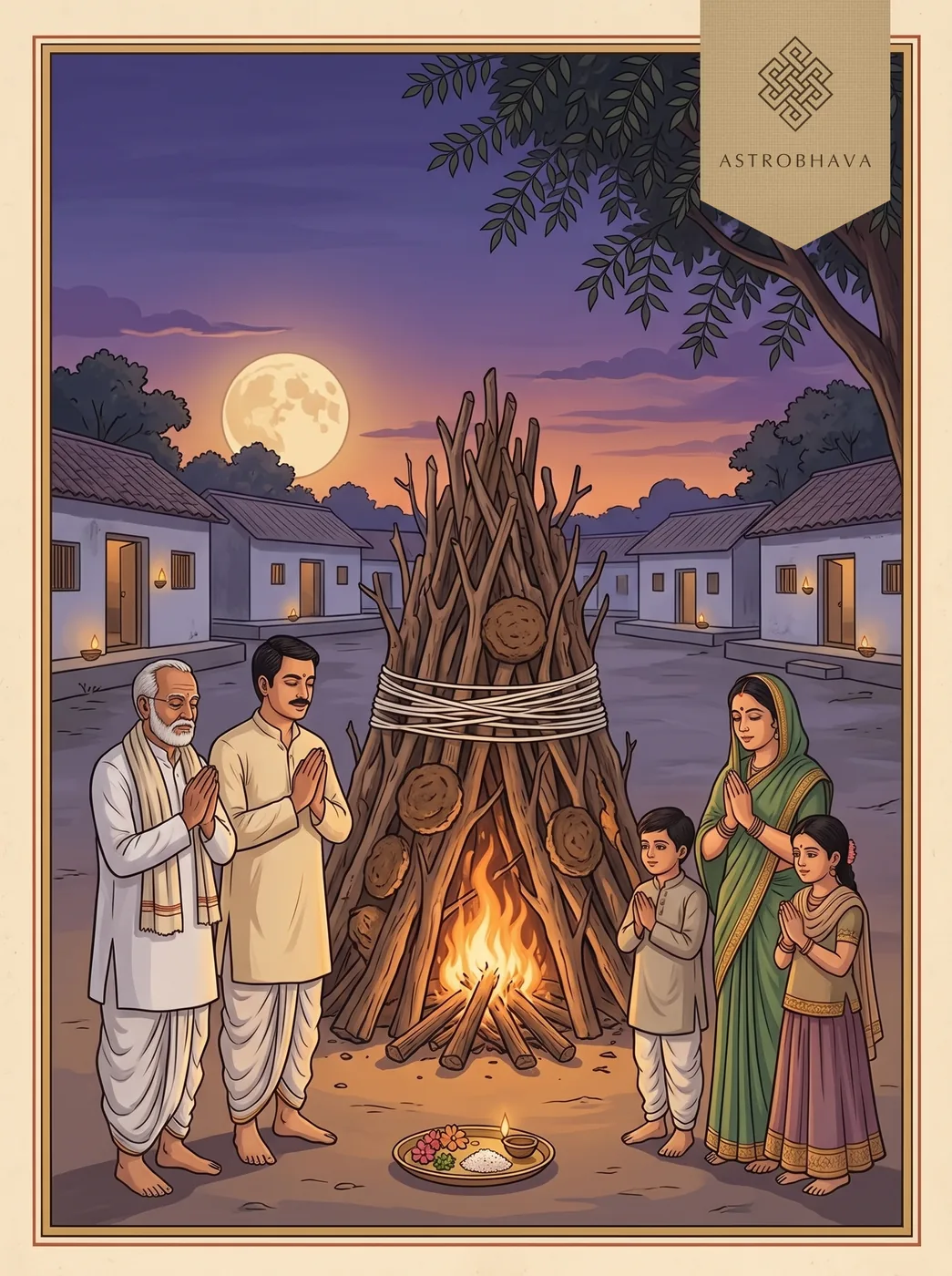
The Holika Dahan mantra is the verse addressed to Holika as the bonfire of Phalguna Purnima, the full moon of Phalguna, is lit, and the rite manuals set it among four short items for that night. Sankalpa 1 is the householder's statement of intent from the Dharmasindhu of Kashinatha Upadhyaya (1790-91), said after naming the place and time: the worship is offered to appease the demoness Dhundha and to keep her harm from the family. Mantra 1, beginning "asrikpa-bhaya-santrastaih", is Narada Purana, Purvardha 124.78, where it is the verse with which the stacked fuel is set alight; Kamalakara Bhatta's Nirnaya Sindhu (c. 1612) quotes it as the Holika puja mantra. Mantra 2 is the short invitation, "I invite Holika to be present", printed in the Dharmasindhu before the offerings. Prarthana 1, "vanditasi surendrena", closes the puja in the Dharmasindhu; both digests also give it as the salutation to the Holika ash on the following morning.
Dhundha, Prahlada and the Phalguna fire
Two old accounts stand behind the Holika fire, and the verses on this page touch both. The Narada Purana places the rite in its chapter on the full-moon and new-moon observances of the year. On Phalguna Purnima every kind of wood and dried fuel cake is gathered into one heap, the fire is kindled with verses that drive off rakshasas, and the people walk around it with songs and the sound of instruments. The verses that follow call Holika a demoness who brought fear to Prahlada, and add that some count the burning as the end of the old year while others call it the burning of Kama by Shiva. The telling heard in most homes fills this out: Holika, sister of the asura king Hiranyakashipu, was said to be proof against fire, and she sat in the flames holding the boy Prahlada, whose devotion to Vishnu had enraged his father; the fire took her and left him untouched. A second thread runs through the Bhavishya Purana. It tells of Dhundha, a demoness who troubled the children of King Raghu's realm and, under a boon from Shiva, gave way only before the shouting and laughter of children; the sage Vasishtha's remedy was a bonfire with songs on the Phalguna full moon. That thread explains why the sankalpa names Dhundha and why the lighting verse speaks of people afraid of blood-drinkers.
The mantra, in six scripts
- असृक्पाभयसंत्रस्तैः
- asṛkpābhayasaṃtrastaiḥ — by those terrified with fear of the blood-drinkers
- कृता
- kṛtā — made
- त्वं
- tvaṃ — you
- होलि
- holi — O Holi
- बालिशैः
- bāliśaiḥ — by simple, childlike folk
- अतस्त्वां
- atastvāṃ — therefore you
- पूजयिष्यामि
- pūjayiṣyāmi — I will worship
- भूते
- bhūte — O Bhuti (wellbeing)
- भूतिप्रदा
- bhūtipradā — giver of wellbeing and prosperity
- भव
- bhava — be
Holika Dahan Mantra lyrics in full
Four items in the order of the rite: the resolve, the verse that lights the fire, the invitation to Holika and the closing prayer, which is said again over the ash the next morning.
All 4 verses, in Sanskrit, Tamil, Telugu, Kannada, Malayalam and English, each with its meaning. Choose a script:
Download the Holika Dahan Mantra PDFAll 4 verses with their meanings, in Sanskrit. Free to print and keep.
सकुटुम्बस्य मम ढुंढाराक्षसीप्रीत्यर्थं तत्पीडापरिहारार्थं होलिकापूजनमहं करिष्ये ॥
ஸகுடும்பஸ்ய மம டும்டாராக்ஷஸீப்ரீத்யர்தம் தத்பீடாபரிஹாரார்தம் ஹோலிகாபூஜநமஹம் கரிஷ்யே ॥
సకుటుమ్బస్య మమ ఢుంఢారాక్షసీప్రీత్యర్థం తత్పీడాపరిహారార్థం హోలికాపూజనమహం కరిష్యే ॥
ಸಕುಟುಮ್ಬಸ್ಯ ಮಮ ಢುಂಢಾರಾಕ್ಷಸೀಪ್ರೀತ್ಯರ್ಥಂ ತತ್ಪೀಡಾಪರಿಹಾರಾರ್ಥಂ ಹೋಲಿಕಾಪೂಜನಮಹಂ ಕರಿಷ್ಯೇ ॥
സകുടുമ്ബസ്യ മമ ഢുംഢാരാക്ഷസീപ്രീത്യര്ഥം തത്പീഡാപരിഹാരാര്ഥം ഹോലികാപൂജനമഹം കരിഷ്യേ ॥
sakuṭumbasya mama ḍhuṃḍhārākṣasīprītyarthaṃ tatpīḍāparihārārthaṃ holikāpūjanamahaṃ kariṣye ||
For myself and my family, to appease the demoness Dhundha and to be rid of the trouble she causes, I shall perform the worship of Holika. (It is said after naming the place and the time.)
असृक्पाभयसंत्रस्तैः कृता त्वं होलि बालिशैः ।
अतस्त्वां पूजयिष्यामि भूते भूतिप्रदा भव ॥
அஸ்ருக்பாபயஸம்த்ரஸ்தைஃ க்ருதா த்வம் ஹோலி பாலிஶைஃ ।
அதஸ்த்வாம் பூஜயிஷ்யாமி பூதே பூதிப்ரதா பவ ॥
అసృక్పాభయసంత్రస్తైః కృతా త్వం హోలి బాలిశైః ।
అతస్త్వాం పూజయిష్యామి భూతే భూతిప్రదా భవ ॥
ಅಸೃಕ್ಪಾಭಯಸಂತ್ರಸ್ತೈಃ ಕೃತಾ ತ್ವಂ ಹೋಲಿ ಬಾಲಿಶೈಃ ।
ಅತಸ್ತ್ವಾಂ ಪೂಜಯಿಷ್ಯಾಮಿ ಭೂತೇ ಭೂತಿಪ್ರದಾ ಭವ ॥
അസൃക്പാഭയസംത്രസ്തൈഃ കൃതാ ത്വം ഹോലി ബാലിശൈഃ ।
അതസ്ത്വാം പൂജയിഷ്യാമി ഭൂതേ ഭൂതിപ്രദാ ഭവ ॥
asṛkpābhayasaṃtrastaiḥ kṛtā tvaṃ holi bāliśaiḥ |
atastvāṃ pūjayiṣyāmi bhūte bhūtipradā bhava ||
O Holi, you were made by simple folk who were terrified of the blood-drinking demons. Therefore I will worship you; O Bhuti, be the giver of wellbeing and prosperity.
श्रीहोलिकायै नमो होलिकामावाहयामि ॥
ஶ்ரீஹோலிகாயை நமோ ஹோலிகாமாவாஹயாமி ॥
శ్రీహోలికాయై నమో హోలికామావాహయామి ॥
ಶ್ರೀಹೋಲಿಕಾಯೈ ನಮೋ ಹೋಲಿಕಾಮಾವಾಹಯಾಮಿ ॥
ശ്രീഹോലികായൈ നമോ ഹോലികാമാവാഹയാമി ॥
śrīholikāyai namo holikāmāvāhayāmi ||
Salutation to Sri Holika; I invite Holika to be present here.
वन्दितासि सुरेन्द्रेण ब्रह्मणा शंकरेण च ।
अतस्त्वं पाहि नो देवि भूते भूतिप्रदा भव ॥
வந்திதாஸி ஸுரேந்த்ரேண ப்ரஹ்மணா ஶம்கரேண ச ।
அதஸ்த்வம் பாஹி நோ தேவி பூதே பூதிப்ரதா பவ ॥
వన్దితాసి సురేన్ద్రేణ బ్రహ్మణా శంకరేణ చ ।
అతస్త్వం పాహి నో దేవి భూతే భూతిప్రదా భవ ॥
ವನ್ದಿತಾಸಿ ಸುರೇನ್ದ್ರೇಣ ಬ್ರಹ್ಮಣಾ ಶಂಕರೇಣ ಚ ।
ಅತಸ್ತ್ವಂ ಪಾಹಿ ನೋ ದೇವಿ ಭೂತೇ ಭೂತಿಪ್ರದಾ ಭವ ॥
വന്ദിതാസി സുരേന്ദ്രേണ ബ്രഹ്മണാ ശംകരേണ ച ।
അതസ്ത്വം പാഹി നോ ദേവി ഭൂതേ ഭൂതിപ്രദാ ഭവ ॥
vanditāsi surendreṇa brahmaṇā śaṃkareṇa ca |
atastvaṃ pāhi no devi bhūte bhūtipradā bhava ||
You are honoured by Indra, king of the gods, by Brahma and by Shankara. So protect us, O Goddess; O Bhuti, be the giver of wellbeing and prosperity.
The syllable people get wrong
In bāliśaiḥ (Mantra 1) the consonant after the i is the palatal ś, said like the 'sh' in 'shine', so the word runs baa-li-shai, never baa-li-sai. The closing visarga ḥ is a soft breath that echoes the vowel before it, close to 'baa-li-shai-hi'.
When the Holika Dahan Mantra is chanted
Weekday. Thursday
Festival. Holika Dahan, on Phalguna Purnima
Questions
Have your chart read before you decide
Chanting is yours to do, and free. But which deity your situation calls for — and whether a mantra alone is the right response — depends on your chart. Sometimes it is; sometimes it is not.
- Over 30 years in the Guru–Sishya Parampara, from the age of five
- He reads every chart himself — 60 minutes, one to one, never delegated
- Charts are read only between sunrise and sunset, following tradition