Kalki Mantra
ॐ भूमिनेत्राय विद्महे महापुरुषाय धीमहि । तन्नो कल्कि प्रचोदयात् ॥Also known as Om Kalkine Namah
In Devanagari, Tamil, Telugu, Kannada, Malayalam and English — with the meaning of every word, and the one syllable most people pronounce wrongly.
 The Dasavathara Homam, performed for youBook →
What the Kalki Mantra is
The Kalki Mantra on this page is not one formula but five short texts addressed to Kalki, the tenth avatar of Vishnu, whom the Puranas place at the close of the Kali age. Mantra 1 is the Kalki Gayatri in its 'bhuminetraya vidmahe' form, a traditional invocation for which no scripture is known. Mantra 2, 'Om Kalkine Namah', is the first name of the Kakaradi Kalki namavali, a list of 108 names that all begin with the letter ka, composed by Pandita Bellamkonda Ramaraya Kavindra (1875-1914) and offered at its close to Hayagriva. Verses 1 and 2 are the two places where the Bhagavata Purana foretells his birth, 1.3.25 and 12.2.18. Verse 3 is the Kalki verse, number 11, of Vedanta Desika's Dashavatara Stotram, a hymn of thirteen numbered verses that opens at the shrine of Ranga and carries the poet's name, Venkatanatha, in its last verse. Jayadeva's better-known Kalki couplet is on the /mantra/dashavatara-stotram/ page instead.
Shambhala, Vishnuyashas and the age to come
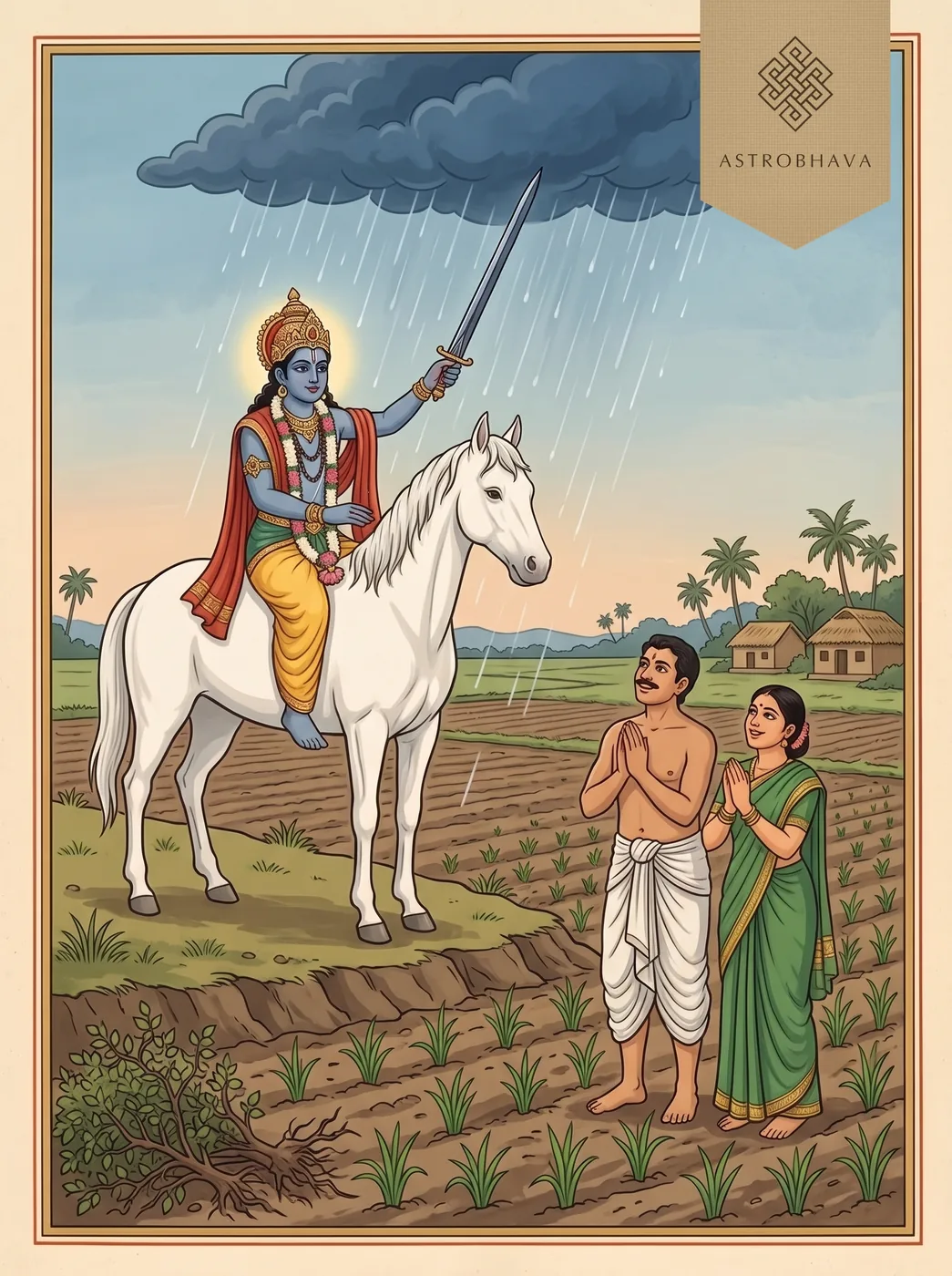
Kalki first appears in the Mahabharata, in the Markandeya section of the Vana Parva, where the sage describes how the ages decline and turn. The Bhagavata Purana gives him two passages. In the first canto Suta lists the avatars for the assembled sages and names Kalki last, unnumbered, as one still to be born at the meeting point of two ages, when kings have become little better than robbers; the very next verse says the avatars are as countless as streams from an endless lake. In the twelfth canto Shuka describes the marks of the Kali age to King Parikshit and then names the house: that of Vishnuyashas, the foremost brahmana of the village of Shambhala. The verses that follow set Kalki on the swift horse Devadatta, sword in hand, and say the Krita age returns when the moon, the sun and Jupiter stand together in Karkata and enter Pushya. The Agni Purana adds Yajnavalkya as his priest. The Kalki Purana, an Upapurana that scholars date late, roughly between the sixteenth and eighteenth centuries, fills in the rest according to its own telling: his mother Sumati, his training under Parashurama, his marriage to Padmavati, and the horse, jewelled sword and all-knowing parrot Shuka given to him by Shiva. Vedanta Desika, centuries earlier, made the sword a raincloud whose streaming edge waters an earth cleared of thorns.
The mantra, in six scripts
- ॐ
- oṃ — Om
- भूमिनेत्राय
- bhūminetrāya — to the guide of the earth
- विद्महे
- vidmahe — may we know
- महापुरुषाय
- mahāpuruṣāya — the Great Person
- धीमहि
- dhīmahi — we meditate on
- तन्नो
- tanno — that one, our (minds)
- कल्कि
- kalki — Kalki
- प्रचोदयात्
- pracodayāt — may he inspire
Kalki Mantra lyrics in full
Two short mantras, two prophetic verses of the Bhagavata Purana, and the Kalki verse of Vedanta Desika's Dashavatara Stotram.
All 5 verses, in Sanskrit, Tamil, Telugu, Kannada, Malayalam and English, each with its meaning. Choose a script:
Download the Kalki Mantra PDFAll 5 verses with their meanings, in Sanskrit. Free to print and keep.
ॐ भूमिनेत्राय विद्महे महापुरुषाय धीमहि ।
तन्नो कल्कि प्रचोदयात् ॥
ௐ பூமிநேத்ராய வித்மஹே மஹாபுருஷாய தீமஹி ।
தந்நோ கல்கி ப்ரசோதயாத் ॥
ఓం భూమినేత్రాయ విద్మహే మహాపురుషాయ ధీమహి ।
తన్నో కల్కి ప్రచోదయాత్ ॥
ಓಂ ಭೂಮಿನೇತ್ರಾಯ ವಿದ್ಮಹೇ ಮಹಾಪುರುಷಾಯ ಧೀಮಹಿ ।
ತನ್ನೋ ಕಲ್ಕಿ ಪ್ರಚೋದಯಾತ್ ॥
ഓം ഭൂമിനേത്രായ വിദ്മഹേ മഹാപുരുഷായ ധീമഹി ।
തന്നോ കല്കി പ്രചോദയാത് ॥
oṃ bhūminetrāya vidmahe mahāpuruṣāya dhīmahi |
tanno kalki pracodayāt ||
Om. May we come to know the one who guides the earth, and meditate on the Great Person. May Kalki inspire and direct our minds.
ॐ कल्किने नमः ।
ௐ கல்கிநே நமஃ ।
ఓం కల్కినే నమః ।
ಓಂ ಕಲ್ಕಿನೇ ನಮಃ ।
ഓം കല്കിനേ നമഃ ।
oṃ kalkine namaḥ |
Om, salutations to Kalki, the tenth avatar of Vishnu who is to come at the end of the Kali age.
अथासौ युगसन्ध्यायां दस्युप्रायेषु राजसु ।
जनिता विष्णुयशसो नाम्ना कल्किर्जगत्पतिः ॥
அதாஸௌ யுகஸந்த்யாயாம் தஸ்யுப்ராயேஷு ராஜஸு ।
ஜநிதா விஷ்ணுயஶஸோ நாம்நா கல்கிர்ஜகத்பதிஃ ॥
అథాసౌ యుగసన్ధ్యాయాం దస్యుప్రాయేషు రాజసు ।
జనితా విష్ణుయశసో నామ్నా కల్కిర్జగత్పతిః ॥
ಅಥಾಸೌ ಯುಗಸನ್ಧ್ಯಾಯಾಂ ದಸ್ಯುಪ್ರಾಯೇಷು ರಾಜಸು ।
ಜನಿತಾ ವಿಷ್ಣುಯಶಸೋ ನಾಮ್ನಾ ಕಲ್ಕಿರ್ಜಗತ್ಪತಿಃ ॥
അഥാസൌ യുഗസന്ധ്യായാം ദസ്യുപ്രായേഷു രാജസു ।
ജനിതാ വിഷ്ണുയശസോ നാമ്നാ കല്കിര്ജഗത്പതിഃ ॥
athāsau yugasandhyāyāṃ dasyuprāyeṣu rājasu |
janitā viṣṇuyaśaso nāmnā kalkirjagatpatiḥ ||
Then, at the meeting point of two ages, when the kings have become little better than robbers, the Lord of the world will be born as the son of Vishnuyashas, with the name Kalki.
शम्भलग्राममुख्यस्य ब्राह्मणस्य महात्मनः ।
भवने विष्णुयशसः कल्किः प्रादुर्भविष्यति ॥
ஶம்பலக்ராமமுக்யஸ்ய ப்ராஹ்மணஸ்ய மஹாத்மநஃ ।
பவநே விஷ்ணுயஶஸஃ கல்கிஃ ப்ராதுர்பவிஷ்யதி ॥
శమ్భలగ్రామముఖ్యస్య బ్రాహ్మణస్య మహాత్మనః ।
భవనే విష్ణుయశసః కల్కిః ప్రాదుర్భవిష్యతి ॥
ಶಮ್ಭಲಗ್ರಾಮಮುಖ್ಯಸ್ಯ ಬ್ರಾಹ್ಮಣಸ್ಯ ಮಹಾತ್ಮನಃ ।
ಭವನೇ ವಿಷ್ಣುಯಶಸಃ ಕಲ್ಕಿಃ ಪ್ರಾದುರ್ಭವಿಷ್ಯತಿ ॥
ശമ്ഭലഗ്രാമമുഖ്യസ്യ ബ്രാഹ്മണസ്യ മഹാത്മനഃ ।
ഭവനേ വിഷ്ണുയശസഃ കല്കിഃ പ്രാദുര്ഭവിഷ്യതി ॥
śambhalagrāmamukhyasya brāhmaṇasya mahātmanaḥ |
bhavane viṣṇuyaśasaḥ kalkiḥ prādurbhaviṣyati ||
Kalki will appear in the house of Vishnuyashas, the great-souled brahmana who is the foremost man of the village of Shambhala.
भाविन्या दशया भवन्निह भवध्वंसाय नः कल्पतां कल्की विष्णुयशस्सुतः कलिकथाकालुष्यकूलङ्कषः ।
निःशेषक्षतकण्टके क्षितितले धाराजलौघैर्ध्रुवं धर्मं कार्तयुगं प्ररोहयति यन्निस्त्रिंशधाराधरः ॥
பாவிந்யா தஶயா பவந்நிஹ பவத்வம்ஸாய நஃ கல்பதாம் கல்கீ விஷ்ணுயஶஸ்ஸுதஃ கலிகதாகாலுஷ்யகூலங்கஷஃ ।
நிஃஶேஷக்ஷதகண்டகே க்ஷிதிதலே தாராஜலௌகைர்த்ருவம் தர்மம் கார்தயுகம் ப்ரரோஹயதி யந்நிஸ்த்ரிம்ஶதாராதரஃ ॥
భావిన్యా దశయా భవన్నిహ భవధ్వంసాయ నః కల్పతాం కల్కీ విష్ణుయశస్సుతః కలికథాకాలుష్యకూలఙ్కషః ।
నిఃశేషక్షతకణ్టకే క్షితితలే ధారాజలౌఘైర్ధ్రువం ధర్మం కార్తయుగం ప్రరోహయతి యన్నిస్త్రింశధారాధరః ॥
ಭಾವಿನ್ಯಾ ದಶಯಾ ಭವನ್ನಿಹ ಭವಧ್ವಂಸಾಯ ನಃ ಕಲ್ಪತಾಂ ಕಲ್ಕೀ ವಿಷ್ಣುಯಶಸ್ಸುತಃ ಕಲಿಕಥಾಕಾಲುಷ್ಯಕೂಲಙ್ಕಷಃ ।
ನಿಃಶೇಷಕ್ಷತಕಣ್ಟಕೇ ಕ್ಷಿತಿತಲೇ ಧಾರಾಜಲೌಘೈರ್ಧ್ರುವಂ ಧರ್ಮಂ ಕಾರ್ತಯುಗಂ ಪ್ರರೋಹಯತಿ ಯನ್ನಿಸ್ತ್ರಿಂಶಧಾರಾಧರಃ ॥
ഭാവിന്യാ ദശയാ ഭവന്നിഹ ഭവധ്വംസായ നഃ കല്പതാം കല്കീ വിഷ്ണുയശസ്സുതഃ കലികഥാകാലുഷ്യകൂലങ്കഷഃ ।
നിഃശേഷക്ഷതകണ്ടകേ ക്ഷിതിതലേ ധാരാജലൌഘൈര്ധ്രുവം ധര്മം കാര്തയുഗം പ്രരോഹയതി യന്നിസ്ത്രിംശധാരാധരഃ ॥
bhāvinyā daśayā bhavanniha bhavadhvaṃsāya naḥ kalpatāṃ kalkī viṣṇuyaśassutaḥ kalikathākāluṣyakūlaṅkaṣaḥ |
niḥśeṣakṣatakaṇṭake kṣititale dhārājalaughairdhruvaṃ dharmaṃ kārtayugaṃ prarohayati yannistriṃśadhārādharaḥ ||
May Kalki, the son of Vishnuyashas, who will appear here in a time yet to come and sweep away the stain of the Kali age as a flood wears down a river bank, bring about the end of our worldly bondage. Holding the edge of his sword like a raincloud, he clears the earth of every thorn, and with its streaming torrents surely makes the dharma of the Krita age sprout again.
The syllable people get wrong
The name is said with a short first vowel, KUL-kee (kal- as in 'cull'), never 'Kaal-ki'; note too that Desika's verse writes kalkī with a long final ī (the nominative of kalkin), while the Bhagavata verses write kalkiḥ, with a short i and a soft breath at the end.
When the Kalki Mantra is chanted
Weekday. Thursday
Festival. Kalki Jayanti (Shravana Shukla Shashthi)
Questions
Have your chart read before you decide
Chanting is yours to do, and free. But which deity your situation calls for — and whether a mantra alone is the right response — depends on your chart. Sometimes it is; sometimes it is not.
- Over 30 years in the Guru–Sishya Parampara, from the age of five
- He reads every chart himself — 60 minutes, one to one, never delegated
- Charts are read only between sunrise and sunset, following tradition
