Kamakshi Stotram
कल्पानोकहपुष्पजालविलसन्नीलालकां मातृकां कान्तां कञ्जदलेक्षणां कलिमलप्रध्वंसिनीं कालिकाम् । काञ्चीनूपुरहारदामसुभगां काञ्चीपुरीनायिकां कामाक्षीं करिकुम्भसन्निभकुचां वन्दे महेशप्रियाम् ॥Also known as Kalpanokaha Pushpajala
In Devanagari, Tamil, Telugu, Kannada, Malayalam and English — with the meaning of every word, and the one syllable most people pronounce wrongly.
 The Tripura Sundari Homam, performed for youBook →
What the Kamakshi Stotram is
The Kamakshi Stotram, also printed as the Sri Kamakshi Stotram, is a Sanskrit hymn of ten verses to Kamakshi, the Goddess of Kanchipuram, traditionally attributed to Adi Shankaracharya. Its lines run in the long nineteen-syllable shardulavikridita metre, and each of the first nine verses gathers descriptions of her before landing on one refrain, vande maheshapriyam, I bow to the beloved of Shiva. The sequence moves from her appearance into doctrine. Verses 1 and 2 give her hair, eyes and slow elephant gait. Verse 3 names the seed syllables Aim, Klim and Sauh, and Verse 4 makes Brahma, Vishnu and Rudra depend on her. Verse 5 is built almost wholly on the sound ksha. Verse 6 is a chain of images: lamp in the courtyard of Om, dove on the mansion of the Upanishads, parrot in the cage of Kanchi. Verse 8 calls her goddess of speech, daughter of the milk ocean and daughter of the mountain. Verse 10 changes its grammar and closes as a prayer.
The Mango Tree on the Kampa
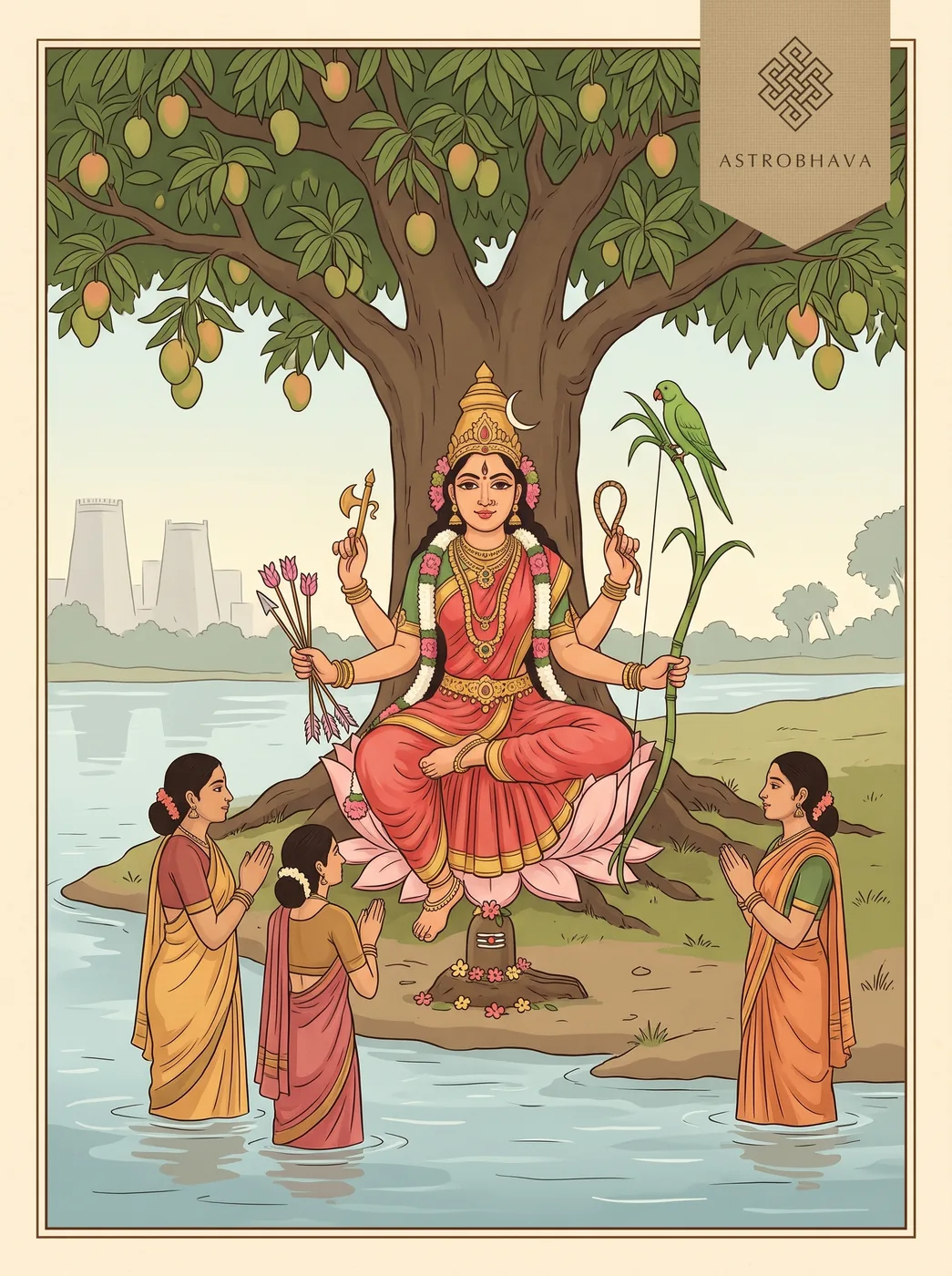
No traditional account of this hymn's occasion is generally told; it carries Shankara's name by custom, and nothing fixes where or when it was composed. What it does preserve is a place. Verse 10 sets the Goddess at the root of the mango tree on the bank of the Kampa, and that one compound points to a story told at length elsewhere. The Skanda Purana gives a form of it in the Arunachala Mahatmya. Parvati comes to Kanchi with her companions and stops at an Ekamra mango heavy with fruit and noisy with birds, where she worships a linga made of earth. To test her, Shiva sends the Kampa into flood. Her companions urge her to leave; she tells them to go, puts her arms around the linga and stays motionless as the water closes over her. A voice with no body then tells her the flood has fallen and she may let go, and sends her on to the sage Gautama and to Arunachala. In this Purana, then, Kanchi is a stage on her journey. Temple tradition at Kanchi ends the episode with her marriage instead, and some tellings name the Vegavati in place of the Kampa. The Sri Chakra before her image is credited to Shankara in most accounts and to the sage Durvasa in others.
The mantra, in six scripts
- कल्पानोकहपुष्पजालविलसन्नीलालकां
- kalpānokahapuṣpajālavilasannīlālakāṃ — whose dark locks gleam with clusters of flowers from the wish-granting tree
- मातृकां
- mātṛkāṃ — the Mother
- कान्तां
- kāntāṃ — the lovely one
- कञ्जदलेक्षणां
- kañjadalekṣaṇāṃ — with eyes like lotus petals
- कलिमलप्रध्वंसिनीं
- kalimalapradhvaṃsinīṃ — destroyer of the stains of the Kali age
- कालिकाम्
- kālikām — Kalika
- काञ्चीनूपुरहारदामसुभगां
- kāñcīnūpurahāradāmasubhagāṃ — graceful with girdle, anklets, necklace and garland
- काञ्चीपुरीनायिकां
- kāñcīpurīnāyikāṃ — queen of the city of Kanchi
- कामाक्षीं
- kāmākṣīṃ — Kamakshi
- करिकुम्भसन्निभकुचां
- karikumbhasannibhakucāṃ — her bosom full like the brow of an elephant
- वन्दे
- vande — I bow to
- महेशप्रियाम्
- maheśapriyām — to the beloved of Shiva
Kamakshi Stotram lyrics in full
Ten verses, nine ending on the refrain vande maheshapriyam and the tenth a prayer for blessing. The printed closing line is given at the end.
All 11 verses, in Sanskrit, Tamil, Telugu, Kannada, Malayalam and English, each with its meaning. Choose a script:
Download the Kamakshi Stotram PDFAll 11 verses with their meanings, in Sanskrit. Free to print and keep.
कल्पानोकहपुष्पजालविलसन्नीलालकां मातृकां कान्तां कञ्जदलेक्षणां कलिमलप्रध्वंसिनीं कालिकाम् ।
काञ्चीनूपुरहारदामसुभगां काञ्चीपुरीनायिकां कामाक्षीं करिकुम्भसन्निभकुचां वन्दे महेशप्रियाम् ॥
கல்பாநோகஹபுஷ்பஜாலவிலஸந்நீலாலகாம் மாத்ருகாம் காந்தாம் கஞ்ஜதலேக்ஷணாம் கலிமலப்ரத்வம்ஸிநீம் காலிகாம் ।
காஞ்சீநூபுரஹாரதாமஸுபகாம் காஞ்சீபுரீநாயிகாம் காமாக்ஷீம் கரிகும்பஸந்நிபகுசாம் வந்தே மஹேஶப்ரியாம் ॥
కల్పానోకహపుష్పజాలవిలసన్నీలాలకాం మాతృకాం కాన్తాం కఞ్జదలేక్షణాం కలిమలప్రధ్వంసినీం కాలికామ్ ।
కాఞ్చీనూపురహారదామసుభగాం కాఞ్చీపురీనాయికాం కామాక్షీం కరికుమ్భసన్నిభకుచాం వన్దే మహేశప్రియామ్ ॥
ಕಲ್ಪಾನೋಕಹಪುಷ್ಪಜಾಲವಿಲಸನ್ನೀಲಾಲಕಾಂ ಮಾತೃಕಾಂ ಕಾನ್ತಾಂ ಕಞ್ಜದಲೇಕ್ಷಣಾಂ ಕಲಿಮಲಪ್ರಧ್ವಂಸಿನೀಂ ಕಾಲಿಕಾಮ್ ।
ಕಾಞ್ಚೀನೂಪುರಹಾರದಾಮಸುಭಗಾಂ ಕಾಞ್ಚೀಪುರೀನಾಯಿಕಾಂ ಕಾಮಾಕ್ಷೀಂ ಕರಿಕುಮ್ಭಸನ್ನಿಭಕುಚಾಂ ವನ್ದೇ ಮಹೇಶಪ್ರಿಯಾಮ್ ॥
കല്പാനോകഹപുഷ്പജാലവിലസന്നീലാലകാം മാതൃകാം കാന്താം കഞ്ജദലേക്ഷണാം കലിമലപ്രധ്വംസിനീം കാലികാമ് ।
കാഞ്ചീനൂപുരഹാരദാമസുഭഗാം കാഞ്ചീപുരീനായികാം കാമാക്ഷീം കരികുമ്ഭസന്നിഭകുചാം വന്ദേ മഹേശപ്രിയാമ് ॥
kalpānokahapuṣpajālavilasannīlālakāṃ mātṛkāṃ kāntāṃ kañjadalekṣaṇāṃ kalimalapradhvaṃsinīṃ kālikām |
kāñcīnūpurahāradāmasubhagāṃ kāñcīpurīnāyikāṃ kāmākṣīṃ karikumbhasannibhakucāṃ vande maheśapriyām ||
I bow to Kamakshi, beloved of Shiva: the Mother, whose dark locks gleam with clusters of flowers from the wish-granting tree, the lovely one with eyes like lotus petals, Kalika who destroys the stains of the Kali age. She is graceful with girdle, anklets, necklace and garland, the queen of the city of Kanchi, her bosom full like the brow of an elephant.
काशाभां शुकभासुरां प्रविलसत्कोशातकीसन्निभां चन्द्रार्कानललोचनां सुरुचिरालङ्कारभूषोज्ज्वलाम् ।
ब्रह्मश्रीपतिवासवादिमुनिभिः संसेविताङ्घ्रिद्वयां कामाक्षीं गजराजमन्दगमनां वन्दे महेशप्रियाम् ॥
காஶாபாம் ஶுகபாஸுராம் ப்ரவிலஸத்கோஶாதகீஸந்நிபாம் சந்த்ரார்காநலலோசநாம் ஸுருசிராலங்காரபூஷோஜ்ஜ்வலாம் ।
ப்ரஹ்மஶ்ரீபதிவாஸவாதிமுநிபிஃ ஸம்ஸேவிதாங்க்ரித்வயாம் காமாக்ஷீம் கஜராஜமந்தகமநாம் வந்தே மஹேஶப்ரியாம் ॥
కాశాభాం శుకభాసురాం ప్రవిలసత్కోశాతకీసన్నిభాం చన్ద్రార్కానలలోచనాం సురుచిరాలఙ్కారభూషోజ్జ్వలామ్ ।
బ్రహ్మశ్రీపతివాసవాదిమునిభిః సంసేవితాఙ్ఘ్రిద్వయాం కామాక్షీం గజరాజమన్దగమనాం వన్దే మహేశప్రియామ్ ॥
ಕಾಶಾಭಾಂ ಶುಕಭಾಸುರಾಂ ಪ್ರವಿಲಸತ್ಕೋಶಾತಕೀಸನ್ನಿಭಾಂ ಚನ್ದ್ರಾರ್ಕಾನಲಲೋಚನಾಂ ಸುರುಚಿರಾಲಙ್ಕಾರಭೂಷೋಜ್ಜ್ವಲಾಮ್ ।
ಬ್ರಹ್ಮಶ್ರೀಪತಿವಾಸವಾದಿಮುನಿಭಿಃ ಸಂಸೇವಿತಾಙ್ಘ್ರಿದ್ವಯಾಂ ಕಾಮಾಕ್ಷೀಂ ಗಜರಾಜಮನ್ದಗಮನಾಂ ವನ್ದೇ ಮಹೇಶಪ್ರಿಯಾಮ್ ॥
കാശാഭാം ശുകഭാസുരാം പ്രവിലസത്കോശാതകീസന്നിഭാം ചന്ദ്രാര്കാനലലോചനാം സുരുചിരാലങ്കാരഭൂഷോജ്ജ്വലാമ് ।
ബ്രഹ്മശ്രീപതിവാസവാദിമുനിഭിഃ സംസേവിതാങ്ഘ്രിദ്വയാം കാമാക്ഷീം ഗജരാജമന്ദഗമനാം വന്ദേ മഹേശപ്രിയാമ് ॥
kāśābhāṃ śukabhāsurāṃ pravilasatkośātakīsannibhāṃ candrārkānalalocanāṃ surucirālaṅkārabhūṣojjvalām |
brahmaśrīpativāsavādimunibhiḥ saṃsevitāṅghridvayāṃ kāmākṣīṃ gajarājamandagamanāṃ vande maheśapriyām ||
I bow to Kamakshi, beloved of Shiva: pale as kasha blossom and radiant with her parrot, shining like the koshataki flower, with the moon, sun and fire for eyes, bright with beautiful ornaments. Brahma, Vishnu, Indra and the sages serve her two feet, and she walks slowly like a royal elephant.
ऐं क्लीं सौरिति यां वदन्ति मुनयस्तत्त्वार्थरूपां परां वाचामादिमकारणं हृदि सदा ध्यायन्ति यां योगिनः ।
बालां फालविलोचनां नवजपावर्णां सुषुम्नाश्रितां कामाक्षीं कलितावतंससुभगां वन्दे महेशप्रियाम् ॥
ஐம் க்லீம் ஸௌரிதி யாம் வதந்தி முநயஸ்தத்த்வார்தரூபாம் பராம் வாசாமாதிமகாரணம் ஹ்ருதி ஸதா த்யாயந்தி யாம் யோகிநஃ ।
பாலாம் பாலவிலோசநாம் நவஜபாவர்ணாம் ஸுஷும்நாஶ்ரிதாம் காமாக்ஷீம் கலிதாவதம்ஸஸுபகாம் வந்தே மஹேஶப்ரியாம் ॥
ఐం క్లీం సౌరితి యాం వదన్తి మునయస్తత్త్వార్థరూపాం పరాం వాచామాదిమకారణం హృది సదా ధ్యాయన్తి యాం యోగినః ।
బాలాం ఫాలవిలోచనాం నవజపావర్ణాం సుషుమ్నాశ్రితాం కామాక్షీం కలితావతంససుభగాం వన్దే మహేశప్రియామ్ ॥
ಐಂ ಕ್ಲೀಂ ಸೌರಿತಿ ಯಾಂ ವದನ್ತಿ ಮುನಯಸ್ತತ್ತ್ವಾರ್ಥರೂಪಾಂ ಪರಾಂ ವಾಚಾಮಾದಿಮಕಾರಣಂ ಹೃದಿ ಸದಾ ಧ್ಯಾಯನ್ತಿ ಯಾಂ ಯೋಗಿನಃ ।
ಬಾಲಾಂ ಫಾಲವಿಲೋಚನಾಂ ನವಜಪಾವರ್ಣಾಂ ಸುಷುಮ್ನಾಶ್ರಿತಾಂ ಕಾಮಾಕ್ಷೀಂ ಕಲಿತಾವತಂಸಸುಭಗಾಂ ವನ್ದೇ ಮಹೇಶಪ್ರಿಯಾಮ್ ॥
ഐം ക്ലീം സൌരിതി യാം വദന്തി മുനയസ്തത്ത്വാര്ഥരൂപാം പരാം വാചാമാദിമകാരണം ഹൃദി സദാ ധ്യായന്തി യാം യോഗിനഃ ।
ബാലാം ഫാലവിലോചനാം നവജപാവര്ണാം സുഷുമ്നാശ്രിതാം കാമാക്ഷീം കലിതാവതംസസുഭഗാം വന്ദേ മഹേശപ്രിയാമ് ॥
aiṃ klīṃ sauriti yāṃ vadanti munayastattvārtharūpāṃ parāṃ vācāmādimakāraṇaṃ hṛdi sadā dhyāyanti yāṃ yoginaḥ |
bālāṃ phālavilocanāṃ navajapāvarṇāṃ suṣumnāśritāṃ kāmākṣīṃ kalitāvataṃsasubhagāṃ vande maheśapriyām ||
I bow to Kamakshi, beloved of Shiva: the Supreme whom sages name as Aim, Klim and Sauh, the very meaning of truth, the first cause of speech, on whom yogis always meditate in the heart. She is the young girl with an eye on her forehead, the colour of fresh hibiscus, resting in the sushumna, lovely with the ornament she wears.
यत्पादाम्बुजरेणुलेशमनिशं लब्ध्वा विधत्ते विधिर्विश्वं तत्परिपाति विष्णुरखिलं यस्याः प्रसादाच्चिरम् ।
रुद्रः संहरति क्षणात्तदखिलं यन्मायया मोहितः कामाक्षीमतिचित्रचारुचरितां वन्दे महेशप्रियाम् ॥
யத்பாதாம்புஜரேணுலேஶமநிஶம் லப்த்வா விதத்தே விதிர்விஶ்வம் தத்பரிபாதி விஷ்ணுரகிலம் யஸ்யாஃ ப்ரஸாதாச்சிரம் ।
ருத்ரஃ ஸம்ஹரதி க்ஷணாத்ததகிலம் யந்மாயயா மோஹிதஃ காமாக்ஷீமதிசித்ரசாருசரிதாம் வந்தே மஹேஶப்ரியாம் ॥
యత్పాదామ్బుజరేణులేశమనిశం లబ్ధ్వా విధత్తే విధిర్విశ్వం తత్పరిపాతి విష్ణురఖిలం యస్యాః ప్రసాదాచ్చిరమ్ ।
రుద్రః సంహరతి క్షణాత్తదఖిలం యన్మాయయా మోహితః కామాక్షీమతిచిత్రచారుచరితాం వన్దే మహేశప్రియామ్ ॥
ಯತ್ಪಾದಾಮ್ಬುಜರೇಣುಲೇಶಮನಿಶಂ ಲಬ್ಧ್ವಾ ವಿಧತ್ತೇ ವಿಧಿರ್ವಿಶ್ವಂ ತತ್ಪರಿಪಾತಿ ವಿಷ್ಣುರಖಿಲಂ ಯಸ್ಯಾಃ ಪ್ರಸಾದಾಚ್ಚಿರಮ್ ।
ರುದ್ರಃ ಸಂಹರತಿ ಕ್ಷಣಾತ್ತದಖಿಲಂ ಯನ್ಮಾಯಯಾ ಮೋಹಿತಃ ಕಾಮಾಕ್ಷೀಮತಿಚಿತ್ರಚಾರುಚರಿತಾಂ ವನ್ದೇ ಮಹೇಶಪ್ರಿಯಾಮ್ ॥
യത്പാദാമ്ബുജരേണുലേശമനിശം ലബ്ധ്വാ വിധത്തേ വിധിര്വിശ്വം തത്പരിപാതി വിഷ്ണുരഖിലം യസ്യാഃ പ്രസാദാച്ചിരമ് ।
രുദ്രഃ സംഹരതി ക്ഷണാത്തദഖിലം യന്മായയാ മോഹിതഃ കാമാക്ഷീമതിചിത്രചാരുചരിതാം വന്ദേ മഹേശപ്രിയാമ് ॥
yatpādāmbujareṇuleśamaniśaṃ labdhvā vidhatte vidhirviśvaṃ tatparipāti viṣṇurakhilaṃ yasyāḥ prasādācciram |
rudraḥ saṃharati kṣaṇāttadakhilaṃ yanmāyayā mohitaḥ kāmākṣīmaticitracārucaritāṃ vande maheśapriyām ||
I bow to Kamakshi, beloved of Shiva, whose story is wonderful and beautiful: receiving ever a speck of the dust of her lotus feet, Brahma makes the universe; by her grace Vishnu long protects it all; and Rudra, enchanted by her maya, dissolves it all in a moment.
सूक्ष्मात्सूक्ष्मतरां सुलक्षिततनुं क्षान्ताक्षरैर्लक्षितां वीक्षाशिक्षितराक्षसां त्रिभुवनक्षेमङ्करीमक्षयाम् ।
साक्षाल्लक्षणलक्षिताक्षरमयीं दाक्षायणीं साक्षिणीं कामाक्षीं शुभलक्षणैः सुललितां वन्दे महेशप्रियाम् ॥
ஸூக்ஷ்மாத்ஸூக்ஷ்மதராம் ஸுலக்ஷிததநும் க்ஷாந்தாக்ஷரைர்லக்ஷிதாம் வீக்ஷாஶிக்ஷிதராக்ஷஸாம் த்ரிபுவநக்ஷேமங்கரீமக்ஷயாம் ।
ஸாக்ஷால்லக்ஷணலக்ஷிதாக்ஷரமயீம் தாக்ஷாயணீம் ஸாக்ஷிணீம் காமாக்ஷீம் ஶுபலக்ஷணைஃ ஸுலலிதாம் வந்தே மஹேஶப்ரியாம் ॥
సూక్ష్మాత్సూక్ష్మతరాం సులక్షితతనుం క్షాన్తాక్షరైర్లక్షితాం వీక్షాశిక్షితరాక్షసాం త్రిభువనక్షేమఙ్కరీమక్షయామ్ ।
సాక్షాల్లక్షణలక్షితాక్షరమయీం దాక్షాయణీం సాక్షిణీం కామాక్షీం శుభలక్షణైః సులలితాం వన్దే మహేశప్రియామ్ ॥
ಸೂಕ್ಷ್ಮಾತ್ಸೂಕ್ಷ್ಮತರಾಂ ಸುಲಕ್ಷಿತತನುಂ ಕ್ಷಾನ್ತಾಕ್ಷರೈರ್ಲಕ್ಷಿತಾಂ ವೀಕ್ಷಾಶಿಕ್ಷಿತರಾಕ್ಷಸಾಂ ತ್ರಿಭುವನಕ್ಷೇಮಙ್ಕರೀಮಕ್ಷಯಾಮ್ ।
ಸಾಕ್ಷಾಲ್ಲಕ್ಷಣಲಕ್ಷಿತಾಕ್ಷರಮಯೀಂ ದಾಕ್ಷಾಯಣೀಂ ಸಾಕ್ಷಿಣೀಂ ಕಾಮಾಕ್ಷೀಂ ಶುಭಲಕ್ಷಣೈಃ ಸುಲಲಿತಾಂ ವನ್ದೇ ಮಹೇಶಪ್ರಿಯಾಮ್ ॥
സൂക്ഷ്മാത്സൂക്ഷ്മതരാം സുലക്ഷിതതനും ക്ഷാന്താക്ഷരൈര്ലക്ഷിതാം വീക്ഷാശിക്ഷിതരാക്ഷസാം ത്രിഭുവനക്ഷേമങ്കരീമക്ഷയാമ് ।
സാക്ഷാല്ലക്ഷണലക്ഷിതാക്ഷരമയീം ദാക്ഷായണീം സാക്ഷിണീം കാമാക്ഷീം ശുഭലക്ഷണൈഃ സുലലിതാം വന്ദേ മഹേശപ്രിയാമ് ॥
sūkṣmātsūkṣmatarāṃ sulakṣitatanuṃ kṣāntākṣarairlakṣitāṃ vīkṣāśikṣitarākṣasāṃ tribhuvanakṣemaṅkarīmakṣayām |
sākṣāllakṣaṇalakṣitākṣaramayīṃ dākṣāyaṇīṃ sākṣiṇīṃ kāmākṣīṃ śubhalakṣaṇaiḥ sulalitāṃ vande maheśapriyām ||
I bow to Kamakshi, beloved of Shiva, lovely with auspicious marks: subtler than the subtle, of clearly marked form, denoted by the letters that end in ksha. She disciplines demons with a glance, brings welfare to the three worlds, and is imperishable; she is the embodiment of the letters known by their signs, Dakshayani, the Witness.
ओङ्काराङ्गणदीपिकामुपनिषत्प्रासादपारावतीं आम्नायाम्बुधिचन्द्रिकामघतमःप्रध्वंसहंसप्रभाम् ।
काञ्चीपट्टणपञ्जरान्तरशुकीं कारुण्यकल्लोलिनीं कामाक्षीं शिवकामराजमहिषीं वन्दे महेशप्रियाम् ॥
ஓங்காராங்கணதீபிகாமுபநிஷத்ப்ராஸாதபாராவதீம் ஆம்நாயாம்புதிசந்த்ரிகாமகதமஃப்ரத்வம்ஸஹம்ஸப்ரபாம் ।
காஞ்சீபட்டணபஞ்ஜராந்தரஶுகீம் காருண்யகல்லோலிநீம் காமாக்ஷீம் ஶிவகாமராஜமஹிஷீம் வந்தே மஹேஶப்ரியாம் ॥
ఓఙ్కారాఙ్గణదీపికాముపనిషత్ప్రాసాదపారావతీం ఆమ్నాయామ్బుధిచన్ద్రికామఘతమఃప్రధ్వంసహంసప్రభామ్ ।
కాఞ్చీపట్టణపఞ్జరాన్తరశుకీం కారుణ్యకల్లోలినీం కామాక్షీం శివకామరాజమహిషీం వన్దే మహేశప్రియామ్ ॥
ಓಙ್ಕಾರಾಙ್ಗಣದೀಪಿಕಾಮುಪನಿಷತ್ಪ್ರಾಸಾದಪಾರಾವತೀಂ ಆಮ್ನಾಯಾಮ್ಬುಧಿಚನ್ದ್ರಿಕಾಮಘತಮಃಪ್ರಧ್ವಂಸಹಂಸಪ್ರಭಾಮ್ ।
ಕಾಞ್ಚೀಪಟ್ಟಣಪಞ್ಜರಾನ್ತರಶುಕೀಂ ಕಾರುಣ್ಯಕಲ್ಲೋಲಿನೀಂ ಕಾಮಾಕ್ಷೀಂ ಶಿವಕಾಮರಾಜಮಹಿಷೀಂ ವನ್ದೇ ಮಹೇಶಪ್ರಿಯಾಮ್ ॥
ഓങ്കാരാങ്ഗണദീപികാമുപനിഷത്പ്രാസാദപാരാവതീം ആമ്നായാമ്ബുധിചന്ദ്രികാമഘതമഃപ്രധ്വംസഹംസപ്രഭാമ് ।
കാഞ്ചീപട്ടണപഞ്ജരാന്തരശുകീം കാരുണ്യകല്ലോലിനീം കാമാക്ഷീം ശിവകാമരാജമഹിഷീം വന്ദേ മഹേശപ്രിയാമ് ॥
oṅkārāṅgaṇadīpikāmupaniṣatprāsādapārāvatīṃ āmnāyāmbudhicandrikāmaghatamaḥpradhvaṃsahaṃsaprabhām |
kāñcīpaṭṭaṇapañjarāntaraśukīṃ kāruṇyakallolinīṃ kāmākṣīṃ śivakāmarājamahiṣīṃ vande maheśapriyām ||
I bow to Kamakshi, beloved of Shiva, queen of Shiva Kamaraja: she is the lamp in the courtyard of Om, the dove on the mansion of the Upanishads, the moonlight on the ocean of the Vedas, the swan-bright radiance that destroys the darkness of sin, the parrot in the cage of the city of Kanchi, a river of compassion.
ह्रीङ्कारात्मकवर्णमात्रपठनादैन्द्रीं श्रियं तन्वतीं चिन्मात्रां भुवनेश्वरीमनुदिनं भिक्षाप्रदानक्षमाम् ।
विश्वाघौघनिवारिणीं विमलिनीं विश्वम्भरां मातृकां कामाक्षीं परिपूर्णचन्द्रवदनां वन्दे महेशप्रियाम् ॥
ஹ்ரீங்காராத்மகவர்ணமாத்ரபடநாதைந்த்ரீம் ஶ்ரியம் தந்வதீம் சிந்மாத்ராம் புவநேஶ்வரீமநுதிநம் பிக்ஷாப்ரதாநக்ஷமாம் ।
விஶ்வாகௌகநிவாரிணீம் விமலிநீம் விஶ்வம்பராம் மாத்ருகாம் காமாக்ஷீம் பரிபூர்ணசந்த்ரவதநாம் வந்தே மஹேஶப்ரியாம் ॥
హ్రీఙ్కారాత్మకవర్ణమాత్రపఠనాదైన్ద్రీం శ్రియం తన్వతీం చిన్మాత్రాం భువనేశ్వరీమనుదినం భిక్షాప్రదానక్షమామ్ ।
విశ్వాఘౌఘనివారిణీం విమలినీం విశ్వమ్భరాం మాతృకాం కామాక్షీం పరిపూర్ణచన్ద్రవదనాం వన్దే మహేశప్రియామ్ ॥
ಹ್ರೀಙ್ಕಾರಾತ್ಮಕವರ್ಣಮಾತ್ರಪಠನಾದೈನ್ದ್ರೀಂ ಶ್ರಿಯಂ ತನ್ವತೀಂ ಚಿನ್ಮಾತ್ರಾಂ ಭುವನೇಶ್ವರೀಮನುದಿನಂ ಭಿಕ್ಷಾಪ್ರದಾನಕ್ಷಮಾಮ್ ।
ವಿಶ್ವಾಘೌಘನಿವಾರಿಣೀಂ ವಿಮಲಿನೀಂ ವಿಶ್ವಮ್ಭರಾಂ ಮಾತೃಕಾಂ ಕಾಮಾಕ್ಷೀಂ ಪರಿಪೂರ್ಣಚನ್ದ್ರವದನಾಂ ವನ್ದೇ ಮಹೇಶಪ್ರಿಯಾಮ್ ॥
ഹ്രീങ്കാരാത്മകവര്ണമാത്രപഠനാദൈന്ദ്രീം ശ്രിയം തന്വതീം ചിന്മാത്രാം ഭുവനേശ്വരീമനുദിനം ഭിക്ഷാപ്രദാനക്ഷമാമ് ।
വിശ്വാഘൌഘനിവാരിണീം വിമലിനീം വിശ്വമ്ഭരാം മാതൃകാം കാമാക്ഷീം പരിപൂര്ണചന്ദ്രവദനാം വന്ദേ മഹേശപ്രിയാമ് ॥
hrīṅkārātmakavarṇamātrapaṭhanādaindrīṃ śriyaṃ tanvatīṃ cinmātrāṃ bhuvaneśvarīmanudinaṃ bhikṣāpradānakṣamām |
viśvāghaughanivāriṇīṃ vimalinīṃ viśvambharāṃ mātṛkāṃ kāmākṣīṃ paripūrṇacandravadanāṃ vande maheśapriyām ||
I bow to Kamakshi, beloved of Shiva, whose face is the full moon. The verse says that by merely reciting the syllable Hrim she bestows the wealth of Indra. She is pure consciousness, ruler of the worlds, able each day to grant alms, remover of the world's flood of sins, spotless, bearer of the universe, mother of letters.
वाग्देवीति च यां वदन्ति मुनयः क्षीराब्धिकन्येति च क्षोणीभृत्तनयेति च श्रुतिगिरो यां आमनन्ति स्फुटम् ।
एकानेकफलप्रदां बहुविधाऽऽकारास्तनूस्तन्वतीं कामाक्षीं सकलार्तिभञ्जनपरां वन्दे महेशप्रियाम् ॥
வாக்தேவீதி ச யாம் வதந்தி முநயஃ க்ஷீராப்திகந்யேதி ச க்ஷோணீப்ருத்தநயேதி ச ஶ்ருதிகிரோ யாம் ஆமநந்தி ஸ்புடம் ।
ஏகாநேகபலப்ரதாம் பஹுவிதாகாராஸ்தநூஸ்தந்வதீம் காமாக்ஷீம் ஸகலார்திபஞ்ஜநபராம் வந்தே மஹேஶப்ரியாம் ॥
వాగ్దేవీతి చ యాం వదన్తి మునయః క్షీరాబ్ధికన్యేతి చ క్షోణీభృత్తనయేతి చ శ్రుతిగిరో యాం ఆమనన్తి స్ఫుటమ్ ।
ఏకానేకఫలప్రదాం బహువిధాఽఽకారాస్తనూస్తన్వతీం కామాక్షీం సకలార్తిభఞ్జనపరాం వన్దే మహేశప్రియామ్ ॥
ವಾಗ್ದೇವೀತಿ ಚ ಯಾಂ ವದನ್ತಿ ಮುನಯಃ ಕ್ಷೀರಾಬ್ಧಿಕನ್ಯೇತಿ ಚ ಕ್ಷೋಣೀಭೃತ್ತನಯೇತಿ ಚ ಶ್ರುತಿಗಿರೋ ಯಾಂ ಆಮನನ್ತಿ ಸ್ಫುಟಮ್ ।
ಏಕಾನೇಕಫಲಪ್ರದಾಂ ಬಹುವಿಧಾಽಽಕಾರಾಸ್ತನೂಸ್ತನ್ವತೀಂ ಕಾಮಾಕ್ಷೀಂ ಸಕಲಾರ್ತಿಭಞ್ಜನಪರಾಂ ವನ್ದೇ ಮಹೇಶಪ್ರಿಯಾಮ್ ॥
വാഗ്ദേവീതി ച യാം വദന്തി മുനയഃ ക്ഷീരാബ്ധികന്യേതി ച ക്ഷോണീഭൃത്തനയേതി ച ശ്രുതിഗിരോ യാം ആമനന്തി സ്ഫുടമ് ।
ഏകാനേകഫലപ്രദാം ബഹുവിധാഽഽകാരാസ്തനൂസ്തന്വതീം കാമാക്ഷീം സകലാര്തിഭഞ്ജനപരാം വന്ദേ മഹേശപ്രിയാമ് ॥
vāgdevīti ca yāṃ vadanti munayaḥ kṣīrābdhikanyeti ca kṣoṇībhṛttanayeti ca śrutigiro yāṃ āmananti sphuṭam |
ekānekaphalapradāṃ bahuvidhā''kārāstanūstanvatīṃ kāmākṣīṃ sakalārtibhañjanaparāṃ vande maheśapriyām ||
I bow to Kamakshi, beloved of Shiva, who is intent on breaking every sorrow: sages call her the goddess of speech and the daughter of the milk ocean, and the words of the Veda clearly declare her the daughter of the mountain. Giver of results both one and many, she takes bodies of many forms.
मायामादिमकारणं त्रिजगतामाराधिताङ्घ्रिद्वयां आनन्दामृतवारिराशिनिलयां विद्यां विपश्चिद्धियाम् ।
मायामानुषरूपिणीं मणिलसन्मध्यां महामातृकां कामाक्षीं करिराजमन्दगमनां वन्दे महेशप्रियाम् ॥
மாயாமாதிமகாரணம் த்ரிஜகதாமாராதிதாங்க்ரித்வயாம் ஆநந்தாம்ருதவாரிராஶிநிலயாம் வித்யாம் விபஶ்சித்தியாம் ।
மாயாமாநுஷரூபிணீம் மணிலஸந்மத்யாம் மஹாமாத்ருகாம் காமாக்ஷீம் கரிராஜமந்தகமநாம் வந்தே மஹேஶப்ரியாம் ॥
మాయామాదిమకారణం త్రిజగతామారాధితాఙ్ఘ్రిద్వయాం ఆనన్దామృతవారిరాశినిలయాం విద్యాం విపశ్చిద్ధియామ్ ।
మాయామానుషరూపిణీం మణిలసన్మధ్యాం మహామాతృకాం కామాక్షీం కరిరాజమన్దగమనాం వన్దే మహేశప్రియామ్ ॥
ಮಾಯಾಮಾದಿಮಕಾರಣಂ ತ್ರಿಜಗತಾಮಾರಾಧಿತಾಙ್ಘ್ರಿದ್ವಯಾಂ ಆನನ್ದಾಮೃತವಾರಿರಾಶಿನಿಲಯಾಂ ವಿದ್ಯಾಂ ವಿಪಶ್ಚಿದ್ಧಿಯಾಮ್ ।
ಮಾಯಾಮಾನುಷರೂಪಿಣೀಂ ಮಣಿಲಸನ್ಮಧ್ಯಾಂ ಮಹಾಮಾತೃಕಾಂ ಕಾಮಾಕ್ಷೀಂ ಕರಿರಾಜಮನ್ದಗಮನಾಂ ವನ್ದೇ ಮಹೇಶಪ್ರಿಯಾಮ್ ॥
മായാമാദിമകാരണം ത്രിജഗതാമാരാധിതാങ്ഘ്രിദ്വയാം ആനന്ദാമൃതവാരിരാശിനിലയാം വിദ്യാം വിപശ്ചിദ്ധിയാമ് ।
മായാമാനുഷരൂപിണീം മണിലസന്മധ്യാം മഹാമാതൃകാം കാമാക്ഷീം കരിരാജമന്ദഗമനാം വന്ദേ മഹേശപ്രിയാമ് ॥
māyāmādimakāraṇaṃ trijagatāmārādhitāṅghridvayāṃ ānandāmṛtavārirāśinilayāṃ vidyāṃ vipaściddhiyām |
māyāmānuṣarūpiṇīṃ maṇilasanmadhyāṃ mahāmātṛkāṃ kāmākṣīṃ karirājamandagamanāṃ vande maheśapriyām ||
I bow to Kamakshi, beloved of Shiva, who walks slowly like the king of elephants: she is Maya, the first cause of the three worlds, whose two feet are worshipped; she dwells in the ocean of the nectar of bliss, she is Knowledge, the insight of the wise. She takes a human form through Maya, her waist shines with gems, and she is the Great Mother.
कान्ता कामदुघा करीन्द्रगमना कामारिवामाङ्कगा कल्याणी कलितावतारसुभगा कस्तूरिकाचर्चिता ।
कम्पातीररसालमूलनिलया कारुण्यकल्लोलिनी कल्याणानि करोतु मे भगवती काञ्चीपुरीदेवता ॥
காந்தா காமதுகா கரீந்த்ரகமநா காமாரிவாமாங்ககா கல்யாணீ கலிதாவதாரஸுபகா கஸ்தூரிகாசர்சிதா ।
கம்பாதீரரஸாலமூலநிலயா காருண்யகல்லோலிநீ கல்யாணாநி கரோது மே பகவதீ காஞ்சீபுரீதேவதா ॥
కాన్తా కామదుఘా కరీన్ద్రగమనా కామారివామాఙ్కగా కల్యాణీ కలితావతారసుభగా కస్తూరికాచర్చితా ।
కమ్పాతీరరసాలమూలనిలయా కారుణ్యకల్లోలినీ కల్యాణాని కరోతు మే భగవతీ కాఞ్చీపురీదేవతా ॥
ಕಾನ್ತಾ ಕಾಮದುಘಾ ಕರೀನ್ದ್ರಗಮನಾ ಕಾಮಾರಿವಾಮಾಙ್ಕಗಾ ಕಲ್ಯಾಣೀ ಕಲಿತಾವತಾರಸುಭಗಾ ಕಸ್ತೂರಿಕಾಚರ್ಚಿತಾ ।
ಕಮ್ಪಾತೀರರಸಾಲಮೂಲನಿಲಯಾ ಕಾರುಣ್ಯಕಲ್ಲೋಲಿನೀ ಕಲ್ಯಾಣಾನಿ ಕರೋತು ಮೇ ಭಗವತೀ ಕಾಞ್ಚೀಪುರೀದೇವತಾ ॥
കാന്താ കാമദുഘാ കരീന്ദ്രഗമനാ കാമാരിവാമാങ്കഗാ കല്യാണീ കലിതാവതാരസുഭഗാ കസ്തൂരികാചര്ചിതാ ।
കമ്പാതീരരസാലമൂലനിലയാ കാരുണ്യകല്ലോലിനീ കല്യാണാനി കരോതു മേ ഭഗവതീ കാഞ്ചീപുരീദേവതാ ॥
kāntā kāmadughā karīndragamanā kāmārivāmāṅkagā kalyāṇī kalitāvatārasubhagā kastūrikācarcitā |
kampātīrarasālamūlanilayā kāruṇyakallolinī kalyāṇāni karotu me bhagavatī kāñcīpurīdevatā ||
May the Goddess, the deity of Kanchipuri, grant me all that is auspicious: the lovely one, the wish-granting cow, with the gait of a great elephant, seated at the left side of Shiva, the enemy of Kama. She is Kalyani, graceful in her chosen descent, anointed with musk, dwelling at the root of the mango tree on the bank of the Kampa, a river of compassion.
इति श्री कामाक्षी स्तोत्रम् ॥
இதி ஶ்ரீ காமாக்ஷீ ஸ்தோத்ரம் ॥
ఇతి శ్రీ కామాక్షీ స్తోత్రమ్ ॥
ಇತಿ ಶ್ರೀ ಕಾಮಾಕ್ಷೀ ಸ್ತೋತ್ರಮ್ ॥
ഇതി ശ്രീ കാമാക്ഷീ സ്തോത്രമ് ॥
iti śrī kāmākṣī stotram ||
Thus ends the Shri Kamakshi Stotram.
The syllable people get wrong
The refrain word maheśapriyām is often flattened to "Mahesh priyam": keep the short a after the ś, so ma-HAY-sha-pri-YAAM, with a long e and a long final ā. The ś is the soft palatal sh, and the word is one compound, Mahesha plus priya, beloved of Shiva.
When the Kamakshi Stotram is chanted
Weekday. Friday
Festival. Annual Masi festival of the Kamakshi temple, Kanchipuram
Questions
Have your chart read before you decide
Chanting is yours to do, and free. But which deity your situation calls for — and whether a mantra alone is the right response — depends on your chart. Sometimes it is; sometimes it is not.
- Over 30 years in the Guru–Sishya Parampara, from the age of five
- He reads every chart himself — 60 minutes, one to one, never delegated
- Charts are read only between sunrise and sunset, following tradition
