Lalitha Stavaraja
जय देवि जगन्मातर्जय देवि परात्परे । जय कल्याणनिलये जय कामकलात्मिके ॥Also known as Jaya Devi Jaganmatar
In Devanagari, Tamil, Telugu, Kannada, Malayalam and English — with the meaning of every word, and the one syllable most people pronounce wrongly.
 The Tripura Sundari Homam, performed for youBook →
What the Lalitha Stavaraja is
The Lalitha Stavaraja, printed in Sanskrit as the Lalita Stavaraja, the 'king of hymns' to Lalita, is the praise the gods offer the Goddess in the thirteenth chapter of the Lalitopakhyana, in the Uttarabhaga of the Brahmanda Purana. Hayagriva recounts it to the sage Agastya, and the chapter's own closing line gives it this name. The gods sing verses 1 to 28. Verses 1 to 4 hail her with 'jaya', victory, as Kamakshi, consort of Kameshvara and Shri Lalita. Verses 5 to 16 picture the universe as her body: Atala is her feet, the clouds her hair, the stars her flowers, and seven of the eight limbs of yoga, from the yamas to samadhi, become her nails, nose, senses, mind and heart; only posture is left out. Verses 20 to 23 each end 'tasyai devyai namonamah', and 24 to 28 widen into longer metres, closing on 'prasida', be gracious. Verses 29 to 36 return to the story.
The gods' sacrifice on the Ganga bank
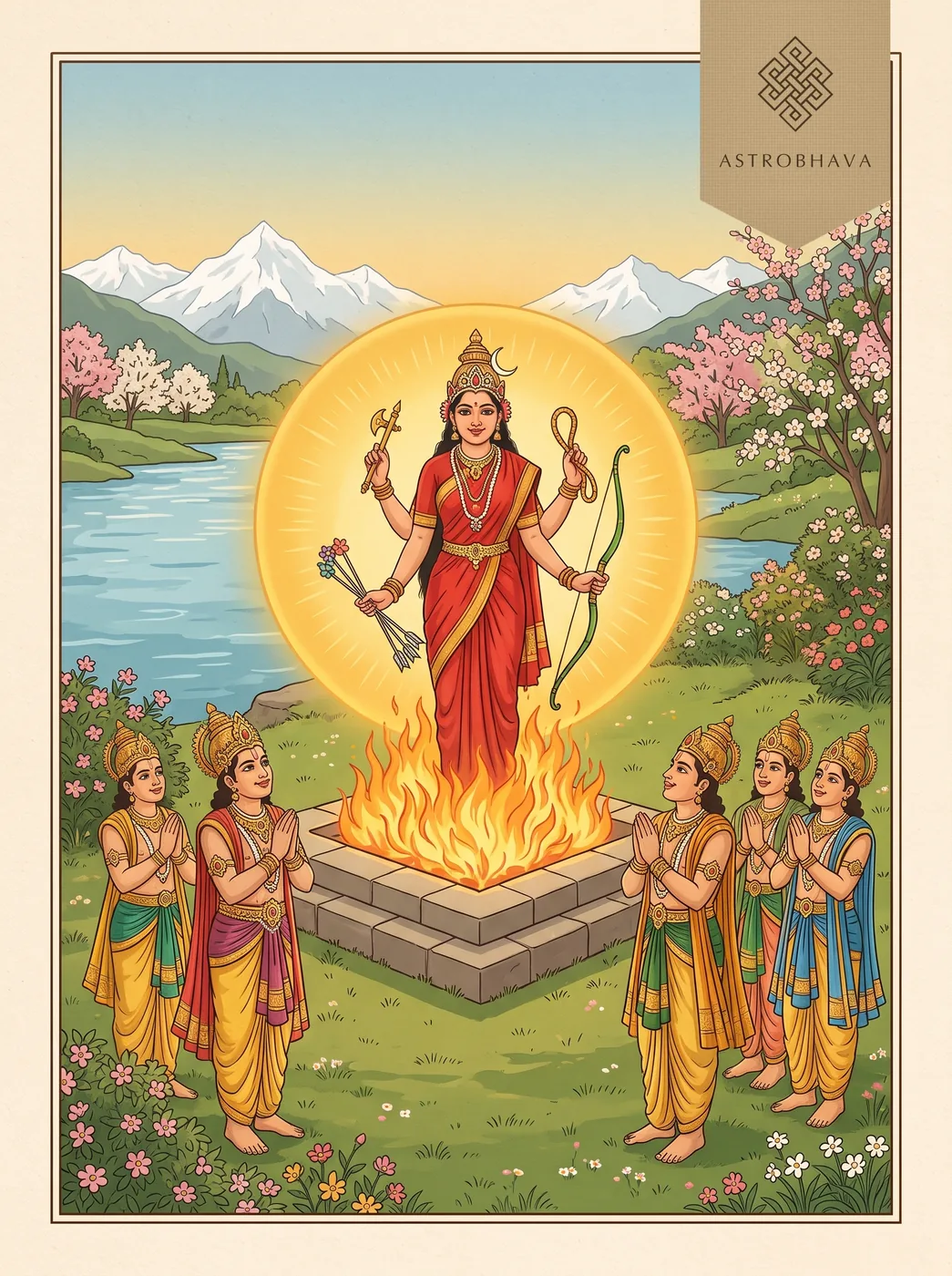
The hymn answers an episode told in the chapter before it, which the Purana names the appearance of Lalita. Bhanda, the demon king, held the three worlds until an enchantment sent by Vishnu drew him into years of pleasure. In that respite the sage Narada came to Indra and warned that no austerity could break Bhanda's strength without worship of the supreme Shakti. Indra led the gods to the Himalaya, to the flowering bank of the Bhagirathi, a place the Purana says was afterwards called Indraprastha, and there they worshipped her for ten thousand years and ten days. Bhanda's priest, the son of Bhrigu, roused him, and the demon marched on them, but a shining wall rose in his way; each time he broke it, it stood again, and he turned home. Still afraid, the gods prepared a fire-pit a yojana wide and began to offer their own flesh into it. As they were about to give their whole bodies, a mass of light appeared, a wheel took shape inside it, and at its centre stood the Goddess, red as the hibiscus, holding the noose, goad, sugarcane bow and five arrows. Her glance made their bodies whole and hard as diamond, and they praised her with these verses. The next chapter brings Brahma, Vishnu and Shiva before her, and Shiva, in a new form, is named Kameshvara as her consort.
The mantra, in six scripts
- जय
- jaya — victory
- देवि
- devi — O Goddess
- जगन्मातर्जय
- jaganmātarjaya — O mother of the world; victory
- देवि
- devi — O Goddess
- परात्परे
- parātpare — beyond the highest
- जय
- jaya — victory
- कल्याणनिलये
- kalyāṇanilaye — home of all that is auspicious
- जय
- jaya — victory
- कामकलात्मिके
- kāmakalātmike — whose self is Kamakala
Lalitha Stavaraja lyrics in full
The whole thirteenth chapter of the Lalitopakhyana: the gods' hymn in verses 1 to 28, then Indra's request and the Goddess's reply. The printed closing line is given at the end.
All 37 verses, in Sanskrit, Tamil, Telugu, Kannada, Malayalam and English, each with its meaning. Choose a script:
Download the Lalitha Stavaraja PDFAll 37 verses with their meanings, in Sanskrit. Free to print and keep.
जय देवि जगन्मातर्जय देवि परात्परे ।
जय कल्याणनिलये जय कामकलात्मिके ॥
ஜய தேவி ஜகந்மாதர்ஜய தேவி பராத்பரே ।
ஜய கல்யாணநிலயே ஜய காமகலாத்மிகே ॥
జయ దేవి జగన్మాతర్జయ దేవి పరాత్పరే ।
జయ కల్యాణనిలయే జయ కామకలాత్మికే ॥
ಜಯ ದೇವಿ ಜಗನ್ಮಾತರ್ಜಯ ದೇವಿ ಪರಾತ್ಪರೇ ।
ಜಯ ಕಲ್ಯಾಣನಿಲಯೇ ಜಯ ಕಾಮಕಲಾತ್ಮಿಕೇ ॥
ജയ ദേവി ജഗന്മാതര്ജയ ദേവി പരാത്പരേ ।
ജയ കല്യാണനിലയേ ജയ കാമകലാത്മികേ ॥
jaya devi jaganmātarjaya devi parātpare |
jaya kalyāṇanilaye jaya kāmakalātmike ||
Victory to you, Goddess, mother of the world; victory to you, Goddess beyond the highest. Victory to you, home of all that is auspicious; victory to you whose very self is the art of desire (Kamakala).
जयकारि च वामाक्षि जय कामाक्षि सुन्दरि ।
जयाखिलसुराराध्ये जय कामेशि मानदे ॥
ஜயகாரி ச வாமாக்ஷி ஜய காமாக்ஷி ஸுந்தரி ।
ஜயாகிலஸுராராத்யே ஜய காமேஶி மாநதே ॥
జయకారి చ వామాక్షి జయ కామాక్షి సున్దరి ।
జయాఖిలసురారాధ్యే జయ కామేశి మానదే ॥
ಜಯಕಾರಿ ಚ ವಾಮಾಕ್ಷಿ ಜಯ ಕಾಮಾಕ್ಷಿ ಸುನ್ದರಿ ।
ಜಯಾಖಿಲಸುರಾರಾಧ್ಯೇ ಜಯ ಕಾಮೇಶಿ ಮಾನದೇ ॥
ജയകാരി ച വാമാക്ഷി ജയ കാമാക്ഷി സുന്ദരി ।
ജയാഖിലസുരാരാധ്യേ ജയ കാമേശി മാനദേ ॥
jayakāri ca vāmākṣi jaya kāmākṣi sundari |
jayākhilasurārādhye jaya kāmeśi mānade ||
Victory to you who bring victory, lovely-eyed one; victory to you, beautiful Kamakshi. Victory to you who are worshipped by all the gods; victory to you, consort of Kameshvara, giver of honour.
जय ब्रह्ममये देवि ब्रह्मात्मकरसात्मिके ।
जय नारायणि परे नन्दिताशेषविष्टपे ॥
ஜய ப்ரஹ்மமயே தேவி ப்ரஹ்மாத்மகரஸாத்மிகே ।
ஜய நாராயணி பரே நந்திதாஶேஷவிஷ்டபே ॥
జయ బ్రహ్మమయే దేవి బ్రహ్మాత్మకరసాత్మికే ।
జయ నారాయణి పరే నన్దితాశేషవిష్టపే ॥
ಜಯ ಬ್ರಹ್ಮಮಯೇ ದೇವಿ ಬ್ರಹ್ಮಾತ್ಮಕರಸಾತ್ಮಿಕೇ ।
ಜಯ ನಾರಾಯಣಿ ಪರೇ ನನ್ದಿತಾಶೇಷವಿಷ್ಟಪೇ ॥
ജയ ബ്രഹ്മമയേ ദേവി ബ്രഹ്മാത്മകരസാത്മികേ ।
ജയ നാരായണി പരേ നന്ദിതാശേഷവിഷ്ടപേ ॥
jaya brahmamaye devi brahmātmakarasātmike |
jaya nārāyaṇi pare nanditāśeṣaviṣṭape ||
Victory to you, Goddess made of Brahman, whose essence is the bliss of the Self. Victory to you, supreme Narayani, who gladden every world.
जय श्रीकण्ठदयिते जय श्रीललितेऽम्बिके ।
जय श्रीविजये देवि विजयश्रीसमृद्धिदे ॥
ஜய ஶ்ரீகண்டதயிதே ஜய ஶ்ரீலலிதேம்பிகே ।
ஜய ஶ்ரீவிஜயே தேவி விஜயஶ்ரீஸம்ருத்திதே ॥
జయ శ్రీకణ్ఠదయితే జయ శ్రీలలితేఽమ్బికే ।
జయ శ్రీవిజయే దేవి విజయశ్రీసమృద్ధిదే ॥
ಜಯ ಶ್ರೀಕಣ್ಠದಯಿತೇ ಜಯ ಶ್ರೀಲಲಿತೇಽಮ್ಬಿಕೇ ।
ಜಯ ಶ್ರೀವಿಜಯೇ ದೇವಿ ವಿಜಯಶ್ರೀಸಮೃದ್ಧಿದೇ ॥
ജയ ശ്രീകണ്ഠദയിതേ ജയ ശ്രീലലിതേഽമ്ബികേ ।
ജയ ശ്രീവിജയേ ദേവി വിജയശ്രീസമൃദ്ധിദേ ॥
jaya śrīkaṇṭhadayite jaya śrīlalite'mbike |
jaya śrīvijaye devi vijayaśrīsamṛddhide ||
Victory to you, beloved of Shiva (Shrikantha); victory to you, Mother Shri Lalita. Victory to you, Goddess Shri Vijaya, who give victory and abundant prosperity.
जातस्य जायमानस्य इष्टापूर्तस्य हेतवे ।
नमस्तस्यै त्रिजगतां पालयित्र्यै परात्परे ॥
ஜாதஸ்ய ஜாயமாநஸ்ய இஷ்டாபூர்தஸ்ய ஹேதவே ।
நமஸ்தஸ்யை த்ரிஜகதாம் பாலயித்ர்யை பராத்பரே ॥
జాతస్య జాయమానస్య ఇష్టాపూర్తస్య హేతవే ।
నమస్తస్యై త్రిజగతాం పాలయిత్ర్యై పరాత్పరే ॥
ಜಾತಸ್ಯ ಜಾಯಮಾನಸ್ಯ ಇಷ್ಟಾಪೂರ್ತಸ್ಯ ಹೇತವೇ ।
ನಮಸ್ತಸ್ಯೈ ತ್ರಿಜಗತಾಂ ಪಾಲಯಿತ್ರ್ಯೈ ಪರಾತ್ಪರೇ ॥
ജാതസ്യ ജായമാനസ്യ ഇഷ്ടാപൂര്തസ്യ ഹേതവേ ।
നമസ്തസ്യൈ ത്രിജഗതാം പാലയിത്ര്യൈ പരാത്പരേ ॥
jātasya jāyamānasya iṣṭāpūrtasya hetave |
namastasyai trijagatāṃ pālayitryai parātpare ||
Salutation to her who is the cause of all that is born and is being born, and of sacrifice and pious works; salutation to her, higher than the highest, who protects the three worlds.
कलामुहूर्तकाष्ठाहर्मासर्तुशरदात्मने ।
नमः सहस्रशीर्षायै सहस्रमुखलोचने ॥
கலாமுஹூர்தகாஷ்டாஹர்மாஸர்துஶரதாத்மநே ।
நமஃ ஸஹஸ்ரஶீர்ஷாயை ஸஹஸ்ரமுகலோசநே ॥
కలాముహూర్తకాష్ఠాహర్మాసర్తుశరదాత్మనే ।
నమః సహస్రశీర్షాయై సహస్రముఖలోచనే ॥
ಕಲಾಮುಹೂರ್ತಕಾಷ್ಠಾಹರ್ಮಾಸರ್ತುಶರದಾತ್ಮನೇ ।
ನಮಃ ಸಹಸ್ರಶೀರ್ಷಾಯೈ ಸಹಸ್ರಮುಖಲೋಚನೇ ॥
കലാമുഹൂര്തകാഷ്ഠാഹര്മാസര്തുശരദാത്മനേ ।
നമഃ സഹസ്രശീര്ഷായൈ സഹസ്രമുഖലോചനേ ॥
kalāmuhūrtakāṣṭhāharmāsartuśaradātmane |
namaḥ sahasraśīrṣāyai sahasramukhalocane ||
Salutation to her who is the moments, the hours, the days, the months, the seasons and the years; salutation to her of a thousand heads, with a thousand faces and eyes.
नमः सहस्रहस्ताब्जपादपङ्कजशोभिते ।
अणोरणुतरे देवि महतोऽपि महीयसि ॥
நமஃ ஸஹஸ்ரஹஸ்தாப்ஜபாதபங்கஜஶோபிதே ।
அணோரணுதரே தேவி மஹதோபி மஹீயஸி ॥
నమః సహస్రహస్తాబ్జపాదపఙ్కజశోభితే ।
అణోరణుతరే దేవి మహతోఽపి మహీయసి ॥
ನಮಃ ಸಹಸ್ರಹಸ್ತಾಬ್ಜಪಾದಪಙ್ಕಜಶೋಭಿತೇ ।
ಅಣೋರಣುತರೇ ದೇವಿ ಮಹತೋಽಪಿ ಮಹೀಯಸಿ ॥
നമഃ സഹസ്രഹസ്താബ്ജപാദപങ്കജശോഭിതേ ।
അണോരണുതരേ ദേവി മഹതോഽപി മഹീയസി ॥
namaḥ sahasrahastābjapādapaṅkajaśobhite |
aṇoraṇutare devi mahato'pi mahīyasi ||
Salutation to you, radiant with a thousand lotus hands and lotus feet. O Goddess, you are subtler than the subtlest and greater than the great.
परात्परतरे मातस्तेजस्तेजीयसामपि ।
अतलं तु भवेत्पादौ वितलं जानुनी तव ॥
பராத்பரதரே மாதஸ்தேஜஸ்தேஜீயஸாமபி ।
அதலம் து பவேத்பாதௌ விதலம் ஜாநுநீ தவ ॥
పరాత్పరతరే మాతస్తేజస్తేజీయసామపి ।
అతలం తు భవేత్పాదౌ వితలం జానునీ తవ ॥
ಪರಾತ್ಪರತರೇ ಮಾತಸ್ತೇಜಸ್ತೇಜೀಯಸಾಮಪಿ ।
ಅತಲಂ ತು ಭವೇತ್ಪಾದೌ ವಿತಲಂ ಜಾನುನೀ ತವ ॥
പരാത്പരതരേ മാതസ്തേജസ്തേജീയസാമപി ।
അതലം തു ഭവേത്പാദൌ വിതലം ജാനുനീ തവ ॥
parātparatare mātastejastejīyasāmapi |
atalaṃ tu bhavetpādau vitalaṃ jānunī tava ||
Mother, you are higher than the highest and the brightest of all that shines. The nether world Atala is your feet, and Vitala is your knees.
रसातलं कटीदेशः कुक्षिस्ते धरणी भवेत् ।
हृदयं तु भुवर्लोकः स्वस्ते मुखमुदाहृतम् ॥
ரஸாதலம் கடீதேஶஃ குக்ஷிஸ்தே தரணீ பவேத் ।
ஹ்ருதயம் து புவர்லோகஃ ஸ்வஸ்தே முகமுதாஹ்ருதம் ॥
రసాతలం కటీదేశః కుక్షిస్తే ధరణీ భవేత్ ।
హృదయం తు భువర్లోకః స్వస్తే ముఖముదాహృతమ్ ॥
ರಸಾತಲಂ ಕಟೀದೇಶಃ ಕುಕ್ಷಿಸ್ತೇ ಧರಣೀ ಭವೇತ್ ।
ಹೃದಯಂ ತು ಭುವರ್ಲೋಕಃ ಸ್ವಸ್ತೇ ಮುಖಮುದಾಹೃತಮ್ ॥
രസാതലം കടീദേശഃ കുക്ഷിസ്തേ ധരണീ ഭവേത് ।
ഹൃദയം തു ഭുവര്ലോകഃ സ്വസ്തേ മുഖമുദാഹൃതമ് ॥
rasātalaṃ kaṭīdeśaḥ kukṣiste dharaṇī bhavet |
hṛdayaṃ tu bhuvarlokaḥ svaste mukhamudāhṛtam ||
Rasatala is your waist and the earth is your belly. The middle world is your heart, and heaven is said to be your face.
दृशश्चन्द्रार्कदहना दिशस्ते बाहवोऽम्बिके ।
मरुतस्तु तवोच्छ्वासा वाचस्ते श्रुतयोऽखिलाः ॥
த்ருஶஶ்சந்த்ரார்கதஹநா திஶஸ்தே பாஹவோம்பிகே ।
மருதஸ்து தவோச்ச்வாஸா வாசஸ்தே ஶ்ருதயோகிலாஃ ॥
దృశశ్చన్ద్రార్కదహనా దిశస్తే బాహవోఽమ్బికే ।
మరుతస్తు తవోచ్ఛ్వాసా వాచస్తే శ్రుతయోఽఖిలాః ॥
ದೃಶಶ್ಚನ್ದ್ರಾರ್ಕದಹನಾ ದಿಶಸ್ತೇ ಬಾಹವೋಽಮ್ಬಿಕೇ ।
ಮರುತಸ್ತು ತವೋಚ್ಛ್ವಾಸಾ ವಾಚಸ್ತೇ ಶ್ರುತಯೋಽಖಿಲಾಃ ॥
ദൃശശ്ചന്ദ്രാര്കദഹനാ ദിശസ്തേ ബാഹവോഽമ്ബികേ ।
മരുതസ്തു തവോച്ഛ്വാസാ വാചസ്തേ ശ്രുതയോഽഖിലാഃ ॥
dṛśaścandrārkadahanā diśaste bāhavo'mbike |
marutastu tavocchvāsā vācaste śrutayo'khilāḥ ||
Your eyes are the moon, the sun and fire; the directions are your arms, O Mother. The winds are your breath, and all the Vedas are your speech.
क्रीडा ते लोकरचना सखा ते चिन्मयः शिवः ।
आहारस्ते सदानन्दो वासस्ते हृदये सताम् ॥
க்ரீடா தே லோகரசநா ஸகா தே சிந்மயஃ ஶிவஃ ।
ஆஹாரஸ்தே ஸதாநந்தோ வாஸஸ்தே ஹ்ருதயே ஸதாம் ॥
క్రీడా తే లోకరచనా సఖా తే చిన్మయః శివః ।
ఆహారస్తే సదానన్దో వాసస్తే హృదయే సతామ్ ॥
ಕ್ರೀಡಾ ತೇ ಲೋಕರಚನಾ ಸಖಾ ತೇ ಚಿನ್ಮಯಃ ಶಿವಃ ।
ಆಹಾರಸ್ತೇ ಸದಾನನ್ದೋ ವಾಸಸ್ತೇ ಹೃದಯೇ ಸತಾಮ್ ॥
ക്രീഡാ തേ ലോകരചനാ സഖാ തേ ചിന്മയഃ ശിവഃ ।
ആഹാരസ്തേ സദാനന്ദോ വാസസ്തേ ഹൃദയേ സതാമ് ॥
krīḍā te lokaracanā sakhā te cinmayaḥ śivaḥ |
āhāraste sadānando vāsaste hṛdaye satām ||
Your play is the making of the worlds, and your companion is Shiva, who is pure consciousness. Your food is everlasting bliss, and your dwelling is the heart of the good.
दृश्यादृश्यस्वरूपाणि रूपाणि भुवनानि ते ।
शिरोरुहा घनास्ते तु तारकाः कुसुमानि ते ॥
த்ருஶ்யாத்ருஶ்யஸ்வரூபாணி ரூபாணி புவநாநி தே ।
ஶிரோருஹா கநாஸ்தே து தாரகாஃ குஸுமாநி தே ॥
దృశ్యాదృశ్యస్వరూపాణి రూపాణి భువనాని తే ।
శిరోరుహా ఘనాస్తే తు తారకాః కుసుమాని తే ॥
ದೃಶ್ಯಾದೃಶ್ಯಸ್ವರೂಪಾಣಿ ರೂಪಾಣಿ ಭುವನಾನಿ ತೇ ।
ಶಿರೋರುಹಾ ಘನಾಸ್ತೇ ತು ತಾರಕಾಃ ಕುಸುಮಾನಿ ತೇ ॥
ദൃശ്യാദൃശ്യസ്വരൂപാണി രൂപാണി ഭുവനാനി തേ ।
ശിരോരുഹാ ഘനാസ്തേ തു താരകാഃ കുസുമാനി തേ ॥
dṛśyādṛśyasvarūpāṇi rūpāṇi bhuvanāni te |
śiroruhā ghanāste tu tārakāḥ kusumāni te ||
All forms, seen and unseen, and all the worlds are your forms. The clouds are your hair, and the stars are your flowers.
धर्माद्या बाहवस्ते स्युरधर्माद्यायुधानि ते ।
यमाश्च नियमाश्चैव करपादरुहास्तथा ॥
தர்மாத்யா பாஹவஸ்தே ஸ்யுரதர்மாத்யாயுதாநி தே ।
யமாஶ்ச நியமாஶ்சைவ கரபாதருஹாஸ்ததா ॥
ధర్మాద్యా బాహవస్తే స్యురధర్మాద్యాయుధాని తే ।
యమాశ్చ నియమాశ్చైవ కరపాదరుహాస్తథా ॥
ಧರ್ಮಾದ್ಯಾ ಬಾಹವಸ್ತೇ ಸ್ಯುರಧರ್ಮಾದ್ಯಾಯುಧಾನಿ ತೇ ।
ಯಮಾಶ್ಚ ನಿಯಮಾಶ್ಚೈವ ಕರಪಾದರುಹಾಸ್ತಥಾ ॥
ധര്മാദ്യാ ബാഹവസ്തേ സ്യുരധര്മാദ്യായുധാനി തേ ।
യമാശ്ച നിയമാശ്ചൈവ കരപാദരുഹാസ്തഥാ ॥
dharmādyā bāhavaste syuradharmādyāyudhāni te |
yamāśca niyamāścaiva karapādaruhāstathā ||
Dharma and the virtues are your arms, and adharma and the like are your weapons. The yamas and niyamas (the moral restraints and observances) are the nails of your hands and feet.
स्तनौ स्वाहास्वधाकरौ लोकोज्जीवनकारकौ ।
प्राणायामस्तु ते नासा रसना ते सरस्वती ॥
ஸ்தநௌ ஸ்வாஹாஸ்வதாகரௌ லோகோஜ்ஜீவநகாரகௌ ।
ப்ராணாயாமஸ்து தே நாஸா ரஸநா தே ஸரஸ்வதீ ॥
స్తనౌ స్వాహాస్వధాకరౌ లోకోజ్జీవనకారకౌ ।
ప్రాణాయామస్తు తే నాసా రసనా తే సరస్వతీ ॥
ಸ್ತನೌ ಸ್ವಾಹಾಸ್ವಧಾಕರೌ ಲೋಕೋಜ್ಜೀವನಕಾರಕೌ ।
ಪ್ರಾಣಾಯಾಮಸ್ತು ತೇ ನಾಸಾ ರಸನಾ ತೇ ಸರಸ್ವತೀ ॥
സ്തനൌ സ്വാഹാസ്വധാകരൌ ലോകോജ്ജീവനകാരകൌ ।
പ്രാണായാമസ്തു തേ നാസാ രസനാ തേ സരസ്വതീ ॥
stanau svāhāsvadhākarau lokojjīvanakārakau |
prāṇāyāmastu te nāsā rasanā te sarasvatī ||
Your breasts are Svaha and Svadha, the source and giver of life to the worlds. Breath-control (pranayama) is your nose, and Sarasvati is your tongue.
प्रत्याहारस्त्विन्द्रियाणि ध्यानं ते धीस्तु सत्तमा ।
मनस्ते धारणाशक्तिर्हृदयं ते समाधिकः ॥
ப்ரத்யாஹாரஸ்த்விந்த்ரியாணி த்யாநம் தே தீஸ்து ஸத்தமா ।
மநஸ்தே தாரணாஶக்திர்ஹ்ருதயம் தே ஸமாதிகஃ ॥
ప్రత్యాహారస్త్విన్ద్రియాణి ధ్యానం తే ధీస్తు సత్తమా ।
మనస్తే ధారణాశక్తిర్హృదయం తే సమాధికః ॥
ಪ್ರತ್ಯಾಹಾರಸ್ತ್ವಿನ್ದ್ರಿಯಾಣಿ ಧ್ಯಾನಂ ತೇ ಧೀಸ್ತು ಸತ್ತಮಾ ।
ಮನಸ್ತೇ ಧಾರಣಾಶಕ್ತಿರ್ಹೃದಯಂ ತೇ ಸಮಾಧಿಕಃ ॥
പ്രത്യാഹാരസ്ത്വിന്ദ്രിയാണി ധ്യാനം തേ ധീസ്തു സത്തമാ ।
മനസ്തേ ധാരണാശക്തിര്ഹൃദയം തേ സമാധികഃ ॥
pratyāhārastvindriyāṇi dhyānaṃ te dhīstu sattamā |
manaste dhāraṇāśaktirhṛdayaṃ te samādhikaḥ ||
Withdrawal of the senses (pratyahara) is your senses, and meditation is your noble intellect. Concentration (dharana) is your mind, and absorption (samadhi) is your heart.
महीरुहास्तेऽङ्गरुहाः प्रभातं वसनं तव ।
भूतं भव्यं भविष्यच्च नित्यं च तव विग्रहः ॥
மஹீருஹாஸ்தேங்கருஹாஃ ப்ரபாதம் வஸநம் தவ ।
பூதம் பவ்யம் பவிஷ்யச்ச நித்யம் ச தவ விக்ரஹஃ ॥
మహీరుహాస్తేఽఙ్గరుహాః ప్రభాతం వసనం తవ ।
భూతం భవ్యం భవిష్యచ్చ నిత్యం చ తవ విగ్రహః ॥
ಮಹೀರುಹಾಸ್ತೇಽಙ್ಗರುಹಾಃ ಪ್ರಭಾತಂ ವಸನಂ ತವ ।
ಭೂತಂ ಭವ್ಯಂ ಭವಿಷ್ಯಚ್ಚ ನಿತ್ಯಂ ಚ ತವ ವಿಗ್ರಹಃ ॥
മഹീരുഹാസ്തേഽങ്ഗരുഹാഃ പ്രഭാതം വസനം തവ ।
ഭൂതം ഭവ്യം ഭവിഷ്യച്ച നിത്യം ച തവ വിഗ്രഹഃ ॥
mahīruhāste'ṅgaruhāḥ prabhātaṃ vasanaṃ tava |
bhūtaṃ bhavyaṃ bhaviṣyacca nityaṃ ca tava vigrahaḥ ||
The trees are the hair of your body, and the dawn is your garment. The past, the present and the future are your eternal form.
यज्ञरूपा जगद्धात्री विश्वरूपा च पावनी ।
आदौ या तु दयाभूता ससर्ज निखिलाः प्रजाः ॥
யஜ்ஞரூபா ஜகத்தாத்ரீ விஶ்வரூபா ச பாவநீ ।
ஆதௌ யா து தயாபூதா ஸஸர்ஜ நிகிலாஃ ப்ரஜாஃ ॥
యజ్ఞరూపా జగద్ధాత్రీ విశ్వరూపా చ పావనీ ।
ఆదౌ యా తు దయాభూతా ససర్జ నిఖిలాః ప్రజాః ॥
ಯಜ್ಞರೂಪಾ ಜಗದ್ಧಾತ್ರೀ ವಿಶ್ವರೂಪಾ ಚ ಪಾವನೀ ।
ಆದೌ ಯಾ ತು ದಯಾಭೂತಾ ಸಸರ್ಜ ನಿಖಿಲಾಃ ಪ್ರಜಾಃ ॥
യജ്ഞരൂപാ ജഗദ്ധാത്രീ വിശ്വരൂപാ ച പാവനീ ।
ആദൌ യാ തു ദയാഭൂതാ സസര്ജ നിഖിലാഃ പ്രജാഃ ॥
yajñarūpā jagaddhātrī viśvarūpā ca pāvanī |
ādau yā tu dayābhūtā sasarja nikhilāḥ prajāḥ ||
She is the form of sacrifice, the support of the world, the form of the universe and the purifier. In the beginning, as compassion itself, she brought forth all beings.
हृदयस्थापि लोकानामदृश्या मोहनात्मिका ॥
ஹ்ருதயஸ்தாபி லோகாநாமத்ருஶ்யா மோஹநாத்மிகா ॥
హృదయస్థాపి లోకానామదృశ్యా మోహనాత్మికా ॥
ಹೃದಯಸ್ಥಾಪಿ ಲೋಕಾನಾಮದೃಶ್ಯಾ ಮೋಹನಾತ್ಮಿಕಾ ॥
ഹൃദയസ്ഥാപി ലോകാനാമദൃശ്യാ മോഹനാത്മികാ ॥
hṛdayasthāpi lokānāmadṛśyā mohanātmikā ||
Though she dwells in the hearts of all beings, she is unseen, and she is the power that enchants them.
नामरूपविभागं च या करोति स्वलीलया ।
तान्यधिष्ठाय तिष्ठन्ती तेष्वसक्तार्थकामदा ।
नमस्तस्यै महादेव्यै सर्वशक्त्यै नमोनमः ॥
நாமரூபவிபாகம் ச யா கரோதி ஸ்வலீலயா ।
தாந்யதிஷ்டாய திஷ்டந்தீ தேஷ்வஸக்தார்தகாமதா ।
நமஸ்தஸ்யை மஹாதேவ்யை ஸர்வஶக்த்யை நமோநமஃ ॥
నామరూపవిభాగం చ యా కరోతి స్వలీలయా ।
తాన్యధిష్ఠాయ తిష్ఠన్తీ తేష్వసక్తార్థకామదా ।
నమస్తస్యై మహాదేవ్యై సర్వశక్త్యై నమోనమః ॥
ನಾಮರೂಪವಿಭಾಗಂ ಚ ಯಾ ಕರೋತಿ ಸ್ವಲೀಲಯಾ ।
ತಾನ್ಯಧಿಷ್ಠಾಯ ತಿಷ್ಠನ್ತೀ ತೇಷ್ವಸಕ್ತಾರ್ಥಕಾಮದಾ ।
ನಮಸ್ತಸ್ಯೈ ಮಹಾದೇವ್ಯೈ ಸರ್ವಶಕ್ತ್ಯೈ ನಮೋನಮಃ ॥
നാമരൂപവിഭാഗം ച യാ കരോതി സ്വലീലയാ ।
താന്യധിഷ്ഠായ തിഷ്ഠന്തീ തേഷ്വസക്താര്ഥകാമദാ ।
നമസ്തസ്യൈ മഹാദേവ്യൈ സര്വശക്ത്യൈ നമോനമഃ ॥
nāmarūpavibhāgaṃ ca yā karoti svalīlayā |
tānyadhiṣṭhāya tiṣṭhantī teṣvasaktārthakāmadā |
namastasyai mahādevyai sarvaśaktyai namonamaḥ ||
Salutation again and again to that great Goddess, the power of all, who in her own play divides the world into names and forms, and who presides over them while remaining unattached, granting wealth and desires.
यदाज्ञया प्रवर्तन्ते वह्निसूर्येन्दुमारुताः ।
पृथिव्यादीनि भूतानि तस्यै देव्यै नमोनमः ॥
யதாஜ்ஞயா ப்ரவர்தந்தே வஹ்நிஸூர்யேந்துமாருதாஃ ।
ப்ருதிவ்யாதீநி பூதாநி தஸ்யை தேவ்யை நமோநமஃ ॥
యదాజ్ఞయా ప్రవర్తన్తే వహ్నిసూర్యేన్దుమారుతాః ।
పృథివ్యాదీని భూతాని తస్యై దేవ్యై నమోనమః ॥
ಯದಾಜ್ಞಯಾ ಪ್ರವರ್ತನ್ತೇ ವಹ್ನಿಸೂರ್ಯೇನ್ದುಮಾರುತಾಃ ।
ಪೃಥಿವ್ಯಾದೀನಿ ಭೂತಾನಿ ತಸ್ಯೈ ದೇವ್ಯೈ ನಮೋನಮಃ ॥
യദാജ്ഞയാ പ്രവര്തന്തേ വഹ്നിസൂര്യേന്ദുമാരുതാഃ ।
പൃഥിവ്യാദീനി ഭൂതാനി തസ്യൈ ദേവ്യൈ നമോനമഃ ॥
yadājñayā pravartante vahnisūryendumārutāḥ |
pṛthivyādīni bhūtāni tasyai devyai namonamaḥ ||
Salutation again and again to that Goddess at whose command fire, sun, moon and wind move, and the earth and the other elements act.
या ससर्जादिधातारं सर्गादावादिभूरिदम् ।
दधार स्वयमेवैका तस्यै देव्यै नमोनमः ॥
யா ஸஸர்ஜாதிதாதாரம் ஸர்காதாவாதிபூரிதம் ।
ததார ஸ்வயமேவைகா தஸ்யை தேவ்யை நமோநமஃ ॥
యా ససర్జాదిధాతారం సర్గాదావాదిభూరిదమ్ ।
దధార స్వయమేవైకా తస్యై దేవ్యై నమోనమః ॥
ಯಾ ಸಸರ್ಜಾದಿಧಾತಾರಂ ಸರ್ಗಾದಾವಾದಿಭೂರಿದಮ್ ।
ದಧಾರ ಸ್ವಯಮೇವೈಕಾ ತಸ್ಯೈ ದೇವ್ಯೈ ನಮೋನಮಃ ॥
യാ സസര്ജാദിധാതാരം സര്ഗാദാവാദിഭൂരിദമ് ।
ദധാര സ്വയമേവൈകാ തസ്യൈ ദേവ്യൈ നമോനമഃ ॥
yā sasarjādidhātāraṃ sargādāvādibhūridam |
dadhāra svayamevaikā tasyai devyai namonamaḥ ||
Salutation again and again to that Goddess who created the first creator at the start of creation, and who alone, by herself, upheld this whole world.
यथा धृता तु धरिणी ययाकाशममेयया ।
यस्यामुदेति सविता तस्यै देव्यै नमोनमः ॥
யதா த்ருதா து தரிணீ யயாகாஶமமேயயா ।
யஸ்யாமுதேதி ஸவிதா தஸ்யை தேவ்யை நமோநமஃ ॥
యథా ధృతా తు ధరిణీ యయాకాశమమేయయా ।
యస్యాముదేతి సవితా తస్యై దేవ్యై నమోనమః ॥
ಯಥಾ ಧೃತಾ ತು ಧರಿಣೀ ಯಯಾಕಾಶಮಮೇಯಯಾ ।
ಯಸ್ಯಾಮುದೇತಿ ಸವಿತಾ ತಸ್ಯೈ ದೇವ್ಯೈ ನಮೋನಮಃ ॥
യഥാ ധൃതാ തു ധരിണീ യയാകാശമമേയയാ ।
യസ്യാമുദേതി സവിതാ തസ്യൈ ദേവ്യൈ നമോനമഃ ॥
yathā dhṛtā tu dhariṇī yayākāśamameyayā |
yasyāmudeti savitā tasyai devyai namonamaḥ ||
Salutation again and again to that Goddess by whom the earth is held and by whom, the immeasurable one, the sky is held, and in whom the sun rises.
यत्रोदेति जगत्कृत्स्नं यत्र तिष्ठति निर्भरम् ।
यत्रान्तमेति काले तु तस्यै देव्यै नमोनमः ॥
யத்ரோதேதி ஜகத்க்ருத்ஸ்நம் யத்ர திஷ்டதி நிர்பரம் ।
யத்ராந்தமேதி காலே து தஸ்யை தேவ்யை நமோநமஃ ॥
యత్రోదేతి జగత్కృత్స్నం యత్ర తిష్ఠతి నిర్భరమ్ ।
యత్రాన్తమేతి కాలే తు తస్యై దేవ్యై నమోనమః ॥
ಯತ್ರೋದೇತಿ ಜಗತ್ಕೃತ್ಸ್ನಂ ಯತ್ರ ತಿಷ್ಠತಿ ನಿರ್ಭರಮ್ ।
ಯತ್ರಾನ್ತಮೇತಿ ಕಾಲೇ ತು ತಸ್ಯೈ ದೇವ್ಯೈ ನಮೋನಮಃ ॥
യത്രോദേതി ജഗത്കൃത്സ്നം യത്ര തിഷ്ഠതി നിര്ഭരമ് ।
യത്രാന്തമേതി കാലേ തു തസ്യൈ ദേവ്യൈ നമോനമഃ ॥
yatrodeti jagatkṛtsnaṃ yatra tiṣṭhati nirbharam |
yatrāntameti kāle tu tasyai devyai namonamaḥ ||
Salutation again and again to that Goddess from whom the whole world arises, in whom it fully abides, and into whom it goes to its end in time.
नमोनमस्ते रजसे भवायै नमोनमः सात्त्विकसंस्थितायै ।
नमोनमस्ते तमसे हरायै नमोनमो निर्गुणतः शिवायै ॥
நமோநமஸ்தே ரஜஸே பவாயை நமோநமஃ ஸாத்த்விகஸம்ஸ்திதாயை ।
நமோநமஸ்தே தமஸே ஹராயை நமோநமோ நிர்குணதஃ ஶிவாயை ॥
నమోనమస్తే రజసే భవాయై నమోనమః సాత్త్వికసంస్థితాయై ।
నమోనమస్తే తమసే హరాయై నమోనమో నిర్గుణతః శివాయై ॥
ನಮೋನಮಸ್ತೇ ರಜಸೇ ಭವಾಯೈ ನಮೋನಮಃ ಸಾತ್ತ್ವಿಕಸಂಸ್ಥಿತಾಯೈ ।
ನಮೋನಮಸ್ತೇ ತಮಸೇ ಹರಾಯೈ ನಮೋನಮೋ ನಿರ್ಗುಣತಃ ಶಿವಾಯೈ ॥
നമോനമസ്തേ രജസേ ഭവായൈ നമോനമഃ സാത്ത്വികസംസ്ഥിതായൈ ।
നമോനമസ്തേ തമസേ ഹരായൈ നമോനമോ നിര്ഗുണതഃ ശിവായൈ ॥
namonamaste rajase bhavāyai namonamaḥ sāttvikasaṃsthitāyai |
namonamaste tamase harāyai namonamo nirguṇataḥ śivāyai ||
Salutation again and again to you as rajas, as Bhava the creator; salutation again and again to you established in sattva. Salutation again and again to you as tamas, as Hara; salutation again and again to you as Shiva, beyond all qualities.
नमोनमस्ते जगदेकमात्रे नमोनमस्ते जगदेकपित्रे ।
नमोनमस्तेऽखिलरूपतन्त्रे नमोनमस्तेऽखिलयन्त्ररूपे ॥
நமோநமஸ்தே ஜகதேகமாத்ரே நமோநமஸ்தே ஜகதேகபித்ரே ।
நமோநமஸ்தேகிலரூபதந்த்ரே நமோநமஸ்தேகிலயந்த்ரரூபே ॥
నమోనమస్తే జగదేకమాత్రే నమోనమస్తే జగదేకపిత్రే ।
నమోనమస్తేఽఖిలరూపతన్త్రే నమోనమస్తేఽఖిలయన్త్రరూపే ॥
ನಮೋನಮಸ್ತೇ ಜಗದೇಕಮಾತ್ರೇ ನಮೋನಮಸ್ತೇ ಜಗದೇಕಪಿತ್ರೇ ।
ನಮೋನಮಸ್ತೇಽಖಿಲರೂಪತನ್ತ್ರೇ ನಮೋನಮಸ್ತೇಽಖಿಲಯನ್ತ್ರರೂಪೇ ॥
നമോനമസ്തേ ജഗദേകമാത്രേ നമോനമസ്തേ ജഗദേകപിത്രേ ।
നമോനമസ്തേഽഖിലരൂപതന്ത്രേ നമോനമസ്തേഽഖിലയന്ത്രരൂപേ ॥
namonamaste jagadekamātre namonamaste jagadekapitre |
namonamaste'khilarūpatantre namonamaste'khilayantrarūpe ||
Salutation again and again to you, the one mother of the world; salutation again and again to you, the one father of the world. Salutation again and again to you, the framework of every form; salutation again and again to you whose form is every yantra.
नमोनमो लोकगुरुप्रधाने नमोनमस्तेऽखिलवाग्विभूत्यै ।
नमोऽस्तु लक्ष्म्यै जगदेकतुष्ट्यै नमोनमः शाम्भवि सर्वशक्त्यै ॥
நமோநமோ லோககுருப்ரதாநே நமோநமஸ்தேகிலவாக்விபூத்யை ।
நமோஸ்து லக்ஷ்ம்யை ஜகதேகதுஷ்ட்யை நமோநமஃ ஶாம்பவி ஸர்வஶக்த்யை ॥
నమోనమో లోకగురుప్రధానే నమోనమస్తేఽఖిలవాగ్విభూత్యై ।
నమోఽస్తు లక్ష్మ్యై జగదేకతుష్ట్యై నమోనమః శామ్భవి సర్వశక్త్యై ॥
ನಮೋನಮೋ ಲೋಕಗುರುಪ್ರಧಾನೇ ನಮೋನಮಸ್ತೇಽಖಿಲವಾಗ್ವಿಭೂತ್ಯೈ ।
ನಮೋಽಸ್ತು ಲಕ್ಷ್ಮ್ಯೈ ಜಗದೇಕತುಷ್ಟ್ಯೈ ನಮೋನಮಃ ಶಾಮ್ಭವಿ ಸರ್ವಶಕ್ತ್ಯೈ ॥
നമോനമോ ലോകഗുരുപ്രധാനേ നമോനമസ്തേഽഖിലവാഗ്വിഭൂത്യൈ ।
നമോഽസ്തു ലക്ഷ്മ്യൈ ജഗദേകതുഷ്ട്യൈ നമോനമഃ ശാമ്ഭവി സര്വശക്ത്യൈ ॥
namonamo lokagurupradhāne namonamaste'khilavāgvibhūtyai |
namo'stu lakṣmyai jagadekatuṣṭyai namonamaḥ śāmbhavi sarvaśaktyai ||
Salutation again and again to you, chief of the teachers of the world; salutation again and again to you, the glory of all speech. Salutation to Lakshmi, the one contentment of the world; salutation again and again to you, Shambhavi, power of all.
अनादिमध्यान्तमपाञ्चभौतिकं ह्यवाङ्मनोगम्यमतर्क्यवैभवम् ।
अरूपमद्वन्द्वमदृष्टगोचरं प्रभावमग्र्यं कथमम्ब वर्णये ॥
அநாதிமத்யாந்தமபாஞ்சபௌதிகம் ஹ்யவாங்மநோகம்யமதர்க்யவைபவம் ।
அரூபமத்வந்த்வமத்ருஷ்டகோசரம் ப்ரபாவமக்ர்யம் கதமம்ப வர்ணயே ॥
అనాదిమధ్యాన్తమపాఞ్చభౌతికం హ్యవాఙ్మనోగమ్యమతర్క్యవైభవమ్ ।
అరూపమద్వన్ద్వమదృష్టగోచరం ప్రభావమగ్ర్యం కథమమ్బ వర్ణయే ॥
ಅನಾದಿಮಧ್ಯಾನ್ತಮಪಾಞ್ಚಭೌತಿಕಂ ಹ್ಯವಾಙ್ಮನೋಗಮ್ಯಮತರ್ಕ್ಯವೈಭವಮ್ ।
ಅರೂಪಮದ್ವನ್ದ್ವಮದೃಷ್ಟಗೋಚರಂ ಪ್ರಭಾವಮಗ್ರ್ಯಂ ಕಥಮಮ್ಬ ವರ್ಣಯೇ ॥
അനാദിമധ്യാന്തമപാഞ്ചഭൌതികം ഹ്യവാങ്മനോഗമ്യമതര്ക്യവൈഭവമ് ।
അരൂപമദ്വന്ദ്വമദൃഷ്ടഗോചരം പ്രഭാവമഗ്ര്യം കഥമമ്ബ വര്ണയേ ॥
anādimadhyāntamapāñcabhautikaṃ hyavāṅmanogamyamatarkyavaibhavam |
arūpamadvandvamadṛṣṭagocaraṃ prabhāvamagryaṃ kathamamba varṇaye ||
Without beginning, middle or end, not made of the five elements, beyond the reach of speech and mind, of glory past reasoning, formless, beyond all pairs of opposites and outside what can be seen: O Mother, how can I describe your supreme greatness?
प्रसीद विश्वेश्वरि विश्ववन्दिते प्रसीद विद्येश्वरि वेदरूपिणि ।
प्रसीद मायामयि मन्त्रविग्रहे प्रसीद सर्वेश्वरि सर्वरूपिणि ॥
ப்ரஸீத விஶ்வேஶ்வரி விஶ்வவந்திதே ப்ரஸீத வித்யேஶ்வரி வேதரூபிணி ।
ப்ரஸீத மாயாமயி மந்த்ரவிக்ரஹே ப்ரஸீத ஸர்வேஶ்வரி ஸர்வரூபிணி ॥
ప్రసీద విశ్వేశ్వరి విశ్వవన్దితే ప్రసీద విద్యేశ్వరి వేదరూపిణి ।
ప్రసీద మాయామయి మన్త్రవిగ్రహే ప్రసీద సర్వేశ్వరి సర్వరూపిణి ॥
ಪ್ರಸೀದ ವಿಶ್ವೇಶ್ವರಿ ವಿಶ್ವವನ್ದಿತೇ ಪ್ರಸೀದ ವಿದ್ಯೇಶ್ವರಿ ವೇದರೂಪಿಣಿ ।
ಪ್ರಸೀದ ಮಾಯಾಮಯಿ ಮನ್ತ್ರವಿಗ್ರಹೇ ಪ್ರಸೀದ ಸರ್ವೇಶ್ವರಿ ಸರ್ವರೂಪಿಣಿ ॥
പ്രസീദ വിശ്വേശ്വരി വിശ്വവന്ദിതേ പ്രസീദ വിദ്യേശ്വരി വേദരൂപിണി ।
പ്രസീദ മായാമയി മന്ത്രവിഗ്രഹേ പ്രസീദ സര്വേശ്വരി സര്വരൂപിണി ॥
prasīda viśveśvari viśvavandite prasīda vidyeśvari vedarūpiṇi |
prasīda māyāmayi mantravigrahe prasīda sarveśvari sarvarūpiṇi ||
Be gracious, Queen of the universe, worshipped by the universe; be gracious, Queen of knowledge, whose form is the Veda. Be gracious, you who are made of Maya, whose body is the mantra; be gracious, Queen of all, who take every form.
इति स्तुत्वा महादेवीं देवाः सर्वे सवासवाः ।
भूयो भूयो नमस्कृत्य शरणं जग्मुरञ्जसा ॥
இதி ஸ்துத்வா மஹாதேவீம் தேவாஃ ஸர்வே ஸவாஸவாஃ ।
பூயோ பூயோ நமஸ்க்ருத்ய ஶரணம் ஜக்முரஞ்ஜஸா ॥
ఇతి స్తుత్వా మహాదేవీం దేవాః సర్వే సవాసవాః ।
భూయో భూయో నమస్కృత్య శరణం జగ్మురఞ్జసా ॥
ಇತಿ ಸ್ತುತ್ವಾ ಮಹಾದೇವೀಂ ದೇವಾಃ ಸರ್ವೇ ಸವಾಸವಾಃ ।
ಭೂಯೋ ಭೂಯೋ ನಮಸ್ಕೃತ್ಯ ಶರಣಂ ಜಗ್ಮುರಞ್ಜಸಾ ॥
ഇതി സ്തുത്വാ മഹാദേവീം ദേവാഃ സര്വേ സവാസവാഃ ।
ഭൂയോ ഭൂയോ നമസ്കൃത്യ ശരണം ജഗ്മുരഞ്ജസാ ॥
iti stutvā mahādevīṃ devāḥ sarve savāsavāḥ |
bhūyo bhūyo namaskṛtya śaraṇaṃ jagmurañjasā ||
Having praised the great Goddess in this way, all the gods together with Indra bowed to her again and again and at once took refuge in her.
ततः प्रसन्ना सा देवी प्रणतं वीक्ष्य वासवम् ।
वरेण च्छन्दयामास वरदाखिलदेहिनाम् ॥
ததஃ ப்ரஸந்நா ஸா தேவீ ப்ரணதம் வீக்ஷ்ய வாஸவம் ।
வரேண ச்சந்தயாமாஸ வரதாகிலதேஹிநாம் ॥
తతః ప్రసన్నా సా దేవీ ప్రణతం వీక్ష్య వాసవమ్ ।
వరేణ చ్ఛన్దయామాస వరదాఖిలదేహినామ్ ॥
ತತಃ ಪ್ರಸನ್ನಾ ಸಾ ದೇವೀ ಪ್ರಣತಂ ವೀಕ್ಷ್ಯ ವಾಸವಮ್ ।
ವರೇಣ ಚ್ಛನ್ದಯಾಮಾಸ ವರದಾಖಿಲದೇಹಿನಾಮ್ ॥
തതഃ പ്രസന്നാ സാ ദേവീ പ്രണതം വീക്ഷ്യ വാസവമ് ।
വരേണ ച്ഛന്ദയാമാസ വരദാഖിലദേഹിനാമ് ॥
tataḥ prasannā sā devī praṇataṃ vīkṣya vāsavam |
vareṇa cchandayāmāsa varadākhiladehinām ||
Then the Goddess, pleased, seeing Indra bowed before her, she who grants boons to all embodied beings offered him a boon.
यदि तुष्टासि कल्याणि वरं दैत्येन्द्रपीडितः ।
दुर्धरं जीवितं देहि त्वां गताः शरणार्थिनः ॥
யதி துஷ்டாஸி கல்யாணி வரம் தைத்யேந்த்ரபீடிதஃ ।
துர்தரம் ஜீவிதம் தேஹி த்வாம் கதாஃ ஶரணார்திநஃ ॥
యది తుష్టాసి కల్యాణి వరం దైత్యేన్ద్రపీడితః ।
దుర్ధరం జీవితం దేహి త్వాం గతాః శరణార్థినః ॥
ಯದಿ ತುಷ್ಟಾಸಿ ಕಲ್ಯಾಣಿ ವರಂ ದೈತ್ಯೇನ್ದ್ರಪೀಡಿತಃ ।
ದುರ್ಧರಂ ಜೀವಿತಂ ದೇಹಿ ತ್ವಾಂ ಗತಾಃ ಶರಣಾರ್ಥಿನಃ ॥
യദി തുഷ്ടാസി കല്യാണി വരം ദൈത്യേന്ദ്രപീഡിതഃ ।
ദുര്ധരം ജീവിതം ദേഹി ത്വാം ഗതാഃ ശരണാര്ഥിനഃ ॥
yadi tuṣṭāsi kalyāṇi varaṃ daityendrapīḍitaḥ |
durdharaṃ jīvitaṃ dehi tvāṃ gatāḥ śaraṇārthinaḥ ||
Indra said: If you are pleased, O auspicious one, then as one oppressed by the lord of the demons I ask this boon: give us a life that cannot be overcome, for we have come to you seeking refuge.
अहमेव विनिर्जित्य भण्डं दैत्यकुलोद्भवम् ।
अचिरात्तव दास्यामि त्रैलोक्यं सचराचरम् ॥
அஹமேவ விநிர்ஜித்ய பண்டம் தைத்யகுலோத்பவம் ।
அசிராத்தவ தாஸ்யாமி த்ரைலோக்யம் ஸசராசரம் ॥
అహమేవ వినిర్జిత్య భణ్డం దైత్యకులోద్భవమ్ ।
అచిరాత్తవ దాస్యామి త్రైలోక్యం సచరాచరమ్ ॥
ಅಹಮೇವ ವಿನಿರ್ಜಿತ್ಯ ಭಣ್ಡಂ ದೈತ್ಯಕುಲೋದ್ಭವಮ್ ।
ಅಚಿರಾತ್ತವ ದಾಸ್ಯಾಮಿ ತ್ರೈಲೋಕ್ಯಂ ಸಚರಾಚರಮ್ ॥
അഹമേവ വിനിര്ജിത്യ ഭണ്ഡം ദൈത്യകുലോദ്ഭവമ് ।
അചിരാത്തവ ദാസ്യാമി ത്രൈലോക്യം സചരാചരമ് ॥
ahameva vinirjitya bhaṇḍaṃ daityakulodbhavam |
acirāttava dāsyāmi trailokyaṃ sacarācaram ||
The Goddess said: I myself will defeat Bhanda, born in the race of the demons, and soon I will give you back the three worlds with all that moves and does not move.
निर्भया मुदिताः सन्तु सर्वे देवगणास्तथा ।
ये स्तोष्यन्ति च मां भक्त्या स्तवेनानेन मानवाः ॥
நிர்பயா முதிதாஃ ஸந்து ஸர்வே தேவகணாஸ்ததா ।
யே ஸ்தோஷ்யந்தி ச மாம் பக்த்யா ஸ்தவேநாநேந மாநவாஃ ॥
నిర్భయా ముదితాః సన్తు సర్వే దేవగణాస్తథా ।
యే స్తోష్యన్తి చ మాం భక్త్యా స్తవేనానేన మానవాః ॥
ನಿರ್ಭಯಾ ಮುದಿತಾಃ ಸನ್ತು ಸರ್ವೇ ದೇವಗಣಾಸ್ತಥಾ ।
ಯೇ ಸ್ತೋಷ್ಯನ್ತಿ ಚ ಮಾಂ ಭಕ್ತ್ಯಾ ಸ್ತವೇನಾನೇನ ಮಾನವಾಃ ॥
നിര്ഭയാ മുദിതാഃ സന്തു സര്വേ ദേവഗണാസ്തഥാ ।
യേ സ്തോഷ്യന്തി ച മാം ഭക്ത്യാ സ്തവേനാനേന മാനവാഃ ॥
nirbhayā muditāḥ santu sarve devagaṇāstathā |
ye stoṣyanti ca māṃ bhaktyā stavenānena mānavāḥ ||
Let all the hosts of the gods be free from fear and glad. The verse says that those people who praise me with devotion through this hymn...
भाजनं ते भविष्यन्ति धर्मश्रीयशसां सदा ।
विद्याविनयसम्पन्ना नीरोगा दीर्घजीविनः ॥
பாஜநம் தே பவிஷ்யந்தி தர்மஶ்ரீயஶஸாம் ஸதா ।
வித்யாவிநயஸம்பந்நா நீரோகா தீர்கஜீவிநஃ ॥
భాజనం తే భవిష్యన్తి ధర్మశ్రీయశసాం సదా ।
విద్యావినయసమ్పన్నా నీరోగా దీర్ఘజీవినః ॥
ಭಾಜನಂ ತೇ ಭವಿಷ್ಯನ್ತಿ ಧರ್ಮಶ್ರೀಯಶಸಾಂ ಸದಾ ।
ವಿದ್ಯಾವಿನಯಸಮ್ಪನ್ನಾ ನೀರೋಗಾ ದೀರ್ಘಜೀವಿನಃ ॥
ഭാജനം തേ ഭവിഷ്യന്തി ധര്മശ്രീയശസാം സദാ ।
വിദ്യാവിനയസമ്പന്നാ നീരോഗാ ദീര്ഘജീവിനഃ ॥
bhājanaṃ te bhaviṣyanti dharmaśrīyaśasāṃ sadā |
vidyāvinayasampannā nīrogā dīrghajīvinaḥ ||
...will always be vessels of dharma, prosperity and fame; they will be rich in learning and humility, free of disease and long-lived.
पुत्रमित्रकलत्राढ्या भवन्तु मदनुग्रहात् ।
इति लब्धवरा देवा देवेन्द्रोऽपि महाबलः ॥
புத்ரமித்ரகலத்ராட்யா பவந்து மதநுக்ரஹாத் ।
இதி லப்தவரா தேவா தேவேந்த்ரோபி மஹாபலஃ ॥
పుత్రమిత్రకలత్రాఢ్యా భవన్తు మదనుగ్రహాత్ ।
ఇతి లబ్ధవరా దేవా దేవేన్ద్రోఽపి మహాబలః ॥
ಪುತ್ರಮಿತ್ರಕಲತ್ರಾಢ್ಯಾ ಭವನ್ತು ಮದನುಗ್ರಹಾತ್ ।
ಇತಿ ಲಬ್ಧವರಾ ದೇವಾ ದೇವೇನ್ದ್ರೋಽಪಿ ಮಹಾಬಲಃ ॥
പുത്രമിത്രകലത്രാഢ്യാ ഭവന്തു മദനുഗ്രഹാത് ।
ഇതി ലബ്ധവരാ ദേവാ ദേവേന്ദ്രോഽപി മഹാബലഃ ॥
putramitrakalatrāḍhyā bhavantu madanugrahāt |
iti labdhavarā devā devendro'pi mahābalaḥ ||
The verse says they will be blessed with sons, friends and spouse by her grace. Having received this boon, the gods and mighty Indra too...
आमोदं परमं जग्मुस्तां विलोक्य मुहुर्मुहुः ॥
ஆமோதம் பரமம் ஜக்முஸ்தாம் விலோக்ய முஹுர்முஹுஃ ॥
ఆమోదం పరమం జగ్ముస్తాం విలోక్య ముహుర్ముహుః ॥
ಆಮೋದಂ ಪರಮಂ ಜಗ್ಮುಸ್ತಾಂ ವಿಲೋಕ್ಯ ಮುಹುರ್ಮುಹುಃ ॥
ആമോദം പരമം ജഗ്മുസ്താം വിലോക്യ മുഹുര്മുഹുഃ ॥
āmodaṃ paramaṃ jagmustāṃ vilokya muhurmuhuḥ ||
...felt the highest joy, gazing at her again and again.
इति श्रीब्रह्माण्डमहापुराणे उत्तरभागे हयग्रीवागस्त्यसंवादे ललितोपाख्याने ललितास्तवराजो नाम त्रयोदशोऽध्यायः ॥
இதி ஶ்ரீப்ரஹ்மாண்டமஹாபுராணே உத்தரபாகே ஹயக்ரீவாகஸ்த்யஸம்வாதே லலிதோபாக்யாநே லலிதாஸ்தவராஜோ நாம த்ரயோதஶோத்யாயஃ ॥
ఇతి శ్రీబ్రహ్మాణ్డమహాపురాణే ఉత్తరభాగే హయగ్రీవాగస్త్యసంవాదే లలితోపాఖ్యానే లలితాస్తవరాజో నామ త్రయోదశోఽధ్యాయః ॥
ಇತಿ ಶ್ರೀಬ್ರಹ್ಮಾಣ್ಡಮಹಾಪುರಾಣೇ ಉತ್ತರಭಾಗೇ ಹಯಗ್ರೀವಾಗಸ್ತ್ಯಸಂವಾದೇ ಲಲಿತೋಪಾಖ್ಯಾನೇ ಲಲಿತಾಸ್ತವರಾಜೋ ನಾಮ ತ್ರಯೋದಶೋಽಧ್ಯಾಯಃ ॥
ഇതി ശ്രീബ്രഹ്മാണ്ഡമഹാപുരാണേ ഉത്തരഭാഗേ ഹയഗ്രീവാഗസ്ത്യസംവാദേ ലലിതോപാഖ്യാനേ ലലിതാസ്തവരാജോ നാമ ത്രയോദശോഽധ്യായഃ ॥
iti śrībrahmāṇḍamahāpurāṇe uttarabhāge hayagrīvāgastyasaṃvāde lalitopākhyāne lalitāstavarājo nāma trayodaśo'dhyāyaḥ ||
Thus ends the thirteenth chapter, named the Lalita Stavaraja, in the Lalitopakhyana, in the dialogue of Hayagriva and Agastya, in the latter part of the Shri Brahmanda Mahapurana.
The syllable people get wrong
In verse 5, iṣṭāpūrtasya ('of sacrifice and pious works') is often said 'ishtapoorthasya'; the ṣṭ is a retroflex cluster with the tongue curled back, the ā and ū are long, and the t after r is a plain unaspirated t: ish-TAA-poor-ta-sya.
When the Lalitha Stavaraja is chanted
Weekday. Friday
Questions
Have your chart read before you decide
Chanting is yours to do, and free. But which deity your situation calls for — and whether a mantra alone is the right response — depends on your chart. Sometimes it is; sometimes it is not.
- Over 30 years in the Guru–Sishya Parampara, from the age of five
- He reads every chart himself — 60 minutes, one to one, never delegated
- Charts are read only between sunrise and sunset, following tradition
