Mangal Dosh Mantra
मङ्गलो भूमिपुत्रश्च ऋणहर्ता धनप्रदः । स्थिरासनो महाकायः सर्वकर्मविरोधकः ॥Also known as Rin Mochan Mangal Stotram
In Devanagari, Tamil, Telugu, Kannada, Malayalam and English — with the meaning of every word, and the one syllable most people pronounce wrongly.
 The Mangal Dosh Nivaran Homam, performed for youBook →
What the Mangal Dosh Mantra is
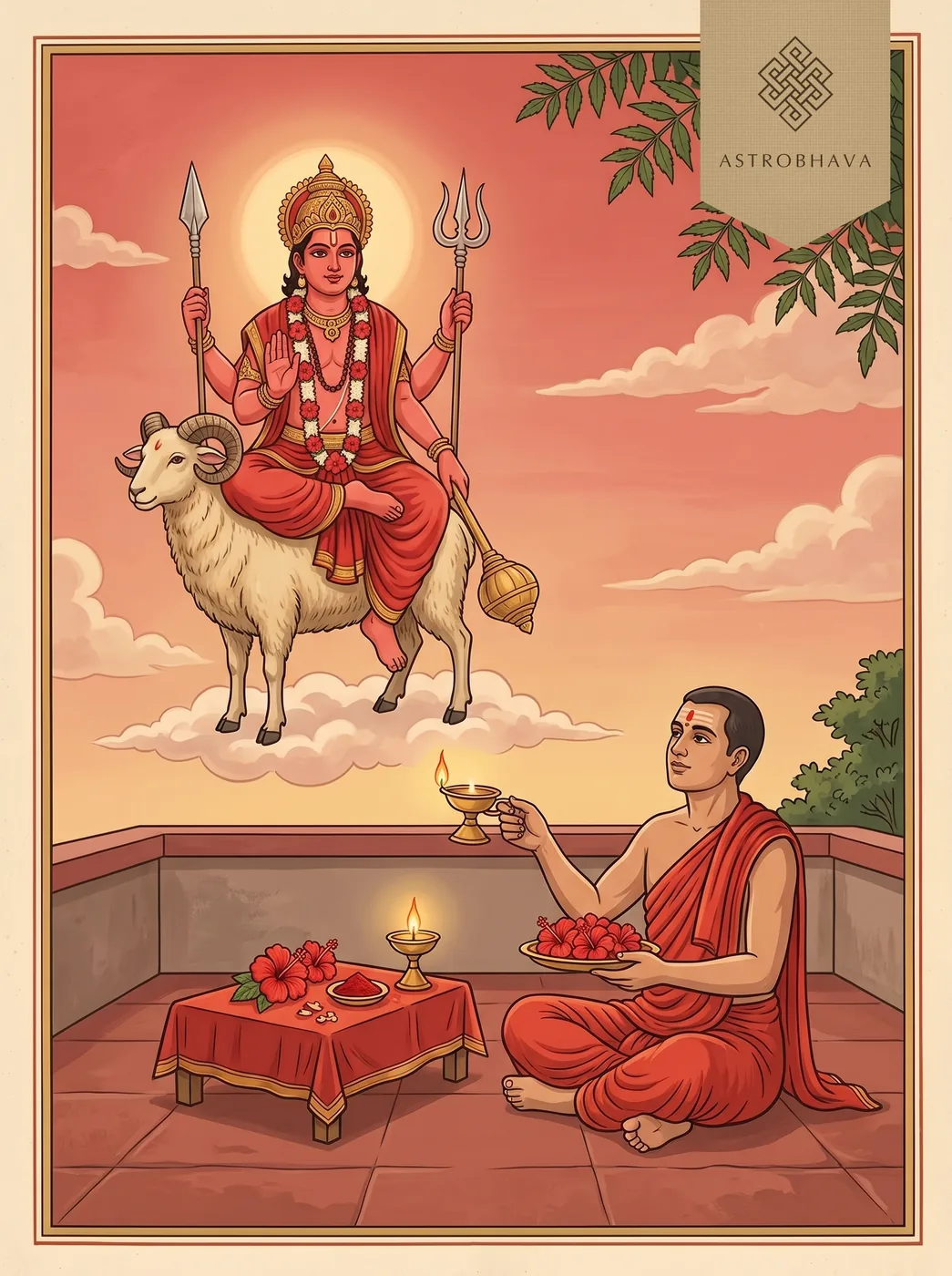
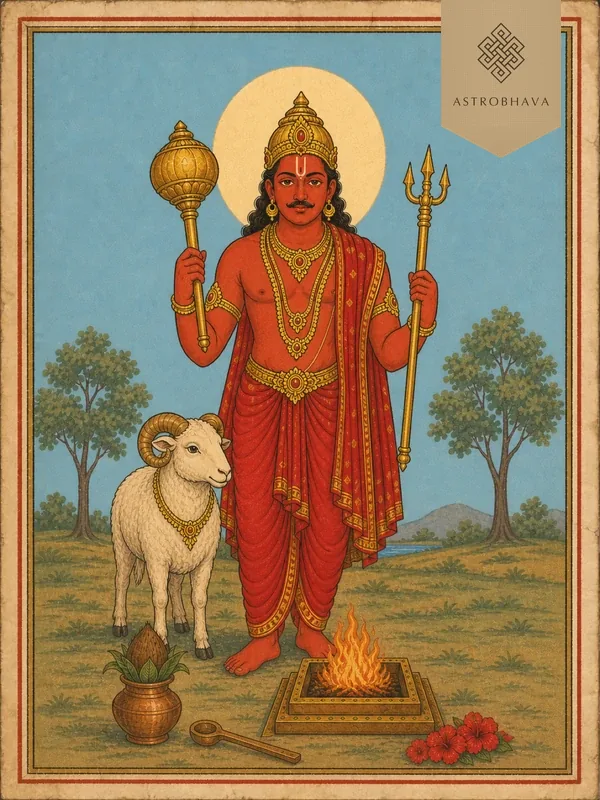
The Mangal Dosh mantra printed here is the Rinamochaka Mangala Stotram, the 'debt-releasing hymn to Mangala', a stotram (hymn of praise) of twelve verses addressed to Mangala, the graha (planetary deity) of Mars, also called Kuja, Bhauma and Angaraka. Its closing line places it in the Skanda Purana and says it was spoken by Bhargava. Verses 1 to 3 string together twenty-one of his names, from 'son of the Earth' and 'remover of debt' to 'the one who brings the rain and withholds it'. Verse 4 is the first phala, or benefit verse, on those names; verse 5 is a single bow to the spear-holding youth; verse 6 is the line that ties the hymn to Mangala's affliction. Verses 7 to 11 turn to direct prayer, and verse 12 closes by counting its own twelve verses. These verses are prayers, and tradition does not treat them as a guarantee.
A Debt Hymn Spoken by Bhargava
No episode of composition is told for this hymn. Its only frame is the closing line: 'thus, in the Skanda Purana, spoken by Bhargava'. Bhargava means 'one of the line of the sage Bhrigu', a name several figures carry in the Puranas, and the line does not say which of them is meant. The printings give no chapter or verse within the Skanda Purana, and the hymn travels as a stand-alone text. A printed manual for the debt-releasing worship of Bhauma sets it inside a full puja, where the worshipper's opening resolve (sankalpa) names debt and illness among the troubles the recitation is offered against. Within the verses the story is told through titles. Kuja means 'born of ku, the earth', and Angaraka 'the glowing ember', for the planet's red colour. Verse 9 calls him ativakra, 'of very crooked course': vakra is the word the astronomers use for the backward loop Mars appears to trace among the stars. The hymn turns that motion into a temperament. Pleased, he grants a kingdom; angered, he takes it back in the same moment, and verse 10 says even Brahma, Indra and Vishnu are not beyond his reach. This is why the hymn calls him graharaja, king of the planets, before it asks for refuge.
The mantra, in six scripts
- मङ्गलो
- maṅgalo — Mangala, the auspicious one
- भूमिपुत्रश्च
- bhūmiputraśca — and son of the Earth
- ऋणहर्ता
- ṛṇahartā — remover of debt
- धनप्रदः
- dhanapradaḥ — giver of wealth
- स्थिरासनो
- sthirāsano — the firmly seated one
- महाकायः
- mahākāyaḥ — the great-bodied one
- सर्वकर्मविरोधकः
- sarvakarmavirodhakaḥ — who stands against all (wrong) deeds
Mangal Dosh Mantra lyrics in full
The twelve verses of the hymn, printed whole. The printed closing line is given at the end.
All 13 verses, in Sanskrit, Tamil, Telugu, Kannada, Malayalam and English, each with its meaning. Choose a script:
Download the Mangal Dosh Mantra PDFAll 13 verses with their meanings, in Sanskrit. Free to print and keep.
मङ्गलो भूमिपुत्रश्च ऋणहर्ता धनप्रदः ।
स्थिरासनो महाकायः सर्वकर्मविरोधकः ॥
மங்கலோ பூமிபுத்ரஶ்ச ருணஹர்தா தநப்ரதஃ ।
ஸ்திராஸநோ மஹாகாயஃ ஸர்வகர்மவிரோதகஃ ॥
మఙ్గలో భూమిపుత్రశ్చ ఋణహర్తా ధనప్రదః ।
స్థిరాసనో మహాకాయః సర్వకర్మవిరోధకః ॥
ಮಙ್ಗಲೋ ಭೂಮಿಪುತ್ರಶ್ಚ ಋಣಹರ್ತಾ ಧನಪ್ರದಃ ।
ಸ್ಥಿರಾಸನೋ ಮಹಾಕಾಯಃ ಸರ್ವಕರ್ಮವಿರೋಧಕಃ ॥
മങ്ഗലോ ഭൂമിപുത്രശ്ച ഋണഹര്താ ധനപ്രദഃ ।
സ്ഥിരാസനോ മഹാകായഃ സര്വകര്മവിരോധകഃ ॥
maṅgalo bhūmiputraśca ṛṇahartā dhanapradaḥ |
sthirāsano mahākāyaḥ sarvakarmavirodhakaḥ ||
Mangala, son of the Earth, remover of debt and giver of wealth; the firmly seated one, the great-bodied one, the one who stands against all deeds (that are wrongly done).
लोहितो लोहिताक्षश्च सामगानां कृपाकरः ।
धरात्मजः कुजो भौमो भूतिदो भूमिनन्दनः ॥
லோஹிதோ லோஹிதாக்ஷஶ்ச ஸாமகாநாம் க்ருபாகரஃ ।
தராத்மஜஃ குஜோ பௌமோ பூதிதோ பூமிநந்தநஃ ॥
లోహితో లోహితాక్షశ్చ సామగానాం కృపాకరః ।
ధరాత్మజః కుజో భౌమో భూతిదో భూమినన్దనః ॥
ಲೋಹಿತೋ ಲೋಹಿತಾಕ್ಷಶ್ಚ ಸಾಮಗಾನಾಂ ಕೃಪಾಕರಃ ।
ಧರಾತ್ಮಜಃ ಕುಜೋ ಭೌಮೋ ಭೂತಿದೋ ಭೂಮಿನನ್ದನಃ ॥
ലോഹിതോ ലോഹിതാക്ഷശ്ച സാമഗാനാം കൃപാകരഃ ।
ധരാത്മജഃ കുജോ ഭൌമോ ഭൂതിദോ ഭൂമിനന്ദനഃ ॥
lohito lohitākṣaśca sāmagānāṃ kṛpākaraḥ |
dharātmajaḥ kujo bhaumo bhūtido bhūminandanaḥ ||
The red one, the red-eyed one, gracious to the singers of the Sama Veda; born of the Earth, Kuja, Bhauma, giver of prosperity, the delight of the Earth.
अङ्गारको यमश्चैव सर्वरोगापहारकः ।
वृष्टेः कर्ताऽपहर्ता च सर्वकामफलप्रदः ॥
அங்காரகோ யமஶ்சைவ ஸர்வரோகாபஹாரகஃ ।
வ்ருஷ்டேஃ கர்தாபஹர்தா ச ஸர்வகாமபலப்ரதஃ ॥
అఙ్గారకో యమశ్చైవ సర్వరోగాపహారకః ।
వృష్టేః కర్తాఽపహర్తా చ సర్వకామఫలప్రదః ॥
ಅಙ್ಗಾರಕೋ ಯಮಶ್ಚೈವ ಸರ್ವರೋಗಾಪಹಾರಕಃ ।
ವೃಷ್ಟೇಃ ಕರ್ತಾಽಪಹರ್ತಾ ಚ ಸರ್ವಕಾಮಫಲಪ್ರದಃ ॥
അങ്ഗാരകോ യമശ്ചൈവ സര്വരോഗാപഹാരകഃ ।
വൃഷ്ടേഃ കര്താഽപഹര്താ ച സര്വകാമഫലപ്രദഃ ॥
aṅgārako yamaścaiva sarvarogāpahārakaḥ |
vṛṣṭeḥ kartā'pahartā ca sarvakāmaphalapradaḥ ||
Angaraka, also called Yama, the remover of all illness; the one who brings the rain and who withholds it, the giver of the fruit of every wish.
एतानि कुजनामानि नित्यं यः श्रद्धया पठेत् ।
ऋणं न जायते तस्य धनं शीघ्रमवाप्नुयात् ॥
ஏதாநி குஜநாமாநி நித்யம் யஃ ஶ்ரத்தயா படேத் ।
ருணம் ந ஜாயதே தஸ்ய தநம் ஶீக்ரமவாப்நுயாத் ॥
ఏతాని కుజనామాని నిత్యం యః శ్రద్ధయా పఠేత్ ।
ఋణం న జాయతే తస్య ధనం శీఘ్రమవాప్నుయాత్ ॥
ಏತಾನಿ ಕುಜನಾಮಾನಿ ನಿತ್ಯಂ ಯಃ ಶ್ರದ್ಧಯಾ ಪಠೇತ್ ।
ಋಣಂ ನ ಜಾಯತೇ ತಸ್ಯ ಧನಂ ಶೀಘ್ರಮವಾಪ್ನುಯಾತ್ ॥
ഏതാനി കുജനാമാനി നിത്യം യഃ ശ്രദ്ധയാ പഠേത് ।
ഋണം ന ജായതേ തസ്യ ധനം ശീഘ്രമവാപ്നുയാത് ॥
etāni kujanāmāni nityaṃ yaḥ śraddhayā paṭhet |
ṛṇaṃ na jāyate tasya dhanaṃ śīghramavāpnuyāt ||
The verse says that one who recites these names of Kuja every day with faith does not fall into debt and soon gains wealth.
धरणीगर्भसम्भूतं विद्युत्कान्तिसमप्रभम् ।
कुमारं शक्तिहस्तं च मङ्गलं प्रणमाम्यहम् ॥
தரணீகர்பஸம்பூதம் வித்யுத்காந்திஸமப்ரபம் ।
குமாரம் ஶக்திஹஸ்தம் ச மங்கலம் ப்ரணமாம்யஹம் ॥
ధరణీగర్భసమ్భూతం విద్యుత్కాన్తిసమప్రభమ్ ।
కుమారం శక్తిహస్తం చ మఙ్గలం ప్రణమామ్యహమ్ ॥
ಧರಣೀಗರ್ಭಸಮ್ಭೂತಂ ವಿದ್ಯುತ್ಕಾನ್ತಿಸಮಪ್ರಭಮ್ ।
ಕುಮಾರಂ ಶಕ್ತಿಹಸ್ತಂ ಚ ಮಙ್ಗಲಂ ಪ್ರಣಮಾಮ್ಯಹಮ್ ॥
ധരണീഗര്ഭസമ്ഭൂതം വിദ്യുത്കാന്തിസമപ്രഭമ് ।
കുമാരം ശക്തിഹസ്തം ച മങ്ഗലം പ്രണമാമ്യഹമ് ॥
dharaṇīgarbhasambhūtaṃ vidyutkāntisamaprabham |
kumāraṃ śaktihastaṃ ca maṅgalaṃ praṇamāmyaham ||
I bow to Mangala, born from the womb of the Earth, shining with the brilliance of lightning, the youth who holds a spear in his hand.
स्तोत्रमङ्गारकस्यैतत्पठनीयं सदा नृभिः ।
न तेषां भौमजा पीडा स्वल्पापि भवति क्वचित् ॥
ஸ்தோத்ரமங்காரகஸ்யைதத்படநீயம் ஸதா ந்ருபிஃ ।
ந தேஷாம் பௌமஜா பீடா ஸ்வல்பாபி பவதி க்வசித் ॥
స్తోత్రమఙ్గారకస్యైతత్పఠనీయం సదా నృభిః ।
న తేషాం భౌమజా పీడా స్వల్పాపి భవతి క్వచిత్ ॥
ಸ್ತೋತ್ರಮಙ್ಗಾರಕಸ್ಯೈತತ್ಪಠನೀಯಂ ಸದಾ ನೃಭಿಃ ।
ನ ತೇಷಾಂ ಭೌಮಜಾ ಪೀಡಾ ಸ್ವಲ್ಪಾಪಿ ಭವತಿ ಕ್ವಚಿತ್ ॥
സ്തോത്രമങ്ഗാരകസ്യൈതത്പഠനീയം സദാ നൃഭിഃ ।
ന തേഷാം ഭൌമജാ പീഡാ സ്വല്പാപി ഭവതി ക്വചിത് ॥
stotramaṅgārakasyaitatpaṭhanīyaṃ sadā nṛbhiḥ |
na teṣāṃ bhaumajā pīḍā svalpāpi bhavati kvacit ||
This hymn to Angaraka should always be recited by people. The verse says that for them no affliction caused by Mangala arises anywhere, not even a slight one.
अङ्गारक महाभाग भगवन्भक्तवत्सल ।
त्वां नमामि ममाशेषमृणमाशु विनाशय ॥
அங்காரக மஹாபாக பகவந்பக்தவத்ஸல ।
த்வாம் நமாமி மமாஶேஷம்ருணமாஶு விநாஶய ॥
అఙ్గారక మహాభాగ భగవన్భక్తవత్సల ।
త్వాం నమామి మమాశేషమృణమాశు వినాశయ ॥
ಅಙ್ಗಾರಕ ಮಹಾಭಾಗ ಭಗವನ್ಭಕ್ತವತ್ಸಲ ।
ತ್ವಾಂ ನಮಾಮಿ ಮಮಾಶೇಷಮೃಣಮಾಶು ವಿನಾಶಯ ॥
അങ്ഗാരക മഹാഭാഗ ഭഗവന്ഭക്തവത്സല ।
ത്വാം നമാമി മമാശേഷമൃണമാശു വിനാശയ ॥
aṅgāraka mahābhāga bhagavanbhaktavatsala |
tvāṃ namāmi mamāśeṣamṛṇamāśu vināśaya ||
O Angaraka, most fortunate one, revered one who loves his devotees, I bow to you: swiftly destroy all of my debt, leaving none.
ऋणरोगादिदारिद्र्यं ये चान्ये ह्यपमृत्यवः ।
भयक्लेशमनस्तापा नश्यन्तु मम सर्वदा ॥
ருணரோகாதிதாரித்ர்யம் யே சாந்யே ஹ்யபம்ருத்யவஃ ।
பயக்லேஶமநஸ்தாபா நஶ்யந்து மம ஸர்வதா ॥
ఋణరోగాదిదారిద్ర్యం యే చాన్యే హ్యపమృత్యవః ।
భయక్లేశమనస్తాపా నశ్యన్తు మమ సర్వదా ॥
ಋಣರೋಗಾದಿದಾರಿದ್ರ್ಯಂ ಯೇ ಚಾನ್ಯೇ ಹ್ಯಪಮೃತ್ಯವಃ ।
ಭಯಕ್ಲೇಶಮನಸ್ತಾಪಾ ನಶ್ಯನ್ತು ಮಮ ಸರ್ವದಾ ॥
ഋണരോഗാദിദാരിദ്ര്യം യേ ചാന്യേ ഹ്യപമൃത്യവഃ ।
ഭയക്ലേശമനസ്താപാ നശ്യന്തു മമ സര്വദാ ॥
ṛṇarogādidāridryaṃ ye cānye hyapamṛtyavaḥ |
bhayakleśamanastāpā naśyantu mama sarvadā ||
May debt, illness, poverty and the like, and every other kind of untimely death, and fear, hardship and anguish of mind, always be destroyed for me.
अतिवक्र दुराराध्य भोगमुक्त जितात्मनः ।
तुष्टो ददासि साम्राज्यं रुष्टो हरसि तत्क्षणात् ॥
அதிவக்ர துராராத்ய போகமுக்த ஜிதாத்மநஃ ।
துஷ்டோ ததாஸி ஸாம்ராஜ்யம் ருஷ்டோ ஹரஸி தத்க்ஷணாத் ॥
అతివక్ర దురారాధ్య భోగముక్త జితాత్మనః ।
తుష్టో దదాసి సామ్రాజ్యం రుష్టో హరసి తత్క్షణాత్ ॥
ಅತಿವಕ್ರ ದುರಾರಾಧ್ಯ ಭೋಗಮುಕ್ತ ಜಿತಾತ್ಮನಃ ।
ತುಷ್ಟೋ ದದಾಸಿ ಸಾಮ್ರಾಜ್ಯಂ ರುಷ್ಟೋ ಹರಸಿ ತತ್ಕ್ಷಣಾತ್ ॥
അതിവക്ര ദുരാരാധ്യ ഭോഗമുക്ത ജിതാത്മനഃ ।
തുഷ്ടോ ദദാസി സാമ്രാജ്യം രുഷ്ടോ ഹരസി തത്ക്ഷണാത് ॥
ativakra durārādhya bhogamukta jitātmanaḥ |
tuṣṭo dadāsi sāmrājyaṃ ruṣṭo harasi tatkṣaṇāt ||
O one of very crooked course, hard to please, free of indulgence: when pleased you grant a kingdom to the self-controlled, and when angered you take it away in that very moment.
विरिञ्चिशक्रविष्णूनां मनुष्याणां तु का कथा ।
तेन त्वं सर्वसत्त्वेन ग्रहराजो महाबलः ॥
விரிஞ்சிஶக்ரவிஷ்ணூநாம் மநுஷ்யாணாம் து கா கதா ।
தேந த்வம் ஸர்வஸத்த்வேந க்ரஹராஜோ மஹாபலஃ ॥
విరిఞ్చిశక్రవిష్ణూనాం మనుష్యాణాం తు కా కథా ।
తేన త్వం సర్వసత్త్వేన గ్రహరాజో మహాబలః ॥
ವಿರಿಞ್ಚಿಶಕ್ರವಿಷ್ಣೂನಾಂ ಮನುಷ್ಯಾಣಾಂ ತು ಕಾ ಕಥಾ ।
ತೇನ ತ್ವಂ ಸರ್ವಸತ್ತ್ವೇನ ಗ್ರಹರಾಜೋ ಮಹಾಬಲಃ ॥
വിരിഞ്ചിശക്രവിഷ്ണൂനാം മനുഷ്യാണാം തു കാ കഥാ ।
തേന ത്വം സര്വസത്ത്വേന ഗ്രഹരാജോ മഹാബലഃ ॥
viriñciśakraviṣṇūnāṃ manuṣyāṇāṃ tu kā kathā |
tena tvaṃ sarvasattvena graharājo mahābalaḥ ||
(You can do this even to) Brahma, Indra and Vishnu; what then of human beings? So by your whole might you are the king of the planets, the very strong one.
पुत्रान्देहि धनं देहि त्वामस्मि शरणं गतः ।
ऋणदारिद्र्यदुःखेन शत्रूणां च भयात्ततः ॥
புத்ராந்தேஹி தநம் தேஹி த்வாமஸ்மி ஶரணம் கதஃ ।
ருணதாரித்ர்யதுஃகேந ஶத்ரூணாம் ச பயாத்ததஃ ॥
పుత్రాన్దేహి ధనం దేహి త్వామస్మి శరణం గతః ।
ఋణదారిద్ర్యదుఃఖేన శత్రూణాం చ భయాత్తతః ॥
ಪುತ್ರಾನ್ದೇಹಿ ಧನಂ ದೇಹಿ ತ್ವಾಮಸ್ಮಿ ಶರಣಂ ಗತಃ ।
ಋಣದಾರಿದ್ರ್ಯದುಃಖೇನ ಶತ್ರೂಣಾಂ ಚ ಭಯಾತ್ತತಃ ॥
പുത്രാന്ദേഹി ധനം ദേഹി ത്വാമസ്മി ശരണം ഗതഃ ।
ഋണദാരിദ്ര്യദുഃഖേന ശത്രൂണാം ച ഭയാത്തതഃ ॥
putrāndehi dhanaṃ dehi tvāmasmi śaraṇaṃ gataḥ |
ṛṇadāridryaduḥkhena śatrūṇāṃ ca bhayāttataḥ ||
The verse asks: give sons, give wealth; I have come to you for refuge, out of the grief of debt and poverty and out of fear of enemies.
एभिर्द्वादशभिः श्लोकैर्यः स्तौति च धरासुतम् ।
महतीं श्रियमाप्नोति ह्यपरो धनदो युवा ॥
ஏபிர்த்வாதஶபிஃ ஶ்லோகைர்யஃ ஸ்தௌதி ச தராஸுதம் ।
மஹதீம் ஶ்ரியமாப்நோதி ஹ்யபரோ தநதோ யுவா ॥
ఏభిర్ద్వాదశభిః శ్లోకైర్యః స్తౌతి చ ధరాసుతమ్ ।
మహతీం శ్రియమాప్నోతి హ్యపరో ధనదో యువా ॥
ಏಭಿರ್ದ್ವಾದಶಭಿಃ ಶ್ಲೋಕೈರ್ಯಃ ಸ್ತೌತಿ ಚ ಧರಾಸುತಮ್ ।
ಮಹತೀಂ ಶ್ರಿಯಮಾಪ್ನೋತಿ ಹ್ಯಪರೋ ಧನದೋ ಯುವಾ ॥
ഏഭിര്ദ്വാദശഭിഃ ശ്ലോകൈര്യഃ സ്തൌതി ച ധരാസുതമ് ।
മഹതീം ശ്രിയമാപ്നോതി ഹ്യപരോ ധനദോ യുവാ ॥
ebhirdvādaśabhiḥ ślokairyaḥ stauti ca dharāsutam |
mahatīṃ śriyamāpnoti hyaparo dhanado yuvā ||
The verse says that one who praises the son of the Earth with these twelve verses gains great fortune, like a second Kubera in youth.
इति श्रीस्कन्दपुराणे भार्गवप्रोक्तं ऋणमोचकमङ्गलस्तोत्रं सम्पूर्णम् ॥
இதி ஶ்ரீஸ்கந்தபுராணே பார்கவப்ரோக்தம் ருணமோசகமங்கலஸ்தோத்ரம் ஸம்பூர்ணம் ॥
ఇతి శ్రీస్కన్దపురాణే భార్గవప్రోక్తం ఋణమోచకమఙ్గలస్తోత్రం సమ్పూర్ణమ్ ॥
ಇತಿ ಶ್ರೀಸ್ಕನ್ದಪುರಾಣೇ ಭಾರ್ಗವಪ್ರೋಕ್ತಂ ಋಣಮೋಚಕಮಙ್ಗಲಸ್ತೋತ್ರಂ ಸಮ್ಪೂರ್ಣಮ್ ॥
ഇതി ശ്രീസ്കന്ദപുരാണേ ഭാര്ഗവപ്രോക്തം ഋണമോചകമങ്ഗലസ്തോത്രം സമ്പൂര്ണമ് ॥
iti śrīskandapurāṇe bhārgavaproktaṃ ṛṇamocakamaṅgalastotraṃ sampūrṇam ||
Thus ends the debt-releasing hymn to Mangala, spoken by Bhargava, in the Skanda Purana.
The syllable people get wrong
In ṛṇahartā (verse 1) and the title ṛṇamocaka, the first sound ṛ is a vowel, a lightly tapped r that carries the syllable by itself: say one short 'ri' (northern reciters) or 'ru' (southern), which is why the word is spelled both Rina and Runa, never a drawn-out 'ree-na'.
When the Mangal Dosh Mantra is chanted
Festival. Tuesday, Mangala's own day
Other texts to Mangala
- Tuesday MantraThe Tuesday vow's 21-name hymn says 'rinam hitva sukhi bhavet', and its wiping verse asks Angaraka to destroy debt.
- Mangal MantraMangala's seed mantra, the Bhauma Gayatri and the dharanigarbha bow verse, all addressed to the graha himself.
- Navagraha Peedahara StotramIts Mangala verse 'bhumiputro mahateja' ends 'pidam haratu me kujah': may Kuja remove my affliction.
- Navagraha StotramVyasa's hymn gives Mangala the dharanigarbha verse; its phala says troubles arising from the planets subside.
Questions
Have your chart read before you decide
Chanting is yours to do, and free. But which deity your situation calls for — and whether a mantra alone is the right response — depends on your chart. Sometimes it is; sometimes it is not.
- Over 30 years in the Guru–Sishya Parampara, from the age of five
- He reads every chart himself — 60 minutes, one to one, never delegated
- Charts are read only between sunrise and sunset, following tradition