Maruti Stotra
भीमरूपी महारुद्रा वज्रहनुमान मारुती । वनारी अंजनीसूता रामदूता प्रभंजना ॥Also known as Bhimrupi Maharudra
In Devanagari, Tamil, Telugu, Kannada, Malayalam and English — with the meaning of every word, and the one syllable most people pronounce wrongly.
What the Maruti Stotra is
The Maruti Stotra is a Marathi hymn to Hanuman by Samarth Ramdas, and Maharashtra mostly calls it by its first words, Bhimrupi Maharudra. The colophon of modern prints gives its fuller title, Sankatanirasana Maruti Stotra, the Maruti hymn that clears away trouble. It stands first among the thirteen short hymns to Hanuman that collections of Ramdas's work group as the Bhimrupi stotras, and it is set in the anushtubh metre. The first four verses are a string of names: Rudra in fierce form, son of Anjani, messenger of Rama, lord of the helpless, anointed with vermilion. Verses 5 to 13 turn to description and narrative: Hanuman's blazing eyes and curled tail, his leap north to uproot the Drona mountain, his growth from atom size until his tail could ring the universe, and his swallowing of the red sun. Verses 14 to 17 state the fruits of recitation and close with Ramdas's signature verse.
Eleven Marutis and the wrestling ground
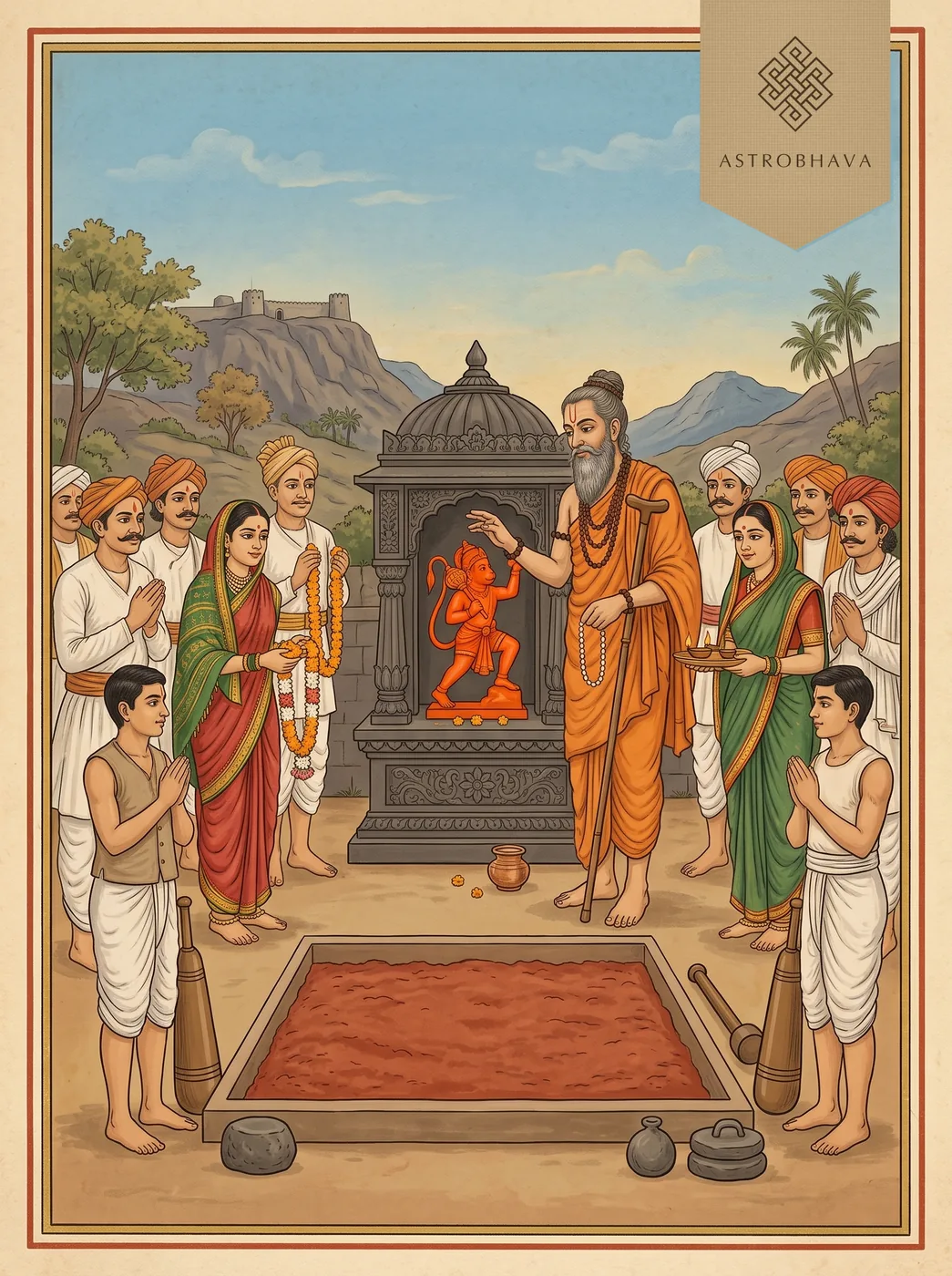
Ramdas, born Narayan in the village of Jamb in the Marathwada region, took Hanuman as the model of what a devotee of Rama should be: strong in body, quick, and wholly given to service. Between 1644 and 1654 he consecrated eleven Hanuman shrines across the Satara, Karad, Sangli and Kolhapur country, beginning at Shahapur near Karad and including the two Marutis of Chaphal, the Vir Maruti and the Das Maruti, both dated 1648. Maharashtra knows the group simply as the eleven Marutis, and the images he installed still stand in shrines that have since been rebuilt. Regional tradition holds that these shrines were meant to put physical fitness before the young men of a country then rallying behind Shivaji, and Hanuman became the patron of the akhada, the traditional wrestling ground. That is where this hymn found its lasting home. In akhadas across the state the day's training traditionally opens with Bhimrupi Maharudra, and generations of schoolchildren in Maharashtra have learnt it by heart. No single legend of its composition survives; what the text carries instead is a Ramayana scene told at full tilt, the flight for the healing mountain when Lakshmana lay struck in battle, compressed into two verses of speed.
The mantra, in six scripts
- भीमरूपी
- bhīmarūpī — of formidable form
- महारुद्रा
- mahārudrā — O great Rudra
- वज्रहनुमान
- vajrahanumāna — thunderbolt-strong Hanuman
- मारुती
- mārutī — son of the wind
- वनारी
- vanārī — destroyer of the grove
- अंजनीसूता
- aṃjanīsūtā — son of Anjani
- रामदूता
- rāmadūtā — messenger of Rama
- प्रभंजना
- prabhaṃjanā — mighty as the storm wind
Maruti Stotra lyrics in full
Seventeen Marathi verses, in the form most widely recited today; older printed editions have sixteen.
All 17 verses, in Marathi, Tamil, Telugu, Kannada, Malayalam and English, each with its meaning. Choose a script:
Download the Maruti Stotra PDFAll 17 verses with their meanings, in Marathi. Free to print and keep.
भीमरूपी महारुद्रा वज्रहनुमान मारुती ।
वनारी अंजनीसूता रामदूता प्रभंजना ॥
பீமரூபீ மஹாருத்ரா வஜ்ரஹநுமாந மாருதீ ।
வநாரீ அம்ஜநீஸூதா ராமதூதா ப்ரபம்ஜநா ॥
భీమరూపీ మహారుద్రా వజ్రహనుమాన మారుతీ ।
వనారీ అంజనీసూతా రామదూతా ప్రభంజనా ॥
ಭೀಮರೂಪೀ ಮಹಾರುದ್ರಾ ವಜ್ರಹನುಮಾನ ಮಾರುತೀ ।
ವನಾರೀ ಅಂಜನೀಸೂತಾ ರಾಮದೂತಾ ಪ್ರಭಂಜನಾ ॥
ഭീമരൂപീ മഹാരുദ്രാ വജ്രഹനുമാന മാരുതീ ।
വനാരീ അംജനീസൂതാ രാമദൂതാ പ്രഭംജനാ ॥
bhīmarūpī mahārudrā vajrahanumāna mārutī |
vanārī aṃjanīsūtā rāmadūtā prabhaṃjanā ||
O Maruti of formidable form, great Rudra, Hanuman strong as the thunderbolt; destroyer of the grove, son of Anjani, messenger of Rama, mighty as the storm wind.
महाबळी प्राणदाता सकळां उठवी बळें ।
सौख्यकारी दुःखहारी दूत वैष्णव गायका ॥
மஹாபளீ ப்ராணதாதா ஸகளாம் உடவீ பளேம் ।
ஸௌக்யகாரீ துஃகஹாரீ தூத வைஷ்ணவ காயகா ॥
మహాబళీ ప్రాణదాతా సకళాం ఉఠవీ బళేం ।
సౌఖ్యకారీ దుఃఖహారీ దూత వైష్ణవ గాయకా ॥
ಮಹಾಬಳೀ ಪ್ರಾಣದಾತಾ ಸಕಳಾಂ ಉಠವೀ ಬಳೇಂ ।
ಸೌಖ್ಯಕಾರೀ ದುಃಖಹಾರೀ ದೂತ ವೈಷ್ಣವ ಗಾಯಕಾ ॥
മഹാബളീ പ്രാണദാതാ സകളാം ഉഠവീ ബളേം ।
സൌഖ്യകാരീ ദുഃഖഹാരീ ദൂത വൈഷ്ണവ ഗായകാ ॥
mahābaḷī prāṇadātā sakaḷāṃ uṭhavī baḷeṃ |
saukhyakārī duḥkhahārī dūta vaiṣṇava gāyakā ||
Mighty one and giver of life, who by his strength raises everyone up; bringer of happiness and remover of sorrow, messenger, devotee of Vishnu and singer of his praise.
दीनानाथा हरीरूपा सुंदरा जगदंतरा ।
पाताळदेवताहंता भव्यसिंदूरलेपना ॥
தீநாநாதா ஹரீரூபா ஸும்தரா ஜகதம்தரா ।
பாதாளதேவதாஹம்தா பவ்யஸிம்தூரலேபநா ॥
దీనానాథా హరీరూపా సుందరా జగదంతరా ।
పాతాళదేవతాహంతా భవ్యసిందూరలేపనా ॥
ದೀನಾನಾಥಾ ಹರೀರೂಪಾ ಸುಂದರಾ ಜಗದಂತರಾ ।
ಪಾತಾಳದೇವತಾಹಂತಾ ಭವ್ಯಸಿಂದೂರಲೇಪನಾ ॥
ദീനാനാഥാ ഹരീരൂപാ സുംദരാ ജഗദംതരാ ।
പാതാളദേവതാഹംതാ ഭവ്യസിംദൂരലേപനാ ॥
dīnānāthā harīrūpā suṃdarā jagadaṃtarā |
pātāḷadevatāhaṃtā bhavyasiṃdūralepanā ||
Protector of the helpless, of the form of Hari, beautiful one who dwells within the world; slayer of the gods of the netherworld, splendid one anointed with vermilion.
लोकनाथा जगन्नाथा प्राणनाथा पुरातना ।
पुण्यवंता पुण्यशीला पावना परितोषका ॥
லோகநாதா ஜகந்நாதா ப்ராணநாதா புராதநா ।
புண்யவம்தா புண்யஶீலா பாவநா பரிதோஷகா ॥
లోకనాథా జగన్నాథా ప్రాణనాథా పురాతనా ।
పుణ్యవంతా పుణ్యశీలా పావనా పరితోషకా ॥
ಲೋಕನಾಥಾ ಜಗನ್ನಾಥಾ ಪ್ರಾಣನಾಥಾ ಪುರಾತನಾ ।
ಪುಣ್ಯವಂತಾ ಪುಣ್ಯಶೀಲಾ ಪಾವನಾ ಪರಿತೋಷಕಾ ॥
ലോകനാഥാ ജഗന്നാഥാ പ്രാണനാഥാ പുരാതനാ ।
പുണ്യവംതാ പുണ്യശീലാ പാവനാ പരിതോഷകാ ॥
lokanāthā jagannāthā prāṇanāthā purātanā |
puṇyavaṃtā puṇyaśīlā pāvanā paritoṣakā ||
Lord of the people, lord of the world, lord of life, ancient one; meritorious, of virtuous nature, purifier, giver of full contentment.
ध्वजांगे उचली बाहो आवेशें लोटला पुढें ।
काळाग्नी काळरुद्राग्नी देखतां कांपती भयें ॥
த்வஜாம்கே உசலீ பாஹோ ஆவேஶேம் லோடலா புடேம் ।
காளாக்நீ காளருத்ராக்நீ தேகதாம் காம்பதீ பயேம் ॥
ధ్వజాంగే ఉచలీ బాహో ఆవేశేం లోటలా పుఢేం ।
కాళాగ్నీ కాళరుద్రాగ్నీ దేఖతాం కాంపతీ భయేం ॥
ಧ್ವಜಾಂಗೇ ಉಚಲೀ ಬಾಹೋ ಆವೇಶೇಂ ಲೋಟಲಾ ಪುಢೇಂ ।
ಕಾಳಾಗ್ನೀ ಕಾಳರುದ್ರಾಗ್ನೀ ದೇಖತಾಂ ಕಾಂಪತೀ ಭಯೇಂ ॥
ധ്വജാംഗേ ഉചലീ ബാഹോ ആവേശേം ലോടലാ പുഢേം ।
കാളാഗ്നീ കാളരുദ്രാഗ്നീ ദേഖതാം കാംപതീ ഭയേം ॥
dhvajāṃge ucalī bāho āveśeṃ loṭalā puḍheṃ |
kāḷāgnī kāḷarudrāgnī dekhatāṃ kāṃpatī bhayeṃ ||
Raising his arm like a banner-staff, he rushed forward in fury; seeing him blaze like the fire of time and the fire of Kala-Rudra, all tremble with fear.
ब्रह्मांडें माईली नेणों आवळे दंतपंगती ।
नेत्राग्नी चालिल्या ज्वाळा भ्रुकुटी ताठिल्या बळें ॥
ப்ரஹ்மாம்டேம் மாஈலீ நேணோம் ஆவளே தம்தபம்கதீ ।
நேத்ராக்நீ சாலில்யா ஜ்வாளா ப்ருகுடீ தாடில்யா பளேம் ॥
బ్రహ్మాండేం మాఈలీ నేణోం ఆవళే దంతపంగతీ ।
నేత్రాగ్నీ చాలిల్యా జ్వాళా భ్రుకుటీ తాఠిల్యా బళేం ॥
ಬ್ರಹ್ಮಾಂಡೇಂ ಮಾಈಲೀ ನೇಣೋಂ ಆವಳೇ ದಂತಪಂಗತೀ ।
ನೇತ್ರಾಗ್ನೀ ಚಾಲಿಲ್ಯಾ ಜ್ವಾಳಾ ಭ್ರುಕುಟೀ ತಾಠಿಲ್ಯಾ ಬಳೇಂ ॥
ബ്രഹ്മാംഡേം മാഈലീ നേണോം ആവളേ ദംതപംഗതീ ।
നേത്രാഗ്നീ ചാലില്യാ ജ്വാളാ ഭ്രുകുടീ താഠില്യാ ബളേം ॥
brahmāṃḍeṃ māīlī neṇoṃ āvaḷe daṃtapaṃgatī |
netrāgnī cālilyā jvāḷā bhrukuṭī tāṭhilyā baḷeṃ ||
As if the universe could not hold him, he clenched his rows of teeth; flames poured from the fire of his eyes, and his brows were drawn tight with force.
पुच्छ ते मुरडिले माथा किरीटी कुंडले बरी ।
सुवर्णकटी कासोटी घंटा किंकिणी नागरा ॥
புச்ச தே முரடிலே மாதா கிரீடீ கும்டலே பரீ ।
ஸுவர்ணகடீ காஸோடீ கம்டா கிம்கிணீ நாகரா ॥
పుచ్ఛ తే మురడిలే మాథా కిరీటీ కుండలే బరీ ।
సువర్ణకటీ కాసోటీ ఘంటా కింకిణీ నాగరా ॥
ಪುಚ್ಛ ತೇ ಮುರಡಿಲೇ ಮಾಥಾ ಕಿರೀಟೀ ಕುಂಡಲೇ ಬರೀ ।
ಸುವರ್ಣಕಟೀ ಕಾಸೋಟೀ ಘಂಟಾ ಕಿಂಕಿಣೀ ನಾಗರಾ ॥
പുച്ഛ തേ മുരഡിലേ മാഥാ കിരീടീ കുംഡലേ ബരീ ।
സുവര്ണകടീ കാസോടീ ഘംടാ കിംകിണീ നാഗരാ ॥
puccha te muraḍile māthā kirīṭī kuṃḍale barī |
suvarṇakaṭī kāsoṭī ghaṃṭā kiṃkiṇī nāgarā ||
His tail is curled up over his head, with a crown and fine earrings; a golden waistband and girded cloth, bells and graceful tinkling ornaments.
ठकारे पर्वता ऐसा नेटका सडपातळू ।
चपळांग पाहतां मोठें महाविद्युल्लतेपरी ॥
டகாரே பர்வதா ஐஸா நேடகா ஸடபாதளூ ।
சபளாம்க பாஹதாம் மோடேம் மஹாவித்யுல்லதேபரீ ॥
ఠకారే పర్వతా ఐసా నేటకా సడపాతళూ ।
చపళాంగ పాహతాం మోఠేం మహావిద్యుల్లతేపరీ ॥
ಠಕಾರೇ ಪರ್ವತಾ ಐಸಾ ನೇಟಕಾ ಸಡಪಾತಳೂ ।
ಚಪಳಾಂಗ ಪಾಹತಾಂ ಮೋಠೇಂ ಮಹಾವಿದ್ಯುಲ್ಲತೇಪರೀ ॥
ഠകാരേ പര്വതാ ഐസാ നേടകാ സഡപാതളൂ ।
ചപളാംഗ പാഹതാം മോഠേം മഹാവിദ്യുല്ലതേപരീ ॥
ṭhakāre parvatā aisā neṭakā saḍapātaḷū |
capaḷāṃga pāhatāṃ moṭheṃ mahāvidyullateparī ||
He stands like a mountain, yet is trim and slender; agile of limb, he looks immense, like a great flash of lightning.
कोटिच्या कोटि उड्डाणें झेपावे उत्तरेकडे ।
मंद्राद्रीसारिखा द्रोणू क्रोधें उत्पाटिला बळें ॥
கோடிச்யா கோடி உட்டாணேம் சேபாவே உத்தரேகடே ।
மம்த்ராத்ரீஸாரிகா த்ரோணூ க்ரோதேம் உத்பாடிலா பளேம் ॥
కోటిచ్యా కోటి ఉడ్డాణేం ఝేపావే ఉత్తరేకడే ।
మంద్రాద్రీసారిఖా ద్రోణూ క్రోధేం ఉత్పాటిలా బళేం ॥
ಕೋಟಿಚ್ಯಾ ಕೋಟಿ ಉಡ್ಡಾಣೇಂ ಝೇಪಾವೇ ಉತ್ತರೇಕಡೇ ।
ಮಂದ್ರಾದ್ರೀಸಾರಿಖಾ ದ್ರೋಣೂ ಕ್ರೋಧೇಂ ಉತ್ಪಾಟಿಲಾ ಬಳೇಂ ॥
കോടിച്യാ കോടി ഉഡ്ഡാണേം ഝേപാവേ ഉത്തരേകഡേ ।
മംദ്രാദ്രീസാരിഖാ ദ്രോണൂ ക്രോധേം ഉത്പാടിലാ ബളേം ॥
koṭicyā koṭi uḍḍāṇeṃ jhepāve uttarekaḍe |
maṃdrādrīsārikhā droṇū krodheṃ utpāṭilā baḷeṃ ||
With leaps of millions upon millions he sprang towards the north, and in anger tore up by force the Drona mountain, vast as Mandara.
आणिला मागुतीं नेला आला गेला मनोगती ।
मनासी टाकिलें मागें गतीसी तुळणा नसे ॥
ஆணிலா மாகுதீம் நேலா ஆலா கேலா மநோகதீ ।
மநாஸீ டாகிலேம் மாகேம் கதீஸீ துளணா நஸே ॥
ఆణిలా మాగుతీం నేలా ఆలా గేలా మనోగతీ ।
మనాసీ టాకిలేం మాగేం గతీసీ తుళణా నసే ॥
ಆಣಿಲಾ ಮಾಗುತೀಂ ನೇಲಾ ಆಲಾ ಗೇಲಾ ಮನೋಗತೀ ।
ಮನಾಸೀ ಟಾಕಿಲೇಂ ಮಾಗೇಂ ಗತೀಸೀ ತುಳಣಾ ನಸೇ ॥
ആണിലാ മാഗുതീം നേലാ ആലാ ഗേലാ മനോഗതീ ।
മനാസീ ടാകിലേം മാഗേം ഗതീസീ തുളണാ നസേ ॥
āṇilā māgutīṃ nelā ālā gelā manogatī |
manāsī ṭākileṃ māgeṃ gatīsī tuḷaṇā nase ||
He brought it and carried it back again, going and coming at the speed of thought; he left the mind itself behind, and his speed has no equal.
अणुपासोनि ब्रह्मांडाएवढा होत जातसे ।
तयासी तुळणा कोठें मेरु मंदार धाकुटे ॥
அணுபாஸோநி ப்ரஹ்மாம்டாஏவடா ஹோத ஜாதஸே ।
தயாஸீ துளணா கோடேம் மேரு மம்தார தாகுடே ॥
అణుపాసోని బ్రహ్మాండాఏవఢా హోత జాతసే ।
తయాసీ తుళణా కోఠేం మేరు మందార ధాకుటే ॥
ಅಣುಪಾಸೋನಿ ಬ್ರಹ್ಮಾಂಡಾಏವಢಾ ಹೋತ ಜಾತಸೇ ।
ತಯಾಸೀ ತುಳಣಾ ಕೋಠೇಂ ಮೇರು ಮಂದಾರ ಧಾಕುಟೇ ॥
അണുപാസോനി ബ്രഹ്മാംഡാഏവഢാ ഹോത ജാതസേ ।
തയാസീ തുളണാ കോഠേം മേരു മംദാര ധാകുടേ ॥
aṇupāsoni brahmāṃḍāevaḍhā hota jātase |
tayāsī tuḷaṇā koṭheṃ meru maṃdāra dhākuṭe ||
From the size of an atom he grows until he is as large as the universe; where is there any comparison to him? Mount Meru and Mandara are small beside him.
ब्रह्मांडाभोवते वेढे वज्रपुच्छें करूं शके ।
तयासी तुळणा कैंची ब्रह्मांडीं पाहतां नसे ॥
ப்ரஹ்மாம்டாபோவதே வேடே வஜ்ரபுச்சேம் கரூம் ஶகே ।
தயாஸீ துளணா கைம்சீ ப்ரஹ்மாம்டீம் பாஹதாம் நஸே ॥
బ్రహ్మాండాభోవతే వేఢే వజ్రపుచ్ఛేం కరూం శకే ।
తయాసీ తుళణా కైంచీ బ్రహ్మాండీం పాహతాం నసే ॥
ಬ್ರಹ್ಮಾಂಡಾಭೋವತೇ ವೇಢೇ ವಜ್ರಪುಚ್ಛೇಂ ಕರೂಂ ಶಕೇ ।
ತಯಾಸೀ ತುಳಣಾ ಕೈಂಚೀ ಬ್ರಹ್ಮಾಂಡೀಂ ಪಾಹತಾಂ ನಸೇ ॥
ബ്രഹ്മാംഡാഭോവതേ വേഢേ വജ്രപുച്ഛേം കരൂം ശകേ ।
തയാസീ തുളണാ കൈംചീ ബ്രഹ്മാംഡീം പാഹതാം നസേ ॥
brahmāṃḍābhovate veḍhe vajrapuccheṃ karūṃ śake |
tayāsī tuḷaṇā kaiṃcī brahmāṃḍīṃ pāhatāṃ nase ||
With his thunderbolt-like tail he can coil rings around the universe; how could anyone be compared to him? No equal is seen in all creation.
आरक्त देखिलें डोळां ग्रासिलें सूर्यमंडळा ।
वाढतां वाढतां वाढे भेदिलें शून्यमंडळा ॥
ஆரக்த தேகிலேம் டோளாம் க்ராஸிலேம் ஸூர்யமம்டளா ।
வாடதாம் வாடதாம் வாடே பேதிலேம் ஶூந்யமம்டளா ॥
ఆరక్త దేఖిలేం డోళాం గ్రాసిలేం సూర్యమండళా ।
వాఢతాం వాఢతాం వాఢే భేదిలేం శూన్యమండళా ॥
ಆರಕ್ತ ದೇಖಿಲೇಂ ಡೋಳಾಂ ಗ್ರಾಸಿಲೇಂ ಸೂರ್ಯಮಂಡಳಾ ।
ವಾಢತಾಂ ವಾಢತಾಂ ವಾಢೇ ಭೇದಿಲೇಂ ಶೂನ್ಯಮಂಡಳಾ ॥
ആരക്ത ദേഖിലേം ഡോളാം ഗ്രാസിലേം സൂര്യമംഡളാ ।
വാഢതാം വാഢതാം വാഢേ ഭേദിലേം ശൂന്യമംഡളാ ॥
ārakta dekhileṃ ḍoḷāṃ grāsileṃ sūryamaṃḍaḷā |
vāḍhatāṃ vāḍhatāṃ vāḍhe bhedileṃ śūnyamaṃḍaḷā ||
Seeing the red sun, he swallowed the disc of the sun; growing and growing he grew until he pierced the realm of the void.
धनधान्य पशूवृद्धि पुत्रपौत्र समग्रही ।
पावती रूपविद्यादी स्तोत्रपाठें करूनियां ॥
தநதாந்ய பஶூவ்ருத்தி புத்ரபௌத்ர ஸமக்ரஹீ ।
பாவதீ ரூபவித்யாதீ ஸ்தோத்ரபாடேம் கரூநியாம் ॥
ధనధాన్య పశూవృద్ధి పుత్రపౌత్ర సమగ్రహీ ।
పావతీ రూపవిద్యాదీ స్తోత్రపాఠేం కరూనియాం ॥
ಧನಧಾನ್ಯ ಪಶೂವೃದ್ಧಿ ಪುತ್ರಪೌತ್ರ ಸಮಗ್ರಹೀ ।
ಪಾವತೀ ರೂಪವಿದ್ಯಾದೀ ಸ್ತೋತ್ರಪಾಠೇಂ ಕರೂನಿಯಾಂ ॥
ധനധാന്യ പശൂവൃദ്ധി പുത്രപൌത്ര സമഗ്രഹീ ।
പാവതീ രൂപവിദ്യാദീ സ്തോത്രപാഠേം കരൂനിയാം ॥
dhanadhānya paśūvṛddhi putrapautra samagrahī |
pāvatī rūpavidyādī stotrapāṭheṃ karūniyāṃ ||
The verse says that by reciting this hymn one gains wealth and grain, increase of cattle, sons and grandsons in plenty, and beauty, learning and the like.
भूतप्रेतसमंधादी रोगव्याधी समस्तही ।
नासती तूटती चिंता आनंदे भीमदर्शनें ॥
பூதப்ரேதஸமம்தாதீ ரோகவ்யாதீ ஸமஸ்தஹீ ।
நாஸதீ தூடதீ சிம்தா ஆநம்தே பீமதர்ஶநேம் ॥
భూతప్రేతసమంధాదీ రోగవ్యాధీ సమస్తహీ ।
నాసతీ తూటతీ చింతా ఆనందే భీమదర్శనేం ॥
ಭೂತಪ್ರೇತಸಮಂಧಾದೀ ರೋಗವ್ಯಾಧೀ ಸಮಸ್ತಹೀ ।
ನಾಸತೀ ತೂಟತೀ ಚಿಂತಾ ಆನಂದೇ ಭೀಮದರ್ಶನೇಂ ॥
ഭൂതപ്രേതസമംധാദീ രോഗവ്യാധീ സമസ്തഹീ ।
നാസതീ തൂടതീ ചിംതാ ആനംദേ ഭീമദര്ശനേം ॥
bhūtapretasamaṃdhādī rogavyādhī samastahī |
nāsatī tūṭatī ciṃtā ānaṃde bhīmadarśaneṃ ||
The verse says that ghosts, spirits and restless souls, and all diseases and ailments perish and worries are cut away, with joy at the sight of Bhima (Hanuman).
हे धरा पंधरा श्लोकी लाभली शोभली बरी ।
दृढदेहो निःसंदेहो संख्या चंद्रकळा गुणें ॥
ஹே தரா பம்தரா ஶ்லோகீ லாபலீ ஶோபலீ பரீ ।
த்ருடதேஹோ நிஃஸம்தேஹோ ஸம்க்யா சம்த்ரகளா குணேம் ॥
హే ధరా పంధరా శ్లోకీ లాభలీ శోభలీ బరీ ।
దృఢదేహో నిఃసందేహో సంఖ్యా చంద్రకళా గుణేం ॥
ಹೇ ಧರಾ ಪಂಧರಾ ಶ್ಲೋಕೀ ಲಾಭಲೀ ಶೋಭಲೀ ಬರೀ ।
ದೃಢದೇಹೋ ನಿಃಸಂದೇಹೋ ಸಂಖ್ಯಾ ಚಂದ್ರಕಳಾ ಗುಣೇಂ ॥
ഹേ ധരാ പംധരാ ശ്ലോകീ ലാഭലീ ശോഭലീ ബരീ ।
ദൃഢദേഹോ നിഃസംദേഹോ സംഖ്യാ ചംദ്രകളാ ഗുണേം ॥
he dharā paṃdharā ślokī lābhalī śobhalī barī |
dṛḍhadeho niḥsaṃdeho saṃkhyā caṃdrakaḷā guṇeṃ ||
Hold firmly to this fifteen-verse hymn, a fine, splendid and good gain; the verse says it gives a sturdy body beyond doubt, its count matching the digits of the moon.
रामदासीं अग्रगण्यू कपिकुळासि मंडणू ।
रामरूपी अंतरात्मा दर्शनें दोष नासती ॥
ராமதாஸீம் அக்ரகண்யூ கபிகுளாஸி மம்டணூ ।
ராமரூபீ அம்தராத்மா தர்ஶநேம் தோஷ நாஸதீ ॥
రామదాసీం అగ్రగణ్యూ కపికుళాసి మండణూ ।
రామరూపీ అంతరాత్మా దర్శనేం దోష నాసతీ ॥
ರಾಮದಾಸೀಂ ಅಗ್ರಗಣ್ಯೂ ಕಪಿಕುಳಾಸಿ ಮಂಡಣೂ ।
ರಾಮರೂಪೀ ಅಂತರಾತ್ಮಾ ದರ್ಶನೇಂ ದೋಷ ನಾಸತೀ ॥
രാമദാസീം അഗ്രഗണ്യൂ കപികുളാസി മംഡണൂ ।
രാമരൂപീ അംതരാത്മാ ദര്ശനേം ദോഷ നാസതീ ॥
rāmadāsīṃ agragaṇyū kapikuḷāsi maṃḍaṇū |
rāmarūpī aṃtarātmā darśaneṃ doṣa nāsatī ||
Foremost among the servants of Rama, the ornament of the monkey clan; Rama's own form is his inner self, and the verse says that at the sight of him faults are destroyed.
The syllable people get wrong
In ṭhakāre ('stands firm', verse 8) the ṭh is the Marathi retroflex aspirate ठ: curl the tongue tip back against the roof of the mouth, release it with a puff of breath, and say 'ṭha-kaa-re', never the soft English 'th' of 'thin'. The same sound recurs in moṭheṃ and tāṭhilyā.
When the Maruti Stotra is chanted
Weekday. Tuesday
Festival. Hanuman Jayanti (Chaitra Purnima in Maharashtra)
Questions
Have your chart read before you decide
Chanting is yours to do, and free. But which deity your situation calls for — and whether a mantra alone is the right response — depends on your chart. Sometimes it is; sometimes it is not.
- Over 30 years in the Guru–Sishya Parampara, from the age of five
- He reads every chart himself — 60 minutes, one to one, never delegated
- Charts are read only between sunrise and sunset, following tradition