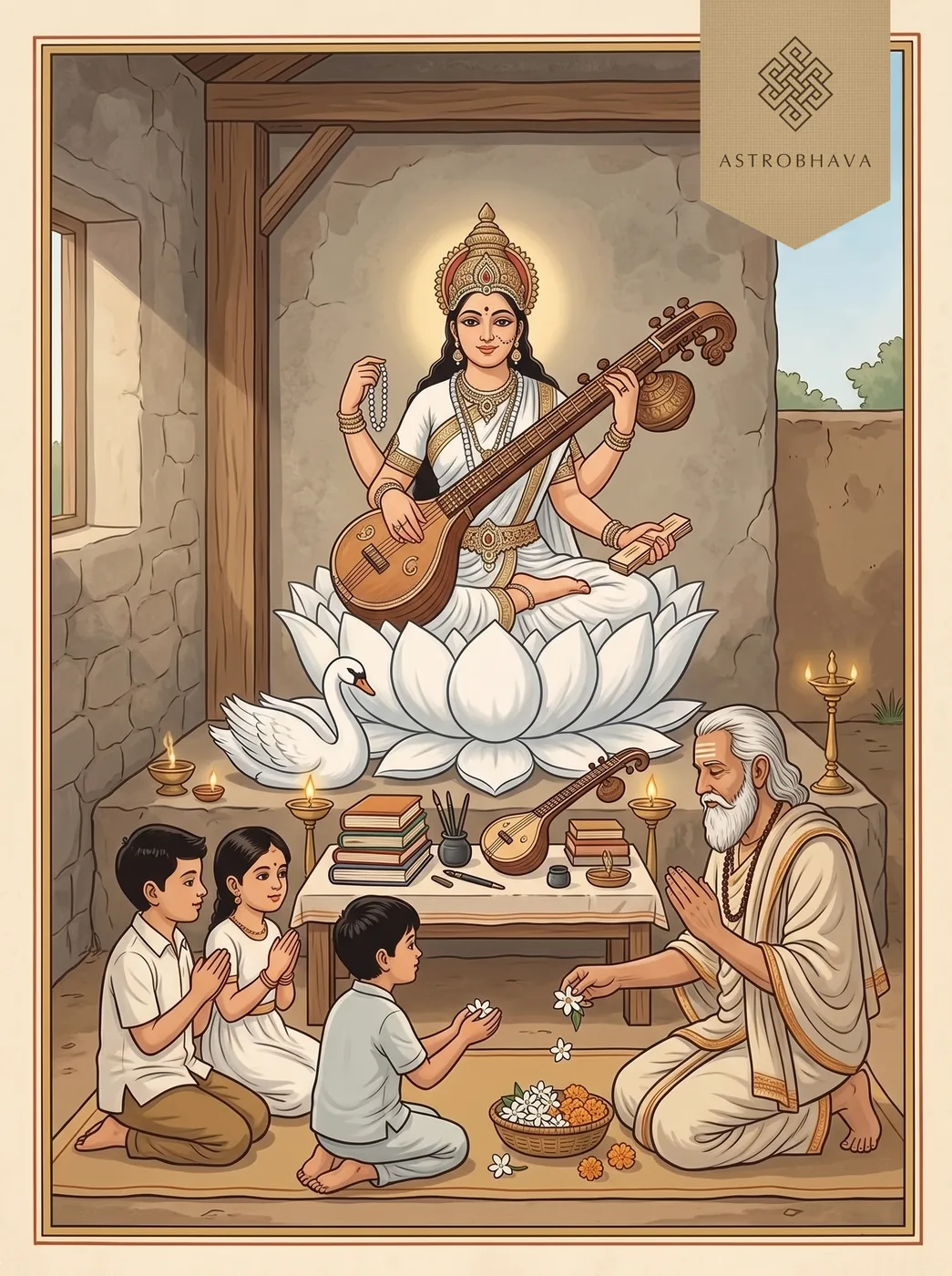
Saraswati Ashtottara Shatanamavali
ॐ सरस्वत्यै नमः ।Also known as Saraswati Ashtothram
In Devanagari, Tamil, Telugu, Kannada, Malayalam and English — with the meaning of every word, and the one syllable most people pronounce wrongly.
 The Saraswati Homa, performed for youBook →
What the Saraswati Ashtottara Shatanamavali is
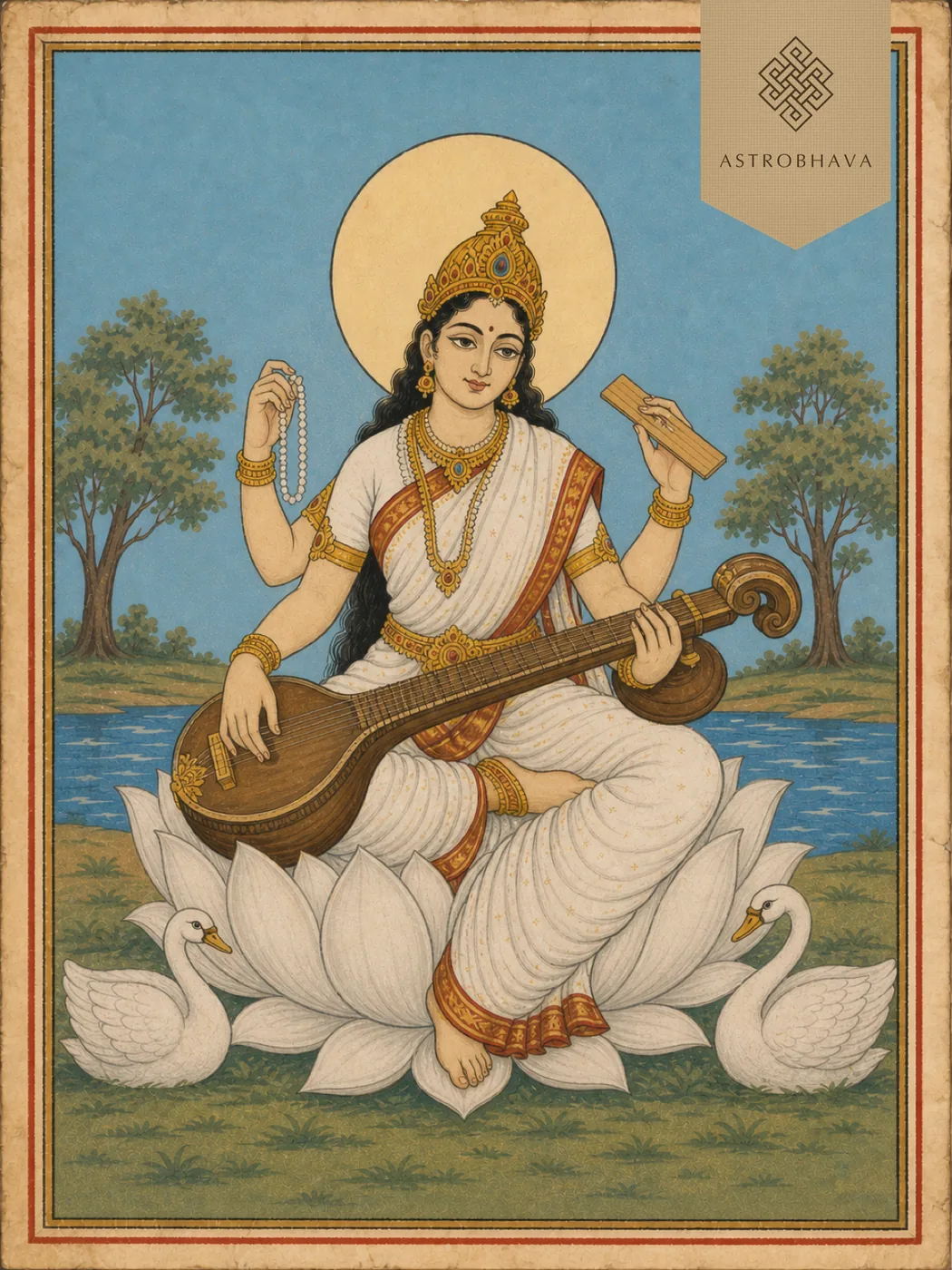
The Saraswati Ashtottara Shatanamavali gives Saraswati's 108 names one by one, framing each with Om before and namah after so that it can be offered as a salutation of its own, usually with a flower or a pinch of rice. Its names are taken, one at a time, from a fifteen-verse Sanskrit hymn, the Sri Sarasvati Ashtottara Shatanama Stotram, whose first line runs sarasvati mahabhadra mahamaya varaprada; its author is unknown and printed collections such as S. V. Radhakrishna Sastri's Sri Devi Nama Stotra Manjari list it as traditional. The names open on the lotus: she dwells in it, has its eyes and its face. Then come the book in her hand (Name 10) and the gesture of knowledge (Name 11). A long middle run turns to the battle-goddess, and the list closes on her as the swan-seated one and as the single nature of Brahma, Vishnu and Shiva. Mahabhadra, Vaishnavi and Vagdevi each occur twice, and lotus-eyed comes in two wordings.
Why Saraswati's names include Chandika's battles
No Purana frames this list with a scene, and no sage is named as its speaker. What gives it shape is a theology older than the list itself. The Devi Mahatmya divides its thirteen chapters into three episodes, and Shakta tradition assigns the last and longest of them, from the fifth chapter on, to Mahasaraswati. That episode is the war against the demon brothers Shumbha and Nishumbha, and the namavali carries its roll call: Shumbhasurapramathini, who crushed Shumbha (Name 75), the slayer of Raktabija (Name 78), Chamunda (Name 79), the one who struck down Munda (Name 81) and the one who crushed Dhumralochana (Name 82). Read this way, the goddess of the book and the goddess of the battlefield are one person. The Pradhanika Rahasya, an appendix printed with the Devi Mahatmya, explains another puzzling name. It says that the primal Mahalakshmi brought forth Mahakali and Mahasaraswati, and that Mahakali in turn produced a male and a female pair, Rudra and Saraswati, which makes Saraswati the sister of Shiva; this is the sense of Shivanuja, Name 9. Names 53 and 54, the dweller on the Vindhya hills, recall the promise in the Devi Mahatmya's eleventh chapter that the Goddess will be born again and destroy demons in the Vindhya range, a form worshipped as Vindhyavasini.
The mantra, in six scripts
- ॐ
- oṃ — Om, the sacred syllable
- सरस्वत्यै
- sarasvatyai — to Sarasvati, the flowing one (Name 1)
- नमः
- namaḥ — salutation
- महाभद्रायै
- mahābhadrāyai — to the greatly auspicious one (Name 2)
- महामायायै
- mahāmāyāyai — to the great Maya (Name 3)
- वरप्रदायै
- varapradāyai — to the giver of boons (Name 4)
- श्रीप्रदायै
- śrīpradāyai — to the giver of Shri, grace (Name 5)
- पद्मनिलयायै
- padmanilayāyai — to her who dwells in the lotus (Name 6)
- पद्माक्ष्यै
- padmākṣyai — to the lotus-eyed one (Name 7)
- पद्मवक्त्रकायै
- padmavaktrakāyai — to the lotus-faced one (Name 8)
Saraswati Ashtottara Shatanamavali lyrics in full
All 108 names, each framed by Om and namah, in the order of the fifteen-verse stotram.
All 108 verses, in Sanskrit, Tamil, Telugu, Kannada, Malayalam and English, each with its meaning. Choose a script:
Download the Saraswati Ashtottara Shatanamavali PDFAll 108 verses with their meanings, in Sanskrit. Free to print and keep.
ॐ सरस्वत्यै नमः ।
ௐ ஸரஸ்வத்யை நமஃ ।
ఓం సరస్వత్యై నమః ।
ಓಂ ಸರಸ್ವತ್ಯೈ ನಮಃ ।
ഓം സരസ്വത്യൈ നമഃ ।
oṃ sarasvatyai namaḥ |
Sarasvati, the flowing one, goddess of speech and learning.
ॐ महाभद्रायै नमः ।
ௐ மஹாபத்ராயை நமஃ ।
ఓం మహాభద్రాయై నమః ।
ಓಂ ಮಹಾಭದ್ರಾಯೈ ನಮಃ ।
ഓം മഹാഭദ്രായൈ നമഃ ।
oṃ mahābhadrāyai namaḥ |
The greatly auspicious one.
ॐ महामायायै नमः ।
ௐ மஹாமாயாயை நமஃ ।
ఓం మహామాయాయై నమః ।
ಓಂ ಮಹಾಮಾಯಾಯೈ ನಮಃ ।
ഓം മഹാമായായൈ നമഃ ।
oṃ mahāmāyāyai namaḥ |
The great Maya, the power that veils and reveals the world.
ॐ वरप्रदायै नमः ।
ௐ வரப்ரதாயை நமஃ ।
ఓం వరప్రదాయై నమః ।
ಓಂ ವರಪ್ರದಾಯೈ ನಮಃ ।
ഓം വരപ്രദായൈ നമഃ ।
oṃ varapradāyai namaḥ |
The giver of boons.
ॐ श्रीप्रदायै नमः ।
ௐ ஶ்ரீப்ரதாயை நமஃ ।
ఓం శ్రీప్రదాయై నమః ।
ಓಂ ಶ್ರೀಪ್ರದಾಯೈ ನಮಃ ।
ഓം ശ്രീപ്രദായൈ നമഃ ।
oṃ śrīpradāyai namaḥ |
The giver of prosperity and grace (Shri).
ॐ पद्मनिलयायै नमः ।
ௐ பத்மநிலயாயை நமஃ ।
ఓం పద్మనిలయాయై నమః ।
ಓಂ ಪದ್ಮನಿಲಯಾಯೈ ನಮಃ ।
ഓം പദ്മനിലയായൈ നമഃ ।
oṃ padmanilayāyai namaḥ |
She who dwells in the lotus.
ॐ पद्माक्ष्यै नमः ।
ௐ பத்மாக்ஷ்யை நமஃ ।
ఓం పద్మాక్ష్యై నమః ।
ಓಂ ಪದ್ಮಾಕ್ಷ್ಯೈ ನಮಃ ।
ഓം പദ്മാക്ഷ്യൈ നമഃ ।
oṃ padmākṣyai namaḥ |
The lotus-eyed one.
ॐ पद्मवक्त्रकायै नमः ।
ௐ பத்மவக்த்ரகாயை நமஃ ।
ఓం పద్మవక్త్రకాయై నమః ।
ಓಂ ಪದ್ಮವಕ್ತ್ರಕಾಯೈ ನಮಃ ।
ഓം പദ്മവക്ത്രകായൈ നമഃ ।
oṃ padmavaktrakāyai namaḥ |
She whose face is like a lotus.
ॐ शिवानुजायै नमः ।
ௐ ஶிவாநுஜாயை நமஃ ।
ఓం శివానుజాయై నమః ।
ಓಂ ಶಿವಾನುಜಾಯೈ ನಮಃ ।
ഓം ശിവാനുജായൈ നമഃ ।
oṃ śivānujāyai namaḥ |
The younger sister of Shiva.
ॐ पुस्तकभृते नमः ।
ௐ புஸ்தகப்ருதே நமஃ ।
ఓం పుస్తకభృతే నమః ।
ಓಂ ಪುಸ್ತಕಭೃತೇ ನಮಃ ।
ഓം പുസ്തകഭൃതേ നമഃ ।
oṃ pustakabhṛte namaḥ |
She who holds the book.
ॐ ज्ञानमुद्रायै नमः ।
ௐ ஜ்ஞாநமுத்ராயை நமஃ ।
ఓం జ్ఞానముద్రాయై నమః ।
ಓಂ ಜ್ಞಾನಮುದ್ರಾಯೈ ನಮಃ ।
ഓം ജ്ഞാനമുദ്രായൈ നമഃ ।
oṃ jñānamudrāyai namaḥ |
She who shows the gesture of knowledge (jnana mudra).
ॐ रमायै नमः ।
ௐ ரமாயை நமஃ ।
ఓం రమాయై నమః ।
ಓಂ ರಮಾಯೈ ನಮಃ ।
ഓം രമായൈ നമഃ ।
oṃ ramāyai namaḥ |
The delightful one, Rama.
ॐ परायै नमः ।
ௐ பராயை நமஃ ।
ఓం పరాయై నమః ।
ಓಂ ಪರಾಯೈ ನಮಃ ।
ഓം പരായൈ നമഃ ।
oṃ parāyai namaḥ |
The supreme one.
ॐ कामरूपायै नमः ।
ௐ காமரூபாயை நமஃ ।
ఓం కామరూపాయై నమః ।
ಓಂ ಕಾಮರೂಪಾಯೈ ನಮಃ ।
ഓം കാമരൂപായൈ നമഃ ।
oṃ kāmarūpāyai namaḥ |
She who takes any form at will.
ॐ महाविद्यायै नमः ।
ௐ மஹாவித்யாயை நமஃ ।
ఓం మహావిద్యాయై నమః ।
ಓಂ ಮಹಾವಿದ್ಯಾಯೈ ನಮಃ ।
ഓം മഹാവിദ്യായൈ നമഃ ।
oṃ mahāvidyāyai namaḥ |
The great knowledge, Mahavidya.
ॐ महापातकनाशिन्यै नमः ।
ௐ மஹாபாதகநாஶிந்யை நமஃ ।
ఓం మహాపాతకనాశిన్యై నమః ।
ಓಂ ಮಹಾಪಾತಕನಾಶಿನ್ಯೈ ನಮಃ ।
ഓം മഹാപാതകനാശിന്യൈ നമഃ ।
oṃ mahāpātakanāśinyai namaḥ |
The destroyer of great sins.
ॐ महाश्रयायै नमः ।
ௐ மஹாஶ்ரயாயை நமஃ ।
ఓం మహాశ్రయాయై నమః ।
ಓಂ ಮಹಾಶ್ರಯಾಯೈ ನಮಃ ।
ഓം മഹാശ്രയായൈ നമഃ ।
oṃ mahāśrayāyai namaḥ |
The great refuge.
ॐ मालिन्यै नमः ।
ௐ மாலிந்யை நமஃ ।
ఓం మాలిన్యై నమః ।
ಓಂ ಮಾಲಿನ್ಯೈ ನಮಃ ।
ഓം മാലിന്യൈ നമഃ ।
oṃ mālinyai namaḥ |
She who wears garlands.
ॐ महाभोगायै नमः ।
ௐ மஹாபோகாயை நமஃ ।
ఓం మహాభోగాయై నమః ।
ಓಂ ಮಹಾಭೋಗಾಯೈ ನಮಃ ।
ഓം മഹാഭോഗായൈ നമഃ ।
oṃ mahābhogāyai namaḥ |
She of great abundance and enjoyment.
ॐ महाभुजायै नमः ।
ௐ மஹாபுஜாயை நமஃ ।
ఓం మహాభుజాయై నమః ।
ಓಂ ಮಹಾಭುಜಾಯೈ ನಮಃ ।
ഓം മഹാഭുജായൈ നമഃ ।
oṃ mahābhujāyai namaḥ |
The mighty-armed one.
ॐ महाभागायै नमः ।
ௐ மஹாபாகாயை நமஃ ।
ఓం మహాభాగాయై నమః ।
ಓಂ ಮಹಾಭಾಗಾಯೈ ನಮಃ ।
ഓം മഹാഭാഗായൈ നമഃ ।
oṃ mahābhāgāyai namaḥ |
The greatly fortunate one.
ॐ महोत्साहायै नमः ।
ௐ மஹோத்ஸாஹாயை நமஃ ।
ఓం మహోత్సాహాయై నమః ।
ಓಂ ಮಹೋತ್ಸಾಹಾಯೈ ನಮಃ ।
ഓം മഹോത്സാഹായൈ നമഃ ।
oṃ mahotsāhāyai namaḥ |
She of great energy and zeal.
ॐ दिव्याङ्गायै नमः ।
ௐ திவ்யாங்காயை நமஃ ।
ఓం దివ్యాఙ్గాయై నమః ।
ಓಂ ದಿವ್ಯಾಙ್ಗಾಯೈ ನಮಃ ।
ഓം ദിവ്യാങ്ഗായൈ നമഃ ।
oṃ divyāṅgāyai namaḥ |
She whose body is divine.
ॐ सुरवन्दितायै नमः ।
ௐ ஸுரவந்திதாயை நமஃ ।
ఓం సురవన్దితాయై నమః ।
ಓಂ ಸುರವನ್ದಿತಾಯೈ ನಮಃ ।
ഓം സുരവന്ദിതായൈ നമഃ ।
oṃ suravanditāyai namaḥ |
She who is saluted by the gods.
ॐ महाकाल्यै नमः ।
ௐ மஹாகால்யை நமஃ ।
ఓం మహాకాల్యై నమః ।
ಓಂ ಮಹಾಕಾಲ್ಯೈ ನಮಃ ।
ഓം മഹാകാല്യൈ നമഃ ।
oṃ mahākālyai namaḥ |
The great Kali.
ॐ महापाशायै नमः ।
ௐ மஹாபாஶாயை நமஃ ।
ఓం మహాపాశాయై నమః ।
ಓಂ ಮಹಾಪಾಶಾಯೈ ನಮಃ ।
ഓം മഹാപാശായൈ നമഃ ।
oṃ mahāpāśāyai namaḥ |
She who holds the great noose.
ॐ महाकारायै नमः ।
ௐ மஹாகாராயை நமஃ ।
ఓం మహాకారాయై నమః ।
ಓಂ ಮಹಾಕಾರಾಯೈ ನಮಃ ।
ഓം മഹാകാരായൈ നമഃ ।
oṃ mahākārāyai namaḥ |
She of vast form.
ॐ महाङ्कुशायै नमः ।
ௐ மஹாங்குஶாயை நமஃ ।
ఓం మహాఙ్కుశాయై నమః ।
ಓಂ ಮಹಾಙ್ಕುಶಾಯೈ ನಮಃ ।
ഓം മഹാങ്കുശായൈ നമഃ ।
oṃ mahāṅkuśāyai namaḥ |
She who holds the great goad.
ॐ पीतायै नमः ।
ௐ பீதாயை நமஃ ।
ఓం పీతాయై నమః ।
ಓಂ ಪೀತಾಯೈ ನಮಃ ।
ഓം പീതായൈ നമഃ ।
oṃ pītāyai namaḥ |
The golden-yellow one.
ॐ विमलायै नमः ।
ௐ விமலாயை நமஃ ।
ఓం విమలాయై నమః ।
ಓಂ ವಿಮಲಾಯೈ ನಮಃ ।
ഓം വിമലായൈ നമഃ ।
oṃ vimalāyai namaḥ |
The stainless one.
ॐ विश्वायै नमः ।
ௐ விஶ்வாயை நமஃ ।
ఓం విశ్వాయై నమః ।
ಓಂ ವಿಶ್ವಾಯೈ ನಮಃ ।
ഓം വിശ്വായൈ നമഃ ।
oṃ viśvāyai namaḥ |
She who is the whole universe.
ॐ विद्युन्मालायै नमः ।
ௐ வித்யுந்மாலாயை நமஃ ।
ఓం విద్యున్మాలాయై నమః ।
ಓಂ ವಿದ್ಯುನ್ಮಾಲಾಯೈ ನಮಃ ।
ഓം വിദ്യുന്മാലായൈ നമഃ ।
oṃ vidyunmālāyai namaḥ |
She who wears a garland of lightning.
ॐ वैष्णव्यै नमः ।
ௐ வைஷ்ணவ்யை நமஃ ।
ఓం వైష్ణవ్యై నమః ।
ಓಂ ವೈಷ್ಣವ್ಯೈ ನಮಃ ।
ഓം വൈഷ്ണവ്യൈ നമഃ ।
oṃ vaiṣṇavyai namaḥ |
Vaishnavi, the power of Vishnu.
ॐ चन्द्रिकायै नमः ।
ௐ சந்த்ரிகாயை நமஃ ।
ఓం చన్ద్రికాయై నమః ।
ಓಂ ಚನ್ದ್ರಿಕಾಯೈ ನಮಃ ।
ഓം ചന്ദ്രികായൈ നമഃ ।
oṃ candrikāyai namaḥ |
The moonlight.
ॐ चन्द्रवदनायै नमः ।
ௐ சந்த்ரவதநாயை நமஃ ।
ఓం చన్ద్రవదనాయై నమః ।
ಓಂ ಚನ್ದ್ರವದನಾಯೈ ನಮಃ ।
ഓം ചന്ദ്രവദനായൈ നമഃ ।
oṃ candravadanāyai namaḥ |
The moon-faced one.
ॐ चन्द्रलेखाविभूषितायै नमः ।
ௐ சந்த்ரலேகாவிபூஷிதாயை நமஃ ।
ఓం చన్ద్రలేఖావిభూషితాయై నమః ।
ಓಂ ಚನ್ದ್ರಲೇಖಾವಿಭೂಷಿತಾಯೈ ನಮಃ ।
ഓം ചന്ദ്രലേഖാവിഭൂഷിതായൈ നമഃ ।
oṃ candralekhāvibhūṣitāyai namaḥ |
She who is adorned with the crescent moon.
ॐ सावित्र्यै नमः ।
ௐ ஸாவித்ர்யை நமஃ ।
ఓం సావిత్ర్యై నమః ।
ಓಂ ಸಾವಿತ್ರ್ಯೈ ನಮಃ ।
ഓം സാവിത്ര്യൈ നമഃ ।
oṃ sāvitryai namaḥ |
Savitri, the sacred power of the sun and of the Gayatri verse.
ॐ सुरसायै नमः ।
ௐ ஸுரஸாயை நமஃ ।
ఓం సురసాయై నమః ।
ಓಂ ಸುರಸಾಯೈ ನಮಃ ।
ഓം സുരസായൈ നമഃ ।
oṃ surasāyai namaḥ |
She of sweet essence.
ॐ देव्यै नमः ।
ௐ தேவ்யை நமஃ ।
ఓం దేవ్యై నమః ।
ಓಂ ದೇವ್ಯೈ ನಮಃ ।
ഓം ദേവ്യൈ നമഃ ।
oṃ devyai namaḥ |
The goddess.
ॐ दिव्यालङ्कारभूषितायै नमः ।
ௐ திவ்யாலங்காரபூஷிதாயை நமஃ ।
ఓం దివ్యాలఙ్కారభూషితాయై నమః ।
ಓಂ ದಿವ್ಯಾಲಙ್ಕಾರಭೂಷಿತಾಯೈ ನಮಃ ।
ഓം ദിവ്യാലങ്കാരഭൂഷിതായൈ നമഃ ।
oṃ divyālaṅkārabhūṣitāyai namaḥ |
She who is adorned with divine ornaments.
ॐ वाग्देव्यै नमः ।
ௐ வாக்தேவ்யை நமஃ ।
ఓం వాగ్దేవ్యై నమః ।
ಓಂ ವಾಗ್ದೇವ್ಯೈ ನಮಃ ।
ഓം വാഗ്ദേവ്യൈ നമഃ ।
oṃ vāgdevyai namaḥ |
The goddess of speech.
ॐ वसुधायै नमः ।
ௐ வஸுதாயை நமஃ ।
ఓం వసుధాయై నమః ।
ಓಂ ವಸುಧಾಯೈ ನಮಃ ।
ഓം വസുധായൈ നമഃ ।
oṃ vasudhāyai namaḥ |
The earth, the bearer of wealth.
ॐ तीव्रायै नमः ।
ௐ தீவ்ராயை நமஃ ।
ఓం తీవ్రాయై నమః ।
ಓಂ ತೀವ್ರಾಯೈ ನಮಃ ।
ഓം തീവ്രായൈ നമഃ ।
oṃ tīvrāyai namaḥ |
The intense one.
ॐ महाभद्रायै नमः ।
ௐ மஹாபத்ராயை நமஃ ।
ఓం మహాభద్రాయై నమః ।
ಓಂ ಮಹಾಭದ್ರಾಯೈ ನಮಃ ।
ഓം മഹാഭദ്രായൈ നമഃ ।
oṃ mahābhadrāyai namaḥ |
The greatly auspicious one (the name occurs a second time).
ॐ महाबलायै नमः ।
ௐ மஹாபலாயை நமஃ ।
ఓం మహాబలాయై నమః ।
ಓಂ ಮಹಾಬಲಾಯೈ ನಮಃ ।
ഓം മഹാബലായൈ നമഃ ।
oṃ mahābalāyai namaḥ |
She of great strength.
ॐ भोगदायै नमः ।
ௐ போகதாயை நமஃ ।
ఓం భోగదాయై నమః ।
ಓಂ ಭೋಗದಾಯೈ ನಮಃ ।
ഓം ഭോഗദായൈ നമഃ ।
oṃ bhogadāyai namaḥ |
The giver of enjoyments.
ॐ भारत्यै नमः ।
ௐ பாரத்யை நமஃ ।
ఓం భారత్యై నమః ।
ಓಂ ಭಾರತ್ಯೈ ನಮಃ ।
ഓം ഭാരത്യൈ നമഃ ।
oṃ bhāratyai namaḥ |
Bharati, the goddess of eloquent speech.
ॐ भामायै नमः ।
ௐ பாமாயை நமஃ ।
ఓం భామాయై నమః ।
ಓಂ ಭಾಮಾಯೈ ನಮಃ ।
ഓം ഭാമായൈ നമഃ ।
oṃ bhāmāyai namaḥ |
The radiant one.
ॐ गोविन्दायै नमः ।
ௐ கோவிந்தாயை நமஃ ।
ఓం గోవిన్దాయై నమః ।
ಓಂ ಗೋವಿನ್ದಾಯೈ ನಮಃ ।
ഓം ഗോവിന്ദായൈ നമഃ ।
oṃ govindāyai namaḥ |
Govinda, she who grants speech and knowledge (go also means speech).
ॐ गोमत्यै नमः ।
ௐ கோமத்யை நமஃ ।
ఓం గోమత్యై నమః ।
ಓಂ ಗೋಮತ್ಯೈ ನಮಃ ।
ഓം ഗോമത്യൈ നമഃ ।
oṃ gomatyai namaḥ |
Gomati, rich in light, also the name of a sacred river.
ॐ शिवायै नमः ।
ௐ ஶிவாயை நமஃ ।
ఓం శివాయై నమః ।
ಓಂ ಶಿವಾಯೈ ನಮಃ ।
ഓം ശിവായൈ നമഃ ।
oṃ śivāyai namaḥ |
The auspicious one, Shiva.
ॐ जटिलायै नमः ।
ௐ ஜடிலாயை நமஃ ।
ఓం జటిలాయై నమః ।
ಓಂ ಜಟಿಲಾಯೈ ನಮಃ ।
ഓം ജടിലായൈ നമഃ ।
oṃ jaṭilāyai namaḥ |
She who wears matted locks.
ॐ विन्ध्यवासायै नमः ।
ௐ விந்த்யவாஸாயை நமஃ ।
ఓం విన్ధ్యవాసాయై నమః ।
ಓಂ ವಿನ್ಧ್ಯವಾಸಾಯೈ ನಮಃ ।
ഓം വിന്ധ്യവാസായൈ നമഃ ।
oṃ vindhyavāsāyai namaḥ |
She who dwells in the Vindhya hills.
ॐ विन्ध्याचलविराजितायै नमः ।
ௐ விந்த்யாசலவிராஜிதாயை நமஃ ।
ఓం విన్ధ్యాచలవిరాజితాయై నమః ।
ಓಂ ವಿನ್ಧ್ಯಾಚಲವಿರಾಜಿತಾಯೈ ನಮಃ ।
ഓം വിന്ധ്യാചലവിരാജിതായൈ നമഃ ।
oṃ vindhyācalavirājitāyai namaḥ |
She who shines on the Vindhya mountain.
ॐ चण्डिकायै नमः ।
ௐ சண்டிகாயை நமஃ ।
ఓం చణ్డికాయై నమః ।
ಓಂ ಚಣ್ಡಿಕಾಯೈ ನಮಃ ।
ഓം ചണ്ഡികായൈ നമഃ ।
oṃ caṇḍikāyai namaḥ |
Chandika, the fierce one.
ॐ वैष्णव्यै नमः ।
ௐ வைஷ்ணவ்யை நமஃ ।
ఓం వైష్ణవ్యై నమః ।
ಓಂ ವೈಷ್ಣವ್ಯೈ ನಮಃ ।
ഓം വൈഷ്ണവ്യൈ നമഃ ।
oṃ vaiṣṇavyai namaḥ |
Vaishnavi, the power of Vishnu (the name occurs a second time).
ॐ ब्राह्म्यै नमः ।
ௐ ப்ராஹ்ம்யை நமஃ ।
ఓం బ్రాహ్మ్యై నమః ।
ಓಂ ಬ್ರಾಹ್ಮ್ಯೈ ನಮಃ ।
ഓം ബ്രാഹ്മ്യൈ നമഃ ।
oṃ brāhmyai namaḥ |
Brahmi, the power of Brahma.
ॐ ब्रह्मज्ञानैकसाधनायै नमः ।
ௐ ப்ரஹ்மஜ்ஞாநைகஸாதநாயை நமஃ ।
ఓం బ్రహ్మజ్ఞానైకసాధనాయై నమః ।
ಓಂ ಬ್ರಹ್ಮಜ್ಞಾನೈಕಸಾಧನಾಯೈ ನಮಃ ।
ഓം ബ്രഹ്മജ്ഞാനൈകസാധനായൈ നമഃ ।
oṃ brahmajñānaikasādhanāyai namaḥ |
The sole means to the knowledge of Brahman.
ॐ सौदामिन्यै नमः ।
ௐ ஸௌதாமிந்யை நமஃ ।
ఓం సౌదామిన్యై నమః ।
ಓಂ ಸೌದಾಮಿನ್ಯೈ ನಮಃ ।
ഓം സൌദാമിന്യൈ നമഃ ।
oṃ saudāminyai namaḥ |
The lightning flash.
ॐ सुधामूर्त्यै नमः ।
ௐ ஸுதாமூர்த்யை நமஃ ।
ఓం సుధామూర్త్యై నమః ।
ಓಂ ಸುಧಾಮೂರ್ತ್ಯೈ ನಮಃ ।
ഓം സുധാമൂര്ത്യൈ നമഃ ।
oṃ sudhāmūrtyai namaḥ |
The embodiment of nectar.
ॐ सुभद्रायै नमः ।
ௐ ஸுபத்ராயை நமஃ ।
ఓం సుభద్రాయై నమః ।
ಓಂ ಸುಭದ್ರಾಯೈ ನಮಃ ।
ഓം സുഭദ്രായൈ നമഃ ।
oṃ subhadrāyai namaḥ |
The very auspicious one.
ॐ सुरपूजितायै नमः ।
ௐ ஸுரபூஜிதாயை நமஃ ।
ఓం సురపూజితాయై నమః ।
ಓಂ ಸುರಪೂಜಿತಾಯೈ ನಮಃ ।
ഓം സുരപൂജിതായൈ നമഃ ।
oṃ surapūjitāyai namaḥ |
She who is worshipped by the gods.
ॐ सुवासिन्यै नमः ।
ௐ ஸுவாஸிந்யை நமஃ ।
ఓం సువాసిన్యై నమః ।
ಓಂ ಸುವಾಸಿನ್ಯೈ ನಮಃ ।
ഓം സുവാസിന്യൈ നമഃ ।
oṃ suvāsinyai namaḥ |
She who is fragrant and finely adorned.
ॐ सुनासायै नमः ।
ௐ ஸுநாஸாயை நமஃ ।
ఓం సునాసాయై నమః ।
ಓಂ ಸುನಾಸಾಯೈ ನಮಃ ।
ഓം സുനാസായൈ നമഃ ।
oṃ sunāsāyai namaḥ |
She with a beautiful nose.
ॐ विनिद्रायै नमः ।
ௐ விநித்ராயை நமஃ ।
ఓం వినిద్రాయై నమః ।
ಓಂ ವಿನಿದ್ರಾಯೈ ನಮಃ ।
ഓം വിനിദ്രായൈ നമഃ ।
oṃ vinidrāyai namaḥ |
The ever-wakeful one, free of sleep.
ॐ पद्मलोचनायै नमः ।
ௐ பத்மலோசநாயை நமஃ ।
ఓం పద్మలోచనాయై నమః ।
ಓಂ ಪದ್ಮಲೋಚನಾಯೈ ನಮಃ ।
ഓം പദ്മലോചനായൈ നമഃ ।
oṃ padmalocanāyai namaḥ |
The lotus-eyed one.
ॐ विद्यारूपायै नमः ।
ௐ வித்யாரூபாயை நமஃ ।
ఓం విద్యారూపాయై నమః ।
ಓಂ ವಿದ್ಯಾರೂಪಾಯೈ ನಮಃ ।
ഓം വിദ്യാരൂപായൈ നമഃ ।
oṃ vidyārūpāyai namaḥ |
She whose form is knowledge.
ॐ विशालाक्ष्यै नमः ।
ௐ விஶாலாக்ஷ்யை நமஃ ।
ఓం విశాలాక్ష్యై నమః ।
ಓಂ ವಿಶಾಲಾಕ್ಷ್ಯೈ ನಮಃ ।
ഓം വിശാലാക്ഷ്യൈ നമഃ ।
oṃ viśālākṣyai namaḥ |
The wide-eyed one.
ॐ ब्रह्मजायायै नमः ।
ௐ ப்ரஹ்மஜாயாயை நமஃ ।
ఓం బ్రహ్మజాయాయై నమః ।
ಓಂ ಬ್ರಹ್ಮಜಾಯಾಯೈ ನಮಃ ।
ഓം ബ്രഹ്മജായായൈ നമഃ ।
oṃ brahmajāyāyai namaḥ |
The consort of Brahma.
ॐ महाफलायै नमः ।
ௐ மஹாபலாயை நமஃ ।
ఓం మహాఫలాయై నమః ।
ಓಂ ಮಹಾಫಲಾಯೈ ನಮಃ ।
ഓം മഹാഫലായൈ നമഃ ।
oṃ mahāphalāyai namaḥ |
The giver of great fruit.
ॐ त्रयीमूर्त्यै नमः ।
ௐ த்ரயீமூர்த்யை நமஃ ।
ఓం త్రయీమూర్త్యై నమః ।
ಓಂ ತ್ರಯೀಮೂರ್ತ್ಯೈ ನಮಃ ।
ഓം ത്രയീമൂര്ത്യൈ നമഃ ।
oṃ trayīmūrtyai namaḥ |
The embodiment of the three Vedas.
ॐ त्रिकालज्ञायै नमः ।
ௐ த்ரிகாலஜ்ஞாயை நமஃ ।
ఓం త్రికాలజ్ఞాయై నమః ।
ಓಂ ತ್ರಿಕಾಲಜ್ಞಾಯೈ ನಮಃ ।
ഓം ത്രികാലജ്ഞായൈ നമഃ ।
oṃ trikālajñāyai namaḥ |
The knower of past, present and future.
ॐ त्रिगुणायै नमः ।
ௐ த்ரிகுணாயை நமஃ ।
ఓం త్రిగుణాయై నమః ।
ಓಂ ತ್ರಿಗುಣಾಯೈ ನಮಃ ।
ഓം ത്രിഗുണായൈ നമഃ ।
oṃ triguṇāyai namaḥ |
She who holds the three gunas.
ॐ शास्त्ररूपिण्यै नमः ।
ௐ ஶாஸ்த்ரரூபிண்யை நமஃ ।
ఓం శాస్త్రరూపిణ్యై నమః ।
ಓಂ ಶಾಸ್ತ್ರರೂಪಿಣ್ಯೈ ನಮಃ ।
ഓം ശാസ്ത്രരൂപിണ്യൈ നമഃ ।
oṃ śāstrarūpiṇyai namaḥ |
She whose form is the scriptures.
ॐ शुम्भासुरप्रमथिन्यै नमः ।
ௐ ஶும்பாஸுரப்ரமதிந்யை நமஃ ।
ఓం శుమ్భాసురప్రమథిన్యై నమః ।
ಓಂ ಶುಮ್ಭಾಸುರಪ್ರಮಥಿನ್ಯೈ ನಮಃ ।
ഓം ശുമ്ഭാസുരപ്രമഥിന്യൈ നമഃ ।
oṃ śumbhāsurapramathinyai namaḥ |
She who crushed the demon Shumbha.
ॐ शुभदायै नमः ।
ௐ ஶுபதாயை நமஃ ।
ఓం శుభదాయై నమః ।
ಓಂ ಶುಭದಾಯೈ ನಮಃ ।
ഓം ശുഭദായൈ നമഃ ।
oṃ śubhadāyai namaḥ |
The giver of good.
ॐ स्वरात्मिकायै नमः ।
ௐ ஸ்வராத்மிகாயை நமஃ ।
ఓం స్వరాత్మికాయై నమః ।
ಓಂ ಸ್ವರಾತ್ಮಿಕಾಯೈ ನಮಃ ।
ഓം സ്വരാത്മികായൈ നമഃ ।
oṃ svarātmikāyai namaḥ |
She whose very nature is sound and musical note.
ॐ रक्तबीजनिहन्त्र्यै नमः ।
ௐ ரக்தபீஜநிஹந்த்ர்யை நமஃ ।
ఓం రక్తబీజనిహన్త్ర్యై నమః ।
ಓಂ ರಕ್ತಬೀಜನಿಹನ್ತ್ರ್ಯೈ ನಮಃ ।
ഓം രക്തബീജനിഹന്ത്ര്യൈ നമഃ ।
oṃ raktabījanihantryai namaḥ |
The slayer of the demon Raktabija.
ॐ चामुण्डायै नमः ।
ௐ சாமுண்டாயை நமஃ ।
ఓం చాముణ్డాయై నమః ।
ಓಂ ಚಾಮುಣ್ಡಾಯೈ ನಮಃ ।
ഓം ചാമുണ്ഡായൈ നമഃ ।
oṃ cāmuṇḍāyai namaḥ |
Chamunda.
ॐ अम्बिकायै नमः ।
ௐ அம்பிகாயை நமஃ ।
ఓం అమ్బికాయై నమః ।
ಓಂ ಅಮ್ಬಿಕಾಯೈ ನಮಃ ।
ഓം അമ്ബികായൈ നമഃ ।
oṃ ambikāyai namaḥ |
Ambika, the mother.
ॐ मुण्डकायप्रहरणायै नमः ।
ௐ முண்டகாயப்ரஹரணாயை நமஃ ।
ఓం ముణ్డకాయప్రహరణాయై నమః ।
ಓಂ ಮುಣ್ಡಕಾಯಪ್ರಹರಣಾಯೈ ನಮಃ ।
ഓം മുണ്ഡകായപ്രഹരണായൈ നമഃ ।
oṃ muṇḍakāyapraharaṇāyai namaḥ |
She who struck down the body of the demon Munda.
ॐ धूम्रलोचनमर्दनायै नमः ।
ௐ தூம்ரலோசநமர்தநாயை நமஃ ।
ఓం ధూమ్రలోచనమర్దనాయై నమః ।
ಓಂ ಧೂಮ್ರಲೋಚನಮರ್ದನಾಯೈ ನಮಃ ।
ഓം ധൂമ്രലോചനമര്ദനായൈ നമഃ ।
oṃ dhūmralocanamardanāyai namaḥ |
She who crushed the demon Dhumralochana.
ॐ सर्वदेवस्तुतायै नमः ।
ௐ ஸர்வதேவஸ்துதாயை நமஃ ।
ఓం సర్వదేవస్తుతాయై నమః ।
ಓಂ ಸರ್ವದೇವಸ್ತುತಾಯೈ ನಮಃ ।
ഓം സര്വദേവസ്തുതായൈ നമഃ ।
oṃ sarvadevastutāyai namaḥ |
She who is praised by all the gods.
ॐ सौम्यायै नमः ।
ௐ ஸௌம்யாயை நமஃ ।
ఓం సౌమ్యాయై నమః ।
ಓಂ ಸೌಮ್ಯಾಯೈ ನಮಃ ।
ഓം സൌമ്യായൈ നമഃ ।
oṃ saumyāyai namaḥ |
The gentle, serene one.
ॐ सुरासुरनमस्कृतायै नमः ।
ௐ ஸுராஸுரநமஸ்க்ருதாயை நமஃ ।
ఓం సురాసురనమస్కృతాయై నమః ।
ಓಂ ಸುರಾಸುರನಮಸ್ಕೃತಾಯೈ ನಮಃ ।
ഓം സുരാസുരനമസ്കൃതായൈ നമഃ ।
oṃ surāsuranamaskṛtāyai namaḥ |
She to whom gods and demons alike bow.
ॐ कालरात्र्यै नमः ।
ௐ காலராத்ர்யை நமஃ ।
ఓం కాలరాత్ర్యై నమః ।
ಓಂ ಕಾಲರಾತ್ರ್ಯೈ ನಮಃ ।
ഓം കാലരാത്ര്യൈ നമഃ ।
oṃ kālarātryai namaḥ |
Kalaratri, the dark night of dissolution.
ॐ कलाधारायै नमः ।
ௐ கலாதாராயை நமஃ ।
ఓం కలాధారాయై నమః ।
ಓಂ ಕಲಾಧಾರಾಯೈ ನಮಃ ।
ഓം കലാധാരായൈ നമഃ ।
oṃ kalādhārāyai namaḥ |
The support of all the arts.
ॐ रूपसौभाग्यदायिन्यै नमः ।
ௐ ரூபஸௌபாக்யதாயிந்யை நமஃ ।
ఓం రూపసౌభాగ్యదాయిన్యై నమః ।
ಓಂ ರೂಪಸೌಭಾಗ್ಯದಾಯಿನ್ಯೈ ನಮಃ ।
ഓം രൂപസൌഭാഗ്യദായിന്യൈ നമഃ ।
oṃ rūpasaubhāgyadāyinyai namaḥ |
The giver of beauty and good fortune.
ॐ वाग्देव्यै नमः ।
ௐ வாக்தேவ்யை நமஃ ।
ఓం వాగ్దేవ్యై నమః ।
ಓಂ ವಾಗ್ದೇವ್ಯೈ ನಮಃ ।
ഓം വാഗ്ദേവ്യൈ നമഃ ।
oṃ vāgdevyai namaḥ |
The goddess of speech (the name occurs a second time).
ॐ वरारोहायै नमः ।
ௐ வராரோஹாயை நமஃ ।
ఓం వరారోహాయై నమః ।
ಓಂ ವರಾರೋಹಾಯೈ ನಮಃ ।
ഓം വരാരോഹായൈ നമഃ ।
oṃ varārohāyai namaḥ |
The noble and beautiful one.
ॐ वाराह्यै नमः ।
ௐ வாராஹ்யை நமஃ ।
ఓం వారాహ్యై నమః ।
ಓಂ ವಾರಾಹ್ಯೈ ನಮಃ ।
ഓം വാരാഹ്യൈ നമഃ ।
oṃ vārāhyai namaḥ |
Varahi, the power of the Boar incarnation.
ॐ वारिजासनायै नमः ।
ௐ வாரிஜாஸநாயை நமஃ ।
ఓం వారిజాసనాయై నమః ।
ಓಂ ವಾರಿಜಾಸನಾಯೈ ನಮಃ ।
ഓം വാരിജാസനായൈ നമഃ ।
oṃ vārijāsanāyai namaḥ |
She who is seated on a lotus.
ॐ चित्राम्बरायै नमः ।
ௐ சித்ராம்பராயை நமஃ ।
ఓం చిత్రామ్బరాయై నమః ।
ಓಂ ಚಿತ್ರಾಮ್ಬರಾಯೈ ನಮಃ ।
ഓം ചിത്രാമ്ബരായൈ നമഃ ।
oṃ citrāmbarāyai namaḥ |
She who wears bright, many-coloured garments.
ॐ चित्रगन्धायै नमः ।
ௐ சித்ரகந்தாயை நமஃ ।
ఓం చిత్రగన్ధాయై నమః ।
ಓಂ ಚಿತ್ರಗನ್ಧಾಯೈ ನಮಃ ।
ഓം ചിത്രഗന്ധായൈ നമഃ ।
oṃ citragandhāyai namaḥ |
She who is anointed with varied fragrances.
ॐ चित्रमाल्यविभूषितायै नमः ।
ௐ சித்ரமால்யவிபூஷிதாயை நமஃ ।
ఓం చిత్రమాల్యవిభూషితాయై నమః ।
ಓಂ ಚಿತ್ರಮಾಲ್ಯವಿಭೂಷಿತಾಯೈ ನಮಃ ।
ഓം ചിത്രമാല്യവിഭൂഷിതായൈ നമഃ ।
oṃ citramālyavibhūṣitāyai namaḥ |
She who is adorned with many-coloured garlands.
ॐ कान्तायै नमः ।
ௐ காந்தாயை நமஃ ।
ఓం కాన్తాయై నమః ।
ಓಂ ಕಾನ್ತಾಯೈ ನಮಃ ।
ഓം കാന്തായൈ നമഃ ।
oṃ kāntāyai namaḥ |
The lovely, beloved one.
ॐ कामप्रदायै नमः ।
ௐ காமப்ரதாயை நமஃ ।
ఓం కామప్రదాయై నమః ।
ಓಂ ಕಾಮಪ್ರದಾಯೈ ನಮಃ ।
ഓം കാമപ്രദായൈ നമഃ ।
oṃ kāmapradāyai namaḥ |
The fulfiller of wishes.
ॐ वन्द्यायै नमः ।
ௐ வந்த்யாயை நமஃ ।
ఓం వన్ద్యాయై నమః ।
ಓಂ ವನ್ದ್ಯಾಯೈ ನಮಃ ।
ഓം വന്ദ്യായൈ നമഃ ।
oṃ vandyāyai namaḥ |
She who is worthy of worship.
ॐ विद्याधरसुपूजितायै नमः ।
ௐ வித்யாதரஸுபூஜிதாயை நமஃ ।
ఓం విద్యాధరసుపూజితాయై నమః ।
ಓಂ ವಿದ್ಯಾಧರಸುಪೂಜಿತಾಯೈ ನಮಃ ।
ഓം വിദ്യാധരസുപൂജിതായൈ നമഃ ।
oṃ vidyādharasupūjitāyai namaḥ |
She who is worshipped well by the Vidyadharas.
ॐ श्वेताननायै नमः ।
ௐ ஶ்வேதாநநாயை நமஃ ।
ఓం శ్వేతాననాయై నమః ।
ಓಂ ಶ್ವೇತಾನನಾಯೈ ನಮಃ ।
ഓം ശ്വേതാനനായൈ നമഃ ।
oṃ śvetānanāyai namaḥ |
The fair-faced one.
ॐ नीलभुजायै नमः ।
ௐ நீலபுஜாயை நமஃ ।
ఓం నీలభుజాయై నమః ।
ಓಂ ನೀಲಭುಜಾಯೈ ನಮಃ ।
ഓം നീലഭുജായൈ നമഃ ।
oṃ nīlabhujāyai namaḥ |
She whose arms are dark blue.
ॐ चतुर्वर्गफलप्रदायै नमः ।
ௐ சதுர்வர்கபலப்ரதாயை நமஃ ।
ఓం చతుర్వర్గఫలప్రదాయై నమః ।
ಓಂ ಚತುರ್ವರ್ಗಫಲಪ್ರದಾಯೈ ನಮಃ ।
ഓം ചതുര്വര്ഗഫലപ്രദായൈ നമഃ ।
oṃ caturvargaphalapradāyai namaḥ |
The giver of the fruit of the four aims of life (dharma, artha, kama, moksha).
ॐ चतुराननसाम्राज्यायै नमः ।
ௐ சதுராநநஸாம்ராஜ்யாயை நமஃ ।
ఓం చతురాననసామ్రాజ్యాయై నమః ।
ಓಂ ಚತುರಾನನಸಾಮ್ರಾಜ್ಯಾಯೈ ನಮಃ ।
ഓം ചതുരാനനസാമ്രാജ്യായൈ നമഃ ।
oṃ caturānanasāmrājyāyai namaḥ |
She who is the sovereignty of four-faced Brahma.
ॐ रक्तमध्यायै नमः ।
ௐ ரக்தமத்யாயை நமஃ ।
ఓం రక్తమధ్యాయై నమః ।
ಓಂ ರಕ್ತಮಧ್ಯಾಯೈ ನಮಃ ।
ഓം രക്തമധ്യായൈ നമഃ ।
oṃ raktamadhyāyai namaḥ |
She who is red at the waist.
ॐ निरञ्जनायै नमः ।
ௐ நிரஞ்ஜநாயை நமஃ ।
ఓం నిరఞ్జనాయై నమః ।
ಓಂ ನಿರಞ್ಜನಾಯೈ ನಮಃ ।
ഓം നിരഞ്ജനായൈ നമഃ ।
oṃ nirañjanāyai namaḥ |
The spotless one.
ॐ हंसासनायै नमः ।
ௐ ஹம்ஸாஸநாயை நமஃ ।
ఓం హంసాసనాయై నమః ।
ಓಂ ಹಂಸಾಸನಾಯೈ ನಮಃ ।
ഓം ഹംസാസനായൈ നമഃ ।
oṃ haṃsāsanāyai namaḥ |
She who is seated on the swan.
ॐ नीलजङ्घायै नमः ।
ௐ நீலஜங்காயை நமஃ ।
ఓం నీలజఙ్ఘాయై నమః ।
ಓಂ ನೀಲಜಙ್ಘಾಯೈ ನಮಃ ।
ഓം നീലജങ്ഘായൈ നമഃ ।
oṃ nīlajaṅghāyai namaḥ |
She whose shanks are dark blue.
ॐ ब्रह्मविष्णुशिवात्मिकायै नमः ।
ௐ ப்ரஹ்மவிஷ்ணுஶிவாத்மிகாயை நமஃ ।
ఓం బ్రహ్మవిష్ణుశివాత్మికాయై నమః ।
ಓಂ ಬ್ರಹ್ಮವಿಷ್ಣುಶಿವಾತ್ಮಿಕಾಯೈ ನಮಃ ।
ഓം ബ്രഹ്മവിഷ്ണുശിവാത്മികായൈ നമഃ ।
oṃ brahmaviṣṇuśivātmikāyai namaḥ |
She who is the essence of Brahma, Vishnu and Shiva.
The syllable people get wrong
In Name 7, padmākṣyai (पद्माक्ष्यै, 'to the lotus-eyed'), the cluster kṣ runs straight into yai with no vowel between them: say 'pad-MAAK-shyai', three syllables, not 'pad-maa-kshi-yai'. The ā of māk is long and carries the weight.
When the Saraswati Ashtottara Shatanamavali is chanted
Weekday. Friday
Festival. Saraswati Puja in Navaratri
Questions
Have your chart read before you decide
Chanting is yours to do, and free. But which deity your situation calls for — and whether a mantra alone is the right response — depends on your chart. Sometimes it is; sometimes it is not.
- Over 30 years in the Guru–Sishya Parampara, from the age of five
- He reads every chart himself — 60 minutes, one to one, never delegated
- Charts are read only between sunrise and sunset, following tradition
