Saraswati Puja Mantra
ॐ जय जय देवि चराचरसारे कुचयुगशोभितमुक्ताहारे । वीणापुस्तकरञ्जितहस्ते भगवति भारति देवि नमस्ते ॥Also known as Bhadrakalyai Namo Nityam
In Devanagari, Tamil, Telugu, Kannada, Malayalam and English — with the meaning of every word, and the one syllable most people pronounce wrongly.
 The Saraswati Homam, performed for youBook →
What the Saraswati Puja Mantra is
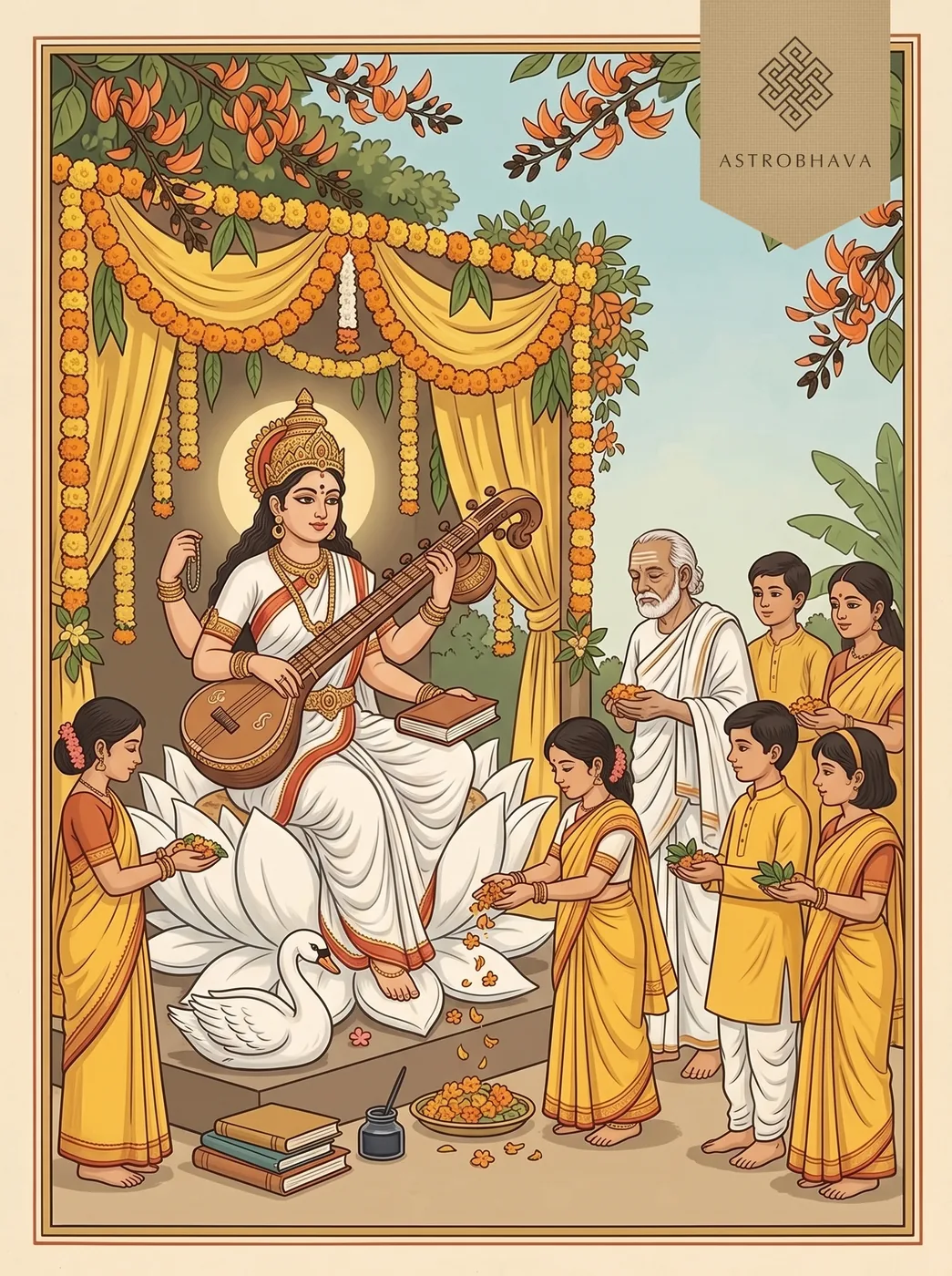
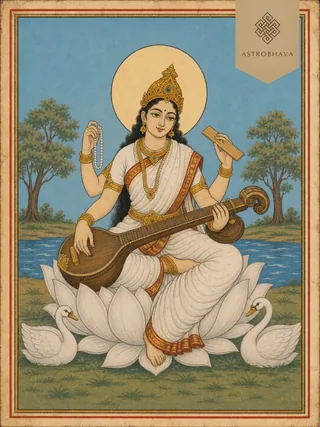
The Saraswati Puja mantra, as Bengal and the eastern states say it, is not one hymn but the short liturgy of the anjali, the flower offering at the heart of the Vasant Panchami puja. It runs in a fixed order. The first shloka, 'Jaya jaya devi', hails the goddess as the essence of all that moves and stays still, a pearl necklace on her breast and the vina and book in her hands. The second, 'Bhadrakalyai namo nityam', salutes her together with the Vedas, their limbs, the Vedanta and every seat of learning. While these are said, worshippers hold flowers, bilva leaves and sandal paste in cupped hands. The third line is the offering formula itself, 'Esha sachandana-pushpa-bilvapatranjalih', naming what the hands hold as the flowers are released at her feet; the set is offered three times. The rite closes with the pranam, 'Sarasvati mahabhage', said with folded hands, which asks her for vidya, learning.
The morning of the anjali in Bengal
These verses have no author and no origin legend; they belong to the puja paddhati, the handbook a priest follows on Magha Shukla Panchami, the fifth day of the bright fortnight of Magha, which Bengal calls Shri Panchami and treats as the first breath of spring. The day begins with a bath, and worshippers of every age put on new clothes in yellow or basanti. Many students keep a fast until they have offered anjali; some take no water at all, while others allow themselves tea or a sherbet. Before the image, which in Bengal usually shows Saraswati with two arms rather than four and with the swan as her mount, families lay books, notebooks, pens and musical instruments. Inkpots are filled with milk and Ganga water and reed pens are set in front of the goddess. Flowers and bilva leaves go first to Ganesha, then to Saraswati. The priest then leads the pushpanjali, and the whole gathering repeats each line after him. One of the shlokas they repeat, 'Bhadrakalyai namo nityam', also survives as verse 4 of the seven-verse Sharada Prarthana, a compiled hymn whose verses partly echo the Brahmavaivarta Purana. After the anjali, small children sit for hatekhori, their first letters traced with chalk on a slate, and schools serve khichuri to their pupils.
The mantra, in six scripts
- ॐ
- oṃ — Om, the sacred syllable
- जय
- jaya — victory
- जय
- jaya — victory
- देवि
- devi — O Goddess
- चराचरसारे
- carācarasāre — O essence of the moving and unmoving
- कुचयुगशोभितमुक्ताहारे
- kucayugaśobhitamuktāhāre — with a pearl necklace gracing your breast
- वीणापुस्तकरञ्जितहस्ते
- vīṇāpustakarañjitahaste — whose hands are adorned with vina and book
- भगवति
- bhagavati — O blessed one
- भारति
- bhārati — O Bharati (Saraswati)
- देवि
- devi — O Goddess
- नमस्ते
- namaste — salutations to you
Saraswati Puja Mantra lyrics in full
The pushpanjali of the Bengal Saraswati Puja with its offering formula, followed by the pranam verse.
All 4 verses, in Sanskrit, Tamil, Telugu, Kannada, Malayalam and English, each with its meaning. Choose a script:
Download the Saraswati Puja Mantra PDFAll 4 verses with their meanings, in Sanskrit. Free to print and keep.
ॐ जय जय देवि चराचरसारे कुचयुगशोभितमुक्ताहारे ।
वीणापुस्तकरञ्जितहस्ते भगवति भारति देवि नमस्ते ॥
ௐ ஜய ஜய தேவி சராசரஸாரே குசயுகஶோபிதமுக்தாஹாரே ।
வீணாபுஸ்தகரஞ்ஜிதஹஸ்தே பகவதி பாரதி தேவி நமஸ்தே ॥
ఓం జయ జయ దేవి చరాచరసారే కుచయుగశోభితముక్తాహారే ।
వీణాపుస్తకరఞ్జితహస్తే భగవతి భారతి దేవి నమస్తే ॥
ಓಂ ಜಯ ಜಯ ದೇವಿ ಚರಾಚರಸಾರೇ ಕುಚಯುಗಶೋಭಿತಮುಕ್ತಾಹಾರೇ ।
ವೀಣಾಪುಸ್ತಕರಞ್ಜಿತಹಸ್ತೇ ಭಗವತಿ ಭಾರತಿ ದೇವಿ ನಮಸ್ತೇ ॥
ഓം ജയ ജയ ദേവി ചരാചരസാരേ കുചയുഗശോഭിതമുക്താഹാരേ ।
വീണാപുസ്തകരഞ്ജിതഹസ്തേ ഭഗവതി ഭാരതി ദേവി നമസ്തേ ॥
oṃ jaya jaya devi carācarasāre kucayugaśobhitamuktāhāre |
vīṇāpustakarañjitahaste bhagavati bhārati devi namaste ||
Om. Victory, victory to you, O Goddess, essence of all that moves and does not move, adorned with a necklace of pearls upon your breast. O Bhagavati Bharati, whose hands are graced with the vina and the book, O Goddess, salutations to you.
भद्रकाल्यै नमो नित्यं सरस्वत्यै नमो नमः ।
वेदवेदाङ्गवेदान्तविद्यास्थानेभ्य एव च ॥
பத்ரகால்யை நமோ நித்யம் ஸரஸ்வத்யை நமோ நமஃ ।
வேதவேதாங்கவேதாந்தவித்யாஸ்தாநேப்ய ஏவ ச ॥
భద్రకాల్యై నమో నిత్యం సరస్వత్యై నమో నమః ।
వేదవేదాఙ్గవేదాన్తవిద్యాస్థానేభ్య ఏవ చ ॥
ಭದ್ರಕಾಲ್ಯೈ ನಮೋ ನಿತ್ಯಂ ಸರಸ್ವತ್ಯೈ ನಮೋ ನಮಃ ।
ವೇದವೇದಾಙ್ಗವೇದಾನ್ತವಿದ್ಯಾಸ್ಥಾನೇಭ್ಯ ಏವ ಚ ॥
ഭദ്രകാല്യൈ നമോ നിത്യം സരസ്വത്യൈ നമോ നമഃ ।
വേദവേദാങ്ഗവേദാന്തവിദ്യാസ്ഥാനേഭ്യ ഏവ ച ॥
bhadrakālyai namo nityaṃ sarasvatyai namo namaḥ |
vedavedāṅgavedāntavidyāsthānebhya eva ca ||
Salutations always to Bhadrakali; salutations again and again to Saraswati. Salutations also to the Vedas, the limbs of the Vedas, the Vedanta and all the seats of learning.
एष सचन्दनपुष्पबिल्वपत्राञ्जलिः सरस्वत्यै नमः ॥
ஏஷ ஸசந்தநபுஷ்பபில்வபத்ராஞ்ஜலிஃ ஸரஸ்வத்யை நமஃ ॥
ఏష సచన్దనపుష్పబిల్వపత్రాఞ్జలిః సరస్వత్యై నమః ॥
ಏಷ ಸಚನ್ದನಪುಷ್ಪಬಿಲ್ವಪತ್ರಾಞ್ಜಲಿಃ ಸರಸ್ವತ್ಯೈ ನಮಃ ॥
ഏഷ സചന്ദനപുഷ്പബില്വപത്രാഞ്ജലിഃ സരസ്വത്യൈ നമഃ ॥
eṣa sacandanapuṣpabilvapatrāñjaliḥ sarasvatyai namaḥ ||
This handful of flowers and bilva leaves, with sandal paste, is offered to Saraswati; salutations to Saraswati.
सरस्वति महाभागे विद्ये कमललोचने ।
विश्वरूपे विशालाक्षि विद्यां देहि नमोऽस्तु ते ॥
ஸரஸ்வதி மஹாபாகே வித்யே கமலலோசநே ।
விஶ்வரூபே விஶாலாக்ஷி வித்யாம் தேஹி நமோஸ்து தே ॥
సరస్వతి మహాభాగే విద్యే కమలలోచనే ।
విశ్వరూపే విశాలాక్షి విద్యాం దేహి నమోఽస్తు తే ॥
ಸರಸ್ವತಿ ಮಹಾಭಾಗೇ ವಿದ್ಯೇ ಕಮಲಲೋಚನೇ ।
ವಿಶ್ವರೂಪೇ ವಿಶಾಲಾಕ್ಷಿ ವಿದ್ಯಾಂ ದೇಹಿ ನಮೋಽಸ್ತು ತೇ ॥
സരസ്വതി മഹാഭാഗേ വിദ്യേ കമലലോചനേ ।
വിശ്വരൂപേ വിശാലാക്ഷി വിദ്യാം ദേഹി നമോഽസ്തു തേ ॥
sarasvati mahābhāge vidye kamalalocane |
viśvarūpe viśālākṣi vidyāṃ dehi namo'stu te ||
O Saraswati, greatly blessed one, you who are knowledge itself, lotus-eyed one. O you whose form is the universe, wide-eyed one, grant me learning; salutations to you.
The syllable people get wrong
In the pranam, viśālākṣi ('wide-eyed one') is often said and even printed as 'Vishalakshmi', as if it named Lakshmi. Say vi-shaa-laak-shi, with the long aa twice and the closing kshi, no m: it is the vocative of vishalakshi.
When the Saraswati Puja Mantra is chanted
Weekday. Friday
Festival. Vasant Panchami (Shri Panchami)
Questions
Have your chart read before you decide
Chanting is yours to do, and free. But which deity your situation calls for — and whether a mantra alone is the right response — depends on your chart. Sometimes it is; sometimes it is not.
- Over 30 years in the Guru–Sishya Parampara, from the age of five
- He reads every chart himself — 60 minutes, one to one, never delegated
- Charts are read only between sunrise and sunset, following tradition
