Sheetala Mata Mantra
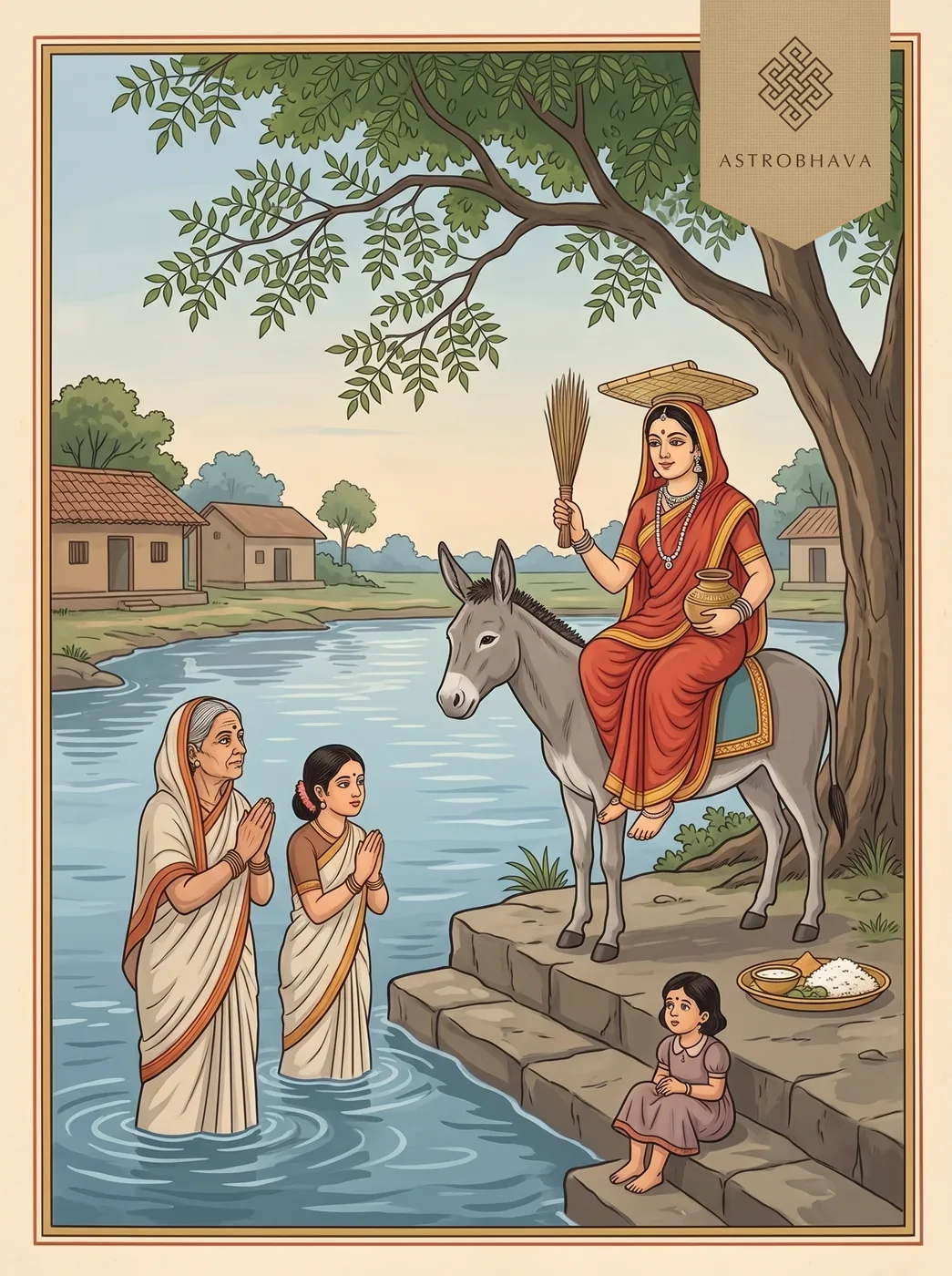
वन्देऽहं शीतलां देवीं रासभस्थां दिगम्बराम् । मार्जनीकलशोपेतां शूर्पालङ्कृतमस्तकाम् ॥Also known as Sheetalashtakam
In Devanagari, Tamil, Telugu, Kannada, Malayalam and English — with the meaning of every word, and the one syllable most people pronounce wrongly.
 The Sarva Roga Nivaran Homam, performed for youBook →
What the Sheetala Mata Mantra is
The Sheetala Mantra people mean by a sheetla mata mantra is the Shitalashtakam, an octet of praise to Shitala, the goddess whose name means 'the cool one' from the Skanda Purana. The speaker is Ishvara, that is Shiva, and most printings open with a viniyoga naming Mahadeva as its seer, Anushtup as its metre and Bhavani as its power. Verses 1 and 2 share one salutation, 'vande'ham shitalam devim', and picture her seated on a donkey, holding a broom and a water pot, a winnowing fan on her head. Verses 3 to 8 call her by name and speak of burning fever and pox, closing on the line that for this affliction no mantra or medicine is found except her. Verses 9 to 15 form the phala shruti: a meditation on her as a thread fine as a lotus fibre between navel and heart, six names for her donkey, and a closing rule that the octet be given only to those with faith.
Shiva's octet and the worship in water
The hymn has no human author. It opens with the words 'Ishvara uvacha', 'Ishvara said', so tradition hears it as Shiva's own praise of the goddess, and every printed closing line assigns it to the Skanda Purana. Some manuscript colophons go further and place it in the Kashi Khanda, the part of that Purana given to Varanasi; handwritten copies from around 1700 survive. The same Purana knows Shitala in other places. Its Prabhasa Khanda gives a chapter to the greatness of Shitala Gauri and says that, adored with devotion, she keeps the bodies of children cool, and its Ayodhya Mahatmya places her shrine to the north of one of that city's sacred spots. Two verses of the octet echo a rite set out in the Narada Purana, which tells the worshipper to stand in water and repeat 'Shitala, Shitala'. Verse 3 keeps that doubled call, and verse 4 speaks of worshipping her 'udakamadhye', in the midst of water. The donkey verses belong to the same household world: verse 14 says that reciting the animal's names before her keeps the Shitala affliction from the children of that home. In village tradition across Bengal, Rajasthan and Gujarat her worship was offered when pox broke out, and it has long been led by women.
The mantra, in six scripts
- वन्देऽहं
- vande'haṃ — I bow to
- शीतलां
- śītalāṃ — Shitala, the cool one
- देवीं
- devīṃ — the goddess
- रासभस्थां
- rāsabhasthāṃ — seated on a donkey
- दिगम्बराम्
- digambarām — clothed by the directions
- मार्जनीकलशोपेतां
- mārjanīkalaśopetāṃ — bearing a broom and a water pot
- शूर्पालङ्कृतमस्तकाम्
- śūrpālaṅkṛtamastakām — whose head is adorned with a winnowing fan
Sheetala Mata Mantra lyrics in full
Fifteen verses: the eight verses of praise, then the phala shruti with the verse of the donkey's names. The printed closing line is given at the end.
All 16 verses, in Sanskrit, Tamil, Telugu, Kannada, Malayalam and English, each with its meaning. Choose a script:
Download the Sheetala Mata Mantra PDFAll 16 verses with their meanings, in Sanskrit. Free to print and keep.
वन्देऽहं शीतलां देवीं रासभस्थां दिगम्बराम् ।
मार्जनीकलशोपेतां शूर्पालङ्कृतमस्तकाम् ॥
வந்தேஹம் ஶீதலாம் தேவீம் ராஸபஸ்தாம் திகம்பராம் ।
மார்ஜநீகலஶோபேதாம் ஶூர்பாலங்க்ருதமஸ்தகாம் ॥
వన్దేఽహం శీతలాం దేవీం రాసభస్థాం దిగమ్బరామ్ ।
మార్జనీకలశోపేతాం శూర్పాలఙ్కృతమస్తకామ్ ॥
ವನ್ದೇಽಹಂ ಶೀತಲಾಂ ದೇವೀಂ ರಾಸಭಸ್ಥಾಂ ದಿಗಮ್ಬರಾಮ್ ।
ಮಾರ್ಜನೀಕಲಶೋಪೇತಾಂ ಶೂರ್ಪಾಲಙ್ಕೃತಮಸ್ತಕಾಮ್ ॥
വന്ദേഽഹം ശീതലാം ദേവീം രാസഭസ്ഥാം ദിഗമ്ബരാമ് ।
മാര്ജനീകലശോപേതാം ശൂര്പാലങ്കൃതമസ്തകാമ് ॥
vande'haṃ śītalāṃ devīṃ rāsabhasthāṃ digambarām |
mārjanīkalaśopetāṃ śūrpālaṅkṛtamastakām ||
I bow to the goddess Shitala, who rides a donkey and is clothed by the directions alone, who holds a broom and a water pot, and whose head is adorned with a winnowing fan.
वन्देऽहं शीतलां देवीं सर्वरोगभयापहाम् ।
यामासाद्य निवर्तेत विस्फोटकभयं महत् ॥
வந்தேஹம் ஶீதலாம் தேவீம் ஸர்வரோகபயாபஹாம் ।
யாமாஸாத்ய நிவர்தேத விஸ்போடகபயம் மஹத் ॥
వన్దేఽహం శీతలాం దేవీం సర్వరోగభయాపహామ్ ।
యామాసాద్య నివర్తేత విస్ఫోటకభయం మహత్ ॥
ವನ್ದೇಽಹಂ ಶೀತಲಾಂ ದೇವೀಂ ಸರ್ವರೋಗಭಯಾಪಹಾಮ್ ।
ಯಾಮಾಸಾದ್ಯ ನಿವರ್ತೇತ ವಿಸ್ಫೋಟಕಭಯಂ ಮಹತ್ ॥
വന്ദേഽഹം ശീതലാം ദേവീം സര്വരോഗഭയാപഹാമ് ।
യാമാസാദ്യ നിവര്തേത വിസ്ഫോടകഭയം മഹത് ॥
vande'haṃ śītalāṃ devīṃ sarvarogabhayāpahām |
yāmāsādya nivarteta visphoṭakabhayaṃ mahat ||
I bow to the goddess Shitala, who takes away the fear of every disease; on reaching her, the great fear of pox turns back.
शीतले शीतले चेति यो ब्रूयाद्दाहपीडितः ।
विस्फोटकभयं घोरं क्षिप्रं तस्य प्रणश्यति ॥
ஶீதலே ஶீதலே சேதி யோ ப்ரூயாத்தாஹபீடிதஃ ।
விஸ்போடகபயம் கோரம் க்ஷிப்ரம் தஸ்ய ப்ரணஶ்யதி ॥
శీతలే శీతలే చేతి యో బ్రూయాద్దాహపీడితః ।
విస్ఫోటకభయం ఘోరం క్షిప్రం తస్య ప్రణశ్యతి ॥
ಶೀತಲೇ ಶೀತಲೇ ಚೇತಿ ಯೋ ಬ್ರೂಯಾದ್ದಾಹಪೀಡಿತಃ ।
ವಿಸ್ಫೋಟಕಭಯಂ ಘೋರಂ ಕ್ಷಿಪ್ರಂ ತಸ್ಯ ಪ್ರಣಶ್ಯತಿ ॥
ശീതലേ ശീതലേ ചേതി യോ ബ്രൂയാദ്ദാഹപീഡിതഃ ।
വിസ്ഫോടകഭയം ഘോരം ക്ഷിപ്രം തസ്യ പ്രണശ്യതി ॥
śītale śītale ceti yo brūyāddāhapīḍitaḥ |
visphoṭakabhayaṃ ghoraṃ kṣipraṃ tasya praṇaśyati ||
The verse says that whoever, tormented by burning heat, calls out "Shitale, Shitale" is quickly freed from the dreadful fear of pox.
यस्त्वामुदकमध्ये तु ध्यात्वा सम्पूजयेन्नरः ।
विस्फोटकभयं घोरं गृहे तस्य न जायते ॥
யஸ்த்வாமுதகமத்யே து த்யாத்வா ஸம்பூஜயேந்நரஃ ।
விஸ்போடகபயம் கோரம் க்ருஹே தஸ்ய ந ஜாயதே ॥
యస్త్వాముదకమధ్యే తు ధ్యాత్వా సమ్పూజయేన్నరః ।
విస్ఫోటకభయం ఘోరం గృహే తస్య న జాయతే ॥
ಯಸ್ತ್ವಾಮುದಕಮಧ್ಯೇ ತು ಧ್ಯಾತ್ವಾ ಸಮ್ಪೂಜಯೇನ್ನರಃ ।
ವಿಸ್ಫೋಟಕಭಯಂ ಘೋರಂ ಗೃಹೇ ತಸ್ಯ ನ ಜಾಯತೇ ॥
യസ്ത്വാമുദകമധ്യേ തു ധ്യാത്വാ സമ്പൂജയേന്നരഃ ।
വിസ്ഫോടകഭയം ഘോരം ഗൃഹേ തസ്യ ന ജായതേ ॥
yastvāmudakamadhye tu dhyātvā sampūjayennaraḥ |
visphoṭakabhayaṃ ghoraṃ gṛhe tasya na jāyate ||
The verse says that in the house of the person who meditates on you and worships you while standing in water, the dreadful fear of pox does not arise.
शीतले ज्वरदग्धस्य पूतिगन्धयुतस्य च ।
प्रणष्टचक्षुषः पुंसस्त्वामाहुर्जीवनौषधम् ॥
ஶீதலே ஜ்வரதக்தஸ்ய பூதிகந்தயுதஸ்ய ச ।
ப்ரணஷ்டசக்ஷுஷஃ பும்ஸஸ்த்வாமாஹுர்ஜீவநௌஷதம் ॥
శీతలే జ్వరదగ్ధస్య పూతిగన్ధయుతస్య చ ।
ప్రణష్టచక్షుషః పుంసస్త్వామాహుర్జీవనౌషధమ్ ॥
ಶೀತಲೇ ಜ್ವರದಗ್ಧಸ್ಯ ಪೂತಿಗನ್ಧಯುತಸ್ಯ ಚ ।
ಪ್ರಣಷ್ಟಚಕ್ಷುಷಃ ಪುಂಸಸ್ತ್ವಾಮಾಹುರ್ಜೀವನೌಷಧಮ್ ॥
ശീതലേ ജ്വരദഗ്ധസ്യ പൂതിഗന്ധയുതസ്യ ച ।
പ്രണഷ്ടചക്ഷുഷഃ പുംസസ്ത്വാമാഹുര്ജീവനൌഷധമ് ॥
śītale jvaradagdhasya pūtigandhayutasya ca |
praṇaṣṭacakṣuṣaḥ puṃsastvāmāhurjīvanauṣadham ||
O Shitala, for a man scorched by fever, giving off a foul smell and whose sight is lost, you are called the medicine of life.
शीतले तनुजान्रोगान्नृणां हरसि दुस्त्यजान् ।
विस्फोटकविदीर्णानां त्वमेकाऽमृतवर्षिणी ॥
ஶீதலே தநுஜாந்ரோகாந்ந்ருணாம் ஹரஸி துஸ்த்யஜாந் ।
விஸ்போடகவிதீர்ணாநாம் த்வமேகாம்ருதவர்ஷிணீ ॥
శీతలే తనుజాన్రోగాన్నృణాం హరసి దుస్త్యజాన్ ।
విస్ఫోటకవిదీర్ణానాం త్వమేకాఽమృతవర్షిణీ ॥
ಶೀತಲೇ ತನುಜಾನ್ರೋಗಾನ್ನೃಣಾಂ ಹರಸಿ ದುಸ್ತ್ಯಜಾನ್ ।
ವಿಸ್ಫೋಟಕವಿದೀರ್ಣಾನಾಂ ತ್ವಮೇಕಾಽಮೃತವರ್ಷಿಣೀ ॥
ശീതലേ തനുജാന്രോഗാന്നൃണാം ഹരസി ദുസ്ത്യജാന് ।
വിസ്ഫോടകവിദീര്ണാനാം ത്വമേകാഽമൃതവര്ഷിണീ ॥
śītale tanujānrogānnṛṇāṃ harasi dustyajān |
visphoṭakavidīrṇānāṃ tvamekā'mṛtavarṣiṇī ||
O Shitala, you remove the bodily diseases of men that are hard to throw off; for those torn by pox, you alone rain down nectar.
गलगण्डग्रहा रोगा ये चान्ये दारुणा नृणाम् ।
त्वदनुध्यानमात्रेण शीतले यान्ति सङ्क्षयम् ॥
கலகண்டக்ரஹா ரோகா யே சாந்யே தாருணா ந்ருணாம் ।
த்வதநுத்யாநமாத்ரேண ஶீதலே யாந்தி ஸங்க்ஷயம் ॥
గలగణ్డగ్రహా రోగా యే చాన్యే దారుణా నృణామ్ ।
త్వదనుధ్యానమాత్రేణ శీతలే యాన్తి సఙ్క్షయమ్ ॥
ಗಲಗಣ್ಡಗ್ರಹಾ ರೋಗಾ ಯೇ ಚಾನ್ಯೇ ದಾರುಣಾ ನೃಣಾಮ್ ।
ತ್ವದನುಧ್ಯಾನಮಾತ್ರೇಣ ಶೀತಲೇ ಯಾನ್ತಿ ಸಙ್ಕ್ಷಯಮ್ ॥
ഗലഗണ്ഡഗ്രഹാ രോഗാ യേ ചാന്യേ ദാരുണാ നൃണാമ് ।
ത്വദനുധ്യാനമാത്രേണ ശീതലേ യാന്തി സങ്ക്ഷയമ് ॥
galagaṇḍagrahā rogā ye cānye dāruṇā nṛṇām |
tvadanudhyānamātreṇa śītale yānti saṅkṣayam ||
Swellings of the throat, seizures and the other cruel diseases of men go to destruction, O Shitala, merely by meditating on you.
न मन्त्रो नौषधं तस्य पापरोगस्य विद्यते ।
त्वामेकां शीतले धात्रीं नान्यां पश्यामि देवताम् ॥
ந மந்த்ரோ நௌஷதம் தஸ்ய பாபரோகஸ்ய வித்யதே ।
த்வாமேகாம் ஶீதலே தாத்ரீம் நாந்யாம் பஶ்யாமி தேவதாம் ॥
న మన్త్రో నౌషధం తస్య పాపరోగస్య విద్యతే ।
త్వామేకాం శీతలే ధాత్రీం నాన్యాం పశ్యామి దేవతామ్ ॥
ನ ಮನ್ತ್ರೋ ನೌಷಧಂ ತಸ್ಯ ಪಾಪರೋಗಸ್ಯ ವಿದ್ಯತೇ ।
ತ್ವಾಮೇಕಾಂ ಶೀತಲೇ ಧಾತ್ರೀಂ ನಾನ್ಯಾಂ ಪಶ್ಯಾಮಿ ದೇವತಾಮ್ ॥
ന മന്ത്രോ നൌഷധം തസ്യ പാപരോഗസ്യ വിദ്യതേ ।
ത്വാമേകാം ശീതലേ ധാത്രീം നാന്യാം പശ്യാമി ദേവതാമ് ॥
na mantro nauṣadhaṃ tasya pāparogasya vidyate |
tvāmekāṃ śītale dhātrīṃ nānyāṃ paśyāmi devatām ||
For that disease born of sin no mantra and no medicine is found; O Shitala, I see no deity other than you alone, the nurturing mother.
मृणालतन्तुसदृशीं नाभिहृन्मध्यसंस्थिताम् ।
यस्त्वां सञ्चिन्तयेद्देवि तस्य मृत्युर्न जायते ॥
ம்ருணாலதந்துஸத்ருஶீம் நாபிஹ்ருந்மத்யஸம்ஸ்திதாம் ।
யஸ்த்வாம் ஸஞ்சிந்தயேத்தேவி தஸ்ய ம்ருத்யுர்ந ஜாயதே ॥
మృణాలతన్తుసదృశీం నాభిహృన్మధ్యసంస్థితామ్ ।
యస్త్వాం సఞ్చిన్తయేద్దేవి తస్య మృత్యుర్న జాయతే ॥
ಮೃಣಾಲತನ್ತುಸದೃಶೀಂ ನಾಭಿಹೃನ್ಮಧ್ಯಸಂಸ್ಥಿತಾಮ್ ।
ಯಸ್ತ್ವಾಂ ಸಞ್ಚಿನ್ತಯೇದ್ದೇವಿ ತಸ್ಯ ಮೃತ್ಯುರ್ನ ಜಾಯತೇ ॥
മൃണാലതന്തുസദൃശീം നാഭിഹൃന്മധ്യസംസ്ഥിതാമ് ।
യസ്ത്വാം സഞ്ചിന്തയേദ്ദേവി തസ്യ മൃത്യുര്ന ജായതേ ॥
mṛṇālatantusadṛśīṃ nābhihṛnmadhyasaṃsthitām |
yastvāṃ sañcintayeddevi tasya mṛtyurna jāyate ||
The verse says that whoever meditates on you, O Goddess, fine as a lotus-stalk fibre and dwelling between the navel and the heart, does not meet death.
अष्टकं शीतलादेव्या यो नरः प्रपठेत्सदा ।
विस्फोटकभयं घोरं गृहे तस्य न जायते ॥
அஷ்டகம் ஶீதலாதேவ்யா யோ நரஃ ப்ரபடேத்ஸதா ।
விஸ்போடகபயம் கோரம் க்ருஹே தஸ்ய ந ஜாயதே ॥
అష్టకం శీతలాదేవ్యా యో నరః ప్రపఠేత్సదా ।
విస్ఫోటకభయం ఘోరం గృహే తస్య న జాయతే ॥
ಅಷ್ಟಕಂ ಶೀತಲಾದೇವ್ಯಾ ಯೋ ನರಃ ಪ್ರಪಠೇತ್ಸದಾ ।
ವಿಸ್ಫೋಟಕಭಯಂ ಘೋರಂ ಗೃಹೇ ತಸ್ಯ ನ ಜಾಯತೇ ॥
അഷ്ടകം ശീതലാദേവ്യാ യോ നരഃ പ്രപഠേത്സദാ ।
വിസ്ഫോടകഭയം ഘോരം ഗൃഹേ തസ്യ ന ജായതേ ॥
aṣṭakaṃ śītalādevyā yo naraḥ prapaṭhetsadā |
visphoṭakabhayaṃ ghoraṃ gṛhe tasya na jāyate ||
The verse says that in the house of the man who always recites this octet of the goddess Shitala, the dreadful fear of pox does not arise.
श्रोतव्यं पठितव्यं च श्रद्धाभक्तिसमन्वितैः ।
उपसर्गविनाशाय परं स्वस्त्ययनं महत् ॥
ஶ்ரோதவ்யம் படிதவ்யம் ச ஶ்ரத்தாபக்திஸமந்விதைஃ ।
உபஸர்கவிநாஶாய பரம் ஸ்வஸ்த்யயநம் மஹத் ॥
శ్రోతవ్యం పఠితవ్యం చ శ్రద్ధాభక్తిసమన్వితైః ।
ఉపసర్గవినాశాయ పరం స్వస్త్యయనం మహత్ ॥
ಶ್ರೋತವ್ಯಂ ಪಠಿತವ್ಯಂ ಚ ಶ್ರದ್ಧಾಭಕ್ತಿಸಮನ್ವಿತೈಃ ।
ಉಪಸರ್ಗವಿನಾಶಾಯ ಪರಂ ಸ್ವಸ್ತ್ಯಯನಂ ಮಹತ್ ॥
ശ്രോതവ്യം പഠിതവ്യം ച ശ്രദ്ധാഭക്തിസമന്വിതൈഃ ।
ഉപസര്ഗവിനാശായ പരം സ്വസ്ത്യയനം മഹത് ॥
śrotavyaṃ paṭhitavyaṃ ca śraddhābhaktisamanvitaiḥ |
upasargavināśāya paraṃ svastyayanaṃ mahat ||
It should be heard and recited by those endowed with faith and devotion; it is a great and supreme blessing for the removal of afflictions.
शीतले त्वं जगन्माता शीतले त्वं जगत्पिता ।
शीतले त्वं जगद्धात्री शीतलायै नमो नमः ॥
ஶீதலே த்வம் ஜகந்மாதா ஶீதலே த்வம் ஜகத்பிதா ।
ஶீதலே த்வம் ஜகத்தாத்ரீ ஶீதலாயை நமோ நமஃ ॥
శీతలే త్వం జగన్మాతా శీతలే త్వం జగత్పితా ।
శీతలే త్వం జగద్ధాత్రీ శీతలాయై నమో నమః ॥
ಶೀತಲೇ ತ್ವಂ ಜಗನ್ಮಾತಾ ಶೀತಲೇ ತ್ವಂ ಜಗತ್ಪಿತಾ ।
ಶೀತಲೇ ತ್ವಂ ಜಗದ್ಧಾತ್ರೀ ಶೀತಲಾಯೈ ನಮೋ ನಮಃ ॥
ശീതലേ ത്വം ജഗന്മാതാ ശീതലേ ത്വം ജഗത്പിതാ ।
ശീതലേ ത്വം ജഗദ്ധാത്രീ ശീതലായൈ നമോ നമഃ ॥
śītale tvaṃ jaganmātā śītale tvaṃ jagatpitā |
śītale tvaṃ jagaddhātrī śītalāyai namo namaḥ ||
O Shitala, you are the mother of the world; O Shitala, you are the father of the world; O Shitala, you are the sustainer of the world. Salutations again and again to Shitala.
रासभो गर्दभश्चैव खरो वैशाखनन्दनः ।
शीतलावाहनश्चैव दूर्वाकन्दनिकृन्तनः ॥
ராஸபோ கர்தபஶ்சைவ கரோ வைஶாகநந்தநஃ ।
ஶீதலாவாஹநஶ்சைவ தூர்வாகந்தநிக்ருந்தநஃ ॥
రాసభో గర్దభశ్చైవ ఖరో వైశాఖనన్దనః ।
శీతలావాహనశ్చైవ దూర్వాకన్దనికృన్తనః ॥
ರಾಸಭೋ ಗರ್ದಭಶ್ಚೈವ ಖರೋ ವೈಶಾಖನನ್ದನಃ ।
ಶೀತಲಾವಾಹನಶ್ಚೈವ ದೂರ್ವಾಕನ್ದನಿಕೃನ್ತನಃ ॥
രാസഭോ ഗര്ദഭശ്ചൈവ ഖരോ വൈശാഖനന്ദനഃ ।
ശീതലാവാഹനശ്ചൈവ ദൂര്വാകന്ദനികൃന്തനഃ ॥
rāsabho gardabhaścaiva kharo vaiśākhanandanaḥ |
śītalāvāhanaścaiva dūrvākandanikṛntanaḥ ||
Rasabha, Gardabha, Khara, Vaishakhanandana, Shitalavahana (bearer of Shitala) and Durvakandanikrintana (cutter of durva grass roots) - these are the names of the donkey.
एतानि खरनामानि शीतलाग्रे तु यः पठेत् ।
तस्य गेहे शिशूनां च शीतलारुङ् न जायते ॥
ஏதாநி கரநாமாநி ஶீதலாக்ரே து யஃ படேத் ।
தஸ்ய கேஹே ஶிஶூநாம் ச ஶீதலாருங் ந ஜாயதே ॥
ఏతాని ఖరనామాని శీతలాగ్రే తు యః పఠేత్ ।
తస్య గేహే శిశూనాం చ శీతలారుఙ్ న జాయతే ॥
ಏತಾನಿ ಖರನಾಮಾನಿ ಶೀತಲಾಗ್ರೇ ತು ಯಃ ಪಠೇತ್ ।
ತಸ್ಯ ಗೇಹೇ ಶಿಶೂನಾಂ ಚ ಶೀತಲಾರುಙ್ ನ ಜಾಯತೇ ॥
ഏതാനി ഖരനാമാനി ശീതലാഗ്രേ തു യഃ പഠേത് ।
തസ്യ ഗേഹേ ശിശൂനാം ച ശീതലാരുങ് ന ജായതേ ॥
etāni kharanāmāni śītalāgre tu yaḥ paṭhet |
tasya gehe śiśūnāṃ ca śītalāruṅ na jāyate ||
The verse says that whoever recites these names of the donkey before Shitala, in his home the children do not suffer the Shitala disease.
शीतलाष्टकमेवेदं न देयं यस्यकस्यचित् ।
दातव्यं च सदा तस्मै श्रद्धाभक्तियुताय वै ॥
ஶீதலாஷ்டகமேவேதம் ந தேயம் யஸ்யகஸ்யசித் ।
தாதவ்யம் ச ஸதா தஸ்மை ஶ்ரத்தாபக்தியுதாய வை ॥
శీతలాష్టకమేవేదం న దేయం యస్యకస్యచిత్ ।
దాతవ్యం చ సదా తస్మై శ్రద్ధాభక్తియుతాయ వై ॥
ಶೀತಲಾಷ್ಟಕಮೇವೇದಂ ನ ದೇಯಂ ಯಸ್ಯಕಸ್ಯಚಿತ್ ।
ದಾತವ್ಯಂ ಚ ಸದಾ ತಸ್ಮೈ ಶ್ರದ್ಧಾಭಕ್ತಿಯುತಾಯ ವೈ ॥
ശീതലാഷ്ടകമേവേദം ന ദേയം യസ്യകസ്യചിത് ।
ദാതവ്യം ച സദാ തസ്മൈ ശ്രദ്ധാഭക്തിയുതായ വൈ ॥
śītalāṣṭakamevedaṃ na deyaṃ yasyakasyacit |
dātavyaṃ ca sadā tasmai śraddhābhaktiyutāya vai ||
This Shitala Ashtakam is not to be given to just anyone; it should always be given to one who has faith and devotion.
इति श्रीस्कन्दपुराणे शीतलाष्टकं सम्पूर्णम् ॥
இதி ஶ்ரீஸ்கந்தபுராணே ஶீதலாஷ்டகம் ஸம்பூர்ணம் ॥
ఇతి శ్రీస్కన్దపురాణే శీతలాష్టకం సమ్పూర్ణమ్ ॥
ಇತಿ ಶ್ರೀಸ್ಕನ್ದಪುರಾಣೇ ಶೀತಲಾಷ್ಟಕಂ ಸಮ್ಪೂರ್ಣಮ್ ॥
ഇതി ശ്രീസ്കന്ദപുരാണേ ശീതലാഷ്ടകം സമ്പൂര്ണമ് ॥
iti śrīskandapurāṇe śītalāṣṭakaṃ sampūrṇam ||
Thus ends the Shitala Ashtakam from the Skanda Purana.
The syllable people get wrong
The goddess's own name, śītalā, has three syllables: a long 'shee', a short 'ta' and a long 'laa' (SHEE-ta-laa); the spelling 'Sheetla' drops the middle vowel. In the vocative call of verse 3, śītale, the last vowel is a long 'e' as in 'they'.
When the Sheetala Mata Mantra is chanted
Weekday. Friday
Festival. Sheetala Ashtami (Basoda)
Questions
Have your chart read before you decide
Chanting is yours to do, and free. But which deity your situation calls for — and whether a mantra alone is the right response — depends on your chart. Sometimes it is; sometimes it is not.
- Over 30 years in the Guru–Sishya Parampara, from the age of five
- He reads every chart himself — 60 minutes, one to one, never delegated
- Charts are read only between sunrise and sunset, following tradition
